This Week in London – Ceremony of Cart Marking; London Underground’s K8 phoneboxes listed; and, ‘Ice Weekend’…

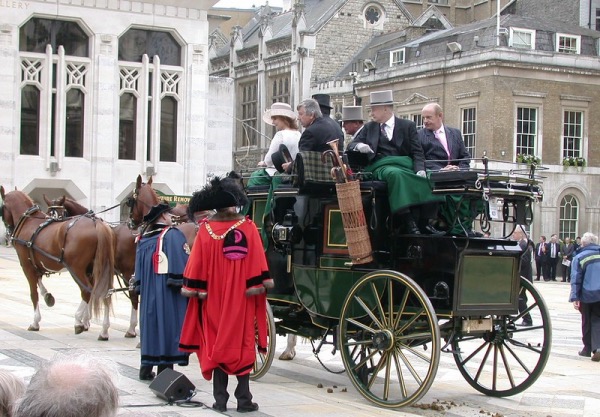
A carriage takes part in the 2008 Ceremony of Cart Marking. PICTURE: Clive A Brown (licensed under CC BY-NC 2.0)

The ceremony of Cart Marking takes place this Saturday in Guildhall Yard. Hosted by the City of London and the Worshipful Company of Carmen, the ceremony dates back 500 years and involved people having their carts marked – with a brand – after paying the appropriate licence fee. More than 50 vintage vehicles – ranging from handcarts, to horse-drawn, steam and modern vehicles – will take part in the event, entering Guildhall Yard through its famous arch and then symbolically marked with a brand. Entry to watch the event is free. For more, see www.cartmarking.org.

Four rare K8 phonebooks – located in the London Underground network – have been listed at Grade II. The K8 kiosks were the last generation of the classic public telephone box and some 11,000 were installed across the UK between 1968 and 1983. Only around 50 now remain in their original position – most of them were removed by British Telecom following its privatisation in 1984. The K8 was replaced by the sleek silver KX100 kiosk, which in turn were made virtually obsolete by mobile phones. While most of the surviving K8s were located in Hull, there are four in the London Underground network including blue boxes at High Street Kensington and Chorleywood stations, a maroon one at Chalfont and Latimer and a white one at Northwick Park.

It’s Ice Weekend at the London Canal Museum. Events – including a showing of rare film of ice harvesting, ice cream making demonstrations, and talks about the ice trade – take place on both Saturday and Sunday but the chance to visit the facility’s ice well takes place on Sunday only. Admission charges apply. For more, see www.canalmuseum.org.uk/whatson/icewell-visit.htm. The event is part of the 2023 Festival of Archaeology.

Send all items to exploringlondon@gmail.com
This Week in London – London Design Biennale; canal wildlife; a suffragette princess honoured; and, the ‘Polar Silk Road’ explored…

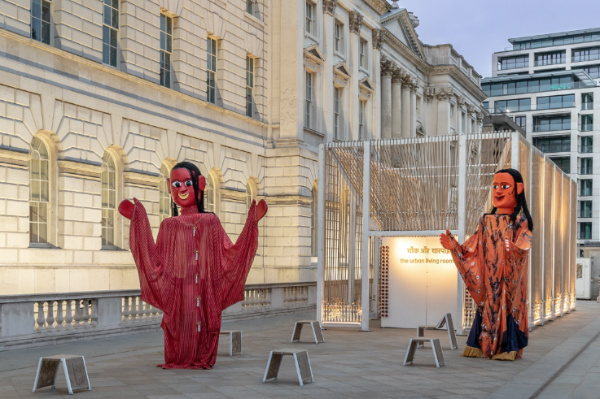
The Indian Pavilion at the London Design Biennale. PICTURE: Courtesy of London Design Biennale.

• The almost month-long London Design Biennale kicks off at Somerset House today under the theme of ‘The Global Game: Remapping Collaborations’. The fourth edition of the biennale is artistically directed by the Nieuwe Instituut – the Dutch national museum and institute for architecture, design and digital culture – and takes over the entirety of Somerset House. Among the exhibits is the India pavilion (pictured above) featuring a multi-sensory evocation of the essence of a contemporary Indian city chowk – an open market at the junction of streets – through the visual metaphor of a charpai – a traditional woven daybed, Malta’s large-scale ‘village-square’ installation that merges traditional city planning with the Phoenician-Maltese tradition of fabric production and dyeing of the multiple colours of Phoenician purple, the Ukrainian Pavilion which features am interior construction symbolising the country’s industrial, natural resource, and creative richness and a series of external projects which tell stories about new design collaborations in times of crisis for Ukraine and the vital role of design in creating new progressive connections. There’s also the chance to see the Ai-Da Robot, the world’s first humanoid robot artist, which will make history by showing her unique ability to design objects. Running alongside is the EUREKA exhibition which will share design-led innovation from leading research centres. Runs until 25th June. Admission charge applies. For more, see www.somersethouse.org.uk/whats-on/london-design-biennale-eureka-2023.

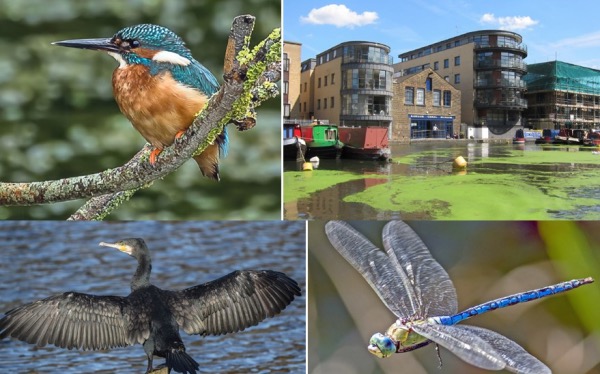
London canal wildlife. PICTURES: Courtesy of the London Canal Museum

A new exhibition highlighting the flora and fauna of London’s canals has opened at the London Canal Museum in King’s Cross. Many of the canals were derelict by the end of the 20th century but have received a new lease of life in recent times as leisure destinations. These days, they provide a “highway” for fauna including birds, fish and mammals to move in and out of the capital, some of which is showcased in this new display. Entry with general admission and for an extra fee, guided narrowboat trips along The Regent’s Canal are available on selected days. For more, see www.canalmuseum.org.uk.

Princess Sophia Duleep Singh, a suffragette, daughter of the last Maharajah of the Punjab, and god-daughter to Queen Victoria, has been commemorated with an English Heritage Blue Plaque. The plaque marks Faraday House in Hampton Court, granted to the princess and her sisters as a grace and favour apartment by Queen Victoria. Also known as ‘Apartment 41’, the property – which was named after scientist Michael Faraday – was home to Princess Sophia for more than 40 years and her base when she was campaigning for women’s suffrage. For more, see www.english-heritage.org.uk/visit/blue-plaques/.

North Warning System III, Tuktoyaktuk, Northwest Territories, Canada, 2020. PICTURE: © Gregor Sailer

• The ‘Polar Silk Road’ – a channel opened up thanks to melting Arctic Sea ice – is the subject of a new exhibition at the Natural History Museum. Gregor Sailer: The Polar Silk Road features 67 photographs taken by acclaimed Austrian artist and photographer Gregor Sailer showcasing manmade structures – from isolated research centres to Icelandic geothermal power stations – captured across four countries in the Arctic circle. There’s also a short film discussing the impacts of the climate crisis. The exhibition is free to visit. For more, see www.nhm.ac.uk/visit/exhibitions/the-polar-silk-road.html.

Send all items for inclusion to exploringlondon@gmail.com.

This Week in London – Exploring London’s archaeology; Alice in Bloomsbury; and, ‘Soundscapes’ at the National Gallery…

Canal-MuseumDescend into ice wells at the London Canal Museum; delve into the archaeological archives of the Egypt Exploration Society; discover the history of the Spitalfields Charnel House; and, tour the remains of London’s Roman military fort with experts from the Museum of London. The British Festival of Archaeology kicked off last weekend and there’s a plethora of events happening across London as part of the more than 1,000 taking place across the country. For a full programme of events – many of which are free – head to www.archaeologyfestival.org.uk. The festival runs until 26th July.

Follow Alice down the rabbit hole in a new exhibition which opened at the Cartoon Museum in Bloomsbury yesterday. Marking the 150th anniversary of the book’s publication, Alice in Cartoonland looks at how cartoonists, caricaturists, satirists, animators and graphic artists adapted and used author Lewis Carroll (aka Charles Lutwidge Dodson) and original illustrator John Tenniel’s work in social and political commentaries as well as just to have fun. The display features posters, cartoon strips, comic and graphic novels and artwork from TV and film versions of Alice with Low, Vicky, Shepard, Steadman and Gilroy among the artists represented. Runs until 1st November (with some events held in conjunction with it). Admission charge applies. For more, see www.cartoonmuseum.org.

Exploring the National Gallery’s art collection is usually done with the eyes but thanks to an innovative project which kicked off last week, it’s now also about listening. A series of contemporary sound artists and musicians including Nico Muhly, Gabriel Yared, Susan Philipsz, Jamie xx, Chris WatsonJanet Cardiff and George Bures Miller have created sounds and musical pieces in response to works they have chosen from the gallery’s collection. Selected works include the late 14th century The Wilton Diptych (Muhly), Hans Holbein’s 1533 painting The Ambassadors (Philipsz) and Paul Cézanne’s painting Bathers (Les Grandes Baigneuses) (Yared). Soundscapes runs until 6th September in the Sainsbury Wing. Admission charge applies. For more, see www.nationalgallery.org.uk.

Send all items for inclusion to exploringlondon@gmail.com.

Around London – Museums at night; Propaganda at the BL; MoL Docklands celebrates 10 years; and, Steadman at the Cartoon Museum…

Expect people to be out and about around London at all hours this weekend with the kick-off tonight of Museums At Night, Culture24’s annual festival of after hours visits. This year’s packed program features everything from ‘Arts on Ice’ – a look at the Victorian ice trade – at the London Canal Museum to art nights at the Government Art Collection building, nocturnal tours of Greenwich’s Old Royal Naval College, and, for the first time, the chance for adults to sleep over at Hampton Court Palace and kids at Kensington Palace. Other London organisations taking part include the Handel House Museum, the Kew Bridge Steam Museum, Benjamin Franklin House, the National Gallery and Somerset House (and that’s just a few off the list!). For more information on the night – including a full program of events – check out the Culture24 Museums at Night website.

Propaganda-v9-cmyk Government spin comes under the spotlight in a major new exhibition which opens tomorrow at the British Library in King’s Cross. Propaganda: Power and Persuasion examines how state have used propaganda in the 20th and 21st centuries and features more than 200 exhibits including Nazi propaganda and everyday objects such as banknotes and badges. Admission charge applies. There’s a series of events running to coincide with the exhibition which runs until 17th September. For more, see www.bl.uk/whatson/exhibitions/propaganda/index.html.

It’s 10 years since the Museum of London Docklands opened in a converted Georgian warehouse on West India Quay and to celebrate they’re holding an exhibition celebrating the Thames estuary. Titled (appropriately enough), Estuary, the exhibition features the work of 12 artists in a variety of mediums – from film and photography to painting. Entry is free. The exhibition, which opens tomorrow, runs until 27 October. The museum is also holding a special day of family activities to celebrate its creation this Saturday. For more, see www.museumoflondon.org.uk/Docklands/.

On Now: STEADman@77. This exhibition at The Cartoon Museum in Bloomsbury looks at the work of graphic artist Ralph Steadman (who is celebrating his 77th birthday) and features more than 100 original works published in magazines ranging from Private Eye to Rolling Stone, Punch and the New Statesmen as well as his illustrated books (these include Sigmund Freud, Alice in Wonderland Through the Looking-Glass, I, Leonardo, The Bid I Am, and Animal Farm). Runs until 8th September. Admission charge applies. For more, see www.cartoonmuseum.org.

10 small (and fascinating) museums in London…6. London Canal Museum

London’s Regent’s Canal no longer plays the important transport role it once did – it’s now largely for pleasure that people ply the waters from the East London Docks up to Little Venice. But its key contribution to the city’s development and those of other canals across the country are celebrated at this small museum.

The museum, which sits just behind King’s Cross railway station, was opened in 1992 and features two floors of exhibits. They include half a narrow boat, the Coronis, which you can walk through to experience the cramped conditions in which the boatmen and their families once lived. There are also some fascinating recordings of people who actually did live on narrowboats about what life was like as well as displays and photographs of a lifestyle now long gone.

Outside, in Battlebridge Basin, is a moored a small collection of narrowboats while upstairs is a more detailed history of how the canals were developed, some fascinating film archival footage on a continuous loop, and a chance to operate a model of a lock.

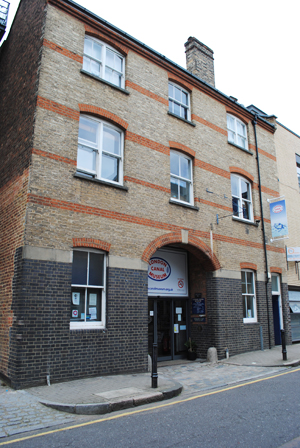
As an added bonus, the museum is housed in what was once an ice warehouse and it’s still possible to view one of two massive ice wells which occupied the basement space where blocks of ice imported from Norway were once stored.

There are also displays on the history of the former ice business owner, Carlo Gatti, and some interesting information about the early days of ice and icecream in London – of particular note is the collection of ‘licking dishes’ in which icecream was sold for a penny.

WHERE: London Canal Museum, 12-14 New Wharf Road (nearest Tube station is King’s Cross); WHEN: 10am to 4.30pm, Tuesday to Sunday (open late until 7.30pm on the first Thursday of each month); COST: £4 an adult/£3 concessions/£2 children/£10 a family; WEBSITE: www.canalmuseum.org.uk

What’s in a name?…King’s Cross

The location now known as King’s Cross, north-west of the City, takes its name from a monument adorned with an 11 foot high statue of King George IV which once stood on a site now occupied by King’s Cross Railway Station.

The area had been previously known as Broadford Bridge or Battlebridge – the latter a name many associated with the apparently erroneous belief that it was here, at a bridge which once crossed the River Fleet, the Iceni Queen Boudicca (also known as Boadicea) ill-fatedly confronted the Roman Army under the command of Gaius Suetonius Paulinus.

From the 1830’s (King George IV ruled from 1820 to 1830), however, the area took on the name of King’s Cross thanks to the erection of what Walter Thornbury described in his 1878 text, Old and New London, as a “ridiculus octagonal structure crowned by an absurd statue of George IV”.

The structure, said to be 60 feet high, was erected at the intersection of Gray’s Inn Road, Pentonville Road and what we now know as Euston Road, and during its relatively short lifespan, was employed at different times as a police station and as a pub (complete, apparently, with a camera obscura in the upper level).

It was completely removed by 1845 (King’s Cross Railway Station officially opened in 1852).

The area of King’s Cross has been settled back as far as Roman times – St Pancras Old Church is one of the oldest sites of Christian worship in England although the current church is Victorian – but it wasn’t until the 1700s and 1800s that it was transformed in to an urban area with the arrival of canals – including The Regent’s Canal – and the railways.

Traditionally one of London’s poorest areas, it survived World War II bombings but subsequently suffered as the railways declined in the post-war period. By the 1980s, it had become notorious as a red light district.

It has since gone through – and is still going through – a gradual gentrification process, however, with the 67 acre development King’s Cross Central among the projects currently under construction.

Key attractions of the area include The British Library, The London Canal Museum, arts centre King’s Place, and the recently refurbished St Pancras Renaissance London Hotel.

It’s also now home to St Pancras International – London’s Eurostar terminus (having been moved here from Waterloo) – as well as King’s Cross Railway Station which is believed by many, despite the lack of any evidence, to be the burial site of Queen Boadicea (it’s said she still lies beneath platform 9 or 10) and which is the home of the fictitious platform 9 and 3/4 from which Harry Potter catches the train to Hogwarts.

Around London – See museums after hours; the White Tower is white again; and, foundation stone for Bomber Command is laid…

• The annual Museums at Night event returns to London (and Britain) this weekend with hundreds of museums and galleries across the country opening their doors for special after hours events. Among those places in London taking part is the Churchill War Rooms, which is hosting a 1940s evening on Friday night, the London Canal Museum which is hosting”candle-lit tours, atmospheric lighting, and exhibits of art and film in dark places”, and the Petrie Museum of Egyptian Archaeology which is hosting a double hill of Hammer films and a “Gothic Egypt” trail. Other institutions taking part include the Sir John Soane Museum, the National Gallery, the Bank of England Museum, and Orleans House Gallery in Twickenham.  For more information about what’s on see www.museumsatnight.org.uk

King William the Conqueror celebrated at the Tower of London this week following the completion of a £2 million, three year project to clean the White Tower. First built shortly after the Norman Conquest of 1066, the tower had become blackened by pollution but has now been restored to its original color. For more information on visiting the Tower, see www.hrp.org.uk/toweroflondon/.

A foundation stone has reportedly been laid for a Bomber Command Memorial in Green Park. The memorial, which is due to be completed for the Queen’s Jubilee celebrations in 2012, will be constructed of Portland stone and will feature a nine foot tall statue of a bomber command aircrew. Bomber Command lost more than 55,000 airmen during World War II. The foundation stone was laid by the Duke of Gloucester. Supporters of the monument’s construction have included former Bee Gee Robin Gibb, Sir Michael Beetham, Marshal of the RAF, and  The Daily Telegraph newspaper which is running an appeal to help raise funds for the memorial.