The Royal Tank Regiment Memorial in Whitehall is among the many war memorials in London – poignant reminders of what the nation stopped to remember on Remembrance Sunday. The work of Vivien Mallock, this particular memorial was unveiled on the corner of Whitehall Court and Whitehall Place by Queen Elizabeth II in June, 2000. The memorial shows the crew of a World War II Comet tank including a commander, loader, gunner, hull machine gunner and driver. For more on the regiment, see www.royaltankregiment.com.
Queen Elizabeth II
Around London – The Georgians at the British Library; wartime artist on show; Regent Street’s Christmas lights; Westminster’s new organ; and, celebrating success at the NPG…
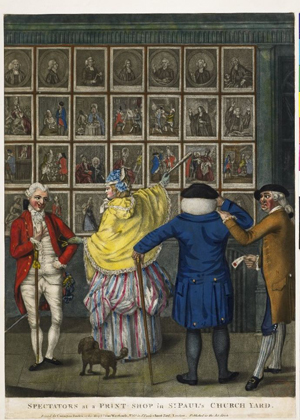
• The Georgians are under the spotlight in a new exhibition opening at the British Library tomorrow. Georgians Revealed: Life, Style and the Making of Modern Britain explores the ways in which the Georgian world influenced pop culture in Britain today, everything from fashion and theatre-going to our obsessions with celebrity scandals. The display features more than 200 artefacts from the library’s collection and includes Jeremy Bentham’s violin, Joseph van Aken’s An English Family at Tea, rare books and magazines, and illustrations and designs of landmark building’s such as Sir John Soane’s home (and now museum) in Lincoln’s Inn Fields. The exhibition, which is accompanied by a series of events (see the library website for details) comes ahead of the 300th anniversary of the accession of King George I next year. Runs until 11th March. Admission charge applies. Meanwhile, to mark the exhibition, the library has joined with Cityscapes in launching a new Georgian garden installation on the library’s piazza. Titled Georgeobelisk, the six metre high installation, will remain on the piazza for five months. A tribute to the four King Georges, it also serves as a reminder that it was also during the Georgian era that the British love of gardening was cultivated. For more, see www.bl.uk/whatson/exhibitions/georgiansrevealed/index.html. PICTURE: Spectators at a Print shop in St Paul’s churchyard © British Museum.
• Painting normally housed in “Britain’s answer to the Sistine Chapel” go on display in Somerset House today. The artworks, described as the “crowning achievement” of wartime artist Stanley Spencer, usually grace the walls of Sandham Memorial Chapel but are on display in London while the National Trust carries out restoration work at the Berkshire property. Spencer painted the works – which combine realism and visions from his imagination and were completed in 1932 – after serving as a hospital orderly during World War I. The free display – Stanley Spencer: Heaven in a Hell of War – can be seen until 26th January. For more, see www.somersethouse.org.uk.
• Regent Street’s Christmas lights – a preview of the upcoming DreamWorks film Mr Peabody and Sherman – will be turned on this Saturday night. Actor Ty Burrell, director Rob Minkoff and singer Leona Lewis will have the task of switching on the lights at about 7.15 pm while performers will include Passenger, Eliza Doolittle and former Spice Girls Emma Bunton and Melanie C. The event will be hosted by radio presenters Bunton and Jamie Theakston. The street will be traffic free all day and from 3pm to 7pm, Regent Street retailers will be showcasing fashions on a catwalk located just North of New Burlington Street. Programmes will be available from information points on the day.
• A new organ was dedicated in Westminster Abbey’s Lady Chapel on Tuesday. The organ was commissioned by the Lord Mayor of London, Roger Gifford, as a gift to the Queen to mark the 60th anniversary of her coronation in 1953. The Queen agreed the organ, which had briefly resided at the Lord Mayor’s residence the Mansion House, should be installed permanently in the Lady Chapel, built by King Henry VII. The new organ was dedicated by the Earl of Wessex. For more, see www.westminster-abbey.org.
• Now On: Achievement: New Photographs 2011-2013. Inspiring Britons at the peak of their professions are the subject of an exhibition running at the National Portrait Gallery. The display of recently acquired and previously un-exhibited photographs depict the likes of writer and presenter Charlie Brooker (by Chris Floyd), actress Gina McKee (Mark Harrison) and Skyfall director Sam Mendes (Anderson & Low). Admission is free. Runs until 5th January in Room 37a. For more, see www.npg.org.uk.
10 (more) curious London memorials…5. National Police Memorial…
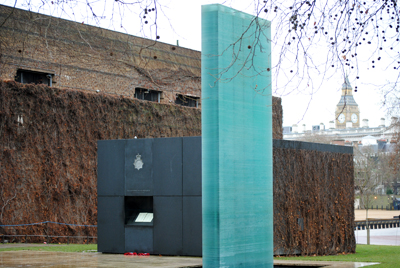
The unobtrusive box-like structure and adjacent glass pillar located on the corner of The Mall and Horse Guards Road in Whitehall is another memorial that is easy to overlook.
Unveiled by Queen Elizabeth II in 2005, it commemorates the 4,000 police officers who have been killed in the course of their duty in the UK and was commissioned by the Police Memorial Trust.
The trust was formed in the mid-1980s by the late film director Michael Winner following the shooting death of WPC Yvonne Fletcher, who was killed while policing a protest outside the Libyan Embassy in St James’s Square on 17th April, 1984.
The Trust ensured an individual memorial to WPC Fletcher now marked the spot of her death and was followed by further memorials to individual police officers before the trust began a campaign for a larger, national memorial in the mid-1990s.
As much as £2.3 million was raised from the public for the memorial which was designed by architectural firm Foster + Partners.
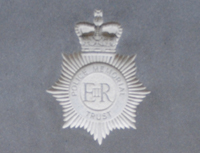
The memorial, which won a RIBA award, consists of a black granite clad wall with a glass chamber set into its face, inside which is a Book of Remembrance listing the names of all UK police officers killed in the course of duty (the pages of the book are apparently turned every two weeks). Above the chamber is carved the Metropolitan Police Crest.
The tall glass pillar which stands nearby in a reflecting pool was designed to pay homage to the blue lamps that once burned outside police stations.
For more on other police memorials in the UK, see www.policememorial.org.uk.
LondonLife – Recalling the Queen’s Coronation…
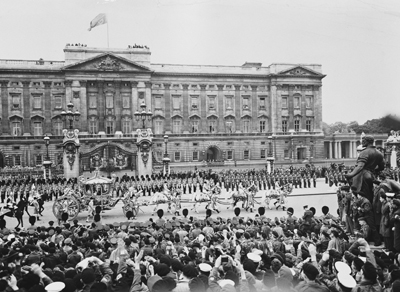
The Gold State Coach passes in front of Buckingham Palace on 2nd June, 1953. The image is among the displays at the special exhibition marking the 60th anniversary of the coronation of Queen Elizabeth II which forms part of the summer opening of Buckingham Palace’s State Rooms. The exhibition, which runs until 29th September, features dresses, uniforms and robes worn by the principal royal party on the day along with works of art, paintings and other objects related to it. Admission charge applies. For more, check out www.royalcollection.org.uk. PICTURE: Royal Collection Trust/All Rights Reserved.
Around London – Celebrating the coronation at Buckingham Palace; Royal births at the MoL; the Fourth Plinth unveiled; Menon remembered; and, manufacturing at the Design Museum…
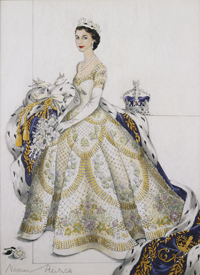
• The Queen’s Coronation in 1953 is the subject of a special exhibition opening at Buckingham Palace as part of the palace’s summer opening. Celebrating the 60th anniversary of the coronation, the display features an array of outfits including uniforms and robes worn on the historic event on 2nd June, 1953, as well as a series of paintings recording the event, works of art and objects used on the day and film footage and sound recordings. Among the highlights of the exhibition will be sketches made by Norman Hartnell, the principal designer of the outfits worn at the coronation by the Queen, principal ladies of the immediate Royal Family and the Maids of Honour. The State Rooms of Buckingham Palace open on Saturday and remain open until 29th September. An admission charge applies. For more, see www.royalcollection.org.uk. PICTURE: Her Majesty The Queen in her Coronation Dress, 1953, Norman Hartnell. Royal Collection Trust/All Rights Reserved.
• Meanwhile in this, the week of the birth of Prince George, it’s only fitting that we mention a small display at the Museum of London showcasing memorabilia relating to royal babies of years past. A Royal Arrival features baby clothes and other items worn by future monarchs. They include a embroidered skullcap worn by the future King Charles I, a tiny linen vest and mitten which once was worn by the future King George III and a dress emblazoned with the three feather insignia which belonged to the future King Edward VII, eldest son of Queen Victoria. The free display will be on show until October. For more, see www.museumoflondon.org.uk.
• The new commission for Trafalgar Square’s Fourth Plinth will be unveiled today. The 4.7 metre high sculpture, Hahn/Cock, is the work of contemporary artist Katharina Fritsch. It will sit on the plinth for the next 18 months. For more details, see www.fourthplinth.co.uk.
• Indian statesman VK Krishna Menon has been commemorated by English Heritage with a blue plaque on his former residence in Highgate. A key campaigner for Indian independence, Menon lived at 30 Langdon Road from 1929 to 1931, having moved to England from Madras in 1924. In 1947, Menon was appointed India’s First High Commissioner in London and among his greatest achievements was his work in keeping the country in the British Commonwealth after independence. Having been a local councillor in St Pancras, he later returned to India and embarked upon a political career there. For more, see www.english-heritage.org.uk/discover/blueplaques/.
• On Now: The Future is Here. A major new exhibition examining the changes taking place in manufacturing around the world, opened this week at the Design Museum. The Future is Here looks at how everything from “cars to shoes” is manufactured, funded, distributed and bought. Among highlights is a ‘Factory’ where visitors can discover how 3D printing works and see production in process. There will also be the chance to make your own ‘action doll’ and see a sofa designed through a crowd-sourcing process which involved members of the public. Runs until 3rd November. Admission charge applies. For more, see www.designmuseum.org.
Around London: Royal fashion at Kensington; Music in Hyde Park; celebrating African literature at the British Library…
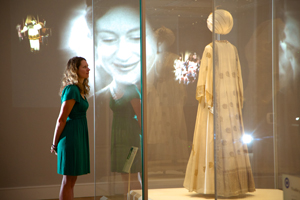
• A new exhibition looking at the fashions of three royals over four decades last century opens at Kensington Palace today. Fashion Rules features five rooms of dress displays with a focus on the fashions of Queen Elizabeth II in the 1950s, Princess Margaret in the 1960s and 1970s and Diana, Princess of Wales, in the 1980s. Twenty-one dresses are included in the display which explores how the royal women negotiated how to dress fashionably while observing the “rules” of the Royal Wardrobe and includes film footage and photography. The dresses include five of the Queen’s evening dresses – one of which is a gown fashioned for the Queen by Norman Hartnell in the colours of the flag of Pakistan, a full-length kaftan and matching turban of ivory sari silk worn by Princess Margaret while on the island of Mustique (on display for the first time), and, two Eighties dresses worn by Diana which have never before been displayed in the UK. Admission is included in entry price. For more, see www.hrp.org.uk/KensingtonPalace/. PICTURE: HRP/Newsteam.
• The Rolling Stones are back in Hyde Park this weekend as part of a summer of music in the Royal Park. The concert will take place almost 44 years to the day since the Stones first played the park and comes in the wake of their ’50 and Counting’ shows last year. Their first performance in the park – on 5th July, 1969 – saw the live debut of guitarist Mick Taylor and was a tribute to founding member Brian Jones who has died only two days before. For the full programme of Barclaycard presents British Summer Time Hyde Park, head to www.bst-hydepark.com.
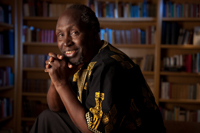
• The British Library is partnering with the Royal African Society to host the UK’s largest festival of African literature – Africa Writes – this weekend. Kicking off on Friday, the three day festival features Ngugi wa Thiong’o, described as “Africa’s greatest living novelist” (pictured), and his son, rising star Mukoma Ngugi, in a conversation chaired by Ellah Allfrey, deputy editor of Granta Magazine. Other programme highlights include a poetry evening, ‘Diaspora Writes Back’; a tribute to Chinua Achebe, the “father of contemporary African literature”; and the writers short-listed for The Caine Prize – the most prestigious prize for African short fiction. For more, see www.africawrites.org. PICTURE: Ngugi wa Thiong’o © Daniel Anderson.
LondonLife – Celebrating the 60th anniversary of Queen Elizabeth II’s coronation…
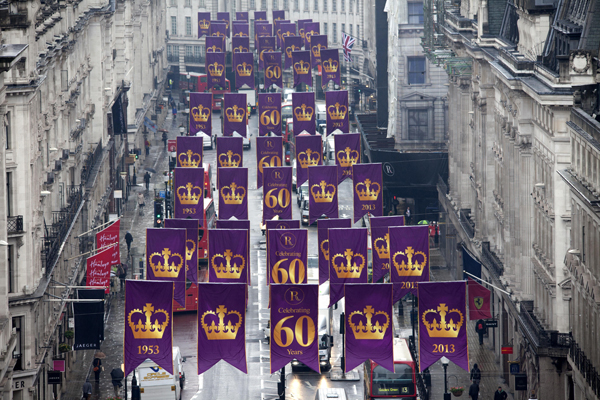
Regent Street is adorned with flags in celebration of the 60th anniversary of Queen Elizabeth II’s coronation, among the many ways in which London has been celebrating the occasion. The official anniversary was on Sunday – it was 2nd June, 1953, some 16 months after the 25-year-old Queen took the throne following the death of her father King George VI, that Queen Elizabeth II was crowned in Westminster Abbey. In celebrations yesterday, the King’s Troop Royal Horse Artillery fired a 41-gun salute in Green Park at midday followed an hour later by a 62-gun salute fired by the Honourable Artillery Company across the River Thames from the Tower of London. The Queen and other members of the royal family (along with some 2,000 guests) is attending a special service at Westminster Abbey today (for more on how the abbey is celebrating the event, see our earlier post here). More than 8,000 people attended the coronation which was watched by an estimated 27 million people across the country. PICTURE: RegentStreetOnline
Around London – Celebrating the Coronation’s 60th anniversary; Benjamin Britten; Keat’s House Festival; and, silver service in Roman Britain…
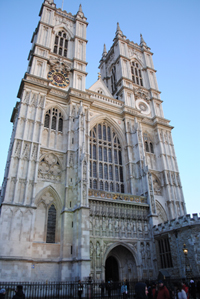
• Sunday marks 60 years since Queen Elizabeth II’s coronation and Westminster Abbey – site of that event – is celebrating with a series of events. These include a special 60th Anniversary of the Coronation Service on Tuesday (4th June) to be attended by the Queen, Duke of Edinburgh and members of the royal family as well as a public lecture to be given by the Bishop of London Richard Chartres on Friday night (7th June – booking is essential), a concert performed by the abbey choir (13th June), and a new exhibition in the chapter house featuring archive images of the 1953 coronation ceremony and of preparations which took place at the abbey. Meanwhile the Coronation Chair, used in most coronations since the 14th century and having just undergone conservation work, is the subject of a new display in St George’s Chapel, and two new commemorative stained glass windows have been installed in King Henry VII’s Lady Chapel – the first commissioned by the abbey for more than a decade, they have been designed by artist Hughie O’Donoghue. For more on the abbey’s celebrations, see www.westminster-abbey.org.
• Composer Benjamin Britten is the subject of a new exhibition opening at the British Library tomorrow. Poetry in Sound: The Music of Benjamin Britten (1913-1976) looks at the poetic and literary influences on the work of the man often described as the greatest English composer since Purcell. In particular it examines his collaboration with WH Auden and the interplay of his work with authors such as William Blake, Wilfred Owen, Alfred Lord Tennyson and William Shakespeare. As well as composition manuscripts, the exhibition features photographs, concert programmes and unpublished recordings of his music. There are a range of events accompanying the exhibition which runs until 15th September. An admission charge applies. For more, see www.bl.uk.
• The Keats House 2013 Festival is underway this week with activities ranging from poetry readings to felt-making demonstrations, free family workshops and musical performances. The programme of events runs until 2nd June, all under this year’s theme of ‘Health is My Expected Heaven’: The Body and The Imagination. Poet John Keats lived at the house in Hampstead, not far from Hampstead Heath, from 1818 to 1820 and it is the setting for some of his most acclaimed poetry including Ode to a Nightingale. It was this house that he left to travel to Rome where he died of tuberculosis at the age of 25. For more on the festival programme, follow this link.
• On Now: Silver Service – Fine dining in Roman Britain. This free exhibition at the British Museum recreates the experience of dining late in the Roman era and uses the Mildenhall Great Dish, Britain’s finest late Roman silver dining service, as an example of the type of large platter on which food for sharing would have been presented. The exhibition, which runs until 4th August, is free (keep an eye out for our upcoming Treasures of London on the Mildenhall Great Dish). For more information, see www.britishmuseum.org.
A foody feast at Kew; the Queen goes to Westminster; Morecambe & Wise remembered; and, Francis Goodman on show…
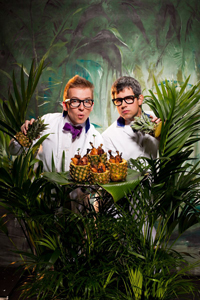
• Kew Gardens is all about food this summer and autumn with the launch of IncrEdibles: A Festival to Feed the Imagination this Sunday. Visitors are being encouraged to take part in a range of food-related activities including taking a fruit-shaped boat on the Palm House Pond around a floating pineapple island (the Tutti Frutti Boating Lake has been designed by “culinary creators” Bompas & Parr – pictured right), checking out a ‘global gastronomic garden’ featuring more than 90 edible plants on the Great Lawn, and listening to volunteer guides in the Palm House discussing how many of our foods have their origins in the rainforest. The festival also features a range of talks, tours and tastings and you can sample some special foods at the onsite eateries. The festival runs until 3rd November. For more, see www.kew.org. PICTURE: Bompas & Parr
• A portrait of Queen Elizabeth II standing on the Cosmati pavement in Westminster Abbey will go on public display for the first time this afternoon at the abbey as part of the celebrations surrounding the 60th anniversary of the Queen’s coronation. The Coronation Theatre: Portrait of Her Majesty Queen Elizabeth II, is the work of Australian-born, London-based artist Ralph Heimans and has been acquired by the abbey for its collection. The painting, which was officially unveiled in London for the Diamond Jubilee last year, was exhibited at the National Portrait Gallery in Canberra until the end of March. The painting can be viewed in the chapter house at the abbey from 2pm today and will remain on display until 27th September. For more, see www.westminster-abbey.org.
• A blue plaque commemorating late comic duo Eric Morecambe and Ernie Wise has been unveiled at the Teddington Studios in west London. The Heritage Foundation plaque was reportedly unveiled by Morecambe’s widow Joan and daughter Gail. Teddington’s Studio One was where the last four series of the duo’s show were produced.
• On Now: Francis Goodman: Back in Focus. This display at the National Portrait Gallery features more than 40 black and white photographs spanning the career of fashion and society photographer Francis Goodman (1913-1989), from the 1930s to the 1970s and includes portraits of the likes of artists Francis Bacon and Lucian Freud as well as writers including Noel Coward and Nancy Mitford. The exhibition runs until 3rd November. Admission is free. For more, see www.npg.org.uk.
Around London – Margaret Thatcher’s funeral; telling the Jewel Tower’s story; depot open weekend; and, Designs of the Year…
• Margaret Thatcher’s funeral will be held next Wednesday at St Paul’s Cathedral from 11am with Queen Elizabeth II among those attending (the first time she has attended the funeral of a British politician since Sir Winston Churchill’s in 1965). The funeral procession of the former Prime Minister, who died on Monday aged 87, will start at the Houses of Parliament and make its way down Whitehall to Trafalgar Square before moving down the Strand, Fleet Street and Ludgate Hill to St Paul’s Cathedral. Baroness Thatcher’s coffin will carried in a hearse for the first part of the journey and will be transferred to a gun carriage drawn by six horses of the King’s Troop Royal Horse Artillery at St Clement Danes church on the Strand for the final part of the journey. There will be a gun salute at the Tower of London. Meanwhile, a Book of Condolence has opened at St Margaret’s Church, beside Westminster Abbey, this morning and will be available for people to pay their respects until 17th April, during the church’s opening hours. St Margaret’s – which stands between Westminster Abbey and the Houses of Parliament – is commonly known as the parish church of the House of Commons.
• The story of the Jewel Tower – one of the last remaining parts of the medieval Palace of Westminster – is told in a new exhibition at the historic property. Now in the care of English Heritage, the tower – located to the south of Westminster Abbey, was built in 1365 to house King Edward III’s treasury, later used as King Henry VIII”s ‘junk room’, the record office for the House of Lords, and, from 1869, served was the “testing laboratory” for the Office of Weights and Measures. The exhibition, which opened this month, is part of the English Heritage celebrations commemorating the centenary of the 1913 Ancient Monuments Act. The Jewel Tower is open daily until November. Admission charge applies. For more, see www.english-heritage.co.uk.
• See some of the earliest underground trains, a Lego version of Baker Street station and ride the Acton Miniature Railway. The London Transport Museum’s depot in Acton is holding it’s annual spring open weekend this Saturday and Sunday and in celebration of the Underground’s 150th anniversary, attractions will include the Metropolitan Steam Locomotive No. 1 and the recently restored Metropolitan Carriage 353 along with model displays, rides on the miniature railway, film screenings, talks, and workshops. Wales’ Ffestiniog Railway team – celebrating their own 150th anniversary – will also be present with the narrow gauge train, Prince. Open from 11am to 5pm both days. Admission charge applies. For more, see www.ltmuseum.co.uk.
• Now On: Designs of the Year. The Design Museum has unveiled contenders for the sixth annual Designs of the Year competition and you can what they are in this exhibition. Consisting of more than 90 nominations spanning seven categories, the nominated designs include the Olympic Cauldron by Heatherwick Studio, The Shard – western Europe’s tallest building – by Renzo Piano, a non-stick ketchup bottle invented by the Varanasi Research Group at MIT, and Microsoft’s Windows phone 8. The exhibition runs until 7th July – the winners will be announced this month. Admission charge applies. For more, see www.designmuseum.org.
10 of London’s greatest Victorian projects – 9. The Underground…
Apologies for the delay in posting this piece – next week we’ll post the final in this series!
The first underground railway system in the world, the London Underground – fondly known as the ‘Tube’ – is this year celebrating the 150th anniversary of its creation.
Born out of an idea to link the inner city with the various large rail termini on the outskirts, the first section of what is now the underground system – a six kilometre stretch between Paddington and Farringdon – opened on 9th January, 1863, and was run by the Metropolitan Railway, known less formally as the ‘Met’.
It was constructed using the ‘cut and cover’ method in which streets were dug up and tracks laid in a trench before being covered by brick-lined tunnels and the street above replaced (the method was later abandoned, apparently due to the disruption it caused to traffic). The first trains were steam-driven locomotives and drew gas-lit wooden carriages behind them (the first journey was re-enacted earlier this year – see our earlier post here. Other events commemorating the 150th included a visit to Baker Street Station by Queen Elizabeth II, Prince Philip and the Duchess of Cambridge).
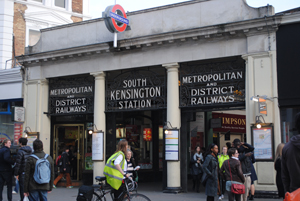
The idea proved a success – 26,000 people used the new railway every day during the first six months of its operation – and the Metropolitan District Railway opened a new line between Westminster and South Kensington (station is pictured) in December, 1868, while the first Tube tunnel under the Thames, from the Tower of London to Bermondsey, opened in 1880, and what is now the Circle Line was completed in 1884.
In December 1890, the world’s first deep-level electric railway opened, running between King William Street in the City and passing under the Thames to Stockwell. Ten years later the ‘Twopenny Tube’, more formally known as the Central London Railway, opened between Shepherd’s Bush and Bank (it was from this that the use of the word ‘Tube’ to describe the Underground system caught on).
The uniting of the system began the following year with the creation of the Underground Electric Railway Company of London and by World War I, all but the Met were within a single group organisation. The name Underground first appeared on stations in 1908, the same year electric ticket machines were introduced.
In 1933, the Underground came under the control of the London Passenger Transport Board – the same year that Harry Beck’s first diagrammatic map of the underground system appeared.
Stations in the system were used as air raid shelters during World War II – part of the Piccadilly Line was closed and used as a storage site for treasures from the British Museum. Following the war, the organisation running the system went through various name changes until the formation of London Underground in 1985.
The system has since expanded – the Victoria Line was opened in the late 1960s and the Jubilee Line a decade later – and now consists of more than 408 kilometres of railway lines and 275 stations which serve more than three million passengers a day – equating to more than a billion a year, the same as the entire national rail network.
For more on the history of the Underground, see our earlier 10 Questions with London Transport Museum curator Simon Murphy. Poster Art 150 – London Underground’s Greatest Designs runs at the London Transport Museum until October. Admission charge applies. For more (including the many events around the exhibition), see www.ltmuseum.co.uk/whats-on/events/events-calendar#posterart150.
For more, check out David Bownes’ Underground: How the Tube Shaped London or Andrew Martin’s Underground, Overground: A Passenger’s History of the Tube
.
10 of London’s greatest Victorian projects – 4. The Palace of Westminster…
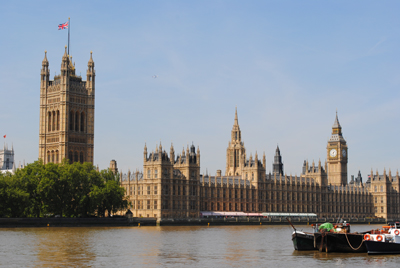
Commonly thought to be older than it actually is due to its Gothic stylings (although, to be fair, parts of it do date from medieval times), the Palace of Westminster – or, as it’s more commonly known, the Houses of Parliament – didn’t actually take on much of its current appearance until the latter half of the 19th century.
The need for a new building for parliament arose after 1834 when a fire, caused by the overheating of two underfloor stoves used to incinerate the Exchequer’s obsolete tally sticks, tore through the former complex, leaving only some structures from the old palace intact. They included the 11th century Westminster Hall (the largest in Europe when it was built), 14th century Jewel Tower and a chapterhouse, crypt and cloisters, all of which was once attached to the now gone St Stephen’s Chapel.
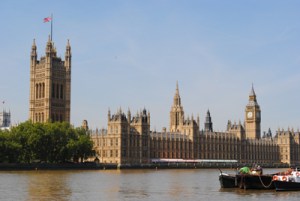
While King William IV offered the use of Buckingham Palace for Parliament, the idea – along with a host of other options – was rejected as unsuitable. Instead, a competition was held for a new design and after almost 100 entries were considered, architect Charles Barry and his design for a new palace in the perpendicular Gothic style was chosen. Interestingly, while Barry was a classical architect, under the terms of the competition, designs were required to be in a Gothic style, thought to embody conservative values .
Incorporating some of the remains of the old palace – including Westminster Hall but not the Jewel Tower which to this day stands alone – the design was based around a series of internal courtyards with the House of Commons and House of Lords located on either side of a central lobby (first known as Octagonal Hall). The design involved reclaiming some land from the Thames so the building’s main river-facing facade could be completed.
Towers stand at either end of the complex – the Victoria Tower over the Sovereign’s Entrance at the southern end of the complex (for many years the tallest square stone tower in the world) and the narrower tower formerly known as the Clock Tower which houses the bell Big Ben, at the northern end – and there is a central Octagonal Tower which stands directly over the Central Lobby. The Clock Tower, incidentally, was renamed the Elizabeth Tower last year in honour of Queen Elizabeth II’s Diamond Jubilee (for more on it and Big Ben, see our earlier entries here and here).
Other towers include the Speaker’s Tower (located at the northern end of the building on the waterfront, this contains a residence for the Speaker), the Chancellor’s Tower (located at the southern end, it too contained a residence originally used by the Lord Chancellor) and St Stephen’s Tower – located in the middle of the building’s west front, it contains the public entrance to the building. Significant other rooms in the palace complex include the Robing Room – where the Queen puts on her ceremonial robes and crown before the State Opening of Parliament – and the Royal Gallery, used for state occasions.
The foundation stone (the building was constructed out of sand-coloured limestone from Yorkshire) was laid in 1840 and construction of the monumental building – which features more than 1,100 rooms and two miles of passageways – wasn’t completely finished until the 1870s although most of the work had been completed by 1860 (the year Barry died). The House of Lords first sat in their new chamber in 1847 and the House of Commons in 1852 (it was at this point that Barry was knighted for his work).
The cost, meanwhile, originally estimated at less than £750,000, ended up coming in at more than £2 million.
Much of the interior decoration owes its appearance to the Gothic revivalist Augustus Pugin who designed everything from wallpapers, to floor tiles and furnishings. Pugin also helped Barry with the external appearance but like Barry died before the project was completely finished (in 1852).
The palace was bombed numerous times in World War II – in one raid, the Commons Chamber was destroyed as firefighters opted to save the much older Westminster Hall instead. It was later rebuilt under the direction of Sir Giles Gilbert Scott and completed by 1950. Other aspects of the building have also been restored.
A Grade I-listed building classified as a World Heritage Site, Barry’s Houses of Parliament remain one of London’s most iconic structures. We’ll be looking in more detail at some of the building’s features in future posts.
WHERE: Houses of Parliament (nearest Tube stations are Westminster, St James’s Park and Embankment); WHEN: Tours (75 minutes) are run from 9.15am to 4.30pm on Saturdays (also six days a week during summer opening); COST: £15 adults/£10 concessions/£6 children five to 15 years (children under five are free). Prices go up after 1st April – check website for details and to purchase tickets (tours for UK residents, including climbing the Elizabeth Tower, can also be arranged through your MP); WEBSITE: www.parliament.uk.
For more, see Robert Wilson’s guide to the The Houses of Parliament or David Cannadine’s indepth, The Houses of Parliament: History, Art, Architecture
. For more on the story of the fire in 1834, see head parliamentary archivist Caroline Shenton’s recent book The Day Parliament Burned Down
.
10 of London’s greatest Victorian projects – 1. Royal Albert Hall…
The London Underground’s first railway journey took place on 9th January, 1863, and to celebrate we’re taking a look at 10 great Victorian-era projects in London. First up is Royal Albert Hall in South Kensington.
Opened on 29th March, 1871 (and in continuous use ever since), Royal Albert Hall was built in fulfilment of Prince Albert’s dream of creating a hall that would stand in the heart of the South Kensington estate and provide a focal point for the promotion of the arts and sciences.
It was on the back of the success of the Great Exhibition held in Hyde Park in 1851, that Prince Albert, Prince Consort to Queen Victoria, proposed the creation of a permanent arts and sciences precinct in South Kensington and advised the purchase of land for that purpose (the hall is located on land once occupied by Gore House). But it wasn’t until after his death in 1861 that his vision was actually realised.
Construction of the hall – which was to serve as the centrepoint of the cultural precinct which became known, somewhat derisively, as Albertopolis – started in April 1867 (initially to be known as The Central Hall of Arts and Sciences, the hall apparently had its named changed to the Royal Albert Hall of Arts and Sciences by Queen Victoria while she was laying the foundation stone on 20th May that year – around 7,000 people attended the event). It was designed by engineers Captain Francis Fowke and, after his death, Lieutenant Colonel Harry Darracott Scott, based on concepts put forward by the man described as the “driving force” behind the project, Henry Cole (later the first director of what is now the Victoria and Albert Museum). He had been inspired by the Roman amphitheatres he had seen while touring in southern France.
While initial proposals had suggested the hall would accommodate as many as 30,000 people, this was later scaled back to about 7,000 (and today the figure is apparently about 5,500 thanks to fire regulations).
The central auditorium, measuring 185 feet by 219 feet, is covered by a glazed dome constructed of wrought iron girders and was the largest structure of its kind in the world at the time of its building. The hall’s exterior was built from about six million red bricks and features an 800 foot long terracotta frieze showing figures engaged in a range of cultural pursuits. Much of the interior decorative detail was added later.
So overcome was Queen Victoria at the building’s opening in 1871 that Edward, the Prince of Wales, had to speak in her place, declaring it open on her behalf before a crowd which included then Prime Minister Benjamin Disraeli. Her only reported comment on the hall was that it reminded her of the British constitution.
The Grade One listed hall – which thankfully only suffered minor damage during World War II bombing raids (the German pilots apparently used its bulk as a navigation aid) – has since undergone substantial modifications including works undertaken to improve the hall’s acoustics, the replacement of gas lighting (electricity was first demonstrated in the hall in 1873) and demolition in 1889 of an adjoining glass conservatory to its south. A massive programme of improvements was carried out between 1996 and 2004 at the cost of more than £69 million.
The list of those who have performed or spoken at the hall reads something like a who’s who – among them are classical composers Wagner, Verdi, Elgar and Rachmaninov, singers and musicians including Frank Sinatra, Jimi Hendrix, The Beatles, The Who, Eric Clapton, Elton John, Adele, and Jay Z as well as sports personalities including boxer Mohammed Ali and tennis player John McEnroe, explorers like Sir Ernest Shackleton, world figures such as Queen Elizabeth II, Sir Winston Churchill, former South African president Nelson Mandela, the Dalai Lama and former US president Bill Clinton and other high profile personalities such as Albert Einstein, Alan Ginsberg and Paul Robeson.
Among the other events held in the hall have been a marathon race, Greco-Roman wrestling and two Welsh National Eisteddfod’s (in 1887 and 1909). One of the most popular series of events now held there each year are the BBC Promenade Concerts, known as The Proms they include more than 70 events, which have been held in the hall since World War II.
A Victorian masterpiece. For more on the hall, see www.royalalberthall.com.
Exploring London’s 10 most popular posts for 2012 – 2 and 1…
And so we come to the final two entries in our countdown and both, not suprisingly, are part of our Diamond Jubilee related coverage…
2. LondonLife – A look back at Queen Elizabeth II’s reign. Concerning a V&A exhibition of portraits of the Queen.
1. Celebrating the Diamond Jubilee with 10 royal London locations – 5. Buckingham Palace. One of a series looking at London locations associated with the Queen, this examined some of the history of London’s most famous palace.
Wishing all our readers a very Happy New Year!
Exploring London’s 10 most popular posts for 2012 – 8 and 7…
8. Olympics Special – London bridges aglow. A piece showing how many of inner London’s bridges were illuminated at night during the Games.
7. LondonLife – The Queen visits the newly transformed Kensington Palace. Queen Elizabeth II pays a visit to mark the completion of a £12 million, two year renovation project at Kensington Palace.
What’s in a name?…Barbican
Though it’s these days associated with a Brutalist housing estate and performing arts centre based in the north of the City of London, the name Barbican has been associated with the area on which the estate stands for centuries.
The word barbican (from the Latin barbecana) refers to an outer fortification designed to protect the entrance to a city or castle. In this case it apparently referred to watchtower which may have had its origins in Roman or Saxon times (or maybe both). The City of London website suggests it was located “somewhere between the northern side of the Church of St Giles Cripplegate and the YMCA hostel on Fann Street”.
When-ever it was built, the watchtower was apparently demolished on the orders of King Henry III in 1267, possibly as a response to Londoners who had supported England’s barons when they had rebelled against him. One source suggests the tower was rebuilt during the reign of King Edward III but, if so, the date of its subsequent demolition remains unknown.
Later residents of the area – which become known as a place to trade new and used clothes – included John Milton and William Shakespeare.
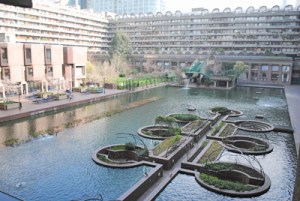
The area known as Barbican was devastated by bombing raids in World War II. Discussions on the future of the site started in 1952 and for more than 10 years plans for redeveloping the area were debated until finally, in the early 1960s, work began on what is now the Barbican Estate including three tall residential towers (part of the residential estate is pictured above). Completed in the mid 1970s, the Brutalist design of the complex, which features buildings named after historical figures associated with the area, means it meets with strong reactions from those who encounter it whether love – or hate.
Construction of the arts centre – known as the Barbican Centre – the largest performing arts centre in Europe and home to the London Symphony Orchestra – was started in the early 1970s. The £156 million centre was eventually opened by Queen Elizabeth II in 1982.
Other buildings within the Grade II listed complex include the Guildhall School of Music and Drama, the City of London School for Girls and a YMCA.
10 Historic London Markets – 2. Smithfield Market…
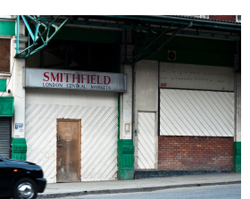
Now the largest wholesale meat market in the UK and one of the biggest in Europe, the connections between the site of Smithfield Market, officially known as the London Central Markets, and livestock go back to at least 800 years.
Since the 12th century animals were routinely traded here thanks to the site’s position on what was then the northern edge of the city. Smithfield was also known for being an area for jousting and tournaments and was the location of the (in)famous St Barthlomew Fair (this closed in 1855) as well as an execution ground – among those executed here were Wat Tyler, leader of the Peasant’s Revolt, and ‘Braveheart’, Sir William Wallace (1305).
Skip ahead several hundred years and, by the the mid-1800s, traffic congestion led to the livestock trade being relocated to a new site north of Islington. Plans were soon launched to locate a cut meat market on the Smithfield site.
Following the passing of an Act of Parliament, work on the new market began in 1866 with Sir Horace Jones (he of Tower Bridge fame), the City Architect, overseeing the design. Constructed of ornamental cast iron, stone, Welsh slate and glass, the initial market buildings were completed in 1868 with the result being two vast buildings, separated by a grand central avenue, but linked under a single roof. The new market was opened amid much pomp by the Lord Mayor of London on 24th November, 1868.
Four further buildings were soon added – only one, the Poultry Market, which opened in 1875, is still in use – and in the 1870s the market began to see the arrival of frozen meat imported from as far afield as Australia and South America.
Closed briefly during World War II – when the site was used for storage and an army butcher’s school – it reopened afterwards. The main poultry building was destroyed in a fire in 1958 and a replacement featuring a domed roof – the largest clear spanning dome roof in Europe at the time – was completed by 1963.
More recently, the market underwent a major upgrade in the 1990s. Queen Elizabeth II opened the refurbished East Market Building in June, 1997.
WHERE: London Central Markets, Charterhouse Street and West Smithfield (nearest Tube Stations are Barbican, St Paul’s and Moorgate); WHEN: From 3am Monday to Friday (visitors are told to arrive by 7am to see the market in full swing) (There are walking tours available – see www.cityoflondontouristguides.com for details); COST: Free entry; WEBSITE: www.smithfieldmarket.com.
PICTURE: Rossella De Berti/www.istockphoto.com
Olympics Special – London bridges aglow…
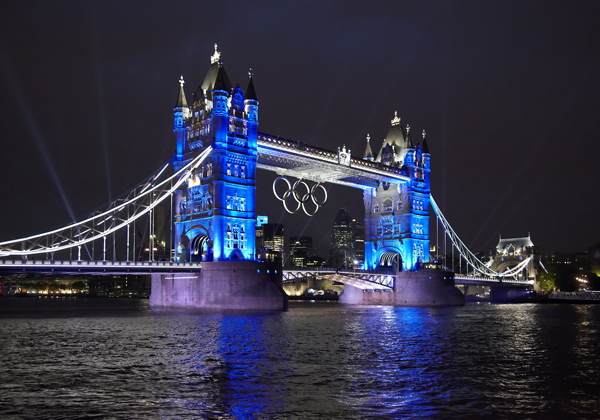
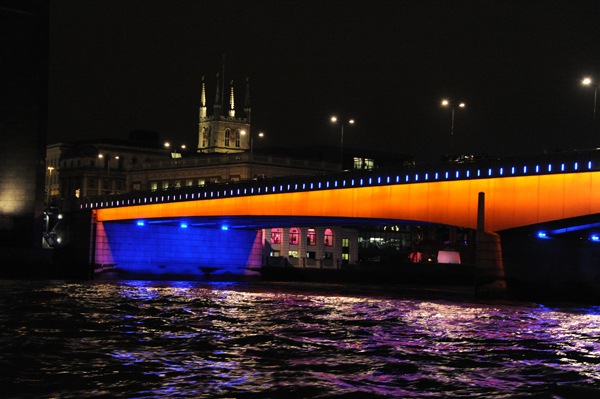
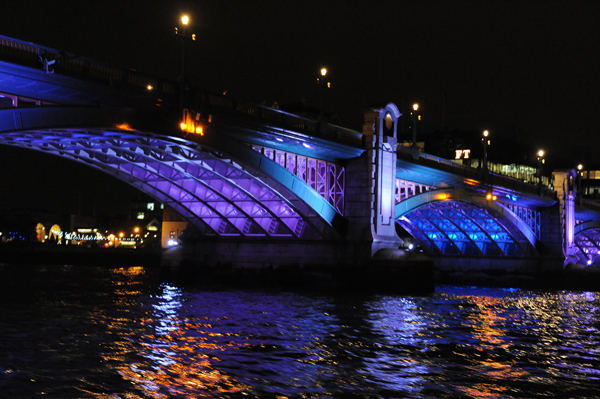
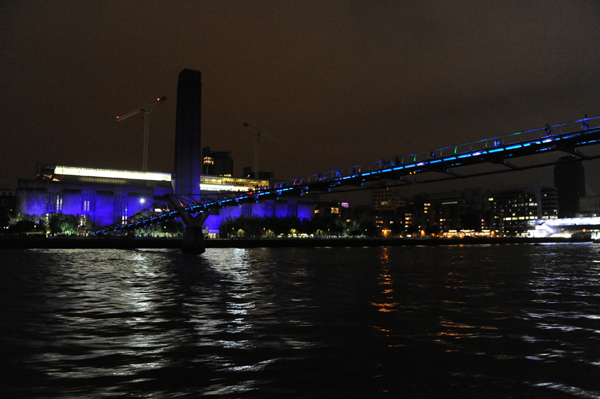
Seven of London’s bridges are being lit up at night until 10th September in an initiative called “Dazzle”. Being run under the Mayor of London Presents program, it celebrates the 50 evenings of the Olympic and Paralympic Games. Here’s just a sample of what you can see…
The most iconic of London’s bridges, Tower Bridge has been a focal point for Olympic celebrations. One of the great structures of Victorian London, it was opened in 1894 and at the time was largest bascule bridge ever built (for more on Tower Bridge, see our earlier post here).
The most recent version of London Bridge, this links Borough High Street in Southwark (you can see Southwark Cathedral in the background) and King William Street in the City and was built in the late 1960s/early 1970s and opened by Queen Elizabeth II in 1973. There have been bridges in this vicinity since as far back as Roman times (for more on the history of London Bridge, see our earlier post here).
The current Southwark Bridge – which links the City of London with the heart of Southwark – dates from 1921 and replaced an earlier bridge designed by John Rennie.
Initially plaqued by the wobbles, the steel suspension walk bridge known as Millennium Bridge is the newest of the bridges that cross the Thames in central London, linking St Paul’s Cathedral on the north bank with the Tate Modern on the south (the looming bulk of which is pictured here). First opened in July 2000, it was closed after concerns over its movement and then reopened to the public in 2002.
Other bridges taking part in Dazzle but not shown here include the Golden Jubilee footbridges, Waterloo Bridge and Blackfriars Bridge.
For more on the program, see www.molpresents.com/dazzle.
PICTURES: All images courtesy of the City of London Corporation.
10 Historic Sporting Events in London – 4. The 1966 FIFA World Cup at Wembley…
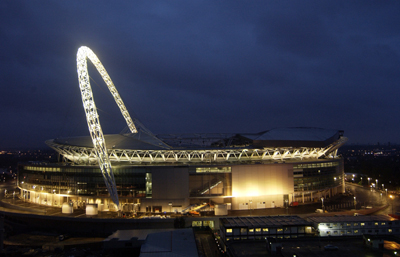
The home of English football, in 1966 Wembley Stadium in north-west London played host to the FIFA World Cup and witnessed England win the coveted cup.
Led out onto the ground by Bobby Moore, the English team, under manager Alf Ramsey, were locked in a 2-2 draw with West Germany when the game went into extra time. English player Geoff Hurst, who had already scored a goal, went on to score two more goals (one of which was particularly controversial with some still believing it didn’t cross the goal-line), giving him a hat-trick of goals and handing England the cup in a 4-2 win.
The team received the Jules Rimet trophy (named for former FIFA president Jules Rimet and replaced with the current FIFA World Cup Trophy in the 1970s) from Queen Elizabeth II.
While the history of Wembley goes back to 1923 when the Empire Stadium, referred to as the “Twin Towers” thanks to its distinctive two domed towers, was built on the site, the current stadium was only officially opened in 2007. Capable of seating 90,000, it is the second largest stadium in Europe.
As the Empire Stadium, the ground – originally built for a British Empire Exhibition – had played host to events including the 1934 Empire Games, the 1948 Olympics, and numerous football finals including the so-called “White Horse final” when a mounted policeman went on the pitch to contain the estimated 200,000 fans who watched the Bolton Wanderers FC defeat West Ham United FC 2-0 in the 1923 FA Cup final.
The current stadium with its iconic arch now plays host to the FA Cup as well as other high-profile matches like the FA Community Shield and large events including rock concerts (a recent vote on the Wembley website found that the greatest event ever held there was a 2007 concert by Muse).
This Olympics, Wembley is hosting numerous football matches including the gold medal match for both men and women, on the 11th and 9th August respectively (the last time the men’s final was played here during an Olympics was in 1948 when England won the bronze). It’s hoped a new record will be set for the number of people attending a women’s Olympic football match (the current record of 76,489 was recorded at the 1996 Olympics in Georgia at the Stanford Stadium) during the Games.
With a one kilometre circumference, the stadium encloses some four million square metres (equivalent apparently to the space taken up by 25,000 London double-decker buses) and features a Royal Box in the middle of the north stand from where all trophies are presented. The roof is partly closable.
There are tours of the stadium (although it’s closed during the Olympics), details of which are below.
WHERE: Wembley National Stadium, Wembley (nearest Tube stations are Wembley Park and Wembley Central or the Wembley Stadium British Rail station); WHEN: Selected dates – see website for details; advance booking strongly recommended (the stadium is closed for events, including the Olympics and before and after); COST: £16 an adult/£9 a child (under 16, under five’s free)/£9 seniors/£41 family ticket (zip wire ride extra); WEBSITE: www.wembleystadium.com/Wembley-Tours.aspx.
PICTURE: Action Images/Paul Harding (courtesy of Wembley National Stadium).
LondonLife – Unveiling the Bomber Command Memorial…
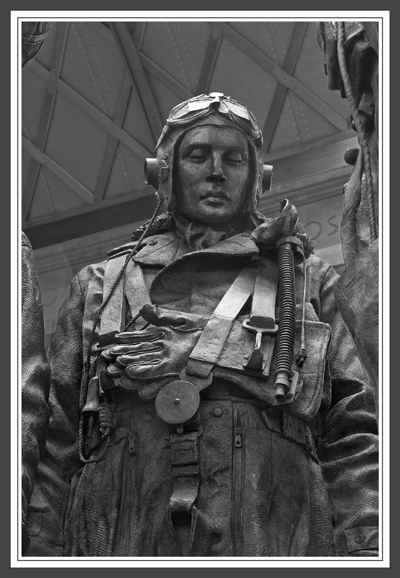
A new memorial honoring the 55,573 airmen who died while serving in Bomber Command during World War II was formally dedicated by Queen Elizabeth II in Green Park last week. At the centre of a new Portland stone pavilion, designed by architect Liam O’Connor (the architect behind the Commonwealth Memorial Gates near Buckingham Palace), is a nine foot high sculpture – the work of Philip Jackson – depicting seven aircrew from a Lancaster bomber having just returned from an operation (detail of which is pictured). The roof of the pavilion, the design of which was inspired by construction techniques used in the Vickers Wellington bomber, incorporates aluminium which was recovered from a Handley Page Halifax III bomber shot down over Belgium on the night of 12th May, 1944. The eight crew were killed during the incident and three of them were found still at their stations when the aircraft was excavated from a swamp in 1997 (they were subsequently buried with full military honors alongside the other five members of the crew). Hundreds of RAF veterans and Commonwealth airmen turned out to see the £6 million publicly funded memorial officially unveiled. The event was also marked with a flyover by five RAF Tornado bombers followed by the RAF’s last Lancaster Bomber which dropped thousands of poppies over Green Park in a message of remembrance. About 125,000 men served in Bomber Command from 1939-1945. The memorial, created following a five year campaign, commemorates people of all nations who lost their lives in the bombing campaigns of that period. For more on the memorial, see www.bombercommand.com.
PICTURE: Courtesy of Mike Legend at Flickr.