What’s in a name?…Millbank

Millbank

The origins of this Thames-side district of London are as obvious as they sound – it was the site of a mill which stood on the west bank of the river.

The mill, which had served Westminster Abbey since at least the 16th century, stood here until about 1735 when it was demolished and replaced by a mansion built by Sir Robert Grosvenor, a member of the Grosvenor family responsible for developing parts of Mayfair.

The house was pulled down in 1809 to make way for Millbank Prison, which was the country’s first national prison and which was where prisoners were held before their transportation to Australia.

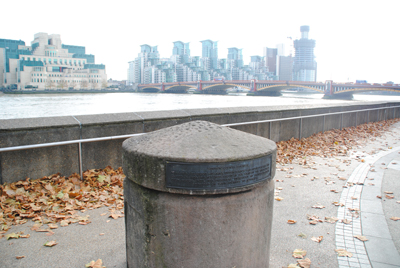
The prison closed about 1890 (a buttress which once stood at the top of the prison’s river steps commemorates the prison – pictured above).

The site is now occupied by some of the more interesting buildings in the area – including the Chelsea College of Arts (buildings formerly used by the  Royal Army Medical School, Tate Britain (which opened in 1897 as the National Gallery of British Art), and a housing development known as the Millbank Estate, constructed to providing housing for 4,500 members of the working class.

While the area was previously known for having been dominated by marshland, land was eventually reclaimed along the waterfront and an embankment established, defining the course of the river.

As well as the district, the name Millbank is also the name of the street which runs along the riverbank between the Houses of Parliament and Vauxhall Bridges.

For more on London’s prisons, check out Geoffrey Howse’s A History of London’s Prisons.

Around London – The Bard is back; Foundling Museum displays; and, exhibitions on iconoclasm and explicit Japanese art…

The Bard is back in Leicester Square with the announcement last week that restoration work on the square’s 19th century Grade II listed statue of William Shakespeare – the only full-length statue the playwright in central London – has been completed. The 11 month restoration was carried out as part of £17 million revamp of the square which has seen the installation of a new fountain. The statue, which was the work of James Knowles, has been in the square since it was completed in its current configuration in 1874. Meanwhile, in other sculpture-related news, Sorry, Sorry Sarajevo – a life-size statue of a man holding  a dead or badly injured man in his arms has been placed in St Paul’s Cathedral where it will remain for the rest of the year. The work by Nicola Hicks dates from 1993 – when the Bosnian war was at its height – and has been placed opposite Henry Moore’s 1983 sculpture, Mother and Child: Hood as part of the cathedral’s approach to next year’s World War I centenary.

Two new displays opened at the Foundling Museum in Bloomsbury last month. Hogarth and Copyright, which runs until 5th January, looks at the role the artist William Hogarth played in the passing of the 1735 Engravers’ Copyright Act (also known as Hogarth’s Act – it was the first law to protect artist’s rights over their work) while Handel and Lucretia, presented in conjunction with The Sir Denis Mahon Charitable Trust and running until 26th January, shows Guercino’s painting Lucretia alongside two early manuscripts of Handel’s cantata La Lucretia. Entry is part of admission price. For more, see www.foundlingmuseum.org.uk.

A new exhibition tracing the history of attacks on artworks in Britain from the 16th century to today opened at Tate Britain in Millbank this week. Art under Attack: Histories of British Iconoclasm looks at why and how monuments have been damaged over the past 500 years. The display includes the remarkable pre-Reformation sculpture, the Statue of the Dead Christ (about 1500-1520), which was discovered in 1954 beneath the chapel floor at the Mercer’s Hall. Already damaged – most likely at the hands of Protestant iconoclasts – it may have been buried there to protect it. Also displayed are fragments of monuments destroyed in Ireland last century, paintings including Edward Burne-Jones’ 1898 painting Sibylla Delphica which was attacked by suffragettes in 1913-14, and Allen Jones’ 1969 work Chair – damaged in a feminist attack in 1986. Runs until 5th January. Admission charge applies. For more, see www.tate.org.uk.

A controversial exhibition of sexually explicit Japanese works of art created between 1600-1900 opened at the British Museum this week. Shunga: sex and pleasure in Japanese Art – which carries a warning of “parental guidance for visitors under 16 years – features 170 works including paintings, prints and illustrated books. Drawn from collections in the UK, Japan, Europe and the US, the exhibition of explores the phenomena of what are known as shunga (‘spring pictures’), looking at why it was produced and to whom it was circulated. Admission charge applies. Runs until 5th January. For more, see www.britishmuseum.org.

Around London – Radio Times celebrated at MoL; IWM reopens; and Lowry at the Tate…

A new exhibition marking the 90th anniversary of the iconic publication, Radio Times, opens at the Museum of London tomorrow (Friday). Cover Story: Radio Times at 90 features some of the magazines most famous covers depicting the likes of Tony Hancock, The Goon Show, Only Fools and Horses and Coronation Street, and charts the history of radio from the BBC’s first transmission to today’s multiple channels. As well as original artwork and photographs used in Radio Times, the display includes a special focus on Doctor Who with the chance for visitors to create their own Radio Times cover as they stand alongside a life-size Dalek. Other highlights include an original 1941 illuminated map used by the Luftwaffe which shows Radio Times‘ Waterlows printing plant in Park Royal alongside other targets. Radio Times was first published by the BBC in London on 29th September, 1923, and since 2011 has been owned by Immediate Media Co. The free exhibition runs until 3rd November. For more, check out www.museumoflondon.org.uk.

The Imperial War Museum has partially reopened this week. As well as the re-opening of its permanent galleries and exhibitions, the museum has launched a major new family-oriented exhibition Horrible Histories: Spies, a new art exhibition entitled Architecture of War and ‘IWM Contemporary’, a new programme showcasing significant works by leading artists in response to war and conflict. The museum will fully reopen in summer next year with the opening of new First World War Galleries. Horrible Histories: Spies, which runs until 4th January (admission charge applies), immerses visitors in the world of World War II spycraft with families able to uncover the techniques used by the most cunning spies. More on Architecture of War and IWM contemporary in upcoming posts. For more, see www.iwm.org.uk.

On Now: Lowry and the Painting of Modern Life. This exhibition at the Tate Britain represents the first to be held by a public London institution featuring  the works of LS Lowry since his death in 1976 and is the first to explore his connections with French art. Among works on display is a little known, untitled painting depicting a busy town square set against the backdrop of industrial Salford which was found on the back of the wooden panel on which Lowry painted his 1937 work The Mission Room. Others among the 90 works on display include Coming Out Of School (1927), The Pond (1950), Industrial Landscape (1955) and Hillside in Wales (1962) as well as Ancoats Hospital Outpatients Hall (1952), The Cripples (1949), Piccadilly Circus, London (1960) and Excavating Manchester (1932). Runs until 20th October. For more, see www.tate.org.uk.

Around London – Celebrating London’s architecture; space at the NMM; Tate Britain redux; remembering Waterloo at Apsley House; and, ‘Coins and the Bible’ at the British Museum…

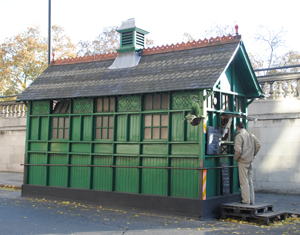
Cabmen's-ShelterThe London Festival of Architecture has returned with a month long celebration of the city’s built form in a program of events including talks, tours and exhibitions. Among the latter is Lesser Known Architecture – A Celebration of Underappreciated London Buildings – a free exhibition at the Design Museum which runs until 22nd July and looks at 10 structures ranging from London Underground Arcades and Cabmen’s Shelters (one of which is pictured) to Nunhead Cemetery. Other events include an exhibition at Somerset House – Nicholas Hawksmoor: Methodical Imaginings – looking at churches designed by Hawksmoor in the late 17th and early 18th centuries (this runs until 1st September), and The Secret Society – A Sculptural Banquet, a large scale installation by artist and designer Kathy Dalwood at Pitzhanger Manor in Ealing, west London (ends this Sunday). For more on the festival, check out www.londonfestivalofarchitecture.org or for fringe events, http://londonarchitecturediary.com.

A new exhibition featuring more than 100 images from space – including images of the colourful dust clouds in which new stars are formed, the aurora on the surface of Saturn and the sight of Earth from the International Space Station – opens at the National Maritime Museum in Greenwich tomorrow. Visions of the Universe takes visitors on a “visual trip through our solar system” with images of the moon, sun, plants and distant galaxies. It looks at the development of telescopy and photography and examines our understanding of our place in the cosmos. Space scientists including Astronomer Royal Sir Martin Rees and The Sky at Night‘s Chris Lintott introduce each section of the exhibition which has at its centre a 13×4 metre curved wall known as the ‘Mars Window’. It has the latest images from NASA’s Mars Curiosity Rover projected onto it. There is a programme of events accompanying the exhibition which runs until 15th September. For more, see www.rmg.co.uk.

Tate Britain is undergoing an overhaul this year with the opening of new galleries and a rearrangement of the institution’s collection. Last month, a new chronological presentation of the institution’s British art opened across more than 2o of the institution’s galleries. BP Walk through British Art features around 500 artworks, dating from the 1500s to present day, by artists ranging from Sir Joshua Reynolds and William Hogarth to JMW Turner, John Constable, Lucien Freud and David Hockney. Meanwhile new galleries have opened dedicated to the works of sculptor Henry Moore and artist William Blake. Around 30 of Moore’s works are featured in the rooms as well as more than 40 of Blake’s works. For more see www.tate.org.uk.

Apsley House, regency home of the Duke of Wellington, is hosting a series of events every weekend in June in the lead-up to the anniversary of the Battle of Waterloo. Interpreters will be at the house, known as Number 1 London, this weekend to discuss the dress and manners of the era while next weekend (15th and 16th June) visitors have the chance to meet some of Wellington’s soldiers and their wives. Gentry from the Napoleonic era will be celebrating the victory at Waterloo on 22nd and 23rd June while on the final weekend of the month, the focus will be on the 200th anniversary of the Battle of Vitoria in 1813, which led to eventual victory in the Peninsular War. For more, see www.english-heritage.org.uk/daysout/properties/apsley-house/.

On Now: Coins and the Bible. This free exhibition at the British Museum looks at how money was referred to in the Old and New Testament, and the use of Christian symbols such as crosses or monograms derived from Greek letters on later coins. These include the first coin, dating from about 450 AD, to depict an image of Jesus (the coin, on loan from the Hunterian Museum in Glasgow, is included in the exhibition). There are also early Biblical fragments on papyrus and vellum lent by the British Library and an ivory panel dating from the early 400s AD which includes an image of the purse of 30 pieces of silver Judas received after his betrayal of Jesus. Held in Room 69a, the exhibition runs until 20th October. For more, see www.britishmuseum.org.

Around London – Olympics at the Museum of London; Oxford wins the Boat Race; restoration project at Kew; and, Phantom Ride at the Tate…

 Diver Tom Daley’s swimming trunks, cyclist Bradley Wiggins’ yellow jersey and a Mary Poppins outfit worn in last year’s Olympic Games’ opening ceremony are among the items on display as part of the Museum of London’s 2012 display. The free display, which opened last week, exactly 200 days after the Paralympics closing ceremony, features a selection of 70 items connected with the Games. Runs in the Galleries of Modern London until 31st October. For more, see www.museumoflondon.org.uk.

Oxford took line honours at the 159th Boat Race, held on the River Thames last weekend. The Dark Blues – whose crew included Olympic medalists Constantine Louloudis and Malcolm Howard – still trail Cambridge (the Light Blues) – whose crew included another Olympic medallist, George Nash, however, with 77 wins to 81 wins. For more, see www.theboatrace.org or our previous articles – here and here.

Kew Garden’s historic Temperate House has received a £14.7 million Lottery Fund grant for conservation of the Grade One listed building, the largest Victorian glasshouse in the world. The grant – which adds to £10.4 million from the government and £7.7 million from private donors – will also be used to create a “more inspiring” public display for visitors with the overall £34.3 million project completed by May, 2018. The building opened in 1863 and was last refurbished 35 years ago. It houses some of the world’s rarest plants, including a South African cycad (Encephalartos woodii). For more, see www.kew.org.

On Now: Phantom Ride. This “haunting” film installation by artist Simon Starling was commissioned by the Tate Britain in Millbank and is located in the neo-classical Duveen galleries. Referencing the late nineteenth century tradition of ‘phantom rides’ – films, often made by cameramen strapped to the front of a train, that gave a dramatic sense of motion as if one is aboard an invisible vehicle – the installation includes a “compelling flow of images” of artworks that once filled the Duveen galleries, creating a sense of movement as the works move up and down the walls. Admission is free. Runs until 20th October. For more, see www.tate.org.uk.

LondonLife – Pre-Raphaelites at the Tate…

Laus Veneris (1873-8) by Edward Burne-Jones was inspired by Algernon Swinburne’s poem Laus Veneris which relates the tale of a knight who falls in love with Venus (shown in red) but then decides to leave her. Usually found in the Laing Art Gallery in Newcastle upon Tyne, it’s among the 180 or so works on display at Tate Britain on Millbank as part of its recently opened exhibition, Pre-Raphaelites: Victorian Avant-Garde. The exhibition, the largest survey of the group in almost 30 years, locates the Pre-Raphaelites as the UK’s first modern art movement and traces the group’s development from its formation in 1848 through to their Symbolist creations of the 1890s. Other works on show, some of which have been rarely seen in the UK, include John Everett Millais’ Ophelia, William Holman Hunt’s The Lady of Shalott, and Dante Gabriel Rossetti’s Found. There are also works by Madox Brown and William Morris and as well as paintings, the display includes sculpture, photography and the applied arts. Runs until 13th January next year. Admission charges apply. For more, see www.tate.org.uk.

Around London – Celebrating the Olympics; Camden Lock’s night market; and, images of London at the Tate…

We’ll kick off this week with just a few more of the plethora of Olympic-related events which are happening around town:

Tower Bridge, site of some spectacular fireworks last Friday night, is currently hosting an exhibition celebrating the 26 cities which have hosted the modern Olympics. Cities of the Modern Games, located on the bridge’s walkways, runs alongside an interactive exhibition looking at the bridge’s construction. Follow the link for details.

The Guildhall Art Gallery is showcasing sculpture and art inspired by sport and the “Olympic values”. The art works are all winning entries from a contest organised by the International Olympic Committee. The chosen works were selected from among 68 submissions made by an international jury. Follow the link for details.

The Design Museum is hosting a new exhibition celebrating the nexus between sport and design. Designed to Win looks at everything from the design of F1 cars to running shoes, bats and bicycles and explores the way in which design has shaped the sporting world. Runs until 9th September. Admission charge applies. See www.designmuseum.org.

• The London Metropolitan Archives is holding an exhibition of playing cards featuring an Olympic theme. Sporting Aces – Playing Cards and the Olympic Games features cards drawn from the collection of the Worshipful Company of Makers of Playing Cards which have an Olympic theme. Admission is free. Runs until 13th September. See www.cityoflondon.gov.uk/lma.

And in other news…

A night market has been launched at Camden Lock over the summer period. Street food stalls and vintage fashion, arts and crafts and book shops will be open until 10pm every Thursday with extras including live music and film screenings. For more, see www.camdenlockmarket.com.

• On Now: Another London: International Photographers and City Life 1930-1980. This exhibition at Tate Britain in Millbank features more than 150 classic photographs of the city and its communities by foreign photographers including such luminaries as Henri Cartier-Bresson. The exhibition features iconic works such as Robert Frank’s London (Stock Exchange) 1951, Cartier-Bresson’s images of King George VI’s coronation, Elliot Erwitt’s depiction of a rain-washed London bus stop, and Bruce Davidson’s image of a child with pigeons in Trafalgar Square alongside works such as Wolfgang Suschitzky’s images of working class families in the East End, from the 1940s, and Karen Knorr’s images of punks in the 1970s. The photographs all come from the Eric and Louise Franck London Collection, which includes more than 1,200 images of London and has been promised as a gift to the Tate. Runs until 16th September. Admission charge applies. See www.tate.org.uk. 

Have we missed something we should be telling others about? Send details in an email to exploringlondon@gmail.com.

Around London – Tate acquires photographic collection; new additions to Army museum; Picasso at the British Museum; and, Zoffany at the Royal Academy…

• A major collection of photographs of London, including works by Henri Cartier-Bresson, Robert Frank and Irving Penn, has been promised to the Tate Gallery. The collection, which will more than double the Tate’s photographic holdings, was assembled by Eric and Louise Franck over a 20 year period. It comprises around 1,400 photographs taken by 120 photographers between the 1880s and 2000s and is a record of the lives of people living in London. Highlights include Henri Cartier-Bresson’s work, Waiting in Trafalgar Square for the Coronation Parade of King George VI (1937), Bruce Davidson’s Girl with Kitten (1962), Elliot Erwitt’s Bus Stop, London (1962), Robert Frank’s London (Child Running from Hearse) (1951) and Irving Penn’s Charwomen, London (1950). More than two-thirds of the collection is being donated to the Tate Gallery, carrying an estimated value of more than £1 million, while the remaining works will be purchased. A selection from the collection will be exhibited in Another London, opening at the Tate Britain on 27th July. For more, see www.tate.org.uk.

• An Afghan schoolbook which uses bullets and Kalashnikovs as counting tools, Operational Service Medals and charm bracelets have been added to the National Army Museum’s Conflicts of Interest gallery. The gallery explores over 40 conflicts in which the British Army has been involved including that in Afghanistan. The illustrated childrens’ textbook dates from the time of the Soviet War in Afghanistan in the 1980s and was found by Captain Daniel Hinxman in 2007. Other artefacts added to the gallery include an Operational Service Medal for Afghanistan awarded to Sapper Dewi Allen for service in 2009-10, a memorial writsband produced by the family of Corporal David Barnsdale after he was killed in an IED attack in 2010 and a ‘lucky charm’ bracelet made by an Afghan for Lance Corporal Jose Cravalho De Matos. For more, see www.nam.ac.uk.

• On Now: Picasso Prints: The Vollard Suite. The British Museum is hosting this exhibition featuring Pablo Picasso’s most celebrated series of etchings, The Vollard Suite – the first time a complete set of the etchings has been shown in a British public institution. The suite consists of 100 etchings produced between 1930 and 1937, at a time when Picasso was involved in an affair with his nurse and muse Marie-Therese Walter. The predominant them of the suite is that of the sculptors studio – the artist was at this stage making sculpture at his new home outside Paris. The etchings, which have no titles and were not assigned an order, will be displayed alongside examples of the type of classical sculpture and objects which inspired the artist as well as Rembrandt etchings, Goya prints and Ingres drawings which also influenced Picasso’s works. The exhibition is being held in Room 90 and runs until 2nd September. Entry is free. For more, see www.britishmuseum.org.

• On Now: Johan Zoffany RA: Society Observed. This exhibition at the Royal Academy of Arts re-evalutes the life and career of the Frankfurt-born artist Zoffany, who moved to London in 1760 where he created portraits and subject pictures which attracted the patronage of the likes of actor David Garrick and courtiers of King George III. The exhibition, arranged into eight sections, features more than 60 oil paintings and a selection of drawings and prints taken from British and international collections, both public and private, with many of the items never before exhibited. Runs until 10th June. Admission charge applies. For more, see www.royalacademy.org.uk.

Around London – Chiswick House’s Camellia Festival; Picasso at the Tate; and, Mondrian at the Courtauld…

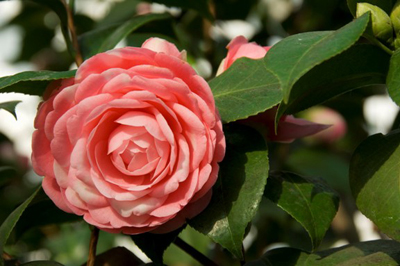
The second annual Camellia Festival kicks off in  gardens surrounding the neo-Palladian property, Chiswick House,  in west London this weekend. The month long festival, run by the Chiswick House & Gardens Trust, was kicked off in 2011 with the aim of showcasing Chiswick’s world renowned Camellia Collection, believed to be the largest in the Western world. Following the success of last year’s festival following a £12.1 million garden restoration project, the flowers will once again be on display in the Conservatory (designed by Samuel Ware in 1813). Complementing the display of camellias will be a showcase of early spring flowers planted in the newly restored Italian Garden (originally created for the 6th Duke of Devonshire in 1814, it was, at the time, at the forefront of horticultural fashion). The Camellia Collection, meanwhile, includes rare and historically significant plants featuring pink, red, white and striped blooms, many of which are descended from the original planting in 1828. Among them is the Middlemist’s Red which was originally brought to Britain from China in 1804 by John Middlemist, a nurseryman from Shepherds Bush. It is one of only two in the world known to exist (the other is in Waitangi in New Zealand). The festival runs from the 18th February to the 18th March.  Admission charge applies. For more information, see www.chgt.org.uk. PICTURE:  The Middlemist’s Red Camellia at Chiswick House © Clare Kendall.

• On Now: Picasso and Modern British Art. This exhibition at Tate Britain explores the influence of Spanish artist Pablo Picasso on British art and the role this played in the acceptance of modern art in Britain as well as celebrating the connections Picasso made with Britain following his first London visit in 1919. It features more than 150 works including 60 by Picasso, among them Weeping Woman and The Three Dancers, as well as works by the likes of Duncan Grant, Wyndham Lewis, Ben Nicholson, Henry Moore, Francis Bacon, Graham Sutherland and David Hockney. Runs until 15th July. Admission charge applies. For more information, see www.tate.org.uk

On Now: Mondrian || Nicholson in Parallel. This show at the Courtauld Gallery tells the story of the extraordinary relationship between celebrated 20th century painter Piet Mondrian and Ben Nicholson, one of the UK’s greatest modern artists. The exhibition will follow the parallel artistic paths taken by the two artists in the 1930s and their subsequent creative relationship. Each of the works selected for the exhibition have a particular historical significance and the presentation also includes archival material such as photographs and letters. Admission charge applies. For more information, see www.courtauld.ac.uk.

Around London: Talking rubbish; Conan Doyle’s lost manuscript; John Martin’s apocalypse; and, Postmodernism at the V&A…

Twenty-five talking rubbish bins will be installed in Westminster City Council area as part of a campaign to encourage people to use them more. The rubbish bins, which will look no different from normal bins, will start chatting from 13th October and will be in London for two months before embarking on a UK tour after which they may become permanent fixtures. Each bin will have a unique respond when used – from singing a part of the Hallelujah Chorus to a blast of the trombone and will be tailored to suit their location (Covent Garden’s, for example, will be operatic in nature). The talking bins, which are also being trialled in Liverpool, are being put on the streets as part of Keep Britain Tidy’s Love Where You Live initiative.

A hitherto unpublished novel by Arthur Conan Doyle – creator of Sherlock Holmes – was published by the British Library this week. The Narrative of John Smith was Conan Doyle’s first novel and was written between 1883 and 1884 but the manuscript was lost on the way to the publishers. Conan Doyle rewrote it from memory but never resubmitted the work for publication. It serves as a rare insight into his creative development prior to his writing of more famous works like those featuring Holmes (the new book and an audio CD featuring Robert Lindsay, are available from the library shop). The library is also hosting an exhibition of related items in the Treasures Gallery, including one of the four notebooks that comprise the manuscript of The Narrative of John Smith, letters Conan Doyle wrote to his mother, and a “scientific and monthly magazine” he created when he was just 16. The exhibition is open until 5th January. The library is also hosting an event in which author Anthony Horowitz – commissioned by the Conan Doyle Estate to write a new Sherlock Holmes novel, The House of Silk, which will be published in November – will talk about his work and the new novel. To be held on 27th November from 2.30pm to 4pm (admission charge applies). For more, see www.bl.uk.

On Now: John Martin: Apocalypse. The Tate Britain is hosting an exhibition featuring the works of nineteenth century British artist John Martin, in the first show dedicated to his works in more than 30 years. While something of an outsider, Martin was a key figure in the art world of his day, known for his “dramatic scenes of apocalyptic destruction and biblical disaster”. The exhibition brings together some of his most famous paintings as well as previously unseen and newly restored works. Admission charge applies. Runs until 15th January. For more, see www.tate.org.uk/britain/.

• On Now: Postmodernism: Style and Subversion 1970-1990. An “in-depth survey of art, design and architecture of the 1970s and 1980s”, this exhibition at the Victoria & Albert Museum shows how postmodernism evolved from being merely a provocative architectural movement in the 1970s through to ideas that went on to broadly influence popular culture – everything from art and film to music and fashion. The exhibition is divided into three broad chronological sections – the first focuses on architecture, the second on the “proliferation of postmodernism through design, art, music, fashion, performance, and club culture during the 1980s” and the third on the “hyper-inflated commodity culture of the 1980s”. Admission charge applies. Runs until 15th January, 2012. For more, see www.vam.ac.uk.

Around London – Year of the Rabbit celebrations; virtual art galleries; and, to the moon and back on ‘Boris bikes’

London will celebrate Chinese New Year this Sunday as it once again hosts the largest celebrations outside of Asia attracting some 250,000 people from around the globe. The event programme, which celebrates 2011 as the Year of the Rabbit, kicks off at 11am on the main stage in Trafalgar Square with firecrackers at noon, a Lion and Dragon performance at 1.10pm and dance and song during the afternoon culminating in a finale just before 6pm. There will also be a stage in Shaftesbury Avenue with performances throughout the day. Roads in the area will be closed for the event.

You no longer have to be in London to walk through the galleries of the Tate Britain or the National Gallery. Both institutions are among 17 around the world taking part in the Google Art Project which allows web surfers to virtually “walk” around the museum using the organisation’s Street View technology and turn 360 degrees to view the artworks in situ on the walls. The project also allows viewers to look through images of more than 1,000 artworks and, in addition, each institution has selected one artwork which then captured in “super high resolution” and then placed on line (Hans Holbein’s The Ambassadors‘ for the National Gallery, Chris Ofili’s No Woman, No Cry for the Tate). See www.googleartproject.com for more.

Cyclists have ridden the distance to the moon and back 13 times – 10 million kilometres – since the launch of Mayor Boris Johnson’s cycle scheme. Transport for London released figures this week showing riders have made more than 2.5 million journeys on the “Boris bikes” since the scheme was launched six months ago. The TfL has announced plans to expand the Barclays Cycle Hire scheme to new areas of east London including all of the Borough of Tower Hamlets, North Shoreditch, Bethnal Green, Bow, Canary Wharf, Mile End and Poplar by spring 2012. Almost 110,000 people are now signed up to the scheme. www.tfl.gov.uk.

The youngest Spitfire pilot in the Battle of Britain is to be granted the Freedom of the City of London in a special ceremony next month. Squadron Leader Geoffrey Wellum was awarded the Distinguished Flying Cross for his service in a front line squadron during the battle.