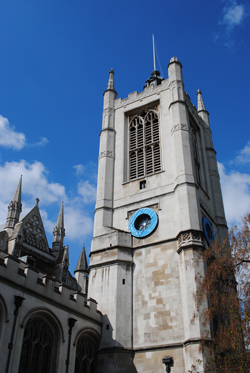
This month, the UK and other nations marked 80 years since VE (Victory in Europe) Day. London suffered greatly during the Blitz and later rocket attacks, so we thought it appropriate to take a look at some key memorials around the city.
VE Day
This Week in London – VE Day commemorated at St Paul’s; the National Gallery redisplayed; and, Tate Modern celebrates its 25th…
• VE Day commemorations continue in London this week with an Evensong service to be held outside St Paul’s Cathedral this evening. The service to commemorate the 80th anniversary of the end of the war in Europe will be held between 5pm and 6pm. Following the service will be a lamp-lighting ceremony and blessing on the cathedral’s west steps with the cathedral bells being tolled as part of a national bell-ringing at 6:30pm. A replica of a World War II Spitfire can also be seen in front of the West Steps. The service is free and unticketed – entry is via Paternoster Square. For more, see www.stpauls.co.uk/whats-on/special-evensong-to-commemorate-80th-anniversary-of-end-of-second-world-war-in-europe-ve80.

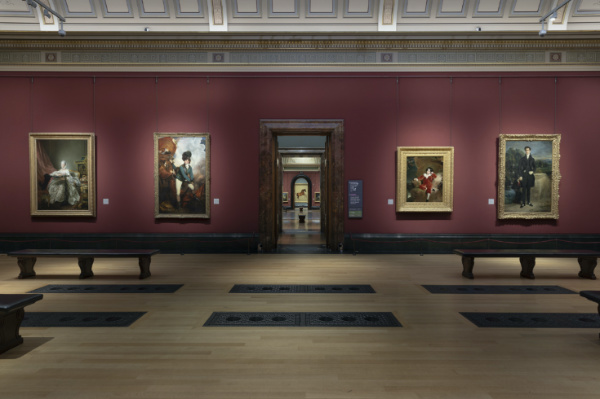
Central Hall, The National Gallery. Image and Identity: Full-Length Portraits 1550-1900. Part of ‘C C Land: The Wonder of Art’. PICTURE: © The National Gallery, London
• A major redisplay of the National Gallery’s collection – created as part of its bicentenary celebrations – can be seen from Saturday. C C Land: The Wonder of Art, which coincides with the opening of the transformed Sainsbury Wing after more than two years of building works, features more than 1,000 works and traces the development of painting in the Western European tradition from the 13th to 20th centuries. Among the works displayed are the Coronation State Portraits, commissioned from the artists Peter Kuhfeld and Paul S Benney and unveiled by King Charles III and Queen Camilla this week, which will be on display until 5th June when they will be moved to the Throne Room at Buckingham Palace. There are also newly restored works including the Pollaiuolo brothers’ The Martyrdom of San Sebastian and Jan van Eyck’s Portrait of a Man (Self Portrait?) and newly acquired works such as Eva Gonzalès’ The Full-length Mirror (about 1869‒70), Sir Lawrence Alma-Tadema’s After the Audience (1879) and Nicolas Poussin’s Eucharist (about 1637‒40) – one of the greatest paintings of the Last Supper. Meanwhile, a series of rooms have been dedicated to the work of individual artists including the likes of Titian (active about 1506‒1576), Rembrandt (1606‒1669) and Monet (1840‒1926) and one part of the new display focuses on King Charles I (1600‒1649) as a collector of art and includes major loans from the Royal Collection. Finally, in a first for the gallery, Segna di Bonaventura’s Crucifix (about 1310‒15) has been suspended from the gallery’s ceiling, enabling today’s audiences to view the work in the way it would have been seen in the 14th century. Entry to the gallery is free. For more, see nationalgallery.org.uk.

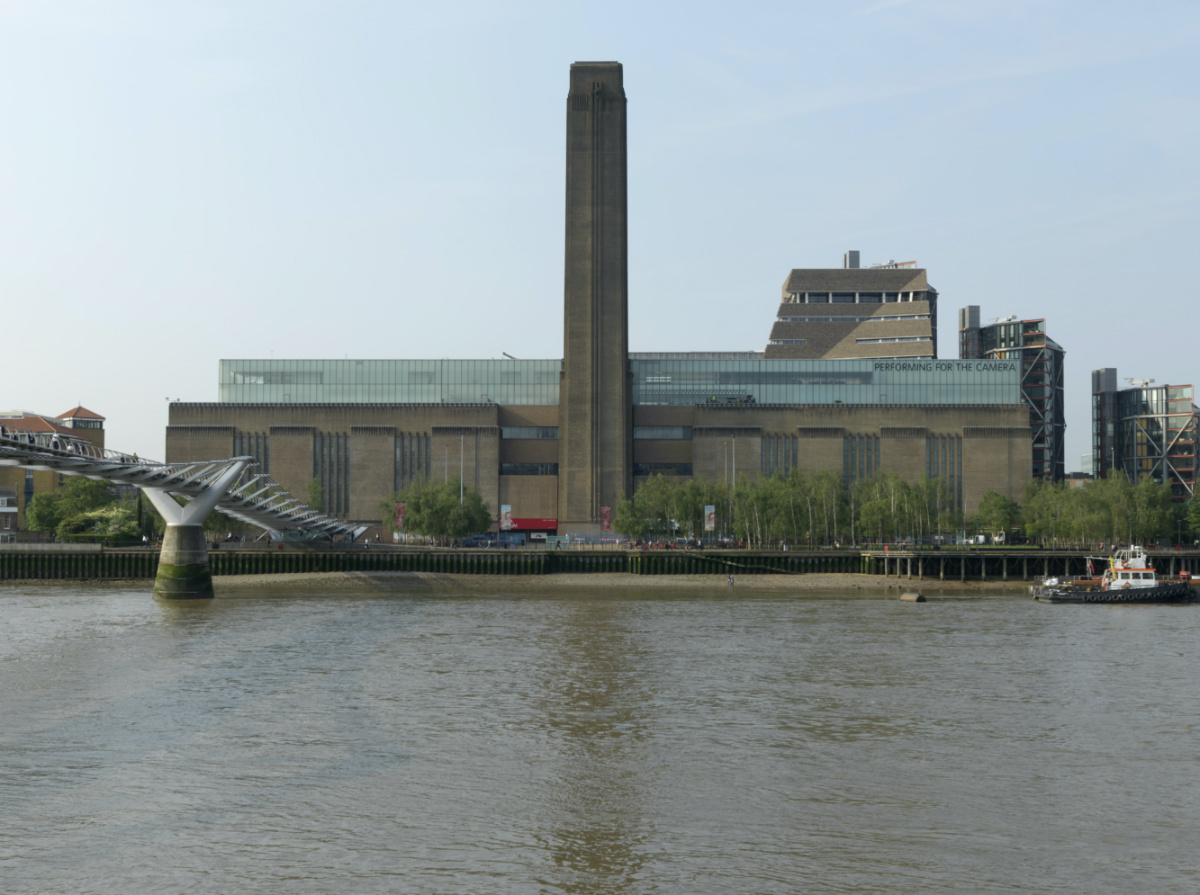
• The Tate Modern is celebrating 25 years this weekend with four days of festivities starting from tomorrow (Friday). A number of recent additions to Tate’s collection will go on display around the building for the anniversary and some of the most iconic works from Tate Modern’s history are coming back including Louise Bourgeois’s 10 metre high bronze spider Maman which was the first work to greet visitors when Tate Modern opened in 2000. Other returning works include Mark Rothko’s Seagram murals and Dorothea Tanning’s Eine Kleine Nachtmusik while among contemporary works being highlighted over the weekend is an immersive multi-screen film installation by Nalini Malani. Two new exhibitions are also open for the anniversary weekend – A Year in Art: 2050 which explores how artists imagine possible futures, and, Gathering Ground which features international contemporary art united by a deep connection to land and community. The weekend also features live music and performances, pop-up talks and tours, and special food and drink offers. For more, see https://www.tate.org.uk/whats-on/tate-modern/birthday-weekender.
Send all items for inclusion to exploringlondon@gmail.com
LondonLife – VE Day remembered 80 years on…
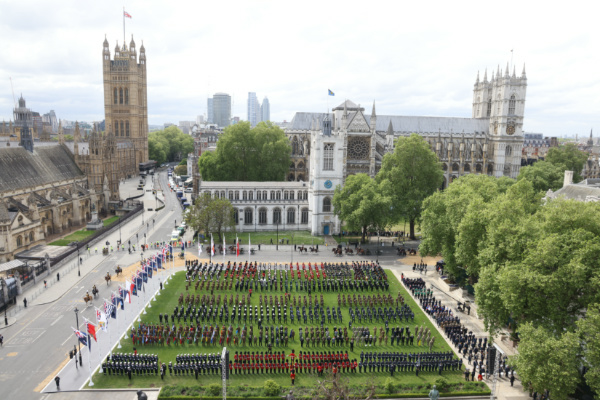
London commenced four days of national commemorations for the 80th anniversary of the end of World War II in Europe – known as Victory in Europe (VE) Day – on Monday.
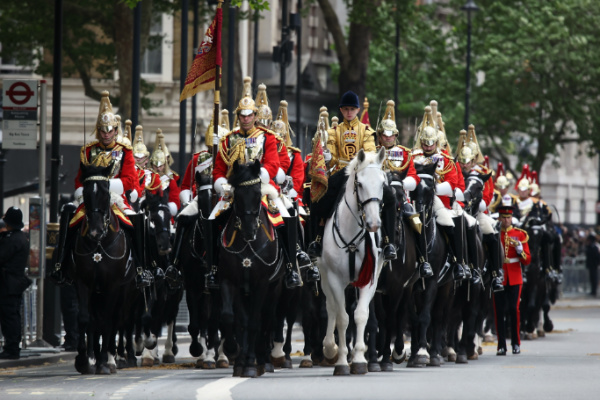
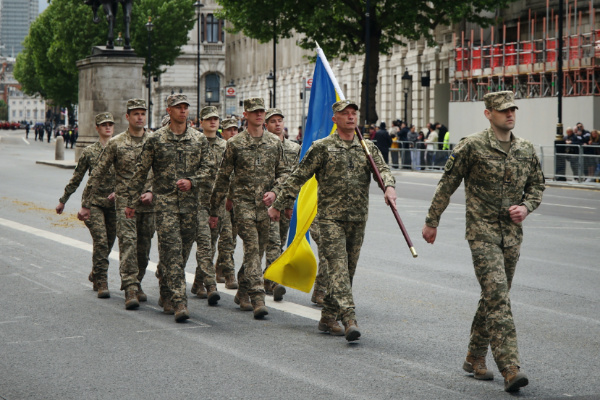
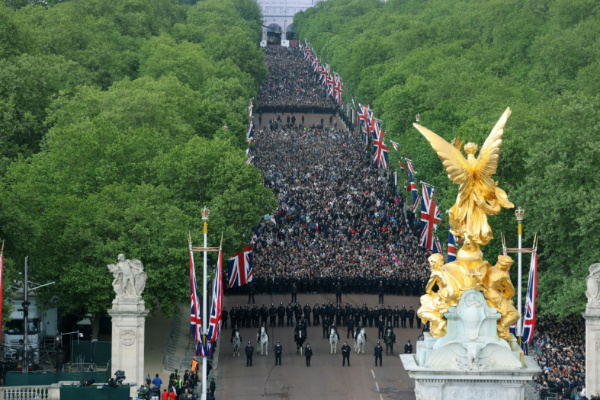
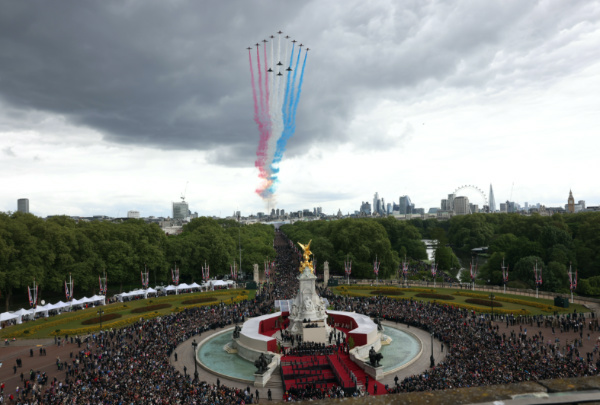
A military processions of about 1000 members of the Royal Navy, British Army and Royal Air Force made its way from Parliament Gardens along Whitehall before turning through Admiralty Arch and down the Mall to Buckingham Palace. Some 23 aircraft were involved in a flypast.
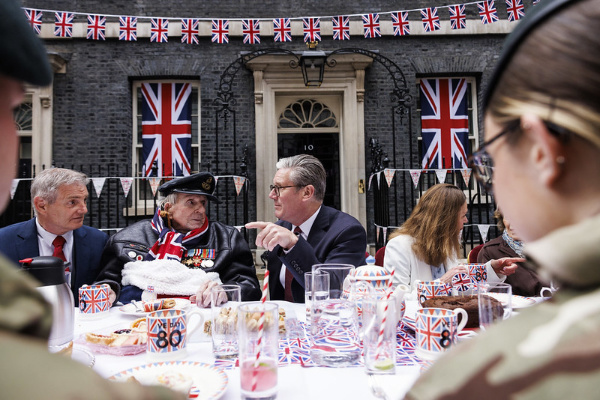
Tea parties were also held across the country to mark the event, including at Buckingham Palace and 10 Downing Street.


Special – On the VE Day’s 75th, remembering the ‘Docklands at War’…
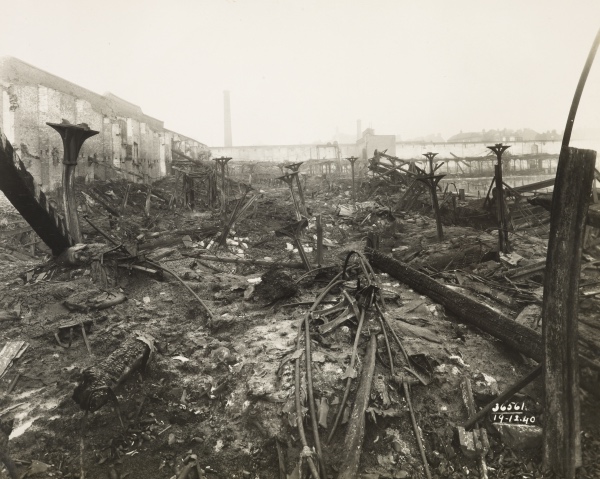
The Museum of London Docklands has released a number of images from its ‘Docklands at War’ collection – including some rarely on display – to mark the 75th anniversary of Victory in Europe. These images of the East End show the scale of the damage and destruction caused to London’s docks during World War II when more than 25,000 German bombs were dropped on it in an attempt to impact the national economy and war production, making tens of thousands of home uninhabitable, damaging businesses and destroying docks with the West India Docks and St Katherine Docks suffering the most damage. The pictures also reveal the remarkable contribution to the war effort by the people who lived and worked in the densely populated area. For more on how the museum is marking the day online, head to www.museumoflondon.org.uk/museum-london-docklands/ve-day.
St Katharine Dock after an air raid on 7th September, 1940, the first attack on Docklands. PICTURE: John H Avery & Co (© PLA Collection / Museum of London)
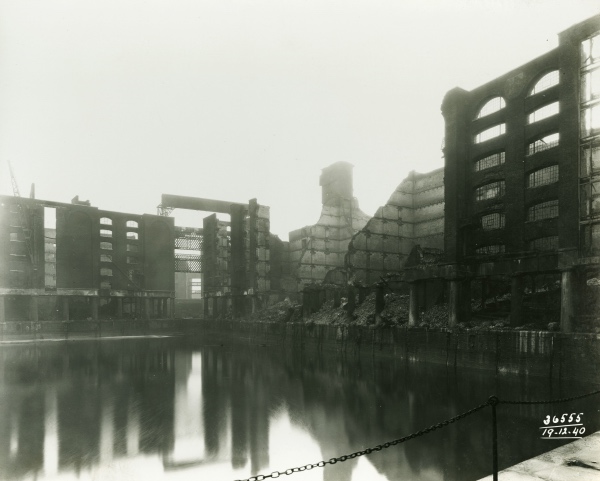
Bomb damage to a shed, formerly Guiness’s on west side of eastern dock, looking north from the southend taken on 19th December, 1940, following an air raid on 8th December that year. PICTURE: John H Avery & Co (© PLA Collection / Museum of London)
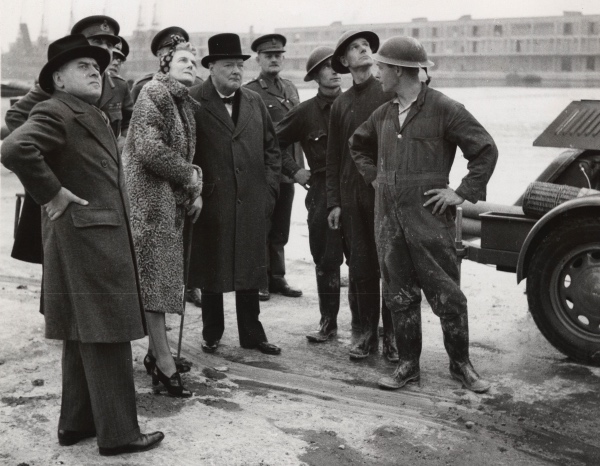
Prime Minister Winston Churchill and Clementine Churchill, with the Flag Officer, London, and J Douglas Ritchie (on left), touring London’s dock in September, 1940, seen with a group of auxiliary firemen. PICTURE: © PLA Collection / Museum of London
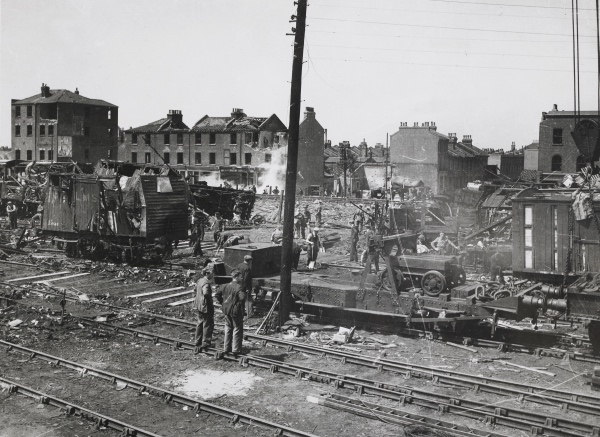
Damage caused by a V1 rocket which hit Royal Victoria Dock in 1944. PICTURE: © PLA Collection / Museum of London
The Docklands ablaze during the Blitz on 7th September, 1940. The rising palls of smoke mark out the London Docks beyond the Tower of London, the Surrey Docks to the right of the bridge and the West India Docks on the Isle of Dogs in the distance. PICTURE: © PLA Collection / Museum of London

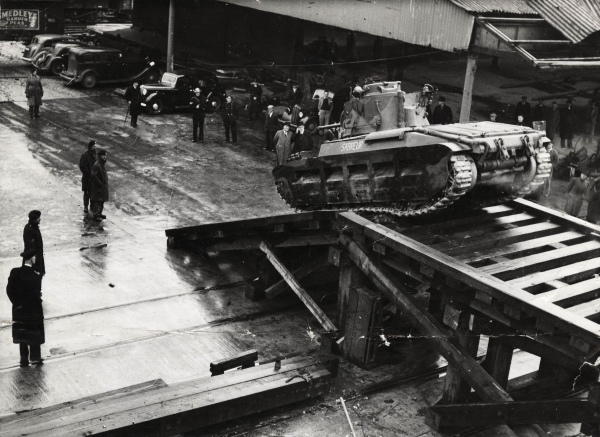
Tanks arriving in the London Docks prior to embarkation for the D Day beaches in 1944. PICTURE: © PLA Collection / Museum of London
A Moment in London’s History – London celebrates VE Day…
It was 75 years ago this month – 8th May, 1945 – that Londoners poured out onto the city’s streets in celebration of the end of World War II.
Some celebrations had already started in London on 7th May as news of the unconditional surrender of all German troops to the Supreme Allied Commander Dwight Eisenhower in the French city of Reims on 7th May became known.
But Prime Minister Winston Churchill declared 8th May a national holiday and, in response, vast crowds turned out on the streets to celebrate with bunting, flags and fireworks. Church bells were rung and services of thanksgiving held including at St Paul’s Cathedral where 10 consecutive services, each attended by thousands, took place.
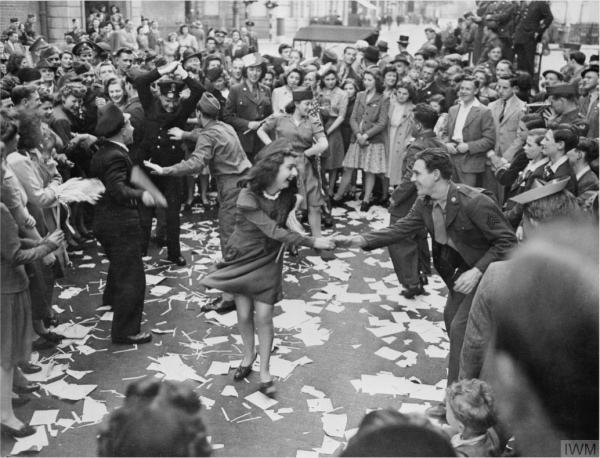
British girls, of the Picture Division of the London Office of War Information dance in the street with American soldiers during the “VE Day” celebration in London. This scene took place outside the building of the US Army Pictorial Division has its offices. PICTURE: © IWM EA 65796
At 3pm, Churchill made a national radio broadcast from 10 Downing Street. He told listeners that while “We may allow ourselves a brief period of rejoicing”, they should “not forget for a moment the toil and efforts that lie ahead” a reference to the ongoing war with Japan (the radio broadcast, incidentally, is being re-run on the BBC on 8th May this year to mark the anniversary).
Churchill then proceeded to Parliament where he formally reported the end of the war in Europe to Parliament before leading a procession of members to St Margaret’s Church for a service of thanksgiving. He later appeared on the balcony of the Ministry of Health building in Whitehall to address the teeming crowds below, telling them “This is your victory” to which they roared back that it was his.
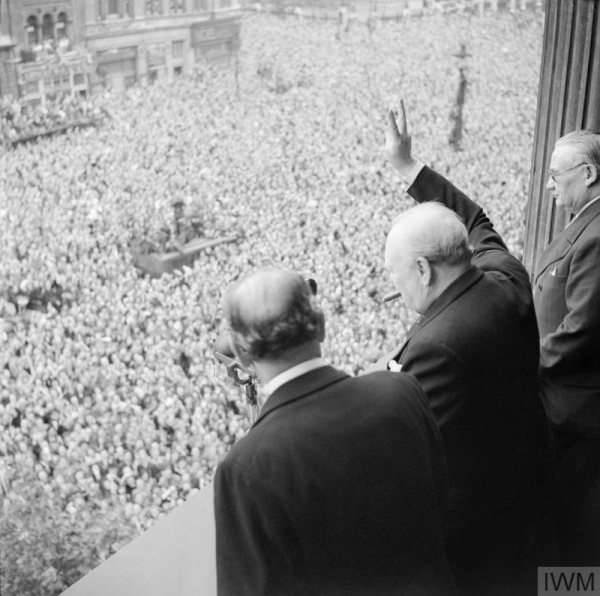
Churchill waves to crowds in Whitehall on the day he broadcast to the nation that the war with Germany had been won, 8 May 1945. PICTURE: Horton W G (Major) (Photographer),
War Office official photographer/© IWM H 41849
Meanwhile, King George VI, Queen Elizabeth, initially accompanied by their two daughters, Princesses Elizabeth and Margaret, appeared on the balcony of Buckingham Palace several times to wave to the cheering crowds. The King and Queen, who were at one point joined by Churchill, were still waving when their daughters secretly – and now rather famously – left the palace and joined the crowds outside in what Elizabeth, later Queen Elizabeth II, described as “one of the most memorable moments” of her life. The King also gave a radio address from the palace during which he paid tribute to all those who had died in the conflict.
King George VI and Queen Elizabeth with Princess Elizabeth and Princess Margaret joined by the Prime Minister, Winston Churchill on the balcony of Buckingham Palace, London on VE Day. PICTURE: © IWM MH 21835
While celebrations took place across London, hotspots included Whitehall, outside Buckingham Palace, Trafalgar Square, Parliament Square and Piccadilly Circus, where by midnight there were an estimated 50,000 people singing and dancing. Licensing hours were extended in pubs and dance halls staying open to midnight.
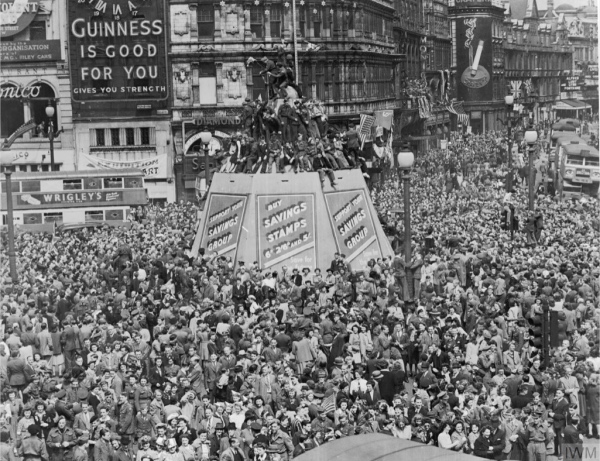
A mass of civilians and servicemen crowding around Piccadilly Circus, London. PICTURE: Poznak Murray, United States Army Signal Corps official photographer/© IWM EA 65879
One of the most iconic images of the day was a photograph of two sailors standing in one of the fountains at Trafalgar Square with two women, revealed, thanks to research by the Imperial War Museum to be Cynthia Covello and Joyce Digney who had travelled to join the celebrations from Surrey.
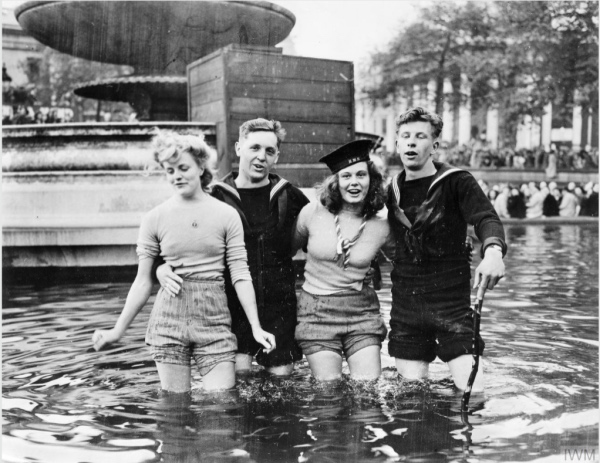
Two British sailors and their girlfriends wading in the fountains in Trafalgar Square on VE Day. PICTURE: Massecar T G, United States Army Signal Corps photographer/© IWM EA 65799
With thanks to the Imperial War Museum, London.
10 London sites associated with Sir Winston Churchill – 7. St Margaret’s Church…
Nestled next to Westminster Abbey opposite the Houses of Parliament, St Margaret’s has long been known as the “parish church of the House of Commons” (although we should point out it’s not officially a parish church). As a result, it probably doesn’t come as a surprise that it has a couple of significant links to former PM Winston Churchill.
Among the most momentous personal occasions was when Churchill married Clementine Hozier in the church on 12th September, 1908, after a short courtship. A headline in the Daily Mirror called it ‘The Wedding of the Year’.
After the fighting of World War II ended in 1945, on VE Day Churchill, in a move reflecting that taken by then PM David Lloyd George after World War I, led the members of the House of Commons in procession from the Houses of Parliament into the church for a thanksgiving service.
In 1947, the church was the scene of another Churchill wedding, this time that of Sir Winston’s daughter, Mary who was wedded to Captain Christopher Soames of the Coldstream Guards on 11th February.
WHERE: St Margaret’s Church, Westminster (nearest Tube stations are St James’s Park and Westminster); WHEN: 9.30am to 3.30pm weekdays/9.30am to 1.30pm Saturday/2pm to 4.30pm Sunday; COST: Free; WEBSITE: www.westminster-abbey.org/st-margarets-church.