What’s in a name?…King’s Cross

The location now known as King’s Cross, north-west of the City, takes its name from a monument adorned with an 11 foot high statue of King George IV which once stood on a site now occupied by King’s Cross Railway Station.

The area had been previously known as Broadford Bridge or Battlebridge – the latter a name many associated with the apparently erroneous belief that it was here, at a bridge which once crossed the River Fleet, the Iceni Queen Boudicca (also known as Boadicea) ill-fatedly confronted the Roman Army under the command of Gaius Suetonius Paulinus.

From the 1830’s (King George IV ruled from 1820 to 1830), however, the area took on the name of King’s Cross thanks to the erection of what Walter Thornbury described in his 1878 text, Old and New London, as a “ridiculus octagonal structure crowned by an absurd statue of George IV”.

The structure, said to be 60 feet high, was erected at the intersection of Gray’s Inn Road, Pentonville Road and what we now know as Euston Road, and during its relatively short lifespan, was employed at different times as a police station and as a pub (complete, apparently, with a camera obscura in the upper level).

It was completely removed by 1845 (King’s Cross Railway Station officially opened in 1852).

The area of King’s Cross has been settled back as far as Roman times – St Pancras Old Church is one of the oldest sites of Christian worship in England although the current church is Victorian – but it wasn’t until the 1700s and 1800s that it was transformed in to an urban area with the arrival of canals – including The Regent’s Canal – and the railways.

Traditionally one of London’s poorest areas, it survived World War II bombings but subsequently suffered as the railways declined in the post-war period. By the 1980s, it had become notorious as a red light district.

It has since gone through – and is still going through – a gradual gentrification process, however, with the 67 acre development King’s Cross Central among the projects currently under construction.

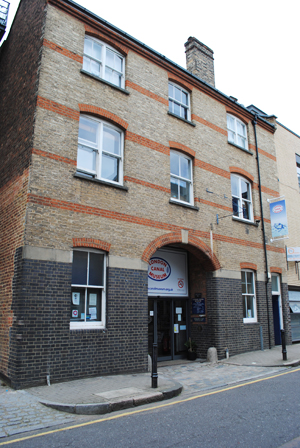
Key attractions of the area include The British Library, The London Canal Museum, arts centre King’s Place, and the recently refurbished St Pancras Renaissance London Hotel.

It’s also now home to St Pancras International – London’s Eurostar terminus (having been moved here from Waterloo) – as well as King’s Cross Railway Station which is believed by many, despite the lack of any evidence, to be the burial site of Queen Boadicea (it’s said she still lies beneath platform 9 or 10) and which is the home of the fictitious platform 9 and 3/4 from which Harry Potter catches the train to Hogwarts.

LondonLife – Beating the Bounds at All Hallows

Thursday is Ascension Day and, at All Hallows by the Tower in the City, that means conducting the ancient ceremony of Beating the Bounds.

The origins of the custom go back to medieval times when parishes annually reaffirmed their boundaries by undertaking a procession during which each parish boundary marker was beaten with wands while praying for protection and blessings.

At All Hallows, the beating party consists of students from Dunstan College in Catford (these students have an association with the church of St Dunstan-in-the-East which is now part of the parish of All Hallows) along with parish clergy and the masters of livery companies associated with the parish and Thames waterboatmen. (Pictured right is last year’s procession).

Highlights of the procession at All Hallows include the beating of the parish’s southern marker – this is located in the middle of the Thames and must be reached by boat – and the mock ‘confrontation’ which occurs between the beating party and the Governor and Yeoman Warders of the Tower of London.

The ‘confrontation’ relates to the fact that the parish and the tower share a boundary – this was apparently a common cause of dispute in the Middle Ages and led, in 1698, to a ‘battle’ between the people of the parish and those of the tower. The ceremony is followed by attendance at a festal evensong at the church.

For more, see www.ahbtt.org.uk/history/beating-the-bounds/

PICTURE: Courtesy of All Hallows by the Tower.

Treasures of London – Nelson’s Column

Towering over Trafalgar Square, Nelson’s Column was constructed in the 1840s to commemorate the man many believe to be Britain’s greatest naval hero, Admiral Lord Nelson.

Parliament started discussions on a monument commemorating Nelson only 10 years after his death at the Battle of Trafalgar in October 1805, but it wasn’t until 1838 that the Nelson Memorial Committee was finally formed and public subscriptions called for to raise funds for the monument.

The government agreed to provide the location and, following a controversial competition (which had to be run twice), William Railton’s designs showing a Corinthian column topped by a statue of Nelson (which it was stipulated had to be made by EH Bailey) with four lions at its base, was adopted.

The column was completed in 1843. It featured a bronze capital, made from old cannons taken from the Woolwich Arsenal and shaped in the form of acanthus leaves, and Bailey’s 5.5 metre (17 foot) tall statue of Nelson (made from Craigleith sandstone quarried in Scotland and donated by the Duke of Buccleuch). The four bronze identical lions, made by sculptor Sir Edwin Landseer and said to be modelled on a dead cat from a zoo, were not added until 1867.

On the column’s pedestal are four bronze relief panels showing Nelson’s four great victories – the Battle of Cape St Vincent, the Battle of the Nile, the Battle of Copenhagen and the Battle of Trafalgar, the scene of which depicts the admiral in the throes of dying (he was killed by a musket bullet fired from the French vessel Redoubtable and was carried below decks where he died). They were apparently made from French guns captured at each of the battles.

The Grade I-listed column, which cost £47,500 to build, was refurbished in a four month exercise costing £420,000 in 2006, during which it was discovered that it was actually 16 foot shorter than had previously been thought (its total height, to the tip of Nelson’s hat, is actually 169 feet instead of the 185 feet previously supposed). It had previously been refurbished in 1986 and in 1968. You can see a gallery of images taken during the most recent restoration here.

Interestingly, it is reported that just before Bailey’s statue was raised to the top of the column in 1843, 14 stonemasons who had worked on it during construction held a celebration dinner party on the plinth at the top.

Around London – Apsley House history goes online; Australian landscapes at the British Museum; Dame Judy Dench awarded Freedom of the City of London; and, Out of this World on at British Library

A detailed history of Apsley House, the former home of Arthur Wellesley, 1st Duke of Wellington, has gone live online as part of a pilot project aimed at “deepening the public’s understanding of English history”. The property, known as Number 1, London, is one of 12 initially being profiled in depth in a pilot project on the new English Heritage online resource, Portico. Others include Down House, the former home of Charles Darwin, located in Kent, as well as Beeston Castle, Brough Castle, Byland Abbey, Carlisle Castle, Dunstanburgh Castle, Easby Abbey, Kenilworth Castle, Lullingstone Roman Villa, Rievaulx Abbey and Wroxeter Roman City near Shrewsbury. Brief historical details are also provided for an additional 220 lesser known free sites including Dunster Yarn Market in Somerset. For more see www.english-heritage.org.uk/professional/archives-and-collections/portico/.

The West Lawn of the British Museum Forecourt has been turned into an image of the Australian continent as part of a five year partnership programme between the museum and the Royal Botanic Gardens, Kew. The landscape moves from the vegetation of the eastern Australia’s coast through to the red centre and onto a rocky Western Australian outcrop. It showcases some of the continent’s unique and highly threatened flora. The  construction of the landscape, which follows one showcasing that of South Africa last year, is part of the museum’s ‘Australian season’. Runs until October. Admission is free. See www.britishmuseum.org.

• Dame Judy Dench was awarded the Freedom of the City of London for services to acting at a ceremony at the Guildhall last week. The winner of an Academy Award, nine BAFTAs and three Laurence Olivier Awards, Dame Judy is an icon of stage and screen. She is reportedly looking forward to driving her sheep over London Bridge and occasionally wearing a sword in public – both privileges of those awarded the Freedom of the City of London. The Freedom of the City’s origins are believed to date back to 1237 and enabled recipients to carry out their trade. Today people are nominated for or apply for the Freedom for the link with the City or are awarded it for a significant contribution to London life. Many of the traditional privileges – such as driving your sheep over London Bridge or being hanged with a silken rope – no longer exist.

Now On: Out of this World: Science Fiction but not as you know it. The British Library’s first exhibition which explores science fiction through literature, film, illustrations and sound. Guest curated by Andy Sawyer, director of science fiction studies MA at the University of Liverpool, the exhibition traces the evolution of the genre from Lucian of Samosata’s True History, written in the 2nd century AD, through to the recent writings of Cory Doctorow and China Mieville. Highlights include a 1516 edition of Sir Thomas More’s Utopia, a 1647 edition of Lucian’s True History, and a 1906 edition of HG Wells text, The War of the Worlds. Runs until 25th September. For more see, www.bl.uk/sciencefiction.

LondonLife – The visit of the American President…

President Barack Obama has been in London for the past two days, so Exploring London decided to take a break from our series on King James’ I’s London and instead, in honor of the president’s visit, take a look at where you’ll find some other US presidents in London.

First up, it’s President George Washington. A life-sized statue of the first US president stands outside the National Gallery on the north side of Trafalgar Square. It’s a replica of an eighteenth century marble statue by Jean Antoine Houdon which stands in the State Capitol building in Richmond, Virginia. A gift of the Commonwealth of Virginia in 1924.

Civil War President Abraham Lincoln stands looking toward Parliament Square and the Houses of Parliament (pictured). The statue dates from 1920 – it was originally proposed to put a statue of President Lincoln in Parliament Square to mark the 1915 centenary of the last time the US and Britain were at war but the plans were put on ice until several years later. The statue, a gift of the US government, is a replica of the Chicago Lincoln Memorial by Augustus Saint-Gaudens. (There is also a bust of Lincoln inside the Royal Exchange building).

Next in the chronology is President Franklin D. Roosevelt, whose statue can be found on the north side of Grosvenor Gardens (overlooked by the vast and soon-to-be replaced US embassy). This bronze was unveiled by the president’s wife, Eleanor, on the third anniversary of FDR’s death- 12th April, 1948. The statue depicts the president standing – apparently at Mrs Roosevelt’s insistence – instead of seated in a wheelchair.

Across the gardens stands another wartime president, President Dwight D. Eisenhower. A bronze by sculptor Robert Dean, this life-size statue was the gift of the US city of Kansas in 1989 and was unveiled by British PM Margaret Thatcher and US Ambassador Charles Price. It stands only a short distance from Eisenhower’s wartime HQ. (Grosvenor Square has also been home to then future US President John Adams who lived at number nine as the first US Ambassador to the Court of St James between 1786-97).

A bronze bust of the 35th president, President John F. Kennedy, can be found on the corner of Park Crescent and Marylebone Road. Unveiled by his brother, Senator Robert Kennedy, in 1965, it’s a copy of a bust located in the Library of Congress in Washington DC.

Among those mooted for the future is one of President Ronald Reagan (also in Grosvenor Square), planning permission for which was granted by Westminster City Council in 2009.

LondonLife – Chelsea Flower Show

The Queen visits the Chelsea Flower Show. PICTURE: Courtesy Royal Horticultural Society.

More correctly known as the Royal Horticultural Society Great Spring Show, the history of the Chelsea Flower Show traces its origins back to the 1820s when the society, then known as the The Horticultural Society in London, held a series of “floral fetes” at the Duke of Devonshire’s estate in Chiswick.

The fortunes of the society were on the wane when, thanks in part to its then president, Prince Albert, it was reborn with a new charter and name – the Royal Horticultural Society – and a new garden in Kensington.

The first Great Spring Show was held there in 1862 and continued to be so for the next 26 years until, in 1888, the site of the show was moved to Temple Gardens near Embankment in central London.

It was subsequently held there until 1912. During this year, the show was cancelled and the Royal International Horticultural Exhibition held instead in the grounds of the Royal Hospital, Chelsea. So popular did this prove that the Great Spring Show was subsequently moved there. It’s been held almost every since with cancellations during World Wars I and II.

Today, the show – claimed to be “the world’s most famous gardening event” – attracts 157,000 visitors from around the world who view the exhibits of 600 companies including nurseries, florists and floral arranges. This year’s show, which has sold out, features 17 show gardens, 15 smaller gardens and 100 of nurseries and growers. It runs from today until Saturday.

For more information on the show, see www.rhs.org.uk/chelsea.

Where’s London’s oldest…outdoor statue?

It’s generally believed that London’s oldest outdoor statue is that of King Alfred the Great which stands in Trinity Church Square in Southwark but there are a few others worth mentioning for their age.

But first, to the statue of Alfred the Great. Located now in Trinity Church Square, it is thought to have been made in the late 14th century (although it’s also suggested it could be much younger) in honor of the man who ruled Wessex in the 9th century and is often credited as being the first “king of the English”.

The statue (right) was apparently located at the Palace of Westminster before it was brought to its present location in 1823 at about the time the square was being laid out.

Others among London’s oldest statues is that of King Charles I sitting astride his horse and looking from Whitehall from its position on the southern side of Trafalgar Square.

Credited as being London’s “oldest equestrian bronze”, this statue is the work of French sculptor Hubert Le Sueur and was cast in 1633 (during King Charles I’s rule) at the behest of Richard Weston, one of the king’s favorites, who that year became the 1st Earl of Portland.

It was removed during the Civil War but later reacquired by the Portland family and, following the Restoration, was reinstalled on its current site – once that of the Charing Cross (see our previous entry for more details) – in 1675 by King Charles II.

Another of London’s oldest statues is that of Queen Elizabeth I which stands on the facade of the church St Dunstan-in-the-West in Fleet Street. This statue, which has been attributed to William Kerwin although other names have also been suggested, dates from 1586 (created during her reign) and decorated the west side of Ludgate until its demolition in 1760, after which it was apparently put into storage until being brought to the church in the 19th century.

Standing nearby in the vestry porch as statues of the legendary pre-Roman British king, Lud, and his sons, Androgeus and Tenvantius, which were also removed from Ludgate and probably date from the same period (about 1586).

Lost London – The ‘Tyburn Tree’

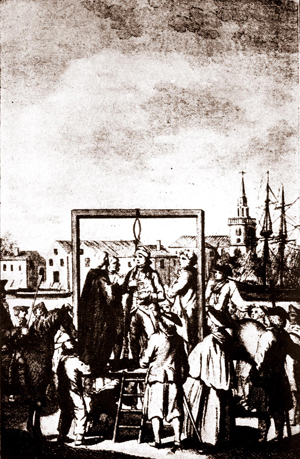
For six centuries, the gallows at Tyburn, in the city’s west, was one of London’s sites of public execution. Today, little remains to remind visitors of the infamous past of the area, which lies close to Marble Arch, but for a plaque set in the middle of a road.

From 1196 to 1783, it’s suggested that thousands of people (some have estimated as many as 60,000) were hanged at various gallows erected at Tyburn, known by numerous names over the centuries including ‘The Elms’, the ‘The Deadly Never Green Tree’, and most infamously the ‘Tyburn Tree’.

Hangings were apparently initially carried out using the branches of a tree on the bank of the Tyburn River but the first gallows date from 1220. In Elizabeth times these were upgraded to a larger gallows known as the ‘Triple Tree’ which enabled many more people to be hanged simulteously – as many as 24 at once in 1649.

The gallows was removed in 1759 because it was blocking the road and a mobile gallows used until hangings were moved into Newgate Prison (see our earlier entry on Newgate).

Executions were a public spectacle and it’s estimated that at times the crowds at Tyburn swelled to more than 50,000 people, all eager to witness someone “dancing the Tyburn jig”.

Among those to be hanged at Tyburn were William Fitz Osbern (a champion of London’s poor who was hanged in 1196), Roger Mortimer, 1st Earl of March (hanged in 1330 after being accused of assuming royal power), Perkin Warbeck (pretender to the throne of King Henry VII who was hanged in 1499), and Elizabeth Barton, the ‘Holy Maid of Kent’ (hanged for treason after prophesying King Henry VIII would die within six months of marrying Anne Boleyn).

Others included key figures in the so-called Pilgrimage of Grace (an uprising in England’s north in 1536 which followed King Henry VIII’s break with Rome) and many other Catholics including Oliver Plunkett, the Archbishop of Armagh and Primate of all Ireland (1681).

In an unusual move, the body of already deceased Oliver Cromwell, along with that of John Bradshaw and Henry Ireton, was exumed from his grave and and hanged there to mark the first anniversary of the Restoration.

What is believed to have been the site of the Tyburn Tree is today marked by a plaque set in a traffic island at the corner of Edgware Road and Bayswater Road (nearest tube station is Marble Arch).

There is a Shrine of the Martyrs dedicated to the more than 105 Roman Catholics who were hung at Tyburn for their faith at the Tyburn Convent in Hyde Park Place (for visiting details, see www.tyburnconvent.org.uk).

Note: This article originally referred to the Shrine of the Martyrs commemorating more than 350 Catholic martyrs who died during the Reformation as all being executed at Tyburn but it is believed some 105 were – the greater figure refers to those martyred across England and Wales during the Reformation.

Around London – Captain Kidd at Docklands; London’s Olympic Torch Relay path; St Giles’ seedy past; speech therapist Lionel Logue honored; and, The Seven Seas at Selfridges…

The true story of Captain Kidd and an exploration of London’s links with piracy is the focus of a new major exhibition at the Museum of London Docklands. Pirates: The Captain Kidd Story features original artefacts dating from 300 years ago when London was a site of pirate executions and tells the story of the infamous Captain Kidd’s life until his execution at Wapping’s Execution Dock. Among the artefacts is the original costume worn by actor Johnny Depp as he played Captain Jack Sparrow in the film Pirates of the Caribbean. The exhibition, which opens tomorrow and runs until 30th October, is being held in conjunction with a series of pirate related events including an adults-only pirate night on 27th May where you have the chance to sample some genuine “pirate drink” and take part in pirate speech lessons. Admission charges apply. For more information, visit the Museum of London Docklands website www.museumoflondon.org.uk/Docklands/Whats-on/Exhibitions-Displays/Pirates.htm.

The path of London’s Olympic Torch Relay has been announced and will finish with a week long jaunt through London. The torch will arrive in Waltham Forest on 21st July next year and then pass through Bexley, Wandsworth, Ealing, Haringey and Westminster before its arrival at the Olympic Stadium on 27th July. To find out how to nominate someone to carry the torch or for more information on the relay, visit www.london2012.com/olympic-torch-relay.

• On Now: London’s Underworld Unearthed: the Secret Life of the Rookery. The seedy side of the St Giles Rookery, a once infamous quarter of the capital, is laid bare in this new exhibition at the Coningsby Gallery. Back in 1751, the area was known as “a pit of degradation, poverty and crime” known for its free-flowing gin. Artist Jane Palm-Gold has displayed 18th and 19th century artifacts found during the Museum of London Archaeology’s recent excavation of old St Giles (conducted prior to the construction of the recent Central St Giles development which now covers the site) alongside her paintings, building what has been described as a “multi-layered psycho-geography that both mesmerises and disturbs”. Runs until 3rd June at the Coninsby Gallery at 30 Tottenham Street (nearest tube station is Goodge Street). Admission is free. For more information, see www.coningsbygallery.com

Australian speech therapist Lionel Logue – known for having helped cure King George VI of his stammer, the story of which is told in the recent Oscar-winning film, The King’s Speech – has been honored with a green plaque by Westminster Council. The plaque was expected to be unveiled today at 146 Harley Street, where Logue, who is known to have used fees from wealthier client to subsidise free treatments for those who could not afford them, lived from 1926 until 1952. The plaque is one of 94 which Westminster Council has placed to mark buildings of particular significance for their association with people who have made lasting contributions to society.

• On Now: The Seven Seas at Selfridges in Oxford Street. Conceptual artist Beth Derbyshire’s seven minute video installation features seven films of seven different seas around the globe. On show as part of Project Ocean – an initiative by Selfridges and 20 environmental and conservation groups aimed at celebrating the ocean’s beauty and highlighting the issue of overfishing. Runs until 8th June. For more information, see www.selfridges.com.

King James I’s London – 6. The Queen’s House, Greenwich

Long an admired landmark of Greenwich, the origins of the Queen’s House go back to the reign of King James I.

It was the Queen, Anne of Denmark, who commissioned the building of The Queen’s House in 1616 and gave it the name by which it is still known. Sadly, however, she died before it was completed.

King James I was said to have been a frequent visitor to the Tudor Palace of Greenwich (the building had earlier been known as the Palace of Placentia and was the birthplace of King Henry VIII in 1491).

King James  is traditionally said to have awarded the Manor of Greenwich to Queen Anne as an apology after he had publicly sworn at her when she had accidentally shot one of his favorite hunting dogs.

In 1616, Queen Anne decided to build a new property on the site as both a private retreat and a place where she could entertain and it was to the rising star Inigo Jones that she turned to for the design (in recognition of his growing status, he was appointed Surveyor of the King’s Works the following year).

The house was Jones’ most important job to date and the design he came up – based on a H with the two sides joined by a bridge over the Greenwich to Woolwich road – with is said to be the first Classical building in England.

Among the original features which survive to this day are the striking black and white geometrically patterned marble floor of the Great Hall (the room having been designed as a perfect cube), the painted ceiling of the Queen’s Presence Chamber and the iron balustrade the Tulip Stairs – said to be the first “geometric self-supporting spiral stair in Britain”.

Queen Anne became ill in 1618 and died the following year without seeing the end result of her commission. The work subsequently was shelved and only restarted (and completed in 1638) after King Charles I gave it to his wife, Queen Henrietta Maria.

She only had possession for a short time before Parliamentary forces seized it during the Civil War. After the Restoration, the Queen’s House was returned briefly to her by her son King Charles II (it was at this time that the original H-shape of the house was altered to a square) before part of it as later used as studio for painters and then as grace and favor apartments.

With the Old Royal Naval College now occupying the surrounding site, in 1805, King George III gave the property to the Royal Naval Asylum – a charity caring for the orphan children of seamen – and it later became part of the Royal Hospital School.

The National Maritime Museum took possession in 1934 and the building now houses the National Martime Museum’s collection of fine art. As an interesting aside, there have been several reported sightings of ghosts in the house, the latest as recently as 2002.

WHERE: The Queen’s House, National Maritime Museum, Greenwich (nearest DLR station is Cutty Sark); WHEN: 10am to 5pm daily (check website for closures); COST: Free; WEBSITE: www.nmm.ac.uk/places/queens-house

London Life – Pigeons feeding…

Although not as ubiquitous as they once were in London (particularly in Trafalgar Square), the offer of food – an activity frowned upon by authorities, by the way – will still always attract a crowd.

What’s in a name?…Charing Cross

The West End location of Charing Cross is named after the large stone cross that once stood at the top of Whitehall on what is now the southern side of Trafalgar Square – a site currently occupied by a statue of King Charles I.

The cross – an embellished Victorian-era replica of which can be found standing outside Charing Cross Station in the Strand – was one of a series of 12 erected by King Edward I in 1291-94 to commemorate his wife Eleanor of Castile.

They marked the sites where her funeral cortege rested overnight as it made its way from near Lincoln where she died south to Westminster Abbey where she was to be buried (for more on the cross and the Victorian replica, see our previous post here).

The final of these ‘Eleanor Crosses’ – which were originally made from wood before being replaced with stone ones –  was erected on a site which stood in the medieval village of Charing, located between the City of London and Westminster. The cross was pulled down in the 1640s by order of Parliament. Since 1675, the statue of King Charles I (pictured, with Trafalgar Square, once the site of the royal mews, in the background) has occupied the site.

The word Charing is an Anglo-Saxon or “Old English” term and is believed to relate to the nearby bend in the River Thames.

Between the mid-1700s until the mid-20th century, the former site of the Charing Cross was the point from which all distances from London were measured. There was also a famous pillory located here.

Treasures of London – The Portuguese Centrepiece, Apsley House

Having just been cleaned as part of a renovation of the State Dining Room at Apsley House (pictured) – the former London residence of Arthur Wellesley, the Duke of Wellington, the silver-gilt Portuguese Centrepiece  was presented as part of a complete service to the duke in 1816.

The gift of the Portuguese Regency Council, it was created in honor of the duke’s role in leading the armies of Spain, Britain and Portugal to victory over Napoleon’s forces in the Peninsular War of 1808-14.

The service, which consists of more than 1,000 pieces, was designed by Portuguese court artist Domingos Antonio de Sequeira who took three years to complete it with much of the work carried out in Sequeira’s house and neighbouring workshops. Subsequently damaged in the sea crossing to England, repairs had to be made before it was formally presented to the duke late in 1816.

The eight metre long centrepiece commemorates all the battles of the Peninsular War in which the allies were victorious. It was acquired for the nation in 1948 and is now permanently displayed on the duke’s original mahogany dining table, designed especially to support its weight.

WHERE: Apsley House, 149 Piccadilly, Hyde Park (nearest tube station is Hyde Park Corner); WHEN: 11am to 5pm Wednesday to Sunday (until 31st October); COST: £6.30 an adult/£5.70 concessions/£3.80 a child (English Heritage members free); WEBSITE: www.english-heritage.org.uk/daysout/properties/apsley-house/

Around London – See museums after hours; the White Tower is white again; and, foundation stone for Bomber Command is laid…

• The annual Museums at Night event returns to London (and Britain) this weekend with hundreds of museums and galleries across the country opening their doors for special after hours events. Among those places in London taking part is the Churchill War Rooms, which is hosting a 1940s evening on Friday night, the London Canal Museum which is hosting”candle-lit tours, atmospheric lighting, and exhibits of art and film in dark places”, and the Petrie Museum of Egyptian Archaeology which is hosting a double hill of Hammer films and a “Gothic Egypt” trail. Other institutions taking part include the Sir John Soane Museum, the National Gallery, the Bank of England Museum, and Orleans House Gallery in Twickenham.  For more information about what’s on see www.museumsatnight.org.uk

King William the Conqueror celebrated at the Tower of London this week following the completion of a £2 million, three year project to clean the White Tower. First built shortly after the Norman Conquest of 1066, the tower had become blackened by pollution but has now been restored to its original color. For more information on visiting the Tower, see www.hrp.org.uk/toweroflondon/.

A foundation stone has reportedly been laid for a Bomber Command Memorial in Green Park. The memorial, which is due to be completed for the Queen’s Jubilee celebrations in 2012, will be constructed of Portland stone and will feature a nine foot tall statue of a bomber command aircrew. Bomber Command lost more than 55,000 airmen during World War II. The foundation stone was laid by the Duke of Gloucester. Supporters of the monument’s construction have included former Bee Gee Robin Gibb, Sir Michael Beetham, Marshal of the RAF, and  The Daily Telegraph newspaper which is running an appeal to help raise funds for the memorial.

King James I’s London – 5. Holland House

A Jacobean mansion located in Kensington’s Holland Park, Holland House was first built in 1605 for Sir Walter Cope, Chancellor of the Exchequer for King James I. 

Sir Walter apparently entertained the king and his wife, Queen Anne of Denmark, at the property – then named Cope Castle – on numerous occasions at the property and reportedly hosted the king the night after his son, Henry Frederick, the Prince of Wales, died in 1612.

Its name came with a later owner – the ill-fated Henry Rich, Cope’s son-in-law, who was made the 1st Earl of Holland in 1624 and was later executed for his role in supporting the Royalist cause during the Civil War during which the house was occupied by parliamentary troops.

The home was later used by various family members – among luminaries associated with the property are the essayist Joseph Addison who died there in 1719 as well as, in later years, the likes of Lord Byron, Benjamin Disraeli, Charles Dickens and Sir Walter Scott, all of whom visited the property during the property’s golden age in the 19th century when it was an important social gathering place.

The house was largely destroyed in a bombing raid in September 1940 and passed into ownership of the local authority. A youth hostel is now housed inside the restored east wing of the building while other buildings are used for a restaurant and function centre – all set within the 22 hectare (55 acre) Holland Park. Some of the ruins provide a backdrop for open-air theatre performances and concerts in summer.

WHERE: Holland Park (nearest tube stations are Holland Park, Kensington High Street and Notting Hill); WHEN: 7.30am to 30 minutes before dusk (check signs by entrance); COST: Park entrance is free (house is not open to the public); WEBSITE: www.rbkc.gov.uk/leisureandlibraries/parksandgardens/yourlocalpark/hollandpark.aspx

LondonLife – Reliving the Festival of Britain

Beach huts overlook the Thames at Queens Walk, Southbank, in celebration of the 60 year anniversary of the 1951 Festival of Britain. The huts have been individually designed by artists and reflect an element of life by the seaside – from an exhibition of vintage swimwear to a gallery of visual art which recalls when a storm surge flooded much of the North Sea coast in 1953. Nearby is an “urban beach” where you can pause to play in the sand. The huts will remain in position until 4th September. For more on the Festival of Britain 60th anniversary celebrations, see www.southbankcentre.co.uk.

Where’s London’s oldest…bookshop?

Hatchards on Piccadilly (right next to Fortnum & Mason) is generally accepted as being London’s oldest surviving bookshop.

It was founded in 1797 by John Hatchard in Piccadilly (there seems some dispute over whether it still stands on exactly the same site).

The shop currently holds three royal warrants for the supply of books to the Royal Household.

Among high profile past customers have been Queen Charlotte (wife of King George III), former PMs Benjamin Disraeli and  Arthur Wellesley, the Duke of Wellington, and literary figures such as Rudyard Kipling, Oscar Wilde and Lord Byron.

It remains popular with lovers of literature and is noted for hosting book-signings by prominent authors with many signed book on the shelves.

For more, see www.hatchards.co.uk.

Lost London – The Rose Theatre

First opened in 1587, The Rose was one of the first purpose-built theatres in London and the first Elizabethan theatre in Bankside, then an area noted for its entertainments including gambling dens, bear and bull baiting pits, and brothels.

The theatre was built for businessman and theatre developer, Philip Henslowe, and his partner John Cholmley, and subsequently hosted plays including Christopher Marlowe’s The Jew of Malta and Shakespeare’s Henry VI part I and Titus Andronicus. Among the actors was Edward Alleyn, Henslowe’s son-in-law, while among the companies which performed there were Lord Strange’s Men, Sussex’s Men, the Queen’s Men and the Admiral’s Men.

Its success led to the building of rival theatres in the area including The Swan in 1595 and The Globe in 1599. It had apparently fallen out of use by 1603 and was abandoned soon after.

The theatre fell out of history until the late 1980s when, following the demolition of a 1950s office block, archaeologists from the Museum of London uncovered the remains of much of the theatre’s floorplan, revealing that it was a smallish many sided structure based on a 14-sided polyhedron. A campaign to save the remains was launched – attracting support from acting luminaries including Sir Laurence Olivier and Peggy Ashcroft – and much of the site was preserved from development.

Some 700 objects, including jewellery, coins and a fragment of one of the moneyboxes used to collect entrance money, were excavated at the site.

The site was reopened to the public in 1999 – it now features displays and some of the objects found by archaeologists – and part of it has been used as a performance space again since 2007.

WHERE: Rose Theatre, Park Street, Bankside; WHEN: 10am to 5pm Saturdays (Shakespeare’s Globe also offer tours during matinee performances at The Globe when tours there are not available – see www.shakespeares-globe.org for more details); COST: Free (donations welcomed and there is a charge for tours from The Globe); WEBSITE: www.rosetheatre.org.uk

Around London – Brixton Windmill reopens; offload your Royal Wedding bunting; and, Women War Artists…

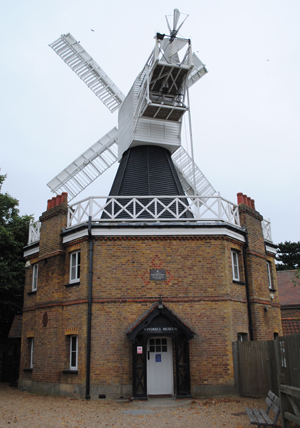
The Brixton Windmill, the only surviving windmill in inner London, was reopened to the public amid much celebration on 1st May. The windmill, located at Windmill Gardens, was built in 1816 and leased the following year by John Ashby. The Ashby family – including the sons and grandsons of John – operated the mill until the 1860s when the Ashby’s milling business was transferred to what was then a more rural location at Mitcham. Two years later the sails were removed and the mill was subsequently used for storage. A steam and later a gas engine were fitted to the mill in the early 20th century but it was finally closed down in 1934. In the 1970s, the mill passed into the ownership of Lambeth Council. A £400,000 Heritage Lottery grant obtained by Friends of Windmill Gardens and Lambeth Council has enabled a complete restoration of the Grade II* listed building. For more details on the mill, including opening hours and events, see www.brixtonwindmill.org.

• Wanting to offload some Royal Wedding tat? The Museum of London is looking for objects which help tell the story of how London celebrated the marriage of Prince William and Kate Middleton. They are particularly interested in acquiring materials people used in street parties or private celebrations – everything from paper plates and napkins to bunting and “funny hats”. Donations are unable to be returned even if not used. For details on where to send items, see www.museumoflondon.org.uk/Corporate/Press-media/Remembering+the+Royal+Wedding.htm

Now On: Women War Artists at the Imperial War Museum. Covering the period from World War I to the Kosovo conflict of the 1990s, the exhibition features the work of artists including Anna Airy, one of the first women officially commissioned during the First World War, Dame Laura Knight, Linda Kitson and Frauke Eigen. Admission is free. Runs until 8th January, 2012. For more information, see www.iwm.org.uk.

King James I’s London – 4. Charterhouse

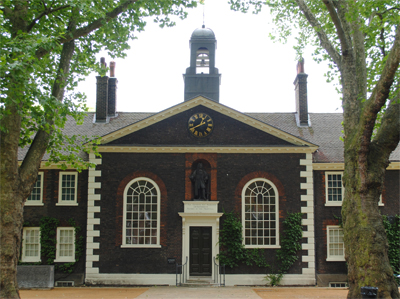
The Charterhouse School was founded in 1611 – the seventh year of King James I’s reign – on the site of a former Carthusian monastery in Smithfield.

It owes its creation to Thomas Sutton (1532-1611) who bought the site – which then contained a Tudor mansion – from Thomas Howard, Earl of Suffolk, in 1611, the year of Sutton’s death.

A Yorkshireman, Sutton (who is buried in the chapel in Charterhouse) is said to have been the “wealthiest commoner in England” at the time, having made a fortune after discovering coal. He used his resources to endow a school and an almshouse on the site.

Among the school’s alumni were John Wesley, founder of the Methodist Church, and novelist William Makepeace Thackeray.

The school – which is this year celebrating its 400th anniversary – moved to Godalming in Surrey in 1872 and the site was subequently occupied by the Merchant Taylor’s School while the almhouse continued to operate on the western part of the land (it still does today under the name Sutton’s Hospital in Charterhouse).

The school later became the medical college of the nearby St Bartholomew’s Hospital and is now occupied by Barts and The London School of Medicine and Dentistry.

For more on the Charterhouse, see www.thecharterhouse.org (tours run on Wednesday afternoons at 2.15pm from April until August and cost £10 per person). For more on the Charterhouse School, see www.charterhouse.org.uk.