Famous Londoners – Thomas Guy…

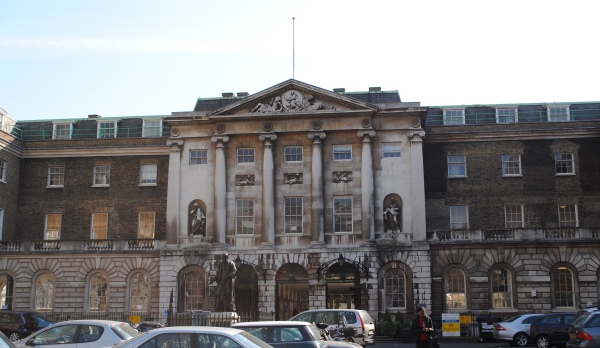
Bookseller and philanthropist, Thomas Guy’s memory is still preserved in the London hospital which still bears his name (pictured above).

Guy was born the son of Thomas Guy, Sr, a lighterman, carpenter and coalmonger (and Anabaptist) in Southwark, in about 1644. But his father died when he was just eight-years-old and his mother Anne moved the family to Tamworth, her home town, where he was educated at the local free grammar school.
In 1660, he returned to London where he was apprenticed to a bookseller in Cheapside. Eight years later (and having lived through the Great Plague and The Great Fire), his apprenticeship completed and now admitted as a freeman to Worshipful Company of Stationers, he opened his own bookstore on the corner of Cornhill and Lombard Street  in the City of London where he found success in selling illegal fine quality printed Bibles from what is now The Netherlands.

He went on to obtain a contract from Oxford University for the printing of Bibles, prayer books and other classical works – a move which saw his fortune begin to take off, so much so he apparently renamed his shop the ‘Oxford Arms’.

But Guy also became a noted investor and it was through doing so – particularly his success in investing in and then offloading shares in the booming South Sea Company (before it collapsed) – which, alongside his success as a publisher, helped to create his fortune.

He had a somewhat notorious reputation for frugality (there is a somewhat dubious story that he broke off an engagement with a maidservant following a dispute concerning some paving works she authorised without his permission) but is also known to have been a significant philanthropist.

His giving included funding upgrades to his former school in Tamworth as well the building of almshouses there in 1678. In fact, his connections with the town were still deep – he represented the town as its MP between 1675 to 1707 – he was so angry was he at his rejection in 1608 that he threatened to pull down the town hall and, later, in his will specifically deprived the inhabitants of Tamworth of use of the almshouses.

Guy had, meanwhile, refused the offer of taking up the post of Sheriff of London after he was elected, apparently because of the expense involved, and paid a fine instead.

He was appointed a governor of St Thomas’s Hospital in 1704 which he also funded the expansion of (using the money he’d made through his investment in the South Sea Company), building three new wards. Having obtained permission to build a hospital for “incurables” discharged from St Thomas’ Hospital, he began building his own hospital, Guy’s, near London Bridge in 1722.

Guy never married and died at his home in the City on 27th December, 1724. He laid in state in the Mercer’s Chapel before being buried in the crypt beneath the chapel at Guy’s Hospital (a fine monument by John Bacon now stands over the site).

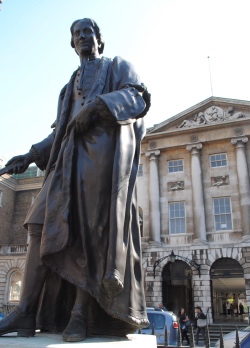
He left considerable bequeathments to various charitable organisations as well as to relatives but the bulk of his estate went to his hospital – which was now roofed – so that the works could be completed. The bronze statue outside the hospital, by Scheemakers, depicts guy in his livery.

PICTURE: David Adams
This Week in London – Celebrating Rembrandt’s relationship with light; Paul Gauguin’s portraits; and, sacred Japanese images…

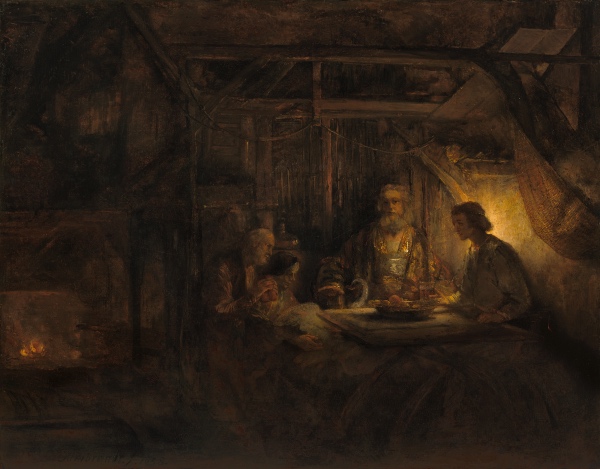
Rembrandt’s mastery of light is the subject of a new exhibition opening at the Dulwich Picture Gallery on Friday to mark 350 years since the Dutch artist’s death. Rembrandt’s Light includes 35 of his greatest paintings, etchings and drawings including international loans The Pilgrims at Emmaus (1648) and – shown for the first time in the UK – Philemon and Baucis, (1658), Tobit and Anna with the Kid (1645) and The Dream of Joseph (1645). The works have been arranged thematically and show how he used light and shadow for dramatic effect, focusing on his work during the middle period of his career – 1639-1658 – while he was living in his “dream house” on Breestraat in Amsterdam where the large windows provided ideal access to light. The display will employ a new LED Bluetooth lighting system installed at the gallery while cinematographer Peter Suschitzky, famed for his work on Star Wars: The Empire Strikes Back; The Rocky Horror Picture Show and Mars Attacks!, has worked with the curators to create what the gallery promises will be an “atmospheric visitor experience”. Admission charge applies. Runs to 2nd February. PICTURE: Rembrandt van Reign, Philemon and Baucis (1658), oil on panel transferred to panel, National Gallery of Art, Washington.

The first ever exhibition devoted to the portraits of Paul Gauguin opens at the National Gallery on Monday. The Credit Suisse Exhibition: Gauguin Portraits shows how the French artist, who was famed for his paintings of French Polynesia, revolutionised the portrait to express himself and his ideas about art. It features more than 50 works including paintings, sculptures, prints, and drawings – many of which have rarely been seen together. They include Madame Mette Gauguin in Evening Dress (1884), Young Breton Girl (1889), Tehura (Teha’amana) (1891-93), Young Christian Girl (1894), Père Paillard (1902) and the last self-portrait he ever completed, made in 1903, probably shortly before the end of his life at the age of 55. Runs until 26th January in the Sainsbury Wing. Admission charge applies. For more, see www.nationalgallery.org.uk.

Fifteen Buddhist and Shinto sacred images from the Nara Prefecture have gone on show at the British Museum. The works, which include five Japanese National Treasures, date from between 600 and 1300 AD and are displayed with related important Japanese and Chinese paintings from the museum’s collection. The objects include a gilt bronze sculpture, Bodhisattva of Compassion, a gilt-bronze libation dish featuring the birth of the Buddha and a pair of imposing wooden sculptures, Heavenly Kings, all of which date from the 700s. Nara: sacred images from early Japan can be seen in Room 3 (the Asahi Shimbun Displays) and the Mitsubishi Corporation Japanese Galleries (Room 93). Runs until 24th November. For more, see www.britishmuseum.org.

Send all items for inclusion to exploringlondon@gmail.com.

10 (more) historic London garden squares…4. Red Lion Square…

This Holborn square was laid out in the 1680s by property speculator Nicholas Barbon and took its name from the Red Lion Inn which once stood here.

The inn, incidentally, is said to be the place where the exhumed bodies of Oliver Cromwell, his son-in-law (and Parliamentarian general) Henry Ireton and John Bradshaw, president of the parliamentary commission to try King Charles I, lay the night before they were taken to Tyburn where they were desecrated (there’s a story that the bodies were switched that night and the real men lay buried in a pit in a square).

The square was laid out on what had been known as Red Lion fields and there were apparently some physical scuffles between the workmen, led by Barbon, and lawyers of Gray’s Inn who objected to the loss of their rural vistas.

The square, meanwhile, soon became a fashionable part of the city – among early residents was Judge Bernard Halle – but by the mid-19th century, its reputation had slumped only to move up again in later years.

Famous residents included Dante Gabriel Rossetti in 1851 and William Morris who lived in a flat on the southern side of the square with Edward Burne-Jones in the later 1850s. The art deco Summit House was built in 1925 on the former residence of John Harrison, inventor of the marine chronometer. Jonas Hanway, the first man to walk London’s streets with an umbrella, apparently also lived on the square.

The square today is home to the Royal College of Anaesthetists and Conway Hall, home of the Conway Hall Ethical Society (in fact, it was Conway Hall which was at the centre of one of the most famous incidents in the square – clashes between anti-fascist protestors and National Front members and subsequent police response which took place on 15th June, 1974, and left a university student, Kevin Gately, dead.

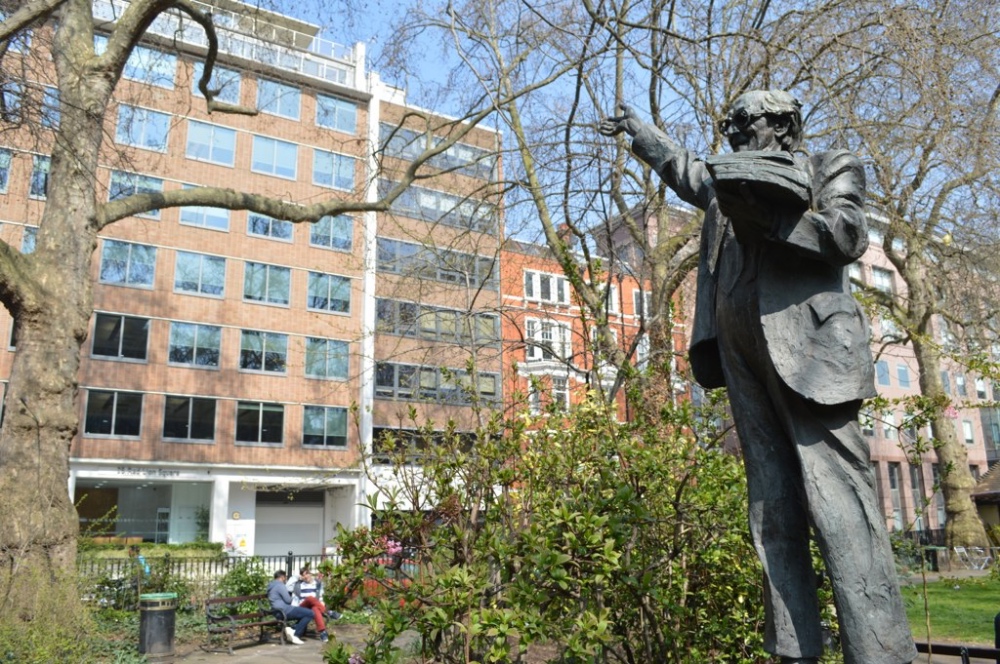
The garden in the centre of the square features a statue of anti-war activist Fenner Brockway and a bust of philosopher, essayist and Nobel laureate Bertrand Russell.

PICTURE: Top – View across part of the square (Google maps)/Below – Fenner Brockway statue (Matt Brown/licensed under CC BY 2.0)

LondonLife – Bob Marley’s former Chelsea home given English Heritage Blue Plaque…

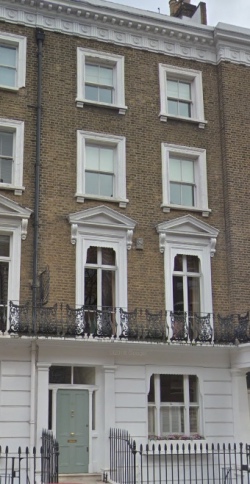
The Chelsea property where Jamaican singer-songwriter Bob Marley lived in 1977 has been given an English heritage Blue Plaque. Marley lived at the four storey terraced house at 42 Oakley Street while he and the Wailers were finishing recording their album Exodus which features hits including Jamming, Waiting in Vain, Three Little Birds and One Love. Marley, who often played football with bandmates at pitches in Battersea Park, said he regarded London as a “second base”. Among the evidence considered in deciding to award the plaque was Marley’s arrest for possession of cannabis on 10th March, 1977, along with bassist Aston ‘Family Man’ Barrett. Court records have Barrett’s address as 42 Oakley Street while Marley’s is recorded as 27 Collingham Gardens. Anecdotal evidence, however, suggests he gave this address to try and prevent the police from searching Oakley Street for drugs and English Heritage says the unanimous recollection of contemporary witnesses is that Oakley Street was both the band headquarters and Marley’s primary address at the time. Other music-related identities who have been honoured with blue plaques include Jimi Hendrix, John Lennon, George Frideric Handel and Wolfgang Amadeus Mozart. For more, see www.english-heritage.org.uk/visit/blue-plaques/. PICTURE: 42 Oakley Street (before plaque) via Google Maps.

London Pub Signs – The Market Porter, Borough…

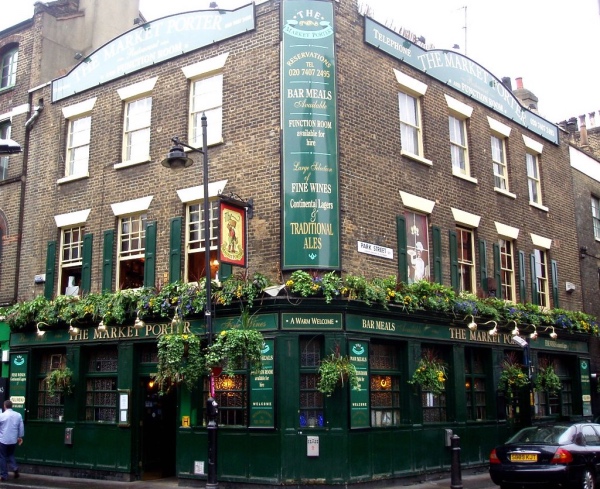
Located at 9 Stoney Street (on the corner with Park Street) in Borough, overlooking Borough Market, this establishment is the latest incarnation of the pubs which have occupied this site since the early part of the 17th century.

Previously called The Harrow, the current name, which dates from the 1890s, no doubt owes at least part of its story to the proximity to the market and the patronage of the porters that worked there.

It may also have something to do with being the site of the killing of market porter Alfred Howe. He was slain by Edward Lamb outside the pub on 15th February, 1890, when he plunged an umbrella into Howe’s eye during an altercation. Lamb, indicted on manslaughter charges, was subsequently acquitted.

It’s been suggested the subsequent name change might have been due to the notoriety the incident attracted but, whatever the truth of the story behind the name, the pub is now famed for its ales as well as for doubling as the location for the ‘Third Hand Book Emporium’ in Harry Potter and the Prisoner of Azkaban.

The pub is part of the Market Taverns group. For more, see www.themarketporter.co.uk.

PICTURES: Top – Ewan Munro (licensed under CC BY-SA 2.0); Right – Google Maps

This Week in London – The Krio people of Sierra Leone; photographer Tim Walker; blue plaques for Angela Carter and Martha Gellhorn; and, last chance to get NYE tickets…

The history and culture of the Krio people of Sierra Leone are the subject of a new display opening at the Museum of London Docklands tomorrow. The Krios of Sierra Leone explores the dress, architecture, language, lifestyle, traditions and history of the Krio community with contemporary objects from Krio Londoners on show as well as items related to the history of British colonial rule of Sierra Leone from the museum’s collections. Highlights include a large carved wooden printing block dating from around 1800, known as a ’tillet block’, that bears the crest of the Sierra Leone Company, a silver entrée dish which was presented to Thomas Cole, acting colonial secretary of Sierra Leone and assistant superintendent of Liberated Africans, who was responsible for assisting people freed from slave ships when they arrived in the colony, and, a typical Krio dress ensemble wore by Krio women. The free exhibition can be seen until 27th September next year. For more, see www.museumoflondon.org.uk/krios.

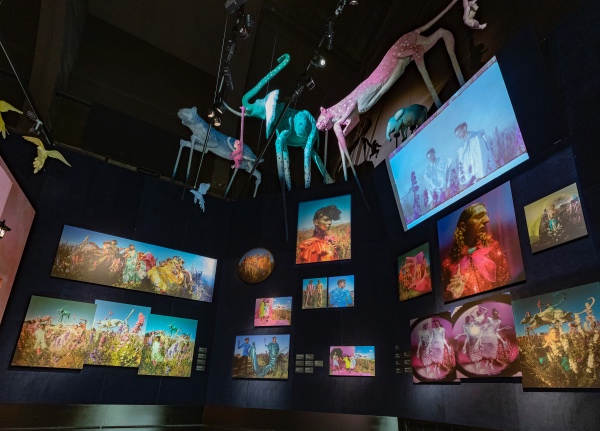
Portraits of everyone from Sir David Attenborough to actor Tilda Swinton are on show as part of the largest ever exhibition of the work of photographer Tim Walker at the V&A. The display, Tim Walker: Wonderful Things (pictured above), features more than 150 new works inspired by the V&A’s collections and boasts more than 300 objects, encompassing photographs and the objects that inspired them as well as images of some of the biggest names in fashion – Lily Cole, Lindsey Wixson, Stella Tennant and Alexander McQueen among them – and portraits of such luminaries as Margaret Atwood, David Hockney, Daniel Day-Lewis, Claire Foy, Saoirse Ronan, Kate Moss, and artist Grayson Perry. Runs until 8th March. Admission charge applies. For more, see www.vam.ac.uk.

Writers Angela Carter and Martha Gellhorn were both commemorated with English Heritage Blue Plaques earlier this month. Carter, an award-winning novelist, spent the last 16 years of her life at the property at 107, The Chase, in Clapham, and it was there she often tutored her then-student Kazuo Ishiguro and received fellow writers like JG Ballard, Ian McEwan and Salman Rushdie. Meanwhile, Gellhorn, a war correspondent who reported on conflicts ranging from the Spanish Civil War to the Vietnam War, was commemorated with a blue plaque on her former top floor flat in Cadogan Square where she spent the last 28 years of her life. For more, see www.english-heritage.org.uk/visit/blue-plaques/.

The final release of tickets for this year’s New Year’s Eve fireworks go on sale from midday on Friday. Those who wish to attend the fireworks in central London must purchase a ticket priced at £10. To sign up for ticket updates and more information go to www.london.gov.uk/nye

Send all items for inclusion to exploringlondon@gmail.com.

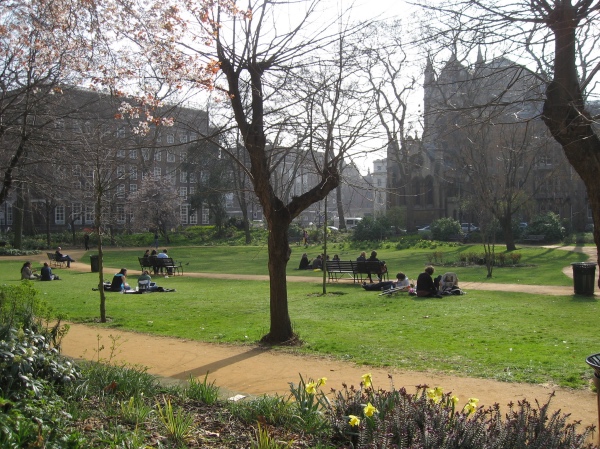
10 (more) historic London garden squares…3. Gordon Square…

This Bloomsbury garden square, a pair with Tavistock Square located a short distance to the north-east, was developed in the 1820s with residences designed by master builder Thomas Cubitt and his company.

Its name comes from the family of the then land-owner, John Russell, the Duke of Bedford – Lady Georgina Gordon was the second wife of the 6th Duke of Bedford (her father was Alexander Gordon, the fourth Duke of Gordon).

The square initially contained a private garden, designed by the 6th Duke of Bedford himself, which was reserved for residents. Now open to the public, the garden underwent a refurbishment, restoring the original railings, in the early 2000s and was reopened by Princess Anne in 2007.

Originally residential (although while it attracted some professionals and their families, it was never as popular as nearby Russell Square), the buildings on the square are now predominantly occupied by departments and institutes of the University of London. The university purchased the square, along with Woburn Square, in 1951.

On the west side of the square stands the university church, the Grade I-listed Church of Christ the King, which dates from the 1850s, while nearby is Dr Williams’s Library, founded in 1729 and moved here in 1890.

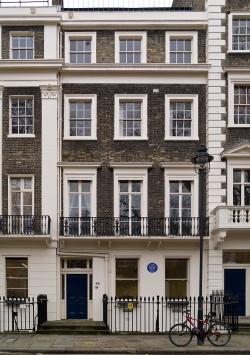
The square is generally considered the epicentre of the Bloomsbury Group of writers, artists and intellectuals with Virginia Woolf (then Stephens) among its residents. She lived at number 46 between 1904 and 1907, with her sister Vanessa, who, following her marriage to Clive Bell, continued to live there until 1917.

Another member of the Bloomsbury Group, economist John Maynard Keynes, lived in the house after that. Writer Lytton Strachey, another member of the group, lived at number 51 from 1909 to 1924.

Philosopher and essayist Bertrand Russell lived at number 57 between 1918-19.

PICTURES: Top – Gordon Square (Jay Bergesen/licensed under CC BY 2.0) Right – 46 Gordon Square (Myrabella / Wikimedia Commons / CC BY-SA 3.0 & GFDL)

LondonLife – View to St Paul’s…

PICTURE: Greg Jeanneau/Unsplash.

A Moment in London’s History – The opening of Tower Bridge…

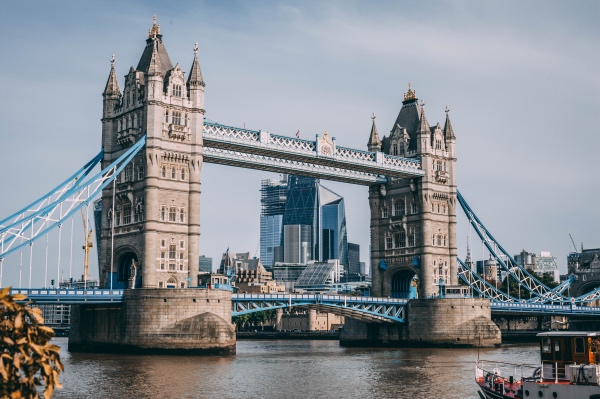
This year marks 125 years since the opening of Tower Bridge.

The bridge, which took eight years to build and was designed by City of London architect Sir Horace Jones in collaboration with engineer Sir John Wolfe Barry, was officially opened on 30th June, 1894, by the Prince and Princess of Wales (the future King Edward VII and Queen Alexandra).

Others among the tens of thousands who turned out to mark the historic event were the Duke of York (later King George V), Lord Mayor of London Sir George Robert Tyler and members of the Bridge House Estates Committee.

A procession of carriages carrying members of the royal family had set out from Marlborough House that morning, stopping at Mansion House on its way to the bridge.

Once there, it drove back and forth across before official proceedings took place in which the Prince of Wales pulled a lever to set in motion the steam-driven machinery which raised the two enormous bascules and allowed a huge flotilla of craft of all shapes and sizes to pass under it.

The event was also marked with a gun salute fired from the Tower of London.

Plaques commemorating the opening can be found at either end of the bridge. The event was also captured in a famous painting by artist William Lionel Wyllie who had attended with his wife. The painting is now held at the Guildhall Art Gallery.

Tower Bridge has been running a series of special events to mark the anniversary this year. For more, see www.towerbridge.org.uk.

Tower Bridge today. PICTURE: Charles Postiaux/Unsplash


Treasures of London – Sir Walter Raleigh, Greenwich…

This Greenwich statue, which stands on King William Walk to the left of the entrance to the Pepys Building – once part of the Royal Naval College, depicts the Elizabethan adventurer and court favourite (well, at times) in a suitably heroic pose. The life-sized bronze of Raleigh (1552-1618), which stands on a stone plinth, was designed by William McMillan. It was originally unveiled by then-US Ambassador John Hay Whitney in 1959 on Raleigh Green outside the Ministry of Defence in Whitehall to mark the 350th anniversary of the foundation of the Commonwealth of Virginia (it was apparently originally suggested it be placed in front of the National Gallery in Trafalgar Square but that didn’t eventuate). Grade II-listed, it stood in Whitehall until 2001 until, deemed as out of scale with other statues, was moved to its current location. PICTURE: Loco Steve (licensed under CC BY-SA 2.0).


This Week in London – Open House London; street food explored; and, Antony Gormley…

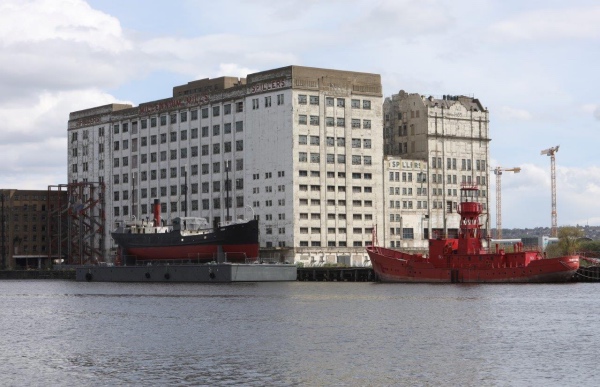
It’s Open House London weekend and that means your chance to explore behind what are normally closed doors. More than 800 buildings are opening up to the public over the two day festival – this year’s theme is ‘social’ – and there’s an extensive programme of walks and architect-led tours with all events free to attend. While some buildings – like Number 10 Downing Street, BT Tower and the US Embassy London – are only open to those who were successful in already-held public ballots, there’s still plenty to see for those who have’t scored a place. Highlights include a chance to see inside first-time participants like Millennium Mills in Royal Docks (pictured above), the new Museum of London in West Smithfield and the new social housing estate, Kings Crescent Estate in Hackney, as well as a Tokyo Bike cycle tour, and By Beck Road 19 – a Bethnal Green terrace serving as an open-door art gallery. There’s also the chance to see inspiring residences like Open Practice Architecture’s Gin Distillery and Nimtim Architect’s Block House, family activities and the Open House ‘Elements’ photography competition to take part it. For the full programme of events, head to www.openhouselondon.org.uk.

Images of London’s street food and hawkers, spanning the 16th to the 19th centuries, have gone on show at a new open-air exhibition in Aldgate Square. Hot Peascods! explores how selling food, which could require little more investment than buying basket and the first batch of pies or eels or gingerbread, provided an income for those who couldn’t find other work and was relied upon as a source of food for those who were so poor they couldn’t afford cooking facilities at home. As well as images, it features interviews recorded in the 1850s by pioneering social reformer Henry Mayhew. The exhibition, which is curated by the City of London Corporation’s Guildhall Library, can be seen in Aldgate Square until 29th September and then moves to Guildhall Yard where it can be seen between 1st and 16th October. Free.

The work of acclaimed British sculptor Antony Gormley is the subject of a new exhibition opening at the Royal Academy of Arts on Saturday. Antony Gormley, which spans all 13 rooms in the RA’s Main Galleries, brings together both existing and specially conceived new works. They include Iron Baby (1999) located in the Annenberg Courtyard, works from the 70s and 80s like Land, Sea and Air (1977-79) and Fruits of the Earth (1978-79) in which natural and man-made objects are wrapped in lead (these evolved into Gormley’s ‘body case’ sculptures), and a series of concrete works from the 1990s including Flesh (1990). There are a series of whole-of-room installations including Lost Horizon I (2008) which features 24 cast-iron figures, and Host in which an entire gallery is filled, to a depth of 23 centimetres, with seawater and clay, while at the centre of the exhibition are two of Gormley’s early ‘expansion’ works, Body and Fruit, both from 1991-3. The exhibition also includes a selection of works on paper including Mould (1981), the Body and Light drawings, Linseed Oil Works (1985-1990), Double Moment (1987), and the Red Earth drawings (1987-1998). Runs until 3rd December. Admission charge applies. For more, see www.royalacademy.org.uk.

Send all items for inclusion to exploringlondon@gmail.com.

10 (more) historic London garden squares…2. Golden Square…


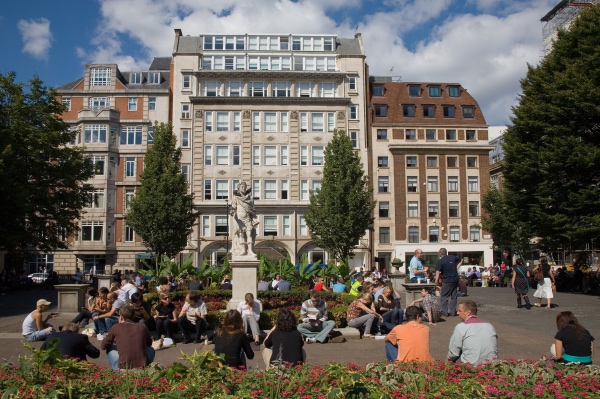
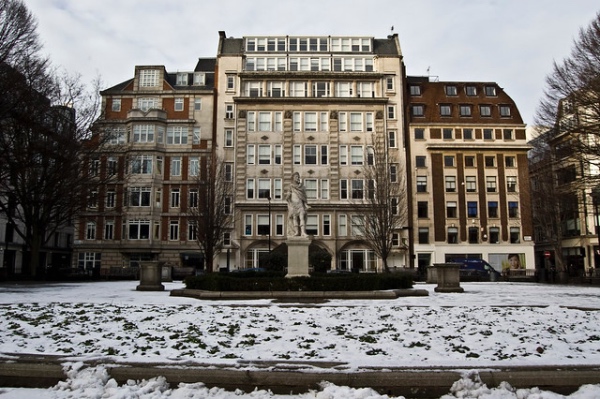
This Soho square was laid out in the late 17th century, possibly by Sir Christopher Wren, and by the early 1700s most of the buildings surrounding the square were complete.

The name of the square is said to be a corruption of ‘gelding’ – the area, once apparently known as Gelding Close, was previously used for the grazing of geldings (there’s also a story that the gelding was featured on a nearby inn sign which locals objected to, renaming it ‘golden’).

It was, at first, the place to be among the well-to-do – among early residents were Barbara Villiers, the Duchess of Cleveland and mistress of King Charles II, James Bridges, who became the 1st Duke of Chandos, and Henry St John, 1st Viscount Bolingbroke, a favourite of Queen Anne.

By the mid 18th century, however, the trendy crowd had moved to developments further west and the square subsequently became noted for the high number of foreign delegations which made their base here, including those of Bavaria, Russia, Genoa and Portugal, as well as foreign artists including Swiss painter Angelica Kauffmann – the first female member of the Royal Academy, and Anglo-Irish painter (and later Royal Academy president) Martin Archer Shee.

Other famous residents have included dancer Elizabeth Gamberini, singer Caterina Gabrielli and Scottish anatomist John Hunter (his former home is one of two marked with English Heritage Blue Plaques in the square). Thomas Jefferson, later a US president, stayed in Golden Square during March and April, 1786, in his only visit to London.

A couple of houses in the square – then occupied by the Bavarian minister Count Haslang – were attacked during the anti-Catholic Gordon Riots. These properties were bought by James Talbot, the Roman Catholic Bishop for London, in 1788, so the Roman Catholic Church in Warwick Street could be build in the gardens behind.

The square had deteriorated somewhat by the time Charles Dickens placed it in his late 1830s story Nicholas Nickleby as the home of Ralph Nickleby, and it become the location of numerous boarding houses and small hotels as well as various professionals.

By 1900 the square had become closely connected with the wool trade with as many as 70 firms connected with it located here. Several such firms are apparently still located here but the square is better known these days for companies associated with the movie business.

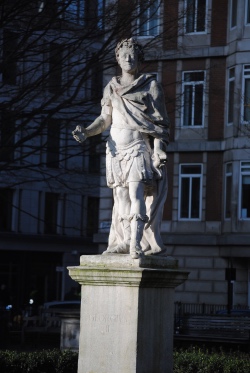
The middle of the square was dug up for an air raid shelter in World War II but it was paved afterwards and the statue of King George II, attributed to John Van Nost and erected here in 1753 as part of beautification project (it has been suggested the statue actually represents King Charles II but that remains a matter of conjecture), returned to its place in the middle.

None of the original houses now remain but there are a number of residences which still have at least elements dating from late 18th century rebuilds including numbers 11, 21, 23 and 24.

PICTURE: Top – David Iliff (licensed under CC BY-SA 3.0); Right – David Adams; Below – RozSheffield (licensed under CC BY-NC-ND 2.0)

LondonLife – The beauty of space revealed…

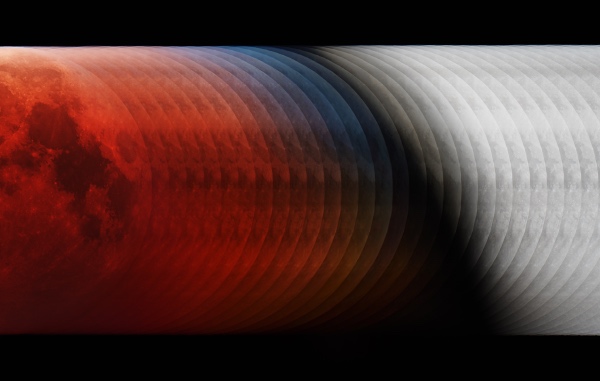
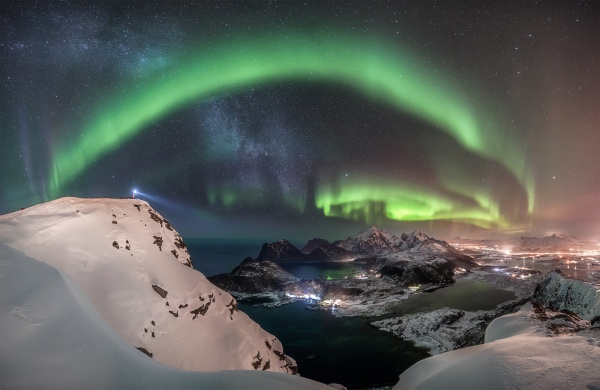
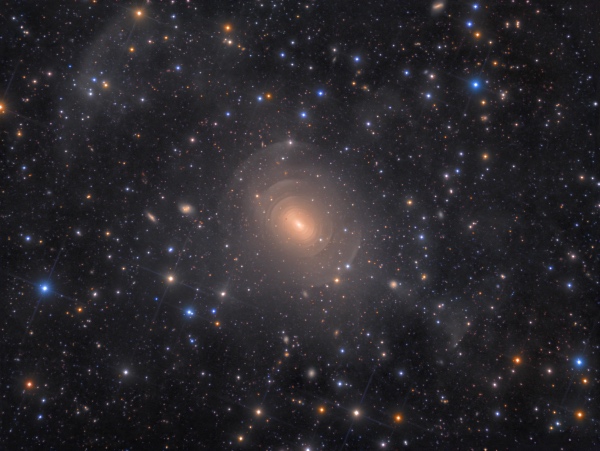
A “creative and artistic” composition of the 35 phases of the total lunar eclipse that took place on 21st January has won the Royal Observatory Greenwich’s Insight Investment Astronomy Photographer of the Year for 2019. The win, which carried a £10,000 prize for Hungarian photographer László Francsics, also means the image is now at the heart of an exhibition featuring all the competition’s winners, runners-up and highly commended, as well as 68 short-listed pictures running at the National Maritime Museum until 26th April. Competition judge Ed Robinson described the Francsics’ work as “nothing short of masterful”. “The colours of our atmosphere projected onto the Moon’s disc during the eclipse are not only artistically pleasing but also offer an understanding of such events that can reveal aspects of our own, thin, yet essential part of our atmosphere,” he said. “In a year that celebrates 50 years since the first lunar landings it is fitting that this year’s overall winning image captures such a dynamic and captivating view of our Moon.” Other images on display include German photographer Nicolai Brügger’s image showcasing the Aurora Borealis over the Lofoten Islands in Norway (winner of the ‘Aurorae’ category), an image featuring UK photographer Ben Bush and his dog Floyd surrounded by Mars, Saturn and the galactic core of the Milky Way galaxy (‘People and Space’), and a sequence of images by Australian Andy Casely following the progress of the great global dust storm on Mars (‘Planets, Comets and Asteroids’). The display also includes an image of the Rosette Nebula by 11-year-old Davy van der Hoeven, of The Netherlands, who won Young Astronomy Photographer of the Year. The Insight Investment Astronomy Photographer of the Year, now in its 11th year, is run by the Royal Observatory Greenwich in association with Insight Investment and BBC Sky at Night Magazine. Admission charge applies. For more, see www.rmg.co.uk/whats-on/astronomy-photographer-year/galleries/2019/overall-winners. PICTURES: Top – ‘Into the Shadow’ © László Francsics (overall winner); Below (from top down) – ‘The Watcher’ © Nicolai Brügger (winner of the ‘Aurorae’ category); and, ‘Shells of Elliptical Galaxy NGC 3923 in Hydra’ © Rolf Wahl Olsen (winner of the ‘Galaxies’ category) .

What’s in a name?…Gospel Oak

Yes, the name of this inner north-west London district – which sits between Hampstead and Kentish Town – does originate with an oak.

Up until the early 19th century, the tree was apparently used as a marker between the parish boundaries of Hampstead and St Pancras. So that’s the oak part.

The gospel part comes from the use of the term to describe the medieval custom of ‘beating the bounds’ – an annual event in which residents would walk around their parish boundary and literally beat prominent boundary markers as a way of conveying to a then largely illiterate people where the borders were located. The oak, said to have stood on the corner of Southampton and Mansfield Roads, was one such marker.

As well as the beating part, the event would also involve the singing of hymns and, yes, the reading of sections of the gospels while standing under the oak. Hence Gospel Oak.

The oak was also apparently used as a site for open-air preaching at other times and it’s said that St Augustine, 14th century Bible translator John Wycliffe, John Wesley, the founder of Methodism, and fellow evangelist George Whitefield are among the many who preached under the oak (although many of these claims can be taken with a grain of salt).

The area was predominantly rural until the mid-1800s when local landowners  Lord Mansfield, Lord Southampton and Lord Lismore began selling off the land for development. The houses built here were apparently at the more affordable end of the market, perhaps not surprising given the area became criss-crossed with railroad lines. Devastated by bombing during World War II, large parts of Gospel Oak were rebuilt in the mid-20th century.

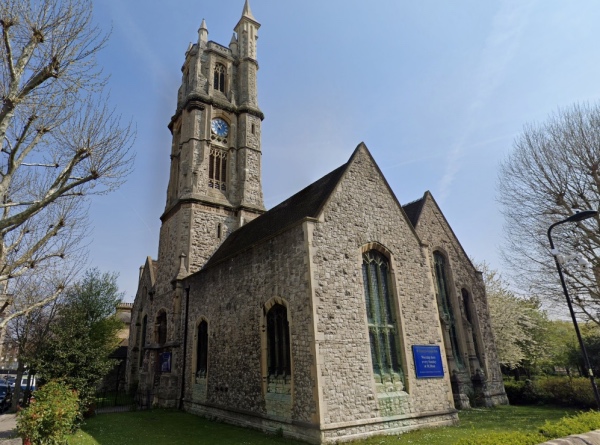
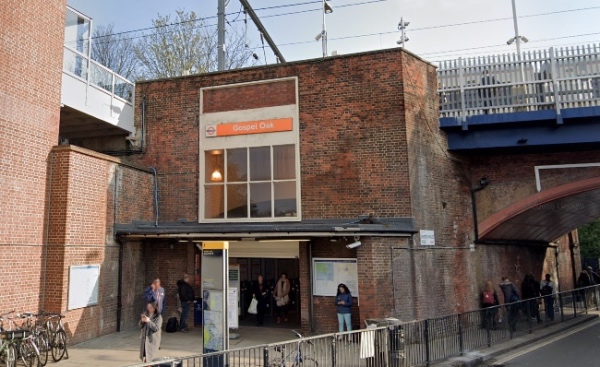
The (now) London Overground station which bears the name Gospel Oak (pictured below) was opened in 1860, originally with the name Kentish Town (but quickly renamed Gospel Oak when Kentish Town was used elsewhere). Other landmarks include St Martin’s Church in Vicars Road (pictured above), which has been described as one of the “craziest” of London’s Victorian churches, and All Hallows Church in Shirlock Road.

One of the area’s more famous residents, Michael Palin, has lived in the area since the 1960s and reportedly planted a new oak in Lismore Circus in 1998 but the tree has apparently not survived.

PICTURES: Google Maps

This Week in London – Blake at the Tate; London’s scientific contributions explored; and, dining out in the Tower moat…

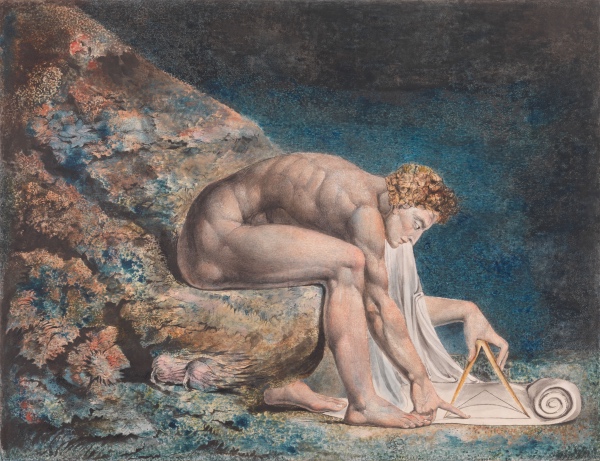
The largest survey of the work of visionary artist and poet William Blake to be seen in the UK in a generation has opened at the Tate Britain in Millbank. William Blake features more than 300 works with highlights including The Spiritual Form of Nelson Guiding Leviathan (c1805-9) and The Spiritual Form of Pitt Guiding Behemoth (c1805) which, in a bid to see them as Blake intended, have been digitally enlarged and projected onto the gallery’s wall, providing them with the sort of the scale he had envisaged for them but never realised. The actual works themselves are displayed nearby in a recreation of the artist’s only significant attempt to acquire a public reputation as a painter – his ill-fated exhibition of 1809 which took place in a room over his family’s hosiery shop. The exhibition also provides a focus on London, described as a “constant inspiration” for Blake, and highlights the vital role of his wife Catherine played in the creation of his engravings and illuminated books with illustrations to Pilgrim’s Progress (1824-27) and a copy of the book The complaint, and the consolation Night Thoughts (1797) on display, both of which are thought to have been coloured by Catherine. Other highlights include what is thought to be the only self-portrait of Blake – exhibited in the UK for the first time, the work Albion Rose (c1793) depicting the mythical founding of Britain, illuminated books such as Songs of Innocence and of Experience (1794) and some of his best-known paintings including Newton (1795-c1805 – pictured above) and Ghost of a Flea (c1819-20). The exhibition closes with The Ancient of Days (1827), a frontispiece for an edition of Europe: A Prophecy, which was completed only days before Blake’s death. Runs until 2nd February. Admission charge applies. For more, see www.tate.org.uk. PICTURE: William Blake (1757-1827) Newton 1795-c1805 (Colour print, ink and watercolour on paper, 460 x 600mm Tate).

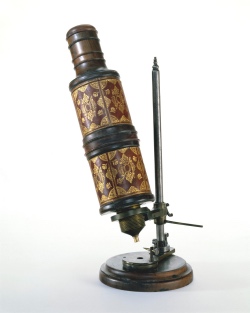
A new gallery exploring how London’s scientists and artisans transformed our understanding of the world over 250 years spanning the period from the mid-16th century to the end of the 18th century opens at the Science Museum in South Kensington today. The 650 square metre gallery, known as ‘Science City 1550-1800: The Linbury Gallery’, features iconic objects such as Sir Isaac Newton’s famous work, Principia Mathematica, Robert Hooke’s microscope (pictured), and objects including an air pump and ‘Philosophical Table’ which were commissioned by King George III as the king conducted his own scientific investigations. There’s also a range of machine models including one of a pile driving machine used in the construction of Westminster Bridge in the 1740s. The gallery is free to visit. For more, see www.sciencemuseum.ac.uk. PICTURE: Microscope designed by Robert Hooke, 1671-1700 formerly in the George III collection, King’s College London © Science Museum Group

The Tower of London Food Festival is being held in the fortress’ dry moat this weekend. Culinary talents including Chris Bavin and Emily Roux are among those offering live cookery demonstrations while visitors can put their own skills to the test with masterclasses. There’s also wine and sherry tasting sessions, an expanded array of food and drink to sample, activities for kids including cookery classes, games and face painting, and the Bandstand is back with deckchairs to relax in. Admission is included with entry to the Tower. Closes on Sunday. For more, see www.hrpfoodfestivals.com.

Send all items for inclusion to exploringlondon@gmail.com.

10 (more) historic London garden squares…1. Portman Square…

We return to the series we mistakenly started earlier this year. Here’s a recap of the first story with a new article to come next week…


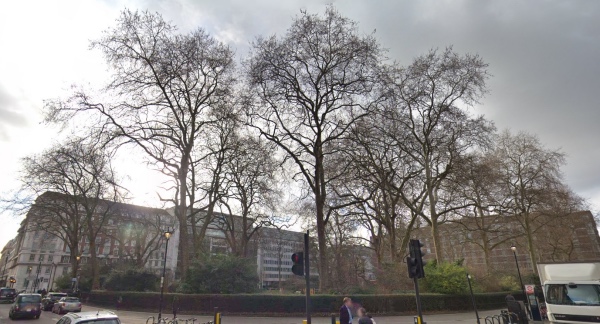
This private garden square in Marylebone was first laid out from the 1760s to 1780s by Henry William Portman and forms part of the expansive Portman Estate.

The 2.5 acre garden square, which is for use by residents only, features London plane trees, a lawn and informal plantings as well as a children’s play area and tennis court.

The current configuration was created in the early 1900s – the railings, which were originally installed in the 1880s, were removed as part of the war effort in 1942 but restored in 1972.

Significant buildings once located on the square include the James “Athenian” Stuart-designed Montagu House, built for Elizabeth Montagu between 1777-1782. Located on the north-west corner, it was destroyed during World War II and the Radisson Blu Edwardian Hotel now stands on the site.

The Robert Adam-designed Home House (1773-77) can be found at number 20 (once part of the Courtauld Institute and now a private members club) and the hotel, the Hyatt Regency London – The Churchill, can be found at number 30.

PICTURES: Google Maps

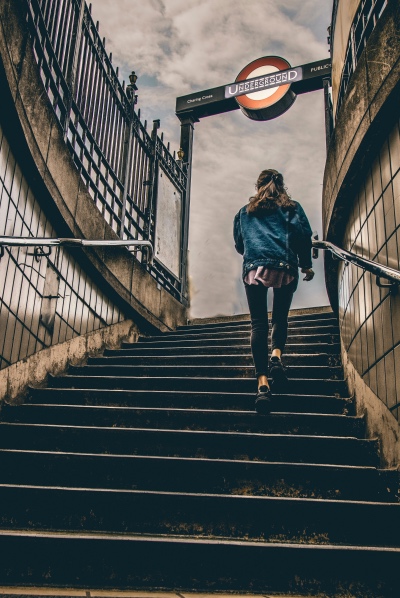
LondonLife – Heading for daylight at Charing Cross…


PICTURE: John T/Unsplash

Where’s London’s oldest…French patisserie?

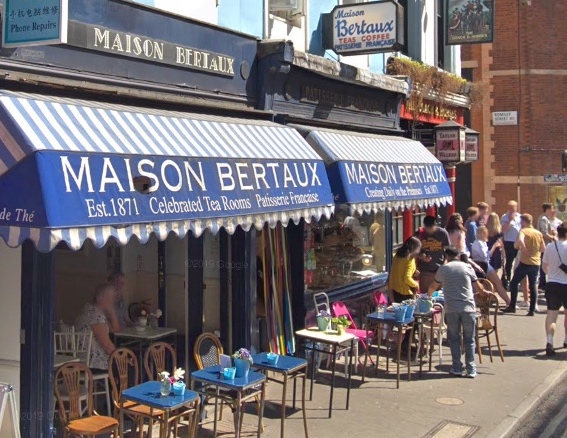
The oldest existing French patisserie in London is said to be Maison Bertaux, based in Greek Street in Soho. 

The premises, where you can still indulge in delights including eclairs, croissants and delectable fruit tarts, was founded in 1871 by one Monsieur Bertaux, apparently a French communard from Paris.

It lies at the heart of what was then the city’s French community and located at number 28, stands next door to another Soho landmark, the Coach and Horses pub.

Bertaux apparently ran the business until 1909 and it’s since passed through a number of hands with current owners, sisters Michele and Tania Wade, reported as having taken over in 1988.

Famous patrons have reportedly included writers Virginia Woolf and Karl Marx,  actors Steve McQueen and Nicole Kidman, artist Grayson Perry and musician Bob Geldof. The patisserie also famously made Lily Allen’s wedding cake and hosted the late fashion designer Alexander McQueen’s 25th birthday party.

Bastille Day celebrations are, of course, a highlight of the year.

For more, see www.maisonbertaux.com.

PICTURE: Google Maps.

Favourite Places – Andrew Baker, author and chocolate lover

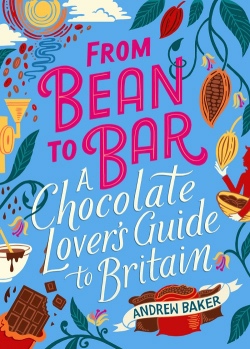
Andrew Baker, author of the recently published From Bean To Bar: A Chocolate Lover’s Guide to Britain, talks about some of his favourite chocolate spots in London…

London is full of secret and out-out-the-way chocolate spots – some of them destined to remain out of the public eye. 

The Queen’s favourite chocolates, for example, are made by the Prestat company in a marvellous factory crammed with delicious and exotic ingredients – and almost in the shadow of the prison at Wormwood Scrubs. As well as Her Majesty, Prestat’s lovely truffles were a favourite of the author Roald Dahl, of Charlie and the Chocolate Factory…but this particular chocolate factory remains off-limits to visitors.

The same goes for the premises in Bethnal Green at which Phil Landers is currently the only person in the entire metropolis making chocolate from scratch, or “from bean to bar” as the technique is properly known. Phil’s lovely bars are available from his website and might be said to be the authentic taste of London chocolate.

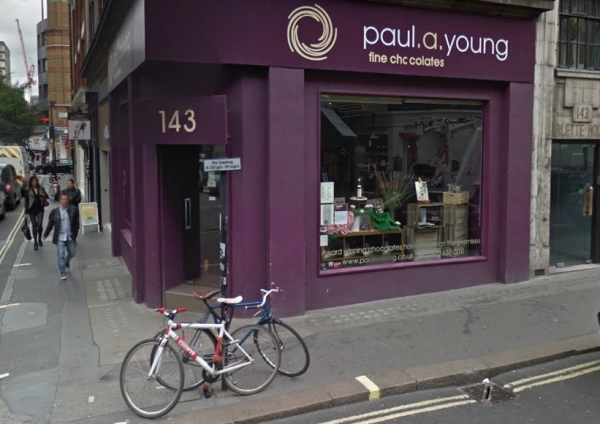
But one place where you can both enjoy the finished product and – from time to time – watch it being made and chat with the master behind it is Paul A Young’s eponymous shop at 143 Wardour Street (pictured).

This long-established thoroughfare has existed along its present course since at least the 16th century, and in its time has been justly celebrated as a location for the stars of the music industry (David Bowie and The Jam, among many others) and the movie industry, which still retains a hefty presence.

PICTURE: Google Maps

But Young’s lovely purple corner shop has become a celebrated place of pilgrimage for fans of all things chocolatey.

The ginger-bearded, twinkly and genial Young has become one of Britain’s best-known chocolatiers through frequent appearances in print, online and on television, most notably making the treats of yesteryear in the deliciously nostalgic series The Sweet Makers.

But there is substance behind the fluency and charm: years of training as a pastry chef, working at an early stage with the superstar chef Marco Pierre White, and years of experience in the kitchens of his shops.

There are branches in Camden and Threadneedle Street in the City, but the most substantial outpost of his empire is here in Soho. This is a must-visit location not only for fans of filled chocolates – for Young is one of the finest exponents of those of those in the world – but also for barflys, because he stocks a full range of bars made by the wonderful Cleethorpes bean-to-bar maestro Duffy Sheardown. What is more, Young serves an enormously tempting cup of hot chocolate ladled, in the winter months, from a glorious copper cauldron steaming in the shop window. What better way to lure in customers on a chilly day?

The Barnsley-born Young is often to be found exploring new flavour combinations in the kitchen in the shop’s basement. There are frequent chocolate-making classes here as well, and there is no-one better at imparting, in a kindly and witty manner, the mysteries of tempering and ganache-making.

But he is at his best inventing wonderful new combinations of fine chocolate and delicious fillings, and it would be a foolish visitor to London who departed the capital without sampling at least several of Young’s most celebrated truffles – the Marmite version, for example, which I adore, the beer and crisp version made with Camden’s Brewdog ale, or the homage to his roots in the Yorkshire tea and biscuit truffle.

These and many, many more are laid out in mouthwatering rows in the Wardour Street shop, freshly made and so to be consumed as soon as possible. That is not a difficult piece of advice to heed.

From Bean To Bar: A Chocolate Lover’s Guide to Britain:  is published by AA Publishing.

This Week in London – Totally Thames kicks off; ‘The London That Never Was’; and an evolutionary garden at Kew…

London’s annual, month-long celebration of the River Thames, Totally Thames, has kicked off and this year’s program includes everything from concerts in Tower Bridge’s bascule chamber to the largest ever exhibition on mudlarking and a mass boat regatta at the end of the month. The programme includes more than 100 events stretching over 42 miles of the river as it winds through London, covering everything from art installations to heritage-related walks and talks, family-oriented offerings and the chance to get out on the river itself. Other highlights include the Rivers of the World Retrospective art exhibition, a scented heritage exhibition –The Barking Stink, a heritage walk through riverside Rotherhithe, open days at the RNLI Tower Lifeboat Station and this weekend’s Classic Boat Festival at St Katharine Docks. Many events are free. Runs until 30th September For the full programme, head to https://totallythames.org/. PICTURE Courtesy of Totally Thames.

London’s grand building plans that never went ahead are the subject of a new exhibition opening at the Guildhall Art Gallery tomorrow. The London That Never Was imagines a city where the Tower Bridge is clad in glass and where a colossal burial pyramid looms over Primrose Hill. The free exhibition can be seen until 8th December. For more, head here. (To see some of the projects that were never built, see our previous series, 8 structures from the London That Never Was).

A new garden celebrating the evolution of plants has opened at the Royal Botanic Gardens, Kew. The Agius Evolution Garden is divided into eight sections to form “garden rooms” with each room containing closely related plants, revealing fascinating stories such as the connection between strawberries and nettles and why the Asteraceae family have “false flowers”. Admission charge applies. For more, see www.kew.org.

Send all items for inclusion to exploringlondon@gmail.com.