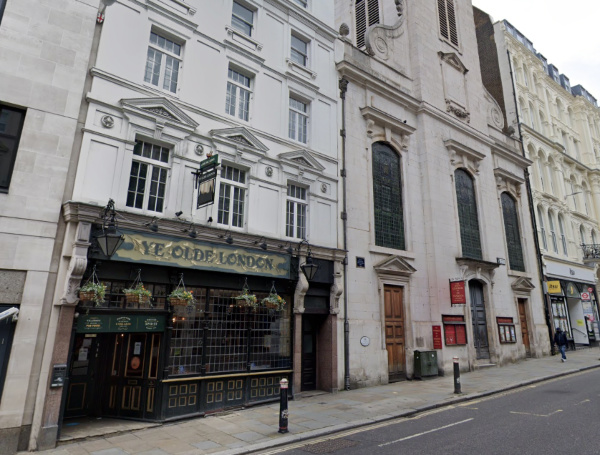
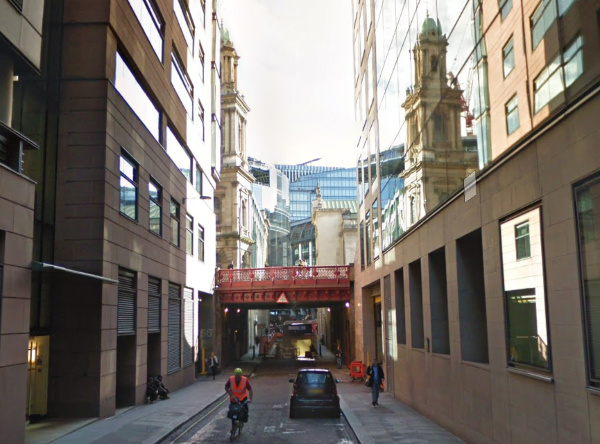
Site of the London Coffee House. PICTURE: Google Maps
Established in the early 1730s on Ludgate Hill (next to St Martin Ludgate), the proprietor of this establishment was one James Ashley (hence the coffee house also being known as Ashley’s London Punch House – the punch was apparently particularly affordable).
It was known to have been frequented by the likes of Joseph Priestley and his friend, American Benjamin Franklin, while James Boswell described its customers as being primarily physicians, dissenting clergy and “masters of academies”.
Its location also meant it served as a place where Old Bailey juries which could not reach a decision were sequestered for the night.
Continued to be favoured by Americans, in 1851 philanthropist George Peabody gave a dinner here for those from the United States who were connected with the Great Exhibition being held in Hyde Park.
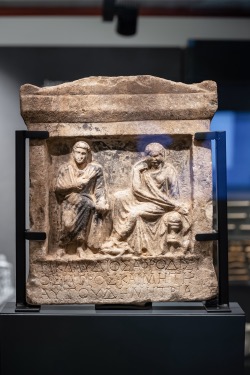
In 1806, a statue of Hercules and a hexagonal Roman altar, dedicated to Claudia Martina by her soldier husband, were found here. The coffee house has also been identified as the “Coffee House on Ludgate Hill” mentioned in Charles Dickens’ Little Dorritt.
It closed in 1867. The site is now occupied by a pub, The Ye Olde London.
• A recreation of Bartholomew Fair featuring more than 30 free events kicks off in the City of London today. The programme kicks off with RESURGAM, a vertical dance performance on St Paul’s Cathedral with other highlights including immersive theatrical circus performance Dinner for All, Follow Me Into by imitating the dog – a series of projections that weaves through the City, and, Carnesky’s Showwomxn Spectacular, a street show featuring a cast of circus, variety and rare skilled women performers. There’s also al fresco dining at locations across the City of London and creative workshops on Saturdays. The Bartholomew fair, which ran from the 12th century until 1855, started as a cloth market but evolved to become the City’s pre-eminent event, attracting people from across the country and beyond. The revival runs until 16th September. For the full programme of events, see www.thecityofldn.com/bartholomew-fair/
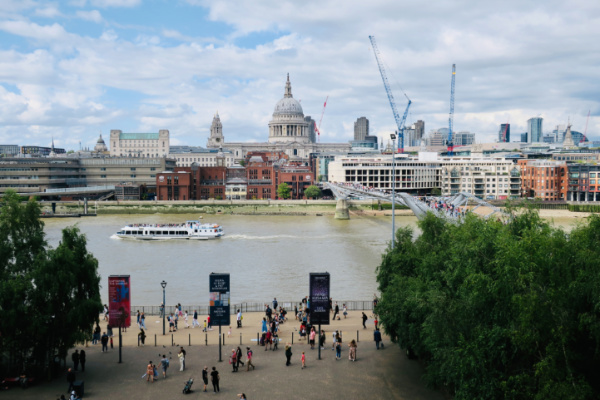
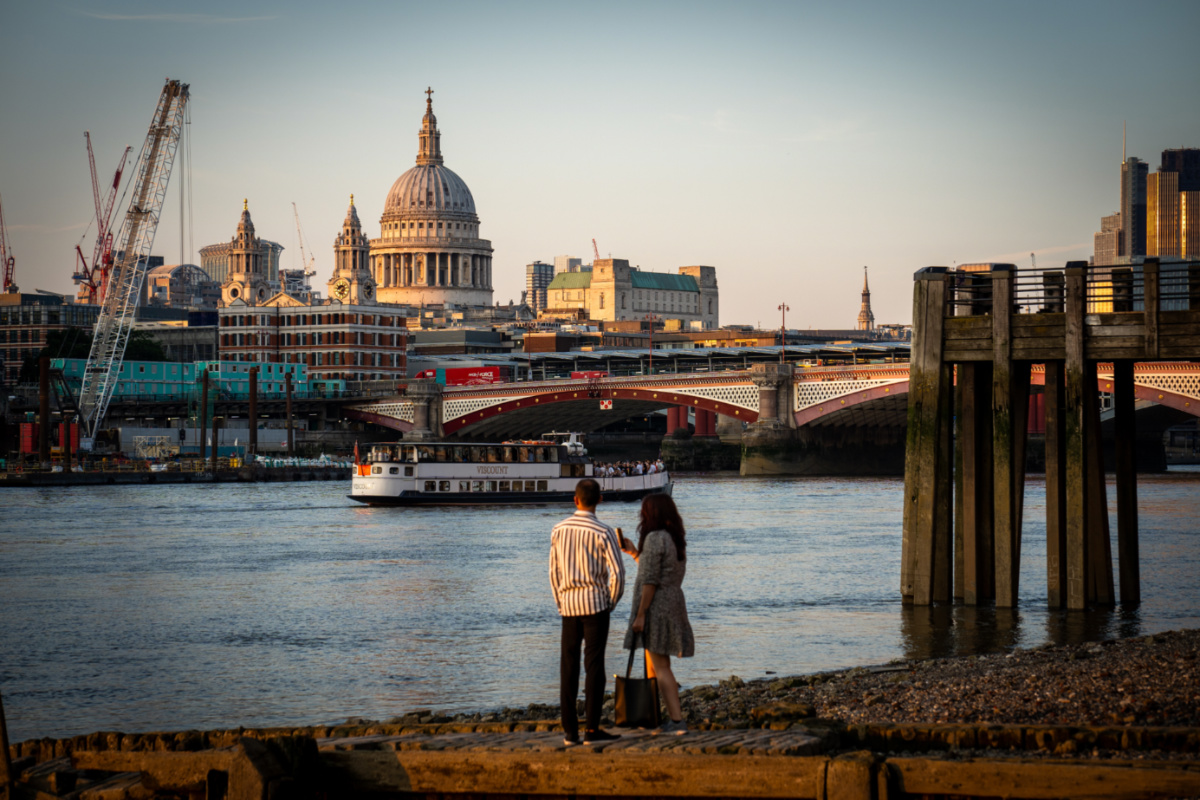
The River Thames. PICTURE: Unsplash
• Totally Thames, London’s month-long celebration of its river kicks off on Friday. Events this year include an exhibition at London Bridge Station celebrating London’s bridges by photographer Henry Reichhold and another looking at medieval artefacts recovered by mudlarks at St Paul’s Cathedral, walks exploring the history of everywhere from Rotherhithe to Twickenham and the Royal Docks (as a well as a walk on which you’ll meet six medieval women in Southwark), ‘Wren by River’ – a tour on Uber Boat By Clippers Thames featuring an introduction to Wren’s London legacy from the perspective of the river (be quick, this takes place on 1st September), and art installations including the Saltley Geyser, a 30 metre high plume of water in the Royal Docks created by David Cotterrell. And, of course, the St Katharine Docks Class Boat Festival on the weekend of 9th and 10th September and the The Great River Race on 16th September. For the full programme of events, see https://thamesfestivaltrust.org.
• Black on the Square, a new “showcase of Black culture and creativity”, takes place in Trafalgar Square this Saturday. The one day family-friendly festival will feature art, fashion and musical performances including jazz, spoken word, freestyle rap and soul as well as DJ sets from the likes of Touching Bass, Art Beyond the Shell, MOBO Unsung, Shortee Blitz, BXKS, The Spit Game UK. There will also be vendors representing a range of Black-owned businesses, including Caribbean and African food, as well as artisan goods ranging from customised accessories to handmade homeware and gifts. The festival kicks off at noon and runs until 6pm. For more, see https://www.london.gov.uk/events/black-square-2023.
• Art of London has launched its third annual season featuring everything from gallery late openings to photography exhibitions and public art displays. Events, which run though until October, include: ‘Art Reframed’ which, developed in partnership with the recently reopened National Portrait Gallery, showcases the gallery’s most iconic portraits of everyone from Olivia Colman to Elton John and William Shakespeare on 52 giant colourful cubes across Coventry Street and Irving Street; photographs by artist Ray Burmiston showcased on the Piccadilly Lights; and, ‘Art After Dark’ in which galleries across the West End open their doors for late night viewings. For the full programme, head to artoflondon.co.uk/seasons/season.
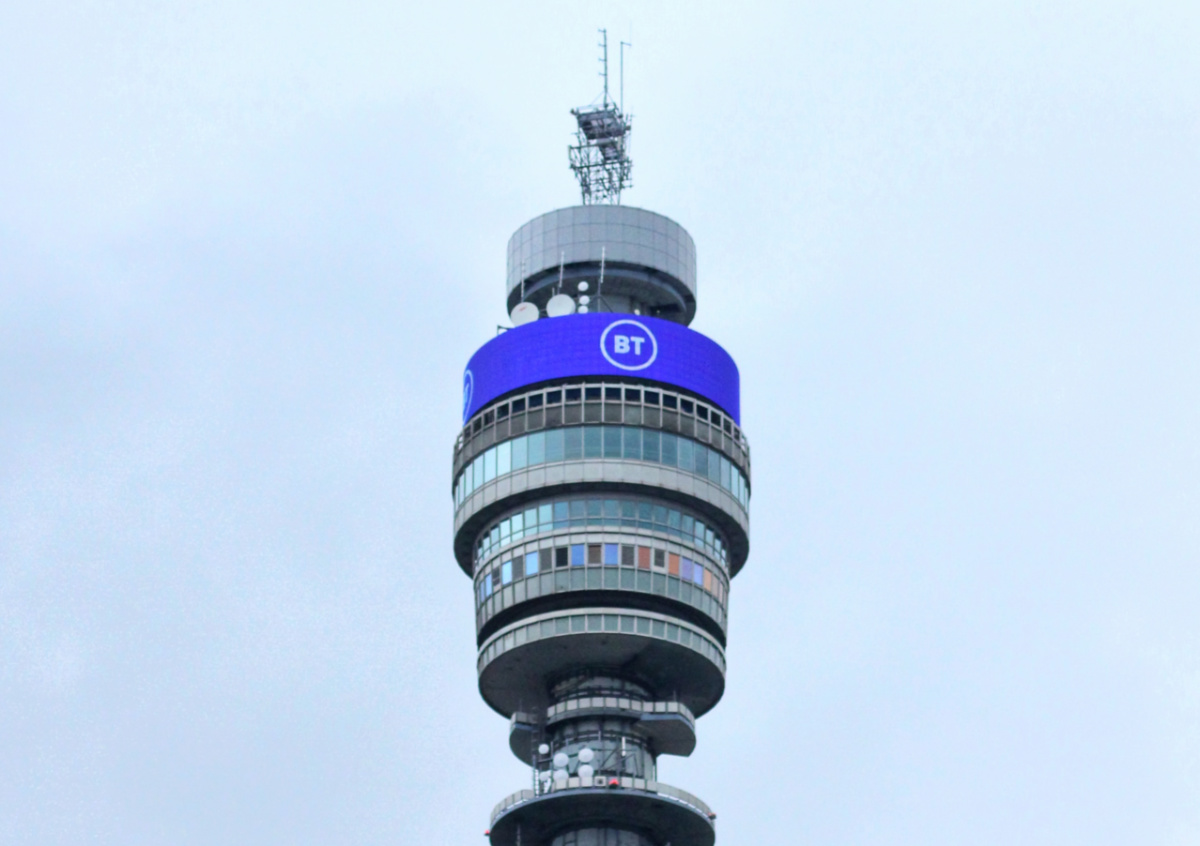
• London’s Open House Festival celebrates 30 years this September with two weeks of tours, events, and, of course, the chance to look inside some rarely opened buildings. The full programme of events has been released with highlights including the chance to see up close the conservation and restoration project revitalising the Crystal Palace Victorian Subway, a rare opportunity to visit the BT Tower’s famous revolving floor and the ability to join a guided tour of Burlington House, home to the Royal Astronomical Society since 1874 (and refurbished in 2007). The event runs from 8th to 21st September. For more, see https://programme.openhouse.org.uk.
• The stories of five women – from a servant to a Queen to a suffragette who smashed the Crown Jewels display – are being highlighted at the Tower of London.Trailblazers: Women at the Tower of London, which runs until 3rd September, celebrates the five women with processions through the grounds, staged performances on the South Lawn, and the opportunity to meet and interact with them. Among the women being featured are Catalina of Motril, a servant to Henry VIII’s first wife, Katherine of Aragon; Alice Tankerville, who was imprisoned at the Tower of London in 1534 for piracy; Leonora Cohen, a suffragette who smashed the Crown Jewels display with a crowbar; and Phillis Wheatley, the first published African-American woman who visited the Tower in 1773. Trailblazers is included in the cost of admission. For more, see www.hrp.org.uk/tower-of-london/.
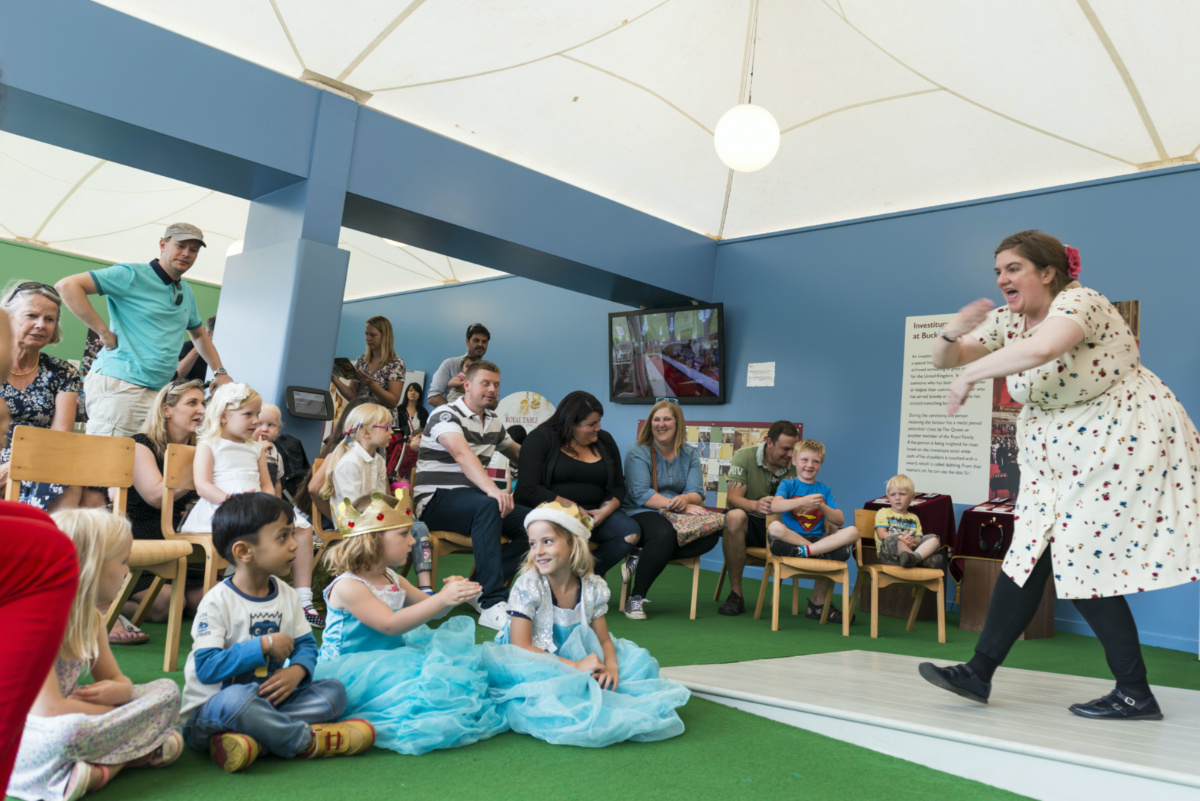
• Families are a special focus of this year’s Summer Opening at Buckingham Palace with a special “Family Pavilion” in the palace garden, “Family Mondays” and a special “Family Festival Day”. The Family Pavilion is open daily and features a range of activities including, inspired by the recent coronations, the chance for children to dress up in gowns and crowns and pose for a photo in a model Gold State Coach. The pavilion also features a rotating programme of arts and crafts activities on Mondays and the family activities will culminate in a special ‘Family Festival’ on 28th August at which families visiting the State Rooms can enjoy story-telling sessions exploring Queen Victoria’s coronation and take part in craft activities outside in the palace garden. Activities are included in the price of admission. For more, see www.rct.uk/visit/buckingham-palace.
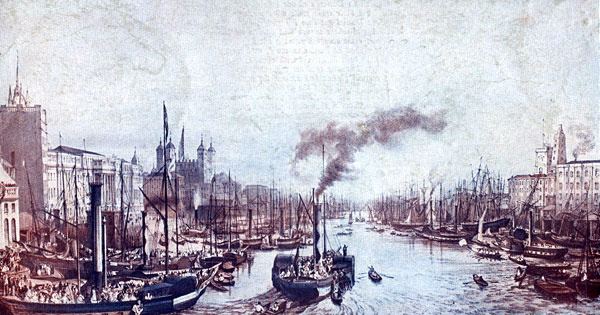
A lithograph showing the Pool of London from London Bridge in 1841. PICTURE: W Parrott/Public Domain
A stretch of the River Thames which spans the area from London Bridge to below Limehouse, the Pool of London was the highest part of the river navigable by tall-masted ships (thanks to the them not being able to pass under London Bridge).
The term originally referred to the stretch of the river at Billingsgate in the City of London which was where all imports had to be delivered for inspection by customs officers (hence these wharves were given the name ‘legal quays’).
But as trade expanded and reached its peak in the 18th and 19th centuries, so too did the stretch referred to as the “Pool of London”. It came to be divided into two sections – the Upper Pool, which stretches from London Bridge to Cherry Garden Pier in Bermondsey (and is bisected by Tower Bridge), and the Lower Pool, which stretched from the latter pier to Limekiln Creek.
The Upper Pool’s north bank includes the Tower of London, the old Billingsgate Market and the entrance to St Katharine’s Dock while the south bank features Hay’s Wharf and the HMS Belfast. The Lower Pool’s north bank includes the entrance to Limehouse Cut as well as Regent’s Canal and Execution Docks while below it runs the Thames and Rotherhithe Tunnels.
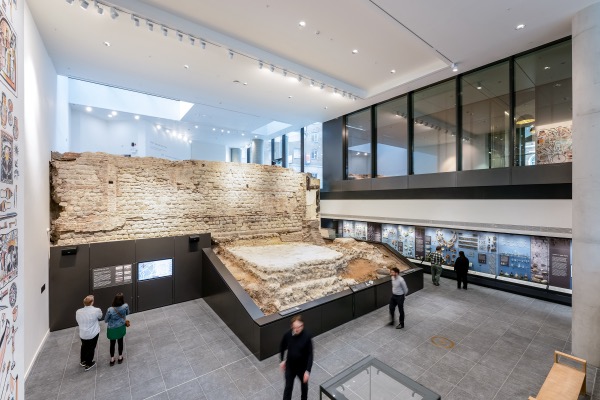
• A large section of London’s Roman wall had gone on show to the public thanks to an innovative collaboration between Urbanest, the City of London Corporation, Historic England, and the Museum of London. A new free display – The City Wall at Vine Street – has been created by Urbanest as part of a redevelopment of the site. At its heart is a segment of London’s Roman wall, including the foundations of a bastion or tower. Alongside the wall is a permanent display of artefacts from the Museum of London ranging from a tile marked with a cat’s paw print to Roman coins and ceramics. Completed between AD 190 and 230, the Roman wall was between two and three metres thick and faced with blocks of Kentish ragstone. This section of the wall was first rediscovered in 1905 when a new building – Roman Wall House – was constructed on the site and the inner face of the wall was exposed and preserved in the basement. In 1979, the outer face of the wall and the bastian foundations were also uncovered – but the wall was still left largely forgotten in the building’s basement. The site was acquired by Urbanest in 2016 and during the subsequent construction of Urbanest City in 2018, the wall was protected by a timber enclosure. Tickets to The City Wall at Vine Street, located at 12 Jewry Street in the City of London, can be booked for free. For more head to https://citywallvinestreet.org.
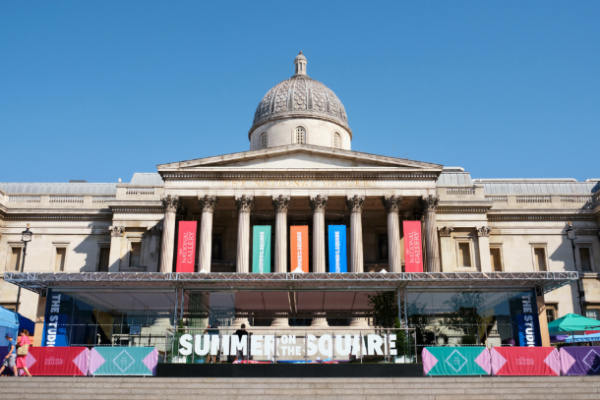
• ‘Summer on the Square’ has returned to The National Gallery’s North Terrace with a series of workshops aimed at inspiring the local community and visitors to engage with themes around the gallery’s collection. The programme sees the gallery work with a variety of artists and creative practitioners in a shared focus of creating child-led art, design and play activities. The workshops – which range from a session on discovering what you can do with bamboo to discovering movement and shapes in the National Gallery paintings – are free, drop-in and open to all ages and abilities. Summer on the Square, which runs until 28th August, is supported by and part of Westminster City Council’s Inside Out Programme. For the full programme, see www.nationalgallery.org.uk/whats-on/summer-on-the-square.
• On Now: Happily Ever After? Illustrating Andersen & Perrault. This exhibition at the Heath Robinson Museum in Pinner focuses on works Heath Robinson created for the fairy tale collections of Hans Christian Andersen, which he illustrated three times, and Charles Perrault’s Old Time Stories published in 1921. The display, which also features works on the same subjects by Michael Foreman, shows how Heath Robinson was able to explore subjects and characters which ranged from sleeping princesses to adventurers and monsters in some of his lesser known works. Runs until 17th September. Admission charge applies. For more, see www.heathrobinsonmuseum.org.
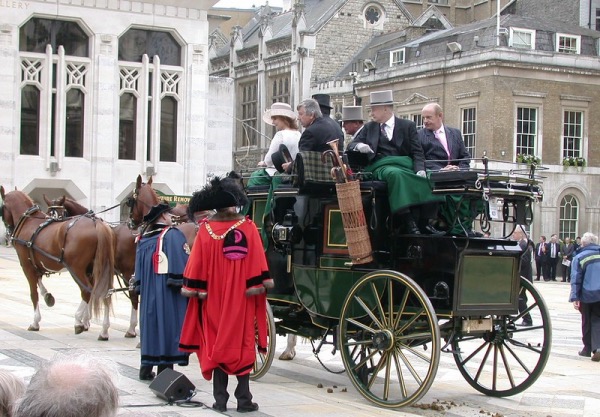
A carriage takes part in the 2008 Ceremony of Cart Marking. PICTURE: Clive A Brown (licensed under CC BY-NC 2.0)
• The ceremony of Cart Marking takes place this Saturday in Guildhall Yard. Hosted by the City of London and the Worshipful Company of Carmen, the ceremony dates back 500 years and involved people having their carts marked – with a brand – after paying the appropriate licence fee. More than 50 vintage vehicles – ranging from handcarts, to horse-drawn, steam and modern vehicles – will take part in the event, entering Guildhall Yard through its famous arch and then symbolically marked with a brand. Entry to watch the event is free. For more, see www.cartmarking.org.
• Four rare K8 phonebooks – located in the London Underground network – have been listed at Grade II. The K8 kiosks were the last generation of the classic public telephone box and some 11,000 were installed across the UK between 1968 and 1983. Only around 50 now remain in their original position – most of them were removed by British Telecom following its privatisation in 1984. The K8 was replaced by the sleek silver KX100 kiosk, which in turn were made virtually obsolete by mobile phones. While most of the surviving K8s were located in Hull, there are four in the London Underground network including blue boxes at High Street Kensington and Chorleywood stations, a maroon one at Chalfont and Latimer and a white one at Northwick Park.
• It’s Ice Weekend at the London Canal Museum. Events – including a showing of rare film of ice harvesting, ice cream making demonstrations, and talks about the ice trade – take place on both Saturday and Sunday but the chance to visit the facility’s ice well takes place on Sunday only. Admission charges apply. For more, see www.canalmuseum.org.uk/whatson/icewell-visit.htm. The event is part of the 2023 Festival of Archaeology.
• The National Portrait Gallery reopens today following a complete refurbishment of the building and construction of a new learning centre – the largest redevelopment of its history. And the first major exhibition to be seen focuses on the ground-breaking work of 20th century British photographer Yevonde (1893-1975). The exhibition – Yevonde: Life and Colour – is the largest of the artist’s work and will feature more than 25 newly discovered photographs among the more than 150 works on display. As well as commercial commissioned works and still lives, the display will also include portraits of some of the most famous faces of the time including George Bernard Shaw, Vivien Leigh, John Gielgud, Princess Alexandra and Margaret Sweeney, Duchess of Argyll as well as Surrealist patron and poet Edward James. It will also celebrate Yevonde’s role as an innovator, show-casing her experimentations with solarisation and the Vivex colour process. The National Portrait Gallery acquired Yevonde’s tri-colour separation archive with funding from The Portrait Fund and went through an extensive research, cataloguing and digitisation process funded by CHANEL Culture Fund. Admission charge applies. Runs until 15th October. For more, see www.npg.org.uk.
• A new gallery dedicated to world-changing engineering innovations and the people behind them opens at the Science Museum tomorrow. ‘Engineers’ celebrates the UK’s engineering heritage and showcase innovations through the global lens of the Queen Elizabeth Prize for Engineering and its winners (its opening marks a decade of the prize). The gallery will spotlight the stories of more than 60 engineers working in a range of fields sitting in four sections – ‘Bodies’, ‘Lives’, ‘Connections’ and ‘Creating’. Items on show in the gallery – which adjoins the Technicians: The David Sainsbury Gallery which opened in November last year – include the first digital camera, the cutting-edge CMR ‘Versius’ surgical robot arm and a miniature atomic clock which the entire GPS system depended upon. Entry to the level one gallery is free. For more, see https://sciencemuseum.org.uk/engineers.
• Granite stones that once formed part of Victoria Embankment have been installed around the City in a project celebrating the role of stone in the City’s creation. Called From the Thames to Eternity, the project – designed by Matthew Barnett Howland and Oliver Wilton from University College London and CSK Architects – features stones which have been removed from the embankment to enable the new Thames Tideway Tunnel. Originally quarried in the 19th century, mainly in Cornwall and Scotland, for use in Joseph Bazalgette’s Thames River wall at Victoria Embankment, they are being installed temporarily and will later be reused in another project.
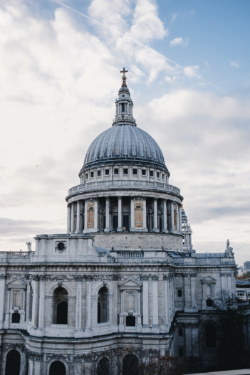
Wren’s monument – St Paul’s Cathedral. PICTURE: Aaron Gilmore/Unsplash
• A recreation of Sir Christopher Wren’s office while he was working on St Paul’s Cathedral can be seen at the Guildhall Art Gallery from today. The faux 17th century environment, created by Chelsea Construction, will allow visitors to explore the building methods and tools of the age, as well as the daily lives of 17th century diarists including Robert Hooke, John Evelyn and Margaret Cavendish, and a case study of how citizens lost and regained their properties during and after the Great Fire of 1666. A specially commissioned map by artist/cartographer Adam Dant will provide insight’s into Wren’s life and times and will be displayed alongside illustrations by architect George Saumerez-Smith and members of the Worshipful Company of Chartered Architects, a scale model of St Paul’s Dome by students at Kingston University, and stone models from master mason Pierre Bidaud. The Wren at Work exhibition is part of Wren300. Admission is free but booking are recommended. For more, see www.cityoflondon.gov.uk/events/wren-at-work-wren300-exhibition.
• Photographs capturing Pete Townshend’s guitar flying through the air at Madison Square Garden and Noel Gallagher during the making of the video for Wonderwall are just two of the images on show in a new exhibition at the Barbican Music Library. Celebrating the 25th anniversary of music photography collection Rockarchive.com, In The Moment: The Art of Music Photography also features images of everyone from David Bowie to Debbie Harry, Queen, Biggie Smalls, led Zeppelin, Lady Gaga and Amy Winehouse, capturing them in recording sessions at live gigs and at photo shoots. The free exhibition, which opens on Friday, can be seen until 25th September. For more, see www.cityoflondon.gov.au/services/libraries/barbican-music-library. Meanwhile, a bust of Sir Simon Rattle is being unveiled today at the library in tribute to his five decades in classical music. Sir Simon, who has made over 100 recordings. became music director of the Barbican’s resident orchestra, the London Symphony Orchestra, in 2017 and will conclude his tenure this year.
• The Royal Academy’s 255th annual Summer Exhibition opened this week under the theme of ‘Only Connect’ (inspired by a quote from the novel Howards End by EM Forster). Exhibiting artists include British sculptor Lindsey Mendick, Barbados-born painter Paul Dash, American multi-media artist Ida Applebroog, St Lucia born painter Winston Branch, Colombian sculptor Carlos Zapata and British painters Caragh Thuring and Caroline Walker, and Irish fashion designer Richard Malone, who has created a dramatic mobile installation which hangs in the Central Hall. There are also works by Royal Academicians including Frank Bowling, Michael Craig-Martin, Tracey Emin, Gillian Wearing and the late Paula Rego. Runs until 20th August. Admission charge applies. For more, see royalacademy.org.uk.
The view looking north from the southern end of Carmelite Street. PICTURE: Google Maps
These two City of London thoroughfares – which run from Fleet Street down to Victoria Embankment (connected at Tudor Street) – both owe their name to the same institution.
A friary run by the Carmelites – also known as the “White Friars” because of the white mantle they wore over their brown habits – was established here in 1253 and enlarged until eventually it stretched all the way from Fleet Street down to the Thames.
The monastery was dissolved in the Dissolution and the buildings repurposed with the great hall becoming a playhouse.
The street marks the eastern boundary of the friary (then known as Water Lane).
• Three of the City of London’s oldest charters go on display at the City of London Heritage Gallery on Saturday as part of a series of events commemorating the coronation of King Charles III. On display will be the William Charter, which, drawn up in 1067 following the coronation of King William the Conqueror, was the earliest known royal document in Europe to guarantee the collective rights of all people in a town and not just a select few. Also to be seen is the Shrievalty Charter, which, issued by King John in 1199, confirms the rights of Londoners to elect their own sheriffs, and the Mayoralty Charter, which, also issued by King John – this time in 1215, confirmed that the Mayor of London could also chosen by Londoners with the proviso that they were publicly presented. Visitors can also see the beautifully illustrated Cartae Antiquae which records charters and statutes covering laws enacted from the reign of Edward III (1327 onwards) to the accession of Henry VII in 1485 and was used as an essential reference tool by City officials, as well as prints of the 19th century coronations of Queen Victoria, King William IV and King George IV. Admission is free but booking is recommended. Runs until 5th October. For more, see www.cityoflondon.gov.uk/events/heritage-gallery-exhibition.
• Other events marking the coronation kick off in the City of London in the coming week. Among the extensive list of activities is a pop-up well-being garden in Seething Lane where you can pose for pictures with a floral crown installation, a guided walking tour of the City entitled ‘1000 Years of Royalty – the Best, the Worst and the Very Horribilus’, and a “Cockney knees-up” with Pearly King and Pearly Prince at Leadenhall Market. For more details and the full list of events, head to www.cityoflondon.gov.uk/events/coronation.
• A new exhibition commemorating the expansive career of Sir Christopher Wren opens today in St Paul’s Cathedral – the extraordinary building designed by Wren to replace the medieval cathedral destroyed in the Great Fire of London in 1666 Part of a series of events marking the 300th anniversary of the death of Sir Christopher in 1723, Sir Christopher Wren: The Quest for Knowledge explores not only his early life and career as an architect but also his lesser-known contributions to the fields of mathematics, astronomy and physiology. The display, located in the north aisle of the crypt, features drawings, photographs and objects from the cathedral’s collections. Entry to the exhibition is included in general admission. For more, see www.stpauls.co.uk/whats-on/exhibition-christopher-wren-quest-for-knowledge.
• The Pre-Raphaelite model and artist, Marie Spartali Stillman, has been honoured with an English Heritage Blue Plaque at what was her family home in Battersea. It was while living at The Shrubbery – a 1770s Grade II-listed property now located on Lavender Gardens – that Stillman first modelled for Pre-Raphaelite artists. Tutored by Ford Madox Brown, she went on to become one of a small number of professional women artists in the late 19th century, creating more than 150 works over a period spanning 50 years. Stillman is the first female Pre-Raphaelite artist and one of only very few female artists to receive a Blue Plaque. For more, see www.english-heritage.org.uk/visit/blue-plaques/.
Send all items for inclusion to exploringlondon@gmail.com
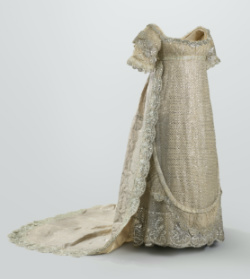
• The only royal wedding dress that survives from the Georgian period – the silk embroidered bridal gown of Princess Charlotte of Wales, daughter of King George IV – is one of the star sights at a new exhibition at The Queen’s Gallery, Buckingham Palace.Style and Society: Dressing the Georgians features more than 200 works from the Royal Collection including rare surviving examples of clothing and accessories as well as artworks by artists such as Gainsborough, Zoffany and Hogarth. Other highlights include a portrait of the wedding ceremony of George IV and Princess Caroline of Brunswick by John Graham – on display for the first time – as well as the original silver and gold dress samples supplied for the bride and other royal guests. There’s also a Thomas Gainsborough,’ depicting’s full-length portrait of Queen Charlotte wearing a magnificent court gown, a preserved gown of similar style worn at Queen Charlotte’s court in the 1760, and life-size coronation portraits of George III and Queen Charlotte by Allan Ramsay. Other items include a 1782 portrait of Prince Octavius, the 13th child of George III and Queen Charlotte, by Benjamin West in which the three-year-old wears a a style of dress known as a ‘skeleton suit’, jewellery including diamond rings given to Queen Charlotte on her wedding day and a bracelet with nine lockets – one with a miniature of the left eye of Princess Charlotte of Wales, and accessories such as a silver-gilt travelling toilet service acquired by the future George IV as a gift for his private secretary at a cost of £300. The exhibition can be seen until 8th October. Admission charges apply. For more, see www.rct.uk.
• One of the finest copies of Shakespeare’s First Folio goes on display at the City of London’s Guildhall Library for just one day on Monday, 24th April, as part of the celebrations surrounding the 400th anniversary of its publication. The document will be on display between 10.30am to 3.30pm with a 10-minute introductory talk given on the hour throughout the day. Two small and original copies (‘Quartos’) of Henry IV Part One and Othello will also be on display, next to a replica copy of the First Folio that visitors can look through. The First Folio brought together 36 plays in one volume and was published in an edition of around 750 copies on 8th November, 1623 – seven years after Shakespeare’s death. It is now regarded as one of the most valuable books in the literary world. For more, see www.cityoflondon.gov.uk/things-to-do/history-and-heritage/guildhall-library.
• Prints and drawings acquired by the British Museum over the past five years have gone on show in Room 90.New acquisitions: Paul Bril to Wendy Red Star features works ranging from an early 17th-century study for a fresco by the Flemish artist Paul Bril to 19th century drawings by Dante Gabriel Rossetti, 2019 prints by the Apsáalooke (Crow) artist Wendy Red Star and Cornelia Parker’s From H to B and back again – made during with the COVID-19 pandemic. Can be seen until 10th September. Admission is free. For more, see britishmuseum.org/exhibitions/new-acquisitions-paul-bril-wendy-red-star.
Send all items for inclusion to exploringlondon@gmail.com.
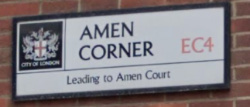
Located off Ave Maria Lane in the City of London is a tiny thoroughfare named Amen Corner.
This location of this short laneway – which leads to the U-shaped (and gated) Amen Court – makes the name no great surprise. It lies just to the north-west of St Paul’s Cathedral and is one of a number of religiously named streets in the area (others include Paternoster Lane, Paternoster Square, Paternoster Row and Canon Alley).
The corner apparently became so-named in relation to a prayer chanted by monks. It’s said that on the day of the Feast of Corpus Christi, the monks would process through the streets, chanting prayers as they did so.
The first prayer, the Lord’s Prayer, was started in Paternoster Row – itself named after the first couple of words in the prayer when recited in Latin (“Pater Noster” which translates as “Our Father”). The monks would then process westward and by the time they reached the corner of Paternoster Lane and Ave Maria Lane, they would be at the end of the prayer – “Amen”. Hence Amen Corner.
Amen Corner was, from 1614 until the Great Fire of London in 1666 when it was destroyed, the location of a three storey house which served as the headquarters of the the Royal College of Physicians.
Ave Maria Lane, meanwhile, is named after the next prayer the monks would recite after turning the corner – “Ave Maria” (Hail Mary”).
Amen Court, which isn’t accessible to the public, is home to a short terrace of 17th-century houses where the cathedral’s canons have traditionally lived.
At its western end is a wall which once marked the boundary of Newgate Prison and which itself has an interesting history. The spectral ‘Black Dog of Newgate’ was said to have been sighted crawling along its top just prior to an execution taking place in the prison.
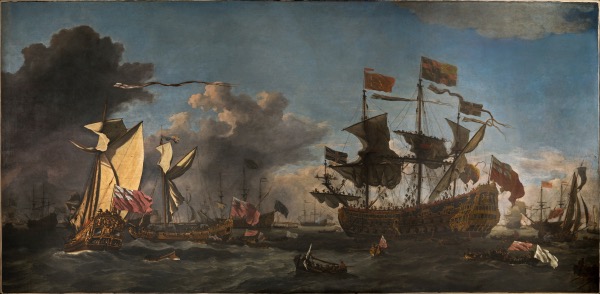
• The work of 17th century marine painters Willem van de Velde the Elder and Willem van de Velde the Younger is the subject of a new exhibition at the Queen’s House in Greenwich – the location of a studio King Charles II granted to them.The Van de Veldes: Greenwich, Art and the Sea features the newly conserved painting, A Royal Visit to the Fleet, which they worked on in their studio at the Queen’s House in the 1670s and which, at almost four metres across, was the largest seascape Van de Velde the Younger had painted to date (pictured after conservation above). Also on show is the The Burning of the Royal James at the Battle of Solebay, 28 May 1672, otherwise known as The Solebay Tapestry and originally one of six, along with a selection of some of the more than 1,400 drawings from the National Maritime Museum’s collection. The exhibition, which is free to visit, runs until 14th January, 2024. For more, see www.rmg.co.uk/van-de-velde.
• The Young V&A will open on 1st July following a three year transformation project, it was announced this week. Formerly known as the V&A Museum of Childhood, the Bethnal Green institution will display “remarkable and optimistic stories of children’s ingenuity” alongside 2,000 works from the V&A’s collection of art, design, and performance. Features will include an interactive Minecraftinstallation, murals by street artist Mark Malarko, tech solutions created for Raspberry Pi’s Coolest Projects, and, a display of portraits by photographer Rehan Jamil capturing young people expressing what creativity means to them and set alongside self-portraits by the likes of Chila Kumari Singh Burman, Quentin Blake, Kenneth Branagh, Dapo Adeola, and Linda McCartney. Also announced was the first exhibition at the new facility – Japan: Myths to Manga – which will open on 14th October. For more, see vam.ac.uk/young.
•The most complete Roman pottery kiln ever found in Greater London is going on display in a visitor centre at Highgate Wood from September next year. The kiln, which was excavated from the wood in Haringey in the 1960s and 1970s, has been in storage beneath Bruce Castle Museum. But thanks to a £243,550 grant by The National Lottery Heritage Fund to charity Friends of Highgate Roman Kiln, it will be returned for public display. The kiln is said to be one of the best-preserved Roman pottery kilns found in the UK and is thought to be the last one built by Roman potters who worked in Highgate Wood between 50CE to 160CE to supply Londinium and south-east England with distinctive ‘Highgate Ware’ pottery.
• A small section of Bayswater Road has been renamed Kyiv Road to mark the first anniversary of the invasion of Ukraine by Russia. The new road name was installed last Friday on the road which runs from Palace Court to Ossington Street and is located not far from the Russian Embassy. Councillor Adam Hug, leader of Westminster City Council, said the request for the new name came from the Ukrainian community. “Westminster is home to Ukrainians displaced by the war, and our residents have opened their hearts and their doors to those fleeing Putin’s war machine,” he said in a statement. “As the centre of an international capital, it seemed to us entirely fitting that part of our City should carry a torch for the unbowed defenders of Ukraine. It’s a small stretch of road, but we want to show the people of Ukraine that their struggle has a visible place in our city.”
• Sigmund Freud’s collection of ancient antiquities and books inspired by them are the subject of a new exhibition at the Freud Museum London in Hampstead. Freud’s Antiquity: Object, Idea, Desire, which opens Saturday, explores the crucial role the collection played Freud’s development of the concepts and methods of psychoanalysis. The display, which is co-curated by Professor Miriam Leonard of UCL, Professor Daniel Orrells of Kings College London, and Professor Richard Armstrong, of the University of Houston, discusses six separate aspects of Freudian theory alongside representative objects from the collection and spans his entire psychoanalytic career from 1896 to 1939. Alongside the physical objects is a comprehensive digital multimedia resource, containing video recordings, podcasts, photographs of rarely seen objects from the collection, and a list of suggested reading. A series of events accompanies the exhibition. Runs until 16th July. Admission charge applies. For more, see www.freud.org.uk/exhibitions/freuds-antiquity-object-idea-desire/.
• A new display at the Design Museum will showcase how cutting-edge design can help people live “more independently, sustainably and healthily but also with joy and fulfilment” as they age. Designing for our Future Selves, which opens on Friday, follows on from last Future of Ageing exhibition and will feature 10 design initiatives currently being developed by Design Age Institute and its partners which aim to positively impact the way we live and work as we grow older. The exhibition is free to visit. Runs until 26th March. For more, head here.
• A permanent home for the Migration Museum, currently based in Lewisham, will be built in the Square Mile following planning approval this week. The new facility at 65 Crutched Friars will be located in a 21-storey building and will consist of three floors featuring space for exhibitions and events, a cafe and a shop. The City of London Corporation said the developer had agreed to provide the museum space rent-free for 60 years and to cover its operating costs for three years, and has also donated £500,000 to support its fund-raising campaign.
Send all items from inclusion to exploringlondon@gmail.com.
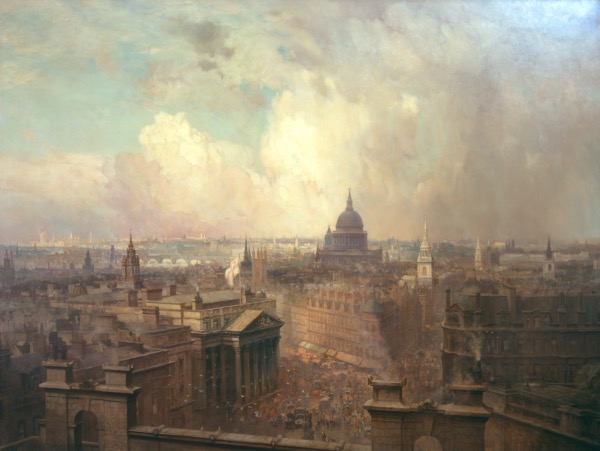
A celebration of the artists who have painted London on a monumental scale, The Big City is currently running at the Guildhall Art Gallery. The exhibition, which runs until 23rd April, can be visited on a ‘pay what you can’ basis. For more, see www.cityoflondon.gov.uk/events/the-big-city.
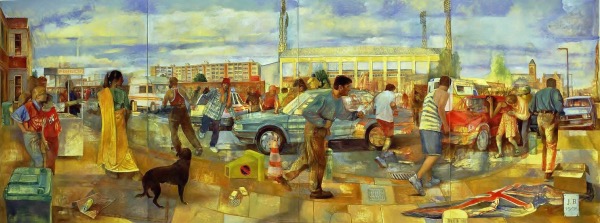
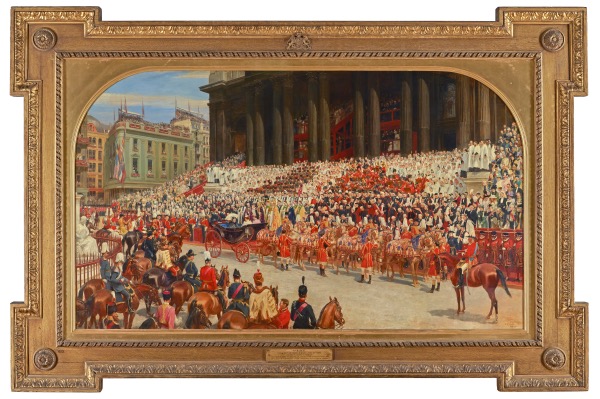
• The most extensive collection of large scale paintings of London ever seen opens at the City of London Corporation’s Guildhall Art Gallery on Friday.The Big City: London painted on a grand scale has at its heart a series of works by David Hepher which, on display in London for the first time, were given to the City by the artist in 2022. There’s also a four piece panel installation by John Bartlett and huge works by Frank O Salisbury and Terence Cuneo. The exhibition is open on a ‘pay what you can’ basis and runs until 23rd April. For more, see www.cityoflondon.gov.uk/thebigcity.
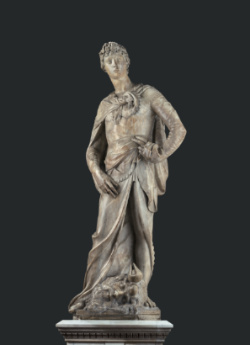
Donatello and Desiderio da Settignano, St. John the Baptist (Martelli Baptist), Museo Nazionale del Bargello, Florence, courtesy of the Ministry of Culture. Photo: Bruno Bruchi.
• The first major exhibition to explore the work of Renaissance sculptor Donatello opens at The V&A on Saturday. Donatello: Sculpting the Renaissance features works never before on display in the UK including his early marble David and the bronze Attis-Amorino – both of which come from the Museo Nazionale del Bargello in Florence, as well as the reliquary bust of San Rossore from the Museo Nazionale di San Matteo, Pisa, and bronzes from the High Altar of the Basilica of St Anthony in Padua. And, for the first time, the V&A’s carved shallow relief of the Ascension with Christ giving the keys to St Peter will be displayed alongside the Madonna of the Clouds from the Museum of Fine Arts, Boston, and Desiderio da Settignano’s Panciatichi Madonna from the Museo Nazionale del Bargello. Among the 130 objects in the display are also works by Donatello’s contemporaries and followers. Admission charge applies. The display runs until 11th June. For more, see www.vam.ac.uk.
• See the designs for the first Royal Mail stamp to feature King Charles III in a new exhibition at The Postal Museum. The King’s Stamp traces the story of definitive stamps and features stamps from the reigns of six monarchs. Along with the designs for the first definitive stamps featuring King Charles III, highlights include one of only two sheets of Edward VII ‘Tyrian Plum’ and original letters revealing the influence of past monarch’s on stamp designs as well as the chance to see your silhouette on a stamp. Runs until 3rd September. Admission charge applies. For more, see www.postalmuseum.org/event/the-kings-stamp/.
Send all items for inclusion to exploringlondon@gmail.com.
Looking south down Shoe Lane from near Charterhouse Street where it passes under the Holborn Viaduct. PICTURE: Courtesy of Google Maps.
This name of this rather long laneway, which runs from Charterhouse Street, under Holborn Viaduct, all the way south to Fleet Street, doesn’t have anything to do with footwear.
The name is actually a corruption of the Sho Well which once stood at the north end of the thoroughfare (and which itself may have been named after a tract of land known as Shoeland Farm thanks to it resembling a shoe in shape).
In the 13th century the lane was the London home of the Dominican Black Friars – after they left in the late 13th century, the property became the London home of the Earl of Lincoln and later became known as Holborn Manor.
In the 17th century, the lane was known as for its signwriters and broadsheet creators as well as for a famous cockpit which was visited by none other than diarist Samuel Pepys in 1663. It was also the location of a workhouse.
Prominent buildings which have survived also include St Andrew Holborn, designed by Sir Christopher Wren (it actually survived the Great Fire of London but was in such a bad state of repair that it was rebuilt anyway). The street these days is lined with office buildings.
Famous residents have included John de Critz, Serjeant Painter to King James I and King Charles I, preacher Praise-God Barebone who gave his name to Barebone’s Parliament held in 1653 during the English Commonwealth, and Paul Lovell, who, so the story goes, refused to leave his house during the Great Fire of 1666 and so died in his residence.





 Exploring London