This Week in London – London homes at Christmas; Christmas Eve at the Dickens’; and, ‘Women & Freud’…

A Christmas Tree (not part of the Museum of the Home). PICTURE: Tj Holowaychuk/Unsplash

The Museum of the Home in Shoreditch has once again redressed its ‘Rooms through Time’ display for the festive season. Located in the Grade I-listed Almshouses and adjoining Branson Coates Wing, the display spans the some 400 years and explores how seasonal festivals, culture and personal traditions” have shaped our lives at home during the winter months. This year the redressing also includes seven new period homes which reflecting the stories of East London. See everything from a Midwinter Celebration in 1630 to a Midnight Mass in 1956, a Christmas Party in 1978, and a futuristic New Year’s Eve in 2049. Runs until 12th January. Admission is free. For more, see www.museumofthehome.org.uk/whats-on/rooms-through-time/winter-past-2024-2025/.

Join the Dickens family for Christmas. The Charles Dickens Museum in Bloomsbury is holding a special Christmas Eve opening with the house decorated in a traditional Victorian style. Guests, who each receive a free mince pie and mulled wine or soft drink alternative, will be able to watch adaptations of A Christmas Carol, including The Muppet Christmas Carol, throughout the day in ‘The Smallest Theatre in the World.’ Admission charge applies. To book, head to https://dickensmuseum.com/blogs/all-events/christmas-eve-at-the-charles-dickens-museum.

On Now: Women & Freud: Patients, Pioneers, Artists. This display at the Freud Museum in South Hampstead draws on manuscripts, images, objects, visuals, and film footage to bring to life the many women who shaped Freud’s life including everyone from the early “hysterics”, who Freud called “his teachers” to later patients such as Princesse Marie Bonaparte (who went on to become an analyst) through to his daughter Anna Freud and her partner Dorothy Burlingham, to artists such as Marie-Louise von Motesiczky, Louise Bourgeois, Paula Rego, Alice Anderson and Tracey Emin. The exhibition also celebrates the 100th anniversary of the first publication of Sigmund Freud’s work by Hogarth Press, founded and owned by Virginia and Leonard Woolf and a key feature in Bloomsbury life. Admission charge applies. Runs until 5th May. For more, see www.freud.org.uk/exhibitions/freuds-women/

Send all items for inclusion to exploringlondon@gmail.com.

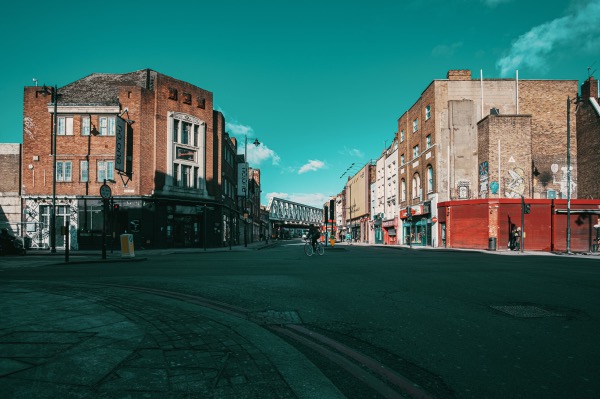
LondonLife – Colour palette, Shoreditch…

PICTURE: Ambitious Studio* | Rick Barrett/Unsplash

This week in London – Re-live the ‘Golden Age of Piracy’; getting below the surface of the Thames; a look inside East London houses through time; and, a new public garden in the City…

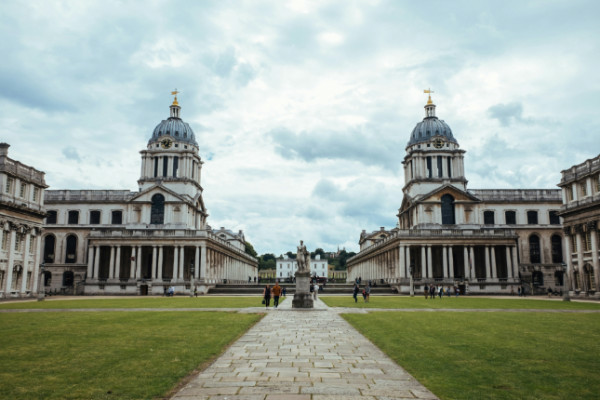
The Old Royal Naval College in Greenwich. PICTURE: Robert Bye/Unsplash

• ‘The Golden Age of Piracy’ will come to life in a living history weekend this Saturday and Sunday at the Old Royal Naval College in Greenwich. With the focus on the period between 1650 and 1720 (when more than 5,000 pirates were said to have been active), visitors will learn how to separate pirate fact from fiction, enjoy songs of the sea, witness sword and cutlass fights, and hear the tale of a real 18th-century mutiny. Each day culminates with a demonstration of the firepower of pirates and marines in the arena on the lawns overlooking the River Thames. There’s also the opportunity to wander through the pirate encampment and learn about the clothes and weapons of the period, listen to some love music and sample food from the Taste of History period kitchen. Runs from 11am to 4pm on Saturday and Sunday. Admission charge applies. For more, see https://ornc.org/whats-on/golden-age-of-piracy/.

The world of sound below the surface of the River Thames is the subject of a new contemporary art installation at the Natural History Museum which opens tomorrow. The River, composed by Norwegian sound artist Jana Winderen in collaboration with spatial audio expert Tony Myatt, uses underwater audio recordings to immerse visitors in a 360 degree audio composition which spans the river from the source by Kemble through central London and on to the sprawling estuary leading into the North Sea. The River is free to visit. Bookings, to ensure entry, can be made at https://www.nhm.ac.uk/visit.html.

One of the new rooms at the Museum of the Home – a Jewish tenement flat from 1913. PICTURE: Courtesy of the Museum of the Home.

Seven new and reimagined period rooms reflecting the stories of our East London community, past, present and future, have been unveiled at the Museum of the Home in Shoreditch. Thanks to the Real Rooms project, the expanded ‘Rooms Through Time: 1878-2049’ now includes a Jewish tenement flat from 1913, an Irish couple’s house in the 1950s, LGBTQ+ renters sharing an ex-council home in the 2005, a British-Vietnamese home in 2024, and the Innovo Room of the Future, which explores real homes amid challenges such as the climate crisis and technological advances. The scope of the existing 1870s Parlour and Front Room in 1976 have also both been expanded. Entry to the permanent display is free. For more, see https://www.museumofthehome.org.uk.

A new public garden has been opened at the intersection of Cheapside and New Change in the City of London. Formerly known as the Sunken Garden, the area has undergone a transformation and now features benches created from 150-year-old-plus granite stones salvaged from the Thames River Wall and recycled timber from fallen London Plane trees. There’s also new permeable paving which lets rain drain freely into the ground and stores it for trees to use later, reducing pressure on the sewer system while new plant species have been selected with local wildlife in mind.

Send all items for inclusion to exploringlondon@gmail.com.
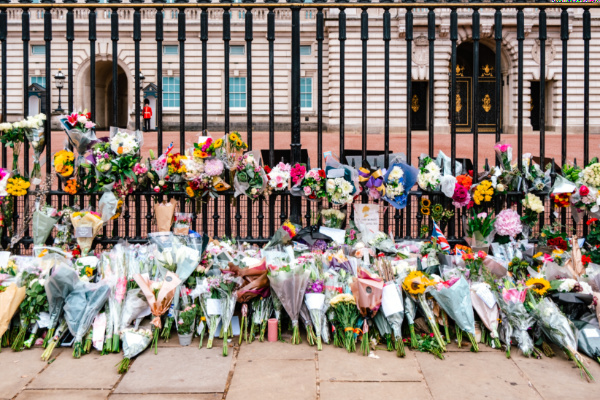
LondonLife – Tributes to a Queen…

Flowers left outside Buckingham Palace. PICTURE: Samuel Regan-Asante
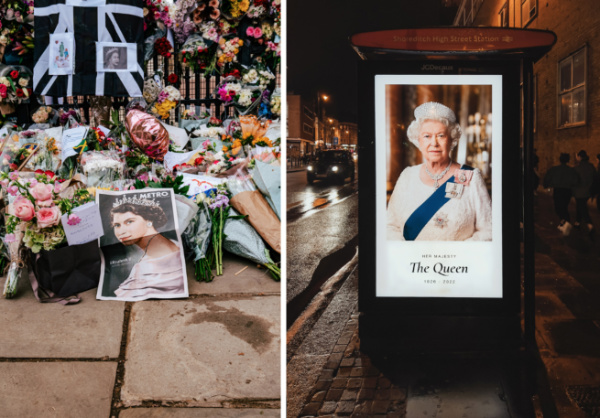
Left – Flowers and tributes left outside Buckingham Palace and, right, a bus shelter in Shoreditch. PICTURE: Samuel Regan-Asante
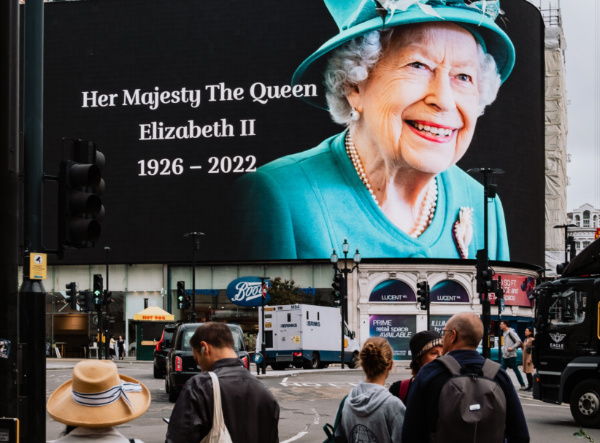
A electronic billboard at Piccadilly Circus. PICTURE: Samuel Regan-Asante
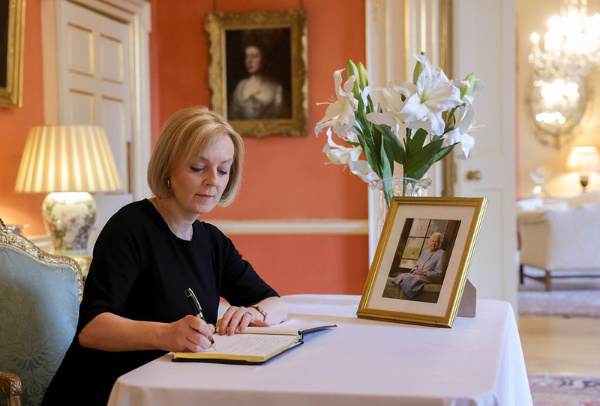
Prime Minister Liz Truss writes in a book of condolence at Number 10 Downing Street to mark the passing of Queen Elizabeth II. PICTURE: Andrew Parsons/No 10 Downing Street (licensed under CC BY-NC-ND 2.0)
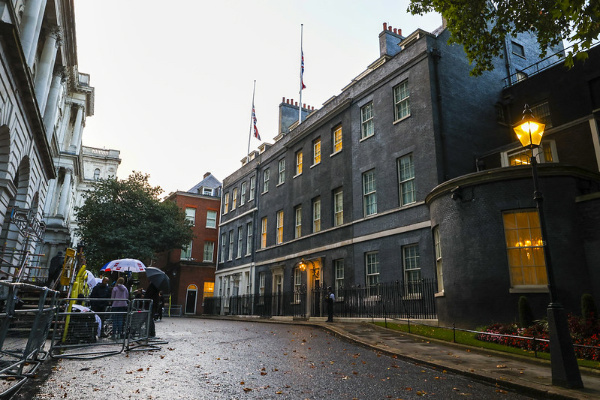
The flags at Number 10 Downing Street have been lowered to half mast after the death of Majesty Queen Elizabeth II. PICTURE: Rory Arnold/No 10 Downing Street (licensed under CC BY-NC-ND 2.0

This Week in London – Emblem for The Queen’s Platinum Jubilee unveiled; Marble Arch Mound free after apology; and, ‘Pet Life’…

A 19-year-old graphic design student from Nottinghamshire has won a competition to find an emblem for the Queen’s Platinum Jubilee. Edward Roberts, who is studying at Leeds, said that for his design, “I wanted to give a modern twist to the iconic elements of St Edward’s Crown, and so I created a continuous line, which I felt was a fitting representation of The Queen’s reign”. Paul Thompson, vice-chancellor of the Royal College of Art and a member of the judging panel which selected the winning design said it takes people “on a simple line journey to create the crown and the number 70, beautifully capturing the continuous thread of Her Majesty The Queen’s 70-year reign”. “Drawn on a computer, the ingenious emblem works across all scales and the flow of the line gives us a sense of a human touch behind the digital design process.” The competition, which was was open to young people aged between 13 and 25 from all over the United Kingdom, was judged by a panel of graphic designers, visual artists and design professionals, experts from the V&A, the Royal College of Art, the Design Museum, and a representative from the Royal Household. It was chaired by V&A Director Tristram Hunt. As the winner, Edward will be invited to next year’s Jubilee celebrations including the ‘Platinum Party at the Palace’, and his winning design, along with the other nine shortlisted emblem design entries which will be revealed next year, will be displayed at the V&A in June. Edward will also receive a prize of £1,500 and a year’s free membership of the V&A.

The £8 entrance fee to the Marble Arch Mound has been dropped for visitors during August after it closed only two days after opening following sustained criticism from visitors. In a statement Stuart Love, chief executive of the City of Westminster, apologised that the Marble Arch Mound wasn’t ready for visitors when it opened. “London’s businesses and residents have suffered through the pandemic and we built the Mound as part of our bigger plan to get people back into the City and into the shops, restaurants, theatres and to see the amazing sights the West End has to offer,” he said. “We wanted to open the Mound in time for the summer holidays and we did not want to disappoint people who had already booked tickets. We made a mistake and we apologise to everyone who hasn’t had a great experience on their visit.” The 25 metre high temporary attraction will reopen on Monday. For more, head here.

Explore the stories of real-life pets and their owners in a new feature at the Museum of The Home in Shoreditch. Pet Life – which features animations, projections, hands on activities and stories written by author and storyteller Bernadette Russell – aims to show “the joy, companionship and challenges our pets bring to the home”. Runs until 31st October. Admission charge applies. For more, see www.museumofthehome.org.uk/whats-on/exhibitions-and-installations/pet-life/.

Send items for inclusion to exploringlondon@gmail.com.

LondonLife – Shoreditch High Street…

PICTURE: Samuel Regan-Asante/Unsplash.

This Week in London – Windrush oral histories; Berkeley Square gets a new sculpture; and, Sir Robert Geffrye statue under review…

Hitherto unheard oral histories documenting the lived experience of the Windrush generation and the generations that followed have been released by the Museum of London. The oral histories, which were recorded in 2018 as part of the Conversation Booth project in City Hall, are part of the museum’s new online collection of Windrush-related content. Drawn from the collections of both the Museum of London and Museum of London Docklands, it includes objects, photos, videos and articles. To explore the collection, head to www.museumoflondon.org.uk/museum-london-docklands/windrush-stories.

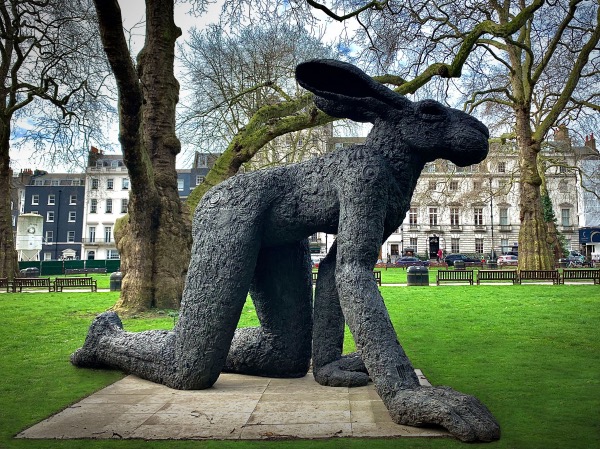
A hybrid sculpture depicting the body of a woman with the head of a hare has gone on show in Berkeley Square. The work of Sophie Ryder, Crawling was hand-made in 1999 from wet plaster, old machine parts and scavenged toys then cast in bronze. The work is part of City of Westminster’s City of Sculpture programme which brings sculpture to iconic outdoor locations.

The Museum of the Home is asking people for their opinion on the future of the statue of Sir Robert Geffrye which stands out the front of the almshouses housing the museum in Shoreditch. The almshouses were built by Geffrye, who was involved with the slave trade having made made his fortune with the East India Company and the Royal African Company, in 1714. The consultation is being held in partnership with Hackney Council which is conducting a wider review of landmarks and the naming of public spaces in the borough. The consultation remains open until the 2nd July. To have your say, head to www.surveymonkey.co.uk/r/geffrye-statue.

Send all items to exploringlondon@gmail.

This Week in London – Documenting lockdown lives; home baking on the rise; and, Captain Tom makes more history…

The Museum of the Home has launched a new national collecting project aimed at documenting people’s lives during the coronavirus lockdown. Called Stay Home, the project involves answering seven questions about you and your home and sharing up to five images of your home as well as some personal demographic information. Contributions will become part of the museum’s Documenting Homes collection, an archive of almost 8,000 items which represents homes from the 1900s up to the present day. To take part – or to read the stories of those who have, head to www.museumofthehome.org.uk/explore/stay-home-collecting-project/. The museum is planning to reopen in September following a major redevelopment which includes the renovation of the Grade I-listed Geffrye Almshouses and the development of new spaces which will create 80 per cent more space for exhibitions, events and collections. The reopening will, of course, depend on the situation with regard to the COVID-19 outbreak.

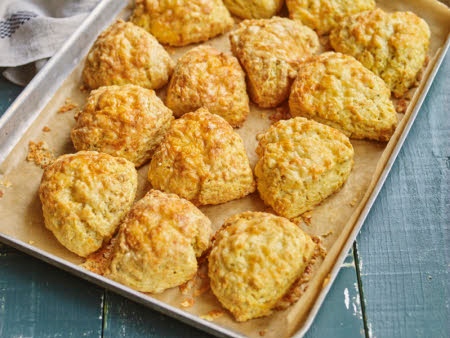
Visits to the National Trust’s home baking pages have increased by almost 900 per cent since the country was locked down in mid-March. Cheese scones have proved the most popular nationally with more than 54,000 people visiting the page in the first four weeks of lockdown – an increase of 3,009 per cent on last year. Second place is apple and rhubarb crumble with almost 15,000 visits (an increase of 581 per cent) and the fruit scone is in third place at almost 10,000 visits (an increase of 737 per cent). Meanwhile in London, favourites include potato and onion soup in Barnet, Westminster and Redbridge, apple cinnamon bun in Islington, chocolate nests in Enfield, and vegetable and coconut curry in Sutton. To visit the recipe pages, head to www.nationaltrust.org.uk/recipes.

Captain Tom Moore – the World War II veteran who has raised more than £29 million for the NHS – will be the first person to be virtually invested with the Freedom of the City of London. Moore, who celebrates his 100th birthday today, made headlines internationally when he completed 100 laps of his garden in the hope of raising £1,000 to support NHS Charities Together. The investiture ceremony will be conducted next week and is believed to be the first time it’s been conducted virtually since the Freedom was first awarded in 1237.

Send all items for inclusion to exploringlondon@gmail.com.
LondonLife – Four London sites heritage listed in 2019…

We’ve entered a new year but before we leave 2019 completely behind, here’s quick look at four sites in London that were put on the National Heritage List for England last year…

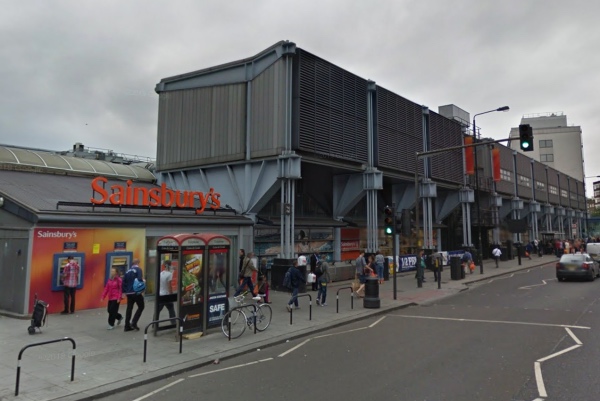
1. Sainsbury Supermarket, Camden TownListed at Grade II, it was the first purpose-built supermarket to be placed on the National Heritage List. The store was built in 1986-88 as part of Grand Union Complex designed by architectural practice Nicholas Grimshaw & Partners.

2. The Curtain Playhouse, Shoreditch. A scheduled monument, the theatre dates from about 1577 and hosted performances of Romeo and Juliet during Shakespeare’s lifetime, as well as Ben Jonson’s Every Man in His Humour with Shakespeare himself listed as a performer. Archaeological investigations in the years from 2011-16 revealed parts of the stage as well as the wings, galleries and yards and 17th century structures which showed the later use of the site as tenement housing.

3. Nursemaid’s Tunnel, Regent’s Park. Grade II listed, this is one of the earliest surviving pedestrian subways in London. It was built under New Road (now Marylebone Road) – linking Park Crescent with gardens in Park Square – in 1821 after residents campaigned for its construction due to the dangers of navigating the busy road (especially for children being taken to the playground by their nursemaids).

4. Cabman’s Shelter, corner Northumberland Avenue and Embankment Place. Grade II-listed, this still-in-use shelter was built in 1915 on the orders of the Cabmen’s Shelter Fund. It was based on Maximilian Clarke’s original design of 1882 and is one of just 13 examples to survive in London.

PICTURE: Google Maps.

This Week in London – Leonardo’s notebooks; London’s “lost” rivers; Africa celebrated; and, Natalia Goncharova…

Three of Leonardo da Vinci’s notebooks are being displayed together in the UK for the first time as part of a new exhibition at the British Library marking 500 years since the artist’s death. Leonardo da Vinci: A Mind in Motion, which opens Friday and is being held in partnership with Automobili Pininfarina, will feature a selection of notes and drawings from the Codex Arundel, owned by the British Library, the Codex Forster, owned by the V&A, and the Codex Leicester, owned by US billionaire Bill Gates (and being displayed in the UK for the first time since Gates purchased it in 1994). They reveal Da Vinci’s close observations of natural phenomena and how these explorations of nature and motion directly informed his work as an inventor and artist. The exhibition, which runs to the 8th September, is being accompanied by a series of events and until Sunday, Automobili Pininfarina will be exhibiting a 1,900 hp, zero-emissions Battista hypercar on the British Library Piazza. Admission charge applies. For more, see www.bl.uk/events/leonardo-da-vinci-a-mind-in-motion. PICTURE: Part of the exhibition/courtesy British Library.

The mysteries of London’s hidden rivers are revealed in an exhibition at the Museum of London Docklands. Secret Rivers brings together art and archaeology along with photography, film, and mudlarking finds to show how the city has been shaped by the Thames and its tributaries – and how they in turn have been shaped by Londoners. It explores how rivers including the Effra, Fleet, Neckinger, Lea, Tyburn, Walbrook, Wandle and Westbourne have all been “exploited for transport and industry, enjoyed and revered, and have influenced artists and writers”. Among items on display are rare surviving fragments of the 13th century Blackfriars Monastery which were used to line a well, a medieval fish trap, and drawings and prints depicting rivers – including James Lawson Stewart’s watercolour Jacob’s Island (1887) which depicts an artificial island located in the Neckinger at Bermondsey. The free exhibition runs until 27th October. A series of talks is accompanying the display. For more, see www.museumoflondon.org.uk/museum-london-docklands.

All things African will be celebrated at the Open the Gate Festival in Shoreditch this weekend. The festival, one of a number of monthly key partner events being held in conjunction with the city’s new Africa in London festival – a summer long celebration of African culture and creativity, will be held at Rich Mix on Saturday and features live music, an African Market, family workshops and African street food. For more on the event and the Africa in London initiative, head to www.london.gov.uk/AfricaLDN.

The UK’s first ever retrospective of Russian avant-garde artist Natalia Goncharova has opened in the Tate Modern’s Eyal Ofer Galleries this week. The exhibition brings together more than 160 international loans – including from Russia’s State Tretyakov Gallery, home of the largest collection of Goncharova works in the world – and features, at its heart, a room designed to evoke Goncharova’s remarkable 1913 retrospective at the Mikhailova Art Salon in Moscow which featured more than 800 works. Highlights of this show include Peasants Gathering Apples (1911), the monumental seven-part work The Harvest (1911) and nude paintings which led to her trial for obscenity as well as the four panel religious work Evangelists (1911), examples of her forays into fashion and interior design including Spring (1928) and Bathers (1922), a reunion of her ground-breaking works Linen, Loom + Woman (The Weaver) and The Forest (1911), and her collaborations with Ballets Russes including her costume designs for Le Coq d’or (The Golden Cockerel) and Les Noces (The Wedding) – performed on London stages in the 1920s and 1930s. Runs until 8th September. Admission charge applies. For more, see www.tate.org.uk.

Send all items for inclusion to exploringlondon@gmail.com.
What’s in a name?…Bishopsgate…

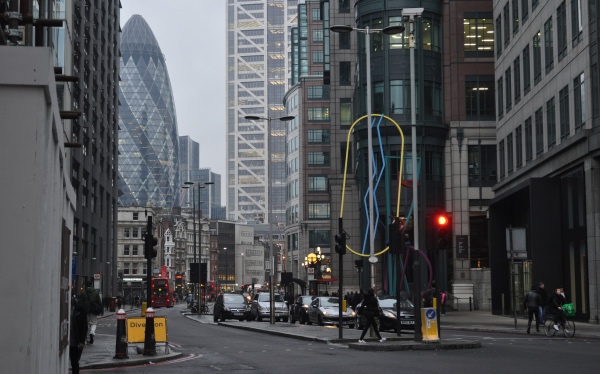
This major London thoroughfare (and ward of the City of London) owes its name to one of the eight former gates of the City of London – that’s right, Bishopsgate.

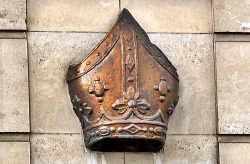
Located at what’s now the junction with Wormwood Street (and marked by a mitre which appears on a building there), the gate was the departure point for Ermine Street which ran from London to Lincoln and York.

The gate and hence the road – which runs northward from the intersection of Gracechurch Street and Cornhill to where it becomes Norton Folgate Street (which links into Shoreditch High Street) – is believed to have been named for the 7th century Bishop Erkenwald (Earconwald). It was he who apparently first ordered its reconstruction on the site of a former Roman gate.

By Tudor times, the street had become known for the mansions of rich merchants – among those who had their homes here were Sir Thomas Gresham, Sir John Crosby and Sir Paul Pindar (Crosby Hall was later re-erected in Chelsea and the facade of Sir Paul Pindar’s house, is in the V&A). The street also become known for its many great coaching inns, all of which were eventually demolished.

Bishopsgate was the first street in London to have gas lighting when it was introduced about 1810 and, about 1932, became the first in Europe to have automated traffic lights (at the junction with Cornhill).

The City of London ward straddles the site of the old London wall and gate and is accordingly divided into “within” and “without” sections.

While there are a number of churches associated with the street – St Ethelburga Bishopsgate, St Helen’s Bishopsgate and St Botolph-without-Bishopsgate, these days it is largely lined by office buildings including the former NatWest Tower. Other notable buildings include that of the Bishopsgate Institute and the busy Liverpool Street Station is also accessible from Bishopsgate.

The name Bishopsgate is also synonymous with an IRA truck bombing which took place in the street on 24th April, 1993, in which one man was killed and 44 injured.

PICTURE: Top – Looking southward along Bishopsgate in 2014. (stevekeiretsu; licensed under CC BY-NC 2.0); Right – The Bishop’s mitre marking the location of the former gate (Eluveitie/ licensed under CC BY-SA 3.0).

This Week in London – Dulwich’s ‘Moomin’ weekend; new Dutch and Fleming paintings at The National Gallery; and ‘Christmas Past’ at the Geffrye…

Dulwich Picture Gallery is hosting a ‘Moomin Winter Weekend’ in a celebration of its current exhibition featuring the works of Tove Jansson. The programme, which kicks of Friday night with a late opening, features storytellers and performers reading the Moomin stories, puppets from the Polka Theatre’s 2014 production Moominsummer Madness, a live performance by the Freshwater Theatre Company exploring the life and work of Jansson, and Moomin-inspired food and drink. Admission charges apply. For more information, see www.dulwichpicturegallery.org.uk.

Four 17th and early 18th century Dutch and Flemish paintings have gone on show at The National Gallery, thanks to a bequest from the late Dutch-born collector Willem Baron van Dedem. The works include David Teniers the Younger’s Christ crowned with Thorns  (1641), Jan van Kessel the Elder’s Butterflies, Moths and Insects with Sprays of Common Hawthorn and Forget-Me-Not, and Butterflies and Moths and Insects with Sprays of Creeping Thistle and Borage (both 1654, they represent the first of van Kessel the Elder’s works in the gallery’s collection), along with Still Life with a Bowl of Strawberries, a Spray of Gooseberries, Asparagus and a Plum by Adriaen Coorte (1703). They have gone on show in Room 26. For more on the gallery, see www.nationalgallery.org.uk.

On Now – Christmas Past at the Geffrye Museum. The Shoreditch-based ‘Museum of the Home’ is once again running its annual look at how Christmas has been celebrated in English homes over the past 400 years. There’s also a range of accompanying events including fairs, late nights, carol concerts, and decoration and greenery workshops as well as seasonal food and drink. Runs until 7th January. Meanwhile, on 6th and 7th January, the museum will host a special weekend closing party as the doors shut for two years while it undergoes a transformational redevelopment. For more, see www.geffrye-museum.org.uk.

Send all items for inclusion to exploringlondon@gmail.com.
LondonLife – Shoreditch’s giant Hedgehog…

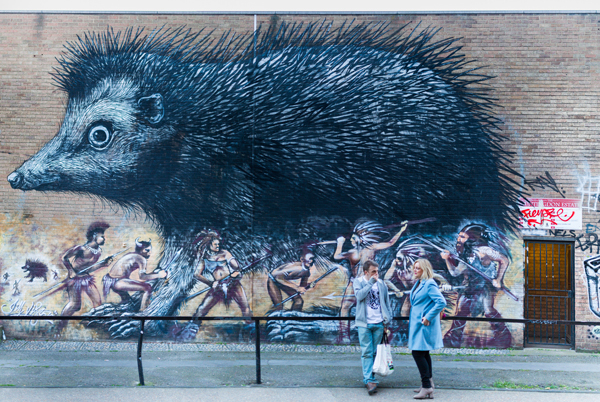
Located in Chance Street in Shoreditch, the hedgehog mural was created in 2012 by Belgian street artist ROA. It’s recently had a make over by Jim Vision who added cavemen along the base attacking the poor creature with spears (as well as a self-referencing caveman version of the artwork).

PICTURE: Davide D’Amico/Flickr/CC BY-SA 2.0

This Week in London – The Gilbert Galleries reopen at the V&A and period Christmases at the Geffrye…

gilbert-galleriesA 17th century Peruvian gold bowl recovered from a shipwreck, Tudor fashion accessories and a collection of ‘micromosaics’ including tabletops commissioned by Tsar Nicholas I are among highlights of the newly reopened Rosalinde and Arthur Gilbert Galleries at the V&A. The South Kensington museum reopened the four galleries last month after the objects within the collection were removed in 2014 as part of the V&A’s Exhibition Road building project which will be completed in July next year. Amassed by collectors Rosalinde and Arthur Gilbert over a period of 40 years from the 1960s, the collection features about 1,200 objects, more than 500 of which are now on display. The collection was on display at the Los Angeles County Museum of Art before being transferred to the UK in 1996 and accepted as a gift to the nation by the Queen Mother in 2000. It was displayed at Somerset House until coming to the V&A where it opened to the public in 2009. Other highlights on display include a newly acquired silver christening gift presented by King George II to his god-daughter, Lady Emilia Lennox, in 1731, and a life-sized silver swan made by Asprey, London, in 1985 (pictured). Entry to the galleries is free. For more, see www.vam.ac.uk. PICTURE: © Victoria and Albert Museum, London

The period living rooms at the Geffrye Museum of the Home have been transformed for Christmas in its annual Yuletide display. Now in its 25th year, the exhibition at the Shoreditch establishment recreates the Christmas traditions of times past including everything from kissing under the mistletoe to decorating the tree, parlour games such as blind man’s bluff to hanging up stockings and sending cards. Christmas Past is accompanied by a programme of events including craft fairs, festive evenings, carol sings and decoration workshops with festive food and drinks available in the cafe. Runs until 8th January. Entry is free. For more, see www.geffrye-museum.org.uk.

Send all items for inclusion to exploringlondon@gmail.com.
 

This Week in London – On the education of Georgian princesses; servant’s lives on show; and, 100 years of Vogue…

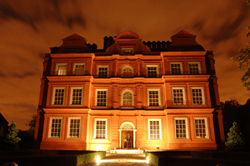
Kew-Palace-2 The education of the daughters of King George III and Queen Charlotte is the subject of a new display which has opened at Kew Palace in Kew Gardens. The queen’s progressive approach to learning meant the princesses received a “thoroughly modern” schooling covering everything from geography to art, upholstery to tackling brain-teasers as well as botany and music. The latter, in particular the harpsichord, was a particular passion of Princess Augusta, and to instruct her and the other girls, JC Bach, son of world-renowned composer JS Bach, was employed as music master (the display features a hand-written copy of his father’s Well-Tempered Clavier – designed to train and test the skills of harpsichord players). Other items on show include a copy of Queen Charlotte’s own tortoiseshell notebook embellished with gold and diamonds, a letter the queen wrote to the princesses’ governess – reputedly the first letter she wrote in English, and a series of newly acquired satirical prints from the Baker Collection depicting Queen Charlotte and her daughters. The new display can be seen from today. Admission charges apply. For more, see www.hrp.org.uk/kew-palace/. PICTURE: Newsteam/Historic Royal Palaces.

The lives of servants working in middle-class houses in London over the last 400 years are the subject of an exhibition which opened at the Geffrye Museum in Shoreditch earlier this month. Swept Under The Carpet? Servants in London Households, 1600-2000 illustrates the dynamic nature of the relationship between servants and their employers – from the intimacy of a maid checking her master’s hair for nits in the late 17th century to an ayah caring for an Anglo-Indian family’s children in the late 19th century and an au-pair picking up after the children in the middle of the 20th century. It explores their story through an examination of the places in which they worked – the middle class parlour, drawing room and living room. Entry to the exhibition, which runs until 4th September, is free. For more, www.geffrye-museum.org.uk.

On Now – Vogue 100: A Century of Style. This exhibition currently running at the National Portrait Gallery off Trafalgar Square features iconic images of some of the 20th century’s most famous faces. Included are rarely seen images of the Beatles and Jude Law as well as portraits of everyone from artists Henri Matisse and Francis Bacon, actors Marlene Dietrich and Gwyneth Paltrow, Lady Diana Spencer and soccer player David Beckham. There’s also complete set of prints from Corinne Day’s controversial Kate Moss 1993 underwear shoot, Peter Lindbergh’s famous 1990 cover shot – said to define the ‘supermodel era’, a series of World War II photographs by Vogue‘s official war correspondent Lee Miller and vintage prints from the first professional fashion photographer, Baron de Meyer. The display can be seen until 22nd May. Admission charge applies. For more, see www.npg.org.uk.

Send all items for inclusion to exploringlondon@gmail.com.
This Week in London – Christmas at Kensington and the Geffrye; and Ebola and ISIS at the IWM…

Christmas is looming and that means Christmas themed events happening all over London. Here’s a couple worth considering:

Kensington Palace: Head back into the Victorian era where so many of the Christmas traditions we know and love find their origins. The palace and gardens have been decorated with period-inspired decorations while inside decorations include the beautifully decorated tables where Queen Victoria and Prince Albert showcased their Christmas gifts. There’s talks on the origins of Christmas foods such as plum pudding, music and carolling, and the cafe is serving up seasonal food and drink while on Saturday, a special brunch time lecture will look behind the curtains into the world of Victorian pantomime and performance. Admission charges apply – check the website for dates. For more, see www.hrp.org.uk/kensington-palace/.

The Geffrye Museum: This Shoreditch institution is once again celebrating Christmas traditions of the past in its annual display showcasing the past 400 years of Christmas traditions. Christmas Past has taken place at the museum for the past 25 years and is based on ongoing, original research. It provides insights into everything from traditional Christmas feasts to kissing under the mistletoe, playing parlour games, hanging up stockings, sending cards, decorating the tree and throwing cocktail parties. A series of related events, including a concert by candlelight, are being held over the Christmas season. The display, which has free entry, closes on 3rd January. For more, see www.geffrye-museum.org.uk.


Ebola and the fight against ISIS are the subject of a new exhibition which opened at the Imperial War Museum in Lambeth last month. Fighting Extremes: From Ebola to ISIS looks at the experiences of British personnel serving on recent operations including the response to the Ebola outbreak in Sierra Leone and the fight against ISIS in the Middle East. The display features behind the scenes interviews such as an in-depth talk with Corporal Anna Cross, a British Army nurse who contracted Ebola, photographs, and recently acquired objects such as the Wellington boots worn by healthcare worker Will Pooley, the first Briton to contract Ebola who was evacuated from Sierra Leone by the RAF, a headset used by an RAF drone pilot, and a shooting target depicting a silhouette of an ISIS suicide bomber used by the British Army to train Peshmerga troops. For more, see www.iwm.org.uk.

Send all items to exploringlondon@gmail.com.

Wrapping up 10 small, ‘secret’ and historic gardens in central London…

Over the past couple of months our special Wednesday series has looked at “10 small, ‘secret’ and historic gardens in central London”. So we’re finishing the series by taking a quick look back at the 10 gardens we featured (and providing a single point where you can find any you may have missed)…

10 small, ‘secret’ and historic gardens in central London…1. Goldsmiths’ Garden…

10 small, ‘secret’ and historic gardens in central London…2. Whittington Garden…

10 small, ‘secret’ and historic gardens in central London…3. St Dunstan in the East Garden…

10 small, ‘secret’ and historic gardens in central London…4. St Mary Aldermanbury Gardens…

10 small, ‘secret’ and historic gardens in central London…5. Seething Lane Garden…

10 small, ‘secret’ and historic gardens in central London…6. Red Cross Garden, Southwark…

10 small, ‘secret’ and historic gardens in central London…7. St Swithin’s Church Garden…

10 small, ‘secret’ and historic gardens in central London…8. Postman’s Park…

10 small, ‘secret’ and historic gardens in central London…9. Garden of Rest, Marylebone…

10 small, ‘secret’ and historic gardens in central London…10. Geffrye Museum Gardens…

Do you have a favourite? Or maybe there’s a ‘small, secret and historic’ garden we didn’t mention that you love (and we may mention in a future special)?


10 small, ‘secret’ and historic gardens in central London…10. Geffrye Museum Gardens…

Geffrye-Garden

We’ve mentioned the Geffrye Museum gardens before but they’re well worth a more detailed mention.

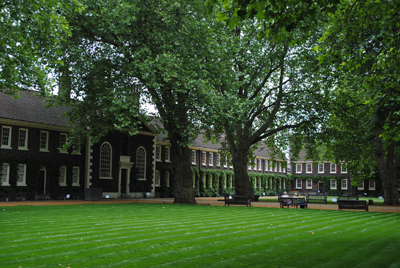
There are two distinct gardens at the Geffrye – the first are the public gardens located just off Kingsland Road which were originally laid out when the almshouses in which the museum is now based were constructed while the second is the walled herb garden and series of period garden ‘rooms’ which are much more recent additions.

While origins of the former date back to when the almshouses – 14 homes of four rooms each with a central chapel – were built in 1712-14 by the Ironmonger’s Company under instructions in the will of Sir Robert Geffrye (for more on him, see our earlier Famous Londoners entry here), they weren’t opened to the public until 1912 when the London County Council took over the site (for more on the history of the almshouses, see our earlier entries here and here).

These gardens originally featured a series of lime trees and by the early 19th century, an image shows lawns surrounded by railings with some flower beds and trees. The front lawns were apparently grazed by sheep or employed for growing crops of potatoes.

By the mid-1800s, the lime trees had been replaced by London plane trees, most of which are still standing. The gardens were again laid out in 1900-01 and again after the LCC took over in 1910 when a small pool was added in front of the chapel and a bandstand and playground elsewhere in the gardens.

The grounds also include a small graveyard – that of the Ironmongers’ – and among those buried here are Geffrye and his wife, their remains brought here from the chapel of St Dionis Backchurch in Lime Street when it was demolished in 1878.

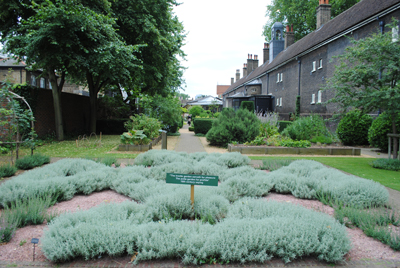
The walled herb garden and period garden ‘rooms’, meanwhile, were added in the 1990s. The herb garden opened in 1992 on a what had been a derelict site to the north of the building – it features four square beds containing more than 170 different herbs and plants.

The period garden ‘rooms’, meanwhile, were laid out in 1998 to showcase middle class town gardens from different eras. They currently include a Tudor “knot garden”, a Georgian garden, a Victorian garden and an Edwardian garden.

Each of these gardens has been carefully constructed using evidence gathered from drawings and prints, maps and garden plans along with plant lists, diaries and literature.

WHERE: Geffrye Museum, 136 Kingsland Road, Shoreditch (nearest tube station is Old Street; nearest Overground station is Hoxton); WHEN: 10am to 5pm, Tuesday to Sunday (front gardens are open all year round by period and herb gardens are only open until 1st November and reopen on 28th March; COST: Entry is free; WEBSITE: www.geffrye-museum.org.uk/explore-the-geffrye/explore-gardens/.

The-Knot-Garden

This Week in London – Indian textiles at the V&A; a “typical London street” on show; and, Nobel laureate given Blue Plaque…

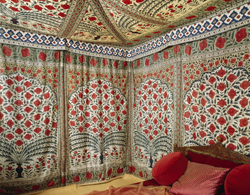
Tipus_Tent_c_National_Trust_ImagesA spectacular tent used by the Tipu Sultan, ruler of the 18th century Kingdom of Mysore (pictured), is among highlights in an exhibition exploring the “incomparably rich world” of handmade textiles from India which opens at the V&A in South Kensington on Saturday. Part of the V&A’s India Festival marking the 25th anniversary of the opening of the museum’s Nehru Gallery, The Fabric of India has exhibits ranging from the earliest known Indian textile fragments (dating from the 3rd century) through to contemporary fashions. Among the around 200 handmade objects – which include everything from ancient ceremonial banners and sacred temple hangings to modern saris and bandanna handkerchiefs – are a Hindu narrative cloth depicting avatars of Vishnu dating from about 1570, an 18th century crucifixion scene made for an Armenian Christian church in south-east India, block-printed ceremonial textiles from Gujarat – made in the 14th century for the Indonesian market, bed-hangings originally belonging to the Austrian Prince Eugene (1663-1736), and a selection of clothing made using Khadi, a cloth which Mahatma Gandhi promoted using in the 1930s when he asked people to make the fabric as a symbol of resistance to colonial rule. Admission charges apply. Runs until 10th January. For more see, www.vam.ac.uk/fabricofindia. PICTURE: © National Trust Images.

Westbury Road in Bounds Green, Haringey, is the subject of a new photographic and art exhibit which opened at the Geffrye Museum in Shoreditch this week. A Street Seen: The Residents of Westbury Road is a collaborative exhibition featuring the works of photographer Andrew Buurman and artist Gabriela Schutz as they document the homes, gardens and residents of what is described as a “typical London street”. The display includes a six metre long panoramic drawing of Victorian houses by Schutz and a series of photographs depicting residents in their back gardens taken over a two year period by Buurman. Runs until 3rd April. For more, see www.geffrye-museum.org.uk.

One of the founding fathers of sports medicine, Nobel Prize winner AV Hill, has been honoured with an English Heritage blue plaque unveiled at his former home in Highgate in London’s north last month. Hill, as well as being noted for his work in the field of physiology, was also an independent MP during World War II and a humanitarian who is credited with helping more than 900 academics – including 18 Nobel laureates – escape persecution by the Nazis. He lived at the property at 16 Bishopswood Road for 44 years, between 1923 and 1967, 10 years before his death. For more on blue plaques, see www.english-heritage.org.uk/visit/blue-plaques/.

Send all items for inclusion to exploringlondon@gmail.com.


This Week in London – The Boat Race; Designs of the Year; Heckling Hitler; and Victorian-era homelessness…

The 161st Boat Race is on this weekend and will once more see Oxford and Cambridge rowing crews battling it out in their annual contest on the Thames. The day’s schedule of festivities kicks off at noon at Bishop’s Park near the race’s starting point just west of Putney Bridge and at Furnivall Gardens near Hammersmith Bridge but the main highlights don’t take place until late in the afternoon – the Newton Women’s Boat Race at 4.50pm and the main event, the BNY Mellon Boat Race, at 5.50pm. The race runs along the Thames from Putney Bridge through to Chiswick Bridge with plenty of vantage points along the way. The tally currently sits at 78 to Oxford and 81 to Cambridge. For more information, including where to watch, head to http://theboatraces.org/.

• Prospective “Designs of the Year” are on display at the Design Museum in Shad Thames ahead of the announcement of awards in May and June. With the awards – handed out in six categories – now in their eighth year, the 76 designs on display include Google’s self-driving car, the Frank Gehry-designed Foundation Louis Vuitton in Paris and Asif Kahn’s experimental architectural installation Megafaces which debuted at the Sochi Olympics as well as Norwegian banknotes, a billboard that cleans pollutants from the air and a book printed without ink. Runs until 23rd August. Admission charge applies. For more, see www.designmuseum.org/exhibitions/designs-of-the-year-2015.

On Now: Heckling Hitler: World War II in Cartoon and Comic Art. Showing at the Cartoon Museum in Bloomsbury, this exhibition explores how World War II unfolded through the eyes of British cartoonists. It features more than 120 original drawings and printed ephemera and while the focus is largely on those contained newspapers and magazines, the exhibition does include some sample materials from books, aerial leaflets, artwork from The Dandy and The Beano, postcards and overseas propaganda publications as well as some unpublished cartoons drawn in prisoner-of-war camps and by civilians at home (the latter on scrap paper from the Ministry of Food), and even a rare pin cushion featuring Hitler and Mussolini. Among the artists whose works are featured are ‘Fougasse’ (creator of Ministry of Information posters reminding the public that ‘Careless Talk Costs Lives’), William Heath Robinson and Joe Lee. The exhibition runs until 12th July. Admission charge applies. For more, see www.cartoonmuseum.org/exhibitions/current-exhibitions/heckling-hitler.

On Now: Homes of the Homeless: Seeking Shelter in Victorian London. This exhibition at the Geffrye Museum in Shoreditch explores the places inhabited by London’s poor during the 19th and 20th centuries and brings them to life through paintings, photographs and objects as well as the retelling of personal stories and reports. Starting in the 1840s, the exhibition charts the problems faced by London’s poor and examines the dirty and cramped conditions of lodging houses, workhouses and refuges where they took shelter along with, for those even less fortunate, the streets where they slept rough before moving on to some of the housing solutions designed specifically to help the poor. Runs until 12th July. Admission charge applies. Running alongside the exhibition is a free display, Home and Hope – a collaborative exhibition with the New Horizon Youth Centre which explores the experience of young homeless people in London today. For more, see www.geffrye-museum.org.uk/whatson/exhibitions-and-displays/homes-of-the-homeless/.

Send all items for inclusion to exploringlondon@gmail.com