This Week in London – Gallery of Japanese art reopens; Botticini’s Assumption back on show; Bonfire Night; and, celebrating wildlife photography…

• A Hello Kitty! rice cooker, a selection of mobile phones designed by Naoto Fukasawa and a group of kimono from the 1920s and 1930s are among recent acquisitions on show in the V&A’s Toshiba Gallery of Japanese Art which reopened to the public following a refurbishment this week. The gallery, which first opened at the South Kensington premises in 1986 and was the first major gallery of Japanese art in the UK, now has about 550 items on show including 30 or so recent acquisitions. Spanning the period from the sixth century to the present day, the display features swords and armour, lacquer, ceramics, cloisonné enamels, textiles and dress, inro and netsuke, painting, prints and illustrated books. They include everything from modern objects such as the first ever portable stereo Walkman designed and manufactured by Sony in 1979 and a pair of gravity-defying shoes designed by Noritaka Tatehana through to historic items such as the Mazarin Chest, made in Kyoto around 1640, a late 17th century six fold screen depicting the Nakamura-za Kabuki theatre in Edo (Tokyo), and a group of high quality cloisonné enamels dating from 1880 to 1910. Admission to the gallery is free. For more, see www.vam.ac.uk.

• Francesco Botticini’s monumental Palmieri Altarpiece is at the centre of a new exhibition, Visions of Paradise: Botticini’s Palmieri Altarpiece, which opened in the National Gallery off Trafalgar Square yesterday. The altarpiece, depicting the Assumption of the Virgin, was completed in about 1477 for the funerary chapel of Matteo Palmieri (1406-1475) in the church of San Pier Maggiore in Florence, Italy. The exhibition, based on years of research, explores Palmieri’s life with special attention to his friendship with the Medici rulers of Florence and the King of Naples and his creative collaborations with Botticini including both the altarpiece and Palmieri’s epic poem of 1465, Citta di Vita (City of Life) –  which he had Bottinci provide illustrations for. Along with the altarpiece panel (which has been off display since 2011), the exhibition features around 30 works including paintings, sculpture, drawings, prints and manuscripts as well as a polyptych by Jacopo di Cione and his workshop made for the high altar of the same church in which Botticini’s altarpiece sat – Florence’s San Pier Maggiore. The polyptych includes a painted representation of the church and was later moved to the same chapel as Botticini’s Assumption. The exhibition is being held in the Sunley Room until 14th February. Admission is free. See www.nationalgallery.org.uk for more.

• Bonfire Night will be celebrated across the UK tonight as we “Remember, remember, the fifth of November” and burn effigies of “the guy” (Guy Fawkes) (for more on the background, see our earlier story here). Find your local bonfire event in London via Visit London or Time Out.

• On Now: Wildlife Photographer of the Year. This annual exhibition at the Natural History Museum features works selected out of the more than 42,000 entries to this year’s awards including the winning image, Tale of two foxes, taken by Canadian amateur photographer Don Gutoski at Cape Churchill in Canada. Other images on show include Fighting ruffs which won 14-year-old Ondrej Pelánek from the Czech Republic the Young Wildlife Photographer of the Year award. The exhibition at the museum in South Kensington runs until 10th April next year. Admission charge applies. Entries for next year’s competition open in December. For more, see www nhm.ac.uk.

Send all items for inclusion to exploringlondon@gmail.com.
LondonLife – Giacometti’s works go on show at the National Portrait Gallery…

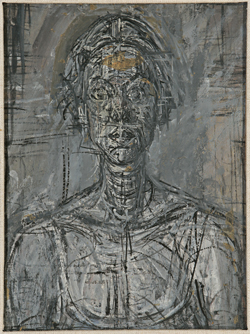
AnnetteBust of Annette is among more than 60 works by the 20th century Swiss artist Alberto Giacometti on display at the National Portrait Gallery in an exhibition which opened earlier this month. The first ever exhibition to consist solely of portraits by Giacometti (1901-66), Giacometti: Pure Presence features paintings, drawings and sculptures from across his entire career. While he is most famous for his tall, thin standing or walking figures – works which fueled his reputation as a leading surrealist sculptor, the exhibition focuses on his life-long preoccupation with portraiture. Apart from his wife Annette, subjects featured in his works include his brother Diego, friends such as the writers Louis Aragon and Jean Genet, retailer and philanthropist Lord Sainsbury, art writer James Lord, Isabel Nichol – who later become Francis Bacon’s muse, Isabel Rawsthorne, and a prostitute named Caroline with whom he worked for five years from 1960. Highlights of the exhibition include a portrait bust of his brother Diego created in 1914 when the artist was just 13, an Egyptian-inspired sculpture of Isabel’s head and his celebrated work, Women of Venice VIII, which stands at the centre of the exhibition. The exhibition, at the gallery just off Trafalgar Square, runs until 10th January. Admission charge applies. For more, see www.npg.org.uk. PICTURE: Bust of Annette by Alberto Giacometti, 1954 Private Collection/© The Estate of Alberto Giacometti (Fondation Giacometti, Paris and ADAGP, Paris) 2015.

This Week in London – A look inside The Crime Museum; Goya at The National Gallery; and, Africa on the Square…

• Objects and evidence from some of the UK’s most notorious crimes including the ‘Acid Bath Murder’ of 1949, the ‘Great Train Robbery’ of 1963 and the ‘Millennium Dome Diamond Heist’ of 2000 will go on show at the Museum of London from Saturday. Created with the support of the Metropolitan Police Service and the Mayor’s Office for Policing and Crime, The Crime Museum Uncovered exhibition features never-before-seen objects from the Metropolitan Police’s Crime Museum as it takes visitors through a series of real cases and tackles some of key challenges of policing in London – everything from terrorism and espionage through to counterfeiting and narcotics. The Crime Museum, which is now housed inside New Scotland Yard, was established in the mid-1870s as a teaching tool for police. Its Visitor’s Book contains some high profile names including that of King George V, Sir Arthur Conan Doyle – creator of Sherlock Holmes, illusionist Harry Houdini and comedians Stan Laurel and Oliver Hardy. Runs until 10th April. Admission charge applies. For more, see www.museumoflondon.org.uk.

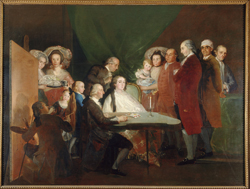
Goya• Almost half of Goya’s surviving portraits are on show in The National Gallery in an exhibition which opened yesterday. Goya: The Portraits features more than 60 of the celebrated Spanish artist’s surviving portraits, borrowed from public and private collections around the world. Highlights include the Duchess of Alba (a 1797 work depicting one of Goya’s patrons which has only left the US once before), the immense group portrait The Family of the Infante Don Luis De Borbon (pictured), the never-seen-in-public work Don Valentin Bellvis de Moncada y Pizzaro, the rarely exhibited Countess-Duchess Benavente, and the recently conserved 1798 portrait Francisco de Saavedra, exhibited for the first time in 50 years alongside a pendant painted the same year of Gaspar Melchor de Jovellanos. There are also works of royals including Charles IV in Hunting Dress and more personal works such as self portraits and paintings of his family members. Runs until 10th January in the Sainsbury Wing near Trafalgar Square. Admission charge applies. For more, see www.nationalgallery.org.uk. PICTURE: © Fondazione Magnani Rocca, Parma, Italy.

• Black History Month is being celebrated in Trafalgar Square this Saturday in Africa on the Square, a programme of events inspired by the traditions and cultures of the continent.  The line-up includes a musicians and singers, acrobats, dancers, a fashion show and a market selling African-themed products as well as a host of activities for families, from hair braiding and face painting to mosaics and batik making. There will also be a talent show giving aspiring performances aged between 16 and 25 the chance to perform in front of a live audience. The free event runs between noon and 6pm. For more, see www.london.gov.uk/africa.

Send all items for inclusion to exploringlondon@gmail.com.
LondonLife – The Australian coast comes to London…

Blue-PacificThe National Gallery has unveiled a coastal masterpiece by Australian painter Sir Arthur Streeton, Blue Pacific, lent to the gallery by a private collector for the next two years.

Painted in 1890, the painting – never seen before in the UK – depicts people strolling along the clifftops at Coogee in Sydney, looking eastward over the gleaming blue of the Pacific Ocean.

Christopher Riopelle, the gallery’s curator of post-1800 European paintings, says Streeton’s use of the vertical format was “brilliantly calculated to exploit the contrast between the azure sheet of water and the subtly observed depictions of rock face and sky”.

“Still young, but at the height of his powers, Streeton demonstrates here how impression was a capacious and flexible tool for confronting the awesome landscape unique to Australia.”

Streeton (1867-1943) was considered one of the most advanced landscape painters in Australia in the 1880s and 1890s and was one of the first to adopt an impressionist style. His masterpiece, Golden Summer (1889), was exhibited at the Royal Academy of Arts in 1891.

Blue Pacific is now on show in Room 43 at the gallery off Trafalgar Square alongside Monet’s Water-Lilies and Manet’s The Execution of Maximilian.  Entry is free. For more on the gallery, see www.nationalgallery.org.uk.

PICTURE: Blue Pacific, 1890, Sir Arthur Streeton (1867 – 1943), oil on canvas, © on loan from a private collection/via National Gallery.

This Week in London – Cosmonauts at the Science Museum; space on show at the Royal Observatory; Simon Schama’s portrait picks; and, celebrating iconic road signs…

Vostock-• The greatest collection of Soviet spacecraft and artefacts ever exhibited outside of Russia can be seen at the Science Museum from tomorrow. Cosmonauts: Birth of the Space Age tells the story of Russia’s involvement in the ‘space age’ from the late 19th century through to life onboard Mir and the International Space Station. Exhibits cover the 1957 launch of Sputnik – the world’s first artificial satellite, the sending of the first human into space – Yuri Gagarin, in 1961, as well as the first women – Valentina Tereshkova – in 1963. Star objects include rocket pioneer Konstantin Tsiolkovsky’s 1933 drawings depicting spaceflight, an original model of Sputnik from 1957, and Vostok-6, the capsule that carried Tereshkova, as well as some of the many technologies developed for use on board the Salyut and Mir space stations and the ISS. The exhibition, a collaboration between the Science Museum, the State Museum Exhibition Centre ROSIZO and the Federal Space Agency Roscosmos, runs at the South Kensington museum until 13th March. Admission charge applies. For more, see www.sciencemuseum.ac.uk. PICTURE: Visitors study the Vostok 6 descent module, which safely returned Valentina Tereshkova from space. © Science Museum

• Still talking of space and an exhibition of images of space goes on show at the Royal Observatory Greenwich from tomorrow. The Insight Astronomy Photographer of the Year 2015 awards, now in its seventh year, received more than 2,700 entries from amateurs and professionals who live in more than 60 countries across the globe. The winners, which will be announced today at a special ceremony at the Royal Observatory, were selected from short-listed pictures which include a meteor flying through space above Mt Ranier in the US, the night sky mirrored on the world’s largest salt flat of Salar de Uyuni in Bolivia, and images capturing a range of phenomena from across the universe – from the hyper giant star, Eta Carinae, to the supernova remnant known as the Jellyfish Nebula. The exhibition is free. For more, see www.rmg.co.uk.

• Historian Simon Schama has joined with the National Portrait Gallery in creating five new temporary displays featuring portraits arranged by theme rather than year. Simon Schama’s The Face of Britain, which coincides with the launch of a five part TV series and book, will feature a range of portraits taken from the gallery’s collection around the themes of power, love, fame, people and self-portraits. It juxtaposes portraits of the likes of former PM Sir Winston Churchill and Margaret Thatcher with Queen Elizabeth I; and those of explorer Francis Drake and Thomas Carlyle alongside Amy Winehouse. The displays are integrated into a free trail with eight to 12 works in each of the five rooms. A full programme of events accompanies the displays which will be in the gallery, just off Trafalgar Square, until 4th January. Admission is free. For more, see www.npg.org.uk.

• The London Design Festival kicks off on Saturday and as part of the event, the Design Museum is marking the 50th anniversary of Calvert and Kinneir British road signage with a free exhibition. MADE NORTH has commissioned a number of leading designers and artists to create their own interpretations of Margaret Calvert and Jock Kinneir’s circle, triangle and square signs including Sir Peter Blake, Sir Terence Conran, Sir Keith Grange, Betty Jackson, Julian Opie and Richard Rogers. A display of more than 40 of the new signs – along with a number of Calvert and Kinneir originals and a one-off version of the Road Works sign specially created by Calvert – are on show at a free installation in the Design Museum’s Tank and Riverside Hall until 25th October. More of the newly designed anniversary signs can be seen at locations across the city and at www.britishdesignproject.co.uk. For more on the London Design Museum, see www.designmuseum.org, and for the full programme of the London Design Festival, which runs until 27th September, check out www.londondesignfestival.com.

Send all items for inclusion to exploringlondon@gmail.com.

This Week in London – Exploring London’s archaeology; Alice in Bloomsbury; and, ‘Soundscapes’ at the National Gallery…

Canal-Museum• Descend into ice wells at the London Canal Museum; delve into the archaeological archives of the Egypt Exploration Society; discover the history of the Spitalfields Charnel House; and, tour the remains of London’s Roman military fort with experts from the Museum of London. The British Festival of Archaeology kicked off last weekend and there’s a plethora of events happening across London as part of the more than 1,000 taking place across the country. For a full programme of events – many of which are free – head to www.archaeologyfestival.org.uk. The festival runs until 26th July.

• Follow Alice down the rabbit hole in a new exhibition which opened at the Cartoon Museum in Bloomsbury yesterday. Marking the 150th anniversary of the book’s publication, Alice in Cartoonland looks at how cartoonists, caricaturists, satirists, animators and graphic artists adapted and used author Lewis Carroll (aka Charles Lutwidge Dodson) and original illustrator John Tenniel’s work in social and political commentaries as well as just to have fun. The display features posters, cartoon strips, comic and graphic novels and artwork from TV and film versions of Alice with Low, Vicky, Shepard, Steadman and Gilroy among the artists represented. Runs until 1st November (with some events held in conjunction with it). Admission charge applies. For more, see www.cartoonmuseum.org.

• Exploring the National Gallery’s art collection is usually done with the eyes but thanks to an innovative project which kicked off last week, it’s now also about listening. A series of contemporary sound artists and musicians including Nico Muhly, Gabriel Yared, Susan Philipsz, Jamie xx, Chris Watson, Janet Cardiff and George Bures Miller have created sounds and musical pieces in response to works they have chosen from the gallery’s collection. Selected works include the late 14th century The Wilton Diptych (Muhly), Hans Holbein’s 1533 painting The Ambassadors (Philipsz) and Paul Cézanne’s painting Bathers (Les Grandes Baigneuses) (Yared). Soundscapes runs until 6th September in the Sainsbury Wing. Admission charge applies. For more, see www.nationalgallery.org.uk.

Send all items for inclusion to exploringlondon@gmail.com.

This Week in London – Audrey Hepburn, Barbara Hepworth and Joseph Cornell…

It’s all galleries this week- not a bad way to escape the heat!

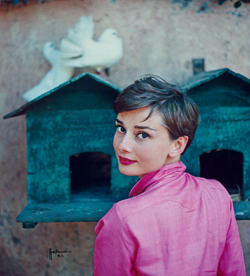
NPG_959_1400_AudreyHepburnb• Thirty-five photographs of late actor Audrey Hepburn from the personal collection of her sons form the centrepiece of a new exhibition at the National Portrait Gallery. Audrey Hepburn: Portraits of an Icon, which opens today and is the first UK exhibition to be organised with the Audrey Hepburn Estate, explores the life and career of the celebrated film star. Among the images lent by her sons Sean Hepburn Ferrer and Luca Dotti are a portrait of the actor performing a dance recital at the age of 13 in 1942, a photograph of her taken while filming The Nun’s Story in Africa in 1958, and a behind-the-scenes photograph of Hepburn during a costume fitting for the 1954 film Sabrina. Other images in the display include those taken during the shooting of numerous films ranging from 1955’s War and Peace to 1967’s Two for the Road as well as vintage magazine covers. Runs until 18th October. Admission charge applies. For more, see www.npg.org.uk/hepburn. PICTURE: Audrey Hepburn by Philippe Halsman for LIFE magazine, 1954. © Philipe Halsman/Magnum Photos.

• The works of Barbara Hepworth, one of the UK’s greatest artists, are on show at the Tate Britain on Millbank. Barbara Hepworth: Sculpture for a Modern World features more than 100 works, from major carvings and bronzes to less familiar pieces. Juxtaposed with works of other great artists – including paintings, prints and drawings of her second husband Ben Nicholson, they include her earliest surviving carvings, her more purely abstract works of the late 1930s, wooden sculptures made while Hepworth lived in Cornwall in the mid-1940s and four large carvings made in the mid-1950s in African hardwood guarea which, reunited for this exhibition, arguably represent the highpoint of her carving career. There are also bronzes from her 1965 retrospective at the Kroller-Muller Museum. Runs until 25th October. Admission charge applies. For more, see www.tate.org.uk.

• American artist Joseph Cornell’s art is the subject of an exhibition at the Royal Academy of Arts in Piccadilly which opens on Saturday. Joseph Cornell: Wanderlust, organised in conjunction with Kunsthistoriches Museum in Vienna, features about 80 of the artist’s box constructions, assemblages, collages and films including rarely seen masterpieces lent from public and private collections in the US, Europe and Japan. Arranged in four sections, the display features works from his major series including Museums, Aviaries, Soap Bubble Sets, Palaces, Medici Slot Machines, Hotels and Dovecotes. Runs until 27th September. Admission charge applies. For more, see www.royalacademy.org.uk.

• Send all items for inclusion to exploringlondon@gmail.com.
This Week in London – Marking VE Day’s 70th; Rut Blees Luxemburg at the Museum of London; and India’s Sidi community on show at the NPG…

• Three days of events kick off in London tomorrow to mark the 70th anniversary of Victory in Europe (VE) Day. Events will include a Service of Remembrance at the Cenotaph in Whitehall at 3pm tomorrow (Friday) coinciding with two minutes national silence while Trafalgar Square – scene of VE Day celebrations in 1945 – will host a photographic exhibition of images taken on the day 70 years ago (the same images will be on show at City Hall from tomorrow until 5th June) and, at 9.32pm, a beacon will be lit at the Tower of London as part of a nation wide beacon-lighting event. On Saturday at 11am, bells will ring out across the city to mark the celebration and at night, a star-studded 1940s-themed concert will be held on Horse Guards Parade (broadcast on BBC One). Meanwhile, on Sunday, following a service in Westminster Abbey, a parade of current and veteran military personnel will head around Parliament Square and down Whitehall, past the balcony of HM Treasury where former PM Sir Winston Churchill made his historic appearance before crowds on the day, to Horse Guards. A flypast of current and historic RAF aircraft will coincide with the parade and from 1pm the Band of the Grenadier Guards will be playing music from the 1940s in Trafalgar Square. Meanwhile, starting tomorrow, special V-shaped lights will be used to illuminate Trafalgar Square, St Paul’s Cathedral and the Houses of Parliament as a tribute. For more information, see www.gov.uk/government/topical-events/ve-day-70th-anniversary.

• The works of leading London-based photographer Rut Blees Luxemburg are on show in at new exhibition at the Museum of London in the City. London Dust will feature three major newly acquired works by Luxemburg including Aplomb – St Paul’s, 2013, Walkie-Talkie Melted My Golden Calf, 2013, and the film London/Winterreise, 2013. Blees Luxemburg’s images – others of which are also featured in the exhibition – contrast idealised architectural computer-generated visions of London that clad hoardings at City-building sites with the gritty, unpolished reality surrounding these. In particular they focus on a proposed 64 floor skyscraper, The Pinnacle, which rose only seven stories before lack of funding brought the work to a halt. The free exhibition runs until 10th January next year. For more, see www.museumoflondon.org.uk.

• The Talk: The Cutting Edge – Weapons at the Battle of Waterloo. Paul Wilcox, director of the Arms and Armour Research Institute at the University of Huddersfield, will talk about about the weapons used at Waterloo with a chance to get ‘hands-on’ with some period weapons as part of a series of events at Aspley House, the former home of the Iron Duke at Hyde Park Corner, to mark the bicentenary of the Battle of Waterloo. To be held on Monday, 11th May, from 2.30pm to 4pm. Admission charge applies and booking is essential – see www.english-heritage.org.uk/apsley for more.

• On Now: On Belonging: Photographs of Indians of African Descent. A selection of ground-breaking photographs depicting the Sidi community – an African minority living in India – is on show at the National Portrait Gallery off Trafalgar Square. The works, taken between 2005 and 2011, are those of acclaimed contemporary Indian photographer Ketaki Sheth and the exhibition is his first solo display in the UK. They provide an insight into the lives of the Sidi, and include images of a young woman named Munira awaiting her arranged wedding, young boys playing street games, and the exorcism of spirits from a woman as a young girl watches. Admission is free. Runs in Room 33 until 31st August. For more, see www.npg.org.uk.

Send all items for inclusion to exploringlondon@gmail.com.
This Week in London – Duke of Wellington on show; wartime City bank recreated in Warwickshire; and early photographs at the Tate…

ArthurWellesley• The Duke of Wellington’s political and military career as well as his personal life is being explored in an exhibition running at the National Portrait Gallery off Trafalgar Square until August. Wellington: Triumphs, Politics and Passions features 59 portraits and other works including a rarely seen portrait of the Iron Duke painted by Sir Thomas Lawrence and commissioned by Sarah, Countess of Jersey, a year after Wellington had become Prime Minister. The portrait (pictured) remains unfinished – the state it was in when Lawrence died in 1830 – and, held in a private collection, hasn’t been shown in public for any significant period until now. The exhibition also includes a John Hoppner portrait of the duke as a young soldier, a daguerreotype taken by Antoine Claudet on Wellington’s 75th birthday in 1844 and drawings by Lawrence of Wellington’s wife, Kitty. The exhibition – which is part of the commemorations marking 200 years since the Battle of Waterloo, runs until 7th June. Admission is free. For more see www.npg.org.uk. PICTURE: Arthur Wellesley, 1st Duke of Wellington by Sir Thomas Lawrence (1829), © On loan to National Portrait Gallery by kind permission of Mr. & Mrs. Timothy Clode.

• Upton House is Warwickshire has turned the clock back to 1939 with a display dedicated to the time when the Bearstead family moved their City-based bank, M Samuel & Co, to their historic family mansion to escape the Blitz in London. Twenty-two bank staff took over the house, sleeping in shared dormitories and taking meals of rook pie in the home’s Long Gallery while secretaries typed surrounded by works of art. The National Trust has returned 12 rooms to their wartime look based on research conducted by 80 of the volunteers at the house. They’re filled with thousands of objects, from ration-book toothpaste to wartime toilet rolls, to recreate a wartime experience at the home. Outside an Anderson Shelter stands in the garden where heritage vegetables are being grown in an allotment. Visitors will also find out how 40 of the most precious works in the home were sent to a special storage facility in a Welsh slate mine to protect them. Admission charge applies. For more, see www.nationaltrust.org.uk/upton-house/

• On Now – Salt and Silver: Early Photography 1840-1860. This exhibition at Tate Britain in Millbank is the first major exhibition in Britain dedicated to salt prints, the earliest form of paper photography, and features 90 images including some of the best and rarest early photographs. The salt print technique was invented in Britain in the 1840s and 1850s and spread across the world, hence as well as portraits, still lifes and scenes from ‘modern life’, the images on show include from William Fox Talbot’s images of a Paris street to Nelson’s Column under construction, Linnaeus Tripe’s views of Puthu Mundapam in India and Auguste Salzmann’s studies of statues in Greece. Runs in the Linbury Galleries until 7th June. Admission charge applies. For more, see www.tate.org.uk.

Send all items for inclusion to exploringlondon@gmail.com.

This Week in London – Biggest ever Magna Carta exhibition; 200 years since Waterloo at the NPG; and, Alexander McQueen at the V&A…

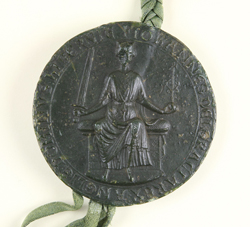
great-seal-king-john-eton-college-british-library-magna-carta-law-liberty-legacy• The largest ever exhibition related to the Magna Carta opens at the British Library in King’s Cross tomorrow to mark the 800th anniversary of the document’s sealing. Magna Carta: Law, Liberty, Legacy features two original Magna Carta manuscripts from 1215 as well as 1215 document, the Articles of the Barons (known as ‘draft’ of the Magna Carta), the Petition of Right (1628), the English Bill of Rights (1689), and the Universal Declaration of Human Rights (1948). It will also display two of the most celebrated documents in American history – the Delaware copy of the Bill of Rights and Thomas Jefferson’s handwritten copy of the Declaration of Independence (both on loan from the US National Archives) –  along with UK cabinet papers from 1941 in which it was proposed an original Magna Carta manuscript from 1215 be given to the US in return for their support in World War II and artefacts including King John’s teeth, thumb bone and fragments of clothing taken from his tomb in 1797 as well as his will. The exhibition tells the story of the Magna Carta from its creation in 1215 through to its later use by people fighting for various rights and freedoms and its continuing impact on the world today. There’s also a series of interviews with politicians, historians and public figures including Burmese activist Aung San Suu Kyi, former US President Bill Clinton and William Hague. Runs until 1st September. Admission charge applies. For more – and a digitised gallery of artifacts – visit www.bl.uk/magna-carta-exhibition. PICTURE: Great Seal of King John, 1203 © Eton College Archives on display in Magna Carta: Law, Liberty, Legacy.

• The first gallery exhibition devoted to the Duke of Wellington opens at the National Portrait Gallery off Trafalgar Square today. Marking the 200th anniversary year of the Battle of Waterloo, Wellington: Triumphs, Politics, and Passions explores Wellington’s political and military career as well as his personal life. Highlights include Goya’s 1812 portrait of Wellington following his entry into Madrid (later modified to recognise further battle honours and awards), and Thomas Lawrence’s famous portrait painted in 1815, the same year as the Battle of Waterloo (the painting, which normally hangs in Apsley House, was used as the basis of the design of the £5 British note from 1971 to 1991). The exhibition of 59 portraits and other works also includes rarely seen works loaned by Wellington’s family include a John Hoppner portrait of the duke as a young soldier and a daguerreotype portrait taken by Antoine Claudet for Wellington’s 75th birthday in 1844. Runs until 7th June. Admission is free. For more, see www.npg.org.uk or for more on the 200th anniversary of the Battle of Waterloo, see www.waterloo200.org.

• An exhibition celebrating the works of the late fashion designer Alexander McQueen opens at the V&A in South Kensington on Saturday. Alexander McQueen: Savage Beauty presents his works in 10 sections which focus on everything from McQueen’s roots in London, his “skilful subversion of traditional tailoring practices”, his fascination with the animal world and his longstanding interest in Eastern cultures. At the centre of the exhibition is The Cabinet of Curiosities, a display showcasing more than 100 garments and accessories and shown with film footage from his many catwalk presentations. The exhibition runs until 2nd August. Admission charge applies but you’ll have to be quick – the exhibition has already set the record for the most ever advance sales for an exhibition at the museum. For more, see www.vam.ac.uk/savagebeauty.

Send all items for inclusion to exploringlondon@gmail.com.
 

This Week in London – War fashions; the “inventor” of Impressionism; looking a Gift Horse in the mouth; and, having a look at the Queen’s House…

• A new exhibition exploring how fashion survived and even flourished during World War II has opened at the Imperial War Museum in Lambeth to mark the 70th anniversary of the war’s end. Fashion on the Ration brings together more than 300 exhibits including clothes and accessories like the ‘respirator carrier handbag’, photographs and films as well as official documents from the period, letters and interviews. The exhibition is divided into six parts which examine in detail everything from the uniforms worn during the period to clothes rationing (introduced in 1941) and how the end of the war impacted fashion. Runs until 31st August. Admission charge applies. For more, see www.iwm.org.uk.

• The UK’s first major exhibition devoted to Paul Durand-Ruel, the man who “invented Impressionism”, has opened at the National Gallery off Trafalgar Square this week. Inventing Impressionism features around 85 works including some of Impressionism’s greatest masterpieces, a number of which have never been seen in the UK before. The majority of the works were traded by Durand-Ruel (1831-1922) who is noted for having discovered and supported Impressionist painters like Monet, Pisarro, Degas and Renoir. Durand-Ruel purchased an astonishing 12,000 pictures between 1891 and 1922, including more than 1,000 Monets, about 1,500 Renoirs, more than 400 Degas’, some 800 Pissarros and close to 200 Manets. The images on display include a series of rarely-seen portraits of the dealer and his family by Renoir which are being exhibited in the UK for the first time as well as five paintings from Manet’s ‘Poplars’ series and all three of Renoir’s famous ‘Dances’, not seen in the country together since 1985. The exhibition finishes with a reference to an exhibition Durand-Ruel organised in London in 1905. Held at the Grafton Galleries, it presented 315 paintings. Admission charge applies. Runs until 31st May. For more, see www.nationalgallery.org.uk.

• Gift Horse, New York-based German artist Hans Haacke’s sculpture of a skeletal riderless horse, will be unveiled on the Fourth Plinth in Trafalgar Square today. The horse, derived from an etching by English painter George Stubbs – whose works are in the nearby National Gallery, features an electronic ribbon tied to the horse’s front leg showing a live ticker of the London Stock Exchange. The statue, described as a ‘wry comment’ on the equestrian statue of King William IV which was originally to occupy the plinth, is the 10th to occupy the plinth since the first commission – Marc Quinn’s sculpture Alison Lapper Pregnant – was unveiled in 2005.

•  Contemporary artist Dryden Goodwin’s first feature-length film is on show as part of a new exhibition, Unseen: The Lives of Looking, at the Queen’s House in Greenwich. Continuing Goodwin’s investigations into portraiture, the newly commissioned film focuses on three individuals who have a “compelling” relationship to looking – eye surgeon Sir Peng Tee Khaw, planetary explorer Professor Sanjeev Gupta and human rights lawyer Rosa Curling. Alongside the screening is a series of drawings made by Goodwin after observing the three individuals as well as tools and papers related to each of their trades and a series of objects connected three leading observers related to the history of the Royal Museums Greenwich sites – John Flamsteed, first Astronomer Royal, Edward Maunder, who observed Mars from the Royal Observatory Greenwich, and the artist Willem van de Velde the Elder who made detailed drawings of naval battles in preparation for producing paintings in his studio at the Queen’s House. Runs until 26th July. Admission is free. For more, see www.rmg.co.uk.

Send all items for inclusion to exploringlondon@gmail.com.
This Week in London – John Singer Sargent (and friends); Chinese New Year in Soho; and, ‘Cravings’ at the Science Museum…

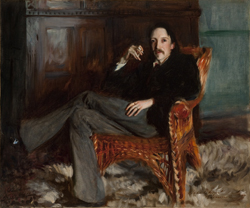
NPG_920_1362_RobertLouisSte• A major exhibition of the works of John Singer Sargent has opened at the National Portrait Gallery off Trafalgar Square this week. Sargent: Portraits of Artists and Friends – which has been organised in conjunction with the Metropolitan Museum of Art in New York – brings together a collection of the artist’s intimate and informal portraits of his friends including Robert Louis Stevenson, Claude Monet and Auguste Rodin. Sargent (1856-1925), born the son of an American doctor in Florence, studied in Italy and France before scandal led him to move to England where he established himself as the country’s leading portrait painter. He made several visits to the US during his career, painting portraits as well as decorative paintings for public buildings including the Boston Public Library and Museum of Fine Arts. The exhibition runs until 25th May. Admission charge applies. For more, see www.npg.org.uk. PICTURE: Courtesy of the Taft Museum of Art, Cincinnati, Ohio

• It’s Chinese New Year and the celebrations kick off in London’s Chinatown in Soho this Sunday. The day starts with a parade at 10am which runs from Duncannon Street to Shaftesbury Avenue featuring floats and Chinese lion and dragon teams. It will be followed by a free programme of events in Trafalgar Square which, starting at noon, include music, dance, acrobatics and martial arts. Other events are taking place at a range of locations across the West End. For more information, check out www.london.gov.uk/get-involved/events/chinese-new-year-2015.

• Ever wondered how your appetite is shaped by food? A new free exhibition at the Science Museum in South Kensington, Cravings: Can Your Food Control You? explores how the brain, ‘gut brain’ and bacteria influence our diets. Along with personal stories and objects as well as the use of science and tech to present the display, those who attend the exhibition will also be able to take part in a ground-breaking neurogastronomy experiment to explore how our senses influence appetite (the experiment is also available online – follow the link below). There’s also a digital quiz where you can consider the ethical challenges that cravings, appetite control and food regulations pose. Runs until January next year. For more, see www.sciencemuseum.org.uk/cravings.

• The history of the Foundling Hospital’s Boy’s Band is the subject of a display at the Foundling Museum in Bloomsbury. Foundlings at War: Military Bands is part of a series of exhibits supported by the Heritage Lottery Fund exploring the hospital’s links with the military. The Boy’s Band was established in 1847 and boys who joined increasingly went on to serve in the military. Runs until 10th May. For more, see www.foundlingmuseum.org.uk.

Send all items for inclusion to exploringlondon@gmail.com.

This Week in London – New Year’s Eve sold out; New Year’s Day Parade; and, National Gallery buys Corot work…

• All 100,000 tickets for London’s New Year’s Eve fireworks are now booked, the Greater London Authority announced this week. They’ve advised those without a ticket to avoid the area around Embankment and South Bank on the night, saying that the best alternative view of the fireworks will be live on BBC One. Meanwhile, don’t forget the New Year’s Day Parade which will kick off in Piccadilly (near junction with Berkeley Street) from noon on New Year’s Day. The parade – which takes in Lower Regent Street, Pall Mall, Trafalgar Square and Whitehall before finishing at 3.30pm at Parliament Square in Westminster – will feature thousands of performers. Grandstand tickets are available. For more, see www.londonparade.co.uk.

• The National Gallery has acquired French artist Jean-Baptiste-Camille Corot’s work, The Four Times of Day, it was announced this month. The 1858 work, acquired with the aid of the Art Fund, has something of a star-studded pedigree – it was bought by Frederic, Lord Leighton, in 1865, and the four large panels were displayed at his London home until his death. In the same family collection for more than a century after that, they have been on loan to the National Gallery since 1997. They complement 21 other paintings by Corot in the gallery’s collection. The Four Times of Day can be seen in Room 41. Entry is free. For more, see www.nationalgallery.org.uk.

Exploring London is taking a break over Christmas, so this will be the last This Week in London update until mid-January. But we’ll still be posting some of our other usual updates including our most popular posts for 2014 round-up!

LondonLife – Sir David Wilkie’s ‘A Young Woman Kneeling at a Prayer Desk’ rediscovered…

A-Young-WomanThought to be lost for more than 140 years, a painting by Scottish artist Sir David Wilkie went on display at the National Gallery off Trafalgar Square last month. A Young Woman Kneeling at a Prayer Desk was discovered in the US having previously been last heard of in 1872 when it was sold by a relative of the 1st Earl of Mulgrave, Henry Phipps, whose daughter, Lady Augusta Phipps, was thought to be the subject of the painting which dates from 1813 (she died that year at the age of just 12). While the work was known to exist thanks to it having featured in an oil sketch the artist had sent to his brother – an army officer in India, it was only recently rediscovered when spotted by London-based art dealer Ben Elwes in a catalogue advertising its sale in New York. The National Gallery says it was only able to purchase the painting thanks to late Birmingham art teacher Marcia Lay, who left a bequest to the gallery. The painting is displayed alongside masterpieces by the likes of Turner, Constable, Gainsborough and Reynolds in Room 34. For more, see www.nationalgallery.org.uk. PICTURE: David Wilkie, A Young Woman Kneeling at a Prayer Desk, 1813, © National Gallery, London.

This Week in London – Christmas celebrations; photographic history on show; and, architects as artists…

• Events celebrating Christmas continue to make our post this week. Sunday will see the annual ‘Blessing of the Crib’ – featuring a torch-lit procession on the steps of St Martin-in-the-Fields before the crib is blessed in Trafalgar Square – while on Monday carol singers will kick off their annual program of carolling in the square. More than 50 carol groups are taking part in the singing this year, which takes place from 4pm to 8pm on weeknights and 2pm to 6pm on weekends and runs until 23rd December.  For more on the blessing, see www.stmartin-in-the-fields.org and for more on the carolling in Trafalgar Square and other Christmas events in the city, see www.london.gov.uk/events.

• A showcase of works from the Royal Photographic Society Collection has gone on show at the Science Museum’s Media Space. The images include some of the earliest known photographic pictures – dating from the 1820s, they are the work of pioneers like Roger Fenton, William Henry Fox Talbot and Julia Margaret Cameron – alongside contemporary works by the likes of influential modern figures such as Don McMullin, Terry O’Neill and Martin Parr. The exhibition also features artefacts from the history of the craft, such as Niepce’s heliographs, Fox Talbot’s experimental cameras and The Pencil of Nature – the first commercially published book to be illustrated by photographs. Masters of Light: Treasures from the Royal Photographic Society Collection, presented in collaboration with the Reiss-Engelhorn Museen in Mannheim, Germany, runs at the South Kensington institution until 1st March. Admission charge applies. For more, see www.sciencemuseum.org.uk/mastersoflight.

• On Now: Architects as Artists. This exhibition, marking the 10th anniversary of the partnership between the V&A and RIBA, examines the relationship between architecture and art and features about 50 works from the collections of the V&A and RIBA. They include everything from a drawing by Raphael of the Pantheon in Rome to a lithograph by Cyril Power depicting staircase in Russell Square tube station and a volume of architectural fantasies by the Russian architect Iakov Chernikhov. Held in the V&A + RIBA Architecture Gallery Room at the V&A in South Kensington, it runs until 15th March. Admission is free. For more, see www.vam.ac.uk/architecture.

Send items to inclusion to exploringlondon@gmail.com.
This Week in London – Paddington comes to town; it’s Christmas decorations time; Guards Memorial upgraded; and Grayson Perry…

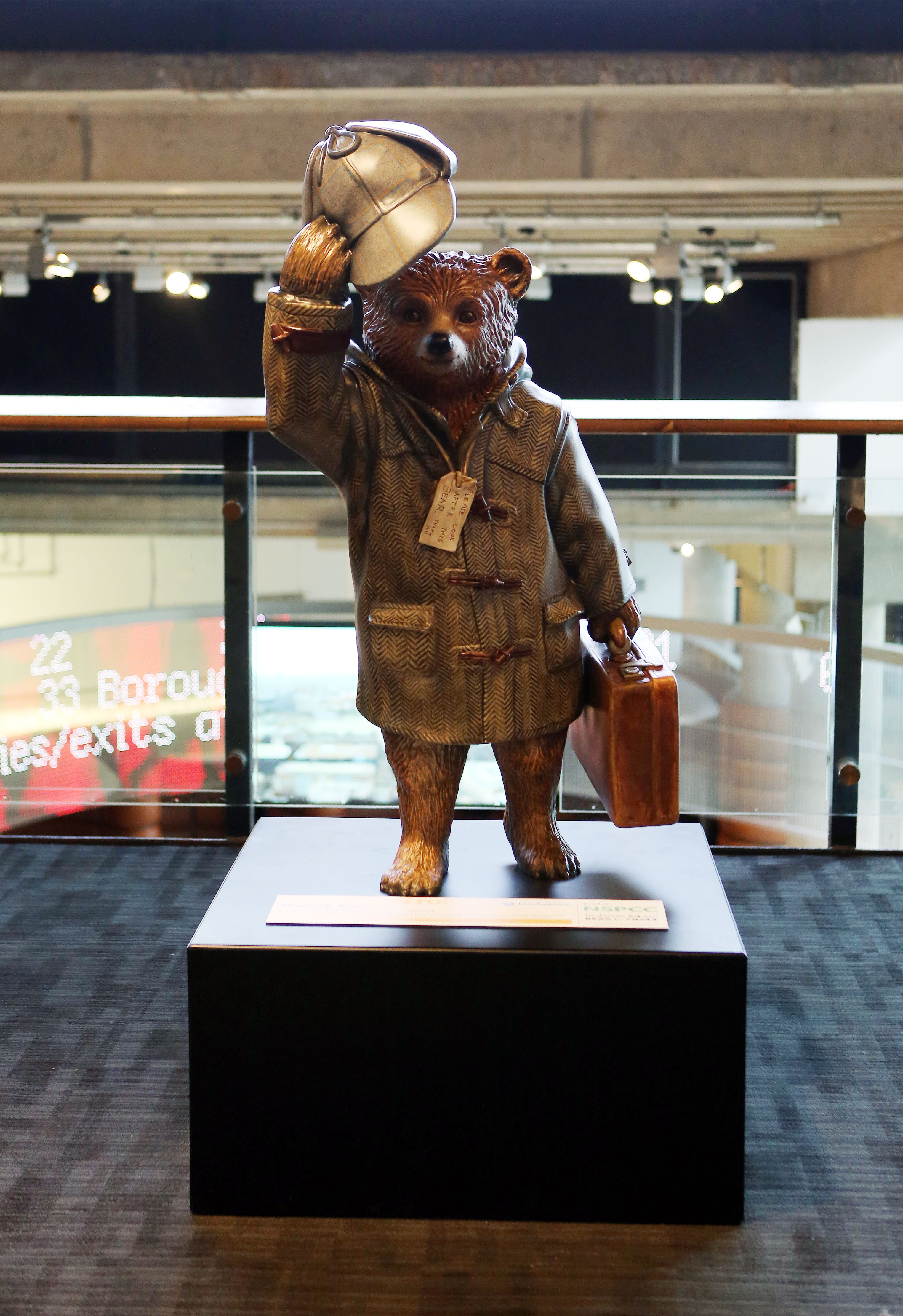
The Paddington Trail, London, 2014• Paddington comes to the Museum of London in a new exhibition opening tomorrow to coincide with the bear’s big-screen debut. A Bear called Paddington charts the story of the character from his genesis on Christmas Eve, 1956, when creator Michael Bond bought his wife a small toy bear and named him after the railway station near where they loved across the next almost 60 years to today. Objects on display include: a first edition A Bear Called Paddington – dating from 1958, it belonged to Bond’s daughter Karen Jankel; an original illustration of Paddington by Paddy Fortnum; the typewriter Bond used to write Paddington at Work and Paddington Goes To Town; the original Paddington puppet from the 1970s TV animations; and, props from the upcoming film Paddington (released on 28th November). The free exhibition runs until 4th January. See www.museumoflondon.org.uk for more. The museum, meanwhile, is also playing host to a new life-sized statue of the famous bear designed by Benedict Cumberbatch (and known as Sherlock Bear for obvious reasons given Cumberbatch’s penchant for playing a certain detective – pictured). It forms just one stop on the Paddington Trail which, as the work of VisitLondon.com, NSPCC and film-makers StudioCanal, links 50 sites – each with their own statue of the bear – across the capital. Designed by everyone from Mayor Boris Johnson to football star David Beckham and actors Sandra Bullock and Hugh Bonneville, the bears can be found around town until 30th December. For more on the trail, including a map of locations, check out www.visitlondon.com/paddington/.

• While the Oxford Street lights are already switched on (as are those in Covent Garden), Carnaby Street’s Christmas decorations are to be officially launched at 6.30pm tonight. The launch coincides with a shopping party (including 20 per cent discount), live music, free drinks, good bags and “trend masterclasses” with Grazia Magazine’s editor-at-large Angela Buttolph. Oh, and the decorations consist of eight red and white oversized sets of headphones and sunglasses. Meanwhile the Regent Street lights get turned on this Sunday with an event featuring a star-studded cast including Take That’s Mark Owen, Gary Barlow and Howard Donald (who are switching on the lights but not playing). While there’s entertainment along the street from noon, the music kicks off at 4pm and the lights, designed around the theme of the film Night at the Museum: Secret of the Tomb, get switched-on at 5pm and will be followed by a fireworks display. For more, see www.regentstreetonline.com.

• The Guards Memorial in Horseguards Parade, Westminister, has been upgrade to a Grade 1-listed structure on the advice of English Heritage. Unveiled in 1926 by the Duke of Connaught, Senior Colonel of the Guards, and General George Higginson, a Crimean veteran, the memorial commemorates the 14,000 Guardsmen who died in the First World War. Designed by architect Harold Chalton Bradshaw and sculpted by Gilbert Ledward, it features five bronze soldiers, each representing a typical soldier from each of the divisions – Grenadiers, Coldstreams, Scots, Welsh and Irish Guards.

• On Now: Grayson Perry: Who Are You? This exhibition at the National Portrait Gallery near Trafalgar Square features a series of new works created by Perry during the making of his Channel 4 TV series of the same name. Interspersed with 19th and 20th century collections of the gallery, the portraits – which include a tapestry, sculptures and pots – are of families, groups and individuals and include everyone from a young Muslim convert and Celebrity Big Brother contestant Rylan Clark. Runs until 15th March. Entry is free. For more, see www.npg.org.uk.

Send all items for inclusion to exploringlondon@gmail.com.
This Week in London – Hogarth cartoons; Daniel O’Connell blue plaque; and, Peder Balke paintings on show…

• The works of famed 18th century chronicler of London, William Hogarth, are on show at the Cartoon Museum in Bloomsbury. Marking the 25oth anniversary of his death on the night of 25th/26th October, 1764, the display Hogarth’s London features more than 50 of the artist’s best known satirical prints including A Harlot’s Progress, A Rake’s Progress, The Four Times of Day, Industry and Idleness and Gin Lane and Beer Street. A series of events – including an evening of Baroque dance & music, gin, beer and cartooning on 28th November – accompanies this exhibition which runs until 18th January and is supported by The William Hogarth Trust. Admission charge applies. For more, see www.cartoonmuseum.org/exhibitions/current-exhibitions/hogarth-s-london.

• Nineteenth century Irish political leader Daniel O’Connell has been honoured with an English Heritage blue plaque as his former London home. Known as ‘The Liberator’, O’Connell was an abolitionist who successfully campaigned for civil and Catholic rights – including the right for Catholics to sit in the British Parliament. The first popularly elected MP since the Reformation, he lived in the property at 14 Albermarle Street in Mayfair with his family for several months in 1833 – a year in which a number of his supporters were elected to the House of Commons and in which the act to abolish slavery was given royal assent. For more, see www.english-heritage.org.uk/discover/blue-plaques/.

• On Now: Peder Balke. The first ever UK exhibition focused on the paintings of this 19th century Norwegian artist is underway at the National Gallery on Trafalgar Square. Held in conjunction with the Northern Norway Art Museum, the exhibition features more than 50 paintings, the majority of which have never been seen in the UK before. The display includes works from across Balke’s career, including The Tempest (c 1862), the only painting by a Norwegian artist in the gallery’s collection. This free exhibition runs in the Sunley Room until April. For more, see www.nationalgallery.org.uk.

Send all items for inclusion to exploringlondon@gmail.com.
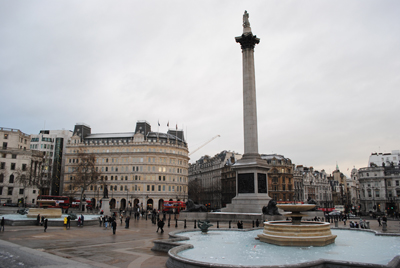
8 structures from the London that never was – 1. A pyramid in Trafalgar Square…

Trafalgar-Square

It’s Trafalgar Square but not as we know it. In a new Wednesday series we’re looking at eight proposed structures in London that were never realised and first up, is a proposal which would have seen a 300 foot high pyramid on what has become one of the city’s most iconic sites.

The stepped pyramid was the brainchild of an early 19th century Tory MP, Colonel (later General) Sir Frederick William Trench, and was designed in 1815 as a grand military and naval memorial to the Napoleonic Wars with each of the structure’s 22 steps apparently dedicated to a different year of the war.

Apparently drawn up by architects Philip and Matthew Cotes Wyatt – of the famous Wyatt architectural dynasty, the pyramid – which would have been taller than St Paul’s Cathedral and pretty much covered the entire space now occupied by the square – was, according to Nick Rennison’s The Book of Lists, costed at £1 million, a figure Sir Frederick – a veteran of the wars – apparently thought was not unreasonable.

But it didn’t prove a popular design with the public and got no further than the drawing board.

Among Sir Frederick’s other unrealised dreams was an elevated railroad running between London and Hungerford Bridges, an immense new royal palace which would have covered much of the West End, and an embankment – ‘Trench’s Terrace’ – along the north bank of the Thames. An embankment was, of course, later built, but not until after his death in 1859.

This Week in London – Sherlock Holmes at the MoL; Rembrandt’s latter years; and, William Morris’ legacy..

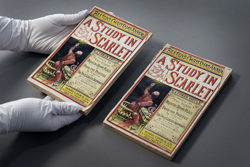
Sherlock-15• Sherlock Holmes and his relationship to London, the city in which he lived, is the focus of a new exhibition which opens at the Museum of London from Friday. Sherlock Holmes: The Man Who Never Lived and Will Never Die, the first major temporary exhibition on Sir Arthur Conan Doyle’s famous character to be held in London in more than 60 years, will look at his literary origins and his relationship with late 19th century London, through to his portrayal in popular culture including through stage and screen performances starring everyone from Peter Cushing to Jeremy Brett and Robert Downey, Jr. Highlights of the exhibition include Conan Doyle’s notebook containing the first ever lines of a Sherlock Holmes story and notes in which he experimented with names for his to leading characters (later Holmes and Dr John Watson), a rare oil on canvas painting of Conan Doyle painted by Sidney Paget in 1897 which has never before been on public display in London, the original manuscript of 1903’s The Adventure of the Empty House, the Belstaff coat and the Derek Rose camel dressing gown worn by Benedict Cumberbatch from the BBC series and original pages from Edgar Allan Poe’s 1841 hand-written manuscript of The Murders in the Rue Morgue (Poe was an important influence on Conan Doyle’s writings). The exhibition will also include paintings, drawings, illustrations and photographs of Victorian London along with a vast collection of objects from the period. Runs until 27th April. Admission charge applies. For more, see www.museumoflondon.org.uk/sherlock. PICTURE: Two editions of A Study in Scarlet in which Conan Doyle introduced Holmes and Watson, Beeton’s Christmas Annual 1887.

• The first ever in-depth exploration of Rembrandt’s final years of painting opened at the National Gallery off Trafalgar Square yesterday. Rembrandt: The Late Works features about 40 paintings, 20 drawings and 30 prints with key works including moving The ‘Jewish Bride’ (from Rijksmuseum in Amsterdam), An Old Woman Reading (The Buccleuch Collection in Scotland), Bathsheba with King David’s Letter (Musee du Louvre in Paris) and Lucretia (National Gallery of Art in Washington, DC) as well as the last minute loan of The Conspiracy of the Batavians under Claudius Civilis (from the Royal Academy of Fine Arts in Sweden). The exhibition provides new insights into some of the artist’s most famous works including The Sampling Officials of the Amsterdam Drapers (aka The Syndics), and brings together a number of self-portraits usually seen in different galleries. The exhibition runs in the Sainsbury Wing until 18th January. Admission charge applies. For more, see www.nationalgallery.org.uk.

• The first exhibition devoted to Pre-Raphelite William Morris and his influence on 20th century life opens at the National Portrait Gallery off Trafalgar Square today. Anarchy & Beauty: William Morris and His Legacy, 1860-1960 explores the ‘art for the people’ movement which Morris and the artists of the Pre-Raphelite Brotherhood initiated, reveals the work of Arts and Crafts practitioners inspired by Morris, and shows how Morris’ “radical ideals” influenced the Garden City movement and post-war designers like Terence Conran. Highlights include Morris’ handwritten Socialist Diary, his gold-tooled hardbound copy of Karl Marx’s Le Capital and Burne-Jones’ handpainted Prioresses Tale wardrobe. Admission charge applies. The exhibition runs until 11th January. For more, see www.npg.org.uk.

Send all items to inclusion to exploringlondon@gmail.com.

This Week in London – Dr Livingstone’s beetles; the Great River Race; Snowdon at the NPG; and Foundlings at War…

Beetle• From Dr Livingstone, I presume? A recently unearthed collection of beetles gathered together by Dr David Livingstone during his Zambezi expedition of 1858-64 will go on display in its original box at the Natural History Museum in South Kensington on Friday night. The specimens were found among the museum’s 10 million beetles by beetle curator Max Barclay who stumbled on an unusual box received from a private collector. The collector was later found out to be amateur entomologist Edward Young Western (1837-1924) who apparently bought the specimens from a member of Livingstone’s expedition. The 20 beetles found inside the box are believed to the only surviving specimens known to have been collected by Livingstone. The specimens will be on show as part of Science Uncovered, a free annual after hours event – part of European Researcher’s Night – which will take place at the museum between 3pm and 10.30pm Friday night. Other highlights of the night include the chance to extract DNA from strawberries and bananas, create your own earthquake and chat live with NASA about chasing asteroids. For more, see www.nhm.ac.uk/scienceuncovered. PICTURE: Giant Predatory Ground Beetle, Termophilum alternatum © The Trustees of the Natural History Museum, London.

• Totally Thames – the month long celebration of the great river – is going out with a bang this weekend with more than 300 crews expected to take part in the Great River Race. Running from Millwall to Ham in Surrey, the 21.6 mile long event attracts entries from across the globe. The first boats leave Millwall at 12.40pm. Head to the riverbank between Richmond and Ham at approximately 3.40pm to see the winners cross the line to a cannon broadside. For more on the Great River Race, see www.greatriverrace.co.uk. Other events on as part of Totally Thames this weekend include historic riverside walks – one focused on Brunel and another on London’s ports before the Great Fire of 1666 as well as exhibitions including Richmond’s River at Orleans Gallery House in Twickenham and your last chance to see Florentijn Hofman’s HippopoThames. For more on Totally Thames, see www.totallythames.org.

• Some of Snowdon’s most iconic images will be on show as part of a new exhibition opening at the National Portrait Gallery near Trafalgar Square on Friday. Snowdon: A Life in View will feature studio portraits spanning a period from the 1950s to the 1990s alongside images from Private View, Snowdon’s 1965 examination of the British art world, created in collaboration with art critic John Russell and then director of Whitechapel Gallery, Bryan Robertson. More than 40 black-and-white portraits are included in the display including some works acquired by the gallery last year. To be held in Room 37 and 37a of the ground floor Lerner Contemporary Galleries until 21st June. Admission is free. For more, see www.npg.org.uk.

• On Now: Foundlings at War: World War I. This display at the Foundling Museum in Bloomsbury reveals for the first time the stories of foundlings who fought as well as those of the mothers forced to leave their children at the hospital as a result of bereavement or abandonment of those serving abroad. A free digital ibook, The Foundlings at War: World War I, containing expanded background information was published to coincide with the opening of the display earlier this month and can be downloaded from iTunes. The exhibition is part of a major research project, Foundlings at War, supported by the Heritage Lottery Fund and is the first of several displays examining the institution’s historic links with the military. For more, see www.foundlingmuseum.co.uk.

Send all items for inclusion to exploringlondon@gmail.com.