10 historic London hotels…4. The Langham Hotel…

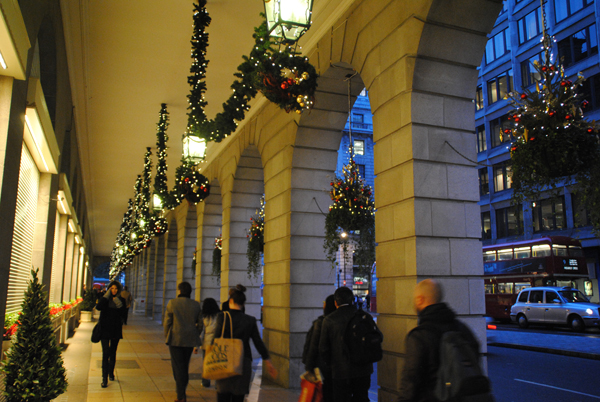
This sprawling London hotel in Portland Place – just past the top end of Regent Street – has spent much of its life as a hotel but was also once part of the BBC.

Built in 1863-65 to the plans of John Giles and James Murray, the £300,000 Langham Hotel – claimed as Europe’s first “grand hotel” – was deliberately designed to be on a scale and with a level of magnificence the city had not yet seen.

Spread over 10 floors – including those below ground – and designed in the style of an Italian palace, it boasted 600 rooms including numerous suites and featured mod-cons including the city’s first hydraulic lifts (electric lighting and air-conditioning would follow).

Features included its celebrated Palm Court, said to be the birthplace of the traditional afternoon tea.

It opened in a rather spectacular celebration on 10th June, 1865, with more than 2,000 guests including the Prince of Wales (later King Edward VII).

It soon gained a reputation among the rich and influential. Along with exiled members of European royal families including the Emperor Napoleon III of France and exiled Ethiopian Emperor Haile Selassie, those who stayed here included the likes of American writer Mark Twain, Italian conductor Arturo Toscanini, Czech composer Antonin Dvorak, explorer Henry Morton Stanley and romantic novelist Ouida.

Charles Dickens believed there was no better place for dinner parties and Sir Arthur Conan Doyle, another guest, used it as a setting in his Sherlock Holmes novels.

Its proximity to All Soul’s in Langham Place – the scene of many a fashionable wedding – saw it host many wedding receptions and the servants at Langham were led in prayers each morning by a clergyman from the church.

It was also popular with international musicians and artists thanks to the location of Queen’s Hall nearby.

The Langham declined in popularity during the two World Wars as the social centre of London moved west. Having served as a first aid and military post during World War II, it was badly damaged during the Blitz with much destruction caused when its massive water tank ruptured.

After the war, the BBC bought the hotel and used it for offices, studios and the BBC Club.

The BBC sold the building in the mid-Eighties and in 1991 after a £100 million renovation, it reopened as the Langham Hilton Hotel with Diana, Princess of Wales, a regular visitor.

It was sold again in 1995 and extended and refurbished. It again underwent a five year, £80 million, refurbishment in the mid 2000s, reopening in 2009.

The five star Langham – now the flagship of a group of hotels, celebrated its 150th anniversary in 2015 with the opening of the Regent Wing as well as The Sterling Suite, a luxurious six bedroom suite, and a new Langham Club Lounge.

Now a Grade II-listed building, it contains some 380 suites and rooms as well as The Grand Ballroom, the aforementioned Palm Court, restaurants including Roux at The Landau and Artesian, a British tavern, The Wigmore, and a spa.

It has appeared in numerous films, including the 1995 James Bond film, GoldenEye, in which it doubled for a hotel in St Petersburg. It also features a City of Westminster Green Plaque commemorating a meeting there between Oscar Wilde, Conan Doyle and Joseph Marshall Stoddart who commissioned the two writers to write stories for his magazine.

For more, see www.langhamhotels.com/en/the-langham/london.

PICTURE: Top – Sheep”R”Us (licensed under CC BY-NC-ND 2.0); Right – David Adams

Correction – this is actually number four in our special series, not three!

A Moment in London’s History – The Beatles play a final rooftop concert…

This month marks 50 years since The Beatles’ final public performance – a seemingly impromptu concert which took place on a Savile Row rooftop on a freezing day in 1969 (but was actually held to record the final scenes of a film they were making).

The unannounced concert on 30th January was only 42 minutes long and featured five songs – including Get Back, I’ve Got A Feeling, One After 909, Dig A Pony and Don’t Let Me Down, some of which were played more than once (as well as various other song snippets).

As well as band members John Lennon, Paul McCartney, George Harrison and Ringo Starr, Billy Preston had been brought in as a keyboardist.

The event, described in RollingStone as the band’s first “truly live” performance in more than two years, took place on the roof of the headquarters Apple Corps, then located at 3 Savile Road, which was the corporation the group had founded as an umbrella organisation for its various business ventures including Apple Records.

The performance, which famously ended with John Lennon saying “I’d like to say thank you on behalf of the group and ourselves, and I hope we passed the audition”, was filmed and recorded and 21 minutes of the footage featured in the 1970 documentary, Let It Be.

The Fab Four’s concert was eventually shut down by the Metropolitan Police – located just up the street at number 27 – over noise and traffic issues but no arrests were made (Ringo later wrote about his regret at not being dragged off by them).


London Pub Signs – The Blue Posts…

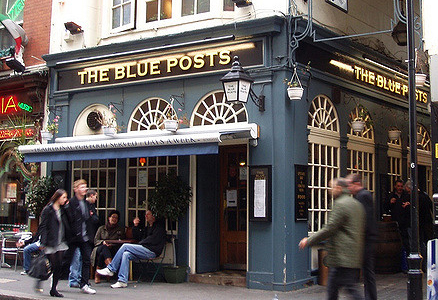
This Soho pub, located not far from Piccadilly Circus, takes its name from the blue posts which once stood out front.

A pub is believed to have stood on this site at 28 Rupert Street – now in Chinatown – since at least 1739 and is believed to have been updated substantially in about 1850. While the blue posts themselves are long gone, the building itself is now painted blue.

It has been suggested that the blue posts were simply placed out the front to mark the pub’s location before street numbering systems were introduced – as in, “it’s the place with the blue posts out the front”, but there are a number of other suggestions for the origins of the name.

One is that the blue posts were used as border markers for the royal hunting ground which once stood or Soho. Another, perhaps more likely than the aforementioned, that they marked locations where you could hire sedan chairs from in times gone by.

Whatever the reason for its name, this small, Grade II-listed pub, which is located on the corner with Rupert Close, underwent a complete transformation in early 2018 by the team behind the Israeli eatery, The Palomar.

As well as a small pub in ground floor of the building, it also boasts a cocktail lounge on the upper floor called the Mulwray (apparently named for the character, Evelyn Mulwray, played by Faye Dunaway in the movie Chinatown) and a small restaurant in the cellar called Evelyn’s Table (another Chinatown reference).

The Rupert Street establishment is one of several pubs with the same name in West End – others include one located nearby in Berwick Street, another in Newman Street, and yet another in Bennet Street in St James’s. And that’s just those in near proximity. So whatever the blue posts represented, it was clearly a relatively common feature in the area.

For more, see http://theblueposts.co.uk.

PICTURE: Ewan Munro (licensed under CC BY-SA 2.0)

This Week in London – Good grief, Charlie Brown!; Captain Cook and the Pacific; and the Kindertransport remembered…

Eighty original comic strips hand-drawn by Charles M Schulz, of Peanuts fame, are on show at Somerset House on the Strand along with many of his personal effects and interactive installations in an exhibition marking the 70th anniversary of the creation of iconic character Charlie Brown. Good Grief, Charlie Brown! Celebrating Snoopy and the Enduring Power of Peanuts looks at the impact of the comics on the cultural landscape, from 1950 to now, and, alongside works by Schultz, features responses to them by 20 figures from the worlds of art, fashion and music. The comic strips are showcased in their original state and size – complete with inky thumbprints and correction marks – and sit alongside vintage Peanuts products and publications as well as correspondence between Schultz and people such as Billie Jean King and Hillary Rodham (now Clinton). Along with interactive displays including a real-life re-imagination of Lucy’s Psychiatric Help booth, light boxes where people can learn to draw the Peanuts characters and a Snoopy Cinema, here are also three large-scale lights installations illuminating the entrance to the exhibition. This landmark exhibition can be seen until 3rd March. Admission charge applies. For more, see www.somerset.org.uk.

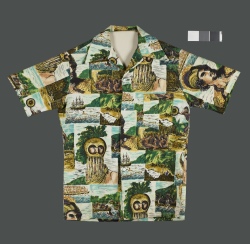
Newly acquired contemporary artworks by Pacific Island artists are at the centre of an exhibition re-examining the relationship between Captain James Cook and the peoples of the Pacific Ocean which is running at the British Museum. Reimagining Captain Cook: Pacific Perspectives also features historic artefacts including Cook’s personal possessions and the British Museum’s oldest example of a Hawaiian shirt (pictured). Among the 14 contemporary artworks are eight specially acquired for the exhibition and all are in some way a response to Cook’s voyages to places including Australia, New Zealand, New Caledonia, Hawaii, Vanuatu and Tahiti. They include Maori artist Steve Gibbs’ Name Changer – an attempt to restore awareness of the traditional Maori names for the region around Gisborne in New Zealand, and a work by the Aboriginal photographer and artist Michael Cook, Civilised #12, which reflects on the legacy of William Dampier, the first Briton to visit Australia (before Cook). The display can be seen in Room 91 until 4th August. Admission is free. For more, see www.britishmuseum.org. PICTURE: ‘Hawaiian’ style vintage cotton shirt, decorated with designs from drawings done on Captain Cook’s voyages, Hawaii, 1970-1980. © Image The Trustees of the British Museum.

An exhibition marking the 80th anniversary of the Kindertransport is running at the Jewish Museum London in Camden. Remembering the Kindertransport: 80 Years On tells the story of how in 1938-39, the British Government allowed 10,000 Jewish and other ‘non-Aryan’ children from Nazi-occupied Europe to come to Britain in a rescue operation which became known as the ‘Kindertransport’. It features the children, now in their 80s and 90s, telling their stories on film as well as personal objects and artefacts they brought with them from their homelands. Also on show is a photographic exhibition – Still in Our Hands: Kinder Life Portraits – featuring archival photographs and portraits of former Kindertransportees and another – My Home and Me – which, held in partnership with the British Red Cross, explores the journey of young refugees arriving in Britain today. The exhibition, which is being accompanied by a series of events, runs until 10th February. Admission is free. For more, see www.jewishmuseum.org.uk/kindertransport.

Send all items for inclusion to exploringlondon@gmail.com.

10 historic London hotels…2. The Savoy…


The first purpose-built luxury hotel built in Britain (and often referred to as London’s “most famous” hotel), The Savoy opened its doors on 6th August, 1889.

Located on the river side of the Strand on the site of what had been the medieval Savoy Palace (its most famous resident was John of Gaunt), the hotel was built by theatre impresario Richard D’Oyly Carte using profits made from his staging of Gilbert and Sullivan operas, some of which were performed in the neighbouring Savoy Theatre.
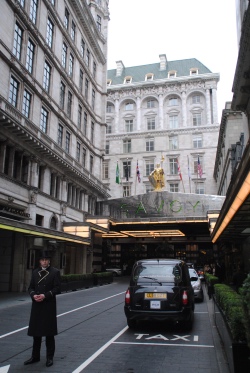
The now Grade II-listed building, which apparently had no overall architect in its initial design process, exuded opulence and its interiors included the latest in modern amenities such as electric lighting and lifts, en suite bathrooms in most of the guest rooms and constant cold and hot running water.

César Ritz, who would later rise to fame as the owner of The Ritz Hotel in Paris and then London (see our recent post), was hired as the manager and Auguste Escoffier as the chef. Together they oversaw the introduction of a new, unprecedented level of hotel service which would set the standard for future enterprises. This included keeping a comprehensive index of guest’s tastes and preferences and saw Escoffier revolutionise the restaurant industry in the country with the creation of various “stations” in the kitchen (his pots and pans are apparently still at the hotel).

The hotel was expanded in 1903-04 under the eye of architect Thomas Edward Collcutt (the designer of Wigmore Hall) with new east and west wings and the main entrance was moved from the river side of the building to Savoy Court running off The Strand. The Front Hall is a survivor of this period while the Lancaster Ballroom dates from 1910.

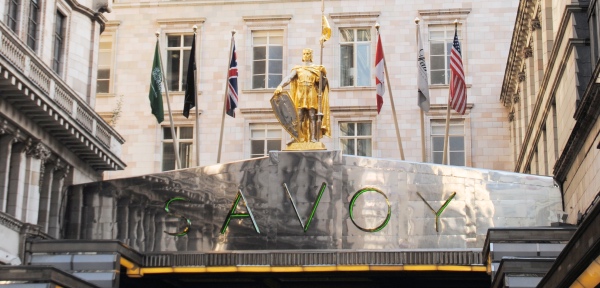
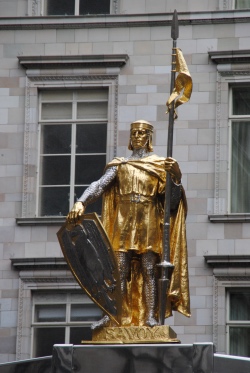
The hotel underwent further remodelling in the 1920s – it was during this period that the famous stainless steel sign over the Savoy Court entrance, designed by art deco architect Howard Robertson (later Sir Howard), was created (Savoy Court incidentally is the only street in the UK where traffic must keep to the right – more on that another time). The sign is topped with a gilt statue of Peter of Savoy, the uncle to King Henry III’s wife, Eleanor of Provence (pictured below). It was Peter who first built the Savoy Palace on the land where the hotel now stands. The sign, meanwhile, was created for the 1904 extension but placed here during the 1920s works.

Further modifications – including the introduction of air conditioning – followed in later decades. The hotel now boasts some 267 rooms and suites (the latter include the Royal Suite which spans the entire riverside of the fifth floor), many of which feature panoramic views of the River Thames.

Famous guests over the years have included royalty such as King Edward VII (when Prince of Wales) as well as more recent royals, French actress Sarah Bernhardt, Oscar Wilde, Charlie Chaplin, Sir Henry Irving and Sir Laurence Olivier. It’s also hosted a who’s who of Hollywood – everyone from Marilyn Monroe and Judy Garland to Frank Sinatra, Humphrey Bogart and John Wayne – and US President Harry S Truman.

Others associated with the hotel include opera singer Dame Nellie Melba – the dessert known as a Peach Melba was created here in her honour, and artist Claude Monet, who painted Waterloo Bridge from a position on one of the balconies.
Among other significant events to take place within its walls was a 1905 “Gondola Party” hosted by American millionaire George A Kessler which saw the central courtyard flooded as part of a recreation of Venice with guests dining on an enormous gondola and entertainment featuring singer Enrico Caruso.

In 1953, to mark the coronation of Queen Elizabeth II, the hotel hosted a ball attended by 1,400 of the rich and famous with special touches including 16 Yeoman Warders from the Tower of London who lined the entrance staircase.

Films shot here include Kipps (1921), based on a HG Wells novel (Wells was in attendance during the filming), The French Lieutenant’s Woman (1981) and Notting Hill (1999).

The Savoy remained in the Carte family until it was bought by an American private equity house in 1998 and eventually sold, in the mid-2000s, to become part of Fairmont Hotels and Resorts of Canada.

Closed in late 2007 for a complete renovation (the cost of which has been put at £220 million), it reopened in October, 2010. Among restaurants and bars now in the premises are the Thames Foyer restaurant – hosted in a glass atrium, it’s where afternoon tea is taken, the American Bar – described as the oldest cocktail bar in Britain, the Beaufort Bar, and the restaurant Kaspar’s.

The latter is named after the hotel’s oldest “employee” – Kaspar the Cat. Carved in 1927 by Basil Ionides, the cat was created to act as a 14th guest in the private dining rooms when 13 guests were present, a figure which was considered unlucky and which, tradition held, meant the first person to leave the table would one the first to die.

Its origins go back to 1898 when a wealthy South African by the name of Woolf Joel apparently scoffed at the idea of 13 being an unlucky number at the table and volunteered to leave it first. He was shot dead back in South Africa just a few week’s later. In the wake of his death, management at the hotel decreed that any table of 13 would be joined by a staff member.

But this was only a short-term solution – not only there was there the privacy of diners to consider, the fact staff would be a person down when this was required was a problem. So when Ionides redecorated the private dining room ‘Pinafore’ in the 1920s, he created the cat, complete with napkin, to fulfil the role of the 14th diner. And so he has ever since. Kaspar, the subject of a children’s book written by Michael Morpugo in 2008, can these days be found in Kaspar’s or, when not working, in the Front Hall.

For more, see www.thesavoylondon.com
10 historic London hotels…1. The Ritz Hotel…

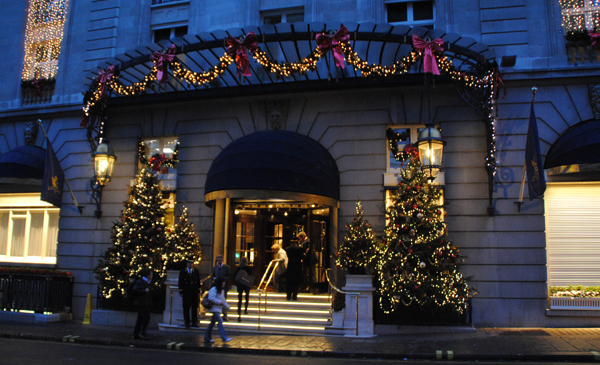
This Piccadilly institution was constructed from 1904 to 1906 and takes its name from Swiss hotelier César Ritz.

It was constructed on the site of a former coaching inn for the Blackpool Building and Vendor Company – it was the first steel-framed building in London – and designed by Mewés and Davis, the architects of the Paris Ritz. And even though Ritz himself was apparently actually retired at the time, it was built according to his specifications.

The exterior facade features Norwegian granite and Portland stone and boasts an arcade on Piccadilly which deliberately evokes the Rue de Rivoli in Paris. The interior, the work of Waring and Gillow, is designed in the style of Louis XVI and was designed to be opulent with all rooms featuring a working fireplace.

Public spaces include the Palm Court – famous for its traditional afternoon teas –  and a Michelin-starred restaurant with floor to ceiling windows overlooking Green Park. Other features include the Rivoli Bar, designed in 2001 by Tessa Kennedy to resemble the bar in the Orient Express, and the basement Ritz Club, a private casino.

The now Grade II*-listed hotel was officially opened by Ritz himself on 24th May, 1906, and was soon adopted by the rich and famous – the patronage of the Prince of Wales (future King Edward VIII) after the death of King Edward VII was one key reason for its success.

Actor Charlie Chaplin, who apparently had to have 40 police hold back the crowd to enter the hotel, is also a name famously associated with it as is that of Russian prima ballerina Anna Pavlova who performed here.

The Aga Khan and Paul Getty both had suites, and playwright Noel Coward and Queen Elizabeth, The Queen Mother, regularly dined here while Tallulah Bankhead famously sipped champagne from a slipper in the bar. The Marie Antoinette Suite was also famously the location of a conference between Winston Churchill, Dwight Eisenhower and Charles de Gaulle during World War II.

The hotel also featured in 1999 film Notting Hill, starring Hugh Grant and Julia Roberts, and in the more recent TV drama Downton Abbey.

The five star hotel underwent a major 10 year refurbishment after it was acquired by the Barclay brothers in 1995. The complex these days includes the adjoining 18th century property William Kent House (designed, of course, by William Kent).

In 2001, the hotel was awarded the first Royal Warrant for Banqueting and Catering Services. Other boasts these days include being the only UK hotel to have a certified tea sommelier (among teas served is the hotel’s own Ritz Royal Blend).

For more, see www.theritzlondon.com.

This Week in London – The Regent Street Motor Show; four plant exhibitions at Kew; and photographer Roman Vishniac re-examined…

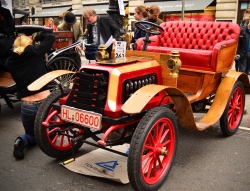
The largest free-to-view motor show in the UK comes to Regent Street on Saturday showcasing vehicles from the past 125 years. The Illinois Route 66 Regent Street Motor Show, the key event in the Royal Automobile Club’s London Motor Week, features more than 100 pioneering vehicles, some of which date from pre-1905, which parade in a Concours d’Elegance judged by Alan Titchmarsh. There will also be retro F1 and Le Mans racers, “celebrity” vehicles such as ‘Herbie’ and the time-travelling DeLorean from the Back to the Future film franchise while manufacturers such as Renault and Triumph will be displaying their latest designs. Iconic US street machines on show as part of the Visit Illinois display will include a Ford Thunderbird, Dodge Charger, Pontiac Trans-Am, 1957 Chevy Pick-up and a pair of Harley Davidson Sportsters. There’s also activities for children including a state-of-the-art display by Scalextric. Among the anniversaries being marked at the show are the 80th anniversary of the Volkswagen Beetle and Jaguar anniversaries including the 70th anniversary of the XK120 and Mk C Saloon and the 50th anniversary of the XJ. Held on Regent Street between Oxford Circus and Piccadilly Circus, the free show runs from 10.30am to 4pm. For more, head to http://regentstreetmotorshow.com. PICTURE: One of the vehicles on show in 2011 (Garry Knight; licensed under CC BY 2.0)

A series of vibrant Japanese woodblock prints of orchids, first published in 1946, are on show at the Shirley Sherwood Gallery of Botanical Art at Kew Gardens. One of four art exhibitions currently on display as part of the gallery’s 10th anniversary, Rankafu: Masterpieces of Japanese Woodblock Prints of Orchids is believed to be the first major exhibition of Rankafu woodblock colour prints outside Japan. Other exhibitions showing simultaneously at the gallery feature a series of 20 highly intricate graphite drawings of veteran oaks by Mark Frith, a series of works focusing on the smaller details of trees such as leaves, seeds and fruit, and a display of the work of Pandora Sellars whose complex compositions have been described as “botanical theatre”. The four exhibitions can be seen until 17th March. Admission charge applies. For more, see www.kew.org.

The first UK retrospective of Russian-born American photographer Roman Vishniac (1897-1990) has opened simultaneously at the Jewish Museum in Camden and The Photographers’ Gallery in Soho. Roman Vishniac Rediscovered spans his career from the early 1920s to the late 1970s and features his well-known images of Jewish life in Eastern Europe between the two World Wars. Other items on show include recently discovered vintage prints, rare and ‘lost’ film footage from his pre-war period, contact sheets, personal correspondence, original magazine publications, newly created exhibition prints and his high magnification photography known as ‘photomicroscopy’. Runs until 24th February. For more, see www.jewishmuseum.org.uk or www.thephotographersgallery.org.uk.

Send all items for inclusion to exploringlondon@gmail.com.

10 sites from Mary Shelley’s London…6. St Giles-in-the-Fields…

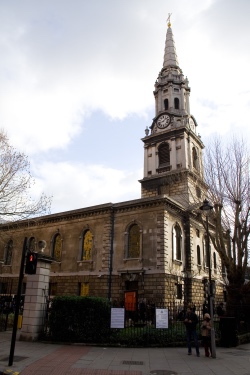
It was in this church in St Giles High Street in the West End that another significant event took place for Mary Shelley – her son William and daughter Clara Everina were baptised here on 9th March, 1818, just a couple of months after Frankenstein was first anonymously published.

The baptism took place just before Mary and her now husband, the poet Percy Bysshe Shelley, departed once again for the continent, apparently this time with no intention of returning.

In fact, the Shelleys attended three baptisms at the church that day – along with William (nicknamed “Willmouse”) and Clara, those undergoing baptism also included Allegra (at first called Alba), the daughter of Mary’s step-sister Claire Clairmont and the poet Lord Byron.

In fact, part of the group’s reason for going to Europe, along with Percy’s debts, ill-health and fears over the custody of their children, was to take Allegra to her father, Lord Byron.

The officiating churchman was said to be one Charles McCarthy.

The current font, which dates from 1810, in the church is presumably that in which they were baptised. It was installed well after the now Grade I-listed Palladian church, which is sometimes known as the “Poet’s Church”, was consecrated in 1733 (it is the third said to have been built on the site since the start of the 12th century).

PICTURE: Prioryman (licensed under CC BY-SA 4.0)

LondonLife – World War I remembered in St James’s Park…


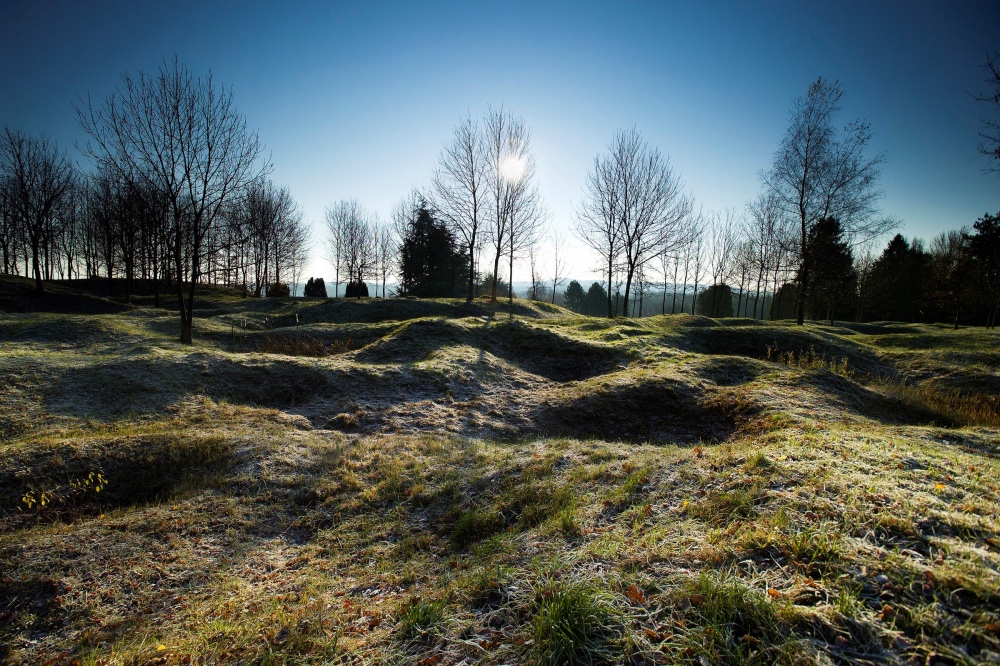
The last in a series of major exhibitions on World War I by celebrated photographer Mike St Maur Sheil, Fields of Battle, Lands of Peace and Reconciliation – 2018 is a free outdoor exhibition in St James’s Park reflecting on the final year of the war. The exhibition, like the others before it, features photographs of the battlefields of World War I as they appear today along with archival pictures and maps. Mike St Maur Sheil says the theme of his displays – which have reached an audience of more than 10 million and been exhibited at locations including Paris’ Jardin du Luxembourg, Dublin’s St Stephen’s Green and at the junction of Broadway and 5th Avenue in New York – “has always been that time and nature have healed the wounds of war and reveal that what were once places of horror and killing have now become landscapes of beauty and tranquillity.” The free exhibition can be seen until 19th November. For more on St James’s Park, see www.royalparks.org.uk/parks/st-jamess-parkPICTURES – Two of the images on show: Top, showing the effect of artillery bombardment upon the landscape at Verdun; Below, the landscape today at Beaumont Hamel on the Somme with the shell holes and trenches still clearly visible. (Mike St Maur Sheil / Mary Evans Picture Library).

LondonLife – Regent Street celebrates the Royal Wedding…

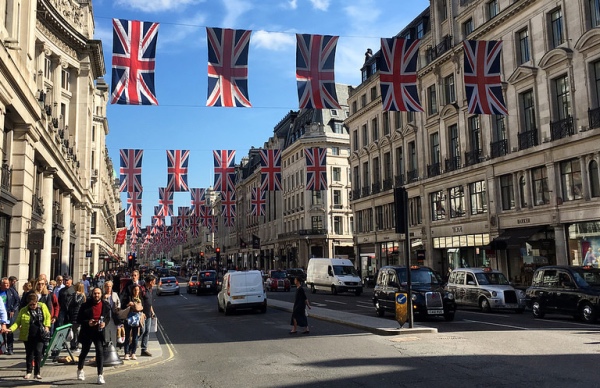
Union Jacks daub Regent Street in the West End in honour of the wedding in Windsor last weekend of Prince Harry and Meghan Markle, now the Duke and Duchess of Sussex. PICTURE: Pete (licensed under CC BY-NC-ND 2.0/image cropped)

Treasures of London – Gilbert and Sullivan memorials…

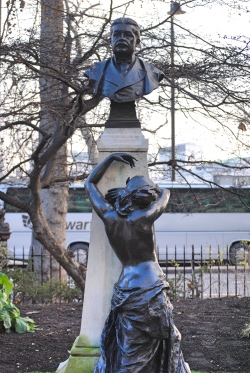
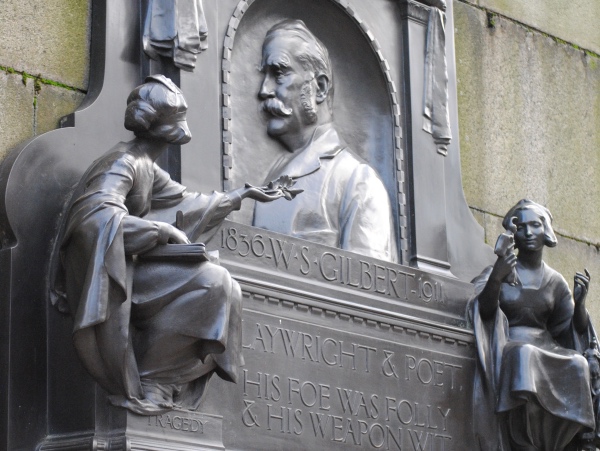
 Located on the west bank of the Thames between Waterloo and Hungerford Bridges are two separate memorials to the dramatist Sir WS Gilbert (1836-1911) and composer Sir Arthur Sullivan (1842-1900) – a partnership better known simply as Gilbert and Sullivan.

The first to be unveiled was a now Grade II-listed bronze bust of Sullivan in 1903. Located at the northern end of Victoria Embankment Gardens, it is the work of Sir William Goscombe John and, along with the bust which sits atop a pedestal, the monument features a scantily clad female muse leaning against the pillar in apparent grief.

Sheet music, a mandolin and a Pan mask all lie in a heap beside her – the discarded props of Sullivan’s profession – and on the side of the plinth are inscribed some lines from his work, The Yeoman of the Guard: “Is life a boon? If so, it must befall that Death, whene’er he call, must call too soon” (the same lines are inscribed on the sheet music).

The bronze memorial plaque to Gilbert, meanwhile, was unveiled in 1915, four years after his death. It’s attached to Charing Cross Pier on the downstream side of Hungerford Bridge and, the work of Sir George Frampton, shows Gilbert in profile relief flanked by figures of Comedy and Tragedy.

Gilbert is accompanied by an inscription which reads: “His foe was folly & his weapon wit”. A shield underneath bears a Latin inscription which translates as “I would rather die than change”.

The location of the memorials is not coincidental – the career of Gilbert and Sullivan was closely associated with the nearby Savoy Theatre, where many of their works were premiered thanks to its owner Richard D’Oyly Carte – he’s also commemorated in a memorial opposite the entrance to the Savoy nearby.


What’s in a name?…Aldwych…

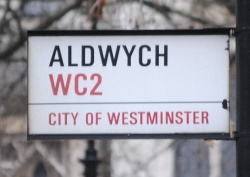
Now the name of a short, crescent-shaped thoroughfare which links the Strand with Kingsway in the West End (and the area surrounding it), the name actually refers back to the Saxon era.

The name Aldwych, which translates roughly as “old trading place” or “old settlement”, referred to a seventh century Anglo-Saxon settlement which was built outside the walls of the Roman city of Londinium. It was after Alfred the Great had the walls of the Roman city refortified in the late 9th century – moving the settlement back inside, that the former Anglo-Saxon settlement eventually became known by the moniker ‘old’.

The modern use of the word for the area dates from just after the dawn of the 20th century when the new street was created, doing away with a number of former streets including the notorious Wych Street. The name was subsequently used for a station on the tramway which ran under Kingsway (closed in the 1950s) and for an Underground station located nearby on the Strand (originally named Strand Station, it was soon changed to Aldwych and closed in 1994).

Notable buildings along Aldwych today include both Australia House and India House, both home to the High Commissions of their nations and both of which date from the early 20th century. It’s also home to Bush House, formerly the headquarters of the BBC World Service and now part of King’s College, London, as well as a number of theatres – including the Aldwych Theatre – and hotels.


This Week in London – Chinese New Year, and, David Milne at Dulwich

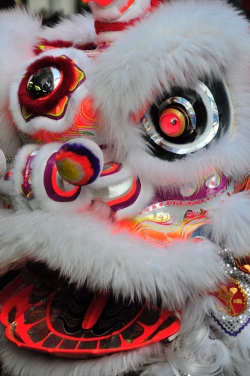
• London’s Chinatown will come alive this Sunday to mark the Year of the Dog. The biggest Chinese New Year celebrations outside of Asia feature a parade – which kicks off at 10am with a dragon and lion dance in Charing Cross Road before making its way through Chinatown where between noon and 6pm people get up close to lion dances,  take selfies with Chinese zodiac animals and enjoy traditional Chinese food. Festivities in Trafalgar Square, meanwhile, kick off at 11am with the Lions’ Eye-Dotting Ceremony at noon while there’s entertainment including live performances, family-friendly entertainments and martial arts displays at a series of West End locations including Charing Cross Road, Leicester Square, Shaftesbury Avenue between noon and 5pm. For more, check out the Visit London guide. Meanwhile the Museum of London Docklands is also celebrating the Year of the Dog with a range of free cultural events on Friday (the actual date of the New Year) including everything from ribbon dancing classes to taekwondo taster lessons, calligraphy and a spectacular dragon dance. For more, see www.museumoflondon.org.uk/museum-london-docklands. PICTURE: Paul (licensed under CC BY 2.0)

The works of one of Canada’s greatest modernist painters, David Milne (1882-1953), have gone on show at the Dulwich Picture Gallery. David Milne: Modern Painting follows Milne’s career chronologically, charting his development as an artist as he moves from New York to the war ravaged landscapes of Europe and back to the fields and open skies of North America. Highlights include Fifth Avenue, Easter Sunday (1912), the watercolour Bishop’s Pond (1916), Montreal Crater, Vimy Ridge (1919) – one of his most famous war paintings, White, the Waterfall (1921) and Summer Colours (1936). Runs until 7th May. Admission charges apply. For more, see www.dulwichpicturegallery.org.uk.

Send all inclusions to exploringlondon@gmail.com.

Where’s London’s oldest…umbrella shop?

Established back in the early nineteenth century, James Smith & Sons Umbrellas is a West End institution in London and is certainly among the oldest, if not the oldest, surviving business established to sell umbrellas.

The original shop was founded by James Smith in Foubert’s Place, off Regent Street, in 1830 with the umbrellas made in a rear workshop and then sold at the front. The shop then moved to Saville Place but when this building had to be knocked down to make way for road widening, it moved to Burlington Street near Piccadilly Circus.

Business boomed following the invention of Samuel Fox’s lightweight steel frame umbrellas in 1851 and in 1867, a second shop was opened at 53 New Oxford Street (in Hazelwood House, where it remains today). The Burlington Street branch, meanwhile, continued to be operational until it was destroyed by a bomb in World War II, leaving just the shop in New Oxford Street.

The New Oxford Street shop still sells a plethora of types of umbrellas as well as made-to-measure walking sticks. Some of the umbrellas – which include antique and more contemporary models – are reportedly assembled on site.

In the shop you’ll also find a portrait of Jonas Hanway, said to be the first man who owned an umbrella in London. Being an early adopter of this imported fashion trend from France, he apparently attracted the ridicule of London society as well as that of coach drivers who saw the threat to their trade he represented. But history was on Hanway’s side and while the umbrella has survived the past couple of centuries, the coach as a means of transportation has not.

PICTURE: Top –  Jorge Royan/licensed under CC BY-SA 3.0/ Right – Ewan Munro/licensed under CC BY-SA 2.0

LondonLife – Christmas takes to central London streets…

Reflections at Trafalgar Square. PICTURE: Raphaël Chekroun (licensed under CC BY-ND 2.0).


Carnaby Street ‘Carnival’. PICTURE: Kevin Oliver  (licensed under CC BY-NC-ND 2.0) (image cropped).


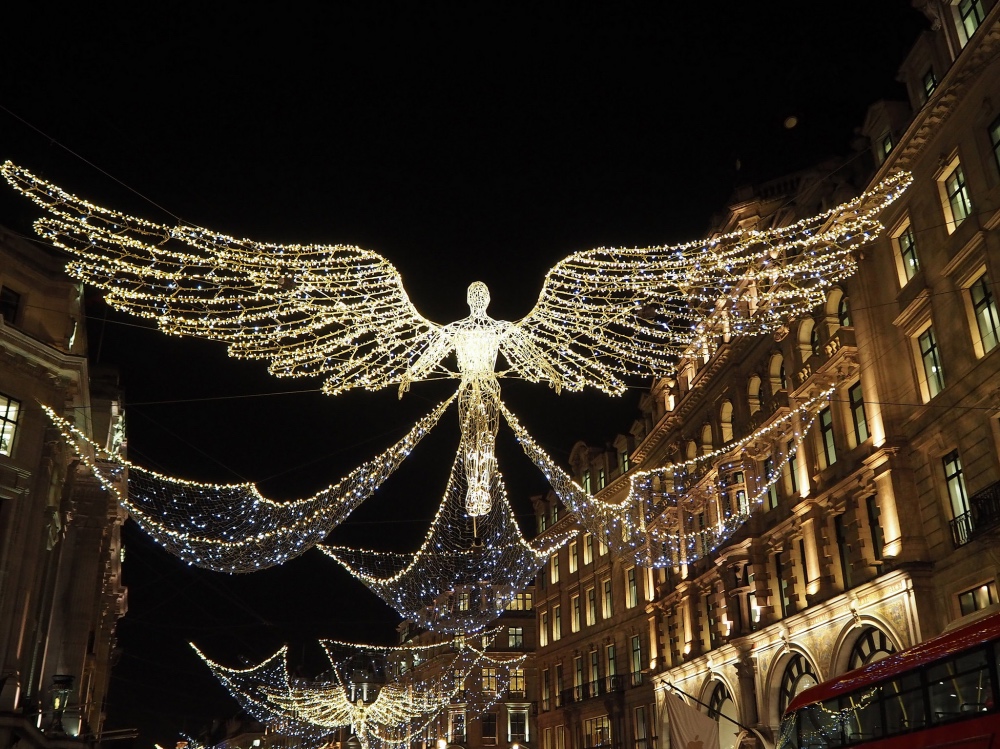
Flying high in the West End. PICTURE: Maureen Barlin (licensed under CC BY-NC-ND 2.0).


Thrills at Winter Wonderland in Hyde Park. PICTURE: Kevin Oliver (licensed under CC BY-NC-ND 2.0).


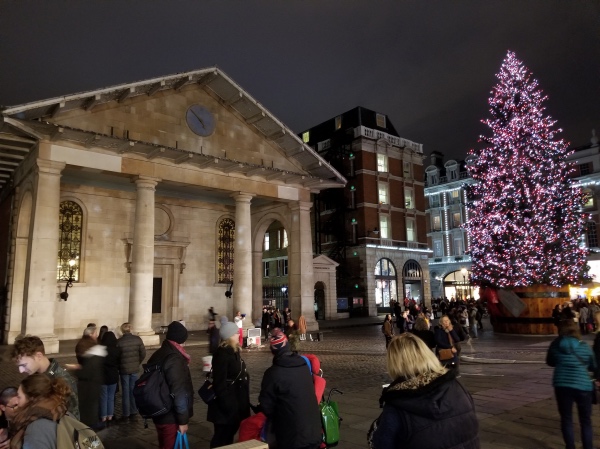
Outside St Paul’s at Covent Garden. PICTURE: Kevin Oliver (licensed under CC BY-NC-ND 2.0).

Lost London – Lowther Arcade…

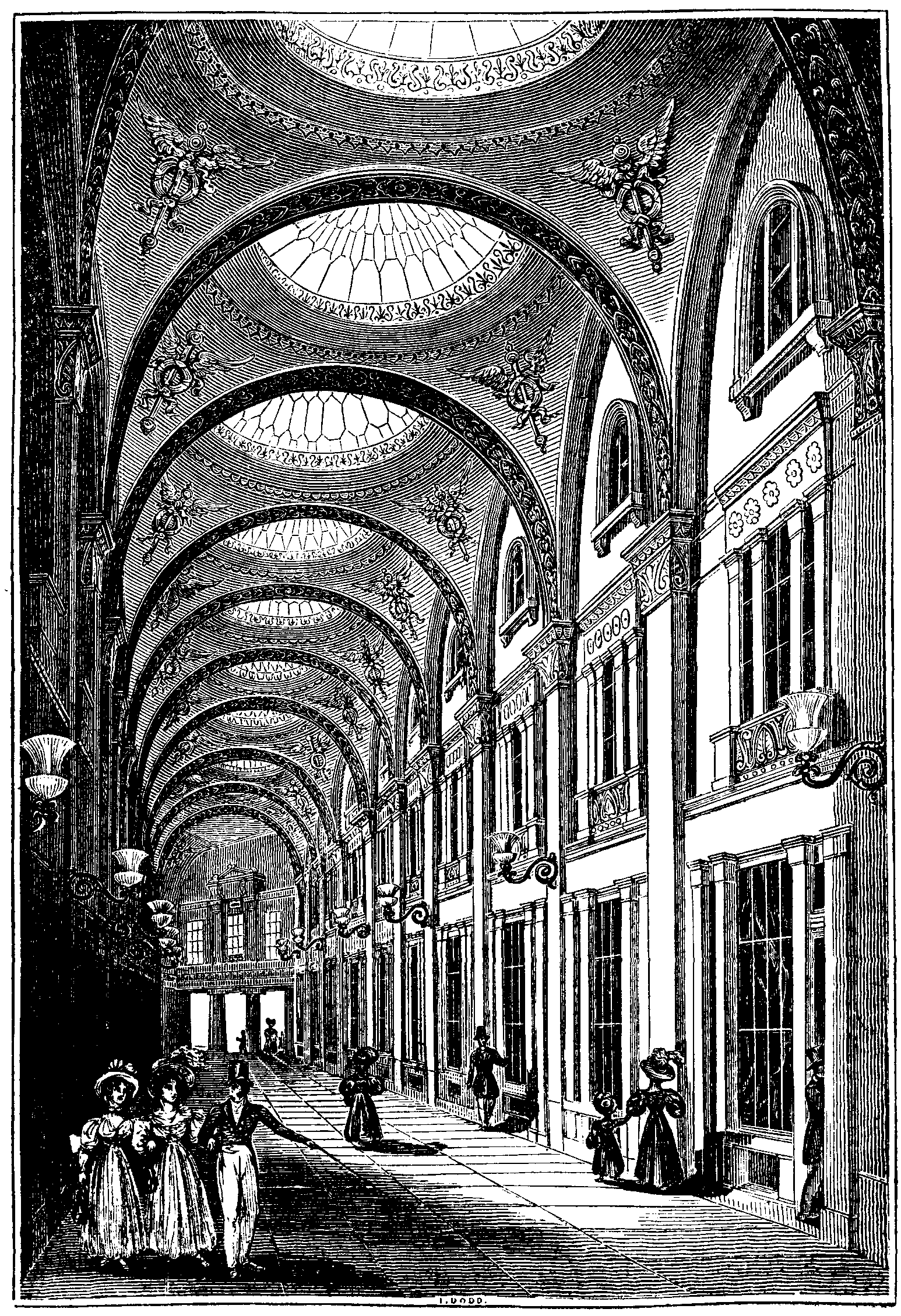
Designed by Witherdon Young, this 24 metre long arcade on the Strand was built in 1830 and was famously topped with glass domes. 

Named after Lord Lowther, Chief Commissioner of the Woods and Forests, when this section of the Strand was improved, the arcade’s 24 small shops initially sold luxury goods and various items but by the mid 19th century they were nearly all toyshops, making this a popular place for children (and particularly so, one might assume, at Christmas time!).

The northern part of the arcade was initially home to the Adelaide Gallery, described as a “National Gallery of Practical Science, Blending Instructions with Amusements” – this part of the building later became an amusement hall and then a puppet theatre.

The arcade was demolished in 1904 to make way for the construction of Coutts Bank.

PICTURE: Lowther Arcade as seen in an engraving published in a periodical in 1832.

Where’s London’s oldest…running (West End) Christmas street lights?

Christmas is looming so we thought we’d take a look at which street in London’s West End has had Christmas lights for the longest. And, no surprises, it’s Regent Street which first lit up in 1954.

Apparently prompted by a newspaper article decrying the drabness of London’s streets at Christmas, local traders got together and, via the Regent Street Association, financed the first display. Oxford Street followed in 1959.

An economic downturn meant Regent Street’s lights (and those of Oxford Street) were turned off for almost a decade but the display was resumed in 1979 and have been a part of London’s Christmases ever since.

These days the Regent Street lights are generally geared around a theme and the ceremony at which they are officially turned on has become quite an affair with celebrities performing the honours. This year singer Paloma Faith was the special guest at the ceremony with the aid of Clean Bandit.

The decorations, switched on in mid-November and featuring 300,000 LED lights, are based around “The Spirit of Christmas” theme for the second year in a row.

PICTURED: Last year’s light display/Ungry Young Man (licensed under CC BY 2.0).

This Week in London – New early 20th century galleries at the NPG; Modigliani at the Tate; and, Lord John gets a plaque…

Works including a recently acquired portrait of Prince Edward (later King Edward VIII) which was painted on the Western Front during World War I, a self-portrait in stained glass of artist and actor Pauline Boty (pictured), and three life-sized World War I portraits of military officers which have been reunited for the first time in decades, are among highlights of the National Portrait Gallery’s new early 20th century galleries. Four new rooms – split into the ‘Early 20th Century’, ‘The Great War’, ‘The Interwar Years’, and the ‘Second World War and Post-War Recovery’ – hold 121 portraits which have been hung chronologically and feature everyone from Virginia Woolf to Sir Winston Churchill, Dame Christabel Pankhurst to Sir Ernest Shackleton. Along with Frank O Salisbury’s oil sketch of Prince Edward, Boty’s stained glass portrait (the gallery’s first), and the three group portraits from World War I,  highlights of the gallery include a 1913 portrait of the Royal Family at Buckingham Palace by Sir John Lavery, a 1931 portrait of Aldous Huxley by Vanessa Bell and a portrait of Roald Dahl in RAF uniform by Matthew Smith. Admission to the galleries is free. For more, see www.npg.org.uk. PICTURE: Courtesy of National Portrait Gallery.

The “most comprehensive” exhibition of the work of French artist Amedeo Modigliani opens at the Tate Modern today. Modigliani features 100 works including portraits, some of his lesser known sculptures and 10 of his controversial nude paintings, the largest group of such ever shown in the UK. The exhibition re-evaluates Modigliani’s work and experimentation and includes well known and lesser known works with more than 40 of them never seen in the UK before. The works on show include Bust of a Young Woman (1908), Jean Cocteau (1916), and Boy with a Blue Jacket (1919). Runs until 2nd April. Admission charge applies. For more, see www.tate.org.uk.

Former iconic Carnaby Street shop Lord John has been honoured with a City of Wesminster Green Plaque. Lord John, which dressed everyone from The Rolling Stones to the Beatles and The Kinks, was opened by brothers Warren, David and Harold Gold in 1964. The plaque can be seen at 43 Carnaby Street.

Send all items for inclusion to exploringlondon@gmail.com.

This Week in London – The Lord Mayor’s Show; Cézanne’s portraits; venom and its uses; and, Russia’s visual revolution…

The Lord Mayor’s Show takes place this Saturday as the new Lord Mayor of London, Charles Bowman, takes office with the event once again culminating in a spectacular fireworks display over the Thames. The Lord Mayor will arrive in the City at 9am via a flotilla which includes the QRB Gloriana and other traditional Thames barges. Riding in the splendid State Coach, the Lord Mayor then joins in the world famous procession which sets off from Mansion House at 11am, pausing at the Royal Courts where he swears allegiance to the monarch before returning via Victoria Embankment at 1pm. The fireworks display will start at 5.15pm from a barge moored between Blackfriars and Waterloo Bridges. For more details, head to https://lordmayorsshow.london. Meanwhile, on Sunday, annual Remembrance Sunday services will be held around the country centred on the Cenotaph in Whitehall where, in a break with tradition, Prince Charles is expected to lay a wreath on behalf of the Queen who, along with Prince Philip, will be watching from the balcony of the Foreign and Commonwealth Office building.

More than 50 portraits by Paul Cézanne have gone on show in a landmark exhibition at the National Portrait Gallery. Cézanne Portraits features works previously unseen in the UK including three self-portraits – one of which is Self Portrait in a Bowler Hat (1885-86) –  and two portraits of his wife –  Madame Cézanne Sewing (1877) and Madame Cézanne (1886–7) – as well as Boy in a Red Waistcoat (1888-90) and Madame Cézanne in a Yellow Chair, both of which haven’t been seen in London since the 1930s. The exhibition, which includes paintings spanning the period from the 1860s until shortly before Cézanne’s death in 1906, explores the special pictorial and thematic characteristics of the artist’s portraiture work such as his use of complementary pairs and his creation of multiple versions of works featuring the same subject. The exhibition, which has already been on show at the Musée d’Orsay and will be at the National Gallery of Art in Washington DC from late March next year, runs until 11th February. Admission charge applies. For more, see www.npg.org.uk. PICTURE: Self-Portrait with Bowler Hat by Paul Cézanne, 1885-6, © Private Collection 

The use of venom as the ultimate natural weapon is the subject of a new exhibition opening at the Natural History Museum on Friday. Venom: Killer and Cure explores how the use and effects of venom, the different biological roles it plays and how humans have attempted to harness and neutralise its power, with the former including some remarkable medical innovations. Specimens on show include everything from snakes to spiders, wasps, scorpions and the duck-billed platypus as well as live example of a venomous creature. Highlights include a gaboon viper head – a snake species with the largest known venom fangs, an emperor scorpion which engages in unusual mating behaviour known as “sexual stingings”, a flower urchin which can inject venom that causes muscular paralysis in humans for up to six hours, a tarantula hawk wasp which has one of the most painful venomous stings, and a box jellyfish, larger specimens of which can cause death in humans in two to five minutes. Admission charge applies. For more, see www.nhm.ac.uk.

Coinciding with the centenary of the Russian Revolution comes a new exhibition at the Tate Modern which offers a visual history of Russia and the Soviet Union. Red Star Over Russia: A Revolution in Visual Culture 1905-55 is based around the collection of late graphic designer David King (1943-2016) and charts how seismic events such as the overthrow of the last Tsar, the revolutionary risings of 1917 and Stalin’s campaign of terror inspired a wave of art and graphic design across the country. The display includes more than 250 posters, paintings, photographs, books and other ephemera by artists such as El Lissitzky, Aleksandr Rodchenko and Nina Vatolina. Runs until 18th February. Admission charge applies. For more, see www.tate.org.uk.

Send all items for inclusion to exploringlondon@gmail.com.

Famous Londoners – Henry Jermyn…

Seventeenth century politician, diplomat and royal courtier, Henry Jermyn’s influence can still be seen in London’s West End today.

Jermyn was born as the fourth, but second surviving, son of courtier Sir Thomas Jermyn, of Rushbrook, Suffolk, and his wife Catherine, in early 1605. He was baptised soon after at St Margaret’s Lothbury in London in late March of that year.

Having already been among several diplomatic missions, he entered the political world at about the age of 20 in 1625, when he was elected member for Bodmin in Cornwall – the first of several seats he (and his brother Thomas) would hold around the country.

He joined the household of Queen Henrietta Maria, wife of King Charles I, in 1627, becoming her vice-chamberlain in 1628, and Master of the Horse to the Queen in 1639 (although he apparently spent a couple of years in exile in France during this period when he refused to obey the King and marry another courtier).

An ardent royalist, in 1641, he participated in a plot against Parliament and was forced to flee to France. In 1642, he joined the Queen in The Hague and returned to England with her in 1643 as the Civil War raged.

His loyalty was rewarded on 6th September that year when he was raised to the peerage as Baron Jermyn of St Edmundsbury (he was apparently wounded just 10 days later at the Battle of Aldbourne Chase). He was made the Queen’s Lord Chamberlain in early 1644 and in April that year accompanied the Queen to France where he helped her raise money for the Royalist cause.

He was made Governor of Jersey in 1645 (a post in which he succeeded his father), although it was a role he apparently had little interest in, at one point proposing selling the island to France.

In 1649, it was apparently Jermyn who had to give the Queen the news of King Charles I’s execution. Her closest advisor, it was subsequently falsely rumoured that he had secretly married the Queen – some even went so far to suggest he had fathered her children.

Jermyn became a member of King Charles II’s Privy Council in 1652 and, in 1659, just before the Restoration, he was created the Earl of St Albans. Created ambassador to France in 1661, he would go on to play a key role in helping King Charles II negotiate the secret 1670 Treaty of Dover with the French King Louis XIV.

In the early 1660s he was rewarded with land grants including land located to the north of St James’s Palace in London. He encouraged the development of the area, centred on St James’s Square and surrounding streets including Jermyn Street – such was his impact on the area that he became known as the “Father of the West End”.

He returned to France with Queen Henrietta Maria in 1665 and was present when the Queen died on 31st August, 1669, at Colombe in France. He subsequently returned to England and served as Lord Chamberlain to King Charles II between 1672-74 as well as, in 1672, being invested as a Knight of the Garter.

Jermyn, who never married, was generally said to have been a prolific gambler (and, some said, a glutton) and while he attempted to retire more than once to Rushbrook, the lure of London’s gaming tables proved too strong.

He died in his house in St James’s Square on 2nd January, 1684, and was buried at Rushbrook. While his earldom became extinct, his barony passed to his nephew Thomas Jermyn.

PICTURE: A City of Westminster Green Plaque located at the site of Henry Jermyn’s former home in St James’s Square.  (Simon Harriyott/licenced under CC BY 2.0