London Pub Signs – The Knights Templar…

The-Knights-Templar

Located in a former bank at the corner of Chancery Lane and Carey Street, this pub takes its name from the Crusader order known as the Knights Templar who once owned the land upon which the lane was constructed.

The Knights Templar was founded in Jerusalem in 1118 to protect Christian pilgrims and took its name from the Temple of Solomon upon the remains of which its headquarters in Jerusalem was built.

The order arrived in London later that century and Chancery Lane was created to connect the site of their original headquarters in Holborn with their subsequent home which lay between Fleet Street and the Thames – with the latter centred on a chapel (consecrated in 1185) which still stands and is now known as the Temple Church.

The pub, which opened in 1999, was formerly the home of the Union Bank of London Ltd, built in 1865 to the design of architect FW Porter.

Original features inside the Grade II-listed building – built in the ‘high Renaissance’-style – include cast iron columns and ornate detailing.

It is now part of the Wetherspoon’s chain. For more information, see www.jdwetherspoon.co.uk/home/pubs/the-knights-templar-chancery-lane.


LondonLife – #MuseumWeek…

Dr-Johnsons-HouseIt’s #MuseumWeek on Twitter and museums all over London are among the more than 2,000 institutions worldwide already tweeting away. Among those, large and small, taking part in London are the @hornimanmuseum, @ExploreWellcome, @JewishMuseumLDN, @BFHouse@HRP_Palaces, @NMMGreenwichand @drjohnsonshouse (pictured). Each day of the week they’ll be tweeting on a different theme until Sunday (today’s is #souvenirsMW). For the full stream, head to @MuseumWeek.

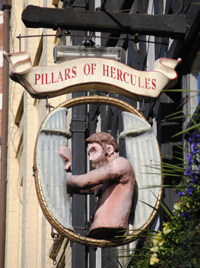
London Pub Signs – The Pillars of Hercules…

There’s been a pub on the site of this Soho institution since before the 1700s, although the current building at 7 Greek Street is believed to date from the start of the 20th century.

Pillars-of-HerculesThe pub’s name is an ancient one – it refers to two landmarks, the Rock of Gibraltar on the north side and Mount Hacho or Jebel Musa on the south side (there is apparently some dispute over which), that mark the entrance to the Mediterranean and are together known as the Pillars of Hercules. The name apparently comes from a legend that Hercules created the Strait of Gibraltar between them when pushed the two pillars apart apart and so separated Europe from Africa.

There’s been several pubs in London which have borne this name although this particular premises does get a mention in Dickens’ A Tale of Two Cities (a street which runs under the pub’s archway is named after one of its characters, Dr Manette). There was apparently a similarly named tavern on the site of what is now Apsley House at Hyde Park Corner (that one gets a mention in Henry Fielding’s The History of Tom Jones, a Foundling).

According to a sign on the pub, this Pillars of Hercules was also frequented by nineteenth century poet and cricket lower Francis Thompson, author of the poet The Hound of Heaven.

The current half-timbered pub – located just to the south of Soho Square – has apparently continued as a favoured locale for literary types. Martin Amis, Julian Barnes and Ian McEwan are among more recent writers who have visited (along with Clive James who referred to it in the title of his collections of literary criticism, At the Pillars of Hercules).

This Week in London – Rarely seen Goya at the Courtauld; Wolsey Angels saved; and, A Victorian Obsession…

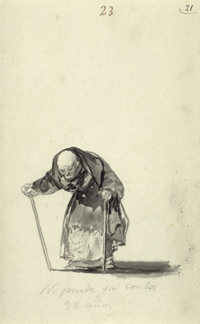
He-can-no-longer-at-theA “ground-breaking” exhibition of works of 18th and 19th century Spanish painter and printmaker Francisco Goya opens to the Courtauld Gallery at Somerset House today. Goya: The Witches and Old Women Album brings together the previously widely scattered pages of one of the artist’s most celebrated private albums in the first exhibition to ever recompile one of them. The album – which features themes of witchcraft, dreams and nightmares and has been reconstructed into its original sequence – is thought to have been made between 1819-23, a period during which Goya completed the murals known as the Black Paintings. Runs until 25th May. Admission charges applies. For more, see www.courtauld.ac.uk/goya. PICTURE: © The Courtauld Gallery (He can no longer at the age of 98, c. 1819-23, J. Paul Getty Museum).

The ‘Wolsey Angels’ have been “saved for the nation” after a campaign to acquire them by the V&A. The museum has reported that more than £87,000 was raised in a national public appeal – around £33,000 of which was raised via donations and through the purchase of badges at the South Kensington premises – which, along with grants including a £2 million National Heritage Memorial Fund grant and a £500,000 Art Fund grant, will be used to acquire the four bronze angels which were originally designed for the tomb of Cardinal Thomas Wolsey, chief advisor to King Henry VIII. The four bronze angels, which have been in display at the V&A, will now undergo conservation treatment before going back on display. For more on the history of the angels, see our earlier post here. For more information on the V&A, see www.vam.ac.uk.

Closing Soon – A Victorian Obsession: The Pérez Simón collection at Leighton House Museum. This exhibition at the former Holland Park of Lord Leighton presents more than 50 rarely exhibited paintings by leading Victorian artists including Albert Moore, Dante Gabriel Rossetti, Edward Burne-Jones, John Everett Millais, John William Waterhouse, Edward Pointer, John Strudwick and John William Godward as well as six pictures by Leighton himself and the highlight, Lawrence Alma-Tadema’s The Roses of Heliogabalus. Runs until 29th March. Admission charge applies. See www.rbkc.gov.uk/subsites/museums/leightonhousemuseum/avictorianobsession.aspx for more.

8 structures from the London that never was – 7. Selfridges’ Tower…

Selfridges’ flagship Oxford Street store has been an institution for more than a century.

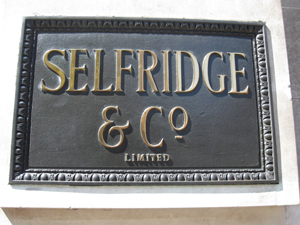
Selfridges_nameboardCredited as being the second biggest store in the UK, the now Grade II-listed neo-Classical premises was opened in 1909. It was designed by US architect Daniel Burnham and features five above ground stories, three basement levels and a roof terrace (a western extension, designed by Sir John Burnet, was added between 1924-29).

Less known is that there was at one stage a proposal to build a massive 450 foot high tower on top of the building. Selfridges’ founder, Harry Gordon Selfridge, backed the plan for the tower – drawn up in 1918 – and apparently spent years lobbying for permission to build it before, eventually successful in those efforts, he commissioned architect Philip Armstrong Tilden and Burnet to draw up plans (you can see some of the designs on the Royal Institute of British Architects’ website here and here and a picture of a plaster model here).

Selfridge apparently didn’t like any of the plans, however, and eventually dropped the idea, his attention instead coming to focus on building the “largest castle in the world” in Dorset (another plan which didn’t go ahead).

The tower was among a number of proposed London buildings that were never built which featured in a gingerbread display in Selfridges’ famous windows in 2013.

PICTURE: Anuradha Dullewe Wijeyeratne

This Week in London – New Year’s Eve sold out; New Year’s Day Parade; and, National Gallery buys Corot work…

All 100,000 tickets for London’s New Year’s Eve fireworks are now booked, the Greater London Authority announced this week. They’ve advised those without a ticket to avoid the area around Embankment and South Bank on the night, saying that the best alternative view of the fireworks will be live on BBC One. Meanwhile, don’t forget the New Year’s Day Parade which will kick off in Piccadilly (near junction with Berkeley Street) from noon on New Year’s Day. The parade – which takes in Lower Regent Street, Pall Mall, Trafalgar Square and Whitehall before finishing at 3.30pm at Parliament Square in Westminster – will feature thousands of performers. Grandstand tickets are available. For more, see www.londonparade.co.uk.

The National Gallery has acquired French artist Jean-Baptiste-Camille Corot’s work, The Four Times of Day, it was announced this month. The 1858 work, acquired with the aid of the Art Fund, has something of a star-studded pedigree – it was bought by Frederic, Lord Leighton, in 1865, and the four large panels were displayed at his London home until his death. In the same family collection for more than a century after that, they have been on loan to the National Gallery since 1997. They complement 21 other paintings by Corot in the gallery’s collection. The Four Times of Day can be seen in Room 41. Entry is free. For more, see www.nationalgallery.org.uk.

Exploring London is taking a break over Christmas, so this will be the last This Week in London update until mid-January. But we’ll still be posting some of our other usual updates including our most popular posts for 2014 round-up!

This Week in London – Paddington comes to town; it’s Christmas decorations time; Guards Memorial upgraded; and Grayson Perry…

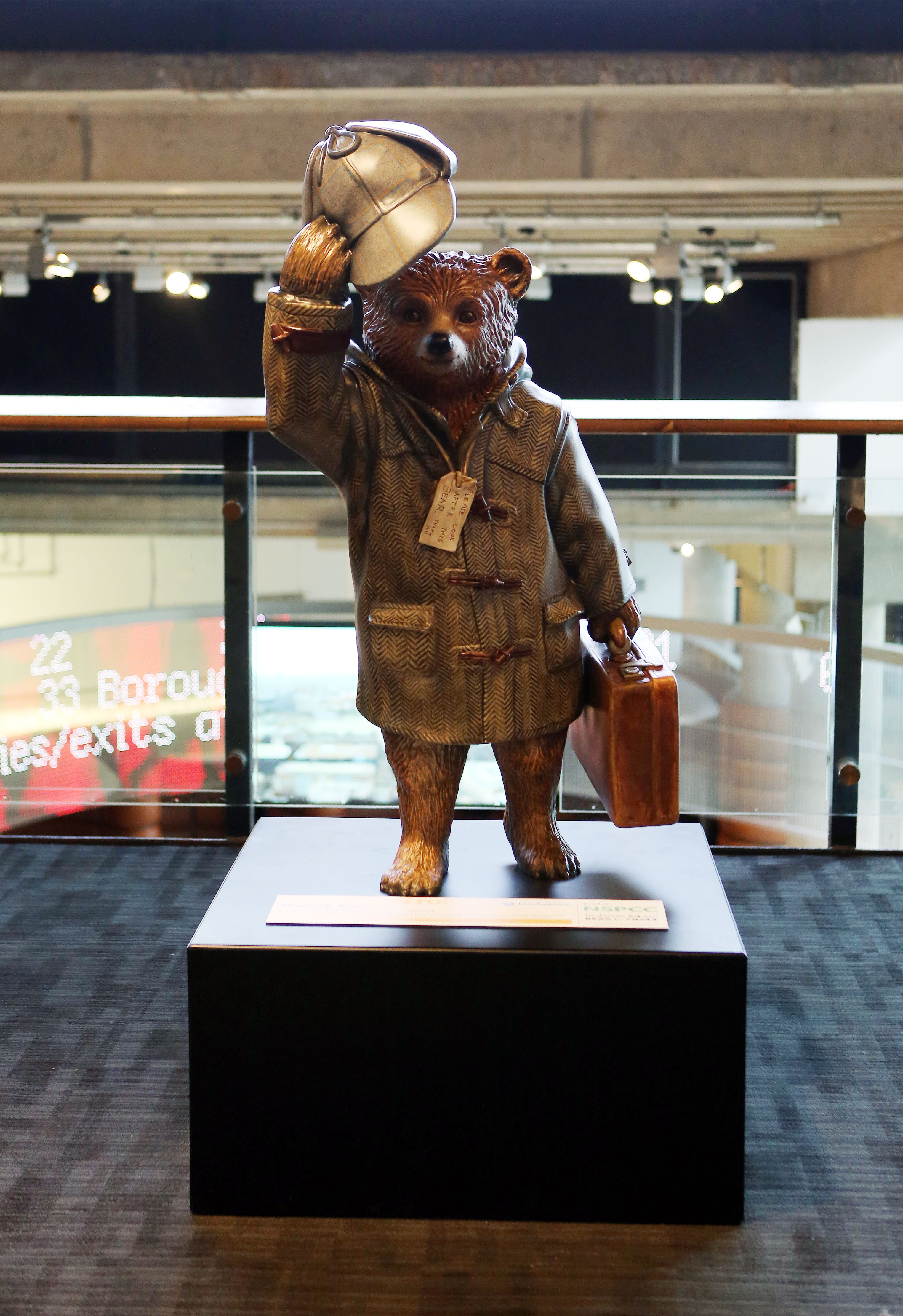
The Paddington Trail, London, 2014Paddington comes to the Museum of London in a new exhibition opening tomorrow to coincide with the bear’s big-screen debut. A Bear called Paddington charts the story of the character from his genesis on Christmas Eve, 1956, when creator Michael Bond bought his wife a small toy bear and named him after the railway station near where they loved across the next almost 60 years to today. Objects on display include: a first edition A Bear Called Paddington – dating from 1958, it belonged to Bond’s daughter Karen Jankel; an original illustration of Paddington by Paddy Fortnum; the typewriter Bond used to write Paddington at Work and Paddington Goes To Town; the original Paddington puppet from the 1970s TV animations; and, props from the upcoming film Paddington (released on 28th November). The free exhibition runs until 4th January. See www.museumoflondon.org.uk for more. The museum, meanwhile, is also playing host to a new life-sized statue of the famous bear designed by Benedict Cumberbatch (and known as Sherlock Bear for obvious reasons given Cumberbatch’s penchant for playing a certain detective – pictured). It forms just one stop on the Paddington Trail which, as the work of VisitLondon.com, NSPCC and film-makers StudioCanal, links 50 sites – each with their own statue of the bear – across the capital. Designed by everyone from Mayor Boris Johnson to football star David Beckham and actors Sandra Bullock and Hugh Bonneville, the bears can be found around town until 30th December. For more on the trail, including a map of locations, check out www.visitlondon.com/paddington/.

While the Oxford Street lights are already switched on (as are those in Covent Garden), Carnaby Street’s Christmas decorations are to be officially launched at 6.30pm tonight. The launch coincides with a shopping party (including 20 per cent discount), live music, free drinks, good bags and “trend masterclasses” with Grazia Magazine’s editor-at-large Angela Buttolph. Oh, and the decorations consist of eight red and white oversized sets of headphones and sunglasses. Meanwhile the Regent Street lights get turned on this Sunday with an event featuring a star-studded cast including Take That’s Mark Owen, Gary Barlow and Howard Donald (who are switching on the lights but not playing). While there’s entertainment along the street from noon, the music kicks off at 4pm and the lights, designed around the theme of the film Night at the Museum: Secret of the Tomb, get switched-on at 5pm and will be followed by a fireworks display. For more, see www.regentstreetonline.com.

The Guards Memorial in Horseguards Parade, Westminister, has been upgrade to a Grade 1-listed structure on the advice of English Heritage. Unveiled in 1926 by the Duke of Connaught, Senior Colonel of the Guards, and General George Higginson, a Crimean veteran, the memorial commemorates the 14,000 Guardsmen who died in the First World War. Designed by architect Harold Chalton Bradshaw and sculpted by Gilbert Ledward, it features five bronze soldiers, each representing a typical soldier from each of the divisions – Grenadiers, Coldstreams, Scots, Welsh and Irish Guards.

On Now: Grayson Perry: Who Are You? This exhibition at the National Portrait Gallery near Trafalgar Square features a series of new works created by Perry during the making of his Channel 4 TV series of the same name. Interspersed with 19th and 20th century collections of the gallery, the portraits – which include a tapestry, sculptures and pots – are of families, groups and individuals and include everyone from a young Muslim convert and Celebrity Big Brother contestant Rylan Clark. Runs until 15th March. Entry is free. For more, see www.npg.org.uk.

Send all items for inclusion to exploringlondon@gmail.com.
A Moment in London’s History – The London Beer Flood of 1814…

For some it sounds like a dream come true but what is known as the London Beer Flood of 17th October, 1814, was a very real tragedy, leaving eight dead in its wake.

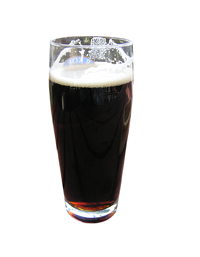
PorterThe flood of more than a million litres of fermenting porter – a dark beer (pictured) – occurred when corrosion caused one of the metal hoops around a three storey high vat to give way inside the Horse Shoe Brewery.

The force of the vat’s collapse – which took place late in the afternoon – caused further vats to rupture and the resulting wave of beer reportedly stood as tall as 15 foot high as it smashed into neighbouring buildings.

Standing at the corner of Tottenham Court Road and Oxford Street in central London, the brewery was located in the midst of the St Giles Rookery – a overcrowded slum filled with flimsy structures. This meant the damage was considerable and while many buildings were at least partially damaged, the worst hit were a pair of homes which were apparently completely destroyed.

Among the dead were four women and a three-year-old boy who were attending a wake for a child in a nearby basement and a four-year-old girl and her mother who were having tea in their house.

While an enterprising watchman apparently charged voyeurs to see the ruins of the vat, it is believed that reports mobs ran amok getting drunk on the spilt beer have no basis in fact.

The brewers, Henry Meux & Co, were subsequently taken to court but, with the incident ruled an “Act of God”, no-one could be held accountable (in fact, the brewers were refunded duties they had paid on the lost beer). The brewery itself was finally demolished in 1922 and the Dominion Theatre now stands on the part of the site.

The nearby Holborn Whippet pub now commemorates the event with a special brew.

PICTURE: Michal Zacharzewski/www.freeimages.com

10 sites from Shakespearean London – 9: Memorialising Shakespeare (part 2)…

Following on from last week’s post, we look at a couple more London memorials to The Bard,  playwright William Shakespeare…

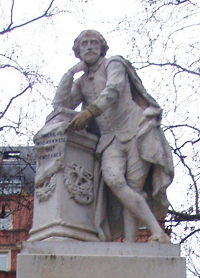
Shakespeare-Leicester-SquareLeicester Square: Returned to the West End square last year following its restoration (and the square’s redevelopment), this statue of Shakespeare – claimed to be the only outdoor one in London – was designed by architect John Knowles in 1874 when the square was constructed. Now Grade II-listed, it depicts Shakespeare leaning on a pedestal, pointing to a scroll which reads “There is no darkness but ignorance”, a quote from Twelfth Night. An inscription on the plinth upon which Shakespeare stands, refers to the laying out of the square by Albert Grant and doesn’t mention the playwright at all. The statue stands in the middle of a fountain, upgraded  as part of the recent overhaul of the site. PICTURE: Carcharoth/Wikipedia.

Primrose Hill: Shakespeare’s Tree on Primrose Hill was originally planted in April, 1864, to mark the 300th anniversary of his birth. An estimated 100,000 people marched to the site to watch the tree planting by poet Eliza Cooke and actor Samuel Phelps which was organised by the Workingmen’s Shakespeare Committee – apparently in response to the lacklustre efforts of a government-backed committee to mark the anniversary. The tree stood for 100 years before it died and was replaced with an oak sapling planted in 1964 actress Dame Edith Evans. A plaque which was attached to the tree detailing when it was planted has long since gone but there is talk of some sort of a permanent new memorial on the site.

There are other numerous places in London where Shakespeare – and his works – are remembered in London. One of our favourites is based in Love Lane and recalls the work of John Heminge and Henry Condell is getting Shakespeare’s works out to the world (for more on this, see our previous post here).

In our final post in this series next week, we take a look at some of the key London locations mentioned in Shakespeare’s plays.

Treasures of London – Swiss Court…

Cantonal-treeIn the hubbub of the West End, it’s easy to walk past the colourful monuments of Swiss Court without realising their significance is. 

Located between Piccadilly Circus and Leicester Square, the area was formerly home of the Swiss Centre, completed in the late 1960s as a showcase and trade centre for Switzerland. The centre was demolished in the late Noughties and replaced by the building now housing the W London Hotel and M&M’s World.

It was named Swiss Court on 15th April, 1991 – the 700th anniversary of the Swiss Confederation – by the then Lord Mayor of Westminster, Cr David Avery – and has two monuments commemorating the friendship between Switzerland and the UK.

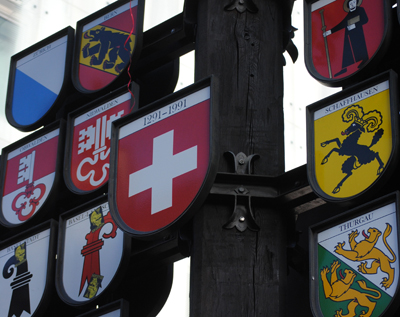
The first is a “cantonal tree” (pictured) which displays the coats of arms of 26 cantons of Switzerland and was presented as a gift from Switzerland to mark the Silver Jubilee of Queen Elizabeth II in May 1977, “as a token of the friendship that exists between our two countries.”

The second is a glockenspiel featuring 27 bells and 11 moving figures which was originally attached to the front of the Swiss Centre after it was gifted to the City of Westminster by Switzerland and Liechtenstein in 1985.

It was removed when the building was demolished but, following a restoration and update (it’s now wirelessly controlled from Derby), returned to Swiss Court as a freestanding, 10 metre monument in late 2011. It now stands just a couple of metres from the cantonal tree.

This Week in London – Celebrating the Year of the Bus; the British Library looks at WWI; medieval jousting and The Duke of Wellington; and, Blue Plaque nominations resumed…

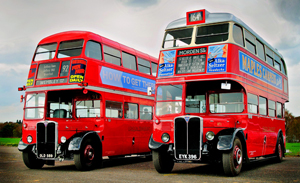
BusesAlmost 50 buses, from a horse-drawn model of the 1820s to the New Routemasters of today, will come to Regent Street on Sunday in celebration of the Year of the Bus. The ‘Regent Street Bus Cavalcade’ – which will stretch from Piccadilly Circus to Oxford Circus and will see the iconic West End street closed to traffic – will also feature a variety of free family events including Lego workshops (there will be a bus shelter and bus stop made entirely out of Lego outside Hamley’s toy shop), children’s theatre performances, a pop-up London Transport canteen and the chance to have a personal message recorded by the voice of London’s buses, Emma Hignett. There will also be an exhibition – Battle Bus – which provides information about the B-type bus (a newly restored version of which will be on display) which was used during World War I to carry soldiers to the frontline as well as ambulances and mobile pigeon lofts while jewellery company Tatty Devine will feature a special range of bus-inspired jewellery and hold jewellery-making workshops on board a London bus. The cavalcade, supported by the Regent Street Association and The Crown Estate, is part of Transport for London’s celebrations marking the Year of the Bus, organised in partnership with the London Transport Museum and the capital’s bus operators. The free event runs from 11.30am to 6pm. For more information, see www.tfl.gov.uk/yearofthebus and www.ltmuseum.co.uk.

A new exhibition of materials showing how people coped at home and on the front during World War I opens at the British Library in King’s Cross today as part of efforts to mark the war’s centenary. Enduring War: Grief, Grit and Humour features personal objects such as letters, a handkerchief bearing the lyrics of It’s A Long, Long Way to Tipperary, Christmas cards, school essays about airship raids over London sit and recruitment posters, humorous magazines and even a knitting pattern for balaclavas. Highlights include a letter in which Sir Arthur Conan Doyle expresses his concern over his son serving at the front, manuscripts by war poets such as Rupert Brooke as well as Wilfred Owen’s manuscript for Anthem for Doomed Youth, Vaughan Williams’ A Pastoral Symphony and Laurence Binyon’s For the Fallen. A specially commissioned video and ‘soundscape’, Writing Home, features personal messages contained on postcards written to and from the front. A range of events accompanies the free exhibition. Runs until 12th October. For more on the exhibition, see www.bl.uk.

Armoured knights on horseback can be seen jousting at Eltham Palace in south London this weekend. The former childhood home of King Henry VIII will host a Grand Medieval Joust which will also include displays of foot combat, the antics of a court jester, medieval music performances and a series of children’s events including a knight’s school. Runs from 10am to 5pm on both Saturday and Sunday. Admission charge applies. For more, see www.english-heritage.org.uk/events. Meanwhile, the Battle of Waterloo is being remembered at the Duke of Wellington’s home of Apsley House near Hyde Park Corner. Visitors will come face-to-face with Wellington’s troops and their wives, having the chance to take a look inside a soldier’s knapsack, see the equipment he used and the drills he performed as well as see the Battle of Waterloo recreated in vegetables. The Waterloo Festival – this year marks 200 years since Napoleon’s abdication and exile to Elba – runs from 11am to 5pm on Saturday and Sunday. Admission charge applies. For more, see www.english-heritage.org.uk/apsley/.

Nominations have reopened for English Heritage’s Blue Plaques scheme in London. In 2012 nominations were temporarily suspended while new funding for the scheme was found and thanks to one individual’s donation and the creation of a new Blue Plaques Club to support the scheme on an ongoing basis, they have now reopened. There are 880 official Blue Plaques on London’s streets – remembering everyone from Florence Nightingale to Fred Perry and Charles Darwin. For more and details on nominations, see www.english-heritage.org.uk/discover/blue-plaques/.

Send all items of interest for inclusion to exploringlondon@gmail.com.

LondonLife – Shop pops up in Carnaby Street to help Asian lions…

HeidiA new pop-up shop has appeared in iconic Carnaby Street as part of a campaign aimed at helping to save endangered Asian lions, like Heidi, pictured above.

The initiative, supported by ZSL London Zoo and Carnaby, aims to help raise £5.7 million in funds for the Zoological Society of London’s Lions400 campaign through the sale of specially designed products.

There are only some 400 Asian lions left in the wild, living in the isolated Gir Forest in Western Gujarat, India, and vulnerable to threats including disease, disaster, poaching and a growing human population. 

The funds raised in the campaign will be used to build a state-of-the-art lion breeding centre and visitor experience at the zoo – where about a million people a year come into contact with the Asian lions including Heidi – as well as being used to extend conservation work in the field.

Among the items for sale in the shop at 15 Carnaby Street (pictured below) are T-shirts, bone china pieces, notebooks and badges created by fashion designer Elizabeth Emanuel and based on her lion sketch drawings as well as animal print notebooks and cards created by pop artist Rose Hill.

As well as selling products, the shop – which is only open for six weeks – is also hosting a series of free events. On Thursday, 19th June, Phd student Simon Dures will talk about African lions and their genetics at 1pm, 1,30pm, 6pm and 6.30pm. On 3rd July, Joanna Barker, the UK and Europe Conservation Programme coordinator will talking about marine mammal conservation in the Thames Estuary at similar times and, on 17th July, Nisha Owen, EDGE Conservation Biologist will talk about EDGE (Evolutionary Distinct and Globally Endangered) species.

For more, on the campaign, see www.zsl.org/support-us/lions400. For more on Carnaby Street, see www.carnaby.co.uk.

ZSL-pop-up

What’s in a name?…Seven Dials…

Seven-Dials---bigStanding at the junction of seven streets in London’s West End is a pillar topped with six – that’s right, six – sundials, giving the intersection and the surrounding area its name.

The layout of the area was originally designed by Thomas Neale, an MP and entrepreneur, in the early 1690s – it was part of the rebuilding of London after the Great Fire of 1666 – and initially had the pillar standing at the centre of six streets before it was later increased to seven. The streets which radiate out from the hub include Earlham, Mercer and Monmouth Streets and Shorts Gardens.

Seven-dialsWhile Neale, who designed the street layout to maximise street frontages and thus his return, had hoped the area would attract the well-to-do, it was not be and by the 19th century the area had become one of the cities most notorious slums, considered part of the infamous rookery of St Giles.

That has since changed and today the area is at the heart of a bustling commercial district, the streets which run off it housing stylish shops and offices.

The pillar itself apparently never had seven faces – there is the suggestion that the column itself was the seventh – and while the original column was removed in 1773, apparently by city authorities keen to rid the area of undesirables, it was replaced with a replica column in the late 1980s and unveiled by Queen Beatrix of The Netherlands to commemorate the tercentenary of the reign of King William III and Queen Mary II in June, 1989.

The original column, meanwhile, was apparently first acquired by an architect, James Paine, who kept it at his house in Surrey, before, in 1820, being taken to Weybridge where, in 1820, the column was re-erected as a memorial to Princess Frederica, Duchess of York (who had lived there). The dial-stone, meanwhile, was used as a mounting block before eventually being placed outside the Weybridge Library.

LondonLife – Pigeon collective at Embankment…

Pigeon-collective

A flight of pigeons meet outside Embankment Tube Station.

10 significant sites from Georgian London – 7. Somerset House…

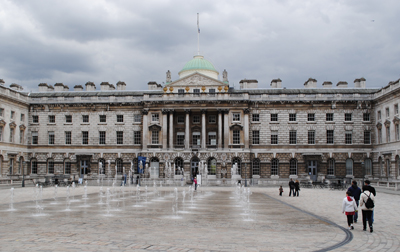
Somerset-House

Constructed on the site of the Duke of Somerset’s Tudor-era mansion, Somerset House as we know it today owes its origins to a national scheme aimed at creating public buildings in London which would rival those of Continental cities.

The campaign led to the passing of an Act of Parliament in 1775 for the construction of a new public building at Somerset House to house government agencies such as the Navy Office, Salt Office, Surveyor General of Lands, the King’s Bargemaster and the offices of the Duchy of Lancaster and Cornwall as well as various learned societies.

The former building – which had been worked on by the likes of Sir Christopher Wren and which had been used as a residence for the likes of King Charles II’s queen, Catherine of Braganza, following his death, had fallen into a state of considerable disrepair and was demolished in 1775.

William Robinson, secretary of the Office of Works, was initially given the job of designing the new building (much to the discontent of some) but after his sudden death the same year, the task was given to Sir William Chambers, comptroller of the Office of Works and one of England’s leading architects.

The basic design was as it appears today – four ranges built around a central court (now named the Edmond J Safra Fountain Court). The Strand Block, located to the north and the most highly decorated of the buildings inside and out, was built first and largely completed by 1780, the Embankment Building (home of the Navy Office) in 1786 and the east and west ranges two years later.

When Chambers died with the work unfinished in 1796, it was carried to completion by James Wyatt and declared complete in 1801, despite the fact elements of Chambers’ design were still outstanding. It had cost more than £460,000, in excess of three times Robinson’s original estimate.

One of the first new occupants – thanks to a decision by King George III – was the fledgling Royal Academy of Arts (it had been one of the last occupants of the former premises) and its focal point was the Great Exhibition Room where exhibitions were held until 1836. Others in the new building included The Royal Society (it remained until 1837 when, like the RA, it moved to Burlington House) and the Society of Antiquaries (it moved to Burlington House in 1874).

As well as being home to various offices of the Navy Board (the southern building, where it was housed, contains the stunning, now restored, Nelson stair), Somerset House was also home to the Inland Revenue.

New additions were made to the original design in the nineteenth century – the extension of the south block to the east and addition of a New Wing to the west – and the construction of the Victoria Embankment (see our earlier post here) meant the two watergates Chambers had designed became landlocked. Somerset House no longer rose directly from the water as he’d intended but from a roadway (as it does today – we’ve mentioned this before but you can see the original riverbank by looking through the glass floor of the building’s Embankment entrance).

Somerset House is these days home to a range of cultural and artistic organisations – from the British Fashion Council to the National Youth Orchestra and, in the north wing, the Courtauld Institute of Art. And as well as hosting various art installations, the central courtyard is host to an ice-skating rink over winter.

For more on Somerset House, see www.somersethouse.org.uk.

10 significant sites from Georgian London – 3. St Mary le Strand…

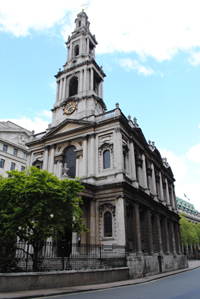
This oddly located church on the Strand is the work of acclaimed architect James Gibbs – the first public project he embarked upon after returning from Italy where he had trained.

St-Mary-le-StrandWhile the history of St Mary le Strand goes at least back to the Middle Ages (and it initially stood just south of the current churches’ position on land currently occupied by Somerset House), the construction of the current church – the first of 50 built in London under a special commission aimed at, well, seeing more churches built in the capital to meet the needs of the growing population – began around 1715 (the foundation stone was laid on 25th February, the year after the accession of King George I.)

While building was briefly delayed by the Jacobite rising which broke out in 1715, the church was finally consecrated for use on 1st January, 1723.

Gibbs, who trained under a baroque master – a style which contrasted with the Palladian-style favoured by Lord Burlington and others, had apparently originally intended the church to be in the Italianate style with a campanile over the west end instead of the steeple  but this scheme also included a 250 foot high column surmounted by a statue of Queen Anne located to the west of the church which would celebrate the work of the commission (it’s also worth noting that the churches built by the committee – and they didn’t get close to building 50 – were known as “Queen Anne Churches” despite their construction taking place largely after her death).

However, plans for the column were abandoned on the queen’s death on 1st August, 1714, and instead Gibbs – a Roman Catholic who thanks to his supposed Jacobite sympathies apparently finished the project without pay, was ordered to use the stone which had been gathered to build the steeple and, thanks to that, amend his plans for the church into an oblong form rather than the square form he had initially intended. The work shows the influence of Sir Christopher Wren as well as churches in Italy.

The interior has been remodelled several times since its creation. The white and gold plastered ceiling was apparently inspired by the work of Italian sculptor and architect Luigi Fontana on two Roman churches and other features include paintings by American artist Mather Brown (these were put in place in 1785 and are located on panels on the side walls of the chancel – they were restored in 1994), while the crucifix behind the altar was presented by parishioners in 1893.

It the late 1800s, the London County Council proposed demolishing the church so it could widen the Strand for traffic but this plan was abandoned after an outcry led by artist Walter Crane (although the graveyard was removed).

Famous faces associated with the church include Charles Dickens’ parents, John and Elizabeth, who were married here in 1809, and there’s a story that during a secret visit to London in 1750, Bonnie Prince Charlie (Charles Edward Stuart) renounced the Roman Catholic Church by receiving Anglican communion here. The parish currently includes that of nearby St Clement Danes after the church was bombed in 1941 (it’s now central church of the Royal Air Force).

WHERE: St Mary le Strand, Strand (nearest tube stations are Temple, Covent Garden, Holborn, Charing Cross and Embankment); WHEN: Usually open 11am to 4pm from Tuesdays to Thursdays and 10am to 1pm Sundays; COST: free; WEBSITE: www.stmarylestrand.org.

This Week In London – Kenwood House reopens; robot safari at the Science Museum; Kew Gardens illuminates for Christmas; Vivien Leigh at the NPG; and more…

Kenwood House in north London is being reopened to the public today following a £5.95 million restoration project which has seen the library returned to what Scottish architect Robert Adam had intended it to be. The project, which saw the Hampstead property closed since March last year, has also seen the restoration of three other Robert Adam-designed rooms – the entrance hall, Great Stairs and antechamber or entrance to the library – as well as the redecoration of four rooms in 18th century style, repainting of the exterior and the repair of the home’s roof – a job aimed at protecting the rooms and its stellar

Kenwood-House-Librarycollection of artworks by the likes of Rembrandt and Vermeer. English Heritage has also endeavoured to make the property more homely, replacing ticket desks and rope barriers with an open fire, warm rugs and leather couches on which visitors can relax. The library (pictured) was built and decorated to Adam’s designs between 1767 and 1770 as part of a wider remodelling of the villa for its owner Lord Chief Justice William Murray, 1st Earl of Mansfield. Redecorated many times since, it was restored in the 1960s but this redecoration was later found to be inaccurate. The Caring for Kenwood restoration project, which has also seen restoration of the Kenwood Dairy, was funded by a £3.89 million grant from the Heritage Lottery Fund as well as support from the Wolfson Foundation and other donors. To coincide with the reopening, a new app exploring Kenwood House has been released which can be downloaded for free from the iTunes store. For more, see www.english-heritage.org.uk/daysout/properties/kenwood/. PICTURE: English Heritage/Patricia Payne.

Head out on a “robot safari” this weekend with a special free event at Science Museum in South Kensington. Robot SafariEU, part of Eurobotics week, features 13 biometric robots from across Europe including an underwater turtle robot, a shoal of luminous fish robots, a robotic cheetah cub and Pleurobot, a robotic salamander. Roboticists from across Europe will be on hand to help visitors interact with the bots. Suitable for all ages, the event kicked off on Wednesday night and runs again on the weekend. Admission is free but timed tickets are required. For more, see www.sciencemuseum.org.uk/RobotSafari.

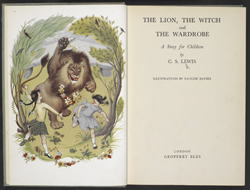
A memorial to author, scholar and apologist CS Lewis was dedicated at Westminster Abbey last Friday – the 50th anniversary of his death. Conducting the service, the Dean of Westminster, the Very Reverend Dr John Hall, said Lewis was “one of the most significant Christian apologists of the 20th century” and the author of stories that had “inspired the imagination and faith of countless readers and film-goers”. Douglas Gresham, younger stepson of Lewis, read from the author’s book, The Last Battle, at the service. The memorial is located in Poet’s Corner in the abbey’s south transept. For more see www.westminster-abbey.org.

A Blue Plaque commemorating Al Bowlly – described as “Europe’s most popular crooner and famous radio and record star” – will be unveiled at his home in Charing Cross Road this week. Bowlly, who lived between 1899 and 1941, was the voice beyond songs like Goodnight Sweetheart and The Very Thought Of You. The English Heritage Blue Plaque will be unveiled at Charing Cross Mansions, 26 Charing Cross Road – his home during the pinnacle of his career. For more, see www.english-heritage.co.uk/discover/blue-plaques/.

Kew Gardens has opened its gates after dark for the first time with a “captivating show of lights, sound and landscape” this festive season. A mile long illuminated trail, created in partnership with entertainment promoter Raymond Gubbay, will take visitors’ through the garden’s unique tree collections, kicking off at Victoria Gate where a Christmas village (and Santa’s Woodland Grotto) is located. The gardens will be open every Thursday to Sunday until 23rd December and then be open every night from 26th December to 4th January from 4.45pm to 10pm. Admission charge applies. For more, see www.kew.org/Christmas.

VivienLeighActress Vivien Leigh is the star of a new exhibition opening on Saturday at the National Portrait Gallery. Starring Vivien Leigh: A Centenary Celebration tells her story with a focus on her Academy Award-winning role in 1939’s Gone With The Wind. The display features more than 50 portraits of Leigh by the likes of Cecil Beaton, Angus McBean and Madame Yevonde – many of which have never been exhibited in the gallery before – and a selection of memorabilia including magazine covers, vintage film stills and press books. Among the photos will be a newly acquired image of Leigh and her husband, Laurence Olivier, taken by British photojournalist Larry Burrows at a garden party in 1949 (pictured), along with two rarely seen portraits of Leigh – one taken on the set of The School for Scandal by Vivienne in 1949 and the other by Paul Tanqueray in 1942. The exhibition will be held in Room 33 and runs until 20th July. Admission is free. For more, see www.npg.org.uk. PICTURE:  Copyright – Larry Burrows Collection 2013.

This Week in London – The Hadron Collider at the Science Museum; John Richard Arthur honoured; Christmas at Carnaby; and South American gold at the British Museum…

First up, we’ve changed the name of the Thursday update of what’s happening in London to This Week in London which we think better describes what the column’s about. So, to some events we think you might be interested in…

• An exhibition that transports visitors to the heart of the Large Hadron Collider (LHC) opened at the Science Museum yesterday. In the first exhibition of its kind, Collider offers visitors the closest thing to actually being at the CERN particle physics laboratory, blending theatre, video and sound to enable visitors to explore the control room, meet virtual scientists and engineers and see inside a huge underground ‘detector’ cavern. There’s also the chance to follow the journey of particle beams as they race around the 27 kilometre long LHC tunnel (incidentally about the same length as the Circle Line) and the exhibition’s highlight is a wrap around projection which takes watchers from an enormous experiment cavern to the heart of a particle collision. On show will be artefacts from the actual LHC including a 15 metre magnet used to steer the particle beam and objects from the museum’s collection including the accelerator used by Cockcroft and Walton to split the atom in 1932. Admission charge applies. Runs until 6th March. For more, see www.sciencemuseum.org.uk.

John Richard Arthur, a former Mayor of Battersea and the first black man to hold senior public office in London, was honoured with an English Heritage Blue Plaque this week. The plaque was unveiled by Cr Angela Graham, the Mayor of Wandsworth, at his former home at 55 Brynmaer Road in Battersea – his residence during the major milestones of his political career. Elected on 10th November 1913, Archer lived at the home from about 1898 to about 1918. He has been described as a “key figure in the story of the Black contribution in Britain in the early part of the Twentieth century”. For more, see www.english-heritage.org.uk/discover/blue-plaques/.

Christmas comes to the West End this afternoon with the Carnaby Christmas Shopping Party taking place in 13 streets around the iconic fashion strip. More than 100 shops, restaurants and bars are delivering 20 per cent discounts and there’s also complimentary drinks, music, talks on fashion trends and the chance for the “best dressed” to win goodie bags. The party runs from 5pm to 9pm with the Christmas lights turned on at 6pm. Head to www.carnaby.co.uk for more.

El-Dorado• On Now: Beyond El Dorado: power and gold in ancient Colombia. This exhibition in Room 35 of the British Museum features items including ceramics and stone necklaces taken from Lake Guatavita near modern Bogota (The phrase El Dorado, “the golden one”, actually refers to a ritual which took place at the lake in which a newly elected leader of the Muisca people was covered in powdered gold before diving into the lake and washing it off to emerge as the new leader). They are just some of the more than 300 items in the display which come from the Museo del Oro Bogata – one of the best collections of pre-Hispanic gold in the world – as well as the British Museum’s own collection. Other objects include large scale gold masks, a painted Muisca textile, avian pectorals and necklaces with feline claws and one of the few San Agustin stone sculptures held outside Colombia. The exhibition, sponsored by Julius Baer, runs until 23rd March. Admission charge applies. For more, see www.britishmuseum.orgPICTURE: Anthropomorphic bat pectoral, Tairona, gold alloy, AD900-1600. Copyright Museo del Oro, Banco de la Republica, Colombia.

LondonLife – Joey stabled at the V&A…

War-Horse

Joey, the puppet horse used in the West End play War Horse, has taken up a new home at the V&A in South Kensington. Created by the Handspring Puppet Company for the National Theatre’s adaption of Michael Morpurgo’s novel, Joey appeared in more than 1,640 shows since his debut at the New London Theatre on 28th March, 2009. He will now be housed in the V&A’s Theatre and Performance Gallery in a specially created display which shows how the puppet was operated on stage and features three mannequin puppeteers to illustrate the process. Joey was donated by Adrian Kohler and Basil Jones of South Africa’s Handspring Puppet Company who designed and created the puppets used in War Horse. War Horse, which continues its run at the New London Theatre, has been seen by more than four million people. For more, see www.vam.ac.uk. PICTURE: Joey at the V&A operated by Nicholas Hart (Head), Stuart Angell (Heart), Thomas Goodridge (Hind). © Victoria and Albert Museum, London. 


Around London – The Bard is back; Foundling Museum displays; and, exhibitions on iconoclasm and explicit Japanese art…

The Bard is back in Leicester Square with the announcement last week that restoration work on the square’s 19th century Grade II listed statue of William Shakespeare – the only full-length statue the playwright in central London – has been completed. The 11 month restoration was carried out as part of £17 million revamp of the square which has seen the installation of a new fountain. The statue, which was the work of James Knowles, has been in the square since it was completed in its current configuration in 1874. Meanwhile, in other sculpture-related news, Sorry, Sorry Sarajevo – a life-size statue of a man holding  a dead or badly injured man in his arms has been placed in St Paul’s Cathedral where it will remain for the rest of the year. The work by Nicola Hicks dates from 1993 – when the Bosnian war was at its height – and has been placed opposite Henry Moore’s 1983 sculpture, Mother and Child: Hood as part of the cathedral’s approach to next year’s World War I centenary.

Two new displays opened at the Foundling Museum in Bloomsbury last month. Hogarth and Copyright, which runs until 5th January, looks at the role the artist William Hogarth played in the passing of the 1735 Engravers’ Copyright Act (also known as Hogarth’s Act – it was the first law to protect artist’s rights over their work) while Handel and Lucretia, presented in conjunction with The Sir Denis Mahon Charitable Trust and running until 26th January, shows Guercino’s painting Lucretia alongside two early manuscripts of Handel’s cantata La Lucretia. Entry is part of admission price. For more, see www.foundlingmuseum.org.uk.

A new exhibition tracing the history of attacks on artworks in Britain from the 16th century to today opened at Tate Britain in Millbank this week. Art under Attack: Histories of British Iconoclasm looks at why and how monuments have been damaged over the past 500 years. The display includes the remarkable pre-Reformation sculpture, the Statue of the Dead Christ (about 1500-1520), which was discovered in 1954 beneath the chapel floor at the Mercer’s Hall. Already damaged – most likely at the hands of Protestant iconoclasts – it may have been buried there to protect it. Also displayed are fragments of monuments destroyed in Ireland last century, paintings including Edward Burne-Jones’ 1898 painting Sibylla Delphica which was attacked by suffragettes in 1913-14, and Allen Jones’ 1969 work Chair – damaged in a feminist attack in 1986. Runs until 5th January. Admission charge applies. For more, see www.tate.org.uk.

A controversial exhibition of sexually explicit Japanese works of art created between 1600-1900 opened at the British Museum this week. Shunga: sex and pleasure in Japanese Art – which carries a warning of “parental guidance for visitors under 16 years – features 170 works including paintings, prints and illustrated books. Drawn from collections in the UK, Japan, Europe and the US, the exhibition of explores the phenomena of what are known as shunga (‘spring pictures’), looking at why it was produced and to whom it was circulated. Admission charge applies. Runs until 5th January. For more, see www.britishmuseum.org.