10 Historic London Garden Squares…1. Leicester Square…

In the first of a new Wednesday series looking at historic London garden squares, we take a look at what next to Trafalgar Square, is the most famous square in the entire city – Leicester Square.

Located in the heart of the West End, Leicester Square’s history finds its origins back in the 17th history when Robert Sidney, the 2nd Earl of Leicester acquired property on the site where the square now stands. Then known as St Martin’s Field and located within the parish of St Martin’s, Sidney purchased four acres in 1630 and constructed Leicester House on land now located at the square’s northern end.

Leicester-SquareThe earl raised the ire of locals, however, when – having subsequently fenced off the land to prevent people from wandering on to his property – he enclosed what had previously been common land.

The people appealed to King Charles I who appointed three members of the Privy Council to look at the issue. Their decision? That the earl keep a section of his land open for the use of the parishioners of St Martin’s.

First known as Leicester Field, it was this land which later became known as Leicester Square. Fine homes were built around the square (its proximity to the Royal Court and centre of government made it a desirable place to live for the well-to-do and those seeking influence) with the centre enclosed with rails (it’s pictured here in 1750).

The square’s reputation also had a royal boost when, in 1717/1718, Leicester House became home to Prince George (later King George II) and his wife Princess Caroline along with their court after the prince fell out with his father King George I and was banished from St James’ Palace (this story is recounted in marvellous detail in Lucy Worsley’s terrific book, Courtiers: The Secret History of the Georgian Court).

The prince remained at the house for 10 years and was proclaimed King George II after his father’s death at its gate. Interestingly, King George II’s eldest son, Prince Frederick, also lived here for a time after he too fell out with his father (King George II). Apparently their relationship was even worse than the previous generation’s had been.

Despite its royal attractions, even at this stage the square apparently had it’s darker side with some less than savoury characters attending the hotels and livery stables that were built there. But things were to get worse as the wealthy moved out – a situation not helped when Leicester House was demolished in the 1790s.

Leicester Square became known as an entertainment venue in the 19th century (among attractions was the short-lived Royal Panopticon of Science and Art which showcased the best in science and art and Wyld’s Great Globe which contained a gigantic model of the earth) and received a new injection of life when theatres and music halls moved in, bringing the crowds back with them.
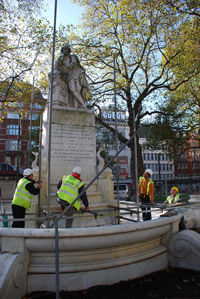
Shakespeare-StatueMeanwhile, the status of the square – and whether it could be built upon – remained a matter of debate well into the 19th century. That ended in 1874 when businessman Albert Grant bought the freehold of the land, had the garden created upon it and then donated it to the Metropolitan Board of Works as a gift to the city.

Responsibility for the management of the square now rests with the City of Westminster. The square area – which is now known for hosting film premieres as well as the tourists who inevitably gather there – was pedestrianised in the 1980s and has just undergone a redevelopment and modernisation which was unveiled last year.

Meanwhile, work to restore the 19th century Shakespeare statue and fountain in the square’s centre is about to be completed (pictured). The square also contains a statue of actor Charlie Chaplin in the square as well as busts of scientist Sir Isaac Newton, painter and first president of the royal Academy Sir Joshua Reynolds, 18th century pioneer surgeon John Hunter, and painter William Hogarth.

The tradition of the entertainment continues in the modern era through the cinemas which now stand in the square and regularly host film premieres (an interesting, if oft-repeated, film-related anecdote connected to the square is that it was in a phone booth located at the square that during the 1960s a young actor Maurice Micklewhite saw a poster for The Caine Mutiny and decided to change his name to Michael Caine).

PICTURES (top) Wikipedia and (below) City of Westminster.
Special – Five famous London funerals…

With former PM Margaret Thatcher’s funeral held in London today, we take a look at five prominent funerals in the city’s past…

Queen Eleanor of Castile: King Edward I was lavish in his funeral for Queen Eleanor (perhaps in an effort to restore her reputation given suggestions she had been unpopular among the common people although it may well have simply been because of the king’s level of grief) and when she died at Harby, a village near Lincoln, on 28th November, 1290, he ordered her body to be transported from Lincoln Cathedral to Westminster Abbey where the funeral was held, with a series of elaborate memorial crosses to be built close to where-ever her body rested for the night. Twelve of these were built including at Westcheap in the City of London and Charing (hence Charing Cross, see our earlier post here), the latter thanks to her body “resting” overnight at the Dominican Friary at Blackfriars. Her funeral took place on 17th December, 1290, with her body placed in a grave near the high altar until her marble tomb was ready. The tomb (one of three built for the queen – the others were located at Lincoln – for her viscera – and Blackfriars – for her heart) still survives in the abbey.

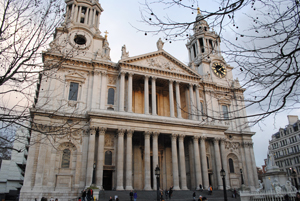
St-Paul's-CathedralVice Admiral Lord Nelson: Heroic in life and perhaps seen as even more so after his death, Nelson’s demise at the Battle of Trafalgar was a national tragedy. His body, preserved in brandy, was taken off the HMS Victory and transported to Greenwich where he lay in state for three days in the Painted Hall. Thousands visited before the body was again moved, taken in a barge upriver to the Admiralty where it lay for a night before the state funeral on 9th January, 1806, more than two months after his death. An escort said to comprise 10,000 soldiers, more than 100 sea captains and 32 admirals accompanied the body through the streets of the city along with seamen from the Victory to St Paul’s Cathedral (pictured)  where he was interred in a marble sarcophagus originally made for Cardinal Wolsey located directly beneath the dome. The tomb can still be seen in the crypt of St Paul’s.

Arthur Wellesley, the Duke of Wellington: Given the last heraldic state funeral ever held in Britain, the Iron Duke’s funeral was held on 18th November, 1852, following his death on 14th September. His body, which had been brought to London from Walmer where it had laid in state by rail, lay in state a second time at Chelsea Hospital. On the morning of the funeral, the cortege set out from Horse Guards, travelling via Constitution Hill to St Paul’s. The body was conveyed in the same funeral car used to convey Nelson’s and accompanied by a guard of honour which included soldiers from every regiment in the army. Masses – reportedly more than a million-and-a-half people – lined the streets to watch funeral procession pass through the city before a service was held in St Paul’s Cathedral under the great dome and he was interred in a monumental sarcophagus alongside that Vice Admiral Lord Nelson. Like Nelson’s, it can still be seen there today.

Sir Winston Churchill: Widely regarded as one of the great wartime leaders of the 20th century, the former British Prime Minister died in his London home on 24th January, 1965, having suffered a stroke nine days earlier. His funeral (plans for which had apparently been code-named ‘Hope-Not’), was the largest state funeral in the world at the time of his death with representatives of 112 nations attending and watched on television by 25 million people in Britain alone. His body lay in state for three days (during which more than 320,000 people came to pay their respects) before on 30th January, it was taken from Westminster Hall and through the streets of London to a funeral service at St Paul’s Cathedral. After the service, a 19 gun salute was fired and the RAF staged a flyby of 16 fighter planes as the body was taken to Tower Hill and then by barge to Waterloo Station. From there it was taken by a special funeral train (named Winston Churchill) to Bladon near Churchill’s home at Blenheim Palace.

Diana, Princess of Wales: Having died in a car crash in Paris on 31st August, 1997, her body was flown back to London and taken to St James’s Palace where it remained for five days before being transported to her former home of Kensington Palace. More than a million people crowded London’s streets on 6th September, 1997, to watch the funeral procession as it made its way from the palace to Westminster Abbey. Among those present at the funeral (which was not a state funeral) were members of the royal family as well as then Prime Minister Tony Blair, former PMs including Margaret Thatcher and foreign dignitaries and celebrities, the latter including Elton John who sang a rewritten version of Candle in the Wind. After the service, Diana’s body was taken to her family’s estate of Althorp in Northamptonshire where the “People’s Princess” was laid to rest.

Our new series will be launched next week due to this week’s events…

LondonLife – The Tweed Run London…

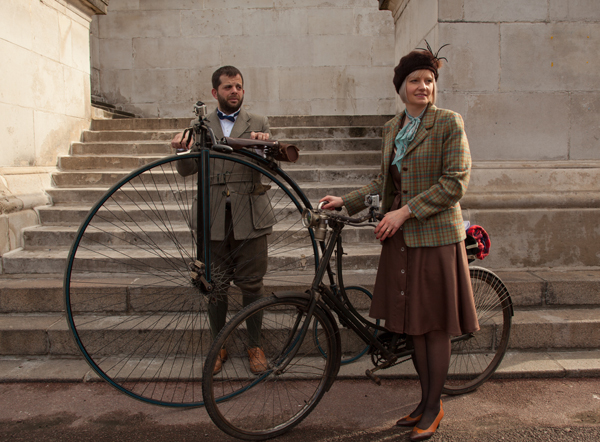
Tweed-RunThe Tweed Run London celebrated its fifth anniversary last Saturday with more than 500 taking part in the rather unusual annual event in which participants combine their passion for British fashion with their love for cycling. Among those taking part (entry was via a lottery system) on bikes of all shapes and sizes were people from as far afield as The Netherlands, Korea, Russia, Australia, Japan and even Afghanistan. The two hour ride took in Marylebone High Street, Savile Row, Regent Street, Piccadilly Circus and the Houses of Parliament before finishing at Trafalgar Square. The ride has been copied by other cities around the world including, Tokyo, Toronto and St Petersburg. For more on the Tweed Run, see www.tweedrun.comPICTURE: Selim Korycki, Tweed Run LLP.

Around London – Margaret Thatcher’s funeral; telling the Jewel Tower’s story; depot open weekend; and, Designs of the Year…

Margaret Thatcher’s funeral will be held next Wednesday at St Paul’s Cathedral from 11am with Queen Elizabeth II among those attending (the first time she has attended the funeral of a British politician since Sir Winston Churchill’s in 1965). The funeral procession of the former Prime Minister, who died on Monday aged 87, will start at the Houses of Parliament and make its way down Whitehall to Trafalgar Square before moving down the Strand, Fleet Street and Ludgate Hill to St Paul’s Cathedral. Baroness Thatcher’s coffin will carried in a hearse for the first part of the journey and will be transferred to a gun carriage drawn by six horses of the King’s Troop Royal Horse Artillery at St Clement Danes church on the Strand for the final part of the journey. There will be a gun salute at the Tower of London. Meanwhile, a Book of Condolence has opened at St Margaret’s Church, beside Westminster Abbey, this morning and will be available for people to pay their respects until 17th April, during the church’s opening hours. St Margaret’s – which stands between Westminster Abbey and the Houses of Parliament – is commonly known as the parish church of the House of Commons.

The story of the Jewel Tower – one of the last remaining parts of the medieval Palace of Westminster – is told in a new exhibition at the historic property. Now in the care of English Heritage, the tower – located to the south of Westminster Abbey, was built in 1365 to house King Edward III’s treasury, later used as King Henry VIII”s ‘junk room’, the record office for the House of Lords, and, from 1869, served was the “testing laboratory” for the Office of Weights and Measures. The exhibition, which opened this month, is part of the English Heritage celebrations commemorating the centenary of the 1913 Ancient Monuments Act. The Jewel Tower is open daily until November. Admission charge applies. For more, see www.english-heritage.co.uk.

See some of the earliest underground trains, a Lego version of Baker Street station and ride the Acton Miniature Railway. The London Transport Museum’s depot in Acton is holding it’s annual spring open weekend this Saturday and Sunday and in celebration of the Underground’s 150th anniversary, attractions will include the Metropolitan Steam Locomotive No. 1 and the recently restored Metropolitan Carriage 353 along with model displays, rides on the miniature railway, film screenings, talks, and workshops. Wales’ Ffestiniog Railway team – celebrating their own 150th anniversary – will also be present with the narrow gauge train, Prince. Open from 11am to 5pm both days. Admission charge applies. For more, see www.ltmuseum.co.uk.

Now On: Designs of the Year. The Design Museum has unveiled contenders for the sixth annual Designs of the Year competition and you can what they are in this exhibition. Consisting of more than 90 nominations spanning seven categories, the nominated designs include the Olympic Cauldron by Heatherwick Studio, The Shard – western Europe’s tallest building – by Renzo Piano, a non-stick ketchup bottle invented by the Varanasi Research Group at MIT, and Microsoft’s Windows phone 8. The exhibition runs until 7th July – the winners will be announced this month. Admission charge applies. For more, see www.designmuseum.org.

Dr Livingstone honoured; David Bowie at the V&A; Damian Lewis receives Freedom; pocket parks; and, try a new sport…

The President of Malawi, Joyce Banda, attending a wreath-laying ceremony at Westminster Abbey on Tuesday night to mark the bicentenary of the birth of Scottish missionary and explorer Dr David Livingstone. The ceremony took place at the grave of Dr Livingstone – his body was repatriated to London following his death in Zambia in 1873 from malaria and dysentery. The Very Reverand Dr John Hall, the Dean of Westminster, said the ceremony honored a “Scot of humble origins, but clear determination and courage”. “140 years after his death, he remains respected throughout these islands, and especially in Africa, where, for 30 years, he laboured to spread the Gospel, to explore the land’s secrets, and to map what he discovered,” he said. “Treating all people as his equals, he worked to abolish the slave trade in Africa.” Livingstone conducted several expeditions into the interior of Africa – while they included a failed attempt to find the source of the Nile, he is credited with documenting numerous geographical features including Victoria Falls (he named it after Queen Victoria) and Lake Malawi. Celebrated as a hero of the Victorian age, his meeting with Henry Stanley in October 1871 – Stanley had been sent to find him after he had lost contact with the outside world – gave rise to the expression “Dr Livingstone, I presume?” (though whether he actually said the phrase remains a matter of debate).

A landmark exhibition on the career of David Bowie opens at the V&A on Saturday. David Bowie is features more than 300 objects including handwritten lyrics, costumes, photographs, films, Bowie’s instruments and album artwork selected by the V&A’s theatre and performance curators, Victoria Broackes and Geoffrey Marsh. The exhibition takes an in-depth look at Bowie’s music and how it and his “radical individualism” has influenced and been influenced by wider movements in art, design and contemporary culture. Among the more than 60 costumes on display will be a Ziggy Stardust bodysuit (1972) and costumes made for the 1973 Aladdin Sane tour as well as some of Bowie’s own sketches, musical scores and diary entries. This exhibition, which is sponsored by Gucci and Sennheiser,  runs until 11th August. Admission charge applies. For more, see www.vam.ac.uk/davidbowieis.

Homeland star Damian Lewis has received the Freedom of the City of London in a ceremony at Guildhall on Tuesday in recognition of his “outstanding achievements in acting”. Lewis, who graduated from the City of London’s Guildhall School of Music & Drama in 1993, has appeared in The Forsyte Saga, US mini-series Band of Brothers and, of course, in Homeland. Interestingly, his maternal grandfather, Sir Ian Bowater, was Lord Mayor of the City of London from 1938 to 1939. For more, see www.cityoflondon.gov.au.

Work is underway on the first of the Mayor of London, Boris Johnson’s, “pocket parks”. The size of a tennis court, the pocket parks are set to “reinvent some of London’s forgotten nooks and crannies”. Among the first will be an edible park featuring vegetable, herbs, fruit trees and hops located on ‘dead space’ behind a Stockwell bus stop (the hops will be sold to the Brixton Beer Cooperative). All 100 of the pocket parks will be finished by March 2015 at a cost of £2 million. For more, see www.london.gov.uk/priorities/environment/greening-london/parks-green-spaces/pocket-parks.

It’s the chance to try a new sport for the first time in a day of free games and activities which will be held at the Queen Mother Sports Centre in Vauxhall Bridge Road on Saturday. From 10am to 3pm, visitors will be able to try a range of different sporting activities including football, basketball and swimming with athletes and coaches on hand to offer advice. For more, see www.westminster.gov.uk.

LondonLife – Yuri Gagarin relocates to Greenwich…

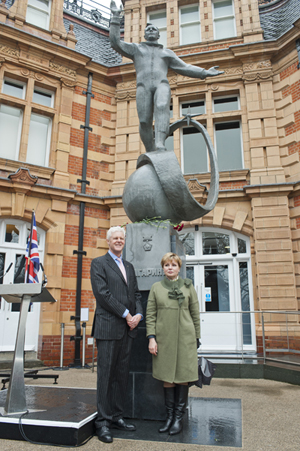
Elena-Gagarina-and-Dr-Kevin-Fewster

A statue of Russian cosmonaut and first man in space Yuri Gagarin has been relocated to the newly named Yuri Gagarin Terrace outside the Royal Observatory in Greenwich. First unveiled in The Mall, not far from Admiralty Arch, on 14th July 2011, the statue was a gift from the Russian federal space agency, Roscosmos, to mark the 50th anniversary of manned space flight (you can read more at our earlier post here). But it was only granted permission to remain on the site for 15 months and so has now been relocated to Greenwich where it as officially unveiled last Thursday in the week of Gagarin’s birthday by his daughter Elena Gagarina (pictured here with Royal Museums Greenwich director Dr Kevin Fewster). The statue – a 3.5 metre high zinc alloy figure – shows Gagarin dressed in a spacesuit and standing on a globe. It stands just outside the observatory’s Astronomy Centre. For more on the Royal Observatory Greenwich – the “home” of Greenwich Mean Time, see www.rmg.co.uk.

LondonLife – Paper protestors fill Parliament Square…

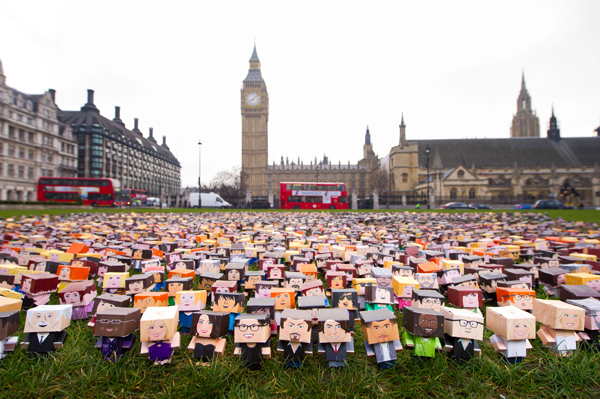
mc_fairtrade_004Jonathan Ross, Eddie Izzard, Amanda Holden, Tulisa and Gok Wan were among the thousands of people represented by paper protestors in Parliament Square, outside the Houses of Parliament, on Monday. The Fairtrade-backed protest marked the second week of ‘Fairtrade Fortnight’ and was aimed at sending a message to Prime Minister David Cameron to “do more to protect smallholder farmers from trade injustice”. More than 8,000 people have signed the online petition so far, creating a personalised “mini marcher” via Fairtrade’s partnership with Foldable.me. The final petition will be delivered to the PM on World Fair Trade Day in May ahead of the June meeting of the G8. For more on the Fairtrade Foundation, see www.fairtrade.org.uk.

Famous Londoners – Jane Austen…

It’s probably a bit of a stretch to call Jane Austen a ‘famous Londoner’ (although the city does make a fairly regular appearance in her books) but she did have some strong associations. Given the 200th anniversary of Pride and Prejudice earlier this year, we thought it was only fitting to take a quick look at a five places associated with the author in London…

10 Henrietta Street, Covent Garden: Austen stayed in a flat here during the summer of 1813 and during March 1814. The premises was the home of her older brother Henry, then a banker, who moved here after the death of his wife Eliza. While here, Austen visited theatres including The Lyceum and The Theatre Royal, Drury Lane. The building is now occupied by offices.

23 Hans Place, Belgravia: The home of her brother Henry (after he moved from Covent Garden), Austen lived for two years in a house here in 1814-15 and is said to have particularly enjoyed the garden. The current building on the site apparently dates from later in the 19th century. There’s a blue plaque located on the house.

50 Albemarle Street, Mayfair: The former office of publishers John Murray who counted Austen among their first clients were located here.

Westminster Abbey: Austen is not buried here but in Winchester Cathedral. However, you will find a small memorial to her in Poet’s Corner, put here in 1967. It simply reads ‘Jane Austen 1775-1817’.

The British Library, St PancrasAusten’s rather tiny writing desk can be found here, usually on display in the Sir John Ritblat Gallery. It was donated to the library in 1999 by her Canadian descendents.

10 of London’s greatest Victorian projects – 6. Victoria and Albert Embankments…

We’ve already mentioned these two riverside embankments as part of our previous piece on Sir Joseph Bazalgette’s revolutionary sewer system. But so important are they to the shape of central London today – not to mention a great place to take a stroll – that we thought they’re also worth a mention in their own right.

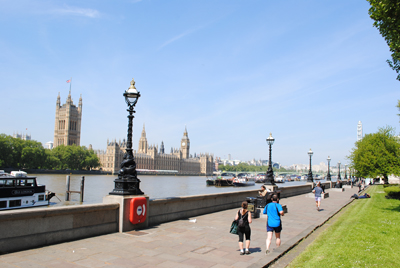
Albert-EmbankmentAs mentioned, the Victoria and Albert Embankments (the latter is pictured right) – named, of course, for Queen Victoria and her by then late consort, Prince Albert, who had died in 1861 (see our previous post What’s in a name?…Victoria Embankment) – were located on opposite sides of the River Thames and involved reclaiming a considerable amount of the river so new sewers could be laid.

Construction of Victoria Embankment – which was also seen as a way to relieve traffic congestion in the central London area – started in the mid 1860s and was complete by 1870. Running along the north and western banks of the Thames between Westminster and Blackfriars bridges, its creation involved the demolition of many riverside buildings as a new walk and roadway were constructed behind a wall.

Numerous monuments have since been located along this promenade – they include the Battle of Britain Monument, RAF Memorial and the mis-named Cleopatra’s Needle (see our earlier post to find out why) – as well as a number of permanently berthed ships including the HQS Wellington – the base of the Honorable Company of Master Mariners – and the HMS President.

The walkway also features original decorative lamps – interestingly, Victoria Embankment was the first roadway in London to be permanently lit  by electric-powered lighting (from 1878).

The parks, collectively known as Victoria Embankment Gardens, contain numerous statues and monuments (including one to Bazalgette himself – it’s located close to the intersection with Northumberland Avenue) as well as a bandstand. They also contain the remains of York Watergate – once fronting on to the river, it shows how much land was reclaimed for the project (you can also visit the riverside entrance to Somerset House to gain a feel for where the river once was – look through the glass floor and you’ll see the old riverbank below).

Albert Embankment, meanwhile, runs between Vauxhall and Westminster Bridges on the eastern side of the river. Constructed around the same time as Victoria Embankment, it was designed to prevent flooding of the low-lying areas of Vauxhall and Kennington and to help in Bazalgette’s sewage system plan (although it apparently doesn’t have the same large sewers as can be found on the other side of the river).

Sadly, the demolition did see the centre of what was once the village of Lambeth removed to make way for the new promenade and roadway. But like Victoria Embankment, Albert Embankment features delightfully decorative lamps along the riverfront promenade and is a great place for a walk in any weather.

10 Questions – Simon Murphy, curator at the London Transport Museum…

Simon Murphy is a curator at the London Transport Museum in Covent Garden – the museum is currently celebrating the 150th birthday of the Underground with a series of events including a landmark exhibition on the art of the Tube (Poster Art 150 – London Underground’s Greatest Designs)…

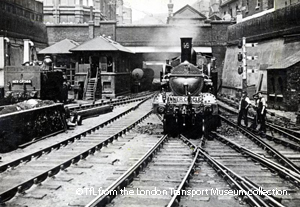
Underground-2How significant was the construction of the London Underground in world terms? And how does it stack up 150 years later? “The Metropolitan Railway was a true world class pioneer, but like all pioneers it made mistakes that subsequent operators learned from. Similarly the first tube railways tested the ground for others to follow. But these pioneering lines are still part of today’s world class Tube network, and some of the original stations, like King’s Cross, are still amongst the busiest, so they must have been on the right track.”

I understand the initial stretch of line ran between Farringdon and Paddington. How quickly were other sections opened? “The Metropolitan Railway’s first extension was authorised by Parliament in 1861, two years before the original line even opened. The railway made a profit in its first year, so financial backing was relatively easy to find, and the extension east to Moorgate opened in 1865, with a westward extension to South Kensington following in 1868. The Met’s main competitor, the Metropolitan District Railway, opened its first section from South Ken to Westminster in 1868. The plan was for the two companies to work together to create an Inner Circle service, but their respective directors fell out and the Circle was not completed until 1884.”

How many miles of line is the Underground composed of today? “The first underground started with less than four miles of track and seven stations; today’s system has 250 miles of track, serving 270 stations.”

When were steam trains on the Underground replaced? “Steam trains worked in central London until 1905, but were still used on the furthest reaches of the Met until 1961.”

When did the Underground take on the name ‘Tube’? “The Central London Railway opened with a flat fare of 2d in 1900, and was promoted as the Twopenny Tube – the name caught on, although the Underground has only been referring to itself officially as the Tube since the 1990s.”

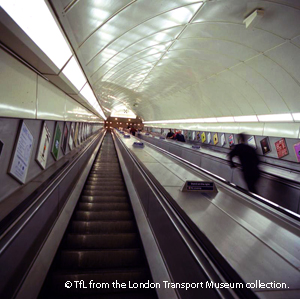
Underground1It’s fairly widely known that Underground stations and tunnels were used as air raid shelters during World War II. Do you know of any other different uses they have been put to? “The station at South Kentish Town on the Northern Line closed in 1924, but the surface building, still looking very much like a station is now occupied by a branch of Cash Converters. During the war unfinished tunnels on the Central line were occupied by a secret factory run by Plessey Components. Also during the war, paintings from the Tate Gallery were stored in  a disused part of Piccadilly Circus station for safe keeping.”

Stylish design has always been an important part of the Underground’s appeal. What’s your favourite era stylistically when it comes to the Underground and why? “Most people admire the golden age of the 1920s and 30s when the Underground’s corporate identity and personality reached its peak with Charles Holden’s architecture, the roundel, Harry Beck’s diagrammatic map and the amazing posters issued in that era, but personally I find the earlier period from 1908 to 1920 more interesting. You can trace the roots of each element of today’s brand being developed at this time, under Frank Pick’s critical eye, starting with the early solid-disc station name roundels, the joint promotion of the individual tube railways under the UndergrounD brand and the introduction of Edward Johnston’s typeface. You can see the company gaining confidence and momentum, especially in relation to the increasingly sophisticated posters and promotion that Pick commissioned.”

Can you tell us a bit about how the London Transport Museum is marking the 150th anniversary? “
We started the year by bringing steam back to the Circle line, after restoring an original Metropolitan Railway carriage and overhauling an original Met steam locomotive, and have just opened our fabulous overview of the 150 best Underground posters at the museum in Covent Garden, which runs until October. We are opening our Depot store, near Acton Town station in April for a steam weekend, and have a range of lectures and evening events at Covent Garden linking to the history of the Underground and its poster art heritage. There’s also our comprehensive new history of the Tube published last year and a wide range of new products and souvenirs in our amazing shop.”

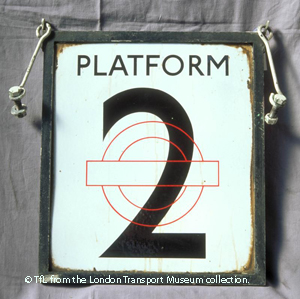
Underground3What are some of your favourite Underground-related objects on display at the museum? “The Design for Travel gallery on the ground floor is the literal and metaphorical heart of the Museum for me. Packed with close to 300 objects including signs, posters, models, leaflets and other documents, it’s hard to single out individual items, but I love the simplicity of the small ‘Platform 2’ hanging sign (pictured right) – it’s a real example of the design consistency and attention to detail that I associate with the Underground.”

And lastly, can you tell us a couple of little-known facts about the Underground? History is more than a chronological list of facts, and what one person finds fascinating sends another to sleep, so it’s quite a challenge to choose something that is little known, but genuinely interesting, but I’ll try: I grew up near Brent Cross station so I might be biased, but I reckon that if there was a top trumps for Underground lines, the Northern line would win. It has the longest escalators (at Euston), the deepest lift shaft (at Hampstead), the highest point ve sea level (on a viaduct near Mill Hill East), the longest tunnels (between East Finchley and Morden – 17 miles) and has had more names than any other line – it only became the Northern line in 1937.”

IMAGES: Top: Steam engine at Aldgate (1902); Middle: Platform 2 sign, 1930s design; and Bottom, Angel Underground Station (1990s). © TfL from the London Transport Museum collection. 

Poster Art 150 – London Underground’s Greatest Designs runs at the London Transport Museum until October. Admission charge applies. For more (including the many events around the exhibition), see www.ltmuseum.co.uk/whats-on/events/events-calendar#posterart150.

10 of London’s greatest Victorian projects – 5. Sir Joseph Bazalgette’s sewer system…

Precipitated at last by the so-called ‘Great Stink’ of 1858, Sir Joseph Bazalgette’s subterranean sewer system was a remarkable feat of engineering and made radical new inroads in improving the health on Londoners during the Victorian age.

Joseph-BazalgetteThe state of the River Thames – basically an open sewer – and the city’s water supplies had become a growing cause for concern as the population of the city – and the amount of waste they produced – increased.

Not surprisingly in the mid-1800s this led to outbreaks of cholera which killed tens of thousands (the outbreaks were generally attributed to a miasma in the air until the work of Dr John Snow eventually proved otherwise – see our earlier entry on the Dr John Snow pub here for more). But it wasn’t until the hot summer of 1858 that – unable to escape the stink of the river under their noses at Westminster – politicians decided something had to be done.

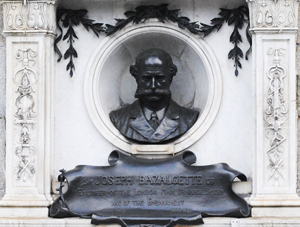
Bazalgette (depicted right in a monument at Victoria Embankment) was chief engineer at the newly formed Metropolitan Board of Works (he was appointed in 1856) when legislation was passed which paved the way for the board to create a sewer system underneath London’s streets to serve the growing metropolis. He designed an ingenious system in which the flow from existing sewers and underground rivers was intercepted before it could reach the river and diverted along new low level sewers to treatment works.

All up, the £4.2 million project involved the construction of 1,100 miles of street sewers and five major brick-walled sewer tunnels which ran for some 82 miles along the banks of the Thames and were large enough to cope with the rising demand as the city grew. It also meant the creation of several massive embankments along the river, narrowing the Thames as land was reclaimed from the river.

The work proceeded apace and much of the system was completed by 1866 (it was officially declared open by Edward, the Prince of Wales in 1865). The Victoria and Albert Embankments – located on the northern and southern banks of the Thames respectively – were both open by 1870 and the Chelsea Embankment further upriver was completed in the mid-1870s. Bazalgette was knighted for his efforts in 1875.

The system, which also featured a series of ornately decorated pumping houses, has since been considerably extended and upgraded but at its heart is still that which was created by Sir Joseph and his team.

For more on the creation of Bazalgette’s sewer system, try Stephen Halliday’s The Great Stink of London: Sir Joseph Bazalgette and the Cleansing of the Victorian Metropolis. For a mystery set against the backdrop of London in the mid-1800s, check out Clare Clark’s novel The Great Stink.

10 of London’s greatest Victorian projects – 4. The Palace of Westminster…

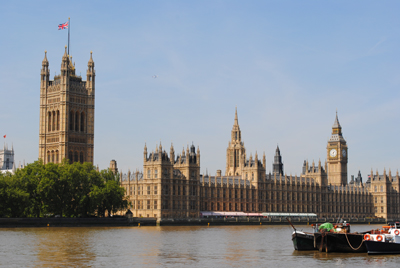
Commonly thought to be older than it actually is due to its Gothic stylings (although, to be fair, parts of it do date from medieval times), the Palace of Westminster – or, as it’s more commonly known, the Houses of Parliament – didn’t actually take on much of its current appearance until the latter half of the 19th century.

The need for a new building for parliament arose after 1834 when a fire, caused by the overheating of two underfloor stoves used to incinerate the Exchequer’s obsolete tally sticks, tore through the former complex, leaving only some structures from the old palace intact. They included the 11th century Westminster Hall (the largest in Europe when it was built), 14th century Jewel Tower and a chapterhouse, crypt and cloisters, all of which was once attached to the now gone St Stephen’s Chapel.

Houses-of-Parliament2While King William IV offered the use of Buckingham Palace for Parliament, the idea – along with a host of other options – was rejected as unsuitable. Instead, a competition was held for a new design and after almost 100 entries were considered, architect Charles Barry and his design for a new palace in the perpendicular Gothic style was chosen. Interestingly, while Barry was a classical architect, under the terms of the competition, designs were required to be in a Gothic style, thought to embody conservative values .

Incorporating some of the remains of the old palace – including Westminster Hall but not the Jewel Tower which to this day stands alone – the design was based around a series of internal courtyards with the House of Commons and House of Lords located on either side of a central lobby (first known as Octagonal Hall). The design involved reclaiming some land from the Thames so the building’s main river-facing facade could be completed.

Towers stand at either end of the complex – the Victoria Tower over the Sovereign’s Entrance at the southern end of the complex (for many years the tallest square stone tower in the world) and the narrower tower formerly known as the Clock Tower which houses the bell Big Ben, at the northern end – and there is a central Octagonal Tower which stands directly over the Central Lobby. The Clock Tower, incidentally, was renamed the Elizabeth Tower last year in honour of Queen Elizabeth II’s Diamond Jubilee (for more on it and Big Ben, see our earlier entries here and here).

Other towers include the Speaker’s Tower (located at the northern end of the building on the waterfront, this contains a residence for the Speaker), the Chancellor’s Tower (located at the southern end, it too contained a residence originally used by the Lord Chancellor) and St Stephen’s Tower – located in the middle of the building’s west front, it contains the public entrance to the building. Significant other rooms in the palace complex include the Robing Room – where the Queen puts on her ceremonial robes and crown before the State Opening of Parliament – and the Royal Gallery, used for state occasions.

The foundation stone (the building was constructed out of sand-coloured limestone from Yorkshire) was laid in 1840 and construction of the monumental building – which features more than 1,100 rooms and two miles of passageways – wasn’t completely finished until the 1870s although most of the work had been completed by 1860 (the year Barry died). The House of Lords first sat in their new chamber in 1847 and the House of Commons in 1852 (it was at this point that Barry was knighted for his work).

The cost, meanwhile, originally estimated at less than £750,000, ended up coming in at more than £2 million.

Much of the interior decoration owes its appearance to the Gothic revivalist Augustus Pugin who designed everything from wallpapers, to floor tiles and furnishings. Pugin also helped Barry with the external appearance but like Barry died before the project was completely finished (in 1852).

The palace was bombed numerous times in World War II – in one raid, the Commons Chamber was destroyed as firefighters opted to save the much older Westminster Hall instead. It was later rebuilt under the direction of Sir Giles Gilbert Scott and completed by 1950. Other aspects of the building have also been restored.

A Grade I-listed building classified as a World Heritage Site, Barry’s Houses of Parliament remain one of London’s most iconic structures. We’ll be looking in more detail at some of the building’s features in future posts.

WHERE: Houses of Parliament (nearest Tube stations are Westminster, St James’s Park and Embankment); WHEN: Tours (75 minutes) are run from 9.15am to 4.30pm on Saturdays (also six days a week during summer opening); COST: £15 adults/£10 concessions/£6 children five to 15 years (children under five are free). Prices go up after 1st April – check website for details and to purchase tickets (tours for UK residents, including climbing the Elizabeth Tower, can also be arranged through your MP); WEBSITE: www.parliament.uk.

For more, see Robert Wilson’s guide to the The Houses of Parliament or David Cannadine’s indepth,  The Houses of Parliament: History, Art, Architecture. For more on the story of the fire in 1834, see head parliamentary archivist Caroline Shenton’s recent book The Day Parliament Burned Down.

What’s in a name?…Richmond

It was King Henry VII, father of King Henry VIII, who brought the name Richmond to London.

Richmond-PalaceInheritor of the title of the Earl of Richmond (the title relates to lands in Yorkshire and centres on the castle of Richmond), on being crowned king, Henry VII gained the use of Sheen (or Shene) Palace located on the banks of the Thames, about seven miles south west of Westminster (the history of which we’ll look at in greater detail in an upcoming post).

Sheen Palace was largely destroyed in a fire in 1497 and the king gave orders for it to be rebuilt (Richmond Palace is pictured here – found on a sign at Richmond). It was on its completion in around 1502 that Henry decided to rename the palace after his former earldom – Richmond.

The name Richmond, by the way, comes from a French word for ‘old hill’.

The once separated town of Richmond is now at the centre of the London Borough of Richmond upon Thames (it became a municipal borough in 1890) and a popular residential suburb for London’s wealthy (among those who have lived there are Mick Jagger and Jerry Hall) – sought after for its riverside amenity, quaint village green, and panoramic views from Richmond Hill as well as its fine shopping and dining.

Richmond’s other great drawcard is Richmond Park, one of the city’s eight Royal Parks, and home to more than 600 deer (see our earlier entry on it here).

Around London – Of foundling tokens; a French field marshal’s grave marker; behind the scenes at Royal Albert Hall; Tom Daley’s swimming trunks; and, crime fiction at the British Library…

A new exhibition opens at the Foundling Museum tomorrow (25th January) which tells the often heart-breaking stories behind the tokens left by mothers with their babies at the Foundling Hospital between 1741-1760. While hundreds of tokens were removed from the hospital’s admission files in the 1860s, Fate, Hope & Charity reunites the tokens – which range from coins and jewellery to playing cards, poems and even a nut – with the foundlings to whom they were given. A moving exhibition. Museum admission charge applies. For more, see www.foundlingmuseum.org.uk.

The Duc and Duchesse de La Rochefoucauld-Doudeauville were among those who attended the dedication of a ledger stone marking the grave of their kinsman, Field Marshal Francois de La Rochefoucauld, the Marquis de Montendre, at Westminster Abbey last week. Born in 1672, de La Rochefoucauld served in the British Army during the reign of King William III and Queen Mary II after fleeing France as a Huguenot refugee (he had also succeeded his brother as marquis). He was promoted to field marshal in 1739 but died later that year and was buried in the abbey. The floor stone which was replaced by the new ledger stone will be sent to France for inscription and installation at Montendre. For more on the abbey, see www.westminster-abbey.org.

• One we should have mentioned with our piece on Royal Albert Hall last week. The Royal Albert Hall is running behind the scenes tours of the venue every Monday until 11th February as well as Tuesday 29th January (so you’ll have to be quick!). The tour – which runs as an extension of the front of house tour – takes in the loading bay located under the hall and one of the many dressing rooms (currently in use by Cirque de Soleil who are in residency with their new show KOOZA. The 90 minute Behind the Scenes tours cost £16. Booking in advance is strongly recommended. For more, see www.royalalberthall.com.

A pair of swimming trunks worn by diver Tom Daley during the 2012 Olympic Games has been donated to the Museum of London. The trunks join an ever increasing collection of Olympics and Paralympics-related outfits in the museum with others including a leotard worn by bronze-medal winning gymnast Beth Tweddle. A display featuring the Olympic kit is being planned for spring. Meanwhile, still aty the museum and an exhibition featuring a series of photographs exploring the city’s major arterial roadways opens on Saturday. The free exhibition, Highways: Photographs by John Davies, features six specially commissioned photographs taken by Davies in 2001-02 – just prior to the introduction of the Congestion Charge in 2003. Routes featured include the Elephant and Castle roundabout, the Hammersmith Flyover, Marble Arch and Hyde Park, St Pancras Station Midland Grand Hotel and the A501, the junction of Poultry and Queen Victoria Street and the Blackwall Tunnel entrance. Runs until 16th June. For more, see www.museumoflondon.org.

• On Now: Murder in the Library: An A-Z of Crime Fiction. This exhibition at the British Library looks at the history of crime fiction and features never-before-seen manuscripts, printed books, rare audio recordings, artworks and artefacts. Highlights include Arthur Conan Doyle’s manuscript of the Sherlock Holmes story, The Adventure of the Retired Colourman (1926); the first appearance in print of Miss Marple (in Royal Magazine in 1929); John Gielgud’s annotated script for the film Murder on the Orient Express, crime novels from unlikely authors including Pele and burlesque performer Gypsy Rose Lee and the 1933 book, the Jigsaw Puzzle Murders in which readers had to complete a jigsaw puzzle to solve the crime. A series of events will be taking place alongside the exhibition. Entry to the library’s Folio Society Gallery is free. Runs until 12th May. For more see www.bl.uk.

LondonLife – The big chill…

Sam-C-Moore

Says the photographer, Sam C Moore (of SCM Photography): “I was on my way to St Clement Danes and the telephone box against the snowy street background really caught my eye, and almost directly adjacent to it was a bike that had been parked up which added to help frame the shot. All I needed now was a black cap to drive past, so waited (very briefly) and, of course, being London. I got my wish” For more of Sam’s work, see www.flickr.com/people/84891527@N00/.

Taken an interesting photograph of somewhere in London? We’re always looking for interesting images of the city so if you’ve got one you reckon captures a snippet of life in London, please contact us at exploringlondon@gmail.com or via Flickr at www.flickr.com/groups/exploringlondon/

Around London – Duchess of Cambridge at the NPG; Imperial War Museum closed for now; and, Frozen London…

The controversial first official painted portrait of Kate Middleton, the Duchess of Cambridge, has gone on display at the National Portrait Gallery. Unveiled on 11th January, the portrait by Paul Emsley has already sparked considerable criticism. Emsley, the 2007 winner of the gallery’s BP Portrait Award competition, was chosen by the gallery’s director Sandy Nairne to paint the portrait which took three-and-a-half months to paint. It is now on permanent display in the gallery as part of Contemporary Collections in the Lerner Galleries in Room 36, on the ground floor. Admission is free. For more (including a film on the making of the portrait), see  www.npg.org.uk.

The Imperial War Museum has closed its doors until July this year as the museum undergoes an extensive refurbishment. In July, the museum will launch a new exhibition –  Horrible Histories®: Spies, and also reopen of The Lord Ashcroft Gallery: Extraordinary Heroes, The Holocaust Exhibition, Secret War, A Family in Wartime and the Explore History Centre. The redevelopment, meanwhile, will continue until summer 2014 when the brand new First World War Galleries will be opened, marking the 100-year anniversary of the start of the First World War. For more, see www.iwm.org.uk/visits/iwm-london.

On Now: Frozen London. This exhibition at the London Metropolitan Archives looks at the impact of some of the most severe winters the city has ever experienced which occurred between 1683 and 1895. A highlight is a look at the Frost Fairs which took place on the River Thames during that time. Runs until April 25th. Admission is free. For more, follow this link. Correction: Opened 21st January-25th April.

Exploring London’s 10 most popular posts for 2012 – 4 and 3…

4. Around London – Olympic Rings unveiled on Tower Bridge; London from above; Blake on Primrose; V&A illustrations; and, Munch at the Tate Modern. More on an Olympic theme.

3. LondonLife – Florence Nightingale remembered. A piece mentioning the annual service at Westminster Abbey commemorating the life of the ‘Lady with the Lamp’. Part of our LondonLife series.

Where is it?…#49

The latest in the series in which we ask you to identify where in London this picture was taken and what it’s of. If you think you can identify this picture, leave a comment below. We’ll reveal the answer early next week. Good luck!

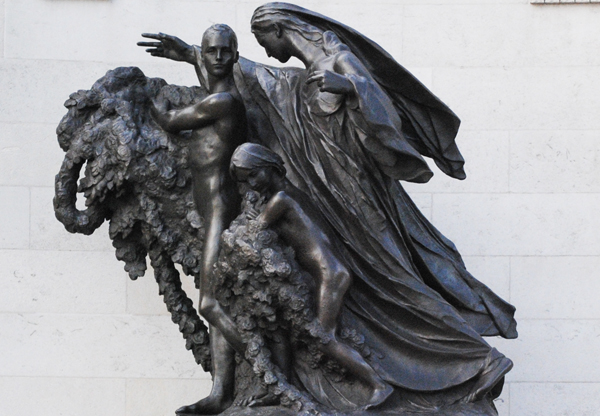
Sunday was Remembrance Day, so we thought it appropriate to have a war memorial as last week’s Where is it? This memorial, located at Victoria Embankment on the north bank of the Thames, is the Anglo-Belgian War Memorial, given in 1920 as a gift to Britain by the people of Belgium as a thank you for their help in providing a refuge in England during World War I. The work of celebrated Belgian sculptor Victor Rosseau, it features three bronze figures – a Belgian mother, a boy and a girl, the latter two carrying garlands – and although you can’t see it in this picture, there’s two figures behind them on the Portland stone surround representing ‘honour’ and ‘liberty’.

Around London – Lord Mayor’s Show; Remembrance Sunday; Ansel Adams at the NMM; and, Mughal India at the British Library…

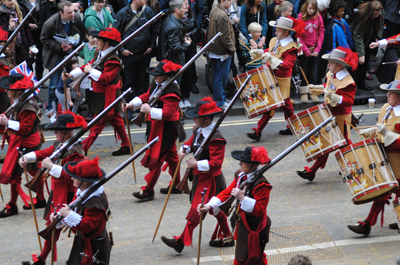
• The 2012 Lord Mayor’s Show is just about upon us and while you may not have a grandstand seat, there’s still plenty of places you can stand and watch the parade of more than 6,500 people pass by. Saturday’s parade – which celebrates the election of the 685th Lord Mayor of London, Alderman Roger Gifford – leaves Mansion House at 11am and travels via Poultry and Cheapside to St Paul’s Cathedral where it pauses for the Lord Mayor and his officials to receive a blessing – before continuing on via Ludgate Hill and Fleet Street to the Royal Courts of Justice, arriving there at about 12.30pm. There the Lord Mayor gives his oath of loyalty to the Crown (while in the surrounding streets the participants and 125 horses are fed and watered) before the parade reassembles and sets off from Embankment at 1pm, heading back to Mansion House via Queen Victoria Street – the Lord Mayor arrives sometime between 2pm and 2.30pm. (The website has a terrific one page map of the route you can download and print). There’s no fireworks display after the parade – although there’s a host of other activities taking place in the City of London – but if you’re up and about early enough, you may want to watch the Lord Mayor as he boards the barge QRB Gloriana at the Westminster Boating Base in Vauxhall at 8.30am and, escorted by a flotilla, makes his way up the Thames to HMS President, just below St Katharine Docks, arriving at about 9.35am after Tower Bridge opens in salute. For more, head to www.lordmayorsshow.org.

• The annual Remembrance Sunday service – commemorating the contribution of British and Commonwealth servicemen and women in the two World Wars and later conflicts – will take place at the Cenotaph on Whitehall at 11am this Sunday. While no tickets are required to watch the event, the Department of Culture, Media and Sport, who organise the service, advise arriving early if you wish to secure a good viewing space (and leave time for security checks at the entrance to either end of Whitehall). Whitehall opens at 8am. For more details, see www.culture.gov.uk/what_we_do/honours/3333.aspx.

A new exhibition of the work of US photographic pioneer Ansel Adams opens at the National Maritime Museum in Greenwich tomorrow (Friday). Ansel Adams: Photography from the Mountains to the Sea, which comes from the Peabody Essex Museum in Salem, Massachusetts, will feature more than 100 original prints, many of which have never been exhibited before in the UK. It is said to be the first exhibition to focus on his “lifelong fascination” with water and the display features some of Adams’ finest images based on this subject including what are some of the most famous photographs of the 20th century. Highlights include the first photograph Adams’ ever image – taken at age 14 – which features a pool located at the Panama Pacific Exhibition at the 1915 World’s Fair, the three American Trust murals produced in the 1950s on an “unprecedented scale”, Adam’s favorite work – Golden Gate before the Bridge – which hung above his desk, and iconic images such as Clearing Winter Storm, Yosemite and Stream, Sea, Clouds, Rodeo Lagoon, Marin Country, California. There is an admission charge. Runs until 28th April. For more details on the exhibition, see www.rmg.co.uk.

Also opening tomorrow (Friday) is the British Library’s major autumn exhibition – Mughal India: Art, Culture and Empire. The exhibition focuses on the Mughal dynasty – which once ruled over much of the Indian sub-continent – and is the first to document the period spanning the 16th to 19th centuries. Featuring more than 200 manuscripts and paintings, most of which come from the library’s own collection, highlights include Akbar ordering the slaughter to cease in 1578 – a work attributed to the artist Miskina in 1595, Abu’l Hasan’s early 17th century painting Squirrels in a plane tree, the historically important illustration Prince Aurangzeb reports to the Emperor Shah Jahan in durbar, and a portrait of Prince Dara Shikoh, favorite son and heir-apparent of 17th century Emperor Shah Jahan. Runs until 2nd April. Admission charge applies. For more on the exhibition and accompanying events, see www.bl.uk.

LondonLife Special – It’s Bonfire Night!…

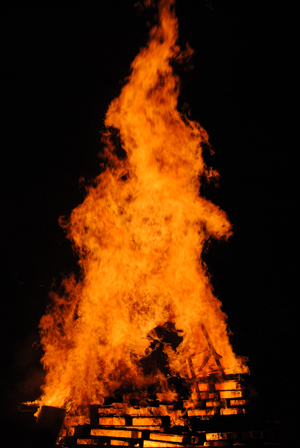
Today marks what was traditionally known as Guy Fawkes Day or, as it’s known more popularly today, Bonfire Night, when, along with people throughout the UK, Londoners celebrate the capture of would be regicide Guy Fawkes and his conspirators, who in 1605 plotted to blow up the House of Lords and with it, King James I, during the State Opening of Parliament.

We’ve previously run a couple of pieces on the conspiracy and some of the key people and places involved – check out our earlier entries here and here.

Meantime, if you’re wanting to attend a celebration in London, Time Out has a terrific guide to all the events taking place – simply head to their page here. Enjoy the night!