This Week in London – Of Empress Catherine the Great and Capability Brown; a blue plaque double; and, the British graphic novel on show…

A once forgotten collection of watercolour paintings and drawings owned by Empress Catherine the Great of Russia has gone on show at Hampton Court Palace as part of commemorations marking the 300th anniversary of the birth of Lancelot ‘Capability’ Brown. The Empress and the Gardener exhibition features almost 60 intricately detailed views of the palace and its park and gardens during the time when Brown worked there as chief gardener to King George III between 1764 and 1783. The works came to be in the collection of the Empress – a renowned fan of English gardens – after Brown’s assistant, John Spyers, sold two albums of his drawings of the palace to the her for the considerable sum of 1,000 roubles. The albums disappeared into her collection at the Hermitage (now the State Hermitage Museum) and lay forgotten for more than 200 years before they were rediscovered by curator Mikhail Dedinkin in 2002. As well as the collection – on public show for the first time, the exhibition features portraits of Brown and the Empress, previously unseen drawings of her ‘English Palace’ in the grounds of the Peterhof near St Petersburg, and several pieces from the ‘Green Frog’ dinner service, created for the Empress by Wedgwood, which is decorated with some of the landscapes the prolific Brown created across England. Runs until 4th September. Admission charge applies. For more, see www.hrp.org.uk/hampton-court-palace/.

A house in Chelsea has become only one of 19 homes in London to bear two official blue plaques. Number 48 Paultons Square has the honour of having been home to two Nobel prize winners (albeit in different fields) – dramatist Samuel Beckett, who lived there for seven months in 1934 while writing his first novel, Murphy, and physicist Patrick Blackett, noted for his revolutionary work in U-boat detection during World War II, who lived there from 1953 to 1969. Other ‘doubles’ include 20 Maresfield Gardens in Hampstead (home to Sigmund Freud and Anna Freud) and 29 Fitzroy Street in Fitzrovia (home to George Bernard Shaw and Virginia Woolf). This year marks the 150th anniversary of the blue plaques scheme. For more, see www.english-heritage.org.uk/visit/blue-plaques/.

The rise of the British graphic novel is the subject of a new exhibition at the Cartoon Museum in Bloomsbury. The Great British Graphic Novel features works by 18th century artist William Hogarth as well as Kate Charlesworth, Dave Gibbons (one of the creators of the ground-breaking Watchmen), Martin Row, Posy Simmonds (creator of the Tamara Drewe comic strip) and Bryan and Mary Talbot. It runs until 24th July. Admission charge applies. For more, see www.cartoonmuseum.org.

Send all items for inclusion to exploringlondon@gmail.com.
 

This Week in London – Life after the pharaohs in Egypt; Days of the Dead; horrible histories at two royal palaces; and Dickin and Gombrich honoured with Blue Plaques…

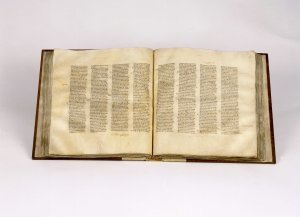
 •untitled 276.tif The first major exhibition to explore the history of Egypt after the pharaohs opens at the British Museum today. Egypt: Faith after the pharaohs spans 1,200 years of history – from 30 BC to 1171 AD – with 200 objects showing how Christian, Islamic and Jewish communities reinterpreted the pharaonic past of Egypt and interacted with each other. The exhibition opens with three significant examples of the Hebrew Bible, the Christian New Testament and the Islamic Qur’an – the texts include the New Testament part of the 4th century AD Codex Sinaiticus, the world’s oldest surviving Bible and the earliest complete copy of the New Testament, which is now part of the British Library’s collection. All three are juxtaposed with everyday stamps associated with each of the three religions in an illustration of the relationship between the institutional side of religion and its everyday practice, both key themes of the exhibition. Other exhibits include a pair of 6th-7th century door curtains featuring classical and Christian religious motifs, a 1st-2nd century statue of the Egyptian god Horus in Roman military costume, and a letter from the Roman Emperor Claudius (41-54 AD) concerning the cult of the divine emperor and the status of Jews in Alexandria. Admission charge applies. Runs until 7th February in Room 35. A programme of events accompanies the exhibition. For more, see www.britishmuseum.org/egypt. PICTURE: Codex Sinaiticus, open at John 5:6-6:23. Image courtesy of the British Library.
Still at the British Museum and a free four day festival of art, performance, storytelling and talks kicks off on Friday night to mark the Mexican tradition of the Days of the Dead. The annual celebration, which draws on both native and Catholic beliefs, is held on 1st and 2nd November and sees families gather to remember relatives and friends who have died. The festival, which is being conducted in association with the Mexican Government, includes a Friday evening event, a weekend of family activities featuring storytelling, films, music and dance, and a study day  on Monday featuring lectures, gallery talks and activities. The museum will feature elaborate decorations by Mexican artists – including Betsabeé Romero – throughout the festival with a particular focus on the Great Court and Forecourt. Events – which run from 30th October to 2nd November – are free. For more, see www.britishmuseum.org/dotd.

Horrible histories indeed! Hampton Court Palace and Kensington Palace are both hosting ghost tours from this weekend. The tours focus on some of the more grisly aspects of the history of the palaces with tours at Hampton Court featuring a visit to a shallow grave which was only uncovered in 1870 and those at Kensington Palace encountering the gruesome details of King William III’s fatal horse-riding accident and Queen Caroline’s horrific final hours. Admission charges apply. For more details, head to www.hrp.org.uk.

Animal welfare campaigner Maria Dickin (1870-1951) and art historian EH Gombrich (1909-2001) have been honoured with English Heritage Blue Plaques. The plaque commemorating Dickin – founder of the People’s Dispensary for Sick Animals (PDSA) and of the PDSA Dickin medal, awarded to animals associated with the armed forces or civil defence who have shown conspicuous gallantry and devotion to duty – has been placed on the Hackney house at 41 Cassland Road where she was born and spent the first few years of her life. Meanwhile the plaque to Gombrich was placed on the house at 19 Briardale Gardens in Hampstead where he lived for almost 50 years, from shortly after publication of his seminal work The Story of Art to his death in 2001. For more see www.english-heritage.org.uk/visit/blue-plaques/.

Send all items for inclusion to exploringlondon@gmail.com.

This Week in London – Indian textiles at the V&A; a “typical London street” on show; and, Nobel laureate given Blue Plaque…

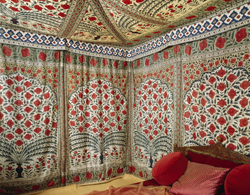
Tipus_Tent_c_National_Trust_ImagesA spectacular tent used by the Tipu Sultan, ruler of the 18th century Kingdom of Mysore (pictured), is among highlights in an exhibition exploring the “incomparably rich world” of handmade textiles from India which opens at the V&A in South Kensington on Saturday. Part of the V&A’s India Festival marking the 25th anniversary of the opening of the museum’s Nehru Gallery, The Fabric of India has exhibits ranging from the earliest known Indian textile fragments (dating from the 3rd century) through to contemporary fashions. Among the around 200 handmade objects – which include everything from ancient ceremonial banners and sacred temple hangings to modern saris and bandanna handkerchiefs – are a Hindu narrative cloth depicting avatars of Vishnu dating from about 1570, an 18th century crucifixion scene made for an Armenian Christian church in south-east India, block-printed ceremonial textiles from Gujarat – made in the 14th century for the Indonesian market, bed-hangings originally belonging to the Austrian Prince Eugene (1663-1736), and a selection of clothing made using Khadi, a cloth which Mahatma Gandhi promoted using in the 1930s when he asked people to make the fabric as a symbol of resistance to colonial rule. Admission charges apply. Runs until 10th January. For more see, www.vam.ac.uk/fabricofindia. PICTURE: © National Trust Images.

Westbury Road in Bounds Green, Haringey, is the subject of a new photographic and art exhibit which opened at the Geffrye Museum in Shoreditch this week. A Street Seen: The Residents of Westbury Road is a collaborative exhibition featuring the works of photographer Andrew Buurman and artist Gabriela Schutz as they document the homes, gardens and residents of what is described as a “typical London street”. The display includes a six metre long panoramic drawing of Victorian houses by Schutz and a series of photographs depicting residents in their back gardens taken over a two year period by Buurman. Runs until 3rd April. For more, see www.geffrye-museum.org.uk.

One of the founding fathers of sports medicine, Nobel Prize winner AV Hill, has been honoured with an English Heritage blue plaque unveiled at his former home in Highgate in London’s north last month. Hill, as well as being noted for his work in the field of physiology, was also an independent MP during World War II and a humanitarian who is credited with helping more than 900 academics – including 18 Nobel laureates – escape persecution by the Nazis. He lived at the property at 16 Bishopswood Road for 44 years, between 1923 and 1967, 10 years before his death. For more on blue plaques, see www.english-heritage.org.uk/visit/blue-plaques/.

Send all items for inclusion to exploringlondon@gmail.com.


Lost London – The Great Conduit…

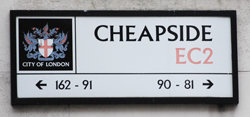
CheapsideLocated at the junction of Cheapside and Poultry, the Great Conduit, also known as the Cheapside Standard, was a famous medieval public fountain.

The Great Conduit (the word conduit refers to column fountains fitted with ‘cocks’ or taps for dispensing the water) gave access to water piped using gravity four kilometres from the Tyburn into the City largely via lead pipes.

It was constructed by the City Corporation from the mid-13th century after King Henry III approved the project in 1237. It was rectangular-shaped timber building with an elevated lead tank inside from which the water was drawn.

It took the name ‘Great’ after further conduits were built further west in Cheapside in the 1390s. There were at least 15 conduits or standards scattered about the City by the time of the Great Fire in 1666.

It was rebuilt several times over its life, notably in the reign of King Henry VI, but after being severely damaged in the fire was deemed irreparable and orders were given for it to be taken down in 1669 (many houses by then had alternate water supplies, notably from the New River project). From the 1360s, management of the conduit was the responsibility of four wardens, maintaining the pipes and charging professional water carriers and tradesmen who required water by allowing free

The Cheapside Conduit was a notable landmark – some executions and other punishments were carried out here, speeches were made from here and the conduit building itself was used as a place for posting information. And to celebrate special occasions it was made to flow with wine – this took place in 1432 when King Henry VI marched through London after being crowned King of France, at the coronation of Queen Margaret in 1445 and at the wedding procession of King Henry VIII’s queen Anne Boleyn in 1533.

The substructure of the Great Conduit was rediscovered at the end of the 19th century and again in the 1990s. A plaque marking the location of the Great Conduit at the eastern end of Cheapside was unveiled in late 1994 by Thames Water and the Worshipful Company of Water Conservators. There’s also a memorial set into the pavement over the substructure.

London Pub Signs – The Mawson Arms/The Fox and Hounds…

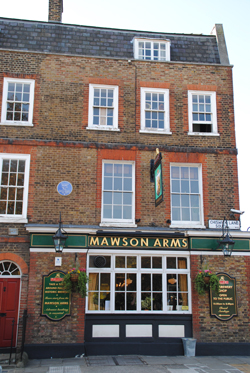
This curiously named Chiswick institution, one of few pubs in England with two names, owes its existence to the brewery located next to the terraces in Mawson Row.

Mawson-ArmsThomas Mawson founded the brewery on the site in the late 1600s/early 1700s and it eventually became what is now known as Fuller’s Griffin Brewery located a few doors down from the pub.

The Grade II*-listed building in which the pub is located dates from about 1715 when the terrace of five houses was constructed for Mawson.

The 18th century poet Alexander Pope was among residents at number 110 (between 1716-1719, when he published his translation of The Iliad and his first collected works). A function room in the pub now bears his name and there’s a blue plaque mentioning his stay on the outside.

While there had long been a pub here called the Fox and Hounds, in the late 19th century, the old pub was extended into the corner building and gained its second name, The Mawson Arms.

The pub, only a short walk away from the Thames, now serves as the starting point for a tour of the brewery. It’s traditionally been a favoured watering hole of brewery workers.

For more, see www.mawsonarmschiswick.co.uk.

10 small, ‘secret’ and historic gardens in central London…5. Seething Lane Garden…

Seething-Lane-Garden

This small, simply laid out garden in the City of London is redolent with history.

It was once the site of the Navy Office, the workplace of diarist Samuel Pepys, and it was in the garden of this building that he and Sir William Penn buried their wine and parmesan cheese for safety during the Great Fire of London in 1666.

The office survived the Great Fire but was, oddly enough, destroyed by fire only a few years later in 1673 (there is a blue plaque commemorating it in the garden) and a new office, designed by Sir Christopher Wren, was built here in the early 1680s before it was demolished in 1788.

Seething-Lane-Garden2It’s due to its association with Pepys (who also lived in the street and was buried in the nearby church of St Olave Hart Street) that it boasts a bronze bust of him which was erected by the Samuel Pepys Club in 1983, designed by Karin Jonzen and funded by public subscription. It was presented to the garden by Fred Cleary who played an instrumental role in encouraging green spaces in the Square Mile in the 1970s.

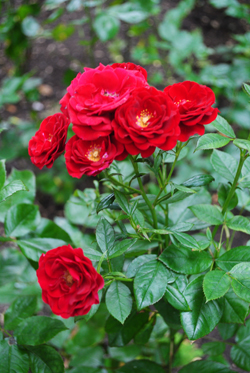
The garden, which was laid out in about 1950, is also notable for its beds of red roses, planted to commemorate the deal struck in 1381 in which the Sir Robert Knollys was belatedly granted permission for a footbridge his wife had built over Seething Lane. She had done so contrary to planning rules while he was away fighting with John of Gaunt (ostensibly so she could avoid the dust of the street when crossing from her house to her rose garden), and so when he returned, the City of London Corporation allowed the bridge (now long gone) to remain, but only in exchange for the symbolic “penalty” of one red rose a year.

The occasion is still marked each June in a ceremony overseen by the Company of Watermen and Lightermen of the River Thames in which a red rose is plucked from the garden and delivered to the Lord Mayor of London at Mansion House.

WHERE: Seething Lane Garden, Seething Lane, City of London (nearest Tube stations is Tower Hill); WHEN: Daily; COST: Free; WEBSITE: www.cityoflondon.gov.uk/things-to-do/green-spaces/city-gardens/Pages/default.aspx.

This garden reopened in 2018 after being redeveloped as part of the Trinity Square redevelopment.


10 sites from London at the time of the Magna Carta – 8. Bermondsey Abbey…

Bermondsey Abbey, which was more than 130-years-old by the time King John put his seal to the Magna Carta in 1215, has an unusual connection to the unpopular king – it is one of a number of buildings in London which has, at various times in history, been erroneously referred to as King John’s Palace.

This suggestion – that it was a palace which was later converted into an abbey – may have arisen from a site on the former abbey grounds being known at some point in its history as King John’s Court (that name was said to commemorate the fact that King John visited the abbey).

Putting how King John’s name came to be linked with the abbey aside, we’ll take a quick look at the history of the abbey which rose to become an important ecclesiastical institution in medieval times.

While there was a monastic institution in Bermondsey as far back as the early 8th century, the priory which was here during the reign of King John was founded in 1082, possibly on the site of the earlier institution, by a Londoner named as Aylwin Child(e), apparently a wealthy Saxon merchant who was granted the land by King William the Conqueror.

In 1089, the monastery –  located about a mile back from the river between Southwark and Rotherhithe – became the Cluniac Priory of St Saviour, an order centred on the French abbey of Cluny, and was endowed by King William II (William Rufus) with the manor of Bermondsey.

It was “naturalised” – that is, became English – by the first English prior, Richard Dunton, in 1380, who paid a substantial fine for the process. It was elevated to the status of an abbey by Pope Boniface IX in 1399.

It had some important royal connections – King John’s father, King Henry II and his wife Queen Eleanor celebrated Christmas here in 1154 (their second child, the ill-fated Henry, the young King, was born here a couple of months later), and Queen Catherine (of Valois), wife of King Henry V, died here in 1437. It was also at Bermondsey Abbey that Elizabeth Woodville, the widow of King Edward IV and mother of the two “Princes in the Tower”, died in 1492 following her retirement from court.

The abbey, which grew to have an enormous income thanks to its acquisition of property in a range of counties, survived until the Dissolution when, in 1537, King Henry VIII closed its doors. It was later acquired by Sir Thomas Pope who demolished the abbey and built a mansion for himself on the site (and founded Trinity College in Oxford apparently using revenues from the property). We’ll deal more with its later history in an upcoming post.

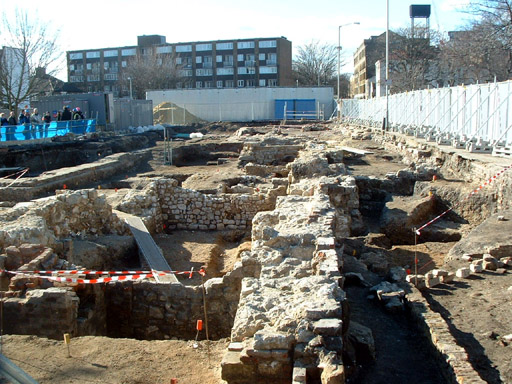
The ruins of the abbey were extensively excavated in the past few decades and some of the remaining ruins of the abbey can still be seen buildings around Bermondsey Square and a blue plaque commemorating the abbey was unveiled in 2010. Bermondsey Street runs roughly along the line of the path which once led from the abbey gates to the Thames and the abbey had a dock there still commemorated as St Saviour’s Dock. The abbey’s name is commemorated in various streets around the area.

For more on the history of the Magna Carta, see David Starkey’s Magna Carta: The True Story Behind the Charter.

PICTURE: An archaeological dig at the ruins of Bermondsey Abbey in 2006. Zefrog/Wikipedia.

Lost London – St Martin Outwich…

This former City church – now part of the parish of St Helen’s Bishopsgate – once stood on the corner of Threadneedle Street and Bishopsgate (the site is marked by a blue plaque).

St-Martin-OutwichA medieval church which was apparently rebuilt in the 14th century in the Gothic style, it was dedicated to St Martin while there is some discrepancy over the use of the name Outwich – some sources say it comes from a corruption of the name of the family who paid for its reconstruction – the Oteswich family – while others say the family in fact took their name from the church and that ‘outwich’ simply means the outer side of the wich (one of a number of Saxon words for a town).

It survived the Great Fire of 1666 but gradually fell into disrepair and in 1765 was badly damaged in another fire which destroyed some 50 houses.

In 1796, Parliament passed an act allowing the parish to raise money for its building – the donations included some from the powerful City livery companies – and after a couple of years of construction, it was consecrated in November, 1798.

Designed by Samuel P Cockerell, the church was unusual in that it featured an oval interior. Medieval stained glass from the original church was placed in a window over the altar while some of the monuments that had been present in the old church – including one commemorating John Oteswich and his wife – were transferred to the new. The dead buried at St Martin Outwich, meanwhile, were reburied in the City of London churchyard (where a memorial to them can now be seen).

A painting from 1838 shows a curved interior with high semi-circular windows, some intricate medieval monuments and closed in box pews.

Thanks to a falling population and pressure to widen the streets, the church was eventually demolished in 1874 and the parish amalgamated with St Helen’s. As had previously happened, a number of monuments – including the Oteswich memorial – which were in the old church were moved to St Helen’s before its demolition.

Proceeds from the sale of the church grounds were used to fund the construction of Holy Trinity Church in Dalston. Built in the late 1870s to the designs of Ewan Christian, it is perhaps best known as the Clown’s Church and is where the clown service is usually held each year.

PICTURE: sleepymyf

10 London sites associated with Sir Winston Churchill – 5. London residences…

Throughout his life – as a child, bachelor, husband and family man, Sir Winston lived in many properties in London (although, of course, a couple of the most famous properties associated with him – his birthplace, Blenheim Palace, and the much-loved family home, Chartwell in Kent – are located outside the city). But, those and 10 Downing Street aside, here are just some of the many places he lived in within London…

29 St James’s Place, St James: Having been born at Blenheim Palace in Oxfordshire and then having spent time in Dublin, at the age of five (1880) he came to live here with his family. He remained here until 1882 when he was sent off to school in Ascot (he later attended schools in Sussex and, most famously, Harrow School). The family, meanwhile, moved to a townshouse at 2 Connaught Place which backed on to Hyde Park.

33 Eccleston Square, Pimlico: The Churchills moved here in 1909 and it was here that their first two children Diana and Randolph were born in 1909 and in 1911. The family remained here until 1913. A blue plaque marks the property.

• Admiralty House, Whitehall: The Churchills first moved into Admiralty House – part of the Admiralty complex on Whitehall – in 1913 (from the aforementioned Eccleston Square) after Churchill was made First Lord of the Admiralty. They remained here until 1915 – years he would go onto to describe as the happiest in his life – before he resigned but returned in 1939 when he was once again appointed to the position.

• 2 Sussex Square, Bayswater: In 1920, the Churchills bought this property just north of Hyde Park which they kept until 1924 when they moved into 11 Downing Street (see below). The property is marked with a blue plaque.

• 11 Downing Street, Whitehall: The Churchills lived at 11 Downing Street when Sir Winston was Chancellor of the Exchequer, from 1925 to 1929. The property, located in Downing Street, is not accessible to the public.

11 Morpeth Mansions, Morpeth Terrace, Westminster:  The Churchill family lived at this Westminster address between 1930 and 1939 (prior to him becoming Prime Minister). The property is marked by a brown plaque.

28 Hyde Park Gate, Kensington: Churchill died in this Grade II-listed, mid 19th century property on the morning of 24th January, 1965. The couple moved in after the end of World War II and, while it’s not clear whether they fully vacated the residence when he was prime minister between 1951-55, it remained their property until his death 10 years later. The property next door, number 27, provided accommodation for his staff. The property is marked with a blue plaque.

This Week in London – Hogarth cartoons; Daniel O’Connell blue plaque; and, Peder Balke paintings on show…

The works of famed 18th century chronicler of London, William Hogarth, are on show at the Cartoon Museum in Bloomsbury. Marking the 25oth anniversary of his death on the night of 25th/26th October, 1764, the display Hogarth’s London features more than 50 of the artist’s best known satirical prints including A Harlot’s Progress, A Rake’s Progress, The Four Times of Day, Industry and Idleness and Gin Lane and Beer Street. A series of events – including an evening of Baroque dance & music, gin, beer and cartooning on 28th November – accompanies this exhibition which runs until 18th January and is supported by The William Hogarth Trust. Admission charge applies. For more, see www.cartoonmuseum.org/exhibitions/current-exhibitions/hogarth-s-london.

Nineteenth century Irish political leader Daniel O’Connell has been honoured with an English Heritage blue plaque as his former London home. Known as ‘The Liberator’, O’Connell was an abolitionist who successfully campaigned for civil and Catholic rights – including the right for Catholics to sit in the British Parliament. The first popularly elected MP since the Reformation, he lived in the property at 14 Albermarle Street in Mayfair with his family for several months in 1833 – a year in which a number of his supporters were elected to the House of Commons and in which the act to abolish slavery was given royal assent. For more, see www.english-heritage.org.uk/discover/blue-plaques/.

On Now: Peder Balke. The first ever UK exhibition focused on the paintings of this 19th century Norwegian artist is underway at the National Gallery on Trafalgar Square. Held in conjunction with the Northern Norway Art Museum, the exhibition features more than 50 paintings, the majority of which have never been seen in the UK before. The display includes works from across Balke’s career, including The Tempest (c 1862), the only painting by a Norwegian artist in the gallery’s collection. This free exhibition runs in the Sunley Room until April. For more, see www.nationalgallery.org.uk.

Send all items for inclusion to exploringlondon@gmail.com.

This Week in London – Rare chance to see four Magna Cartas together; Covent Garden films; Raymond Chandler’s childhood home recalled; and Rembrandt at Kenwood…

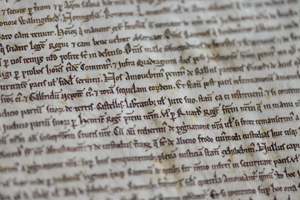
Magna-Carta• The only four surviving copies of the original Magna Carta from 1215 will go on display together for the first time ever  at the British Library in King’s Cross next February – and you have a chance to be among the 1,215 people to see them. In an event to mark the 800th year of the creation of the document, the library – which holds two copies of the document – along with Lincoln Cathedral and Salisbury Cathedral – each of which holds one copy – are holding a ballot with winners able to attend an event in which they’ll have the unique opportunity to see the documents side-by-side as well as be treated to a special introduction on its history and legacy by historian and TV presenter Dan Jones. The ballot to see the documents is open until 31st October with winners drawn at random. It’s free to enter – head to www.bl.uk/magna-carta to do so. The four documents will subsequently feature separately in displays at each of the three institutions. One not to miss! PICTURE: Salisbury Cathedral’s Magna Carta/Ash Mills.

The Silent Swoon Free Film Festival kicks off in St Martin’s Courtyard, Covent Garden, next week. The courtyard will be transformed into an open air movie theatre showing a different movie each night – The Talented Mr Ripley on 14th October, Crazy, Stupid, Love on 15th October and Rebel without a Cause on 16th October. Most of the free tickets will be allocated through an online draw but a small number will be allocated each night on a first come, first serve basis. For those with tickets, a range of freebies will be available on the night (including popcorn!). For more information, head to www.stmartinscourtyard.co.uk/silent-swoon-cinema-festival.

Crime writer and film noir pioneer Raymond Chandler has been remembered with the placement of an English Heritage blue plaque outside his childhood home in Upper Norwood, south east London. Chandler, who received global acclaim for his Philip Marlowe novels and his work on movies like The Blue Dahlia, lived at the home from 1901 after emigrating from the US with his mother, aunt and grandmother at the age of 12. He remained at the double-fronted red brick villa until 1908 – the same year he published his first poem, The Unknown Love. In his early Twenties, Chandler worked as a freelance reporter for London newspapers but, disillusioned with writing, returned to the US in 1912. He spent the next decade working for an oil company before the loss of his job in 1932 pushed him to restart writing. He first novel was published in 1939, and he went on to write further books and movie screenplays to ongoing renown. For more on the blue plaques scheme, see www.english-heritage.org.uk/discover/blue-plaques/.

Two early works of Rembrandt have gone on display at Kenwood House this month. Anna and the Blind Tobit and Jeremiah Lamenting the Destruction of Jerusalem, both of which date from around 1630, will be seen in the Hampstead landmark until May next year. The two paintings replace Rembrandt’s Portrait of the artist which usually hangs in Kenwood and is on show at the National Gallery and Rijksmuseum in Amsterdam (from where the two paintings now at Kenwood have come). For more, see www.english-heritage.org.uk/kenwood. An exhibition of Rembrandt’s works opens at the National Gallery next week – more details then!

Send all items for inclusion to exploringlondon@gmail.com.

This Week in London – Gothic literature at the British Library; founder of War Graves Commission honoured; and, New Year’s Eve tickets on sale…

Gothic The UK’s largest exhibition of Gothic literature opens at the British Library in Kings Cross on Saturday (4th October), marking the 250th anniversary of the publication of the breakthrough book, Horace Walpole’s The Castle of Otranto. Terror and Wonder: The Gothic Imagination will feature manuscripts and rare and personal editions of Gothic classics like Bram Stoker’s Dracula, Mary Shelley’s Frankenstein, Robert Louis Stevenson’s Strange Case of Dr Jekyll and Mr Hyde and Charles Dickens’ Oliver Twist as well as the work of contemporary writers like Angela Carter and Mervyn Peake. There will also be Gothic-inspired artworks by the likes of Henry Fuseli and William Blake and modern art, photography, costumes and movies by the likes of Chapman Brothers and Stanley Kubrick. A range of literary, film and music events will accompany the exhibition which runs until 20th January. Admission charge applies. For more, see www.bl.uk/whatson/exhibitions/gothic/. PICTURE: Percival Delivering Belisane from the Enchantment of Urma, Henry Fuselli. © Tate.

The founder of the Imperial (now Commonwealth) War Graves Commission, Sir Fabian Ware (1869-1949), has been honoured with an English Heritage blue plaque at his former home in Marylebone. Sir Fabian lived at the early 19th century Grade II-listed terraced house at 14 Wyndham Place between 1911 and 1919. It was during this period that he served with the British Red Cross in France and first began recording the graves of soldiers killed in battle. In 1917, the Imperial War Graves Commission was formed with the task of reburying the war dead in permanent cemeteries in France. Knighted in 1920, Sir Fabian was to be director of graves registration and enquiries at the War Office during World War II and it was at this time that he extended the war graves scheme to civilians killed in the conflict. The commission changed its name to the Commonwealth War Graves Commission in 1960. Today it cares for cemeteries and memorials at 23,000 locations in 153 countries. For more, see www.english-heritage.org.uk/discover/blue-plaques/.

New Year’s Eve in London will be a ticketed event for the first time this year with 100,000 tickets being made available to the public with each costing a £10 administration fee – the entire sum of which will apparently be used to pay for the ticketing system. Making the announcement last month, the Mayor of London, Boris Johnson’s, office, said the growth in numbers of those who have gathered to watch the fireworks on the Thames – from around 100,000 in 2003 to an estimated 500,000 last year – has put an enormous strain on transport and safety infrastructure and meant people have had to turn up earlier and earlier to get a good view, facing hours waiting in cold and cramped conditions, or risk being among the “hundreds of thousands” unable to get a good view or even see the display at all. Booking tickets – people may secure up to four – will guarantee “good views of the celebrations and a better visitor experience”. To book tickets, head to www.london.gov.uk/nye.

Send all items for inclusion to exploringlondon@gmail.com.

This Week in London – Bridges in focus; cheap entry to Tower Bridge; WW1 nurse honoured; and, Dennis Hopper’s photographs…

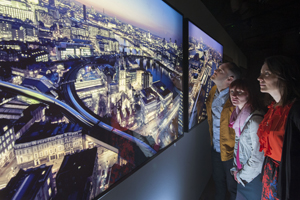
Bridge-ExhibitionA new exhibition on London’s bridges commemorating the 120th anniversary of the opening of Tower Bridge opens at the Museum of London Docklands tomorrow. The largest art exhibition ever staged at the museum, Bridge features rarely seen contemporary and historical works, photography, films and maquettes of London’s bridges and explores the role they play in the city. Highlights include Giovanni Battista Piranesi’s 1766 etching A view of the intended bridge at Blackfriars, London, Charles Ginner’s 1913 work London Bridge, and Ewan Gibbs’ 2007 linocut London. The exhibition will also feature a rare photograph taken by William Henry Fox Talbot in 1845, Old Hungerford Bridge. The oldest photograph in the museum’s collection, it will only be on display for one month from tomorrow. The exhibition, entry to which is free, runs until 2nd November. For more, see www.museumoflondon.org.uk/docklands/. (PICTURE: © Museum of London Docklands).

Don’t forget there is a special admission entry offer of just £1.20 to the Tower Bridge Exhibition this Monday, 30th June – 120 years to the day since the Prince of Wales (later King Edward VII) opened the iconic structure. Tickets must be bought at the door. There will be some Victorian re-enactors at the bridge on the day including police, tourists and engineers and each visitor will receive a special ticket which replicates the design of the invite to the 1894 ceremony (a limited edition commemorative badge will also be available to buy). For more, see www.towerbridge.org.uk.

The Australian-born nurse responsible for the entire nursing operation on the Western Front during World War I has been commemorated with an English Heritage Blue Plaque unveiled at her former home in Chelsea. Maud McCarthy, one-time Army Matron-in-Chief, was in charge of more than 6,000 British, Imperial and American nurses in 1918. Her accolades included the Florence Nightingale Medal – the highest international distinction a nurse can receive. McCarthy lived at 47 Markham Square for almost 30 years after the war, from 1919 until shortly before her death in 1949. For more, see www.english-heritage.org.uk/discover/blue-plaques/.

An exhibition featuring more than 400 photographs taken by the late US actor, film director and artist Dennis Hopper opened at the Royal Academy of Arts off Piccadilly today. Dennis Hopper: The Lost Album is the first time the body of work – first shown in Texas in 1970 – has been displayed in the UK. The photographs document the social and cultural life of the American Sixties and cover a range of themes and subjects. They include portraits of the likes of Paul Newman, Andy Warhol and Jane Fonda, and images depicting members of counter-cultural movements as well as events such as the 1965 march civil rights march from Selma to Montgomery. Admission charge applies. Runs until 19th October. For more, see www.royalacademy.org.uk.

Send all items of interest for inclusion to exploringlondon@gmail.com.

This Week in London – Celebrating the Year of the Bus; the British Library looks at WWI; medieval jousting and The Duke of Wellington; and, Blue Plaque nominations resumed…

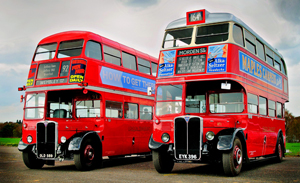
BusesAlmost 50 buses, from a horse-drawn model of the 1820s to the New Routemasters of today, will come to Regent Street on Sunday in celebration of the Year of the Bus. The ‘Regent Street Bus Cavalcade’ – which will stretch from Piccadilly Circus to Oxford Circus and will see the iconic West End street closed to traffic – will also feature a variety of free family events including Lego workshops (there will be a bus shelter and bus stop made entirely out of Lego outside Hamley’s toy shop), children’s theatre performances, a pop-up London Transport canteen and the chance to have a personal message recorded by the voice of London’s buses, Emma Hignett. There will also be an exhibition – Battle Bus – which provides information about the B-type bus (a newly restored version of which will be on display) which was used during World War I to carry soldiers to the frontline as well as ambulances and mobile pigeon lofts while jewellery company Tatty Devine will feature a special range of bus-inspired jewellery and hold jewellery-making workshops on board a London bus. The cavalcade, supported by the Regent Street Association and The Crown Estate, is part of Transport for London’s celebrations marking the Year of the Bus, organised in partnership with the London Transport Museum and the capital’s bus operators. The free event runs from 11.30am to 6pm. For more information, see www.tfl.gov.uk/yearofthebus and www.ltmuseum.co.uk.

A new exhibition of materials showing how people coped at home and on the front during World War I opens at the British Library in King’s Cross today as part of efforts to mark the war’s centenary. Enduring War: Grief, Grit and Humour features personal objects such as letters, a handkerchief bearing the lyrics of It’s A Long, Long Way to Tipperary, Christmas cards, school essays about airship raids over London sit and recruitment posters, humorous magazines and even a knitting pattern for balaclavas. Highlights include a letter in which Sir Arthur Conan Doyle expresses his concern over his son serving at the front, manuscripts by war poets such as Rupert Brooke as well as Wilfred Owen’s manuscript for Anthem for Doomed Youth, Vaughan Williams’ A Pastoral Symphony and Laurence Binyon’s For the Fallen. A specially commissioned video and ‘soundscape’, Writing Home, features personal messages contained on postcards written to and from the front. A range of events accompanies the free exhibition. Runs until 12th October. For more on the exhibition, see www.bl.uk.

Armoured knights on horseback can be seen jousting at Eltham Palace in south London this weekend. The former childhood home of King Henry VIII will host a Grand Medieval Joust which will also include displays of foot combat, the antics of a court jester, medieval music performances and a series of children’s events including a knight’s school. Runs from 10am to 5pm on both Saturday and Sunday. Admission charge applies. For more, see www.english-heritage.org.uk/events. Meanwhile, the Battle of Waterloo is being remembered at the Duke of Wellington’s home of Apsley House near Hyde Park Corner. Visitors will come face-to-face with Wellington’s troops and their wives, having the chance to take a look inside a soldier’s knapsack, see the equipment he used and the drills he performed as well as see the Battle of Waterloo recreated in vegetables. The Waterloo Festival – this year marks 200 years since Napoleon’s abdication and exile to Elba – runs from 11am to 5pm on Saturday and Sunday. Admission charge applies. For more, see www.english-heritage.org.uk/apsley/.

Nominations have reopened for English Heritage’s Blue Plaques scheme in London. In 2012 nominations were temporarily suspended while new funding for the scheme was found and thanks to one individual’s donation and the creation of a new Blue Plaques Club to support the scheme on an ongoing basis, they have now reopened. There are 880 official Blue Plaques on London’s streets – remembering everyone from Florence Nightingale to Fred Perry and Charles Darwin. For more and details on nominations, see www.english-heritage.org.uk/discover/blue-plaques/.

Send all items of interest for inclusion to exploringlondon@gmail.com.

What’s in a name?…Maida Vale

This district in west London – located to the south-west of St Johns Wood – takes its name from the Italian town of Maida in Calabria where, in 1806, the British won a victory over Napoleon.

Led by Sir John Stuart (later Count of Maida), about 5,000 British troops defeated a larger number of French in a battle in what was a much-needed boost to the British after the defeat at Austerlitz in December the previous year.

Regent's-Canal-looking-toward-Little-VeniceThere was apparently a pub located in the area named, in the wake of the victory, ‘The Hero of Maida’ in reference to Stuart and his role in the battle. The pub has since gone but its name lives on in the street and the district which still carries it.

Landmarks in Maida Vale include the basin – complete with houseboats and the puppet theatre barge – known as Little Venice (some say this name was coined by poet Robert Browning; others attribute it to Lord Byron) where Regent’s Canal meets with the Paddington arm of the Grand Junction Canal (pictured is Regent’s Canal looking toward Little Venice).

Maida Vale is also home to the BBC Maida Vale Studios (on Delaware Road) while notable residents have included computer science pioneer Alan Turing who was born at 2 Warrington Crescent in 1912 and David Ben-Gurion, first Prime Minister of Israel, who lived at 75 Warrington Crescent.

The area to the south-west is unofficially known as Maida Hill and this was apparently initially the name used for the entire area until the more romantic Maida Vale came into usage in the mid 19th century. Maida Vale also gives its name to a Tube station – it opened in 1915.

This Week in London – London’s World War I transport in focus; Museums at Night; and, Tony Hancock remembered…

Opening tomorrow, a major exhibition at the London Transport Museum will take an in-depth look at the role transport played in London during World War I – from how London bus drivers took their vehicles to the front lines to the advance of women into the transport workforce for the first time and, of course, how Londoners fared under the deadly aerial attack of the Luftwaffe. Key among the objects on display as part of Goodbye Piccadilly at the Covent Garden site will be ‘Ole’ Bill’ – a 1911 bus on loan from the Imperial War Museum which was requisitioned for the front and, taking its name from Bruce Bairsfather’s popular cartoon character, featured regularly in Armistice Day parades until the 1960s. Other highlights include World War I recruitment posters, a 1914 female bus conductor’s uniform and a newly acquired piece of ‘trench art’ – a decorated Daimler bus steering wheel. Runs until 8th March. Admission charge applies. For more, see www.ltmuseum.co.uk.

The annual Museums at Night event kicks off tonight and runs until Saturday night. Among the premises participating this year is the Hunterian Museum at the Royal College of Surgeons in Lincoln’s Inn Fields which is showing a selection of rarely seen materials from its archives, the Banqueting House in Whitehall, Keat’s House in Hampstead and the Petrie Museum of Egyptian Archaeology at University College London which is running a murder mystery event Friday night. Some events are ticketed and some have an admission charge so check out the website before you go. For more, see www.culture24.org.uk/places-to-go/museums-at-night.

The late comedian Tony Hancock was honoured with an English Heritage Blue Plaque at his former home in South Kensington on Monday on what would have been his 90th birthday. Hancock, famous for Hancock’s Half Hour on radio and TV, lived on the fourth floor of a Grade II-listed building at 20 Queen’s Gate Place with his wife Cicely Romanis between 1952 and 1958. It was the longest time he lived at any property in London and coincided with the most creative and successful period of his career with the show first board cast on BBC radio in 1954 and also appearing on TV from 1956 onwards. Hancock died in 1968. For more, see www.english-heritage.org.uk/discover/blue-plaques/.

Send all items of interest for inclusion to exploringlondon@gmail.com.

This Week in London – Data visualisation at the BL; Kenneth Williams honoured; and, celebrating ‘frost fairs’…

NASA's-Perpetual-Ocean-cropAn examination of the historical use of visual data has opened at the British Library. Beautiful Science, which is running in The Folio Society Gallery, features the work of scientists and statisticians down the ages and focuses on the key themes of public health, weather and evolution. Among items on display are Robert Fludd’s Great Chain of Being (1617), Florence Nightingale’s seminal ‘rose diagram’ (1858) which illustrated that more Crimean War deaths were being caused by poor hospital conditions that battlefield wounds, and a contemporary moving infographic from NASA showing ocean currents (pictured). A programme of events is running with the exhibition which closes on 26th May. Entry is free. For more, see www.bl.uk/beautiful-science. PICTURE: NASA’s Perpetual Ocean © NASA/Goddard Space Flight Center

Comic Kenneth Williams (1926-1988) has been honoured with an English Heritage Blue Plaque at the London apartment he lived in during the hey day of the ‘Carry On’ series of films during the 1960s. Williams lived in flat 62 on the top floor of Farley Court, located between Madame Tussauds and Baker Street station, between 1963 and 1970 during which he starred in such films as Carry on Cleo and Carry on up the Khyber and also appeared in radio comedy programmes such as Round the Horne and Just a Minute. For more, see www.english-heritage.org.uk/discover/blue-plaques/.

Two exhibitions celebrating London’s Frost Fairs are underway at the Museum of London and its Docklands sister. Frozen Thames: Frost Fair 1814 at the Museum of London in the City and Frozen Thames: Frost Fair 1684 at the Museum of London Docklands both feature objects, paintings, keepsakes, engravings and etchings from the museum’s collection. Highlights at the Museum of London exhibition include the only surviving piece of gingerbread from the 1814 fair, the last fair of its kind, as well as etchings by satirical artist George Cruikshank and a print by George Thompson while among the items on display at the Docklands museum are two paintings by a Dutch artist Abraham Hondius (c. 1625-91). Both exhibitions are free and both run until 30th March. For more, see www.museumoflondon.org.uk.

This Week in London – Finds from below London on display; Reassessing the German Renaissance; and, Powell and Pressburger’s Blue Plaque…

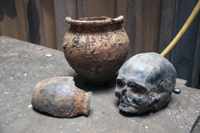
Roman-skull-found-at-Liverpool-Street-ticket-hall-_102065More than 50 objects – including skulls from the Roman era – unearthed as part of the Crossrail project have gone on display to the public for the first time. Portals to the Past also features a Roman cremation pot (which still contained remains when discovered), 16th century jewellery, and flint used by Londoners some 9,000 years ago. The free exhibition runs at the Crossrail Visitor Information Centre behind Centre Point at 6-18 St Giles High Street until 15th March. To coincide with it, Crossrail archaeologists will be running a series of lectures on Wednesday evenings starting at 6pm. No booking is required but numbers are limited so it’s recommended that attendees turn up early. For more information, www.crossrail.co.uk/sustainability/archaeology/archaeology-exhibition-portals-to-the-past-february-2014.

A new exhibition celebrating the artists of the German Renaissance opened at the National Gallery yesterday. Strange Beauty: Masters of the German Renaissance features paintings, drawings and prints by the likes of Hans Holbein the Younger, Albrecht Durer and Lucas Cranach the Elder and examines how perceptions of the pieces have changed over time. Works include Holbein’s Anne of Cleves, Hans Baldung Grien’s Portrait of a Young Man with a Rosary, and Matthias Grunewald’s drawing of An Elderly Woman with Clasped Hands. There is also a reconstruction of the Liesborn altarpiece, created in 1465 and originally housed at the Benedictine Abbey of Liesborn in Germany. Runs until 11th May. Admission charge applies. For more, see www.nationalgallery.co.uk.

Film-makers Michael Powell (1905-1990) and Emeric Pressburger (1902-1988) have been commemorated with the placement of an English Heritage Blue Plaque at the site of their former workplace, a flat in Dorset House, on Gloucester Place in Marylebone. It was from Flat 120 in the apartment block that they oversaw the production of some of their greatest films including The Life and Death of Colonel Blimp (1943), A Matter of Life and Death (1946), Black Narcissus (1947) and The Red Shoes (1948) between 1942 and 1947. Film director Martin Scorsese was among those who unveiled the plaque. For more, see www.english-heritage.org.uk/discover/blue-plaques/.

Send all items of interest for inclusion to exploringlondon@gmail.com.

This Week in London – Van Gogh’s Sunflowers reunited; Sir Leslie Constantine’s Blue Plaque; and, the ‘Anatomy of a Suit’…

• Two versions of Vincent van Gogh’s iconic Sunflowers have been reunited for the first time in 65 years in London at the National Gallery. The two paintings – one from the National Gallery and the other from the Van Gogh Museum in Amsterdam – come from a five-painting series the artist created in 1888 while staying in Arles. They were apparently painted while he was waiting for his friend Paul Gaugain to arrive and were to decorate the bedroom Gaugain would stay in as gift to him. The free display in Room 46 of the Trafalgar Square Gallery and will be shown until 27th April. Meanwhile, the gallery is celebrating the donation of another van Gogh – Head of a Peasant Woman, the first early work by the artist to enter its collection. It is one of a series of around 40 portraits of the peasants of the village of Nuenen, in The Netherlands, which were painted in late 1884/early 1885. For more, see www.nationalgallery.org.uk.

West Indian cricketer and politician Sir Learie Constantine’s former home in Earl’s Court has been commemorated with an English Heritage Blue Plaque. Constantine, who played a significant role in securing the independence of Trinidad and Tobago and as an advocate for black people, was the first person of African descent to sit in the House of Lords. He lived at the property at 101 Lexham Gardens between 1949-1954. For more, see www.english-heritage.org.uk/discover/blue-plaques/.

On Now: The Anatomy of a Suit. This free display at the Museum of London looks at  the technicalities of making a suit and the city’s influence on menswear globally. Exhibits include a double-breasted pinstripe jacket from about 1965, a morning jacket from about 1927 and a black dress suit from about 1933 – all of which was sourced by curator Timothy Long from markets including Brick Lane, Broadway and Portobello Road. Runs until June. For more, see www.museumoflondon.org.uk.

Send all items of interest for inclusion to exploringlondon@gmail.com.

10 fictional character addresses in London – 8. The Darling’s House…

Peter-Pan2In JM Barrie’s 1911 novel, Peter and Wendy (based on the stage play Peter Pan; or, the Boy Who Wouldn’t Grow Up), the adventure begins when Peter Pan visits the home of the Darling family.

He secretly listens in – via an open window – while Mrs Darling tells bedtime stories to her children – Wendy, John and Michael – but during one visit loses his shadow and it’s on returning to claim it that he meets Wendy and, well, you know the rest…

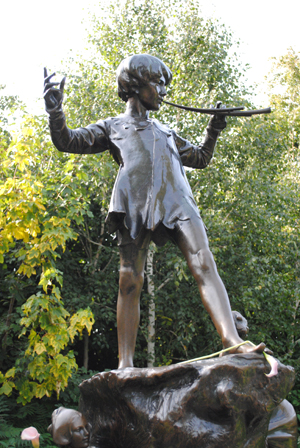
Peter Pan is most famously associated with Kensington Gardens – it’s here that we are first introduced to the character of Peter in the book Peter Pan in Kensington Gardens (in fact there’s a rather famous statue of him there to this day, pictured above) – it’s most often assumed that the Darling’s house must be nearby.

But, in fact, the book Peter and Wendy never states where the Darlings’ house is located exactly  – just that it is at number 14 in the street in which they live – while in the 1904 play the address is given as “a rather depressed street” in Bloomsbury. Barrie explains that he placed the Darlings’ house in Bloomsbury because Mr Roget (of Thesaurus fame) once lived there and “we whom he has helped to wend our way through life have always wanted to pay him a little compliment”.

Worth noting, however, is a property at 31 Kensington Park Gardens. Once the home of the Llewellyn Davies family, family friend Barrie was a frequent visitor here and in fact went on to adopt the five Llewellyn Davies children following the death of their parents in the early 1900s. The property, which is divided into a series of flats, is, as a result, said to have been something of a model for the Darling’s house.

Barrie, himself, meanwhile, owned a house at 100 Bayswater Road – not far from Kensington Gardens where he first meet the Llewellyn Davies family – but, interestingly, had previously lived in Bloomsbury. The house is marked with a blue plaque.

Another Peter Pan-related address we have to mention is that of the Great Ormond Street Hospital for Children to which Barrie gave the rights to receive royalties from Peter Pan in perpetuity. You can arrange for a tour of the hospital’s Peter Pan-related memorabilia.

For more on the story behind the writing of Peter Pan, see Andrew Birkin’s book, J.M.Barrie and the Lost Boys.