We kick off a new series this week looking at 10 of most memorable (and historic) views of London and to kick it off, we’re looking at the views from one of London’s most prominent historic institutions, St Paul’s Cathedral.
There are two external galleries at St Paul’s – the first is the Stone Gallery which stands at 173 feet (53.4 metres) above ground level. Encircling the dome, it is reached, via a route which takes the visitor through the internal Whispering Gallery, upon climbing some 378 steps.
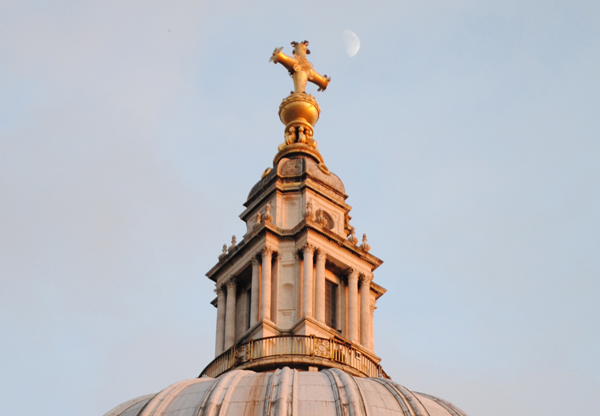
Located above it, encircling the cathedral’s famous lantern (which sits on top of the dome), is the Golden Gallery. It stands some 280 ft (85.4 metres) above the cathedral floor, and can be reached by a climb of 528 steps.
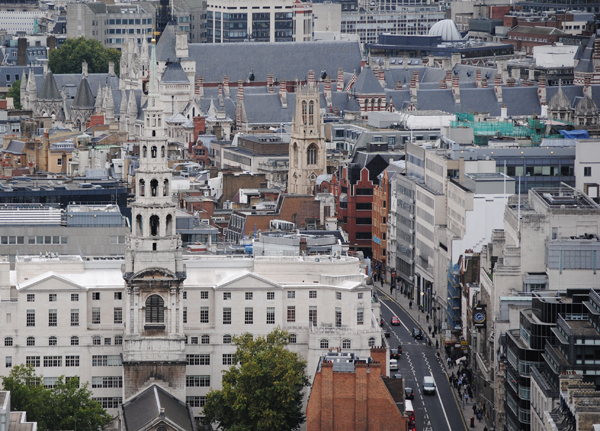
From it – and the Stone Gallery below it – can be seen panoramic views of the City of London and across the Thames to Southwark.
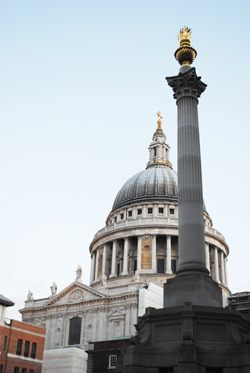
The lantern above, meanwhile, weighs some 850 tonnes and on its top sits a golden ball and cross – the current ball and cross, which weigh about seven tonnes, were put there in 1821, replacing the original ball and cross which had been erected in 1708.
St Paul’s Cathedral was the tallest building in London from 1710 into the 1960s (when it was surpassed by Millbank Tower and what is now known as the BT Tower). Sir Christopher Wren’s St Paul’s is not as tall as the original medieval cathedral which reportedly had a spire reaching 489 feet (149 metres) into the sky compared to St Paul’s as it is now, standing to a height of some 365 feet (111.3 metres) above ground level.
WHERE: St Paul’s Cathedral, St Paul’s Churchyard (nearest tube station is St Paul’s); WHEN: The galleries are open from 9.30am to 4.15pm, Monday to Saturday; COST: £18 an adult/£16 concessions and students/£8 a child (6-18 years)/£44 a family of four; WEBSITE: www.stpauls.co.uk
PICTURES: Top – Looking up at the lantern with the Golden Gallery around the base; Below – View looking west from St Paul’s down Fleet Street (the spires of St Brides and St Dunstan-in-the-West can be seen).
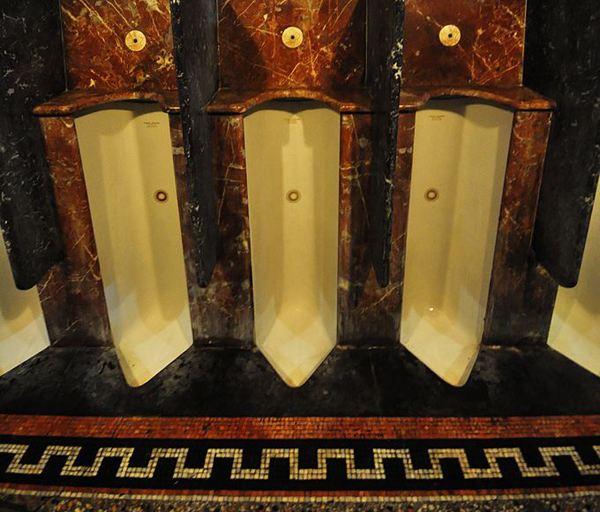
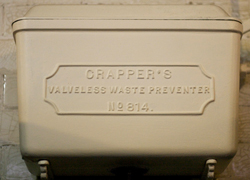 The gentlemen’s facilities, located off to the side of the chapel, were designed by the famous Thomas Crapper & Co and consist of enclosed wooden-walled cubicles, a series of urinals and wash basins.
 Rosée had come to England as the manservant of Daniel Edwards, a member of the Levant Company who had first encountered him in Smyrna (in modern Turkey) and returned with him. One story says that Rosée decided to start the business after a falling out with Edwards on their return to England; another that Edwards helped Rosée start the business when they realised the interest people had in trying the new drink.


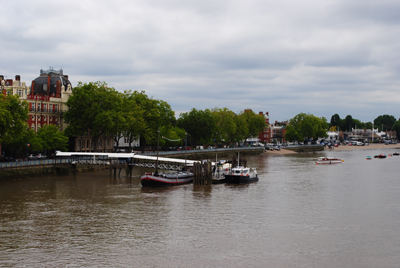
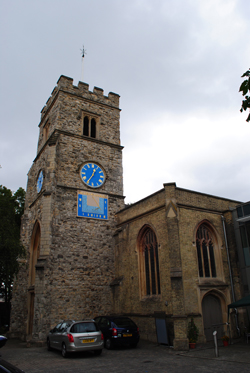 Recorded in the Domesday Book as Putelei and known in the Middle Ages as Puttenhuthe, it apparently goes back to a Saxon named Puttan who lived in the area and the Old English word ‘hyp’, which means ‘landing place’. Hence, “Puttan’s landing place” (or Puttan’s wharf).


 .
.

 .
.