This Week in London – The history of women in Parliament; Michael Jackson portraits; and, Nevinsons honoured…

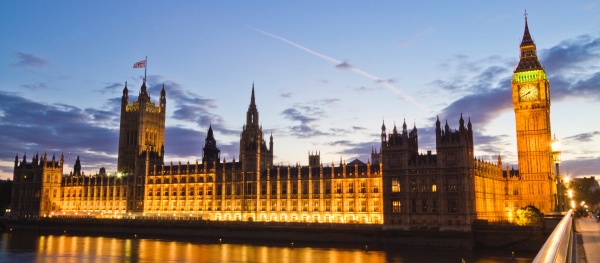
The campaign for women to be able to vote and stand as representatives in Parliament is the subject of an exhibition opening at the Houses of Parliament. Staged in Westminster Hall, Voice & Vote: Women’s Place in Parliament features historic objects, pictures and archives from Parliamentary collections and elsewhere with the “immersive” recreation of some of the lost historical spaces in the Palace of Westminster among the highlights. These include ‘The Ventilator’ – a space above the House of Commons Chamber where women, banned from the public galleries, watched and listened to Parliamentary debates, ‘The Cage’ – a ladies gallery closed off by brass grills built as part of the House of Commons when it was reconstructed after the 1834 fire, and ‘The Tomb’ – a room for women MPs after the 1918 decision allowing them to stand for Parliament. The exhibition, which is free to attend, runs from until 6th October. Tickets have to be pre-booked via Parliament’s website. PICTURE: Michael D Beckwith/Unsplash

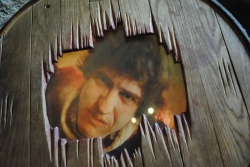
The final commissioned portrait of popstar Michael Jackson is among images on show in a new National Portrait Gallery exhibition exploring his influence on contemporary art. Along that work – Kehinde Wiley’s 2010 work Equestrian Portrait of King Philip II (Michael Jackson), the exhibition Michael Jackson: On the Wall features American artist and activist Faith Ringgold’s story quilt Who’s Bad?, a series of collages by Isaac Julien, and a ‘dinner jacket’ covered with forks, spoons and knives made by costume designer Michael Lee Bush as well as a pop-graffiti style portrait by Keith Haring, on show for the first time in 30 years. Among new works created specially for the exhibition are a line drawing by artist Michael Craig-Martin which is based on the image of 11-year-old Michael used for the cover of Rolling Stone magazine in April, 1971, and a large-scale painting by Yan Pei Ming, In Memory of Michel Jackson. Opening today, the exhibition can be seen until 21st October. Admission charge applies. For more, see www.npg.org.uk.

World War I artist CRW Nevinson and his father, journalist Henry Nevinson, have both been honoured with an English Heritage Blue Plaque. The plaque was unveiled at a property at 4 Downside Crescent in Hampstead where the Nevinson family lived between 1903 and 1941 before bombing raids made the home uninhabitable. Richard “CRW” Nevinson (1889-1946) was one of the most famous artists of the Great War and used a variety of styles, including Futurism and Cubism, to capture the brutality of the war based on his experience while serving briefly with the  Royal Army Medical Corps in France (before he was sent home in 1915 for rheumatic pain). His father, who reported on the Boer War and World War I, was known as “the king of war correspondents” and was a champion of universal suffrage. For more, see www.english-heritage.org.uk/visit/blue-plaques/.

Send all items for inclusion to exploringlondon@gmail.com

Lost London – St Luke’s Hospital for Lunatics, Old Street…

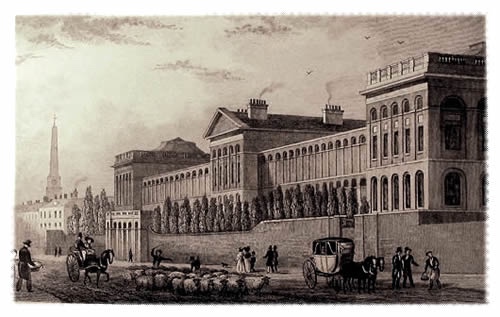
A monumental-sized building on Old Street in the City of London, St Luke’s Hospital for Lunatics was founded in 1751 to treat the poor who suffered from mental illnesses.

The new hospital – which was built partly through concerns about abuses patients suffered at the more famous Royal Bethlehem Hospital (Bedlam) – was initially located on a site in Moorfields which had been formerly occupied by a foundry. But in 1786 it moved to the purpose-built palatial premises in Old Street where it remained until 1916.

The new building, which was designed by George Dance after an competition for its design apparently failed to find a suitable candidate, had a 150 metre long street frontage with a central entrance and male wards on one side and female wards on the other.

The building contained some 300 individual cells – each had a small window, but no heating. There were gardens located behind it and in the basement were cold water baths used to treat patients.

The hospital building was enlarged in the 1840s when infirmaries and a chapel were added.

By the 1860s, the hospital appears to have abandoned its target market of the poor – the 150 or so patients were then described as being of “middle class”.

In 1916, the patients were transferred to other institutions – the charity running the hospital set up a ward in Middlesex Hospital – or sent home and the buildings were acquired by the Bank of England.

The premises was used to print banknotes until the 1950s and the building, which had been damaged during World War I, was eventually demolished in 1963.

The archive of St Luke’s have been digitised and are held by the Wellcome Library.

This Week in London – New City of London benches for LFA; summer concerts in Regent’s Park; and Romania and World War I…

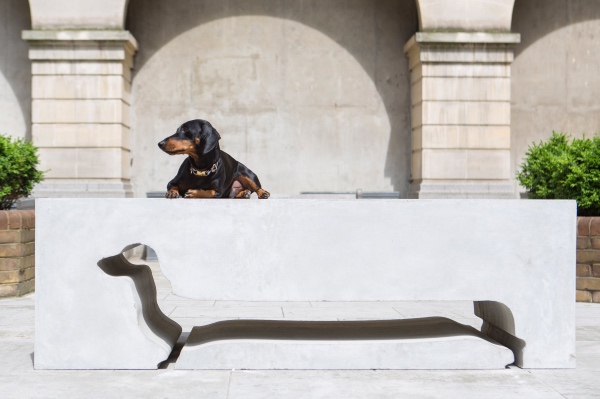
A series of new “one-off” public benches are being unveiled across London as part of the month-long London Festival of Architecture currently underway in the city. Designed by emerging artists and designers and installed in partnership with the City of London Corporation and Cheapside Business Alliance, the benches include Patrick McEvoy’s doggy design, Here Lies Geoffrey Barkington (pictured), located in Jubilee Gardens in Houndsditch, Maria Gasparian’s Ceramic City Bench in Bow Church Yard, McCloy + Muchemwa’s sinuous A Bench for Everyone inside One New Change, and Nicholas Kirk Architects’ Money Box – formed of 45,000 stacked penny coins – outside London Bridge Station. The festival runs until the end of the month and there’s still a plethora of activities to take part in. For more, see www.londonfestivalofarchitecture.org. PICTURE: © Agnese Sanvito (Via LFA)

A free summer series of concerts kicks off in The Regent’s Park Bandstand this weekend in what has been described as a “new chapter” in the bandstand’s history. To be held every Sunday afternoon between 3pm and 5pm (with an extra concert to be held at the same time on the Bank Holiday of 27th August) until 2nd September, the concerts range from classic rock to big bands and jazz. Those performing include the Brixton-based South London Symphonic Winds, Regent Community Brass and the Barnes Concert Band as well as the Heroes Band – which raises funds for Help for Heroes – and Royal Academy of Music-associated acts, the Jonny Ford Jazz Quintet and Metropolitan Brass. The concerts have been organised by the Friends of Regent’s Park & Primrose Hill, working with The Royal Parks charity, the Royal Academy of Music and the Crown Estate Paving Commission, and it’s hoped they’ll become an annual fixture in the park. For more, see www.royalparks.org.uk/parks/the-regents-park.

Romania’s role in World War I is the subject of a free, temporary display at the National Army Museum in Chelsea. Romania and the Great War charts the “years of neutrality (1914-1916), the fierce battles of 1916 on the Entente side, the painful retreat to Moldavia, the striking victories of 1917 and the momentous victory of 1918, which offered a strategic foundation to the political unification of all Romanian provinces and the creation of a modern, democratic state”. Objects on show include photographs, maps, uniforms and original First World War medals. Runs until 15th July. For more, see www.nam.ac.uk.

Send all items for inclusion to exploringlondon@gmail.com.

This Week in London – WWI impact on art explored; recalling Windrush; ‘Sounds Like London’; and, John Thelwall commemorated…

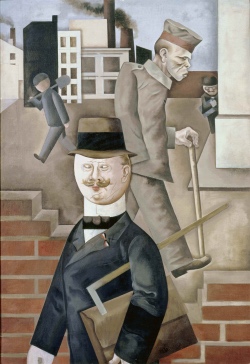
Marking 100 years since the end of World War I, a new exhibition opening at the Tate Britain on Tuesday explores the immediate impact of the war on British, German and French art including an examination of how artists responded to Europe’s new physical and psychological scars. Aftermath: Art in the Wake of World War One features more than 150 works spanning the period from 1916 to 1932 by artists including George Grosz, Fernand Léger and CRW Nevinson. They range from battlefield landscapes and images of soldiers’ graves – such as William Orpen’s A Grave in a Trench (1917) and Paul Jouve’s Tombe d’un soldat serbe a Kenali (1917) – to sculptural public memorials commemorating the conflict by the likes of Käthe Kollwitz, André Mare and Charles Sargeant Jagger and more personal memorials created using battlefield relics like shrapnel and mortar shells as well as images depicting the wounded and disabled in the post-war world such as George Grosz’s Grey Day (1921) and Otto Dix’s Prostitute and Disabled War Veteran (1923). The display also features works relating to the birth of dada and surrealism – among those featured are Hannah Höch’s data photomontages – and looks at how the rebuilding of post war society inspired artists like Georges Braque, Christian Schad and Winifred Knights to return to classicism and tradition while pushing others, like Léger, Paul Citroen and Nevinson to create visions of a technological future. Opening on 5th June, it runs until 16th September at the Millbank site. For more, see www.tate.org.uk. PICTURE: George Grosz (1893-1959), Grey Day (1921), Oil paint on canvas, 1150 x 800 mm, Staatliche Museen zu Berlin, Nationalgalerie. Acquired by the Federal State of Berlin. © Estate of George Grosz, Princeton, N.J. 2018.

The story of Jamaican feminist poet Una Marson – the first black woman employed by the BBC, Trinidadian JJ Thomas’ scathing rebuttal of English colonialism, and, manuscripts of Andrea Levy’s novel Small Island are among highlights of a new exhibition at the British Library. Windrush: Songs in a Strange Land marks 70 years since the MV Empire Windrush first carried hundreds of migrants to London and explores why they came, what they left behind and how they came to shape Britain. The free exhibition in the library’s Entrance Hall on Euston Road, which opens Friday, also features Benjamin Zephaniah’s poem What Stephen Lawrence Has Taught Us, personal reflections from some of the first Caribbean nurses to join the NHS and sounds of the Caribbean including jazz to calypso music. Runs until 21st October. For more, see www.bl.uk.

Join in a celebration of London’s ‘grassroots music’ in June. Sounds Like London features more than 200 gigs across the capital including a series of gigs aimed at raising money for the Music Venue Trust’s Emergency Response service which supports grassroots music venues threatened by closure, 11 ‘Airbnb Concerts’ and X-pose, an event showcasing the capital’s leading deaf musicians and DJs. The full programme of events can be found at www.london.gov.uk/sounds-like-london.

The political orator, writer and elocutionist John Thelwall (1764-1834) has been commemorated with an English Heritage Blue Plaque located on the site of his pioneering institution of elocution. Thelwall, described as one of the most popular and effective orators of his day and known as a champion of free speech and universal suffrage as well as being a fierce critic of the French Revolution, opened his ‘Seminary for the cultivation of the science and practice of elocution, and the cure of impediments of speech’ at 40 Bedford Place in Bloomsbury in 1806. The Grade II-listed property, now in use as a hotel, was newly built at the time. The institution remained at the site for seven years before moving to Lincoln’s Inn Fields. For more, see www.english-heritage.org.uk/visit/blue-plaques/

Send all items for inclusion to exploringlondon@gmail.com.

Lost London – Merton Priory…

Little remains of this priory which once stood on the banks of the River Wandle in Surrey (and is now encompassed in Greater London).

The priory, which was founded as an Augustinian house in the early 12th century, rose to become one of the most influential in all of southern Britain.

The institution was created thanks to Gilbert, the Sheriff of Surrey, Huntington and Cambridge, who was granted the village of Merton by King Henry I. Gilbert came to live in Merton and there established a priory, building a church and small huts on land thought to be located just to the west of where the priory was later located.

Gilbert had been impressed with what he’d seen of the Augustinians, also known as the Austin friars, at Huntington and so gave control of the new church to their sub-prior, Robert Bayle, along with the land and a mill.

It was based on Bayle’s advice that the site of the priory was then moved to its second location and a new, larger wooden chapel built with William Gifford, Bishop of Winchester, coming to bless the cemetery. The canons – there were now 17 – moved in on 3rd May, 1117.

Among the high profile people to visit the new priory was Queen Matilda, who brought her son William with her. In the early 1100s, a certain Thomas Becket (later the ill-fated Archbishop of Canterbury) received an education here as did Nicolas Breakspeare (later the first English Pope, Adrian IV).

The priory expanded considerably over the next century and in 1217 its chapter house was the location of a peace conference between King Henry III and Louis, the Dauphin of France. The Statutes of Merton – a series of legal codes relating to wills – were formulated here in 1236.

The connection with royalty continued – in the mid-1340s, King Edward III is thought to have passed the Feast of the Epiphany here while King Henry VI apparently had a crowning ceremony here – the first outside of Westminster Abbey for more than 300 years – in 1437.

The priory remained in use until the Dissolution of King Henry VIII. The demolition of the buildings apparently started even before the priory had been formally surrendered to the commissioners – stones from its building was used in the construction of Henry’s new palace – Nonsuch – as well as, later, in the construction of local buildings.

The site came to be referred to as ‘Merton Abbey’ and, passing through various hands, was used to garrison Parliamentarian troops during the Civil War. It later became a manufacturing facility, works for the dying and printing of textiles, one of which became the workshops of William Morris.

Some of the priory buildings survived for some years after but the only remains now left as sections of the perimeter wall (the arch which now stands over the entrance to Merton parish church is reconstructed – there’s another ornamental gateway in the outer court wall which was also replaced with a replica in the 1980s).

The foundations of the unusually large chapter house, meanwhile, have been excavated and are now preserved in a specially constructed enclosure under a roadway. Construction is now underway to build better public access to the remains.

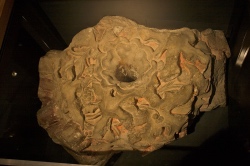
PICTURE: A ceiling boss from Merton Priory which still bears traces of its original red paint and guilding. It was found during excavations at Nonsuch Palace in 1959-60 is now on display in the Museum of London. Photograph by Mike Peel (www.mikepeel.net) (licensed under CC-BY-SA-4.0).

This Week in London – Commemorating WWI postal service; new acquisitions at the National Gallery; and, 50 Glorious Shows!

A ‘pop-up’ World War I mail sorting office will appear in The Regent’s Park this Saturday as part of centenary commemorations of the Great War. The office evokes the giant wooden building known as the ‘Home Depot’ which was located in the park and which handled all the mail from and to the front line during the war – some two billion letters and 140 million parcels. Believed to have been the largest wooden building in the world, it covered at its greatest extent more than five acres. The sorting office provides visitors with an immersive experience as it brings to life the story of the 2,500 people who worked there and visitors can even work a shift as part of an interactive session led by The Postal Museum. There’s a chance to write a postcard to a soldier or postal worker to give them your thoughts on the war and outdoors, there’s a display on the role the Post Office played in keeping the war running. The sorting office can be visited for free this Saturday, 12th May, and Saturday, 19th May. For more, follow this link.

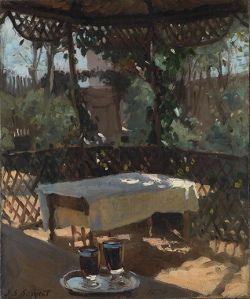
Two new acquisitions – the first ever painting by Spaniard Juan de Zurbarán to enter a UK collection and a teenage work by portraitist John Singer Sargent – have gone on show at the The National Gallery on Trafalgar Square. The rather long titled Still Life with Lemons, Lilies, Carnations, Roses and a Lemon Blossom in a Wicker Basket, together with a Goldfinch perched on a Porcelain Bowl of Water, on top of a Silver Tray, all arranged upon a Stone Ledge was painted by Baroque artist de Zurbarán in about 1643–49 while Wineglasses was painted by Sargent at the age of 19, probably at St-Enogat in Brittany where he spent the summer of 1875 having just seen his first Impressionist exhibition in Paris. Still Life with Lemons in a Wicker Basket can be seen in Room 30 while Wineglasses is in Room 44. Admission is free. For more, see www.nationalgallery.org.uk. PICTURE: Wineglasses, John Singer Sargent, RA (1856–1925) Probably 1875  © The National Gallery, London.

On Now – 50 Glorious Shows! The Cartoon Museum is this year celebrating 12 years at 35 Little Russell Street in Bloomsbury and to mark the occasion, this display features more than 170 original works which have been highlights in previous exhibitions. Among those whose work is represented are masters of the British tradition of cartooning like Hogarth, Gillray, Tennial and EH Shepard as well as that of top comic artists and graphic novelists like Dudley D Watkins, Posy Simmonds and Bryan Talbot. There’s also a selection of political satire and caricature. The show runs until 2nd September. For more, see www.cartoonmuseum.org.

Send all items for inclusion to exploringlondon@gmail.com.

This Week in London – Hampton Court Palace breathes new life into Tudor kitchens; Kew’s Temperate House to reopen; and, World War I commemorated in Guildhall Yard…

Hampton Court Palace will on Saturday launch a major representation of its Tudor kitchens with a new display designed to give visitors a ringside seat to preparations for a royal feast. Visitors will be immersed in the sights, sounds and smells of King Henry VIII’s kitchens as they explore the stories of everyone from cooks to liveried pages who made the great court feasts possible and meet the likes of Thomas Cromwell, right-hand man to the king, master cook John Dale and Michael Wentworth, clerk of the kitchen. A specially commissioned play will be launched for the summer and during holiday periods there will be workshops, games and competitions. Admission to the kitchens is included in the palace admission. For more information, head to www.hrp.org.uk/hampton-court-palace/.

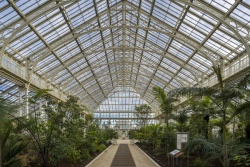
Kew’s iconic Temperate House – the world’s largest Victorian glasshouse – will reopen on Saturday after the biggest renovation project in its history. The five year restoration project has seen its entire framework repaired and thousands of panes of glass replaced. Some 500 plants were taken out and housed in a temporary nursery and some 10,000 plants, consisting of 1,500 species, have gone back in. A programme of events will take place involving the Temperate House, which dates from 1863, over the summer and there are special preview openings on Friday and Saturday night. For more, see www.kew.org. PICTURE: Gareth Gardner/Kew.

The City of London Corporation is marking the centenary of the end of World War I with a new open-air exhibition highlighting the global nature of conflict. Fields of Battle, Lands of Peace: 1918-2018, which opened on Monday, is the third and final display by photographer Michael St Maur Sheil to go on show in Guildhall Yard. The display can be seen until 28th May. Accompanying the exhibition is a free guided walk – The City’s Great War Heroes – which enables people to walk in the footsteps of City men and women who went off to the Great War. It departs from Bishopsgate every Monday and Saturday at 11am and 2pm until 28th May with an extra walk at 1.30pm on the final day. For more, follow this link.

Send all items for inclusion to exploringlondon@gmail.com.

Lost London – The Church of St Peter-le-Poer…

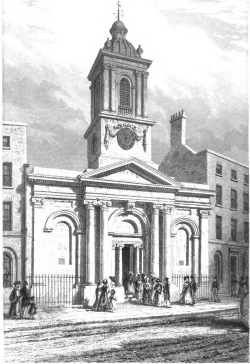
This medieval-era church, located on Broad Street in the City of London, survived the Great Fire of 1666 but was demolished in the early 20th century when, due to the lack of residents in the City, it was no longer needed as a church.

The church, also sometimes referred to as St Peter-le-Poor, was in existence by the end of the 12th century but it’s thought the name ‘le poer’ (generally said to refer to either the poverty of the surrounding area or its proximity to an Augustinian monastery) didn’t come to be added until the 16th century.

The church was rebuilt in 1540 and then enlarged and repaired – including the addition of a new steeple – in the first half of the 17th century.

By 1788, the church had, however, fallen into such disrepair that it had to be rebuilt and the new building, designed by Jesse Gibson and located further back from Broad Street (into which it had previously projected), was consecrated in November, 1792.

The layout of the new church was somewhat unusual – the altar was located on the north-west side of the church, opposite the entrance (altars were traditionally located in the east), and the nave was circular with a wooden gallery running around the interior.

There was a large lantern in the centre with glass walls. The entrance on the eastern side of the church, featured a facade which gave no hint of the circular nature of the building behind – it featured a square tower and columned entrance.

With the declining population living in the City of London, the church was no longer needed as a place of worship by the early 20th century and so it was demolished in 1907.

The parish was united with St Michael Cornhill and the proceeds from the sale of the site were used to build the church of St Peter-le-Poer in Friern Barnet. This church was also given the City property’s font, pulpit and panelling.


A Moment in London’s History – The execution of George, Duke of Clarence…

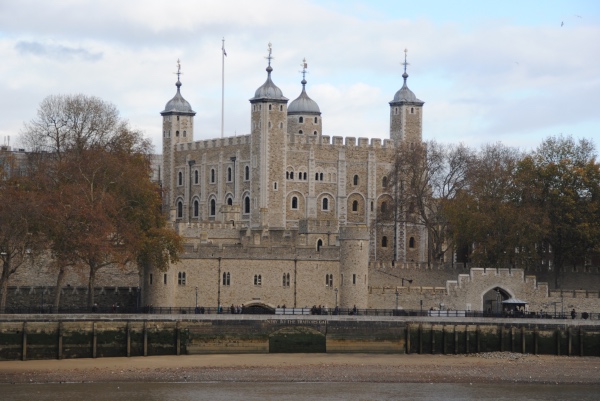
Among the gruesome deaths said to have taken place at the Tower of London is that of George, the Duke of Clarence, who, so the story goes, was drowned in a butt of Malmsey wine on 18th February, 1478 – 540 years ago this year.

George, who was born on 21st October, 1449, was the younger brother of King Edward IV and older brother of (although he was only king after George’s death) King Richard III.

George, who was made Duke of Clarence and Lord Lieutenant of Ireland soon after the House of York’s King Edward IV’s ascendancy to the throne in 1461 during the volatile period known as the Wars of the Roses, had betrayed his brother King Edward IV at least twice before his death.

The first time came in the late 1460s when he joined with Richard Neville, Earl of Warwick, in helping the previously deposed Lancastrian King Henry VI back onto the throne. The second time came after his brother Edward has retaken the throne in March, 1471, and the two of them had reconciled. George had sought to wed Mary of Burgundy, but Edward had objected – one of a series of events which apparently led George, whose mental state was said to be deteriorating fast by this point, to once again scheme against the king and eventually saw King Edward IV have him thrown in prison in June, 1477.

The King brought charges – including that he had slandered the King and prepared for rebellion – against George in Parliament in January, 1478, and both houses subsequently passed a bill of attainder with the sentence of death carried out in private (thus perhaps sparing him the humiliation of a public execution?) in the Tower soon after.

The story that he had been drowned in a butt of his favourite malmsey (a sweet wine) in the Bowyer Tower apparently circulated soon after his death – among proponents of the story was William Shakespeare who in Richard III has the duke stabbed and then drowned in a butt of malmsey – and to this day it remains something of a mystery as to whether it actually occurred (although, interestingly, his body when exhumed was not beheaded which was the common means of executing members of the nobility).

It has been suggested that sawn down wine butts were used for baths at the time – which may mean George was drowned in a wine butt, but one he was using to take a bath rather than one which had wine stored in it. It has also been suggested that the reference to a butt of wine refers to a barrel used for storing his body for removal to Tewkesbury where he was buried alongside his wife rather than his actual execution.

PICTURES: Top – The Tower of London where the Duke was executed; Right – A virtual re-enactment of George’s death at the Tower.


Famous Londoners – Millicent Garrett Fawcett…

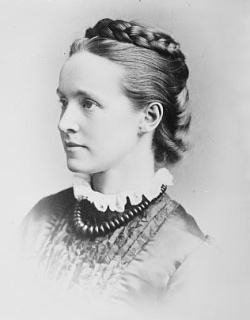
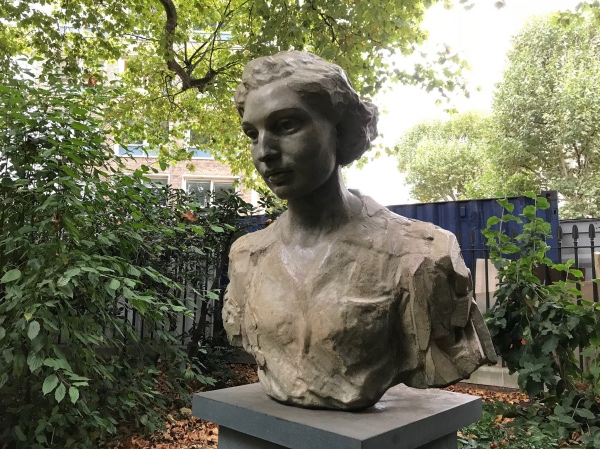
Women’s suffrage advocate Millicent Garrett Fawcett will become the first woman to be honoured with a statue in Westminster’s Parliament Square next month to mark the 100th anniversary of the passing of the 1918 act which gave women the vote for the first time. But who exactly was she?

Born in Aldeburgh, Suffolk, on 11th June, 1847, Millicent Garrett was the daughter of Newson Garrett, a merchant and shipowner, and his wife Louisa – the eighth of their 10 children.

At the age of 12, in 1858, she went to London with her older sister Elizabeth (who would go on to become Britain’s first female doctor) to study at a private boarding school in Blackheath. A key moment came seven years later in 1865 when she went to hear a speech by radical MP John Stuart Mills who spoke of equal rights for women.

Fawcett was deeply impacted and became actively involved in his campaign. When she was just 18, Millicent was introduced via Mills to Henry Fawcett, MP for Brighton and women’s rights activist and the two became close friends before, despite an age difference of 14 years, marrying on 23rd April, 1867. As well as caring for her husband who had been blinded in a shooting accident some 10 years before they were wed, Millicent took up a role as his secretary.

In 1868, Millicent gave birth to their only child, Philippa, and the family spent their time between two households – one in London (at 51 The Lawn on the site of what is now Vauxhall Park) and the other in Cambridge (where she later became a co-founder of Newnham College).

Meanwhile, with her husband’s encouragement, she was also pursuing her own writing career, penning the popular short book, Political Economy for Beginners, which was published in 1870, as well as becoming a well-known public speaker on a range of issues including women’s rights.

While when her husband – then Postmaster General – died of pleurisy on 6th November, 1884, Millicent temporarily withdrew from public life (it was after Henry’s death that, as per his wishes, Vauxhall Park was created on the site of his former home). But the years following saw her become increasingly engaged in activities in support of women’s suffrage.

She was involved in the formation of the National Union of Women’s Suffrage Societies (NUWSS) in 1897 – it went on to become the largest group of its kind with 50,000 members by 1913 – and would later become its president, a post she would hold until after World War I.

Fawcett’s interests, however, also saw her involved in campaigns to curb child abuse, to end child marriage and the “white slave trade” as well as the formation of a relief fund for South African women and children affected by the Boer War (in 1901 she visited South Africa as head of a commission charged with reporting on conditions in concentration camps).

When some groups advocating for women’s suffrage started to take more violent action – which included breaking windows and hunger strikes when jailed, Fawcett argued against such militancy and remained among the moderates, convinced that women would eventually win the vote as a result of the changes taking place in society.

Suffrage activism was interrupted thanks to World War I but the role women played in support of the war effort saw opinion shift enough for, in 1918, the passing of the Representation of the People Act, which gave women aged over 30 voting rights.

In 1919, Fawcett retired from active engagement in politics. She was appointed a Dame Grand Cross of the Order of the British Empire in 1925.

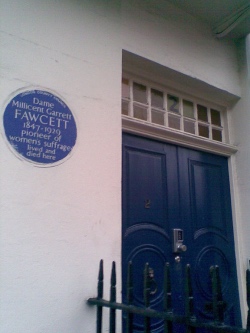
Fawcett witnessed the passing of an act to give women equal voting rights to men in 1928 – 10 years after the first act – before dying, at the age of 82, at her home at 2 Gower Street in Bloomsbury, London, on 5th August, 1929 (there’s a Blue Plaque on the property where she had lived for more than 45 years – pictured above). She was cremated at Golders Green but there is a memorial to both her and her husband in Westminster Abbey.

The Fawcett Society, which has carried her name since 1953, continues to fight sexism and gender inequality in the UK, campaigning on issues such as closing the gender pay gap.
This Week in London – Chinese New Year, and, David Milne at Dulwich

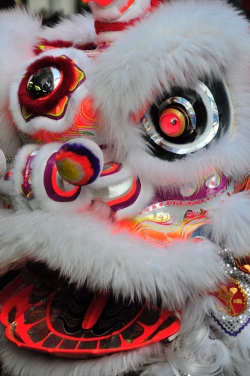
• London’s Chinatown will come alive this Sunday to mark the Year of the Dog. The biggest Chinese New Year celebrations outside of Asia feature a parade – which kicks off at 10am with a dragon and lion dance in Charing Cross Road before making its way through Chinatown where between noon and 6pm people get up close to lion dances,  take selfies with Chinese zodiac animals and enjoy traditional Chinese food. Festivities in Trafalgar Square, meanwhile, kick off at 11am with the Lions’ Eye-Dotting Ceremony at noon while there’s entertainment including live performances, family-friendly entertainments and martial arts displays at a series of West End locations including Charing Cross Road, Leicester Square, Shaftesbury Avenue between noon and 5pm. For more, check out the Visit London guide. Meanwhile the Museum of London Docklands is also celebrating the Year of the Dog with a range of free cultural events on Friday (the actual date of the New Year) including everything from ribbon dancing classes to taekwondo taster lessons, calligraphy and a spectacular dragon dance. For more, see www.museumoflondon.org.uk/museum-london-docklands. PICTURE: Paul (licensed under CC BY 2.0)

The works of one of Canada’s greatest modernist painters, David Milne (1882-1953), have gone on show at the Dulwich Picture Gallery. David Milne: Modern Painting follows Milne’s career chronologically, charting his development as an artist as he moves from New York to the war ravaged landscapes of Europe and back to the fields and open skies of North America. Highlights include Fifth Avenue, Easter Sunday (1912), the watercolour Bishop’s Pond (1916), Montreal Crater, Vimy Ridge (1919) – one of his most famous war paintings, White, the Waterfall (1921) and Summer Colours (1936). Runs until 7th May. Admission charges apply. For more, see www.dulwichpicturegallery.org.uk.

Send all inclusions to exploringlondon@gmail.com.

Lost London – Poet’s Fountain…

This rather large fountain once stood in Mayfair as a tribute to literary greats Geoffrey Chaucer, William Shakespeare and John Milton.

Designed by Thomas Thorneycroft (and apparently funded from wealth of a lady who died intestate but who had apparently always advocated for the location of a fountain on the site), the fountain stood on the centre of what is now a roundabout at the intersection of Old Park Lane and Hamilton Place.

Unveiled in July, 1875, it featured the three poets standing on various sides of a central pillar (Shakespeare taking pride of place looking towards Hyde Park). Below them sat three muses and above them, on top of a central column, stood a figure representing fame, blowing a trumpet.

The fountain,  and survived until World War II during which it sustained damaged. It was dismantled in 1948 and only the figure of ‘Fame’ is believed to have survived.


London Pub Signs – The French House…

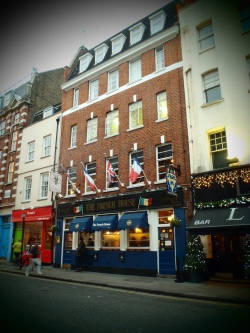
Opened in 1891 (albeit under a different name), this Soho institution was apparently founded by a German couple named Schmitt who ran it until the outbreak of World War I.

It was then sold to Belgian chef Victor Berlemont and it’s at this point that some say the name, previously said to have been the Wine House, was changed to the York Minister (although there seems to be a bit of confusion about when the name changed).

Its French associations, meanwhile. were given a big boost during World War II when General Charles de Gaulle and Free French Army officers, in London following the fall of France, made it their HQ. In fact, some say that it was in this pub that de Gaulle wrote his famous speech against the Vichy settlement.

While it was often informally called the “French pub” thereafter, the name didn’t officially change until it reopened after a fire in 1984.

M Berlemont’s son Gaston, meanwhile, had succeeded his father in running the pub many years earlier – there’s a story that when he walked into the pub after World War II, still dressed in his uniform, his father handed over the keys and left him to it. A well-loved Soho identity, the moustachioed Gaston remained at the helm until 1989 when the pub passed into the hands of some French House regulars.

Located at 49 Dean Street, The French House is known for its Bohemian links, particularly with the literary and artistic set. Dylan Thomas is said to have accidentally left his handwritten manuscript Under Milk Wood here while others associated with the pub include Irish poet and playwright Brendan Behan, artists Francis Bacon and Lucian Freud, writer John Mortimer (of Rumpole fame) and actor Tom Baker (of Dr Who fame).

For more, see www.frenchhousesoho.com.

PICTURE: Tom (licensed under CC BY-NC 2.0)

10 subterranean sites in London – 10. Chislehurst Caves…

We finish our series on subterranean London with a visit to the Chislehurst Caves in the outer south-east.

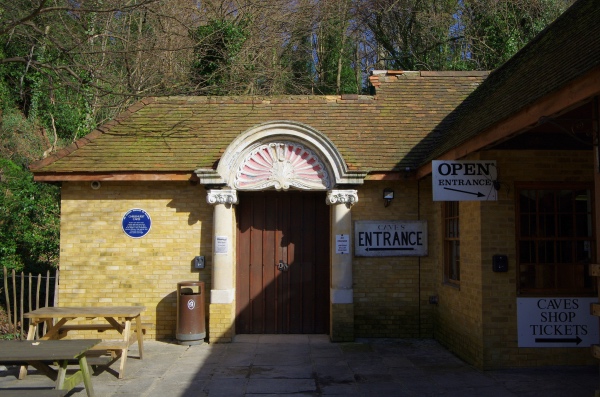
The ‘caves’, located in Chislehurst in Kent, are actually 22 miles of man-made tunnels which were dug out in the search for chalk – used in lime-burning and brick-making – as well as, in later years, flint for use in tinder boxes and flintlock guns.

There’s considerable debate over the age of the caves but it’s claimed the earliest mention of the complex apparently dates back to the 13th century and they are believed to have been last worked in the 1830s. The three main sections of the caves are named after the Druids, Romans and Saxons in a reference to who some believed helped to create them.

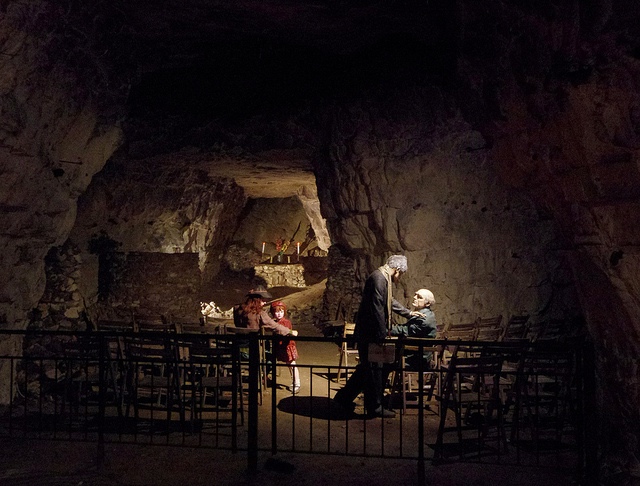
They were first opened to the public at the turn of the 20th century and have since been used for munitions storage (during World War I, to cater for overflow from the Woolwich Arsenal), mushroom growing, and, during World War II provided accommodations for some 15,000 people as one of the largest deep air-raid shelters in the country.

They also hosted music events in the 1960s when the likes of David Bowie, Jimi Hendrix, Led Zepplin and Pink Floyd were among those who performed there and have appeared in several episodes of Dr Who

These days the caves are visited only on lamplit, 45 minute guided tours, which take in about a mile of the tunnels.

WHERE: Chislehurst Caves, Caveside Close, Old Hill, Chislehurst, Kent (nearest railway station is at Chislehurst); WHEN: 10am to 4pm everyday during school holidays and Wednesday to Sunday outside those periods; COST: £6 an adult/£4 seniors and children aged three to 15 (children under three free); WEBSITE: chislehurst-caves.co.uk.

PICTURE: Above – the entrance; Below – a reconstruction of the church, part of the air-raid shelter (both images – David Edwards, licensed under CC BY -NC-ND 2.0)

Merry Christmas from Exploring London!

Wishing you all the best for a wonderful Christmas!

PICTURE: Rodolfo Marques/Unsplash

LondonLife – Christmas takes to central London streets…

Reflections at Trafalgar Square. PICTURE: Raphaël Chekroun (licensed under CC BY-ND 2.0).


Carnaby Street ‘Carnival’. PICTURE: Kevin Oliver  (licensed under CC BY-NC-ND 2.0) (image cropped).


Flying high in the West End. PICTURE: Maureen Barlin (licensed under CC BY-NC-ND 2.0).


Thrills at Winter Wonderland in Hyde Park. PICTURE: Kevin Oliver (licensed under CC BY-NC-ND 2.0).


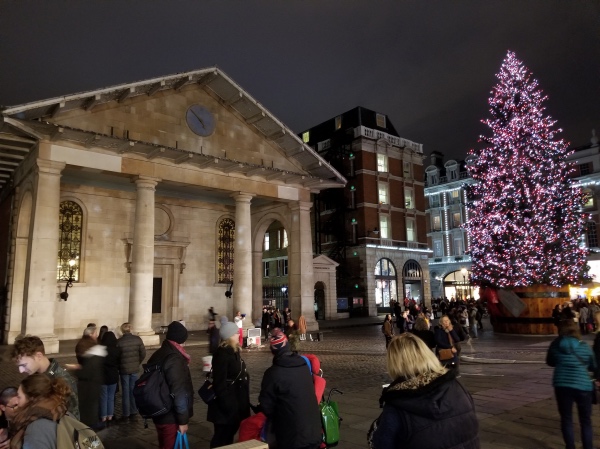
Outside St Paul’s at Covent Garden. PICTURE: Kevin Oliver (licensed under CC BY-NC-ND 2.0).

This Week in London – Dulwich’s ‘Moomin’ weekend; new Dutch and Fleming paintings at The National Gallery; and ‘Christmas Past’ at the Geffrye…

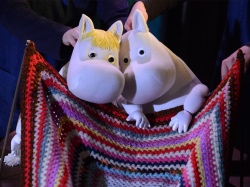
Dulwich Picture Gallery is hosting a ‘Moomin Winter Weekend’ in a celebration of its current exhibition featuring the works of Tove Jansson. The programme, which kicks of Friday night with a late opening, features storytellers and performers reading the Moomin stories, puppets from the Polka Theatre’s 2014 production Moominsummer Madness, a live performance by the Freshwater Theatre Company exploring the life and work of Jansson, and Moomin-inspired food and drink. Admission charges apply. For more information, see www.dulwichpicturegallery.org.uk.

Four 17th and early 18th century Dutch and Flemish paintings have gone on show at The National Gallery, thanks to a bequest from the late Dutch-born collector Willem Baron van Dedem. The works include David Teniers the Younger’s Christ crowned with Thorns  (1641), Jan van Kessel the Elder’s Butterflies, Moths and Insects with Sprays of Common Hawthorn and Forget-Me-Not, and Butterflies and Moths and Insects with Sprays of Creeping Thistle and Borage (both 1654, they represent the first of van Kessel the Elder’s works in the gallery’s collection), along with Still Life with a Bowl of Strawberries, a Spray of Gooseberries, Asparagus and a Plum by Adriaen Coorte (1703). They have gone on show in Room 26. For more on the gallery, see www.nationalgallery.org.uk.

On Now – Christmas Past at the Geffrye Museum. The Shoreditch-based ‘Museum of the Home’ is once again running its annual look at how Christmas has been celebrated in English homes over the past 400 years. There’s also a range of accompanying events including fairs, late nights, carol concerts, and decoration and greenery workshops as well as seasonal food and drink. Runs until 7th January. Meanwhile, on 6th and 7th January, the museum will host a special weekend closing party as the doors shut for two years while it undergoes a transformational redevelopment. For more, see www.geffrye-museum.org.uk.

Send all items for inclusion to exploringlondon@gmail.com.

10 subterranean sites in London – 8. Priory of St John of Jerusalem church crypt…


More correctly known as the crypt of the Priory of the Order of St John of Jerusalem, this subterranean chamber dates from the 12th century and is the oldest surviving part of what remains of the priory.

Based close to St John’s Gate in Clerkenwell – another surviving section of the monastery, the partly Romanesque crypt features some magnificent 16th century monuments including the rather skeletal-looking funeral effigy of the last prior, Sir William Weston, who apparently died on the very day the priory was dissolved in May, 1540 (he apparently collapsed on hearing the news).

The crypt also contains a 16th century tomb effigy (pictured below) believed to be that of Don Juan Ruiz de Vergara, a Castilian Knight Hospitaller who died fighting the Turks at sea off the coast of Marseilles (it had apparently formerly been located in Valladolid Cathedral in Spain and was donated by a member of the order (and first Keeper of the London Museum, now known as the Museum of London), Sir Guy Francis Laking, in 1915). Understood to have been the work of Esteban Jordan, sculptor to King Philip II of Spain, the knight bears the eight pointed star of the order on his breastplate.

Meanwhile, the stained glass in the crypt chapel’s east lights depict the entombment of Christ as well as Raymond du Puy (Grand Master of the Order of St John from 1118–60), St John the Baptist and St Ubaldesca. Other stained glass windows in the chapel depict saints like St George, Andrew, Patrick and David and some of the English branch’s priors and knights.

Other items of interest in the crypt include a 13th century font, originally from a church in Buckinghamshire, and a stone fragment from the pavement of the Grotto of the Nativity at Bethlehem.

The priory once served as the English headquarters for Order of St John of Jerusalem, also known as the Knights Hospitaller. The order was founded in Jerusalem in 1080 to care for the sick and poor, and spread across Europe. The English ‘branch’ established on 10 acres just outside the City walls apparently by a knight, Jorden de Briset. It was dissolved, as we’ve already heard, in 1540.

WHERE: Crypt, St John’s Church, St John’s Lane, Clerkenwell (nearest Tube stations is Farringdon); WHEN: The crypt can only be visited on tours – public tours are held at 11am and 2.30pm on Tuesday, Friday and Saturday; COST: Free (a suggested £5 donation); WEBSITE: www.museumstjohn.org.uk.

Famous Londoners – Ebenezer Scrooge…

OK, so infamous may be a better label but the journey of Scrooge – the star of Charles Dickens’ A Christmas Carol, is one of redemption.

Christmas is almost upon us so we thought he was an appropriate figure to look at for our Famous Londoners series this week (and yes, we know he’s a fictional figure!)

Scrooge, who first appeared in 1843 when Dickens’ novel was published, runs a London-based counting-house and subjects his clerk, the hapless Bob Cratchit, to a gruelling workload on low pay (even complaining about him having Christmas Day off).

Refusing to give anything for the relief of the poor, the incorrigible Scrooge retires for Christmas Eve and is subsequently visited by the ghost of his former business partner, Jacob Marley, who thanks to his own greed and lack of charity is damned to wander the Earth for eternity. Marley then warns Scrooge that he risks the same fate and that, in a final chance for redemption, he will be visited by three spirits of Christmas – past, present and yet-to-come.

It’s not giving too much away to say that Scrooge, then experiencing these visions, repents and becomes a model of love and generosity, offering his help and support to Bob Cratchit and his family – particularly his ailing son, Tiny Tim (one of the best versions of the story is that of The Muppet Christmas Carol!)

There’s been much speculation over the years who was Dickens’ inspiration for the character with possible subjects including Edinburgh banker Ebenezer Lennox Scroggie, the theory being that while in the Scottish city to deliver a lecture on 1841,  Dickens misread Scroggie’s gravestone as being a “mean man” instead of a “meal man” (corn merchant).

Another theory says the character was based on John Elwes, born as John Meggot in 1714, who was noted for his miserliness. He apparently preferred, despite inheriting a fortune, to spend his nights in the kitchen with the servants so he didn’t have to light a fire in another room (although perhaps he just preferred their company), refused to pay for the maintenance on his house, dressed in ragged clothes and ate rotten food. Such was his thriftiness that Elwes, who was elected MP for Berkshire in 1772, apparently left some £500,000 to his two sons when he died in 1789.

As to where Scrooge’s counting house was located? The book never precisely locates it but there’s a few clues including that Bob Cratchit went on an ice slide in Cornhill, in the City of London, when making his way from work to his home in Camden and that Scrooge’s business was near a church tower. These two pieces of evidence have led some to place it alongside the church of St Michael’s, Cornhill, in Newman’s Court. Scrooge’s house, meanwhile, lies not too far away and is also close to a church leading some to place it at 45 Lime Street (now the home of Lloyds).

PICTURE: Marley’s ghost visits Scrooge in an original illustration by John Leech.


This Week in London – The Royal Collection and Charles II; convicts lives explored; and, ‘Gold’ at the National Gallery…

A new exhibition celebrating the role of the court of King Charles II in promoting the arts in England has opened at The Queen’s Gallery in Buckingham Palace. Charles II: Art and Power highlights the key role Charles II played in developing the Royal Collection following the Restoration in 1660 as a means of decorating royal apartments and, perhaps more importantly, of glorifying the restored monarchy and helping it to take its place back on the European stage. The display features works ranging from John Michael Wright’s monumental portrait of the king in coronation robes (pictured) to Henry Greenway’s silver-gilt dish that adorned the high altar of Westminster Abbey and Wenceslaus Hollar’s The Coronation of King Charles the II in Westminster Abby the 23 of April 1661. Other paintings on show include Titian’s Madonna and Child in a Landscape with Tobias and the Angel (c1535-40), Antonio Verrio’s The Sea Triumph of Charles II (c1674), Pieter Brugel the Elder’s The Massacre of the Innocents (c1565-67), and Sir Peter Lely’s Barbara Villiers, Duchess of Cleveland (c 1665) as well as tapestries and silver-gilt furnishings. The exhibition, which will be accompanied by a major exhibition in the Royal Academy of Arts in January and a series of documentaries on various BBC channels under the banner of a BBC Royal Collection Season, runs until 13th May. Admission charge applies. For more, see www.royalcollection.org.uk. PICTURE: John Michael Wright, Charles II, c.1676 Royal Collection Trust/© Her Majesty Queen Elizabeth II 2017.

The lives of convicts in 18th and 19th century London are the subject of a new exhibition opening at the London Metropolitan Archives. Criminal Lives, 1780-1925: Punishing Old Bailey Convicts includes original documents from the Old Bailey archives and items such as a policeman’s truncheon, a reproduction Millbank Prison uniform and convicts’ photographs drawn from collections in Britain and Australia to provide insights into the lives of offenders, from the time of the Gordan Riots in 1760 to the early 20th century. Among those whose lives are featured are prostitute and pickpocket Charlotte Walker, notorious receiver of stolen goods Ikey Solomons and serial thief Thomas Limpus. The exhibition, created in collaboration with the Arts and Humanities Research Council Digital Panopticon Project, opens on Monday and runs until 16th May. Admission is free. There is an accompanying programme of events. For more, see www.cityoflondon.gov.uk/lma.

The National Gallery is running a season of events aimed at exploring the theme of ‘gold’ in its collection in the run-up to Christmas. Running until 1st January, the programme includes free lunchtime talks, a life drawing session this Friday, a workshop on the traditional intaglio printmaking technique of drypoint, drawing sessions and a series of films. For the full season of events, check out www.nationalgallery.org.uk/whats-on/christmas-at-the-gallery/christmas-events.

Send all items for inclusion to exploringlondon@gmail.com.