10 sites from London at the time of the Magna Carta – 7. Old London Bridge…

London-Bridge2

The current London Bridge, which spans the River Thames linking Southwark to the City, is just the latest in several incarnations of a bridge which originally dates back to Roman times.

This week, we’re focusing on first stone bridge to be built on the site. Constructed over a period of some 33 years, it was only completed in 1209 during the reign of King John, some six years before the signing of the Magna Carta.

Construction on the bridge began in 1176, only 13 years after the construction of an earlier wooden bridge on the site (the latest of numerous wooden bridges built on the site, it had apparently built of elm under the direction of Peter de Colechurch, chaplain of St Mary Colechurch, a now long-gone church in Cheapside).

It was the priest-architect de Colechurch who was also responsible for building the new bridge of stone, apparently on the orders of King Henry II. While many of the wealthy, including Richard of Dover, the Archbishop of Canterbury, gave funds for the construction of the bridge, a tax was also levied on wool, undressed sheepskins and leather to provide the necessary monies – the latter led to the phrase that London Bridge was “built upon woolpacks”. King John, meanwhile, had decreed in 1201 that the rents from several homes on the bridge would be used to repair it into perpetuity.

The bridge, which featured 20 arches – a new one built every 18 months or so, was apparently constructed on wooden piles driven into the river bed at low water with the piers of Kentish ragstone set on top. It was dangerous work and it’s been estimated that as many as 200 men may have died during its construction.

The bridge was almost completely lined with buildings on both sides of the narrow central street. These included a chapel dedicated to St Thomas á Becket – a stopping point for pilgrims heading to the saint’s shrine in Canterbury, as well as shops and residences (although, apart from the chapel, we know little about the original buildings). There was also a drawbridge toward the southern end and the Great Stone Gate guarding the entrance from Southwark.

Peter de Colechurch died in 1205, before the bridge was completed. He was buried in the undercroft of the chapel on the bridge.

Three men subsequently took on the task of completing the bridge – William de Almaine, Benedict Botewrite and Serle le Mercer who would go on to be a three time Lord Mayor of London. All three were later bridge wardens, the City officials charged with the daily running of the bridge itself.

One of key events on the bridge in the years immediately after its completion was the arrival of Louis, the Dauphin of France, in May, 1216. Louis had been invited to depose John by the rebellious barons after the agreement sealed at Runnymede fell apart and in 1216, he and his men marched over London Bridge on their way to St Paul’s Cathedral. (We’ll deal with this in more detail in a later post).

What became known as ‘Old London Bridge’, which stood in line with Fish Street Hill, survived the Great Fire of 1666, albeit badly damaged, but was eventually replaced with a new bridge, known, unsurprisingly as ‘New London Bridge’, which opened in 1831. Designed by John Rennie, this bridge was later replaced by one which opened in 1971 (Rennie’s bridge was sold off and now stands in Lake Havasu City, Arizona).

For a detailed history of Old London Bridge, check out Old London Bridge: The Story of the Longest Inhabited Bridge in Europe.

What’s in a name?…Waterloo…

Waterloo-Bridge

Given the recent commemorations surrounding the bicentenary of the Battle of Waterloo (including a re-enactment of the arrival of news of Wellington’s victory in London where it was delivered to the Prince Regent), we thought it only fitting to take a look at the use of the name in London.

The name Waterloo, which now refers to a district in Lambeth centred on Waterloo Station, was first used to designate the bridge which crosses the Thames here.

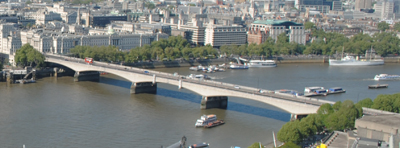
Opened in 1817 as a toll bridge, the John Rennie-designed structure was known as Strand Bridge during its construction but renamed Waterloo at its opening two years after the battle. (Rennie’s bridge was later demolished and rebuilt in the 20th century – the current bridge is pictured above).

The name was also used to designate Waterloo Road and in the early 1820s was given to the church St John’s Waterloo (now St John’s and St Andrew’s at Waterloo) located on the road.

In 1848, Waterloo Station opened and it was after this that the surrounding district, known in past ages for its swampiness (hence streets like Lower Marsh), generally became known as Waterloo.

Landmarks in the Waterloo district include the historic Old Vic Theatre, which opened in 1818, and the Young Vic Theatre as well as the Lower Marsh Market.

On 3rd July, Waterloo will host the Waterloo Carnival with a picnic on Waterloo Millennium Green and a procession (for more on that, see www.waterlooquarter.org/news/come-and-support-this-years-waterloo-carnival) while the month-long Waterloo Food Festival kicks on on 1st July. For more on events in Waterloo commemorating bicentenary, see www.wearewaterloo.co.uk/waterloo200/.

Treasures of London – Waterloo Memorial…

Waterloo-MemorialUnveiled earlier this month at Waterloo Station to mark the bicentenary of the Battle of Waterloo, the memorial features a supersized solid bronze replica of the obverse side of the Waterloo Campaign medal depicting Nike, the Greek goddess of victory.

The memorial, which was installed on a balcony above the main concourse by The London Mint Office on behalf of Waterloo200 – the organisation overseeing bicentenary commemorations, is dedicated to the 4,700 members of the allied armies who were killed in the battle on 18th June, 1815 (which also left 14,600 wounded and 4,700 missing).

The upsized medal, which has a diameter of 65 centimetres, is a replica of one which was the first to be commissioned for every soldier who fought in the battle, regardless of their rank.

Designed by London-based artist Jason Brooks, the memorial also features a famous quote from the Duke of Wellington on granite: “My heart is broken by the terrible loss I have sustained in my old friends and companions and my poor soldiers. Believe me, nothing except a battle lost can be half so melancholy as a battle won.”

It was unveiled on 10th June by the 9th Duke of Wellington (pictured with the memorial) in a ceremony attended by some of the descendants of those who fought and died in the battle.

Waterloo Station was itself, of course, named in commemoration of the battle (well, indirectly – it, like the surrounding district itself, took its name from nearby Waterloo Bridge which was in fact named after the battle).

This Week in London – The Waddesdon Bequest has a new home; history painted at the Tate; and, early release NYE tickets…

Holy-Thorn-ReliquaryThe Waddesdon Bequest, a collection of medieval and Renaissance treasures left to the British Museum by Baron Ferdinand de Rothschild in 1898, has a new home. Redisplayed in a new gallery which opened at the museum last week, the collection features the Christian relic known as Holy Thorn Reliquary (pictured) – a concocotion of gold, enamel and gems set around a thorn supposedly taken from Christ’s Crown of Thorns, the Lyte Jewel – a diamond-studded locket made in London in 1610-11 to hold a miniature of King James I and presented by the king to Thomas Lyte as thanks for a genealogy he created representing the king as a descendant of the Trojan Brutus, and the Cellini Bell – cast from silver in Nuremberg around 1600 and later displayed by Horace Walpole at his west London villa in Strawberry Hill. The bequest collection, which must always be displayed in a room of its own under its original terms, was first displayed at Baron Ferdinand’s country home of Waddesdon Manor in Buckinghamshire (now a National Trust property) and moved to the museum after his death. The redisplay reconnects the collection with its past at the manor and the history of the museum – the room where it is now displayed, Room 2a, was the museum’s original Reading Room and part of a neo-classical suite of rooms designed by Robert Smirke in 1820. It has been given the “most ambitious digital treatment” of any permanent gallery in the institution. Admission is free. For more, see www.britishmuseum.org.

The “enduring significance and emotional power” of British history painting is under examination in a new exhibition which opened at Tate Britain on Millbank last week. Fighting History features everything from the large scale works of 18th century painters John Singleton Copley and Benjamin West through to 20th century and contemporary works by Richard Hamilton and Jeremy Deller and looks at how they reacted, captured and interpreted key historical events. Works on show include Singleton Copley’s 1778 work The Collapse of the Earl of Chatham in the House of Lords, 7 July, William Frederick Yeames’ 1877 work Amy Robsart, John Minton’s 1952 work The Death of Nelson and Deller’s 2001 work The Battle of Orgreave, a re-enactment of 1984 protest in South Yorkshire. The exhibition also compares traditional and contemporary renderings of events from scripture, literature and the classical world and features a room dedicated to interpretations of the great Biblical flood of Noah. Runs until 13th September. Admission charges apply. For more, see www.tate.org.uk.

A limited number of early release tickets to London’s New Year’s Eve celebrations will go on sale from noon tomorrow (Friday, 19th June). The tickets, the bulk of which will be released in September, cost £10 a person with the proceeds being used to cover costs including printing and infrastructure. As was the case last year, people without tickets will not be able to access the event. To get hold of tickets, head to www.london.gov.uk/nye.

Send all items for inclusion to exploringlondon@gmail.com.
10 sites from London at the time of the Magna Carta – 6. St Helen’s Bishopsgate…

St-Helen-Bishopsgate2

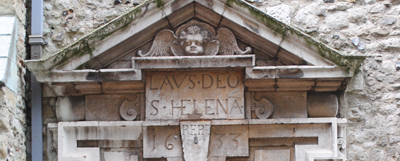
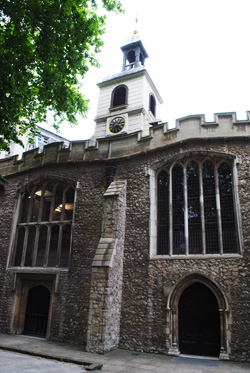
This church in the shadow of 30 St Mary Axe (aka The Gherkin) is all that remains of a Benedictine nunnery that was founded here during the reign of King John in 1210.

St-Helen's-BishopsgateEstablished by one “William, son of William the goldsmith” after he was granted the right by the Dean and Chapter of St Paul’s Cathedral, the priory was built to the north of a previously existing church with a new church for the nuns to use built right alongside the existing structure (thus accounting for the rarely seen side-by-side naves of the current building).

While the new church was built longer than the existing church, the latter was then lengthened to give them both the same length. A line of arches and a screen separated the nun’s choir and the parish church.

The church which stands today has been much altered over the centuries and what we now see there largely dates from the 14th and 15th centuries (although the bell turret which sits over the west front is an 18th century addition).

One of the priory’s claims to fame in medieval times was that it apparently was once home to a piece of the True Cross, presented by King Edward I in 1285.

The nunnery was dissolved in 1538 during the Great Dissolution of King Henry VIII and the buildings, excepting the church, sold off to the Leathersellers’ Company (all were eventually demolished by the 18th century). The screen separating the nun’s choir and the parish church, meanwhile, was removed, leaving the main body of the church as it can be seen today.

The now Grade I-listed church, which was William Shakespeare’s parish church when he lived in the area in the 1590s, survived both the Great Fire of London and the Blitz but was severely damaged by two IRA bombs in the early 1990s leading to some major – and controversial – works under the direction of architect Quinlan Terry.

Inside the church today is a somewhat spectacular collection of pre-Great Fire monuments including the 1579 tomb of Sir Thomas Gresham, founder of the Royal Exchange, the 1636 tomb of judge, MP and Chancellor of the Exchequer, Sir Julius Caesar Adelmare, and the 1476 tomb of merchant, diplomat, City of London alderman and MP, Sir John Crosby.

It was also once the site of the grave of 17th century scientist Sir Robert Hooke but these were apparently removed from the church crypt in the 19th century when repairs to the floor of the nave were being made and placed in an unmarked common grave. Their location apparently remains unknown.

WHERE: St Helen’s Bishopsgate, Great St Helens (nearest Tube stations are Aldgate, Bank and Liverpool Street); WHEN: 9.30am to 12.30pm weekdays daily (also usually open Monday, Wednesday and Friday afternoons but visitors are advised to telephone first); COST: Free; WEBSITE: www.st-helens.org.uk.

This Week in London – London Festival of Architecture’s ‘Work in Progress’; objects and sestudes at the Foundling Museum; and, sculpting Sir Tim Berners-Lee…

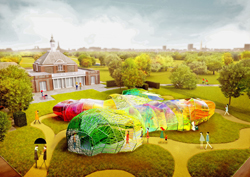
SerpentineThe month-long London Festival of Architecture is underway with this year’s theme ‘Work in Progress’. Highlights of this year’s programme – which includes 220 exhibitions, installations, talks and tours – include a discussion at this year’s Serpentine Gallery (pictured) by architects SelgasCano, access to development sites including Olympic Park, Goodman’s Fields, and Nine Elms, a London Transport Museum tour of London’s first skyscraper, an installation exploring the role of coffee shop as workspace by the Not to Scale Collective, and a Routemaster tour of the West End. For more, including a downloadable PDF of the programme, see www.londonfestivalofarchitecture.org.

A series of  26 ‘sestudes’ – texts exactly 62 words long – are being displayed along with the objects that inspired them in a new exhibition, 26 Pairs of Eyes, at The Foundling Museum in Bloomsbury. The sestudes have been written by the likes of former Poet Laureate Sir Andrew Motion in a bid cast new light on the objects, which are all from the museum’s collection and which range from a pencil which once belonged to Hospital Secretary John Brownlow to George Frideric Handel’s will. The display, which opens today, is on show until 6th September. Meanwhile the museum is also hosting another exhibition, Lines of Beauty, which explores the tradition of decorative plasterwork including the restored Rococo splendour of the hospital’s Court Room (donated by William Wilton in the 1740s and saved when the Foundling Hospital building was demolished in the 1920s). Admission charges apply. For more, see www.foundlingmuseum.org.uk.

A new portrait of the inventor of the World Wide Web, Sir Tim Berners-Lee, has been unveiled at the National Portrait Gallery. The work of Sean Henry, the painted bronze sculpture depicts a two-thirds life size Berners-Lee carrying the leather rucksack in which he keeps his laptop. It was commissioned to mark Sir Tim’s 60th birthday and is the gallery’s first commissioned portrait sculpture for seven years. On display in Room 40. Admission is free. For more, see www.npg.org.uk.

Send all items for inclusion to exploringlondon@gmail.com.

10 sites from London at the time of the Magna Carta – 5. Lambeth Palace…

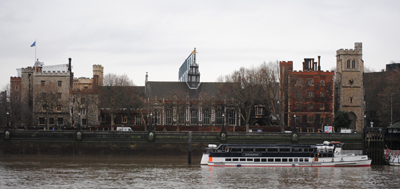
Lambeth-palaceThe London residence of the Archbishop of Canterbury, Lambeth Palace was first acquired by the archbishopric in around the year 1200 with Archbishop Stephen Langdon – an important figure in the whole Magna Carta saga – believed to be the first to have lived there.

Lambeth-Palace2The complex built in the early 13th century included a chapel, a great hall, a ‘great chamber’ where the archbishop would receive guests, and private apartments for Archbishop Langdon, who was appointed to the archbishopric in 1207 and remained in the post until his death in 1228 (his appointment was a major point of contention between King John and Pope Innocent III and a key factor in the dispute which led to the creation of the Magna Carta).

Not much remains of the original palace but the sections that do include the originally free-standing Langdon’s Chapel (although now much altered and connected to the rest of the complex) and the crypt beneath it (described as one of the best preserved medieval stone vaults in London it is now a chapel but was originally used for the storage of wine and beer).

They are both believed to have been completed in about 1220 with the other buildings now present added later over the centuries.

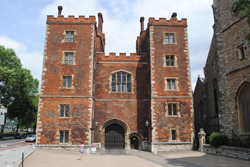
These include the formidable red brick gatehouse that fronts the complex today – known as Morton’s Tower, it is named after Archbishop Cardinal John Morton and dates from 1490 – while the Guard Room, which has its origins in the archbishop’s ‘great chamber’, dates from the 14th century and the infamous Lollard’s Tower – used as a prison in the 17th century – from the 15th century.

The Great Hall – now used as a library, first established in 1610 – was rebuilt in the mid 17th century although it is believed to stand on the site of that first used by Langdon (we’ll deal more with the later history of Lambeth Palace in a later post).

WHERE: Lambeth Palace, corner of Lambeth Palace Road and Lambeth Road (nearest tube stations are Westminster, Waterloo, Vauxhall, and Lambeth North); WHEN: Guided tours (90 minutes) only – check website for details; COST: £12 a person plus £2.95 booking fee (under 17s are free); WEBSITE: www.archbishopofcanterbury.org/pages/about-lambeth-palace.html.

10 sites from London at the time of the Magna Carta – 4. Thorney Island…

Houses-of-Parliament2 Both Westminster Abbey and the Palace of Westminster (these days better known as the Houses of Parliament – pictured) pre-date 1215 but unlike today in 1215 the upon which they stood was known as Thorney Island.

Formed by two branches of the Tyburn River as they ran down to the River Thames, Thorney Island (a small, marshy island apparently named for the thorny plants which once grew there) filled the space between them and the Thames (and remained so until the Tyburn’s branches were covered over).

One branch entered the Thames in what is now Whitehall, just to the north of where Westminster Bridge; another apparently to the south of the abbey, along the route of what is now Great College Street. (Yet another branch apparently entered the river near Vauxhall Bridge).

The abbey’s origins go back to Saxon times when what was initially a small church – apparently named after St Peter – was built on the site. By 960AD it had become a Benedictine monastery and, lying west of what was then the Saxon city in Lundenwic, it become known as the “west minster” (St Paul’s, in the city, was known as “east minster”) and a royal church.

The origins of the Palace of Westminster don’t go back quite as far but it was the Dane King Canute, who ruled from 1016 to 1035, who was the first king to build a palace here. It apparently burnt down but was subsequently rebuilt by King Edward the Confessor as part of a grand new palace-abbey complex.

For it was King Edward, of course, who also built the first grand version of Westminster Abbey, a project he started soon after his accession in 1042. It was consecrated in 1065, a year before his death and he was buried there the following year (his bones still lie inside the shrine which was created during the reign of King Henry III when he was undertaking a major rebuild of the minster).

Old Palace Yard dates from Edward’s rebuild – it connected his palace with his new abbey – while New Palace Yard, which lies at the north end of Westminster Hall, was named ‘new’ when it was constructed with the hall by King William II (William Rufus) in the late 11th century.

Westminster gained an important boost in becoming the pre-eminent seat of government in the kingdom when King Henry II established a secondary treasury here (the main treasury had traditionally been in Winchester, the old capital in Saxon times) and established the law courts in Westminster Hall.

King John, meanwhile, followed his father in helping to establish London as the centre of government and moved the Exchequer here. He also followed the tradition, by then well-established, by being crowned in Westminster Abbey in 1199 and it was also in the abbey that he married his second wife, Isabella, daughter of Count of Angouleme, the following year. 

This Week in London – London Tree Week kicks off; illustrated London at the LT Museum; and, Joshua Reynolds at the Wallace Collection…

London Tree Week kicks off on Saturday with a range of free events happening across the city. They include ‘tree walks’ in Richmond and Greenwich Royal Parks, a tour of paintings featuring trees at the National Gallery in Trafalgar Square, an exhibition at City Hall featuring some of the city’s great trees, and family-friendly activities at Stave Hill Ecological Park in the city’s south-east. Londoners can also download a free ‘Tree Route’ app which uses the Tube map to showcase the capital’s trees including “must see” trees located near Underground stations such as St Pauls (a swamp cypress) and Angel (a black poplar). There’s also a photo sharing challenge where you can upload photos of trees that have made a difference to your part of London to Instagram or Twitter using the hashtag #LondonTreeWeek. For the complete listing of what’s on, follow this link. Runs until 31st May.

One hundred illustrations capturing a variety of aspects of life in London form the heart of an exhibition, The Prize for Illustration 2015: London Places & Spaces, which has opened at the London Transport Museum in Covent Garden. The artworks – which range from the past to the present and the contemplative to the loud – are all on the shortlist for the prestigious Prize for Illustration and were selected from more than 1,000 entries. Each of the works is accompanied by a short description written by the artist. The works are on show until 6th September. Admission charge applies. For more, see www.ltmuseum.co.uk.

On Now – Joshua Reynolds: Experiments in Paint. Now entering its final days, this exhibition at the Wallace Collection in Marylebone provides a fresh perspective on a giant of the British art world, 18th century portraitist Joshua Reynolds and features such famous works as Nelly O’Brien, Mrs Abingdon as Miss Prue, and Self Portrait Shading the Eyes. Admission is free. Runs until 7th June. For more information, see www.wallacecollection.org.

Send items for inclusion to exploringlondon@gmail.com

LondonLife – Blooming beauty at Chelsea…

Chelsea4

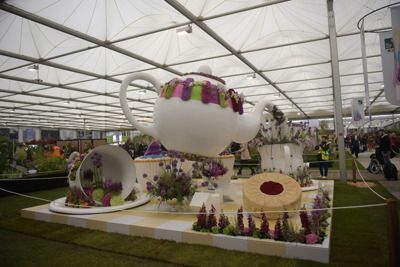
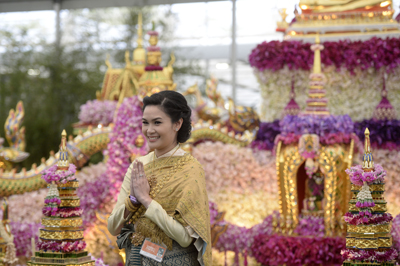
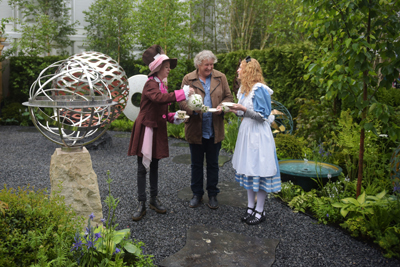
The RHS Chelsea Flower Show opened in London’s west this week so we thought we’d take a look at some of the treasures on show. The show, which is in its 102nd year, has been held in the grounds of the Royal Hospital Chelsea since 1913 (except during the two World Wars) and while its claim to be Britain’s largest flower show has been lost to the RHS Hampton Court Palace Flower Show, it remains the nation’s most prestigious. The five day show runs until Saturday. From the top – Chelsea pensioners look at ‘Peter Beales Roses’ in the Great Pavilion; the Inter-flora display in the Great Pavilion; a model poses in front of the Thailand, Land of Buddhism display; and, award-winning garden sculptor David Harber hosts the Mad Hatter’s tea party. For more on the show, visit www.rhs.org.uk/shows-events/rhs-chelsea-flower-show PICTURES: RHS/Hannah McKay and RHS.


Chelsea3

Chelsea2

Chelsea1

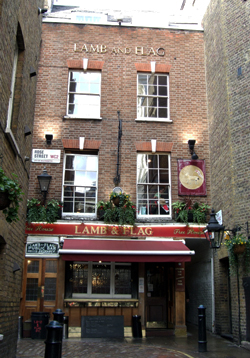
London Pub Signs – The Lamb & Flag…

We’ve mentioned this Covent Garden pub, redolent with history as it is,  before but we thought it worth a second look.

Lamb-and-FlagThere’s not much mystery surrounding the origins of the name – the Christian symbolism of the sign is fairly obvious and the symbol, which was used by the Templars and is also that of the Middle Temple, was apparently a reasonably common one for pubs. But the Lamb & Flag hasn’t always been its name.

While there’s been a pub on the site dating as far as back as the 17th century (the building was survivor of the Great Fire of 1666), it was apparently only named the Lamb & Flag in 1833.

Prior to that it was apparently known as the Cooper’s Arms (in what we assume was a reference to barrel-makers) and at one time in its long history was nick-named the ‘Bucket of Blood’ thanks to the location being used for prizefights.

The core of the present, Grade II-listed, building at 33 Rose Street is said to date from 1772, but the brick facade is 20th century. A narrow passageway known as Lazenby Court, which dates from the late 17th century and connects Rose Street to Floral Street, runs alongside it.

Regular patrons have included author Charles Dickens (one of the many London pubs he apparently attended not infrequently) and other famous associations include the poet John Dryden – he is famously associated with Rose Street thanks to the fact he was beaten up there twice in 1679 after upsetting people with his satires (the pub’s upstairs room is named after him).

For more on the pub, see www.lambandflagcoventgarden.co.uk.

PICTURE: Ewan Munro, Flickr (CC BY-SA 2.0)

This Week in London – Dunkirk Little Ships at Royal Docks a highlight of ‘Museums at Night’; the Magna Carta in stitches; and Peter Kennard’s works on show…

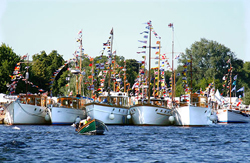
Dunkirk-Little-Ships-More than 20 Dunkirk Little Ships will gather at London’s Royal Docks this weekend ahead of their Return to Dunkirk journey marking the 75th anniversary of the Dunkirk evacuations. The event, which is part of the UK’s annual festival of late openings Museums at Night, will see the ships parade around Royal Victoria Dock on Saturday night with the Silver Queen offering twilight trips and the chance to step on board some of the other ships (the Little Ships will continue with their own festival on Sunday commencing with a church service by the quayside at 11am). Other events being offered in London as part of Museums at Night include ‘Dickens After Dark’ in which the Charles Dickens Museum will open its doors to visitors for night of Victorian entertainment on Friday night and a night of music featuring the Royal College of Music at Fulham Palace (also on Friday night). Among the other London properties taking part are the Handel House Museum, Benjamin Franklin House, the Wellcome Collection, Museum of the Order of St John, and the National Archives in Kew. For a full list of events, check out http://museumsatnight.org.uk

Meanwhile, Dulwich Picture Gallery in south London is holding its first weekend culture festival, MayFest: Men of Mystery, as part of Museums at Night. On Friday and Saturday nights, there will be tours of the gallery’s new exhibition featuring the work of artist Eric Ravilious followed by outdoor cinema screenings of Alfred Hitchcock’s Rear Window and The 39 Steps as well as free swing dance lessons, street foods and a pop-up vintage shop which will help people get the vintage look. Visitors are being encouraged to dress up in styles of the 1930s and 1940s with a prizes awarded to those with the “best vintage style”. The gallery will also be inviting visitors to take part in a mass installation drop-in workshop held in the gallery’s grounds over the weekend and Saturday morning will see special events for children. For more, see www.dulwichpicturegallery.org.uk/whats-on/.

A major new work by acclaimed artist Cornelia Parker goes on display in the entrance hall of the British Library in King’s Cross tomorrow to mark the 800th anniversary of the Magna Carta. The almost 13 metre long Magna Carta (An Embroidery) replicates the entire Wikipedia entry on the Magna Carta as it was on the 799th anniversary of the document and was created by many people ranging from prisoners and lawyers to artists and barons. It accompanies the library’s exhibition Magna Carta: Law, Liberty, Legacy. Entry to see the artwork is free. For more, see www.bl.uk/cornelia-parker.

The works of Peter Kennard, described as “Britain’s most important political artist”, are on display in a new exhibition which opens at the Imperial War Museum in London today. Peter Kennard: Unofficial War Artist is the first major retrospective exhibition of his work and features more than 200 artworks and other items drawn from his 50 year career including an art installation, Boardroom, created especially for the display. Works on show include his iconic transposition of Constable’s painting Haywain which he showed carrying cruise missiles about to be deployed in Greenham Common, the Decoration paintings created in 2004 in response to the Iraq War of 2003, his seminal STOP paintings which reference events of the late 1960s such as the ‘Prague Spring’ and anti-Vietnam war protests and his 1997 installation Reading Room. The free exhibition runs at the Lambeth institution until 30th May next year. For more, see www.iwm.org.uk/london.

Send all items for inclusion to exploringlondon@gmail.com.
A Moment in London’s History – Londoners granted the right to elect their mayor…

It was on 9th May, 2015, 800 years ago this year that, in the lead-up to the creation of the Magna Carta in June, King John issued a charter granting the City of London the right to freely elect its own mayor.

The charter, which was issued at the Temple – King John’s power base to the west of the City (for more on it, see our earlier post here), was a fairly blatant bid to keep the support of the city.

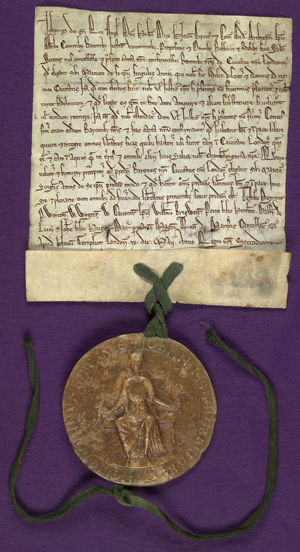
King-John-CharterKnown simply as the King John Charter, it stated that the barons of the city, “may choose to themselves every year a mayor, who to us may be faithful, discreet, and fit for government of the city, so as, when he shall be chosen, to be presented unto us, or our justice if we shall not be present”.

In return, the mayor was required to be presented to the monarch to take an oath of loyalty each year – a practice commemorated in the Lord Mayor’s Show each November.

The charter, which has a particularly good impression of the king’s seal, is currently on display in the City of London’s newly opened Heritage Gallery, located at the Guildhall Art Gallery.

The event was one of a series leading up to the signing of the Magna Carta in June. Only 10 days after King John issued the charter to the City of London, rebel barons, who have previously taken Bedford, marched on the city to demand their rights and arrived their before the Earl of Salisbury (whom John had ordered to occupy the city).

Aldgate was apparently opened to them by some supporters within the city and the forces of the rebel barons went on to attack the home of royalists as well as those of Jews along with a Jewish burial ground in Barbican – the latter because Jewish moneylenders had lent money to the king.

They later besieged the Tower of London and while they couldn’t take the fortress, their seizure of the city was enough to help force the king to open negotiations late in the month, asking the Archbishop of Canterbury, Stephen Langdon, on 27th May  to arrange truce (which, while it was apparently not observed terribly well, did help pave the path to the Magna Carta).

The exhibition at the Heritage Gallery runs until 4th June. For more information, see www.cityoflondon.gov.uk/things-to-do/visiting-the-city/attractions-museums-and-galleries/guildhall-art-gallery-and-roman-amphitheatre/Pages/Heritage-Gallery.aspx.

PICTURE: City of London: London Metropolitan Archives

This Week in London – Marking VE Day’s 70th; Rut Blees Luxemburg at the Museum of London; and India’s Sidi community on show at the NPG…

Three days of events kick off in London tomorrow to mark the 70th anniversary of Victory in Europe (VE) Day. Events will include a Service of Remembrance at the Cenotaph in Whitehall at 3pm tomorrow (Friday) coinciding with two minutes national silence while Trafalgar Square – scene of VE Day celebrations in 1945 – will host a photographic exhibition of images taken on the day 70 years ago (the same images will be on show at City Hall from tomorrow until 5th June) and, at 9.32pm, a beacon will be lit at the Tower of London as part of a nation wide beacon-lighting event. On Saturday at 11am, bells will ring out across the city to mark the celebration and at night, a star-studded 1940s-themed concert will be held on Horse Guards Parade (broadcast on BBC One). Meanwhile, on Sunday, following a service in Westminster Abbey, a parade of current and veteran military personnel will head around Parliament Square and down Whitehall, past the balcony of HM Treasury where former PM Sir Winston Churchill made his historic appearance before crowds on the day, to Horse Guards. A flypast of current and historic RAF aircraft will coincide with the parade and from 1pm the Band of the Grenadier Guards will be playing music from the 1940s in Trafalgar Square. Meanwhile, starting tomorrow, special V-shaped lights will be used to illuminate Trafalgar Square, St Paul’s Cathedral and the Houses of Parliament as a tribute. For more information, see www.gov.uk/government/topical-events/ve-day-70th-anniversary.

The works of leading London-based photographer Rut Blees Luxemburg are on show in at new exhibition at the Museum of London in the City. London Dust will feature three major newly acquired works by Luxemburg including Aplomb – St Paul’s, 2013, Walkie-Talkie Melted My Golden Calf, 2013, and the film London/Winterreise, 2013. Blees Luxemburg’s images – others of which are also featured in the exhibition – contrast idealised architectural computer-generated visions of London that clad hoardings at City-building sites with the gritty, unpolished reality surrounding these. In particular they focus on a proposed 64 floor skyscraper, The Pinnacle, which rose only seven stories before lack of funding brought the work to a halt. The free exhibition runs until 10th January next year. For more, see www.museumoflondon.org.uk.

The Talk: The Cutting Edge – Weapons at the Battle of Waterloo. Paul Wilcox, director of the Arms and Armour Research Institute at the University of Huddersfield, will talk about about the weapons used at Waterloo with a chance to get ‘hands-on’ with some period weapons as part of a series of events at Aspley House, the former home of the Iron Duke at Hyde Park Corner, to mark the bicentenary of the Battle of Waterloo. To be held on Monday, 11th May, from 2.30pm to 4pm. Admission charge applies and booking is essential – see www.english-heritage.org.uk/apsley for more.

On Now: On Belonging: Photographs of Indians of African Descent. A selection of ground-breaking photographs depicting the Sidi community – an African minority living in India – is on show at the National Portrait Gallery off Trafalgar Square. The works, taken between 2005 and 2011, are those of acclaimed contemporary Indian photographer Ketaki Sheth and the exhibition is his first solo display in the UK. They provide an insight into the lives of the Sidi, and include images of a young woman named Munira awaiting her arranged wedding, young boys playing street games, and the exorcism of spirits from a woman as a young girl watches. Admission is free. Runs in Room 33 until 31st August. For more, see www.npg.org.uk.

Send all items for inclusion to exploringlondon@gmail.com.
LondonLife – Royal gun salute in Hyde Park marks birth of Princess Charlotte Elizabeth Diana…

Gun-salute

Guns fired a royal salute in Hyde Park on Monday to mark the birth of the Duke and Duchess of Cambridge’s new daughter (and Prince George’s new sister), named Princess Charlotte Elizabeth Diana (or more formally, Her Royal Highness Princess Charlotte of Cambridge). Seventy-one horses pulling six World War I-era 13-pounder field guns from the King’s Troop Royal Horse Artillery rode out in procession with the Royal Artillery Band from Wellington Barracks, past Buckingham Palace, up Constitution Hill to Wellington Arch, and into Hyde Park to fire the salute. The 41 gun salute was fired at the same time as a 62 gun salute at the Tower of London. By custom, gun salutes are fired for the birth of every prince or princess, regardless of where they sit in the order of succession. A basic salute is 21 rounds with an additional 20 rounds fired because Hyde Park is a Royal Park while at the Tower of London an extra 20 rounds are fired because it is a royal palace along with a further 21 because of its City of London location. The princess, fourth in line to the throne, was born at 8:34am on Saturday at St Mary’s Hospital in Paddington, and weighed 8lbs, 3oz (3.7kg). PICTURE: © Courtesy of Ian Wylie Photo.

This Week in London – Duke of Wellington on show; wartime City bank recreated in Warwickshire; and early photographs at the Tate…

ArthurWellesleyThe Duke of Wellington’s political and military career as well as his personal life is being explored in an exhibition running at the National Portrait Gallery off Trafalgar Square until August. Wellington: Triumphs, Politics and Passions features 59 portraits and other works including a rarely seen portrait of the Iron Duke painted by Sir Thomas Lawrence and commissioned by Sarah, Countess of Jersey, a year after Wellington had become Prime Minister. The portrait (pictured) remains unfinished – the state it was in when Lawrence died in 1830 – and, held in a private collection, hasn’t been shown in public for any significant period until now. The exhibition also includes a John Hoppner portrait of the duke as a young soldier, a daguerreotype taken by Antoine Claudet on Wellington’s 75th birthday in 1844 and drawings by Lawrence of Wellington’s wife, Kitty. The exhibition – which is part of the commemorations marking 200 years since the Battle of Waterloo, runs until 7th June. Admission is free. For more see www.npg.org.uk. PICTURE: Arthur Wellesley, 1st Duke of Wellington by Sir Thomas Lawrence (1829), © On loan to National Portrait Gallery by kind permission of Mr. & Mrs. Timothy Clode.

Upton House is Warwickshire has turned the clock back to 1939 with a display dedicated to the time when the Bearstead family moved their City-based bank, M Samuel & Co, to their historic family mansion to escape the Blitz in London. Twenty-two bank staff took over the house, sleeping in shared dormitories and taking meals of rook pie in the home’s Long Gallery while secretaries typed surrounded by works of art. The National Trust has returned 12 rooms to their wartime look based on research conducted by 80 of the volunteers at the house. They’re filled with thousands of objects, from ration-book toothpaste to wartime toilet rolls, to recreate a wartime experience at the home. Outside an Anderson Shelter stands in the garden where heritage vegetables are being grown in an allotment. Visitors will also find out how 40 of the most precious works in the home were sent to a special storage facility in a Welsh slate mine to protect them. Admission charge applies. For more, see www.nationaltrust.org.uk/upton-house/

On Now – Salt and Silver: Early Photography 1840-1860. This exhibition at Tate Britain in Millbank is the first major exhibition in Britain dedicated to salt prints, the earliest form of paper photography, and features 90 images including some of the best and rarest early photographs. The salt print technique was invented in Britain in the 1840s and 1850s and spread across the world, hence as well as portraits, still lifes and scenes from ‘modern life’, the images on show include from William Fox Talbot’s images of a Paris street to Nelson’s Column under construction, Linnaeus Tripe’s views of Puthu Mundapam in India and Auguste Salzmann’s studies of statues in Greece. Runs in the Linbury Galleries until 7th June. Admission charge applies. For more, see www.tate.org.uk.

Send all items for inclusion to exploringlondon@gmail.com.
10 sites from London at the time of the Magna Carta – 2. St Bartholomew the Great…

St Bartholomew the Great in Smithfield – the oldest parish church in London (see our earlier piece here) – is worth a revisit thanks to the fact that it would have been standing (at least partially) when the seal of King John was first affixed to the Magna Carta .

St-BartholomewsOnly half the size it once was, this church was founded in 1123 AD as the priory church for a community of Augustinian Canons and owes its origins to Rahere, a favored courtier of King Henry I who renounced his way of life and made a pilgrimage to Rome, returning to found both the church and nearby hospital for the poor.

Only the eastern part of the church was built by the time of the death of Rahere – the first prior – in 1145 and the building continued for some years afterward. While the interior walls now look somewhat plain, they would have been highly decorated when the building was originally constructed. At the time of the Magna Carta, the church would have only been partly completed.

The tomb of Rahere still lies within the church, on the left hand side of the altar – although the canopy over it dates from the 15th century. There were some healing miracles recorded at the tomb.

The church’s current configuration came about when the priory was dissolved in 1539 and the nave of the church was pulled down, leaving what’s there now – the quire, altar and lady chapel.

The brick tower at the church’s west end dates from the 1620s while the gateway through which you enter the church grounds features a restored 13th century arch topped by a late Tudor building.

The church was briefly used by some Dominican friars but since the reign of Queen Elizabeth I has fulfilled the role of parish church. A concerted restoration effort began in the mid-19th century by Sir Aston Webb (architect of the Victoria & Albert Museum), leaving the Lady Chapel with a very different feel to the Norman choir. The building is now Grade I-listed.

WHERE: Off Little Britain, West Smithfield (nearest tube station is Barbican); WHEN: 8.30am to 5pm Monday to Friday, 10.30am to 4pm Saturday, 8.30am to 8pm Sunday (except for services) ; COST: £4 an adult/£3.50 concession/£10 a family; WEBSITE: www.greatstbarts.com

What’s in a name?…Downing Street…

Downing-Street

One of the most famous streets (and photographed) in London (though sadly not open to the public), Downing Street in Whitehall is these days most well-known for being the location, at Number 10, of the official residence of the British Prime Minister.

But Downing Street’s history dates back to a time before the first British PM moved in (this was Sir Robert Walpole in the 1735 and even after that, it didn’t become a regular thing for Prime Ministers to live here until the Twentieth century). And its name bears testimony to its creator, Sir George Downing, a soldier and diplomat described as “a miserly and at times brutal” man who served first under both Oliver Cromwell and, following the Restoration, King Charles II (and was, coincidentally, one of the first graduates of Harvard University).

In the 1650s, Sir George took over the Crown’s interest in land here, just east of St James’s Park, and intended to build a row of townhouses upon it. His ambitions were delayed, however, due to an existing lease with the descendants of Elizabethan courtier Sir Thomas Knyvet who had once lived in a large home on the site of what is now Number 10 Downing Street.

By the 1680s, however, the lease had expired and between 1682-84, Downing was able to construct a cul-de-sac, closed at the St James’s Park end, featuring either 15 or 20 two storey terraced townhouses with stables and coach-houses, designed by no less than Sir Christopher Wren.

While the homes were apparently of shoddy craftsmanship and stood upon poor foundations (Churchill famously wrote that Number 10 was “shaky and lightly built by the profiteering contractor whose name they bear”), the street apparently attracted some notable residents from the start.

These included the Countess of Yarmouth, who briefly lived at Number 10 in the late 1680s, Lord Lansdowne and the Earl of Grantham, and even, briefly, apparently the diarist James Boswell in the mid 1700s. Downing himself isn’t thought to have ever lived here – he retired to Cambridge a few months after the houses were completed.

The houses between Number 10 and Whitehall – on the north side of the street – were taken over by the government and eventually demolished in the 1820s to allow for the construction of offices for the Privy Council, Board of Trade and Treasury while the houses on the south side remained until they were demolished in the early 1860s to make way for the Foreign, India, Colonial and Home Offices.

The numbers in the street have changed since Downing’s houses were first built. Of the original homes in the street only Number 10 (home of the PM) and Number 11 (home of the Chancellor of the Exchequer) survive.

Access to the street has been restricted since the 1980s with the current black steel gates put in place in 1989.

An underground tunnel apparently runs under the street connecting number 10 with Buckingham Palace and the underground bunker, Q-Whitehall, built in the 1950s in the event of nuclear war.

Treasures of London – Australian War Memorial…

Australian-War-Memorial

Tomorrow is the 25th April – commemorated every year as Anzac Day in Australia in memory of that country’s soldiers who lost their lives. This year marks 100 years since Australian troops first landed at Gallipoli during World War I. 

While attention will be focused on Anzac Cove in modern Turkey and the Australian war memorials on what was the Western Front in western Europe, in London there will be several events including a wreath laying ceremony at The Cenotaph in Whitehall, a commemoration and thanksgiving service in Westminster Abbey and a dawn service held at the Australian War Memorial in Hyde Park Corner.

This last memorial, dedicated to the more than 100,000 Australians who died in both world wars, was unveiled on Armistice Day, 2003, in the presence of Queen Elizabeth II, then-Australian PM John Howard and then British PM Tony Blair.

It records the 23,844 names of town where Australians who served in World War I and II were born.

Superimposed over the top are 47 of the major battles they fought. Principal architect Peter Tonkin said the somewhat curvaceous design of the memorial, made of grey-green granite slabs, “reflects the sweep of Australian landscape, the breadth and generosity of our people, the openness that we believe should characterise our culture”.

For more on the wall – including the ability to search for town names – see www.awmlondon.gov.au.

10 sites from London at the time of the Magna Carta – 1. The Tower…

This week we’re starting a new series in honour of the 800th anniversary of the signing of the Magna Carta in which we look back at the London of 1215. First up we take a look at the Tower of London which was a smaller version of the complex of buildings which today exists on the site.

By 1215, the Tower of London – the fortress first constructed on the orders of William the Conqueror – had already existed for more than 100 years, nestled into a corner of the city’s walls which had existed since Roman times.

Then, as now, the White Tower – initially itself known as the Tower of London, it was later dubbed the White Tower thanks to the whitewash used to cover the Kentish limestone to protect it from the weather (and for its visual impact) – stood at the heart of the complex. Unlike today’s building, it lacked the large windows which date from the early 18th century, and while the towers were believed to be capped with cones, the present cupolas date from the reign of King Henry VIII.

White-Tower

While it had long been surrounded by a palisade and ditch, in 1189, King Richard I’s chancellor William Longchamp, the Bishop of Ely, had begun to extend the castle’s defences while the king was on crusade (in fact, the first siege of the Tower took place in 1191 when the then Prince John did so in opposition to Longchamp’s  regime – it only lasted three days before Longchamp surrendered).

This extension, which was completed by King John following his accession to the throne in 1199, saw the size of the bailey around the White Tower doubled and a new curtain wall and towers – including the Bell Tower – built around its outer perimeter with a ditch below (the ruins of the Wardrobe Tower, just to the east of the White Tower show where the original Roman-era wall ran).

But it wasn’t until the reign of King John’s son, King Henry III, that the royal palace which now stands on the river side of the White Tower was constructed. Until that point – and at the time of the signing of the Magna Carta – the royal apartments remained within the White Tower itself, located on the upper floor.

Like those of the garrison commander known as the constable (located on the entrance level), the king’s apartments would have consisted of a hall and a large chamber, which may have been divided into smaller chambers with wooden partitions as well as a chapel (on the upper level this was the still existing Chapel of St John the Evangelist, although it would have then been more more richly decorated). Unlike the lower levels, the king’s level was of double height with a gallery (this level now has its own full floor).

The royal apartments had a variety of uses – as well as a residence and refuge for the king, they were also at times a place to keep high profile prisoners such as the Bishop of Durham, Ranulf Flambard, who was imprisoned on the orders of King Henry I (and who escaped from an upper window on a rope which had been smuggled in to him and fled to Normandy).

It is also worth noting that while King John apparently kept exotic animals at the Tower, it is his son, King Henry III who is usually credited with founding the Royal Menagerie there.

And it was his son, King Edward I, who expanded the Tower to its current size of  about 18 acres by rebuilding the western section of the inner ward and adding the outer ward.

WHERE: Tower of London (nearest Tube station Tower Hill); WHEN: 9am to 5.30pm, Tuesday to Saturday, 10am to 5.30pm Sunday to Monday; COST: £24.50 adults; £11 children under 15; £18.70 concessions; £60.70 for a family (discounts for online purchases/memberships); WEBSITE: www.hrp.org.uk/toweroflondon/.