What’s in a name?…Shepherd’s Bush…

The derivation of the name of this west London suburb remains something of a mystery with several competing theories vying for attention.

One theory suggests that the area – centred on Shepherd’s Bush Green and largely rural up until at least the middle of the 19th century – was named for the shepherds that once tended their flocks there (perhaps even building a special shelter in a hawthorn bush somewhere on the green, hence the ‘bush’).

A second theory – deemed by Cyril M Harris, author of What’s In A Name? – as “more likely” – suggests it was named after the now long lost Mr Shepherd or Mr Sheppard (or similar spelling).

While the green gets a mention as far back as the early 1600s, the area – noted for its high concentration of Australians and New Zealanders – wasn’t developed in earnest until the late 19th century. It suffered heavy damage in World War II and, later, from road construction.

Shepherd’sBush was historically a base for many BBC offices including the now long closed Lime Grove Studios (The Hour, anyone?), originally the Gaumont Film Company. Other notable buildings in the area include The Bush Theatre, located in the former public library and the Queens Park Rangers Football Club’s home ground in Loftus Road. Just to the north of Shepherd’s Bush is White City where the 1908 Summer Olympics were held (for more on this, see our previous entry here).

Treasures of London – Henry Moore altar at St Stephen Walbrook…

Henry-Moore-altar

A beautiful church in the round, St Stephen Walbrook has a rich history with one of its stand-out features is an altar designed by world renowned sculptor Henry Moore. 

The centrally located circular altar, carved between 1972 and 1983 of polished travertine marble (the marble was taken from the same quarry as that used in Michelangelo’s work), is eight foot across and weighs several tons.

It was commissioned  by property developer and churchwarden, Lord Palumbo, as part of a £1.3 million restoration of the church – built under the supervision of Sir Christopher Wren in the 1670s, replacing an earlier church which burnt down in the Great Fire – which took place between 1978 and 1987.

It was deliberately designed to be placed at the centre of the church and didn’t take up its new position without controversy with objectors to it taking the matter to the Court of Ecclesiastical Cases Reserved (they ruled the altar was acceptable for use in a Church of England church).

WHERE: St Stephen Walbrook, 39 Walbrook (nearest tube stations are Bank and Cannon Street); WHEN: 10am to 4pm weekdays (check website for changes); COST: Free; WEBSITE: www.ststephenwalbrook.net.  

Around London – Sculpture in the City; Taste of London; Paddington’s 1st Festival; and, Gauguin at the Courtauld…

LoveA free outdoor exhibition of nine artworks by world famous artists can be seen in the City of London from today. Works featured in this year’s Sculpture in the City exhibition – the third year the event has run – include Robert Indiana’s iconic LOVE sculpture (found at 99 Bishopsgate), Shirazeh Houshiary’s five spiralling stainless steel ribbons String Quintet (St Helen’s Square), and three giant steel dinosaurs, The Good, The Bad and The Ugly, made by the Jake & Dinos Chapman (30 St Mary Axe). Other artists whose work is featured include Antony Gormley, Keith Coventry, Richard Wentworth, Jim Lambie and Ryan Gander. The works will be on display in the Square Mile for the next 12 months. For more – including the locations of all nine installations – see www.cityoflondon.gov.uk/sculptureinthecity. PICTURE: Robert Indiana ‘LOVE’ (1966)  ∏ Morgan Art Foundation, Artists Right Socienty (ARS), New York – DACS, London. Photograph – A et cetera

The 10th Taste of London festival – London’s biggest outdoor food festival – kicks off in Regent’s Park today and runs over the weekend. This year sees amateur BBQ enthusiasts going head-to-head in a “battle of the BBQs” on Saturday while professionals will hit the grills on Sunday with the winners crowned champions of the Weber BBQ Challenge. Meantime, visitors can experience the food of 40 of the city’s top restaurants, shop at 200 food and drink stalls, enjoy fine wine tasting and watch demonstrations by some of the world’s top chefs including three generations of the Roux dynasty – Albert Roux, Michel Roux Jr and Emily Roux – as well as Rene Redzepi, Raymond Blanc, Ben Tish, Pascal Aussignac and Bruno Loubet. For more, see www.tastefestivals.com/london.

The first ever Paddington Festival – an 11 week showcase of art and culture supported by the City of Westminster – kicks off this weekend. Events include a “puppet theatre barge” at Little Venice and a launch event featuring an appearance by Chucky Venn (Eastenders) and steelpan and performances from local dance group, The Phoenix Dancers, at the Maida Hill Market. For more on the festival and for the full programme, see www.paddingtonfestival.co.uk. Other festivals kicking off this weekend include Shubbak 2013 – an international festival of Arab culture (www.shubbak.co.uk).

On Now: Collecting Gauguin: Samuel Courtauld in the 20s. Opening today, this exhibition at the Courtauld Gallery at Somerset House features the gallery’s collection of works by the Post-Impressionist master Paul Gauguin. The most important collection of Gauguin’s works in the UK, it was assembled by Samuel Courtauld between 1923 and 1929 and includes major paintings and works on paper by  along with one of only two marble sculptures the artist ever created. The exhibition, the gallery’s “summer showcase”, also features two important works formerly in the Courtauld’s collection and now on loan – Martinique Landscape and Bathers at Tahiti. Runs until 8th September. Admission charges apply. Meanwhile, The Courtauld Institute of Art’s MA Curating the Art Museum programme is also launching its annual exhibition, Imagining Islands: Artists and Escape, in response to the gallery’s summer showcase. A “trans-historical” exhibition displayed in two rooms, it explores artists’ fascination with other worlds and the search for utopia. Works include a 1799 engraving of Jan Brueghel the Elder’s Adam and Eve in Paradise, Barbara Hepworth’s 1957 work Icon and John Everett Millais’ 1862 painting, The Parting of Ulysses. For more, see www.courtauld.ac.uk.

LondonLife – A glimpse into some of London’s hidden gardens…

Eccleston-Square

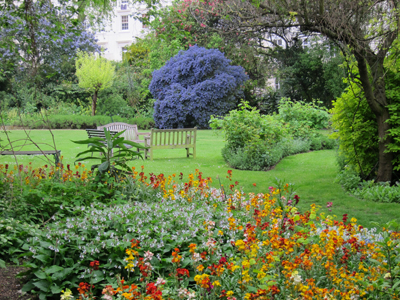
Thousands turned out for the Open Garden Squares Weekend in London earlier this month when more than 200 of London’s private, hidden, unusual or little known gardens – including those at Eccleston Square in Pimlico, pictured above – threw open their gates to the curious public. Among the highlights of this year’s weekend was the chance to see the gardens at 10 Downing Street (more than 40,000 people applied for the 40 places) which also included a tour of the house. Next year’s event will be held on 14th and 15th June. For more, see www.opensquares.org.

PICTURE: Courtesy of Open Garden Squares Weekend.

London Pub Signs – The White Cross…

The-White-Cross

This pub situated on the bank of the River Thames in Richmond, in London’s west, owes its name to a former monastery which once stood on the site.

A pub has been on the site since at least 1748 when it was known as the Waterman’s Arms. But the current building dates from 1838 and it was renamed the White Cross shortly after.

There’s a couple of competing theories behind its name – one is that the landlord at the time of the name changed was one Samuel Cross. The other is that it was named after the friary which once stood on the site and was dissolved, no surprises here, by King Henry VIII, in 1534. The friary had been established by Observant Franciscans, who took the white cross as their symbol, around 1500.

Apparently some remains of the friary may be incorporated into the cellars of the pub. Other features to note are the lovely open fireplaces including one oddly placed under a window (delightful on colder days), and the sign pointing to the door on the side of the pub which states that this is the entrance in times of high tide (these usually occur during spring and see access to the front entrance blocked by the rising river water).

Located off Water Lane in Richmond. For more on the pub, check out http://thewhitecrossrichmond.com.

10 Historic London Garden Squares…6. Grosvenor Square

Grosvenor-Square-1

The largest square in Mayfair, Grosvenor Square was laid out in the 1720s on the orders of  Sir Richard Grosvenor of Cheshire.

Sir Richard owned the Grosvenor Estate, a considerable tract of land in London’s west which includes in its northern part the land upon which the square was created (the estate is now owned by Gerald Cavendish Grosvenor, the 6th Duke of Westminster).

It’s proximity to Hyde Park and Whitehall quickly made it, like many other historic squares, a fashionable place for politicians to live – among those who lived here in the late 18th century were three prime ministers.

The oval-shaped gardens in the middle of the square – which was only opened to the public in 1948 – were once home to a statue of King George I but this was removed at some point. Originally thought to have been laid out by gardener John Alston, they took on their current form in 1948 when they were redesigned by architect BWL Gallannaugh (interestingly, Grosvenor Square is also said to have been the last part of London to exchange gas lighting for electric lighting).

There’s almost no residential buildings on the square these days but among the most prominent buildings (in fact it dominates the west end of the square) is the US Embassy. Designed by Eero Saarinen, the building was completed in 1960 with US President John F Kennedy one of the first visitors.

Grosvenor-Square-2The hulking embassy is only one of the many American connections to the square, connections which at one point led to it being known as “Little America”. Dwight Eisenhower, commander of the US armed forces in World War II, based his headquarters at number 20 in 1944, while number nine – one of the few residences to survive – was home to John Adams, first American ambassador to the Court of St James and later the country’s second president.

The American theme, which has meant the square has been the focus of demonstrations such as those protesting the Vietnam War as well as outpourings of support such as in the wake of the September 11 attacks, is also evident in the statutory in the square’s gardens with grand, full size statues of  President Franklin D. Roosevelt (a bronze by William Reid Dick unveiled by Eleanor Roosevelt on the third anniversary of the president’s death – 12th April, 1948 – it is pictured above), President Eisenhower (a bronze by Robert Dean dating from 1989), and President Ronald Reagan (unveiled on 4th July, 2011, pictured right).

On the eastern side of the garden square is the September 11 Memorial Garden opened in 2003 while on the south side is the Monument to the Eagle Squadrons, the three RAF squadrons in World War II mostly composed of American volunteers before the US entered the war. There’s also a set of memorial “Diplomatic Gates”, installed in 1984 to commemorate the bicentennial of the Treaty of Paris and honour US and UK politician who have worked in the service of peace.

Other notable buildings include number one, the Canadian High Commission (previously the US embassy); and number four, one of  square’s oldest houses. Now demolished, number 44 was the home of the Earl of Harrowby and where the British Cabinet were dining when word arrived of Wellington’s victory at Waterloo.

What’s in a name?…Sloane Square

Sloane-SquareThis upmarket square in west London is named in honor of Sir Hans Sloane, the physician come botanist who bought the manor of Chelsea in 1712 and, in doing so, provided grounds for the Chelsea Physic Garden.

Sloane Square was developed by architect Henry Holland Sr and his son Henry Holland Jr in 1771 as part of a residential development they called Hans Town (also named after Sir Hans, it’s still a ward in the Royal Borough of Kensington and Chelsea). For more on Sir Hans Sloane, see our earlier post here.

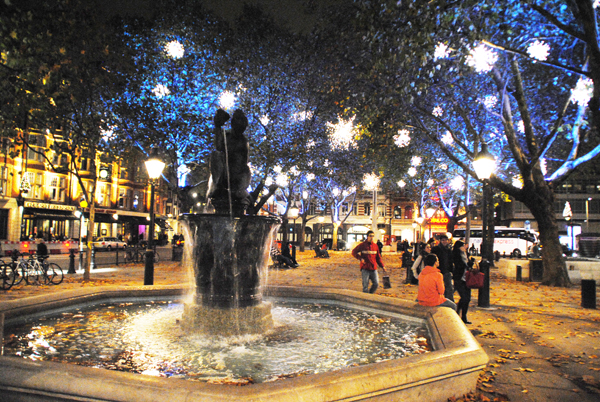
The square, pictured above as it looks decorated for Christmas, initially consisted of a village green bordered with posts and chains and the surrounding buildings were all residential. Apparently the square initially failed to attract the right sort of residents (it was a little too far from Mayfair) but despite this initial setback, it gradually became the centre of a desirable residential precinct.

Private houses began making way for other buildings in the square in the nineteenth century – in 1810, the New Chelsea Theatre opened, subsequently renamed the Royal Court Theatre (this was later moved to another site still on the square and remains there today), and in 1812, the Chelsea, Brompton and Belgrave Dispensary was established for the relief of the sick and the poor.

The Sloane Square Underground station opened in 1868 and rebuilt after it was damaged by bombs in World War II (it’s interesting to note that the River Westbourne actually runs through some iron conduit over the top of the platforms on its way to the River Thames).

Other notable buildings in the square today include the Peter Jones department store which first arrived in the square in the late nineteenth century.

The square itself was redesigned in the 1930s when the war memorial was put in its current position. The Venus Fountain (pictured above) which now stands there – the work of Gilbert Ledward – was erected in 1953.

Around London – Celebrating the Coronation’s 60th anniversary; Benjamin Britten; Keat’s House Festival; and, silver service in Roman Britain…

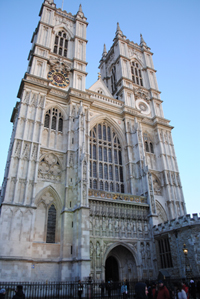
Westminster-Abbey3Sunday marks 60 years since Queen Elizabeth II’s coronation and Westminster Abbey – site of that event – is celebrating with a series of events. These include a special 60th Anniversary of the Coronation Service on Tuesday (4th June) to be attended by the Queen, Duke of Edinburgh and members of the royal family as well as a public lecture to be given by the Bishop of London Richard Chartres on Friday night (7th June – booking is essential), a concert performed by the abbey choir (13th June), and a new exhibition in the chapter house featuring archive images of the 1953 coronation ceremony and of preparations which took place at the abbey. Meanwhile the Coronation Chair, used in most coronations since the 14th century and having just undergone conservation work, is the subject of a new display in St George’s Chapel, and two new commemorative stained glass windows have been installed in King Henry VII’s Lady Chapel – the first commissioned by the abbey for more than a decade, they have been designed by artist Hughie O’Donoghue. For more on the abbey’s celebrations, see www.westminster-abbey.org.

Composer Benjamin Britten is the subject of a new exhibition opening at the British Library tomorrow. Poetry in Sound: The Music of Benjamin Britten (1913-1976) looks at the poetic and literary influences on the work of the man often described as the greatest English composer since Purcell. In particular it examines his collaboration with WH Auden and the interplay of his work with authors such as William Blake, Wilfred Owen, Alfred Lord Tennyson and William Shakespeare. As well as composition manuscripts, the exhibition features photographs, concert programmes and unpublished recordings of his music. There are a range of events accompanying the exhibition which runs until 15th September. An admission charge applies. For more, see www.bl.uk.

The Keats House 2013 Festival is underway this week with activities ranging from poetry readings to felt-making demonstrations, free family workshops and musical performances. The programme of events runs until 2nd June, all under this year’s theme of ‘Health is My Expected Heaven’: The Body and The Imagination. Poet John Keats lived at the house in Hampstead, not far from Hampstead Heath, from 1818 to 1820 and it is the setting for some of his most acclaimed poetry including Ode to a Nightingale. It was this house that he left to travel to Rome where he died of tuberculosis at the age of 25. For more on the festival programme, follow this link.

On Now: Silver Service – Fine dining in Roman Britain. This free exhibition at the British Museum recreates the experience of dining late in the Roman era and uses the Mildenhall Great Dish, Britain’s finest late Roman silver dining service, as an example of the type of large platter on which food for sharing would have been presented. The exhibition, which runs until 4th August, is free (keep an eye out for our upcoming Treasures of London on the Mildenhall Great Dish). For more information, see www.britishmuseum.org.

10 Historic London Garden Squares…5. Berkeley Square…

Berkeley-Square

Located in the south-west of Mayfair in London’s West End, Berkeley Square was originally laid out by architect William Kent in the mid 1700s.

It takes its name from the Berkeley family of Gloucestershire (the first Lord Berkeley of Stratton was a Royalist commander in the Civil War) whose London residence, Berkeley House, stood on what is now the south side of the square until it was destroyed in a fire in 1733 (Devonshire House, whose residents included the 5th Earl of Devonshire and his somewhat notorious wife Georgiana, was subsequently built on the site and remained there until it was demolished in the 1920s).

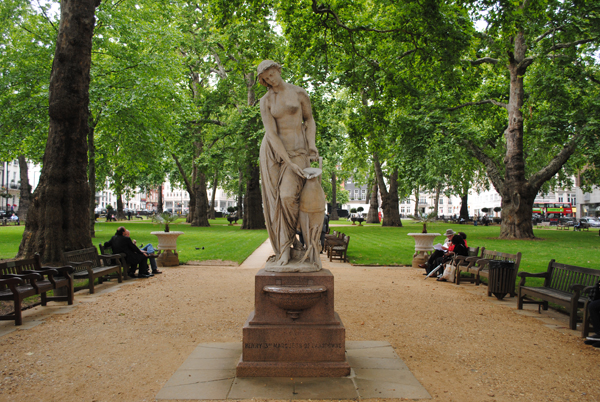
The gardens, which feature some of the city’s oldest London Plane trees (dating from 1789), have a pump house at the centre which was built in 1800 and is now Grade II listed (it stands on the site of an earlier equestrian statue of King George III). Other features including the statue Lady of Sumaria (Water Carrier) – pictured above – which was made by Pre-Raphaelite sculptor Alexander Munro in 1858 and stands at the garden’s southern end.

Among notable buildings which face onto the square are Lansdowne House – located on the south-west corner of the square, it was designed by Robert Adam and now home of the Lansdowne Club – and number 50 Berkeley Square, home of short-lived early 19th century PM George Canning (and said to be the most haunted house in London). The square was also the home of society favorite, Gunter’s Tea Shop, which dated from the mid-1700s.

Famous residents have included wartime PM Sir Winston Church (he lived at number 48 as a child); Horace Walpole, some of the first Prime Minister Robert Walpole (he lived at number 11 during the 1700s), Robert Clive (more famously known as Clive of India, he committed suicide in number 45 in 1774), and the fictional Bertie Wooster and his valet Jeeves (creations of author PG Wodehouse). The square also featured in the famous wartime song, A Nightingale Sang in Berkeley Square.

The square is open from 8am daily with closing times varying based on the season.

A foody feast at Kew; the Queen goes to Westminster; Morecambe & Wise remembered; and, Francis Goodman on show…

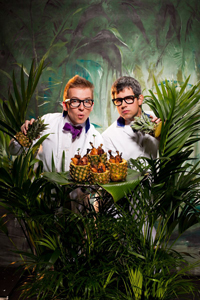
Bompas-&-Parr-with-pineapplesKew Gardens is all about food this summer and autumn with the launch of IncrEdibles: A Festival to Feed the Imagination this Sunday. Visitors are being encouraged to take part in a range of food-related activities including taking a fruit-shaped boat on the Palm House Pond around a floating pineapple island (the Tutti Frutti Boating Lake has been designed by “culinary creators” Bompas & Parr – pictured right), checking out a ‘global gastronomic garden’ featuring more than 90 edible plants on the Great Lawn, and listening to volunteer guides in the Palm House discussing how many of our foods have their origins in the rainforest. The festival also features a range of talks, tours and tastings and you can sample some special foods at the onsite eateries. The festival runs until 3rd November. For more, see www.kew.org. PICTURE: Bompas & Parr

A portrait of Queen Elizabeth II standing on the Cosmati pavement in Westminster Abbey will go on public display for the first time this afternoon at the abbey as part of the celebrations surrounding the 60th anniversary of the Queen’s coronation. The Coronation Theatre: Portrait of Her Majesty Queen Elizabeth II, is the work of Australian-born, London-based artist Ralph Heimans and has been acquired by the abbey for its collection. The painting, which was officially unveiled in London for the Diamond Jubilee last year, was exhibited at the National Portrait Gallery in Canberra until the end of March. The painting can be viewed in the chapter house at the abbey from 2pm today and will remain on display until 27th September. For more, see www.westminster-abbey.org.

A blue plaque commemorating late comic duo Eric Morecambe and Ernie Wise has been unveiled at the Teddington Studios in west London. The Heritage Foundation plaque was reportedly unveiled by Morecambe’s widow Joan and daughter Gail. Teddington’s Studio One was where the last four series of the duo’s show were produced.

On Now: Francis Goodman: Back in Focus. This display at the National Portrait Gallery features more than 40 black and white photographs spanning the career of fashion and society photographer Francis Goodman (1913-1989), from the 1930s to the 1970s and includes portraits of the likes of artists Francis Bacon and Lucian Freud as well as writers including Noel Coward and Nancy Mitford. The exhibition runs until 3rd November. Admission is free. For more, see www.npg.org.uk.

LondonLife – Celebrating 100 years of the RHS Chelsea Flower Show…

Chelsea2

Queen Mary (wife of King George V) with group at the RHS Chelsea Flower Show in 1913. The show, which was first held in the grounds of the Royal Hospital, Chelsea, in 1913, is celebrating its centenary this year. The 244 exhibitors at the inaugural event have grown to more than 500 today with 161,000 visitors now attending the show each year. Other pictures released to mark the centenary include (see below) gardeners carrying pots at the show in 1931; visitors looking at a display of cacti at the 1964 show; and, an aerial view of the show in the 1990s. The show runs from today until 25th May. For more on the RHS Chelsea Flower Show, see www.rhs.org.uk/Shows—events/RHS-Chelsea-Flower-Show/2013PICTURES: RHS Lindley Library. 

Gardeners-carrying-pots-at-the-Show.-Date-1931.-Credit,-RHS-Lindley-Library

Chelsea3

Chelsea4

Where is it?…#64…And the answer is…

Where-is-it--#64

Can you identify where in London this picture was taken? If you think you can, leave a comment below. We’ll reveal the answer early next week. Good luck!

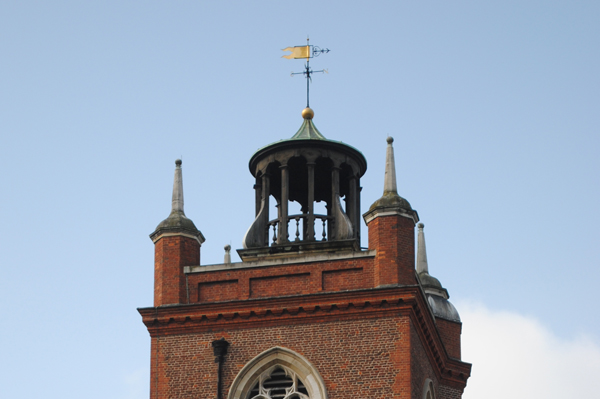
Well done to Jamie, this is indeed the tower of St Giles Cripplegate, located  just off Fore Street in the Barbican Estate. The church – the oldest building in the area – dates from about 1090 and was rebuilt in 1545 after it was destroyed by a fire. The new building survived the Great Fire of 1666 but didn’t fare so well in a fire of 1897 or in the Blitz when all but the outer shell was destroyed. Oliver Cromwell was married here in 1620 and the poet John Milton was buried here in 1674 (he had written much of Paradise Lost locally) (interestingly, his body was apparently exhumed about 100 years later, workman took some souvenirs including teeth and a rib). Others buried here include explorer Sir Martin Frobisher, John Foxe, author of The Book of Martyrs, and Bible translator Lancelot Andrews. For more on the church, see www.stgilescripplegate.com.

LondonLife – Paternoster Square from St Paul’s…

Paternoster-Square

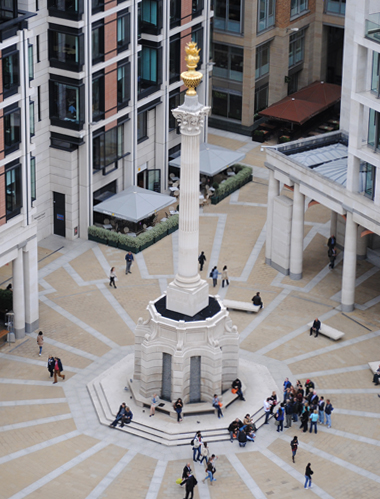
Looking down on Paternoster Square from St Paul’s Cathedral. The 23.3 metre tall pillar at the centre of the square is the  Paternoster Square Column. Designed by architects Whitfield Partners (responsible for the square’s redevelopment in the early 2000s) and topped by a gilded copper urn with flames coming out of the top, it serves as a ventilation shaft for a carpark underneath. The redevelopment of the square – home to the London Stock Exchange since 2004 – followed an earlier redevelopment in the 1960s (needed after aerial bombing destroyed the area in World War II, the second time the area had been destroyed – the first was when the Great Fire of London swept through in 1666). The square takes it name from Paternoster Row which once ran through it. For more, see www.paternostersquare.info.

PICTURE: David Adams

10 Historic London Garden Squares…3. Soho Square…

Soho-Square

Originally named King’s Square in honour of King Charles II, Soho Square was laid out on what had been known as Soho Fields as a residential square with a garden at its centre in the late 1670s – part of the general demand for homes that came about after the Great Fire of London in 1666.

A fashionable place to live when built, among the early mansions was Monmouth House, a grand mansion originally built for James Scott, the Duke of Monmouth (and illegitimate son of King Charles II who lost his head after leading a rebellion against King James II) and later used by the French ambassador before it was demolished in the 1770s. Two of the square’s original homes are located at numbers 10 and 15.

A number of trees and shrubs were recorded as being planted here including cherry, peach and almond trees as well as lilacs, jessamine and honeysuckle – it’s suggested these may have been chosen by botanist Sir Joseph Banks who lived at number 32 from 1777 until his death in 1820.

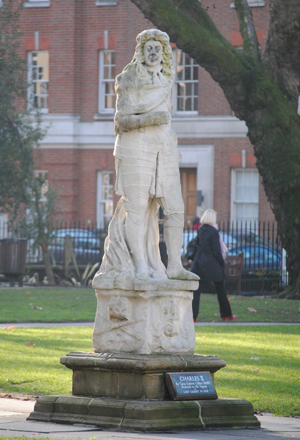
King-Charles-IIThe square, which was opened to the public in 1954, is today at the heart of the West-End district of Soho, once synonymous with late night entertainment including the sex industry but also home to a growing number of film and media-related organisations (for a look at the derivation of the name Soho, see our earlier post).

Indeed, a number of media companies are based in the square itself – British Movietone, which was produced the Movietone news, was located here at number 22 for years while current inhabitants include Twentieth Century Fox (located in a building at number 31-32 where the botanically minded Linnean Society once met).

Other buildings of note in the square include the French Protestant Church, built in 1891-93 and located at numbers eight and nine and St Patrick’s Church, located at on the corner of Soho Square and Sutton Row. While a chapel was first consecrated here in 1792, the current building dates from the 1890s (reopened in 2011 after a £3.5 million restoration) and has catacombs which spread a considerable distance under the square. In a nod to less savoury aspects of the square’s past, the White House Brothel was also located here – at number 21 – in the late 18th century (the building is now known as Manor House).

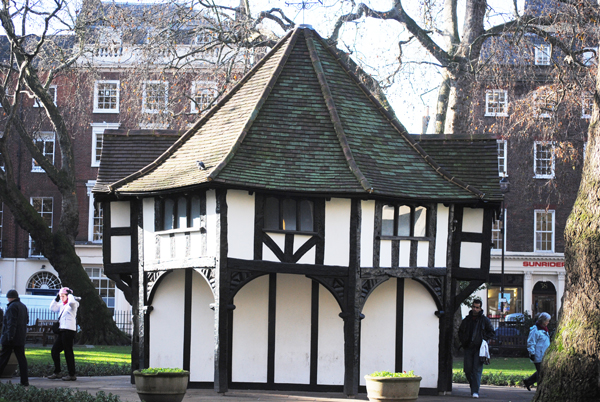
The oldest statue in the square is that of Caius Gabriel Cibber’s King Charles II which dates from 1681 (pictured right) – a reminder of the square’s past name.  Originally part of a larger monument containing a fountain, it was removed in 1875 to make way for the distinctive half-timbered Tudor-style hut (pictured above) used by gardeners which, having been rebuilt in the 1930s, currently sits at the square’s centre and only returned to the gardens in 1938. There’s also a bench in the square which commemorates the late singer Kirsty MacColl, writer of the song Soho Square.

For more on London’s squares, see Gary Powell’s Square London.

LondonLife – Celebrating St George’s Day…

Feast-of-St-George

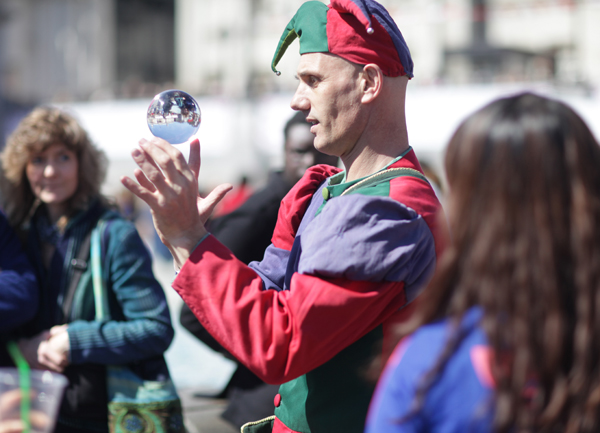
Magic tricks at the ‘Feast of St George’ in Trafalgar Square on Saturday. Wandering performers were just part of the celebrations in the square held there on Saturday in honour of St George’s Day (the actual St George’s Day is today, 23rd April). Other activities also included a farmer’s market, food tastings and live cooking demonstrations with a specially decorated banqueting table, music, traditional games and children’s activities including a quest with prizes awarded by a five metre high interactive dragon. Put on by the Mayor of London, the Feast of St George is inspired by St George’s Day’s 13th century origins as a national day of feasting. PICTURE: James O Jenkins/Greater London Authority.

What is a name?…Spitalfields…

This curiously named area in London’s east – located outside the medieval walls – is named for a priory and hospital founded here in the late 12th century.

The Priory and Hospital of Blessed Mary without Bishopsgate (more commonly known as St Mary Spital), was founded by London citizen Walter Brunus and his wife Roisia (both later said to have been buried before the chapel’s high altar), possibly along with other Londoners, in 1197 (although the priory was apparently “refounded” in 1235 when the church was moved).

An Augustinian institution, it also housed what became one of the largest hospitals in England – as well as caring for pilgrims, widows and the infirm poor, it is said to have provided care for pregnant women and the young children of those who died in childbirth – and the site of a large cemetery.

The hospital survived until the reign of King Henry VIII (although apparently barely with the church said to have been in some disrepair by this time) when it fell prey to Thomas Cromwell and his agents in the Dissolution. It was closed in 1539.

The church and most of the buildings were subsequently demolished with part of the area subsequently used as an artillery ground under the jurisdiction of the Tower of London (the area of the inner priory, meanwhile, reverted to the Crown and retained its status outside the jurisdiction of local authorities, known as the Liberty of Norton Folgate).

But the name remained in use for the suburb which had started to appear around the priory and on its former lands (Spitalfields) and in the seventeenth century a market was established here which ensured its longevity. For more on Old (and New) Spitalfields Market and the area’s later history, see our previous post here.

Major excavations were carried out at the priory cemetery between 1991 and 2007 when more than 10,500 skeletons were unearthed. More than 5,000 of these were analysed providing archaeologists with considerable insight into medieval burials. The remains of a charnel house, dating from about 1320, which was once part of the cemetery still exist in Bishop’s Square.

For more, check out Christopher Thomas’ Life and Death in London’s East End: 2000 Years at Spitalfields.

LondonLife – The Tweed Run London…

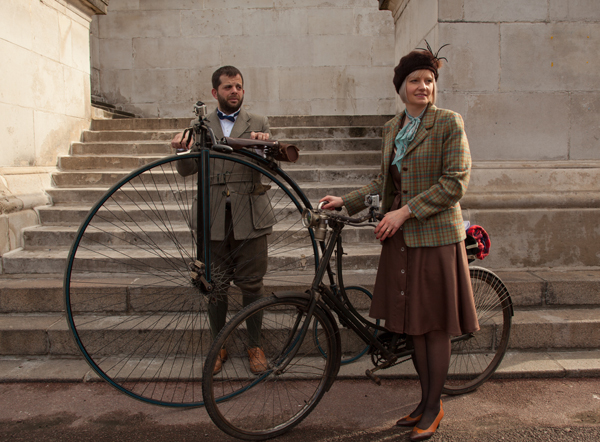
Tweed-RunThe Tweed Run London celebrated its fifth anniversary last Saturday with more than 500 taking part in the rather unusual annual event in which participants combine their passion for British fashion with their love for cycling. Among those taking part (entry was via a lottery system) on bikes of all shapes and sizes were people from as far afield as The Netherlands, Korea, Russia, Australia, Japan and even Afghanistan. The two hour ride took in Marylebone High Street, Savile Row, Regent Street, Piccadilly Circus and the Houses of Parliament before finishing at Trafalgar Square. The ride has been copied by other cities around the world including, Tokyo, Toronto and St Petersburg. For more on the Tweed Run, see www.tweedrun.comPICTURE: Selim Korycki, Tweed Run LLP.

Where’s London’s oldest…Catholic church?

Hidden away to the north-west of the City of a quiet cul-de-sac, the oldest still-in-use Roman Catholic church in London (indeed, in England) is St Etheldreda’s Church in Holborn.
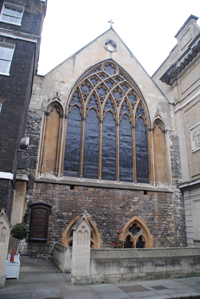
St-EtheldredaLocated in Ely Place, this atmospheric church – named for Etheldreda, seventh century female abbess of Ely – opened as a Roman Catholic Church in 1878, although the building in which it is lodged is much older, indeed a rare survivor from the 13th century. It was built in 1290 by John De Kirkeby, the Bishop of Ely and Treasurer of England during the reign of King Edward I, as a chapel to a residence he constructed on the site.

It and the adjoining palace remained in use by subsequent bishops and other nobles (including John of Gaunt who lived here after his own residence, Savoy Palace , was burnt down during the Peasant’s Revolt) up to and after the Reformation – the first reformer Bishop to use it was Thomas Goodrich, who built the nearby Mitre Tavern. (Worth noting is that the church also has some strong links to Shakespeare – there’s a great article on the church’s website exploring these).

In 1620, the Spanish Ambassador, the Count of Gondomar, moved into Ely Place and the chapel was used once again for Catholic masses (the residence was considered part of Spanish territory) – this was a relatively short-lived development for, thanks to deteriorating relations between England and Spain following a failed match between Prince Charles (later King Charles I) and the Infanta of Spain, the next ambassador was refused permission to live there.

Having escaped destruction in the Great Fire of London, the chapel was requisitioned by Parliament as a prison and hospital during the Civil War and subsequently fell into disuse before in 1772, the property – including the chapel – was sold to the Crown who in turn sold it to a surveyor and builder, Charles Cole.

Cole demolished the palace buildings with the exception of the chapel and had the current Ely Place built with neat rows of Georgian homes, modernising the chapel for the use of residents as an Anglican place of worship. The church attracted few worshippers, however, and in 1820 was taken over by the National Society for the Education of the Poor.

In 1873, the chapel was again to be sold and following a somewhat controversial auction was bought by the Catholic Institute of Charity (aka the Rosminians) and restored under the eye of Father William Lockhart (the Catholic Emancipation Act had been passed in 1829, allowing Catholics to have churches and say mass).

Interestingly, it was during this work that 18 bodies were discovered buried in the crypt – they had died in the ‘Fatal Vespers’ of 1623 when, during a secret meeting of Catholics at the French ambassador’s house in Blackfriars, the floor collapsed and more than 100 were killed. Not able to be buried publicly due to anti-Catholic feeling, they were buried in secret with some of them buried here.

A mass commemorated the completion of the restoration work on 23rd June, 1878, and the church has been in use as a Roman Catholic Church ever since (although years of repairs were needed following significant bomb damage in World War II). Further restoration work was carried out in the 1990s when Flemish tiles from the original cloister were discovered.

These days the church – which features a relic of St Etheldreda contained in a bejewelled cask sitting by the altar – is a quiet oasis in the midst of the bustling city – a great place to take some time out in the midst of a busy day. Also of note is the east window – the work of Joseph Edward Nuttgens, it was completed in 1952 and, like all the other windows, replaced a Victorian window destroyed in the Blitz (look for the image of St Etheldreda) – and the  west window – the work of Charles Blakeman, it is apparently the largest stained glass window in London and depicts a series of English Catholic martyrs.

WHERE: St Etheldreda’s Church, Ely Place (nearest Tube stations are Chancery Lane and Farringdon); WHEN: 8am to 5pm Monday to Saturday; 8am-12.30pm Sunday; COST: Free; WEBSITE: www.stetheldreda.com.

Around London – Olympics at the Museum of London; Oxford wins the Boat Race; restoration project at Kew; and, Phantom Ride at the Tate…

 Diver Tom Daley’s swimming trunks, cyclist Bradley Wiggins’ yellow jersey and a Mary Poppins outfit worn in last year’s Olympic Games’ opening ceremony are among the items on display as part of the Museum of London’s 2012 display. The free display, which opened last week, exactly 200 days after the Paralympics closing ceremony, features a selection of 70 items connected with the Games. Runs in the Galleries of Modern London until 31st October. For more, see www.museumoflondon.org.uk.

Oxford took line honours at the 159th Boat Race, held on the River Thames last weekend. The Dark Blues – whose crew included Olympic medalists Constantine Louloudis and Malcolm Howard – still trail Cambridge (the Light Blues) – whose crew included another Olympic medallist, George Nash, however, with 77 wins to 81 wins. For more, see www.theboatrace.org or our previous articles – here and here.

Kew Garden’s historic Temperate House has received a £14.7 million Lottery Fund grant for conservation of the Grade One listed building, the largest Victorian glasshouse in the world. The grant – which adds to £10.4 million from the government and £7.7 million from private donors – will also be used to create a “more inspiring” public display for visitors with the overall £34.3 million project completed by May, 2018. The building opened in 1863 and was last refurbished 35 years ago. It houses some of the world’s rarest plants, including a South African cycad (Encephalartos woodii). For more, see www.kew.org.

On Now: Phantom Ride. This “haunting” film installation by artist Simon Starling was commissioned by the Tate Britain in Millbank and is located in the neo-classical Duveen galleries. Referencing the late nineteenth century tradition of ‘phantom rides’ – films, often made by cameramen strapped to the front of a train, that gave a dramatic sense of motion as if one is aboard an invisible vehicle – the installation includes a “compelling flow of images” of artworks that once filled the Duveen galleries, creating a sense of movement as the works move up and down the walls. Admission is free. Runs until 20th October. For more, see www.tate.org.uk.

LondonLife – 14th century burial ground unearthed underneath Charterhouse Square…

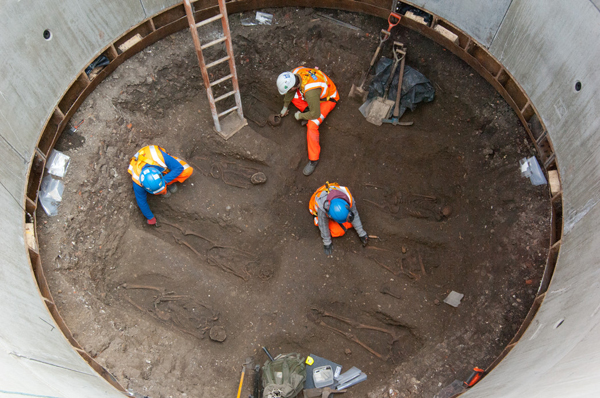
Crossrail---FarringdonA lost London burial ground has been unearthed in Farringdon by archaeologists working on the £14.8 million Crossrail project.

Thirteen adult skeletons, believed to be up to 660 years old, have been discovered lying in two rows 2.5 metres below the ground on the edge of Charterhouse Square.

It is likely based on the depth at which the bodies were buried and other evidence (including pottery found at the site and a similarity between the layout of the bones and those of 14th century plaque victims unearthed at the East Smithfield Burial Ground in the 1980s), that the skeletons were buried here in 1349 during the Black Death.

Historical records suggest that as many as 50,000 people may have been buried here in the three years from the burial ground’s opening in 1348. The burial ground remained in use until the 1500s but has never been located in modern times.

The skeletons are being excavated and taken to the Museum of London Archaeology for laboratory testing.

Crossrail Lead Archaeologist Jay Carver described the discovery as “highly significant”.

“We will be undertaking scientific tests on the skeletons over the coming months to establish their cause of death, whether they were Plague victims from the 14th Century or later London residents, how old they were and perhaps evidence of who they were,” he said.

“However, at this early stage, the depth of burials, the pottery found with the skeletons and the way the skeletons have been set out, all point towards this being part of the  14th century emergency burial ground.”

It is likely more remains will be found according to experts.

Archaeologists working on the Crossrail project have previously uncovered more than 300 burials at the New Cemetery near the site of the Bedlam Hospital at Liverpool Street from the 1500s to 1700s.

For more on Crossrail, see www.crossrail.co.uk.