This Week in London – ‘Spies, Lies and Deception’ at IWM London; the printing of Shakespeare’s plays; and, Georgian illuminations at the Sir John Soane’s Museum…

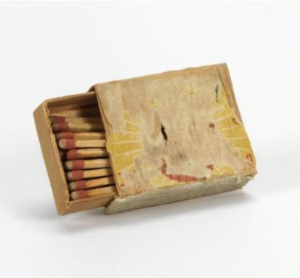
A box of matches containing one match specially adapted for writing
secret messages used during World War II.
© IWM (EPH 178)

A free exhibition exploring the “tricks, tools and elaborate plots that make up the secret world of spying and deception” has opened at IWM London. Spies, Lies and Deception features more than 150 objects including gadgets, official documents, art and newly digitised film and photography. Highlights include Operation Mincemeat mastermind Ewen Montagu’s private papers relating to the World War II plot – which fooled German High Command about the location of the next major Allied assault by planting a dead body with fake military documents off the Spanish coast – along with an oar from the submarine’s dinghy which deposited the body. There is also a box of matches with a match specially adapted for writing secret messages (pictured), footprint overshoes made by SOE (Special Operations Executive) in South-East Asia during World War II to disguise the wearer’s real footprints, and papier-mâché heads used to deceive snipers in World War I trenches. The exhibits also detail the work of the World War I Postal Censorships department – which examined letters sent to foreign locations including testing letters for invisible ink and tell the story of SOE operative Noor Inayat Khan – the first female wireless operator sent by SOE into Occupied France, she successfully transmitted messages to London for four months before being betrayed, captured and executed. There’s also a newly commissioned interview with Eliot Higgins, founder of Bellingcat, an international collective of researchers who used open source data to uncover the real identities of those responsible for the Salisbury Novichok poisonings in 2018, along with a photo album of double agent Kim Philby in Siberia after he escaped to the Soviet Union following his discovery in 1963. The free display can be seen until 14th April next year. For more, see iwm.org.uk/events/spies-lies-and-deception.

A exhibition looking at the history of printing William Shakespeare’s plays has opened at the Guildhall Library. Folio 400: Shakespeare in Print covers everything from the printing of the small ‘Quartos’ of the late 16th century to the reworking of the text in the 18th century and the rediscovery of original texts in the 19th century. Running in parallel is a display at the City of London Heritage Gallery at Guildhall Art Gallery which features the library’s copy of the First Folio, widely regarded as one of the finest and most complete. Entry is free. Runs until 30th January. For more, see www.cityoflondon.gov.uk/things-to-do/history-and-heritage/guildhall-library.

An exhibition centring on the spectacular light illuminations of the Georgian period has opened at Sir John Soane’s Museum. Georgian Illuminations celebrates the light shows of the period and the impressive and the elaborate temporary architectural structures created for them, often designed by leading architects and artists, including Sir John Soane. It features newly discovered linen transparencies, which were back-lit in Georgian windows as patriotic decoration during the Napoleonic Wars, as well as a contemporary work by light artist Nayan Kulkarni light artist which sees the facade of the museum at Lincoln’s Inn Fields illuminated each night from dusk until about 11pm. A series of events accompanies the exhibition. Runs until 7th January, 2024. Entry is free. For more, see www.soane.org/exhibitions/georgian-illuminations,

Send all items to exploringlondon@gmail.com for inclusion.
What’s in a name?…Pudding Lane…

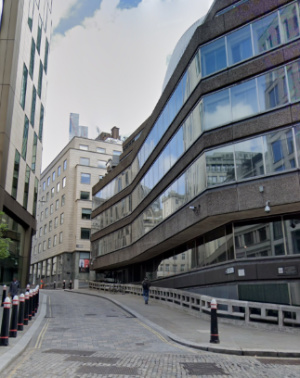
Looking northward up Pudding Lane (to the right of the picture is a somewhat controversial plaque marking the site of the bakery). PICTURE: Google Maps

Famous for being the location of the bakery where the Great Fire of London started, Pudding Lane runs between Eastcheap and Lower Thames Street in the City of London.

While it has been claimed in the past that the name did come from desserts or puddings being sold here, it’s now generally believed that the name relates to the medieval word ‘pudding’ which meant offal – the guts or entrails of animals.

It was apparently down this lane that the butchers of the Eastcheap market (London’s primary meat market in medieval times, located at the northern end of the lane), having slaughtered an animal for consumption, would have the ‘puddings’ carried down the lane so they could be disposed of on waste barges (earlier on, the butchers were apparently permitted to toss the offal into the Thames when tide conditions were right).

The lane, which 16th century historian John Stow said was also known as Rother Lane (due to a Thames wharf called Rothersgate at its southern end) and Red Rose Lane (after a shop sign in the lane), also has the honour of being one of the world’s first designated one-way streets.

Famous Londoners – Thomas Dagger…

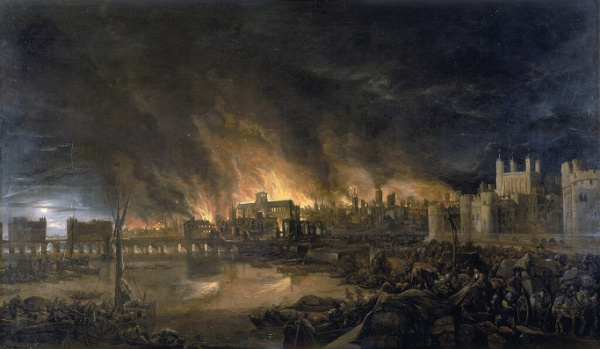
Josepha Jane Battlehooke’s ‘The Great Fire of London’ depicts the scene as though from a boat in the. vicinity of Tower Wharf. PICTURE: Public domain via Wikipedia.

Thomas Dagger, a 17th century journeyman baker, only became famous rather recently when new research identified him as the first witness to one of the seminal events in London’s history – the Great Fire of 1666.

The research was undertaken by Professor Kate Loveman at the University of Leicester for the Museum of London and will be used to inform its gallery displays when it opens its new site at Smithfield in 2026.

Drawing on letters, pamphlets, legal and guild records, Professor Loveman put Dagger, who worked in Thomas Farriner’s bakery on Pudding Lane, at the centre of the the fire’s origin story.

It’s well-known that the fire began in Farriner’s bakery in the early hours of 2nd September, 1666, and went on to consume some 13,200 homes in the city, leaving some 65,000 people homeless. But reports differ as to who was in the bakery when the fire started.

Among accounts pointing to Dagger being present is a letter from MP Sir Edward Harley who wrote in a letter to his wife that Thomas Farriner’s “man” – a term referring to his servant or journeyman – was woken after in the early hours on 2nd September choking from smoke. He reported that Farriner, his daughter and “his man” then escaped out of an upper window, but his maid died.

Dagger’s name is also found grouped with other Farriner household members among witnesses on a subsequent indictment targeting Frenchman Robert Hubert who was convicted and hanged for starting the fire after making a somewhat dubious confession.
Professor Loveman concludes that, based on her research, Thomas Dagger was the first witness to the Great Fire of London, woken by choking smoke shortly before 2am on 2nd September. Aware of the fire, he then alerted other members of the household before, along with his boss Thomas Farriner, Farriner’s son Thomas Farriner, Jr, and Farriner’s daughter Hanna, escaping by climbing out of an window. An unnamed maid who was in the house did not escape with them and was killed.

Professor Loveman’s research further showed that Dagger arrived in London from Wiltshire in 1655 and was apprenticed to one Richard Sapp for nine years but ended up serving part of that time with Farriner. Soon after the fire, in 1667, he took his freedom and by January the following year had married and had a baby. He went on to establish his own bakery at Billingsgate.

Says Professor Loveman: “It was fascinating to find out more about what happened on that famous night. Although most of the evidence about the Farriners is well known to historians, Thomas Dagger’s role has gone unrecognised. Unlike the Farriners, his name didn’t become associated with the fire at the time. Soon after the disaster, he merges back into the usual records of Restoration life, having children and setting up his own bakery. His is a story about the fire, but also about how Londoners recovered.”

This Week in London – Notting Hill Carnival weekend; new TV and film tour at Hampton Court; and, Museum of London seeks signage…

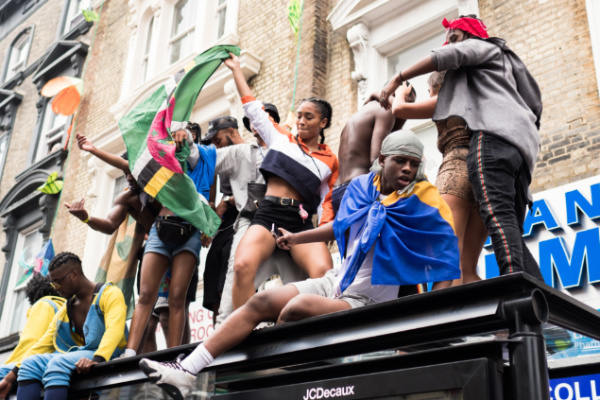
A scene from the Notting Hill Carnival in 2019. PICTURE: Glodi Miessi/Unsplash

It’s the Notting Hill Carnival weekend, three days of festivities celebrating Caribbean culture culminating in the main parade on Monday. Europe’s biggest street festival, which has been taking place since 1966 with a couple of exceptions, features music, street food and spectacular costumes. Saturday is Steel Band Competition Day, a ticketed event featuring the UK National Panorama Steel Band Competition, while Sunday is Families and Children’s Day featuring a children’s parade and carnival. On Monday, the main parade and carnival is held. For more information, see https://nhcarnival.org.

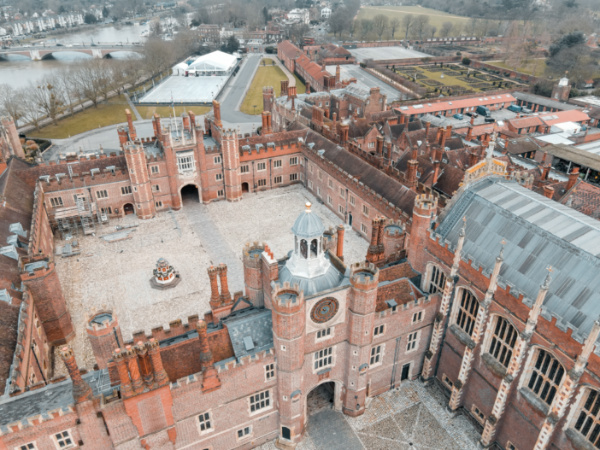
Aerial view of Hampton Court Palace. PICTURE: Ollie Craig/Pexels

Hampton Court Palace has launched a new ‘film and TV locations’ audio tour, taking visitors behind the scenes of everything from Pirates of the Caribbean to The Favourite and the recent Netflix series Bridgerton. The palace first appeared in a 1926 movie bearing its name which detailed the marriage of King Henry VIII and Catherine Howard and has since gone on to appear in numerous productions ranging from The Theory of Everything and A Little Chaos to Sherlock Holmes: A Games of Shadows and Mamma Mia: Here We Go Again!. The tour includes exclusive interviews with the director and executive producer of Bridgerton and also details the involvement of Historic Royal Palace staff who ensure the site remains protected during photo shoots. The ‘Film and TV Locations Tour’ is included in general admission. For more, head here.
The Museum of London is calling for suggestions for signs to feature in ‘Hanging Out’, a permanent installation planned for the new London Museum, set to open in Smithfield’s General Market building in 2006. It’s intended the space will represent a broad range of London’s communities with the focus on the last 80 years. Signs could relate to everything from sports venues and cafes and pubs to nightclubs, music venues and theatres. People with suggestions for signs are asked to email ourtime@museumoflondon.org.uk.

Send all items to exploringlondon@gmail.com

10 historic vessels in London’s Thames…8. MV Havengore….

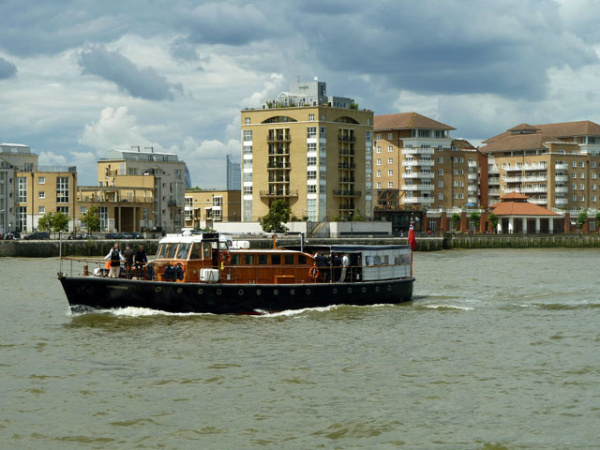
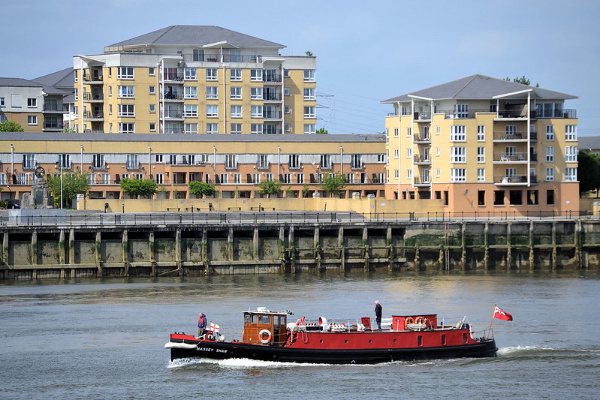
The MV Havengore. PICTURE: Robin Webster (licensed under CC BY-SA 2.0)

Still plying the waters of the Thames, the MV Havengore is perhaps most famous for having carried the coffin of Sir Winston Churchill on the River Thames as part of his state funeral in 1965.

The MV Havengore – named for a low-lying island off the coast of Essex – was originally constructed as a hydrographic survey launch for the Port of London Authority in 1956. As the PLA’s principal survey vessel and flagship, she was moored at Gravesend and tasked with recording changes to Thames bed and estuary. She became the first survey vessel in the UK to have a computer to record survey data.

The highpoint of her during her almost 40 years of service with the PLA came on 30th January, 1965, when she transported the body of Churchill from Tower Pier to Festival Pier. On the journey, she was saluted by flight of 16 fighter jets while dock cranes were made to bow as she passed (there’s a plaque on board commemorating her role in the funeral).

But the almost 26 metre long vessel also participated in other historic events including the river pageant to celebrate the Queen Elizabeth II’s Silver Jubilee in 1977 and, more recently, the flotilla formed to celebrate the Queen’s Diamond Jubilee in 2012 as well as the Thames tribute to the Queen’s long reign in 2015 and the Queen’s 90th birthday parade in 2016.

The MV Havengore was withdrawn from service in 1995 and sold after which she underwent restoration and refitting at the Chatham Historic Dockyard. The vessel was then used to provide excursions for underprivileged children on the Medway.

Sold again in 2006, she has subsequently undergone further restoration work. The MV Havengore is these days used for a range of ceremonial, corporate and private events. When not on the river, she is berthed at St Katharine Docks. The vessel was listed, as of May this year, as being up for sale.

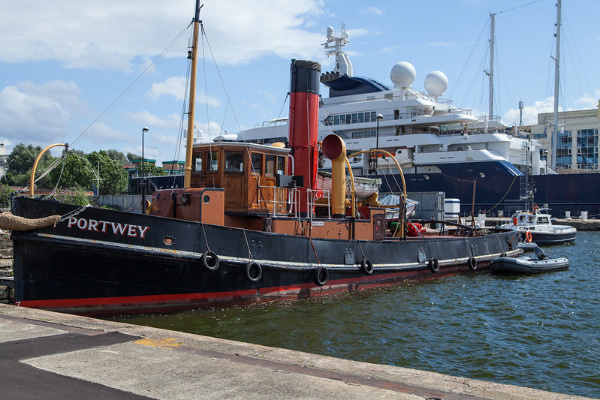
10 historic vessels in London’s Thames…6. ‘Portwey’…

One of only two twin screw, coal fired steam tugs still active in the UK, the steam tug Portwey can these days be found in London’s Docklands.

PICTURE: Paul Gravestock (licensed under CC-BY-NC-ND 2.0)

Ordered by the Portland & Weymouth Coaling Co Ltd, Portwey (the name comes from the company’s) was built by Harland & Wolff at Govan yard in Glasgow and launched on 10th August, 1927.

The 80 foot long vessel was based in Weymouth, Dorset, performed a range of tasks including carrying coal to steamers and being on call for any ship in distress requiring assistance or salvage. This included extinguishing a fire aboard the Danish timber-carrier Bodil in 1928, assisting ships like the cargo steamer Winslow (which had developed a list in heavy seas in 1932), and the Winchester Castle which had run aground in 1936, and even being involved in the search for a sunken submarine in 1932.

The Portwey was seconded by the Admiralty and moved to Dartmouth in Devon during World War II. Narrowly avoiding German bombs while in the harbour, during this time the tug was went to the assistance of ships attacked by the enemy. In 1944, she was assigned to US forces as they prepared for D-Day and her duties including clearing obstructions from the channel and supplying fresh water to naval vessels as well as, when a rehearsal for the landings went wrong at Slapton Sands, rescuing personnel and landing craft.

After the war, the Portwey resumed duties as a harbour tug including ferrying pilots and customs officers out into the Channel. In 1947, she helped put out a fire at the Queen’s Hotel in Dartmouth.

The Portwey was sold to the Falmouth Dock and Engineering Company in Cornwall in 1952. As well as rescuing the captain and first officer of the cargo ship Flying Enterprise, during this period she was involved in the construction of the Lizard Lifeboat Station in Cornwall, and a car ferry slipway at Holyhead in north Wales.

In 1967, with coal-fired steam tugs being replaced by diesel-engined ships, she was laid up to be scrapped. But it wasn’t the end for the Portwey, which was bought by Richard Dobson, the assistant harbour master at Dartmouth. Along with a group of friends, he returned her to working condition and during the 1960s and 1970s, she took part in many events on the River Dart and around Torbay.

In 1982, the Portwey joined the Maritime Trust’s Historic Ship Collection at St Katharine’s Dock where the newly formed Friends of Portwey continued with restoration and operation of the tug.

The Friends of Portwey became the Steam Tug Portwey Trust in 2000 and purchased the tug from the Maritime Trust, moving the vessel to West India Dock.

WHERE: Steam Tug Portwey, West India Dock (South Quay) (nearest DLR station is South Quay); WHEN: 2pm to 9pm Wednesdays; WEBSITE: www.stportwey.co.uk.

LondonLife Special – A new king honoured at Trooping the Colour…

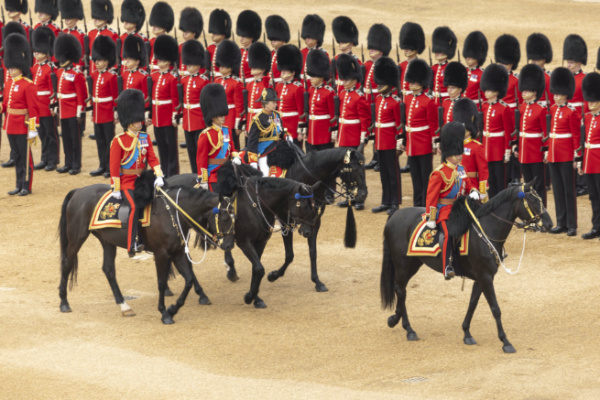
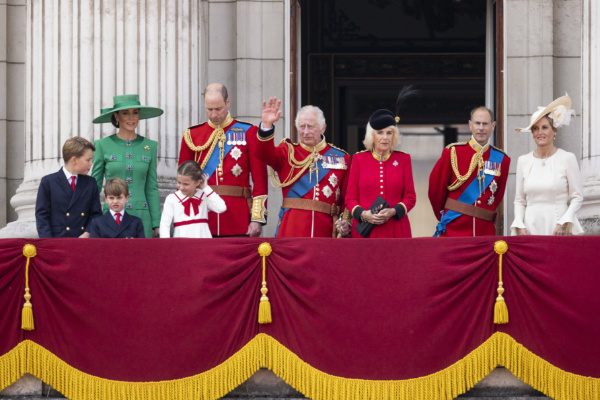
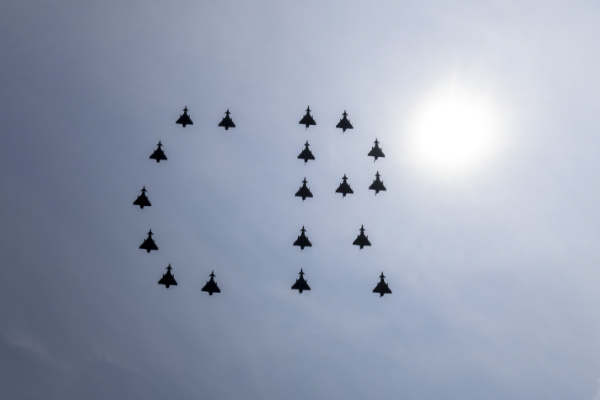
King Charles III attended his first Trooping the Colour as monarch on Saturday. The King rode on horseback for the ceremony in keeping with the tradition his mother, Queen Elizabeth II, had kept until 1986 when she was 60. More than 1,400 soldiers, 200 horses and 400 musicians took part in the event which also featured a flypast and Buckingham Palace balcony appearance. The Trooping of the Colour has marked the official birthday of the British sovereign for more than 260 years. This year it was the Welsh Guards who held the honour of trooping their colour for the King’s Birthday Parade.

King Charles III, William, Prince of Wales, The Duke of Edinburgh, and Princess Anne arriving on horseback at Horseguards where the Trooping the Colour ceremony is held. PICTURE: Cpl Danny Houghton RLC/ UK MOD © Crown copyright 2023
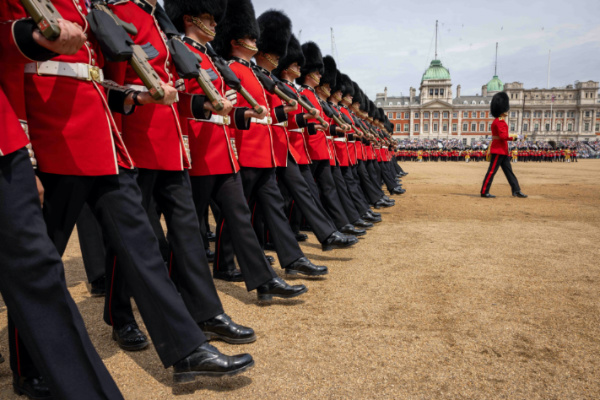
The Household Division march onto Horseguards Parade Ground. PICTURE: Cpl Nathan Tanuku RLC/UK MOD © Crown copyright 2023
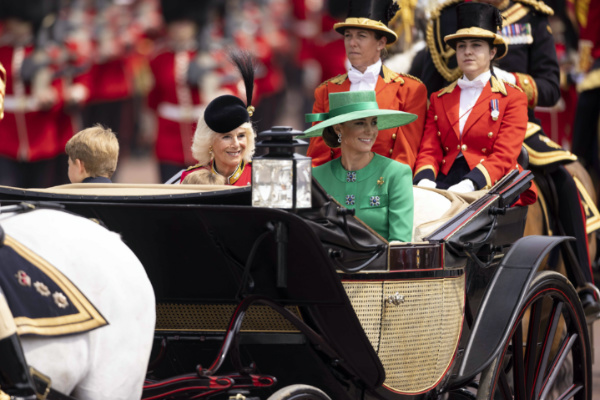
Catherine, Princess of Wales (right) and Queen Camilla (centre) return by carriage to Buckingham Palace from Horse Guard’s Parade. PICTURE: Sgt Donald C Todd/UK MOD © Crown copyright 2023
The Household Cavalry Mounted Regiment making up of The Life Guards and The Blues and Royals, together provide the Sovereign’s Escort back to the Palace after the parade. PICTURE: AS1 Sam Holden RAF/UK MOD © Crown copyright 2023
The Household Division form up near Buckingham Palace. PICTURE: AS1 Tom Cann RAF/UK MOD © Crown copyright 2023
King Charles III and senior members of the royal family gather on the balcony of Buckingham Palace to watch the flypast after Trooping the Colour. PICTURE: Sgt Donald C Todd/UK MOD © Crown copyright 2023
The Typhoon Display Team form the Royal Cypher of The King. PICTURE: AS1 Tom Cann RAF/UK MOD © Crown copyright 2023

This Week in London – Wren at Work; music moments captured in photographs; and, the RA’s 255th Summer Exhibition…

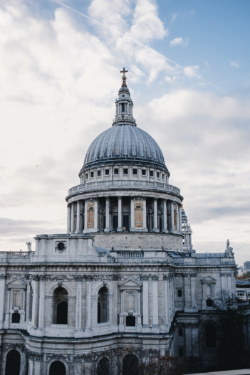
Wren’s monument – St Paul’s Cathedral. PICTURE:
Aaron Gilmore/Unsplash

A recreation of Sir Christopher Wren’s office while he was working on St Paul’s Cathedral can be seen at the Guildhall Art Gallery from today. The faux 17th century environment, created by Chelsea Construction, will allow visitors to explore the building methods and tools of the age, as well as the daily lives of 17th century diarists including Robert Hooke, John Evelyn and Margaret Cavendish, and a case study of how citizens lost and regained their properties during and after the Great Fire of 1666. A specially commissioned map by artist/cartographer Adam Dant will provide insight’s into Wren’s life and times and will be displayed alongside illustrations by architect George Saumerez-Smith and members of the Worshipful Company of Chartered Architects, a scale model of St Paul’s Dome by students at Kingston University, and stone models from master mason Pierre Bidaud. The Wren at Work exhibition is part of Wren300. Admission is free but booking are recommended. For more, see www.cityoflondon.gov.uk/events/wren-at-work-wren300-exhibition.
Photographs capturing Pete Townshend’s guitar flying through the air at Madison Square Garden and Noel Gallagher during the making of the video for Wonderwall are just two of the images on show in a new exhibition at the Barbican Music Library. Celebrating the 25th anniversary of music photography collection Rockarchive.com, In The Moment: The Art of Music Photography also features images of everyone from David Bowie to Debbie Harry, Queen, Biggie Smalls, led Zeppelin, Lady Gaga and Amy Winehouse, capturing them in recording sessions at live gigs and at photo shoots. The free exhibition, which opens on Friday, can be seen until 25th September. For more, see www.cityoflondon.gov.au/services/libraries/barbican-music-library. Meanwhile, a bust of Sir Simon Rattle is being unveiled today at the library in tribute to his five decades in classical music. Sir Simon, who has made over 100 recordings. became music director of the Barbican’s resident orchestra, the London Symphony Orchestra, in 2017 and will conclude his tenure this year.

The Royal Academy’s 255th annual Summer Exhibition opened this week under the theme of ‘Only Connect’ (inspired by a quote from the novel Howards End by EM Forster). Exhibiting artists include British sculptor Lindsey Mendick, Barbados-born painter Paul Dash, American multi-media artist Ida Applebroog, St Lucia born painter Winston Branch, Colombian sculptor Carlos Zapata and British painters Caragh Thuring and Caroline Walker, and Irish fashion designer Richard Malone, who has created a dramatic mobile installation which hangs in the Central Hall. There are also works by Royal Academicians including Frank Bowling, Michael Craig-Martin, Tracey Emin, Gillian Wearing and the late Paula Rego. Runs until 20th August. Admission charge applies. For more, see royalacademy.org.uk.

Send all items to exploringlondon@gmail.com

10 historic vessels in London’s Thames…4. ‘Massey Shaw’…

The Massey Shaw in The Thames in 2015. PICTURE: R~P~M (licensed under CC BY-NC-ND 2.0)

Moored at West India Dock, the Massey Shaw is a former London Fire Brigade fireboat.

The fireboat was constructed in 1935 for a cost of £18,000 by the J Samuel White company in Cowes on the Isle of Wight. Named for Sir Eyre Massey Shaw – the first Chief Officer of what was then named the Metropolitan Fire Brigade, the vessel was designed to London County Council specifications with a deliberately low profile so it could fit under the Thames bridges in all tides.

The vessel, which was was powered by two eight cylinder diesel engines and featured a main deck monitor as well as eight deck outlets (and a wheelhouse which was added later), soon proved its worth, playing an important role in saving what the press said was a million pounds worth of stock at a large warehouse fire on Colonial Wharf.

During World War II, the Massey Shaw took part in Operation Dynamo, forming part of the small boat flotilla which evacuated British troops from the beach at Dunkirk. She ferried more than 500 troops to a larger ship offshore and transported almost 100 back to England and it’s believed she was the last of the small boats to leave Dunkirk harbour (rescuing survivors from a French vessel which struck a mine along the way).

Back in London, Massey Shaw performed a critical role during the Blitz, pumping large quantities of Thames water to douse fires along the city’s waterfront.

It remained in service until the early 1970s, although it had operated as a reserve boat since 1960 with newer models taking over frontline duties.

Decommissioned in 1971, the Massey Shaw was found abandoned 10 years later at St Katharine Dock by a group who went on to found The Massey Shaw Fireboat Society with a view to preserving the vessel. They were granted a 50 year lease on the vessel.

In 1985, the Massey Shaw joined the Association of Dunkirk Little Ships on their return to Dunkirk for the first time since 1965 and two years later, she attended the centenary of Sir Eyre Massey Shaw’s review of 1000 firemen at Oxford.

In 1990 the Massey Shaw was sunk close to the London Fire Brigade headquarters at Lambeth but was subsequently salvaged and the following year, after restoration work, joined the 50th anniversary return trip to Dunkirk.

The society gained full ownership of Massey Shaw in 2002 and restoration work was carried out by the TV programme Salvage Squad (a second appearance on the show and more work followed two years later).

In 2008, a £500,000 Heritage Lottery Grant was used to fund the restoration of the vessel at Gloucester docks. She returned to London by road in 2013 where the restoration was completed and in 2015 was officially launched back on the River Thames with an event at the Westminster Boating Base.

Later that year she participated in another “little ships” armada to Dunkirk, this time commemorating the 75th anniversary of the evacuation. Massey Shaw has since taken part in other events including celebrations marking Queen Elizabeth II’s record as longest reigning monarch in 2015.
The vessel is now moored at the eastern end of West India Docks on the Isle of Dogs.

While Massey Shaw did appear in the 1958 film, Dunkirk, recapturing its role as one of the “little ships”, it did not appear in the 2017 film of the same name.

WHERE: Massey Shaw, West India Dock, Poplar (nearest DLR station is South Quay; nearest Tube station is Canary Wharf); WHEN: Between March and November, from 11am to 3pm daily (check website for details); WEBSITE: https://masseyshaw.org.

What’s in a name?…Carmelite Street (and Whitefriars Street)…

The view looking north from the southern end of Carmelite Street. PICTURE: Google Maps

These two City of London thoroughfares – which run from Fleet Street down to Victoria Embankment (connected at Tudor Street) – both owe their name to the same institution.

A friary run by the Carmelites – also known as the “White Friars” because of the white mantle they wore over their brown habits – was established here in 1253 and enlarged until eventually it stretched all the way from Fleet Street down to the Thames.

The monastery was dissolved in the Dissolution and the buildings repurposed with the great hall becoming a playhouse.

The street marks the eastern boundary of the friary (then known as Water Lane).

A remnant of the monastery can be seen down Magpie Alley (see the post for more on the history of the priory).

10 historic vessels in London’s Thames…2. HQS Wellington…

A former World War II convoy escort ship, the HQS Wellington, which is moored alongside Victoria Embankment in the River Thomas, is unusual in that for the past 75 years it has served as the headquarters of the Honourable Company of Master Mariners.

The HQS Wellington seen in 2007. PICTURE: JPLon (licensed under CC BY-SA 3.0)

Constructed in the Devonport Dockyard, Plymouth, in 1934 for the Royal Navy as a two-masted Grimsby-class sloop, the HMS Wellington served in the Pacific in the lead-up to World War II, based mainly in New Zealand (she was named for the capital of New Zealand) and patrolling the South Pacific.

Following the outbreak of war, the HMS Wellington – which featured two 4.7-inch guns and one 3-inch gun as well as carrying other anti-aircraft guns and depth charges – served mainly as a convoy escort in the North Atlantic.

During this time, the vessel was involved in the sinking of an enemy U-boat, the evacuation of Allied forces from St Valery-en-Caux, north of Le Havre, and the Allied landings in North Africa in late 1942. In 1943, the HMS Wellington was one of the first escort ships to be fitted with Hedgehog, an anti-submarine weapon, which replaced the three inch gun.

The ship ended the war having travelled almost 250,000 miles and escorting 103 convoys.

Following the war, the 265 foot long ship was initially transferred to the Reserve Fleet in Milford Haven before, in 1947, the Admiralty made the ship available to the Honourable Company of Master Mariners to serve as a floating livery hall. She was converted for that purpose – and renamed the HQS Wellington – at Chatham Dockyard using funds raised through a public appeal.

The interior features a grand wooden staircase taken from the 1906 Isle of Man ferry SS Viper which was being broken up at the time.

The HQS Wellington arrived at Victoria Embankment in 1948 for service as the livery company HQ.

The ship had a major refit in 1991, during which it was fitted out with carpet and new displays showing off the Company’s collections, and in 2005, ownership of the ship was transferred to The Wellington Trust.

In April this year it was announced that due to safety concerns the Honourable Company of Master Mariners would have to leave the vessel. The company, which has relocated to a temporary on-shore headquarters in Greenwich, are now developing plans for a new floating headquarters.

This Week in London – The Crown Jewels (redisplayed); The Troubles at IWM; and, Tate Britain, rehung…

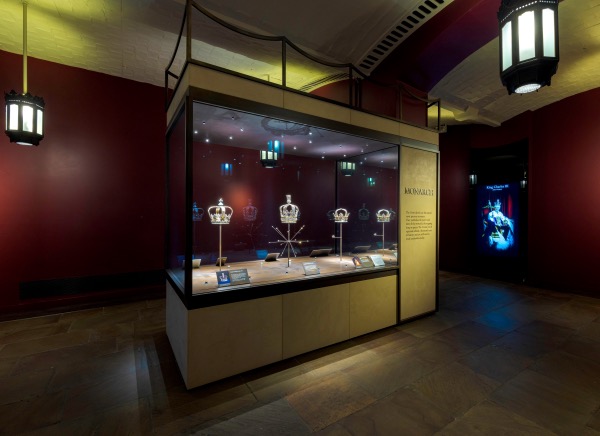
Part of the new Jewel House display of the Crown Jewels at The Tower of London. PICTURE: ©Historic Royal Palaces

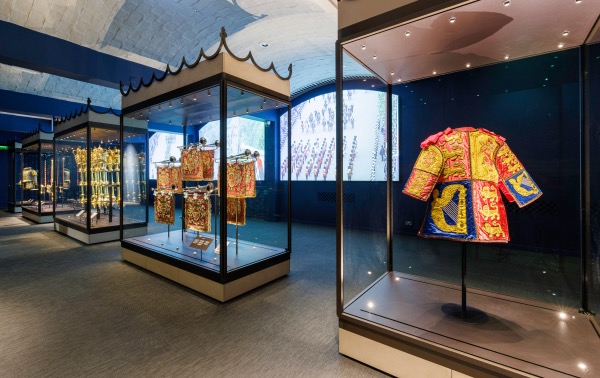
A new display of the Crown Jewels opens in the Tower of London’s Jewel House tomorrow – the first major change to the display in more than a decade. Opening just weeks after the coronation regalia was used in the coronation of King Charles III and Queen Camilla at Westminster Abbey, the re-presentation of the jewels comes about thanks to a partnership between Historic Royal Palaces and royal jewellers Garrard and is the culmination of a four year project aimed at delving deeper into the history of the collection and coronations. The display, which features images from the recent coronation, starts with a celebration of the timelessness of monarchy featuring the State Crown frames worn by King George I, King George IV and Queen Victoria. It explains how historic jewels including the Black Prince’s Ruby have passed from crown to crown and explores the origins of the current jewels, starting with the destruction of the medieval coronation regalia in 1649. The story of gems including the Koh-i-Noor and Cullinan Diamond will also be explored while at the heart of the display is a room dedicated to the spectacle of the Coronation Procession. It ends with the Treasury containing more than 100 objects including the St Edward’s Crown of 1661, the Sovereign’s Sceptre with Cross and the Sovereign’s Orb. As an added spectacle, for nine nights in November, the Tower will also host a touring light and sound show, Crown and Coronation, which, created in partnership with Luxmuralis Artist Collaboration, will feature imagery and footage of monarchs and coronations past, along with images of the regalia. Images will be projected on buildings of the Inner Ward including the White Tower. The light and sound show, which will run at the Tower from 17th to 25th November, will tour the UK in 2024. Entry is included in general admission. For more, see www.hrp.org.uk/tower-of-london/whats-on/the-crown-jewels/.

More of the new display in the Jewel House of the Crown Jewels at The Tower of London. PICTURE: ©Historic Royal Palaces

The almost 30-year conflict in Northern Ireland known as The Troubles is the subject of a new exhibition at the Imperial War Museum. Northern Ireland: Living with the Troubles, which opens tomorrow, features familiar objects including rubber bullets, propaganda posters and a Good Friday Agreement booklet as well as rarer items such as a screen-printed handkerchief made by UVF paramilitaries in the Long Kesh internment camp. There will also be the chance to hear first-hand testimonies including from republican and loyalist paramilitaries as well as British soldiers, local police and ordinary civilians, and the opportunity to see archival photography depicting hunger strike riots, army checkpoints and bomb wreckage. Admission is free. Runs until 7th January. For more, see www.iwm.org.uk/visits/iwm-london.

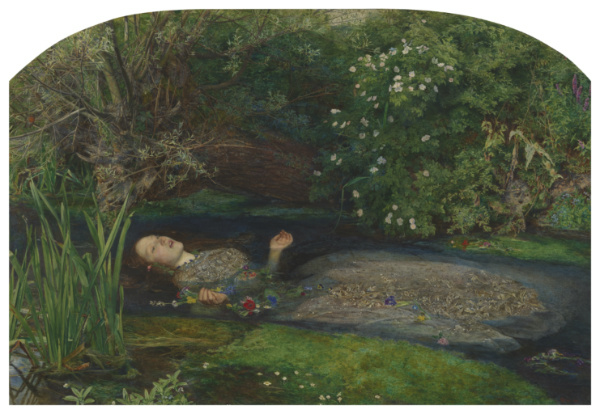
Sir John Everett Millais, Ophelia, 1851-2, Oil paint on canvas; Support: 762 × 1118 mm, frame: 1105 × 1458 × 145 mm
PICTURE: Tate (Seraphina Neville)

Tate Britain has completed a complete rehang of its free collection displays – the first for 10 years. Visitors can see more than 800 works by 350 artists including iconic treasures such as John Everett Millais’ Ophelia (pictured above), William Hogarth’s The Painter and his Pug, David Hockney’s A Bigger Splash, Barbara Hepworth’s Pelago and Chris Ofili’s No Woman, No Cry. The collection also includes more than 100 works by JMW Turner, rooms devoted to such luminaries as William Blake, John Constable, the Pre-Raphaelites and Henry Moore, and a series of changing solo displays exploring other ground-breaking artists such as Annie Swynnerton, Richard Hamilton, Aubrey Williams and Zineb Sedira. Some 70 of the works in the collection – ranging from Tudor portraits to contemporary installations – which have been acquired in the last five years alone. For more, see www.tate.org.uk.

Send all items to exploringlondon@gmail.com.

LondonLife – Scenes from Chelsea…

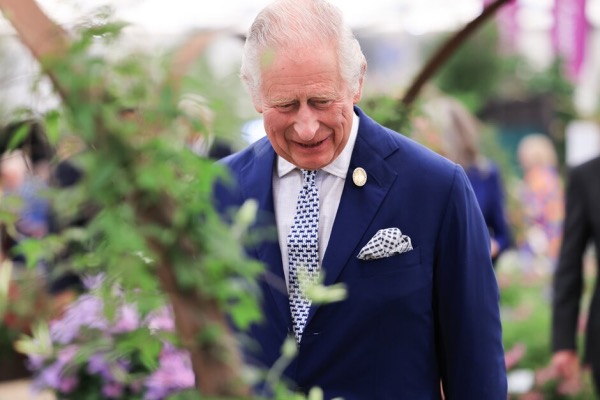
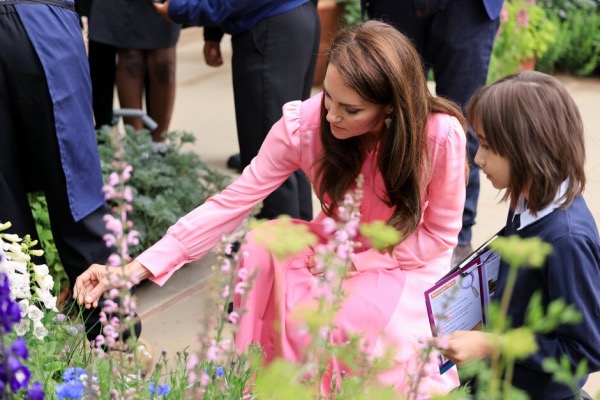
The Chelsea Flower Show returned to London this week with King Charles III making his first visit to the show as monarch and tributes in honour of his coronation and the passing of Queen Elizabeth II last year. The show runs until 27th May. For more, see www.rhs.org.uk/chelsea.

King Charles III visits The Chelsea Flower Show 2023. ALL PICTURES: Courtesy of Royal Horticultural Society/Chelsea Flower Show 2023
Princess of Wales Kate Middleton visits RHS Chelsea Flower Show 2023. She is pictured on Savills Garden designed by Mark Gregory.
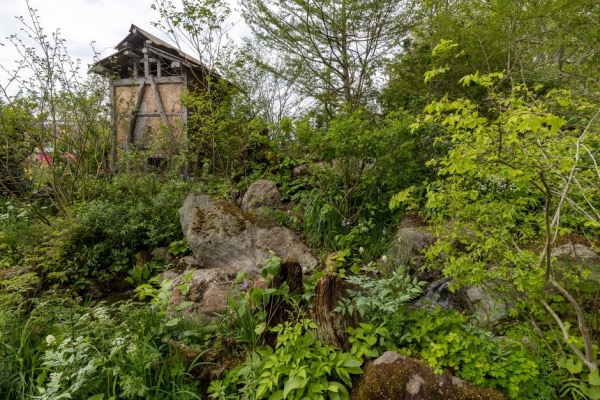
‘A Letter from a Million Years Past’. Designed by Jihae Hwang. Sponsored by Korea Forest Service, Hoban Cultural Foundation and MUUM Ltd. Show Garden. RHS Chelsea Flower Show 2023. Stand no 328.
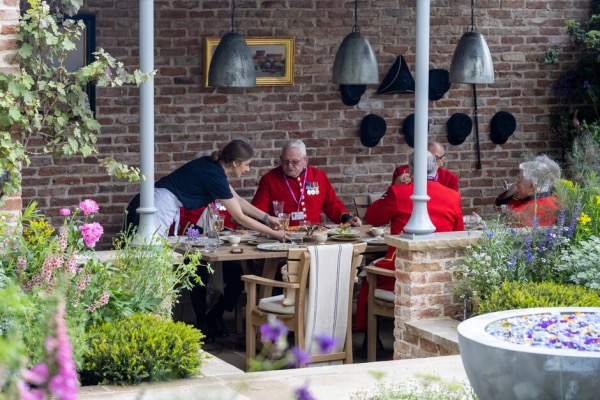
Chelsea pensioners eating at meal in the Savills Garden. Designed by Mark Gregory. Sponsored by Savills. Show Garden. RHS Chelsea Flower Show 2023. Stand no 324.
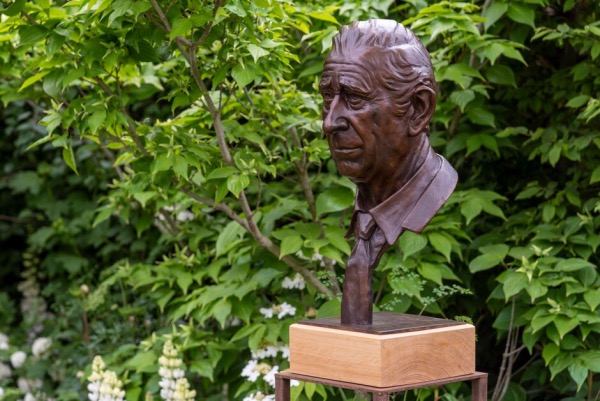
RHS Garden of Royal Reflection and Celebration featuring a bust of King Charles III. Designed by Dave Green. Feature Garden. RHS Chelsea Flower Show 2023. Stand no 111.
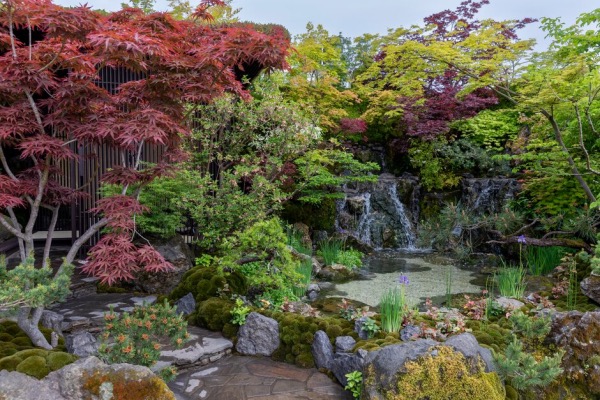
The Biophilic Garden Otsu – Hanare’. Designed by Kazuyuki Ishihara. Sponsored by Glion and Ishihara Kazuyuki Design Laboratory. Sanctuary Garden. RHS Chelsea Flower Show 2023. Stand no 280.

LondonLife – Coronation moments…

Some more images from the coronation of King Charles III and Queen Camilla on the weekend…

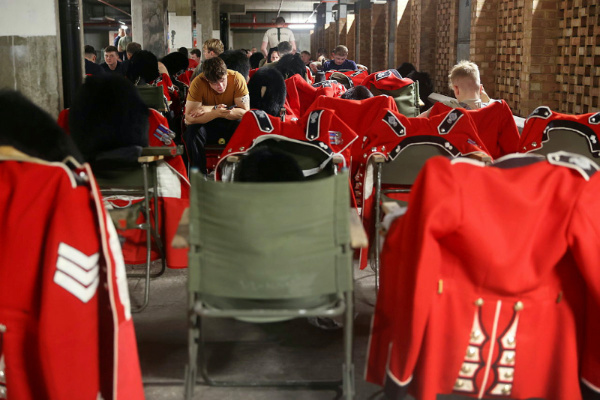
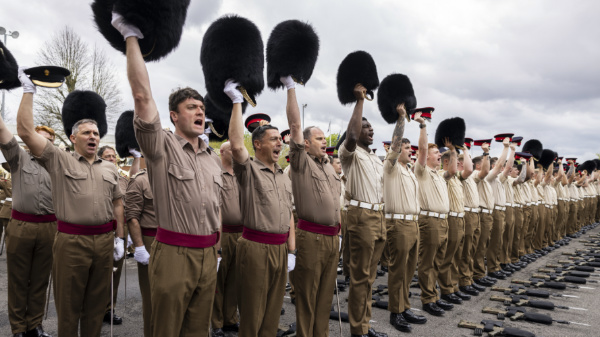
Military personnel, seen here at Wellington Barracks, before taking part in the King’s Coronation. PICTURE: Graeme Main/UK MOD © Crown copyright 2023
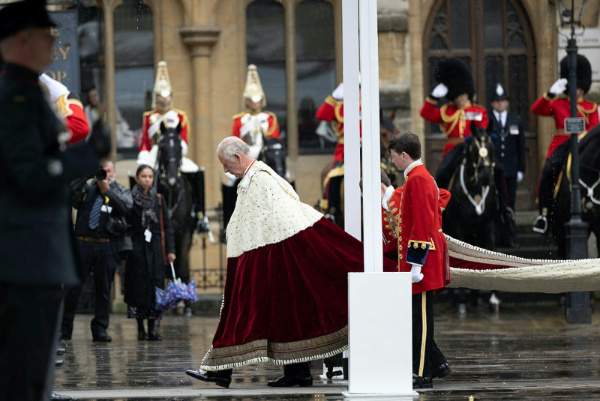
A quiet moment before the Coronation Service in Westminster Abbey as the King walks through the Great West Doors. PICTURE: Sgt Robert Weideman, RLC/ UK MOD © Crown copyright 2023
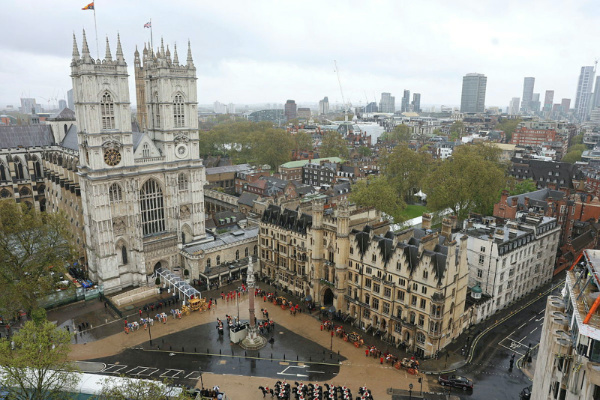
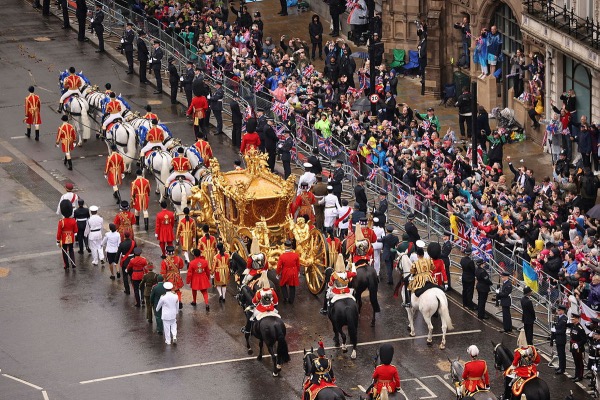
The Gold State Coach, and other royal coaches waiting outside Westminster Abbey for members of the Royal Family before the Coronation Procession. PICTURE: Sgt Jimmy Wise/UK MOD © Crown copyright 2023
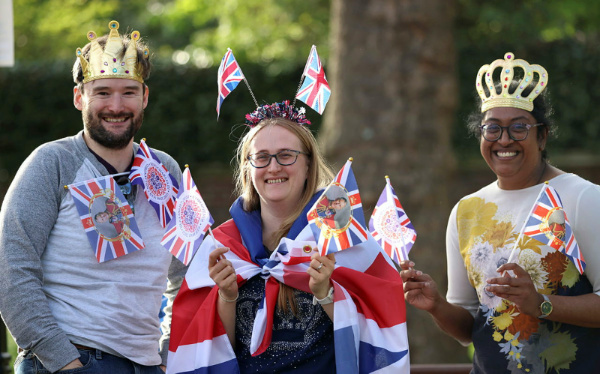
Three of the thousands who lined The Mall to watch the Coronation Procession on Saturday. PICTURE: Sgt EJ Marriott. PICTURE: UK MOD Crown Copyright 2023
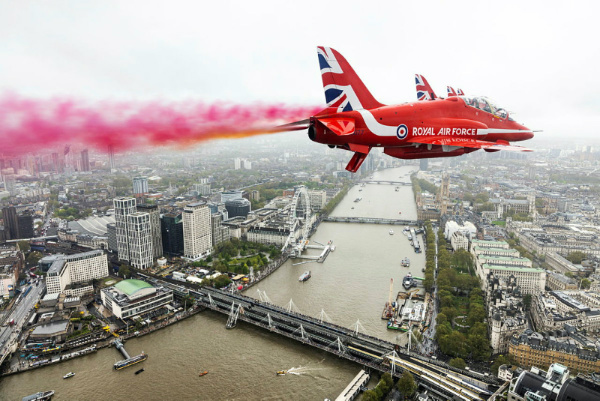
The Red Arrows perform a fly past for King Charles III’s Coronation Day. The sortie was led by Squadron Leader Tom Bould (Red 1). The Red Arrows aerobatics team flew directly down the length of The Mall and over Buckingham Palace, where members of the Royal Family watched on the balcony during the fly past, which was reduced in size because of the weather. PICTURE: Cpl Phil Dye/UK MOD © Crown copyright 2023
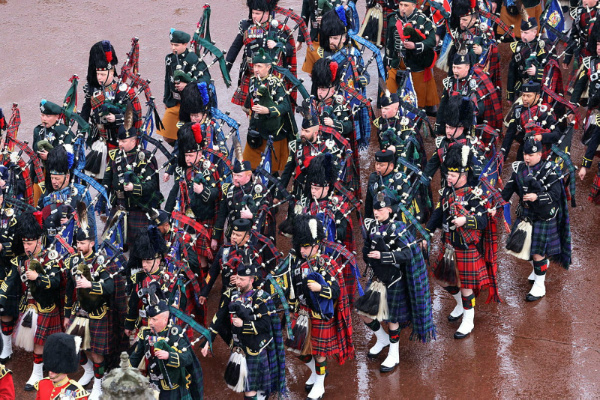
The massed pipers muster before the Royal Salute in the garden of Buckingham Palace following the Coronation Procession. PICTURE: Sgt EJ Marriot/UK MOD © Crown copyright 2023

The coronation of King Charles III and Queen Camilla…

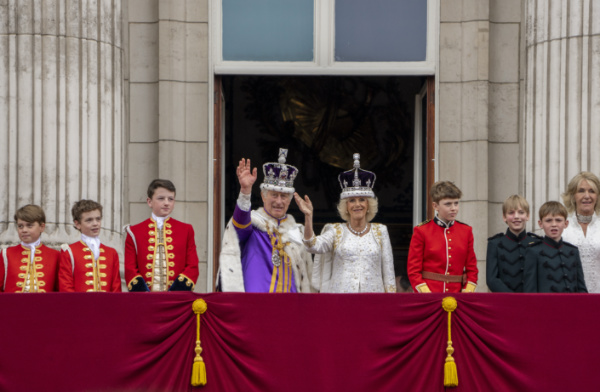
King Charles III and Queen Camilla appear on the balcony of Buckingham Palace after the coronation ceremony. PICTURE: Giles Anderson/© MoD Crown Copyright 2023
The King and Queen ride in the Gold State Coach after the ceremony. PICTURE: LPhot Gareth Smith/UK MOD © Crown copyright 2023
King Charles III and Queen Camilla in the Gold State Coach during the Coronation Procession after the ceremony at Westminster Abbey. PICTURE: SSgt Dek Traylor (licensed under MOD News Licence).
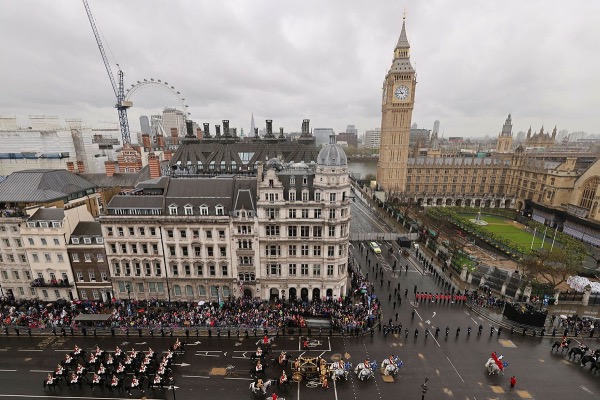
The Coronation Procession in The Mall. PICTURE: AS1 Ryan Murray RAF/UK MOD © Crown copyright 2023
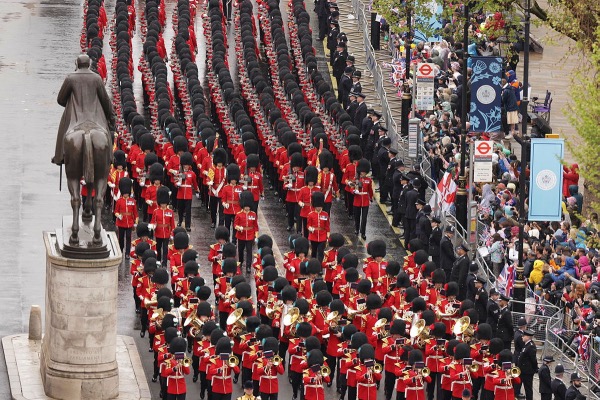
The Coronation Procession, the largest ceremonial military operation for 70 years, involved some 4,000 soldiers, sailors and aviators from across the UK and Commonwealth. PICTURE: Corporal Rebecca Brown/UK MOD © Crown copyright 2023
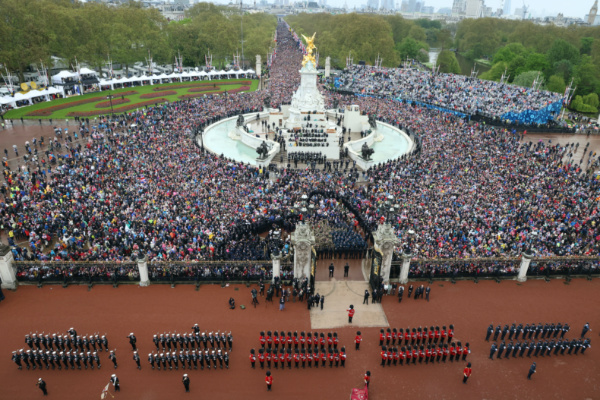
The huge crowd outside Buckingham Palace. PICTURE: UK MOD © Crown copyright 2023
The Red Arrows fly over Buckingham Palace as the King and Queen appear on the balcony. PICTURE: UK MOD © Crown copyright 2023.
King Charles III enters Westminster Abbey for the Coronation Service. PICTURE: Sgt Rob Weideman/UK MOD © Crown copyright 2023
The King and Queen travel to Westminster Abbey in the Diamond Jubilee State Coach. PICTURE: LPhot Gareth Smith/UK MOD © Crown copyright 2023
A gun salute at the Tower of London. PICTURE: AS1 Jake Hobbs RAF/UK MOD © Crown copyright 2023

LondonLife Special – (More) coronation preparations…

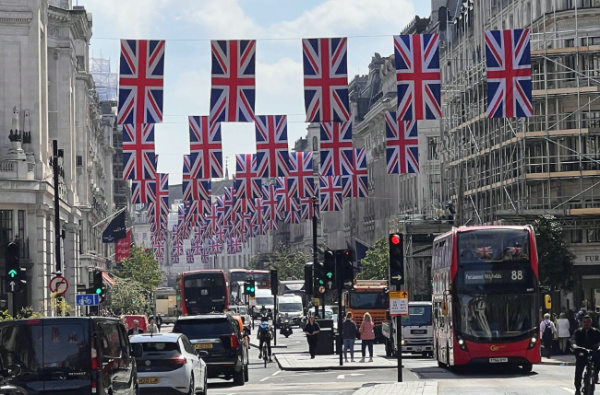
Flags are flying in Regent Street. PICTURE: Miltof (licensed under CC BY 2.0/picture cropped)
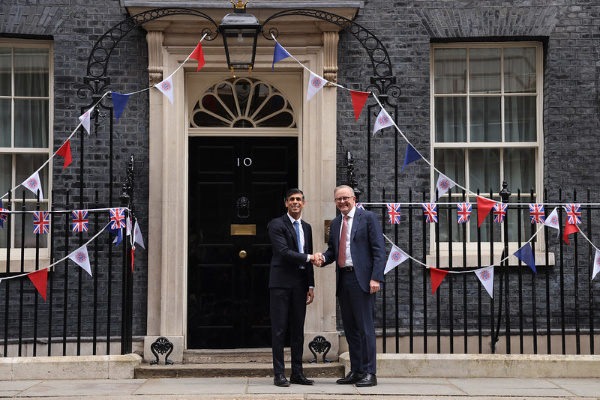
Dignataries are arriving in London ahead of the coronation – here British Prime Minister Rishi Sunak meets Australian Prime Minister Anthony Albanese outside 10 Downing Street. PICTURE: Alice Hodgson / No 10 Downing Street (licensed under CC BY-NC-ND 2.0)

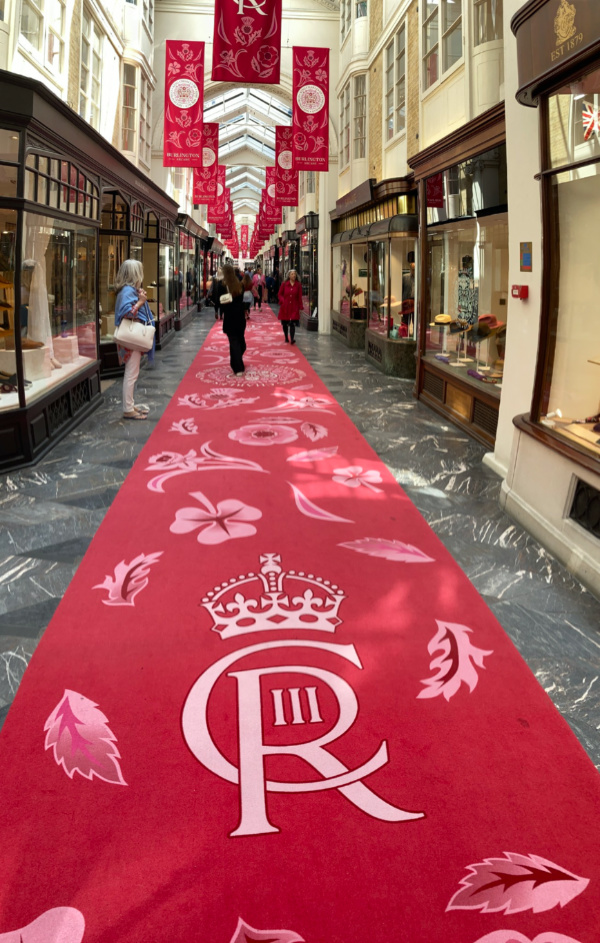
The Burlington Arcade rolls out the red carpet with the new King’s cipher. PICTURE: Matt Brown (licensed under CC BY 2.0)

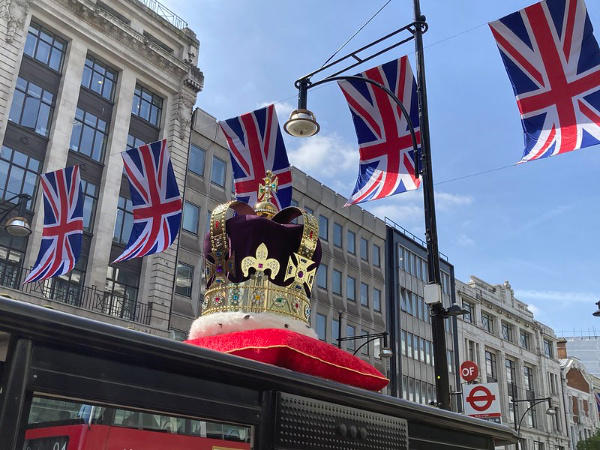
A crown atop a bus stop in Oxford Street, central London. PICTURE: Matt Brown (licensed under CC BY 2.0)
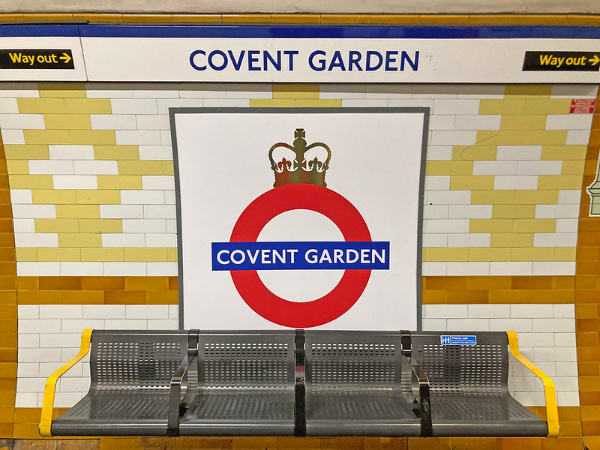
A London Underground roundel changed into a “crowndel” ahead of the coronation. PICTURE: diamond geezer (licensed under CC BY-NC-ND 2.0).

This Week in London – It’s Coronation weekend!…

Part of the final Coronation Procession rehearsal this week. PICTURE: Sgt Robert Weideman, RLC/Copyright: UK MOD © Crown copyright 2023

It’s Coronation weekend in London, so first up it’s a look at the Coronation Procession. The 1.42 mile route from Buckingham Palace to Westminster Abbey, which opens for viewers at 6am on Saturday, will see the procession – with King Charles III and Queen Camilla travelling in the Diamond Jubilee State Coach – leave Buckingham Palace at 10:20am. Known as The King’s Procession, the coach, which will be accompanied by The Sovereign’s Escort of the Household Cavalry, will travel down The Mall, through Admiralty Arch and past Trafalgar Square, before turning down Whitehall. The procession will then make its way down to the Houses of Parliament and around the east and south sides of Parliament Square to Broad Sanctuary and Westminster Abbey.

• The ceremony is scheduled to begin at 11am and is expected to run for two hours. There is, of course, no access to the abbey for uninvited guests but the ceremony will be broadcast live by the BBC and big screens are being set up to watch in St James’s Park, Green Park and Hyde Park as well as Holland Park, Valence Park in Dagenham and Walpole Park in Ealing. 

• At 1pm, the King and Queen will return from Westminster Abbey to Buckingham Palace in The Coronation Procession. They will be riding in the 260-year-old Gold State Coach that has been used in every coronation since that of William IV and accompanied by almost 4,000 members of the armed forces in what’s been called the largest ceremonial military operation in recent decades. Representatives of Commonwealth nations and British Overseas Territories will also take part in the return procession. The route will be the reverse of the outgoing route and see the procession travel back through Parliament Square (lined with an honour guard of 100 members of the Royal British Legion) and up Whitehall to Trafalgar Square, turning left to travel through Admiralty Arch and back down The Mall. Reaching Buckingham Palace, the King and Queen will receive a Royal Salute from the armed forces who have been escorting them followed by three cheers.

The balcony appearance and flypast. The newly crowned King and Queen Consort are scheduled to appear on the famous balcony on Buckingham Palace at 2.30pm accompanied by members of the royal family. They will watch a six minute flypast of military planes, ending with a display by the Red Arrows.

On Sunday, communities are invited to join in the Coronation Big Lunch (communities will also be holding street parties throughout the weekend). On Sunday night, the BBC will broadcast The Coronation Concert from Windsor Castle. The concert will feature the Coronation Choir as well as ‘Lighting Up The Nation’ in which locations across the UK will take part. For details on where events are being held, head to https://coronation.gov.uk/events/.

On Monday, people are encouraged to join in The Big Help Out by volunteering time to help out in your local community. To find out where your local events are, head to https://thebighelpout.org.uk.

Four sites related to royal coronations in London – 4. Buckingham Palace…

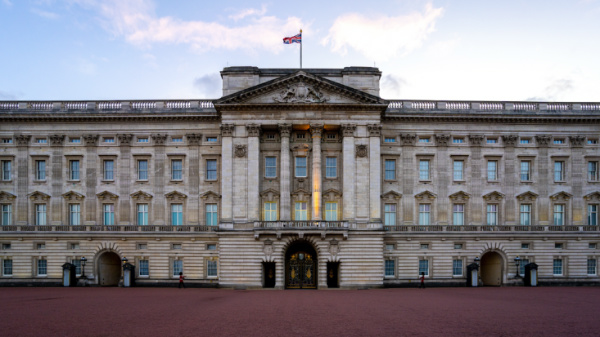
Buckingham Palace. PICTURE: Mike Marrah/Unsplash

Buckingham Palace will play an important role in this weekend’s coronation of King Charles III – not only as the location from which he and Queen Camilla will leave for the ceremony, but also for the famous balcony appearance.

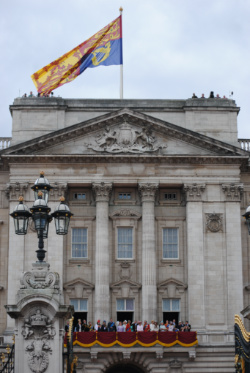
Not just for coronations – the Royal Family on the Buckingham Palace balcony at Trooping the Colour in 2010. PICTURE: David Adams

Monarchs have only been living at the palace since 1837 when Queen Victoria moved in and it has been the official London residence of kings and queens ever since (although it should be noted that since becoming King, Charles has reportedly continued to reside at Clarence House and apparently intends continuing to do so following the coronation).

The palace has been in royal hands since 1761 when King George III bought what was then Buckingham House for the use of his wife Queen Charlotte, given, in particular, its proximity to St James’s Palace where court was held. Hence it become known as the Queen’s House.

King George IV intended using it the same way but in the 1820s had a change of heart and decided, with the aid of architect John Nash, to transform it into a palace. The ballooning work was unfinished when he died, and his successor and younger brother, King William IV, replaced Nash with Edward Blore to complete the work (thanks, apparently, to Nash’s budget blow-outs).

But William didn’t move into the property (in fact, he offered it up as a new home for parliament after much of the old Houses of Parliament were consumed by fire in 1834 – an offer which was not taken up).

Queen Victoria, however, decided to make it her home and she became the first monarch to leave the palace headed to a coronation when she did so in June, 1838.

Victoria also made the first balcony appearance by a monarch at the palace, doing so during celebrations to make the opening of the Great Exhibition in 1851.

But the first balcony appearance by a monarch immediately after their coronation was her son King Edward VII, who appeared on the balcony with his wife Queen Alexandra, to the joy of onlookers following his coronation on 9th August, 1901. Every monarch since has done so after their coronation (King Edward VIII, of course, never having had a coronation).

The King’s mother, Queen Elizabeth II, was the first monarch to watch a flypast on the balcony after her coronation, a tradition the King is expected to continue.

Buckingham Palace has also been the site of Coronation Banquets since the coronation of Queen Victoria (when it replaced Westminster Hall as the location). Queen Elizabeth held two Coronation Banquets in the palace following her coronation on 3rd and 4th June, each attended by 400 guests.

Few details have yet been released about King Charles III’s Coronation Banquet.

LondonLife – Coronation preparations…

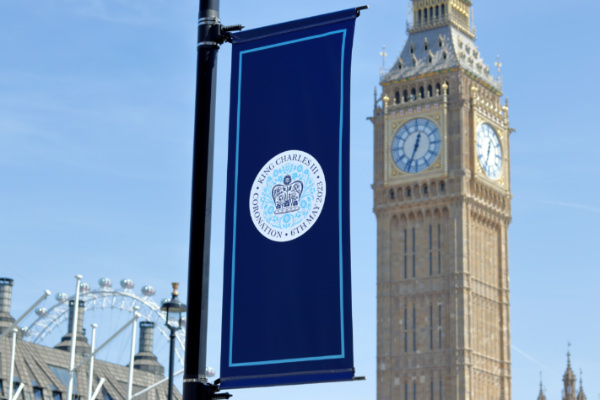
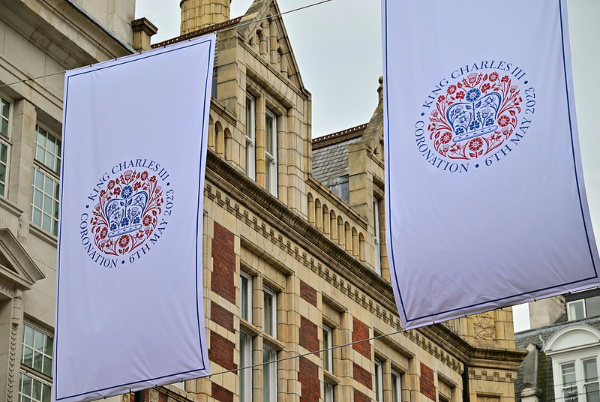
A banner announcing the coronation of the King Charles III on the 6th of May. PICTURE: Devis M/Shutterstock
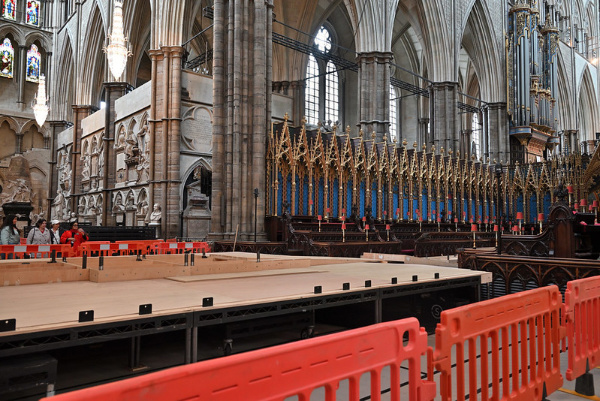
A stage erected in Westminster Abbey ahead of the coronation. PICTURE: jpellgen (@1179_jp) (licensed under CC BY-NC-ND 2.0)
Decorations in Carnaby Street. PICTURE: dom fellowes (licensed under CC BY 2.0/image cropped and straightened).
The Household Division rehearsing three cheers for the King which will be called at the end of the Coronation procession. PICTURE: Corporal Rob Kane/© MoD Crown Copyright 2023.
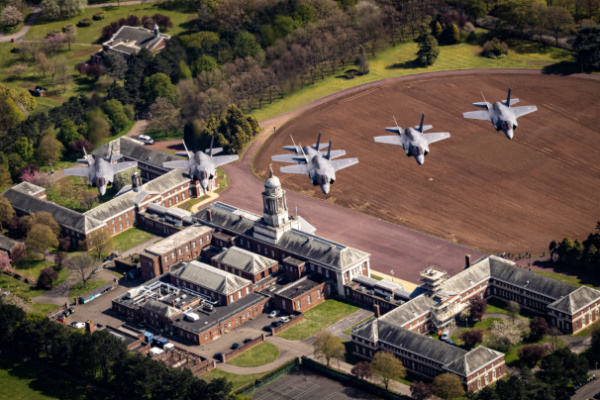
Six F-35B Lightning jets above RAF College Cranwell in a rehearsal for the Coronation Flypast that will take place over Buckingham Palace. The full flypast will involve more than 60 aircraft, including the iconic Red Arrows and historic Battle of Britain Memorial Flight. PICTURE: Andrew Wheeler/UK MOD © Crown copyright 2023
Coronation banners in New Bond Street PICTURE: dom fellowes (licensed under CC BY 2.0).

This Week in London – Three of London’s oldest charters on show and other coronation celebrations; Sir Christopher Wren’s life explored; and, a Pre-Raphaelite model and artist honoured…

• Three of the City of London’s oldest charters go on display at the City of London Heritage Gallery on Saturday as part of a series of events commemorating the coronation of King Charles III. On display will be the William Charter, which, drawn up in 1067 following the coronation of King William the Conqueror, was the earliest known royal document in Europe to guarantee the collective rights of all people in a town and not just a select few. Also to be seen is the Shrievalty Charter, which, issued by King John in 1199, confirms the rights of Londoners to elect their own sheriffs, and the Mayoralty Charter, which, also issued by King John – this time in 1215, confirmed that the Mayor of London could also chosen by Londoners with the proviso that they were publicly presented. Visitors can also see the beautifully illustrated Cartae Antiquae which records charters and statutes covering laws enacted from the reign of Edward III (1327 onwards) to the accession of Henry VII in 1485 and was used as an essential reference tool by City officials, as well as prints of the 19th century coronations of Queen Victoria, King William IV and King George IV. Admission is free but booking is recommended. Runs until 5th October. For more, see www.cityoflondon.gov.uk/events/heritage-gallery-exhibition.

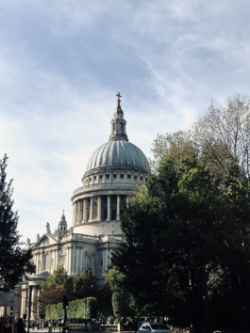
St Paul’s Cathedral PICTURE: Vinay Datla/Unsplash

• Other events marking the coronation kick off in the City of London in the coming week. Among the extensive list of activities is a pop-up well-being garden in Seething Lane where you can pose for pictures with a floral crown installation, a guided walking tour of the City entitled ‘1000 Years of Royalty – the Best, the Worst and the Very Horribilus’, and a “Cockney knees-up” with Pearly King and Pearly Prince at Leadenhall Market. For more details and the full list of events, head to www.cityoflondon.gov.uk/events/coronation.

• A new exhibition commemorating the expansive career of Sir Christopher Wren opens today in St Paul’s Cathedral – the extraordinary building designed by Wren to replace the medieval cathedral destroyed in the Great Fire of London in 1666 Part of a series of events marking the 300th anniversary of the death of Sir Christopher in 1723, Sir Christopher Wren: The Quest for Knowledge explores not only his early life and career as an architect but also his lesser-known contributions to the fields of mathematics, astronomy and physiology. The display, located in the north aisle of the crypt, features drawings, photographs and objects from the cathedral’s collections. Entry to the exhibition is included in general admission. For more, see www.stpauls.co.uk/whats-on/exhibition-christopher-wren-quest-for-knowledge.

• The Pre-Raphaelite model and artist, Marie Spartali Stillman, has been honoured with an English Heritage Blue Plaque at what was her family home in Battersea. It was while living at The Shrubbery – a 1770s Grade II-listed property now located on Lavender Gardens – that Stillman first modelled for Pre-Raphaelite artists. Tutored by Ford Madox Brown, she went on to become one of a small number of professional women artists in the late 19th century, creating more than 150 works over a period spanning 50 years. Stillman is the first female Pre-Raphaelite artist and one of only very few female artists to receive a Blue Plaque. For more, see www.english-heritage.org.uk/visit/blue-plaques/.

Send all items for inclusion to exploringlondon@gmail.com