A Moment in London’s History – Princess Victoria’s christening…

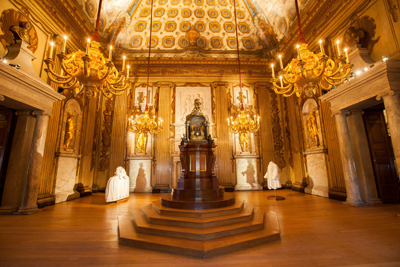
Cupola-Room

On Sunday, Princess Charlotte, daughter of Prince William and Princess Kate, was christened at Sandringham. So we thought we’d take a quick look at another christening that took place in London almost 200 years ago, that of Princess Victoria.

The future Queen Victoria was born on 24th May, 1819 – the daughter of Edward, Duke of Kent (fourth son of King George III), and his wife, Princess Victoria Mary Louisa of Saxe-Coburg-Saalfeld.

At the insistence of the Prince Regent (later King George IV), the christening was a small affair and was held a month after the birth on the afternoon of 24th June in the magnificent Cupola or Cube Room of Kensington Palace (pictured as it is now, above).

The guest list was small and included the Prince Regent, Prince Frederick, the Duke of York, and his wife Princess Frederica, Princess Augusta Sophia, Princess Mary, the Duchess of Gloucester, and her husband, Prince William, and Prince Leopold, who had recently become a widower after the death of Princess Charlotte.

The ceremony was conducted by Charles Manners-Sutton, the archbishop of Canterbury, and, thanks to the intransigence of the Prince Regent, her name was apparently only decided at the last minute.

The Prince Regent has earlier forbidden the use of such ‘royal’ names including Charlotte, Elizabeth, Georgina or Augusta and when asked by the archbishop what she would be named, he replied brusquely that she would be named Alexandrina in honour of the Russian Tsar Alexander, one of the new princess’s godparents.

Her second name was Victoria in honour of her mother, and while Victoria was often called “Drina” while a girl, she herself apparently preferred her second name to her first.

The gold font used in the ceremony formed part of the Crown Jewels and its origins go back to the time of King Charles II.

Interestingly, there were a couple of significant Victorian connections during Princess Charlotte’s christening – the font used at this christening was known as the Lily Font (like its predecessor, it is usually found with the Crown Jewels in the Tower of London).

It was commissioned by Queen Victoria and Prince Albert for the christening of their first daughter, Princess Victoria, in 1841, apparently due to Queen Victoria’s dislike for the gold font used at her own christening – it had been used by King Charles II to christen his illegitimate children.

The Lily Font has apparently been used at every royal christening since except that of Princess Eugenie who had a public baptism in Sandringham in 1990.

Princess Charlotte also wore a replica of the christening gown worn by Princess Victoria.

WHERE: The Broad Walk, Kensington Gardens, Kensington (nearest Tube stations are High Street Kensington or Queensway); WHEN: Daily 10am to 6pm (until 31st October); COST: £17.50 adult/£14.10 concession/children under 16 free (online booking discounts available, Historic Royal Palaces members free); WEBSITE: www.hrp.org.uk/KensingtonPalace.

PICTURE: HRP/newsteam

Lost London – St Martin Outwich…

This former City church – now part of the parish of St Helen’s Bishopsgate – once stood on the corner of Threadneedle Street and Bishopsgate (the site is marked by a blue plaque).

St-Martin-OutwichA medieval church which was apparently rebuilt in the 14th century in the Gothic style, it was dedicated to St Martin while there is some discrepancy over the use of the name Outwich – some sources say it comes from a corruption of the name of the family who paid for its reconstruction – the Oteswich family – while others say the family in fact took their name from the church and that ‘outwich’ simply means the outer side of the wich (one of a number of Saxon words for a town).

It survived the Great Fire of 1666 but gradually fell into disrepair and in 1765 was badly damaged in another fire which destroyed some 50 houses.

In 1796, Parliament passed an act allowing the parish to raise money for its building – the donations included some from the powerful City livery companies – and after a couple of years of construction, it was consecrated in November, 1798.

Designed by Samuel P Cockerell, the church was unusual in that it featured an oval interior. Medieval stained glass from the original church was placed in a window over the altar while some of the monuments that had been present in the old church – including one commemorating John Oteswich and his wife – were transferred to the new. The dead buried at St Martin Outwich, meanwhile, were reburied in the City of London churchyard (where a memorial to them can now be seen).

A painting from 1838 shows a curved interior with high semi-circular windows, some intricate medieval monuments and closed in box pews.

Thanks to a falling population and pressure to widen the streets, the church was eventually demolished in 1874 and the parish amalgamated with St Helen’s. As had previously happened, a number of monuments – including the Oteswich memorial – which were in the old church were moved to St Helen’s before its demolition.

Proceeds from the sale of the church grounds were used to fund the construction of Holy Trinity Church in Dalston. Built in the late 1870s to the designs of Ewan Christian, it is perhaps best known as the Clown’s Church and is where the clown service is usually held each year.

PICTURE: sleepymyf

Treasures of London – Waterloo Memorial…

Waterloo-MemorialUnveiled earlier this month at Waterloo Station to mark the bicentenary of the Battle of Waterloo, the memorial features a supersized solid bronze replica of the obverse side of the Waterloo Campaign medal depicting Nike, the Greek goddess of victory.

The memorial, which was installed on a balcony above the main concourse by The London Mint Office on behalf of Waterloo200 – the organisation overseeing bicentenary commemorations, is dedicated to the 4,700 members of the allied armies who were killed in the battle on 18th June, 1815 (which also left 14,600 wounded and 4,700 missing).

The upsized medal, which has a diameter of 65 centimetres, is a replica of one which was the first to be commissioned for every soldier who fought in the battle, regardless of their rank.

Designed by London-based artist Jason Brooks, the memorial also features a famous quote from the Duke of Wellington on granite: “My heart is broken by the terrible loss I have sustained in my old friends and companions and my poor soldiers. Believe me, nothing except a battle lost can be half so melancholy as a battle won.”

It was unveiled on 10th June by the 9th Duke of Wellington (pictured with the memorial) in a ceremony attended by some of the descendants of those who fought and died in the battle.

Waterloo Station was itself, of course, named in commemoration of the battle (well, indirectly – it, like the surrounding district itself, took its name from nearby Waterloo Bridge which was in fact named after the battle).

Treasures of London – The Great Pagoda, Kew Gardens…

pagoda

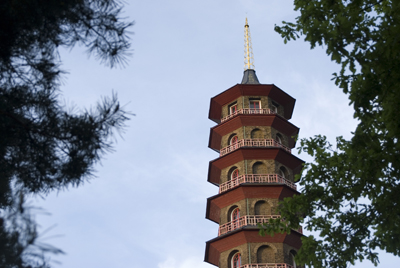
News this week that Historic Royal Palaces and the Royal Botanic Gardens are embarking on a two year project to restore eighty decorative dragons to the Kew Pagoda has led us to take a look at the history of the exotic tower set amid the trees.

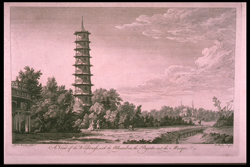
pagoda15Designed by architect Sir William Chambers (one of his drawings is depicted here), the pagoda was built in 1762 during the eighteenth century craze for Chinoiserie and was probably commissioned by Princess Augusta as part of the ongoing works she undertook in the gardens after the death of her husband Prince Frederick, eldest son of King George II and Queen Caroline.

Standing 163 feet (or almost 50 metres) high, the 10 storey pagoda was originally decorated with eighty golden dragons. It was designed to be the high point of a world tour through the gardens which also took in Roman ruins and Arabic mosques.

While the pagoda remains, the dragons were only on the structure for some 22 years before being removed in 1784 during roof repairs. Thanks to rumours they were made of solid gold, it was suggested they were sold off to pay the debts of the Prince Regent (the future King George IV), but experts say the wooden figures had simply rotted and so had to be removed.

Following their removal, the dragons subsequently disappeared and despite several attempts to find them – including one by Decimus Burton, architect of the famous Palm House (for more on that, see our earlier post), in 1843 – they have never been found.

Historic Royal Palaces and the Royal Botanic Gardens have now decided to replace them with new ones, drawing on contemporary accounts and drawings and using a team of specialist craftsmen to create them.

The restored pagoda – complete with new dragons – will be open to the public in 2017.

It is one of several ornamental buildings still located in the gardens. Others include a Japanese gateway and a Japanese wooden house called a minka.

WHERE: The Great Pagoda, Kew Gardens (nearest Tube station is Kew Gardens); WHEN: 10am daily (closing times vary – see websites for details); COST: £16.50 adults/£13 concessions/children £3.50 (discounts apply for online bookings); WEBSITE: www.kew.org.

PICTURES: RBG Kew

Lost London – East India House…

East-India-HouseThe headquarters of the East India Company, the ‘New’ East India House, was built in the 1720s at the corner of Leadenhall and Lime Streets on the site of what had been a late Elizabethan mansion known as Craven House.

The company, which was founded in 1600, was housed in several different properties (including Crosby Hall – now located at Chelsea) until it moved into Craven House in 1648 – built by a former Lord Mayor, Sir Robert Lee, and named after one of its later occupants Sir William Craven. In 1661 an ornamental wooden structure featuring paintings of some of the Company’s ships and a wooden sculpture of a seaman, was added to the facade of the building.

By the 1720s, the mansion was crumbling and so construction began on a new building on the site designed by Theodore Jacobsen (the Company was relocated to a temporary premises in Fenchurch Street while it was built).

The three storey building on Leadenhall Street was designed with five bays and beyond the facade featured grand meeting rooms including the Directors’ Court Room, offices for the directors as well as a hall, courtyard, garden and warehouses. Famous art works inside included the fresco The East Offering its Riches to Britannia by then little known Greek artist Spiradone RomaThe East Offering its Riches to Britannia which once adorned the ceiling of the Revenue Committee Room (it’s now in the collection of the British Library).

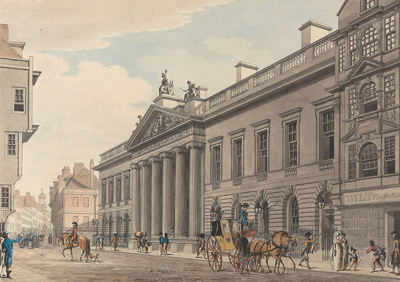
The building was renovated and extended significantly in the 1790s creating what was essentially a grand new neo-classical building. Among the new additions – although it seems a matter of some debate the building was apparently designed by Henry Holland with the work was overseen by the Company’s surveyor Richard Jupp until his death in 1799 – were a museum and library. A new pediment topped by Brittania dominated the facade.

When the East India Company was wound up in 1858 after the Indian Mutiny its assets were transferred to the government and the building briefly became home to the India Office (which subsequently moved to a new purpose-built building which still stands in Whitehall).

In 1861, the building was sold for redevelopment and subsequently demolished. Many of its fittings, art collection and furnishings were transferred elsewhere including the British Library, V&A and the Foreign and Commonwealth Office in Whitehall where many of the fittings of the Directors’ Court Room – including a great marble chimneypiece – were reused.

The location of the property is now covered by the landmark Lloyd’s building with little to indicate such a grand premises had once stood here.

PICTURE: The extended East India House in about 1800, by Thomas Malton the Younger (1748-1804)/via Wikipedia.

For more on the history of the East India Company, see John Keay’s The Honourable Company: A History of the English East India Company.

LondonLife – Georgian princesses show their skills…

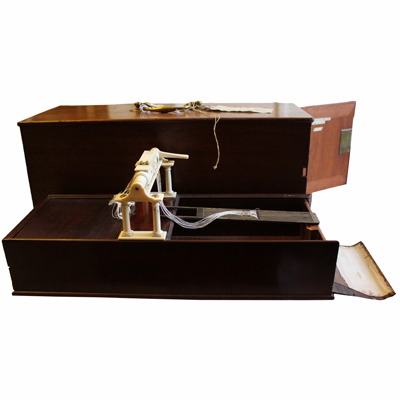
Fringe-LoomThe fringe loom of Queen Charlotte – wife of King George III – is among the objects on display at Kew Palace this year. Historic Royal Palaces is exploring some of the untold stories of the king’s daughters who once called the palace, which was originally built in 1631 for a Flemish merchant before it was acquired by King George II, home. Under examination are the pastimes of the royal women – from drawing and painting to weaving, paper cutting and even the decoration of a ‘Baby House’ created by the princesses as a showcase of their talents. Along with Kew Palace – located inside Kew Gardens in London’s west, also opened is the nearby rustic retreat built in 1770 known as Queen Charlotte’s cottage. Inside is the “Print Room”, hung with more than 150 satirical engravings, and the “Picnic Room”, decorated paintings of trailing nasturtiums and convolvulus – the work of Princess Elizabeth, an acclaimed artist. For more, see www.hrp.org.uk/KewPalace/.
PICTURE: Historic Royal Palaces

This Week in London – Wellington Arch marks the Battle of Waterloo; Shakespeare’s Globe celebrates the Bard’s birth; and the ‘cathedral on the marsh’ open day…

The Battle of Waterloo comes under the microscope in a new exhibition opening at Wellington Arch on Hyde Park Corner tomorrow. Wellington Arch: Waterloo 1815 – The Battle for Peace provides an overview of the battle and the reasons which led to it, the people involved and the battle’s legacy. Displayed items include the sword the Duke of Wellington carried at the battle, his handwritten battle orders and an original pair of ‘Wellington boots’ as well as, of course, the arch itself, which was built in 1825-27 as a monument to Wellington’s victories over Napoleon. Admission charge applies. For more, see www.english-heritage.org.uk/visit/places/wellington-arch/.

Shakespeare’s Globe in Southwark celebrates the Bard’s birthday with a Hamlet-themed day of free family events this Sunday. Along with an Elsinore bouncy castle, there will be sword-fighting demonstrations, ‘skull’ coconut shies and a grave-digging ball pool while actors who have taken on the role of Hamlet over the years while appear on stage attempting to deliver the quickest ever reading of the play and famous film adaptions of Hamlet will be playing on screen around the site. The day will also mark almost a year since Shakespeare’s Globe embarked on an unprecedented two year global tour of Hamlet taking in every country in the world in honour of last year’s 450th anniversary of Shakespeare’s birth. The birthday event at the Globe runs between 11am and 4.30pm. For more, see www.shakespearesglobe.com.

The famous “cathedral on the marsh” – the Crossness Pumping Station –  is open to the public this Sunday, the first of five days it will be open this year. The pumping station at Abbey Wood in south-east London was built by Sir Joseph Bazalgette as part of a general sewerage system upgrade and was opened by the Prince of Wales in 1865. The Grade I-listed Beam Engine House was constructed in the Romanesque-style and features some of the “most spectacular ornamental Victorian cast ironwork” to be found today. The day runs from 10.30am to 4pm. Admission charges apply but no booking is required. For more, see www.crossness.org.uk.

Send all items for inclusion to exploringlondon@gmail.com. 

London Pub Signs – The George and Devonshire…

The-George-and-Devonshire

The last remaining pub in old Chiswick village in west London, The George and Devonshire has a history dating back to the 1650s.

The-George-and-Devonshire2Initially known simply as The George (like so many taverns and pubs, apparently after England’s patron saint), by the 1820s the name had changed to The George and Devonshire – the Duke of Devonshire’s former showpiece property, Chiswick House, can still be found nearby (for more on Chiswick House, see our earlier post here). The coat of arms of the Dukes of Devonshire now hang over the door.

The Grade II-listed building at 8 Burlington Lane, which is conveniently located just metres from a Fullers brewery, dates from the 18th century.

There was apparently once a secret passageway which led from the pub under the nearby St Nicholas’ Church (burial place of artist William Hogarth) to an opening located among a group of small cottages near the Thames – it is said to have been used by rum and spirits smugglers in the 1700s. The remains of the entrance can still apparently be seen in the pub’s cellar.

For more, see www.georgeanddevonshire.co.uk.

This Week in London – The Clowns’ Service has a new venue; Sir Jacob Epstein at the Foundling Museum; Mark Boxer’s caricatures at the Cartoon Museum…

The 69th annual Clowns’ Service will be held this Sunday – but the venue has changed. An annual tradition since 1946, the service is held in memory of Regency performer (and man hailed as the “inventor” of the modern clown), Joseph Grimaldi (1778-1837). It has been held at Holy Trinity Church in Dalston since 1959 after the previous building where it was held – St James’ Chapel in Pentonville Road; site of Grimaldi’s grave – was gutted in a fire (permission was given for clowns to attend in costume in 1967) but this year, due to repairs at Holy Trinity, the service is being held at sister church All Saints, Livermore Road, in Haggerston (E8 4EZ) (www.trinitysaintsunited.com). Kicks off at 3pm but you’ll have to be early to find a space. About 60 clowns usually attend and a clown show for children follows.

Bronze sculptures and drawings of babies and children by Sir Jacob Epstein (1880-1959) form the basis of a new exhibition opening tomorrow at the Foundling Museum in Bloomsbury. Sir Jacob Epstein: Babies and Bloomsbury features portraits of Epstein’s own children and grandchildren and those of friends and contemporaries. The artist lived in Bloomsbury himself between 1914 and 1927 during which time he had five children from a series of extramarital affairs (interesting his long-suffering wife Margaret, herself unable to have children, brought up the youngest and oldest of these and put up with his affairs until her death in 1947 – although she is believed to have shot his long-term lover Kathleen Garman, later his wife and Lady Epstein, in the shoulder with a pearl-handled pistol. Also opening at the Foundling Museum tomorrow is a display of four rarely-exhibited portraits of Georg Frideric Handel and contemporaries Corelli, Geminiani and Daniel Purcell which are on-loan from the Royal Society of Musicians and which once hung in the royal box of King George III. Both exhibitions run until 10th May. Admission charges apply. For more, see www.foundlingmuseum.org.uk.

On Now: The Caricatures and Cartoons of Mark Boxer. This exhibition at the Cartoon Museum in Bloomsbury features more than 100 of Boxer’s caricatures and cartoons from The Times, The Guardian, The Daily Telegraph, The New Statesman, The London Review of Books and The Observer. Among the more than 80 caricatures on display – works for which he is particularly noted – are those of Prince Charles and Queen Elizabeth II, Antonia Fraser, Seamus Heaney, Tony Benn, Clive James, Barry Humphries and David Frost. Runs until 22nd March. Admission charge applies. For more, see www.cartoonmuseum.org.

Send all items for inclusion to exploringlondon@gmail.com.

LondonLife – The Duke of York has a facelift…

Duke-of-YorkA monument commemorating Prince Frederick, the Duke of York and Albany and commander-in-chief of the British Army during the French Revolutionary wars – the Duke of York Column in St James’s Park – has had a makeover. The monument, which was erected in 1834, is the tallest in the Royal Parks. It features a 124 foot tall column of pink and grey Aberdeen granite designed by Benjamin Wyatt and is topped by a 14 foot tall bronze statue of the duke (thought to be the ‘Grand Old Duke of York’ referred to in the nursery rhyme), designed by Sir Richard Westmacott. The column has been cleaned while the statue, which had developed a green pigment thanks to the oxidation process which also gives the Statue of Liberty its green patina, has been repatinated, rewaxed and buffed. The monument, which cost £100,000 to refurbish, originally cost £15,760 and was funded with a day’s pay from every serving soldier. For more on St James’s Park, check out www.royalparks.org.uk/parks/st-jamess-park. PICTURE: Courtesy of Royal Parks.

This Week in London – Hampton Court Palace lights up; doll house histories; more on Christmas; and, memories of a royal progress at The Queen’s Gallery…

Hampton Court Palace’s world famous gardens have been transformed into an “illuminated wonderland” which can be explored using a specially created trail. From tomorrow, visitors can use a glow-in-the-dark map to follow the trail which starts at the palace’s hedge maze – the UK’s oldest – and meanders through various locations around the grounds – including the formal gardens – before ending up at the palace’s East Front where, through the use of interactive technology, visitors can ‘paint’ the building’s facade just by moving around. Allow about an hour. Entry is timed between 5pm and 8pm. Runs until 23rd December. Admission charge applies. For more, see www.hrp.org.uk/HamptonCourtPalace/.

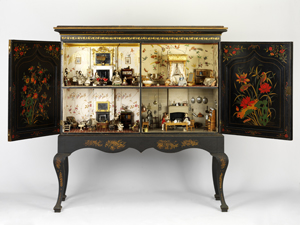
Killer_Cabinet_1840sThe stories behind some of the UK’s best-known dolls’ houses are the focus of a new exhibition which opens at the V&A Museum of Childhood in Bethnal Green on Saturday. Small Stories: At home in a dolls’ house tells the story of 12 dolls’ houses dating as far back as 300 years. Each of the houses – which are displayed chronologically – has been set up to represent a particular time of day and, using interactive technology, tells the story of those who live and work in the building in a series of stories featuring marriages, parties, politics and even crimes. Highlights include: the Tate Baby House – dating from 1760, it features original wallpapers and painted panelling in the style of Robert Adam; the Killer House (pictured) – a gift from surgeon John Egerton Killer to his wife and daughters in the 1830s, this Chinese-style cabinet has gilded wallpapers, a four poster bed and liveried servants; Whiteladies House – a Modernist country villa designed by artist Moray Thomas and built in the 1930s; the Hopkinson House – based on the homes built in the 1930s in the London County Council suburb, the St Helier Estate; and, the Kaleidoscope House – designed by Laurie Simmons to suit a “design conscious step-family living in the new millennium”. There’s a further 20 dolls’ houses, dating from 1673 to 2014, on display in the museum’s permanent galleries (just some of the more than 100 in the museum’s collection). Admission is free. Runs until 6th September, 2015. For more, see www.museumofchildhood.org.uk. PICTURE: Victoria and Albert Museum, London.

The V&A has unveiled its 2014 Christmas Tree at the grand entrance to its South Kensington building. Designed by Gareth Pugh, Ceremony stands at more than four metres in height and, along with a shape not unlike a traditional Christmas tree, features nine tiered gold pyramids located around a central beacon of light to represent the nativity. For more, see www.vam.ac.uk/content/articles/c/christmas-tree-installation-by-gareth-pugh/Meanwhile Winter Wonderland continues to entertain in Hyde Park with rides, markets, ice-skating and all the usual attractions. Open 10am to 10pm every day until 4th January (closed on Christmas Day). For more, see www.hydeparkwinterwonderland.com.

On Now: Cairo to Constantinople: Early Photographs of the Middle East. This exhibition at The Queen’s Gallery, Buckingham Palace, features objects collected by the 20-year-old Prince of Wales, Albert Edward (later King Edward VII), during an educational tour of the Middle East in 1862. The display, which also features photographs taken by Francis Bedford – the first photographer to join a royal tour, follows the prince as he progresses through Egypt, Palestine and the Holy Land, Syria, Lebanon, Turkey and Greece. The exhibition is being show alongside Gold, a display of 50 gold items drawn from the Royal Collection. They include the Rillaton Cup, found in a Bronze Age burial dating from between 1700 and 1500 BC, a gold crown from Ecuador that predates the Incas, and an 18th century tiger’s head made from gold and rock crystal and taken from the throne of the Tipu Sultan of Mysore in India. Both run until 22nd February. Admission charge applies. For more, see www.royalcollection.org.uk.

Send all items for inclusion to exploringlondon@gmail.com.

Famous Londoners – Dr Richard Mead…

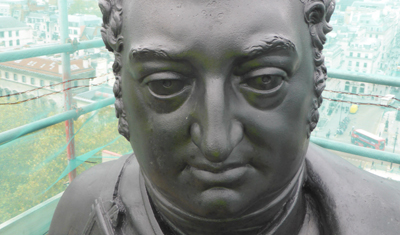
Eighteenth century physician Dr Richard Mead is noted not only for his attendance on the rich and famous of his time – including royalty – but also for his philanthropy, his expansive collections and, importantly, his contributions in the field of medicine.

Born in Stepney, London, on the 11th August, 1673, as the 11th of 13 children of nonconforming minister Matthew Mead, Mead studied both Utrecht and Leiden before receiving his MD in Italy. Returning to England in 1696, he founded his own medical practice in Stepney.

He married Ruth Marsh in 1699 and together the couple had at least eight children, several of whom died young, before her death in 1720 (he subsequently married again, this time to Anne, daughter of a Bedfordshire knight, Sir Rowland Alston).

Having published the then seminal text – A Mechanical Account of Poisons – in 1702, the following year Mead was admitted to the Royal Society. He also took up a post as a physician at St Thomas’ Hospital, a job which saw him move to a property in Crutched Friars in the City – his home until 1711, when he relocated to Austin Friars.

It was after this that he become friends with eminent physician John Radcliffe who chose Mead as his successor and, on his death in 1714, bequeathed him his practice and his Bloomsbury home (not to mention his gold-topped cane, now on display at the Foundling Museum – see note below).

Following Radcliffe’s death, in August of that year Dr Mead attended Queen Anne on her deathbed. Other distinguished patients over his career included King George I, his son Prince George and daughter-in-law Princess Caroline – in fact he was appointed as official physician to the former prince when elevated to the throne as King George II – as well as Sir Isaac Newton, lexicographer Dr Samuel Johnson, Alexander Pope, Sir Robert Walpole and painter Antoine Watteau.

Mead, who had been named a governor of St Thomas’ in 1715 and elected a fellow of the Royal College of Physicians in 1716, was over the years recognised as an expert in a range of medical fields – including, as well as poisons, smallpox, scurvy and even the transmission of the plague.

Among the many more curious stories about Dr Mead is one concerning a ‘duel’ (or fistfight) he apparently fought with rival Dr John Woodward outside Gresham College in 1719 over their differences in tackling smallpox and others which concern experiments he conducted with venomous snakes to further his knowledge of venom before writing his text on poisons.

Dr Mead was also known for his philanthropy and became one of the founding governors of the Foundling Hospital (as well as being its medical advisor) – a portrait of him by artist Allan Ramsay (for whom he was a patron), currently hangs at the museum.

Dr Mead, who by this stage lived in Great Ormond Street in Bloomsbury (the property, which backed onto the grounds of the Foundling Museum and which Mead had moved into after his first wife’s death, later formed the basis of the Great Ormond Street Hospital for Children), is also noted for the large collection he gathered of paintings – including works by Dürer, Holbein, Rembrandt, and Canaletto, a library of more than 10,000 books, antiquities and classical sculpture as well as coins and jewels, all of which scholars and artists could access at his home (it took some 56 days to sell it all after his death).

While Dr Mead – who died on 16th February, 1754 – was buried in the Temple Church, there is a monument to him – including a bust by Peter Scheemakers – in the north aisle of Westminster Abbey.

Dr Mead is currently being honoured in an exhibition at the Foundling Museum – The Generous Georgian: Dr Richard Meadwhich runs until 4th January. There’s an accompanying blog here which provides more information on his life and legacy.

Treasures of London – Queen Caroline’s Temple…

Queen-Caroline's-Temple

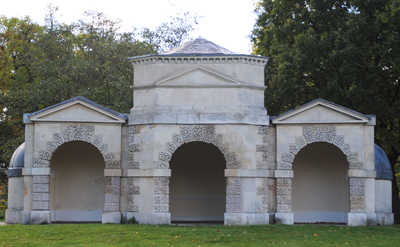
Located in Kensington Gardens, this neo-classical summer house was designed by William Kent for Queen Caroline (who was responsible for much of the shape of the gardens as they are now).

Standing amid naturalistic plantings overlooking the Long Water (which was among the features created at the order of Queen Caroline – consort of King George II), it was built in 1734-35 and designed to be glimpsed down one of the avenues of trees which radiated out from the Round Pond in front of Kensington Palace.

The Grade II-listed ‘temple’, which features graffiti inside dating back until 1821, was later converted to a park keeper’s home but restored to its use as a summer house in 1976.

Kent apparently also designed a second summer house for Kensington Gardens which revolved – it stood on a 13 metre high mound constructed by Kent’s predecessor Charles Bridgeman using spoil from the excavation of the Serpentine in the south-eastern corner of the gardens (the summer house was later demolished and the mound levelled).

Not the most prominent feature of the gardens but like the much later Princess Caroline’s Bath in Greenwich Park (see our earlier post here), it does have an important royal connection and is worthy of a stop when visiting the gardens.

WHERE: Kensington Gardens (nearest tube stations are that of Queensway, Bayswater, Lancaster Gate, South Kensington, Gloucester Road and Kensington High Street); WHEN: 6am to dusk; COST: Free; WEBSITE: www.royalparks.org.uk/parks/kensington-gardens.

8 structures from the London that never was – 3. Sir John Soane’s royal palace…

Prolific early 19th century architect Sir John Soane designed many public buildings in London including, famously, the Bank of England (since considerably altered) and the somewhat revolutionary Dulwich Picture Gallery. He also designed a number that were merely fanciful works and never commissioned nor constructed.

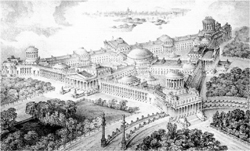
Royal-PalaceForemost among them was a sprawling royal palace which would occupy part of Green Park off Constitution Hill.

While Soane had been designing royal palaces as far back as the late 1770s when in Rome on his Grand Tour, in 1821 he designed one, apparently as a new home for the newly crowned King George IV.

Birds-eye view drawings show a triangular-shaped palace with grand porticoes at each of the three corners as well as in the middle of each of the three sides. Three internal courtyards surround a large central dome.

Despite Soane’s hopes for a royal commission, the king appointed John Nash to the job of official architect and so Soane’s palace never went any further than the drawing board.

He also designed a grand gateway marking the entrance to London at Kensington Gore through which the monarch would travel when heading to the State Opening of Parliament in Westminster – it, too, was never realised.

 PICTURE: Wikipedia

This Week in London – Hogarth cartoons; Daniel O’Connell blue plaque; and, Peder Balke paintings on show…

The works of famed 18th century chronicler of London, William Hogarth, are on show at the Cartoon Museum in Bloomsbury. Marking the 25oth anniversary of his death on the night of 25th/26th October, 1764, the display Hogarth’s London features more than 50 of the artist’s best known satirical prints including A Harlot’s Progress, A Rake’s Progress, The Four Times of Day, Industry and Idleness and Gin Lane and Beer Street. A series of events – including an evening of Baroque dance & music, gin, beer and cartooning on 28th November – accompanies this exhibition which runs until 18th January and is supported by The William Hogarth Trust. Admission charge applies. For more, see www.cartoonmuseum.org/exhibitions/current-exhibitions/hogarth-s-london.

Nineteenth century Irish political leader Daniel O’Connell has been honoured with an English Heritage blue plaque as his former London home. Known as ‘The Liberator’, O’Connell was an abolitionist who successfully campaigned for civil and Catholic rights – including the right for Catholics to sit in the British Parliament. The first popularly elected MP since the Reformation, he lived in the property at 14 Albermarle Street in Mayfair with his family for several months in 1833 – a year in which a number of his supporters were elected to the House of Commons and in which the act to abolish slavery was given royal assent. For more, see www.english-heritage.org.uk/discover/blue-plaques/.

On Now: Peder Balke. The first ever UK exhibition focused on the paintings of this 19th century Norwegian artist is underway at the National Gallery on Trafalgar Square. Held in conjunction with the Northern Norway Art Museum, the exhibition features more than 50 paintings, the majority of which have never been seen in the UK before. The display includes works from across Balke’s career, including The Tempest (c 1862), the only painting by a Norwegian artist in the gallery’s collection. This free exhibition runs in the Sunley Room until April. For more, see www.nationalgallery.org.uk.

Send all items for inclusion to exploringlondon@gmail.com.

8 structures from the London that never was – 1. A pyramid in Trafalgar Square…

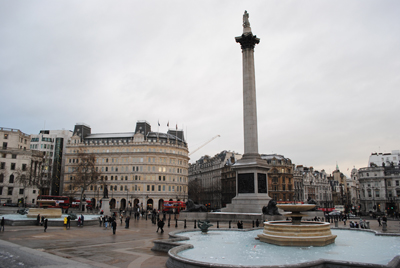
Trafalgar-Square

It’s Trafalgar Square but not as we know it. In a new Wednesday series we’re looking at eight proposed structures in London that were never realised and first up, is a proposal which would have seen a 300 foot high pyramid on what has become one of the city’s most iconic sites.

The stepped pyramid was the brainchild of an early 19th century Tory MP, Colonel (later General) Sir Frederick William Trench, and was designed in 1815 as a grand military and naval memorial to the Napoleonic Wars with each of the structure’s 22 steps apparently dedicated to a different year of the war.

Apparently drawn up by architects Philip and Matthew Cotes Wyatt – of the famous Wyatt architectural dynasty, the pyramid – which would have been taller than St Paul’s Cathedral and pretty much covered the entire space now occupied by the square – was, according to Nick Rennison’s The Book of Lists, costed at £1 million, a figure Sir Frederick – a veteran of the wars – apparently thought was not unreasonable.

But it didn’t prove a popular design with the public and got no further than the drawing board.

Among Sir Frederick’s other unrealised dreams was an elevated railroad running between London and Hungerford Bridges, an immense new royal palace which would have covered much of the West End, and an embankment – ‘Trench’s Terrace’ – along the north bank of the Thames. An embankment was, of course, later built, but not until after his death in 1859.

Lost London – The Devil Tavern…

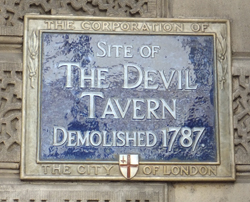
Famous as the home of the Apollo Club, the Devil – more completely the Devil and St Dunstan or The Devil and the Saint, thanks to its sign which showed the saint tweaking the Devil’s nose with pincers – was a Fleet Street institution.

The-Devil-TavernLocated at number 2, Fleet Street close to the Temple Bar, the tavern’s origins date back to at least 16th century but it was Elizabethan playwright Ben Jonson who made it home to the literary dining club known as the Apollo Club (the moniker comes from the name of the room in the tavern in which the club was located).

As well as Jonson, members of the club are said to have included William Shakespeare, Jonathan Swift, Alexander Pope and Dr Samuel Johnson. Samuel Pepys is also said to have frequented the tavern.

A bust of Apollo was mounted over the door to the room and a verse of welcome on the wall – they apparently still exist inside the bank of Child & Co (now part of the Royal Bank of Scotland) which now occupies the site on which the tavern once stood. The ‘rules’ of the club – which have been penned by Jonson – also apparently hung over the fireplace (and the name of the club lives on in Apollo Court over the road).

The tavern is also noted for its associations with ‘Mull Sack’ (aka chimney sweep turned 17th century highwayman John Cottington) and hosted concerts and other important gatherings including that of the Royal Society which held its annual dinner here in 1746.

It was demolished in the 1787 when the site was annexed by the neighbouring bank. A plaque can now be seen on the bank’s wall in Fleet Street.

PICTURE: Open Plaques

LondonLife – Admiral Arthur Phillip honoured in Westminster Abbey…

Admiral-Arthur-PhillipA memorial to Admiral Arthur Phillip, described as the “father of modern Australia”, was unveiled in Westminster Abbey back in July. Admiral Phillip (1738-1814) commanded the ‘First Fleet’ which left the UK in 1787, transporting convicts and military to the new colony Phillip founded as New South Wales. Prince Phillip, the Duke of Edinburgh, attended the memorial’s dedication service on 9th July which was conducted by the Dean of Westminster, Dr John Hall, who credited Admiral Phillip – a “modest, yet world-class seaman, linguist and patriot”- with laying the foundations “on which was developed the Commonwealth of Australia”. Among other dignitaries who attended was Dame Marie Bashir, the Governor of the Australian state of New South Wales, who described Admiral Phillip as “enlightened, far-sighted and indeed humane” and paid tribute to his attempts to actively foster harmonious relations with the Aboriginal people. Carved from Sydney sandstone, the memorial is set in the floor of the nave of the minster close to memorials of David Livingstone, Thomas Cochrane and Isaac Newton. The memorial stone is among a number of projects around Britain instigated by the Britain-Australia Society to mark the bicentenary year of Admiral Phillip’s death. For more on the abbey, see www.westminster-abbey.org. PICTURE: Andrew Dunsmore/Westminster Abbey.

A Moment in London’s History – The landing of King George I at Greenwich…

GreenwichFollowing on from the last moment in London’s history which looked at the death of Queen Anne, we pause a moment to look at the day 300 years ago – 18th September, 1714 – when her successor, King George I, landed at Greenwich as he arrived to take up his new throne.

There was apparently thick fog when the Elector of Hanover made his way up the Thames accompanied by a flotilla of boats carrying his family and entourage including 18 cooks as well as his mistress, Ehrengard Melusine von der Schulenburg, and his half-sister Sophia Charlotte von Kielmansegg (known rather nastily among English courtiers as the “Maypole” and the “Elephant”).

He landed at the water gates of the Sir Christopher Wren-designed Royal Hospital for Seamen, now known as the Old Royal Naval College, in Greenwich (pictured above) but when the waiting crowds cheered the disembarking king, it was a case of mistaken identity. In fact, they were cheering his son, George Augustus (and future King George II) and by the time the king actually disembarked, much of the crowd had already dissolved, leaving a much smaller – and probably disappointing – gathering to welcome him.

The arrival of the king – a re-enactment of which took place at the ORNC last week – is depicted in a painting in the upper part of the the college’s Painted Hall. The work of artist James Thornhill, it depicts the king wearing Roman costume riding a chariot and appears alongside a figure of St George defeating the dragon (who, of course, stood for the papacy and family of the deposed King James II).

The Painted Hall also features a family portrait of the new Royal Family, excluding George’s wife Sophia Dorothea who was imprisoned in Germany at the time following allegations of infidelity. The future King George II is featured with his back to the king in reference to the hostility between the two of them.

The ORNC is currently looking to raise £5.5 million to conserve Thornhill’s paintings following a restoration of the Painted Hall in 2013. For more details, head to www.ornc.org/support/current/conserve-the-painted-hall.

Treasures of London – Geffrye almshouses…

GeffryeIt’s a big year for the Geffrye Museum in Shoreditch – not only 300 years since the almshouses were first opened to house the poor and elderly, it’s 100 years since the almshouses were converted into the museum which now occupies the site.

Geffrye2With that in mind, we thought we’d take a look at the almshouses themselves (we’ve looked at the museum – which features 11 period rooms from the 17th to 20th centuries – a couple of times previously). The Grade I-listed almshouses were built in 1714 by the Worshipful Company of Ironmongers, using funds that had been bequeathed to them by Sir Robert Geffrye, a Cornishman who became twice-master of the company and a Lord Mayor of London (there’s a fine statue of him adorning the front of the building).

They comprised 14 houses, each of which had four rooms, and provided accommodation for up to 56 pensioners. Arranged in a U-shape around a courtyard, the two storey almshouses came complete with a chapel which still stands at the centre of the the complex and where residents were expected to attend each week (a walkway which runs around the back of the chapel was added in 1914 offers some great views of the garden).

The almshouses, which had originally been built in what was a largely rural context, remained in use until the early 20th century by which time the area had become one of London’s most crowded with poor sanitation. In 1910, the Ironmongers’ decided to sell off the almshouses and move out to the safer, cleaner area of Mottingham in Kent.

In 1912, the houses and gardens were purchased by the London County Council – attracted by the public open space – and following representations from members of the Arts and Crafts movement, the museum opened its doors in 1914.

It’s still possible to visit a former almshouse – number 14 –  which was restored and opened in 2002 and has been furnished to show what life was like there for the pensioners (contrast the sparse furnished there with that with some of the more opulent rooms on display in the museum – and don’t forget to allow some time to visit the gardens; there is also a shop and cafe on site).

WHERE: 136 Kingsland Road, Shoreditch. Nearest tube is Liverpool Street or Old Street (a fair walk) or Hoxton Overground Station (next door); WHEN: The almshouses are open on select days only – check website. The museum is open Tuesdays to Sundays, 10am-5pm (gardens open until 31st October); COST: £3 for admission to  almshouses/admission to the museum and gardens is free; WEBSITE: www.geffrye-museum.org.uk