Where’s London’s oldest…ice skating rink?

The ice skating season is upon us so we thought it timely to take a look at where the oldest rink is located.

QUEENS: Skate, Dine, Bowl at 17 Queensway in Bayswater houses what’s generally said to be the oldest surviving ice skating rink in London, having opened its doors as QUEENS Ice Club on 3rd October, 1930.

It was the work of architect and entrepreneur Alfred Octavius Edwards who apparently had a passion for ice skating.

It was apparently the first rink used by the BBC for televised ice skating and a number of world and Olympic champions have skated here.

The establishment underwent a revamp a couple of years ago (although bowling lanes were added as far back as 1994) and now features a wide range of amenities including, as well as the ice rink, bowling lanes, a vintage games arcade and bars and a diner. For more on Queens, see https://queens.london.

Ice-skating. PICTURE: rawpixel/Unsplash


This Week in London – Kew gets all Christmassy; Thomas Gainsborough’s family; and, William Heath Robinson and home life…

Christmas at Kew kicks off tonight with the garden landscape once again transformed into a spectacular light and sound show. Highlights from this year’s display include a ‘Field of Light’ by Brighton based artists Ithaca which reaches across the landscape towards the newly restored Great Pagoda, a laser garden by Australian studio Mandylights, 300 illuminated origami boats floating on Kew’s lake in an installation by Italian artists Asther & Hemera, ‘Firework Trees’ lit up by explosions of coloured light, a seven metre tall Cathedral of Light, a fire garden and “enchanted walkway” of giant glowing peonies and papyrus by French artists TILT and, of course, the famous Palm House finale which brings the giant glasshouse to life with a show featuring criss-crossing laser beans, jumping jets of light and kaleidoscopic projections playing across a giant water screen. Santa and his helpers can be found along the trail and there is a festival fairground with a Victorian carousel as well as food and drink at a range of stalls in Victoria Plaza. Runs from 5pm on select dates until 5th January. Admission charge applies. For more, head to www.kew.org/christmas. PICTURE – Below: The Fire Garden/Raymond Gubbay Ltd (RBG Kew).

All 12 surviving portraits of celebrated 18th century artist Thomas Gainsborough’s daughters have been brought together for the first time in a major new exhibition at the National Portrait Gallery. Gainsborough’s Family Album depicts the development of the Gainsborough girls from playful young children to fashionable adults with highlights including The Artist’s Daughters chasing a Butterfly (c1756) and The Artist’s Daughters with a Cat (c1760-1) as well as the little seen double full-length of Mary and Margaret Gainsborough as young women (c1774). More than 50 works are included in the display and a number have never been seen in the UK before. The latter include an early portrait of the artist’s father John Gainsborough (c 1746-8) and a drawing of Thomas and his wife Margaret’s pet dogs, Tristram and Fox. The display traces the career of the artist (1727-88) who, despite his passion for landscapes, painted more portraits of his family members than any other artist of the time or earlier. Together they form an “unusually comprehensive” visual record of an 18th century British kinship network, with several of its key players shown more than once at different stages of their lives. The exhibition runs until 3rd February. Admission charge applies. For more, see www.npg.org.uk.

Artist William Heath Robinson and his fascination with domestic life is the subject of a new exhibition opening at the Heath Robinson Museum in Pinner on Saturday. Heath Robinson’s Home Life centres on the fact that from about 1930 onwards, the artist’s humour was centred on domestic life including the construction of his house, ‘The Gadgets’, at the Ideal Home Exhibition of 1934 and the release, from 1936, of the first of his ‘How to’ books, How to Live in a Flat. The display features an early series of “Ideal Home” cartoons published in 1933 and rare photographs of ‘The Gadgets’ under construction at the Ideal Home Exhibition. There’s also original artwork from How to Live in a Flat and examples of a set of nursery china that he designed for a Knightsbridge department store in 1927. Runs until 17th February. Admission charge applies. For more see www.heathrobinsonmuseum.org.

Send all items for inclusion to exploringlondon@gmail.com

LondonLife – Brompton’s new memorial for those lost in World War I…


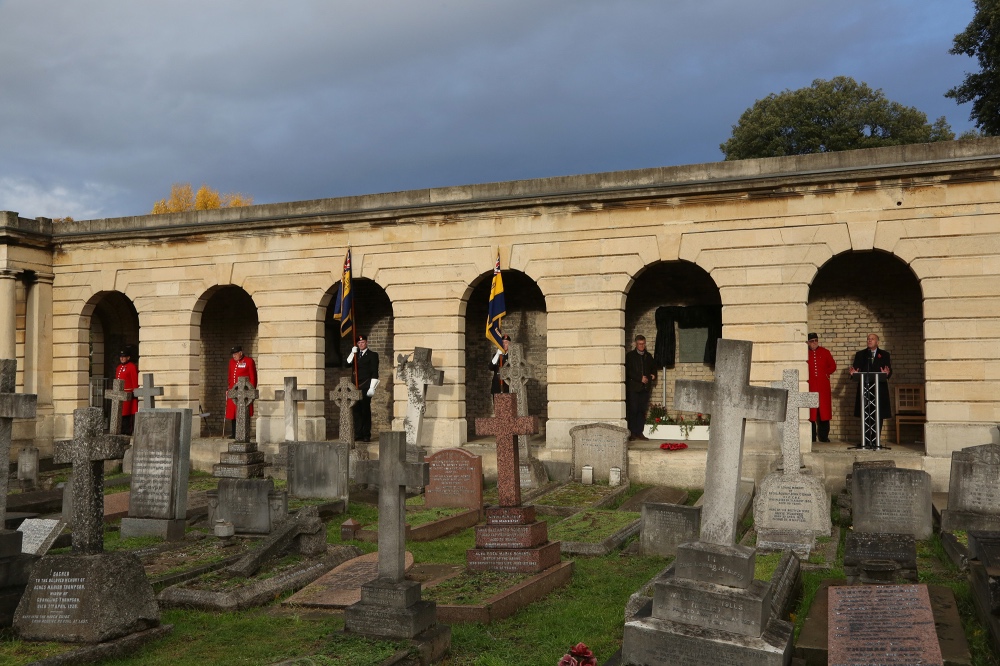
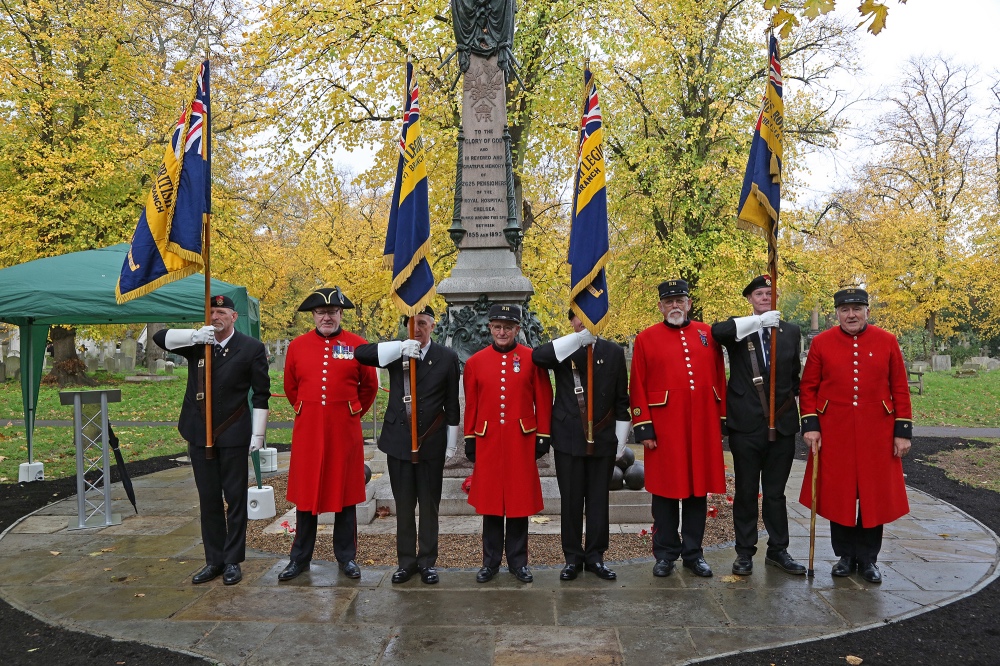
A new permanent World War I memorial was unveiled at Brompton Cemetery earlier this month dedicated to the 24 members of the Royal Parks and Palaces staff who died in the Great War. The inscribed memorial stone, placed on one of the chapel’s colonnades (pictured above), also commemorates all the parks, gardens and grounds staff from across the UK who never returned from the war. It was unveiled at a service conducted by Reverend Canon Anthony Howe, Chaplain to the Chapel Royal at Hampton Court Palace, the gardens of which were managed by the Royal Parks during World War I. Meanwhile, the foundations for a new permanent wildflower meadow honouring the 2,625 Chelsea Pensioners buried in the cemetery were also laid near the Chelsea Pensioners’ monument (pictured below). The meadow will feature flowers which appeared in French fields after the Battle of the Somme including poppies, cornflowers, loosestrife, mallow and cranesbill. Two benches, positioned to either side of the Grade II-listed memorial, have been donated by the Royal Hospital Chelsea as a place for quite reflection. For more on the cemetery, see www.royalparks.org.uk/parks/brompton-cemetery. PICTURE: The Royal Parks/Paul Keene.

Treasures of London – Cavalry Memorial…

With World War I commemorations taking place last weekend, so we thought it fitting to take a look at one of the city’s memorials.

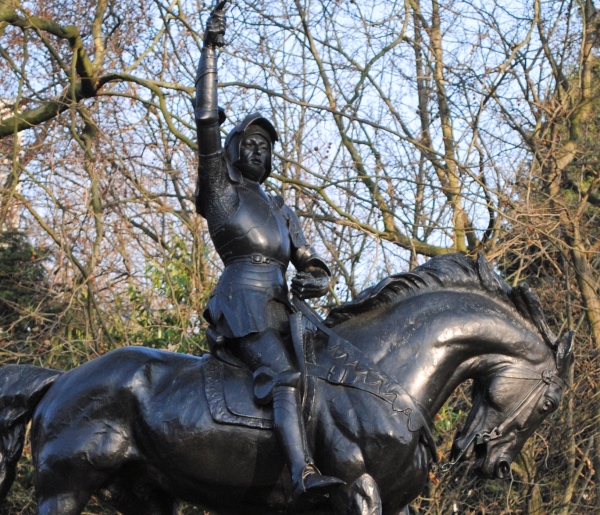
Located in Hyde Park, the Cavalry Memorial (also known as the Cavalry of the Empire Memorial), which commemorates the more than 4,000 members of the cavalry regiments killed during the “Great War”, depicts St George (patron saint of cavalry), shown as a knight, triumphing over the defeated dragon coiled beneath his horse’s hooves.

It’s said that St George was modelled on 1454 bronze effigy of Richard de Beauchamp, 13th Earl of Warwick, and that the horse was adapted from a 15th century engraving by Albrecht Dürer.

The pedestal underneath is decorated with a frieze of galloping horsemen from different countries within the Empire and the statue is accompanied by a stone backdrop, originally designed to shield the statue from Park Lane, upon which are bronze plates listing cavalry units from across the British Empire that served in World War I along with the names of the four cavalry officers who became field marshals – Haig, French, Allenby and Robertson.

Designed by army vet Captain Adrian Jones, the bronze sculpture was made from guns captured during the war (Jones also sculpted the Quadriga atop Wellington Arch on Hyde Park Corner). The Portland stone pedestal was designed by Sir John Burnet.

The Grade II*-listed memorial, which was proposed in 1920, was originally unveiled by Field Marshal John French, 1st Earl of Ypres and the Prince of Wales (later Edward VIII) on 21st May, 1924.

It was originally located at Stanhope Gate but was moved to its present site to the west, near the bandstand, in 1961 after Park Lane was widened.

For more on Hyde Park, see www.royalparks.org.uk/parks/hyde-park.

For more World War I memorials in London, see our previous special series here.

LondonLife – Remembrance Sunday marks 100 years since the guns fell silent…

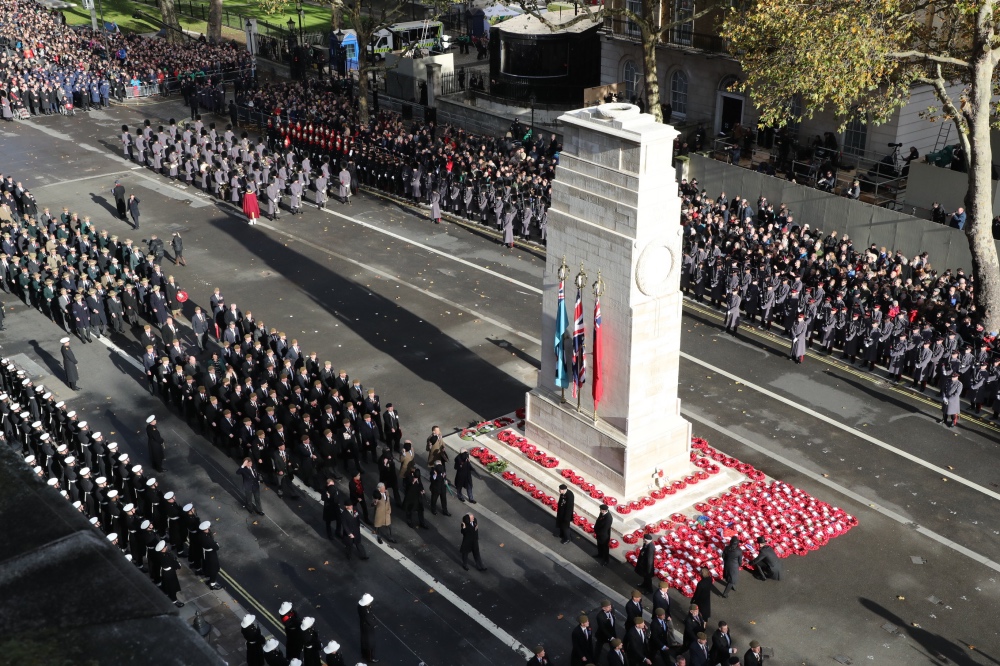
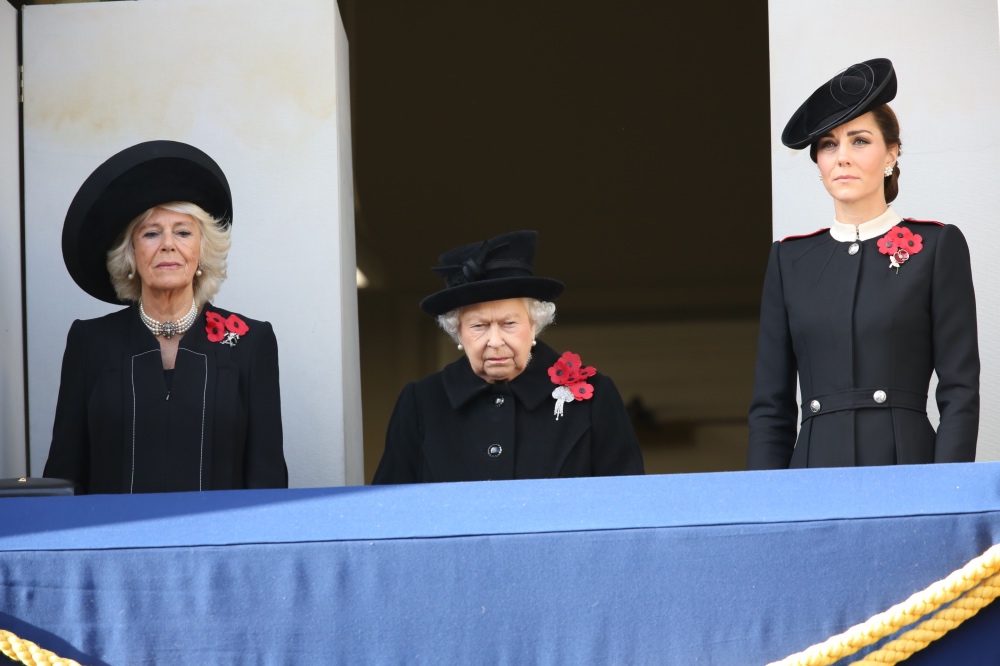
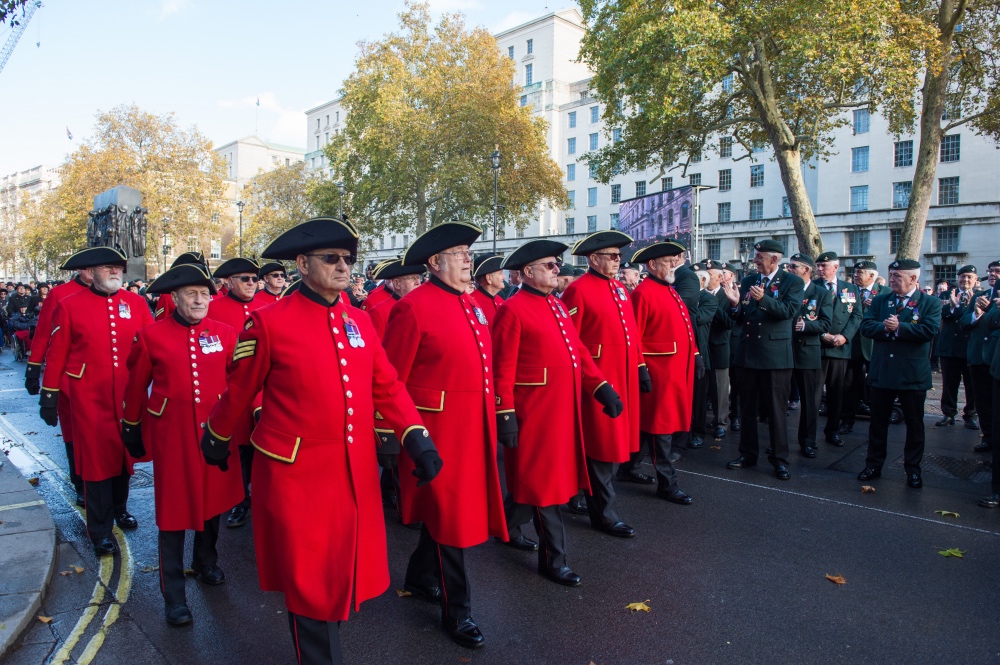
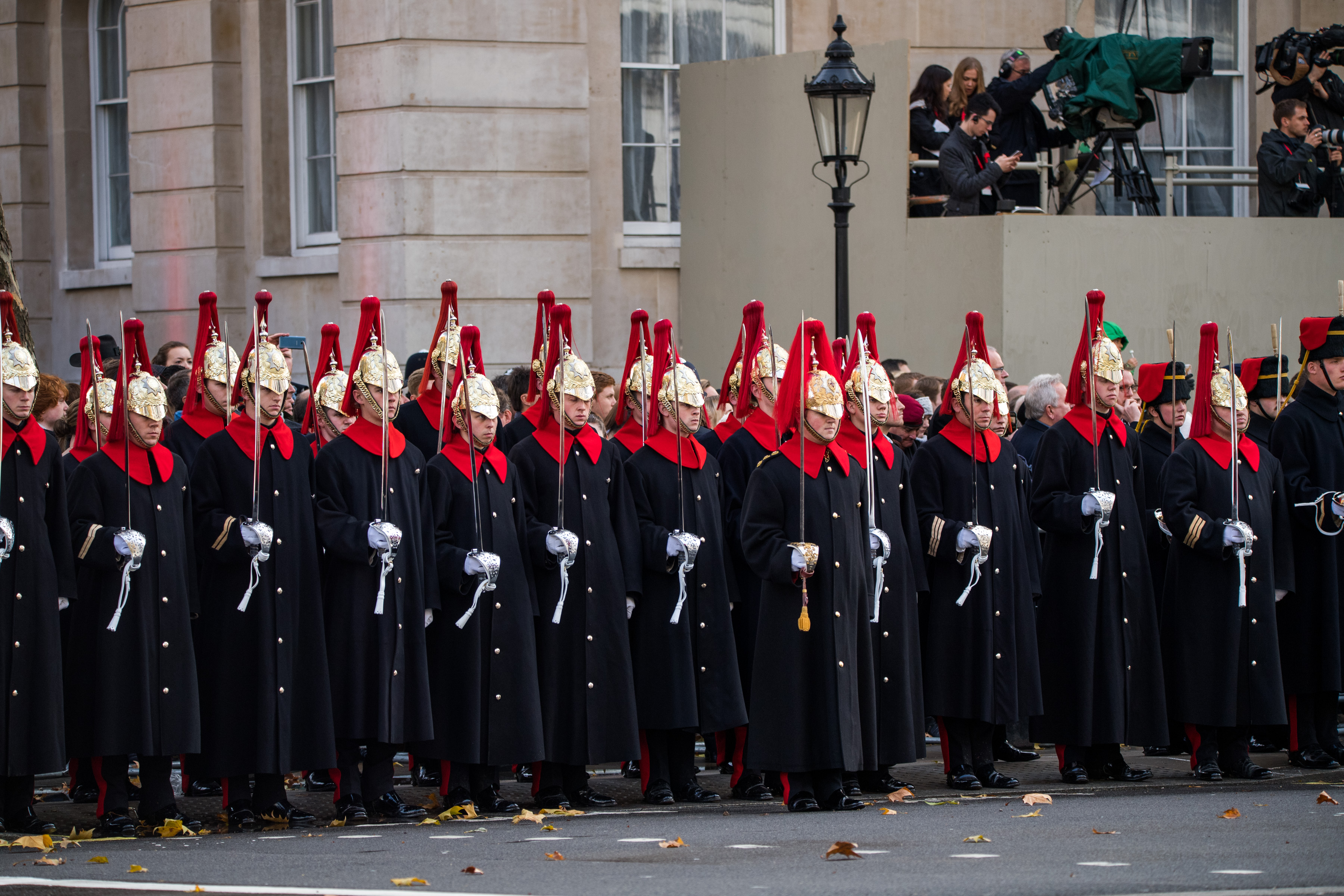
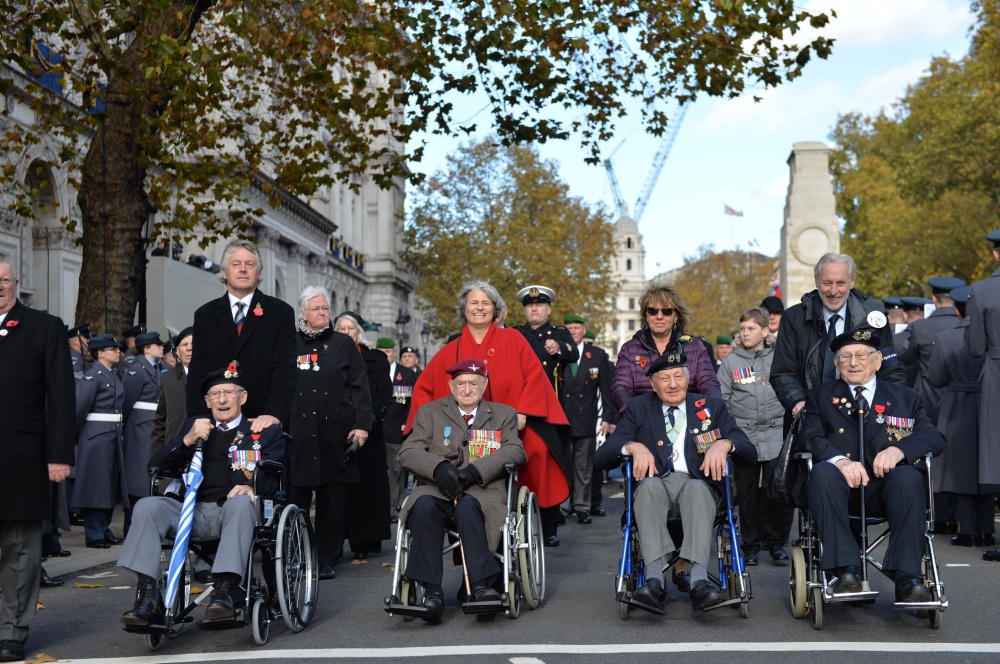
Thousands of people, including Queen Elizabeth II and members of the Royal Family, attended Whitehall on Sunday to take part in the National Service of Remembrance, this year marking 100 years since the end of World War I. The event included two minutes silence at 11am and wreaths were laid at the base of the Cenotaph to commemorate the servicemen and women killed in all conflicts from the World War I onwards. In an historic first, German President Frank-Walter Steinmeier laid a wreath during the ceremony. Following the service, a procession involving 10,000 members of the public who were selected by a ballot marched past the monument and through London. ALL PICTURES: Crown Copyright/Ministry of Defence.

LondonLife – The Tower remembers…

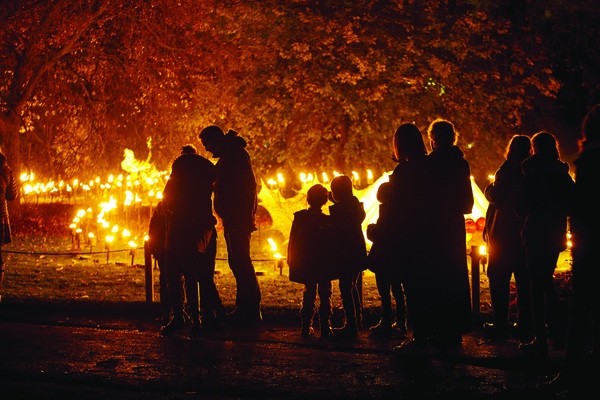
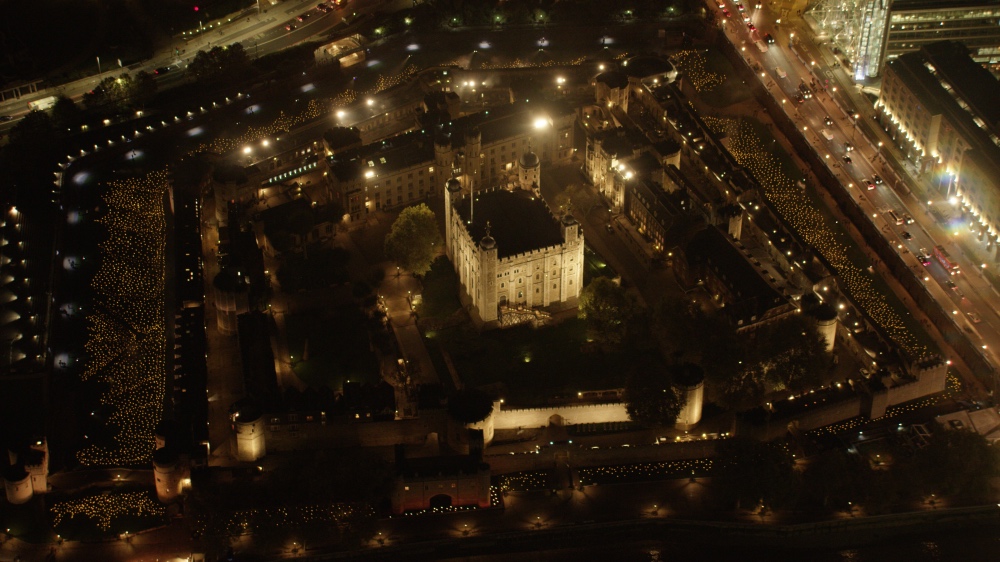
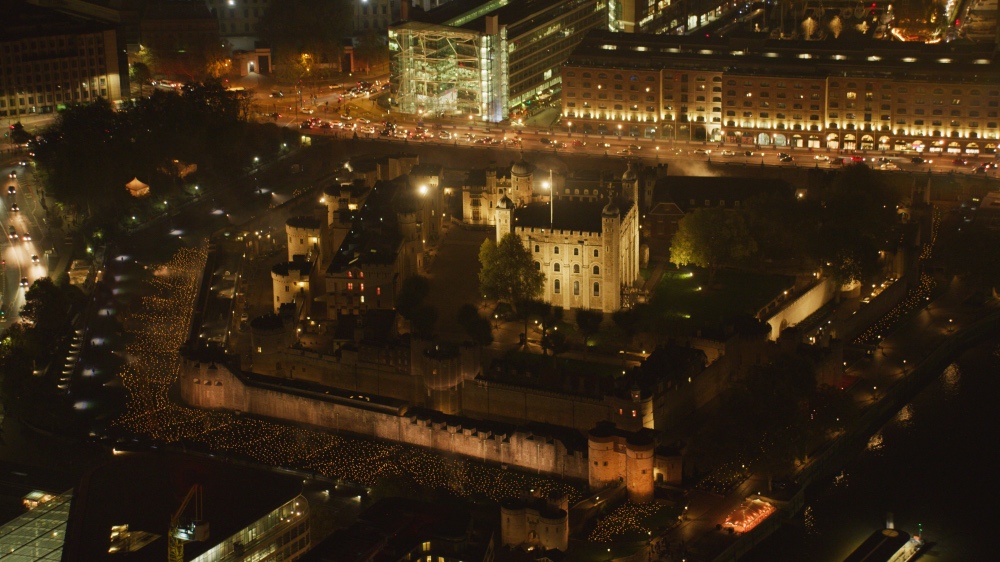
Thousands of flames have filled the moat at the Tower of London as part of a moving light and sound display marking the centenary of the end of World War I. Beyond the Deepening Shadow: The Tower Remembers evolves over four hours each night as the moat gradually fills with flames accompanied by a specially commissioned sound installation exploring the shifting political alliances, friendship, love and loss in a time of war. At the heart of the sound installation is a new choral work featuring the words of war poet Mary Borden taken from her Sonnets to a Soldier. The display, which can be seen at the Tower every night from 5pm to 9pm until Armistice Day on Sunday, 11th November, starts with a solemn procession led by the Tower’s Yeoman Warders who ceremonially light the first flame and then gains pace as volunteers slowly light up the rest of the installation. It’s free to view from Tower Hill and the Tower concourse. For more, see www.hrp.org.uk/tower-of-london/explore/the-tower-remembers/. PICTURES: © Historic Royal Palaces (click on the images to enlarge).

London Pub Signs – The Falcon, Battersea…


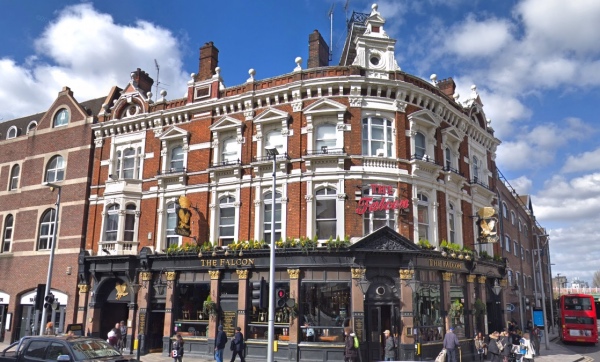
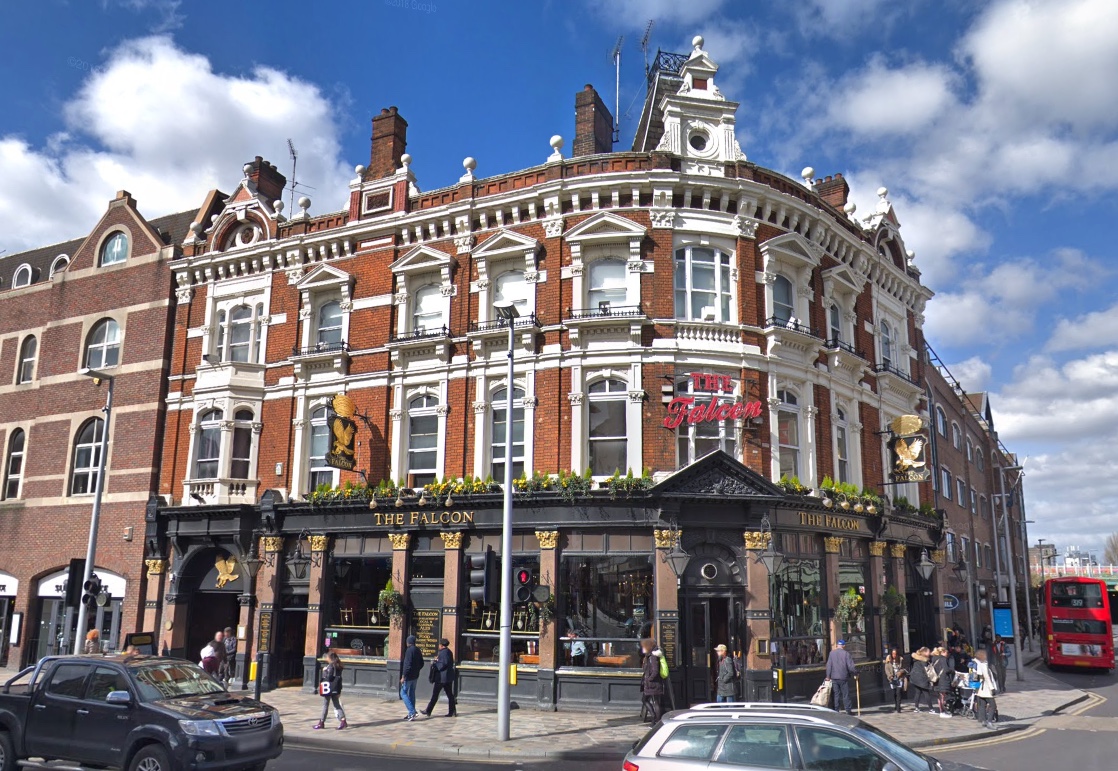
This Battersea pub’s name comes from its location on land which formerly belonged to the manor of Battersea.

Located at 2 St John’s Hill (on the corner with Falcon Road, close to Clapham Junction train station), the manor was, from the 17th century, in the possession of the St John family (hence the name of the street in which it’s located).

The family crest of the St Johns features a falcon, and so we have The Falcon pub (and, of course, Falcon Road).

A pub has been located at the site for centuries (at least since 1733) but the current Grade II-listed red brick building dates from the 1896 when it was constructed as a purpose-built hotel (with a billiard room added to the rear a few years later).

Interestingly, the pub, which has a 360 degree bar apparently partly designed by renowned Dutch artist MC Escher, once held the Guinness World Record for having the longest pub counter in England.

Other interior features include a stained glass window featuring a falcon from the St John family crest.

It’s not the only pub named The Falcon in the area – there’s another (this one’s bright yellow) pub at Clapham North with the same name.

For more, see www.nicholsonspubs.co.uk/restaurants/london/thefalconclaphamjunctionlondon.

PICTURE: Google Maps/Streetview

This Week in London – The Regent Street Motor Show; four plant exhibitions at Kew; and photographer Roman Vishniac re-examined…

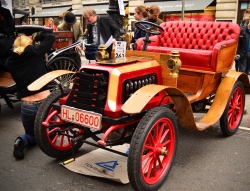
The largest free-to-view motor show in the UK comes to Regent Street on Saturday showcasing vehicles from the past 125 years. The Illinois Route 66 Regent Street Motor Show, the key event in the Royal Automobile Club’s London Motor Week, features more than 100 pioneering vehicles, some of which date from pre-1905, which parade in a Concours d’Elegance judged by Alan Titchmarsh. There will also be retro F1 and Le Mans racers, “celebrity” vehicles such as ‘Herbie’ and the time-travelling DeLorean from the Back to the Future film franchise while manufacturers such as Renault and Triumph will be displaying their latest designs. Iconic US street machines on show as part of the Visit Illinois display will include a Ford Thunderbird, Dodge Charger, Pontiac Trans-Am, 1957 Chevy Pick-up and a pair of Harley Davidson Sportsters. There’s also activities for children including a state-of-the-art display by Scalextric. Among the anniversaries being marked at the show are the 80th anniversary of the Volkswagen Beetle and Jaguar anniversaries including the 70th anniversary of the XK120 and Mk C Saloon and the 50th anniversary of the XJ. Held on Regent Street between Oxford Circus and Piccadilly Circus, the free show runs from 10.30am to 4pm. For more, head to http://regentstreetmotorshow.com. PICTURE: One of the vehicles on show in 2011 (Garry Knight; licensed under CC BY 2.0)

A series of vibrant Japanese woodblock prints of orchids, first published in 1946, are on show at the Shirley Sherwood Gallery of Botanical Art at Kew Gardens. One of four art exhibitions currently on display as part of the gallery’s 10th anniversary, Rankafu: Masterpieces of Japanese Woodblock Prints of Orchids is believed to be the first major exhibition of Rankafu woodblock colour prints outside Japan. Other exhibitions showing simultaneously at the gallery feature a series of 20 highly intricate graphite drawings of veteran oaks by Mark Frith, a series of works focusing on the smaller details of trees such as leaves, seeds and fruit, and a display of the work of Pandora Sellars whose complex compositions have been described as “botanical theatre”. The four exhibitions can be seen until 17th March. Admission charge applies. For more, see www.kew.org.

The first UK retrospective of Russian-born American photographer Roman Vishniac (1897-1990) has opened simultaneously at the Jewish Museum in Camden and The Photographers’ Gallery in Soho. Roman Vishniac Rediscovered spans his career from the early 1920s to the late 1970s and features his well-known images of Jewish life in Eastern Europe between the two World Wars. Other items on show include recently discovered vintage prints, rare and ‘lost’ film footage from his pre-war period, contact sheets, personal correspondence, original magazine publications, newly created exhibition prints and his high magnification photography known as ‘photomicroscopy’. Runs until 24th February. For more, see www.jewishmuseum.org.uk or www.thephotographersgallery.org.uk.

Send all items for inclusion to exploringlondon@gmail.com.

LondonLife – Scientific achievement celebrated in new Quentin Blake wall at the Science Museum

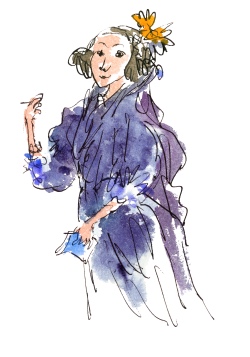
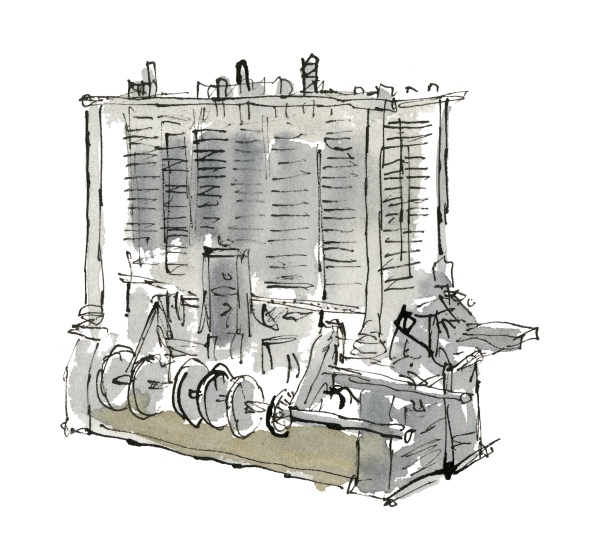
A new work by acclaimed illustrator Sir Quentin Blake has gone on show in the Science Museum in South Kensington. The work, which hangs on the external walls of Wonderlab: The Equinor Gallery, features five panels featuring some 20 women and men from the world of science of technology including the “enchantress of numbers”, mathematician Ada Lovelace (1815-1852 – pictured right; her ‘analytical machine’ is below), polymath Jagadis Chandra Bose (1858-1937) – the first scientist to use a semiconductor to detect radio waves, Sir Richard Arkwright (1732-1792) – pictured with his ground-breaking spinning machine, and pilot Amy Johnson (1903-1942) – pictured alongside the De Havilland Gipsy Moth in which she made the first solo flight from Britain to Australia. London-born Blake, who had his first cartoons published in Punch when just 16-years-old, is most famous for his illustrations in children’s books including in works by Roald Dahl and David Walliams. For more on the Science Museum, head to www.sciencemuseum.org.uk.

LondonLife – World War I remembered in St James’s Park…


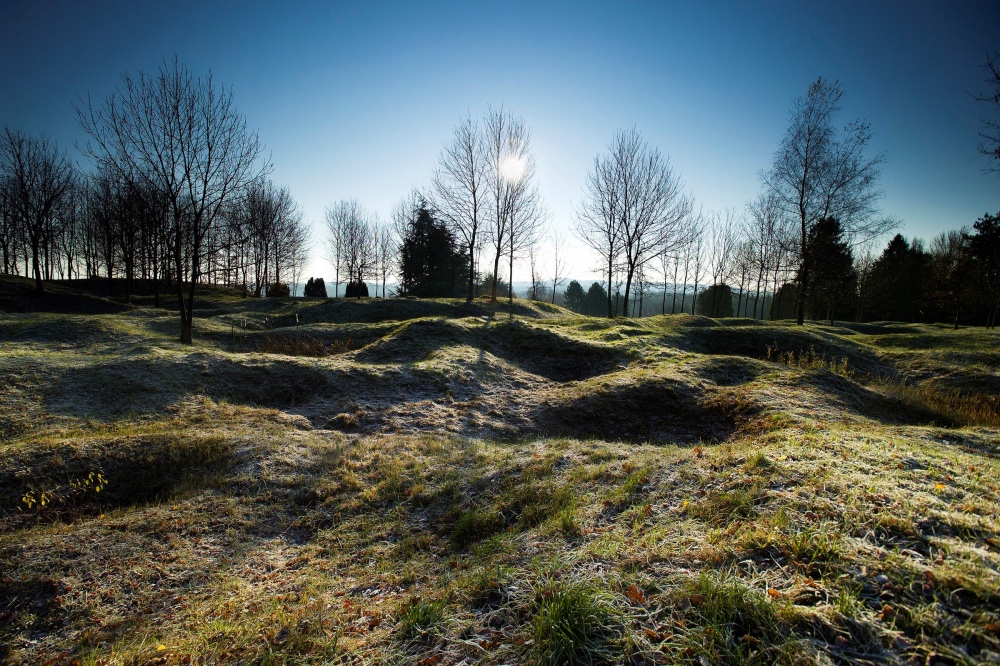
The last in a series of major exhibitions on World War I by celebrated photographer Mike St Maur Sheil, Fields of Battle, Lands of Peace and Reconciliation – 2018 is a free outdoor exhibition in St James’s Park reflecting on the final year of the war. The exhibition, like the others before it, features photographs of the battlefields of World War I as they appear today along with archival pictures and maps. Mike St Maur Sheil says the theme of his displays – which have reached an audience of more than 10 million and been exhibited at locations including Paris’ Jardin du Luxembourg, Dublin’s St Stephen’s Green and at the junction of Broadway and 5th Avenue in New York – “has always been that time and nature have healed the wounds of war and reveal that what were once places of horror and killing have now become landscapes of beauty and tranquillity.” The free exhibition can be seen until 19th November. For more on St James’s Park, see www.royalparks.org.uk/parks/st-jamess-parkPICTURES – Two of the images on show: Top, showing the effect of artillery bombardment upon the landscape at Verdun; Below, the landscape today at Beaumont Hamel on the Somme with the shell holes and trenches still clearly visible. (Mike St Maur Sheil / Mary Evans Picture Library).

What’s in a name?…Bishopsgate…

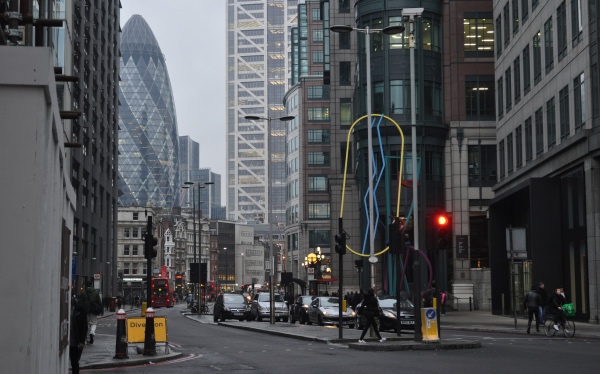
This major London thoroughfare (and ward of the City of London) owes its name to one of the eight former gates of the City of London – that’s right, Bishopsgate.

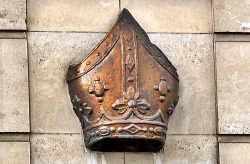
Located at what’s now the junction with Wormwood Street (and marked by a mitre which appears on a building there), the gate was the departure point for Ermine Street which ran from London to Lincoln and York.

The gate and hence the road – which runs northward from the intersection of Gracechurch Street and Cornhill to where it becomes Norton Folgate Street (which links into Shoreditch High Street) – is believed to have been named for the 7th century Bishop Erkenwald (Earconwald). It was he who apparently first ordered its reconstruction on the site of a former Roman gate.

By Tudor times, the street had become known for the mansions of rich merchants – among those who had their homes here were Sir Thomas Gresham, Sir John Crosby and Sir Paul Pindar (Crosby Hall was later re-erected in Chelsea and the facade of Sir Paul Pindar’s house, is in the V&A). The street also become known for its many great coaching inns, all of which were eventually demolished.

Bishopsgate was the first street in London to have gas lighting when it was introduced about 1810 and, about 1932, became the first in Europe to have automated traffic lights (at the junction with Cornhill).

The City of London ward straddles the site of the old London wall and gate and is accordingly divided into “within” and “without” sections.

While there are a number of churches associated with the street – St Ethelburga Bishopsgate, St Helen’s Bishopsgate and St Botolph-without-Bishopsgate, these days it is largely lined by office buildings including the former NatWest Tower. Other notable buildings include that of the Bishopsgate Institute and the busy Liverpool Street Station is also accessible from Bishopsgate.

The name Bishopsgate is also synonymous with an IRA truck bombing which took place in the street on 24th April, 1993, in which one man was killed and 44 injured.

PICTURE: Top – Looking southward along Bishopsgate in 2014. (stevekeiretsu; licensed under CC BY-NC 2.0); Right – The Bishop’s mitre marking the location of the former gate (Eluveitie/ licensed under CC BY-SA 3.0).

Treasures of London – The Readymoney Drinking Fountain…

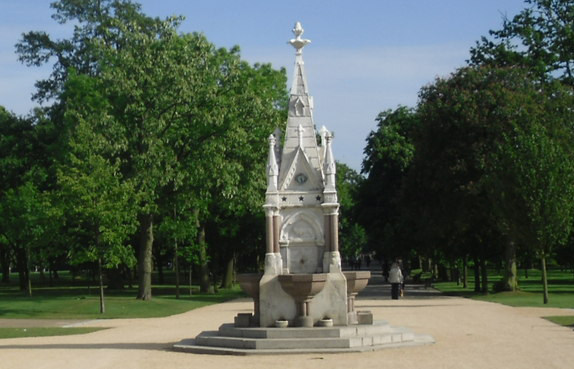
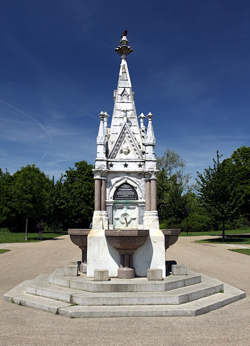
This gothic drinking fountain located in the centre of the Broad Walk in The Regent’s Park takes its name from Sir Cowasjee Jehangir, whose nickname, thanks to his business success, was ‘Readymoney’.

A wealthy industrialist from Bombay, Sir Cowasjee donated the four-sided fountain to the park in 1869 as a thank-you for the protection he and fellow Parsees received from British rule in India (hence why the fountain is also sometimes called the Parsee Fountain).

Made from 10 tonnes of Sicilian marble and four tonnes of red Aberdeen granite, it was designed by Robert Keirle – architect to The Metropolitan Free Drinking Fountain and Cattle Trough Association – and made by sculptor Henry Ross (at a cost of £1,400).

Set on an octagonal stepped base, it features a basin on each of the four sides. Decorative elements above the basins include carved marble panels featuring a lion and a Brahmin bull.

Three of the gables feature a small bust – one of Queen Victoria, another of Prince Albert and another of Readymoney himself. The fourth has a clock instead.

The now Grade II-listed fountain was erected by the Metropolitan Drinking Fountain and Cattle Trough Association and unveiled by Princess Mary of Teck (later Queen Mary, wife of King Edward VII) on 1st August, 1869 (she also has some gardens in the park named after her).

The fountain was restored in 1999-2000 and again in 2016-17. The water no longer flows but it remains as a memorial to Sir Cowasjee’s story.

PICTURES: Top – Peter Smyly (licensed under CC BY-SA 2.0); Right – Chmee2 (licensed under CC BY-SA 3.0) Images cropped.

This Week in London – V&A’s new Photography Centre; ‘Women in Jazz’; and, Anna Albers retrospective…


The world’s first photographic experiments and earliest cameras, pictures by everyone from pioneer Julia Margaret Cameron to 20th century great Cecil Beaton, and a series of newly commissioned works by German photographer Thomas Ruff and American artist Penelope Umbrico are among attractions at the V&A’s new Photography Centre, the first phase of which opens tomorrow. Designed by David Kohn Architects, the new centre spans four galleries and more than doubles the space dedicated at photography at the South Kensington institution. The initial display, Collecting Photography: From Daguerreotype to Digital, includes more than 600 objects from across the world including seminal prints and negatives by pioneers like William Henry Fox Talbot and Cindy Sherman, 20th century greats like Alfred Stieglitz, Walker Evans and Irving Penn, and contemporary photographers like Hiroshi Sugimoto, Mary McCartney and Martin Parr. There’s a pioneering botanical cyanotype by Anna Atkins, images by the world’s first female museum photographer – Isabel Agnes Cowper, and motion studies by Eadweard Muybridge as well as camera equipment, photographic publications, original documents and a “digital wall” to showcase cutting-edge photo imagery. The opening is being accompanied by a three week ‘spotlight’ on photography across the V&A including talks, screenings, courses, workshops and other events. Entry to the new centre in the V&A’s North East Quarter is free. A second phase, including a teaching and research space, browsing library and studio and darkroom for photographer residencies, will open in 2022. For more, see www.vam.ac.uk. PICTURES: Top – Rendering of Gallery 99 in the new Photography Centre (© David Kohn Architects); Right – Hiroshi Sugimoto, Lightbody Fields 225, 2009, Gelaton silver print form a photogram (© Hiroshi Sugimoto, Victoria and Albert Museum).

The role women have played in the development of jazz music is the subject of a new exhibition at the Barbican Music Library in the City of London. Women in Jazz explores how social and political changes in the 20th century played a significant role in encouraging more female involvement in jazz and highlights the new generation of performers. The display includes photographs, journals, video and memorabilia from the National Jazz Archive. Opens on Tuesday and runs until 31st December. For more, follow this link.

The first major retrospective of textile artist Anna Albers (1899-1994) opens at the Tate Modern today. Anna Albers features her most important works – many shown in the UK for the first time – in a display including more than 350 objects including small-scale studies, large wall-hangings, jewellery made from everyday items, and textiles designed for mass production. It explores the many aspects of Albers’ practice including the intersections between art and craft hand-weaving and machine production as well as the artist’s writings, including The Pliable Plane: Textiles in Architecture (1957), On Designing (1959) and On Weaving (1965). Berlin-born Albers was a student at the Bauhaus in the 1920s and there began working with textiles – later taking her talent to the US and making many visits to Central and South America. The exhibition in the The Eyal Ofer Galleries runs until 27th January. Admission charge applies. For more, see www.tate.org.uk.

Send all items for inclusion to exploringlondon@gmail.com.

London Pub Signs – The Walrus and The Carpenter…

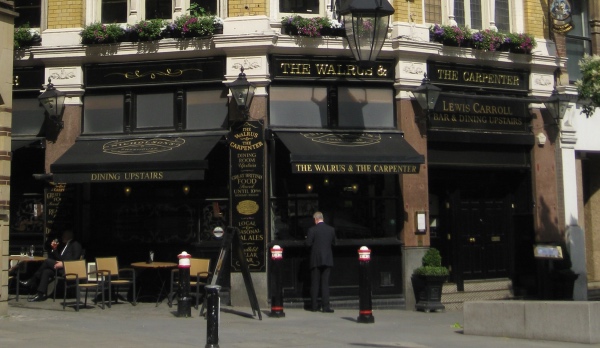
This rather oddly named pub can be found at 45 Monument Street in the City of London, just a short walk (you may have guessed) from The Monument itself.

There actually nothing terribly mysterious about the name – it comes from a nonsensical narrative poem by Lewis Carroll which he puts in the mouths of those rambunctious twins Tweedledum and Tweedledee in the book, Through The Looking Glass, and What Alice Found There, published in 1871.

No, the real mystery here is why this particular pub, which sits on the corner with Lovat Lane (renamed from Love Lane in the early 20th century; no prizes for guessing what went on there previously), was given this name.

The pub – and there’s been one on the site since at least the early 19th century – was apparently previously known as The Cock and once served the porters from the nearby Billingsgate Market on Lower Thames Street (just across the road). But after Billingsgate moved out to Docklands in 1982, the pub changed its name.

Why remains a matter of conjecture – although in the poem the two main characters encounter a bed of oysters which they eventually eat (perhaps there’s a link here to the fact Billingsgate was formerly located nearby?).

The rooms inside include the, given the pub’s moniker, appropriately named Lewis Carroll Bar and Dining Room.

The pub is now part of the Nicholson chain, previously having been under the Charrington and Fuller’s umbrellas. For more, see www.nicholsonspubs.co.uk/restaurants/london/thewalrusandthecarpentermonumentlondon.

PICTURE: Chemical Engineer (licensed under CC BY-SA 4.0).


This Week in London – The Sun explored; Darwin’s story on stage; Freud meets Dali; and, medallic art in Britain…

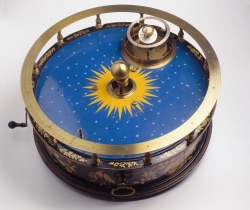
• The biggest ever exhibition exploring the Sun opens at the Science Museum in South Kensington this Saturday. The Sun: Living With Our Star features everything from Nordic Bronze Age artefacts revealing ancient beliefs about how the Sun was transported across the sky to details of upcoming NASA and European Space Agency solar missions. Highlights include the original ‘orrery’ (pictured), an instrument made for the Earl of Orrery in 1712 to demonstrate the motions of the Earth and Moon around the Sun, a rare concave mirror known as a yang-sui which was used for lighting fires in China and dates to between 202 BCE and 9 CE, and a Tokomak ST25-HTS, a prototype nuclear fusion reactor which successfully created and sustained plasma for a record-breaking 29 hours in 2015. There’s also an astronomical spectroscope made for Norman Lockyer, founder of the Science Museum, who used it to identify the element helium in 1868 – the exhibition actually coincides with the 150th anniversary of Lockyer’s discovery, the first of an “extra-terrestrial” element. The exhibition also includes interactive experiences including a huge illuminated wall display allowing visitors to see the Sun rise in different seasons and locations and another in which visitors are able to bask in the sun while sitting in deck chairs under palm trees with sand at their feet. Runs until 6th May next year. Admission charge applies. The exhibition is being accompanied by a programme of events including “family festivals” in early November and early March. For more, see www.sciencemuseum.org.uk/see-and-do/the-sun-living-with-our-star. PICTURE: Science Museum Group Collection/© © The Board of Trustees of the Science Museum.

The story of Charles Darwin is told in a new two hour stage play featuring a cast of seven people and 30 hand-made puppets which opened at The Natural History Museum this week. The Wider Earth, which follows Darwin as he sets out on a daring five year journey aboard the HMS Beagle through uncharted landscapes, is being staged in the museum’s Jerwood Gallery following sold-out seasons in Australia and represents the first time a performance-based theatre has been constructed in the museum. Presented by Trish Wadley Productions and Dead Puppet Society in association with Glass Half Full Productions, the show runs until 30th December. To book tickets, head to www.thewiderearth.com.

This year marks 80 years since Sigmund Freud and Salvador Dalí famously met in London on 19th July, 1938 – a meeting at which Dalí revealed to Freud his recently completed painting The Metamorphosis of NarcissusThe Freud Museum has launched a new exhibition – Freud, Dalí and the Metamorphosis of Narcissus – which explores the extensive influence of Freud on Dalí and on Surrealism as well as Freud’s own reaction to the painting. The painting forms the centrepiece of the exhibition which also includes drawings, photographs and prints as well as documents including letters, manuscripts, books and Freud’s appointment diary. The display is accompanied by a programme of events. Runs until 24th February. Admission charge applies. For more, see www.freud.org.uk.

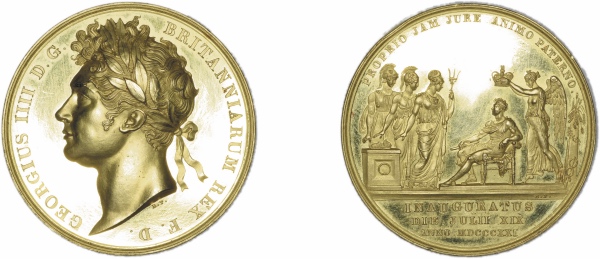
The “invaluable” role artists from abroad played in the development of British medallic art is the focus of a new display at the British Museum. Witnesses: émigré medallists in Britain features medals from six centuries documenting significant historical moments and commemorating famous British figures. The earliest objects date from Elizabethan England when Dutch artist Steven van Herwijck introduced the art of the medal to Britain’s cultural elite while ‘stars’ in the display include a spectacular Waterloo medal conceived by 19th century Italian gem engraver Benedetto Pistrucci which took 30 years to complete and bears the image of the four allied sovereigns – George, Prince Regent, Francis II of Austria, Alexander I of Russia and King Frederick William III of Prussia. The free display can be seen in Room 69a until 7th April next year. For more, see www.britishmuseum.org. PICTURE: Benedetto Pistrucci: Coronation of George IV, 1821, gold, 35mm. © the Trustees of the British Museum M5716. B, 1070. CME6436.

Send all items for inclusion to exploringlondon@gmail.com.

10 sites from Mary Shelley’s London…4. Church of St Mildred, Bread Street

Following their sojourn at Lake Geneva where, in September, 1816, Mary Shelley (then Godwin) first started writing Frankenstein, Shelley and her lover – the poet Percy Bysshe Shelley – returned to England and then to London where on 30th December, 1816, they were married at St Mildred’s Church, Bread Street.

The marriage followed the suicide of Percy Shelley’s wife, Harriet, who was found drowned in the Serpentine in Hyde Park on 10th December that year. Harriet’s family had apparently resisted the poet taking custody of the couple’s two children and it has been reported that Percy was advised by lawyers that marrying Mary, pregnant to him again at this stage, would improve his chances of his winning custody of them.

Mary’s father William Godwin and step-mother Mary Jane Claremont Godwin attended the wedding and the rift which had divided the family due to the couple’s earlier elopement was apparently at least partly mended as a result. Others in attendance were the publisher and poet Leigh Hunt.

The church in which they were married once stood on the east side of the south end of Bread Street in the City of London (and is not to be confused with the Church of St Mildred, Poultry, which once stood near Mansion House).

Originally dating at least as far back as the early 13th century, it had been destroyed in the Great Fire of London in 1666 and then rebuilt to the designs of Sir Christopher Wren in the years following.

In good condition and retaining many of Wren’s original fittings into the 20th century, the building was sadly destroyed by bombing in 1941 (and the parish subsequently united with that of St Mary le Bow). The site is now covered by the Grade II-listed Seventies office building, 30 Cannon Street.

A memorial to Admiral Arthur Philip, which now stands just off New Change, was once located in this church.

PICTURE: Interior of St Mildred, Bread Street from The Churches of London by George Godwin (1839). (Via Wikipedia)

Lost London – St George’s Circus Clocktower…

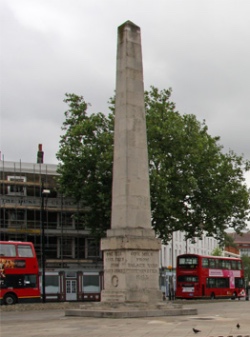
Erected around the turn of the 19th century to celebrate Queen Victoria’s Diamond Jubilee in 1897 (some put the date  of its erection at about 1897; others in about 1905), the clocktower replaced an obelisk that had previously stood in the centre of St George’s Circus in  Southwark.

The rather ornate tower was designed by architect and engineer Jan F Groll and featured four oil lamps to help light the intersection, described as the first purpose-built traffic junction in England.

It survived until the late 1930s when it was demolished after being described as a nuisance to traffic.

Meanwhile, the Robert Mylne-designed obelisk had been first erected in 1771 and marked one mile from Palace Yard, one mile 40 feet from London Bridge and one mile, 350 feet from Fleet Street (Mylne, incidentally, was the architect of the original Blackfriars Bridge).

Following its removal, it was taken to Geraldine Mary Harmsworth Park where it stood until 1998 when it was moved back to its position in St George’s Circus where it now stands. It was Grade II*-listed in 1950.

There’s a replica of the obelisk in Brookwood Cemetery – it marks the spot where bodies taken from the crypt of the Church of St George the Martyr, located in Borough High Street, in 1899 were reinterred to ease crowding.

PICTURE: Once the site of a clocktower, the obelisk has since been returned to St George’s Circus (Martin Addison/licensed under CC BY-SA 2.0/image cropped)

This Week in London – Oceanic art and British watercolours at the RA; a celebration of immigrant nurses from Barbados; and NYE tickets on sale…

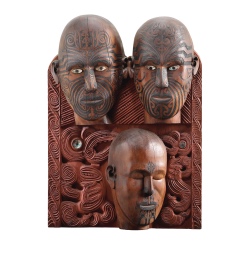
The first ever major survey of Oceanic art to be held in the UK opens at the Royal Academy in Piccadilly on Saturday. The exhibition – Oceania – brings together around 200 works created in Melanesia, Micronesia and Polynesia and includes pieces from public and private collections spanning a period of more than 500 years. It’s being held to mark the 250th anniversary of the RA which was founded in 1768, the same year Captain James Cook set sail on the Endeavour on his first expedition to the Pacific. Highlights of the display, which is organised around three major themes – ‘Voyaging’, ‘Place-making’ and ‘Encounter’, include a 14th century wooden Kaitata carving, excavated in 1920, which is one of the oldest known objects to have been found in New Zealand as well as two Maori hoe (canoe paddles) collected during Cook’s first voyage, and a 19th century feather god image from the Hawaiian Islands likely to be have been collected on Cook’s third voyage. There’s also an 18th century mourning costume known as a Heva tupapau which was obtained in Tahiti in 1791, a rare Fijian late 18th or 19th century double-headed whale ivory hook, and Maori sculptor Tene Waitere’s Ta Moko panel (1896-99 – pictured) depicting male and female tattoos as well as a 19th century Nguzunguzu (prow ornament for a war canoe) featuring a pigeon and a never-before-exhibited ceremonial feast bowl measuring almost seven metres in length, both from the Solomon Islands. Runs in the Main Galleries until 10th December. Admission charge applies. For more, see www.royalacademy.org.uk. PICTURE: Tene Waitere, Ta Moko panel, 1896-99. Te Papa (ME004211) © Image courtesy of The Museum of New Zealand Te Papa Tongarewa.

• Meanwhile, in another exhibition at the Royal Academy, 25 British watercolours and drawings – including works from BNY Mellon’s corporate art collection – have gone on show in the Tennant Gallery. British Watercolours: From the Collection of BNY Mellon features the work of prominent Royal Academicians including Thomas Gainsborough, JMW Turner, John Constable and Sir David Wilkie. Highlights include an 1833 view of Hampstead Heath by Constable, Italian landscapes painted in the 1770s by Thomas Jones and John Robert Cozens, John Frederick Lewis’ unfinished Study of a Bedouin Arab (1840s) and an expressive depiction of Venice by John Ruskin in 1876. The British drawings and watercolours in the BNY Mellon collection were largely acquired in the 1980s. The exhibition is being held as part of the Royal Academy’s 250th anniversary. Admission is free. For more, see www.royalacademy.org.uk.

A free exhibition focusing on one of pioneering groups of people migrating to Britain – the Bajan nurses from Barbados, is opening in Guildhall Yard on Friday as part of Black History Month. Celebrating 70 years of the NHS, the display reveals individual stories of achievements, struggles and leadership with the focus moving from world famous figures to the unsung midwives who helped deliver Britain’s post-war baby boom. The British-Barbadian Nursing Revolution can be seen anytime until 31st October. There’s a series of talks accompanying the display. For more, head to the City of London website.

New Year’s Eve is coming up fast – yes, it’s that time already! – and the first tickets for the world famous London event go on sale at midday on Friday. Tickets for the event, which features more than 12,000 fireworks, are still priced at £10 (a further batch will be sold in late November). Those without a ticket will not be able to enter the viewing area in central London (although it will, of course, be broadcast on TV). There are a maximum of four tickets per transaction. Head to www.london.gov.uk/nye.

Send all items for inclusion to exploringlondon@gmail.com.

This Week in London – It’s Open House weekend; World War I remembered; and, science and the Romanovs…


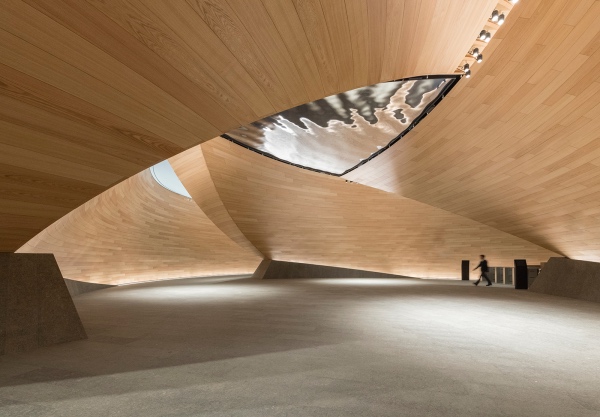
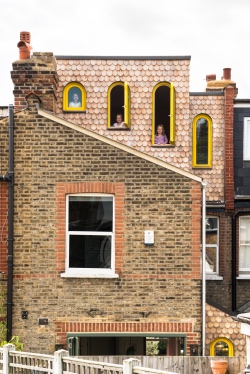
More than 800 buildings of all kinds open their doors to the public this weekend as part of the 26th Open House London. Highlights of this year’s event include new entries such as the US Embassy, the Royal Opera House and Bloomberg’s new HQ as well as returning favourites such as the BT Tower, The Shard and 10 Downing Street. There’s also a programme of activities “lifting the lid” of Old Oak and Park Royal – the heart of ‘making’ in London, explorations of new London districts such as Wembley Park, Hackney Wick and Barking Riverside, the chance to view RIBA Award-winners including the Belvue School Woodland Classrooms, Hackney Town Hall and No.1 New Oxford Street, the new COS HQ, and 100 “must-see” homes. The full programme of events – which also highlights the contribution women have made in shaping today’s London – can be found at www.openhouselondon.org.uk and there’s a free app to download. PICTURED: Top – Bloomberg European Headquarters (Nigel Young/Foster + Partners) and right – Valetta House (French & Tye) are among properties open to the public.

A multi-screen art installation remembering the millions of African men and women who served in World War I and an immersive sound installation featuring personal reflections on the Armistice are among four exhibitions opening at the Imperial War Museum in Lambeth on Friday. Projected onto three screens, African Soldier combines a powerful sound score, historic footage and newly created film which has been shot by artist John Akomfrah in various locations around the world to speak to the African experience of World War I while the sound installation, I Was There: Room of Voices, features 32 people who fought and lived through war sharing their personal stories of the Armistice. The exhibitions also include Renewal: Life after the First World War in Photographs – a display of more than 100 black and white photographs showing how lives, landscapes and national identities recovered, evolved and flourished after the war – and Moments of Silence, an immersive installation commissioned from 59 Productions. The exhibitions, which can be seen until 31st March, are part of the IWM’s Making A New World, “a season of art, photography, film, live music, dance and conversations exploring how the First World War has shaped today’s society”. For more see www.iwm.org.uk.

The role of science in the lives – and deaths – of the last Russian Tsar, Nicholas II, and his family is explored in a new exhibition opening at the Science Museum in South Kensington which marks 100 years since the end of the Romanov dynasty. The Last Tsar: Blood and Revolution explores the influence of medicine on the Imperial Family –  everything from how they treated conditions such as the heir Alexei’s haemophilia through to the Tsarina’s fertility and the Red Cross medical training the Tsar’s daughters received – as well as recent advances in medicine and forensic science which have been deployed to transform the investigation into their disappearance. Objects on show include personal diaries, an Imperial Fabergé Egg presented to the Tsar by his wife a year before the fall of the Imperial house and photograph albums created by an  English tutor to the Imperial Family. There’s also evidence from the scene of the family’s execution including the dentures of the Imperial physician, a diamond earring belonging to the Tsarina and an icon peppered with bullet holes. Opening on Friday, the exhibition runs until 24th March. For more, see www.sciencemuseum.org.uk/thelasttsar.

 Send all items for inclusion to exploringlondon@gmail.com.

This Week in London – Totally Thames, and, Cooper Car Company commemorated…

• Totally Thames – London’s annual celebration of its river – kicks off on Saturday with a packed programme of walks and talks, performances, exhibitions, and the chance to explore the waterway itself. Among the exhibitions are one focusing on the history of the annual Doggett’s Coat and Badge race and another featuring river-inspired artwork created by young people from across the globe, while variously themed walks include a series taking place along the Thames foreshore at low tide. Other events include a concert series in Tower Bridge’s Bascule Chamber, tours of the Billingsgate Roman House and Baths, and talks including one on the “scandalous” history of whitebait and another on the connections between Florence Nightingale, St Thomas’ Hospital and the river. There’s also the chance this Saturday to see the tall ship, STS Lord Nelson, arrive in London to cross the finish line in ‘Lord Dannatt’s Round Britain Challenge’, the Classic Boat Festival at St Katharine’s Docks (running from 7th to 9th September), and the Great River Race (held on 8th September). For the full programme of events, head to www.totallythames.org. PICTURE: The Thames in central London (NASA/GSFC/METI/ERSDAC/JAROS, and U.S./Japan ASTER Science Team)

Iconic car manufacturer, The Cooper Car Company, has been commemorated with an English Heritage Blue Plaque. The plaque, unveiled earlier this month at the company’s former works in Hollyfield Road in Surbiton, makes mention of the company’s success in winning two Formula One World Championships in 1959 and 1960. The former works building, the site where Charles Cooper and his son John created a company which became part of motoring history, is a rare surviving purpose-built and architect-designed 1950s motor workshop. It features an unusual curved frontage – described as a “striking example of ‘Thunderbirds’ architecture” – in what is perhaps an intentional homage to the curved design of the Cooper racing cars, something English Heritage believes is quite possible given its architect, Richard Maddock, was the father of the late Cooper chief designer Owen ‘The Beard’ Maddock. For more, see www.english-heritage.org.uk/visit/blue-plaques/.

Email all items for inclusion to exploringlondon@gmail.com.