LondonLife – World War I commemorated at the RHS Hampton Court Palace Flower Show…

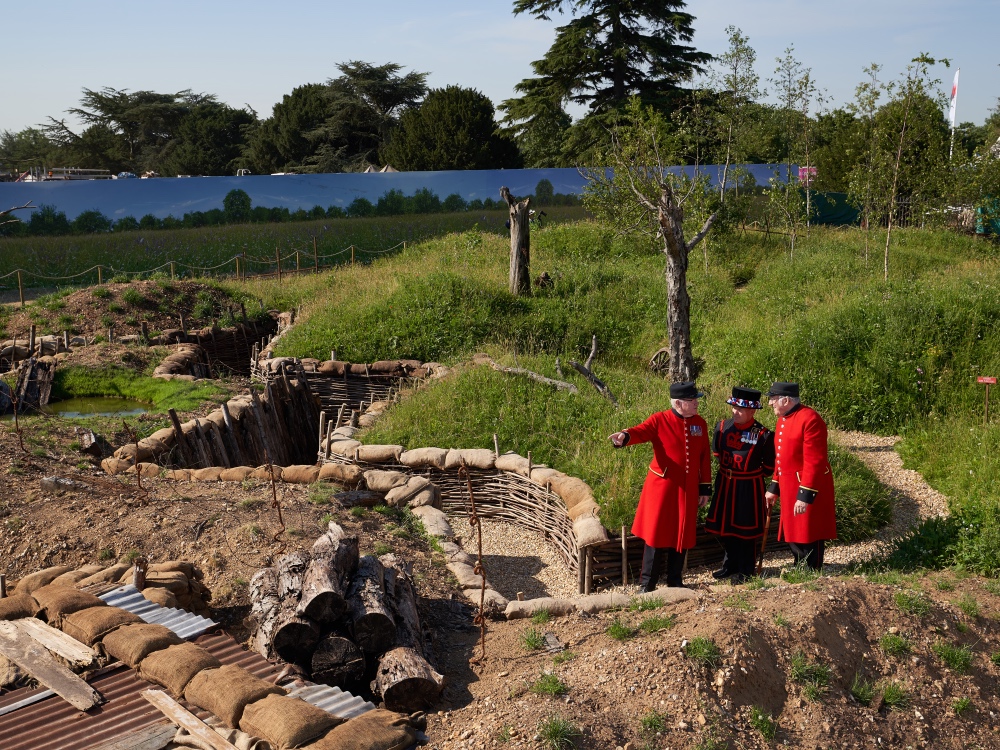
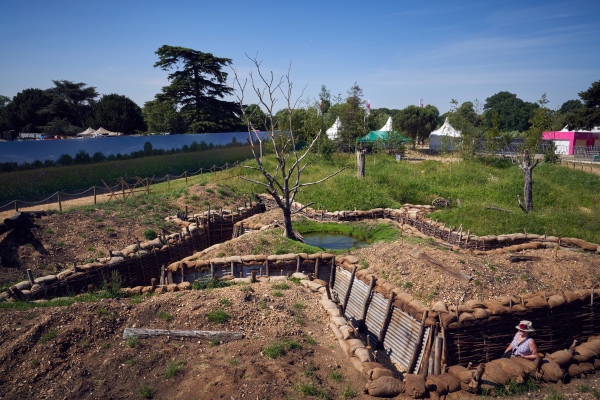
A tribute marking the centenary of World War I, Battlefields to Butterflies, has gone on show at the RHS Hampton Court Palace Flower Show this week. Designed by Todd Longstaffe-Gowan, the special feature garden features two very different scenes – one depicting the desolate landscapes of the trenches and the other a landscape restored to peace by nature. The display draws on the words and paintings of World War I artist William Orpen and reflects what he witnessed firsthand on the Western Front. Among the plants on show are poplars, hornbeams, willow and birch and massed wildflowers including poppies, cornflowers, loosestrife, mallows and cranesbills. A special plaque commemorating the 24 Royal Parks and Palaces gardeners and park keepers who lost their lives in the world is also included in the garden. The plaque will be taken to Brompton Cemetery following the flower show to form part of a permanent memorial garden that will commemorate all parks, gardens and grounds staff, from across the UK and its allies, who died in the war. The show runs until 8th July. For more, see www.rhs.org.uk/shows-events/rhs-hampton-court-palace-flower-show. PICTURE: © Historic Royal Palaces/Michael Bowles.


Treasures of London – The British Library’s St Pancras building…

This week marked 20 years since the British Library’s St Pancras building was officially opened, so we thought it timely to take a look at this London ‘treasure’.

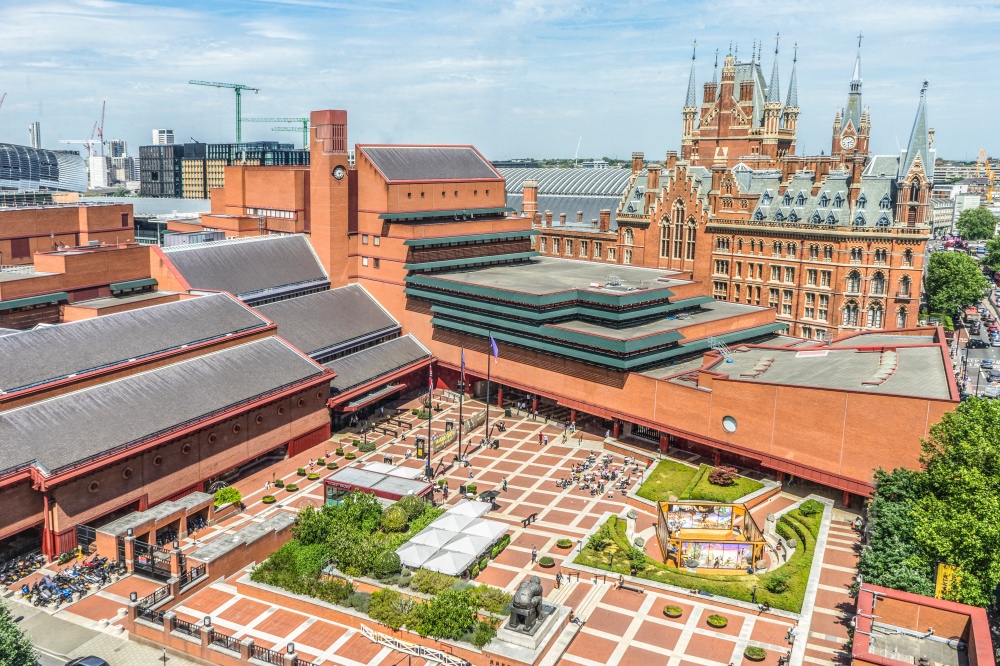
Located on Euston Road, the building, complete with rather grand piazza, was designed by architect Sir Colin St John Wilson and his partner MJ Long.

The largest public building to be constructed in the 20th century in the UK, it was designed specifically to house the British Library collections – which itself had only been created in 1972 when an act was passed by Parliament.

The building – which did draw some criticism over its design when it was completed but has been embraced by the public – was officially opened by Queen Elizabeth II on 25th June, 1998.

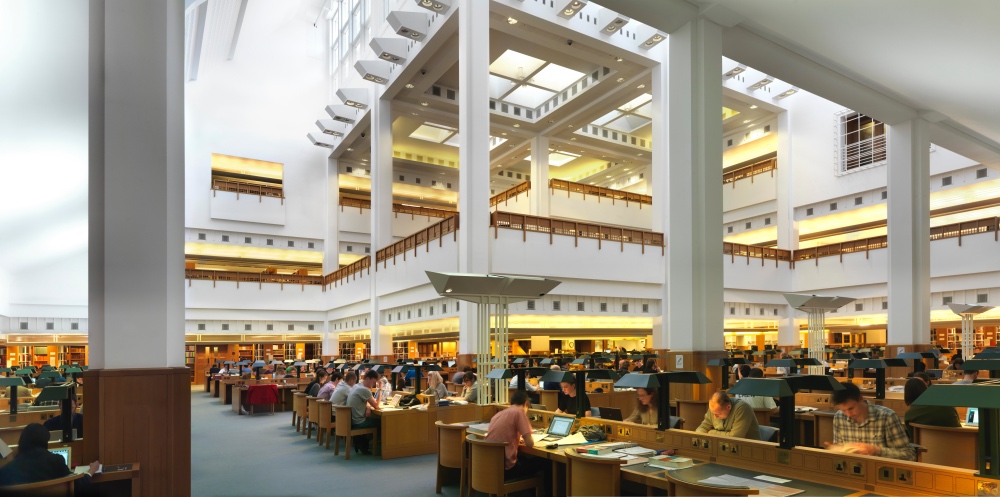
Grade II-listed since 2015, it’s comprised of 112,000 square metres spread over 14 floors – including five below ground – and features 11 reading rooms specialising in various subject areas including one for ‘manuscripts’, another for ‘maps’ and another for ‘rare books and music’.

The centrepiece of the building is the King’s Tower which is home to the library of King George III and the Sir John Ritblat Treasures of the British Library Gallery.

The collection housed at the library includes more than 150 million items. Highlights – many of which are housed in the Treasures Gallery – include a copy of the Magna Carta, the Lindisfarne Gospels, and Leonardo da Vinci’s notebook as well as a first edition of The Times (18th March, 1788), manuscripts by everyone from Jane Austen and James Joyce to Handel and the Beatles, and the Diamond Sutra, the world’s earliest dated printed book.

The library, which also hosts temporary exhibitions, is also home to a restaurant, cafe and several coffee shops as well as its own retail shop.

There are now plans to further develop the campus by expanding onto a 2.8 hectare site at its northern end with the aim, among other things, of creating more exhibition spaces, new learning facilities and a permanent home for the Alan Turing Institute, the UK’s national centre for data science and artificial intelligence. A joint venture led by Stanhope plc, working with architects Rogers Stirk Harbour + Partners (RSHP), won a competitive process to undertake the development last year.

WHERE: British Library, 96 Euston Road (nearest Tube stations are Kings Cross St Pancras, Euston and Euston Square); WHEN: 9.30am to 6pm (includes Treasures Gallery – exhibition times can vary); COST: Free (but admission fees may be charged for exhibitions); WEBSITE: www.bl.uk.

PICTURE: Top – Aerial view of the St Pancras building (Tony Antoniou); Below – One of the reading rooms (Paul Grundy).

This Week in London – The history of women in Parliament; Michael Jackson portraits; and, Nevinsons honoured…

The campaign for women to be able to vote and stand as representatives in Parliament is the subject of an exhibition opening at the Houses of Parliament. Staged in Westminster Hall, Voice & Vote: Women’s Place in Parliament features historic objects, pictures and archives from Parliamentary collections and elsewhere with the “immersive” recreation of some of the lost historical spaces in the Palace of Westminster among the highlights. These include ‘The Ventilator’ – a space above the House of Commons Chamber where women, banned from the public galleries, watched and listened to Parliamentary debates, ‘The Cage’ – a ladies gallery closed off by brass grills built as part of the House of Commons when it was reconstructed after the 1834 fire, and ‘The Tomb’ – a room for women MPs after the 1918 decision allowing them to stand for Parliament. The exhibition, which is free to attend, runs from until 6th October. Tickets have to be pre-booked via Parliament’s website. PICTURE: Michael D Beckwith/Unsplash

The final commissioned portrait of popstar Michael Jackson is among images on show in a new National Portrait Gallery exhibition exploring his influence on contemporary art. Along that work – Kehinde Wiley’s 2010 work Equestrian Portrait of King Philip II (Michael Jackson), the exhibition Michael Jackson: On the Wall features American artist and activist Faith Ringgold’s story quilt Who’s Bad?, a series of collages by Isaac Julien, and a ‘dinner jacket’ covered with forks, spoons and knives made by costume designer Michael Lee Bush as well as a pop-graffiti style portrait by Keith Haring, on show for the first time in 30 years. Among new works created specially for the exhibition are a line drawing by artist Michael Craig-Martin which is based on the image of 11-year-old Michael used for the cover of Rolling Stone magazine in April, 1971, and a large-scale painting by Yan Pei Ming, In Memory of Michel Jackson. Opening today, the exhibition can be seen until 21st October. Admission charge applies. For more, see www.npg.org.uk.

World War I artist CRW Nevinson and his father, journalist Henry Nevinson, have both been honoured with an English Heritage Blue Plaque. The plaque was unveiled at a property at 4 Downside Crescent in Hampstead where the Nevinson family lived between 1903 and 1941 before bombing raids made the home uninhabitable. Richard “CRW” Nevinson (1889-1946) was one of the most famous artists of the Great War and used a variety of styles, including Futurism and Cubism, to capture the brutality of the war based on his experience while serving briefly with the  Royal Army Medical Corps in France (before he was sent home in 1915 for rheumatic pain). His father, who reported on the Boer War and World War I, was known as “the king of war correspondents” and was a champion of universal suffrage. For more, see www.english-heritage.org.uk/visit/blue-plaques/.

Send all items for inclusion to exploringlondon@gmail.com

Lost London – St Luke’s Hospital for Lunatics, Old Street…

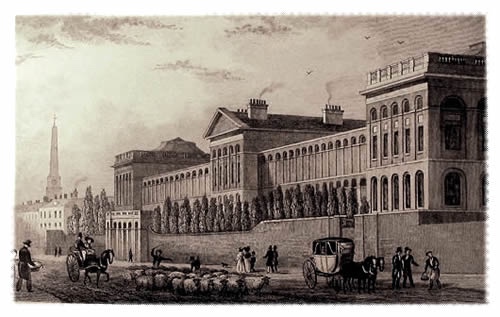
A monumental-sized building on Old Street in the City of London, St Luke’s Hospital for Lunatics was founded in 1751 to treat the poor who suffered from mental illnesses.

The new hospital – which was built partly through concerns about abuses patients suffered at the more famous Royal Bethlehem Hospital (Bedlam) – was initially located on a site in Moorfields which had been formerly occupied by a foundry. But in 1786 it moved to the purpose-built palatial premises in Old Street where it remained until 1916.

The new building, which was designed by George Dance after an competition for its design apparently failed to find a suitable candidate, had a 150 metre long street frontage with a central entrance and male wards on one side and female wards on the other.

The building contained some 300 individual cells – each had a small window, but no heating. There were gardens located behind it and in the basement were cold water baths used to treat patients.

The hospital building was enlarged in the 1840s when infirmaries and a chapel were added.

By the 1860s, the hospital appears to have abandoned its target market of the poor – the 150 or so patients were then described as being of “middle class”.

In 1916, the patients were transferred to other institutions – the charity running the hospital set up a ward in Middlesex Hospital – or sent home and the buildings were acquired by the Bank of England.

The premises was used to print banknotes until the 1950s and the building, which had been damaged during World War I, was eventually demolished in 1963.

The archive of St Luke’s have been digitised and are held by the Wellcome Library.

LondonLife – ‘The London Mastaba’ floats on the Serpentine…

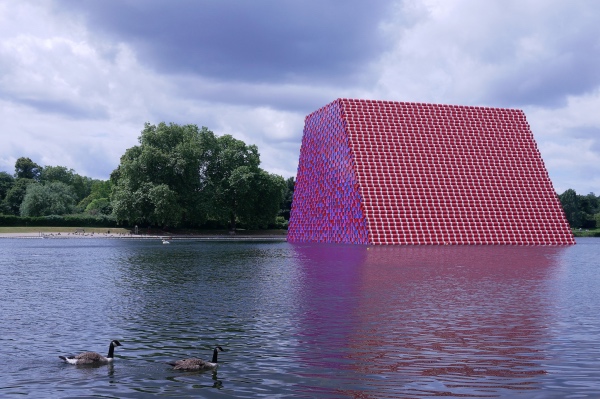
The work of internationally renowned artist Christo, The London Mastaba floats serenely on Hyde Park’s Serpentine, despite the reported ruffled feathers of some swimmers upset over its installation in their pool.

The floating sculpture, which takes up about one per cent of the lake’s surface, is Christo’s first public sculpture created for show in the UK.

Made up of 7,506 multi-coloured and stacked barrels reaching 20 metres high, the sculpture sits on a floating platform of high-density polyethylene cubes which has been anchored into place.

The artwork’s installation coincides with an exhibition of the work of Christo and his late wife Jeanne-Claude’s at the nearby Serpentine Gallery in Kensington Gardens.

Christo & Jeanne-Claude: Barrels and The Mastaba 1958-2018 features sculptures, drawings, collages and photographs spanning more than 60 years and, according to Christo will provide “important context” for The London Mastaba.

The exhibition can be seen at the gallery until 9th September. Meanwhile, the sculpture will be floating on the Serpentine, weather permitting, until 23rd September.

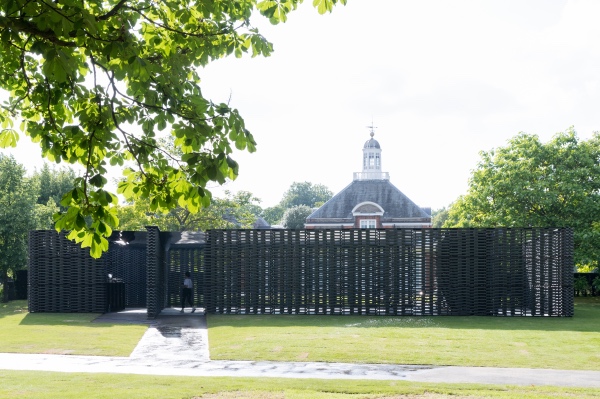
And finally, the Serpentine Gallery’s annual temporary pavilion – this year the work of Mexican architect Frida Escobedo, of Taller de Arquitectura – can be seen until 7th October at the Kensington Gardens’ gallery. For more information on all three projects, see www.serpentinegalleries.org.

PICTURES: Top – The London Mastaba (pinn/licensed under CC BY-NC-ND-2.0); Right – Christo, The Mastaba (Project for London, Hyde Park, Serpentine Lake), Collage 2018: 43.1 x 55.9, Pencil, wax crayon, enamel paint, colour photograph by Wolfgang Volz, map, technical data, mylar and tape, Photo: André Grossmann © Christo 2018; Below – Serpentine Pavilion 2018, designed by Frida Escobedo, Serpentine Gallery, London © Frida Escobedo, Taller de Arquitectura, Photography © 2018 Iwan Baan

This Week in London – WWI impact on art explored; recalling Windrush; ‘Sounds Like London’; and, John Thelwall commemorated…

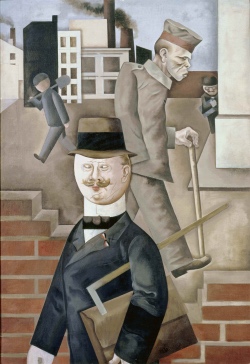
Marking 100 years since the end of World War I, a new exhibition opening at the Tate Britain on Tuesday explores the immediate impact of the war on British, German and French art including an examination of how artists responded to Europe’s new physical and psychological scars. Aftermath: Art in the Wake of World War One features more than 150 works spanning the period from 1916 to 1932 by artists including George Grosz, Fernand Léger and CRW Nevinson. They range from battlefield landscapes and images of soldiers’ graves – such as William Orpen’s A Grave in a Trench (1917) and Paul Jouve’s Tombe d’un soldat serbe a Kenali (1917) – to sculptural public memorials commemorating the conflict by the likes of Käthe Kollwitz, André Mare and Charles Sargeant Jagger and more personal memorials created using battlefield relics like shrapnel and mortar shells as well as images depicting the wounded and disabled in the post-war world such as George Grosz’s Grey Day (1921) and Otto Dix’s Prostitute and Disabled War Veteran (1923). The display also features works relating to the birth of dada and surrealism – among those featured are Hannah Höch’s data photomontages – and looks at how the rebuilding of post war society inspired artists like Georges Braque, Christian Schad and Winifred Knights to return to classicism and tradition while pushing others, like Léger, Paul Citroen and Nevinson to create visions of a technological future. Opening on 5th June, it runs until 16th September at the Millbank site. For more, see www.tate.org.uk. PICTURE: George Grosz (1893-1959), Grey Day (1921), Oil paint on canvas, 1150 x 800 mm, Staatliche Museen zu Berlin, Nationalgalerie. Acquired by the Federal State of Berlin. © Estate of George Grosz, Princeton, N.J. 2018.

The story of Jamaican feminist poet Una Marson – the first black woman employed by the BBC, Trinidadian JJ Thomas’ scathing rebuttal of English colonialism, and, manuscripts of Andrea Levy’s novel Small Island are among highlights of a new exhibition at the British Library. Windrush: Songs in a Strange Land marks 70 years since the MV Empire Windrush first carried hundreds of migrants to London and explores why they came, what they left behind and how they came to shape Britain. The free exhibition in the library’s Entrance Hall on Euston Road, which opens Friday, also features Benjamin Zephaniah’s poem What Stephen Lawrence Has Taught Us, personal reflections from some of the first Caribbean nurses to join the NHS and sounds of the Caribbean including jazz to calypso music. Runs until 21st October. For more, see www.bl.uk.

Join in a celebration of London’s ‘grassroots music’ in June. Sounds Like London features more than 200 gigs across the capital including a series of gigs aimed at raising money for the Music Venue Trust’s Emergency Response service which supports grassroots music venues threatened by closure, 11 ‘Airbnb Concerts’ and X-pose, an event showcasing the capital’s leading deaf musicians and DJs. The full programme of events can be found at www.london.gov.uk/sounds-like-london.

The political orator, writer and elocutionist John Thelwall (1764-1834) has been commemorated with an English Heritage Blue Plaque located on the site of his pioneering institution of elocution. Thelwall, described as one of the most popular and effective orators of his day and known as a champion of free speech and universal suffrage as well as being a fierce critic of the French Revolution, opened his ‘Seminary for the cultivation of the science and practice of elocution, and the cure of impediments of speech’ at 40 Bedford Place in Bloomsbury in 1806. The Grade II-listed property, now in use as a hotel, was newly built at the time. The institution remained at the site for seven years before moving to Lincoln’s Inn Fields. For more, see www.english-heritage.org.uk/visit/blue-plaques/

Send all items for inclusion to exploringlondon@gmail.com.

10 islands in the Thames – 8. Thames Ditton Island…

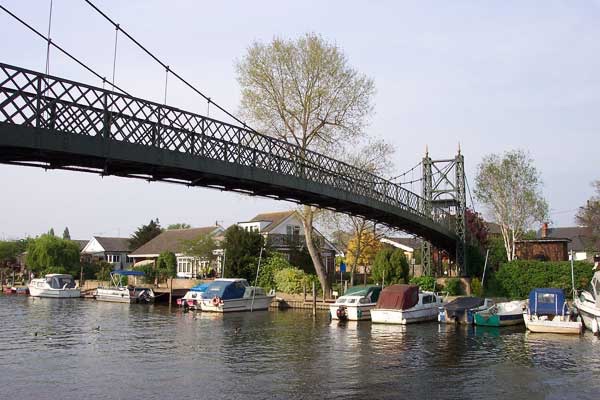
We’re skipping upstream, past a few islands this week, to take a look at Thames Ditton Island which lies in Kingston Reach, above Teddington Lock. The island is the largest of a group of three which also includes Swan Island (the smallest) and Boyle Farm Island.

Located opposite the grounds of Hampton Court Palace (built by Cardinal Thomas Wolsey in the early 16th century and then, following his fall from grace, claimed by King Henry VIII in 1525), the 320 metre long Thames Ditton Island owes its existence to King Henry who had the river widened and straightened here so that he could use the river for an uninterrupted journey up the river from Westminster to Hampton Court. In doing so, the island was created.

Used as pasture land for the local manor (and known apparently at one point as Colly’s Ait, ait being a word for a river island, before being renamed Thames Ditton after the village on the west bank) for several centuries, the island became a popular recreation spot for the wealthy interested in water sports during the Edwardian era, thanks to the arrival of the railway in the area in the late 19th century.

The island is these days connected to the Thames Ditton bank by a 1930s suspension bridge which ends near the 13th century Ye Olde Swan pub. It is now home to more than 45 rather exclusive riverside properties (almost all are in stilts to help ward off the danger of flooding, a phenomenon with which long-term residents in the area are familiar).

Swan Island, while lies just to the south of Thames Ditton Island, is tiny and the location of the home of the ferryman, who up until 1911, would take people across the river to Hampton Court.

Further to the south likes Boyle Farm Island which also has a single house open it. It stands opposite the mainland property formerly known as Boyle Farm but now a nursing home known as the Home of Compassion.

Interestingly, while Thames Ditton Island is part of Greater London, Boyle Farm Island is part of Surrey (along with Thames Ditton village).

PICTURE: Andrew Lewin (licensed under CC BY-NC-ND 2.0)

This Week in London – Death and burials in Roman London; Edward Bawden retrospective; and, ‘Horrible Histories’ at Hampton Court…

Death and burials in Roman London are the focus of a new exhibition opening at the Museum of London Docklands on Friday with a rare sarcophagus discovered in Southwark last year one of the highlights. Roman Dead will look at the cemeteries of ancient London, the discoveries made there and their context in the modern cityscape. Alongside the sarcophagus discovered in Harper Road (which had possibly been disturbed by grave robbers), the exhibition features more than 200 objects including a multi-coloured glass dish found with cremated remains, a jet pendant in the form of a Medusa’s head and four men’s skulls which showed signs of violence and were buried in pits by the city’s wall as well as a tombstone of a 10-year-old girl named Marciana, found during excavations in 1979, and a pot decorated with a human face which was used as a cremation urn. The free exhibition can be seen until 28th October. For more, see www.museumofondon.org.uk/docklands.

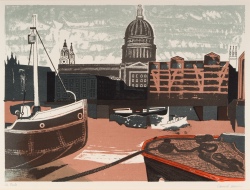
The work of celebrated Twentieth century British artist and designer Edward Bawden (1903-89) has gone on display in a new exhibition at the Dulwich Picture Gallery. Edward Bawden is described as the “most wide-ranging” exhibition of his work since his death and the first to look at every aspect of his 60 year career. It features a number of previous unseen works as well as 18 rarely seen war portraits which are being displayed together for the first time. Some 170 works – half from private collections – are arranged thematically to follow the evolution of his style with rooms dedicated to leisure, architecture, animals, fantasy and gardens. Among the highlights are early designs for the London Underground, Rain (1926) – on display for the first time, portraits of places he visited in North Africa, the Middle East and Europe while working as an official war artist during World War II, and several linocuts from Aesop’s Fables. Runs until 9th September. Admission charge applies. For more, see www.dulwichpicturegallery.org.uk. PICTURE: Edward Bawden, St Paul’s, 1958 (Colour autolithograph/Trustees of the Cecil Higgins Art Gallery (The Higgins Bedford), © Estate of Edward Bawden).

Delve into the world of the ‘Gorgeous Georgians’ and ‘Vile Victorians’ at Hampton Court Palace this May half term. The Birmingham Stage Company will be uncovering centuries of grisly history in an hour long outdoor ‘Horrible Histories’ performance featuring characters including Georgian kings, Lord Horatio Nelson, the Duke of Wellington, Florence Nightingale, and Dr John Snow. Guests are encouraged to bring a blanket and some food for the “ultimate historical picnic”. Admission charge applies – check website for dates. For more, see www.hrp.org.uk/hampton-court-palace/explore/the-gorgeous-georgians-and-vile-victorians/.

Send all items for inclusion to exploringlondon@gmail.com.

10 islands in the Thames – 7. Eel Pie Island…

And so we come to one of the most curiously named, yet perhaps most famous, of all the Thames islands in London.

First, to the name. The almost nine acre island, which was previously divided into two and perhaps even three, was previously known by other names including Twickenham Ait and Parish Ait. A place of recreation since perhaps as early as the start of the 17th century – there’s an early reference to a bowling alley being located there, since at least the mid-18th century it was also home to an inn, known variously as The Ship and The White Cross.

During the 19th century, the island became a popular destination for steamer excursions and the inn was rebuilt on a grander scale in about 1830. It became famous for the eel pies that could be bought there – so popular were they that the island’s name was apparently changed in tribute (although there’s a very dubious story that it was King Henry VIII who first made the island’s eel pies famous by stopping to sample one from a stall there – that, however, seems unlikely).

Second, to the fame. Now known as the Eel Pie Hotel, in the first half of the 20th century the inn began an association with music which would see it one day make an important contribution to the development of British pop music.

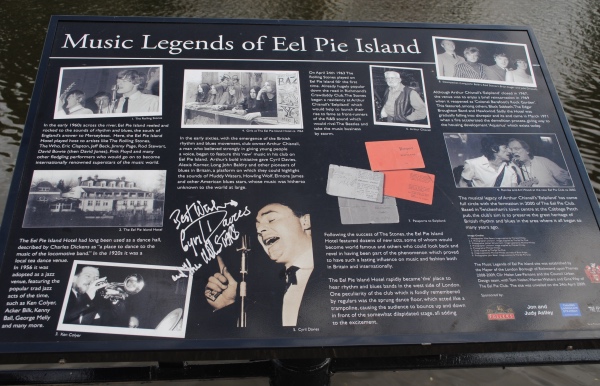
Dances were held there in the 1920s and 30s and in the mid-1950s, jazz sessions were held there. By the Sixties, the venue – under the stewardship of Arthur Chisnall – had started to attract R&B bands and among those who played here in the following years were everyone from Eric Clapton (as part of John Mayall’s Bluesbreakers) and The Rolling Stones to The Who, The Moody Blues, David Bowie and Rod Stewart. In 1967, the venue was forced to close due to the cost of repairs but reopened briefly in 1969 as ‘Colonel Barefoot’s Rock Garden’, attracting bands including Black Sabbath, Hawkwind and the Edgar Broughton Band.

The new venture didn’t last. Squatters moved in and in 1971, the hotel burned down in a “mysterious” fire while it was being demolished.

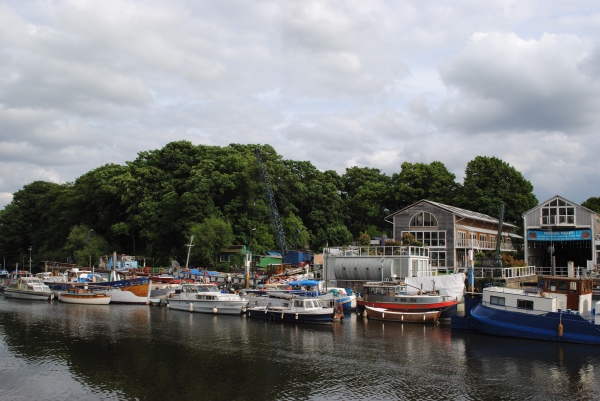
The island, the centre of which was again damaged by fire in 1996, now hosts about 50 homes and a few boatyards as well as other businesses and artist’s studios. It’s also home to the Twickenham Rowing Club, which was first established in 1860 and moved to the island in 1880.

While for many years it could only be accessed by ferry, the island can these days be accessed via a footbridge (the first bridge was installed in 1957 and replaced in 1998).

Notable residents on the island have included William Hartnell, the original Dr Who, and inventor Trevor Baylis (best known for the wind-up radio). The island has appeared in several books and TV shows including the 2005 series How To Start Your Own Country in which TV personality Danny Wallace attempted to “invade” the island. He was unsuccessful.

PICTURES: Above – Eel Pie Island from Twickenham. Below – A signboard tribute to the island’s musical heritage. (David Adams).

Treasures of London Special – The “new” Royal Academy of Arts…

Celebrating its 250th anniversary this year, The Royal Academy of Arts opens its “new” expanded £56 million campus on Saturday.

Designed by Sir David Chipperfield, the new two acre Royal Academy campus features 70 per cent more public space than the RA’s original Burlington House blueprint which will enable the institution to expand its programs of exhibitions and events and create new free displays of art and architecture.

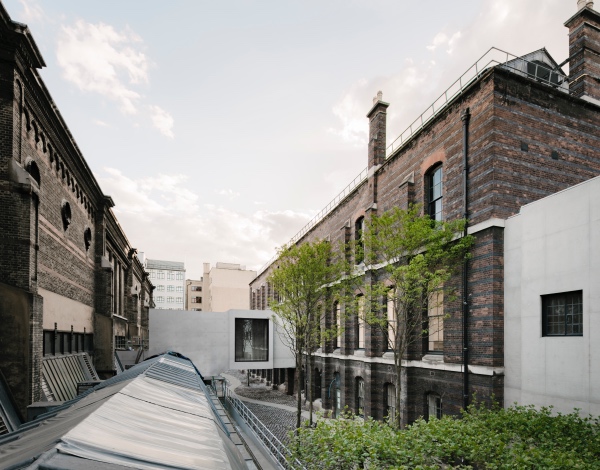
One of the key features of the redevelopment is the new Weston Bridge between the institution’s landmark property, Burlington House, and the RA’s formerly “unloved” building at 6 Burlington Gardens which unites the two-acre campus and creates a new route between Piccadilly and Mayfair.

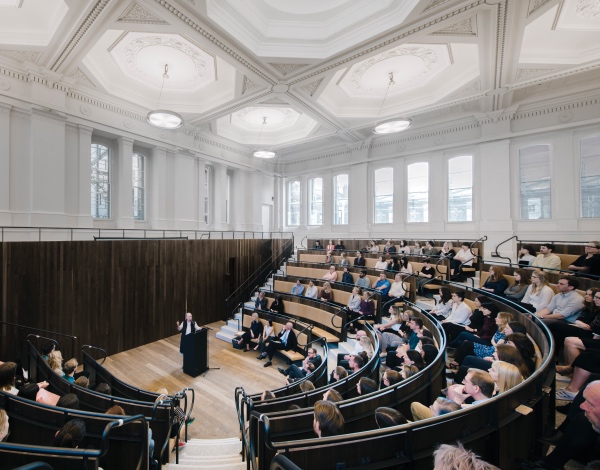
The Grade II-listed building on Burlington Gardens, which the RA bought in 1991 and which was previously home to, among other things, the Museum of Mankind, has been refurbished and a 250 seat lecture theatre, the Benjamin West Lecture Theatre, inserted along with a new architecture studio within The Dorfman Senate Rooms – restored by architect Julian Harrap – for free architectural displays.

A new public route through the campus has integrated the Royal Academy Schools into the visitor experience with the new Weston Studio, a public project space for students and alumni, and provides views of the Schools’ Corridor and the newly landscaped Lovelace Courtyard, providing visitors with a “greater insight into Britain’s longest established art school”.

It also takes visitors through the Gabrielle Jungels-Winkler Galleries, a suite of three day-lit galleries for temporary exhibitions (Tacita Dean’s LANDSCAPE, the inaugural display, opens Saturday) and past the new Royal Academy Collection Gallery where works by the likes of Michelangelo, Reynolds, Kauffman, Thornhill, Constable, Gainsborough and Turner can be seen. There’s also a new Clore Learning Centre.

New places to eat and drink within the complex include the Senate Room bar and restaurant, and cafes and shops located on either side of the Burlington Gardens entrance.

The Royal Academy was founded by King George III in 1768 after he was presented with a petition by architect Sir William Chambers which had been signed by 36 artists and architects seeking to “establish a society for promoting the Arts of Design”. Initially based in Pall Mall, the institution’s first official home was in the new Somerset House. In the 1830s, it moved to Trafalgar Square where it shared premises with the newly created National Gallery and in 1867, the institution has moved to Burlington House where it’s been located ever since.

To celebrate the opening of the “new” Royal Academy, there will be a weekend-long “art party” this weekend with free workshops, tours, displays, late-night performances and DJs. Highlights will include performances by The Uncollective and Rachael Plays Disco; collaborative mural drawing, party hat making, architectural model making, RA Collection gallery tours, and a family printmaking workshop in the new Clore Learning Centre. The Annenberg Courtyard will host street food and cocktail bars.

For more, see www.royalacademy.org.uk/plan-your-visit.

PICTURES: Top – The Weston Bridge and The Lovelace Courtyard/Below – The Benjamin West Lecture Theatre. (Both images by Simon Menges).

This Week in London – ‘Picturing Forgotten London’; 1968 recalled; and, a posthumous VC newly on display…

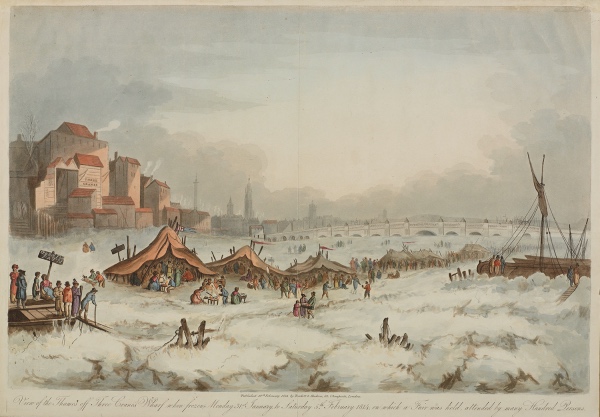
From coaching inns to horse markets, riverside mansions to gin palaces – the ‘lost’ buildings of London form the focus of a new exhibition which opens at the City of London Corporation’s London Metropolitan Archives in Clerkenwell on Monday. Picturing Forgotten London features drawings, engravings, photographs, maps, films and contemporary recollections displayed under themes including entertainment, food, commerce and trade, and transport. Through the exhibition, visitors will discover frost fairs (pictured), ‘open-shout’ trading floors, pleasure gardens, almshouses, cabmen’s shelters, dockyards, farms and a 1960s supermarket. Among the highlights are a look at the notorious Westminster neighbourhood known as Devil’s Acre and images of such lost landmarks as Euston Arch and Crystal Palace as well as Geoffrey Fletcher’s observational drawings of 60s and 70s London and a large scale reproduction of an 1867 illustrated map of public buildings, theatres, music halls and other landmarks known as The Strangers Guide. Admission is free. Runs until 31st October. For more, follow this link. PICTURE: Courtesy of the City of London Corporation’s London Metropolitan Archives.

Marking 50 years since a series of significant protests took place around the world, a new display at Tate Britain in Millbank shows how artists responded to what it calls a “watershed moment in political and social history”. London: 1968 features a series of iconic agin-prop posters by the Camden Poster Workshop who moved their studio into the London School of Economics during the student occupation in October. They provide a visual record of some of the key issues of the time including industrial strikes, the Vietnam War, and civil rights movements in Ireland, America and South Africa. There’s also a Patricia Holland film looking at the occupation of the Hornsey School of Art and work by radical artists such as Barry Flanagan, Richard Long, Joseph Beuys and Mario Merz who all participated in a landmark exhibition at London’s ICA in 1969. The display, which is free to see, coincides with another free display at Tate Modern – 1968: Protest and the Photobook – which brings together politically engaged photobooks made during this period. London: 1968 runs until 31st October. For more, see www.tate.org.uk.

A posthumous Victoria Cross awarded to Corporal Bryan Budd for bravery in Afghanistan has gone on display at the Imperial War Museum London in Lambeth. Corporal Budd, who served in the 3rd Battalion, The Parachute Regiment, was awarded the VC on 14th December, 2006, for two separate acts of gallantry in Helmand Province – the first in an incident on 27th July that year when he initiated a daring attack on the enemy in order to evacuate a wounded comrade, and the second, on 20th August, when he led a surprise attack on a Taliban position, killing several enemy but sustaining wounds from which he died. The VC, which was purchased by Lord Ashcroft, is the most recent now in his collection – prior to its acquisition the most recent he had was awarded to Sergeant Ian McKay in October, 1982, for gallantry during the Falklands War. For more, see www.iwm.org.uk.

Send all items for inclusion to exploringlondon@gmail.com.

This Week in London – Commemorating WWI postal service; new acquisitions at the National Gallery; and, 50 Glorious Shows!

A ‘pop-up’ World War I mail sorting office will appear in The Regent’s Park this Saturday as part of centenary commemorations of the Great War. The office evokes the giant wooden building known as the ‘Home Depot’ which was located in the park and which handled all the mail from and to the front line during the war – some two billion letters and 140 million parcels. Believed to have been the largest wooden building in the world, it covered at its greatest extent more than five acres. The sorting office provides visitors with an immersive experience as it brings to life the story of the 2,500 people who worked there and visitors can even work a shift as part of an interactive session led by The Postal Museum. There’s a chance to write a postcard to a soldier or postal worker to give them your thoughts on the war and outdoors, there’s a display on the role the Post Office played in keeping the war running. The sorting office can be visited for free this Saturday, 12th May, and Saturday, 19th May. For more, follow this link.

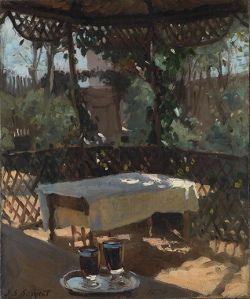
Two new acquisitions – the first ever painting by Spaniard Juan de Zurbarán to enter a UK collection and a teenage work by portraitist John Singer Sargent – have gone on show at the The National Gallery on Trafalgar Square. The rather long titled Still Life with Lemons, Lilies, Carnations, Roses and a Lemon Blossom in a Wicker Basket, together with a Goldfinch perched on a Porcelain Bowl of Water, on top of a Silver Tray, all arranged upon a Stone Ledge was painted by Baroque artist de Zurbarán in about 1643–49 while Wineglasses was painted by Sargent at the age of 19, probably at St-Enogat in Brittany where he spent the summer of 1875 having just seen his first Impressionist exhibition in Paris. Still Life with Lemons in a Wicker Basket can be seen in Room 30 while Wineglasses is in Room 44. Admission is free. For more, see www.nationalgallery.org.uk. PICTURE: Wineglasses, John Singer Sargent, RA (1856–1925) Probably 1875  © The National Gallery, London.

On Now – 50 Glorious Shows! The Cartoon Museum is this year celebrating 12 years at 35 Little Russell Street in Bloomsbury and to mark the occasion, this display features more than 170 original works which have been highlights in previous exhibitions. Among those whose work is represented are masters of the British tradition of cartooning like Hogarth, Gillray, Tennial and EH Shepard as well as that of top comic artists and graphic novelists like Dudley D Watkins, Posy Simmonds and Bryan Talbot. There’s also a selection of political satire and caricature. The show runs until 2nd September. For more, see www.cartoonmuseum.org.

Send all items for inclusion to exploringlondon@gmail.com.

This Week in London – Hampton Court Palace breathes new life into Tudor kitchens; Kew’s Temperate House to reopen; and, World War I commemorated in Guildhall Yard…

Hampton Court Palace will on Saturday launch a major representation of its Tudor kitchens with a new display designed to give visitors a ringside seat to preparations for a royal feast. Visitors will be immersed in the sights, sounds and smells of King Henry VIII’s kitchens as they explore the stories of everyone from cooks to liveried pages who made the great court feasts possible and meet the likes of Thomas Cromwell, right-hand man to the king, master cook John Dale and Michael Wentworth, clerk of the kitchen. A specially commissioned play will be launched for the summer and during holiday periods there will be workshops, games and competitions. Admission to the kitchens is included in the palace admission. For more information, head to www.hrp.org.uk/hampton-court-palace/.

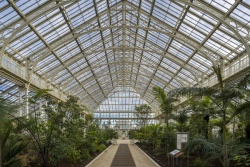
Kew’s iconic Temperate House – the world’s largest Victorian glasshouse – will reopen on Saturday after the biggest renovation project in its history. The five year restoration project has seen its entire framework repaired and thousands of panes of glass replaced. Some 500 plants were taken out and housed in a temporary nursery and some 10,000 plants, consisting of 1,500 species, have gone back in. A programme of events will take place involving the Temperate House, which dates from 1863, over the summer and there are special preview openings on Friday and Saturday night. For more, see www.kew.org. PICTURE: Gareth Gardner/Kew.

The City of London Corporation is marking the centenary of the end of World War I with a new open-air exhibition highlighting the global nature of conflict. Fields of Battle, Lands of Peace: 1918-2018, which opened on Monday, is the third and final display by photographer Michael St Maur Sheil to go on show in Guildhall Yard. The display can be seen until 28th May. Accompanying the exhibition is a free guided walk – The City’s Great War Heroes – which enables people to walk in the footsteps of City men and women who went off to the Great War. It departs from Bishopsgate every Monday and Saturday at 11am and 2pm until 28th May with an extra walk at 1.30pm on the final day. For more, follow this link.

Send all items for inclusion to exploringlondon@gmail.com.

LondonLife – Millicent Fawcett unveiled…

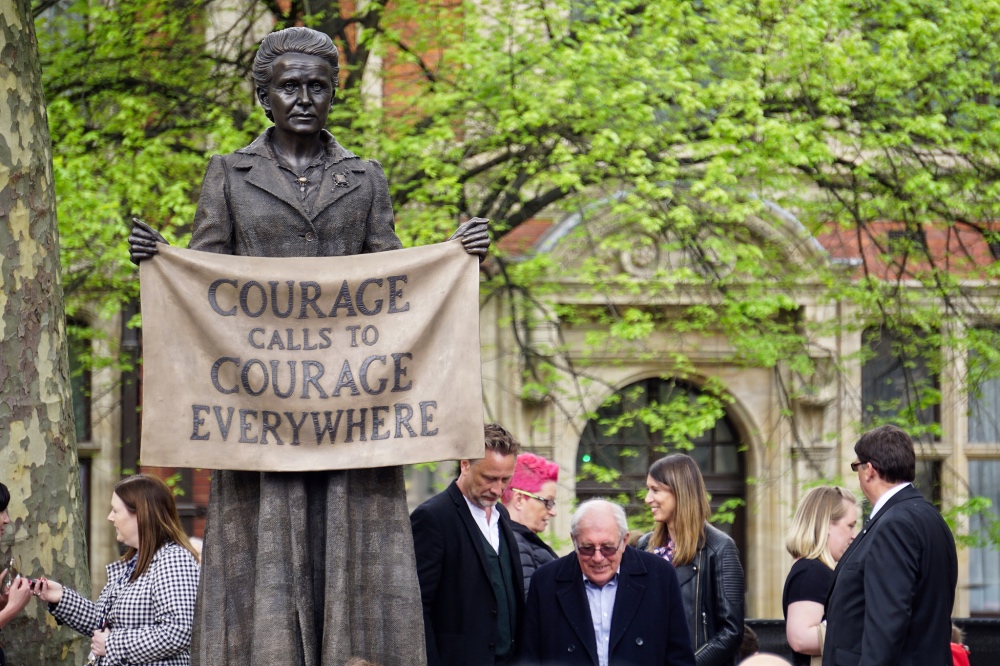
Prime Minister Theresa May (below) and the Mayor of London, Sadiq Khan, recently attended the unveiling of the first statue commemorating a female in Parliament Square – that of Suffragist leader Dame Millicent Fawcett. The work of Turner Prize-winning artist Gillian Wearing, the statue is not only the first of a woman to grace the square outside the Houses of Parliament but also the first in the square created by a woman. Its arrival marks 100 years since women were given the right to vote in the Representation of the People Act 1918. Mrs May paid tribute to Fawcett for her role in the “long and arduous” struggle to achieve votes for women while Mr Khan pointed out that the statue would stand near that of Mahatma Gandhi and Nelson Mandela – “two other heroic leaders who campaigned for change and equality”. “There couldn’t be a better place to mark the achievements of Millicent Fawcett, in the heart of UK democracy in Parliament Square,” he said. The statue, which was funded through the Government’s £5 million Centenary Fund, was unveiled by three generations of women including Jennifer Loehnis, a descendant of Millicent Fawcett, and activist Caroline Criado Perez who led the campaign lobbying for the statue to be placed there.

PICTURES – Top – Garry Knight/Flickr (public domain); Below Number 10/Flicker (licensed under CC BY-NC-ND 2.0)

This Week in London – James Cook’s voyages; Diana’s landmine moment remembered; and, the influence of the Greeks on Rodin…

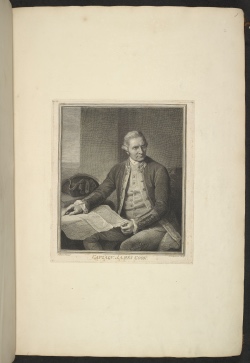
Marking 250 years since Captain James Cook set sail from Plymouth aboard the Endeavour in 1768 comes a new exhibition at the British Library focusing on the explorer’s three world-changing voyages aboard the Endeavour, the Resolution and the Discovery. Maps, artworks and journals from the voyages will be on show in James Cook: The Voyages alongside recently commissioned films bringing contemporary perspectives. The display features a collection of drawings by Polynesian high priest and navigator Tupaia – on display for the first time, as well as Sydney Parkinson’s natural history drawings including the first European depiction of a kangaroo, John Webber’s watercolour landscapes including the first European illustrations of Hawaii and works by William Hodges including the first artworks depicting the Antarctic. There’s also the first chart of New Zealand, specimens including the mouth parts of a squid from the first voyage, and, jewellery and musical instruments including a necklace from Tierra del Fuego, a ceremonial rate from Nootka Sound (Vancouver Island) and a bamboo flute from Tahiti. The display, which runs until 28th August, is being accompanied by a programme of public events. Admission charge applies. For more, see www.bl.ukPICTURE: Portrait of Captain James Cook (1728-79) © British Library Board.

A HALO Trust branded flak vest as well as a denim shirt and Armani chinos all worn by Diana, Princess of Wales, during a high profile visit to Angolan landmine fields in 1997 is among new items on show at Kensington Palace. Running since February last year, Diana: Her Fashion Story – which traces the evolution of the Princess’ style and her impact on British and global fashion – has been spruced up with the addition of new items including the landmine visit outfit as well as a pink Bellville Sassoon suit worn to board the train for her honeymoon, a Victor Edelstein evening gown worn for an official portrait by Terence Donovan (on public display for the first time), a floor length Yuki gown designed for the Prince and Princess of Wales’ visit to Japan, and a tartan dress by Caroline Charles worn to the 1982 Braemar Games in the Scottish Highlands. Admission charge applies. For more, see www.hrp.org.uk/Diana.

The influence of ancient Greek art on 19th century sculptor Rodin is the subject of a new exhibition opening at the British Museum today. Rodin and the art of ancient Greece displays his work alongside the Parthenon sculptures that inspired him. Thanks to a collaboration with the Musée Rodin in Paris, the exhibition features more than 80 of Rodin’s works in marble, bronze and plaster along with sketches. Key works on show include The Kiss (1882), which, like two female goddesses originally on the East Pediment of the Parthenon, was carved from a single block of stone. Runs until 29th July. Admission charge applies. For more, see www.britishmuseum.org.

Send all items to exploringlondon@gmail.com for inclusion.

Treasures of London – Gilbert and Sullivan memorials…

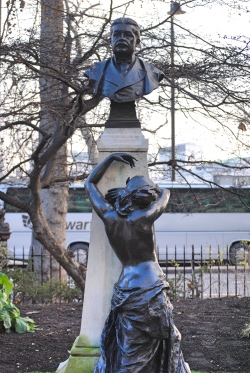
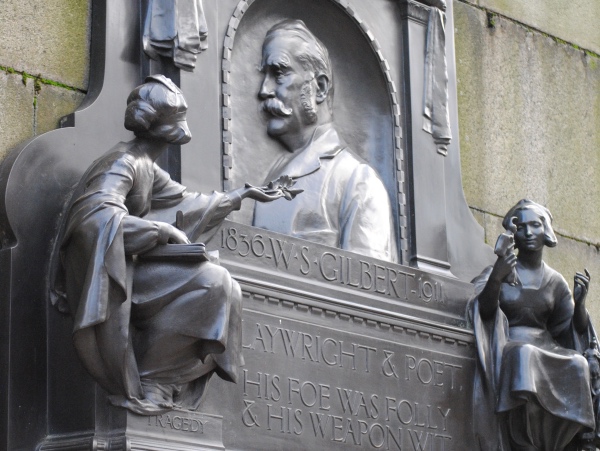
 Located on the west bank of the Thames between Waterloo and Hungerford Bridges are two separate memorials to the dramatist Sir WS Gilbert (1836-1911) and composer Sir Arthur Sullivan (1842-1900) – a partnership better known simply as Gilbert and Sullivan.

The first to be unveiled was a now Grade II-listed bronze bust of Sullivan in 1903. Located at the northern end of Victoria Embankment Gardens, it is the work of Sir William Goscombe John and, along with the bust which sits atop a pedestal, the monument features a scantily clad female muse leaning against the pillar in apparent grief.

Sheet music, a mandolin and a Pan mask all lie in a heap beside her – the discarded props of Sullivan’s profession – and on the side of the plinth are inscribed some lines from his work, The Yeoman of the Guard: “Is life a boon? If so, it must befall that Death, whene’er he call, must call too soon” (the same lines are inscribed on the sheet music).

The bronze memorial plaque to Gilbert, meanwhile, was unveiled in 1915, four years after his death. It’s attached to Charing Cross Pier on the downstream side of Hungerford Bridge and, the work of Sir George Frampton, shows Gilbert in profile relief flanked by figures of Comedy and Tragedy.

Gilbert is accompanied by an inscription which reads: “His foe was folly & his weapon wit”. A shield underneath bears a Latin inscription which translates as “I would rather die than change”.

The location of the memorials is not coincidental – the career of Gilbert and Sullivan was closely associated with the nearby Savoy Theatre, where many of their works were premiered thanks to its owner Richard D’Oyly Carte – he’s also commemorated in a memorial opposite the entrance to the Savoy nearby.


Lost London – The Church of St Peter-le-Poer…

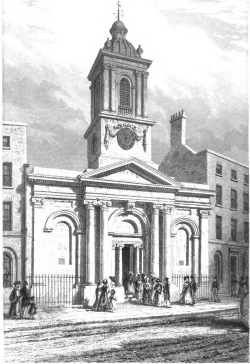
This medieval-era church, located on Broad Street in the City of London, survived the Great Fire of 1666 but was demolished in the early 20th century when, due to the lack of residents in the City, it was no longer needed as a church.

The church, also sometimes referred to as St Peter-le-Poor, was in existence by the end of the 12th century but it’s thought the name ‘le poer’ (generally said to refer to either the poverty of the surrounding area or its proximity to an Augustinian monastery) didn’t come to be added until the 16th century.

The church was rebuilt in 1540 and then enlarged and repaired – including the addition of a new steeple – in the first half of the 17th century.

By 1788, the church had, however, fallen into such disrepair that it had to be rebuilt and the new building, designed by Jesse Gibson and located further back from Broad Street (into which it had previously projected), was consecrated in November, 1792.

The layout of the new church was somewhat unusual – the altar was located on the north-west side of the church, opposite the entrance (altars were traditionally located in the east), and the nave was circular with a wooden gallery running around the interior.

There was a large lantern in the centre with glass walls. The entrance on the eastern side of the church, featured a facade which gave no hint of the circular nature of the building behind – it featured a square tower and columned entrance.

With the declining population living in the City of London, the church was no longer needed as a place of worship by the early 20th century and so it was demolished in 1907.

The parish was united with St Michael Cornhill and the proceeds from the sale of the site were used to build the church of St Peter-le-Poer in Friern Barnet. This church was also given the City property’s font, pulpit and panelling.


This Week in London – Monet and architecture; Abbey Road Studios on show; and, Maqdala recalled…

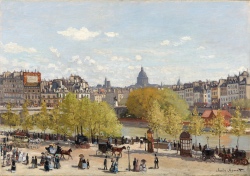
An exhibition showcasing the works of Impressionist artist Claude Monet with a focus on his depictions of architecture opens at the National Gallery on Monday. The Credit Suisse Exhibition: Monet & Architecture is the first exhibition concentrating solely on Monet’s works in London in more than 20 years. It spans his entire career from the mid-1860s to early 20th century and features more than 75 paintings depicting everything from villages to cities like Venice and London as well as individual structures and monuments. The display includes a rare gathering of some of Monet’s great ‘series’ paintings including five pictures from trips to Holland made in the early 1870s, 10 paintings of Argenteuil and the Parisian suburbs from the mid-1870s, seven pictures depicting the cathedral at Rouen from 1892–5, eight paintings of London from 1899–1904, and nine canvases showing Venice from 1908. Highlights include the Quai du Louvre (1867) (pictured), the Boulevard des Capucines (1873), and the flag-filled Rue Montorgeuil, 30 June 1878. Can be seen in the Sainsbury Wing until 29th July. Admission charge applies. For more, see www.nationalgallery.org.uk. PICTURE: The Quai du Louvre (Le Quai du Louvre), 1867, Claude Monet, Oil on canvas © Collection Gemeentemuseum Den Haag.

London’s Abbey Road Studios are celebrated in an exhibition of the work of rock photographer Jill Furmanovsky which opens at the Barbican Music Library on Monday. Inside Abbey Road Studios – Through the lens of Jill Furmanovsky is a showcase of her work since 1976 when she photographed Pink Floyd during the Wish You Were Here recording sessions and, as well as those images, includes more recent images of the likes of Nile Rodgers, Royal Blood, Novelist, and Mura Masa, as well as emerging musical talent. The display is a collaboration between Abbey Road Studios, Furmanovsky – who became artist-in-residence at the studios last year – and the Barbican Music Library. The exhibition, which is free to enter, can be seen until 27th June. For more, see www.barbican.org.uk/whats-on/2018/event/inside-abbey-road-studios.

Some 20 objects from Ethiopia are featured in new exhibition at the V&A marking the 150th anniversary of the siege and battle at Maqdala, culmination of the British Expedition to Abyssinia. Maqdala 1868, which focuses on the battle and its aftermath, features some of the earliest examples of military photography in Britain as well as a portrait of Emperor Tewodros II’s son Prince Alemayehu taken by Julia Margaret Cameron soon after the prince was brought to England by the British military. There’s also examples of metalwork and textiles including a gold crown with filigree designs and embossed images of the Evangelists and Apostles, a solid gold chalice, jewellery and a wedding dress believed to have belonged to the Emperor’s wife, Queen Terunesh. All of the objects were taken during Sir Robert Napier’s military expedition of 1867-68 which was aimed at securing the release of British hostages held by the Emperor and which culminated in the Emperor’s suicide and the destruction of his fortress. The exhibition, which is free to see, has been organised in consultation with the Ethiopian Embassy in London and an advisory group including members of the Orthodox Tewahedo Church, members of the Anglo-Ethiopian society and representatives from the Rastafarian community. Runs until July, 2019, in Room 66 of the Silver Galleries. There is a program of related events. For more, see www.vam.ac.uk.

Send all items for inclusion to exploringlondon@gmail.com.

Treasures of London – St Lawrence and Mary Magdalene Drinking Fountain…

Now located just outside St Paul’s Cathedral at the eastern end of Carter Lane Gardens, this Gothic Victorian drinking fountain once stood near the Church of St Lawrence Jewry close by Guildhall. 

Designed by architect John Robinson and featuring bronze sculptural work by Joseph Durham, the now Grade II-listed fountain was paid for jointly by the parishes and St Lawrence and St Mary Magdalene.

One of many fountains erected from the 1850s onwards to provide free, clean water to the city’s residents, it features statues of both St Lawrence – holding the grid iron on which tradition holds he was martyred – and of St Mary Magdalene – holding a cross with a skull at her feet – set in two of four niches in an elaborate canopy. The remaining two niches, now empty, are believed to have once held the names of past benefactors of the churches.

Below the canopy is another niche, from the back of which water streams out into a dish when a button is pushed. The water stream brings an extra dimension to a relief carving depicting a scene from the Biblical book of Exodus in which Moses is striking a rock at Horeb to bring forth water while, beside him, a woman holds a cup to the lips of her child.

The fountain was originally installed to the north of St Lawrence Jewry in Church Passage in 1866 and remained there for more than a century until, in 1970, the redevelopment of Guildhall Yard meant it had to be moved. It was dismantled into about 150 pieces and put into storage in a barn in Epping with the idea that it would be re-erected.

But it wasn’t until 2010 that it underwent an extensive restoration and was placed in its current location.

PICTURE: Top – Another Believer (image cropped); Right – Jordiferrer. Both licensed under CC BY-SA 4.0

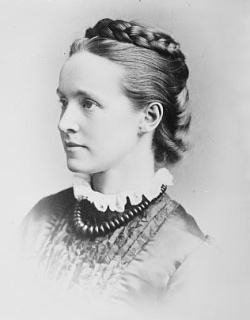
Famous Londoners – Millicent Garrett Fawcett…

Women’s suffrage advocate Millicent Garrett Fawcett will become the first woman to be honoured with a statue in Westminster’s Parliament Square next month to mark the 100th anniversary of the passing of the 1918 act which gave women the vote for the first time. But who exactly was she?

Born in Aldeburgh, Suffolk, on 11th June, 1847, Millicent Garrett was the daughter of Newson Garrett, a merchant and shipowner, and his wife Louisa – the eighth of their 10 children.

At the age of 12, in 1858, she went to London with her older sister Elizabeth (who would go on to become Britain’s first female doctor) to study at a private boarding school in Blackheath. A key moment came seven years later in 1865 when she went to hear a speech by radical MP John Stuart Mills who spoke of equal rights for women.

Fawcett was deeply impacted and became actively involved in his campaign. When she was just 18, Millicent was introduced via Mills to Henry Fawcett, MP for Brighton and women’s rights activist and the two became close friends before, despite an age difference of 14 years, marrying on 23rd April, 1867. As well as caring for her husband who had been blinded in a shooting accident some 10 years before they were wed, Millicent took up a role as his secretary.

In 1868, Millicent gave birth to their only child, Philippa, and the family spent their time between two households – one in London (at 51 The Lawn on the site of what is now Vauxhall Park) and the other in Cambridge (where she later became a co-founder of Newnham College).

Meanwhile, with her husband’s encouragement, she was also pursuing her own writing career, penning the popular short book, Political Economy for Beginners, which was published in 1870, as well as becoming a well-known public speaker on a range of issues including women’s rights.

While when her husband – then Postmaster General – died of pleurisy on 6th November, 1884, Millicent temporarily withdrew from public life (it was after Henry’s death that, as per his wishes, Vauxhall Park was created on the site of his former home). But the years following saw her become increasingly engaged in activities in support of women’s suffrage.

She was involved in the formation of the National Union of Women’s Suffrage Societies (NUWSS) in 1897 – it went on to become the largest group of its kind with 50,000 members by 1913 – and would later become its president, a post she would hold until after World War I.

Fawcett’s interests, however, also saw her involved in campaigns to curb child abuse, to end child marriage and the “white slave trade” as well as the formation of a relief fund for South African women and children affected by the Boer War (in 1901 she visited South Africa as head of a commission charged with reporting on conditions in concentration camps).

When some groups advocating for women’s suffrage started to take more violent action – which included breaking windows and hunger strikes when jailed, Fawcett argued against such militancy and remained among the moderates, convinced that women would eventually win the vote as a result of the changes taking place in society.

Suffrage activism was interrupted thanks to World War I but the role women played in support of the war effort saw opinion shift enough for, in 1918, the passing of the Representation of the People Act, which gave women aged over 30 voting rights.

In 1919, Fawcett retired from active engagement in politics. She was appointed a Dame Grand Cross of the Order of the British Empire in 1925.

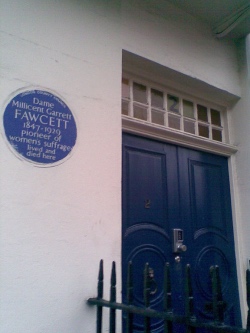
Fawcett witnessed the passing of an act to give women equal voting rights to men in 1928 – 10 years after the first act – before dying, at the age of 82, at her home at 2 Gower Street in Bloomsbury, London, on 5th August, 1929 (there’s a Blue Plaque on the property where she had lived for more than 45 years – pictured above). She was cremated at Golders Green but there is a memorial to both her and her husband in Westminster Abbey.

The Fawcett Society, which has carried her name since 1953, continues to fight sexism and gender inequality in the UK, campaigning on issues such as closing the gender pay gap.