OK, so it doesn’t look like the most historic of pubs but the Bricklayer’s Arms in Putney does boast an interesting history (as well as a much accoladed menu ales).
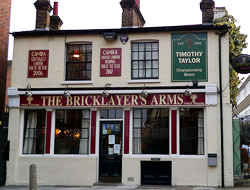 The Waterman Street pub is apparently the oldest in the south-western riverside district, dating back to 1826 when it was constructed on the site of a former coaching house and blacksmith’s forge.
Then named the Waterman’s Arms, thanks no doubt to its Thames proximity and the fact that, as a result, most of the clientele were freeman and lightermen working on the river, it changed its name to the Bricklayer’s Arms around the turn of the 20th century when, thanks to the extension of the District line railway, there was a sizeable amount of construction going on in the area.
It was briefly known as the Putney Brick before the current owners – actress Becky Newman and her husband John – took over the pub just over 10 years ago, during which time it has won a swag of awards including being named one of the top 10 English pubs by National Geographic and winning the CAMRA National Pub of the Year Award in 2007 and 2009.
For more on the pub (and the plans to extend it), check out www.bricklayers-arms.co.uk.
PICTURE: Ewan Munro-Flickr/CC BY-SA 2.0 (image has been cropped and brightened)



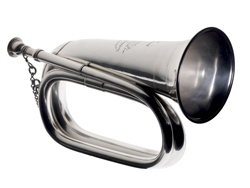 Marking the centenary of the battle, Jutland 1916: WWI’s Greatest Sea Battle explores the battle itself (which claimed the lives of more than 8,500 as the British Grand Fleet met the German High Seas Fleet in what neither side could claim as a decisive victory) as well as its lead-up, aftermath and the experience of those serving on British and German warships through paintings and newspaper clippings, photographs, ship models and plans, sailor-made craft work and medals. Among the objects on display is a 14 foot long shipbuilder’s model of the HMS Queen Mary, which, one of the largest battle cruisers involved,was destroyed with only 18 survivors of the 1,266 crew. Among the personal stories told in the exhibition, meanwhile, is that of boy bugler William Robert Walker, of Kennington, who served on the HMS Calliope and, severely wounded during the battle, was later visited by King George V


 .
.


 Exploring London