10 fictional character addresses in London – 10. 165 Eaton Place

In this, the final in our series looking at fictional character addresses, we take a look at the home of Lord and Lady Bellamy and then the Holland family from the two TV series of Upstairs Downstairs.

The first five series, which ran from 1971-1975, followed the lives of the somewhat ill-fated Bellamy family and spanned the period from the early 1900s until 1930.

The second, short-lived, incarnation, which the first series of which aired on the BBC only a couple of years ago before the second in 2012 (after which it was cancelled), picked up the story six years later.

It follows the lives of the Hollands, who take up residence in what had been the Bellamy’s residence at 165 Eaton Place in Belgravia (Jean Marsh, one of the original show’s creators who played head parlour maid Rose in the original series, returned as housekeeper – the only original cast member in the newer series).

There is an actual Eaton Place in Belgravia but it doesn’t go up to number 165. The original series used a house located at 65 Eaton Place for exterior shots (they added a 1 to the front of the 65 although no interiors were shot here) although the newer series apparently used a property based in Leamington Spa.

The property at 65 Eaton Place, meanwhile, was apparently part of a development built in 1824 by renowned builder Thomas Cubitt on the orders of the 2nd Marquess of Westminster, Richard Grosvenor.

Among the many real residents over the years (when the property was no longer used as a single home but had been divided into flats) was the rather scandalous Lady Alexandra Metcalfe, youngest daughter of Lord Curzon, a former Foreign Secretary and Viceroy of India.

We’ll launch a new special series next Wednesday.

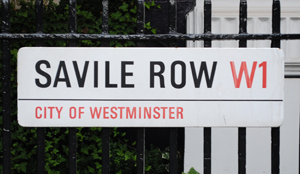
10 fictional character addresses in London – 9. 7 Savile Row, Burlington Gardens…

The adventurous, wealthy and rather mysterious Phileas Fogg, the hero of Jules Verne’s 1873 novel Around the World in Eighty Daysis noted in the book’s first line as living at “No. 7 Saville Row, Burlington Gardens, the house in which Sheridan died in 1814”.

Savile-RowIt’s from there that he and his delightfully named French valet, Passepartout, set off on their breakneck trip around the world after Fogg, a “doubtful” Londoner who was a member of the Reform Club based nearby in Pall Mall (“and that was all” – his history was something of an unknown), makes a £20,000 bet that he can travel around the world in just 80 days – a bet which sees him travel by everything from trains to elephants and overcome all sorts of obstacles as he attempts the feat.

But back to London and Savile Row in the inner west London area of Mayfair. The Irish-born playwright and MP Richard Brinsley Sheridan did indeed live in Savile Row – but at number 14 rather than at number 7 (and he died in 1816, not 1814 as claimed in the book).

There is a plaque on the townhouse mentionig Sheridan’s residence (but not Fogg’s) which today is occupied by tailors Hardy Amies. Amies himself purchased the property, which was restored in 2009, in 1947, reportedly with the backing of Cary Grant’s ex-wife, actress Virginia Cherril.

For more on Savile Row’s history, see Henry Poole: Founders of Savile Row – The Making of a Legend.

This Week In London – Kenwood House reopens; robot safari at the Science Museum; Kew Gardens illuminates for Christmas; Vivien Leigh at the NPG; and more…

Kenwood House in north London is being reopened to the public today following a £5.95 million restoration project which has seen the library returned to what Scottish architect Robert Adam had intended it to be. The project, which saw the Hampstead property closed since March last year, has also seen the restoration of three other Robert Adam-designed rooms – the entrance hall, Great Stairs and antechamber or entrance to the library – as well as the redecoration of four rooms in 18th century style, repainting of the exterior and the repair of the home’s roof – a job aimed at protecting the rooms and its stellar

Kenwood-House-Librarycollection of artworks by the likes of Rembrandt and Vermeer. English Heritage has also endeavoured to make the property more homely, replacing ticket desks and rope barriers with an open fire, warm rugs and leather couches on which visitors can relax. The library (pictured) was built and decorated to Adam’s designs between 1767 and 1770 as part of a wider remodelling of the villa for its owner Lord Chief Justice William Murray, 1st Earl of Mansfield. Redecorated many times since, it was restored in the 1960s but this redecoration was later found to be inaccurate. The Caring for Kenwood restoration project, which has also seen restoration of the Kenwood Dairy, was funded by a £3.89 million grant from the Heritage Lottery Fund as well as support from the Wolfson Foundation and other donors. To coincide with the reopening, a new app exploring Kenwood House has been released which can be downloaded for free from the iTunes store. For more, see www.english-heritage.org.uk/daysout/properties/kenwood/. PICTURE: English Heritage/Patricia Payne.

Head out on a “robot safari” this weekend with a special free event at Science Museum in South Kensington. Robot SafariEU, part of Eurobotics week, features 13 biometric robots from across Europe including an underwater turtle robot, a shoal of luminous fish robots, a robotic cheetah cub and Pleurobot, a robotic salamander. Roboticists from across Europe will be on hand to help visitors interact with the bots. Suitable for all ages, the event kicked off on Wednesday night and runs again on the weekend. Admission is free but timed tickets are required. For more, see www.sciencemuseum.org.uk/RobotSafari.

A memorial to author, scholar and apologist CS Lewis was dedicated at Westminster Abbey last Friday – the 50th anniversary of his death. Conducting the service, the Dean of Westminster, the Very Reverend Dr John Hall, said Lewis was “one of the most significant Christian apologists of the 20th century” and the author of stories that had “inspired the imagination and faith of countless readers and film-goers”. Douglas Gresham, younger stepson of Lewis, read from the author’s book, The Last Battle, at the service. The memorial is located in Poet’s Corner in the abbey’s south transept. For more see www.westminster-abbey.org.

A Blue Plaque commemorating Al Bowlly – described as “Europe’s most popular crooner and famous radio and record star” – will be unveiled at his home in Charing Cross Road this week. Bowlly, who lived between 1899 and 1941, was the voice beyond songs like Goodnight Sweetheart and The Very Thought Of You. The English Heritage Blue Plaque will be unveiled at Charing Cross Mansions, 26 Charing Cross Road – his home during the pinnacle of his career. For more, see www.english-heritage.co.uk/discover/blue-plaques/.

Kew Gardens has opened its gates after dark for the first time with a “captivating show of lights, sound and landscape” this festive season. A mile long illuminated trail, created in partnership with entertainment promoter Raymond Gubbay, will take visitors’ through the garden’s unique tree collections, kicking off at Victoria Gate where a Christmas village (and Santa’s Woodland Grotto) is located. The gardens will be open every Thursday to Sunday until 23rd December and then be open every night from 26th December to 4th January from 4.45pm to 10pm. Admission charge applies. For more, see www.kew.org/Christmas.

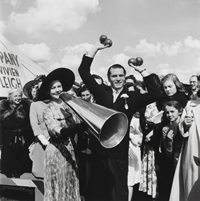
VivienLeighActress Vivien Leigh is the star of a new exhibition opening on Saturday at the National Portrait Gallery. Starring Vivien Leigh: A Centenary Celebration tells her story with a focus on her Academy Award-winning role in 1939’s Gone With The Wind. The display features more than 50 portraits of Leigh by the likes of Cecil Beaton, Angus McBean and Madame Yevonde – many of which have never been exhibited in the gallery before – and a selection of memorabilia including magazine covers, vintage film stills and press books. Among the photos will be a newly acquired image of Leigh and her husband, Laurence Olivier, taken by British photojournalist Larry Burrows at a garden party in 1949 (pictured), along with two rarely seen portraits of Leigh – one taken on the set of The School for Scandal by Vivienne in 1949 and the other by Paul Tanqueray in 1942. The exhibition will be held in Room 33 and runs until 20th July. Admission is free. For more, see www.npg.org.uk. PICTURE:  Copyright – Larry Burrows Collection 2013.

Famous Londoners – Sir Arthur Conan Doyle…

Given our current Wednesday series, we thought it only fitting that we take a quick look at the life of Scottish-born Sir Arthur Conan Doyle, a physician and author most famous for his creation of fictional detective Sherlock Holmes.

Born in Edinburgh on 12 May, 1859, to a wealthy Irish-Catholic family, Doyle was educated at a Jesuit preparatory school in England before  undertaking a medical degree at the University of Edinburgh. It was there where he met his mentor, Dr Joseph Bell, a figure who at least partly inspired the creation of Holmes, and it was also during his time here that he first began writing – his first short story was The Mystery of Sasassa Valley. Having taken a voyage to the Arctic Circle in the post of ship’s surgeon and worked in Birmingham as a doctor’s assistant, he was awarded a medical degree in 1881 (he became MD in 1885).

His first job after graduation was aboard another ship – this time sailing to Africa – and after the voyage he settled back in England, briefly in Plymouth and then in Portsmouth where he opened his first medical practice. For the next few years, he continued  practising as a doctor while writing and in 1885 married his first wife Louisa Hawkins.

In 1886, he started writing A Study in Scarlet. Introducing Sherlock Holmes and Dr John Watson to the world,  it was eventually published in Beeton’s Christmas Annual in 1888. Doyle went on to write some 60 stories about Holmes over the ensuing years but also wrote other books including historical novels, fantasy and science-fiction stories (The Lost World), romances (The White Company), plays (including one about Sherlock Holmes), poetry and written works which reflected his interest in Spiritualism – an interest which had started while he was at university.

In 1890, having studied opthalmology in Vienna, he established a practice at 2 Upper Wimpole Street, Marylebone, London (the location lies only a short distance from his creation’s famous address at 221b Baker Street) and, with his family, took up residence in Montague Place and later at 12 Tennison Road in South Norwood (marked by a Blue Plaque). But with no patients, he spent his time writing, deciding to kill Holmes off in 1893 but subsequently bringing him back to life after a public outcry. He toured the US in 1894 (other countries he visited during his life included Australia) and later served as a surgeon in the Boer War (1899-1902), for which he was knighted in 1902.

Following the death of his first wife form tuberculosis in 1906 (with whom he had two children), Doyle married Jean Elizabeth Leckie in 1907. Moving to Windlesham in Sussex (it was here Doyle would live for the rest of his life while keeping a flat in London), they had three further children. Meanwhile his interest in Spiritualism continued to grow, particularly following the death of his son, Kingsley, in World War I.

His final 12 stories about Sherlock Holmes were published in 1928 in a compilation called The Casebook of Sherlock Holmes. The following year, despite poor health, he embarked on a Spirtualism tour on the continent but had to break it off and return home to Crowborough, East Sussex, in England. There he died on 7th July, 1930, leaving behind a literary legacy which has continued on unchecked. His grave can be found in Minstead Churchyard in New Forest.

For more on Sherlock Holmes, see our earlier posts Famous Londoners – Sherlock Holmes and 10 fictional character addresses in London – 1. 221b Baker Street….

Famous Londoners – David Garrick…

Playwright. Actor. Theatre manager. David Garrick stands out as a towering figure of the theatrical world in the 18th century and is remembered, at least in part, for his friendship with the irrepressible lexicographer Samuel Johnson.

Born on 19th February, 1717, in Hereford to an army officer (with French Huguenot roots) as the third of five children, Garrick attended school in Lichfield, north of Birmingham, including, at the short-lived Edial Hall School where Dr Johnson himself taught Latin and Greek. It was during his youth that he first took an interest in the stage, appearing in George Farquhar’s The Recruiting Officer.

When the school closed due to lack of funds, Garrick accompanied Dr Johnson to London (they had become friends) and there he and his younger brother Peter established a wine business (Peter eventually went back to Lichfield to run part of the business from there). While the business wasn’t a great success, Garrick took to acting in amateur theatricals and eventually – according to Peter Thomson, writing in the Oxford Dictionary of National Biography – made his professional debut acting incognito in a pantomime in London in March, 1741, although Garrick apparently said placed his debut in Ipswich that summer when he was acting in Thomas Southerne’s Oroonoko, or the Royal Slave (meanwhile the first performance of one of his dramatic works – Lethe, or Aesop in the Shades – had taken place at Drury Lane the previous year).

His breakthrough role came later that year – in October – when he appeared in London on the stage of the unlicensed Goodman’s Fields Theatre in the title role of Richard III. Soon acclaimed by the likes of Alexander Pope and William Pitt as the greatest actor of his time, further roles followed at Goodman’s Fields and at the famous Drury Lane Theatre as well as in Dublin (where he started an ultimately ill-fated love affair with Irish actress Peg Woffington who returned with him to London where he continued acting at Drury Lane).

Having also performed for a season, at the rival Covent Garden Theatre, in April 1747, Garrick entered into a partnership with James Lacy for the ownership of the Drury Lane Theatre. The first performance was apparently by Garrick himself, reading Ode to Drury Lane Theatre, on dedicating a Building and erecting a Statue, to Shakespeare – a piece written by Dr Johnson.

It was two years later – on 22nd June, 1749 – that he married a German dancer Eva Marie Veigel. They lived at a house at 27 Southampton Street and Garrick’s increasing wealth led him to buy a country property in Hampton, today in south west London, in 1754 which became known as “Garrick’s Villa”. Considerably altered, the Grade I-listed property still stands there today (albeit having suffered extensive damage in a 2008 fire) along with the summerhouse he built to house his collection of Shakespearian memorabilia – known as Garrick’s Temple to Shakespeare, it’s open to the public over from April to October.

Meanwhile, as well as managing the theatre, Garrick continued acting and writing plays. In September, 1769, he staged the Shakespeare Jubilee in Stratford-upon-Avon, celebrating 200 years since the playwright’s birth – even though it was five years too late and was ultimately a bit of a disaster, he took his celebration of Shakespeare back to Drury Lane and there it was a huge success.

Garrick, who moved from Southampton Street into the newly built Adelphi Terrace in 1772, remained manager of Drury Lane until his retirement in 1776 during which time it became widely acknowledged as the country’s leading theatre. He died at home on 20th January, 1779. His wife outlived him by 43 years. The couple had no children. Garrick was subsequently interred in Poet’s Corner, Westminster Abbey – the first actor to receive the honour.

Garrick’s legacy was enormous – not only is he famed for bringing a new ‘realistic’ style to the profession he so loved, he set new standards in the arts of public relations and was also an instrumental figure in having Shakespeare recognised as England’s national icon. Legend goes that he was also the actor responsible for the phrase “Break a leg!” – apparently so engrossed in a performance of Richard III that he overlooked the fact he’d fractured his bone.

Garrick’s name lives on in the Garrick Theatre (still operating in Charing Cross Road) and the Garrick Club, and there’s memorial to him on his former home in Adelphi Terrace.

Around London – Open House London; Yinka Shonibare at Greenwich; Bankside transformed; and Michael Peto at the NPG…

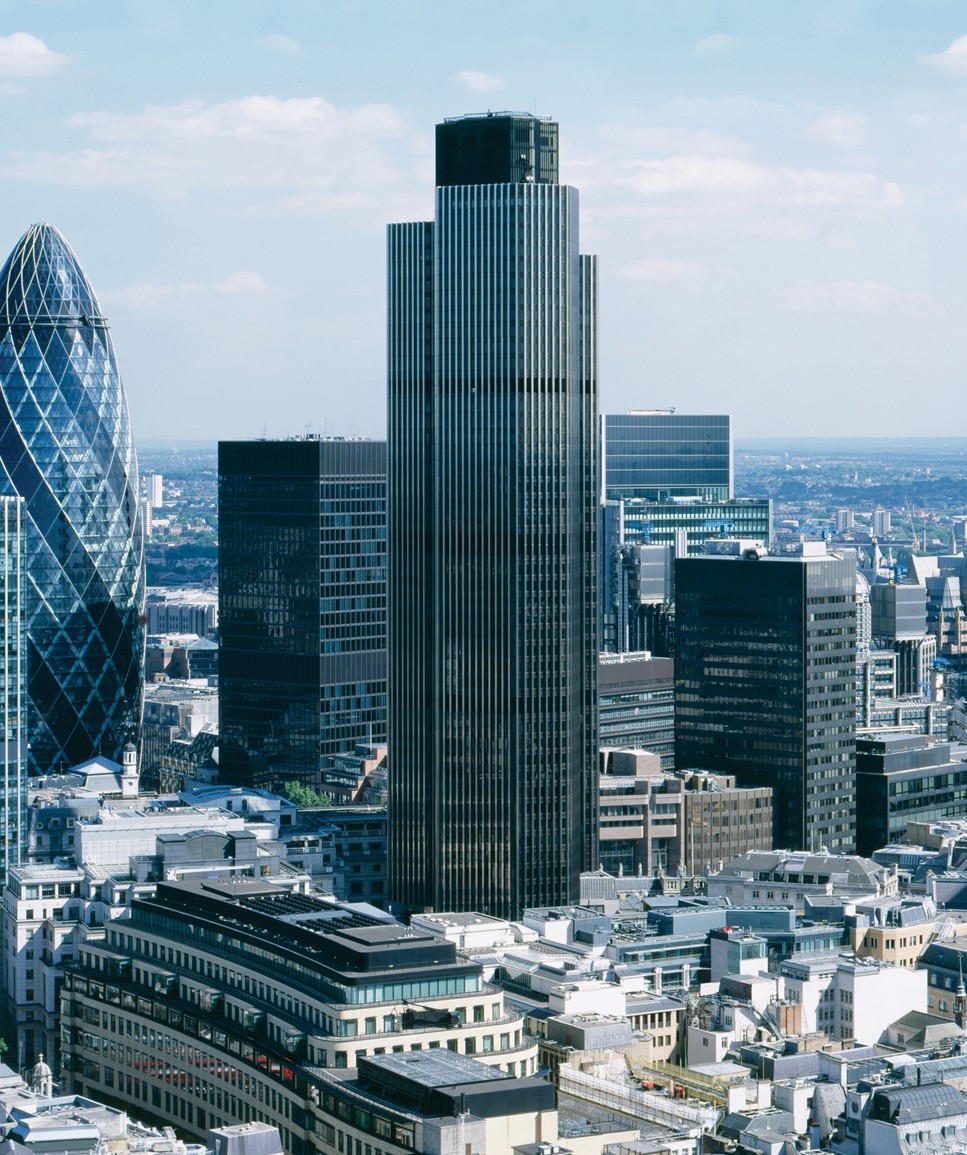
Tower 42_external It’s finally here. Open House London kicks off on Friday and with more than 800 buildings opening their doors, the only difficulty you’ll have this weekend will be choosing what you end up doing! This year’s theme is ‘celebrating architecture, people and place’ and among the highlights will be the opening of landmark structures like Battersea Power Station, Tower 42 (pictured), and the Gherkin (30 St Mary Axe) as well as 100 private homes, architects’ homes and “ground-breaking” housing developments and everything from the Shri Swaminarayan Temple in Brent to Horse Guards in Whitehall (certain buildings, like 10 Downing Street and The View from the Shard, are only open to people who won tickets in an earlier ballot). This year’s festivities also include a moonlit “culture crawl” through London on Friday night. If you haven’t ordered a hardcopy programme, you can check the listings online at www.openhouselondon.org. There’s also an Open House iPhone app available from the appstore.

A series of works by Yinka Shonibare – including some never before seen in the UK – went on display at Greenwich yesterday, thanks to Royal Museums Greenwich. The works, which explore notions of “Britishness, trade and empire, commemoration and national identity”, can be found inside and around buildings including the Queen’s House, National Maritime Museum and Royal Observatory and include Fake Death Pictures – a series of five vision of the death of naval hero Vice-Admiral Lord Nelson, Wind Sculpture – a gravity-defying object located on the Queen’s House lawn, Cheeky Little Astronomer – a specially commissioned sculpture located in the Flamsteed House at the Royal Observatory, and Nelson’s Ship in a Bottle – last seen on Trafalgar Square’s Fourth Plinth. Yinka Shonibare MBE at Greenwich, which is supported by a range of talks, debates and tours, runs until 23rd February. For more, see www.rmg.co.uk.

Bankside will be transformed this weekend as artists will be transforming disused hoardings and derelict buildings with original artworks as part of the Merge Festival. The work’s include Candy Chang’s Before I Die, Alex Chinnick’s Miner on the Moon, and Marcus Lyall and Mark Logue’s House of Pain. Until 20th October. For more on the festival celebrating Bankside, see www.mergefestival.co.uk.

On Now: Michael Peto Photographs: Mandela to McCartney. This new exhibition at the National Portrait Gallery just off Trafalgar Square features a previously unexhibited photo of Elizabeth Taylor and Richard Burton, taken at the beginning of their love affair. It’s one of 10 portraits taken by the late Hungarian-born photographer Michael Peto in London during the 1950s and 1960s – others feature Samuel Beckett, Jennie Lee, Paul McCartney and Ian McKellen. Admission is free. For more, see www.npg.org.uk.

Around London: Heritage Open Days; Afghanistan supply lines; and Leslie Howard’s Blue Plaque…

It’s a good weekend for a day trip with heritage sites all around the fringes of greater London throwing their doors open this weekend as part of the annual Heritage Open Days event. Among places taking part in this year’s event – which will be followed by Open House London next weekend – are Cleaves Almshouses – established in 1669 and located in Kingston upon Thames, Watford’s oldest building – St Mary’s Church, Lopping Hall in Loughton (so named for the fact it was given to the townspeople in exchange for lopping rights in Epping Forest), and St George’s RAF Chapel of Remembrance at Biggin Hill Airfield in Kent. There are more than 4,500 properties taking part over the weekend, which kicks off today and runs until Sunday, across England. For more information – including full listings of all premises taking part, check out www.heritageopendays.org.uk.

A new display taking at in-depth look at the complexities of supplying soldiers in Afghanistan’s Helmand Province opened at the Imperial War Museum this week. War Story: Supplying Frontline Afghanistan follows the journey from RAF Brize Norton in the UK to Camp Bastion in Afghanistan and then to forward operating bases and patrol bases on the frontline and features photographs, interviews and time lapse footage collected by IWM staff on trips to Afghanistan undertaken last year and this year – the first time IWM teams have visited an active theatre of conflict since World War I. Runs until 27th April. For more, see www.iwm.org.uk.

A blue plaque honouring actor and film director Leslie Howard was unveiled by English Heritage at his former childhood home in Upper Norwood in south London last week. Born in the London suburb of Forest Hill, his family moved to Vienna when was only three-years-old but returned to London five years later and lived at 45 Farquhar Road in Upper Norwood for the next four years before moving to another address nearby. Howard made his West End debut in 1917 – adopting the stage name Leslie Howard in favor of his birth name Leslie Howard Steiner – subsequently appeared on stage and in films including Pygmalion (1938) and Gone with the Wind (1939). He died in 1943 when the plane he was in was shot down by enemy fire over the English Channel. For more, see www.english-heritage.org.uk/discover/blue-plaques/.

Treasures of London – Freud’s collection of antiquities…

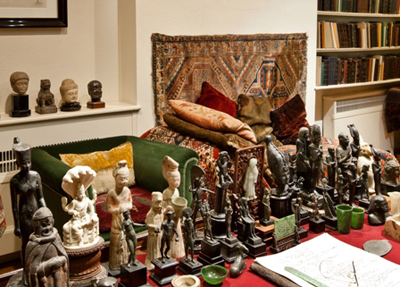
Freud's-DeskThis group of antiquities sits upon the desk of Sigmund Freud – the “founding father” of psychoanalysis –  at what was his home in Hampstead.

It’s part of an extensive collection of around 2,000 items which is on display at house – now the Freud Museum – located at 20 Maresfield Gardens.

The antiquities – which include Egyptian, Greek, Roman, and Oriental artefacts fill a series of cabinets and sit on almost every available surface in Freud’s study including the desk upon which Freud typically wrote until the early hours of the morning.

Collected by Freud from the 1890s onward, they include everything from a bronze statuette of the Greek goddess Athena (dating from the 1st or 2nd century AD – it’s mentioned in one of his manuscripts and, one of Freud’s favorite objects, was one of only three items he chose to have smuggled out of Vienna when his entire collection was threatened in 1938), a small bronze head of the Egyptian God Osiris believed to date from between 1075-716 BC, and a silver Roman ring featuring a blue glass intaglio depicting a pastoral scene which dates from between the 1st century BC and the 1st century AD (it was given as a gift from Freud to German psychoanalyst Ernst Simmel in 1928).

The museum has launched a conservation fund to repair and conserve the most fragile of the items and is aiming to raise £40,000 for the work. It follows a successful campaign earlier this year to raise funds for the conservation of Freud’s famous couch, brought from his former home in Vienna (seen in the background of this image).

Freud and his family lived at the home after escaping from Austria following the country’s annexation by Nazi Germany in 1938. It remained the family home until the death of Freud’s daughter, Anna, in 1982. The museum opened to the public in 1986.

PICTURE: Courtesy of the Freud Museum.

WHERE: Freud Museum, 20 Maresfield Gardens, Hampstead (nearest Tube stations are Finchley Road and Swiss Cottage);  WHEN: Noon to 5pm, Wednesday to Sunday; COST: £6 adults; £4.50 seniors; £3 concessions (including children 12-16); children under 12 free; WEBSITE: www.freud.org.uk.

LondonLife – Pre-Raphaelite wall painting discovered at Red House…

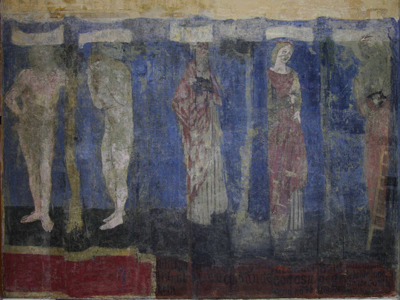
Red-House-Wallpainting,-l-to-r---Adam-Eve-Noah-Rachel-Jacob

A remarkable Pre-Raphaelite painting has been found painted on the wall of a Bexleyheath house lived in by artist William Morris. The bedroom wall painting at Red House, which is believed to have been painted by Morris and other Pre-Raphaelites, was hidden behind a wardrobe and covered by wallpaper for years with only two figures from the painting visible. But following two months of conservation work by the National Trust – which acquired the property in south-east London in 2003 – a six by eight foot image has been discovered depicting Biblical characters such as Adam and Eve, Noah, and Rachel and Jacob. Designed to resemble a hanging tapestry, the image also contained faded and incomplete lines of text which have been identified as being from the Biblical book of Genesis (chapter 30, verse six). Morris lived at the house between 1860 and 1865, during which time Pre-Raphaelite artists such as Dante Gabriel Rossetti and his wife Elizabeth Siddal, Edward Burne-Jones and Ford Madox Brown were regular visitors. It is understood his friends helped decorate the property’s walls, ceilings and items of furniture with wall paintings and patterns. While it is thought Jacob was painted by Morris, Rachel possibly by Elizabeth Siddal and Noah by Madox Brown, further research is being undertaken to help identify who painted which image. For details on visiting times and how to get to the property, check out www.nationaltrust.org.uk/red-house/. PICTURES:  © National Trust / James Breslin and, © National Trust.

Red-House

Around London – Celebrating the Coronation’s 60th anniversary; Benjamin Britten; Keat’s House Festival; and, silver service in Roman Britain…

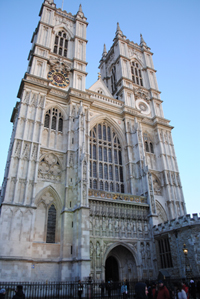
Westminster-Abbey3Sunday marks 60 years since Queen Elizabeth II’s coronation and Westminster Abbey – site of that event – is celebrating with a series of events. These include a special 60th Anniversary of the Coronation Service on Tuesday (4th June) to be attended by the Queen, Duke of Edinburgh and members of the royal family as well as a public lecture to be given by the Bishop of London Richard Chartres on Friday night (7th June – booking is essential), a concert performed by the abbey choir (13th June), and a new exhibition in the chapter house featuring archive images of the 1953 coronation ceremony and of preparations which took place at the abbey. Meanwhile the Coronation Chair, used in most coronations since the 14th century and having just undergone conservation work, is the subject of a new display in St George’s Chapel, and two new commemorative stained glass windows have been installed in King Henry VII’s Lady Chapel – the first commissioned by the abbey for more than a decade, they have been designed by artist Hughie O’Donoghue. For more on the abbey’s celebrations, see www.westminster-abbey.org.

Composer Benjamin Britten is the subject of a new exhibition opening at the British Library tomorrow. Poetry in Sound: The Music of Benjamin Britten (1913-1976) looks at the poetic and literary influences on the work of the man often described as the greatest English composer since Purcell. In particular it examines his collaboration with WH Auden and the interplay of his work with authors such as William Blake, Wilfred Owen, Alfred Lord Tennyson and William Shakespeare. As well as composition manuscripts, the exhibition features photographs, concert programmes and unpublished recordings of his music. There are a range of events accompanying the exhibition which runs until 15th September. An admission charge applies. For more, see www.bl.uk.

The Keats House 2013 Festival is underway this week with activities ranging from poetry readings to felt-making demonstrations, free family workshops and musical performances. The programme of events runs until 2nd June, all under this year’s theme of ‘Health is My Expected Heaven’: The Body and The Imagination. Poet John Keats lived at the house in Hampstead, not far from Hampstead Heath, from 1818 to 1820 and it is the setting for some of his most acclaimed poetry including Ode to a Nightingale. It was this house that he left to travel to Rome where he died of tuberculosis at the age of 25. For more on the festival programme, follow this link.

On Now: Silver Service – Fine dining in Roman Britain. This free exhibition at the British Museum recreates the experience of dining late in the Roman era and uses the Mildenhall Great Dish, Britain’s finest late Roman silver dining service, as an example of the type of large platter on which food for sharing would have been presented. The exhibition, which runs until 4th August, is free (keep an eye out for our upcoming Treasures of London on the Mildenhall Great Dish). For more information, see www.britishmuseum.org.

Treasures of London: The Americus Backers grand piano…

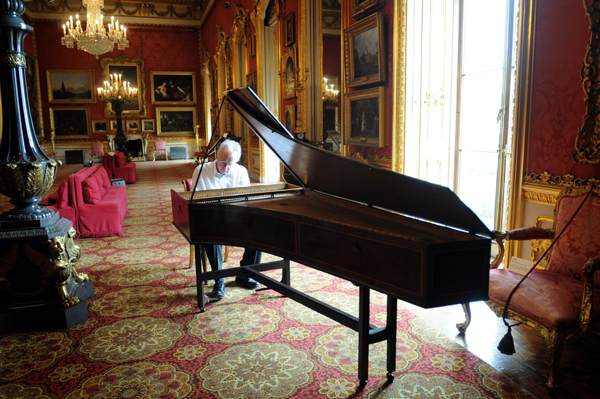
Americus-Backers-piano

The oldest surviving English grand piano, built in London in 1772 by Americus Backers, has gone on display at Apsley House in London, home of the 1st Duke of Wellington, Arthur Wellesley.

Known to have been played by the Iron Duke’s wife Kitty (nee Pakenham), it has been suggested (although remains unconfirmed) that the piano belonged to the Iron Duke’s father, Lord Mornington, who was politician and a composer.

The piano, which has been loaned to English Heritage by Lord and Lady Douro and is expected to remain at the house for the foreseeable future, is the earliest example of a piano with loud and soft pedals and is illustrative of the impact Backers, described by some as “the father of the English grand pianoforte style”, had on the development of piano design.

While much of the detail of Backers’ life  remains obscured, he was apprenticed to a piano builder in Saxony before coming to England in the 1750s and taking up residence in Jermyn Street in 1763 where he apparently lived until his death in 1778. He is known to have built both pianofortes and harpsicords.

The piano, the only known pianoforte by Backers still existing, was previously on loan to the Russell Collection in Edinburgh.

In celebration of the return of the piano to Apsley House, the residence is hosting a special concert this Tuesday (21st May), between 7pm-9pm – the first time the piano will have been heard for at least 5o years (albeit for a short period only with most of the concert performed on a 1781 Ganer. ‘The Duke of Wellington’s Music of the French Wars’ will be held in the Waterloo Gallery. Tickets are £45 each and limited seats are available. Call English Heritage Customer Services on 0870 333 1183 for bookings or see www.english-heritage.org.uk. PICTURE:  Professor David Owen Norris, who has researched and devised the programme has been devised the programme for the evening, playing the piano.He will be joined by the soprano Amanda Pitt. Image courtesy of English Heritage.

10 Historic London Garden Squares…1. Leicester Square…

In the first of a new Wednesday series looking at historic London garden squares, we take a look at what next to Trafalgar Square, is the most famous square in the entire city – Leicester Square.

Located in the heart of the West End, Leicester Square’s history finds its origins back in the 17th history when Robert Sidney, the 2nd Earl of Leicester acquired property on the site where the square now stands. Then known as St Martin’s Field and located within the parish of St Martin’s, Sidney purchased four acres in 1630 and constructed Leicester House on land now located at the square’s northern end.

Leicester-SquareThe earl raised the ire of locals, however, when – having subsequently fenced off the land to prevent people from wandering on to his property – he enclosed what had previously been common land.

The people appealed to King Charles I who appointed three members of the Privy Council to look at the issue. Their decision? That the earl keep a section of his land open for the use of the parishioners of St Martin’s.

First known as Leicester Field, it was this land which later became known as Leicester Square. Fine homes were built around the square (its proximity to the Royal Court and centre of government made it a desirable place to live for the well-to-do and those seeking influence) with the centre enclosed with rails (it’s pictured here in 1750).

The square’s reputation also had a royal boost when, in 1717/1718, Leicester House became home to Prince George (later King George II) and his wife Princess Caroline along with their court after the prince fell out with his father King George I and was banished from St James’ Palace (this story is recounted in marvellous detail in Lucy Worsley’s terrific book, Courtiers: The Secret History of the Georgian Court).

The prince remained at the house for 10 years and was proclaimed King George II after his father’s death at its gate. Interestingly, King George II’s eldest son, Prince Frederick, also lived here for a time after he too fell out with his father (King George II). Apparently their relationship was even worse than the previous generation’s had been.

Despite its royal attractions, even at this stage the square apparently had it’s darker side with some less than savoury characters attending the hotels and livery stables that were built there. But things were to get worse as the wealthy moved out – a situation not helped when Leicester House was demolished in the 1790s.

Leicester Square became known as an entertainment venue in the 19th century (among attractions was the short-lived Royal Panopticon of Science and Art which showcased the best in science and art and Wyld’s Great Globe which contained a gigantic model of the earth) and received a new injection of life when theatres and music halls moved in, bringing the crowds back with them.

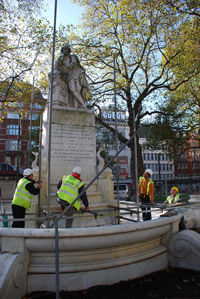
Shakespeare-StatueMeanwhile, the status of the square – and whether it could be built upon – remained a matter of debate well into the 19th century. That ended in 1874 when businessman Albert Grant bought the freehold of the land, had the garden created upon it and then donated it to the Metropolitan Board of Works as a gift to the city.

Responsibility for the management of the square now rests with the City of Westminster. The square area – which is now known for hosting film premieres as well as the tourists who inevitably gather there – was pedestrianised in the 1980s and has just undergone a redevelopment and modernisation which was unveiled last year.

Meanwhile, work to restore the 19th century Shakespeare statue and fountain in the square’s centre is about to be completed (pictured). The square also contains a statue of actor Charlie Chaplin in the square as well as busts of scientist Sir Isaac Newton, painter and first president of the royal Academy Sir Joshua Reynolds, 18th century pioneer surgeon John Hunter, and painter William Hogarth.

The tradition of the entertainment continues in the modern era through the cinemas which now stand in the square and regularly host film premieres (an interesting, if oft-repeated, film-related anecdote connected to the square is that it was in a phone booth located at the square that during the 1960s a young actor Maurice Micklewhite saw a poster for The Caine Mutiny and decided to change his name to Michael Caine).

PICTURES (top) Wikipedia and (below) City of Westminster.

Where is it?…#61…

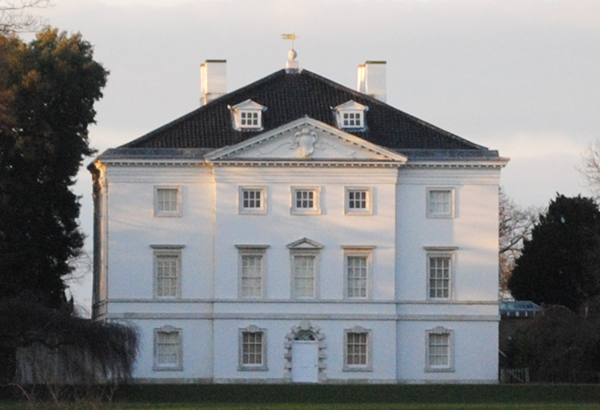
Where-is-it--#61Can you identify where in London this picture was taken and what it’s of? If you think you can, leave a comment below. We’ll reveal the answer early next week. Good luck!

Well done to Sue and Helen – this is, of course, Marble Hill House, located in south-west London on the banks of the River Thames between Richmond and Twickenham (this picture is taken from the opposite side of the Thames). Built for Henrietta Howard, mistress of King George II when he was Prince of Wales, for the lady in her “retirement” from court, the Palladian villa is set among 66 acres of parkland. We’ll look at the house in more detail in a later post.

WHERE: Marble Hill House, Richmond Road, Twickenham (nearest Tube station is Richmond (1 mile) or train station, St Margarets (0.5 mile)); WHEN: 10am-2pm Saturday, 10am to 5pm Sunday (cafe and park are open daily); COST: £5.70 adults/£5.10 concessions/£3.40 child (5-15 years); WEBSITE: www.english-heritage.org.uk/daysout/properties/marble-hill-house/.

Where’s London’s Oldest…wine bar?

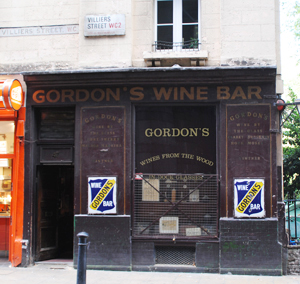
The honour of being London’s oldest winebar goes to Gordon’s Wine Bar at 47 Villiers Street in the West End (just up from Embankment Tube Station or down from Charing Cross Station, whichever you prefer).

Gordon's-Wine-BarThe venerable establishment – still a favoured place to stop for a drink for many Londoners – opened its doors in the 1890s and still conveys a powerful sense of old world charm with the decor pretty much unchanged (there’s been no fancy makeover here) and the wine still served from wooden casks behind the bar.

The site on which the bar is located was once occupied by York House (home to, among others during its centuries of life, Robert Devereaux – 2nd Earl of Essex and favourite of Queen Elizabeth I and Sir Francis Bacon – Lord Chancellor during the reign of King James I) and then, later on, by a large house lived in by diarist Samuel Pepys in the late 1600s before, thanks to its position close to the river, a building was built upon it in the 1790s which served as a warehouse.

The usefulness of the warehouse came to an end when Victoria Embankment was built and the river pushed back and the building was subsequently used for accommodation. Writer Rudyard Kipling was among tenants who lived here (from 1889-1891 during which wrote The Light that Failed – in fact, the building was renamed after him, Kipling House, in 1950.

It was Angus Gordon, a “free vintner” meaning he didn’t have to apply for a licence thanks to the largesse of King Edward III in 1364, who established the premises in the vaults here in the 1890s (interestingly the current owners are also Gordons, but not related). Among the other uses of the building, of which Gordon’s only occupies a part, was apparently as a brothel in the 1920s.

For more on Gordon’s head to www.gordonswinebar.com.

Around London – Aliens at the Royal Observatory; celebrating spring at the British Library; Blue Plaques for Heal and Mendelssohn; and, Barocci at the National Gallery…

It’s alien season at the Royal Observatory in Greenwich and to kick off a series of special events around all things extra-terrestrial, a new exhibition looking the history with things not of this earth opens tomorrow. Alien Revolution, which looks at man’s obsession with intelligent alien life – a trend which began in the century following Copernicus’ discovery that the earth was a planet and the sun a star, will be held in the observatory’s Astronomy Centre until August. Runs until 8th September. Admission is free. Other events include shorts courses looking at science fiction and astronomy, family events and special planetarium shows such as We Are Aliens which runs in April. For more on the events, see www.rmg.co.uk.

The British Library’s Spring Festival kicks off tomorrow with five days of film, design and fashion including the unveiling of a new artwork by fashion illustrator and artist Julie Verhoeven. Verhoeven – who has worked for fashion houses Louis Vuitton, Versace and Mulberry – will be joined by Dylan Jones, editor-in-chief of GQ, to talk about what inspires them while others among fashion’s leading names will be contributing postcards in a one night only pop-up exhibition – Late at the Library: Fashion Flashback – which will also feature talks involving Jones and illustrator Tanya Ling. The event also features a spring market held in the library’s piazza at which designers will be selling wares inspired by the library’s collection. Other events include the showing of a series of short films.  For more about the Spring Festival events, head to www.bl.uk/whatson/exhibitions/spring-festival-2013/index.html.

Furniture designer Sir Ambrose Heal was honoured with the unveiling of an English Heritage Blue Plaque at his former home in Pinner yesterday – the date marking 120 years since he joined the family firm, Heal’s. The house – at Fives Court, Moss Lane in Pinner – was Sir Ambrose’s home from 1901-1917 during the period when he began exerting his influence over the business, having won a silver medal at the 1900 Paris Exhibition for a bedroom suite. Heal was knighted in 1933 and appointed a royal designer for industry in 1939. Meanwhile, a Blue Plaque for 19th century composer Felix Mendelssohn was unveiled at 4 Hobart Place earlier this month, commemorating the house he stayed in at the height of his career during his numerous visits to London. The house was the home of the Hanoverian embassy secretary, Karl Klingemann, at the time. For more on Blue Plaques, see www.english-heritage.org.uk.

On Now: Barocci – Brilliance and Grace. This landmark exhibition at the National Gallery is the first major monographic exhibition dedicated to the art of 16th and 17th century Italian artist Frederico Barocci – pioneer of the Baroque style. Highlights include his spectacular altarpiece, The Entombment of Christ, from the coastal town of Senigallia, the Last Supper – painted for Urbino Cathedral, as well as two altar pieces from Rome – Visitation from the Chiesa Nuova and Institution of the Eucharist from Santa Maria sopra Minerva. Also included are portraits, smaller devotional paintings, Aeneas’ Flight From Troy – his only secular narrative, and more than 65 preparatory drawings, pastel studies and oil sketches. Runs until 19th May. Admission charge applies. For more, see www.nationalgallery.org.

What’s in a name?…Baker Street

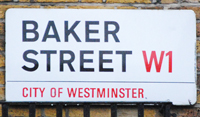
Synonymous with Sherlock Holmes, where does the name Baker Street actually come from? Not from a baker located there, as some might expect. Rather, Baker Street was apparently named after a Dorset luminary, Sir Edward Baker.

Baker-StreetSir Edward, created 1st Baronet Baker of Ranston in Dorset in 1802, was a friend and neighbour of the Portman family who developed the area in the late 1700s and early 1800s. Sir Edward (who later changed his name to Sir Edward Baker Baker) had apparently lent the Portmans a helping hand in developing the area.

A fashionable place to live when it was created, Baker Street remains famous for the house at number 221b, which, according to Sir Arthur Conan Doyle, served as the home to literary characters Sherlock Holmes and Dr John Watson between 1881-1904. The Sherlock Holmes Museum, which actually sits between numbers 237 and 241 Baker Street, now claims the address.

Other attractions to have been located in Baker Street include Madame Tussaud’s waxworks which in 1835 set up in premises known as ‘The Baker Street Bazaar’ before moving to its current premises around the corner on Marylebone Road in 1884.

Among the notable buildings still in Baker Street is the London Beatles Store (located at 231/233) where you can purchase all manner of memorabilia related to the group.

Famous residents have included 19th century Prime Minister William Pitt the Younger, actress Sarah Siddons, author and politician Edward Bulwer-Lytton, explorer Sir Richard Burton, and singer Dusty Springfield. The street was almost immortalised in Gerry Rafferty’s 1970s hit, Baker Street.

Where is it?…#57

Where-is-it--#57

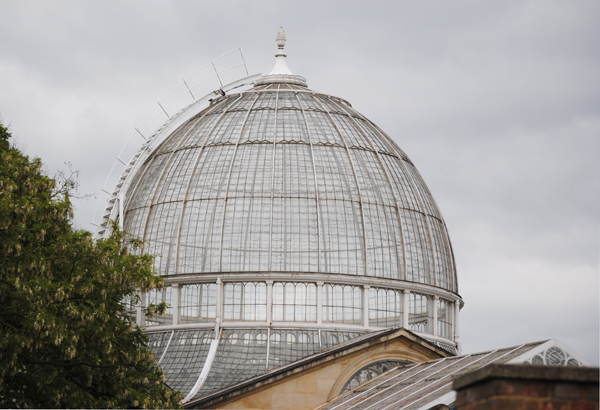
Can you identify where in London this picture was taken (obviously out of season!)? If you think you can, leave a comment below. We’ll reveal the answer early next week. Good luck!

Well done to Mike, Visiting Houses and Gardens and Roberta Stimson (via Facebook) – this is indeed the Great Conservatory at Syon Park – London home of the Duke of Northumberland – located on the banks of the Thames in west London. The magnificent structure was commissioned by the third duke, Hugh Percy, and designed by architect Charles Fowler in 1826. Constructed of gunmetal, Bath stone and glass, it is said to have inspired Joseph Paxton in his designs for the Crystal Palace. For more on Syon Park, see www.syonpark.co.uk.

LondonLife – The one-time home of King Richard III…

Crosby-HallIn honour of the stunning news this week that a skeleton found under a Leicester carpark last year is indeed that of the King Richard III, here’s a picture of the front of Crosby Hall, London home to the king when he was still merely the Duke of Gloucester.

Now located in Cheyne Walk, Chelsea, the Grade II* hall was previously located in Bishopsgate and was the great hall of the 15th century property Crosby Place. As well as being occupied by Richard who rented it from the owner in 1483, a wool merchant named Sir John Crosby (in fact, it also appears in a scene of William Shakespeare’s play, Richard III), the property – built between 1466-75 – was also, from 1523-24, the home of Sir Thomas More, the ill-fated sixteenth century chancellor of King Henry VIII.

The hall was moved piece-by-piece to Chelsea in 1910 when it was threatened with demolition and now stands on land where there was once an orchard owned by Sir Thomas. It served as a dining hall for the British Federation of University Women but is now in private ownership.

The body was confirmed as being, “beyond reasonable doubt”, that of King Richard III, England’s last Plantagenet king, at an extraordinary press conference at the University of Leicester yesterday. Bent by severe scoliosis of the spine, the skeleton’s back had been further twisted to fit into the hole dug for it near the high altar at the church of Grey Friars which had previously stood on the site. Work has now begun a new tomb for the king at nearby Leicester Cathedral.

King Richard III was killed at the Battle of Bosworth on 22nd August, 1485, and was the last English king to die in battle. The researchers found the body was likely to have been killed by one of two fatal wounds – one in which the base of his skull had been sliced off with a weapon believed to be a bladed weapon like a halberd and another from a sword which penetrated his brain. The evidence showed the body had been significantly mutilated after death with a total of 10 wounds on the skeleton.

While radiocarbon dating placed the body in the right time frame and the wounds on the body and burial site were consistent with historical evidence, the key to the identification was the matching of the bones’ DNA with that of a Canadian man, Michael Ibsen, a direct descendant of the king’s sister, Anne of York.

For more on the amazing find, see www.le.ac.uk/richardiii/.

Famous Londoners – John Nash…

Arguably the greatest architect of Regency London, John Nash’s imprint can still be seen in numerous sites around the city, from the master-planning of Regent’s Park and Regent Street to the beautiful buildings of All Soul’s Church in Langham Place and Marble Arch on the edge of Hyde Park.

Born the son of a Welsh millwright in Lambeth, London, on 18th January, 1752, Nash – who went on to work in a range of different architectural styles – trained as a draughtsman under the tutelage of architect Sir Robert Taylor and in 1777 established his own business as a builder and surveyor.
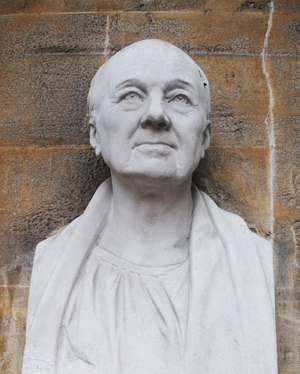
John-NashBut he certainly didn’t meet with immediate success and, following failure as a building speculator (he built properties in Bloomsbury Square and Great Russell Street but failed to make enough money from the venture – there’s a blue plaque on one of the houses, which he lived in, at 66 Great Russell Street), was declared bankrupt in 1783.

Meanwhile, his personal life was also in turmoil during these years – in 1775 he had married, Jane Kerr, the daughter of a Surrey surgeon, but separated from her in the early 1780s after various troubles including her eventually apparently having a child with a Welshman named Charles Charles, who is said to have died in prison after he was jailed for adultery.

Brought down by his misfortune, in the mid 1780s Nash moved to Carmarthen in Wales where he had family. Taking up work here, by the late 1780s he was designing prisons – the first was at Carmarthen – and worked on a number of other prominent buildings including St David’s Cathedral and various country houses.

Rising to prominence in Carmarthen society, by 1797, however, Nash was again working in London, initially in partnership with the renowned landscape architect Humphrey Repton with whom he had formed a business relationship some years earlier (although the partnership had soured over finances by 1800).

He built a substantial home at 29 Dover Street in Mayfair and in 1798, his first wife presumably dead, he married his second wife, Mary Anne Bradley, and soon started work on building a Gothic-inspired residence for them, known as East Cowes Castle, on the Isle of Wight. It was completed in 1802 but enlarged some years later.

Nash designed numerous country properties in the early 19th century, inspired by everything from castles to Italianate architecture, both in England and Ireland and soon came to the attention of the Prince Regent, the future King George IV (there was a rumour his wife was one of the prince’s discarded mistresses).

In 1806 he was officially made Deputy Surveyor General in the Office of Woods and Forests – the office which managed the Crown estate, and from 1815 on, he largely worked for the prince alone. Among the major London commissions from his royal patron were the design of Regent Street (he and his wife moved into number 14 in 1823) and the development of Regent’s Park on land formerly known as Marylebone Park and surrounding housing estates (for more on The Regent’s Park, see our earlier entry here). He also redeveloped St James’s Park.

In 1815, he was commissioned to develop the Prince Regent’s Marine Pavilion in Brighton and by 1822 had transformed the building into the spectacular Royal Pavilion which can be visited there today.

Nash was also involved in the development of The Regent’s Canal – which linked the Grand Union Canal in London’s west to the River Thames in London’s east and was completed in 1820 – and built many of the grand villas which still line it (for more on Regent’s Canal, see our earlier entry here).

Becoming an official architect to the Office of Works in 1813 (an appointment which only ended in 1832, three years before his death), Nash went on to design churches – including All Soul’s in Langham Place (he’s depicted above in a bust at the church) – as well as West End theatres including the Haymarket Theatre and the Royal Opera House (which burnt down in 1867) as well as the adjacent Royal Opera Arcade and residences including Carlton House Terrace and Clarence House (for more on this, see our earlier entry here).

Other major commissions included the redevelopment of Buckingham Palace (parts of the current building are his work but the main facade isn’t – for more on the palace history, see our earlier entry here) and the Royal Mews, and the creation of Marble Arch, originally envisaged as the main gateway to the palace (see our earlier entry here). Nash also designed a conservatory for Kew Gardens.

Nash’s close relationship with the Prince Regent (who become King George IV on 29th January, 1820), meant that when the king died in 1830, he found himself on the outer (and his reputation took many years to recover thanks to his association with the unpopular king). With no knighthood forthcoming for his efforts (unlike many of his contemporaries) and the chance of further work unlikely (his work on Buckingham Palace had been left unfinished due to concerns over rising costs), Nash retired to his house on the Isle of Wight.

He died there on 13th May, 1835, and was buried in the churchyard at St James’s Church in East Cowes. He was survived by his wife who, having settled his debts, retired to Hampstead.

For an in-depth study of Nash, try Geoffrey Tyack’s book, John Nash: Architect of the Picturesque.

Around London: Charles Dickens Museum reopens; ‘The History Man’s’ blue plaque; and, a Dandy exhibition at the Cartoon Museum…

The only surviving London house lived in by author Charles Dickens – now occupied by the Charles Dickens Museum – reopens on Monday after a £3.1 million restoration and refurbishment. The redevelopment of the Georgian, Grade I listed townhouse at 48 Doughty Street in Bloomsbury – a project named Great Expectations – has seen the museum expand into a neighbouring property at 49 Doughty Street which now houses a visitor and learning centre and cafe. Inside the house itself, the rooms have been returned to their appearance during Victorian times and on display will be some of Dickens’ personal items which haven’t been seen before. They include a set of photographic prints from 1865 which depict a train crash in Staplehurst, Kent, in which Dickens was involved. The museum, which is where Dickens wrote Oliver Twist, Nicholas Nickleby and finished The Pickwick Papers while living here between 1837-1839, was first opened in 1925. This year marks the bicentenary of Dickens’ birth (he was born on 7th February, 1812, in Portsmouth). For more on the museum and upcoming events there (including Christmas performances of A Christmas Carol and a series of special Dickensian Christmas walks), see www.dickensmuseum.com. For more on Dickens, see our earlier special – 10 London sites to celebrate Charles Dickens.

Historian and broadcaster AJP Taylor, known as ‘The History Man’, has been honoured by English Heritage with a blue plaque placed on his former home at 13 St Mark’s Crescent in Primrose Hill.  Taylor lived at the mid-nineteenth century semi-detached villa between 1955 and 1978 during the height of his fame. First appearing on television as early as 1942, Taylor was a regular on television discussion programmes between the 1950s and 1980s, and is described as one of the first ‘media dons’. He also wrote weekly columns in the press and books including the controversial The Origins of the Second World War. Married three times, he had six children and died of Parkinson’s disease in 1990. For more, see www.english-heritage.org.uk/about/news/?topic=Blue%20Plaques.

On Now: A Dandy 75th Birthday Exhibition. This exhibition at the Cartoon Museum in Bloomsbury focuses on The Dandy, Britain’s longest running comic (officially recognised by the Guinness Book of Records), and follows its development from its birth with the release of the first issue on 4th December, 1937 (which, incidentally, was so popular it sold 481,895) through to this year’s issues including the final print issue released on 4th December this year (after which The Dandy goes digital). Runs until 24th December. Admission charge applies. For more see www.cartoonmuseum.org.