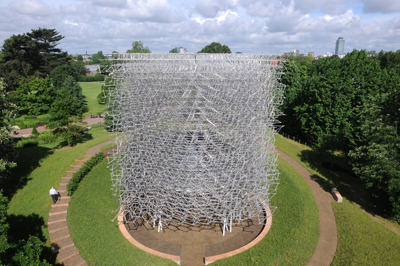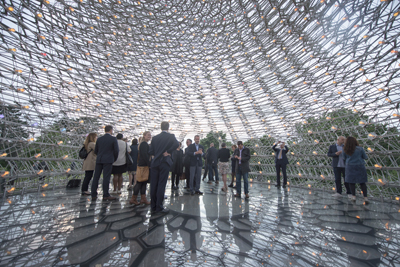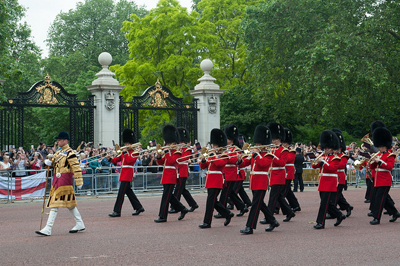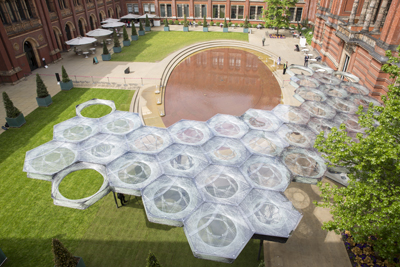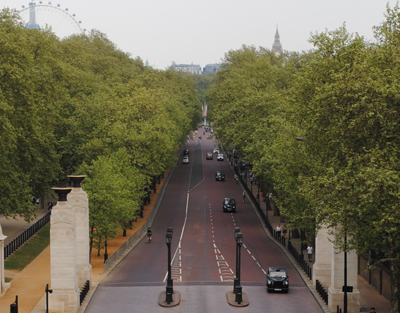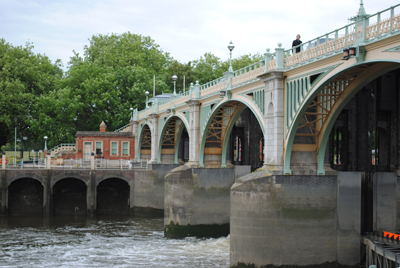
Old Palace Lane, Richmond, in London’s south-west.
LondonLife
LondonLife – London sunset…
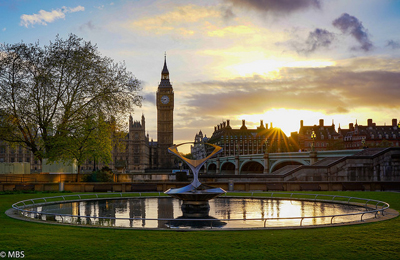
Taken by Murray, this picture captures some of the city’s iconic attractions as it looks across the River Thames to Elizabeth Tower (formerly known as the Clock Tower) at the northern end of the Houses of Parliament just as the sun is setting. Westminster Bridge can be seen to the right while pictured in the foreground, in the middle of a garden located at St Thomas’ Hospital, is the Grade II*-listed sculpture/fountain, Revolving Torsion, which is the work of Russian-born artist Naum Gabo and has been on long-term loan to the hospital since the mid-1970s. Says the photographer: “Funnily enough, I shot this picture handheld and spontaneously as I though I might miss the shot. I then tried to take better ones with a tripod etc – but I think this was my best effort. Spontaneous pictures are always the best…I used to work in St Thomas’ which is behind me in the picture and looked out at this view constantly during the daytime.” PICTURE: Murray/www.flickr.com/photos/muffyc30/.
LondonLife – Hang on a minute! City gardens turned upside down…
A showcase of flora inspired by the gardens of the City of London, The City Garden features fresh flowers which, entwined with copper wire, hang from the ceiling of the newly opened gallery and exhibition space known as The City Centre. The work of East London-based artist Rebecca Louise Law, the display is the first public art installation at the premises – located next to the Guildhall at 80 Basinghall Street, it’s being managed by New London Architecture on behalf of the City of London Corporation – and the flowers can be seen there as they dry out until 25th September. The exhibition also features two films on the City of London’s gardens as well as a map of those that inspired the artwork (this is also available in an app which details some of the history, horticulture and design of some of the Square Mile’s most iconic gardens). For more, see www.thecitycentre.london. PICTURE: Courtesy of The City Centre.
LondonLife – The ‘Walkie-Talkie’…
Designed by Rafael Viñoly, this £200 million commercial building at 20 Fenchurch Street was completed in 2014 with its ‘sky garden’ opening on the top levels last year. The nickname of the controversial 37 storey building – which has attracted its fair share of opprobrium for all manner of reasons, not least the way it reflected the sun’s rays and wind onto those below as well as its place in the City’s skyline – comes from its rather distinctive shape. PICTURE: Marcela Andrade/Unsplash.
LondonLife – Gothic spires…
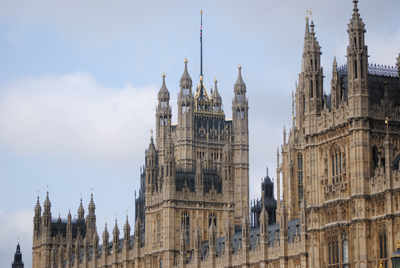
The Houses of Parliament in the early morning light. For more on their history, see our earlier post here.
LondonLife – Quiet afternoon on the canal…
Regent’s Canal in the city’s north. For more on the history of the canal, see our much earlier post here.
LondonLife – A royal welcome for Land of the Lions…
Queen Elizabeth II had a chance to get up close and personal with resident lionesses Rubi and Heidi at the official opening of Land of the Lions – London Zoo’s new interactive lion enclosure – last week. The new £2.5 million Asiatic lion exhibit recreates the setting of Sasan Gir in Gujarat, India – the last remaining stronghold of Asiatic lions, of which only about 500 remain in the wild – and has, at its centre, a 360 degree ‘Temple Clearing’ where the lions can be viewed from just a few metres away. The exhibit, which spreads over 2,500 square metres, opens to the public this Friday, 25th March. For more, see www.zsl.org.
LondonLife – An odd couple take a breather…
LondonLife – Celebrating International Women’s Day…
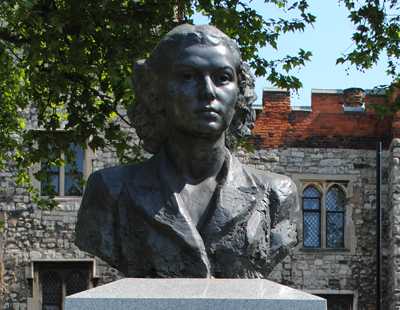
It’s International Women’s Day, so we’re celebrating by remembering two heroic women immortalised in statues in central London. Above is Edith Cavell, a British nurse who was trapped in Brussels by advancing German armies in 1914 and then subsequently arrested for aiding French and British soldiers to escape before being executed by firing squad on 12th October, 1915 – an event widely condemned around the world. The marble statue, located in St Martin’s Place at the intersection of Charing Cross Road and St Martin’s Lane, is by George Frampton and was erected in 1920. Below, meanwhile, is a bust of Violette Szabo which tops a memorial to the Special Operations Executive (SOE). Szabo, who was posthumously awarded the George Cross and the Croix de Guerre after she was captured and eventually executed by the German Army in early 1945, was among 117 SOE agents who did not return from their missions to France. Located on Albert Embankment, the statue – which is the work of Karen Newman – was unveiled in 2009.

LondonLife – New Underground line named in honour of Queen Elizabeth II…
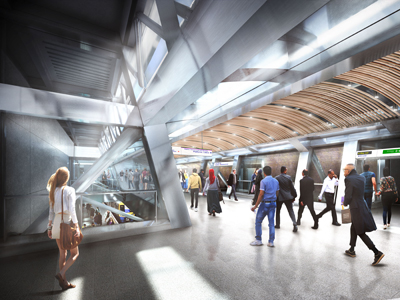
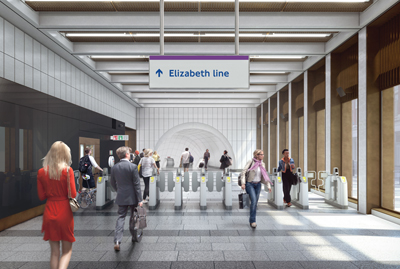
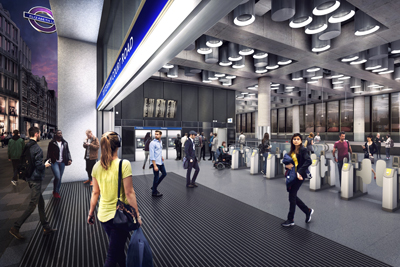
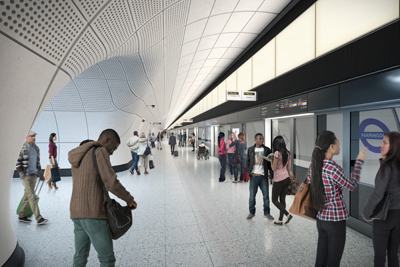
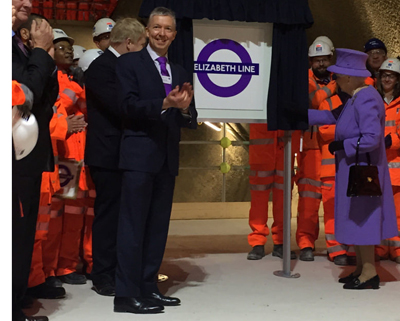
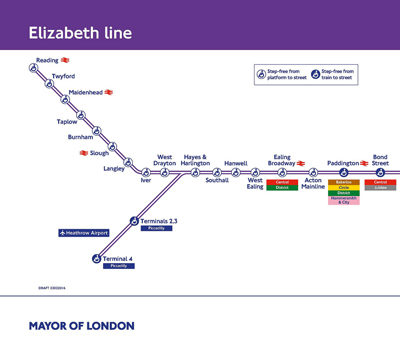
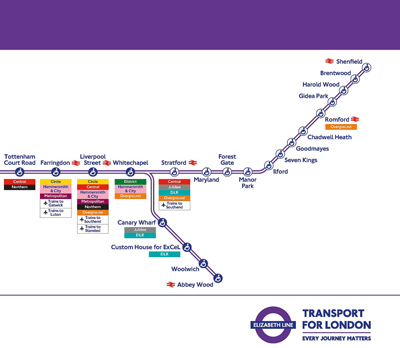
Boris Johnson, the Mayor of London, announced last week that the new Underground line under construction in the Crossrail project will be named the Elizabeth line, in honour of Queen Elizabeth II. The Queen (pictured above with Transport Commissioner Mike Brown), who became the first ruling monarch to travel on the Underground when she did so in 1969 at the opening of the Victoria line, was on hand for a tour of the line’s Bond Street Station site and was presented with a commemorative Elizabeth line roundel. The new line, which will change the way people travel across London, stretches from Reading and Heathrow in the west to Shenfield and Abbey Wood in the east. PICTURES: © Transport for London/James O Jenkins (above).
LondonLife – Images of London past…
Tower Bridge, here depicted in an image by Alvin Langdon Coburn, taken in about 1910. The image is one of more than 400,000 vintage prints, daguerreotypes and early colour photographs as well as other photography-related objects including the world’s first negative from the Science Museum Group’s 3,000,000 strong photography collection which is being transferred to the Victoria and Albert Museum under an agreement between the two institutions. The images are joining the V&A’s existing collection of 500,000 photographs to create an International Photography Resource Centre, providing the public with a “world class” facility to access what will be the single largest collection on the art of photography on the planet. It’s a reunion for some of the images which were once part of a single collection housed at the South Kensington Museum in the 19th century before it divided into the V&A and the Science Museum. For more on the museums, see www.vam.ac.uk and www.sciencemuseum.ac.uk. PICTURE: © Royal Photographic Society/National Media Museum/ Science & Society Picture Library
LondonLife – Orchids after dark at Kew…
Get a taste of the tropics at Kew Gardens. The rare beauty of orchids is on show in the Princess of Wales Conservatory as part of the annual Orchid Festival which runs until 6th March. And as was the case last year, the festival once again features a series of late openings giving visitors the chance to experience the colourful display after dark. Admission charge applies – for more information on dates and times, see www.kew.org. PICTURES: Jeff Eden/RBG Kew.
LondonLife – Through the archway at Covent Garden…
A quiet moment in one of Covent Garden’s covered arcades. For more on the history of Covent Garden, see our earlier post here.
LondonLife – Lost Beatrix Potter story found in V&A…
A new tale written by Peter Rabbit creator Beatrix Potter will be published last this year following its discovery in the Potter archives at the Victoria & Albert Museum (pictured above).
The Tale of Kitty-In-Boots, which apparently tells the story of a black cat that leads a double life, was found two years ago by Penguin Random House Children’s publisher Jo Hanks. Its publication forms part of the celebrations surrounding the 150th anniversary of Ms Potter’s birth.
The story, which Ms Hanks unearthed in three separate manuscripts in the archive, was sent to Ms Potter’s publisher in 1914 and Ms Hanks told the BBC that Ms Potter had “fully intended” to publish it but, thanks to interruptions including World War I, her marriage and illness, she never went back to it.
Ms Hanks told the BBC that “the tale really is the best of Beatrix Potter”.
“It has double identities, colourful villains and a number of favourite characters from other tales. And, most excitingly, our treasured, mischievous Peter Rabbit makes an appearance – albeit older, slower and portlier!”
Artist Quentin Blake has been asked to illustrate the new book.
The V&A holds the world’s largest collection of Beatrix Potter’s drawings, literary manuscripts, correspondence, photographs and related materials. For more, see www.vam.ac.uk/content/articles/t/beatrix-potter-collections/.
LondonLife – Facelift for one of the UK’s “most unique” cemeteries…
Brompton Cemetery in London’s west is to undergo a major renovation thanks to a £6.2 million project. Designed by Benjamin Baud and consecrated by the Bishop of London in 1840, the 39 acre cemetery – one of the oldest Grade I listed cemeteries in the country and known as one of London’s “magnificent seven” cemeteries – was strongly influenced by landscapes around St Peter’s in Rome. Among the 205,000 people buried there are suffragette Emmeline Pankhurst, Sir Thomas Spencer Wells – Queen Victoria’s surgeon, and thousands of former Chelsea pensioners. The project will see the chapel, central colonnades and catacombs restored and the transformation of North Lodge into a visitor’s centre with shop and cafe as well as other conservation and improvement works. It is funded by an almost £4.5 million grant from the BIG Lottery Fund and the Heritage Lottery Fund as well as a £1.2 million investment from The Royal Parks, managers of the site, and £500,000 from The Royal Parks Foundation, only half of which has been raised. Those looking to donate to the foundation’s appeal, can visit www.SupportTheRoyalParks.com. PICTURE: © The Royal Parks
LondonLife – London in a different light…
Last weekend saw London transformed in a blaze of colour and light as the city hosted its first Lumiere light festival. More than a million people hit the streets over the four nights of the event – developed by creative producers Artichoke and supported by the Mayor of London – to take in the 30 artworks. Above are some of images of British screen stars and directors which were projected on 195 Piccadilly in an installation by Newcastle-based studio NOVAK. Below are some more images from the rather spectacular event. For more on the event, check out www.visitlondon.com/lumiere.
Above is Les Voyageurs (The Travellers) by French artist Cédric Le Borgne (located in St James) while below is Litre of Light by Mick Stephenson and Central Saint Martin’s students in Kings Cross.
Above is binaryWaves by LAB[au] while below is Ron Haselden’s Diver depicting an illuminated figure plunging into the water of the King’s Cross Pond Club.
LondonLife – Australia House’s holy well…
News this week that scientists have confirmed an ancient sacred well beneath Australia House in the Strand (on the corner of Aldwych) contains water fit to drink. The well, believed to be one of 20 covered wells in London, is thought to be at least 900 years old and contains water which is said to come from the now-subterranean Fleet River. Australia’s ABC news was recently granted special access to the well hidden beneath a manhole cover in the building’s basement and obtained some water which was tested and found to be fit for drinking. It’s been suggested that the first known mention of the well – known simply as Holywell (it gave its name to a nearby street now lost) – may date back to the late 12th century when a monk, William FitzStephen, commented about the well’s “particular reputation” and the crowds that visited it (although is possible his comments apply to another London well). Australia House itself, home to the Australian High Commission, was officially opened in 1918 by King George V, five years after he laid the foundation stone. The Prime Minister of Australia, WM “Billy” Hughes, was among those present at the ceremony. The interior of the building has featured in the Harry Potter movies as Gringott’s Bank. PICTURE: © Martin Addison/Geograph.
Top posts of 2015 – The ‘lost’ chapel of St Thomas; and, inside King Henry V’s chantry chapel…
2016 is fast approaching and to celebrate, we’re looking back at the 10 most popular posts we published in 2015. Today, we present our most popular and second most popular articles posted this year…
2. Our second most popular article, posted in August, was another in our Lost London series and this time looked at a long-lost feature of Old London Bridge – Lost London – Chapel of St Thomas á Becket.
1. And we are finally there – the most popular of our posts published this year was run in conjunction with the 600th anniversary of the Battle of Agincourt. Part of our LondonLife series, it took a look inside King Henry V’s rarely opened chantry chapel in Westminster Abbey – LondonLife – A rare glimpse inside King Henry V’s chantry chapel.
LondonLife – King Henry VIII’s lost tiltyard tower rediscovered…
Archaeologists have uncovered the remains of one of five highly ornate towers, luxurious banqueting houses from which the court would view tournaments in King Henry VIII’s walled tiltyard at Hampton Court Palace.
Built in the 1530s, the multi-storey towers were largely demolished by the 1680s and, with the exception of one of the towers which still stands at the palace (and is now a Grade I listed building), their precise location eventually lost.
Until now, that is. The green-glazed tiled floor of one of the ‘lost’ towers were unearthed earlier this month during works taking place as the tiltyard undergoes a family-oriented makeover by award-winning landscape architect, Robert Myers (to be known as ‘The Magic Garden’, it will be unveiled next Easter).
The richly decorated towers – where the king entertained dignitaries and ambassadors – are thought to slightly predate the tiltyard which was apparently laid out in 1537 – perhaps, it’s been suggested, to mark the birth of King Henry VIII’s son, the future King Edward VI.
The first recorded tournament at Hampton Court took place in 1557 when Queen Mary I held one to celebrate Christmas. Her sister Queen Elizabeth I continued the tradition by occasionally holding tournaments there but most days the tiltyard was used to train the young men of the court in warfare.
When tournaments gradually fell out of fashion, the towers were used as multi-purpose storage facilities housing, according to Historic Royal Palaces, everything from pigeons to two Catholic priests in service to King Charles I’s queen, Henrietta Maria, who were spent time ‘quarantined’ there after an outbreak of plague.
For more on Hampton Court Palace, see www.hrp.org.uk/hampton-court-palace/.
LondonLife – Baby gorillas get to know each other…
Female infant gorilla Alika, who celebrated her first birthday at ZSL London Zoo in Regent’s Park last week, is pictured getting to know her two week old baby brother, Gernot. Named after the partner of a generous donor who has supported the Zoological Society of London’s (ZSL) international work for wildlife, Gernot (below, top) was born to 22-year-old female Effie and 17-year-old silverback Kumbuka on 25th November, both Western lowland gorillas, and can most often be found tightly snuggled in Effie’s arms (below, bottom). Gorilla keeper Glynn Hennessy said while Gernot had become the “centre of attention” at the zoo’s Gorilla Kingdom, “one-year-old Alika has embraced her new role of the doting big sister”. “Western lowland gorillas live in troops and learn how to act from observing each other’s behaviours and manners and here we can see Alika demonstrating some of the nurturing skills she’s learned from the adults.” This has included touching his head and stroking his face as he sleeps in his mother’s arms. For more, see www.zsl.org. PICTURES: ZSL London Zoo.