This Week in London – Buckingham Palace offers a “Royal Welcome”; exploring London’s outdoor spaces; and contemporary portraiture at the V&A…

Buckingham-PalaceBuckingham Palace opened its 19 State Rooms to the public last weekend under the theme of ‘A Royal Welcome’. As well as the chance to see the State Rooms themselves, a series of displays and films are located throughout the palace which show how Royal Household staff are involved in welcoming the tens of thousands of guests who come to the palace each year for receptions, State Banquets, garden parties and investitures. And, for the first time, the public can enter the palace through the Grand Entrance where the Australian State Coach will be displayed. Other highlights include the Palace Ballroom – set up for a State Banquet with silver gilt candelabra and centrepieces from King George IV’s grand service, displays recreating part of the dresser’s workroom and the palace kitchens, pantries and wine cellars in the throes of preparing for a State Banquet, and some of the gifts received during State Visits to the palace. Items of Queen Elizabeth II’s personal jewellery are also on display including the Kokoshnik Tiara, worn at a State Banquet in honour of the President of Mexico this year, Queen Mary’s Dorset bow brooch and the diamond Coronation necklace and earrings. The palace is open until 27th September. Admission charge applies. For more, see www.royalcollection.org.uk.

A new interactive map of public outdoor areas in London has been created to help encourage the city’s residents and tourists to make the most of the great outdoors this summer. The map details more than 200 public spaces including squares, green spaces and public street amenities, many of which have been improved as part of the Mayor of London, Boris Johnson’s Great Outdoors initiative which has seen more than £400 million invested in 242 projects since 2009. To check out the map, follow this link.

A new exhibition examining contemporary portraiture – and its inspiration from traditional modes of portraiture such as miniatures, medals and death masks – opened at the V&A in South Kensington this week. Facing History: Contemporary Portraiture features more than 80 prints and photographs drawn from the V&A’s collection and created by artists including Julian Opie, Grayson Perry, Thomas Ruff, Maud Sulter and Gavin Turk. Works featured include self-referential pieces like Grayson Perry’s pair of prints, Mr and Mrs Perry and Gavin Turk’s Portrait of Something that I’ll Never Really See, portraits of real and fictional characters like Brian D Cohen’s Man with Eyes Closed (Walter White) whose subject is both a character from US TV series Breaking Bad and Bryan Cranston, the actor who played him, Cecilia Mandrile’s identity-card inspired ID-Intensively Displaced series, and 11 pieces from Ellen Heck’s Forty Fridas. Exhibition runs until 24th April. Admission is free. For more, see www.vam.ac.uk.

Send all items for inclusion to exploringlondon@gmail.com

LondonLife – Artistic eyes gaze upon us…

V&A

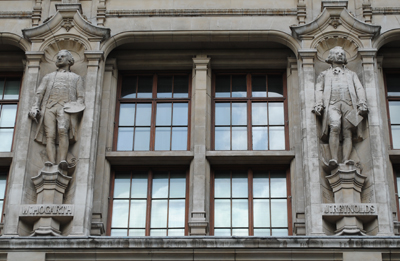
Eighteenth century artists William Hogarth and Joshua Reynolds gaze down from the facade of the V&A in South Kensington. The Victoria and Albert Museum was established in 1852 – capitalising on the success of the Great Exhibition the previous year – and moved to its current site in 1857. The foundation stone for the current building was laid by Queen Victoria herself in 1899 and it was to mark this occasion that the museum was renamed the Victoria and Albert Museum after the queen and late Prince Albert (although the queen really just wanted it to be the Albert Museum). For more on the V&A, see www.vam.ac.uk.

This Week in London – Celebrate summer at the Tate; Titian revealed at Apsley House; and, exploring the unconscious at The Freud Museum…

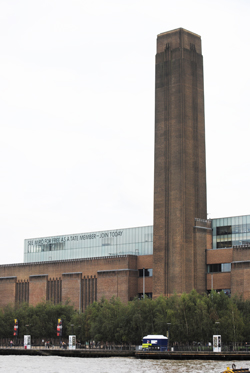
Turbine-HallOn Saturday, the Tate Modern’s Turbine Hall on South Bank will host an “audio-visual feast” of music, performances, art installations and activities. The free Turbine Festival will feature everything from an alternative hair salon and a London bus built on the day by artist John Costi to a pop-up juice bar where you can make your own drinks and a record shop where you can design your own vinyl record sleeve. The day will also feature performances by Grime/HipHop/AfroPop artist Afrikan Boy, Felix’s Machines – who will transform live music and sound into a 3D visual show, and poet Jacob Sam-La Rose, as well as a programme of “bite-sized” films running in collaboration with the London Short Film Festival, and a series of interactive workshops covering everything from beatboxing to crafting. Visitors to the festival, sponsored by Hyundai, are also encouraged to contribute to a special project by My Culture Museum by submitting photographs or bringing objects to be archived and curated. Runs from 12.30pm to 9.30pm. For more, see www.tate.org.uk.

•  Three paintings previously attributed to later followers of 16th century Venetian artist Titian but subsequently found to be by the artist himself and his studio have gone on display together for the first time at Apsley House. The three paintings – which include Titian’s Mistress (c1560), A Young Woman Holding Rose Garlands (c1550) and Danae (c1553) – were all in poor condition before conservation and cleaning by experts from English Heritage, the Museo del Prado in Madrid and the Hamilton Kerr Institute revealed their true quality (and Titian’s signature on two of the paintings). All three works were held in the Spanish Royal Collection and among 160 that Joseph Bonaparte, brother of Napoleon and King of Spain, tried to take out of the country following his defeat by the Duke of Wellington at the Battle of Vittoria in 1813. Wellington was subsequently given the paintings by a grateful King Ferdinand VII. The Titian at Apsley House exhibition, which opened earlier this month, runs at the Duke of Wellington’s home at Hyde Park Corner until 31st October. Admission charges apply. For more, see www.english-heritage.org.uk/visit/places/wellington-arch/.

On Now: Festival of the Unconscious. This festival at Sigmund Freud’s former London home and now home to The Freud Museum sees artists, designers, writers and performers taking another look at Freud’s seminar 1915 paper, The Unconscious. Features of the festival, which runs until 4th October, include specially commissioned films by animators from Kingston University running throughout the house, sound and video installations by London-based art project Disinformation in the dining room and an installation from stage designers at the Royal Central School of Speech and Drama in Freud’s study. There’s also a display by Julian Rothenstein, co-author of Psychobox, and a chance to recline and “free-associate” on a psycho-analytic couch in Freud’s bedroom. An extensive programme of events accompanies the displays. Admission charges apply. For more, see www.freud.org.uk.

Send all items for inclusion to exploringlondon@gmail.com.
This Week in London – Exploring London’s archaeology; Alice in Bloomsbury; and, ‘Soundscapes’ at the National Gallery…

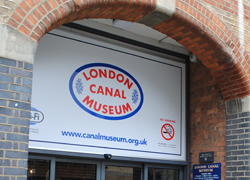
Canal-MuseumDescend into ice wells at the London Canal Museum; delve into the archaeological archives of the Egypt Exploration Society; discover the history of the Spitalfields Charnel House; and, tour the remains of London’s Roman military fort with experts from the Museum of London. The British Festival of Archaeology kicked off last weekend and there’s a plethora of events happening across London as part of the more than 1,000 taking place across the country. For a full programme of events – many of which are free – head to www.archaeologyfestival.org.uk. The festival runs until 26th July.

Follow Alice down the rabbit hole in a new exhibition which opened at the Cartoon Museum in Bloomsbury yesterday. Marking the 150th anniversary of the book’s publication, Alice in Cartoonland looks at how cartoonists, caricaturists, satirists, animators and graphic artists adapted and used author Lewis Carroll (aka Charles Lutwidge Dodson) and original illustrator John Tenniel’s work in social and political commentaries as well as just to have fun. The display features posters, cartoon strips, comic and graphic novels and artwork from TV and film versions of Alice with Low, Vicky, Shepard, Steadman and Gilroy among the artists represented. Runs until 1st November (with some events held in conjunction with it). Admission charge applies. For more, see www.cartoonmuseum.org.

Exploring the National Gallery’s art collection is usually done with the eyes but thanks to an innovative project which kicked off last week, it’s now also about listening. A series of contemporary sound artists and musicians including Nico Muhly, Gabriel Yared, Susan Philipsz, Jamie xx, Chris WatsonJanet Cardiff and George Bures Miller have created sounds and musical pieces in response to works they have chosen from the gallery’s collection. Selected works include the late 14th century The Wilton Diptych (Muhly), Hans Holbein’s 1533 painting The Ambassadors (Philipsz) and Paul Cézanne’s painting Bathers (Les Grandes Baigneuses) (Yared). Soundscapes runs until 6th September in the Sainsbury Wing. Admission charge applies. For more, see www.nationalgallery.org.uk.

Send all items for inclusion to exploringlondon@gmail.com.
10 sites from London at the time of the Magna Carta – 10. Priory of the Order of St John of Jerusalem…

Crypt

Founded in Clerkenwell in 1144, the Priory of the Order of St John of Jerusalem served as the order’s English headquarters.

The order, also known as the Knights Hospitaller, was founded in Jerusalem in 1080 to care for the sick and poor, and soon spread across Europe with the English ‘branch’ established on 10 acres just outside the City walls apparently by a knight, Jorden de Briset.

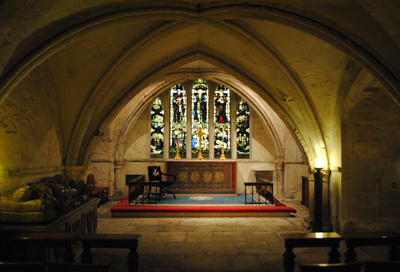
The original buildings – of which only the 12th century crypt (pictured above) survives complete with some splendid 16th century tomb effigies including that of the last prior, Sir William Weston – included a circular church, consecrated in 1185, and monastic structures including cloisters, a hospital, living quarters and a refectory or dining hall.

There are records of dignitaries staying at the priory as it grew in size and renown – among them was King John who in 1212, apparently stayed here for an entire month. There are also surviving accounts of Knights Hospitaller riding out in procession from the priory and through the City at the start of a journey to the Holy Land.

The priory and church were attacked during the Peasant’s Revolt of 1381, thanks to its connection with the hated Poll Tax (Prior Robert Hales was also the Lord High Treasurer and was beheaded during the revolt on Tower Hill).

The church was subsequently rebuilt as a rectangular-shaped building and then, in the early 16th century, enlarged when the site was significantly renovated. These renovations were still relatively new when the priory was dissolved in 1540 during the Dissolution of King Henry VIII.

The priory church, which survived the Great Fire of 1666, was later used as a parish church but was destroyed in an air raid in World War II. Subsequently rebuilt, it can be visited today along with the crypt below and the cloister garden, created in the 1950s as a memorial to St John’s Ambulance members from the London area (the original shape of the circular church is picked out in the paving here).

Perhaps the most famous building to survive is St John’s Gate which dates from the 16th century and was once the gatehouse entrance to the priory (added in the final renovations).

After the Dissolution it served various roles including as the office of the Master of Revels (where Shakespeare’s plays were licensed), the home of The Gentleman’s Magazine (Samuel Johnson was among contributors and worked on site), a coffee house (run by William Hogarth’s father) and a public house called the Old Jerusalem Tavern (yes, Charles Dickens was said to be a regular). It is now home to the recently renovated Museum of the Order of St John (you can see our earlier post on the museum here).

WHERE: Museum of the Order of St John, St John’s Gate (and nearby priory church), St John’s Lane, Clerkenwell (nearest Tube stations is Farringdon); WHEN: 10am to 5pm, Monday to Saturday (tours are held at 11am and 2.30pm on Tuesday, Friday and Saturday); COST: Free (a suggested £5 donation for guided tours); WEBSITE: www.museumstjohn.org.uk.

We’ll kick off a new Wednesday series next week…

This Week in London – Audrey Hepburn, Barbara Hepworth and Joseph Cornell…

It’s all galleries this week- not a bad way to escape the heat!

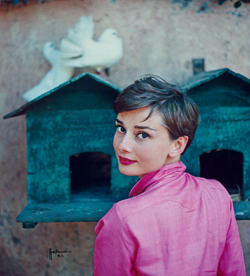
NPG_959_1400_AudreyHepburnbThirty-five photographs of late actor Audrey Hepburn from the personal collection of her sons form the centrepiece of a new exhibition at the National Portrait Gallery. Audrey Hepburn: Portraits of an Icon, which opens today and is the first UK exhibition to be organised with the Audrey Hepburn Estate, explores the life and career of the celebrated film star. Among the images lent by her sons Sean Hepburn Ferrer and Luca Dotti are a portrait of the actor performing a dance recital at the age of 13 in 1942, a photograph of her taken while filming The Nun’s Story in Africa in 1958, and a behind-the-scenes photograph of Hepburn during a costume fitting for the 1954 film Sabrina. Other images in the display include those taken during the shooting of numerous films ranging from 1955’s War and Peace to 1967’s Two for the Road as well as vintage magazine covers. Runs until 18th October. Admission charge applies. For more, see www.npg.org.uk/hepburn. PICTURE: Audrey Hepburn by Philippe Halsman for LIFE magazine, 1954. © Philipe Halsman/Magnum Photos.

The works of Barbara Hepworth, one of the UK’s greatest artists, are on show at the Tate Britain on Millbank. Barbara Hepworth: Sculpture for a Modern World features more than 100 works, from major carvings and bronzes to less familiar pieces. Juxtaposed with works of other great artists – including paintings, prints and drawings of her second husband Ben Nicholson, they include her earliest surviving carvings, her more purely abstract works of the late 1930s, wooden sculptures made while Hepworth lived in Cornwall in the mid-1940s and four large carvings made in the mid-1950s in African hardwood guarea which, reunited for this exhibition, arguably represent the highpoint of her carving career. There are also bronzes from her 1965 retrospective at the Kroller-Muller Museum. Runs until 25th October. Admission charge applies. For more, see www.tate.org.uk.

American artist Joseph Cornell’s art is the subject of an exhibition at the Royal Academy of Arts in Piccadilly which opens on Saturday. Joseph Cornell: Wanderlust, organised in conjunction with Kunsthistoriches Museum in Vienna, features about 80 of the artist’s box constructions, assemblages, collages and films including rarely seen masterpieces lent from public and private collections in the US, Europe and Japan. Arranged in four sections, the display features works from his major series including Museums, Aviaries, Soap Bubble Sets, Palaces, Medici Slot Machines, Hotels and Dovecotes. Runs until 27th September. Admission charge applies. For more, see www.royalacademy.org.uk.

• Send all items for inclusion to exploringlondon@gmail.com.
Famous Londoners – Peter de Colechurch…

We recently ran a piece on the building of the first stone London Bridge (see our earlier post here) and so we thought it timely to take a look at the life of the builder, priest and ‘architect’ Peter de Colechurch.

Not a lot is known about the life of de Colechurch – although we do know he took his name from the fact he the chaplain of St Mary Colechurch, a church which once stood at the junction of Poultry and Old Jewry (and was destroyed in the Great Fire of 1666).

The stone London Bridge wasn’t his first attempt at bridge-building – in 1163 he had supervised the rebuilding of the wooden London Bridge after a fire some 30 years before.

His role in building the subsequent stone bridge remains a little unclear but he was known to have been in charge of the building works themselves and also headed the fundraising and it is believed he headed a guild responsible for the upkeep of the bridge known as the Fraternity of the Brethren of London Bridge.

His seal depicts a priest celebrating mass at an altar with the Latin Sigillum Petri Sacerdotis Pontis Londoniarum (Seal of Peter Priest of London Bridge).

The chapel on the bridge was dedicated to St Thomas á Becket and it’s suggested that he and de Colechurch would have known each other – Becket had been christened at St Mary Colechurch in 1118.

Sadly, de Colechurch did not live to see the stone London Bridge completed – he died in 1205 and was buried under the floor of the chapel on the bridge.

Some bones in a small casket were disinterred in from the chapel undercroft in 1832 – now in the Museum of London, these were rumoured to be those of de Colechurch although after analysis the bones were found to be part of a human arm bone, a cow bone and goose bones. (Other accounts suggest most of Peter’s bones were tossed into the Thames and a small number sold at auction).

This week in London – Napoleon’s draughtsman at Dulwich; the City of London Festival; and, the photography of Captain Linnaeus Tripe…

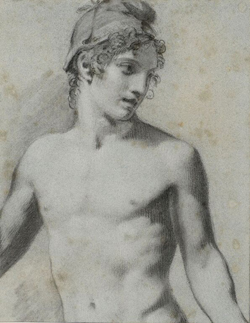
PrudhonThe drawings of “Napoleon’s draughtsman”, Pierre-Paul Prud’hon, have gone on display at the Dulwich Picture Gallery in an exhibition timed to coincide with the bicentenary of the Battle of Waterloo. The exhibition, Prud’hon: Napoleon’s Draughtsman, presents a selection of some of Prud’hon’s best works, including 12 works on paper from Gray’s Musée Baron Martin in eastern France as well as life studies such as Seated Male Nude and Standing Female Nude and a series of sketches from when Napoleon’s wife, Josephine, sat for Prud’hon 15 times in her home outside Paris. Runs until 15th November. Admission charge applies. A series of events is being run in conjunction with the exhibition. For more, see www.dulwichpicturegallery.org.uk.

The City of London Festival has kicked off this week with a three week programme including music, performance and visual art, films, tours, walks and talks. Events include the City Beerfest in Guildhall Yard, a tour of the art of the Mansion House, Bank of England open days and a walk celebrating the democratic institutions of the City marking the 800th anniversary of the Magna Carta. The festival, which includes both ticketed and free events, runs until 10th July. For more, including a full programme, see www.colf.org.

A new exhibition exploring the photographic works of Captain Linnaeus Tripe has opened at the V&A. Captain Linnaeus Tripe: Photographer of India and Burma, 1852-1860 includes more than 60 photographs of architectural sites and monuments, ancient and contemporary religious buildings, landscape vistas and geological formations. The Devon-born Tripe joined the East India Company army in 1839 and was stationed in India throughout the 1840s, learning the art of photography when back in England in the early 1850s. The photographs represent the output from two major expeditions with Tripe the first photographer to capture Burma’s remarkable architecture and landscapes and the first person to do so extensively in south India. The exhibition, part of the V&A India Festival which marks the 25th anniversary of the opening of the museum’s Nehru Gallery, is organised jointly by the National Gallery of Art, Washington, and the Metropolitan Museum of Art in New York in association with the V&A. Runs until 11th October.  Admission is free. For more, see www.vam.ac.uk/linnaeustripe.

Send all items for inclusion to exploringlondon@gmail.com.
This Week in London – The Waddesdon Bequest has a new home; history painted at the Tate; and, early release NYE tickets…

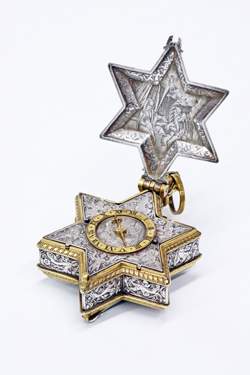
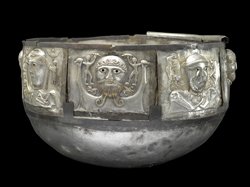
Holy-Thorn-ReliquaryThe Waddesdon Bequest, a collection of medieval and Renaissance treasures left to the British Museum by Baron Ferdinand de Rothschild in 1898, has a new home. Redisplayed in a new gallery which opened at the museum last week, the collection features the Christian relic known as Holy Thorn Reliquary (pictured) – a concocotion of gold, enamel and gems set around a thorn supposedly taken from Christ’s Crown of Thorns, the Lyte Jewel – a diamond-studded locket made in London in 1610-11 to hold a miniature of King James I and presented by the king to Thomas Lyte as thanks for a genealogy he created representing the king as a descendant of the Trojan Brutus, and the Cellini Bell – cast from silver in Nuremberg around 1600 and later displayed by Horace Walpole at his west London villa in Strawberry Hill. The bequest collection, which must always be displayed in a room of its own under its original terms, was first displayed at Baron Ferdinand’s country home of Waddesdon Manor in Buckinghamshire (now a National Trust property) and moved to the museum after his death. The redisplay reconnects the collection with its past at the manor and the history of the museum – the room where it is now displayed, Room 2a, was the museum’s original Reading Room and part of a neo-classical suite of rooms designed by Robert Smirke in 1820. It has been given the “most ambitious digital treatment” of any permanent gallery in the institution. Admission is free. For more, see www.britishmuseum.org.

The “enduring significance and emotional power” of British history painting is under examination in a new exhibition which opened at Tate Britain on Millbank last week. Fighting History features everything from the large scale works of 18th century painters John Singleton Copley and Benjamin West through to 20th century and contemporary works by Richard Hamilton and Jeremy Deller and looks at how they reacted, captured and interpreted key historical events. Works on show include Singleton Copley’s 1778 work The Collapse of the Earl of Chatham in the House of Lords, 7 July, William Frederick Yeames’ 1877 work Amy Robsart, John Minton’s 1952 work The Death of Nelson and Deller’s 2001 work The Battle of Orgreave, a re-enactment of 1984 protest in South Yorkshire. The exhibition also compares traditional and contemporary renderings of events from scripture, literature and the classical world and features a room dedicated to interpretations of the great Biblical flood of Noah. Runs until 13th September. Admission charges apply. For more, see www.tate.org.uk.

A limited number of early release tickets to London’s New Year’s Eve celebrations will go on sale from noon tomorrow (Friday, 19th June). The tickets, the bulk of which will be released in September, cost £10 a person with the proceeds being used to cover costs including printing and infrastructure. As was the case last year, people without tickets will not be able to access the event. To get hold of tickets, head to www.london.gov.uk/nye.

Send all items for inclusion to exploringlondon@gmail.com.
Celebrating the Magna Carta’s 800th anniversary!…

Magna-Carta4

We interrupt our regular programming today to mark a truly historic milestone – 800 years since King John set his seal to the Magna Carta (Great Charter) in a field at Runnymede to the west of London.

So, where can you see a copy in London?

The British Library actually holds two of the four surviving documents from 1215 (one is pictured above) – the other two are held by Lincoln and Salisbury Cathedrals.

One of the copies in the British Library was damaged in an 18th century fire; the other was found in a tailor’s shop in London in the 17th century – made of sheepskin, it was apparently about to be taken apart to line collars.

The library’s current Magna Carta exhibition, Magna Carta: Law, Liberty, Legacy, features the two documents (along with Jefferson’s handwritten copy of the Declaration of Independence and one of the original copies of the US Bill of Rights). For more about the exhibition, see www.bl.uk/events/magna-carta–law-liberty-legacy (runs until 1st September – for more see our earlier post here).

Meanwhile, the City of London Corporation also possesses a copy of the Magna Carta – although a later one that that issued in 1215.

Issued by King Edward I in 1297, this was the one which saw the document’s clauses, somewhat changed from 1215, written into the statutes for the first time.

Stored at the Guildhall Art Gallery, it is too delicate to be on permanent display but is currently on display in the City of London  Heritage Gallery until 1st October (for more follow this link).

You can read more about the Magna Carta and its London connections in our Wednesday series, 10 sites from London at the time of the Magna Carta.

PICTURE: British Library.

This Week in London – London Festival of Architecture’s ‘Work in Progress’; objects and sestudes at the Foundling Museum; and, sculpting Sir Tim Berners-Lee…

SerpentineThe month-long London Festival of Architecture is underway with this year’s theme ‘Work in Progress’. Highlights of this year’s programme – which includes 220 exhibitions, installations, talks and tours – include a discussion at this year’s Serpentine Gallery (pictured) by architects SelgasCano, access to development sites including Olympic Park, Goodman’s Fields, and Nine Elms, a London Transport Museum tour of London’s first skyscraper, an installation exploring the role of coffee shop as workspace by the Not to Scale Collective, and a Routemaster tour of the West End. For more, including a downloadable PDF of the programme, see www.londonfestivalofarchitecture.org.

A series of  26 ‘sestudes’ – texts exactly 62 words long – are being displayed along with the objects that inspired them in a new exhibition, 26 Pairs of Eyes, at The Foundling Museum in Bloomsbury. The sestudes have been written by the likes of former Poet Laureate Sir Andrew Motion in a bid cast new light on the objects, which are all from the museum’s collection and which range from a pencil which once belonged to Hospital Secretary John Brownlow to George Frideric Handel’s will. The display, which opens today, is on show until 6th September. Meanwhile the museum is also hosting another exhibition, Lines of Beauty, which explores the tradition of decorative plasterwork including the restored Rococo splendour of the hospital’s Court Room (donated by William Wilton in the 1740s and saved when the Foundling Hospital building was demolished in the 1920s). Admission charges apply. For more, see www.foundlingmuseum.org.uk.

A new portrait of the inventor of the World Wide Web, Sir Tim Berners-Lee, has been unveiled at the National Portrait Gallery. The work of Sean Henry, the painted bronze sculpture depicts a two-thirds life size Berners-Lee carrying the leather rucksack in which he keeps his laptop. It was commissioned to mark Sir Tim’s 60th birthday and is the gallery’s first commissioned portrait sculpture for seven years. On display in Room 40. Admission is free. For more, see www.npg.org.uk.

Send all items for inclusion to exploringlondon@gmail.com.

This Week in London – London Tree Week kicks off; illustrated London at the LT Museum; and, Joshua Reynolds at the Wallace Collection…

London Tree Week kicks off on Saturday with a range of free events happening across the city. They include ‘tree walks’ in Richmond and Greenwich Royal Parks, a tour of paintings featuring trees at the National Gallery in Trafalgar Square, an exhibition at City Hall featuring some of the city’s great trees, and family-friendly activities at Stave Hill Ecological Park in the city’s south-east. Londoners can also download a free ‘Tree Route’ app which uses the Tube map to showcase the capital’s trees including “must see” trees located near Underground stations such as St Pauls (a swamp cypress) and Angel (a black poplar). There’s also a photo sharing challenge where you can upload photos of trees that have made a difference to your part of London to Instagram or Twitter using the hashtag #LondonTreeWeek. For the complete listing of what’s on, follow this link. Runs until 31st May.

One hundred illustrations capturing a variety of aspects of life in London form the heart of an exhibition, The Prize for Illustration 2015: London Places & Spaces, which has opened at the London Transport Museum in Covent Garden. The artworks – which range from the past to the present and the contemplative to the loud – are all on the shortlist for the prestigious Prize for Illustration and were selected from more than 1,000 entries. Each of the works is accompanied by a short description written by the artist. The works are on show until 6th September. Admission charge applies. For more, see www.ltmuseum.co.uk.

On Now – Joshua Reynolds: Experiments in Paint. Now entering its final days, this exhibition at the Wallace Collection in Marylebone provides a fresh perspective on a giant of the British art world, 18th century portraitist Joshua Reynolds and features such famous works as Nelly O’Brien, Mrs Abingdon as Miss Prue, and Self Portrait Shading the Eyes. Admission is free. Runs until 7th June. For more information, see www.wallacecollection.org.

Send items for inclusion to exploringlondon@gmail.com

This Week in London – Dunkirk Little Ships at Royal Docks a highlight of ‘Museums at Night’; the Magna Carta in stitches; and Peter Kennard’s works on show…

Dunkirk-Little-Ships-More than 20 Dunkirk Little Ships will gather at London’s Royal Docks this weekend ahead of their Return to Dunkirk journey marking the 75th anniversary of the Dunkirk evacuations. The event, which is part of the UK’s annual festival of late openings Museums at Night, will see the ships parade around Royal Victoria Dock on Saturday night with the Silver Queen offering twilight trips and the chance to step on board some of the other ships (the Little Ships will continue with their own festival on Sunday commencing with a church service by the quayside at 11am). Other events being offered in London as part of Museums at Night include ‘Dickens After Dark’ in which the Charles Dickens Museum will open its doors to visitors for night of Victorian entertainment on Friday night and a night of music featuring the Royal College of Music at Fulham Palace (also on Friday night). Among the other London properties taking part are the Handel House Museum, Benjamin Franklin House, the Wellcome Collection, Museum of the Order of St John, and the National Archives in Kew. For a full list of events, check out http://museumsatnight.org.uk

Meanwhile, Dulwich Picture Gallery in south London is holding its first weekend culture festival, MayFest: Men of Mystery, as part of Museums at Night. On Friday and Saturday nights, there will be tours of the gallery’s new exhibition featuring the work of artist Eric Ravilious followed by outdoor cinema screenings of Alfred Hitchcock’s Rear Window and The 39 Steps as well as free swing dance lessons, street foods and a pop-up vintage shop which will help people get the vintage look. Visitors are being encouraged to dress up in styles of the 1930s and 1940s with a prizes awarded to those with the “best vintage style”. The gallery will also be inviting visitors to take part in a mass installation drop-in workshop held in the gallery’s grounds over the weekend and Saturday morning will see special events for children. For more, see www.dulwichpicturegallery.org.uk/whats-on/.

A major new work by acclaimed artist Cornelia Parker goes on display in the entrance hall of the British Library in King’s Cross tomorrow to mark the 800th anniversary of the Magna Carta. The almost 13 metre long Magna Carta (An Embroidery) replicates the entire Wikipedia entry on the Magna Carta as it was on the 799th anniversary of the document and was created by many people ranging from prisoners and lawyers to artists and barons. It accompanies the library’s exhibition Magna Carta: Law, Liberty, Legacy. Entry to see the artwork is free. For more, see www.bl.uk/cornelia-parker.

The works of Peter Kennard, described as “Britain’s most important political artist”, are on display in a new exhibition which opens at the Imperial War Museum in London today. Peter Kennard: Unofficial War Artist is the first major retrospective exhibition of his work and features more than 200 artworks and other items drawn from his 50 year career including an art installation, Boardroom, created especially for the display. Works on show include his iconic transposition of Constable’s painting Haywain which he showed carrying cruise missiles about to be deployed in Greenham Common, the Decoration paintings created in 2004 in response to the Iraq War of 2003, his seminal STOP paintings which reference events of the late 1960s such as the ‘Prague Spring’ and anti-Vietnam war protests and his 1997 installation Reading Room. The free exhibition runs at the Lambeth institution until 30th May next year. For more, see www.iwm.org.uk/london.

Send all items for inclusion to exploringlondon@gmail.com.
LondonLife – Londoner’s bones under the microscope in a quest to see industrialisation’s effects…

Museum-of-London-1

The effects of industrialisation on Londoners and the diseases that affected them is the subject of a new ground-breaking research project being conducted by the Museum of London. Led by Jelena Bekvalac, based at the Museum of London’s Centre for Human Bioarcheology (pictured above, right), the researchers will examine the skeletal remains of more than 1,000 adult men and women from industrial-era London, 500 skeletons from the medieval metropolis and a further 500 medieval and post-medieval skeletal human remains from areas outside of London with the latter to be used for comparison purposes. In the project, made possible through a City of London Archaeological Trust grant from a bequest made by the late Rosemary Green, the museum will employ the latest clinical techniques – including direct digital radiography, CT scanning and 3D modelling – to examine the bones. “The most tangible evidence we have for the long-term consequences of the industrialisation process upon us is, quite simply, written in our bones,” says Dr Bekvalac. The project will result in the creation of an extensive new interactive digital resource that will be able to be explored online. For more, see www.museumoflondon.org.ukPICTURE: Courtesy of Museum of London.

This Week in London – Marking VE Day’s 70th; Rut Blees Luxemburg at the Museum of London; and India’s Sidi community on show at the NPG…

Three days of events kick off in London tomorrow to mark the 70th anniversary of Victory in Europe (VE) Day. Events will include a Service of Remembrance at the Cenotaph in Whitehall at 3pm tomorrow (Friday) coinciding with two minutes national silence while Trafalgar Square – scene of VE Day celebrations in 1945 – will host a photographic exhibition of images taken on the day 70 years ago (the same images will be on show at City Hall from tomorrow until 5th June) and, at 9.32pm, a beacon will be lit at the Tower of London as part of a nation wide beacon-lighting event. On Saturday at 11am, bells will ring out across the city to mark the celebration and at night, a star-studded 1940s-themed concert will be held on Horse Guards Parade (broadcast on BBC One). Meanwhile, on Sunday, following a service in Westminster Abbey, a parade of current and veteran military personnel will head around Parliament Square and down Whitehall, past the balcony of HM Treasury where former PM Sir Winston Churchill made his historic appearance before crowds on the day, to Horse Guards. A flypast of current and historic RAF aircraft will coincide with the parade and from 1pm the Band of the Grenadier Guards will be playing music from the 1940s in Trafalgar Square. Meanwhile, starting tomorrow, special V-shaped lights will be used to illuminate Trafalgar Square, St Paul’s Cathedral and the Houses of Parliament as a tribute. For more information, see www.gov.uk/government/topical-events/ve-day-70th-anniversary.

The works of leading London-based photographer Rut Blees Luxemburg are on show in at new exhibition at the Museum of London in the City. London Dust will feature three major newly acquired works by Luxemburg including Aplomb – St Paul’s, 2013, Walkie-Talkie Melted My Golden Calf, 2013, and the film London/Winterreise, 2013. Blees Luxemburg’s images – others of which are also featured in the exhibition – contrast idealised architectural computer-generated visions of London that clad hoardings at City-building sites with the gritty, unpolished reality surrounding these. In particular they focus on a proposed 64 floor skyscraper, The Pinnacle, which rose only seven stories before lack of funding brought the work to a halt. The free exhibition runs until 10th January next year. For more, see www.museumoflondon.org.uk.

The Talk: The Cutting Edge – Weapons at the Battle of Waterloo. Paul Wilcox, director of the Arms and Armour Research Institute at the University of Huddersfield, will talk about about the weapons used at Waterloo with a chance to get ‘hands-on’ with some period weapons as part of a series of events at Aspley House, the former home of the Iron Duke at Hyde Park Corner, to mark the bicentenary of the Battle of Waterloo. To be held on Monday, 11th May, from 2.30pm to 4pm. Admission charge applies and booking is essential – see www.english-heritage.org.uk/apsley for more.

On Now: On Belonging: Photographs of Indians of African Descent. A selection of ground-breaking photographs depicting the Sidi community – an African minority living in India – is on show at the National Portrait Gallery off Trafalgar Square. The works, taken between 2005 and 2011, are those of acclaimed contemporary Indian photographer Ketaki Sheth and the exhibition is his first solo display in the UK. They provide an insight into the lives of the Sidi, and include images of a young woman named Munira awaiting her arranged wedding, young boys playing street games, and the exorcism of spirits from a woman as a young girl watches. Admission is free. Runs in Room 33 until 31st August. For more, see www.npg.org.uk.

Send all items for inclusion to exploringlondon@gmail.com.

This Week in London – Duke of Wellington on show; wartime City bank recreated in Warwickshire; and early photographs at the Tate…

ArthurWellesleyThe Duke of Wellington’s political and military career as well as his personal life is being explored in an exhibition running at the National Portrait Gallery off Trafalgar Square until August. Wellington: Triumphs, Politics and Passions features 59 portraits and other works including a rarely seen portrait of the Iron Duke painted by Sir Thomas Lawrence and commissioned by Sarah, Countess of Jersey, a year after Wellington had become Prime Minister. The portrait (pictured) remains unfinished – the state it was in when Lawrence died in 1830 – and, held in a private collection, hasn’t been shown in public for any significant period until now. The exhibition also includes a John Hoppner portrait of the duke as a young soldier, a daguerreotype taken by Antoine Claudet on Wellington’s 75th birthday in 1844 and drawings by Lawrence of Wellington’s wife, Kitty. The exhibition – which is part of the commemorations marking 200 years since the Battle of Waterloo, runs until 7th June. Admission is free. For more see www.npg.org.uk. PICTURE: Arthur Wellesley, 1st Duke of Wellington by Sir Thomas Lawrence (1829), © On loan to National Portrait Gallery by kind permission of Mr. & Mrs. Timothy Clode.

Upton House is Warwickshire has turned the clock back to 1939 with a display dedicated to the time when the Bearstead family moved their City-based bank, M Samuel & Co, to their historic family mansion to escape the Blitz in London. Twenty-two bank staff took over the house, sleeping in shared dormitories and taking meals of rook pie in the home’s Long Gallery while secretaries typed surrounded by works of art. The National Trust has returned 12 rooms to their wartime look based on research conducted by 80 of the volunteers at the house. They’re filled with thousands of objects, from ration-book toothpaste to wartime toilet rolls, to recreate a wartime experience at the home. Outside an Anderson Shelter stands in the garden where heritage vegetables are being grown in an allotment. Visitors will also find out how 40 of the most precious works in the home were sent to a special storage facility in a Welsh slate mine to protect them. Admission charge applies. For more, see www.nationaltrust.org.uk/upton-house/

On Now – Salt and Silver: Early Photography 1840-1860. This exhibition at Tate Britain in Millbank is the first major exhibition in Britain dedicated to salt prints, the earliest form of paper photography, and features 90 images including some of the best and rarest early photographs. The salt print technique was invented in Britain in the 1840s and 1850s and spread across the world, hence as well as portraits, still lifes and scenes from ‘modern life’, the images on show include from William Fox Talbot’s images of a Paris street to Nelson’s Column under construction, Linnaeus Tripe’s views of Puthu Mundapam in India and Auguste Salzmann’s studies of statues in Greece. Runs in the Linbury Galleries until 7th June. Admission charge applies. For more, see www.tate.org.uk.

Send all items for inclusion to exploringlondon@gmail.com.
This Week in London – Charles I’s overlooked artist; St George’s Day in Trafalgar Square; Indigenous Australia; prints from the Royal Collection on show; and, ‘What is Luxury’ at the V&A…

NPG_936_1374_KingCharlesIIbThe first ever display of works of overlooked 17th century artist Cornelius Johnson, court painter to Charles I, has opened at the National Portrait Gallery off Trafalgar Square. Cornelius Johnson: Charles I’s Forgotten Painter features rarely viewed portraits of the king’s children including the future Charles II, James II and Mary (later Princess of Orange-Nassau) as well as a painting of Mary’s son William – all of which have been taken from the gallery’s collection. Overshadowed by Sir Anthony van Dyck, Johnson – who emigrated to The Netherlands when the English Civil War broke out – has been largely ignored by art historians despite the breadth of his work – from group portraits, such as his largest surviving English painting, The Capel Family, to tiny miniatures – and the fact that he is thought to be the first English-born artist who took to signing date his paintings as a matter of course, something he is believed to have picked up during his training in The Netherlands. The display features eight painted portraits and six prints from the gallery’s collection as well as three paintings from the Tate. Runs until 13th September in Room 6. Admission is free. For more, see www.npg.org.uk. PICTURE: King Charles II by Cornelius Johnson , 1639. © National Portrait Gallery, London.

Trafalgar Square will be at the centre of London’s St George’s Day celebrations on Saturday with live music, celebrity chefs, a masterclass by leading tea experts and children’s games and activities. The musical lineup will feature the band from the West End musical Let It Be and the Crystal Palace Brass Band – one of the few traditional brass bands remaining in London. The free event runs between noon and 6pm on Saturday. For more, see www.london.gov.uk/stgeorges.

Indigenous Australia, the first major exhibition in the UK to present a history of Indigenous Australia through objects, opens at the British Museum today. Drawing on the museum’s collection, Indigenous Australia features objects including a shield believed to have been collected in Botany Bay on Captain Cook’s voyage of 1770, a protest placard from the Aboriginal Tent Embassy established in 1972 and contemporary paintings and specially commissioned artworks from leading indigenous artists. Many of the objects have never been on display before. Runs until 2nd August. Admission charge applies. For more, see www.britishmuseum.org.

Thirty prints from the Royal Collection will be on show at The London Original Print Fair to mark its 30th anniversary. The fair runs at the Royal Academy from today until Sunday and among the selected works from the more than 100,000 prints in the Royal Collection are the 2.3 metre long woodcut by Albrecht Durer entitled Triumphal Cart of the Emperor Maximillian (1523), Wenceslaus Hollar’s four etchings of tropical Seashells (c1650), a sequence of proofs of Samuel Reynolds’ portrait of King George III at the end of the monarch’s life, and lithographs produced by Queen Victoria and Prince Albert dating from 1842. For more on the fair, see www.londonprintfair.com. For more on the Royal Collection, see www.royalcollection.org.uk.

The question of what is meant by the concept of luxury is under examination in the V&A’s new exhibition What is Luxury? Opening at the South Kensington museum Saturday, the exhibition will feature a range of luxury objects – from the George Daniels’ Space Travellers’ Watch to a Hermés Talaris saddle, and Nora Fok’s Bubble Bath necklace. Also on show in a section of the exhibit looking at what could determine future ideas of luxury is American artist Gabriel Barcia-Colombo’s DNA Vending Machine (complete with prepackaged DNA samples) and Henrik Nieratschker’s installation The Botham Legacy which tells the fictional story of a British billionaire who sends altered bacteria into space in an attempt to find valuable metals on distant plants. Runs until 27th September. Admission charge applies. See www.vam.ac.uk/whatisluxury.

Send all items for inclusion to exploringlondon@gmail.com.
This Week in London – The Boat Race; Designs of the Year; Heckling Hitler; and Victorian-era homelessness…

The 161st Boat Race is on this weekend and will once more see Oxford and Cambridge rowing crews battling it out in their annual contest on the Thames. The day’s schedule of festivities kicks off at noon at Bishop’s Park near the race’s starting point just west of Putney Bridge and at Furnivall Gardens near Hammersmith Bridge but the main highlights don’t take place until late in the afternoon – the Newton Women’s Boat Race at 4.50pm and the main event, the BNY Mellon Boat Race, at 5.50pm. The race runs along the Thames from Putney Bridge through to Chiswick Bridge with plenty of vantage points along the way. The tally currently sits at 78 to Oxford and 81 to Cambridge. For more information, including where to watch, head to http://theboatraces.org/.

• Prospective “Designs of the Year” are on display at the Design Museum in Shad Thames ahead of the announcement of awards in May and June. With the awards – handed out in six categories – now in their eighth year, the 76 designs on display include Google’s self-driving car, the Frank Gehry-designed Foundation Louis Vuitton in Paris and Asif Kahn’s experimental architectural installation Megafaces which debuted at the Sochi Olympics as well as Norwegian banknotes, a billboard that cleans pollutants from the air and a book printed without ink. Runs until 23rd August. Admission charge applies. For more, see www.designmuseum.org/exhibitions/designs-of-the-year-2015.

On Now: Heckling Hitler: World War II in Cartoon and Comic Art. Showing at the Cartoon Museum in Bloomsbury, this exhibition explores how World War II unfolded through the eyes of British cartoonists. It features more than 120 original drawings and printed ephemera and while the focus is largely on those contained newspapers and magazines, the exhibition does include some sample materials from books, aerial leaflets, artwork from The Dandy and The Beano, postcards and overseas propaganda publications as well as some unpublished cartoons drawn in prisoner-of-war camps and by civilians at home (the latter on scrap paper from the Ministry of Food), and even a rare pin cushion featuring Hitler and Mussolini. Among the artists whose works are featured are ‘Fougasse’ (creator of Ministry of Information posters reminding the public that ‘Careless Talk Costs Lives’), William Heath Robinson and Joe Lee. The exhibition runs until 12th July. Admission charge applies. For more, see www.cartoonmuseum.org/exhibitions/current-exhibitions/heckling-hitler.

On Now: Homes of the Homeless: Seeking Shelter in Victorian London. This exhibition at the Geffrye Museum in Shoreditch explores the places inhabited by London’s poor during the 19th and 20th centuries and brings them to life through paintings, photographs and objects as well as the retelling of personal stories and reports. Starting in the 1840s, the exhibition charts the problems faced by London’s poor and examines the dirty and cramped conditions of lodging houses, workhouses and refuges where they took shelter along with, for those even less fortunate, the streets where they slept rough before moving on to some of the housing solutions designed specifically to help the poor. Runs until 12th July. Admission charge applies. Running alongside the exhibition is a free display, Home and Hope – a collaborative exhibition with the New Horizon Youth Centre which explores the experience of young homeless people in London today. For more, see www.geffrye-museum.org.uk/whatson/exhibitions-and-displays/homes-of-the-homeless/.

Send all items for inclusion to exploringlondon@gmail.com

LondonLife – New galleries link Museum of London with current events…

Looking-for-Londoners-6The Museum of London has opened two new display spaces which feature new archaeological discoveries, reveal the relevance of the museum’s collection to current events in London and showcase objects not usually on display. Opened last week, Looking for Londoners currently features objects uncovered during recent excavations to improve the Baitul Aziz Mosque at Dickens Square in Southwark, including the skull of an 18th century longhorn cow, pots used in burying Roman remains, and as child’s cup dating from the mid-19th century believed to have belonged to Richard Greenfield, born in 1847 as the fourth child of grocer Samuel Greenfield and his wife Mary Ann (pictured). Show Space’s current display, meanwhile, is themed on the idea of ‘spring’ and Londoners attempts to bring nature into the capital with objects including a ‘spring’ fancy dress outfit worn in the late 1890s to a ball in the Portsmans Rooms in Baker Street, cupcake coloured porcelain figurines featuring various embodiments of spring and a ‘mystery gnome’. Access to the new permanent galleries is free. For more, see www.museumoflondon.org.uk. PICTURE: © Museum of London

This Week in London – Party time at Hampton Court; new rooms unveiled at Eltham; Richard III at the Science Museum, and Kew’s Easter egg hunt…

Wishing all of our readers a very happy Easter! 

Hampton-Court

It’s party time at Hampton Court Palace this weekend as the palace celebrates its 500th anniversary with festivities including a spectacular (and historic) light show. Friday, Saturday and Sunday nights the palace will be open for an evening of festivities including the chance to taste-test pork cooked in the Tudor kitchens, enjoy a drink at a pop-up bar in the Cartoon Gallery, listen to live performances of period music in the state apartments and watch a 25 minute sound and light show in the Privy Garden taking viewers on a journey through the palace’s much storied past culminating in a fireworks finale. The nights run from 6.30pm to 9.15pm. Admission charge applies. For more, see www.hrp.org.uk/HamptonCourtPalace/. PICTURE: HRP/Newsteam

A luxury wartime bunker, a map room dating from the 1930s and a walk-in wardrobe complete with vintage fashion are among five new rooms at Eltham Palace in south London which are opening to the public for the first time this Easter. The rooms also include a basement billiards room and adjoining bedrooms, one of which features one of the first showers ever installed in a residential house in the UK. They have been restored as part of English Heritage’s major £1.7 million makeover of the property – the childhood home of King Henry VIII which was converted into a stunning Art Deco gem in the 1930s. Visitors will be invited to join one of Stephen and Virginia Courtauld’s legendary cocktail party’s of the 1930s while children can take part in an interactive tour exploring the story of the animals that lived at the palace including Mah-Jongg, the Courtauld’s pet lemur (who had his own heated bedroom!). Admission charge applies. For more, see www.english-heritage.org.uk/eltham. Meanwhile, anyone wishing to donate to support the renovation of the map-room can do so at www.english-heritage.org.uk/donate-eltham.

• A new exhibition showcasing the latest scientific displays concerning the life and death of King Richard III has opened at the Science Museum. King Richard III: Life, Death and DNA, which opened last Wednesday – the day before the king’s remains were reinterred at Leicester Cathedral, features an analysis of Richard III’s genome, a 3D printed skeleton (only one of three in existence) and a prototype coffin. It explores how CT scans were used to prove the king’s fatal injuries at the Battle of Bosworth in 1485 were caused by a sword, dagger and halberd (a reproduction of the latter is on display). The exhibition will run until 25th June. Entry is free. For more, see www.sciencemuseum.org.uk/RichardIII.

Shaun-the-Sheep• Join Shaun the Sheep and friends for Kew Garden’s annual Easter Egg hunt this Sunday. The hunt will take place from 9.30am to noon (or when the eggs run out!) with participants needing to find three sheep and collect a token/chocolate dropping from each before finding the Easter bunny and claiming eggs supplied by Divine chocolate. Shaun, meanwhile, who hit the big screen for the first time this year, will be found in the Madcap Meadow until 12th April. Admission charge applies. For the full range of events taking place at the gardens this Easter season, check out www.kew.orgPICTURE: RBG Kew.

London’s Boroughs are turning 50 and to celebrate London councils – working with the London Film Archive – have released a short film telling the story of the past half century. Follow this link to see it. Councils across the city, meanwhile, are holding events throughout the year to mark the occasion – check with your local council for details; some, like Barking and Dagenham, and Camden have dedicated pages.

The first chief of the Secret Intelligence Service, Sir Mansfield Cumming, has been commemorated with an English Heritage blue plaque at his former home in Westminster. Known as ‘C’ thanks to his habit of initialling papers (a tradition which has been carried on by every chief since), Cumming was chief of the Foreign Section of the Secret Service Bureau from 1909 until his death in 1923. Flats 53 and 54 at 2 Whitehall Court – now part of Grade II*-listed The Royal Horseguards Hotel – served as Cumming’s home and office at various times between 1911 and 1922. The plaque was unveiled by current Secret Intelligence Service chief, Alex Younger. Meanwhile, Amelia Edwards, pioneering Egyptologist, writer, and co-founder of the Egypt Exploration Fund, has also been honoured with a blue plaque on her former home in Islington. Edwards lived at 19, Wharton Street in Clerkenwell between 1831 and 1892. For more, see www.english-heritage.org.uk/visit/blue-plaques/.

Send all items for inclusion to exploringlondon@gmail.com.