LondonLife – ‘The Sunbathers’ returns to Waterloo Station after almost 70 years…

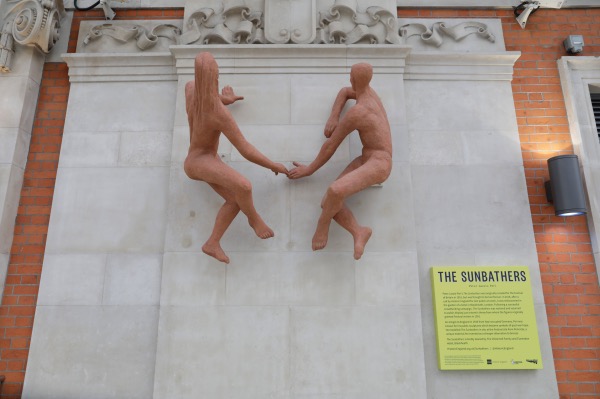
A sculpture created for the 1951 Festival of Britain has returned to Waterloo Station where it was first displayed almost 70 years ago. The work of Hungarian-born artist Peter Laszlo Peri, The Sunbathers features two figures – made from ‘Pericrete’, a special kind of concrete created by the artist as a cheaper alternative to casting in bronze – and was mounted on the wall close to the station’s entrance. It was presumed lost until it was rediscovered in 2016 at the Clarendon Hotel in Blackheath and, following restoration, was put on show in 2017 in the Southbank Centre’s Royal Festival Hall. Now, thanks to the efforts of Historic England and Network Rail, the sculptures have returned to the station, close to its original site, and will stay there for five years. PICTURES: Courtesy of Network Rail

This Week in London – Rare Hebrew manuscripts at British Library; British Museum to reopen; and art at the Old Royal Naval College…

The launch of a new exhibition looking at Hebrew manuscripts marks the next phase of the British Library reopening. Hebrew Manuscripts: Journeys of the Written Word explores the history, culture and traditions of the Jewish people around the world and features rarely seen treasures including a letter to King Henry VIII written by an Italian rabbi in 1530 regarding Biblical laws that could support Henry VIII’s claim to annul his marriage to Catherine of Aragon as well as the earliest dated copy – 1380 – of Moses Maimonides’ Guide for the Perplexed, a rare uncensored copy of the Babylonian Talmud dating from the 13th century, and a 15th century illustrated copy of Abraham bar Hiyya’s Shape of the Earth, one of the first Jewish scientific works written in the Hebrew language. Also reopening is the library’s free permanent gallery – the Sir John Ritblat Gallery: Treasures of the British Library – with a new one-way route taking in treasures including Leonardo da Vinci’s sketchbooks and handwritten manuscripts by the Brontë sisters, Virginia Woolf and Sylvia Plath. For more on the exhibition and the library’s reopening, see www.bl.uk. PICTURE: David Jensen.

The British Museum reopens to visitors from today after the longest closure in its 261 year history. Tickets must be pre-booked online or over the phone and visitors will be able to access the ground floor galleries through a new one-way route. The museum has also announced that Grayson Perry’s work, The Tomb of the Unknown Craftsman – an elaborate, cast-iron coffin-ship originally created for his British Museum exhibition of the same name in 2011 – is returning to the museum. For more, see www.britishmuseum.org.

A “celestial choir of spinning sound machines” can be seen at the Old Royal Naval College in Greenwich this weekend. Positioned in Lower Grand Square, Chorus is the monumental work of award-winning artist and British Composer of the Year Ray Lee. It features a series of giant metal tripods supporting rotating arms, at the end of which are loudspeakers which emit finely turned musical pitches. It can be viewed from Friday through to Monday. Meanwhile, the Painted Hall is hosting Luke Jerram’s artwork Gaia which features NASA imagery in creating a virtual, 3D small scale Earth. Gaia can be seen from tomorrow until 6th September (admission charge applies).  For more, see www.ornc.org.

Send all items for inclusion to exploringlondon@gmail.com.

LondonLife – Windrush generation commemorated in Kensal Green…

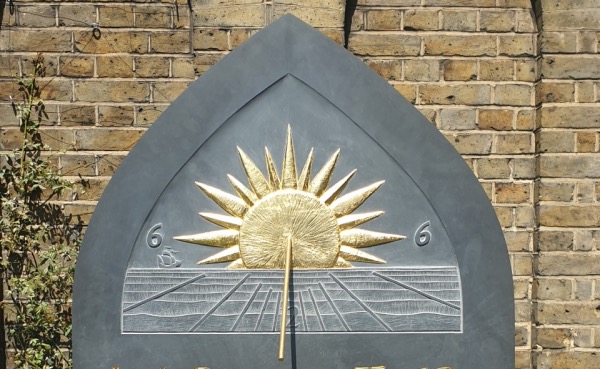
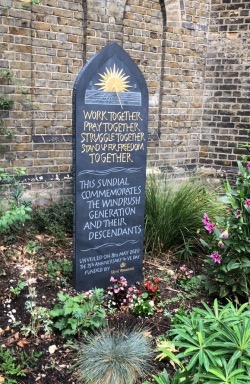
A new sundial and garden have been unveiled in Kensal Green commemorating the Windrush generation. The sundial, the work of carver Martin Cook, is located at St John The Evangelist Church which, according to its vicar, Rev David Ackerman, has relied upon the local Caribbean community to survive and thrive since the 1960s. The sundial has been made of a single piece of slate and carved with the words “Work Together, Pray Together, Struggle Together, Stand Up for Freedom Together” which are taken from Martin Luther King Jr’s famous ‘I have a dream’ speech. An official opening ceremony for the sundial – which was funded by Westminster City Council – was held earlier this month. In a statement, Jonathan Glanz, the Lord Mayor of Westminster, said he hoped the outdoor space would become a “beacon of peace and unity for the local community in troubled times”. PICTURES: Courtesy of the City of Westminster.

This Week in London – Family fun at London Transport Museum Depot; and, Science Museum reopens…

The London Transport Museum Depot in Acton Town has flung its doors open for 10 days of “special family fun”. The depot, which houses more than 320,000 items from the city’s transport history including vintage London buses and classic Tube trains, now features a special family-friendly trail for the 10 day season which takes a look at historic vehicles from the past 200 years including a yellow 1881 horse drawn ‘garden seat’ bus and a red 1938 Stock Tube train. The London Transport Miniature Railway will be running and all children visiting will receive a special sealed pack including a craft kit. Admission charges apply and tickets must be prebooked for times between 11am and 6pm until Sunday, 23rd August, and from Wednesday, 26th to Sunday 30th August. For more, see www.ltmuseum.co.uk/whats-on/depot-summer.

The Science Museum in South Kensington reopened its doors this week after a closure of five months. As well as the innovative Wonderlab: The Equinor Gallery – which features interactive exhibits and live, socially-distanced science demonstrations – and the world’s largest medical galleries – Medicine: The Wellcome Galleries, visitors will be able to take in the temporary exhibition, Driverless: Who is in control?, the season of which has been extended to January next year. Tickets, which are free, must be pre-booked online and social distancing measures apply in the museum. For more, see www.sciencemuseum.org.uk.

Send all items for inclusion to exploringlondon@gmail.com

LondonLife – Chindit war memorial gets protection upgrade to mark VJ Day…

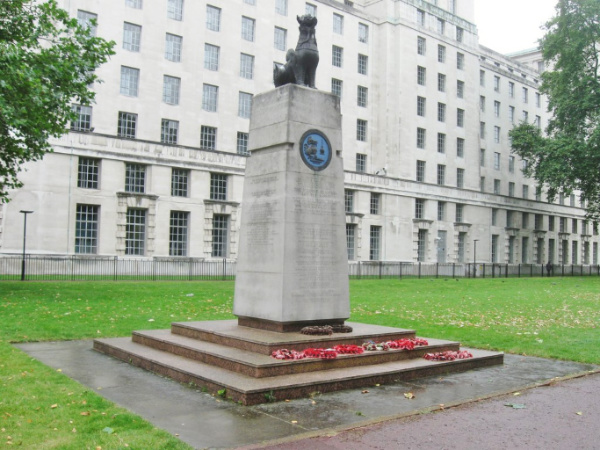
A memorial commemorating the role of the Chindit Special Forces in Burma during World War II has been awarded a Grade II listing on the National Heritage List for England in honour of the 75th anniversary of Victory in Japan (VJ) Day. Located in Victoria Embankment Gardens outside the Ministry of Defence building in Whitehall, the memorial’s granite plinth is topped with a bronze chinthe, a mythical beast that stands guard outside Burmese temples. The Chindit Special Forces, which were formed by British Army officer Major General Orde Charles Wingate and disbanded in early 1945, are credited with helping to turn the tide of World War II against Japan in the Far East. The memorial was designed by architect David Price and the chinthe sculpture the work of Frank Forster. It was unveiled by Prince Philip on 16th October, 1990. On Saturday, as the nation commemorated VJ Day, a military delegation lad a wreath at the foot of the memorial. PICTURE: Derek Voller (licensed under CC BY-SA 2.0).

This Week in London – VJ Day remembered; Steve McQueen; and, Windsor gardens…

• The National Army Museum in Chelsea is joining with the Royal Air Force Museum, the National Museum of the Royal Navy and the Commonwealth War Graves Commission to mark the 75th anniversary of VJ (Victory over Japan) Day, this Saturday, 15th August, with a series of free events including online talks. Among those taking part are World War II veteran Captain Sir Tom Moore, recently knighted by the Queen for his efforts in helping raise funds for the NHS during the coronavirus pandemic, author and explorer Levison Wood (who explores the story of his grandfather’s service in Burma), and Professor Tarak Barkawi, author of Soldiers of Empire: Indian and British Armies in World War II, as well as General Lord Richards, Grand President of the Royal Commonwealth Ex-Services League who’s involved in a conversation about the contribution of Commonwealth soldiers during the Far East campaign. For the full programme of events, head to www.nam.ac.uk/series/vj-day-75.

Steve McQueen is back at Tate Modern. The exhibition, which reopened last Friday following the reopening of all Tate galleries, spans 20 years of McQueen’s work and features 14 major pieces spanning film, photography and sculpture. The exhibition adds to the three visitor routes already in place at the Tate Modern and coincides with McQueen’s latest artwork Year 3, an epic portrait of London’s Year 3 pupils created through a partnership between Tate, Artangel and A New Direction which can be seen at Tate Britain until 31st January. Visitors must prebook. For more, head to tate.org.uk/visit.

Beyond London (a new regular feature in which we include sites around Greater London)
• The East Terrace Garden at Windsor Castle – commissioned by King George IV in the 1820s – has opened to weekend visitors for the first time in decades. Overlooked by the castle’s famous east facade, the formal garden features clipped domes of yew and beds of 3,500 rose bushes planted in a geometric pattern around a central fountain. It was originally designed by architect Sir Jeffry Wyatville between 1824 and 1826 on the site of an old bowling green made for Charles II in the 1670s. Plants, including 34 orange trees sent by the French King Charles X, were specially imported for the garden and statues were brought from the Privy Gardens at Hampton Court, including a set of four bronze figures by Hubert Le Sueur which  were made for Charles I in the 1630s and which remain in the garden today. Prince Albert is known to have taken a particular interest in the garden and the Queen, then Princess Elizabeth, and her sister Princess Margaret grew vegetables there during World War II. As well as the opening of the East Terrace Garden on weekends, visitors with young children on Thursdays and Fridays in August are being given special access to the Castle’s Moat Garden beneath the iconic Round Tower, thought to have dated from the period of King Edward III and believed to be the setting for Geoffrey Chaucer’s The Knight’s Tale, the first story in Canterbury Tales. Pre-bookings essential. For more, see www.rct.uk.

Send all items for inclusion to exploringlondon@gmail.com.

LondonLife – Concept designs for proposed Smithfield redevelopment revealed…

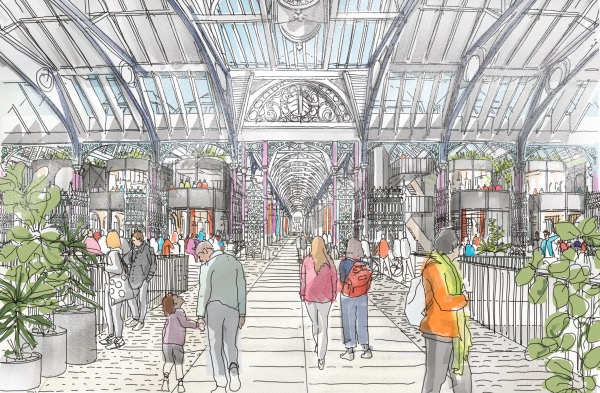
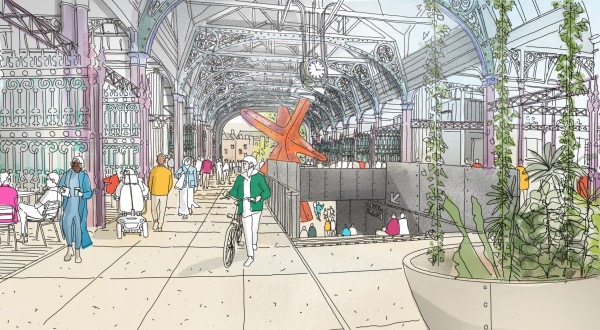
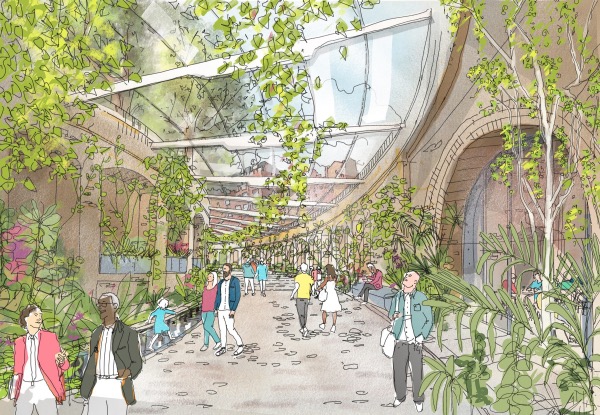
The City of London Corporation has unveiled early ideas for the redevelopment of the Smithfield Market following the proposed relocation of the meat market to Dagenham Dock along with Billingsgate and New Spitalfields. The work of architecture practice Studio Egret West, the new designs see the Grade II*-listed East and West Smithfield buildings and Grade II-listed Rotunda transformed for public and commercial use including removing some of the modern additions to the market buildings, such as loading bays and cold rooms, to reveal the elegance of the original Victorian structure and create four large, clear “halls” under the oversailing roof. While there’s been a meat market on the site since the 12th century, the Victorian-era markets buildings, featuring ornate iron frames, were built between 1866 and 1883. Members of the public are able to share their feedback on the initial concept drawings via the website, www.wholesalemarkets.co.uk/smithfield until 4th September.

This Week in London – V&A reopens; institution reopenings; and, ZSL London Zoo looks for volunteers…

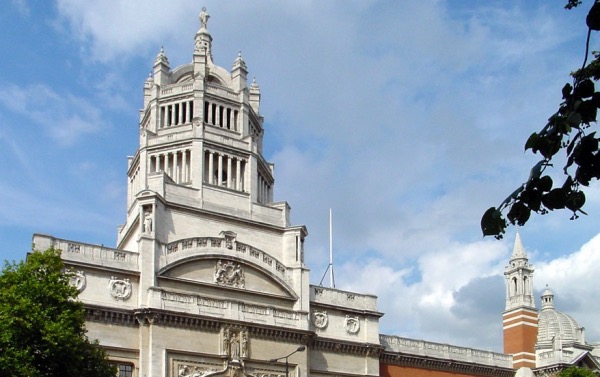
The V&A in South Kensington reopens its doors to visitors today in the first phase of a staged reopening strategy. All of the ground floor galleries are reopening including the Medieval & Renaissance Gallery, the Cast Courts, The Jameel Gallery of Islamic Art and Fashion Gallery, as well as the Europe 1600–1815 galleries on lower ground floor. The first and second floor collection galleries including The William and Judith Bollinger Jewellery Gallery, Theatre & Performance Galleries, and the Photography Centre as well as the museum’s Paintings, Tapestries and Silver Galleries are all scheduled to open on 27th August as well as the exhibition Kimono: Kyoto to Catwalk, which had closed just two weeks into its run.  For more, see www.vam.ac.uk. PICTURE: M.chohan (Public domain). 

Other recent and upcoming reopenings include: the Horniman Museum, the Foundling Museum, the National History Museum, The Queen’s House in Greenwich (Monday, 10th August) and the National Maritime Museum in Greenwich (exhibitions only; galleries coming later).

ZSL London Zoo is calling for volunteers to help assist visitors as they make their way around the zoo via three new one-way trails. The move, which follows a successful fundraising effort fronted by Sir David Attenborough, is aimed especially at people still furloughed and students forced to cancel gap year travel plans. Those interested in volunteering are asked to commit to a minimum of half a day each fortnight. For more, see  www.zsl.org/volunteering.

Send all items for inclusion to exploringlondon@gmail.com.
LondonLife – Listening to London…

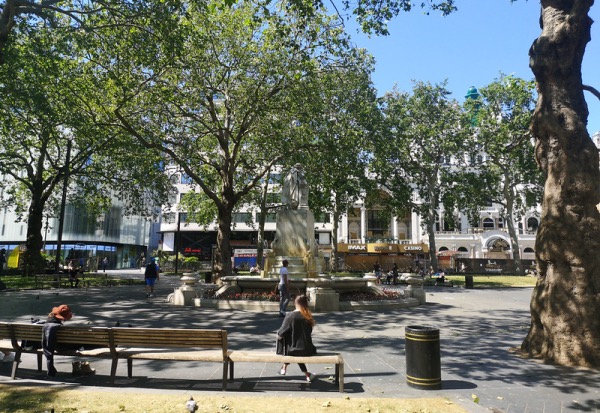
The first recorded soundscape of London’s busy streets was created in 1928 as part of a Daily Mail campaign calling for noise restrictions. Recordings were made at five sites – Whitechapel East, St George’s Hospital at Hyde Park Corner, Leicester Square, Cromwell Road and Beauchamp Place in South Kensington – in a collaborative project between the Mail and the Columbia Graphophone Company. Now, more than 90 years later, the sounds at the five original locations – or rather the lack of sounds during the coronavirus pandemic lockdown – have been captured again, this time as binaural recordings, a method of recording sound that uses two microphones to create a 3D stereo sound. It’s all part of the Museum of London’s ongoing ‘Collecting COVID’ project and was created in collaboration with String and Tins, an award-winning team of sound designers, composers, sound supervisors and mix engineers. Both the 1928 recordings (now digitised) and the modern recordings have been made available to listen to in their entirety for the first time on the Museum of London’s website. There are accompanying photographs by Damien Hewetson as well as historic imagery from the museum’s archive. PICTURE: A sparsely populated Leicester Square in an image taken in May this year during the coronavirus lockdown (ACME/licensed under CC BY-NC 2.0)

This Week in London – Kensington Palace reopens with Diana’s ‘Travolta dress’; institution reopenings; the Luna Cinema at Greenwich; and, ‘British Surrealism’ online…

Kensington Palace has reopened its doors today after four months of lockdown and, to celebrate, the famous “Travolta dress” worn by Princess Diana is going on show for the first time. Designed by Victor Edelstein, the midnight blue velvet gown became the focus of world attention in 1985 when the Princess wore it to a White House Gala during which she danced with actor John Travolta. Historic Royal Palaces acquired the dress at auction in 2019. The palace will feature a new one-way route as part of coronavirus social distancing measures. For more, see www.hrp.org.uk/kensington-palace/.

Other reopenings this week include: the Imperial War Museum, Churchill War Rooms, Wellington Arch, the Ranger’s House in Greenwich and the Jewel Tower in Westminster (Saturday, 1st July); the Royal Observatory in Greenwich (Monday, 3rd August); and, the Natural History Museum in South Kensington (Wednesday, 5th August).

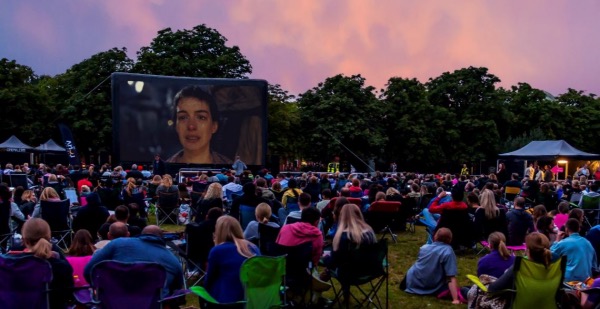
The Old Royal Naval College at Greenwich will host Luna Cinema’s open-air cinema from Tuesday 4th to Thursday, 6th August. Audiences will be able to sing and dance along to blockbuster hits RocketmanJudy and Dirty Dancing with the college as the backdrop. Meanwhile the Old Royal Naval College is launching new smartphone tours with the first, available for free on any smartphone using the Smartify app, a family tour aimed at those visiting with children aged five to 12 years. For more, see www.ornc.org.

The Dulwich Picture Gallery’s British Surrealism exhibition will be available for anyone to view online from Friday. The exhibition, which celebrates the British artists that contributed to the iconic surrealist movement, features more than 70 artworks from 42 artists, including Leonora Carrington, Francis Bacon, Henry Moore, Paul Nash, Ithell Colquhoun, and Conroy Maddox. For more, see www.dulwichpicturegallery.org.uk.

Send all items for inclusion to exploringlondon@gmail.com.

LondonLife – Marking 72 years of the NHS…

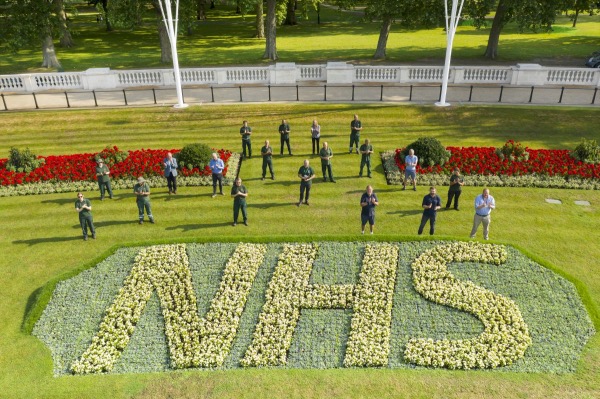
The Royal Parks have created two flowerbeds outside Buckingham Palace which spell out the letters ‘NHS’ in honour of the service’s 72nd birthday. The two 12 metre long flowerbeds, located in the Memorial Gardens – officially part of St James’s Park – contain some 45,000 flowers including scarlet geraniums, especially selected to match The Queen’s Guard at Buckingham Palace, as well as white begonias on a blue background of drought resistant succulents which, together replicate the colours of the NHS. The floral display – an appropriate tribute in this year of pandemic – can be seen until mid-September. PICTURES: Courtesy of The Royal Parks.

This Week in London – Princess Beatrice’s bouquet; Technicolour Dickens; and, the Royal Parks’ ‘Summer of Kindness’…

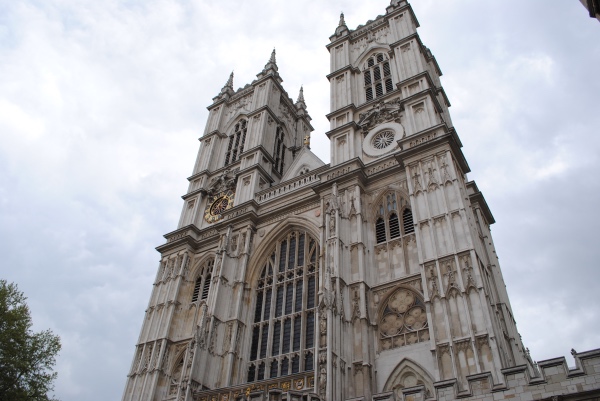
Princess Beatrice, who married Edoardo Mapelli Mozzi in a private ceremony in The Royal Chapel of All Saints at Windsor’s Royal Lodge last week, has sent the bouquet she carried during the wedding to rest on the Grave of the Unknown Warrior in Westminster Abbey. The tradition of royal brides sending their bouquets to rest on the grave was started by Queen Elizabeth, the Queen Mother, when she lay her bridal bouquet on the grave in memory of her brother Fergus who was killed in 1915 at the Battle of Loos during World War I. Brides including Queen Elizabeth II, the Duchess of Cambridge and Princess Beatrice’s sister, Princess Eugenie, have since continued the tradition. The grave commemorates the fallen of World War I and all those who have since died in international conflicts.

The Charles Dickens Museum in Bloomsbury reopens on Saturday, 25th July, with a new exhibition marking the 150th anniversary of the author’s death. Technicolour Dickens: The Living Image of Charles Dickens explores the power of the writer’s image and features paintings by the likes of William Powell Frith, Victorian-era photographs, ink drawings by “Automatons”, and letters from Dickens in which he explains what he really thought of sitting for portraits. The museum has also commissioned artist and photographer Oliver Clyde to create eight colourised portraits based on images taken from its collection. For more see www.dickensmuseum.com. Other reopenings this coming week include the Horniman Museum (Thursday, 30th July).

The Royal Parks are launching a ‘Summer of Kindness’ campaign to keep the parks clean after unprecedented levels of rubbish were left in the parks during the coronavirus lockdown. The Royal Parks, which played a key role in the physical and mental wellbeing of many people during the lockdown, report that some 258.4 tonnes of rubbish – the equivalent in weight of 20 new London buses or 74 elephants – were collected from London’s eight Royal Parks in June alone with staff having to spend more than 11,000 hours to clear up. And, with groups now able to gather, the littering has continued, prompting The Royal Parks to call for visitors to care for the parks by binning litter or taking it home. So, please, #BeKindToYourParks.

Send all items for inclusion to exploringlondon@gmail.com.
This Week in London – London’s new embankment named; and, ‘Cutty Sark’ reopens…

• London’s first new River Thames embankment in 150 years has been named after Joseph Bazalgette, the Victorian civil engineer who revolutionised London’s sewer system. The ‘Bazalgette Embankment’ is located alongside Victoria Embankment, to the west of Blackfriars Bridge, and includes a new City Walkway as well as open space for recreation and leisure activities. Bazalgette’s sewer design led to cleaner water in the Thames and was also responsible for helping to eliminate cholera outbreaks in the city. The embankment is one of seven new embankments which will be opened as part of the Thames Tideway Tunnel project due for completion in 2024.

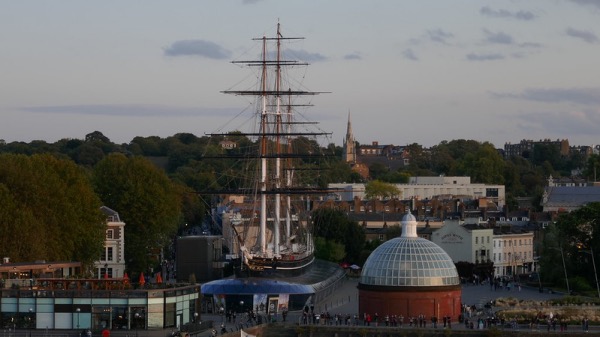
• Greenwich landmark, Cutty Sark, reopens to visitors on Monday, 20th July. Other reopened institutions include the Royal Academy of Arts, The Foundling MuseumThe Wallace Collection and Somerset House.

PICTURE: Christine McIntosh (licensed under CC BY-ND 2.0)

Send all items for inclusion to exploringlondon@gmail.com.
This Week in London – Tower of London lowers drawbridge; other openings include Westminster Abbey and The Queen’s Gallery…

The Tower of London will officially lower the drawbridge in a symbolic ceremony this Friday morning to announce its reopening after a 16 week closure, the longest since World War II. A new one-way route has been introduced to allow for social distancing and while the Yeoman Warders, known as Beefeaters, won’t be restarting their tour immediately, they will be able to answer visitor questions. The Crown Jewels exhibition will also be reopening. Online bookings are essential. For more, see www.hrp.org.uk/tower-of-london/.

• Westminster Abbey reopens its doors to visitors on Saturday after the longest closure since it did so to prepare for the coronation of Queen Elizabeth II in 1953. The abbey will initially be open to visitors on Saturdays and on Wednesday evenings, with a limited number of timed entry tickets available solely through advance booking online.

The Queen’s Gallery and the Royal Mews at Buckingham Palace as well as Royal Collection Trust shops reopened to the public this week. The Queen’s Gallery exhibition George IV: Art & Spectacle has been extended until 1st November while Japan: Courts and Culture, which had been originally due to open in June this year, is now expected to open in spring 2022. Tickets must be booked in advance at www.rct.uk/tickets.

• Other reopenings include Kew Gardens’ famous glasshouses (from last weekend) and the Painted Hall, King William Undercroft and interpretation gallery at Greenwich (from Monday 13th July).

Send all items for inclusion to exploringlondon@gmail.com.

PICTURE: Nick Fewings/Unsplash.


This Week in London – National Gallery – and other landmarks – to reopen while National Portrait Gallery remains closed to 2023…

Plans are afoot for the reopening of London’s iconic historic and cultural institutions with The National Gallery becoming the first national museum in the UK the first to do so when it reopens its doors on 8th July. Special exhibitions include Titian: Love, Desire, Death which had to close after just three days and has now been extended to 17th January, 2021, and Nicolaes Maes: Dutch Master of the Golden Age which has been extended until 20 September. Meanwhile, Room 32 – one of the gallery’s largest rooms displaying 17th-century Italian paintings by artists including Caravaggio, Artemisia and Orazio Gentileschi, Guido Reni and Guercino – will reopen as the Julia and Hans Rausing Room after a 21 month refurbishment project while the Equestrian Portrait of Charles I by Van Dyck (about 1637/8) will be back on show in Room 21 after a more than two year restoration. There are also number of newly-acquired paintings on show including Liotard’s The Lavergne Family Breakfast (1754), Gainsborough’s Portrait of Margaret Gainsborough holding a Theorbo (about 1777) and Sorolla’s The Drunkard, Zaraúz, (1910). All visits must be booked online in advance and, of course, social distancing measures will be in place. For more, see www.nationalgallery.org.uk.

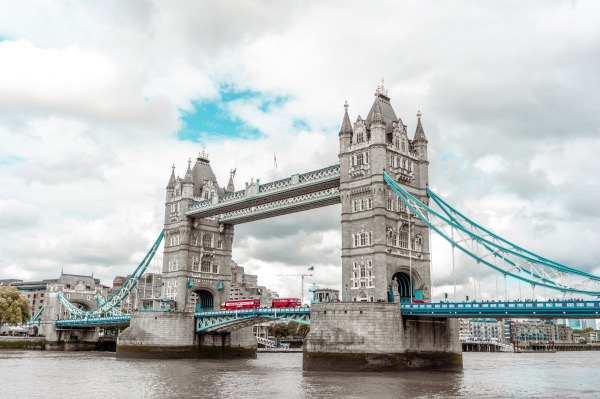
Tower Bridge is among landmarks reopening its doors in London. PICTURE: Javier Martinez/Unsplash 

Other landmarks opening include Tower Bridge (with a new one way route from 4th July), Eltham Palace (from 4th July) and the Tower of London (from 10th July). Openings later this month include interiors at Hampton Court Palace (from 17th July) the British Library Reading Rooms (from 22nd July), and Kensington Palace (30th July). We’ll keep you informed as more sites open.

And amid the openings, comes a closure with the National Portrait Gallery shutting its doors until spring 2023 to allow for a massive redevelopment project known as ‘Inspiring People’. The redevelopment project – the gallery’s biggest since the building in St Martin’s Place opened in 1896 – includes a comprehensive re-presentation of the gallery’s collection, spanning a period stretching from the Tudors to now, across 40 refurbished galleries along with a complete refurbishment of the building including the restoration of historic features, a new and more welcoming visitor entrance and public forecourt on the building’s north facade. For more, see www.npg.org.uk.

Send all items to exploringlondon@gmail.com

This Week in London – Windrush oral histories; Berkeley Square gets a new sculpture; and, Sir Robert Geffrye statue under review…

Hitherto unheard oral histories documenting the lived experience of the Windrush generation and the generations that followed have been released by the Museum of London. The oral histories, which were recorded in 2018 as part of the Conversation Booth project in City Hall, are part of the museum’s new online collection of Windrush-related content. Drawn from the collections of both the Museum of London and Museum of London Docklands, it includes objects, photos, videos and articles. To explore the collection, head to www.museumoflondon.org.uk/museum-london-docklands/windrush-stories.

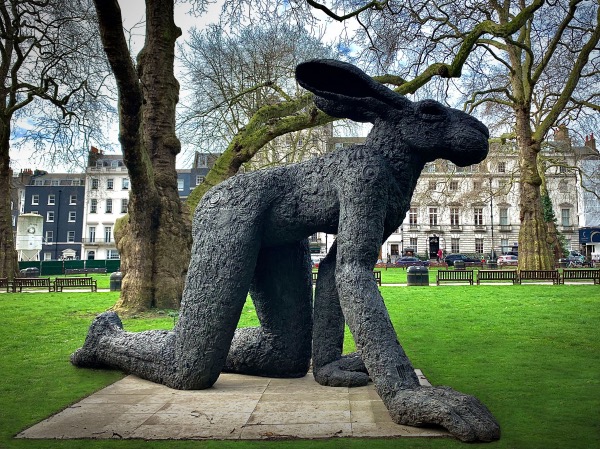
A hybrid sculpture depicting the body of a woman with the head of a hare has gone on show in Berkeley Square. The work of Sophie Ryder, Crawling was hand-made in 1999 from wet plaster, old machine parts and scavenged toys then cast in bronze. The work is part of City of Westminster’s City of Sculpture programme which brings sculpture to iconic outdoor locations.

The Museum of the Home is asking people for their opinion on the future of the statue of Sir Robert Geffrye which stands out the front of the almshouses housing the museum in Shoreditch. The almshouses were built by Geffrye, who was involved with the slave trade having made made his fortune with the East India Company and the Royal African Company, in 1714. The consultation is being held in partnership with Hackney Council which is conducting a wider review of landmarks and the naming of public spaces in the borough. The consultation remains open until the 2nd July. To have your say, head to www.surveymonkey.co.uk/r/geffrye-statue.

Send all items to exploringlondon@gmail.

LondonLife – Call for change…

PICTURE: Richard Laxa/Unsplash

This Week in London – Statue of slave owner removed; Finsbury Circus to be redesigned; and, ZSL London Zoo reopening…

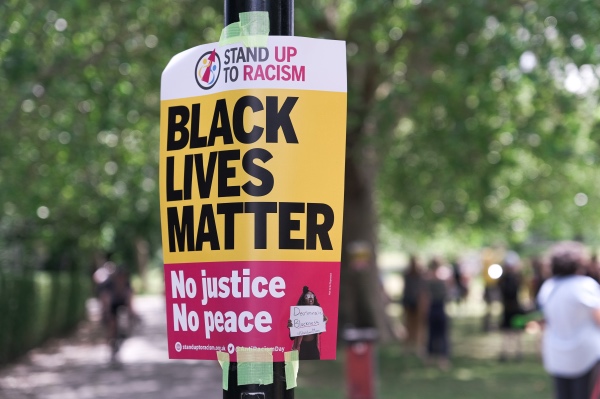
A statue of slave owner Robert Milligan has been removed from its position outside of the Museum of London Docklands. The Canal and River Trust removed the statue this week in recognition of the “wishes of the community”. The move had the support of the museum which is one of only three museums in the UK to address the history of the transatlantic slave trade. “The Museum of London recognises that the monument is part of the ongoing problematic regime of white-washing history, which disregards the pain of those who are still wrestling with the remnants of the crimes Milligan committed against humanity…” the museum said in a statement issued earlier in the week. “Now more than ever at a time when Black Lives Matter is calling for an end to public monuments honouring slave owners, we advocate for the statue of Robert Milligan to be removed on the grounds of its historical links to colonial violence and exploitation.” Milligan was a prominent British slave owner who, by the time of his death in 1809, owned 526 slaves and two sugar plantations in Jamaica. The statue, the work of Sir Richard Westmacott, was moved to a position outside the museum in West India Quay in 1997. Earlier this week, the Mayor of London, Sadiq Khan, announced a new Commission for Diversity in the Public Realm which will review landmarks – including murals, street art, street names, statues and other memorials – across the city of London with a view to improving diversity in the public realm.

The City of London Corporation has launched a competition to redesign the Grade II-listed gardens at Finsbury Circus. The two-stage competition aims to identity creative and sustainable design ideas in a bid to return Finsbury Circus Gardens to being a multifunctional public space with a pavilion as well as a “sanctuary” within the Square Mile. The corporation is seeking a joint bid from an architect and a landscape architect to deliver a new design for the reinstatement of Finsbury Circus Gardens and Pavilion. Some two-thirds of the Finsbury Circus Gardens, one of the oldest parks in the City, have been used by Crossrail for the past 10 years to provide access to a section of tunnel between Farringdon and Liverpool Street. The works required the removal of historic features like the bowling green and historic Grade II drinking fountain and these will now be reinstated into the new design. PICTURE: Looking across Finsbury Circus Gardens in 2006 (David Williams /licenced under CC BY-SA 2.0)

Tickets for ZSL London Zoo have gone on sale ahead of its planned reopening next week. The zoo will reopen on Monday, 15th June, for the first time since its closure on Saturday, 21st March due to the coronavirus pandemic. The zoo, which is offering pre-allocated, timed entry slots, limited to just 2,000 visitors a day, says its taken numerous measures to ensure the safety of visitors. For more, head to www.zsl.org/zsl-london-zoo.

Send all items for inclusion to exploringlondon@gmail.com.
Lost London – St Swithin London Stone…

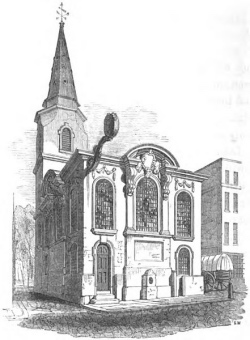
Once located on the north side of Cannon Street, St Swithin London Stone was first recorded in the 13th century, rebuilt after the Great Fire of London and finally demolished after being damaged in World War II.

The church’s curious name comes its dedication to St Swithin, a ninth century bishop of Winchester, and the London Stone, a stone of curious origins which was originally located across the road and then moved across to eventually be placed inside an alcove in the south wall of the church in the 1820s (you can read more about it here).

The medieval church was rebuilt in 1405 thanks to the largesse of Sir John Hind, twice Lord Mayor of London, and had one of the first towers built specifically for the hanging of bells.

The church was famously also the final resting place of Catrin Glyndwr, daughter of Welsh leader Owain Glyndwr, who was taken hostage in 1409 and imprisoned in the Tower of London before dying in mysterious circumstances four years later. Other notable connections include one with John Dryden who married Lady Elizabeth Howard in the church in 1663.

The church was destroyed in the Great Fire of London. Now united with St Mary Bothaw, the church was rebuilt apparently using some of the original stones, to the designs of Sir Christopher Wren. Rectangular in shape, it featured a tower in the north-west corner and an octagonal dome.

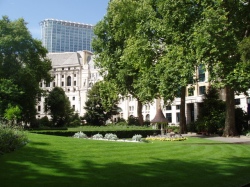
The church, which also had an association with the Worshipful Company of Salters, was heavily damaged by bombing during the Blitz. United with St Stephen Walbrook in 1954, the ruined church was eventually demolished in 1962 (the pulpit is now at All Hallows by the Tower). There’s now a garden on the site which features a memorial to Catrin Glyndwr.

PICTURE: The Church of St Swithin, London Stone, as depicted in the 1839 book ‘The Churches of London’ by George Godwin. (public domain)

This Week in London – National Gallery works transformed into light and sound “experiences”

The National Gallery has unveiled a new project which sees some of its most famous works represented as 360 degree light and sound “experiences”. KIMA: Colour in 360, the work of the Analema Group, uses colour data to transforms the works which include Van Gogh’s A Wheatfield, with Cypresses, Monet’s Water-Lilies, Setting Sun. While the first two works can be viewed online, a third – based on van Eyck’s The Arnolfini Portrait – will come later. The work was commissioned by new digital studio National Gallery X (or NGX) and is part of a digital events programme which, on 16th June, will also see the first of a series of one-night immersive events being held in collaboration with London’s media art platform Art in Flux. ‘ART IN FLUX @ NGX’ will present cutting-edge artwork exploring the boundaries between art and technology and feature the work pf pioneering media artists, researchers and academics. To see the first two works and for more about the programme head to www.nationalgallery.org.uk/whats-on/analema-at-ngx. PICTURE: KIMA: Colour Van Gogh © Analema Group. 2020. 

Send all items to exploringlondon@gmail.com.