This Week in London – Totally Thames, and, Cooper Car Company commemorated…

• Totally Thames – London’s annual celebration of its river – kicks off on Saturday with a packed programme of walks and talks, performances, exhibitions, and the chance to explore the waterway itself. Among the exhibitions are one focusing on the history of the annual Doggett’s Coat and Badge race and another featuring river-inspired artwork created by young people from across the globe, while variously themed walks include a series taking place along the Thames foreshore at low tide. Other events include a concert series in Tower Bridge’s Bascule Chamber, tours of the Billingsgate Roman House and Baths, and talks including one on the “scandalous” history of whitebait and another on the connections between Florence Nightingale, St Thomas’ Hospital and the river. There’s also the chance this Saturday to see the tall ship, STS Lord Nelson, arrive in London to cross the finish line in ‘Lord Dannatt’s Round Britain Challenge’, the Classic Boat Festival at St Katharine’s Docks (running from 7th to 9th September), and the Great River Race (held on 8th September). For the full programme of events, head to www.totallythames.org. PICTURE: The Thames in central London (NASA/GSFC/METI/ERSDAC/JAROS, and U.S./Japan ASTER Science Team)

Iconic car manufacturer, The Cooper Car Company, has been commemorated with an English Heritage Blue Plaque. The plaque, unveiled earlier this month at the company’s former works in Hollyfield Road in Surbiton, makes mention of the company’s success in winning two Formula One World Championships in 1959 and 1960. The former works building, the site where Charles Cooper and his son John created a company which became part of motoring history, is a rare surviving purpose-built and architect-designed 1950s motor workshop. It features an unusual curved frontage – described as a “striking example of ‘Thunderbirds’ architecture” – in what is perhaps an intentional homage to the curved design of the Cooper racing cars, something English Heritage believes is quite possible given its architect, Richard Maddock, was the father of the late Cooper chief designer Owen ‘The Beard’ Maddock. For more, see www.english-heritage.org.uk/visit/blue-plaques/.

Email all items for inclusion to exploringlondon@gmail.com.

LondonLife – St Paul’s Cathedral rises over the City…

St Paul’s Cathedral and the City of London. PICTURE: Brunel Johnson/Unsplash

This Week in London – Smithfield Market celebration; Hampton Court’s annual food festival; and, Edwardian illustrators…

The 150th anniversary of the Smithfield Market will be celebrated at a street party this weekend. The Museum of London and Smithfield Market are joining in offering the free event which, reminiscent of St Bartholomew’s Fair, will feature food, music and historical re-enactments. Performers include Nadia Rose, Stealing Sheep, Girls Rock London, Gandini Juggling and Horrible Histories. Designed by Sir Horace Jones, the redesigned market – which is owned and managed by the City of London Corporation, was officially opened on 24th November, 1868. Runs from 11am to 8pm on Saturday and Sunday. For more, see www.culturemile.london/festival/smithfield-150/.

Hampton Court Palace is hosting its annual food festival over the August Bank Holiday weekend. Highlights include The Kitchen theatre featuring live cookery demonstrations from top chefs and gastronomic experts including Nadiya Hussain, Melissa Hemsley, Dr Rupy Aujla, Rhiannon Lambert, Lisa Faulkner and Michel Roux, Jr and The Classroom, which will be offering hands-on masterclasses such as sourdough workshops and ‘naked cake’ decorating with the BBC Good Food Cookery Team, gin and cocktail masterclasses and kids’ cookery. There will be stalls from more than 100 food providers offering everything from oysters to sausages, sweet treats and ales as well as a bandstand with live music and activities including vintage games, shire horses and a circus school. The festival runs from 25th to 27th August. Free entry to the palace and gardens is included with the ticket. For more, see www.hrpfoodfestivals.com.

• The work of largely forgotten Edwardian female illustrators Alice Bolingbroke Woodward and Edith Farmiloe is going on show in a new exhibition at the Heath Robinson Museum in Pinner. Peter Pan and the Other Lost Children, which opens Saturday, has been designed around 19 of Woodward’s original watercolour drawings from the first Peter Pan and also includes seven watercolours from her drawings from a 1930s edition of Alice in Wonderland. The display, which also includes works by Farmiloe, has been timed to coincide with the centenary of the Representation of the People Act of 1918. For more, see www.heathrobinsonmuseum.org.

Send all items for inclusion to exploringlondon@gmail.com.

LondonLife – The dragons have returned to Kew…

More than 200 years after they disappeared, the dragons have returned to Kew Garden’s Great Pagoda. The 10 storey octagonal pagoda – which, as we reported, reopened to the public in July after a four year, £5 million restoration project by Historic Royal Palaces in conjunction with the Royal Botanic Gardens, Kew – was built in 1762 to the designs of Sir William Chambers and was a birthday gift for Princess Augusta, founder of the gardens. Used by the Georgian Royal Family to entertain visitors, it was famously adorned with 80 brightly coloured dragons but these disappeared in the 1780s. Rumours suggested they were used as payment for the Prince Regent’s gambling debts but apparently the truth is more banal – Chambers took them off when he restored the building in 1784 and they were found to be rotten. But they’re back (some of the new dragons are gilded with real gold and while some are hand carved from cedar, others were reportedly made on a 3D printer) and to celebrate their return (and the reopening of the pagoda to the public for the first time in decades, complete with a 253 step climb), we today publish some images. Admission charge applies. For more, see www.kew.org/kew-gardens/whats-on/climb-the-great-pagodaPICTURES: © Richard Lea-Hair – Historic Royal Palaces.

This Week in London – Celebrating Antarctica through dance and science; and, the Freuds in exile…

A free dance and science festival celebrating Antarctica opens at the Science Museum in South Kensington on Tuesday. Antarctica Live features daily dance performances – including a newly devised performance by award-winning choreographer Corey Baker, workshops and hands-on experiences with real survival equipment to shed light on how the frozen continent is responding to increasing human activity and how its fate can affect us all. Visitors will also be able to see a scale model of the recently launched polar research vessel, the RRS Sir David Attenborough. A special “lates” event on 29th August in the museum’s IMAX Theatre will premiere the documentary film Dancing on Icebergs, which charts the two year making of the short film, Antarctica: The First Dance, featuring Madeleine Graham, star of the Royal New Zealand Ballet (pictured). The screening will be followed by a live Q&A with Corey Baker. Antarctica Live runs until 30th August. For more, see www.sciencemuseum.org.uk/see-and-do/antarctica-live. PICTURE: Madeleine Graham in Antarctica The First Dance © Jacob Bryant.

On Now: Leaving Today – the Freuds in Exile 1938. This exhibition at the Freud Museum London in Hampstead focuses on the flight and exile of Sigmund Freud, his wife Marta and daughter Anna as, following Hitler’s annexation of Austria, they left Vienna on 4th June, 1938, heading to a new life in London. It features original documents, letters and objects, many of which have never been on public display before. Highlights included the documents Freud and his family required to exit Austria and enter Britain, Freud’s personal correspondence with figures like Albert Einstein and HG Wells, and the first public display of Marie-Louise von Motesiczky’s painting The Psychoanalyst. The exhibition also features a series of works created by young people attending the Baobab Centre for Young Survivors in Exile in collaboration with Barnaby Barford. Runs until 30th September. Admission charge applies. For more, see www.freud.org.uk.

Send all items for inclusion to exploringlondon@gmail.com.

LondonLife – Victorian London in photographs…

Above is a view along Fleet Street in the City of London in 1890, looking east towards Ludgate Hill and St Paul’s Cathedral. It’s one of many early photographic views of London on show in a free exhibition which can be seen in Aldgate Square until Sunday (12th August). Presented by the City of London Corporation’s London Metropolitan Archives, Victorian London in Photographs includes the earliest photograph in the LMA collection (see last Thursday’s entry for that). If you miss it at Aldgate Square, the display will be in Paternoster Square next to St Paul’s Cathedral from 14th to 23rd August. For more on the London Metropolitan Archives, follow this link. ALL PICTURES: London Metropolitan Archives, City of London Corporation

Above – Residents pose for the camera in Market Court, Kensington in 1868.

Above – Following the success of the Great Exhibition in Hyde Park in 1851, the Crystal Palace was relocated to Sydenham Hill. This photograph by Philip Henry Delamotte taken between 1852 and 1854 shows the South Transept during construction.

Above – Work progresses on the masonry and suspension chains during the construction of Tower Bridge in 1892. 

View of Iron Wharf and Bull Wharf, with St Paul’s Cathedral in the background. The photograph was taken from Southwark Bridge. Anonymous photographer, c. 1855.

This Week in London – Early London photographs; CRW Nevinson at the British Museum; and, the Worshipful Company of Tylers and Bricklayers…

Some of the first photographic images of London and Londoners – depicting everything from Victorian families living in slums and the construction of the capital’s first underground railway to well-known icons like Tower Bridge and the Crystal Palace – have gone on show in Aldgate Square. Presented by the City of London Corporation’s London Metropolitan Archives, Victorian London in Photographs also features a daguerreotype (the earliest form of photograph) dating from the 1840s which depicts a view of The Monument (pictured) and is the earliest photograph of the City of London in LMA’s collections. The free exhibition can be seen until 12th August at Aldgate Square after which it moves to Paternoster Square next to St Paul’s Cathedral, where it can be seen from 14th to 23rd August. For more on the London Metropolitan Archives, follow this linkPICTURE: London Metropolitan Archives, City of London Corporation

A selection of works documenting CRW Nevinson’s experiences during World War I feature in a free exhibition at the British Museum. CRW Nevinson: Prints of War and Peace commemorates the centenary of the artist’s gift of 25 of his prints to the British Museum in 1918 and a number of the works featured on show for the first time. They include a self-portrait while Nevinson was a student at the Slade School of Art, A Dawn and Column on the March, both of which show massed ranks of French soldiers marching to their doom, The Doctor and Twilight which show the conditions wounded soldiers had to endure, and dynamic cityscapes such as Looking down into Wall Street, Looking through Brooklyn Bridge, Wet Evening (depicting Oxford Street in London) and Paris Window and Place Blanche (both dating from 1922 and depicting Paris). The display can be seen in Room 90a, Prints and Drawings Gallery, until 13th September. For more, see www.britishmuseum.org.

On Now – Worshipful Company of Tylers and Bricklayers. This exhibition at the Guildhall Library marks the 450th anniversary of the granting of the Tylers and Bricklayers’ Company’s charter by Elizabeth I in 1568. As well as tracing the company’s history from its first master in 1416 through to the company today, it also looks at the life of the company’s most famous son, playwright Ben Jonson, and how the company was instrumental in the rebuilding of the City of London after the Great Fire in 1666. Runs until 31st August. Admission is free. For more, follow this link.

Send all items for inclusion to exploringlondon@gmail.com.

Treasures of London – Nelson Mandela memorial stone…

A memorial stone commemorating Nelson Mandela was dedicated at Westminster Abbey on the centenary of his birth this week.

Mandela, who spent 27 years in South African prisons and played a key role in bringing an end to apartheid before serving as President between 1994 and 1999, died in 2013.

The stone, which is located in the floor of the abbey’s nave, was dedicated in a ceremony on 18th July attended by Nomatemba Tambo, the High Commission for South Africa, and Zamaswazi Dlamini-Mandela, granddaughter of Nelson Mandela.

The stone, made of black Belgian marble, was designed and cut by Nicholas Stone. It bears an inscription reading ‘Nelson Mandela 1918-2013’ encircled by the words ‘reconciliation’ and ‘forgiveness’.

Mandela is the first South African to be commemorated with a memorial stone in Westminster Abbey. But a statue of South African martyr Manche Masemola stands over the church’s western entrance and Joost de Blank, former Archbishop of Cape Town, is buried outside St George’s Chapel.

A service of thanksgiving for the life of Mandela was held at the Abbey on 3rd March 2014.

Other monuments to Nelson Mandela in London include a bust located in South Bank and a statue located in Parliament Square.

PICTURE: Courtesy of Dean & Chapter of Westminster

This Week in London – The Ranger’s House reopens; dragons return to Kew; and the art of the Weimar Republic…

The Ranger’s House in Greenwich – home to a world class art collection known as the Wernher Collection – reopened to the public this week after a makeover by English Heritage. The property – a Georgian villa located on the edge of Greenwich Park – displays the collection – which includes more than 700 works gathered by diamond magnate Julius Wernher in the late 1800s – across 11 period rooms. Highlights include a gold earring in the shape of Victory (the Greek goddess of war) which dates from 2BC, a carved pendant in the shape of a skull from around 1500, a silver gilt, steel and nautilus shell cup dating from 1660 (pictured) and an enamelled jug depicting the Greek god Triton. The collection was originally displayed at Wernher’s London townhouse – Bath House in Piccadilly – and at his country estate, Luton Hoo in Bedfordshire, but after Luton Hoo closed in the 1990s, English Heritage agreed to display the collection at the Ranger’s House (which it had acquired in 1986) on a 125 year loan. Photographs showing how Wernher displayed his collection in his own homes have informed how the objects are presented in the house today. The house is open from Sunday to Wednesday until the end of September. Admission charge applies. For more, see www.english-heritage.org.uk/rangershouse. PICTURE: © English Heritage

 The Great Pagoda at Kew has been reopened to visitors for the first time in years following a four year restoration project. Built in 1762, the pagoda was used by the Georgian Royal Family to entertain visitors and was for the first 20 years famously adorned with 80 brightly coloured wooden dragons (until, that is, they disappeared in the 1780s when they were rumoured to have been used as payment for the Prince Regent’s gambling debts). Thanks to a major restoration project by Historic Royal Palaces in conjunction with the Royal Botanic Gardens, Kew, dragons have returned to the structure and for the first time in decades visitors are being allowed access to the upper floors from where they can gain a birds-eye view of the gardens. They will also be able to learn about the role the pagoda played in planning for the D-Day landings and try out the automata on the ground floor for a tour in miniature of Kew’s Georgian ‘royal route’. Admission charge applies. For more, see www.hrp.org.uk.

The art of Germany’s Weimar Republic goes on show at Tate Modern on South Bank from Monday. Magic Realism: Art in Weimar Germany 1919-1933 features about 70 paintings and works on paper drawn from The George Economou Collection – some of which have never seen in the UK before – and the Tate’s own collection. The display explores the “paradoxes” of the Weimar era, a time when liberalisation and anti-militarism flourished amid political and economic uncertainty (the title draws on the coining of the phrase ‘magic realism’ – today often associated with the literature of Latin America – by artist and critic Franz Roh in 1925 in an effort to describe the shift from the emotional art of the expressionist era, toward the unsettling imagery of this inter-war period). Works by artists like Otto Dix, George Grosz and Max Beckmann will be presented alongside those of under recognised artists such as Albert Birkle, Jeanne Mammen and Rudolf Schlichter and others whose careers were curtailed thanks to the rise of Nationalist Socialism and its agenda to promote art that celebrated its political ideologies. Admission is free. Runs until 14th July, 2019. For more, see www.tate.org.uk.

Send all items for inclusion to exploringlondon@gmail.com.

This Week in London – ‘Prince and Patron’ opening at Buckingham Palace; International Busking Day; and Pacific portraits at the British Library…

Buckingham Palace’s annual Summer Opening of the State Rooms kicks off this Saturday and this year, to mark the 70th birthday of Prince Charles, it features a special exhibition of more than 100 works of art – all personally selected by His Royal Highness. Prince and Patron features some of the Prince of Wales’ favourite works of art from the Royal Collection as well as works created by young artists supported by three of charities he’s founded to encourage the revival of dying arts and the maintenance of traditional skills – The Royal Drawing School, The Prince’s Foundation School of Traditional Arts and Turquoise Mountain. Among items featured from the Royal Collection are Johan Joseph Zoffany’s painting The Tribuna of the Uffizi (1772–77), and a cloak of Napoleon Bonaparte which, made of felt and embroidered in silk, was removed from the Emperor’s baggage train in the aftermath of the Battle of Waterloo in 1815 and presented to the future George IV by Field Marshal Blücher. There are also works from his personal collection including Michael Noakes’ oil sketches HM The Queen (1972-73) and Queen Elizabeth The Queen Mother (1973) as well as two preparatory oil sketches of the first official double portrait of Prince William and Prince Harry (the work of Nicky Philipps, they’re on show for the first time) and a previously unseen sketch in pencil on paper by Bryan Organ for the portrait HRH The Duke of EdinburghPrince and Patron can be seen as part of the Summer Opening of the State Rooms until 30th September. Admission charge applies. For more, see www.royalcollection.org.uk. PICTURE: Michael Noakes, Queen Elizabeth The Queen Mother (1973), © Anya and Jonathan Noakes/Royal Collection Trust.

Buskers will be descending on Wembley Park this Saturday as London becomes one of numerous cities around the world marking the third International Busking Day. Multiple Grammy Award-winning composer, producer and guitarist Nile Rodgers will launch the day at 11.30am before performances – including by internationally renowned singer-songwriter Newton Faulkner, Nina Nesbitt and folk/rock band Keywest – kick off 12.30pm. The day, which runs until 7.30pm, will include music, magic, comedy, physical theatre and dance. For more, see http://wembleypark.com/international-busking-day-2018/.

A free display of Pacific portraits has gone on show at the British Library in what’s described as a “creative response” to its exhibition James Cook: The Voyages. Created by New Zealand Māori photographer Crystal Te Moananui-Squares and New Zealand Māori producer Jo Walsh, Tūhuratanga: Voyage of Discovery features 20 portraits documenting the people of Te-Moananui-a-Kiwa (the Pacific Ocean) who are living in the United Kingdom today. The display can be seen in the Second Floor Gallery until 23rd September. For more, see www.bl.uk/events/tuhuratanga-voyages-of-discovery-photographs-by-crystal-te-moananui-squares.

Send all items for inclusion to exploringlondon@gmail.com.

LondonLife – Sculpture in the City (Vol 8)…

Sculpture in the City is back in the Square Mile, this year featuring 18 artworks ranging from Jean-Luc Moulène’s Body, an aerodynamic tribute to the automobile as sculpture (located in Undershaft – pictured above), to Thomas J Price’s Numen (Shifting Votive) One & Two, an exploration of the ancient Greek, Roman and Egyptian traditions of monumental sculpture (located under The Leadenhall Building – pictured below). Other sculptural works included in this, the 8th edition of the annual event, include Juliana Cerceira Leite’s Climb, a three metre tall obelisk made from the inside out (located in Mitre Square – pictured second below), Sarah Lucas’ Perceval, a life-size horse and cart evocative of the traditional china ornaments that once took pride of place on British mantlepieces (located in Cullum Street – pictured third below), and Karen Tang’s Synapsid, a vivid globular sculpture which brings to mind sci-fi invasion scenarios (outside Fenchurch Street station – pictured fourth below). And, for the first time, the event also includes two sound projects: Marina Abramovic’s Tree, which those passing near a tree at 99 Bishopsgate with insistent, repetitive and distorted birdsong, and Miroslaw Balka’s The Great Escape which, located in Hartsthorn Alley, features the film of the same name’s theme song being whistled repeatedly in a series of slightly different renditions. The display can be seen until April next year – for a map of all the locations, head to www.sculptureinthecity.org.uk. ALL PICTURES: Nick Turpin.

This Week in London – Jousting at Hampton Court; into the shadows at the NHM; and, Bauhaus designers honoured…

Jousting returns to Hampton Court Palace this weekend with visitors invited to join King Henry VIII and his court as they watch this sporting spectacle. Along with the thrills and spills of the tourney, visitors can also partake of the delights of Tudor food and music and a specially commissioned play featuring chief minister Thomas Cromwell as he prepares a royal banquet to celebrate the king’s marriage to Anne of Cleves. The event kicks off with a royal procession in which knights will greet the king with a display of heraldic pageantry before they head to the jousting arena at the East Front Gardens. Admission charge applies. Runs on 14th and 15th July. For more, see www.hrp.org.uk. PICTURE: A previous jousting event at Hampton Court Palace (David Adams).

Venture into the hidden world of shadows in a major new exhibition opening at the Natural History Museum in South Kensington on Friday. Afraid of the dark? takes visitors deep into underground caves, to the depths of the oceans and into the pitch blackness of night as it recreates habitats usually hidden from view and presents hundreds of incredible creatures, some brand new to science, which have adapted to a life without sunlight. The sensory display allows visitors to touch some of Britain’s nocturnal animals, hear the sounds of the deep sea, smell the distinctive aromas of a bat cave and see through the eyes of a cave boa using infrared technology. Runs until 6th January. Admission charge applies (children aged up to 16 are free). For more, see www.nhm.ac.uk.

Bauhaus designers and teachers Walter Gropius, Marcel Breuer and László Moholy-Nagy have been honoured with an English Heritage Blue Plaque at the Belsize Park home where they lived and worked in the 1930s. Gropius (1883-1969) founded the art school known as Staatliches Bauhaus in Weimar in 1919 with Breuer (1902-1981), who initially joined as a student before becoming director of furniture workshops in 1924, and Moholy-Nagy (1895-1946) who joined the staff in 1923 and edited the house magazine and 14 books. All three went on to have successful careers in the field of design and architecture and live in flats in the Grade I-listed Isokon Building, completed in 1934 and originally known as the Lawn Road Flats, in Belsize Park. For more, see www.english-heritage.org.uk/visit/blue-plaques/.

Send all inclusions to exploringlondon@gmail.com.

This Week in London – 40 years of IVF; City Beerfest; and, ‘The Great British Seaside’…

The Science Museum is marking the 40th anniversary of IVF (in vitro fertilisation) with a special exhibition opening today. IVF: 6 Million Babies Later tells the story of the development of IVF from the work of early pioneers like Robert Edwards, Patrick Steptoe and Jean Purdy through to the birth of Louise Brown on 25th July, 1978, and on to the latest research in reproductive science. Items on show include one of the ‘Oldham Notebooks’ in which the scientific data collected by Purdy and Edwards between 1969 and 1978 was recorded along with examples of the equipment they used such as the glass desiccator used by Edwards to incubate embryos. The display also includes press coverage and personal correspondence and gifts received by Louise’s parents from around the world. A special late night opening will take place on 25th July. Runs at the South Kensington museum until November. Admission is free. For more, see www.sciencemuseum.org.uk/ivf.

The City of London Beerfest returns to Guildhall Yard today with musical performances and the chance to enjoy some of the UK’s finest ales, beers and ciders. Now in its sixth year, City Beerfest runs from 12.30pm to 9pm with proceeds going toward The Lord Mayor’s Appeal, which supports the Lord Mayor’s dedicated charities, and the City Music Foundation, which helps young musicians gain valuable entrepreneurial skills for successful careers. For more, see www.citybeerfest.org.

On Now: The Great British Seaside. This major exhibition of photography at the National Maritime Museum in Greenwich features more than 100 photographs taken by some of Britain’s most popular photographers, including Tony Ray-Jones, David Hurn and Simon Roberts, as well as new works by Martin Parr. Runs until 30th September. Admission charge applies. For more, see www.rmg.co.uk/see-do/Great-British-seaside.

Send all information for inclusion to exploringlondon@gmail.com.

LondonLife – World War I commemorated at the RHS Hampton Court Palace Flower Show…

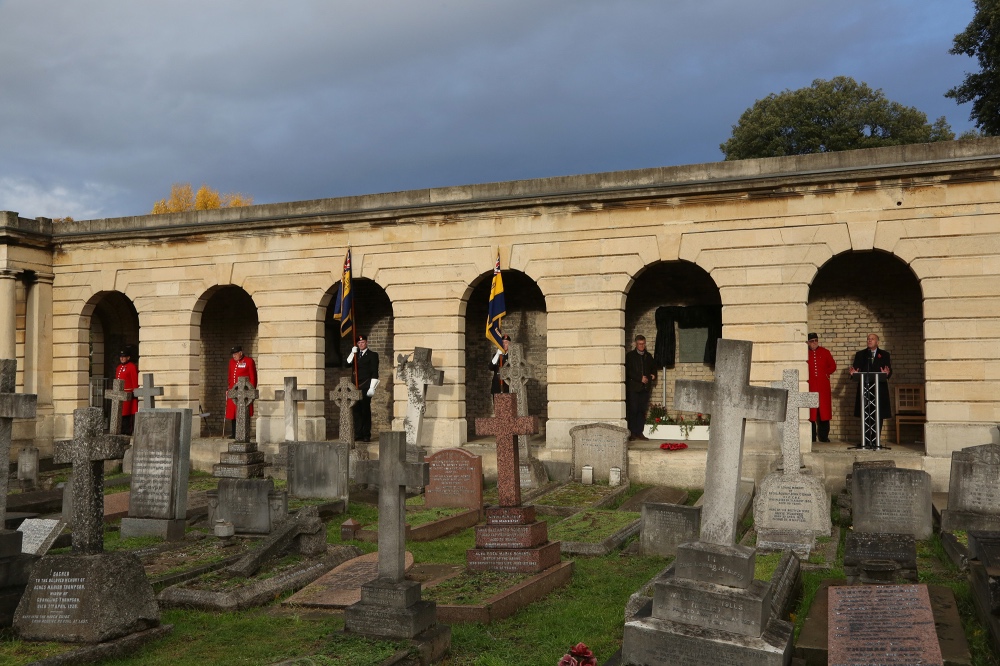
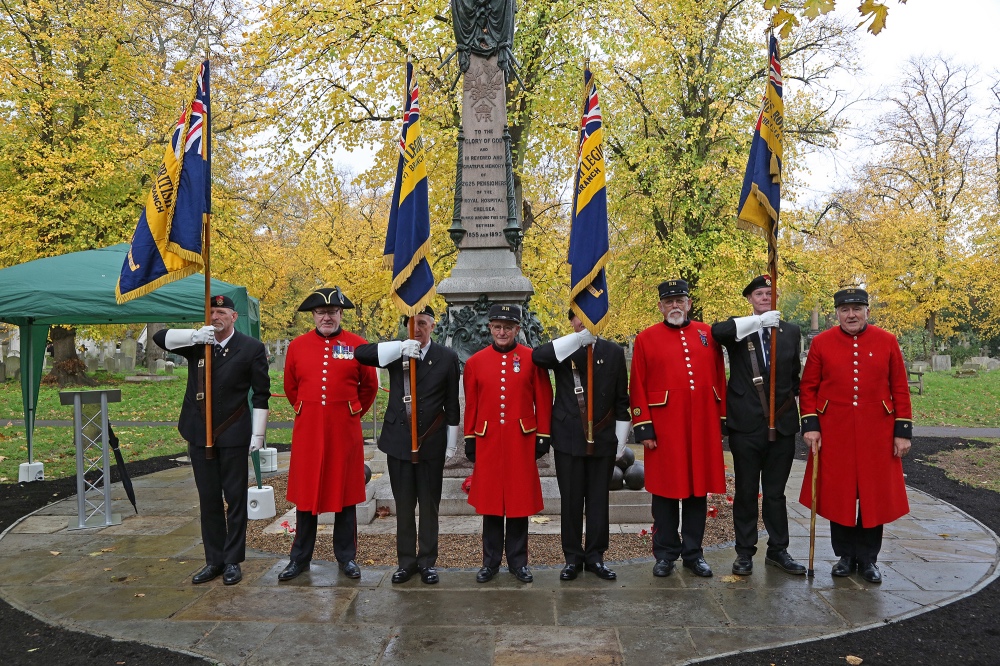
A tribute marking the centenary of World War I, Battlefields to Butterflies, has gone on show at the RHS Hampton Court Palace Flower Show this week. Designed by Todd Longstaffe-Gowan, the special feature garden features two very different scenes – one depicting the desolate landscapes of the trenches and the other a landscape restored to peace by nature. The display draws on the words and paintings of World War I artist William Orpen and reflects what he witnessed firsthand on the Western Front. Among the plants on show are poplars, hornbeams, willow and birch and massed wildflowers including poppies, cornflowers, loosestrife, mallows and cranesbills. A special plaque commemorating the 24 Royal Parks and Palaces gardeners and park keepers who lost their lives in the world is also included in the garden. The plaque will be taken to Brompton Cemetery following the flower show to form part of a permanent memorial garden that will commemorate all parks, gardens and grounds staff, from across the UK and its allies, who died in the war. The show runs until 8th July. For more, see www.rhs.org.uk/shows-events/rhs-hampton-court-palace-flower-show. PICTURE: © Historic Royal Palaces/Michael Bowles.


Treasures of London – The British Library’s St Pancras building…

This week marked 20 years since the British Library’s St Pancras building was officially opened, so we thought it timely to take a look at this London ‘treasure’.

Located on Euston Road, the building, complete with rather grand piazza, was designed by architect Sir Colin St John Wilson and his partner MJ Long.

The largest public building to be constructed in the 20th century in the UK, it was designed specifically to house the British Library collections – which itself had only been created in 1972 when an act was passed by Parliament.

The building – which did draw some criticism over its design when it was completed but has been embraced by the public – was officially opened by Queen Elizabeth II on 25th June, 1998.

Grade II-listed since 2015, it’s comprised of 112,000 square metres spread over 14 floors – including five below ground – and features 11 reading rooms specialising in various subject areas including one for ‘manuscripts’, another for ‘maps’ and another for ‘rare books and music’.

The centrepiece of the building is the King’s Tower which is home to the library of King George III and the Sir John Ritblat Treasures of the British Library Gallery.

The collection housed at the library includes more than 150 million items. Highlights – many of which are housed in the Treasures Gallery – include a copy of the Magna Carta, the Lindisfarne Gospels, and Leonardo da Vinci’s notebook as well as a first edition of The Times (18th March, 1788), manuscripts by everyone from Jane Austen and James Joyce to Handel and the Beatles, and the Diamond Sutra, the world’s earliest dated printed book.

The library, which also hosts temporary exhibitions, is also home to a restaurant, cafe and several coffee shops as well as its own retail shop.

There are now plans to further develop the campus by expanding onto a 2.8 hectare site at its northern end with the aim, among other things, of creating more exhibition spaces, new learning facilities and a permanent home for the Alan Turing Institute, the UK’s national centre for data science and artificial intelligence. A joint venture led by Stanhope plc, working with architects Rogers Stirk Harbour + Partners (RSHP), won a competitive process to undertake the development last year.

WHERE: British Library, 96 Euston Road (nearest Tube stations are Kings Cross St Pancras, Euston and Euston Square); WHEN: 9.30am to 6pm (includes Treasures Gallery – exhibition times can vary); COST: Free (but admission fees may be charged for exhibitions); WEBSITE: www.bl.uk.

PICTURE: Top – Aerial view of the St Pancras building (Tony Antoniou); Below – One of the reading rooms (Paul Grundy).

This Week in London – The history of women in Parliament; Michael Jackson portraits; and, Nevinsons honoured…

The campaign for women to be able to vote and stand as representatives in Parliament is the subject of an exhibition opening at the Houses of Parliament. Staged in Westminster Hall, Voice & Vote: Women’s Place in Parliament features historic objects, pictures and archives from Parliamentary collections and elsewhere with the “immersive” recreation of some of the lost historical spaces in the Palace of Westminster among the highlights. These include ‘The Ventilator’ – a space above the House of Commons Chamber where women, banned from the public galleries, watched and listened to Parliamentary debates, ‘The Cage’ – a ladies gallery closed off by brass grills built as part of the House of Commons when it was reconstructed after the 1834 fire, and ‘The Tomb’ – a room for women MPs after the 1918 decision allowing them to stand for Parliament. The exhibition, which is free to attend, runs from until 6th October. Tickets have to be pre-booked via Parliament’s website. PICTURE: Michael D Beckwith/Unsplash

The final commissioned portrait of popstar Michael Jackson is among images on show in a new National Portrait Gallery exhibition exploring his influence on contemporary art. Along that work – Kehinde Wiley’s 2010 work Equestrian Portrait of King Philip II (Michael Jackson), the exhibition Michael Jackson: On the Wall features American artist and activist Faith Ringgold’s story quilt Who’s Bad?, a series of collages by Isaac Julien, and a ‘dinner jacket’ covered with forks, spoons and knives made by costume designer Michael Lee Bush as well as a pop-graffiti style portrait by Keith Haring, on show for the first time in 30 years. Among new works created specially for the exhibition are a line drawing by artist Michael Craig-Martin which is based on the image of 11-year-old Michael used for the cover of Rolling Stone magazine in April, 1971, and a large-scale painting by Yan Pei Ming, In Memory of Michel Jackson. Opening today, the exhibition can be seen until 21st October. Admission charge applies. For more, see www.npg.org.uk.

World War I artist CRW Nevinson and his father, journalist Henry Nevinson, have both been honoured with an English Heritage Blue Plaque. The plaque was unveiled at a property at 4 Downside Crescent in Hampstead where the Nevinson family lived between 1903 and 1941 before bombing raids made the home uninhabitable. Richard “CRW” Nevinson (1889-1946) was one of the most famous artists of the Great War and used a variety of styles, including Futurism and Cubism, to capture the brutality of the war based on his experience while serving briefly with the  Royal Army Medical Corps in France (before he was sent home in 1915 for rheumatic pain). His father, who reported on the Boer War and World War I, was known as “the king of war correspondents” and was a champion of universal suffrage. For more, see www.english-heritage.org.uk/visit/blue-plaques/.

Send all items for inclusion to exploringlondon@gmail.com
LondonLife – More new benches for City of London…

As we reported last Thursday, a series of specially designed new benches have been rolled out across the City of London as part of this month’s London Festival of Architecture. We loved the designs so much, we thought we’d show you some of the others. Above is Nicholas Kirk Architects’ Money Box which, located outside London Bridge Station, is formed of 45,000 stacked pennies while immediately below is McCloy + Muchemwa’s A Bench for Everyone. Located Inside One New Change, its folded shape is designed to evoke the “memory and much-loved comforts of home furniture”. The festival runs until the end of the month. PICTURES: All images © Agnese Sanvito

Above – Mariya Lapteva’s City Ghosts which, located in front of the Royal Exchange, is inspired by the history of the area including East India House and the little shopfronts along Leadenhall Street.

Above – Maria Gasparian’s Ceramic City Bench in Bow Church Yard featuring colours inspired by the “multi-layered context of the City of London that has for centuries been a place for trade, exchange and religious diversity”.

Above – Mills Turner’s Double Bench in Fen Court has been designed to be easy to assemble and adjustable and features an “organic silhouette” which follows the natural curve of the human body.


This Week in London – New City of London benches for LFA; summer concerts in Regent’s Park; and Romania and World War I…

A series of new “one-off” public benches are being unveiled across London as part of the month-long London Festival of Architecture currently underway in the city. Designed by emerging artists and designers and installed in partnership with the City of London Corporation and Cheapside Business Alliance, the benches include Patrick McEvoy’s doggy design, Here Lies Geoffrey Barkington (pictured), located in Jubilee Gardens in Houndsditch, Maria Gasparian’s Ceramic City Bench in Bow Church Yard, McCloy + Muchemwa’s sinuous A Bench for Everyone inside One New Change, and Nicholas Kirk Architects’ Money Box – formed of 45,000 stacked penny coins – outside London Bridge Station. The festival runs until the end of the month and there’s still a plethora of activities to take part in. For more, see www.londonfestivalofarchitecture.org. PICTURE: © Agnese Sanvito (Via LFA)

A free summer series of concerts kicks off in The Regent’s Park Bandstand this weekend in what has been described as a “new chapter” in the bandstand’s history. To be held every Sunday afternoon between 3pm and 5pm (with an extra concert to be held at the same time on the Bank Holiday of 27th August) until 2nd September, the concerts range from classic rock to big bands and jazz. Those performing include the Brixton-based South London Symphonic Winds, Regent Community Brass and the Barnes Concert Band as well as the Heroes Band – which raises funds for Help for Heroes – and Royal Academy of Music-associated acts, the Jonny Ford Jazz Quintet and Metropolitan Brass. The concerts have been organised by the Friends of Regent’s Park & Primrose Hill, working with The Royal Parks charity, the Royal Academy of Music and the Crown Estate Paving Commission, and it’s hoped they’ll become an annual fixture in the park. For more, see www.royalparks.org.uk/parks/the-regents-park.

Romania’s role in World War I is the subject of a free, temporary display at the National Army Museum in Chelsea. Romania and the Great War charts the “years of neutrality (1914-1916), the fierce battles of 1916 on the Entente side, the painful retreat to Moldavia, the striking victories of 1917 and the momentous victory of 1918, which offered a strategic foundation to the political unification of all Romanian provinces and the creation of a modern, democratic state”. Objects on show include photographs, maps, uniforms and original First World War medals. Runs until 15th July. For more, see www.nam.ac.uk.

Send all items for inclusion to exploringlondon@gmail.com.

LondonLife – ‘The London Mastaba’ floats on the Serpentine…

The work of internationally renowned artist Christo, The London Mastaba floats serenely on Hyde Park’s Serpentine, despite the reported ruffled feathers of some swimmers upset over its installation in their pool.

The floating sculpture, which takes up about one per cent of the lake’s surface, is Christo’s first public sculpture created for show in the UK.

Made up of 7,506 multi-coloured and stacked barrels reaching 20 metres high, the sculpture sits on a floating platform of high-density polyethylene cubes which has been anchored into place.

The artwork’s installation coincides with an exhibition of the work of Christo and his late wife Jeanne-Claude’s at the nearby Serpentine Gallery in Kensington Gardens.

Christo & Jeanne-Claude: Barrels and The Mastaba 1958-2018 features sculptures, drawings, collages and photographs spanning more than 60 years and, according to Christo will provide “important context” for The London Mastaba.

The exhibition can be seen at the gallery until 9th September. Meanwhile, the sculpture will be floating on the Serpentine, weather permitting, until 23rd September.

And finally, the Serpentine Gallery’s annual temporary pavilion – this year the work of Mexican architect Frida Escobedo, of Taller de Arquitectura – can be seen until 7th October at the Kensington Gardens’ gallery. For more information on all three projects, see www.serpentinegalleries.org.

PICTURES: Top – The London Mastaba (pinn/licensed under CC BY-NC-ND-2.0); Right – Christo, The Mastaba (Project for London, Hyde Park, Serpentine Lake), Collage 2018: 43.1 x 55.9, Pencil, wax crayon, enamel paint, colour photograph by Wolfgang Volz, map, technical data, mylar and tape, Photo: André Grossmann © Christo 2018; Below – Serpentine Pavilion 2018, designed by Frida Escobedo, Serpentine Gallery, London © Frida Escobedo, Taller de Arquitectura, Photography © 2018 Iwan Baan

This Week in London – Royal Academy’s Summer Exhibition; a Blue Plaque for Mary Poppins’ creator; and, Egypt – past and present…

The Royal Academy of Art’s Summer Exhibition – coordinated by Grayson Perry in this, the institution’s  250th anniversary year – opened this week. The world’s largest open submission contemporary art show, this year’s display features more than 1,300 hand-picked artworks in an array of mediums including a monumental sculpture by Anish Kapoor, large scale works by David Hockney and Joana Vasconcelos as well as others by the likes of Mona Hatoum, Tal R, Wolfgang Tillmans, Mike Nelson, Tracey Emin, Rose Wylie, Ed Ruscha and Bruce Nauman. The display extends across the newly extended campus off Piccadilly and can be seen until 19th August. For more, see www.royalacademy.org.uk. PICTURE: Grayson Perry, Selfie with Political Causes (Woodcut
200 x 300cm The artist and Paragon | Contemporary Editions Ltd.)

Beloved children’s author, PL Travers – she of Mary Poppins fame – has been commemorated with an English Heritage Blue Plaque. The plaque was installed at 50 Smith Street in Chelsea where the Australian-born Travers lived for 17 years and which is said to have been the inspiration for the Banks’ family home in the Disney film, Mary Poppins. Travers took up residence in the house in 1946, after returning to the UK from the US where she’d lived during World War II. It was here that she raised her adopted son, John Camillus Hone, and it was the property she was living in when she negotiated with Walt Disney for the rights to make a film about her famous book. She left the premises in 1962. For more, see www.english-heritage.org.uk/visit/blue-plaques/.

An exploration of how symbols encapsulating Egypt’s ancient past have been appropriated in more modern times has opened at the British Museum. The Past is Present: becoming Egyptian in the 20th Century brings together 31 objects gathered through the museum’s ‘Modern Egypt Project’ as it explores how the nation has branded itself by drawing on the past. The items on show include pasta packaging and cigarette boxes depicting the pyramids, milk bottles with a Cleopatra logo, and the emblem of the Banque Misr (Bank of Egypt), the first bank owned and operated by Egyptians. This Asahi Shimbun Display is free to see and can be viewed in Room 3 until 30th September. For more, see www.britishmuseum.org.

Send all items for inclusion to exploringlondon@gmail.com.