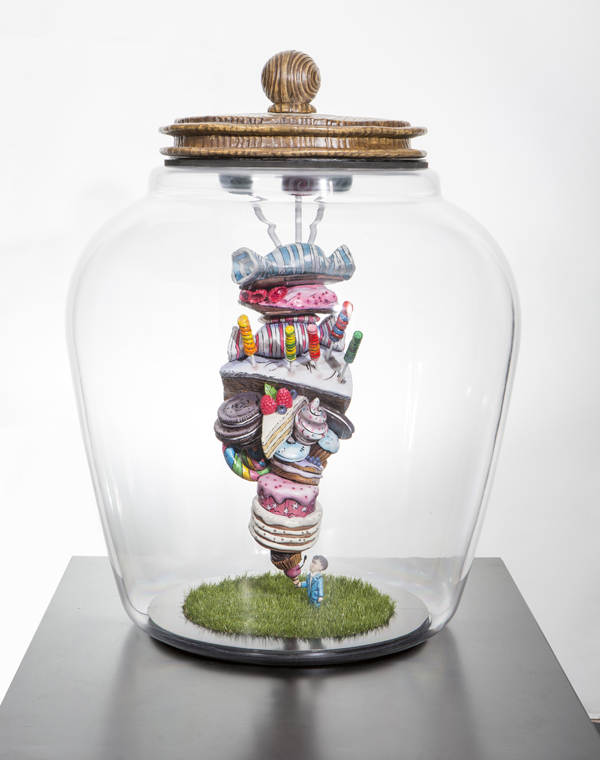
LondonLife – Childhood dreams captured in a jar for all to see…

Steven-SpielbergDirector Steven Spielberg, actor and playwright Mark Rylance, physicist Professor Stephen Hawking, TV personality Simon Cowell, and The Duchess of Cornwall are among 50 high profile personalities who have put their childhood dreams and aspirations on show around the country – including in London – to mark not only the release of the film The BFG but also the 100th anniversary of Roald Dahl’s birth. Launched last weekend, the ‘BFG Dream Jar Trail’ features a series of up-to-six-foot-tall ‘Dream Jars’, each of which contains a sculpture representing the childhood dreams of a different personality. The free trail – which takes in London sites such as Trafalgar Square, the Tower of London, Leicester Square, Harrods, Emirates Stadium and The Shard – has been created in support of the work of Save the Children and a specialist nursing programme supported by Roald Dahl’s Marvellous Children’s Charity with the jars to be auctioned in collaboration with Paddle8 later this year to raise money for both causes (the auction will be launched on the film’s premiere on 17th July). At least 34 jars have already gone on display with more to be unveiled in coming days. The joint creation of  Save the Children, the Roald Dahl Literary Estate, Entertainment One and VisitLondon.com with support from Unilever, the trail can be seen until 31st August. To see the art trail map and discover the stories behind each jar and its location, head to www.visitlondon.com/bfg. For more on the 100th anniversary of Roald Dahl’s birth, head to www.roalddahl.com/roalddahl100. PICTURED: Above – director Steven Spielberg’s self-designed jar, on display in Leicester Square, illustrating his childhood fantasy of having all the sweets in the world but none of the ill effects from overindulgence.

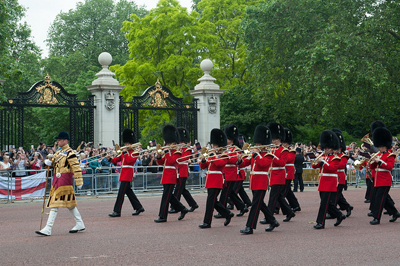
LondonLife – The Queen’s 90th birthday marked at Trooping the Colour…

Queen-in-The-Mall

Photographer John Pannell was among the crowds who gathered in The Mall to witness Trooping the Colour on Saturday. Traditionally held to mark the Queen’s birthday, this year’s event – in honour of the fact that the Queen has turned 90 (her actual birthday being 21st April) – was followed on Sunday by a lunch for 10,000, known as the Patron’s Lunch, in The Mall. Trooping the Colour has marked the official birthday of the sovereign since the reign of King George II. Above are the Queen and Prince Philip while below are part of the Massed Bands of the Household Division, among those who marched, and, RAF planes fly-past Buckingham Palace while watched from the palace’s famed balcony by the Queen and the royal family.

Trooping-the-Colour
PlanesPICTURES: John Pannell/Flickr

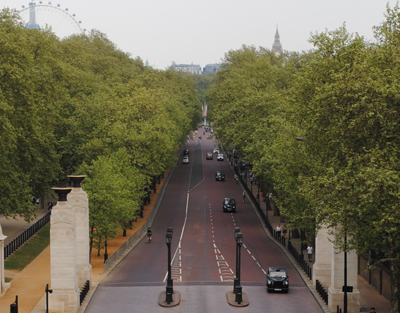
LondonLife – A view down Constitutional Hill…

The-Mall

A view down Constitution Hill looking toward Whitehall, taken from the top of Wellington Arch at Hyde Park corner. To the left is Green Park and to the right, the grounds of Buckingham Palace. Constitutional Hill apparently has nothing to do with a document of any sort but takes its name from the fact that, considered to be a fine “constitutional” walk from St James’s Park to Hyde Park (King Charles II is rumoured to have been among those said to have taken their “constitutional” along this route while Queen Victoria survived a couple of assassination attempts on the road). The pillars at the near end are symbolic gates commemorating those who served Britain in World War I and II from the Indian subcontinent, Africa and the Caribbean (more on them in an upcoming post).

This Week in London – Exploring flight and space; ‘Horrible’ Tudors at Hampton Court; BioBlitz at Brompton Cemetery; and sleeping with the lions…

Spread-your-wings• A “ground-breaking” hands-on exhibition exploring the concept and future of flight and space travel opens at the National Maritime Museum in Greenwich this week. Above and Beyond, produced by Evergreen Exhibitions in association with Boeing (and created in collaboration with NASA), features more than 10 interactive displays, allowing visitors to learn to fly like a bird, take an elevator to space, enjoy a view of Earth from above or go on a marathon mission to Mars and see how your body would cope. Runs until 29th August. Admission charge applies. For more, see www.rmg.co.uk/see-do/exhibitions-events/above-and-beyond-exhibition.

Horrible Histories is bringing the world of the ‘Terrible Tudors’ to life at Hampton Court Palace this half-term break. The Birmingham Stage Company is offering the chance for visitors to dip into 100 years of Tudor history, spanning the reigns of the “horrible” Henries to that of the crowning of King James I in 1603. Get behind the dry facts and discover what the role of the Groom of the Stool was, which queen lost her wig as she was executed and decide whether to join in punishing the ‘whipping boy’ or the monarch and which side you’ll be on as the Spanish Armada set sail. The hour long performances will take place on the palace’s historic East Front Gardens (unreserved seating on the grass). Admission charge applies. Runs from today until 2nd June. For more see, www.hrp.org.uk/hampton-court-palace/.

The Royal Parks is hosting its first ever BioBlitz at Brompton Cemetery this Bank Holiday weekend. For 24 for hours from 5pm on Friday, people are invited to join in the hunt to track down as many species of plants, animals and fungi as possible with events including tree and nature walks, earthworm hunts, bee and wasp counts and lichen recording. There will also be a range of stalls for people to visit with representatives from a range of nature and wildlife organisations present. The BioBlitz is one of several projects linked to the £6.2 million National Lottery-funded facelift of the cemetery. For more, head to www.royalparks.org.uk/events/whats-on/bioblitz.

Sleep with the lions at ZSL London Zoo next to Regent’s Park from this week. The zoo new overnight experience at the Gir Lion Lodge, in which guests can stay in one of nine cabins at the heart of the new Land of the Lions exhibit, opened on Wednesday. Guests will also be taken on exclusive evening and morning tours in which they’ll find out more about how ZSL is working with local communities and rangers in India’s Gir Forest to protect these endangered cats. The private lodges will be available six nights a week until December with designated adults-only and family nights available. For more, see www.zsl.org/zsl-london-zoo/gir-lion-lodge. 

Send all items for inclusion to exploringlondon@gmail.com.
10 iconic London film locations…10. A bridge, a park, and a round church…

OK, we’ve reached the last in our series of London film locations so this week we’re taking a quick look at three more…

Millennium-FootbridgeThe Millennium Bridge. Initially nicknamed the “wobbly bridge” due to its propensity to move underfoot, this footbridge over the River Thames first opened in June, 2000, for only couple of days before it was closed for almost two years so its movement could be fixed and eventually reopened again in 2002. But despite its young age, the bridge has appeared not just in a Harry Potter film – 2009’s Harry Potter and the Half-Blood Prince – where it gets destroyed but also in the break-out 2014 Marvel film, Guardians of the Galaxy in which it plays the role of a bridge in the city of Xandar (embedded in the rest if the CGI-created city). Among other London locations featured in that film is the modern Lloyd’s Building in Lime Street (again, it makes part of Xandar).

The Regent’s Park. The 2010 film The King’s Speech features numerous London locations – among them is the Avenue Garden in the south-east corner of the park where speech therapist Lionel Logue (played by Geoffrey Rush) takes a stroll with Bertie, the future King George VI (played by Colin Firth), which turns a little uncomfortable. Other locations include 33 Portland Place (which plays the role of the Duke and Duchess’ Piccadilly home as well as that of the interior of Logue’s consulting rooms in the famous Harley Street), and the Draper’s Hall in the City, the interior of which plays the role of St James’s Palace.

The Temple Church. This famous – and beautiful – City of London church made its starring performance in the Tom Hanks movie of 2006, The Da Vinci Code. The church enters the movie when symbology professor Robert Langton (played by Hanks) and cryptologist Sophie Neveu (played by Audrey Tautou) come here in search for a knight’s tomb. Other London locations featured in the film (alongside those in France and Scotland), include Westminster Abbey (although the interiors were actually shot at Lincoln Cathedral). For more on the history of the church, see our earlier post here or on the tomb effigies, see our post here.

Our next special series kicks of next Wednesday.

This Week in London – Of Empress Catherine the Great and Capability Brown; a blue plaque double; and, the British graphic novel on show…

A once forgotten collection of watercolour paintings and drawings owned by Empress Catherine the Great of Russia has gone on show at Hampton Court Palace as part of commemorations marking the 300th anniversary of the birth of Lancelot ‘Capability’ Brown. The Empress and the Gardener exhibition features almost 60 intricately detailed views of the palace and its park and gardens during the time when Brown worked there as chief gardener to King George III between 1764 and 1783. The works came to be in the collection of the Empress – a renowned fan of English gardens – after Brown’s assistant, John Spyers, sold two albums of his drawings of the palace to the her for the considerable sum of 1,000 roubles. The albums disappeared into her collection at the Hermitage (now the State Hermitage Museum) and lay forgotten for more than 200 years before they were rediscovered by curator Mikhail Dedinkin in 2002. As well as the collection – on public show for the first time, the exhibition features portraits of Brown and the Empress, previously unseen drawings of her ‘English Palace’ in the grounds of the Peterhof near St Petersburg, and several pieces from the ‘Green Frog’ dinner service, created for the Empress by Wedgwood, which is decorated with some of the landscapes the prolific Brown created across England. Runs until 4th September. Admission charge applies. For more, see www.hrp.org.uk/hampton-court-palace/.

A house in Chelsea has become only one of 19 homes in London to bear two official blue plaques. Number 48 Paultons Square has the honour of having been home to two Nobel prize winners (albeit in different fields) – dramatist Samuel Beckett, who lived there for seven months in 1934 while writing his first novel, Murphy, and physicist Patrick Blackett, noted for his revolutionary work in U-boat detection during World War II, who lived there from 1953 to 1969. Other ‘doubles’ include 20 Maresfield Gardens in Hampstead (home to Sigmund Freud and Anna Freud) and 29 Fitzroy Street in Fitzrovia (home to George Bernard Shaw and Virginia Woolf). This year marks the 150th anniversary of the blue plaques scheme. For more, see www.english-heritage.org.uk/visit/blue-plaques/.

The rise of the British graphic novel is the subject of a new exhibition at the Cartoon Museum in Bloomsbury. The Great British Graphic Novel features works by 18th century artist William Hogarth as well as Kate Charlesworth, Dave Gibbons (one of the creators of the ground-breaking Watchmen), Martin Row, Posy Simmonds (creator of the Tamara Drewe comic strip) and Bryan and Mary Talbot. It runs until 24th July. Admission charge applies. For more, see www.cartoonmuseum.org.

Send all items for inclusion to exploringlondon@gmail.com.


Famous Londoners – Lancelot ‘Capability’ Brown…

This year marks 300 years since the birth of Lancelot “Capability” Brown, the most famed landscape designer of the Georgian age and a man who has been described as the “father of landscape architecture”.

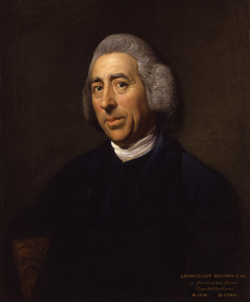
Capability-BrownBrown is understood to have been born in 1716 in the village of Kirkharle in Northumberland, the fifth of six children of a land agent and a chambermaid (he was baptised in on 30th August so it is believed his birth happened sometime earlier that same year).

He attended the village school before he worked as apprentice or assistant to the head gardener in Sir William Loraine’s kitchen garden at Kirkharle Hall.

Having left home in 1741 he joined the gardening staff of Lord Cobham, as one of the gardeners at his property in Stowe, Buckinghamshire.

There he worked with William Kent, another famed landscape architect of the Georgian age and one of the founders of the new English style of gardens, until, at the age of 26, he was appointed head gardener.

He remained in Stowe until 1750 and while there, in 1744, married Bridget Wayet (with whom he went on to have nine children). During his time there, he also created the Grecian Valley and also took on freelance work from Lord Cobham’s noble friends, a fact which allowed him to produce a body of work that would start to make his reputation.

Having struck out on his own from Stowe, he settled with his family in Hammersmith, London, in the early 1750s, already widely known and considered by some the finest gardener in the kingdom.

The work continued to flow in and it’s believed that, over the span of his career, Brown was responsible for designing or contributing to the design of as many as 250 gardens at locations across the UK, – many of which can still be seen today. As well as Stowe, these included gardens at Blenheim Palace, Appuldurcombe House on the Isle of Wight, Warwick Castle, Harewood House and Petworth House in West Sussex.

Following on from the work of Kent, Brown was known for his naturalistic undulating landscapes, in particular their immense scale, flowing waterways and a feature known as a ‘ha-ha’, a ditch which blended seamlessly into the landscape but which was aimed at keeping animals away from the main house of the estate.

His style, which contrasted sharply with the more formalised, geometric gardens epitomised in the French style of gardening, did not, however, meet with universal praise. Criticisms levelled against him including that he had often erased the works of gardeners of previous generations to complete gardens which were, in the end, described by some as looking no different to “common fields”.

It’s worth noting that Brown also dabbled in architecture itself – his first country house project was the remodelling of Croome Court in Worcestershire and he went on to design and contribute to the design of several houses including Burghley House Northamptonshire as well as outbuildings including stable blocks.

The nickname ‘Capability’ apparently came from his habit of informing his client that their estates had great “capability” for improvement. It’s wasn’t apparently a name he used himself.

So established became his reputation that in 1764 Brown was appointed King George III’s Master Gardener at Hampton Court Palace (as well as Richmond and St James’ Palaces), taking up residence with his family at Wilderness House. He also worked on the gardens at Kew Palace.

Brown died on 6th February, 1783, in Hertford Street in London at the door of his daughter Bridget’s house (she had married architect Henry Holland with whom he Brown had, at times, collaborated). He was buried in the churchyard of St Peter and St Paul, the parish church of a small estate Brown owned at Fenstanton Manor in Cambridgeshire.

Brown impact on garden design in England is now undisputed although it wasn’t always the case – his contribution was largely dismissed in the 18th century and it was only in the later 20th century that he had become firmly established as a giant figure in the gardening world.

A celebrated portrait of Brown (pictured above) – painted by Nathaniel Dance in about 1773 – is in the collection of National Portrait Gallery.

For more on events surrounding the 300th anniversary of Brown’s birth, see www.capabilitybrown.org.

PICTURE: Capability Brown by Nathaniel Dance, circa 1773. © National Portrait Gallery, London


This Week in London – Seminal moments in Shakespearean performance; Maria Merian’s Butterflies; and, British conceptual art…

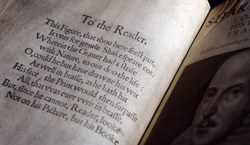
ShakespearesFirstFolio1623BritishLibraryPhotobyClareKendall It’s the 400th anniversary of Shakespeare’s death (in case you missed that), and among the many events marking the occasion comes a major exhibition at the British Library focusing on 10 key performances that it says have made the Bard the “cultural icon” he is today. Shakespeare in Ten Acts, which opens on Friday, focuses on performances which may not be the most famous but which represent key moments in shaping his legacy. They span the period the first performance of Hamlet at the Globe theatre in around 1600 to a radical interpretation of the same play from US theatre company The Wooster Group in 2013. Among the exhibition highlights are a human skull which was given to the actress Sarah Bernhardt by writer Victor Hugo (and which she used as Yorik’s skull when she played Hamlet in 1899), a dress worn by Vivien Leigh playing Lady Macbeth in the 1955 production of Macbeth at the Royal Shakespeare Company, the only surviving play script written in the Bard’s own hand and rare printed editions including Shakespeare’s First Folio and the earliest printed edition of Hamlet from 1603 (one of only two copies in the world). The exhibition, which runs until 6th September, is accompanied by a season of events. Admission charge applies. For more, see www.bl.uk. PICTURE: Shakespeare’s First Folio 1623 British Library Photo by Clare Kendall.

Still talking exhibitions commemorating Shakespeare’s death and a manuscript of William Boyce’s Ode to the Memory of Shakespeare will be on display at The Foundling Museum’s Handel Gallery from tomorrow. The work, which was composed in 1756, was performed annually at the Theatre Royal in Drury Lane. The manuscript, the first page of which was thought to be lost until it was acquired in 2006, formerly belonged to Samuel Arnold, who compiled the first complete edition of Handel’s works. Runs at the Bloomsbury-based museum until 30th May. Admission charge applies. For more, see www.foundlingmuseum.org.uk.

 Exquisite watercolours depicting the natural world go on show in The Queen’s Gallery at Buckingham Palace from tomorrow. Maria Merian’s Butterflies features 50 works produced by the eighteenth century German artist and entomologist Maria Sibylla Merian. The works – many of which record the flora and fauna of the then Dutch colony of Suriname in South America, were published in the 1706 work Metamorphosis Insectorum Surinamensium (The Metamorphosis of the Insects of Suriname) and partially printed, partially hand-painted versions of the plates were purchased by King George III for his library at Buckingham House (later Buckingham Palace). As well as insects, the works – which were based on a visit Merian made to the colony in 1699, depict lizards, crocodiles and snakes as well as tropical plants such as the pineapple. The exhibition runs until 9th October. Admission charge applies. For more, see www.royalcollection.org.uk/visit/the-queens-gallery-buckingham-palace.

The evolution of conceptual art in Britain is the subject of a new exhibition at Tate Britain in Milbank  Conceptual Art in Britain 1964-1979 features 70 works by 21 artists and positions conceptual art “not as a style but rather a game-changing shift in the way we think about art, how it is made and what it is for”. Highlights include Michael Craig-Martin’s An Oak Tree (1973) and Roelof Louw’s Soul City (Pyramid of Oranges) (1987) as well as Victor Burgin’s Possession (1976), Mary Kelly’s Post-Partum Document (1974-78) and Conrad Atkinson’s Northern Ireland 1968 – May Day 1975 (1975-76). Admission charge applies. Runs until 29th August. For more, see www.tate.org.uk.

Send all items for inclusion to exploringlondon@gmail.com.
This Week in London – Hampton Court’s Magic Garden; the Stones on show; and, Dutch Flowers at the National Gallery…

The-Magic-Garden
PICTURE: Historic Royal Palaces

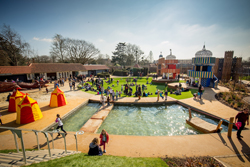
 Inspired by myths and legends of the Tudor Court, The Magic Garden has opened at Hampton Court Palace. The garden – located in King Henry VIII’s former tiltyard – has been designed by award-winning landscape architect Robert Myers and has been six years in the making. Features include the famous five lost tiltyard towers which have been recreated with each reflecting a different aspect of the Tudor era – from the King’s and Queen’s Towers which offer the best vantage point over the area, to the Discovery Tower which represents the Tudor fascination with exploration, the Battle Tower which symbolises King Henry VIII’s warlike spirit and the Lost Tower which brings to mind the eventual fate of the towers. There’s also a ‘wild wood’ – evoking the hunting grounds loved by the Tudors, a winding pathway of strange topiary and a ‘jungle’ of tree ferns and fatsias as well as a 25 foot long sleeping dragon who wakes as the clock strikes the hour. The garden, which is open until 30th October, is aimed at children of all ages, particularly those between two and 13 years-of-age. Admission charge applies. For more, see www.hrp.org.uk/hampton-court-palace/.

More than 500 artefacts related to the Rolling Stones have gone on display at the Saatchi Gallery in the first international exhibition on the group. EXHIBITIONISM: The Rolling Stones spans two floors and nine thematic galleries and charts the history of the Stones from the early 1960s to cultural icons as well as considering the band’s influence on popular culture. It features never-before-seen dressing room and backstage paraphernalia, instruments and costumes, original stage designs, audio tracks and video footage, personal diaries and album cover artwork. Works by an array of artists, designers, musicians and writers – everyone from Andy Warhol to Tom Stoppard and Martin Scorsese – are also included. Admission charge applies. Runs at the Kings Road gallery near Sloane Square until 4th September. For more, see www.saatchigallery.com.

The evolution of Dutch flower painting from the turn of the 17th century is the subject of a free exhibition which opened at the National Gallery off Trafalgar Square this week. Dutch Flowers features 22 works, about half of which come from the gallery’s collection while the other half come from private holdings. Artists whose works are featured include Jan Brueghel the Elder, Ambrosias Bosschaert and Roelandt Savoy – all among the first to produce paintings that exclusively depicted flowers. The exhibition – the first display of its kind for more than 20 years – is in Room 1 until 29th August. Admission is free. For more, see www.nationalgallery.org.uk.

Send all items for inclusion to exploringlondon@gmail.com.

A Moment in London’s History – Birth of a future queen…

17-Bruton-StreetQueen Elizabeth II, the oldest British monarch, celebrates her 90th birthday later this month and, although we’ve run a piece on the Queen’s birth before, we thought it only fitting to take a second look at what proved to be a momentous birth.

The then Princess Elizabeth (Elizabeth Alexandra Mary) was born at 17 Bruton Street in Mayfair – the London home of her maternal grandparents, the Earl and Countess of Strathmore (they also owned Glamis Castle in Scotland) – at 2.40am on 21st April, 1926.

She was apparently delivered by Caesarian section and the Home Secretary, Sir William Joynson-Hicks, was in attendance to ensure everything was above board (the custom, which has since been dropped, was apparently adopted after what was known as the ‘Warming Pan Scandal’ when, following the birth of Prince James Francis Edward, son of King James II and Queen Mary of Modena, in June, 1688, rumours spread that the baby had been stillborn and replaced by an imposter brought into the chamber inside a warming pan).

The first child of the Prince Albert, the Duke of York (Bertie) and Elizabeth Bowes-Lyon, the Duchess of York (later King George VI and Queen Elizabeth), she was third in line to the throne at her birth but thanks to the abdication of King Edward VIII, became her father’s heir.

The event apparently drew a crowd to the property (although none could yet suspect how important this princess was to become) and among the well-wishers who visited the newborn that afternoon were her paternal grandparents, King George V and Queen Mary, who had apparently been woken at 4am to be informed of the birth of their second grandchild.

The property was to be Princess Elizabeth’s home for the first few months of her life (named after her mother, paternal great-grandmother, Queen Alexandra, and paternal grandmother, Queen Mary, she was christened in the private chapel at Buckingham Palace five weeks after her birth).

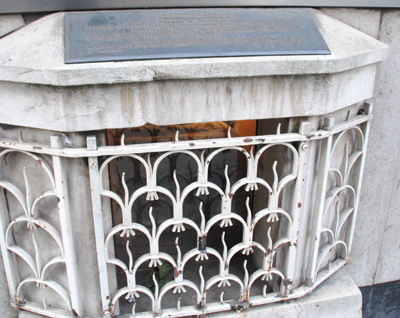
The home of her birth and a neighbouring townhouse have both since been demolished and replaced by an office building. A plaque commemorating it as the Queen’s birthplace was installed in the Queen’s Silver Jubilee Year of 1977 and another to mark the Diamond Jubilee in 2012.

The Queen’s birthday will be officially commemorated in June.

PICTURE: Via London Remembers


This Week in London – On the education of Georgian princesses; servant’s lives on show; and, 100 years of Vogue…

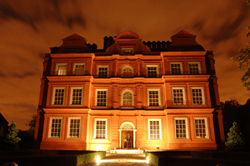
Kew-Palace-2 The education of the daughters of King George III and Queen Charlotte is the subject of a new display which has opened at Kew Palace in Kew Gardens. The queen’s progressive approach to learning meant the princesses received a “thoroughly modern” schooling covering everything from geography to art, upholstery to tackling brain-teasers as well as botany and music. The latter, in particular the harpsichord, was a particular passion of Princess Augusta, and to instruct her and the other girls, JC Bach, son of world-renowned composer JS Bach, was employed as music master (the display features a hand-written copy of his father’s Well-Tempered Clavier – designed to train and test the skills of harpsichord players). Other items on show include a copy of Queen Charlotte’s own tortoiseshell notebook embellished with gold and diamonds, a letter the queen wrote to the princesses’ governess – reputedly the first letter she wrote in English, and a series of newly acquired satirical prints from the Baker Collection depicting Queen Charlotte and her daughters. The new display can be seen from today. Admission charges apply. For more, see www.hrp.org.uk/kew-palace/. PICTURE: Newsteam/Historic Royal Palaces.

The lives of servants working in middle-class houses in London over the last 400 years are the subject of an exhibition which opened at the Geffrye Museum in Shoreditch earlier this month. Swept Under The Carpet? Servants in London Households, 1600-2000 illustrates the dynamic nature of the relationship between servants and their employers – from the intimacy of a maid checking her master’s hair for nits in the late 17th century to an ayah caring for an Anglo-Indian family’s children in the late 19th century and an au-pair picking up after the children in the middle of the 20th century. It explores their story through an examination of the places in which they worked – the middle class parlour, drawing room and living room. Entry to the exhibition, which runs until 4th September, is free. For more, www.geffrye-museum.org.uk.

On Now – Vogue 100: A Century of Style. This exhibition currently running at the National Portrait Gallery off Trafalgar Square features iconic images of some of the 20th century’s most famous faces. Included are rarely seen images of the Beatles and Jude Law as well as portraits of everyone from artists Henri Matisse and Francis Bacon, actors Marlene Dietrich and Gwyneth Paltrow, Lady Diana Spencer and soccer player David Beckham. There’s also complete set of prints from Corinne Day’s controversial Kate Moss 1993 underwear shoot, Peter Lindbergh’s famous 1990 cover shot – said to define the ‘supermodel era’, a series of World War II photographs by Vogue‘s official war correspondent Lee Miller and vintage prints from the first professional fashion photographer, Baron de Meyer. The display can be seen until 22nd May. Admission charge applies. For more, see www.npg.org.uk.

Send all items for inclusion to exploringlondon@gmail.com.
A Moment in London’s History – Sir Walter Raleigh leaves the Tower…

Bloody-TowerIt was in February, 1616 – 400 years ago this year – that the adventurer and courtier Sir Walter Raleigh (Ralegh) was released from the Tower of London where he had spent the last 13 years of his life. Sadly, his freedom was to be short-lived.

Raleigh had been imprisoned in 1603 by King James I – not his biggest fan – after being accused of plotting against the king and subsequently sentenced to death for treason (a sentence which was then commuted to life imprisonment).

The Tower, where he’d been imprisoned a couple of times before – most notably by Queen Elizabeth I for secretly marrying Bessy Throckmorton, one of her maids-of-honour, was to be his home for the next 13 years.

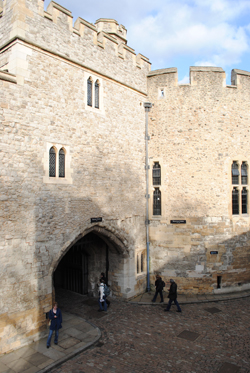
It was in Bloody Tower (in left of picture) that his rather luxurious ‘cell’ was located. Originally known as the Garden Tower, it was renamed for the tradition that the two ‘Princes in the Tower’, King Edward V and his brother Richard, had been murdered here in 1483.

The tower’s top floor was added specifically to provide more room for his family in 1605-06 (and Raleigh’s son Carew was conceived and born while he was imprisoned here). It was also during this time of imprisonment that he wrote his History of the World (published in 1614).

Raleigh was released in 1616 to lead an expedition to the New World – he’d previously been on a couple of expeditions there including one with his half-brother Sir Humphrey Gilbert aimed at finding the Northwest Passage (but which deteriorated into privateering and led to his brief imprisonment following his return to England), and one aimed at finding the legendary ‘golden land’ of El Dorado (which he failed to do). It was again with the purpose of finding gold that he now returned to the Orinoco River region of South America.

Failure, however, was once more the outcome, and on Raleigh’s return to England, the death sentence issued on 1603 was reimposed (for his failure but also for attacking the Spanish in defiance of the king’s instructions to specifically not do so, although the blame was not all his). He would be executed in Old Palace Yard at Westminster on 29th October, 1618.

Lost London – The King’s Mews at Charing Cross…

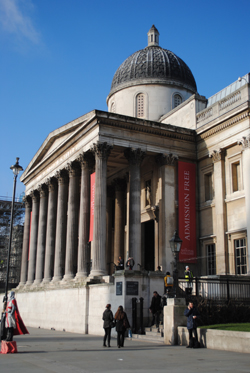
National-Gallery2The Royal Mews – a stables and carriage house – is these days located at Buckingham Palace but prior to being moved there, the Royal Mews, previously usually referred to as the King’s and Queen’s Mews depending who was on the throne, was located on the site where the National Gallery (pictured) and Trafalgar Square now stand.

The name ‘mews’ actually refers to the fact that, from at least the reign of King Richard II in the late 14th century (although official records suggest there may have been a mews on the site as far back as the reign of King Edward I), the royal hawks were initially housed on the site – then in the village of Charing Cross – (the word ‘mew’ refers to the moulting of the birds and originally referred to when they were confined here for that purpose but later come to simply mean the place were the birds were caged).

The title of Keeper of the King’s Mews became a sought-after honour during the 15th century (although largely honorary with the actual work done by deputies) but among those who held the honour were Richard Neville, Earl of Warwick, known, during the Wars of the Roses as the ‘Kingmaker’.

In 1534, the King’s Mews was destroyed by fire and when it was rebuilt a few years later, it took the form of a stable but kept the original name of mews (although it has been suggested the change of use took place before the fire).

During the Civil War, the Mews were apparently used as a prison by the Parliamentarians for captured Royalists and during the Commonwealth, soldiers were apparently quartered here. Diarist Samuel Pepys also apparently visited several times.

In 1732 the building was again rebuilt, but this time it was to the grand designs of William Kent – images show a grand building with turrets and a great open square before it. In the 1760s, King George III had some of his horses and carriages moved to facilities on the grounds of Buckingham Palace (he had purchased this from the Duke of Buckingham for his wife’s use) but the bulk remained on the Charing Cross site.

In the early 19th century they were opened to the public but in the 1820s, King George IV – making Buckingham Palace his main residence – had the entire stables moved (the Royal Mews which now stand at Buckingham Palace were designed by John Nash and completed in 1825).

The old mews were subsequently demolished and Trafalgar Square – another Nash design – built on the site between 1827 and 1835 while the National Gallery opened in 1838.

This Week in London – Behind the scenes at London’s (and New York’s) theatres; Leonardo da Vinci’s mechanical talents; and, deeper inside the Queen’s wardrobe…

TheatreLondon’s West End “Theatreland” and New York’s Broadway are jointly the subject of a new exhibition which opened at the V&A this week. Curtain Up: Celebrating 40 Years of Theatre in London and New York takes visitors on an immersive, behind the scenes look at how award-winning plays, musicals and productions are made as well as the history of theatrical awards and life on the red carpet. Objects – taken from the V&A collection and that of The New York Public Library for the Performing Arts at Lincoln Centre – on display include Maria Bjornson’s original costume designs from The Phantom of the Opera (1986), one of the longest-running West End musicals and the longest running Broadway production in history as well as a selection of golden top hats from A Chorus Line which won both the Tony Award and the inaugural Olivier Award for Best New Musical in 1976, a tunic worn by Rudolf Nureyev in Romeo and Juliet, winner of the Olivier Award in 1977, and a dress designed by Bob Crowley and worn by Dame Helen Mirren in The Audience, a production which earned the actress both an Olivier award in 2013 and a Tony Award in 2015. The free exhibition, organised in partnership with the Society of London Theatre as part of a year long celebration of 40 years of the Olivier Award, runs until 31st August in the V&A’s Theatre and Performance Galleries before touring to The New York Public Library for the Performing Arts at Lincoln Centre later this year. For more, see www.vam.ac.uk/curtainup. PICTURE: © Victoria and Albert Museum.

A visually stunning exhibition highlighting the talents of Leonardo da Vinci opened at the Science Museum in South Kensington yesterday. Leonardo da Vinci: The Mechanics of Genius takes a look at some of the unique mechanical concepts dreamt up by one of “history’s greatest minds”. The display features 39 historical models of designs da Vinci drew – including those of flying machines, diving apparatus and weapons – which were made in Milan in 1952 to mark the 500th anniversary of his birth. Runs until 4th September. Admission charge applies. For more, see www.sciencemuseum.org.uk/leonardo.

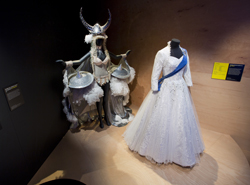
Kensington Palace is taking you even further into the wardrobes of Queen Elizabeth II, Princess Margaret and Diana, Princess of Wales, in a new display of dresses as part of the Fashion Rules exhibition. The new display continues the exhibitions exploration of how each of the three women have navigated the fashion ‘rules’ defined by their royal duties in their own unique style. Among the dresses on display is a candy-striped dress in the “Parisian style” created by Norman Hartnell in the late 1940s for Princess Margaret – on show for the first time at the palace, as well as formal dresses worn by the Queen on state visits to France and the Middle East, and a bottle green silk velvet halterneck worn by Diana which was later made famous in images by photographer Mario Testino. The new display goes on show today. Admission charges apply. For more, see www.hrp.org.uk/kensingtonpalace.

Send all items for inclusion to exploringlondon@gmail.com.
Treasures of London – Queen Alexandra Memorial…

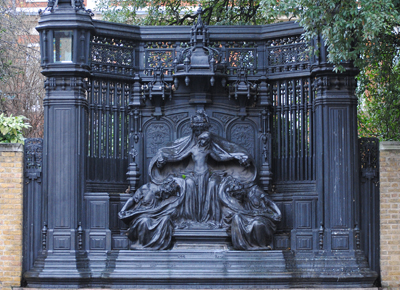
Queen-Alexandra-MemorialErected to the memory of Queen Alexandra, the consort of King Edward VII, the memorial – an ornate bronze screen – is located on the exterior of the garden wall of Marlborough House – the Queen’s former home – in Marlborough Road, opposite St James’ Palace.

Queen-Alexandra-Memorial-smallThe now Grade I-listed bronze memorial, which is the work of Alfred Gilbert and was erected in 1932, is sometimes described as London’s only Art Nouveau statue.

It depicts a central figure, described as “Love Enthroned”, supporting a young girl (perhaps a symbol of the Queen’s support for the next generation), and attended by two crowned bowing figures which it’s believed represent faith and hope. An inscription – “Faith, hope, love – The guiding virtues of Queen Alexandra” – sits below.

The memorial was unveiled on 8th June, 1932, with the Archbishop of Canterbury, Cosmo Gordon Lang, in attendance. Queen Alexandra’s Memorial Ode, composed by Sir Edward Elgar, was first performed at the ceremony.

The memorial was the last public artwork to be completed by Gilbert, noted for having also created what is arguably London’s most famous statue – that of Eros in Piccadilly (see our earlier post here), who was knighted by King George V after the unveiling.

The Queen lived at the property during her widowhood until her death in 1925.

Apologies – we neglected to put in the link! Now corrected.

LondonLife – King Henry VIII’s lost tiltyard tower rediscovered…

Hampton-Court-PalaceArchaeologists have uncovered the remains of one of five highly ornate towers, luxurious banqueting houses from which the court would view tournaments in King Henry VIII’s walled tiltyard at Hampton Court Palace.

Built in the 1530s, the multi-storey towers were largely demolished by the 1680s and, with the exception of one of the towers which still stands at the palace (and is now a Grade I listed building), their precise location eventually lost.

Until now, that is. The green-glazed tiled floor of one of the ‘lost’ towers were unearthed earlier this month during works taking place as the tiltyard undergoes a family-oriented makeover by award-winning landscape architect, Robert Myers (to be known as ‘The Magic Garden’, it will be unveiled next Easter).

The richly decorated towers – where the king entertained dignitaries and ambassadors – are thought to slightly predate the tiltyard which was apparently laid out in 1537 – perhaps, it’s been suggested, to mark the birth of King Henry VIII’s son, the future King Edward VI.

The first recorded tournament at Hampton Court took place in 1557 when Queen Mary I held one to celebrate Christmas. Her sister Queen Elizabeth I continued the tradition by occasionally holding tournaments there but most days the tiltyard was used to train the young men of the court in warfare.

When tournaments gradually fell out of fashion, the towers were used as multi-purpose storage facilities housing, according to Historic Royal Palaces, everything from pigeons to two Catholic priests in service to King Charles I’s queen, Henrietta Maria, who were spent time ‘quarantined’ there after an outbreak of plague.

For more on Hampton Court Palace, see www.hrp.org.uk/hampton-court-palace/.

This Week in London – Christmas at Kensington and the Geffrye; and Ebola and ISIS at the IWM…

Christmas is looming and that means Christmas themed events happening all over London. Here’s a couple worth considering:

Kensington Palace: Head back into the Victorian era where so many of the Christmas traditions we know and love find their origins. The palace and gardens have been decorated with period-inspired decorations while inside decorations include the beautifully decorated tables where Queen Victoria and Prince Albert showcased their Christmas gifts. There’s talks on the origins of Christmas foods such as plum pudding, music and carolling, and the cafe is serving up seasonal food and drink while on Saturday, a special brunch time lecture will look behind the curtains into the world of Victorian pantomime and performance. Admission charges apply – check the website for dates. For more, see www.hrp.org.uk/kensington-palace/.

The Geffrye Museum: This Shoreditch institution is once again celebrating Christmas traditions of the past in its annual display showcasing the past 400 years of Christmas traditions. Christmas Past has taken place at the museum for the past 25 years and is based on ongoing, original research. It provides insights into everything from traditional Christmas feasts to kissing under the mistletoe, playing parlour games, hanging up stockings, sending cards, decorating the tree and throwing cocktail parties. A series of related events, including a concert by candlelight, are being held over the Christmas season. The display, which has free entry, closes on 3rd January. For more, see www.geffrye-museum.org.uk.


Ebola and the fight against ISIS are the subject of a new exhibition which opened at the Imperial War Museum in Lambeth last month. Fighting Extremes: From Ebola to ISIS looks at the experiences of British personnel serving on recent operations including the response to the Ebola outbreak in Sierra Leone and the fight against ISIS in the Middle East. The display features behind the scenes interviews such as an in-depth talk with Corporal Anna Cross, a British Army nurse who contracted Ebola, photographs, and recently acquired objects such as the Wellington boots worn by healthcare worker Will Pooley, the first Briton to contract Ebola who was evacuated from Sierra Leone by the RAF, a headset used by an RAF drone pilot, and a shooting target depicting a silhouette of an ISIS suicide bomber used by the British Army to train Peshmerga troops. For more, see www.iwm.org.uk.

Send all items to exploringlondon@gmail.com.

10 London ‘battlefields’ – 4. Jack Cade’s rebellion…

London-StoneLittle is known of Jack Cade until the former soldier from Kent led an uprising against the rule of King Henry VI during the Hundred Years War with France. And London was a key site of fighting during the uprising.

Cade, who adopted the name John Mortimer and who some claimed to have been a relative of Richard, Duke of York, was said to have been a veteran of the war who led rebels protesting against the king’s rule amid the general state of disorder affecting England at the time which saw such abuses as lands being illegally seized and a lack of confidence in courts to rule fairly. There was also some discontent over the loss of lands of Normandy.

While many of the rebels were peasants, the rebellion – which rose in late May or early June, 1450 – was also supported by nobles and churchmen who were protesting what they saw as poor governance.

Led by Cade, who also attracted the title ‘Captain of Kent’, were camped on Blackheath in what is now the city’s south-east by mid-June and there apparently presented an embassy from the king with a list of grievances.

Thomas, Lord Scales – authorised by the king to raise troops, subsequently marched out to Blackheath but Cade and his rebels retreated into the forests of Kent and managed to lure the royal troops into an ambush.

Cade and the rebels returned to Blackheath while back in London the Royal soldiers turned mutinous, angered over the defeat. They were disbanded to protect the City and the king retired to Kenilworth Castle, effectively abandoning London to the rebels (despite the offer of the Lord Mayor and aldermen to resist the rebels).

Cade then marched on London itself, reaching Southwark on 2nd July (apparently using the now vanished White Hart Inn as his HQ). He forced his way over London Bridge the next day, cutting the drawbridge ropes personally with his sword to ensure it couldn’t be raised again

Such was the support the rebels had in London, that resistance was initially minimal. Following his entry to London, Cade struck the famous London Stone (pictured above – for more on it, see our earlier post here) with his sword, declaring “Mortimer” was now lord of the city.

While initially under tight control, Cade gradually lost control of many of his followers who turned to looting. Meanwhile, to head off an attack on the Tower of London – where Lord Scales had retreated – he handed over the hated Lord Treasurer, James Fiennes, Lord Saye, and his son-in-law William Crowmer, Under Sheriff of Kent (they had apparently been imprisoned in the Tower by the King for their own protection such as their unpopularity). Both were beheaded – Fiennes at Cheapside, Crowmer at Mile End – and their heads placed on poles on London Bridge.

The king’s supporters in the Tower had regrouped by early July and, with the rebels, while initially welcomed by many, now clearly having outstayed their welcome, they and city militias drove the rebels from the streets and had taken back the northern half of London Bridge (another bloody battle over the bridge) when William of Waynflete, Bishop of Winchester, arrived with promises of pardon for the rebels on behalf of the Lord Chancellor and Archbishop of Canterbury, John Kemp.

His forced much reduced, Cade – a pardon in his pocket under Mortimer’s name only – moved back into Kent and continued to cause trouble. He was, however, captured by the new Sheriff of Kent, Alexander Iden, on 12th July, – one version says this took place near Heathfield in Sussex at a hamlet now known as Cade Street. In any event, Cade was mortally wounded during the struggle and died en route to London.

His corpse, however, completed the journey and Cade was hanged, drawn and quartered and his head placed atop a pole on London Bridge.

While the rebel ringleaders were later captured and killed, in the most part King Henry VI honoured the pardons he had granted.

The story of Cade’s rebellion features in William Shakespeare’s play, King Henry the Sixth.

This Week in London – Lord Mayor’s Show marks 800 years; Dutch masters and Thomas Rowlandson at Queen’s Gallery; and, Alexander Calder on show at Tate…

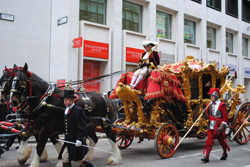
Lord-Mayor's-ShowThe Lord Mayor’s Show will mark its 800th anniversary on Saturday as the newly elected Jeffrey Mountevans – the 688th Lord Mayor of the City of London – makes his way through the City to Westminster to swear loyalty to the Crown. The procession of 7,000 people, some 180 horses and 140 vehicles will set off on its way along a three-and-a-half mile route at 11am, starting at Mansion House and traveling down Cheapside to pause at St Paul’s Cathedral (which is open for free all day) before heading on via Ludgate Hill and Fleet Street to the Royal Courts of Justice before returning the City via Queen Victoria Street from 1.10pm. In a special nod to the 800th anniversary, the famous bells of St Mary-le-Bow will ring out a special 800-change at noon. The day will conclude with fireworks over the River Thames kicking off at 5.15pm (for the best view head down to the riverside between Waterloo and Blackfriars Bridges, either on Victoria Embankment or on the South Bank). The show’s origins go back to 1215 when, in exchange for a Royal Charter granting the City of London the right to elect its own mayor, King John insisted the newly elected mayor travelled to Westminster each year to swear loyalty to the Crown. For more (including a map to print out), see https://lordmayorsshow.london. PICTURE: From a previous show.

Vermeer’s The Music Lesson is among 27 of the finest 17th and 18th century Dutch paintings in the Royal Collection which will go on display in a new exhibition at the Queen’s Gallery at Buckingham Palace from tomorrow. Masters of the Everyday: Dutch Artists in the Age of Vermeer also features works by the likes of Gerrit Dou, Pieter de Hooch and Jan Steen, all produced during what is known as the Dutch ‘Golden Age’. The exhibition is being shown alongside another display – High Spirits: The Comic Art of Thomas Rowlandson – which will focus on the work of 18th and early 19th century caricaturist Thomas Rowlandson. Around 100 of Rowlandson’s works feature in the display with highlights including The Two Kings of Terror featuring Napoleon and Death sitting face-to-face after Napoleon’s defeat at Leipzig in 1813, The Devonshire, or Most Approved Method of Securing Votes depicting Georgiana, Duchess of Devonshire, kissing a butcher (it was claimed she had claimed kisses for votes in the Westminster election of 1784), and A York Address to the Whale. Caught lately off Gravesend in which the Duke of York thanks a whale for distracting attention from accusations that his mistress was paid by army officers to secure promotions from the Duke. Admission charge applies. Both exhibitions run until 14th February, 2015. For more, see www.royalcollection.org.uk.

The first major UK exhibition of the works of kinetic sculpture pioneer Alexander Calder opened at the Tate Modern this week. Alexander Calder: Performing Sculpture features more than 100 of the ground-breaking 20th century artist’s works which trace how Calder turned sculpture from the idea of a static object to a continually changing work to be experienced in real time. Works on show include figurative wire portraits of artists – Joan Miró and Fernand Léger (both 1930), works exploring the idea of forms in space – Red Panel, White Panel and Snake and the Cross (1936), motorised mobiles such as Black Frame and A Universe (1934), and chiming mobiles such as Red Gongs (1950) and Streetcar (1951). It closes with the large scale Black Widow (c.1948), shown for the first time ever outside Brazil. Runs until 3rd April. Admission charge applies. For more, see www.tate.org.uk.

Send all items for inclusion to exploringlondon@gmail.com.
 

10 London ‘battlefields’ – 3. London sacked in the Peasant’s Revolt…

Tower-of-London1OK, so not really a battle although it must have felt something like that to those involved (and the ‘battlefield’ turned out to be much of the City itself), the uprising known as Peasant’s Revolt of 1381 saw two great armies march upon London – one from Kent led by Wat Tyler and another from Essex which is said to have been under the command of Jack Straw.

The armies had risen in response to a series of events which they saw as unjust and which trace their origins back to the Black Death. Killing about a third of the population when it struck some 30 years earlier, this had resulted in a growing demand for labourers to work the fields raising, as one might expect, hopes of increased wages and greater freedom of movement among the peasant class.

But to ensure the social order was maintained, authorities had not only put limits on how much farm workers could be paid but ensured long-standing but increasingly unpopular practices – such as serfs being forced to work some time for free for their landlords – were maintained. On top of this came the imposition and enforcement of a series of poll taxes to fund England’s wars with France.

The poll taxes – and the harsh way in which they were enforced – were a step too far and when a tax collector visited the village of Fobbing in Essex in May, 1381, he was shown short shrift and thrown out. The unrest soon spread and by June, the rebels, having rampaged through the countryside were marching on London.

By 12th June, the men from Essex were camped at Mile End while Tyler and his army from Kent were at Blackheath. The next day, after being denied a meeting with the king, the rebels headed into the City where sympathetic Londoners opened the gates. Once inside, they targeted the property of those they deemed responsible for their misfortune, opening prisons and destroying any legal records they could find.

Foremost among the sites attacked and looted was the Palace of Savoy (see our earlier post here), home of the King’s uncle John of Gaunt, Duke of Lancaster, and, as the power behind the throne, the man many deemed as the ultimate source of the ills besetting them (John himself had a lucky escape – he was away from the city when the palace was attacked.).

King Richard met with the leaders of the men from Essex on 14th June at their camp at Mile End and, after they pledged their allegiance, agreed to their petitions to abolish serfdom and allow them to sell their labour. But the attacks, meanwhile, were continuing in the City with a group of rebels led by Tyler storming the Tower of London (pictured above) the same day and seizing and beheading the Simon of Sudbury, the Archbishop of Canterbury and Chancellor, along with the Robert Hales, Lord High Treasurer and Prior of St John’s in Clerkenwell – both key figures in the government of the king (you can read more about Simon of Sudbury here).

The following day – 15th June – King Richard again met with the rebel leaders – this time with Wat Tyler, leader of the Kentish band, at Smithfield. It was then that things went awry for the rebels. Apparently enraged by Tyler’s insolence (already stories differ as to exactly why he did so), the Lord Mayor of London, Sir William Walworth (see our earlier post here), stabbed Tyler in the neck. King Richard managed to keep the situation under control until armed troops arrived and after the king declared a general pardon, the rebels dispersed.

Tyler, meanwhile, was taken to St Bartholomew’s Hospital but on the orders of the Lord Mayor was dragged from his bed and beheaded (his head was displayed atop a pole positioned in a field). He was among dozens of the rebels who were subsequently executed for their role in the uprising (leaders Jack Straw and another, John Ball, were among them).