Exploring London’s 10 most popular posts for 2012 – 2 and 1…

And so we come to the final two entries in our countdown and both, not suprisingly, are part of our Diamond Jubilee related coverage…

2. LondonLife – A look back at Queen Elizabeth II’s reign. Concerning a V&A exhibition of portraits of the Queen.

1. Celebrating the Diamond Jubilee with 10 royal London locations – 5. Buckingham Palace. One of a series looking at London locations associated with the Queen, this examined some of the history of London’s most famous palace.

Wishing all our readers a very Happy New Year!

Exploring London’s 10 most popular posts for 2012 – 4 and 3…

4. Around London – Olympic Rings unveiled on Tower Bridge; London from above; Blake on Primrose; V&A illustrations; and, Munch at the Tate Modern. More on an Olympic theme.

3. LondonLife – Florence Nightingale remembered. A piece mentioning the annual service at Westminster Abbey commemorating the life of the ‘Lady with the Lamp’. Part of our LondonLife series.

Exploring London’s 10 most popular posts for 2012 – 6 and 5…

Both of the next two are from our Thursday updates – Around London…

6. Around London: Olympic Torch Relay hits London; mascots pop-up all over the city; and Shakespeare at the British Museum – not a surprising mention, given the Olympic theme;

5. Around London – Butler’s Retreat reopens in Epping Forest; Designs of the Year; and, Lucian Freud’s last work. The reason for this update’s inclusion remains a bit of a mystery – but it was a big year for the late Lucian Freud.

Exploring London’s 10 most popular posts for 2012 – 8 and 7…

8. Olympics Special – London bridges aglow. A piece showing how many of inner London’s bridges were illuminated at night during the Games.

7. LondonLife – The Queen visits the newly transformed Kensington Palace. Queen Elizabeth II pays a visit to mark the completion of a £12 million, two year renovation project at Kensington Palace.

Exploring London’s 10 most popular posts for 2012 – 10 and 9…

And so the countdown begins…

10. LondonLife – Unveiling the Bomber Command Memorial. Marking the unveiled of the much anticipated Bomber Command Memorial in Green Park in late June.

9. Where’s London’s oldest…shop? Part of our series looking at London’s oldest buildings and features, this looked at The Old Curiosity Shop in Portsmouth Street, commonly credited with being London’s oldest shop. The fact that it tied in with the bicentenary of the birth of author Charles Dickens, who wrote a book of the same name, no doubt helped it into our list.

10 Historic London Markets – 10. Greenwich Market…

While there is said to have been a market in Greenwich since as far back as the 1300s, it was on 19th December, 1700, that Lord Romney granted the Commissioners of Greenwich Hospital a charter to hold a market on Wednesdays and Saturdays.

Greenwich-MarketThe market was originally located on the site of the Old Royal Naval College’s west gate and the surrounding area but under an initiative to clean up the area in the early 1800s – when the market sold all manner of foodstuffs, including livestock, as well as general goods – saw the commissioners move it to its current location on an “island site” in the midst of a block bounded by Nelson Road, King William Walk, College Approach and Greenwich Church Street.

Under the direction of Greenwich surveyor Joseph Kay (he also built Greenwich’s Trafalgar Tavern), between 1827-1833 the market was rebuilt with three roofs constructed over three linked buildings to protect traders and customers from the weather.

In 1849 an Act of Parliament was passed giving Greenwich Hospital the right to regulate the marketplace including creating byelaws and collecting fees from traders.

In the early 1900s, the byelaws were changed so the market could trade six days a week (except Sundays) and in 1908, the original timber roofing of the market was replaced with the steel and glass roof that still stands today.

The market, which lost its roof when it was struck by flying bombs in 1944, was established as a wholesale market in the years after the war and renovations carried out in the late 1950s/early 1960s. The market remained a wholesale fruit and vegetable market until 1980s when, inspired by the success of Camden Lock Market in London’s north (we’ll look at this market in a later post), it was transformed into an arts and crafts market (officially opened on 14th May, 1985) with shops around the edge let to craft-related businesses.

These days the market has about 150 stalls, selling everything from antiques and fashion to art and photographic work, jewellery, books and gifts as well a host of places to eat and drink in the market and surrounding streets.

A regeneration plan – under which a 100 bed hotel, 17,000sq ft of retail space and 155 trading stalls would be located on the 1.64 acre site currently occupied by the market – is now under consideration by Greenwich Hospital. The market is expected to be relocated to the grounds of the Old Royal Naval College while the regeneration takes place in January with the market reopened in late 2014.

WHERE: The market has four entrances – off Greenwich Church Street, Nelson Road, King William Walk and College Approach, Greenwich (nearest DLR is Cutty Sark); WHEN: 10am to 5.30pm, Tuesday to Sunday and Bank Holidays (different stalls operate on different days – check website for details); COST: Free; WEBSITE: www.shopgreenwich.co.uk/greenwich-market.

This is the last in our series on 10 Historic London Markets (we’ll be looking at more markets in upcoming posts). PICTURE: visitlondonimages/britainonview/Stephen McLaren.

For more on London’s markets, check out The London Market Guide.

10 Historic London Markets – 9. Petticoat Lane Market…

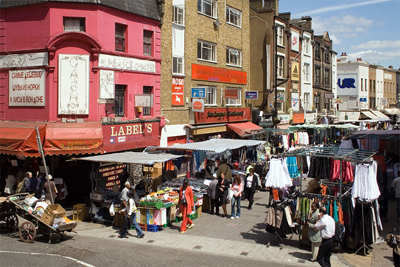
One of the more well-known street markets of London, there has been a market operating in Petticoat Lane (later known as Middlesex Street) in East London since the 17th century.

The market – which lies in relatively close proximity to the Columbia Road Flower Market and Old Spitalfields Market as well as Brick Lane – started to emerge in the early 1600s as a place where clothes were traded and received a boost with the arrival of Huguenot silk weavers who settled in the area later that century having fled religious persecution in the continent (it’s believed the lane was named after the silk petticoats which were sold here).

During the 1800s the area become renowned as the centre of the clothes manufacturing trade and the market was the place to buy the clothes. Around 1830, the name of the street was changed from Petticoat Lane to Middlesex Street after some sensibilities were offended that the street was named after unmentionables.

In the late 19th and early 20th centuries, the market became dominated by Jewish traders who had arrived in London, like the Huguenots before them, fleeing persecution in Europe. They added new life to the market and maintained the coster traditions.

Like many other street markets in London, the market didn’t get formal approval until quite late in life – only in 1936 was it was protected by an Act of Parliament.

These days the market – one of 1o managed by the London Borough of Tower Hamlets in whose jurisdiction the majority of the market lies – occupies the lanes and streets centring on Middlesex Street including Cobb Street, Goulston Street and Wentworth Street (which has long had a street market in its own right). It is open weekdays as well as Sunday when there are more than 1,000 stalls selling everything from clothes to CDs, books and artwork.

WHERE: Middlesex Street (nearest Tube stations are Aldgate, Aldgate East and Liverpool Street); WHEN: 10am to 4pm, Monday to Friday and 9am to 3pm Sunday; COST: Free.

PICTURE: Andrew Dunn, www.andrewdunnphoto.com (via Wikipedia).

10 Historic London Markets – 8. Columbia Road Flower Market…

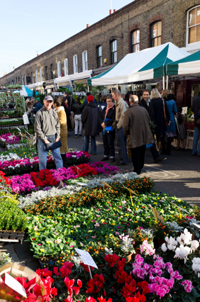
Originally founded in the early 1800s, the Columbia Road market in East London has since evolved into a specialist flower market on Sundays.

First emerging as a general street market in the early 1800s, the market was formalised in the mid 1800s when banking heiress Angela Burdett-Coutts financed the construction of the now demolished – and somewhat architecturally fanciful – Columbia Market. This opened in 1869 at the northern end of the road but didn’t prove a great success. Despite efforts to save it – including apparently relaunching it as a fish market – it closed in 1885.

The market building – which is said to have resembled the sort of market hall that might be found in rural areas – was later used as a warehouse but after suffering bomb damage in World War II were demolished.

The market, meanwhile, reappeared on the street and as the area’s Jewish population grew, moved to a Sunday, a decision which allowed traders from Covent Garden and Spitalfields to trade their leftover goods from the previous day.

The introduction of new regulations – including those introduced in the 1960s requiring traders to attend regularly – saw the market gradually transform itself into the colorful market selling cut flowers, plants and bulbs you can find there today. Popular with film makers and photographers thanks to the colourful backdrop it provides, the surrounding streets also feature a range of interesting independent shops and cafes.

WHERE: Columbia Road, Bethnal Green (nearest Tube stations are Shoreditch, Liverpool Street, Aldgate East and Bethnal Green); WHEN: 8am to 2pm Sunday; COST: Free; WEBSITE(S): www.columbiaroad.info/www.columbia-flower-market.freewebspace.com/index.html.

PICTURE: Dynasoar/www.istockphoto.com

10 Historic London Markets – 7. Portobello Market…

Established far more recently than many of the other markets we’ve looked at, the origins of a market in Portobello Road in London’s inner west only go back to the mid-to-late 19th century.

The oddly named road (it takes its name from the Battle of Porto Bello in the wonderfully named ‘War of Jenkins’ Ear’ between Britain and Spain in the mid 18th century – more on that in an upcoming What’s in a Name? post), was transformed from a mere laneway, known as Greens Lane, to a larger thoroughfare in the mid 180os as the area developed and the market started to take shape in the 1880s.

These days the street market can stretch for a mile along Portobello Road from Golborne Road in the north to Chepstow Villas in the south.

It offers everything from fruit and vegetables and various foodstuffs (sold particularly at the northern end and along Golborne Road itself, known as Golborne Market as well around Elgin Crescent) through to vintage and alternative clothing, music and other bric-a-brac (a section in the middle, around the Westway flyover, specialises in this – this area includes the Acklam Village Market and the Portobello Green Fashion Market) and the world famous antiques market (down at the south end, closer to Notting Hill Gate Tube station – Saturday is the key day here).

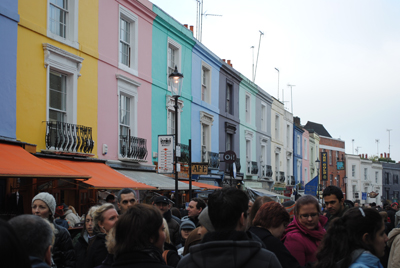
Different sections of the market open on different days – there’s a great map showing what opens when on the Portobello and Golborne Markets website here) – but Saturdays and Sundays are sure to find the area packed with people. The street is also lined with independently owned shops (including the colourful buildings above) and arcades and, as well as street food stalls, there’s plenty of pubs, cafes and restaurants where you can get a bite to eat.

There is currently a campaign to have Portobello Road declared Britain’s first “business conservation area” with the aim of preserving the character of the market. Head here for more details.

WHERE: Portobello Road, Notting Hill (nearest Tube stations are Notting Hill Gate or Ladbroke Grove); WHEN: Trading hours vary, see websites for details; COST: Free; WEBSITE(S): www.rbkc.gov.uk/subsites/visitkensingtonandchelsea/shopping/portobello/ourmarkets/portobelloroadmarket.aspxhttp://shopportobello.co.uk/.

10 Historic London Markets – 6. Old (and New) Spitalfields Market…

There has been a market on the site now known as Old Spitalfields Market, located on the eastern outskirts of the City of London next to what was the Priory and Hospital of St Mary Spital, since the thirteenth century.

But it was centuries later when, following the tumult of the Civil War, in 1682, John Balch was formally granted a Royal Charter by King Charles II to hold a “flesh, fowl and roots” market on Thursdays and Saturdays in or on the rectangle of land known as Spital Square. A ‘market-house’ was built on the site around this time for administrators with traders selling their wares from stalls.

The success of the market drew people to the area – in particular, Huguenots fleeing France who brought with them new skills in silk-weaving, and later Irish fleeing the Potato Famine and Jews escaping the harsh political climate in Eastern Europe – and the market gained a name for itself as a place to buy fresh produce.

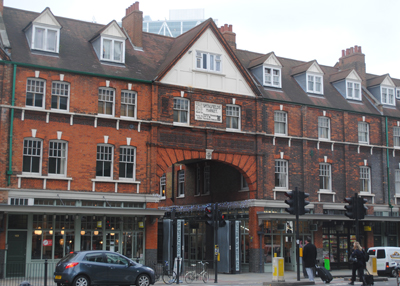
By late in the 19th century, the market had fallen into decline. So, in 1876, a former market porter by the name of Robert Horner decided it needed an upgrade and, buying the lease, had the central market square roofed with glass and new market buildings, known as the Horner Buildings (pictured above), constructed around the northern, eastern and southern sides of the site. Having cost £80,000, it was completed in 1893.

In 1920, the City of London took over control of the market and later than decade expanded the original buildings. Having continued to grow over the ensuing years and with traffic congestion continuing to increase in the surrounding streets, it was decided to move the fresh produce aspect of the market to a new location at Leyton to the north-east.

The new market, known as New Spitalfields Market, covers more than 31 acres and boasts more than 100 traders.

Meanwhile, Old Spitalfields Market, the western end of which was redeveloped in the late 20th century, continues to operate on the original market site – now known as Horner Square, with stalls selling everything from contemporary and vintage fashion to music, gems and jewellery, bric-a-brac and antiques as well as various themed market days – check the website for more details.

Old Spitalfields Market
WHERE: Horner Square, Spitalfields (nearest Tube stations are Shoreditch High Street and Liverpool Street); WHEN: Markets are held every day – times vary so check website for details; COST: Free; WEBSITE: www.oldspitalfieldsmarket.com.
.
New Spitalfields Market
WHERE: 23 Sherrin Road, Leyton (nearest Tube station is Leyton); WHEN: Trading hours midnight to around 9am, Monday to Saturday; COST: Free; WEBSITE: www.cityoflondon.gov.uk/business/wholesale-food-markets/new-spitalfields/Pages/default.aspx.

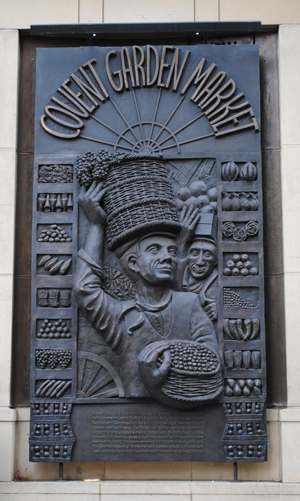
10 Historic London Markets – 5. Covent Garden Market…

We’ve had a quick look at the origins of Covent Garden before (as part of our What’s in a name? series) but it’s worth a recap.

Now a favorite of tourists visiting London, Covent Garden is these days largely known as a specialty shopping and entertainment precinct in the West End. But its beginnings as a market go back at least to the 1600s when a licence was formally granted to hold a market in the piazza.

The land had been formerly owned by the Abbey (or Convent) of St Peter in Westminster which had established 40 acre kitchen garden here (hence ‘Convent Garden’) and had passed into the hands of the Crown at the Dissolution. Later owned by the Earls of Bedford, it was the 4th earl, Francis Russell, who commissioned Inigo Jones to design a great residential square- including St Paul’s Church, known as the Actor’s Church – on the site.

By 1650, fruit and vegetable markets were regularly been held on the site and, interestingly, around this time the market adopted the pineapple, a symbol of wealth, as its emblem (it was also around this time that Punch and Judy shows were introduced to the area (see our earlier post on Mr Punch here)). Covent Garden’s rise to prominence as a market came when the Great Fire of London destroyed many of London’s other markets leaving it as the foremost fruit, vegetable and flower market. In May 1670, the 5th Earl of Bedford, William Russell (later 1st Duke of Bedford), obtained the formal right to hold a market on the site from King Charles II.

The growth of the market and the development of fashionable residential developments further west in Soho and Mayfair saw many of the affluent people who had lived around the market move out and the character of the square changed (in an indication of this, a list of Covent Garden prostitutes was published in 1740).

In 1813, the 6th Duke of Bedford, John Russell, secured an Act of Parliament regulating the market and in the late 1820s began to redevelop the site, commissioning architect Charles Fowler to design new buildings (up until then the market was housed in makeshift stalls and sheds). These include the grand main market building which still stands on the site today.

The market continued to grow – there is said to have been 1,000 porters employed at the market’s peak – and in 1860 a new flower market was built on the south piazza (where the London Transport Museum now stands), while in the 1870s, a glass roof was added to the market building. A “foreign” flower market opened in what is now Jubilee Hall in 1904.

In 1918, the Bedford family sold the market to the Covent Garden Estate Company. The next major installment in the market’s life came in 1974 when the market, which had outgrown the West End site, moved out to a new site in Nine Elms at Vauxhall in London’s inner south.

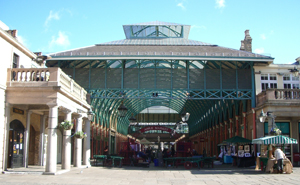
The Covent Garden site was left to fall into disrepair but, saved from demolition and redevelopment largely through the efforts of Geoffrey Rippon, then Secretary of State for the Environment, it subsequently underwent restoration, reopening as a speciality shopping centre in 1980 with areas including the Apple Market (pictured above), the East Colonnade Market and the Jubilee Market. Now owned by Capital & Counties who purchased it in 2006, the market – along with the larger 97 acre Covent Garden area – remain under the care of the Covent Garden Area Trust.

Meanwhile, the New Covent Garden Market at Nine Elms is these days the largest fruit, vegetable and flower market in the UK and boasts more than 200 businesses. There are currently plans to redevelop the 57 acre market site which will include providing more space for market tenants as well as new homes, shops and community facilities like parks.
.
Covent Garden
WHERE: King Street, Covent Garden (nearest Tube stations are Covent Garden, Leicester Square and Embankment); WHEN: Public areas are open 24 hours; check with individual shops for opening times; COST: Free; WEBSITE: www.coventgardenlondonuk.com
.
New Covent Garden Market
WHERE: New Covent Garden Market, Nine Elms, Vauxhall (nearest Tube station is Vauxhall); WHEN: The fruit and vegetable market’s core trading hours are between midnight and 6am, Monday to Saturday, while the flower market’s core trading hours are between 2am and 8am, Monday to Saturday (times may vary for individual businesses); COST: Free (charge for cars); WEBSITE: www.newcoventgardenmarket.com.
.
PICTURE: Apple Market Picture courtesy of www.coventgardenlondonuk.com.

10 Historic London Markets – 4. Leadenhall Market…

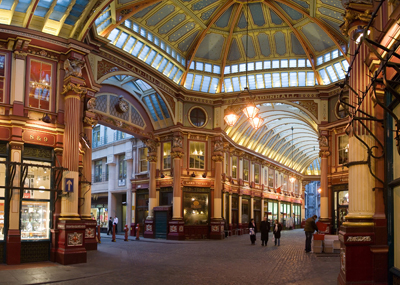
A covered – and splendidly decorated – Victorian-era market located just off Gracechurch Street in the heart of the City of London, Leadenhall Market might go un-noticed by many but visit at lunchtime on a weekday and you’ll to fight for space among the besuited City workers looking for sustenance there.

The history of a market on this site goes back to Roman times for it was under the current market that the remains of Londinium’s basilica and forum – the Roman marketplace – can be found (there’s apparently a part of the basilica wall in the basement of one of the Leadenhall shops).

This fell into disuse following the Roman period, however, and the origins of the current market are generally agreed upon as emerging in the 14th century when it occupied the site of a lead-roofed manor (hence “leaden hall) which was at one stage leased by the famous Lord Mayor Richard “Dick” Whittington before it burnt down in the late 1400s. The subsequent market was initially associated with poultry and then with cheese and other foodstuffs (it remained known for game and poultry) and separate areas were later developed for trade in wool, leather and cutlery.

In 1666, a small section of the market was destroyed in the Great Fire of London but it was rebuilt shortly after – for the first time under cover – and was divided into three sections: the Beef Market, the Green Yard and the Herb Market.

In 1881, after the existing building was demolished, a new structure boasting wrought iron and glass was designed by Sir Horace Jones (architect for the Corporation of the City of London, he also designed Billingsgate and Smithfield Markets – see our earlier entries here and here). The market is now one of the City’s five principal shopping centres and, as well as fresh food and flowers, hosts a variety of specialty shops, restaurants, cafes and pubs.

The Grade II* listed building was extensively restored in 1991. It has since starred in Harry Potter and the Philosopher’s Stone as well as other films including The Imaginarium of Doctor Parnassus and the recent Tinker, Tailor, Soldier, Spy.

Before we finish, we would be remiss not to mention Old Tom. A celebrated gander, he managed to avoid the axe for years and became a favorite of traders and customers (even being fed by local innkeepers) – so much so, that when he died at the age of 38 in 1835, his body lay in state before he was buried on site. There’s a bar in the market named for him.

WHERE: Gracechurch Street, City of London (nearest Tube stations are Monument, Bank and Cannon Street); WHEN: Public areas are generally open 24 hours a day with core trading hours between 10am and 5pm weekdays (check with individual shops for opening hours); COST: Free; WEBSITE: www.leadenhallmarket.co.uk

PICTURE: DAVID ILIFF. Licence CC-BY-SA 3.0. Via Wikipedia.

10 Historic London Markets – 3. Billingsgate Market…

Now the UK’s largest inland fish market (and located in Poplar, east London), the history of Billingsgate Market goes back centuries.

Known originally by various spellings including Blynesgate and Byllynsgate, Billingsgate may have been named for watergate on the north bank of the Thames near where the market was originally established (an alternate theory is that it was named for a man named Biling or an mythological British king, Belin).

The right to collect tolls and customs at Billingsgate, along with Cheap and Smithfield, was granted by King Henry IV in 1400.

Billingsgate only became particularly associated with fish in the 1500s and in 1699, an Act of Parliament was passed making it “a free and open market for all sorts of fish whatsoever” (this was with the exception of eels, restricted to being sold by Dutchmen from boats in the river – a reward for the help they provided after the Great Fire of 1666).

While for much of the market’s history, fish was sold for stalls and sheds around the ‘hythe’ or dock at the site known as Billingsgate, in 1850 the first purpose-built market building was constructed in Lower Thames Street.

Deemed inadequate for the task at hand, however, it was demolished after slightly more than 20 years of service. A new building, designed by then City Architect Sir Horace Jones and constructed by John Mowlem, was opened in on the same site in 1876. In the late 19th century, it is said to have been the largest fish market in the world. The heritage listed former fish market building in Lower Thames Street (pictured above) is now used as a venue for corporate events, catwalk shows, post premiere parties and concerts (see the website for more www.oldbillingsgate.co.uk).

In 1982, the market was relocated to a 13 acre site on the Isle of Dogs, just to the north-east of Canary Wharf. The building contains a trading floor with some 98 stands and 30 shops as well as an 800 tonne freezer store. An average of 25,000 tonnes of fish and fish products are sold through its merchants every year and the market has an annual turnover of around £200 million.

The role of the fish porter – who traditionally have been the only people licensed to move fish around the market – was opened up to anyone following a fiercely fought battle between the porters, traders and the City of London Corporation earlier this year.

The market is open to the general public and tours can be arranged – head to the website for details.

WHERE: Billingsgate Market, Trafalgar Way, Poplar (nearest Tube Station is Canary Wharf); WHEN: 4am to 9.30am Tuesday to Saturday (children under 12 are not permitted on the market floor and non-slip shoes are advisable); COST: Free; WEBSITE: www.cityoflondon.gov.uk/business/wholesale-food-markets/billingsgate/Pages/default.aspx.

10 Historic London Markets – 2. Smithfield Market…

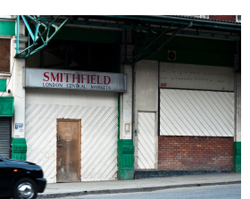
Now the largest wholesale meat market in the UK and one of the biggest in Europe, the connections between the site of Smithfield Market, officially known as the London Central Markets, and livestock go back to at least 800 years.

Since the 12th century animals were routinely traded here thanks to the site’s position on what was then the northern edge of the city. Smithfield was also known for being an area for jousting and tournaments and was the location of the (in)famous St Barthlomew Fair (this closed in 1855) as well as an execution ground – among those executed here were Wat Tyler, leader of the Peasant’s Revolt, and ‘Braveheart’, Sir William Wallace (1305).

Skip ahead several hundred years and, by the the mid-1800s, traffic congestion led to the livestock trade being relocated to a new site north of Islington. Plans were soon launched to locate a cut meat market on the Smithfield site.

Following the passing of an Act of Parliament, work on the new market began in 1866 with Sir Horace Jones (he of Tower Bridge fame), the City Architect, overseeing the design. Constructed of ornamental cast iron, stone, Welsh slate and glass, the initial market buildings were completed in 1868 with the result being two vast buildings, separated by a grand central avenue, but linked under a single roof. The new market was opened amid much pomp by the Lord Mayor of London on 24th November, 1868.

Four further buildings were soon added – only one, the Poultry Market, which opened in 1875, is still in use – and in the 1870s the market began to see the arrival of frozen meat imported from as far afield as Australia and South America.

Closed briefly during World War II – when the site was used for storage and an army butcher’s school – it reopened afterwards. The main poultry building was destroyed in a fire in 1958 and a replacement featuring a domed roof – the largest clear spanning dome roof in Europe at the time – was completed by 1963.

More recently, the market underwent a major upgrade in the 1990s. Queen Elizabeth II opened the refurbished East Market Building in June, 1997.

WHERE: London Central Markets, Charterhouse Street and West Smithfield (nearest Tube Stations are Barbican, St Paul’s and Moorgate); WHEN: From 3am Monday to Friday (visitors are told to arrive by 7am to see the market in full swing) (There are walking tours available – see www.cityoflondontouristguides.com for details); COST: Free entry; WEBSITE: www.smithfieldmarket.com.

PICTURE: Rossella De Berti/www.istockphoto.com

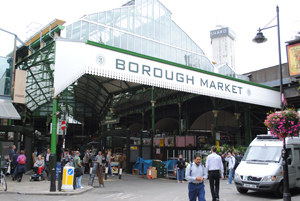
10 Historic London Markets – 1. Borough Market…

In the first of a new series looking at some of London’s most historic markets, we take a look at the history of Borough Market in Southwark, now the city’s most famous food market.

The origins of a food market in the area go back to at least to the reign of the Anglo-Saxon King Ethelred the Unready in early 11th century (some have suggested as far back as Roman times) with food vendors clustering around the southern end of London Bridge. The market was relocated to Borough High Street in the 1200s.

In 1755, traffic congestion saw Parliament close the market but Southwark residents raised £6,000 and bought a small area of land known as The Triangle – once part of the churchyard of the now long gone church of St Margaret’s – and reopened the market there.

The Triangle still remains at the heart of the market which sits partly under railway arches just to the south of the Southwark Cathedral churchyard. New market buildings were constructed in the mid 1800s but deemed “impractical”, they were replaced by new buildings in the late 1800s and 1930s (the latter was when the art deco entrance on Borough High Street was erected).

The market was refurbished in 2001 and the ornate Grade II-listed Floral Hall, which was originally the south portico on the Floral Hall at Covent Garden (taken down to make way for the Royal Opera House), was installed in 2003.

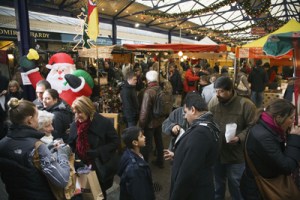
There are now more than 100 stalls in the wholesale and retail food market, making it one of the largest in London. It is owned by a charitable trust, The Borough Market (Southwark), with the volunteer trustees all local residents. Sections in the market include the Jubilee Market and the Green Market and a blue plaque, declaring the market London’s “oldest fruit and veg market”, was installed by Southwark Council earlier this year.

The amazing variety fine food on offer will tempt even the most jaded of palates but be warned that you have to queue as it can get a little packed with tourists at lunchtimes!

WHERE: 8 Southwark Street (nearest Tube Stations are London Bridge or Borough); WHEN: 10am to 3pm Monday to Wednesday, 11am to 5pm Thursday, 12pm to 6pm Friday, and, 8am to 5pm Saturday; COST: Free entry; WEBSITE: www.boroughmarket.org.uk

10 Historic Sporting Events in London – 10. The first Peter Pan Cup…

In this, the final in our series on historic sporting events in London we take a look at the first time the Peter Pan Cup was presented at the annual Serpentine Swimming Club’s Christmas Day race in Hyde Park.

While the origins of the annual 100 yard Christmas Day day race – and the club itself – go back to 1864, it wasn’t until 1904 that author JM Barrie (writer of Peter Pan, or The Boy Who Wouldn’t Grow Up and later knighted), first presented the Peter Pan Cup to the race’s winner (Peter Pan was first performed at the Duke of York’s Theatre the same year). Previous winners had received a gold medal.

Barrie’s involvement apparently came from the fact that he lived nearby in Bayswater and had often seen the swimmers.

The race, which starts at 9am on Christmas Day on the south side of the Serpentine near the cafe, is only open to club members (so don’t turn up expecting to be able to join in) and operates on a handicap system (pictured are swimmers in the 2009 race). Last year’s winner was Neil Price.

It’s worth noting that while this is the club’s most famous event, members swim every weekend throughout the year.

For more on the Serpentine Swimming Club, see http://serpentineswimmingclub.com/.

PICTURES: Serpentine Swimming Club

10 Historic Sporting Events in London – 9. A dead heat in the Oxford-Cambridge Boat Race…

Now officially known as the BNY Mellon Boat Race, the annual rowing event between Oxford and Cambridge universities was first held at Henley on Thames in 1829, moving to London for the second event in 1836 and becoming an annual event (with the exception of the two world wars) in 1856.

One of the most controversial races ever held – and next year’s will be the 159th – was in 1877 when the race, run over a four mile, 374 yard course which starts in Putney in west London and taking in a great bend of The Thames as it goes past Chiswick and Hammersmith, finishes at Mortlake, ended in a “dead heat”.

The drama began as the boats passed Barnes Bridge, about three-and-a-half miles through the course, when one of the blades of the Oxford team’s oars broke after striking rough water. Oxford (wearing dark blue) had been leading the race and the incident is believed to have helped Cambridge (wearing light blue) to draw level – so much so that both crews are recorded as having passed the finish line in 24 minutes and eight seconds.

It’s the only time the race has ever finished in a draw and there was, as might be expected, significant controversy over the result. With no finishing posts then in place, the judge, a waterman from Fulham named ‘Honest John’ Phelps, had to decide the result from his place in a small skiff on the water (and, according to the official Boat Race website, it is believed he was in a position to do so and not dozing under a bush as others have suggested).

His skiff, it is believed, may have drifted off the finish line. In addition, it was not the only craft on the water and it’s believed that the other craft filled with people eager to see the result, may have partially obscured his view. Even if they hadn’t, his was a tough task.

As was recorded in The Times (with thanks to Wikipedia):  “Cheers for one crew were succeeded by counter-cheers for the other, and it was impossible to tell what the result was until the Press boat backed down to the Judge and inquired the issue. John Phelps, the waterman, who officiated, replied that the noses of the boats passed the post strictly level, and that the result was a dead heat.”

Oxford, however, thought they had won by a matter of several feet and it’s believed that as a result Honest John announced the result as “dead heat to Oxford by five feet”. The result was later confirmed as simply a “dead heat”.

The controversy did lead to some changes – including the introduction of finishing posts – a stone on the south bank and a post on the north – and the passing of the role of judge to members of the two universities instead of a professional waterman.

Following this year’s race (also rather controversial – see our earlier article here) Cambridge has 81 wins and Oxford 76. For more on the history of the Boat Race see our earlier entry here or visit www.theboatrace.org.

10 Historic Sporting Events in London – 8. The first London Marathon…

Now one of the world’s largest long distance running events, the first London Marathon was held on 29th March, 1981, and saw some 6,255 people lead across the finish line by American Dick Beardsley and Norwegian Inge Simonsen, who finished in a dead heat. The first woman to finish was the UK’s Joyce Smith.

The idea of holding such an event in London arose after John Disley and the late Chris Brasher (a former Olympian), both members of Richmond’s Raneleigh Harriers running club, decided to enter the New York Marathon in 1979. Returning to London exhilarated by their experience, they began investigating the possibly of holding such an event here and, meeting with a positive response from authorities, pushed ahead with it.

About 20,000 people applied to enter the first London Marathon but only 7,747 people were accepted to run. The course, which is still roughly the same, starts at various locations in Blackheath and passes through Charlton, Woolwich and Greenwich before crossing the Thames at Tower Bridge, looping around through the East End and Docklands before following the river into Westminster.

While the first race finished at Constitution Hill, between Green Park and Buckingham Palace, the race now finishes in The Mall (although for many years in between it finished on Westminster Bridge).

Such was the success of the first event – which was covered by the BBC – that the following year more than 90,000 people applied to run in the race from all around the world. Slightly more than 18,000 were accepted to run.

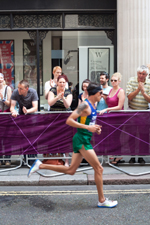
At the end of this year’s event – held on 22nd April (a runner from which is pictured) – more than 882,000 people have now completed the race. Now formally known as the Virgin London Marathon, a record high of 37,227 completed the run this year.

This year’s men’s race was won by Kenyan Wilson Kipsang who completed the race in  2:04:44 – the second fastest time over the London course – while the women’s was also won by a Kenyan – Mary Keitany – who, in taking back-to-back titles, completed the course in 2:18:37.

Since its inception, one of the key aspects of the race has been its fund-raising for a variety of charitable causes. Key among these is The London Marathon Charitable Trust which, established at the race’s outset, helps fund community sports facilities and develop recreational projects around the city.

For more on the Virgin London Marathon, see www.virginlondonmarathon.com.

PICTURE: © photocritical/istockphoto.com

10 Historic Sporting Events in London – 7. The first Five Nations game played at Twickenham…

Twickenham was only a new ground when, in 1910, a England played Wales in what was the first international to be played at the ground – part of the first of what later became officially recognised as the Five Nations competition.

The game played on 15th January, 1910, was only the second to be played in the competition and followed Wales defeat of France in Swansea earlier in the month. A crowd of about 18,000 watched as England defeated Wales 11-6 (England went on to win the competition, winning three matches and drawing the match they played against Ireland).

Twickenham, meanwhile, had only hosted its inaugural match the year before when local sides the Harlequins and Richmond played (the Harlequins won, 14-10). The Rugby Football Union had purchased 10.25 acres of land in Twickenham – previously a market garden – after witnessing the crowds at international rugby contests held at Crystal Palace in south-east London in 1905 and 1906 and decided they needed a ground of their own.

The pitch was raised to prevent flooding and covered stands were build on the east and west side of the pitch, a terrace at the south end and an open mound at the north along with space f0r 200 automobiles or carriages.

The ground – the pitch of which was used for grazing animals in World War I – was developed further in the following years until World War II when it was used as a civil defence depot.

The next major development occurred in the late 1970s/early 1980s when the south terrace was controversially replaced with the South Stand. A new North Stand followed in 1991, a new East Stand in 1993 and a new West Stand in 1995. What was then known as the Museum of Rugby, based at Twickenham Stadium, was opened to the public the following year.

The most recent work has again been on the South Stand which was reopened in 2006 and brought the capacity of the ground to 82,000.

Other landmark games among the many played at Twickenham include the 1959 Twickenham Jubilee celebration match between England and Wales versus Ireland and Scotland (England and Wales won, 26-17) and the final of the 1991 Rugby World Cup (Australia defeated England 12-6). Twickenham will also host the final of the 2015 Rugby World Cup.

There are regular tours of the ground (it’s advised to book these in advance) with highlights including the England dressing room, royal box, hospitality suites, medical room, player’s tunnel onto the pitch, a panoramic view of the arena from the top of the stand and a walk pitchside.

The tour also includes a visit to the World Rugby Museum (it’s possible to just buy tickets to the museum). Located in the East Stand (and known between 1996 and 2007 as the Museum of Rugby), the museum is home to some 25,000 artefacts – everything from a 1910 England v Ireland programme to pieces of kit worn by players from the earliest days of the game, a ceremonial wahaiki (or war cleaver) presented to the RFU by New Zealand Maoris in 1989, and the Calcutta Cup – dating from 1878 and made from the melted down silver coins (the savings of the now defunct Calcutta Rugby Club), it is presented to the winners of annual England versus Scotland match played as part of the RBS 6 Nations Championship.

The museum also houses the Twickenham Wall of Fame, described as “a celebration of the best players from all over the world that have ever played at Twickenham Stadium”. There are also a series of blue plaques around the stadium celebrating some of the best players.

WHERE: Twickenham Stadium, Whitton Road, Twickenham (nearest station is Twickenham); WHEN: Museum is open 10am to 5pm Tuesday to Saturday/11am to 5pm Sunday; Tours are run at select times Tuesday to Sunday – check website for details including scheduled closures; COST: £7 an adult/£5 concessions for museum only; £15 and adult/£9 concessions/£45 family ticket; WEBSITE: www.rfu.com/twickenhamstadium.
10 Historic Sporting Events in London – 6. The first Wimbledon championships…

While the history of the All England Tennis and Croquet Club goes back as far as 1868 (it was initially just known as the All England Croquet Club), the first Wimbledon Championships, officially known as The Championships, Wimbledon, were held some nine years later in 1877.

The only event held at the first championship was the “gentlemen’s singles” and the winner was cricketer (and, of course tennis player) Spencer Gore who emerged victorious over William Marshall in straight sets – 6-1, 6-2, 6-4 – before a crowd of about 200 (the “ladies’ singles” wasn’t introduced until 1884 with Maud Watson the first female champion after she defeated her sister Lilian).

Each of the 22 male amateur entrants had paid an entrance fee of £1, 1 shilling, and had to bring their own racquets and shoes “without heels” but were supplied with tennis balls.

Gore apparently won 12 guineas in prize money as well as a trophy, the Field Cup (the Gentleman’s Singles Trophy was introduced in 1887).

The club was then located at a site on Worple Road in Wimbledon (see our earlier entry about a plaque unveiled there earlier this year); it wasn’t until 1922 that it moved to it current location in Church Road. The layout of the courts at Worple Road – which saw the principal court named Centre Court thanks its position in the middle of the others – was carried over to the new location.

For more on the history of Wimbledon – which was the site of the tennis competition during this Olympics – including important milestones, see our earlier entry.

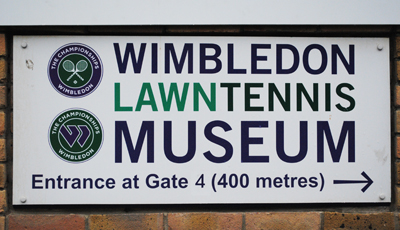
There is a museum based at Wimbledon (pictured above) which details more of the history of the place with exhibits including the Championship trophies, tennis memorabilia dating back to 1555 and a ‘ghostlike’ John McEnroe talking about the games and his opponents in his old dressing room. The museum is currently hosting a special exhibition, Tennis at the Olympics.

WHERE: All England Lawn Tennis Club, Church Road, Wimbledon – between gates 3 and 4 (nearest tube Southfields); WHEN: 10am to 5pm (last admission 4.30pm) daily (not during the Olympics – reopens on 15th August); COST: Museum only £11 an adult/£9.50 concessions/£6.75 child, or Museum plus tour £20 an adult/£17 concessions/£12.50 child; WEBSITE: www.wimbledon.com.