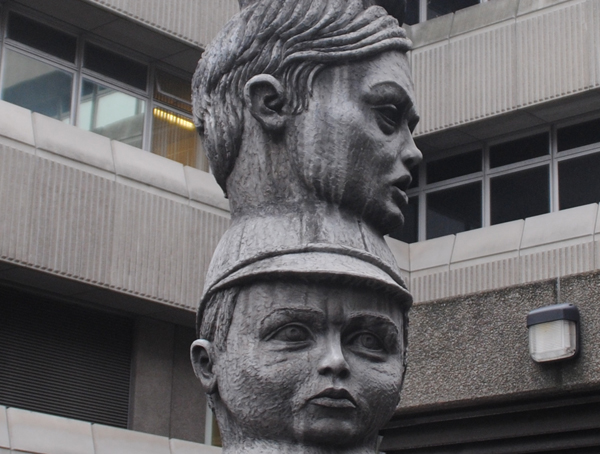
Where is it? #41….

The latest in the series in which we ask you to identify where in London this picture was taken and what it’s of. If you think you can identify this picture (and try and be as precise as possible), leave a comment below. We’ll reveal the answer early next week. Good luck!

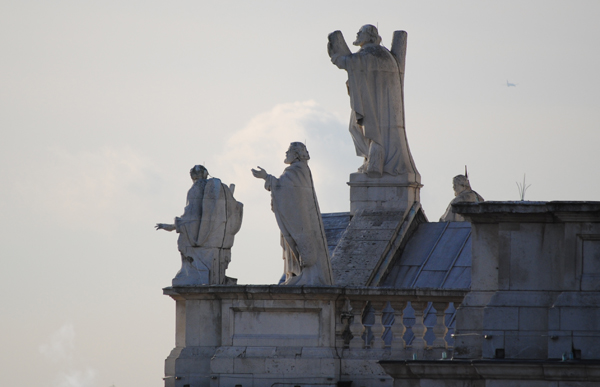
Yes, you guessed it, these are indeed the 3.7 metre high statues which sit above the south transept of St Paul’s Cathedral. The statues include those of St Andrew and St Thomas, both of which are attributed to Caius Gabriel Cibber (1630-1700) and Grinling Gibbons (1648-1721). We had originally said they were the work of Francis Bird (1667-1731), who also completed the famous panel depicting the Conversion of St Paul on the cathedral’s west front and the original version of the statue of Queen Anne outside the main entrance (more on that another time), but while he was responsible for other statues on the cathedral, turns out he wasn’t for these two. The image was taken from the viewing deck of One New Change on Cheapside.

Where is it?…#40

The latest in the series in which we ask you to identify where in London this picture was taken and what it’s of. If you think you can identify this picture, leave a comment below. We’ll reveal the answer early next week. Good luck!

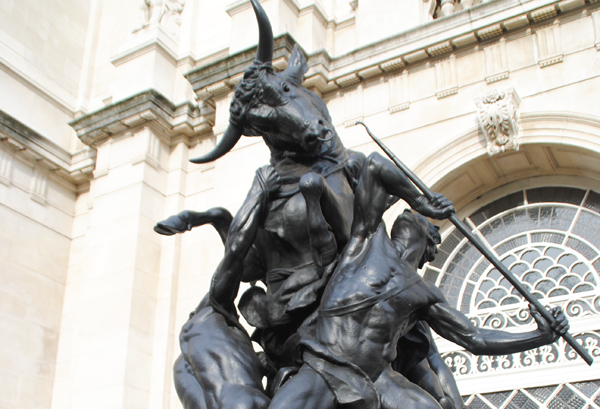
Well done to Angelo – this is indeed located outside the Tate Gallery, just to the left of the main entrance. The statue is The Death of Dirce, a work by Sir Charles Lawes-Wittewronges, and was one of a several copies of the same work he made in the early 1900s (this bronze version was made in 1906), including a couple of bronze versions and a colossal marble version. The sculptural group, based on the Hellenistic sculpture known as the Farnese Bull (which is indeed in Naples), depicts Dirce, the wife of the King of Thebes who was tied to the horns of a bull by Amphion and Zethus as a punishment. Sir Charles was something of a noted athlete in a range of sports as well as a sculptor who exhibited 12 works at the Royal Academy. He was also involved in a famous libel case in the 1880s. The statue was presented to what was then the National Gallery of British Art by his widow after his death in 1911.

Where is it?…#39

The latest in the series in which we ask you to identify where in London this picture was taken and what it’s of. If you think you can identify this picture, leave a comment below. We’ll reveal the answer early next week. Good luck!

As was guessed, this is indeed a detail from the controversial Queen Elizabeth Gate in Hyde Park, close to Hyde Park Corner. Commonly referred to as the “Queen Mother Gates”, in a project instigated by Prince Michael of Kent they were commissioned in 1991 to mark the Queen Mother’s 90th birthday. The 120ft by 21ft stainless steel gates, designed by Giuseppe Lund, feature a much commented upon lion and white unicorn created by sculptor David Wynne. The gates cost £1.5 million to construct.

Where is it?…#38


The latest in the series in which we ask you to identify where in London this picture was taken and what it’s of. If you think you can identify this picture, leave a comment below. We’ll reveal the answer early next week. Good luck!

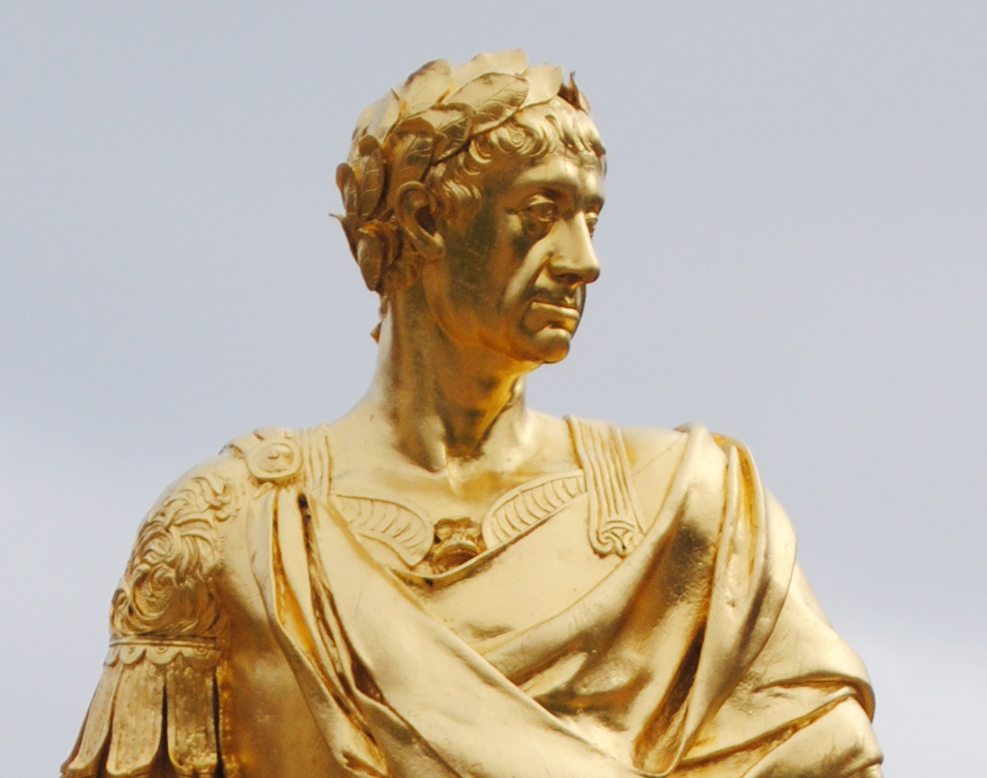
No-one managed it this time. This gilded bronze statue depicts King Charles II dressed as a Roman general and is located in the Figure Court of the Royal Hospital in Chelsea. The king founded the hospital in 1682 to provide a home for retired soldiers (the grand buildings you see are the work of Sir Christopher Wren – see our earlier entry here for more). The 7’6” tall statue, which was re-gilded to celebrate Queen Elizabeth II’s Golden Jubilee in 2002, was presented to the king in 1682 and moved to the hospital after his death in 1685. Although generally attributed to Grinling Gibbons, according to Walking London’s Statues and Monuments, it’s probably actually the work of Arnold Quellin, who worked in Gibbons’ studio. The statue is covered in oak branches on a date around 29th May each year – on a day known as Founders Day or Oak Apple Day – in commemoration of the legendary escape of the future king (by concealing himself in an oak tree) after the Battle of Worcester in 1651, the last battle of the English Civil War. For more on the hospital see www.chelsea-pensioners.co.uk.

Where is it? #37…

The latest in the series in which we ask you to identify where in London this picture was taken and what it’s of. If you think you can identify this picture, leave a comment below. We’ll reveal the answer early next week. Good luck!

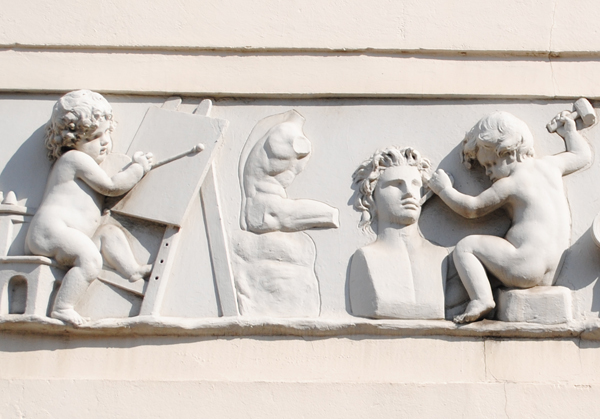
Bit of a harder one this week but well done to Parktown for punting for an embassy in Belgravia. This is indeed in Belgravia – in fact it’s just off Belgrave Square. The panel is part of one of two which adorn the walls of the Norwegian Embassy in Belgrave Place. Dating from 1796, the two panels depicting cherubs in various activities – one of which represents ‘agriculture’ and the other, the one pictured above, ‘arts’ – are made of Coade Stone (a reconstituted material made in the late 1700s/early 1800s, also used to create the South Bank Lion) which originally adorned the Danish-Norwegian Consulate in Stepney and were moved to this listed Georgian terrace, in 1968.

Where is it? #36…

The latest in the series in which we ask you to identify where in London this picture was taken and what it’s of. If you think you can identify this picture, leave a comment below. We’ll reveal the answer early next week. Good luck!

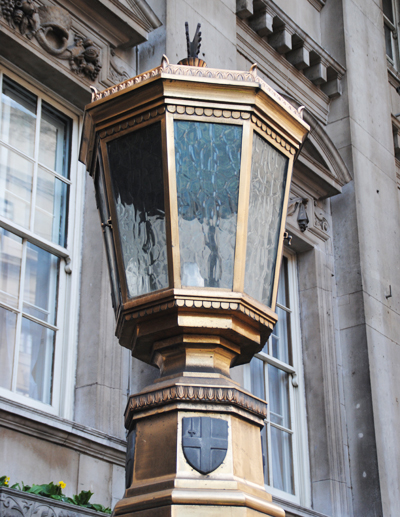
Of course, as Parktown, Carol Stanley and Alma Lewis all pointed out, this is one of the lanterns outside of Mansion House, home of the Lord Mayor of London (the giveaway was the coat-of-arms of the City of London on the lamp stand).

The Mansion House, designed in the Palladian style by George Dance the Elder, was specifically built for the Lord Mayor of London in the mid 1700s and features accommodation for the Lord Mayor and Lady Mayoress as well as grand state rooms for entertaining including the Old Ballroom and the Great Egyptian Hall.

We’ll be looking in more detail at the history of the Mansion House in a future post.

For more on touring the house, see www.cityoflondon.gov.uk/Corporation/LGNL_Services/Leisure_and_culture/Local_history_and_heritage/Buildings_within_the_City/Mansion_house/Tours_of_Mansion_House.htm.

Where is it?…#35…

The latest in the series in which we ask you to identify where in London this picture was taken and what it’s of. If you think you can identify this picture, leave a comment below. We’ll reveal the answer early next week. Good luck!

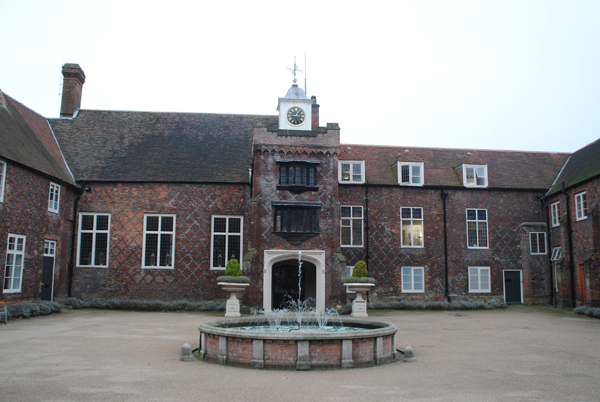
Well done to James and Mike – this is indeed Fulham Palace, former home of the Bishops of London. The site was first acquired by Waldhere, the Bishop of London, from Tyrhtilus, the Bishop of Hereford, in about 700 AD. The site – the current buildings date from the medieval period – were later mainly used as a summer home of the Bishop of London and it wasn’t until the 20th century that it become their principal home. The last bishop to live here was Bishop Stopford who retired in 1975. These days the palace, which is still owned by the Church of England, houses a museum, cafe, gallery and gardens. We’ll be looking at more of the history of Fulham Palace in a later post. In the meantime, see www.fulhampalace.org for more, including details of visiting hours.

Where is it?…#34

The latest in the series in which we ask you to identify where in London this picture was taken and what it’s of. If you think you can identify this picture, leave a comment below. We’ll reveal the answer early next week. Good luck!

Congratulations to Janet Holmes – this is, of course, a bastion which formed part of the old London City wall near what was Cripplegate and is now in the Barbican estate. Made largely of stone shipped from Maidstone in Kent, the five metre high wall had a two metre deep ditch in front of it and was dotted with these bastions. It stood largely intact from Roman times until the medieval period. For more on the wall, see our earlier post here.

Where is it? #33…

The latest in the series in which we ask you to identify where in London this picture was taken and what it’s of. If you think you can identify this picture, leave a comment below. We’ll reveal the answer early next week. Good luck!

Well done to Marina (via Facebook) who placed this in Holland Park. It is indeed part of a decorative fencing on the site of Holland House. Originally known as Cope Castle, the house was built in 1605 for Sir Walter Cope. For more on the house, see our earlier post here

Where is it? #32…

The latest in the series in which we ask you to identify where in London this picture was taken and what it’s of. If you think you can identify this picture, leave a comment below. We’ll reveal the answer early next week. Good luck!

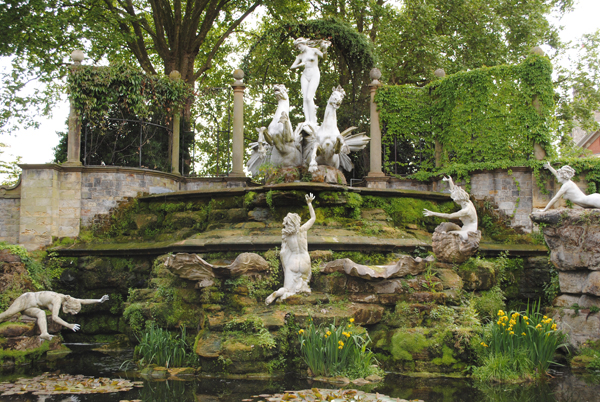
Thought this one might stump a few but no! Well done to Janet Holmes and Park Town – both correctly located this at Twickenham and Janet in the gardens at York House, a 17th century mansion now used by the London Borough of Richmond upon Thames. The house was named for the York family who once owned it and was also used by the French royal family (as well as nearby Orleans House). The gardens, which are open to the public, are quite spectacular and include two sections joined by a high bridge over a road. The gardens features numerous statues which were imported from Italy by a fraudulent financier, Whitaker Wright, who in the early 20th century took his own life. They were subsequently acquired by the last private owner of York House, Sir Ratan Tata (the son of an Indian industrialist, he purchased the house from the Duc d’Orleans). The larger than life-sized marble statues suffered neglect and vandalism before being restored in 1989. The particular group shown here is known as ‘The Naked Ladies’ and include eight ‘Oceanids’ and two aquatic horses. For more on the gardens and York House, see www.yorkhousesociety.org.uk.

Where is it? #31…

The latest in the series in which we ask you to identify where in London this picture was taken and, importantly in this case, what it’s of. If you think you can identify this picture, leave a comment below. We’ll reveal the answer early next week. Good luck!

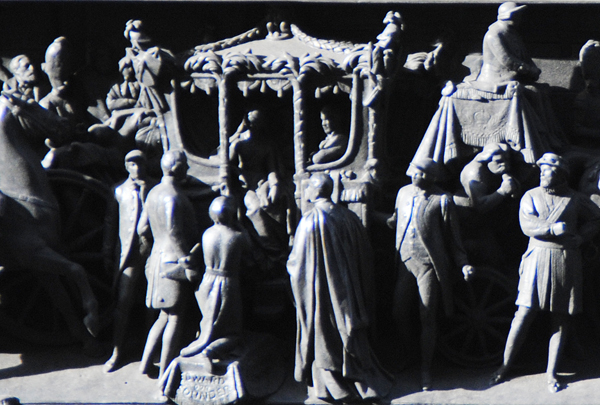
Well done to Jameson Tucker, this is indeed a relief on the Temple Bar Memorial, which stands where the Strand turns into Fleet Street. It depicts Queen Victoria on a royal progress to the Guildhall in 1837, a few months after her accession, when she was met at this spot by the Lord Mayor and Aldermen and presented with the sword of state and keys to the city.

According to a tradition said to date back to 1215, the Temple Bar is the only place where the monarch may enter London after first seeking permission from the Lord Mayor and being presented with the City’s Pearl Sword (one of five City swords, this is said to have been first given to the City by Queen Elizabeth I).

The monument itself was designed by Sir Horace Jones and erected in 1880 to mark the location where the Temple Bar – the ceremonial entrance to the City of London – originally stood (the last incarnation of the Temple Bar, designed by Sir Christopher Wren, is now located near in Paternoster Square near St Paul’s – see our earlier post for more on Wren’s Temple Bar).

On top of the granite and bronze monument stands a rearing griffin (actually it’s supposed to be a dragon), one of the city’s official boundary markers, sculpted by Charles Birch while on either side are bronze statues, by Sir Joseph Edgar Boehm, of Queen Victoria and Edward, Prince of Wales (later King Edward VII), who in 1872 were the last of the Royal family to pass through the Temple Bar gateway before its demolition in 1878 (they were on their way to St Paul’s to attend a thanksgiving service following the prince’s recovery from typhoid).

This is depicted in a relief on the north side of the monument by Charles Kelsey. Charles Mabey’s relief showing the Queen’s progress is located on the south side of the monument; he also designed one on the east side which shows a curtain being drawn over the old Temple Bar.
Where is it? #30…

The latest in the series in which we ask you to identify where in London this picture was taken and, importantly in this case, what it’s of. If you think you can identify this picture, leave a comment below. We’ll reveal the answer early next week. Good luck!

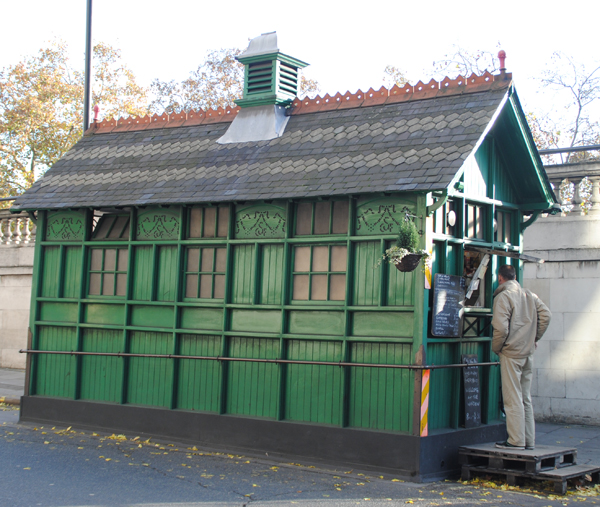
Well done to Parktown and Carol who both correctly named this as a cabman’s shelter at Temple Place near Temple Tube station. This shed is one of only 13 now left out of what were 61 shelters built by the Cabmen’s Shelter Fund between 1875 and 1914 (others, painted in the same distinctive green colour, can be in places like Russell Square, on Chelsea Embankment and on Kensington Road). The fund was established by the Earl of Shaftesbury and other well-meaning philanthropists to provide cabbies, who were prohibited from leaving their cabs unattended at a stand, with refreshments at affordable prices so they could have a hot meal while at work. The shelters, which were built on public highways, were, thanks to Metropolitan Police rules, allowed to be no bigger than a horse and cart, hence the rather small size (although they can seat up to 13 men as well as providing a kitchen). Only cabbies are allowed inside the shelters but anyone can order takeaway!

Where is it? #29…

The latest in the series in which we ask you to identify where in London this picture was taken and what it’s of. If you think you can identify this picture, leave a comment below. We’ll reveal the answer early next week. Good luck!

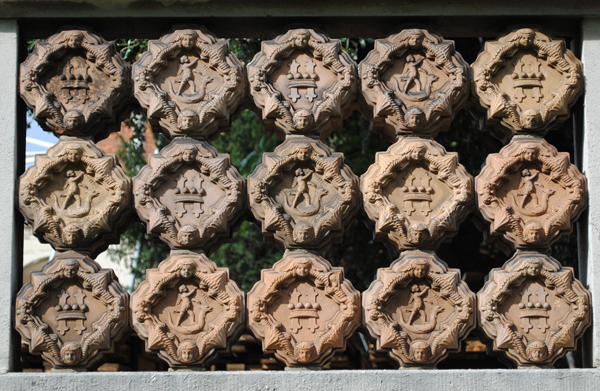
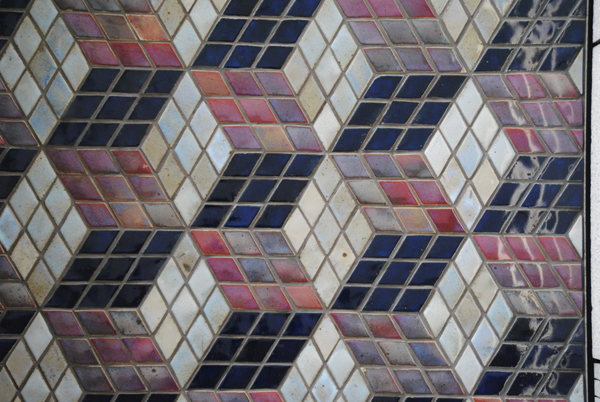
Bit of a harder one this week – these Escher-like patterns are found on a series of tiles located a wall in Waithman Street in the City of London (they are actually on the back of a building at 100 Bridge Street). According to the Tiles & Architectural Society Ceramics Society’s Gazetter, the 23 handmade stoneware tile panels were the 1992 creation of potter Rupert Spira, carried out at the behest of developers Rosehaugh Stanhope. While Spira apparently made 18,000 tiles for a garden in Paris, the tiles in Waithman Street were his only ever  British commission for tiles. Waithman Street, incidentally, is named for Robert Waithman, a draper and MP who was elected Lord Mayor of London in 1823.

Where is it? #28…

The latest in the series in which we ask you to identify where in London this picture was taken and what it’s of. If you think you can identify this picture, leave a comment below. We’ll reveal the answer early next week. Good luck!

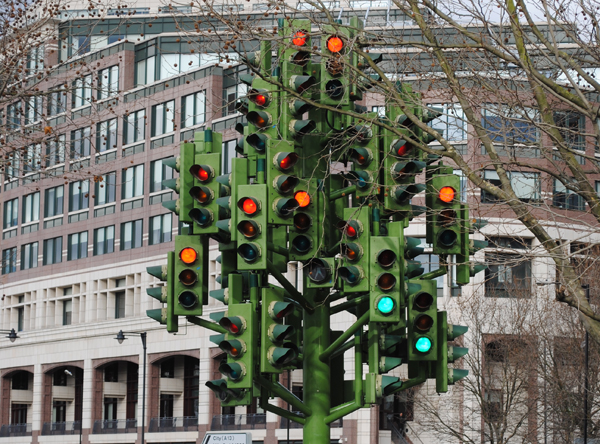
Well done to all those who guessed this was at or near Canary Wharf (although, as with our previous Where is it? on Little Ben, there is a slight trick to this one, because it’s no longer there). This is indeed Pierre Vivant’s sculpture, Traffic Light Tree, which was formerly located on the Heron Quay roundabout at the junction of Heron Quays, Marsh Wall and Westferry Road just outside the Canary Wharf development on the Isle of Dogs. The eight metre tall structure contains 75 lights and was installed in 1998 in place of a London plane tree which was apparently ill from pollution. In 2005, the roundabout was voted the best-looking in the UK in a poll by Saga Motor Insurance. That, however, didn’t save the structure from being removed late last year due to the remodelling of the roundabout. Tower Hamlets Council, who own the sculpture, called for suggestions for new locations following its removal and reportedly received about 200 replies. As far as Exploring London is aware, it currently remains in storage and no new site has yet been revealed (although the council has reportedly said it will remain somewhere on the Isle of Dogs). We’re checking with Tower Hamlets for further information…

Where is it? #27…

The latest in the series in which we ask you to identify where in London this picture was taken and what it’s of. If you think you can identify this picture, leave a comment below. We’ll reveal the answer early next week. Good luck!

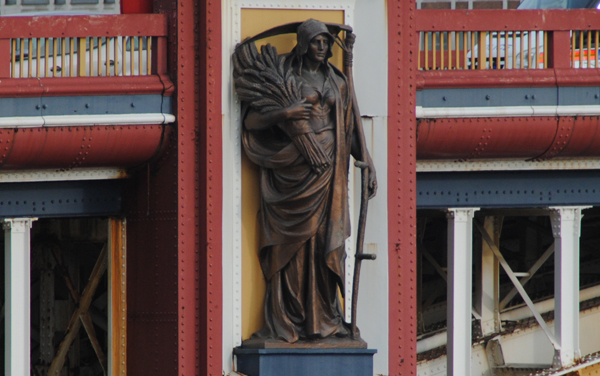
Well done to Janet Holmes – this is indeed a detail from Vauxhall Bridge. The picture shows Agriculture, one of many statues which adorn the bridge above the piers (this work is on the upstream side).

The statue is the work of Frederick W Pomeroy – Alfred Drury was also commissioned to create female bronze sculptures. It was installed in 1907, a year after the current bridge, a Grade II* listed steel and granite structure, was opened for traffic. Other sculptures by Pomeroy on the upstream side include ArchitectureEngineering and Pottery while the downstream side is adorned with works by Drury – ScienceFine ArtsLocal Government and Education.

The 1906 bridge replaced an earlier bridge built between 1809-16, which was originally named Regent Bridge and later renamed Vauxhall Bridge. It was the first iron bridge over the Thames as well as the first to carry trams and was built on the site of an earlier ferry crossing.

Where is it? #26…

The latest in the series in which we ask you to identify where in London this picture was taken and what it’s of. If you think you can identify this picture, leave a comment below. We’ll reveal the answer early next week. Good luck!

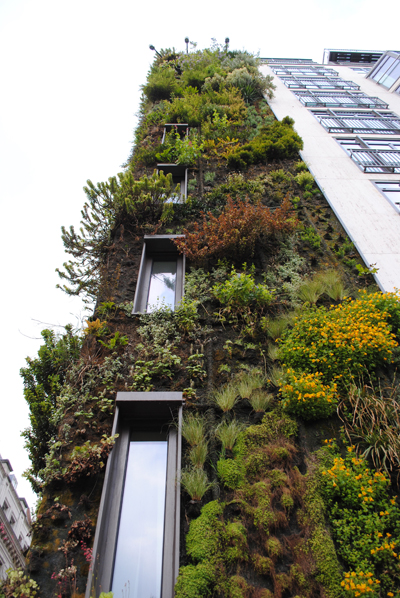
Well done to Jameson Tucker and Carol Stanley – it is indeed part of the facade of the Athenaeum Hotel on Piccadilly. This vertical garden – said to be the tallest in the UK when it was launched in May, 2009 – was created by French “architectural botanist” Patrick Blanc. It climbs 10 stories high and features more than 260 plant types covering some 260 square metres. The Athenaeum is located at 116 Piccadilly in Mayfair.


Where is it? #25

The latest in the series in which we ask you to identify where in London this picture was taken and what it’s of. If you think you can identify this picture, leave a comment below. We’ll reveal the answer early next week. Good luck!

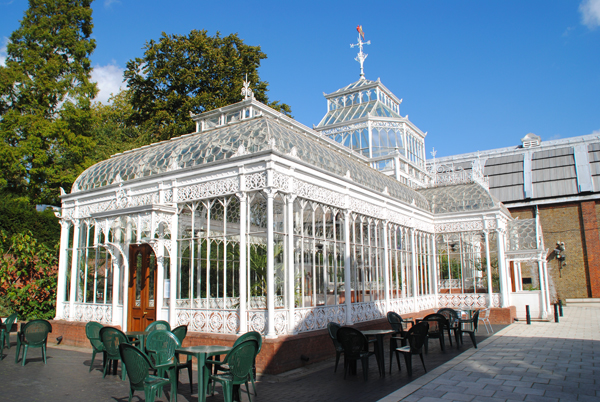
Well done to Charlotte, Sean and Jameson – this is, of course, a picture of the Horniman Conservatory located at the rear of the Horniman Museum located in Forest Hill in London’s south-east.

While the eclectic museum has its own fascinating story (see our earlier post here), so too does the conservatory. It was built in 1894 at the family home of the museum’s founder – wealthy merchant, philanthropist and MP Frederick John Horniman – located at Coombe Cliff in Croydon.

The Grade II listed cast iron and glass building was relocated to its current site by English Heritage in the late 1980s. It can now be hired out for private functions including weddings.

Interestingly, the gardens surrounding the Horniman are currently undergoing a £2.3 million revamp and will be fully reopened later this year. We’ll have more on that at a later date…

Where is it? #24

The latest in the series in which we ask you to identify where in London this picture was taken and what it’s of. If you think you can identify this picture, leave a comment below. We’ll reveal the answer early next week. Good luck!

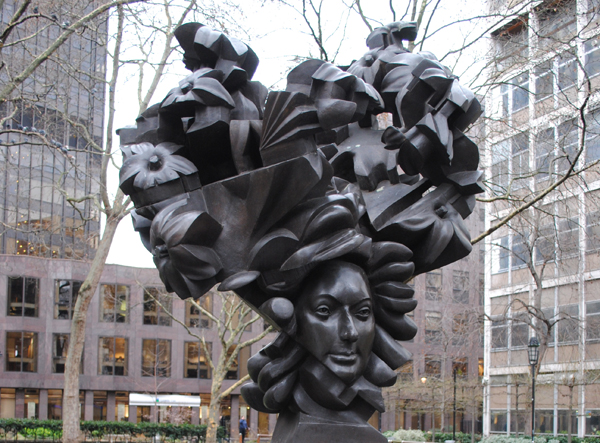
Must have been a tough one because we only had one taker – Sue Kendrick – who was correct in saying that this was the memorial to 17th century English composer Henry Purcell located in Christchurch Gardens on Victoria Street (yes, near Scotland Yard!). The rather florid memorial, sculpted by Glynn Williams, was unveiled by Princess Margaret on 22nd November, 1995, the tercentenary of Purcell’s death. Purcell, credited as one of the greatest ever English composers thanks to his unique take on Baroque music, is believed to have been born nearby in a premises on a lane located off Old Pye Street. The gardens in which they are located also houses the Suffragette Memorial and is a former burial ground.

Where is it? #23…

The latest in the series in which we ask you to identify where in London this picture was taken and what it’s of. If you think you can identify this picture, leave a comment below. We’ll reveal the answer early next week. Good luck!

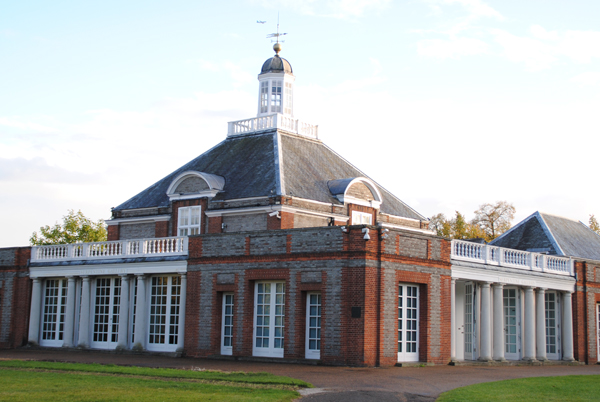
Well done to Jameson Tucker and Sean Dennis, both of whom identified this correctly as the Serpentine Gallery in Kensington Gardens. The gallery, which features modern and contemporary art, was created in 1970 and is housed in a tea pavilion which dates from the 1930s. Every summer since the year 2000, the Serpentine – named for the body of water which, strictly speaking, just runs through Hyde Park (although the section in Kensington Gardens is also often referred to in the same way) – has had a different temporary pavilion, designed by a leading architect, set up outside.

The Serpentine Gallery is to be expanded this year with the creation of the Serpentine Sackler Gallery in The Magazine building in the gardens. Located only a short distance from the existing gallery, the new premises is being designed by Pritzker Prize-winning architect Zaha Hadid and is named after Dr Mortimer and Theresa Sackler, whose foundation made the project possible through the largest single donation ever received by the Serpentine Gallery.

WHERE: Kensington Gardens; WHEN: Daily 10am to 6pm; COST: Free; WEBSITE: www.serpentinegallery.org.

Where is it? #22

The latest in the series in which we ask you to identify where in London this picture was taken and what it’s of. If you think you can identify this picture, leave a comment below. We’ll reveal the answer early next week. Good luck!

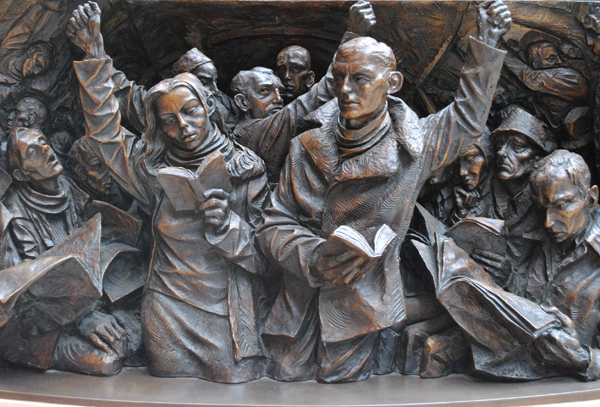
Congrats to Parktown – this image of people on the Tube is part of a 12 metre long frieze which runs around the base of Paul Day‘s monumental statue, The Meeting Place, which stands on the upper concourse in St Pancras International Station.

The five ton statue above – which itself stands under the station’s clock – features a 30 foot (nine metre) tall bronze couple embracing and was installed before the station’s reopening in 2007.

The frieze – the images of which depict scenes from the history of the Tube and railways –  was added in 2008. There was initially some controversy over some of the images in the frieze panels and one which depicted a grim reaper driving a train was replaced.