This Week in London – Month-long Thames celebration kicks off; glass vessels saved after Beirut’s port explosion; and, Chiswick House…in LEGO…

• Totally Thames – London’s month-long celebration of its river – kicks off Friday with a programme featuring more than 100 events across a range of locations. Highlights this year include Reflections, an illuminated flotilla of more than 150 boats that will process down the Thames to mark the Queen’s Platinum Jubilee on 24th September; River of Hope, an installation of 200 silk flags created by young people across the UK and Commonwealth at the National Maritime Museum; and, of course, the Great River Race, London’s great river marathon on 10th September involving some 330 boats and crews from across the world. There’s also talks, walks, exhibitions and art and, of course, the chance to meet some mudlarks. For more, including the full programme of events, see https://thamesfestivaltrust.org.

Roman beaker, 1st century AD, The Archaeological Museum at the 
American University of Beirut, Lebanon

Eight ancient glass vessels, newly conserved after being damaged in the 2020 Beirut port explosion, have gone on show at the British Museum. Painstakingly pieced back together and conserved at the conservation laboratories at the British Museum, the vessels were among 72 from the Roman, Byzantine and Islamic periods which were damaged when a case fell over in Beirut’s AUB Museum. Six of the vessels at the British Museum date from the 1st century BC, a period which saw glass production revolutionised in Lebanon, while two others date to the late Byzantine – early Islamic periods, and may have been imported to Lebanon from neighbouring glass manufacturing centres in Syria or Egypt. The vessels can be seen in Room 3 as part of the Asahi Shimbun Display Shattered glass of Beirut until 23rd October before their return to Lebanon in late Autumn. For more, see www.britishmuseum.org.

• Chiswick House LEGO model. A brick model of Chiswick House is on show at the property in London’s west. The model, which uses 50,000 bricks and took two years to build, illustrates the dramatic architectural changes that Chiswick House has undergone in its 300-year history including the addition of two wings which were demolished in the late 18th century. On show until 31st October. Admission charge applies. For more, see https://chiswickhouseandgardens.org.uk/event/chiswick-house-lego-brick-model/.

Send all items to exploringlondon@gmail for inclusion.
10 unusual parks or gardens in London…9. Sky Garden…

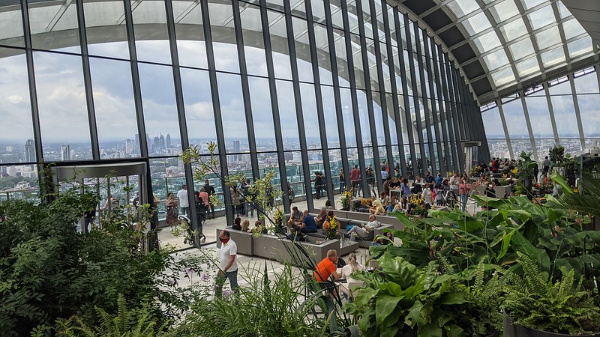
The Sky Garden in August, 2021. PICTURE: ian262 (licensed under CC BY-NC-ND 2.0)

While recent years have seen the creation of a number of roof gardens across London, the Sky Garden – located atop the controversial ‘Walkie Talkie’ building (otherwise known as 20 Fenchurch Street) – has the honour of being the highest public garden in the city.

The three floor garden, which was designed by landscape architecture practice Gillespie’s, opened in January, 2015.

Located on the 36th to 38th floors, it was designed to provide 360 degree views across London and features landscaped gardens, observation decks, an open air terrace (named for the late architectural townscape advisor Francis Golding) and five bars and restaurants.

The gardens include flowering plants such as the African Lily (Agapanthus), Red Hot Poker (Kniphofia) and Bird of Paradise (Strelitzia reginae) as well as fragrant herbs such as French Lavender.

WHERE: Sky Garden (via 1 Sky Garden Walk) (nearest Tube station is Monument); WHEN: 10am to 6pm weekdays; 11am to 9pm weekends; COST: Free (but rebooking required); WEBSITE: https://skygarden.london.

LondonLife – The annual weigh-in at London Zoo…

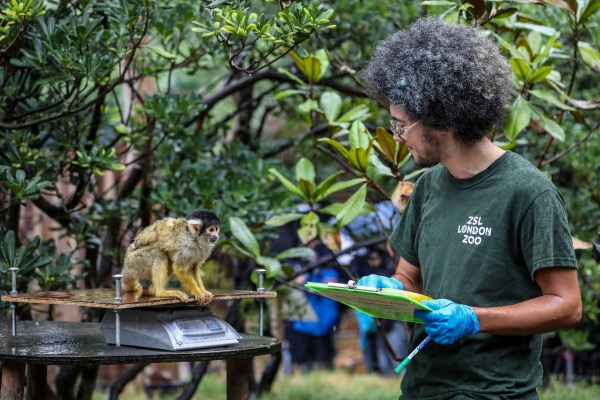
Squirrel monkey Winnie with keeper Rowan Swainson PICTURE: © ZSL London Zoo
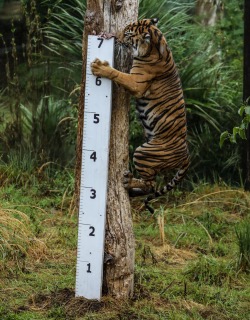
Sumatran tigress Gaysha climbs on giant ruler during annual weigh-in PICTURE: © ZSL London Zoo

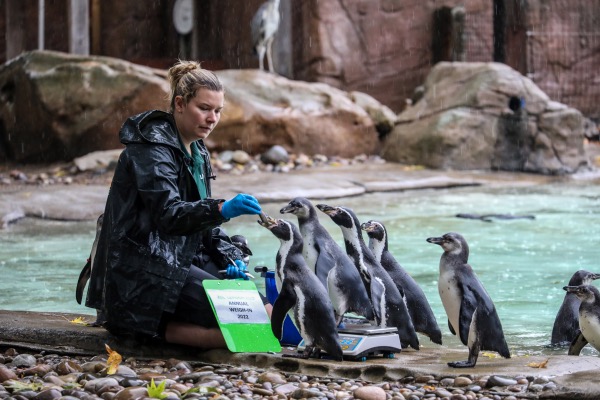
Squirrel monkeys, Sumatran tigers and Humboldt penguins were among the animals that had their statistics recorded at ZSL London Zoo’s 2022 annual weigh-in last week. With more than 14,000 animals in their care, ZSL London Zoo’s keepers spend hours throughout the year recording the up-to-date heights and weights of all the animals – information which helps them to monitor their health and wellbeing. The data is added to the Zoological Information Management System, a database shared with zoos all over the world that helps zookeepers to compare important information on thousands of endangered species.  “We record the vital statistics of every animal at the Zoo, from the tallest giraffe to the tiniest snail,” says Daniel Simmonds, deputy animal manager. “This helps to ensure that every animal we care for is healthy, eating well, and growing at the rate they should, as weight is a key indicator of health and wellbeing – a growing waistline can also help us to detect and monitor pregnancies, which is important as many of the species at ZSL London Zoo are endangered and part of international conservation breeding programmes, including today’s Sumatran tigers and Vietnamese giant snails.” Three Sumatran tiger cubs which were born at the zoo in June will be weighed next month at their first health check – which takes place at the age of three months.  For more, see www.zsl.org/zsl-london-zoo.

Humboldt penguin Bobby is weighed by keeper Jessica Jones PICTURE: © ZSL London Zoo

This Week in London – Celebrations as Museum of London marks final 100 days at London Wall; Ustad Alla Rakha’s tabla at British Museum; and, Lucian Freud in his grandfather’s home…

• The Museum of London is celebrating its final 100 days at London Wall on Friday with free ice creams and “goody bags” for visitors. The museum will be giving away 500 Lewis of London ice creams from 11:30am, while visitors will also enjoy a performance by Grand Union Orchestra at midday. The first 100 visitors through the doors will also receive a gift bag featuring Museum of London memorabilia, including a Museum of London guidebook, a pack of playing cards displaying iconic images from the museum’s collections, a greeting card featuring a print by artist Willkay, and a special gift of either a tea towel, a Vauxhall Pleasure Gardens mug, a sketch notebook, an A3 print of London or a soft toy. Meanwhile, from Friday, digital screens will display a countdown clock to mark the days left before the London Wall site closes to the public on 4th December, in preparation for the museum’s move to a new home at West Smithfield. Friday’s event is part of a six-month long programme of activities leading up to the closure of the site. For more, see www.museumoflondon.org.uk.

PICTURE: Courtesy of the British Museum

The tabla – twin hand drums – used by legendary Indian musician Ustad Alla Rakha during his European tours of the early 1980s is going on display at the British Museum in a world first. Ustad Alla Rakha was one of the most important and respected tabla players of his generation, working with the All India Radio in the 1930s, composing music for the film industry in the 40s, and regularly playing with world-renowned sitar player Ravi Shankar. The tabla will be on display in the Hotung Gallery until early 2023 after which they will go on loan to the Manchester Museum South Asia Gallery. For more, see www.britishmuseum.org.

Now on: Lucian Freud: The Painter and His Family. The first exhibition of Lucian Freud’s work at the Freud Museum, the home of his grandfather, Sigmund Freud, and aunt, Anna Freud, this display explores Lucian Freud’s childhood, family and friends and celebrates some lesser known aspects of his life including his love of reading and lifelong fascination with horses as well as his relationships with the former occupants of the building. Alongside paintings and drawings, the exhibition includes illustrated childhood letters, books Freud owned and book covers he designed. His sole surviving sculpture, Three-legged Horse (1937) and early painting, Palm Tree (1944), is also being displayed. The display is being accompanied by a programme of events. For more, see www.freud.org.uk.

Send all items for inclusion to exploringlondon@gmail.com.

10 unusual parks or gardens in London…8. Barbican Conservatory…

PICTURE: Matt Brown (licensed under CC BY 2.0)

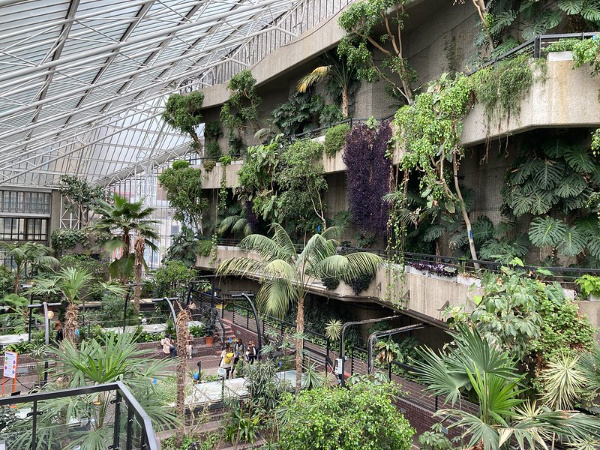
Located in the heart of the post-war Brutalist Barbican development is the second largest conservatory in London.

Designed by the complex’s architects Chamberlin, Powell and Bon, the 23,000 square foot steel and glass conservatory – only bested in size by the Princess of Wales Conservatory at Kew Gardens – was planted in the early 1980s and opened in 1984.

It now houses some 1,500 species of plants and trees from areas as diverse as the bushland of South Africa to the Brazilian coast.

Among the species on show are the tree fern and date palm as well as the Swiss cheese plant and coffee and ginger plants.

The conservatory also features pools containing koi, ghost, and grass carp from Japan and America, as well as other cold water fish such as roach, rudd, and tench and terrapins. An Arid House attached to the east of the conservatory features a collection of cacti, succulents and cymbidiums (cool house orchids).

The conservatory is just one of several distinct gardens at the Barbican complex. These include water gardens located in the midst of lake which feature a range of plants growing in the water itself as well as in a series of sunken pods which are reached by sunken walkways.

Since 1990 the estate has also been home to a wildlife garden which, boasting ponds, a meadow and orchard, is home to more than 300 species including the Lesser Stag Beetle and House Sparrow.

WHERE: The Barbican Conservatory, Barbican Centre, Silk Street (nearest Tube stations are Barbican, Farringdon and Liverpool Street; WHEN: Selected days, from 12pm (check website to book tickets); COST: Free; WEBSITE: www.barbican.org.uk/whats-on/2022/event/visit-the-conservatory.

LondonLife – Lonely vigil…

PICTURE: Laura Chouette/Unsplash

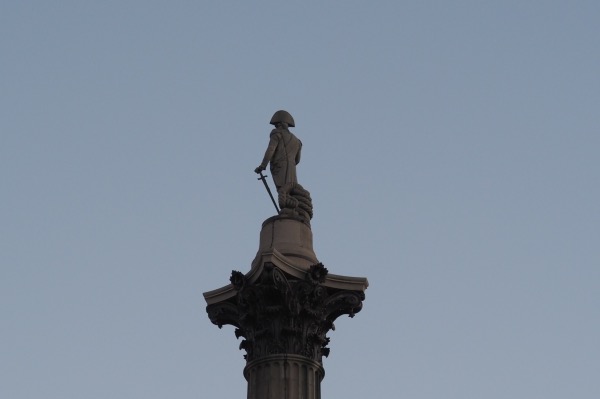
Nelson’s Column, Trafalgar Square.

London Explained – Livery companies…

The City of London is dotted with halls for the city’s livery companies. But ever wondered what they are?

There are 110 livery companies in the City, representing ancient and more modern trade associations and guilds, including everything from grocers to saddlers, ironmongers to musicians. The newest livery company is the Worshipful Company of Arts Scholars which was created in 2014.

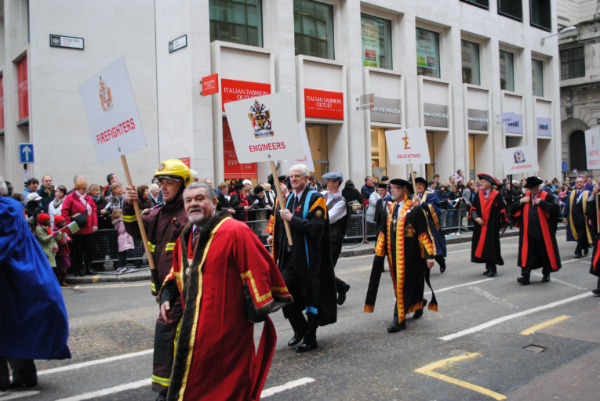
Members of livery companies taking part in the Lord Mayor’s Show. PICTURE: David Adams

Many of today’s livery companies have their origins in the city’s medieval guilds which were responsible for such things as regulating wages and conditions and setting industry standards (while many of these responsibilities have since passed to other bodies, some – such as the Worshipful Company of Gunmakers and the Worshipful Company of Goldsmiths – still play important roles in quality control).

These days the companies are also known for their support of the industries they represent and their philanthropic work.

Livery companies – many of which also traditionally had religious links – built halls as central meeting places – about 40 companies today still own or have a share in a hall.

Members of the livery companies (known as liverymen after the distinctive clothing or uniform they wore) – who are awarded the Freedom of the City of London – have the right to vote for senior offices in the City such as the Lord Mayor of London and sheriffs.

The livery companies of the City of London are listed in an “order of precedence” which was settled in 1515 for the 48 then in existence based on their political and economic power (the Worshipful Company of Mercers comes in at number one). All the companies created since then are ranked according to their date of creation.

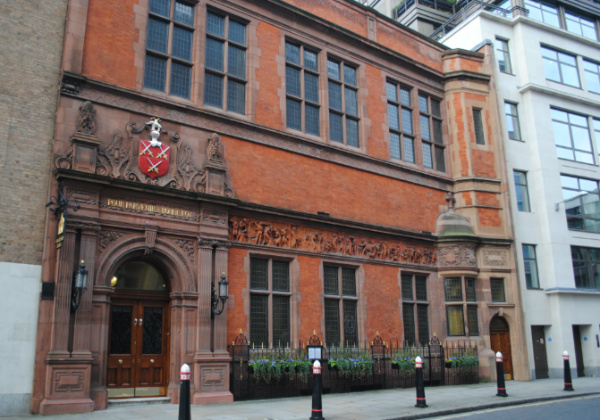
Hall of the Worshipful Company of Cutlers. PICTURE: David Adams

The 12 highest ranked companies are known as the Twelve Great City Livery Companies. Among them in the Worshipful Company of Merchant Taylors which disputes its position at number seven and so once a year at Easter swaps places with the Worshipful Company of Skinners at number six.

The oldest livery company is said to be the Worshipful Company of Weavers while the oldest livery company hall is that of the Worshipful Company of Apothecaries.

Treasures of London – Prior Bolton’s oriel window…

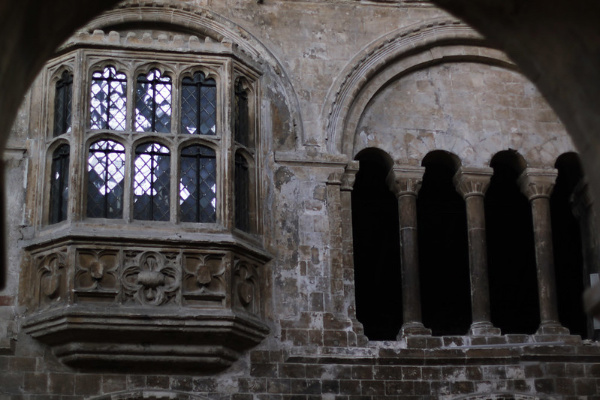
Prior Bolton’s oriel window (left) seen in the church. PICTURE: Kotomi_ (licensed under CC BY-NC 2.0)

This 500-year-old window is located inside the church of St Bartholomew the Great.

It was constructed on the orders of William Bolton who became prior of St Barts in 1505. Bolton, who was employed by both King Henry VII and King Henry VIII on various building projects including at Westminster Abbey and the Tower of London, also brought his love of construction to his role as prior and ordered the construction of a new lodging for himself to be built at the church’s eastern end.

A wooden gallery led from the first floor of the new lodging to the gallery of the church quire, where he had a private chapel. The oriel window, located in the chapel, gave a view of the quire, the high altar and the tomb of Rahere – the founder of the priory, located on the other side of the church (the window also enabled the prior to keep an eye on the monks!).

Bolton had his name recorded on the window in the form of a pictorial pun which shows a barrel or ‘tun’ pieced by a crossbow bolt (ie bolt-tun).

Bolton also had a door put through from the church to his new lodgings – it too can still be seen in the church.

WHERE: Off Little Britain, West Smithfield (nearest tube station is Barbican); WHEN: 10am to 5pm Monday to Saturday, 1pm to 5pm Sunday (plus services) ; COST: Free (but donations welcomed); WEBSITE: www.greatstbarts.com

This Week in London – ‘The World Reimagined’ sculpture trails, and Indian Nationalist honoured with Blue Plaque…

A series of free art trails featuring globe sculptures that aim to increase understanding of the Transatlantic slave trade and its impacts have gone on show in several parts of central London. A national art project which spans seven UK cities, The World Reimagined is designed to bring to life the reality and impact of the slave trade in a bid to help make racial justice a reality. Among the artists involved in London are the project’s founding artist British-Nigerian Yinka Shonibare (who also chose the form of the sculptures), Nicola Green and Winston Branch and each has created a work responding to themes ranging from ‘Mother Africa’ and ‘The Reality of Being Enslaved’ to ‘Still We Rise’ and ‘Expanding Soul’. There are four trails in London, including in the City in London, Camden-Westminster, Hackney-Newham and Southwark-Lambeth. More than 100 artists are involved in the project overall. For more including details on where to find the trails, see www.theworldreimagined.org.

Dadabhai Naoroji, an Indian Nationalist and the first Indian to win a popular election to Parliament in the UK, has been honoured with an English Heritage Blue Plaque at his former home in Penge. Known as the “grand old man of India” and described in his Times obituary as “the father of Indian Nationalism” following his death in 1917, Naoroji made seven trips to England and spent over three decades of his life in London, including at the red-bricked semi-detached house in Penge, south London, that was his home around the turn of the twentieth century and where the plaque is located. The plaque was unveiled last week ahead of the 75th anniversary celebrations of India’s independence. For more, see www.english-heritage.org.uk/visit/blue-plaques/.

Send all items for inclusion to exploringlondon@gmail.com

10 unusual parks or gardens in London…7. Natural History Museum’s Wildlife Garden…

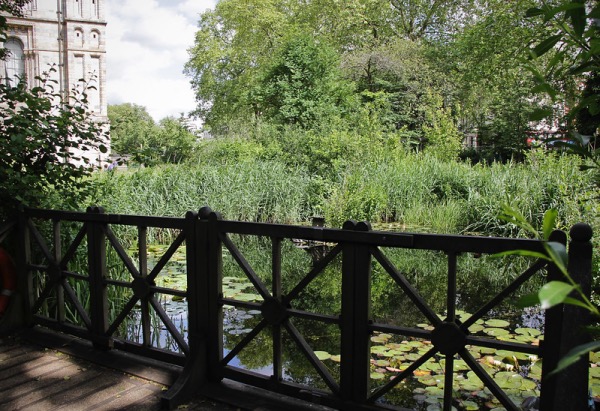
A scene from the Wildlife Garden. PICTURE: Kotomi_ (licensed under CC BY-NC 2.0)

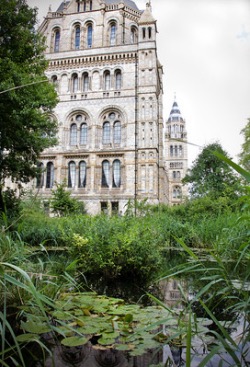
Opened in July, 1995, this garden in the grounds of the Natural History Museum in South Kensington has been found to be home to more than 3,300 species.

A scene from the Wildlife Garden. PICTURE: Kotomi_ (licensed under CC BY-NC 2.0)

The garden, located on the corner of Cromwell Road and Queen’s Gate, and covering a single acre, was envisaged as a “place to put habitat creation and wildlife conservation into practice”, according to the museum’s website, where visitors can learn about wildlife in the UK and where naturalists, students and museum scientists carry out research.

It features a variety of habitats –  everything from woodland, grassland, scrub, heath, fen, aquatic, reedbed, and hedgerow as well as urban environments – and among the species living there have been hedgehogs, common frogs, ladybirds (Rhyzobius forestieri) and Greyface Dartmoor sheep which are brought in to graze in the autumn.

‘Bioblitzes’ are held during the year by experts and amateurs which involve recording as many species of plants, animals and fungi as possible within a day.

Under the museum’s Urban Nature Project, all five acres of the grounds are being transformed into a fully accessible green space that promotes urban wildlife research, conservation and awareness and according to the museum, the Wildlife Garden will have an integral role to play in that with its overall size doubled (check before visiting to ensure it’s not closed for the renovation work). The new gardens will open next summer.

WHERE: Wildlife Garden, Natural History Museum, Cromwell Road, South Kensington (nearest Tube stations are South Kensington and Gloucester Road); WHEN: 11am to 5pm daily until 31st October (closed during wet weather); COST: Free; WEBSITE: www.nhm.ac.uk/visit/galleries-and-museum-map/wildlife-garden.html

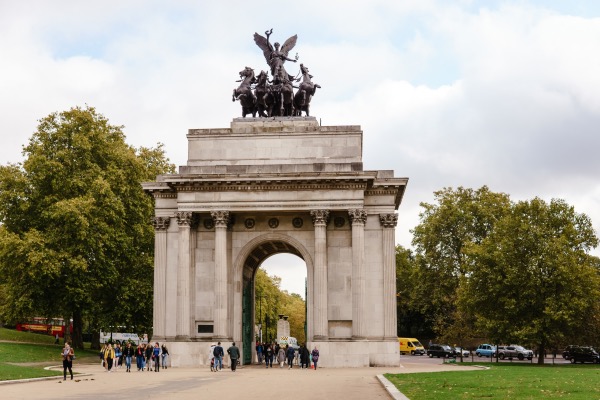
LondonLife – Wellington Arch…

Where’s London’s oldest…pharmacy?

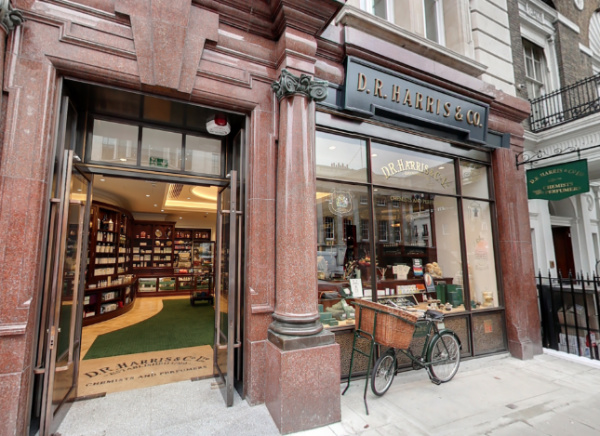
Founded as far back as 1790 and still serving customers today, DR Harris & Co Ltd is London’s oldest pharmacy.

The company, which specialises in “traditional gentleman’s grooming products” and these days also sells unisex haircare products, skincare products and soaps, first opened its doors when Henry Harris, a surgeon, set up shop at number 11 St James’s Street under the name of Harris’s Apothecary.

DR Harris and Co pictured in 2015. PICTURE: Courtesy of Google Maps.

The DR became part of the name when Harris’s cousin, Daniel Rotely, an early pharmaceutical chemist, joined the company and together they developed a range of luxury perfumes and remedies, becoming particularly known for their lavender water, colognes and English flower perfumes.

Located at the heart of what was known as “Clubland” thanks to the many gentlemen’s clubs once found in the surrounding streets, its clients quickly grew to include the gentry and the court of St James’s.

In 1938, the company was awarded the warrant as chemists to Queen Elizabeth, later the Queen Mother, an honour which it held until her death in 2002. In 2002, it was awarded the warrant as chemist for the Prince of Wales, and in 2012 was awarded the warrant as pharmacist and pharmacy suppliers to Queen Elizabeth II.

The company’s premises at what is now 29 St James’s Street was refurbished several years ago. For more, see www.drharris.co.uk.

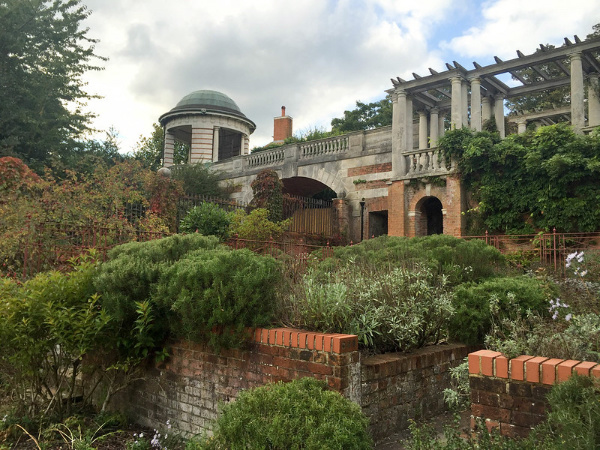
10 unusual parks or gardens in London…6. The Hill Garden and Pergola, Hampstead…

A view of the pergola. PICTURE: Kent Wang (licensed under CC BY-SA 3.0)

Tucked away in the north-west of Hampstead Heath is a Edwardian-era garden and extravagant pergola that were originally created for a mansion but are now open to the public.

The garden and pergola were created on the orders of the wealthy William H Lever, later Lord Leverhulme, who in 1904 purchased a sizeable Georgian townhouse on the Heath called “The Hill”. Remodelling the house extensively, Lever wanted to also create a garden where he could entertain and sought the help of renowned landscape architect Thomas Mawson to design one on what was steeply sloping land.

Mawson’s plan involved raising the level of the gardens by up to 30 feet and creating a series of terraces. This was made possible due in part to the close proximity of the Hampstead extension of the Northern Line of the Tube – Lever paid to have the spoil which had been dug out to make the Tube tunnels transported the short distance to his garden so it could be used to build it up.

An Italianate pergola was constructed on the boundary between 1905 and 1906, providing views over West Heath while at the same time preventing the general public from looking into the garden. The gardens and pergola were subsequently extended after he bought the neighbouring property in 1911 – the same year Lever was made a baronet – and again in with further works completed in 1925 just months before the now-Lord Leverhulme’s death.

A view of the pergola. PICTURE: Kent Wang (licensed under CC BY-SA 3.0)

The property was sold to Scots shipping magnate Lord Inverforth and, on his death in 1955, was bequeathed it to the private Manor House Hospital. Following a long period of neglect, London County Council bought the pergola and the gardens which had once been those of the neighbouring property, Heath Lodge, and opened them to the public in 1963 as the Hill Garden.

The City of London Corporation took over management with the abolition of the GLC in 1986 and restoration work was carried out. When the hospital closed in 1998 and the house was sold for luxury housing, further works were carried out and the public part of the gardens took on their current form.

WHERE: The Hill Garden and Pergola, Inverforth Close, North End Way, Hampstead (nearest Tube stations are Golders Green or Hampstead Heath); WHEN: 8:30am to 8pm daily; Daily; COST: Free; WEBSITE: www.cityoflondon.gov.uk/things-to-do/green-spaces/hampstead-heath/where-to-go-at-hampstead-heath/hill-garden-and-pergola.

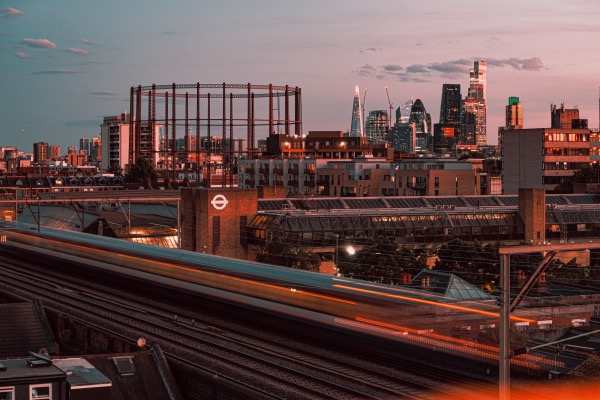
LondonLife – City skyline from Hackney…

PICTURE: Samuel Regan-Asante/Unsplash

A Moment in London’s History – The Great Fire of Southwark…

Think of fire in relation to London and the events of 1666 no doubt spring to mind. But London has had several other large fires in its history (with a much higher loss of life), including during the reign of King John in July, 1212.

The fire started in Southwark around 10th July and the blaze destroyed most of the buildings lining Borough High Street along with the church of St Mary Overie (also known as Our Lady of the Canons and now the site of Southwark Cathedral) before reaching London Bridge.

PICTURE: Guido Jansen/Unsplash

The wind carried embers across the river and ignited buildings on the northern end before the fire spread into the City of London itself (building on the bridge had been authorised by King John so the rents could be used to help pay for the bridge’s maintenance).

Many people died on the bridge after they – and those making their way south across the bridge to aid people in Southwark (or perhaps just to gawk) – were caught between the fires at either end, with some having apparently drowned after jumping off the bridge into the Thames (indeed, it’s said that some of the crews of boats sent to rescue them ended up drowning themselves after the vessels were overwhelmed).

Antiquarian John Stow, writing in the early 17th century, stated that more than 3,000 people died in the fire – leading some later writers to describe the disaster as “arguably the greatest tragedy London has ever seen”.

But many believe this figure is far too high for a population then estimated at some 50,000. The oldest surviving account of the fire – Liber de Antiquis Legibus (“Book of Ancient Laws”) which was written in 1274 and mentions the burning of St Mary Overie and the bridge, as well as the Chapel of St Thomas á Becket built upon it – doesn’t mention a death toll.

London Bridge itself survived the fire thanks to its recent stone construction but for some years afterward it was only partly usable. King John then raised additional taxes to help rebuild destroyed structures while the City’s first mayor, Henry Fitz Ailwyn, subsequently apparently joined with other officials in creating some regulations surrounding construction with fire safety in mind.

The cause of the fire remains unknown.

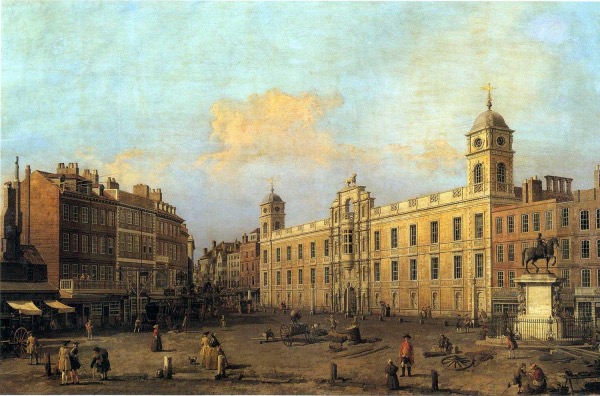
Lost London – Northumberland House…

London: Northumberland House painted by Canaletto in 1752.

Among a number of mansions built between the Strand and the River Thames, the property was built for Henry Howard, first Earl of Northampton, in about 1605.

Then known as Northampton House, the Jacobean mansion at Charing Cross was built on the site of a former convent (roughly located on the corner of the modern-day Northumberland Avenue and The Strand).

The property was built around a courtyard with turrets at each corners and had a great hall and apartments for the various members of the household. It featured a four-storey high stone gateway opening onto the Strand and a large garden at the rear but it didn’t apparently reach all the way down to the river unlike many of the neighbouring properties.

The house passed to the Earls of Suffolk and then in the 1640s was sold to Henry Percy, the 9th Earl of Northumberland, at the discounted price of £15,000, as part of a marriage settlement (hence the name change).

Various improvements were made over the years – including relocating the principal living rooms from the Strand side of the building to that facing onto the gardens and adding extra wings which protruded into the gardens.

In the 1770s, Robert Adam was commissioned to redecorate the state rooms on the garden front – the ‘Glass Drawing Room’ at Northumberland House was one of his most celebrated interiors. Shortly after this, part of the Strand front had to be rebuilt after a fire in 1780.

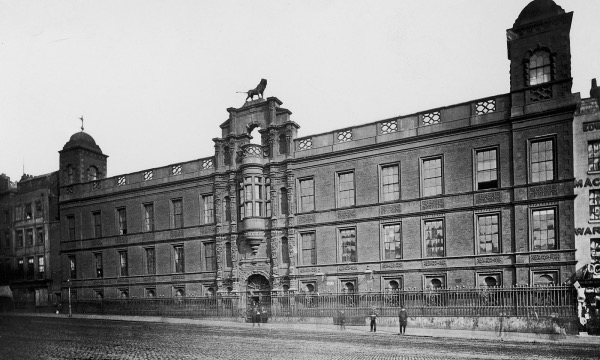
Northumberland House on the Strand, shortly before it was demolished in 1874. PICTURE: London Stereoscopic Company/Hulton Archive/Getty

By the mid-19th century, the mansions on The Strand had all been demolished and the Metropolitan Board of Works wished to acquire Northumberland House to construct a road across the site connecting The Strand to the Embankment.

The Duke of Northumberland resisted but after a fire substantially damaged the property, he agreed to sell which he did for £500,000 in 1874. The house was subsequently demolished and Northumberland Avenue built across the site.

A remnant from the property – a stone lion, known as the ‘Percy Lion’ – was taken from the property by the Duke in 1874 and placed atop Syon House, the Duke’s seat in London’s west. An archway from the property, designed by William Kent, is now the principal entrance to the Bromley by Bow Centre.

This Week in London – Natural History Museum unveils a new ‘Urban Nature Project’; BBC at 100; and, UK sculpture goes online…

The Natural History Museum’s five acre site in South Kensington will be transformed into a free-to-visit green space under a new project. The Urban Nature Project will feature new outdoor galleries telling the story of life on Earth from 540 million years ago to the present day as it follows an immersive timeline of plants, trees, reptiles, birds and mammals. Children will come face-to-face with a giant bronze diplodocus surrounded by plants from the Jurassic period. The garden will also be home to scientific sensors gathering environmental DNA and acoustic data, to monitor, understand and protect urban nature. You can find out more and donate at www.nhm.ac.uk/support-us/urban-nature-project/donate.html.

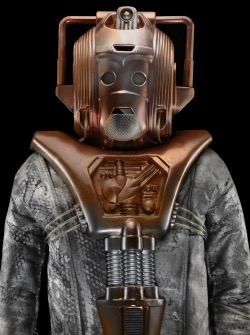
Cyberman costume as used in the T.V. series ‘Dr Who’ made by the BBC, London, c1988

• A new display exploring how the BBC developed and popularised new media has opened at the Science Museum in South Kensington. BBC at 100 features five iconic items from broadcast history that have influenced how we interact wth modern media platforms. They include a six foot tall 1988 Cyberman costume from Doctor Who, a World War II “Midget” Portable Disc Recorder developed to bring listeners close to the reality of conflict, and the BBC microcomputer developed during the Computer Literacy Project in the 1980s. The display, which is part of the Science Museum Group’s  Broadcast 100  activities marking the 100th anniversary of the BBC and the 40th anniversary of Channel 4, to free to visit. For more, see www.sciencemuseum.org.uk/see-and-do/bbc-100.

More than 36,000 sculptures on public display across the UK can be seen online. Art UK has photographed and digitised more than 13,500 outdoor sculptures as well as almost every sculpture inside public collections from the last 1,000 years. The project, which was funded with a £2.8million Heritage Fund grant and involved more than 500 photography and data volunteers, can be accessed at Art UK website

Send all items for inclusion to exploringlondon@gmail.com.

10 unusual parks or gardens in London…5. Tibetan Peace Garden, Imperial War Museum…

PICTURE: J Nathan Matias (licensed under CC BY-SA 2.0)

A fitting location for such a place of reflection, the Tibetan Peace Garden can be found near the Imperial War Museum in Kennington.

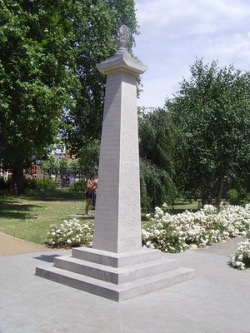
The Language Pillar. PICTURE: Robert (licensed under CC BY-SA 2.0)

The circular garden, located in Geraldine Mary Harmsworth Park, was commissioned by the London based Tibet Foundation and opened by the Dalai Lama in May, 1999. It was named ‘Samten Kyil’, which is Tibetan for ‘Garden of Contemplation’.

The garden features several sculptural elements carved from Portland stone. The work of sculptor, Hamish Horsley, they include The Language Pillar – based on the historic 9th century treaty stone known as Sho Pillar in the Potala Palace in Lhasa, Tibet – on which is carved a welcome message from the Dalai Lama in English, Tibetan, Chinese and Hindi.

There are also four “gateways” depicting the elements of air, fire, earth and water as well as a blue stone disk representing the fifth element of space. At the centre of the garden is a bronze cast depicting the Kalachakra Mandala which was designed by Tibetan monks in India.

The inner gardens are planted with herbs and plants from Tibet and the Himalayan regions, while the pergola is covered with climbing plants, including jasmine, honeysuckle and scented roses.

WHERE: Tibetan Peace Garden, Geraldine Mary Harmsworth Park, St George’s Road (nearest Tube stations are Lambeth North and Elephant & Castle); WHEN: Daily; COST: Free; WEBSITE: www.southwark.gov.uk/parks-and-open-spaces/parks/geraldine-mary-harmsworth-park.

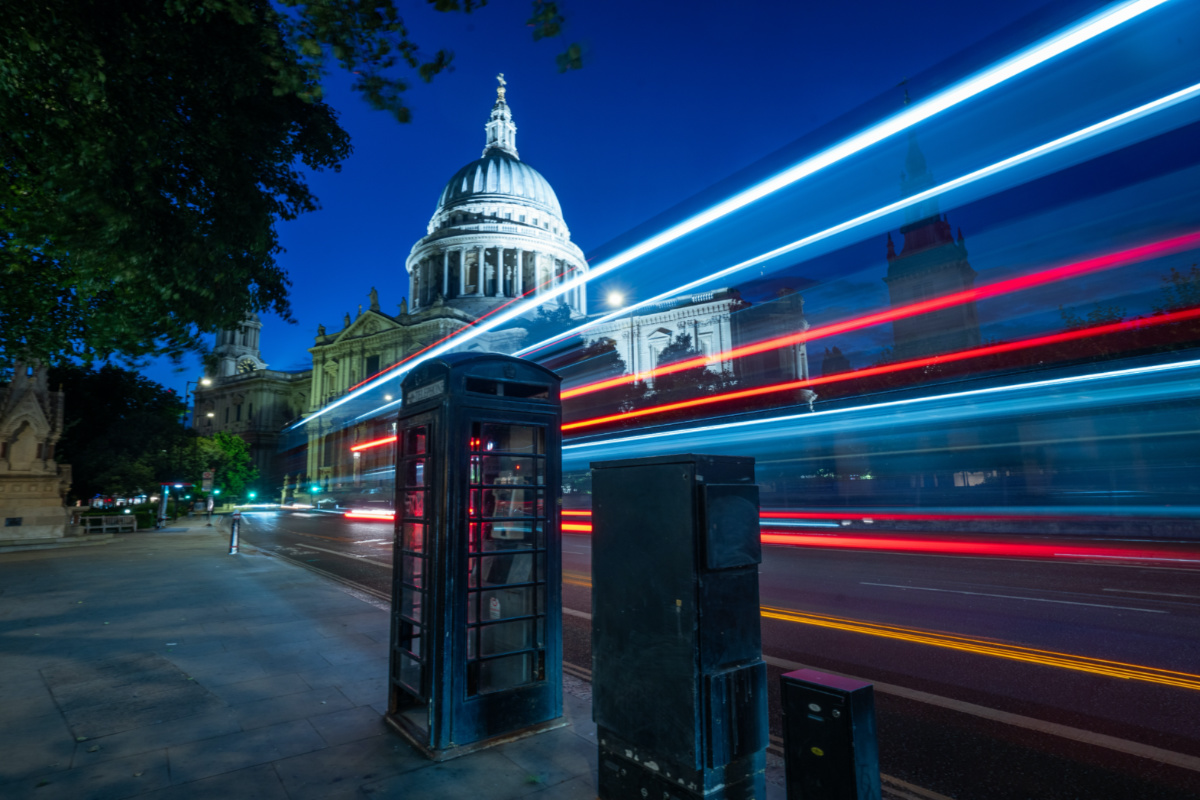
LondonLife – Light trails by St Paul’s…

PICTURE: Jason Hudson/Unsplash

London Pub Signs – The Admiral Vernon, Dagenham…

The Admiral Vernon in Dagenham. PICTURE: Via Google Maps

This inter-war estate pub – which was recently added to the National Heritage List for England – is named for an 18th century British Navy admiral who is perhaps best remembered today for watering down his men’s ration rum to create what become known as ‘grog’ (apparently after his nickname).

Designed in the then-popular ‘Brewers’ Tudor-style, the pub was among several built by London’s Courage Brewery to serve the Beacontree Estate and the wood-panelled interior remains much as did when it first opened in 1939. The “almost intact” 1930s interior includes public and saloon bars, and publican’s offices behind the counter.

Admiral Edward Vernon had a long and distinguished naval career, first promoted to captain in 1706 and going on to serve as a vice-admiral during the War of Jenkin’s Ear between Britain and Spain (1739-48) – during which he famously captured the Spanish colonial possession of Porto Bello (after which the London district of Portobello is named). Promoted to the rank of admiral in 1745, he was appointed to command the North Sea Fleet during the Jacobite rebellion. Vernon, who also served as an MP, was cashiered out of the navy in 1746 in controversial circumstances after he published two pamphlets about his disagreements with the Admiralty.

Vernon’s nickname of “Old Grog” apparently came from his habit of wearing a grogram coat (grogram was coarse, loosely woven fabric of silk, silk and mohair, or silk and wool). In 1740 he ordered that his men’s rum be diluted with water and it duly became known as ‘grog’ after him.

The pub, which is located at 141 Broad Street, is Grade II heritage listed (the pub sign at the front is now empty – the name appears on the front facade). For more, see www.facebook.com/192074204220830.