 Wishing you all the best for a wonderful Christmas!
PICTURE: Rodolfo Marques/Unsplash
Wishing you all the best for a wonderful Christmas!
PICTURE: Rodolfo Marques/Unsplash
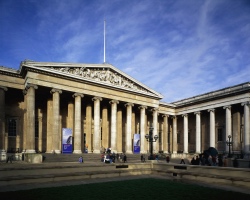 • The renovated Sir Joseph Hotung Gallery of China and South Asia has reopened at the British Museum, bringing the displays for China and South Asia up-to-date. The gallery presents the histories of China from 5000BC to the present with objects on show including Ming dynasty dragon tiles and the earliest scroll to reach Britain (it arrived at the end of the 18th century). The South Asia exhibition, meanwhile, includes a new display covering the Mughal period, the Rajput rulers, India under British rule and the region since independence in 1947. Featured objects include the stone sculptures from the Buddhist shrine at Amaravati and newly acquired works of art including a 6th century sculpture of Lakshmi from Kashmir. Entry to the gallery in Room 33 is free. For more, see www.britishmuseum.org. PICTURE: Courtesy of British Museum.
• Historic letters sent between the City of London and the United States of America during the American War of Independence have gone on show at the City of London’s Heritage Gallery within the Guildhall Art Gallery. The letters include some authored by notable Americans John Hancock and Isaac Roosevelt, written at a time when, in defiance of the British Government, the City championed the cause of the colonists. Also on show are documents relating to the life and work of Elizabeth Garrett Anderson – the first women to qualify as a surgeon and physician in Britain and to serve as a magistrate and mayor – and, in a nod to the approaching centenary of the Royal Air Force, a display on the career of World War II pilot Cy Grant. The documents, which are all drawn from the collection of the London Metropolitan Archives, can be seen until 18th April. For more, follow this link.
• Two major new works have been opened in the Tanks at the Tate Modern. Emeka Ogboh’s, The Way Earthly Things Are Going 2017 – on display for the first time in the UK after debuting in Athens – fills the subterranean East Tank in the Blavatnik Building while Indian artist Amar Kanwar’s The Lightning Testimonies 2007 can be seen in the South Tank. Both works are on display until 4th February. For more, see www.tate.org.uk.
Send all items for inclusion to exploringlondon@gmail.com.
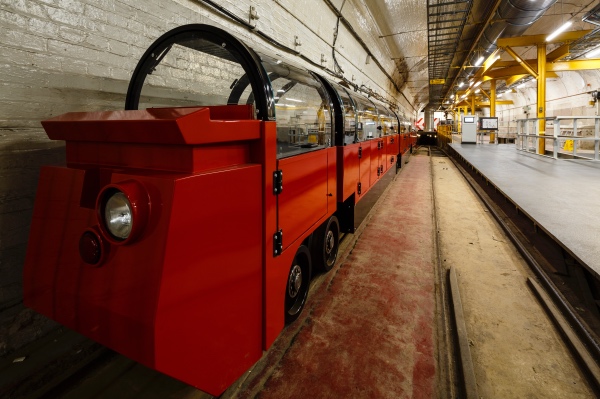
Long out of active service, London’s Mail Rail service has recently made a comeback as a tourist attraction (which means you can now experience it for yourself!)
The Mail Rail – more officially known as the London Post Office Railway – was initially opened in 1927 as a more efficient means of moving the mail than fighting traffic congestion above ground.
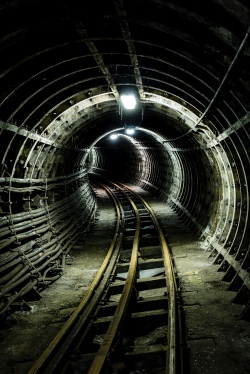 The six-and-a-half mile (10.5 kilometre) route linked the Paddington sorting office in the west, the centrally located Mount Pleasant sorting office and depot, and the Whitechapel sorting office in the east. The main tunnel sits at about 21 metres underground.
The system operated for 22 hours a day and hauled tons of mail through up to nine stations. There were even plans to extend it to the north and the south.
The Mail Rail was eventually closed in 2003 with the Royal Mail, rather ironically given its origins, apparently citing the costs of using it compared to road transport.
These days, the Mail Rail serves as one of the attractions at the new Postal Museum and, located in the former engineering depot, offers a 20 minute ride through stalactite-filled tunnels beneath what was the Mount Pleasant sorting office.
WHERE: Mail Rail at The Postal Museum, 15-20 Phoenix Place, Mount Pleasant, Clerkenwell (nearest Tube stations are Chancery Lane and Russell Square); WHEN: 10am to 5pm daily (except from 24th to 26th December) COST: £16 adult/£14.30 concession/£8 child (includes donation/timed ride on Mail Rail and general admission to exhibition); WEBSITE: www.postalmuseum.org/discover/attractions/mail-rail-ride/.
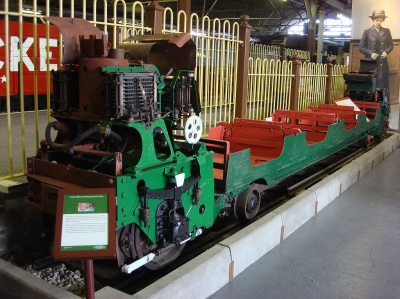
PICTURES: Above and right – The Mail Rail as it is today; and a curve in the tracks (© Postal Museum); Below – London Post Office Railway cars from 1930, now at the Buckinghamshire Railway Centre (Oxyman/licensed under CC BY-SA 3.0)

Reflections at Trafalgar Square. PICTURE: Raphaël Chekroun (licensed under CC BY-ND 2.0).

Carnaby Street ‘Carnival’. PICTURE: Kevin Oliver (licensed under CC BY-NC-ND 2.0) (image cropped).

Flying high in the West End. PICTURE: Maureen Barlin (licensed under CC BY-NC-ND 2.0).

Thrills at Winter Wonderland in Hyde Park. PICTURE: Kevin Oliver (licensed under CC BY-NC-ND 2.0).
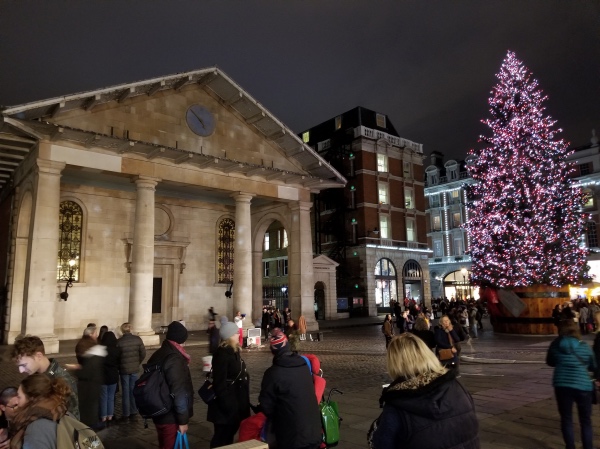
Outside St Paul’s at Covent Garden. PICTURE: Kevin Oliver (licensed under CC BY-NC-ND 2.0).
No prizes here for guessing that this pub owes its name to the long serving 19th century monarch, Queen Victoria.
There’s apparently a story that the Queen stopped off here on her way to Paddington Station and that, as a result, the pub was named in her honour.
 Whatever the truth of that, the now Grade II-listed pub – located at 10a Strathearn Place (on the corner with Surrey Place) – was apparently built in 1838 – the first year if Victoria’s reign (and possibly a more valid reason for its name) and remodelled around the turn of the 20th century.
It features a luxuriously decorated interior with fireplaces, mirrors, and an original counter as well as paintings of the Queen, Prince Albert and their family.
The upstairs Theatre Bar features decorative elements taken from the former Gaiety Theatre which were installed in the late 1950s.
The pub, which was apparently patronised by the likes of author Charles Dickens (he is said to have written some of Our Mutual Friend here), Sir Winston Churchill and Charlie Chaplin as well as David Bowie – who did a live performance when launching an EP here in the 1960s.
It’s also been associated with more recent celebs like musicians Ronnie Wood and Liam Gallagher, artist Damien First and actor Keira Knightley.
There’s also a story that in 1960s one of the paintings on the walls was found to be a valuable portrait of a member of the Royal Family. It’s now apparently in the Royal Collection.
The pub is now part of the Fuller’s group – and has twice won their ‘Pub of the Year’ award. For more, see www.victoriapaddington.co.uk.
PICTURE: Ewan Munro (licensed under CC BY-SA 2.0)
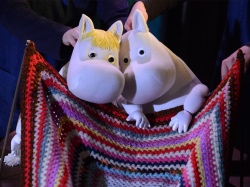 • Dulwich Picture Gallery is hosting a ‘Moomin Winter Weekend’ in a celebration of its current exhibition featuring the works of Tove Jansson. The programme, which kicks of Friday night with a late opening, features storytellers and performers reading the Moomin stories, puppets from the Polka Theatre’s 2014 production Moominsummer Madness, a live performance by the Freshwater Theatre Company exploring the life and work of Jansson, and Moomin-inspired food and drink. Admission charges apply. For more information, see www.dulwichpicturegallery.org.uk.
• Four 17th and early 18th century Dutch and Flemish paintings have gone on show at The National Gallery, thanks to a bequest from the late Dutch-born collector Willem Baron van Dedem. The works include David Teniers the Younger’s Christ crowned with Thorns (1641), Jan van Kessel the Elder’s Butterflies, Moths and Insects with Sprays of Common Hawthorn and Forget-Me-Not, and Butterflies and Moths and Insects with Sprays of Creeping Thistle and Borage (both 1654, they represent the first of van Kessel the Elder’s works in the gallery’s collection), along with Still Life with a Bowl of Strawberries, a Spray of Gooseberries, Asparagus and a Plum by Adriaen Coorte (1703). They have gone on show in Room 26. For more on the gallery, see www.nationalgallery.org.uk.
• On Now – Christmas Past at the Geffrye Museum. The Shoreditch-based ‘Museum of the Home’ is once again running its annual look at how Christmas has been celebrated in English homes over the past 400 years. There’s also a range of accompanying events including fairs, late nights, carol concerts, and decoration and greenery workshops as well as seasonal food and drink. Runs until 7th January. Meanwhile, on 6th and 7th January, the museum will host a special weekend closing party as the doors shut for two years while it undergoes a transformational redevelopment. For more, see www.geffrye-museum.org.uk.
Send all items for inclusion to exploringlondon@gmail.com.
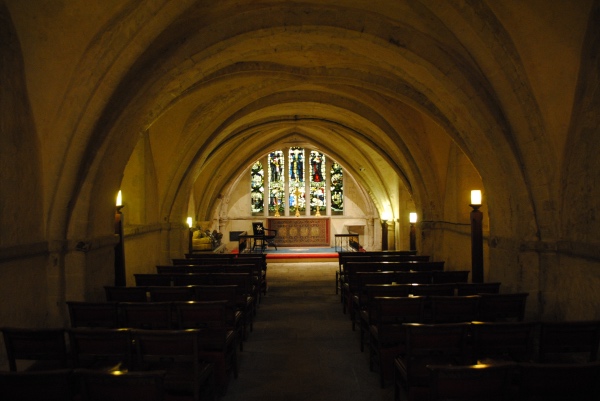
More correctly known as the crypt of the Priory of the Order of St John of Jerusalem, this subterranean chamber dates from the 12th century and is the oldest surviving part of what remains of the priory.
Based close to St John’s Gate in Clerkenwell – another surviving section of the monastery, the partly Romanesque crypt features some magnificent 16th century monuments including the rather skeletal-looking funeral effigy of the last prior, Sir William Weston, who apparently died on the very day the priory was dissolved in May, 1540 (he apparently collapsed on hearing the news).
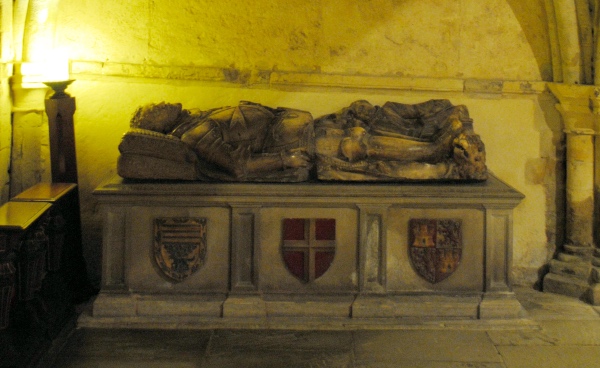
The crypt also contains a 16th century tomb effigy (pictured below) believed to be that of Don Juan Ruiz de Vergara, a Castilian Knight Hospitaller who died fighting the Turks at sea off the coast of Marseilles (it had apparently formerly been located in Valladolid Cathedral in Spain and was donated by a member of the order (and first Keeper of the London Museum, now known as the Museum of London), Sir Guy Francis Laking, in 1915). Understood to have been the work of Esteban Jordan, sculptor to King Philip II of Spain, the knight bears the eight pointed star of the order on his breastplate.
Meanwhile, the stained glass in the crypt chapel’s east lights depict the entombment of Christ as well as Raymond du Puy (Grand Master of the Order of St John from 1118–60), St John the Baptist and St Ubaldesca. Other stained glass windows in the chapel depict saints like St George, Andrew, Patrick and David and some of the English branch’s priors and knights.
Other items of interest in the crypt include a 13th century font, originally from a church in Buckinghamshire, and a stone fragment from the pavement of the Grotto of the Nativity at Bethlehem.
The priory once served as the English headquarters for Order of St John of Jerusalem, also known as the Knights Hospitaller. The order was founded in Jerusalem in 1080 to care for the sick and poor, and spread across Europe. The English ‘branch’ established on 10 acres just outside the City walls apparently by a knight, Jorden de Briset. It was dissolved, as we’ve already heard, in 1540.
WHERE: Crypt, St John’s Church, St John’s Lane, Clerkenwell (nearest Tube stations is Farringdon); WHEN: The crypt can only be visited on tours – public tours are held at 11am and 2.30pm on Tuesday, Friday and Saturday; COST: Free (a suggested £5 donation); WEBSITE: www.museumstjohn.org.uk.
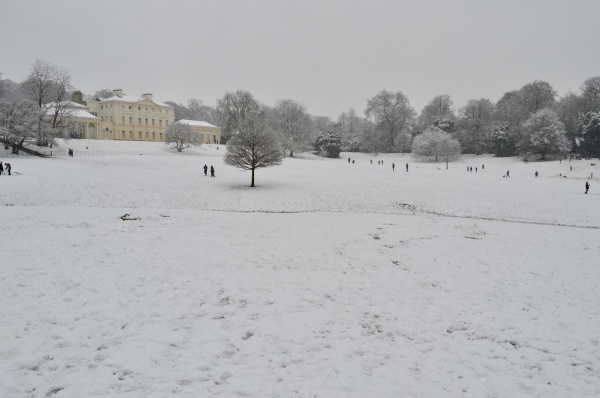
Snow at Kenwood House near Hampstead Heath. PICTURE: Ashley Coates (licensed under CC BY-SA 2.0)
OK, so infamous may be a better label but the journey of Scrooge – the star of Charles Dickens’ A Christmas Carol, is one of redemption.
Christmas is almost upon us so we thought he was an appropriate figure to look at for our Famous Londoners series this week (and yes, we know he’s a fictional figure!)
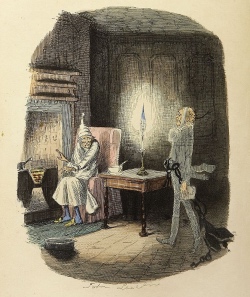 Scrooge, who first appeared in 1843 when Dickens’ novel was published, runs a London-based counting-house and subjects his clerk, the hapless Bob Cratchit, to a gruelling workload on low pay (even complaining about him having Christmas Day off).
Refusing to give anything for the relief of the poor, the incorrigible Scrooge retires for Christmas Eve and is subsequently visited by the ghost of his former business partner, Jacob Marley, who thanks to his own greed and lack of charity is damned to wander the Earth for eternity. Marley then warns Scrooge that he risks the same fate and that, in a final chance for redemption, he will be visited by three spirits of Christmas – past, present and yet-to-come.
It’s not giving too much away to say that Scrooge, then experiencing these visions, repents and becomes a model of love and generosity, offering his help and support to Bob Cratchit and his family – particularly his ailing son, Tiny Tim (one of the best versions of the story is that of The Muppet Christmas Carol!)
There’s been much speculation over the years who was Dickens’ inspiration for the character with possible subjects including Edinburgh banker Ebenezer Lennox Scroggie, the theory being that while in the Scottish city to deliver a lecture on 1841, Dickens misread Scroggie’s gravestone as being a “mean man” instead of a “meal man” (corn merchant).
Another theory says the character was based on John Elwes, born as John Meggot in 1714, who was noted for his miserliness. He apparently preferred, despite inheriting a fortune, to spend his nights in the kitchen with the servants so he didn’t have to light a fire in another room (although perhaps he just preferred their company), refused to pay for the maintenance on his house, dressed in ragged clothes and ate rotten food. Such was his thriftiness that Elwes, who was elected MP for Berkshire in 1772, apparently left some £500,000 to his two sons when he died in 1789.
As to where Scrooge’s counting house was located? The book never precisely locates it but there’s a few clues including that Bob Cratchit went on an ice slide in Cornhill, in the City of London, when making his way from work to his home in Camden and that Scrooge’s business was near a church tower. These two pieces of evidence have led some to place it alongside the church of St Michael’s, Cornhill, in Newman’s Court. Scrooge’s house, meanwhile, lies not too far away and is also close to a church leading some to place it at 45 Lime Street (now the home of Lloyds).
PICTURE: Marley’s ghost visits Scrooge in an original illustration by John Leech.
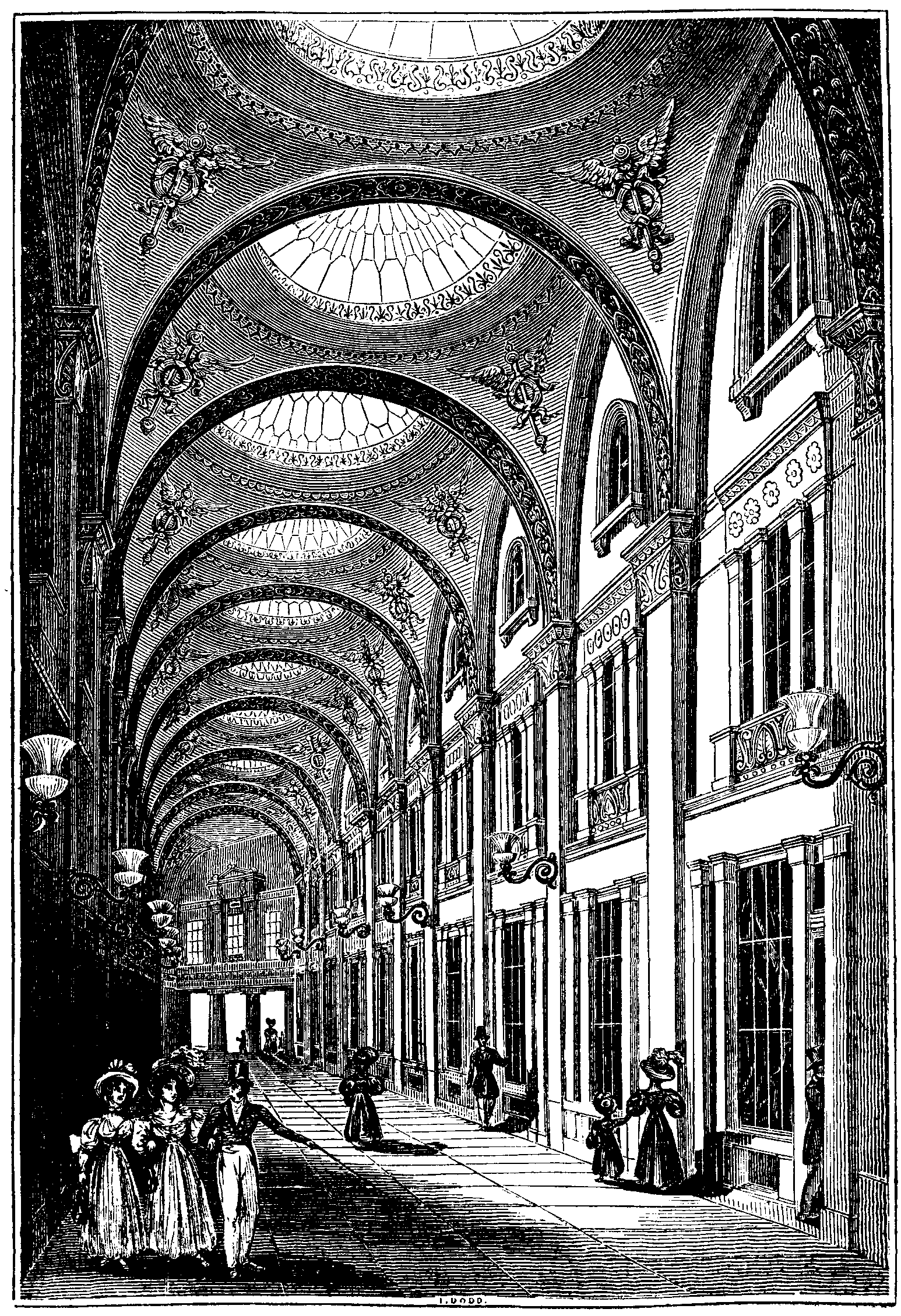 Designed by Witherdon Young, this 24 metre long arcade on the Strand was built in 1830 and was famously topped with glass domes.
Named after Lord Lowther, Chief Commissioner of the Woods and Forests, when this section of the Strand was improved, the arcade’s 24 small shops initially sold luxury goods and various items but by the mid 19th century they were nearly all toyshops, making this a popular place for children (and particularly so, one might assume, at Christmas time!).
The northern part of the arcade was initially home to the Adelaide Gallery, described as a “National Gallery of Practical Science, Blending Instructions with Amusements” – this part of the building later became an amusement hall and then a puppet theatre.
The arcade was demolished in 1904 to make way for the construction of Coutts Bank.
PICTURE: Lowther Arcade as seen in an engraving published in a periodical in 1832.
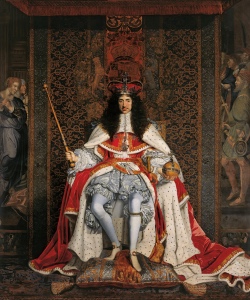 • A new exhibition celebrating the role of the court of King Charles II in promoting the arts in England has opened at The Queen’s Gallery in Buckingham Palace. Charles II: Art and Power highlights the key role Charles II played in developing the Royal Collection following the Restoration in 1660 as a means of decorating royal apartments and, perhaps more importantly, of glorifying the restored monarchy and helping it to take its place back on the European stage. The display features works ranging from John Michael Wright’s monumental portrait of the king in coronation robes (pictured) to Henry Greenway’s silver-gilt dish that adorned the high altar of Westminster Abbey and Wenceslaus Hollar’s The Coronation of King Charles the II in Westminster Abby the 23 of April 1661. Other paintings on show include Titian’s Madonna and Child in a Landscape with Tobias and the Angel (c1535-40), Antonio Verrio’s The Sea Triumph of Charles II (c1674), Pieter Brugel the Elder’s The Massacre of the Innocents (c1565-67), and Sir Peter Lely’s Barbara Villiers, Duchess of Cleveland (c 1665) as well as tapestries and silver-gilt furnishings. The exhibition, which will be accompanied by a major exhibition in the Royal Academy of Arts in January and a series of documentaries on various BBC channels under the banner of a BBC Royal Collection Season, runs until 13th May. Admission charge applies. For more, see www.royalcollection.org.uk. PICTURE: John Michael Wright, Charles II, c.1676 Royal Collection Trust/© Her Majesty Queen Elizabeth II 2017.
• The lives of convicts in 18th and 19th century London are the subject of a new exhibition opening at the London Metropolitan Archives. Criminal Lives, 1780-1925: Punishing Old Bailey Convicts includes original documents from the Old Bailey archives and items such as a policeman’s truncheon, a reproduction Millbank Prison uniform and convicts’ photographs drawn from collections in Britain and Australia to provide insights into the lives of offenders, from the time of the Gordan Riots in 1760 to the early 20th century. Among those whose lives are featured are prostitute and pickpocket Charlotte Walker, notorious receiver of stolen goods Ikey Solomons and serial thief Thomas Limpus. The exhibition, created in collaboration with the Arts and Humanities Research Council Digital Panopticon Project, opens on Monday and runs until 16th May. Admission is free. There is an accompanying programme of events. For more, see www.cityoflondon.gov.uk/lma.
• The National Gallery is running a season of events aimed at exploring the theme of ‘gold’ in its collection in the run-up to Christmas. Running until 1st January, the programme includes free lunchtime talks, a life drawing session this Friday, a workshop on the traditional intaglio printmaking technique of drypoint, drawing sessions and a series of films. For the full season of events, check out www.nationalgallery.org.uk/whats-on/christmas-at-the-gallery/christmas-events.
Send all items for inclusion to exploringlondon@gmail.com.
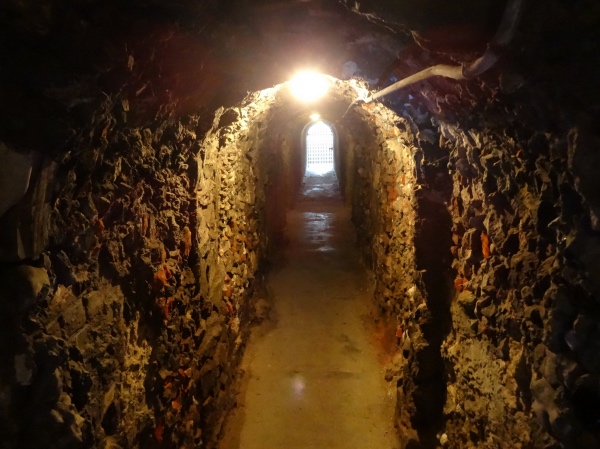 Built by poet Alexander Pope (and something of an obsession during his later life) is the grotto and tunnel that he had constructed at his property on the banks of the Thames at Twickenham.
Pope came to live in what was then the fashionable retreat of Twickenham in 1719 and employed architect James Gibbs to create a small Palladian style villa there, living in it until his death in 1744. He also obtained a licence to tunnel beneath the road known as Cross Deep and leased about five acres of unenclosed land on the other side which he developed as his garden – a project he lavished great attention upon.
His first grotto was established in the cellars which stood at ground level facing the river and then extended along the tunnel from the rear of the cellars, leading to a misapprehension, promoted by no other than Dr Samuel Johnson, that the grotto lay under the road. Pope, who had apparently been delighted to find a spring in his grotto complex, opened his gardens to the public in 1736.
Inspired by what he found when visiting Hotwell Spa at the base of Avon Gorge in 1739, he decided to redesign the grotto as a museum of mineralogy and mining and while much material – including a stalagmite from Wookey Hole in Somerset and hexagonal basalt joints from the Giant’s Causeway in Northern Ireland (the latter a gift, apparently, from Sir Hans Sloane) – was put into the walls, the grotto was never completed.
The grotto and tunnel is now all that remains of the villa Pope built which was demolished in 1808. What survives of it is located within the grounds of Radnor House School.
The grotto is generally open only briefly during the year including during the Twickenham Festival. An effort continues to have the grotto restored and public access increased. For more details on the restoration project and when the grotto can be visited, see www.popesgrotto.org.uk.
PICTURE: verdurin (licensed under CC BY-SA 2.0)

Be dazzled by more than a million twinkling lights at the enchanted wonderland that is Kew Gardens this Christmas.
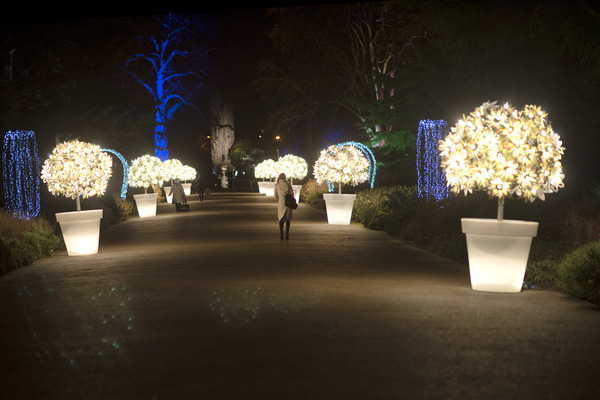
The Royal Botanic Gardens in London’s west have once again teamed up with entertainment promoter Raymond Gubbay Ltd to create a brand new illuminated trail. It starts with a path lit by hundreds of illuminated globes winding through trees festooned with silvery shards of light, snowflakes and stars and includes attractions such as an enormous glowing ‘Sledge Tree’ – made from more than 360 wooden Santa sledges, and a chorus of ‘Singing Trees’.
Other artistic installations along the trail include an ultraviolet walkway of thousands of continuously moving bubbles (created by Between Art and Technology (BAT) Studio), an enchanted promenade of hundreds of huge glowing peonies, giant grasses and coloured reeds (the work of French art studio TILT), and a host of giant trees, made from thousands of colourful, sparkling flowers complete with holographic petals (creative studio PITAYA) located along the Great Broad Walk Borders (included in the trail for the first time).
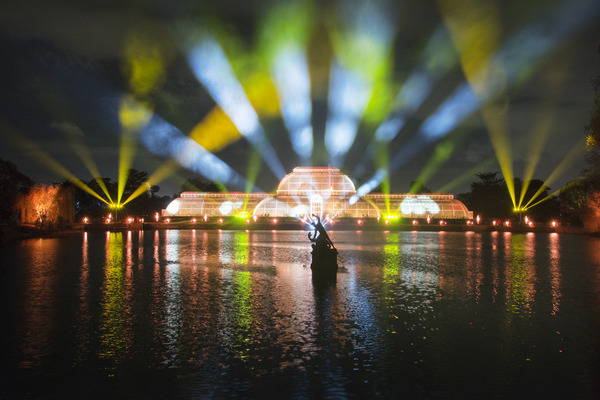
The fire garden has also returned – this year as a corridor of intricate pulsing fire sculptures and rotating lantern-lit Christmas trees – as has the Palm House finale in which the pond and glasshouse spring to life in an explosion of laser beams, jumping jets of light and kaleidoscopic projections playing across a giant water screen.
And, of course, there’s roasted chestnuts, mulled cider and Santa and his elves as well as a festive fairground and other food and drink. Open between 5pm and 10pm (timed entries between 5pm and 7.40pm), the after dark event runs until 1st January. Admission charges apply. For more, see www.kew.org.
PICTURES: Above – A sea of illuminated globes by the Palm House / Below (top to bottom) – 1. Giant glowing trees along The Great Broad Walk Borders; 2. Animated illuminations at Kew’s lake; 3. Giant peonies; 4.Palm House Grand Finale. ALL PHOTOGRAPHY © Jeff Eden/RBG Kew.


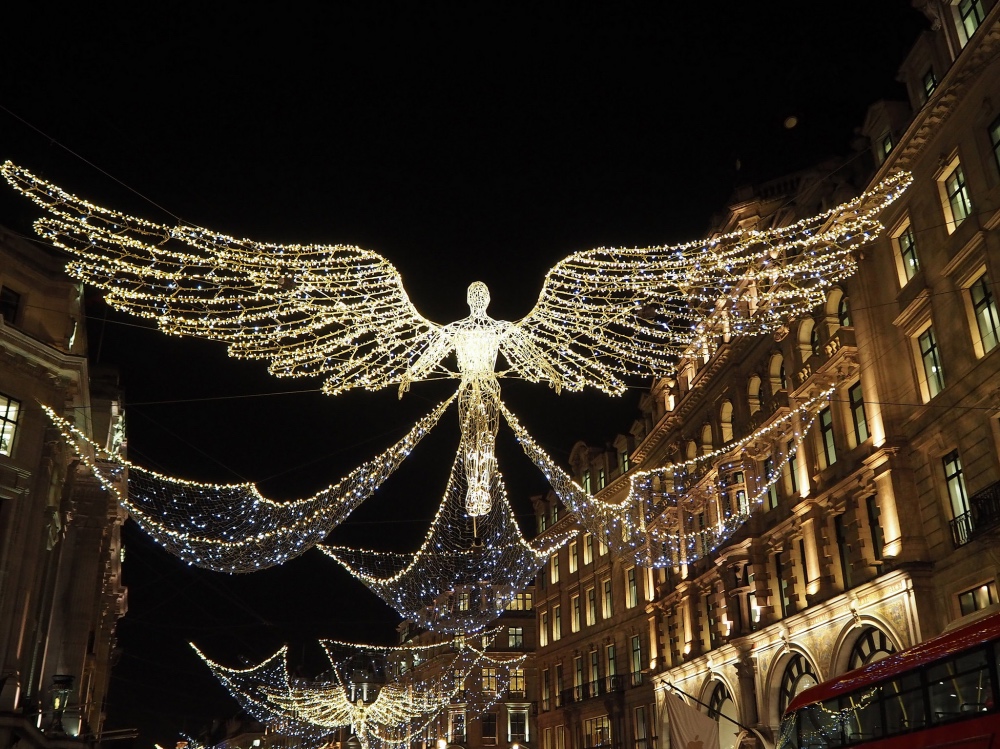
Christmas is looming so we thought we’d take a look at which street in London’s West End has had Christmas lights for the longest. And, no surprises, it’s Regent Street which first lit up in 1954.
Apparently prompted by a newspaper article decrying the drabness of London’s streets at Christmas, local traders got together and, via the Regent Street Association, financed the first display. Oxford Street followed in 1959.
An economic downturn meant Regent Street’s lights (and those of Oxford Street) were turned off for almost a decade but the display was resumed in 1979 and have been a part of London’s Christmases ever since.
These days the Regent Street lights are generally geared around a theme and the ceremony at which they are officially turned on has become quite an affair with celebrities performing the honours. This year singer Paloma Faith was the special guest at the ceremony with the aid of Clean Bandit.
The decorations, switched on in mid-November and featuring 300,000 LED lights, are based around “The Spirit of Christmas” theme for the second year in a row.
PICTURED: Last year’s light display/Ungry Young Man (licensed under CC BY 2.0).
Christmas is looming and that means Christmas themed events are kicking off all over the city. Here’s a sample of what’s happening:
• The world famous Trafalgar Square Christmas Tree will be lit next Thursday – 7th December – in an event that kicks off at 6pm. The 25 metre high tree is an annual gift from the people of Norway as a thank you for Britain’s support during World War II. Christmas carols will kick off in the square on 11th December while the Mayor’s Christmas Carol Service will be held in Southwark Cathedral on 18th December. For more, see www.london.gov.uk/events.
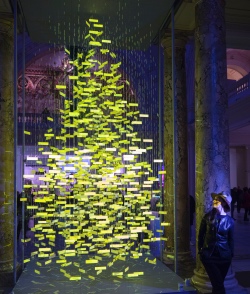 • Sounds Like Christmas at the V&A. A month long musical celebration across the museum’s South Kensington and Museum of Childhood sites, it features choirs, candlelit concerts, pop-up performances, film screenings, decoration-making workshops, and special installations of objects relating to the music of Christmas, as well as, at the grand entrance to the South Kensington site, ‘The Singing Tree’ (pictured). A project conceived by leading stage designer Es Devlin, the tree features digital word projections that create a poem and comes with a layered polyphonic soundscape of human and machine-generated voices. The season runs until 6th January. For the full programme, see www.vam.ac.uk/Christmas. PICTURE: © Victoria and Albert Museum, London.
• Greenwich Winter Time Festival. The inaugural festival, set in the grounds of the World Heritage-listed Old Royal Naval College, kicks off in December and features an alternative to the traditional seasonal market as well as a covered ice rink, entertainment including live music, theatre and children’s shows, and an “authentic” Father Christmas experience. Admission charge applies. Runs until 31st December. For more, see www.ornc.org.
• Christmas at the Historic Royal Palaces. As well as its ice rink, Hampton Court Palace is hosting the BBC Good Food’s Festive Feast and a Christmas Music Weekend while at the Tower of London, visitors can once again skate in the dry moat, join in medieval Christmas festivities and enjoy a treat for their ears with the Noel Noel concert in the Chapel of St Peter ad Vincula. Kensington Palace, meanwhile, is hosting Christmas festivities under a Victorian theme with a 25 foot tall Christmas tree, a display of illuminated Victorian scenes, live music performances and family friendly events including ‘Under the Christmas Tree’, ‘Funtastic Sunday’, and ‘Tasty Talks’. Check website for dates – admission prices apply. See www.hrp.org.uk for more.
Meanwhile, the final release of New Year’s Eve tickets goes on sale tomorrow (Friday) from noon. People can buy up to four tickets, priced at £10 each to be among the 100,000 spectators lining the banks of the River Thames. Those without a ticket can still watch it live on BBC One. Head to www.london.gov.uk/nye for tickets.
Send all items for inclusion to exploringlondon@gmail.com.

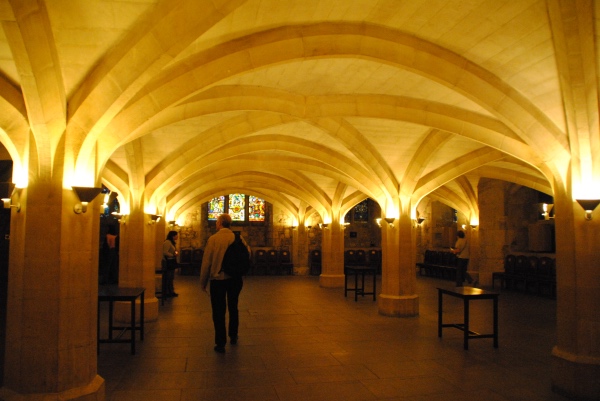
Located beneath Guildhall’s Great Hall is the oldest surviving part of the structure, the largest of London’s medieval crypts.
 Dating from the reign of King Edward the Confessor in the 11th century, the vaulted East Crypt is considered to be one of the finest examples of its kind in England with a ceiling featuring a series of carved bosses depicting heads, shields and flowers.
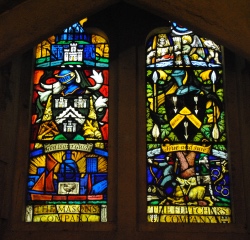
It features a series of stained glass windows depicting five famous Londoners – Geoffrey Chaucer, William Caxton, Sir Thomas More, Sir Christopher Wren and Samuel Pepys.
The pillars holding up the roof, meanwhile – once located at ground level – show signs of where horses were once tied up while their riders went about their business.
The West Crypt, which is believed to date from the 13th century, was sealed off after collapsing under the weight of the roof of the Great Hall which fell down during the Great Fire of London in 1666. It was reopened in 1973.
The windows of the West Crypt represent some of the City of London’s livery companies (pictured above, right).
One of the most famous incidents took place in the crypts on 9th July, 1851, when Queen Victoria attended a banquet here during a state visit.
The crypts today are available to hire for atmospheric events.
WHERE: Guildhall, Guildhall Yard, City of London (nearest Tube stations are Bank, Mansion House and Moorgate); WHEN: 10am to 4.30pm daily (when not being used for events); COST: Free; WEBSITE: www.cityoflondon.gov.uk/things-to-do/visit-the-city/attractions/guildhall-galleries/Pages/guildhall.aspx.
The moniker of this Soho street owes its origins to the Greek Orthodox Church – London’s first – which was built in the area following an influx of Greeks in the 17th century.
The street was laid out in the 1670-80s and along with taverns, coffee houses and tradesmen’s workshops, also had some aristocratic tenants such as the 5th Earl of Anglesey. Casanova stayed in the street when visiting in 1764 and writer Thomas de Quincey, author of Confessions of an Opium-Eater, also lodged here temporarily.
Other tenants have included Josiah Wedgwood who had a warehouse and showrooms here from 1774 to 1797. Number 1, the House of St Barnabas, was once the home of twice Lord Mayor of London, William Beckford, and also the location where Sir Joseph Bazalgette commenced work on designing the city’s famed sewer system (it was then the offices of the Westminster Commissioners Sewers). It’s now a private members club.
The church, meanwhile, was soon taken over by the French Protestants who came into the area and eventually demolished in 1936. A remnant of the church, an inscription which was once embedded in the wall of the church, was salvaged and apparently taken to the Greek Orthodox Cathedral of St Sophia in Bayswater.
Current premises based in the street include pubs like the Pillars of Hercules (number 7) and Coach and Horses (number 29) as well as establishments such as The Gay Hussar restaurant (number 2) and French patisserie Maison Bertaux (number 28).
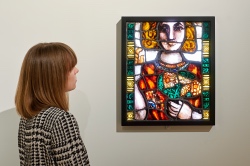 • Works including a recently acquired portrait of Prince Edward (later King Edward VIII) which was painted on the Western Front during World War I, a self-portrait in stained glass of artist and actor Pauline Boty (pictured), and three life-sized World War I portraits of military officers which have been reunited for the first time in decades, are among highlights of the National Portrait Gallery’s new early 20th century galleries. Four new rooms – split into the ‘Early 20th Century’, ‘The Great War’, ‘The Interwar Years’, and the ‘Second World War and Post-War Recovery’ – hold 121 portraits which have been hung chronologically and feature everyone from Virginia Woolf to Sir Winston Churchill, Dame Christabel Pankhurst to Sir Ernest Shackleton. Along with Frank O Salisbury’s oil sketch of Prince Edward, Boty’s stained glass portrait (the gallery’s first), and the three group portraits from World War I, highlights of the gallery include a 1913 portrait of the Royal Family at Buckingham Palace by Sir John Lavery, a 1931 portrait of Aldous Huxley by Vanessa Bell and a portrait of Roald Dahl in RAF uniform by Matthew Smith. Admission to the galleries is free. For more, see www.npg.org.uk. PICTURE: Courtesy of National Portrait Gallery.
• The “most comprehensive” exhibition of the work of French artist Amedeo Modigliani opens at the Tate Modern today. Modigliani features 100 works including portraits, some of his lesser known sculptures and 10 of his controversial nude paintings, the largest group of such ever shown in the UK. The exhibition re-evaluates Modigliani’s work and experimentation and includes well known and lesser known works with more than 40 of them never seen in the UK before. The works on show include Bust of a Young Woman (1908), Jean Cocteau (1916), and Boy with a Blue Jacket (1919). Runs until 2nd April. Admission charge applies. For more, see www.tate.org.uk.
• Former iconic Carnaby Street shop Lord John has been honoured with a City of Wesminster Green Plaque. Lord John, which dressed everyone from The Rolling Stones to the Beatles and The Kinks, was opened by brothers Warren, David and Harold Gold in 1964. The plaque can be seen at 43 Carnaby Street.
Send all items for inclusion to exploringlondon@gmail.com.
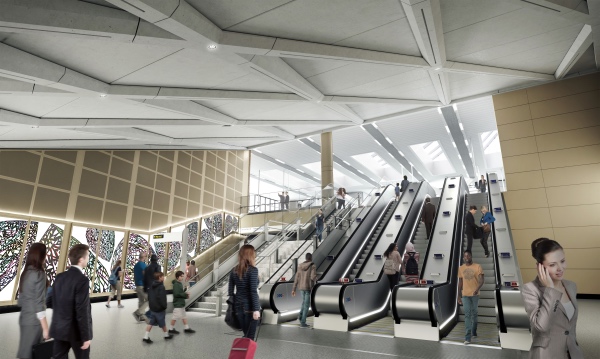
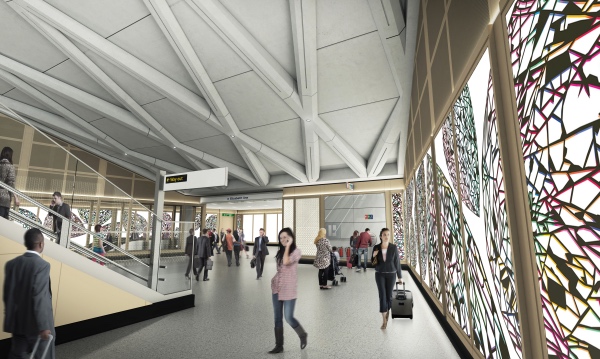
The Hatton Garden diamond district is the inspiration behind a new work by artist Simon Periton which will appear inside the new Elizabeth Line station at Farringdon when it opens in December, 2018. A series of giant gems will appear to tumble down and along 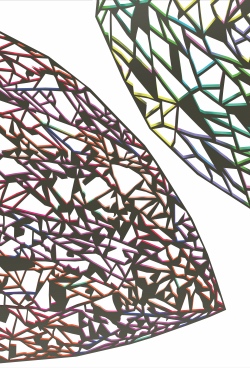 the walls of the station’s western ticket hall in what has been described as a “huge glazed frieze”. Each ‘gem’ will be created using special paint and then backlit so it shimmers and appears three dimensional. Periton is also creating a work of art for the station’s eastern ticket hall which will see exterior glazing being placed on three sides of the building featuring an intricate pattern reminiscent of the elaborate Victorian-era metalwork of the historic Smithfield Market found opposite. Says the artist: “The feel of each site is very different. The artwork for the Eastern Ticket Hall is visually more organic. Not only does the intricate pattern reflect the elaborate Victorian metalwork of Smithfield Market, it also references fragmented elements of the fauna and flora sold traditionally in the market. The design for this site is printed to emulate etched glass. The artwork design for the Western Ticket Hall is based on a large faceted diamond. A series of these giant gems cascade down and spin around the concourse, animating the space and echoing the movement of commuters. This design will be printed in bright coloured ceramic inks.” The artworks are just a couple of the many being incorporated into the new Elizabeth line stations under the Crossrail Art Programme. For more, see www.crossrail.co.uk/. PICTURES: Courtesy of Crossrail
 It’s 40 years ago this month since the Concorde – the ultimate in luxury plane travel – set off for the first flight on what would be – for almost three decades, at least – a regular service between London and New York.
The British Airways service between London’s Heathrow and New York’s JFK airports began on 22nd November, 1977 – the same date as regular services between Paris and New York – after a ban on the Concorde landing in New York was lifted by the US Supreme Court.
The flight came almost two years after the first commercial flights of the Concorde anywhere in the world had started in January, 1976, between London and Bahrain, and Paris and Rio via Dakar.
With the jets flying at a cruising speed of Mach 2 (twice the speed of sound), the journey from London to New York took an average of three-and-a-half hours (compared with seven to eight hours for a subsonic flight). Concorde still holds the record for the fastest crossing of the Atlantic Ocean by a civil aircraft – a flight from New York to London on 7th February, 1996, which took just two hours, 52 minutes and 59 seconds.
The aircraft – BA had seven in service – seated 100 passengers in two cabins – 40 in the front and 60 in the rear – and a crew of nine. The London to New York service (and the return trip) was particularly popular among celebrities.
The London to New York route hosted the last commercial flight of the Concorde on 24th October, 2003.
The decision to stop flying the Concorde followed a July, 2000, tragedy in which an Air France Concorde had crashed while taking off in Paris, killing 109 people on the plane and four on the ground. Safety concerns had seen the planes grounded for more than a year. And when they did finally take to the skies again in November, 2001, the world had witnessed the September 11 terror attacks – a fact which was said to have led a dramatic drop in passenger numbers. In the end, it was said to be these declining passenger numbers along with the rising maintenance costs of ageing fleets which led to its demise.
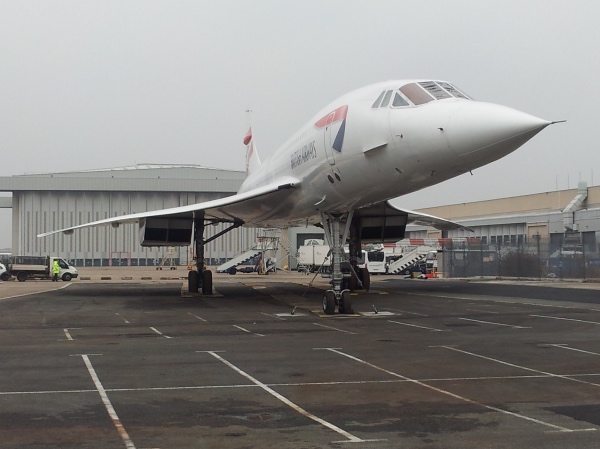
One of the retired British Airways Concordes – it was used for spare parts by BA and never used commercially – and the world’s only surviving Concorde simulator, built in 1974, can be found just outside London at the Brooklands Museum in Weybridge, Surrey.
There are apparently several supersonic jet passenger planes in development but when – or indeed if – they end up flying the New York to London route remains to be seen.
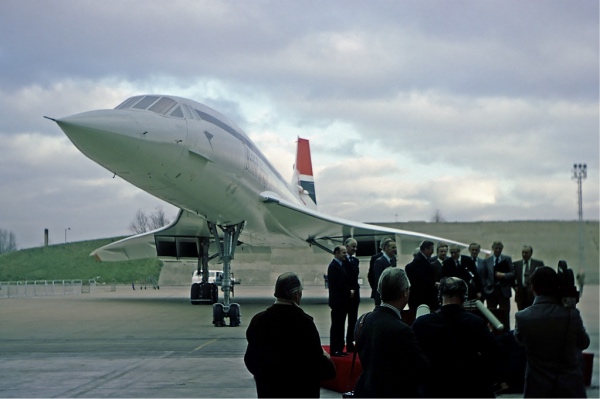
PICTURES – NOW AND THEN: Top – A Concorde in retirement (Simon Boddy, licensed under CC BY-NC SA 2.0); Below – The British Airways official handover ceremony in 1976 (Steve Fitzgerald under GNU Free Documentation License 1.2).
 Exploring London