Famous Londoners – Obaysch the hippo…

Given our current series on London’s animal life, we thought it an opportune time to take a look at another of London’s most famous animals – in this case a hippopotamus called Obaysch.

‘The Hippopotamus at the Zoological Gardens, Regent’s Park, London’, c1855, by Count de Montizon (Spanish, 1822 – 1887). PICTURE: George Eastman Museum/Flickr

Obaysch had been living near (and named for) an island in the River Nile in Egypt. He was gifted by the Ottoman Viceroy, Abbas Pasha, to the British Consul General, Sir Charles Murray (who became known as “Hippopotamus Murray” due to his affection for the animal).

Transported via a steamer to Southampton, he arrived at London Zoo in Regent’s Park on 25th May, 1850.

Said to have been the first hippo to be brought to Europe since the days of the Roman Empire, Obaysch soon gained the status of a celebrity at London Zoo with Queen Victoria among the thousands who came to see him (she apparently compared his swimming technique to that of a porpoise) in a craze that became known as “hippomania”.

In 1854, Obaysch was joined by a female hippo Adhela, also known as ‘Dil’, (again as a gift of the Viceroy) who was the first living female hippo in Europe since, you guessed it, Roman times.

In 1860, Obaysch escaped from the hippo enclosure and was only lured back to his enclosure by using one of the zookeepers whom he apparently particularly disliked as bait.

The zoo hoped the pair of hippos would breed but it wasn’t until 1871 that they first became the parents of a baby who sadly, didn’t survive.

Two more babies followed and the second of these, born in November, 1872, and named Guy Fawkes despite subsequently being found to be a female, became the first captive bred hippo to be reared by its mother.

Obaysch died on 11th March, 1878 and Adhela four years later on 16th December, 1882. Guy Fawkes died in March, 1908.
This Week in London – New artworks on the Tube network; Boulle clocks at the Wallace Collection; and, see extinct-in-the-wild doves at London Zoo…

Transport for London has announced it will be unveiling four major new artworks on the Tube network this year as part of its Art on the Underground programme which this year celebrates its 25th anniversary. The works include Saved by the Whale’s Tail, Saved by Art, a large-scale piece by artist Ahmet Öğüt in collaboration with New Contemporaries In Art which, to be unveiled at Stratford Underground station in March, explores the role art plays in everyday life. There’s also a new artwork by Hungarian-born American artist Agnes Denes which will be featured in a new pocket Tube map, a new audio work produced by artist and composer Rory Pilgrim with the Mayor of London’s Culture and Community Spaces at Risk (CCSaR) programme which will be heard at Waterloo Station in June and July, and, a new mural by Rudy Loewe which will be unveiled at Brixton Tube station in November. For more on Art on the Underground, see https://art.tfl.gov.uk.

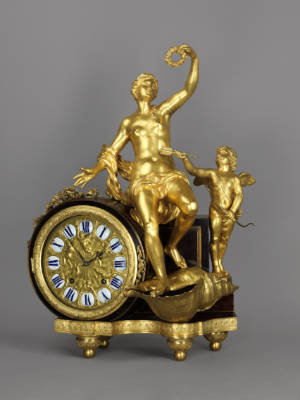
Attributed to André-Charles Boulle, movement by Jean Jolly, Mantel clock (About 1715)/© The Trustees of the Wallace Collection 

On Now: Keeping Time: Clocks by Boulle. This exhibition at the Wallace Collection in Manchester Square explores the art and science of timekeeping through a display of five pieces created by André-Charles Boulle (1642–1732). Boulle, the most famous cabinetmaker working for the court of the Sun King, Louis XIV (1638–1715), ended up giving his name to a style that featured elaborate veneer designs incorporating turtleshell, brass and other materials. The objects on show in the Housekeeper’s Room include a monumental wardrobe from 1715 that encloses a clock; two mantel clocks, one from around 1715 featuring Venus and Cupid, and another, from a decade later, with the figure of Father Time; as well as two pedestal clocks. A complementary display in the museum’s Billiard Room brings together two artworks as it explores the concept of time – The Dance to the Music of Time (about 1634-6) by Nicolas Poussin in which the Four Seasons dance to the song of Father Time, the composition of their rhythmic bodies echoing the workings of a clock movement, and The Borghese Dancers (1597–1656), where five female figures masquerade as the Hours, attendants to the goddesses of the Dawn and Moon. Runs until 2nd March. Free admission. For more, see www.wallacecollection.org.

Adult Socorro doves at London Zoo’s Blackburn Pavilion. PICTURE: © London Zoo

London Zoo has welcomed three new Socorro doves as part of a global effort to breed and reintroduce them to the wild. The three doves, which moved from Portugal’s Lagos Zoo at the end of 2024, have joined six other Socorro doves at the zoo. The species, which is extinct in the wild, is endemic to the tiny Socorro Island off the coast of Mexico and the Socorro Dove Project, an international initiative, is working to reintroduce the species to the island by 2030. The Socorro doves can be seen in Blackburn Pavilion, London Zoo’s historic tropical birdhouse, which is also home to the endangered Sumatran laughingthrush, the critically endangered Bali starling and the critically endangered blue-crowned laughingthrush. For more, see www.londonzoo.org

Send all items for collection to exploringlondon@gmail.com.

LondonLife – The ’12 Animals of Christmas’…

Meerkats explore an advent calendar in the countdown to Christmas. PICTURE: Courtesy of London Zoo

London Zoo is celebrating the festive season with the ’12 Animals of Christmas’, a series of seasonally-based talks in which zookeepers discuss some of the zoo’s most iconic species and the animals partake of some Christmas cheer with an enrichment activity in which the animals can enjoy their very own Christmas food. The talks of just one part of ‘The Magic at Christmas at London Zoo’ experience which runs until 5th January. Visitors during that period also have the chance to meet Santa in a grotto experience at the heart of the zoo or upgrade to engage in a “deluxe session” with Mrs Claus which includes preparing treats for the animals and take a tour of the zoo, or join her in a special VIP breakfast. Santa can also be found popping up at different locations around the zoo to feed the animals and there’s a Winter Village Post Room where children can write their letters to Father Christmas. Other activities include a ‘Reindeer Rubbish Round Up’ recycling challenge, a Christmas craft station and even the chance to have a Christmas sleepover at the London Zoo Lodges. For more, see www.londonzoo.org/plan-your-visit/events/magic-of-christmas.

Asiatic lions explore scented Christmas presents. PICTURE: Courtesy of London Zoo
Squirrel monkeys explore food-filled stockings. PICTURE: Courtesy of London Zoo.

Famous Londoners – Jumbo…

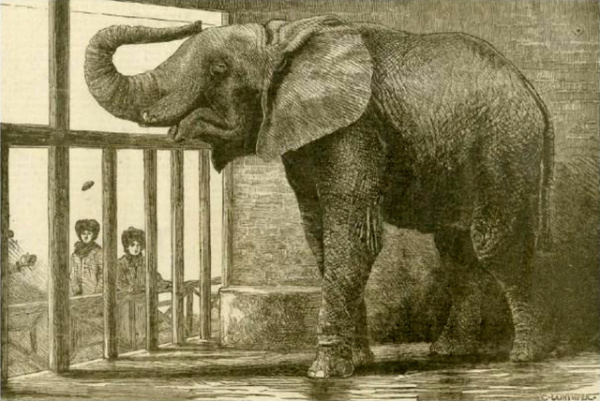
Jumbo greets some visitors as they pass by his den in London Zoo. PICTURE: From ‘Jumbo: This Being the True Story of the Greatest Elephant in the World’ by Paul Chambers

With his name a byword for things of a large size, Jumbo was an African bush elephant who was once one of London Zoo’s most popular residents (but whose life makes for sad reading).

Born in Sudan in about 1860, Jumbo – whose name is apparently a corruption of ‘jumbe’, the Swahili word for chieftain – was captured by hunters after his mother was killed and transported north to Europe. There he was apparently first exhibited in Germany before being sold to the Jardin des Plantes, a zoo in Paris.

In 1865, he was transferred to London Zoo in England where his keeper was Matthew Scott who went on to detail his care of Jumbo in his 1885 autobiography.

Jumbo quickly became a popular exhibit and was trained to give rides to children, including those of Queen Victoria (Teddy Roosevelt and Winston Churchill were apparently also among those who rode the elephant).

But out of public view, Jumbo, particularly as he matured, was growing increasingly destructive, smashing his den and breaking his tusks (it’s said Matthew Scott would pacify him with large quantities of alcohol).

In 1882, protests broke out when, apparently concerned over Jumbo’s growing aggression, then zoo superintendent Abraham Bartlett announced plans to sell Jumbo to American circus founder PT Barnum for £2,000. Some 100,000 school students wrote to Queen Victoria begging her to stop the transaction and a lawsuit was launched to stop the sale. It was unsuccessful.

Despite the protests, the sale went ahead and in March, 1882, Jumbo and Matthew Scott, who had decided to go with the elephant, went to America. In New York, Jumbo was exhibited at Madison Square Garden in a 31 week season. In 1884, he was one of 21 elephants who crossed the Brooklyn Bridge to prove it was safe following the death of 12 people during a collapse caused by a stampede few years earlier.

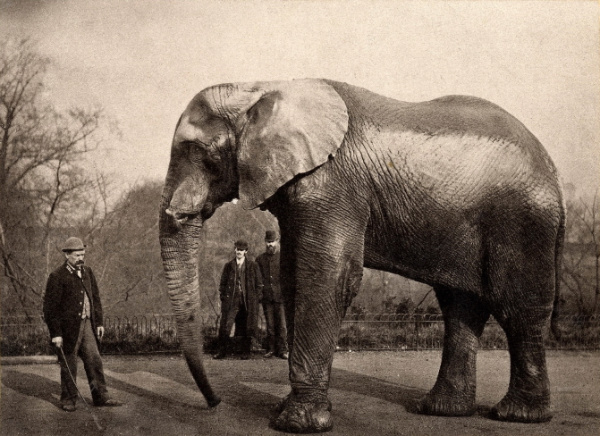
Jumbo with his keeper Matthew Scott, pictured in June, 1882. PICTURE: From Bierstadt, E ‘Jumbo and trainer.’

Jumbo died on 15th September, 1885, when he was hit by a train as he and other elephants were being led back to their boxcar. According to Barnum, Jumbo was attempting to lead a young elephant Tom Thumb to safety.

Following Jumbo’s death, a postmortem revealed his stomach contents included five English pennies, keys, rivets, and a police whistle.

Sadly, PT Barnum had the body parts separated for display before Jumbo’s skeleton was eventually donated to the American Museum of Natural History in New York City. The elephant’s heart was sold to Cornell University and its hide stuffed and eventually donated to Tufts University where it was destroyed in a fire in 1975 (Jumbo remains the university mascot).

There is a statue of Jumbo near where he died in St Thomas, Ontario, and a six-storey, elephant-shaped building in Margate City, New Jersey, which was built in 1881 is said to be inspired by him. He is also said to have inspired the Disney film, Dumbo.

Famous Londoners – Old Martin…

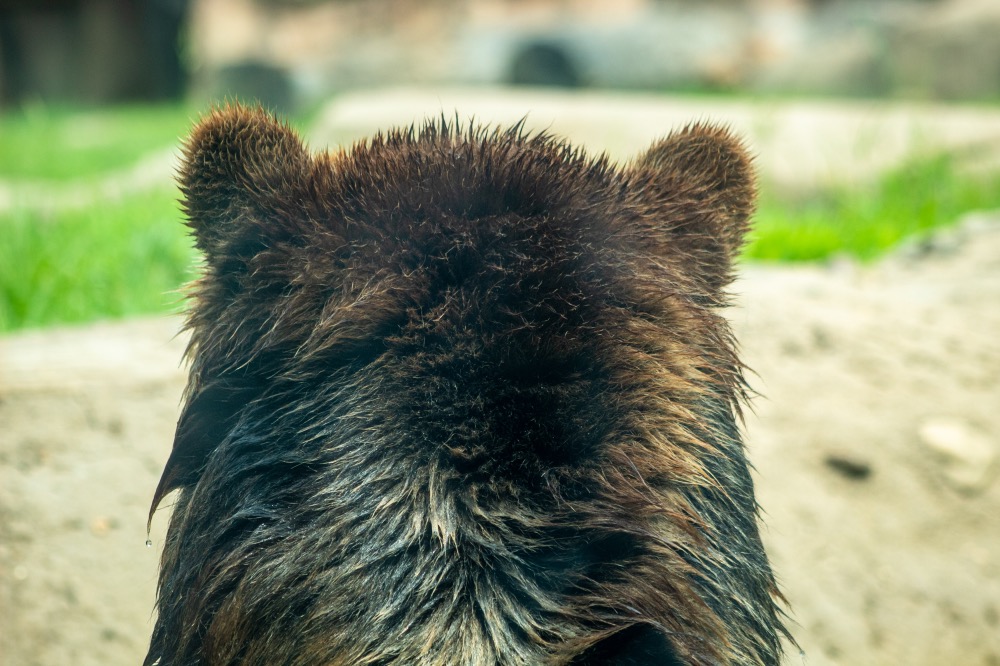
A grizzly bear (not Old Martin). PICTURE: Joshua J Cotten/Unsplash

A large, fully grown, grizzly bear presented to King George III by the Hudson’s Bay Company in 1811, Old Martin was one of the scarier residents of the Tower of London’s menagerie.

The bear, who was apparently named after a famous bear in Europe (the “old” was added because he spent so long in resident at the Tower), is said to have been the first grizzly in London.

He was not, however, the first bear to live there – King Henry III had been given a polar bear by King Haakon IV Haakonsson of Norway in 1251 (George, however, was apparently unimpressed with his gift, said to have commented in private that he would have preferred a tie or pair of socks).

Despite his many years in the menagerie, Old Martin apparently refused to be tamed and remained fierce towards both strangers and his keepers alike.

When the Duke of Wellington closed the menagerie in the early 1830s (King William IV apparently had little interest in the animals), Old Martin was moved to the London Zoo in Regent’s Park. He died there in 1838.

His skin and skull were subsequently sent to the Natural History Museum and rediscovered there in 1999 for an exhibition at the Tower.

There’s a rather odd story associated with Old Martin. It’s said that in 1816 – when Old Martin was living in the Tower’s menagerie – a Yeoman Warder saw a ghostly bear while on night duty near the Martin Tower. He apparently attempted to run it through with a bayonet but the blade went straight through and struck the door frame behind it. The somewhat dubious story goes that the poor Yeoman Warder died of shock just a few hours later.

LondonLife – Snow day at ZSL London Zoo…

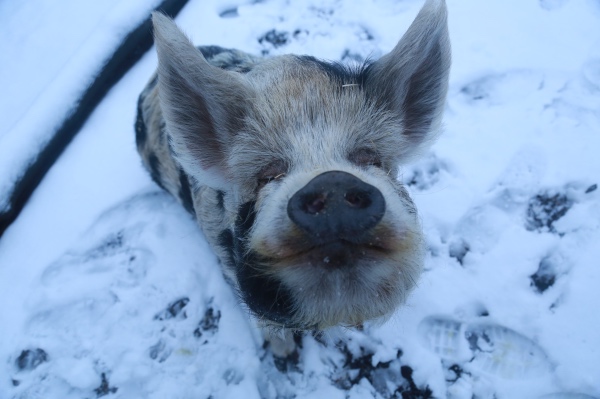
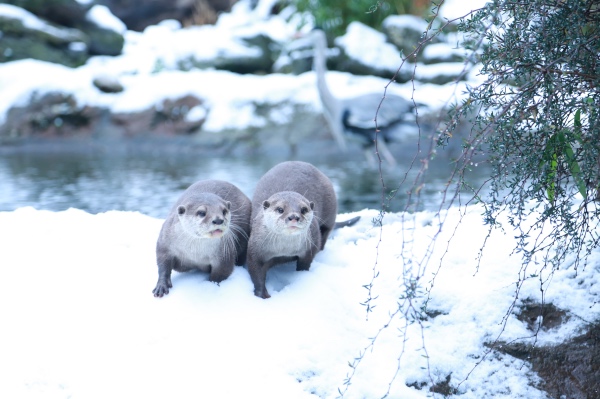
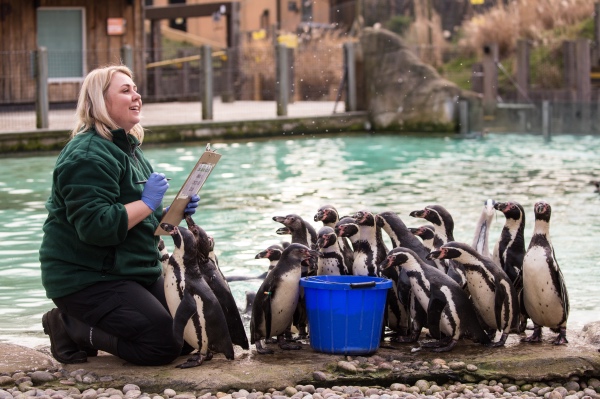
ZSL London Zoo recently experienced its first “snow day” for 2019. Pictured are Kiri the Kune Kune pig (above) and (below), Humboldt penguins and Asian short-clawed otters. Fun, apparently, was had by all! For more, see www.zsl.org. ALL PICTURES: © ZSL London Zoo.

LondonLife – Taking stock at the ZSL London Zoo…

Last week was the ZSL London Zoo’s annual stocktake in which they make a count of all the creatures, great and small, that are residents of the zoo. Some 750 species live at the zoo totalling more than 19,000 animals, meaning it’s quite a mammoth effort which takes almost a week to complete. The information gained is then shared with other zoos around the world via the Species360 database to aid in managing worldwide conservation breeding programmes for endangered animals. While some animals, like the Asiatic lions are easy to count, others are less so due to their tiny size (although ant colonies are simply counted as one). Among first-timers this year were two gibbons – Jimmy and Yoda – as well as 11 Humboldt penguin chicks, eight new Galapagos tortoises and a Hanuman langur baby (a species of leaf-eating monkey). For more on the zoo, see www.zsl.orgPICTURES: Top – Humboldt penguins; Below – Squirrel monkeys, llamas and an Asiatic lion. 

Famous Londoners – Guy the Gorilla..

It’s 70 years ago this November that a gorilla named Guy arrived at London Zoo and went on to become one of its most famous residents. 

A Western lowland gorilla, Guy was captured as a baby in French Cameroon on behalf of the Paris Zoo which then exchanged him for a tiger from London Zoo. He arrived in London while still a baby, clutching a tin hot water bottle, on Bonfire Night – 5th November, 1947, hence his name ‘Guy’ (after Guy Fawkes).

Guy went on to become one of the zoo’s biggest stars (on a par with a contemporary, Chi-Chi the Giant Panda, another of the zoo’s most famous residents).

The giant ape, who lived for the latter part of his life in the zoo’s Michael Sobell Pavilion ( it opened in 1971), weighed some 240 kilograms and had a nine foot armspan but was known, despite his size and occasional outbreaks of bad temper, for having been a ‘gentle giant’ – there are stories that he used to hold out his hands and carefully examine small songbirds that flew into his cage before letting them go.

He was introduced to a mate, Lomie, after 25 years in solitude but they never produced any offspring.

Guy died in 1978 of a heart attack during a tooth extraction. He continues to attract sightseers, however – Guy was stuffed and put on display at the Natural History Museum in 1982. He was later moved into storage but went back on permanent display in 2012.

A bronze statue of Guy, by William Timym, can be seen near the zoo’s main entrance (pictured).

PICTURE: Chris huh/Wikimedia Commons


LondonLife – A royal welcome for Land of the Lions…

Queen-with-lionsQueen Elizabeth II had a chance to get up close and personal with resident lionesses Rubi and Heidi at the official opening of Land of the Lions – London Zoo’s new interactive lion enclosure – last week. The new £2.5 million Asiatic lion exhibit recreates the setting of Sasan Gir in Gujarat, India – the last remaining stronghold of Asiatic lions, of which only about 500 remain in the wild – and has, at its centre, a 360 degree ‘Temple Clearing’ where the lions can be viewed from just a few metres away. The exhibit, which spreads over 2,500 square metres, opens to the public this Friday, 25th March. For more, see www.zsl.org.

Treasures of London – The lions of Trafalgar Square…

Lion

Dwarfed by the towering form of Nelson’s Column in the southern part of Trafalgar Square, the four lions at the base of the column’s plinth – known to some as Landseer’s Lions – are now a favourite of tourists and Londoners alike. But it wasn’t always so.

While the column was erected in 1843 and the fountains in 1845, it wasn’t until 1867 that the lions – designed by Sir Edwin Landseer – appeared in the square. The reasons for the delay were apparently several including arguments over the artistic vision of the sculptures and funding and Landseer’s own ill-health.

Indeed, Landseer, best known as a painter of animal subjects, wasn’t the first choice as sculptor but was only commissioned after the models of the first sculptor – Thomas Milnes –  was rejected (there’s a terrific painting by John Ballantyne of Landseer working on the lions in the National Portrait Gallery).

As a result when the lions were eventually unveiled, they were held to general ridicule when they finally arrived, costing thousands of pounds more than what had been budgeted for them.

While the lions were initially going to be made of granite, Landseer’s 20 foot long lions were cast by Baron Marochetti in bronze at his Kensington studio. The form of the lions was apparently modelled on a dead lion which, according to Ed Glinert in The London Compendium, were brought to his studio in St John’s Wood by cab from the London Zoo, although all four lions have distinct faces.

Legend has it that the Grade I-listed lions will come to life if Big Ben chimes 13 times.

There has been concern in recent years about the damage people are doing to the lions in climbing on them with one report recommending that the public be banned from climbing on them.

For more, see our previous posts on Nelson’s Column and Trafalgar Square.

For more on London’s monuments, check out Peter Matthews’ London’s Statues and Monuments (Shire Library).

The Royal Parks – 5. The Regent’s Park

A former hunting chase, The Regent’s Park in London’s north-west was extensively developed in the 19th century and remains a good – if not complete – example of a Regency landscape.

As with many of London’s Royal Parks, Regent’s Park (it’s formal name is actually The Regent’s Park but we’ll shorten it for our purposes here) once served as King Henry VIII’s hunting grounds – he seized the park, then known as Marylebone Park Fields after the nearby village and boasting thick woods as well as more open forests, from the Abbey of Barking in 1538.

Used by royalty for the next 50 years, it remained largely unaltered until after the Civil War when, between 1649 and 1660, the Commonwealth ordered many of the trees to be chopped down to pay debts. It was restored to royal ownership with the restoration of the monarchy but, with hunting falling out of fashion, was then leased out to tenant farmers.

It was John Nash who created the park that we know and love today. Friend of the Prince Regent (later King George IV), he was among a number of architects who responded to the Prince Regent’s calls for the creation of a new design featuring a palace for himself.

Nash’s original designs included a round park featuring a lake and canal and surrounded by as many as 56 villas and a palatial summer home for the Prince Regent which would be linked to his other home at St James’s by a processional road.

But only eight of the villas were ever built and only two of them – St John’s Lodge and The Holme – remain (both are private residences but part of the lodge’s gardens are open to the public) while the plans for the Prince Regent’s palace were put on hold when he turned his attention to developing Buckingham Palace instead. The canal, meanwhile, was moved to the park’s northern boundary where it still stands today (see our earlier entry on Regent’s Canal) while the processional route Nash had proposed became Regent Street.

While the park was initially only for the exclusive use of residents and what Royal Park’s call the ‘carriage set’, in 1835, the eastern part of the park was opened to the public for two days a week. Other sections of what is now included in the park, including Primrose Hill, were opened later.

Meanwhile, the fact most of the villas had never been built had left a large amount of free space and so both the Zoological Society and the Royal Botanic Society moved in – the latter laying out what is the Inner Circle with lawns and a lake of its own. Another society to operate in the park was the Royal Toxophilite Society which introduced archery there.

Not much has changed since but for the creation of Queen Mary’s Gardens in the 1930s – these were laid out on the space formally occupied by the Royal Botanic Society which had decided not to renew its lease. The Open Air Theatre performances, which are still held in the gardens today, started at about the same time. The park was damaged by bombing during World War II but has been fully restored.

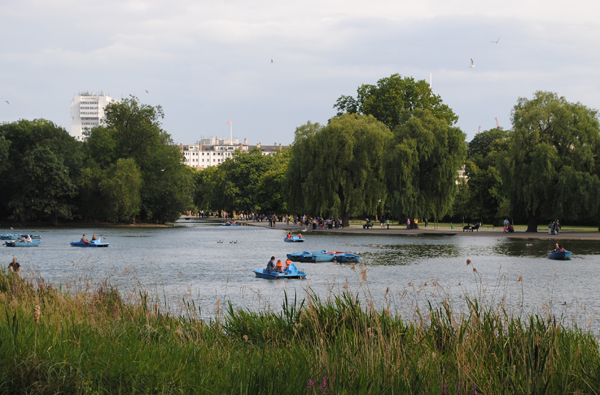
Other facilities now in the 166 hectare (410 acre) park include a sports facility known as The Hub as well as several cafes, tennis courts and boat hire. The London Zoo, of course, also remains there.

WHERE: The Regent’s Park (nearest tube station is Regent’s Park); WHEN: 5am to at least 4pm (closing times vary depending on the month); COST: Free entry; WEBSITE: www.royalparks.gov.uk/The-Regents-Park.aspx

LondonLife – The Royal Menagerie

A new exhibition has opened at the Tower of London celebrating the Royal Menagerie which was located there for more than 600 years.

Over the years featuring everything from lions and leopards to elephants, camels, kangaroos and crocodiles, the menagerie was founded at the Tower of London during the reign of King John (1199-1216), although as far back as the reign of King Henry I (1100-1135) animals were being presented to the king as gifts. Some notable early animals included a ‘white bear’ believed to be a polar bear from Norway and an African elephant, a gift of King Louis IX of France, both of which were presented to King Henry III.

While the early location of the menagerie – which had a long history of attracting curious sightseers – remains unknown, during the rein of King Edward III (1327-1377) there is reference to it being in a position near the Middle Tower (now the main entrance to the Tower) which suggests it was then already located in what became known as the Lion Tower – a now ruined barbican built by King Edward I in 1276-77.

Animal accommodations in the Lion Tower were substantially upgraded during the reign of King James I (1603-1625) – James was noted to have enjoyed watching the lions fight other animals in the tower’s exercise yard). Further upgrades were made under the watchful eye of Sir Christopher Wren, then Surveyor of the King’s Works, between 1672 and 1675.

The office of the menagerie’s ‘keeper’, meanwhile, had been  formalised in the 1400s with the title awarded for life – it was subsequently held by some important officials.

While in 1687 some of the beasts and birds were transferred to new accommodations at St James’s Park, the menagerie remained at the Tower until 1830 when, following the death of King George IV, the decision to move the animals – then said to number 150 – to the recently founded Zoological Society of London’s zoo at Regent’s Park. Initially only some animals were sold to the zoo but by the end of 1835 the menagerie had been completely emptied with many of the remaining animals apparently sold to an American ‘showman’ Benjamin Franklin Brown who exported them to the US.

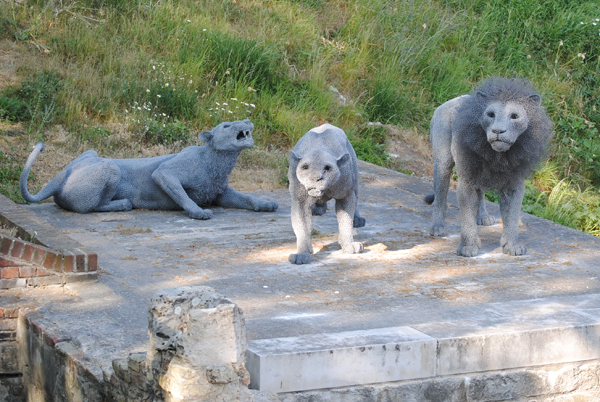
The new exhibition, Royal Beasts, is housed in the newly opened Brick Tower (entry via the Martin Tower, itself entered via the wall walk), and gives visitors views from a hitherto closed-off part of the north wall. There are also a series of life-size sculptures of various animals (see the three lions pictured), created by artist Kendra Haste, located around the tower. And, to gain a feel for how the menagerie was viewed during different eras, you can watch the short live action show featuring some of the “rarees” and “curiosities” which were housed within the tower (check with staff for times).

For more on the menagerie’s history, see Geoffrey Parnell’s guide, ‘The Royal Menagerie at the Tower of London’, available for sale at the Tower (£3.99).

WHERE: ‘Royal Beasts’, Tower of London (nearest tube station Tower Hill); WHEN: 9am to 5.30pm, Tuesday to Saturday, 10am to 5.30pm Sunday to Monday (until 31st October); COST: Included in Tower of London admission – £19.80 adults; £10.45 children under 15; £17.05 concessions; £55 for a family (prices include a voluntary donation); WEBSITE: www.hrp.org.uk/toweroflondon/.