Famous Londoners – George Eliot…

Last month marked the 200th anniversary of the birth of leading English novelist George Eliot – actually the pen name of Mary Ann Evans. 

Born in Warwickshire on 22nd November, 1819, Evans was the third child of Robert Evans, an estate manager, and Christiana Evans, daughter of a local mill owner.
Described as a “voracious reader” from an early age, she was a boarder at various schools up until the age of 16 when, following the death of her mother, she returned home to act as housekeeper (she apparently continued her education in the library of Arbury Hall, the property her father managed).

In 1841, when her brother Isaac married and took over the family home, she moved with her father to Foleshill near Coventry. There, they met Charles and Cara Bray – Charles was a wealthy ribbon maker and religious free-thinker who used his wealth to establish schools and hospitals to help improve conditions of the poor.

Thanks to her friendship with the Brays, Evans came into contact at their house, Rosehill, with the likes of Welsh social reformer Robert Owen, Harriet Martineau, often described as the first female sociologist, and American essayist Ralph Waldo Emerson as well as German theologian David Friedrich Strauss and German philosopher Ludwig Feuerbach (in fact, her first major literary work was the completion of an English translation of Strauss’ The Life of Jesus Critically Examined and she also later translated Feuerbach’s The Essence of Christianity).

Evans, who was a devout evangelical Christian in her youth, lived with her father until his death in 1849. She had questioned her faith some years before but after she’d informed her father she would no longer go to church, they had reached a compromise under which she had been free to think as she wished as long as she continued to attend church.

Following her father’s death, Evans – now 30 – had visited Switzerland and, following her return to England, moved to London to pursue a career in writing.

In London, Evans initially stayed in the Strand home of radical publisher John Chapman, whom she’d met through the Brays. She eventually went on staff at his left-wing journal, The Westminster Review – becoming, in time, Chapman’s right-hand, the editor in fact if not in title, at publication by the time she left in 1854.

At that time she moved in with journalist George Henry Lewes, who had met her several years earlier. He was still married to Agnes Jervis, despite her having born to children to another man, and the new couple’s relationship caused a great scandal, leading many to shun Evans. The couple travelled together to Germany for research and thereafter Lewes and Evans apparently considered themselves married.

While she had stories published in magazines in the years earlier, her first novel, Adam Bede, was published under the pseudonym George Eliot in 1859 (she’d first used the pseudonym on a short story, The Sad Fortunes of the Reverend Amos Barton, published in 1857). Much acclaimed, the public interest surrounding the novel led Evans – who now called herself Marian Evans Lewes – to acknowledge the work as hers – a revelation which came as a shock to many given her unconventional private life but which, despite that, failed to dent the novel’s popularity.

Encouraged by Lewes, she wrote several novels over the next 15 years including The Mill on the Floss in 1860, Silas Marner in 1861, Romola in 1863, Felix Holt, the Radical in 1866 and her most acclaimed novel (sometimes described as the greatest English novel ever written), Middlemarch in 1871-72. Her final novel, Daniel Deronda, was published in 1876.

Celebrated for the depth of her characterisations and her descriptions of English rural life, she was recognised as the greatest English novelist of her time.
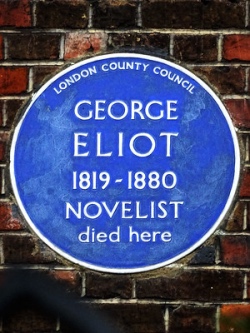
The couple, meanwhile, lived in several properties in London – including one in Richmond, ‘Holly Lodge’ in Wimbledon Park Road, Wandsworth (it was the first property south of the Thames to be marked with an English Heritage Blue Plaque), and ‘The Priory’ near Regent’s Park in Marylebone.

Eliot’s success as a novelist saw the couple gradually gain social acceptance – in an indication that can be seen in that Charles Darwin, Aldous Huxley, Henry James and Frederic Leighton were all among those entertained at The Priory in the couple’s latter years together.

Lewes died in 1878 and two years later, on 16th May, 1880, Lewes married John Cross – a longstanding friend who was 20 years younger and who had provided comfort following the loss of her husband.

Following their honeymoon in Venice, the couple returned to London where they lived at a property in Cheyne Walk, Chelsea (an English Heritage Blue Plaque marks the property).

It was to be a short-lived marriage – soon after moving into their new home, Mary Ann (now) Cross fell ill with a throat infection and coupled with the kidney disease she had suffered for several years, she died on 22nd December of that year at age 61.

Eliot was buried in Highgate Cemetery beside Lewes. A memorial stone was erected in Westminster Abbey’s Poet’s Corner in 1980.

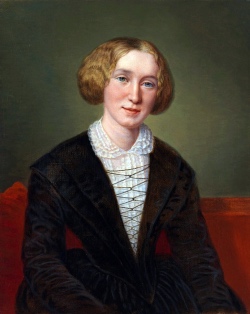
PICTURES: Top – George Eliot, replica by François D’Albert Durade, oil on canvas, 1850-1886, based on a work of 1850, 13 1/2 in. x 10 1/2 in. (343 mm x 267 mm), Purchased 1905, Primary Collection, NPG 1405; Below – The English Heritage Blue Plaque on the Cheyne Walk property (Spudgun67 (licensed under CC BY 2.0))
This Week in London – Troy explored at British Museum; Georgian theatre in London; and, Green Plaque for Europe’s first recording studio…

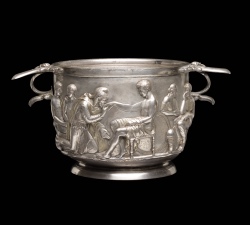
A major exhibition on the legendary city of Troy has opened at the British Museum. Troy: myth and reality showcases works of art inspired by the “tales of war, love and loss” connected to the Trojan cycle of myths and follows in the footsteps of archaeologists and adventurers who have sought to find evidence of the ancient city. Among the almost 300 objects on show are original finds – such as pottery, silver vessels, bronze weapons and stone sculptures – found by Heinrich Schliemann’s work at the site between 1870 and 1890, a Roman sarcophagus lid picturing a wheeled – and armed – wooden horse (on loan from Oxford’s Ashmolean), Filippo Albacini’s (1777–1858) marble sculpture, The Wounded Achilles, and a Roman silver cup from the National Museum of Denmark depicting the meeting of Priam and Achilles as described in Homer’s The Iliad (pictured). Admission charges applies. Runs until 8th March. For more, see www.britishmuseum.org/Troy. PICTURE: Priam and Achilles, Roman silver cup, 1st century AD, National Museum of Denmark Photograph: Roberta Fortuna and Kira Ursem © National Museet Denmark.

Queen drummer, Roger Taylor, unveiled a Westminster City Council Green Plaque commemorating the site of Europe’s earliest recording studio in Covent Garden earlier this month. The studio was opened on Maiden Lane, one street north of the Strand, in 1898 by audio pioneer Fred Gaisberg and The Gramophone Company, a precursor to EMI – the same company which opened the world-famous Abbey Road Studios 33 years later. The campaign for the plaque – located on a building now housing a pizza restaurant – was led by music journalist and author James Hall with support from the EMI Archive Trust. For more, see www.westminster.gov.uk/green-plaques.

• On Now: Two Last Nights! Show Business in Georgian Britain. This interactive display throughout the entire Foundling Museum in Bloomsbury features more than 100 objects which highlight the similarities and differences between theatre going in the Georgian era and now. It explores key venues in London and beyond and is divided into four sections focusing on Georgian theatres like Drury Lane and Covent Garden, the Vauxhall Pleasure Gardens, the importance of the Foundling Hospital Chapel as a music venue, and the provincial music festivals held in other major cities in Britain. Runs until 5th January. Free with museum admission. For more, see www.foundlingmuseum.org.uk.

Send all items for inclusion to exploringlondon@gmail.com.

London Pub Signs – The Bluecoats, Tottenham…

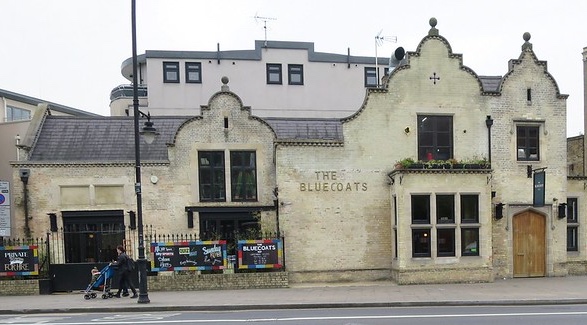
Formerly housing the The Pride of Tottenham, this revamped pub’s name now reflects the building’s previous use as The Blue Coats School for Girls.

Located at 614 Tottenham High Road, the current “chapel-shaped” building – which represents a “Jacobean” style – dates from 1835 but the Blue Coats School which inhabited it, originally opened in 1735.

It was one of numerous such charity schools built around England between the 16th and 18th centuries. The name comes from the blue uniforms students wore, a colour typically associated with charity.

The school, which apparently taught up to 120 students at its peak, moved across to All Hallows School in 1930.

The building then underwent several different guises, including a nightclub, before it became The Pride of Tottenham, a known haunt of Hotspurs fans and among buildings affected by the 2011 riots.

The new Bluecoats pub, which spans two floors, was opened last year following a restoration of the building.

For more, see https://thebluecoatspub.com/

PICTURE: Alan Stanton (licensed under CC BY-SA 2.0/image cropped)

This Week in London – Christmas at the Royal Palaces; Aldgate Lantern Parade; and, Dora Maar

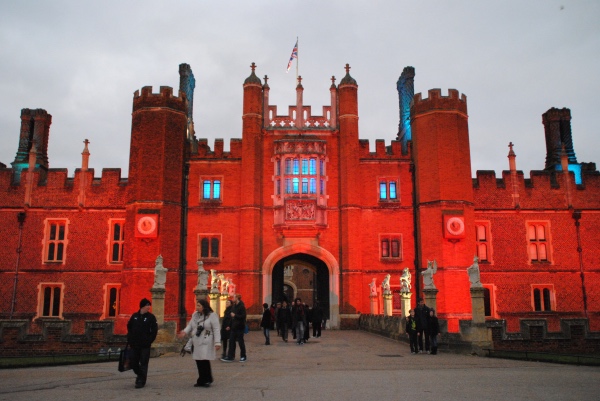
Hampton Court Palace is once again holding its ‘Festive Fayre’ this weekend. More than 80 stalls will fill the palace’s historic courtyards serving Christmas-related treats like mince pies and mulled wine. Included in entry price. Hampton Court will also host carol singing in the courtyards between 6pm and 7pm, 8pm and 9pm on 16th, 22nd and 23rd of December. Meanwhile, Kensington Palace is offering the visitors on select dates between 7th December and 5th January to take part in Princess Victoria’s Christmas by assisting her in staging a Christmas panto, joining in the type of seasonal crafts she enjoyed as a child and discovering the history of the festive food Victoria would have enjoyed growing up at Kensington. Included in palace admission. And, of course, the ice rinks at Hampton Court Palace and in the Tower of London’s moat are now open. For more, see www.hrp.org.uk.

More than 500 lanterns made by local children and adults will feature in this year’s Aldgate Lantern Parade tomorrow afternoon. The parade will launch from Sir John Cass’s Foundation Primary School at about 4.45pm and through streets north of Aldgate High Street to the beat of the Barbican’s Drum Works ending in a festive fete in the new Aldgate Square. A Winter Fair will simultaneously take place between Aldgate Square and St Botolph without Aldgate, complete with an array of performances, art, food, drink and festive activities.

On Now: Dora Maar. The first UK retrospective of the artist Dora Maar (1907-97) whose provocative photographs and photomontages became celebrated icons of surrealism is on at the Tate Modern. It features more than 200 works spanning the six decades of her career. Among highlights are The years lie in wait for you (c1935), Portrait of Ubu (1936), photomontages 29, rue d’Astorg (c1936) and The Pretender (1935), rarely seen works like The Conversation (1937) and The Cage (1943), and a substantial group of camera-less photographs that she made in the 1980s. Runs until 15th March. Admission charge applies. For more, see www.tate.org.uk.

Send all items for inclusion to exploringlondon@gmail.com.

10 (lesser known) monuments featuring animals in London – 2. Tom Sayer’s dog, Lion…

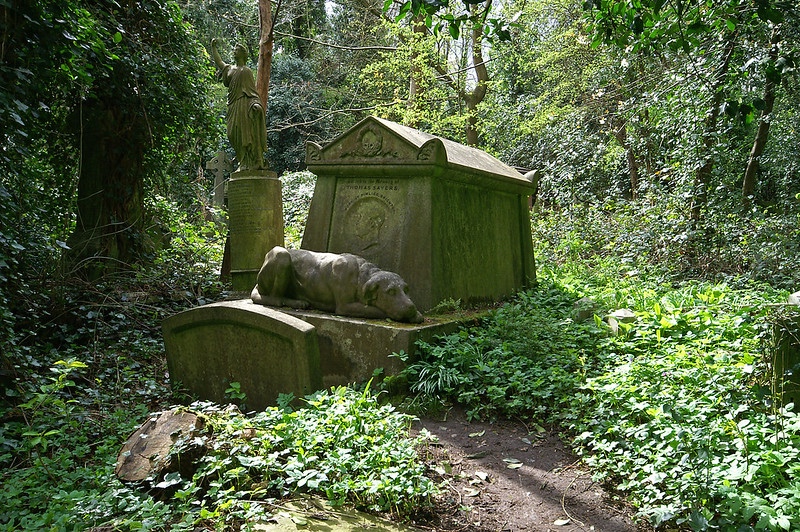
From a cat to a dog – this week we’re looking at the grave of Victorian-era bare knuckle prize fighter Tom Sayers which features a statue of his faithful hound, Lion.

Sayers – widely considered the first boxer to hold the World Heavyweight Champion after he defeated American John Camel Heenan in 1860 – had a career spanning more than a decade in the the mid-19th century and was able to retire in 1860 thanks to a generous public. But he died only five years later at the age of 39 in 1865.

His burial at Highgate Cemetery – where this tomb is located – is said to have been attended by 10,000 people, such was his fame. Lion, a mastiff, was described as the “chief mourner” at his funeral.

Lion had been Sayers’ dog since at least early 1861 when mentions of the brown dog accompanying the pugilist started to appear in the press. The newspapers noted the apparent bond between the two but when Sayers failed bid to create a circus saw him auction off various associated animals and paraphernalia, that didn’t stop Lion being on the auction list.

Sayers apparently had a change of heart, however, as Lion’s turn to go under the hammer came up and stepped in to buy back the dog – but not before the price had apparently run up to 20 guineas.

Following Sayers’ death, Lion again went to auction and this time was sold to a close friend of Sayers, a former soldier who was the landlord of the Welsh Harp pub where the boxer had held his circus auction.

Following a public subscription, the stone monument – including the statue of Lion – was installed over Sayers’ grave in 1866.

Lion, however, was again sold and apparently ended his life on a country estate.

With thanks to an article by Gary Lucken, ‘A tale of ‘Lion’ hunting: Boxing Monthly turns pet detective’ published in Boxing Monthly.

WHERE: Western Cemetery, Swain’s Lane (nearest Tube is Archway); WHEN: Guided tour only – bookings essential for weekdays/no bookings on weekends (tours run every half hour from 10.30am to 3pm); COST: £12 adults/£6 children eight 17/no children under 8; WEBSITE: www.highgate-cemetery.org

PICTURE: Nick Garrod (licensed under CC BY-NC-ND 2.0)

LondonLife – Skeletons in the Tower…

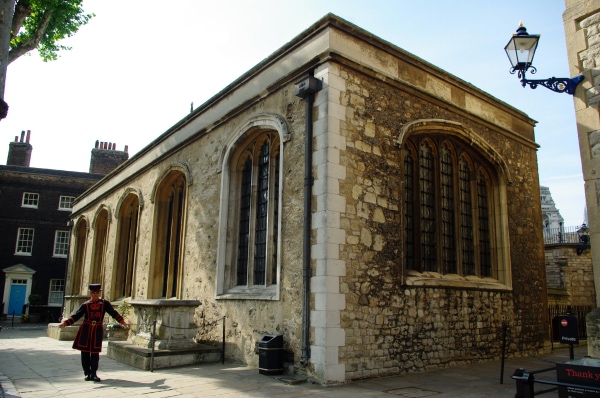
The remains of an adult female and a young child have been discovered beneath the floor of one of the entrances to the Chapel of St Peter ad Vincula in the Tower of London. Discovered as part of early investigations aimed at enabling better disabled access to the chapel, the two skeletons – the first complete skeletons found at the Tower since the 1970s – were found lying face up with their feet facing east, typical of a Christian burial. The adult, believed to be aged 35 to 45, is believed to have been buried within a coffin (coffin nails were present) while the child, believed to be aged about seven, was simply wrapped in a blanket – typical of later medieval and early Tudor burials – and due to that and further materials and artefacts uncovers, it is believed the two people were laid to rest between 1450 and 1550, a period between the Wars of the Roses and the reign of King Edward VI. The remains were reinterred in the chapel in a special ceremony conducted by the Tower of London’s chaplain, Rev Canon Roger Hall. The Chapel Royal was completed in 1520 and is perhaps most famed for being the burial place of two of King Henry VIII’s wives, Anne Boleyn and Catherine Howard. The discovery was explored in the the final episode of Inside the Tower of London which aired on Channel 5 in October.

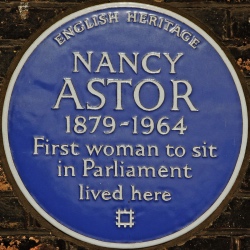
A Moment in London’s History…The election of Nancy Astor

This marks the 100th anniversary – last month in fact – of the entry of the first woman to the British Parliament.

Nancy Astor, who won the seat of Plymouth Sutton on 15th November, 1919, took her seat in Parliament two weeks later on 1st December, about a year after women won the right to stand as an MP.

Astor, whose husband, Waldorf Astor, had previously occupied her seat (but whose seat became vacant when he was elevated to the House of Lords following the death of his father, Viscount Astor), was the first to take her seat in the House of Commons but not the first elected.

That honour goes to Constance Markiewicz, who won for Sinn Fein in 1918 – while she was detained in Holloway Prison – and who never took her seat in the House of Commons.

The American-born Astor met with a somewhat hostile reception from some – Winston Churchill famously told her MPs had hoped to “freeze her out”.

She delivered her maiden speech on 24th February, 1920, warning the MPs that given some women aged over 30 could now vote, they intended to use it and “use it wisely”.

Astor ended up winning seven elections and, despite being seen increasingly as a figure of controversy in part because of her support – along with her husbands and their associates – of Neville Chamberlain’s policy of appeasement with Germany in the lead-up to World War II, remained MP for Plymouth Sutton until 1945.

She decided not to stand again based on the advice of the Conservative Party – who saw her increasingly as a liability, and her husband.

PICTURE: A Blue Plaque commemorating Nancy Astor on a property at 4 St James’s Square, St James’s (Leo Reynolds (licensed under CC BY-NC-SA 2.0/image cropped)

Lost London – St Stephen’s Chapel…

The chapel, which served as the House of Commons from the mid-16th century until it was destroyed in the fire at the Palace of Westminster in 1834, was first recorded as part of the palace in the reign of King John (1199-1216).

It was rebuilt  in the late 13th century, on the orders of King Edward I. The king, apparently impressed by the Sainte Chapelle, built as a royal chapel by King Louis IX in Paris, ordered the chapel rebuilt to rival it.

The two storey, richly decorated stone chapel featured two levels, the upper floor for use of the Royal Family (it could only be entered from the Royal Apartments), the lower for courtiers and the Royal Household – was largely complete by 1348.

The then 15-year-old King Richard II married Anne of Bohemia in the chapel in 1382 and the ill-fated Richard, Duke of York (the younger of the two so-called Princes in the Tower) married Anne Mowbray here while still young children. Richard’s father, King Edward IV, had laid in state here for eight days after his death in 1483. Thomas Cranmer was consecrated as Archbishop of Canterbury here in 1533.

The Palace of Westminster was no longer used as a royal residence following the death of King Henry VIII in   and in 1547 it was deconsecrated under the Abolition of Chantries Act instituted by King Henry’s son, King Edward VI, after which it was used as a debating chamber for the House of Commons (which had hitherto been meeting in xxx).

During the Commonwealth, Oliver Cromwell had the chapel’s crypt white-washed and, so the story goes, used it for stabling his horses.

The chapel’s architecture was amended several times over the ensuing centuries to better accomodate MPs – it included the addition of extra seats and among the architects who worked on it was Sir Christopher Wren – before the fire of 1834 while completely destroyed the main chapel, leaving just the crypt below and adjoining cloisters.

The crypt, now known as the Chapel of St Mary Undercroft, was subsequently restored to its original use as a place of worship (it had been used for various purposes over its life). Interestingly, women’s suffragist Emily Davison had spent the night in a broom cupboard in the crypt in 1911 so, as woman banned from the premises, she could address the House of Commons the next day.

The site of the chapel is now covered by St Stephen’s Hall and its porch, constructed as part of the rebuild after the fire.

To see modern revisualisations of what the chapel may once have looked like, head to www.virtualststephens.org.uk.


This Week in London – The world’s largest medicine galleries; David Bomberg at the National Gallery; last NYE tickets…

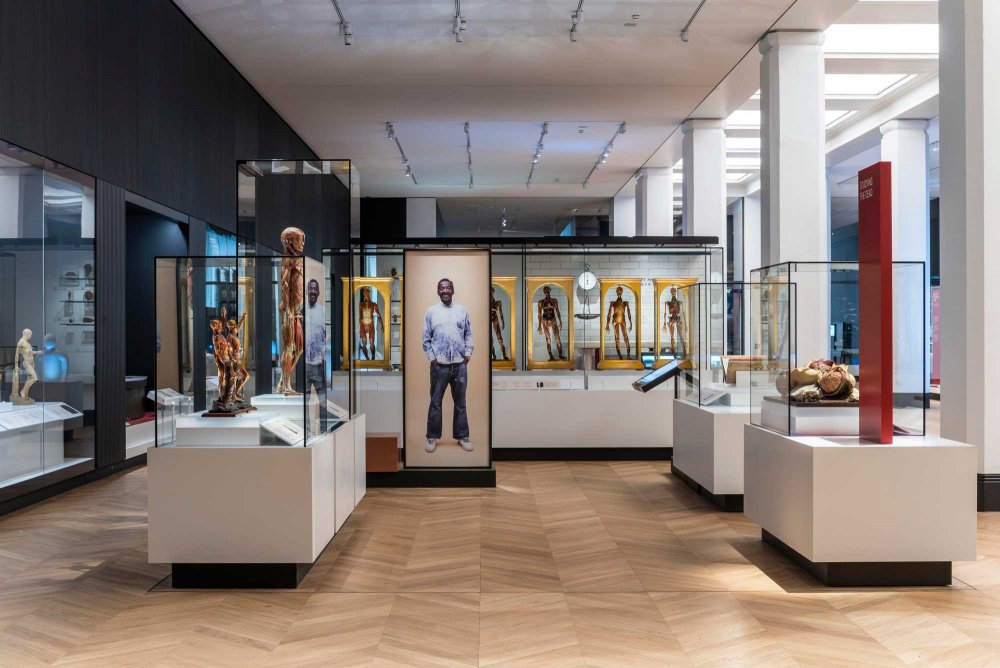
The world’s largest museum galleries devoted to the history of medicine have opened at the Science Museum. The £24 million ‘Medicine: The Wellcome Galleries’ cover more than 3000 square metres across five galleries with exhibits all aimed at better understanding how the human body has transformed medicine. More than 3,000 artefacts from the collections of Henry Wellcome and the Science Museum Group are on display including 200-year-old wax anatomical models, the first stethoscope, lancets used by Edward Jenner in his smallpox vaccinations and medicine chests used on expeditions to Mount Everest and Antarctica. There’s also an intricate model of a 1930s hospital, a rare iron lung used by patients with polio and the world’s first MRI scanner, protein model and paramedic bicycle. Visitors also have the chance to step inside a Victorian-era pharmacy, discover what it takes to heart transplant surgery and treat a critically ill patient. There are also four specially commissioned artworks including life-sized portraits by Siân Davey presented along with the stories of individuals impacted by how medicine defines ‘normal’, Marc Quinn’s monumental bronze Self-Conscious Gene – inspired by inspired the tattooed body of model Rick Genest, Bloom – Studio Roso’s aerial sculpture representing the spread of diseases through populations and Santa Medicina, Eleanor Crook’s bronze sculpture of a figure that is both surgeon and saint and which encourages visitors to contemplate their relationship with mortality.  Entry is free. For more, see www.sciencemuseum.org.uk. PICTURE: The Medicine and Bodies gallery in Medicine: The Wellcome Galleries © Science Museum Group.  

Nine of British modernist artist David Bomberg’s key works are being shown alongside images that influenced him in a new exhibition at the National Gallery. Young Bomberg and the Old Masters showcases Bomberg’s works including The Mud Bath (1914), Vision of Ezekiel (1912) and the first version of his war painting Sappers at Work: A Canadian Tunnelling Company, Hill 60, St Eloi (c1918-19) alongside the likes of Botticelli’s Portrait of a Young Man and the studio of El Greco’s The Agony in the Garden of Gethsemane. The display can be seen in Room 1 until 1st March. Admission is free. For more, see www.nationalgallery.org.uk.

The final 20,000 tickets for London’s New Year’s Eve fireworks are being released from noon today. This year’s display features more than 12,000 fireworks and 2,000 lighting cues choreographed to music and will start with the sound of Big Ben’s chimes (despite them  being silent due to renovation works this year). Tickets, priced at £10, must be purchased in advance to attend the event and those who aren’t lucky enough to get one can watch live on BBC One. To purchase tickets, head to www.london.gov.uk/nye.

Send all items for inclusion to exploringlondon@gmail.com.

10 (lesser known) monuments featuring animals in London – 1. Dick Whittington’s cat…

OK, there’s a plethora of monuments in London which depict animals including well-known Animals in War Memorial in Park Lane. But in this series we thought we’d take a look at some of the less well-known monuments or those that are a little off the beaten track. 

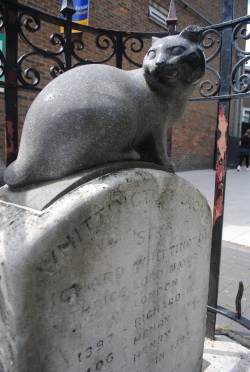
First up, it’s Dick Whittington’s cat – sometimes portrayed as male cat called Tommy – who can be seen sitting atop what’s called The Whittington Stone at the foot of Highgate Hill in London’s north.

The Grade II-listed monument, the base of which dates from 1821 and was restored in 1935, is said to mark the spot where Whittington, who was said to be about to give up on life in the city after failing to make his fortune and, with his cat in tow, was making his way home to Gloucestershire, heard the famous Bow Bells of London ring out and apparently say to him “Turn Again Whittington! Thrice Lord Mayor of London!”.

Which he did and which become true, apparently thanks to his cat whom he sold for a fortune in gold to someone from a rat-infested land, usually referred to as the Kingdom of Barbary.

Of course, Sir Richard Whittington, while known by many through Christmas pantomimes, was a real person who lived in the 14th and 15th centuries (and was indeed Mayor of London three times) but whether he actually had a cat remains a matter of conjecture.

The sculpture of the cat, made of polished black Kellymount limestone, is the work of Jonathan Kenworthy, and was only added to the top of the stone in 1964.

There is apparently a belief that if the Whittington Stone is ever removed or any harm befall it, it is an omen of disaster.

WHERE: Highgate Hill, near the intersection with Magdala Avenue (nearest Tube station is Archway); WHEN: Anytime; COST: Free; WEBSITE: No.


LondonLife – The Boar’s Head Playhouse excavations…

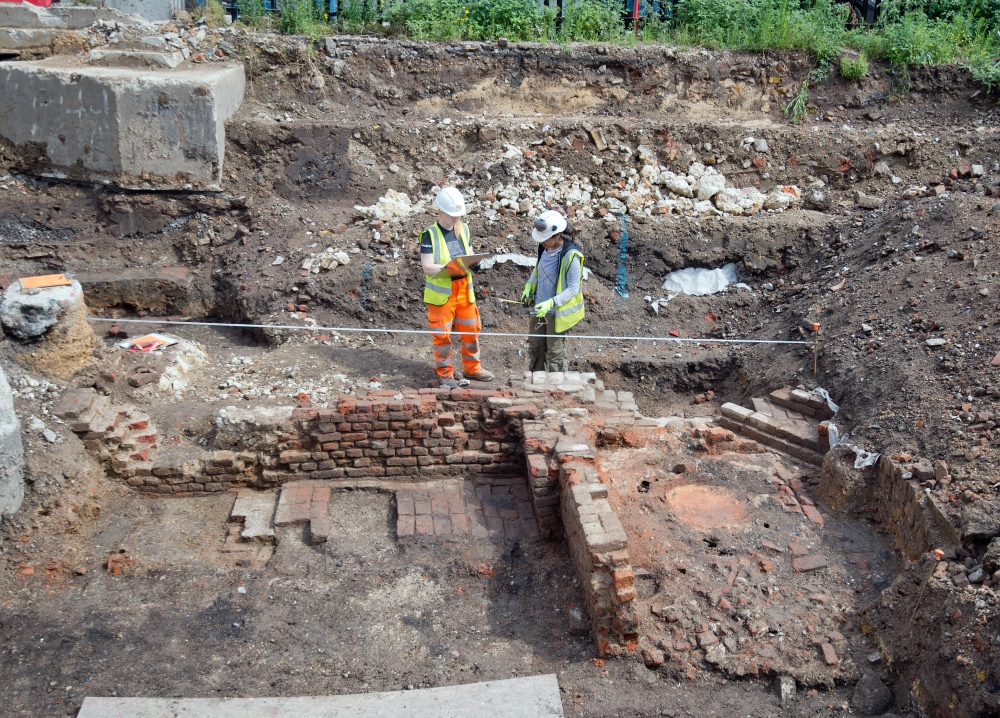
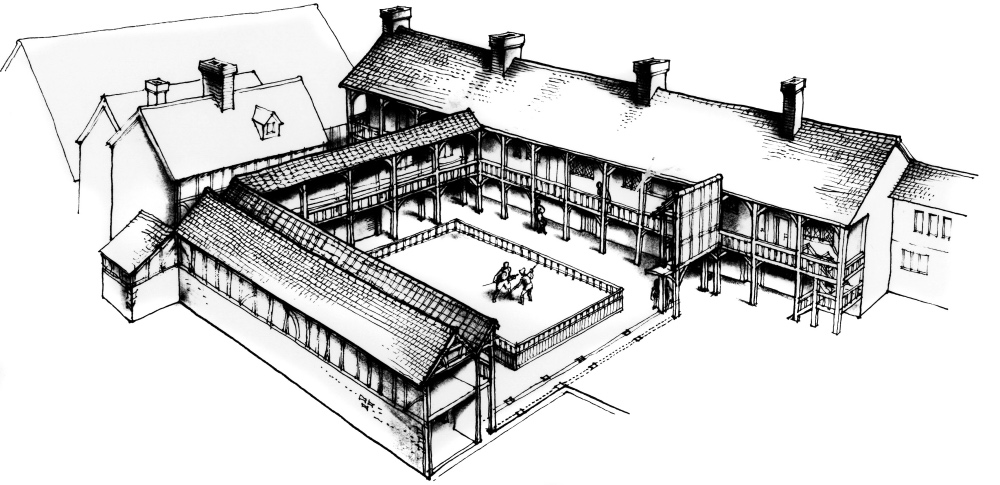
MOLA archaeologists have started excavating the site of The Boar’s Head Playhouse in Middlesex Street, Whitechapel, before construction of a new student housing complex. The playhouse, the location of which is known from historical accounts, was created in 1598 when inn owner Oliver Woodliffe converted his establishment by adding tiered galleries, a stage and central open air yard (extra galleries and a roof over the stage were added a year later). The playhouse hosted popular acting troupes including Lord Derby’s Men and the Lord Worcester’s Men, later the Queen’s Men, led by the famous actor and playwright Thomas Greene, and among the plays performed was the comedy No-body and Some-body as well as a chronicle of the life and reign of Elizabeth I, If You Know Not Me, You Know No Bodie. It is hoped the excavations will provide new insights into the theatre. The accommodation, being developed by Unite Students, will provide housing for 915 students and is expected to open in 2021. PICTURES: Top – Archaeologists record an 18th century clay tobacco pipe kiln built against 16th century walls associated with the Boar’s Head playhouse © MOLA; Below – Reconstruction of the Boar’s Head Playhouse from 1598, by C Walter Hodges.


What’s in a name?…Denmark Hill

This area in the south-east of London derives its name from a royal connection – Prince George of Denmark, the husband of Queen Anne, is said to have owned a hunting lodge on the east side of the hill.

Originally named Dulwich Hill (given its proximity to Dulwich), its name was changed in honour of the prince after his marriage to Queen Anne in 1683. The residential area centres on the street of the same name – Denmark Hill.

Landmarks include Ruskin Park, named after Victorian art critic John Ruskin, who lived the street, as well as Maudsley Hospital – built in 1915 – and King’s College Hospital, which moved here in 1913.

The Salvation Army’s iconic William Booth Training College, designed by Sir Giles Gilbert Scott and completed in 1932, is also located here.

PICTURE: View from the top of William Booth Tower looking north towards the City of London (diamond geezer/licensed under CC BY-NC-ND 2.0


This Week in London – Flying cars and iconic vehicles at V&A; 150th anniversary of the Cutty Sark’s launch; and, Eco-Visionaries at the RA…

An autonomous flying car is among exhibits at a new exhibition focusing on the automobile at the V&A on Saturday. The flying car is one of 15 vehicles in Cars: Accelerating the Modern World which also features the first production car in existence – a 1925 Ford Model-T, a converted low-rider and a Firebird I concept car from 1953 (pictured). There’s also 250 associated objects to see – everything from a 1920s cloche hat designed for car travel to a series of hood ornaments produced by René Jules Lalique in the 1920s and a Michelin travel guide from 1900 –  in an examination of how the car changed our relationship to speed, the way we make and sell, and the landscape around us. Runs until 19th April. Admission charge applies. For more, see www.vam.ac.uk. PICTURE: General Motors Firebird I (XP-21) © General Motors Company, LLC

The 150th anniversary of the launch of tea clipper, Cutty Sark, is being celebrated in Greenwich this weekend. Along with family friendly events including face painting, storytelling and craft, there will be an after dark anniversary classical concert and bespoke birthday cupcakes in the cafe. Admission charge applies (except for the 150th visitor who will go free as well as residents of Greenwich and Dumbarton, where the ship was built in 1869 – provided they have ID). For more, see www.rmg.co.uk/cuttysark

Artists, designers and architects from across the globe come together in a new exhibition at the Royal Academy addressing humanity’s ecological impact on the planet. Eco-Visionaries features works by 21 international practitioners in a range of media including film, sculpture, immersive installation, architectural models and full-scale prototypes. Highlights include the UK debut of the Rimini Protokol’s win > < win (2017) featuring a tank of live jellyfish, Alexandra Daisy Ginsberg’s The Substitute (2019) in which visitors come face-to-face with a life-size digital reproduction of the now extinct northern white rhinoceros, Danish-Icelandic artist Olafur Eliasson’s The ice melting series (2002), and New York-based architecture studio WORKac’s 3.C.City: Climate, Convention, Cruise (2015). Admission charge applies. Runs until 23rd February. For more, see www.royalacademy.org.uk.

Send all items for inclusion to exploringlondon@gmail.com.

10 (more) historic London garden squares – A recap…

We’ve finished our series on historic London garden squares, so before we launch our next series, here’s a recap…

1. Portman Square…

2. Golden Square…

3. Gordon Square…

4. Red Lion Square…

5. Brunswick Square…

6. St George’s Square…

7. Belgrave Square…

8. Salisbury Square…

9. Manchester Square…

10. Fitzroy Square…

LondonLife – A Greenwich streetscene…

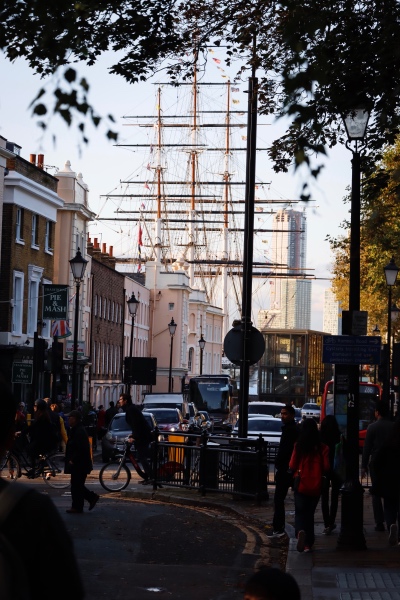
Greenwich with the masts of the Cutty Sark in the background. PICTURE: Robert Likovski/Unsplash

Where’s London’s oldest…door?

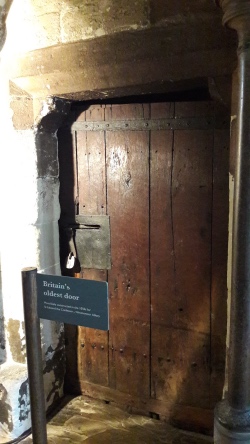
Yes, London has an officially dated oldest door. In fact, it’s the oldest door in Britain.

The door is located in Westminster Abbey and is believed to date from the time of King Edward the Confessor, who founded the abbey which was inaugurated in 1065.

Made of five vertical oak planks – all cut from the same tree, most likely felled on abbey lands, possibly in Essex – and held in place by three horizontal iron straps, it opens from the Abbey Cloisters into the octagonal Chapter House’s outer vestibule. In 2005 it was dated, using ring-patterns in the wood, to around 1050.

The door now stands six-and-a-half feet high and four foot wide but it has been cut down. It’s believed the original door was nine foot high and slightly wider.

It’s thought to be probable that both faces were originally covered with animal hide (the iron straps are, unusually recessed into the wood on both sides to enable this, and were covered with decorative iron straps and hinges – only one of decorative straps remains today).

The door may have originally served as the door to the chapter house built for Edward the Confessor’s abbey. It is believed to have been moved into its current location in about 1250 when King Henry III’s Chapter House was built as part of extravagant reconstruction of the abbey.

WHERE: Westminster Abbey (nearest Tube stations are Westminster and St James’s Park); WHEN: Times vary – see the website for details; COST: £23 adults/£20 concession/£10 children (discounts for buying online; family rates available); WEBSITE: www.westminster-abbey.org

PICTURE: Pjposullivan1 (licensed under CC- BY-SA 2.0)

This Week in London – King George IV on display; The Clash’s ‘London Calling’ hits 40; and, Skate at Somerset House…

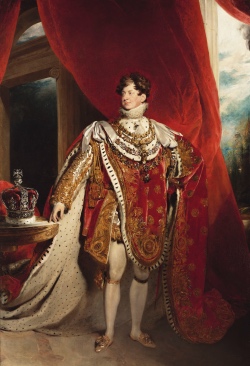
• King George IV’s public image and his taste for the theatrical and exotic as well as his passion for collecting are all the subject of a new exhibition opening at The Queen’s Gallery, Buckingham Palace, on Friday. Set against the tumultuous backdrop of his times (which included the French Revolution and Napoleonic Wars as well as a period of unprecedented global exploration), George IV: Art & Spectacle shows the contrasts of his character – on the one hand “a recklessly profligate showman” and, on the other, a “connoisseur with intellectual interests whose endless acquisitions made him one of the most important figures in the formation of the Royal Collection”. The display features artworks including Rembrandt’s The Shipbuilder and his Wife (1633) – at 5,000 guineas it was the most expensive artwork he ever purchased (pictured), as well as works by the likes of Jan Steen, Aelbert Cuyp and David Teniers. There’s also portraits the King commissioned from Sir Thomas Gainsborough,  a Louis XVI service created by Sevres (1783-92) and the great Shield of Achilles (1821) – designed by John Flaxman, it was on display at his Coronation banquet. Other items include diplomatic gifts sent to the King – such as a red and yellow feather cape (‘ahu’ula) from King Kamehameha II and Queen Kamamalu of the Sandwich Islands (now Hawaii) and a Maori club brought from Hawaii by Captain Cook’s ship Resolution – and a copy of Emma sent to him by Jane Austen’s publisher. Runs until 4th May. Admission charge applies. For more, head to www.rct.uk/visit/the-queens-gallery-buckingham-palace. PICTURE: Sir Thomas Lawrence, George IV (1762-1830), 1821 (Royal Collection Trust/© Her Majesty Queen Elizabeth II 2019)

A new exhibition commemorating the release of The Clash’s third album, London Calling, 40 years ago opens at Museum of London tomorrow.  The display features items from the group’s personal archive such as Paul Simonon’s broken Fender Precision Bass, which Simonon smashed while on stage in New York City on 21st September, 1979, a handwritten album sequence by Mick Jones showing the final order for the four sides of the double album London Calling, one of Joe Strummer’s notebooks from 1979 and the typewriter he used to document his ideas, lyrics and other writing, and Topper Headon’s drumsticks. To coincide with the opening, Sony Music is releasing the London Calling Scrapbook, a hardback companion to the display which comes with the album, on CD. The free display can be seen until next spring. For more, see www.museumoflondon.org.uk.

Skate at Somerset House with Fortnum & Mason is celebrating its 20th anniversary this year. The ice-skating rink, which opened this week, is being accompanied by the major exhibition 24/7 exploring the non-stop nature of modern life, as well as a programme of events including Somerset’s first skating ‘all-nighter’ on 7th December and special ‘Skate Lates’. There’s also Fortnum’s Christmas Arcade which, along with dining venue Fortnum’s Lodge has been created in Somerset House’s West Wing, as well as the rinkside Skate Lounge – home to the Bailey’s Treat Bar, and the Museum of Architecture’s Gingerbread City, now in its fourth year. Until 12th January. Admission charges apply. Head here for more.

Send all items for inclusion to exploringlondon@gmail.com.

10 (more) historic London garden squares…10. Fitzroy Square…

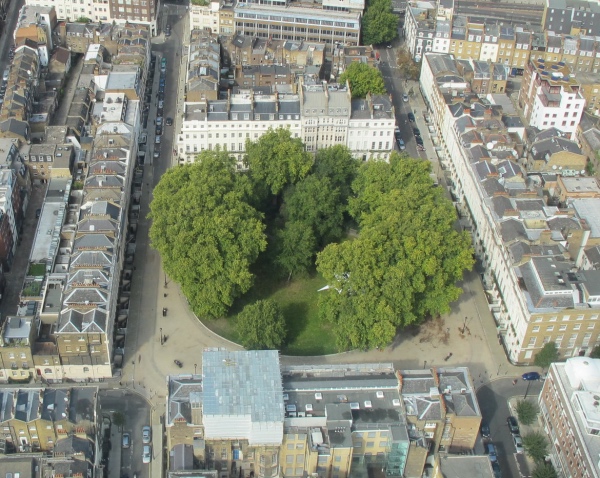
This Georgian square, like the nearby (and famous) Fitzroy Tavern, Fitzroy Street and Fitzrovia itself, owes its names to the FitzRoy family who owned the land on which it was built.

It was Charles FitzRoy, 1st Baron Southampton, who had the area developed in the late 18th and early 19th centuries with the aim of creating a desirable location for aristocratic families to live.

It was completed in stages with residences along the eastern and southern sides built first – from the 1790s – by Robert and James Adam (the southern side was destroyed in the Blitz but has been rebuilt).

The Napoleonic Wars then interrupted construction and it wasn’t until the late 1820s and early 1830s that the northern and western sides were completed.

Notable residents included painter James McNeill Whistler (number eight), Sir Charles Eastlake, first director of the National Gallery (number seven), Prime Minister Lord Salisbury (number 21 – now home to the High Commission of Mozambique), George Bernard Shaw (number 29 – later also briefly home to Virginia Woolf), and artists Ford Madox Brown (number 37) and Roger Fry (number 33)

In more recent times, the square has been home to the likes of the late media tycoon Robert Maxwell (number six), and novelist Ian McEwan (number 11 – he made the square the main location for his 2005 novel, Saturday).

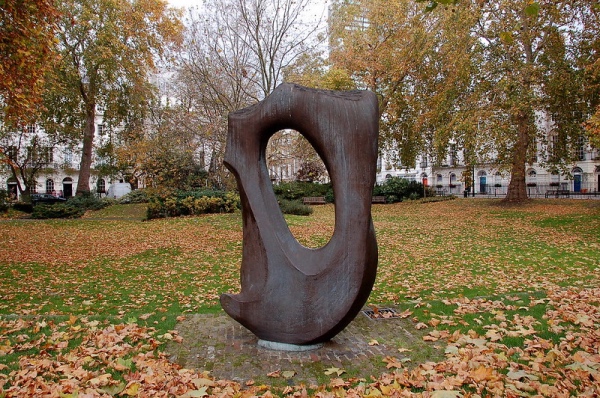
The garden was first laid out in about 1790, initially just for the use of residents. Monuments now include Naomi Blake’s View, erected for the Queen Elizabeth II’s Silver Jubilee in 1977.

The square was largely pedestrianised in the 1970s and upgraded in 2008.

PICTURES: Top – View of Fitzroy Square from the former BT Tower (Rain Rabbit/CC BY-NC 2.0/image cropped); Below – View (James Stringer/CC BY-NC 2.0/)

LondonLife – Gertrude Bell and Ronnie Scott commemorated…

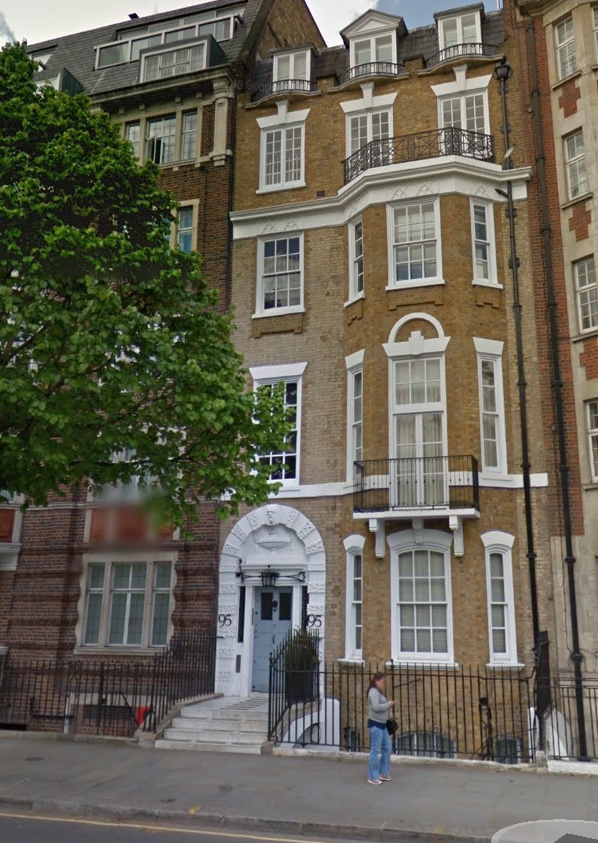
Gertrude Bell – an adventurer, archaeologist, mountaineer and diplomat (who was at least partially responsible for the creation of the nation of Iraq) – has been honoured with an English Heritage Blue Plaque on the Chelsea home that served as her London based for some 40 years. The three storey Georgian residence at 95 Sloane Street (pictured) belonged to Lady Olliffe, the mother of Bell’s step-mother Florence. Bell, who spent much of her time in the Middle East, used the home as her London base between 1884, when she graduated from Queen’s College, through to her last visit to London in 1925, including during an extended period in 1915 when she managed the Red Cross’s Wounded and Missing Enquiry Department’s office in Arlington Street. Meanwhile, jazz musician Ronnie Scott has also been honoured with a Blue Plaque which marks the site of his first club in Soho. Scott and fellow saxophonist Pete King opened jazz club in the basement of 39 Gerrard Street in Chinatown on 30th October, 1959 – 60 years ago this year. The club remained there for six years before moving to 47 Frith Street in 1965. Musicians including Zoot Sims, Johnny Griffin, Roland Kirk, Dexter Gordon, Sonny Stitt, Stan Getz, Benny Golson, Ben Webster, and Al Cohn all performed at the club while patrons included Harold Pinter, the Beatles, Peter O’Toole, and Spike Milligan. For more on English Heritage Blue Plaques, visit www.english-heritage.org.uk/visit/blue-plaques/. PICTURE: Google Maps

Famous Londoners – Rip…


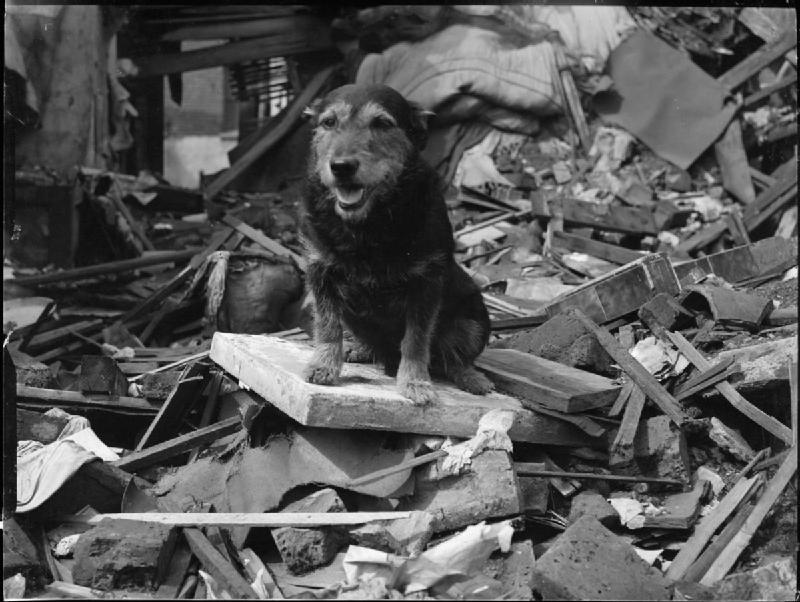
A hero of the Blitz during World War II, Rip was a stray dog who was
adopted by the Southill Street Air Raid Patrol in Poplar, east London. 

Found in the aftermath of a bombing by Air Raid Warden E King, he became the mascot of the air raid patrol and an unofficial rescue dog.

The mongrel terrier’s task was to help locate people and animals buried in rubble after an air raid and despite his lack of formal training, he is reported to have saved more than 100 lives as well as recovered many bodies.

In fact, such was his success that it was partially responsible for prompting authorities to start officially training dogs to find casualties in debris towards the end of the war.

Rip survived the war and was awarded a PDSA Dickin Medal in July, 1945. Created in 1943, the award is described as Victoria Cross for animals.

Rip apparently wore on his collar until his death 1946 and was buried in the PDSA cemetery in Ilford, Essex.

In 2009 his medal was sold at auction for £24,250, well above expectations of £10,000.

PICTURE: © IWM (D 5937)