 • Buckingham Palace’s annual Summer Opening of the State Rooms kicks off this Saturday and this year, to mark the 70th birthday of Prince Charles, it features a special exhibition of more than 100 works of art – all personally selected by His Royal Highness. Prince and Patron features some of the Prince of Wales’ favourite works of art from the Royal Collection as well as works created by young artists supported by three of charities he’s founded to encourage the revival of dying arts and the maintenance of traditional skills – The Royal Drawing School, The Prince’s Foundation School of Traditional Arts and Turquoise Mountain. Among items featured from the Royal Collection are Johan Joseph Zoffany’s painting The Tribuna of the Uffizi (1772–77), and a cloak of Napoleon Bonaparte which, made of felt and embroidered in silk, was removed from the Emperor’s baggage train in the aftermath of the Battle of Waterloo in 1815 and presented to the future George IV by Field Marshal Blücher. There are also works from his personal collection including Michael Noakes’ oil sketches HM The Queen (1972-73) and Queen Elizabeth The Queen Mother (1973) as well as two preparatory oil sketches of the first official double portrait of Prince William and Prince Harry (the work of Nicky Philipps, they’re on show for the first time) and a previously unseen sketch in pencil on paper by Bryan Organ for the portrait HRH The Duke of Edinburgh. Prince and Patron can be seen as part of the Summer Opening of the State Rooms until 30th September. Admission charge applies. For more, see www.royalcollection.org.uk. PICTURE: Michael Noakes, Queen Elizabeth The Queen Mother (1973), © Anya and Jonathan Noakes/Royal Collection Trust.
• Buskers will be descending on Wembley Park this Saturday as London becomes one of numerous cities around the world marking the third International Busking Day. Multiple Grammy Award-winning composer, producer and guitarist Nile Rodgers will launch the day at 11.30am before performances – including by internationally renowned singer-songwriter Newton Faulkner, Nina Nesbitt and folk/rock band Keywest – kick off 12.30pm. The day, which runs until 7.30pm, will include music, magic, comedy, physical theatre and dance. For more, see http://wembleypark.com/international-busking-day-2018/.
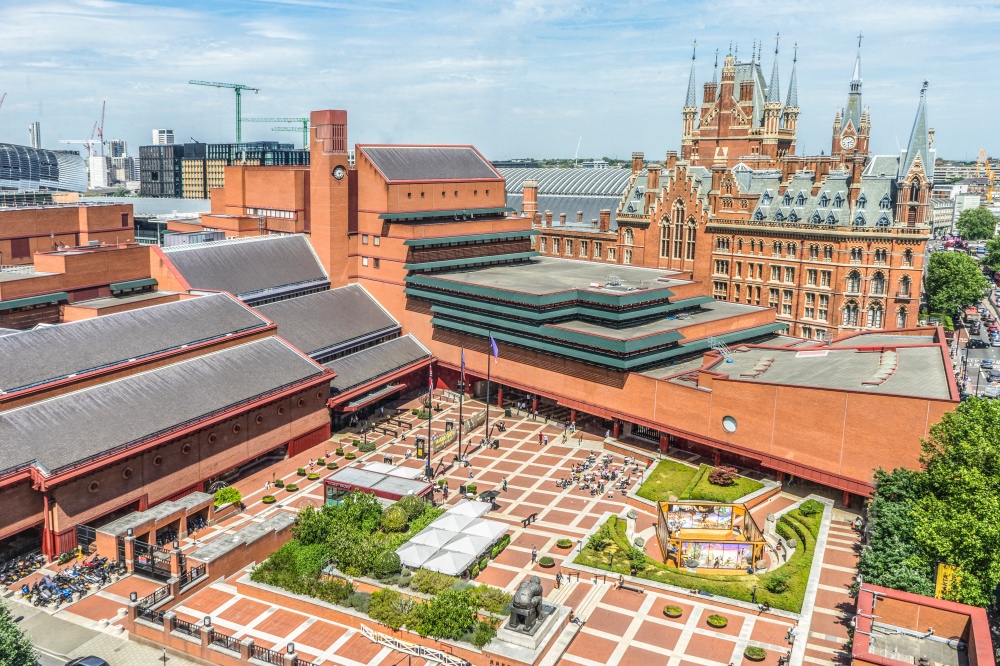
• A free display of Pacific portraits has gone on show at the British Library in what’s described as a “creative response” to its exhibition James Cook: The Voyages. Created by New Zealand Māori photographer Crystal Te Moananui-Squares and New Zealand Māori producer Jo Walsh, Tūhuratanga: Voyage of Discovery features 20 portraits documenting the people of Te-Moananui-a-Kiwa (the Pacific Ocean) who are living in the United Kingdom today. The display can be seen in the Second Floor Gallery until 23rd September. For more, see www.bl.uk/events/tuhuratanga-voyages-of-discovery-photographs-by-crystal-te-moananui-squares.
Send all items for inclusion to exploringlondon@gmail.com.


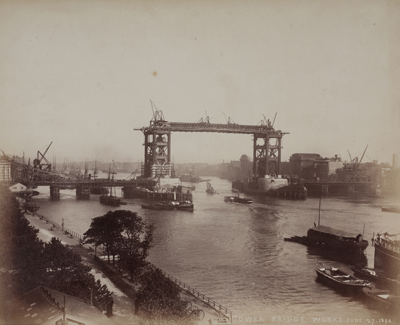
 Albury Street in Deptford, 1911. The image, taken by the London County Council, is just one of thousands which form part of a new free, online resource, Collage – The London Picture Archive. The world’s largest collection of images of London, the archive contains more than 250,000 images of London spanning the period from 1450 to the present day. It includes more than 8,000 historical photographs of life on the capital’s streets as well as major events – everything from the Great Fire of London in 1666 to the construction of Tower Bridge in the late 19th century. The photographs, maps, prints, paintings and films in the collection are all drawn from the collections of the City of London Corporation’s Guildhall Art Gallery and the London Metropolitan Archives in Clerkenwell. Other images shown here include (above right) ‘Street Life in London’, 1877 (taken by Adolphe Smith and John Thomson, this image was an early use of photography); (below) ‘Construction of the Metropolitan Railway (the first tube line)’, 1862 (taken at King’s Cross Station); and (far below), ‘The Construction of Tower Bridge’, 1891-1892 (taken from Tower Embankment). Collage – The London Picture Archive is free to access and available at


 Exploring London