Treasures of London – The British Library’s St Pancras building…

This week marked 20 years since the British Library’s St Pancras building was officially opened, so we thought it timely to take a look at this London ‘treasure’.

Located on Euston Road, the building, complete with rather grand piazza, was designed by architect Sir Colin St John Wilson and his partner MJ Long.

The largest public building to be constructed in the 20th century in the UK, it was designed specifically to house the British Library collections – which itself had only been created in 1972 when an act was passed by Parliament.

The building – which did draw some criticism over its design when it was completed but has been embraced by the public – was officially opened by Queen Elizabeth II on 25th June, 1998.

Grade II-listed since 2015, it’s comprised of 112,000 square metres spread over 14 floors – including five below ground – and features 11 reading rooms specialising in various subject areas including one for ‘manuscripts’, another for ‘maps’ and another for ‘rare books and music’.

The centrepiece of the building is the King’s Tower which is home to the library of King George III and the Sir John Ritblat Treasures of the British Library Gallery.

The collection housed at the library includes more than 150 million items. Highlights – many of which are housed in the Treasures Gallery – include a copy of the Magna Carta, the Lindisfarne Gospels, and Leonardo da Vinci’s notebook as well as a first edition of The Times (18th March, 1788), manuscripts by everyone from Jane Austen and James Joyce to Handel and the Beatles, and the Diamond Sutra, the world’s earliest dated printed book.

The library, which also hosts temporary exhibitions, is also home to a restaurant, cafe and several coffee shops as well as its own retail shop.

There are now plans to further develop the campus by expanding onto a 2.8 hectare site at its northern end with the aim, among other things, of creating more exhibition spaces, new learning facilities and a permanent home for the Alan Turing Institute, the UK’s national centre for data science and artificial intelligence. A joint venture led by Stanhope plc, working with architects Rogers Stirk Harbour + Partners (RSHP), won a competitive process to undertake the development last year.

WHERE: British Library, 96 Euston Road (nearest Tube stations are Kings Cross St Pancras, Euston and Euston Square); WHEN: 9.30am to 6pm (includes Treasures Gallery – exhibition times can vary); COST: Free (but admission fees may be charged for exhibitions); WEBSITE: www.bl.uk.

PICTURE: Top – Aerial view of the St Pancras building (Tony Antoniou); Below – One of the reading rooms (Paul Grundy).

This Week in London – The history of women in Parliament; Michael Jackson portraits; and, Nevinsons honoured…

The campaign for women to be able to vote and stand as representatives in Parliament is the subject of an exhibition opening at the Houses of Parliament. Staged in Westminster Hall, Voice & Vote: Women’s Place in Parliament features historic objects, pictures and archives from Parliamentary collections and elsewhere with the “immersive” recreation of some of the lost historical spaces in the Palace of Westminster among the highlights. These include ‘The Ventilator’ – a space above the House of Commons Chamber where women, banned from the public galleries, watched and listened to Parliamentary debates, ‘The Cage’ – a ladies gallery closed off by brass grills built as part of the House of Commons when it was reconstructed after the 1834 fire, and ‘The Tomb’ – a room for women MPs after the 1918 decision allowing them to stand for Parliament. The exhibition, which is free to attend, runs from until 6th October. Tickets have to be pre-booked via Parliament’s website. PICTURE: Michael D Beckwith/Unsplash

The final commissioned portrait of popstar Michael Jackson is among images on show in a new National Portrait Gallery exhibition exploring his influence on contemporary art. Along that work – Kehinde Wiley’s 2010 work Equestrian Portrait of King Philip II (Michael Jackson), the exhibition Michael Jackson: On the Wall features American artist and activist Faith Ringgold’s story quilt Who’s Bad?, a series of collages by Isaac Julien, and a ‘dinner jacket’ covered with forks, spoons and knives made by costume designer Michael Lee Bush as well as a pop-graffiti style portrait by Keith Haring, on show for the first time in 30 years. Among new works created specially for the exhibition are a line drawing by artist Michael Craig-Martin which is based on the image of 11-year-old Michael used for the cover of Rolling Stone magazine in April, 1971, and a large-scale painting by Yan Pei Ming, In Memory of Michel Jackson. Opening today, the exhibition can be seen until 21st October. Admission charge applies. For more, see www.npg.org.uk.

World War I artist CRW Nevinson and his father, journalist Henry Nevinson, have both been honoured with an English Heritage Blue Plaque. The plaque was unveiled at a property at 4 Downside Crescent in Hampstead where the Nevinson family lived between 1903 and 1941 before bombing raids made the home uninhabitable. Richard “CRW” Nevinson (1889-1946) was one of the most famous artists of the Great War and used a variety of styles, including Futurism and Cubism, to capture the brutality of the war based on his experience while serving briefly with the  Royal Army Medical Corps in France (before he was sent home in 1915 for rheumatic pain). His father, who reported on the Boer War and World War I, was known as “the king of war correspondents” and was a champion of universal suffrage. For more, see www.english-heritage.org.uk/visit/blue-plaques/.

Send all items for inclusion to exploringlondon@gmail.com

10 (lesser known) memorials to women in London – 1. Dame Louisa Brandreth Aldrich-Blake…


We’re kicking off a new Wednesday series this week and in honour of the fact that a statue of Millicent Fawcett became the first commemorating a female to be erected in Parliament Square earlier this year, we’re looking at 10 other memorials – lesser known ones – to women in London. 

First up, it’s a Grade II-listed monument in Tavistock Square Gardens commemorating Louisa Brandreth Aldrich-Blake (1865-1925), the first female surgeon in Britain and pioneer of new surgical methods treating cancers of the cervix and rectum. She was also dean of the London School Of Medicine For Women.

This double-sided monument, which sits above a curved seat, features two busts of Dame Aldrich-Blake, both holding a book. On the sides of the monument are the depictions of the Rod of Asclepius – an intertwined staff and serpent long used as a symbol for the medical profession.

The base and seat were designed by Edwin Lutyens – the man behind the Cenotaph – and the identical bronze busts were the work of Arthur George Walker.

The monument was apparently erected in 1926, a year after Dame Aldrich-Blake’s death, in a rather fitting location, Tavistock Square is the location of the headquarters of the British Medical Association in BMA House.

As well as listing her achievements in the world of medicine, the monument bears the rather uplifting inscription: “The path of the just is as the shining light”.

PICTURE: Top – Stu’s Images (licensed under CC BY-SA 3.0); Right – Robin Sones (licensed under CC BY-SA 2.0)  

LondonLife – More new benches for City of London…

As we reported last Thursday, a series of specially designed new benches have been rolled out across the City of London as part of this month’s London Festival of Architecture. We loved the designs so much, we thought we’d show you some of the others. Above is Nicholas Kirk Architects’ Money Box which, located outside London Bridge Station, is formed of 45,000 stacked pennies while immediately below is McCloy + Muchemwa’s A Bench for Everyone. Located Inside One New Change, its folded shape is designed to evoke the “memory and much-loved comforts of home furniture”. The festival runs until the end of the month. PICTURES: All images © Agnese Sanvito

Above – Mariya Lapteva’s City Ghosts which, located in front of the Royal Exchange, is inspired by the history of the area including East India House and the little shopfronts along Leadenhall Street.

Above – Maria Gasparian’s Ceramic City Bench in Bow Church Yard featuring colours inspired by the “multi-layered context of the City of London that has for centuries been a place for trade, exchange and religious diversity”.

Above – Mills Turner’s Double Bench in Fen Court has been designed to be easy to assemble and adjustable and features an “organic silhouette” which follows the natural curve of the human body.


Where’s London’s oldest…traffic lights?

OK, well, they’re not there any more but the first traffic lights erected anywhere in the world were placed on the north-east corner of Parliament Square in Westminster on 9th December, 1868.

The location at the intersection of Great George, Parliament and Bridge Streets outside the Houses of Parliament wasn’t chosen by random – there had been several traffic accidents at the congested site.

The seven metre tall lights, which were operated by a police constable, were based on railway signals – in fact they had been invented by a railway engineer, John Peake Knight of Nottingham. A City of Westminster plaque commemorates him close to the site.

The structure (pictured above in a police notice of which apparently some 10,000 copies were made) featured three semaphore arms which were lowered to an angle (signalling go or caution) or raised to horizontal (signalling stop). There was also gas-powered light for use at night – it changed from green (go or caution) and red (stop).

They didn’t last too long – many drivers didn’t recognise what the signals meant, others ignored them and there were frequent problems including a gas leak at the base which led to an explosion injuring the policeman operating them at the time. They were removed the following year.

The first electric lights, meanwhile, didn’t arrive in the capital until after their invention in the US where the first were  installed in Cleveland, Ohio, in 1914. In London it wasn’t until 1926 that the first electric lights were installed, this time at the intersection of Piccadilly and St James’s Street.

The first vehicle-activated lights came some seven years later and were installed at the corner of Gracechurch Street and Cornhill in the City.

PICTURE: Leonard Bentley/Creative Commons


Lost London – St Luke’s Hospital for Lunatics, Old Street…

A monumental-sized building on Old Street in the City of London, St Luke’s Hospital for Lunatics was founded in 1751 to treat the poor who suffered from mental illnesses.

The new hospital – which was built partly through concerns about abuses patients suffered at the more famous Royal Bethlehem Hospital (Bedlam) – was initially located on a site in Moorfields which had been formerly occupied by a foundry. But in 1786 it moved to the purpose-built palatial premises in Old Street where it remained until 1916.

The new building, which was designed by George Dance after an competition for its design apparently failed to find a suitable candidate, had a 150 metre long street frontage with a central entrance and male wards on one side and female wards on the other.

The building contained some 300 individual cells – each had a small window, but no heating. There were gardens located behind it and in the basement were cold water baths used to treat patients.

The hospital building was enlarged in the 1840s when infirmaries and a chapel were added.

By the 1860s, the hospital appears to have abandoned its target market of the poor – the 150 or so patients were then described as being of “middle class”.

In 1916, the patients were transferred to other institutions – the charity running the hospital set up a ward in Middlesex Hospital – or sent home and the buildings were acquired by the Bank of England.

The premises was used to print banknotes until the 1950s and the building, which had been damaged during World War I, was eventually demolished in 1963.

The archive of St Luke’s have been digitised and are held by the Wellcome Library.

This Week in London – New City of London benches for LFA; summer concerts in Regent’s Park; and Romania and World War I…

A series of new “one-off” public benches are being unveiled across London as part of the month-long London Festival of Architecture currently underway in the city. Designed by emerging artists and designers and installed in partnership with the City of London Corporation and Cheapside Business Alliance, the benches include Patrick McEvoy’s doggy design, Here Lies Geoffrey Barkington (pictured), located in Jubilee Gardens in Houndsditch, Maria Gasparian’s Ceramic City Bench in Bow Church Yard, McCloy + Muchemwa’s sinuous A Bench for Everyone inside One New Change, and Nicholas Kirk Architects’ Money Box – formed of 45,000 stacked penny coins – outside London Bridge Station. The festival runs until the end of the month and there’s still a plethora of activities to take part in. For more, see www.londonfestivalofarchitecture.org. PICTURE: © Agnese Sanvito (Via LFA)

A free summer series of concerts kicks off in The Regent’s Park Bandstand this weekend in what has been described as a “new chapter” in the bandstand’s history. To be held every Sunday afternoon between 3pm and 5pm (with an extra concert to be held at the same time on the Bank Holiday of 27th August) until 2nd September, the concerts range from classic rock to big bands and jazz. Those performing include the Brixton-based South London Symphonic Winds, Regent Community Brass and the Barnes Concert Band as well as the Heroes Band – which raises funds for Help for Heroes – and Royal Academy of Music-associated acts, the Jonny Ford Jazz Quintet and Metropolitan Brass. The concerts have been organised by the Friends of Regent’s Park & Primrose Hill, working with The Royal Parks charity, the Royal Academy of Music and the Crown Estate Paving Commission, and it’s hoped they’ll become an annual fixture in the park. For more, see www.royalparks.org.uk/parks/the-regents-park.

Romania’s role in World War I is the subject of a free, temporary display at the National Army Museum in Chelsea. Romania and the Great War charts the “years of neutrality (1914-1916), the fierce battles of 1916 on the Entente side, the painful retreat to Moldavia, the striking victories of 1917 and the momentous victory of 1918, which offered a strategic foundation to the political unification of all Romanian provinces and the creation of a modern, democratic state”. Objects on show include photographs, maps, uniforms and original First World War medals. Runs until 15th July. For more, see www.nam.ac.uk.

Send all items for inclusion to exploringlondon@gmail.com.

LondonLife – ‘The London Mastaba’ floats on the Serpentine…

The work of internationally renowned artist Christo, The London Mastaba floats serenely on Hyde Park’s Serpentine, despite the reported ruffled feathers of some swimmers upset over its installation in their pool.

The floating sculpture, which takes up about one per cent of the lake’s surface, is Christo’s first public sculpture created for show in the UK.

Made up of 7,506 multi-coloured and stacked barrels reaching 20 metres high, the sculpture sits on a floating platform of high-density polyethylene cubes which has been anchored into place.

The artwork’s installation coincides with an exhibition of the work of Christo and his late wife Jeanne-Claude’s at the nearby Serpentine Gallery in Kensington Gardens.

Christo & Jeanne-Claude: Barrels and The Mastaba 1958-2018 features sculptures, drawings, collages and photographs spanning more than 60 years and, according to Christo will provide “important context” for The London Mastaba.

The exhibition can be seen at the gallery until 9th September. Meanwhile, the sculpture will be floating on the Serpentine, weather permitting, until 23rd September.

And finally, the Serpentine Gallery’s annual temporary pavilion – this year the work of Mexican architect Frida Escobedo, of Taller de Arquitectura – can be seen until 7th October at the Kensington Gardens’ gallery. For more information on all three projects, see www.serpentinegalleries.org.

PICTURES: Top – The London Mastaba (pinn/licensed under CC BY-NC-ND-2.0); Right – Christo, The Mastaba (Project for London, Hyde Park, Serpentine Lake), Collage 2018: 43.1 x 55.9, Pencil, wax crayon, enamel paint, colour photograph by Wolfgang Volz, map, technical data, mylar and tape, Photo: André Grossmann © Christo 2018; Below – Serpentine Pavilion 2018, designed by Frida Escobedo, Serpentine Gallery, London © Frida Escobedo, Taller de Arquitectura, Photography © 2018 Iwan Baan

What’s in a name?…Finsbury…

Part of Clerkenwell, located to the north of the City of London, the central district of Finsbury – as well as associated landmarks like Finsbury Square,  Finsbury Circus, and the more northerly district of Finsbury Park – take their name from a manor which once stood here.

Dating from at least as far back 13th century, the manor apparently took its name from a man named Finn about whom we know nothing other than his name.

The area, which was once fenland, was long a place of recreation for Londoners – there are reports of apprentices skating on the frozen fens in winter and when Moorgate was built in 1414, Lord Mayor Thomas Falconer commented that it would allow access to the fields beyond for the various recreational activities.

A late 16th century map depicts the area being used for drying sheets, for archery, cattle grazing, for windmills and for the Lord Mayor’s kennels.

In 1641, the Honourable Artillery Company moved there and for a time there was a cannon foundry there. In 1665, Bunhill Fields, a burial ground for dissenters, opened in the area. The fields of Finsbury were also where many Londoners camped temporarily after the destructive power of the Great Fire in 1666 razed much of the old City.

The parish church, St Luke Old Street, was built in the early 1730s and just a few years later, John Wesley, founder of Methodism, took over the former cannon foundry and converted it into a chapel as well as a home and school.

Around 1800, George Dance laid out a new residential development centred on Finsbury Square, fashionable among medicos until they migrated to the area around Harley Street at the end of the 19th century. Finsbury Park was created in the mid-1850s some three miles to the north as a place of recreation for Finsbury’s residents.

A parliamentary borough named Finsbury was created in 1832 (among the claims to fame of this politically progressive borough was that Dadabhai Naoroji, the “Grand Old Man of India”, became Britain’s first Asian MP when he was elected the Liberal member in 1892).

The Metropolitan Borough of Finsbury was created in 1900 (in a similar vein to the parliamentary borough, among the metropolitan borough’s claims to fame was that Dr Chuni Lal Katial become the first Asian mayor in the entire UK when he was elected in 1938). The metropolitan borough was abolished in 1965 when the area was absorbed into the Borough of Islington.

Famous residents of Finsbury have included Vladimir Lenin, who lived here in exile, and the Victorian illustrator George Cruikshank.

PICTURE: Finsbury Town Hall, officially opened on 14th June, 1895, by then Prime Minister Lord Rosebery (Lionel Allorge licensed under CC BY-SA 3.0)

This Week in London – Royal Academy’s Summer Exhibition; a Blue Plaque for Mary Poppins’ creator; and, Egypt – past and present…

The Royal Academy of Art’s Summer Exhibition – coordinated by Grayson Perry in this, the institution’s  250th anniversary year – opened this week. The world’s largest open submission contemporary art show, this year’s display features more than 1,300 hand-picked artworks in an array of mediums including a monumental sculpture by Anish Kapoor, large scale works by David Hockney and Joana Vasconcelos as well as others by the likes of Mona Hatoum, Tal R, Wolfgang Tillmans, Mike Nelson, Tracey Emin, Rose Wylie, Ed Ruscha and Bruce Nauman. The display extends across the newly extended campus off Piccadilly and can be seen until 19th August. For more, see www.royalacademy.org.uk. PICTURE: Grayson Perry, Selfie with Political Causes (Woodcut
200 x 300cm The artist and Paragon | Contemporary Editions Ltd.)

Beloved children’s author, PL Travers – she of Mary Poppins fame – has been commemorated with an English Heritage Blue Plaque. The plaque was installed at 50 Smith Street in Chelsea where the Australian-born Travers lived for 17 years and which is said to have been the inspiration for the Banks’ family home in the Disney film, Mary Poppins. Travers took up residence in the house in 1946, after returning to the UK from the US where she’d lived during World War II. It was here that she raised her adopted son, John Camillus Hone, and it was the property she was living in when she negotiated with Walt Disney for the rights to make a film about her famous book. She left the premises in 1962. For more, see www.english-heritage.org.uk/visit/blue-plaques/.

An exploration of how symbols encapsulating Egypt’s ancient past have been appropriated in more modern times has opened at the British Museum. The Past is Present: becoming Egyptian in the 20th Century brings together 31 objects gathered through the museum’s ‘Modern Egypt Project’ as it explores how the nation has branded itself by drawing on the past. The items on show include pasta packaging and cigarette boxes depicting the pyramids, milk bottles with a Cleopatra logo, and the emblem of the Banque Misr (Bank of Egypt), the first bank owned and operated by Egyptians. This Asahi Shimbun Display is free to see and can be viewed in Room 3 until 30th September. For more, see www.britishmuseum.org.

Send all items for inclusion to exploringlondon@gmail.com.

10 islands in the Thames – 10. Garrick’s Ait…

And so we come to the final entry in our Wednesday special series on River Thames islands. 

Garrick’s Ait, which was previously known as Shank’s Eyot, lies only a few hundred metres upstream from Taggs Island and is said to be the only island in Britain named after an actor – in this case, 18th century star David Garrick.

Similarly to other Thames islands, it was traditionally used to grow and harvest willow osiers but was later popular for picnics and camping. There were apparently no permanent buildings until the 1920s and 1930s when wooden cabins begin to appear on the island and it’s now home to about 20 houses (three were reportedly destroyed in a 2003 fire).

The island took on the name of Garrick’s Ait (ait, like eyot, we recall, being a name for a river island) after the actor bought a property on the Hampton bank in 1754 which he named Garrick’s Villa. In its grounds he famously built a garden folly known as the Temple to Shakespeare.

The ait, which can only be accessed by boat and which sits closer to the Molesey bank than the Hampton bank, was apparently one of three Thames islands that Garrick bought in the area (along with several properties).

PICTURE: © David Kemp (licensed under CC-BY-SA 2.0)


Treasures of London – BepiColombo model…


A full-sized engineering model of the BepiColombo, the first ever spacecraft created by the European Space Agency to explore Mercury which is slated to launch in October, went on display at the Science Museum in South Kensington last month.

The more than six metre tall model – officially known as a Structural Thermal Model – was used to test the spacecraft’s resilience to launch vibrations and temperature extremes – as low as -190 degrees Celsius and as high as 400 degrees – during its seven year journey to Mercury.

The Airbus-built model consists of four main parts: Lower Handling Adaptor, the Mercury Transfer Module, the Mercury Planetary Orbiter and the Sunshield.

The model features hand-stitched insulation blankets to protect the BepiColombo’s instruments and electronics from the Sun’s heat and a folded solar panel wing, one of three which will generate the craft’s electrical power.

The display also features an accompanying video with engineers and scientists talking about the craft.

The model is on show until after BepiColombo’s launch in October. The BepiColombo mission is a joint mission between the ESA and Japan Aerospace Exploration Agency.

The display can be seen in the Tomorrow’s World gallery. For more, see sciencemuseum.org.uk/BepiColombo.

PICTURE: Top – Artistic impression of BepiColombo at Mercury © ESA; Right – BepiColombo Structural Thermal Model 5 © Science Museum

This Week in London – Queen’s Diamond Jubilee Galleries to open at Westminster Abbey; Royal Collection’s Indian treasures on show; and, Thomas Cole…

The new Queen’s Diamond Jubilee Galleries at Westminster Abbey open to the public on Monday. The museum galleries, located more than 50 feet above the abbey’s floor in the medieval Triforium, tell the 1,000 year history of the abbey through some of its greatest treasures. Entry to the Triforium – never before open to the public – is via the new Weston Tower, the first major addition to the abbey since 1745 which comes with previously unseen views of the neighbouring Palace of Westminster. The exhibition in the galleries, meanwhile, features some 300 objects and tells the abbey’s story around four major themes – building the abbey, worship and daily life, the abbey’s relationship to the monarchy and its role as a national place of commemoration and remembrance. Among the items on show are a column capital from the cloister of St Edward the Confessor’s Church (built around 1100), a scale model of the abbey commissioned by Sir Christopher Wren which features a never built massive central spire, The Westminster Retable (1259-69) – the oldest surviving altarpiece in England, the Litlyngton Missal – an illuminated 14th century service book, Queen Mary II’s Coronation Chair dating from 1689, the 2011 marriage licence of the Duke and Duchess of Cambridge, and early abbey guidebooks for visitors. The new galleries and tower were completed in a £22.9 million project funded through private donors and trusts. Admission charge applies. For more, see www.westminster-abbey.org/visit-us/plan-your-visit/the-queens-diamond-jubilee-galleries/.  PICTURES: Top – The Queen’s Diamond Jubilee Galleries; Right – The Weston Tower (Images courtesy of Westminster Abbey/Alan Williams).

The Royal Collection’s South Asian art goes on show at the Queen’s Gallery in Buckingham Palace from tomorrow. Splendours of the Subcontinent: A Prince’s Tour of India 1875-6 centres on the historic four month visit made by Albert Edward, Prince of Wales (later King Edward VIII) to the subcontinent prior to his mother, Queen Victoria, being formally declared Empress of India. It brings together some of the finest examples of Indian design and craftsmanship in the Royal Collection including some of the 2,000 gifts presented to the Prince on his tour. Highlights include an enamelled gold and diamond perfume holder given by Ram Singh II, Maharajah of Jaipur, a 10 piece gold service given by the Maharaja of Mysore, and a jewelled walking stick featuring a concealed gun, thought to have been the gift of Maharao Ram Singh of Bundi. There are also enamelled peacock feather fans, a gold and emerald turban ornament, and a brooch and necklace featuring a depiction of the Prince and Princess of Wales. The display can be seen until 14th October. Admission charge applies. The exhibition is being shown alongside Splendours of the Subcontinent: Four Centuries of South Asian Paintings and Manuscripts, which features highlights from the Royal Collection’s world-class holding of paintings and manuscripts from the region. For more, see www.royalcollection.org.uk.

British-born artist Thomas Cole’s depictions of the unspoiled American wilderness form the centre of a new exhibition at The National Gallery. Thomas Cole: Eden to Empire includes 58 works, mostly on loan from North American collections, including his iconic painting cycle The Course of Empire (1834-6), and the masterpiece that secured his reputation (and which has never been seen in the UK before), View from Mount Holyoke, Northampton, Massachusetts, after a Thunderstorm – The Oxbow (1836). Cole’s paintings will be shown alongside those of artists who had the greatest influence on him including JMW Turner and John Constable. Opens on 11th June and runs until 7th October. Admission charge applies. As a bonus, The National Gallery is also hosting a free exhibition of a series of 10 works created by Ed Ruscha in response to Cole’s The Course of Empire. These can be seen in Room 1. Admission is free. For more, see www.nationalgallery.org.uk.

Send all items for inclusion to exploringlondon@gmail.com.

10 islands in the Thames – 9. Taggs Island…


Formerly known as Walnut Tree Island (among other names), this Thames River island, which lies just upstream of Hampton Court Place, was once a playground for the wealthy and is now home to about 100 residents living in houseboats.

The island was once part of the manor of Hampton Court and by the mid-19th century was home to a number of squatter families who made a living by harvesting osiers (willow rods) used in basket weaving.

In 1850, it was purchased by a property speculator and lawyer Francis Kent (another name for the island was Kent’s Ait) who evicted the squatters and rented part of the island to Joseph Harvey, who established a pub called The Angler’s Retreat there. Another part he leased to a local boatbuilder and waterman named Thomas George Tagg who set up a boat rental and boat-building business there.

In the 1870s, Tagg – whose name became that of the island’s – took over the licence of the pub and built a larger, more imposing hotel in its place, transforming the backwater establishment into a high society favourite. Among its patrons were none other than Edward, Prince of Wales (later King Edward VII) and the actress Sarah Bernhardt.

The island also become a mooring site for luxurious houseboats and by the 1880s, the island was ringed with the craft – among those who rented one was none other than JM Barrie, later the author of Peter Pan.

In 1911, Tagg’s original lease of the island ran out and it was subsequently taken by Fred Karno (formerly known as Fred Westcott), a theatre impresario who is credited with having ‘discovered’ Charlie Chaplin and Stan Laurel and who had stayed in houseboats on the island.

He subsequently built a luxurious hotel there, The Karsino, which he sold in 1926, but which went on to change hands several time over the ensuring years (and names – it became known variously as the Thames Riviera and the Casino Hotel).

Eventually, in a badly dilapidated state, the hotel once known as The Karsino was demolished in 1971 (but not before putting in an appearance in Kubrick’s A Clockwork Orange).

Karno also owned a luxurious houseboat, the Astoria, which was once moored on the island but which is now owned by Pink Floyd guitarist David Gilmour (who adapted it into a rather stylish recording studio in the Eighties – A Momentary Lapse of Reason and The Division Bell were apparently both recorded here) and moored upstream on the northern bank of the Thames.

A road bridge was built to connect the island to the mainland in the 1940s – when the island was being used to produce munitions – but this collapsed in the 1960s.

A new bridge was built to the island in the 1980s and a small lagoon carved out of the centre to increase the number of mooring sites for houseboats.

No homes are these days permitted to be constructed on the island but it’s still a mooring place for houseboats, some 62, in fact. These days the island owned by an association of the houseboat owners who each have their own garden on the island.

In the centre of the island is a rather unique sundial (see below). And just to the south-east of Taggs Island lies the much smaller Ash Island; the stretch of water separating the two was apparently once known as Hog’s Hole.

PICTURES: Top – Houseboats on Taggs Island ( Motmit at en.wikipedia/licensed under CC BY-SA 3.0) ; Right – The Karsino in 1924 (Adam37/licensed under CC BY-SA 4.0); Below – The sundial (stevekeiretsu/licensed under CC BY-NC 2.0)

Treasures of London – Roman sarcophagus…


Excavated in a dig in Southwark during the summer of 2017, this Roman sarcophagus is now at the centre of a new exhibition, Roman Dead, at the Museum of London Docklands.

The site of the find, on the corner of Harper Road and Swan Street in Borough, is located in what is known as the ‘Southern Cemetery’, one of a number of distinct burial grounds located on the outskirts of the Roman city of Londinium. Some 500 Roman burials have been found in the southern site but the stone sarcophagus was the first discovery of its kind there.

The 1,600-year-old sarcophagus measures approximately 2.4 metres long, 75cm wide and 65 centimetres high. The lid of the coffin had been partly pushed to one side, indicating that it may have been disturbed by grave robbers during the 18th century. The interior was left partly filled with soil and small bones and a damaged Roman bracelet were found nearby – a possible indication that it was a child buried there.

Gillian King, senior planner for archaeology at Southwark Council, told the BBC at the time of the find that the grave owner must have been “very wealthy and have had a lot of social status to be honoured with not just a sarcophagus, but one that was built into the walls of a mausoleum”.

The sarcophagus is only the third to be discovered in London – one was discovered at St Martin-in-the-Fields near Trafalgar Square in 2006 and another in Spitalfields in 1999.

Roman Dead is running at the Museum of London Docklands until 28th October. Admission is free. For more, see www.museumoflondon.org.uk/museum-london-docklands.

PICTURE: Top – The sarcophagus being prepared for display; Side – The sarcophagus as it was found (© Southwark Council).


This Week in London – WWI impact on art explored; recalling Windrush; ‘Sounds Like London’; and, John Thelwall commemorated…

Marking 100 years since the end of World War I, a new exhibition opening at the Tate Britain on Tuesday explores the immediate impact of the war on British, German and French art including an examination of how artists responded to Europe’s new physical and psychological scars. Aftermath: Art in the Wake of World War One features more than 150 works spanning the period from 1916 to 1932 by artists including George Grosz, Fernand Léger and CRW Nevinson. They range from battlefield landscapes and images of soldiers’ graves – such as William Orpen’s A Grave in a Trench (1917) and Paul Jouve’s Tombe d’un soldat serbe a Kenali (1917) – to sculptural public memorials commemorating the conflict by the likes of Käthe Kollwitz, André Mare and Charles Sargeant Jagger and more personal memorials created using battlefield relics like shrapnel and mortar shells as well as images depicting the wounded and disabled in the post-war world such as George Grosz’s Grey Day (1921) and Otto Dix’s Prostitute and Disabled War Veteran (1923). The display also features works relating to the birth of dada and surrealism – among those featured are Hannah Höch’s data photomontages – and looks at how the rebuilding of post war society inspired artists like Georges Braque, Christian Schad and Winifred Knights to return to classicism and tradition while pushing others, like Léger, Paul Citroen and Nevinson to create visions of a technological future. Opening on 5th June, it runs until 16th September at the Millbank site. For more, see www.tate.org.uk. PICTURE: George Grosz (1893-1959), Grey Day (1921), Oil paint on canvas, 1150 x 800 mm, Staatliche Museen zu Berlin, Nationalgalerie. Acquired by the Federal State of Berlin. © Estate of George Grosz, Princeton, N.J. 2018.

The story of Jamaican feminist poet Una Marson – the first black woman employed by the BBC, Trinidadian JJ Thomas’ scathing rebuttal of English colonialism, and, manuscripts of Andrea Levy’s novel Small Island are among highlights of a new exhibition at the British Library. Windrush: Songs in a Strange Land marks 70 years since the MV Empire Windrush first carried hundreds of migrants to London and explores why they came, what they left behind and how they came to shape Britain. The free exhibition in the library’s Entrance Hall on Euston Road, which opens Friday, also features Benjamin Zephaniah’s poem What Stephen Lawrence Has Taught Us, personal reflections from some of the first Caribbean nurses to join the NHS and sounds of the Caribbean including jazz to calypso music. Runs until 21st October. For more, see www.bl.uk.

Join in a celebration of London’s ‘grassroots music’ in June. Sounds Like London features more than 200 gigs across the capital including a series of gigs aimed at raising money for the Music Venue Trust’s Emergency Response service which supports grassroots music venues threatened by closure, 11 ‘Airbnb Concerts’ and X-pose, an event showcasing the capital’s leading deaf musicians and DJs. The full programme of events can be found at www.london.gov.uk/sounds-like-london.

The political orator, writer and elocutionist John Thelwall (1764-1834) has been commemorated with an English Heritage Blue Plaque located on the site of his pioneering institution of elocution. Thelwall, described as one of the most popular and effective orators of his day and known as a champion of free speech and universal suffrage as well as being a fierce critic of the French Revolution, opened his ‘Seminary for the cultivation of the science and practice of elocution, and the cure of impediments of speech’ at 40 Bedford Place in Bloomsbury in 1806. The Grade II-listed property, now in use as a hotel, was newly built at the time. The institution remained at the site for seven years before moving to Lincoln’s Inn Fields. For more, see www.english-heritage.org.uk/visit/blue-plaques/

Send all items for inclusion to exploringlondon@gmail.com.

10 islands in the Thames – 8. Thames Ditton Island…

We’re skipping upstream, past a few islands this week, to take a look at Thames Ditton Island which lies in Kingston Reach, above Teddington Lock. The island is the largest of a group of three which also includes Swan Island (the smallest) and Boyle Farm Island.

Located opposite the grounds of Hampton Court Palace (built by Cardinal Thomas Wolsey in the early 16th century and then, following his fall from grace, claimed by King Henry VIII in 1525), the 320 metre long Thames Ditton Island owes its existence to King Henry who had the river widened and straightened here so that he could use the river for an uninterrupted journey up the river from Westminster to Hampton Court. In doing so, the island was created.

Used as pasture land for the local manor (and known apparently at one point as Colly’s Ait, ait being a word for a river island, before being renamed Thames Ditton after the village on the west bank) for several centuries, the island became a popular recreation spot for the wealthy interested in water sports during the Edwardian era, thanks to the arrival of the railway in the area in the late 19th century.

The island is these days connected to the Thames Ditton bank by a 1930s suspension bridge which ends near the 13th century Ye Olde Swan pub. It is now home to more than 45 rather exclusive riverside properties (almost all are in stilts to help ward off the danger of flooding, a phenomenon with which long-term residents in the area are familiar).

Swan Island, while lies just to the south of Thames Ditton Island, is tiny and the location of the home of the ferryman, who up until 1911, would take people across the river to Hampton Court.

Further to the south likes Boyle Farm Island which also has a single house open it. It stands opposite the mainland property formerly known as Boyle Farm but now a nursing home known as the Home of Compassion.

Interestingly, while Thames Ditton Island is part of Greater London, Boyle Farm Island is part of Surrey (along with Thames Ditton village).

PICTURE: Andrew Lewin (licensed under CC BY-NC-ND 2.0)

LondonLife – The RHS Chelsea Flower Show…

Last week was the RHS Chelsea Flower Show, held in the grounds of the Royal Hospital Chelsea since 1913. Here’s some highlights…

Above, RHS letters, designed by Lucy Hunter.

The Weston Garden, designed by Tom Stuart-Smith. 

Visitor Amande Allen views sculptures on display with allium and box at the A Place in the Garden exhibition during members day. PICTURE: RHS/Luke MacGregor

Crowds walk through concessions during members day. PICTURE: RHS/Luke MacGregor

Hillier: A Royal Celebration, designed by Sarah Eberle.

Lost London – Field of the Forty Footsteps…

Located behind what was once Montague House (now the site of the British Museum) in Bloomsbury, this field – also referred to as the Brother’s Steps, so the story goes, was once the site of where two brothers both died after fighting a duel.

The more romantic version of the story has the two men – both soldiers in the Monmouth Rebellion of 1685 – fighting over a woman they were both in love with; another version said they had taken different sides in the conflict.

Either way, it was said that after the duel, no grass would ever grow on the 40 footsteps where they had trod (and, in the romantic version, no grass also grew on the tussock at the centre of the field where the woman had watched the tragedy unfold).

The field apparently became something of a tourist attraction during the 18th century – poet Robert Southey was among those known to have gone there (although he apparently counted 76 footprints). It was suggested by some wags that, rather than a supernatural explanation, no grass grew on the steps because of the number of people treading on them.

The story continued to attract public interest in the ensuing years with theatrical productions and newspaper articles and even a children’s book in the 1970s.

The exact site of the field remains a matter of conjecture – among sites suggested are a carpark behind Senate House to the west of Russell Square, Tavistock Square and Torrington Square.

PICTURE: Field posed by a model. (Elizabeth Lies/Unsplash).

This Week in London – Death and burials in Roman London; Edward Bawden retrospective; and, ‘Horrible Histories’ at Hampton Court…

Death and burials in Roman London are the focus of a new exhibition opening at the Museum of London Docklands on Friday with a rare sarcophagus discovered in Southwark last year one of the highlights. Roman Dead will look at the cemeteries of ancient London, the discoveries made there and their context in the modern cityscape. Alongside the sarcophagus discovered in Harper Road (which had possibly been disturbed by grave robbers), the exhibition features more than 200 objects including a multi-coloured glass dish found with cremated remains, a jet pendant in the form of a Medusa’s head and four men’s skulls which showed signs of violence and were buried in pits by the city’s wall as well as a tombstone of a 10-year-old girl named Marciana, found during excavations in 1979, and a pot decorated with a human face which was used as a cremation urn. The free exhibition can be seen until 28th October. For more, see www.museumofondon.org.uk/docklands.

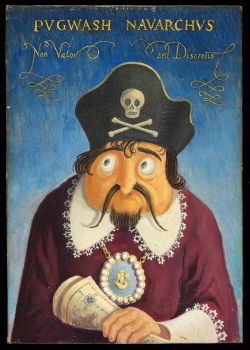
The work of celebrated Twentieth century British artist and designer Edward Bawden (1903-89) has gone on display in a new exhibition at the Dulwich Picture Gallery. Edward Bawden is described as the “most wide-ranging” exhibition of his work since his death and the first to look at every aspect of his 60 year career. It features a number of previous unseen works as well as 18 rarely seen war portraits which are being displayed together for the first time. Some 170 works – half from private collections – are arranged thematically to follow the evolution of his style with rooms dedicated to leisure, architecture, animals, fantasy and gardens. Among the highlights are early designs for the London Underground, Rain (1926) – on display for the first time, portraits of places he visited in North Africa, the Middle East and Europe while working as an official war artist during World War II, and several linocuts from Aesop’s Fables. Runs until 9th September. Admission charge applies. For more, see www.dulwichpicturegallery.org.uk. PICTURE: Edward Bawden, St Paul’s, 1958 (Colour autolithograph/Trustees of the Cecil Higgins Art Gallery (The Higgins Bedford), © Estate of Edward Bawden).

Delve into the world of the ‘Gorgeous Georgians’ and ‘Vile Victorians’ at Hampton Court Palace this May half term. The Birmingham Stage Company will be uncovering centuries of grisly history in an hour long outdoor ‘Horrible Histories’ performance featuring characters including Georgian kings, Lord Horatio Nelson, the Duke of Wellington, Florence Nightingale, and Dr John Snow. Guests are encouraged to bring a blanket and some food for the “ultimate historical picnic”. Admission charge applies – check website for dates. For more, see www.hrp.org.uk/hampton-court-palace/explore/the-gorgeous-georgians-and-vile-victorians/.

Send all items for inclusion to exploringlondon@gmail.com.