This Week in London – Family festival celebrates Queen’s 90th at Buckingham Palace; Kew Garden’s first Science Festival; and big data examined…

Buckingham-PalaceBuckingham Palace will host a family festival in celebration of the 90th birthday of Queen Elizabeth II this Saturday. The festival, which will be held in the Family Pavilion on the West Terrace, at the Royal Mews and in The Queen’s Gallery, will feature a 24 foot high, life-sized drawing of the Roald Dahl’s Big Friendly Giant (BFG) by Sir Quentin Blake, story-telling sessions, arts and crafts activities including the chance to make hats inspired by the Queen’s outfits and a BFG ‘dream jar’, and a toy kitchen where under fives can decorate a birthday cake. There will also be dressing-up activities in the Royal Mews and a special family tour of current exhibitions at The Queen’s Gallery while a selection of refreshments will be available. Admission charge applies. For more information, check out www.royalcollection.org.uk.

Kew Gardens holds it first Science Festival this weekend with a range if interactive activities for visitors to get hands-on with. The family friendly festival will celebrate the ground-breaking discoveries made by Kew scientists and allow visitors to explore how to use a DNA sequencer, clone a cabbage or pollinate orchids with tuning forks. The festival will also features a special display and talks about carnivorous plants and there’s special activities for younger “budding scientists” such as making their own mushroom spore print. The festival kicks off tomorrow and runs until Sunday. For more, see www.kew.org.

On Now: Our Lives in Data. This free exhibition at the Science Museum in South Kensington explores some of the many ways in which our data is collected, analysed and used for a variety of purposes – from a toy that learns from a child’s personality to become a better playmate to new virtual reality tools created by game designers to help researchers understand vast collections of data. There is also the chance to test facial recognition software through an “intelligent mirror” and an exploration of some of the latest products developed to help people protect their data, including a Cryptophone and wi-fi blocking paint. Runs until September, 2017. For more, visit www.sciencemuseum.org.uk/data.

Send all items for inclusion to exploringlondon@gmail.com.
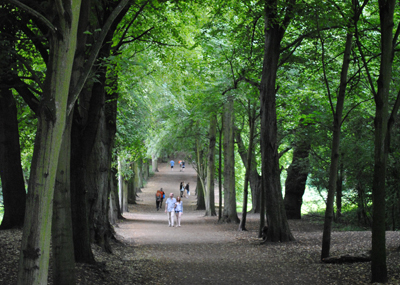
LondonLife – Shaded avenue on Hampstead Heath…

Shady-avenue

Famous Londoners – Scipio Africanus ‘Sam’ Mussabini…

The Olympics kick off in Rio de Janeiro this week, so we thought it a good occasion to recall a Londoner intimately associated with the Olympics, though not as an athlete but as a coach.

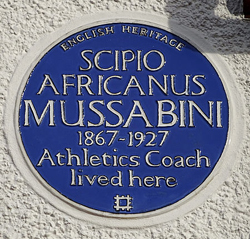
MussabiniBorn in Blackheath, Scipio Africanus – ‘Sam’ – Mussabini was a pioneering athletics coach who, in early 20th century, coached 11 athletes to win medals, including five gold, over five different Olympic Games.

Mussabini, the son of a Syrian-Italian father and French mother, was educated in France and worked, like his father, in journalism, writing for sports magazines and specialising in billiards (which he also played to a high standard).

From the 1890s, he started working, first as a cycling coach and later as an athletics coach in south London, based at Herne Hill Stadium.

His first major success as the latter came when young South African sprinter, Reggie Walker, won gold in the 100 metres at the 1908 London Olympics. In 1913, he was appointed coach of the Polytechnic Harriers at the Herne Hill athletics track.

He would go on to train the likes of Albert Hill – he won gold in the 800 and 1,500 metres at the 1920 Olympics in Antwerp – and his most famous student Harold Abrahams who won gold in the 100 metres and silver in the 4 x 100 metre relay at the 1924 Paris Olympics – a role which is depicted in the 1981 film Chariots of Fire (the coach is played by Ian Holm).

Mussabini is famous for the comprehensive and systematic approach he took to training his athletes, an approach which covered the athletes’ lifestyle and diet as well as a rigorous training regime, and which saw him use techniques such as using a cine-camera t0 film his athletes in action and then analysing the footage. He is also noted for having ensured female athletes, like world record sprinter Vera Palmer-Searle, received high quality coaching.

As a paid coach in an age when most were amateurs, he was ostracised by the establishment and apparently only started to receive the recognition he deserved well after his death, particularly following his depiction in Chariots of Fire.

Mussabini, who suffered from diabetes, died in March, 1927, at the age of 60. He was buried in Hampstead Cemetery. There is an English Heritage blue plaque on the house he lived in at 84 Burbage Road (it backs onto the Herne Hill Stadium) between 1911 and 1916.

Mussabini was inducted into the English Athletics Hall of Fame in 2011 while the Mussabini Medal was awarded every year between 1998 and 2007 by Sports Coach UK to honour outstanding coaches.

PICTURE: Spudgun67/Wikimedia/CC BY-SA 4.0

Lost London – Christ’s Hospital…

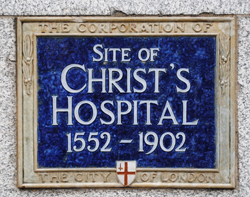
One of the achievements of the short-lived reign of King Edward VI, son of King Henry VIII, was the establishment of this hospital for orphans in 1552 in what were once buildings used by the Greyfriars Monastery (for more on the history of Greyfriars, see our earlier post here).

Christs-HospitalLocated in Newgate Street, the hospital soon had a school attached which became known as the Blue Coat School thanks to the distinctive long blue coats the students wore (and still do, the school is now located near Horsham in West Sussex).

Many of the hospital buildings were destroyed in the Great Fire of London of 1666 but most were later rebuilt under the supervision of Sir Christopher Wren, although the actual work was apparently carried out by others.

Students at the school have included antiquarian William Camden, Romantic poet Samuel Taylor Coleridge and writer Charles Lamb.

New buildings for girls were opened in Hertford in 1704 and the school moved out to Sussex in 1902 with the General Post Office built over the top of the demolished buildings.

This Week in London – Kew Gardens celebrates its herbaceous borders; the global ‘War on Terror’ at the IWM; Bobby Moore honoured; exposing the camera; and, 60 years of fanzines…

The first of three weekends celebrating the creation of the world’s longest double herbaceous borders – known as the Great Broad Walk Borders – will be held at Kew Gardens this weekend. Made up of 30,000 plants, the borders run along 320 metres of the Broad Walk which was originally landscaped in the 1840s by William Nesfield to provide a more dramatic approach to the newly constructed Palm House (completed in 1848). The spirit of the formal colourful beds he created along either side of the walk have been recreated using a range of plants. To celebrate, Kew are holding three themed weekends, the first of which, carrying a history and gardens theme, is this Saturday and Sunday. As well as talks and drop-in events, there will be a range of family-related activities as well as craft workshops, tours, and shopping. Further weekends will be held on 13th and 14th August (around the theme of the excellence of horticulture at Kew) and the bank holiday weekend of 27th to 29th August (around the theme of a celebration of beauty). For more, head to www.kew.org.

A new exhibition centring on the experiences of UK citizens and residents suspected but never convicted of terrorism-related activities and the role of the British Government in the ‘Global War on Terror’ opens at the Imperial War Museum in Lambeth today. Edmund Clark: War on Terror, Clark’s first major solo show in the UK, looks at the measures taken by states to protect their citizens from the threat of international terrorism and their far-reaching effects, exploring issues like security, secrecy, legality and ethics. Among the photographs, films and documents on display are highlights from five series of Clark’s work including Negative Publicity: Artefacts of Extraordinary Rendition, created in collaboration with counter-terrorism investigator Crofton Black, and other works including the film Section 4 Part 20: One Day on a Saturday, photographs and images from the series Guantanamo: If the Light Goes Out and Letter to Omar as well as the first major display of the work Control Order House. Runs until 28th August, 2017. Admission is free. For more, see www.iwm.org.uk/exhibitions/iwm-london/edmund-clark-war-of-terror.

The only English football captain to win a World Cup, Bobby Moore, has become the first footballer to be honoured with an English Heritage blue plaque. The plaque was unveiled at the footballer’s childhood home at 43 Waverley Gardens in Barking, East London, this week. Moore is best remembered for leading England to a 4-2 win over West Germany in the 1966 World Cup. For more, see www.english-heritage.org.uk/visit/blue-plaques/.

The camera is the subject of a new photography display which opened at the V&A in South Kensington last weekend. The Camera Exposed features more than 120 photographs, including works by more than 57 known artists as well as unknown amateurs. Each work features at least one camera and include formal portraits, casual snapshots, still-lifes, and cityscapes. Among the images are pictures of photographers such as Bill Brandt, Paul Strand and Weegee with their cameras along with self-portraits by Eve Arnold, Lee Friedlander and André Kertész in which the camera appears as a reflection or shadow. The display includes several new acquisitions including a Christmas card by portrait photographer Philippe Halsman, an image of photojournalist W Eugene Smith testing cameras and a self-portrait, taken by French photojournalist Pierre Jahan using a mirror. Runs in gallery 38A until 5th March. Free admission. For more, see www.vam.ac.uk/exhibitions/the-camera-exposed.

Sixty years of fanzines – from the development of zine-making back in the 1940s through to today’s – go on show at the Barbican Music Library in the City on Monday. FANZINES: a Cut-and-Paste Revolution features zines including VAGUE, Sniffing’ Glue, Bam Balam, Fatal Visions, Hysteria and Third Foundation among others. The exhibition, which runs until 31st August, is being held in conjunction with this year’s PUNK LONDON festival. For more, see www.cityoflondon.gov.uk/services/libraries-and-archives/our-libraries/Pages/Barbican-Music-Library.aspx.

Send all items for inclusion to exploringlondon@gmail.com.
What’s in a name?…Putney…

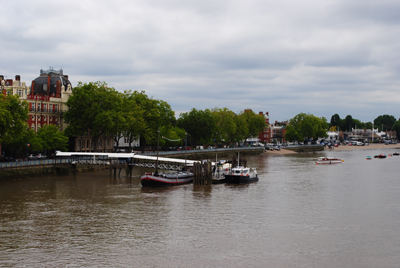
PutneyThis south-west London Thames-side district (and the bridge named after it), traces the origin of its name back to Saxon times.

Putney2Recorded in the Domesday Book as Putelei and known in the Middle Ages as Puttenhuthe, it apparently goes back to a Saxon named Puttan who lived in the area and the Old English word ‘hyp’, which means ‘landing place’. Hence, “Puttan’s landing place” (or Puttan’s wharf).

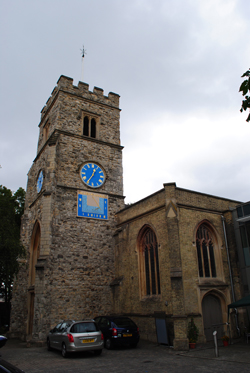
Putney has something of a storied history – it was the birthplace of Tudor heavyweight Thomas Cromwell, Georgian-era author Edward Gibbon and it was here, in the still-standing parish church of St Mary the Virgin (pictured), that the Putney Debates were held in 1647 among members of the New Model Army.

The first bridge was apparently built here in the first half of the 18th century and the present stone bridge in the 1880s.

Today a sought-after riverside residential district, Putney boasts a sizeable high street, great riverside pubs and eateries and is particularly popular every April when The Boat Race is held between Oxford and Cambridge universities thanks to the starting point being just upstream of Putney Bridge.

The area also is home to the 400 acre Putney Heath (which adjoins Wimbledon Common), a popular site for duels in the 18th century, and also home to a stone and brick obelisk, erected in 1770 to mark the 110th anniversary of the Great Fire of London (more on that in an upcoming post).

LondonLife – Sculpture returns to the City…

Sculpture1
Sculpture in the City has returned to the Square Mile for summer with 17 contemporary artworks by internationally renowned artists located in public spaces across the City of London.
 With the event now in its sixth year, this year’s sculptures include Jaume Plensa’s seven metre high cast iron work Laura (located at 30 St Mary Axe (aka The Gherkin), it’s pictured above), Matt Collishaw’s work, Magic Lantern Small – a grand scale “zoetrope”, one of the earliest moving image machines (located in Bury Court, it’s pictured below), and Huma Bhabha’s work, The Orientalist (located in Fenchurch Avenue, it’s pictured far below). Other works can be found in locations including St Botolph-without-Bishopsgate Gardens, The Leadenhall Building and St Helen’s Bishopsgate Churchyard. A map of the SITC trail and extra commentary on the individual artworks can be accessed by downloading the SMARTIFY app for Apple and Android devices and then scanning any of the sculptures. There’s also a map and information available at www.cityoflondon.gov.uk/sculptureinthecity. PICTURES: Nick Turpin

Sculpture2

Sculpture3

This Week in London – Remembering the Great Fire of 1666; rediscovering the Palace of Whitehall; and, the Queen’s dresses go on show…

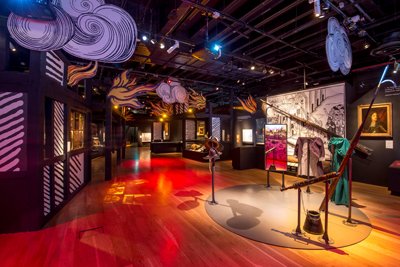
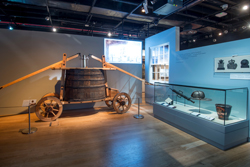
Fire2• A new “theatrical” exhibition marking the 350th anniversary of the Great Fire of London is opening at the Museum of London on Saturday. Fire! Fire! takes visitors on an interactive journey from before, during and after the great fire, looking at how the fire started and spread and the personal stories of Fire1Londoners present at the time. Visitors will be able to step in Pudding Lane and see what life was like for 17th century Londoners, walk into the bakery where the fire started, and identify objects melted by the flames. Exhibits on show include a restored 17th century fire engine, originally built in London in the last 1670s, other firefighting equipment including a squirt, a leather bucket and fire hook, a pair of bed hangings, a burnt Geneva Bible, and letters written in the fire’s aftermath. Admission charges apply. Can be seen until 17th April next year. A series of events, including walks, tours, lectures, workshop and family activities, accompanies the exhibition. For more, see www.museumoflondon.org.uk/fire-fire.  The museum has also commissioned a Minecraft building group recreate London as it was in 1666 with the first of three interactive maps to be released next week (available for free download from www.museumoflondon.org.uk) and further maps to follow in September and February. For more information on other events surrounding the anniversary, see www.visitlondon.com/greatfire350.

The long lost Palace of Whitehall is the subject of a new visitor experience which kicks off at the last surviving part of the palace – the Banqueting House – today. Handheld devices, binaural 3D sound and haptic technology is being made available to guests as they stroll around the streets of modern Whitehall, allowing them to immerse themselves in the former palace during the time of the Tudors and the Stuarts. The Lost Palace experience, created in a collaboration between Historic Royal Palaces and Chomko & Rosier and Uninvited Guests, includes a chance to see the jousts which so delighted Queen Elizabeth I at Horse Guards Parade, accompany King Charles I as he walks through St James’s Park to his execution at the Banqueting House, meet Guy Fawkes following his arrest in the Gunpowder Plot, take part in a performance of King Lear and eavesdrop on an encounter between King Henry VIII and Anne Boleyn before their doomed love affair began. The Palace of Whitehall was once the largest palace in Europe with 1,500 rooms spread across 23 acres. Tickets can be purchased at the Banqueting House. Runs until 4th September. For more details, see www.hrp.org.uk/thelostpalace.

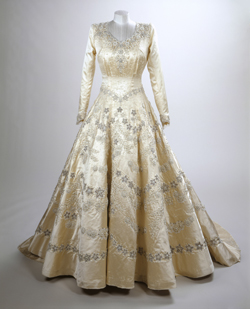
DressDresses worn by Queen Elizabeth II during two of the most significant events in Her Majesty’s life – her wedding and her coronation – can be seen as part of the Summer Opening of the State Rooms at Buckingham Palace from Saturday. The two dresses will form part of a special exhibition – Fashioning a Reign: 90 Years of Style from The Queen’s Wardrobe, the largest display of the Queen’s dress ever held. Alongside the two feature dresses, both designed by British couturier Sir Norman Hartnell, are around 150 outfits created by designers including Hartnell, Hardy Amies and Ian Thomas. The then Princess Elizabeth’s wedding dress (pictured), made for her marriage to the Duke of Edinburgh on 20th November, 1947, was made in ivory silk, decorated with crystals and 10,000 seed pearls and attached to a 15 foot long train, while the Queen’s Coronation dress – created for the event on 2nd June, 1953, is made of white duchesse satin and encrusted with seed pearls, sequins and crystals (along with an extra four-leaf shamrock on the left side of the skirt, added secretly by Sir Norman, to bring her good luck). The exhibition, open to 2nd October, is being accompanied by special displays at both Windsor Castle and Holyroodhouse in Edinburgh. Admission charges apply. For more, see www.royalcollection.org.uk. PICTURE: Royal Collection Trust/© Her Majesty Queen Elizabeth II 2016. 

The world’s largest collection of London images – more than 250,000, dating from 1450 to now – are being made available on a free-to-access website hosted by the London Metropolitan Archives from today. Collage – The London Picture Archive features more than 8,000 historical photographs of capital’s streets as well as images of the Great Fire of London in 1666 and photographs of the construction of Tower Bridge along with maps, prints, paintings and films, all drawn from the collections at the City of London Corporation’s Guildhall Art Gallery and the Clerkenwell-based London Metropolitan Archives. The collection can be accessed at www.collage.cityoflondon.gov.uk.

It’s hands-on gaming at the Science Museum for two weeks from Friday with more than 160 systems and hundreds of games available to play on. Power UP spans 40 years of gaming with games ranging from classics like Pong and Pac-Man to modern games like Halo and systems from Atari and SEGA to PS4 and Xbox One. Ninety minute sessions are being held four times daily from 11am tomorrow until 7th August. Ticket charges apply. For more , see www.sciencemuseum.org.uk/powerup.

Send all items for inclusion to exploringlondon@gmail.com.
10 notable blue plaques of London – 10. A man…and his work…

We finish our series looking at notable English Heritage blue plaques with a look at a plaque which not only commemorates a prominent Londoner but, unusually, also displays there for all to see the reason (well, an important part of it, anyway) for his prominence.

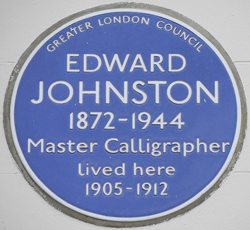
Edward-Johnston1Yes, we’re talking about Edward Johnston (1872-1944), a master calligrapher who was not only credited with starting the modern revival of the art but is also noted for having created the famous Johnston typeface which he developed for London Transport in the early 20th century.

In a lovely touch, the sans serif typeface he created is that used on the plaque – located at premises at 3 Hammersmith Terrace in Chiswick where he lived from 1905-1912 – itself.

The plaque, which was erected on the building in 1977 by the Greater London Council, was the first to feature the typeface but isn’t the only one: in fact there are four, all of which commemorate people related to London Transport.

The other three commemorated include Frank Pick (1878-1941), a London transport administrator who steered the development of London’s corporate identity – he’s commemorated with a plaque on his former property at 15 Wildwood Road, Hampstead Garden Suburb, with a Greater London Council plaque erected in 1981).

They also include Albert Henry Stanley, Lord Ashfield (1874-1948), the first chairman of London Transport (placed on his former home at 43 South Street, Mayfair, in 1984 by London County Council); and, the most recent plaque commemorating Harry Beck (1902-1974), designer of the London Underground map (placed by English Heritage in 2013 on his former property at 14 Wesley Road in Leyton).

PICTURE: Edwardx/CC BY-SA 4.0

A Moment in London’s History – The “first PM” moves into 10 Downing Street…

With the recent change at 10 Downing Street – David Cameron out/Theresa May in – we thought it a good time to look back at when the man considered Britain’s first PM moved in.

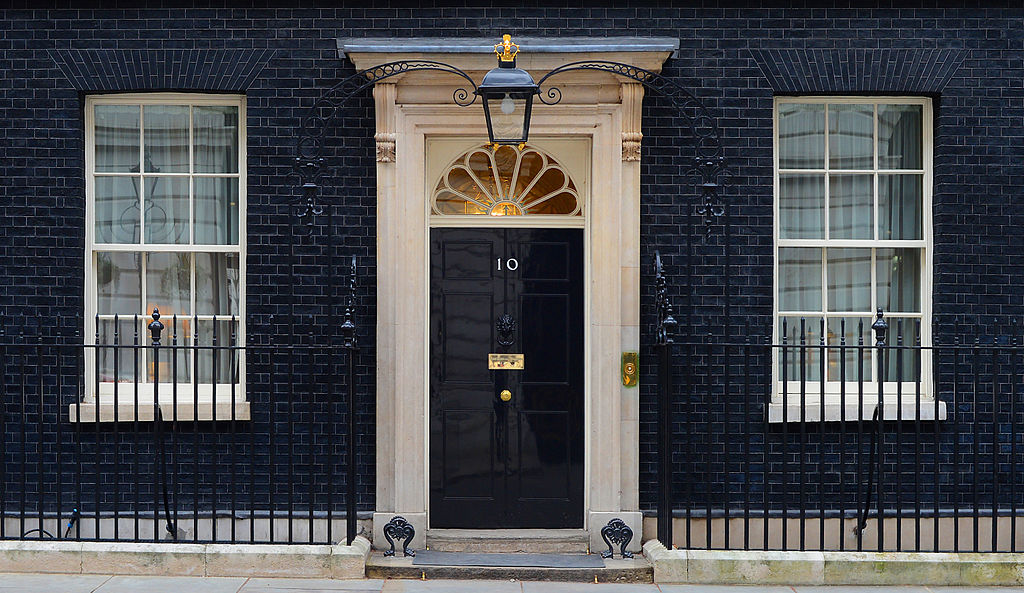
10_Downing_StreetSir Robert Walpole, commonly considered Britain’s first Prime Minister although he was never formally known by that title, was actually First Lord of the Treasury when in early 1730s King George II presented him with the terrace house at 10 Downing Street, off Whitehall, and the large mansion behind it (in fact the title of ‘First Lord of the Treasury’ can still be seen inscribed on the brass letter-box on the property’s front door).

Sir Robert accepted the king’s gift, but only on condition that it be made available to all future First Lords of the Treasury  And he didn’t move in until 22nd September, 1735, having had architect William Kent join the terrace house with the mansion behind it before doing so.

Kent had joined the houses on two levels with the main entrance facing onto Downing Street instead of Horse Guards. The Walpoles would live at the back of the new house where Kent had created a series of grand rooms – suitable for receiving honoured guests – and had built an unusual three sided staircase which remains a star sight of the building today.

Walpole used the ground floor of the new property for business and set-up his study in what is now the Cabinet Room. Lady Walpole used the upstairs room now known as the White Drawing Room as her sitting room and what is now called the Terracotta Room (although the name of this room changes with the colour scheme) as the dining room.

Among those who attended 10 Downing Street during the Walpole’s residency were luminaries such as Queen Caroline (wife of King George II) as well as prominent politicians, writers and military figures.

The Walpoles left in 1742 and it was more than 20 years later before another First Lord of the Treasury moved in.

For more on 10 Downing Street (including its earlier history), check out our previous entries here and here.

PICTURE: Sergeant Tom Robinson RLC/ Contains public sector information licensed under the Open Government Licence v3.0.

This Week in London – Festival of Archaeology; exploring colour and vision at the NHM; and the City’s Summer Community Fair…

The 25th annual Festival of Archaeology has kicked off across the UK this week and, of course, there’s events taking place across London. They include a walk exploring the moat at Fulham Palace this Sunday, the opportunity to join Inspector of Ancient Monuments Jane Siddell on a walk along the route of the former London wall in the City of London next Thursday, a tour of the remains of London’s Roman amphitheatre beneath Guildhall Yard on 28th July, and the chance to investigate ancient poo at the Museum of London Docklands over the week from 25th to 29th July. Some of the events are free to attend and require no booking; others charge an admission price and require advance booking. For all details, head to www.archaeologyfestival.org.uk.

Giant-Jewel-Beetle Explore how colour and vision have shaped the natural world in a new exhibition which opens at the Natural History Museum in South Kensington tomorrow. Colour and Vision features more than 350 rarely seen specimens and uses immersive arts and digital imaging to highlight how colour and vision influence life on the planet, providing insights into how humans and animals perceive the world and how colour-shifters, stealth experts and mimics use colour to survive. They include specimens from the rarely-displayed national eye collection, some of nature’s finest examples of structural colour – including Jewel beetles and hummingbirds, cochineal insects which show how nature can be used to create pigments for dyes and paints, and some rose-ringed parrots, whose different colours reveal the visible impact of a mutation in their pigment genes. The exhibition also features a newly commissioned light installation – Our Spectral Vision – by artist Liz West which has been inspired by Sir Isaac Newton’s investigation of the colour spectrum and blue morphs butterflies. Runs to 6th November. Admission charges apply. For more, see www.nhm.ac.uk. PICTURE: Giant jewel beetles/© Trustees of NHM.
The City of London Corporation’s Community Fair will be held on Sunday in Guildhall Yard, featuring entertainment, food stalls and activities for all ages. The free event will see the yard lined with market stalls run by local clubs, faith groups, learning providers and cultural partners who will be offering games and activities as well as information and handmade items for sale. Special guest broadcaster and author Charlie Dimmick will be giving planting workshops throughout the afternoon and will take part in a special Q&A session. Runs from noon to 4pm. For more details, see www.cityoflondon.gov.uk/communityfair.
Send all items for inclusion to exploringlondon@gmail.com.
10 notable blue plaques of London – 9. A family affair…

Freud-Museum

The fact the properties can have many residents with the passing of the years means that there’s a select number of properties in London (18 to be exact) which bear more than one English Heritage blue plaque – among them 4 Carlton Gardens in St James’s (home to 19th century PM Lord Palmerston and where General Charles De Gaulle set up the headquarter of the free French forces in 1940).

But among that group is an even more select group – properties which bear two blue plaques with both of those people commemorated coming from the same family.  The home at 20 Maresfield Gardens in Hampstead (pictured above) falls into this group.

Now a museum, the home’s celebrated occupants have included psycho-analyst Sigmund Freud, who lived here briefly in the final years of his life (between 1938 and his death on 23rd September, 1939), and his daughter Anna Freud, the youngest of his six children and herself a pioneering psycho-analyst, who lived here from 1938 until her death in 1982.

Both occupants have their own blue plaques on the property: Sigmund’s original London County Council blue plaque was unveiled on the site by his daughter Anna – then still occupant in the home – in 1956, the 100th anniversary of his birth. It had deteriorated and was replaced in 2002, at the same time a plaque to Anna herself was unveiled.

When Freud had moved to London from Vienna in June, 1938 – following the annexation of Austria by the Third Reich, he had initially lived in Primrose Hill before settling in the property in Maresfield Gardens along with his family and a significant collection of furniture from his Vienna consulting rooms.

In 1986, four years after Anna’s death, property was reopened as the Freud Museum and the public can still go inside and see Freud’s study, including his famed consulting couch, just as it was when he lived there.

The Freuds aren’t, of course, the only family members commemorated by English Heritage Blue Plaques – others include suffragette mother and daughters Emmeline and Christabel and Sylvia Pankhurst (the first two commemorated on a single plaque at 50 Clarendon Road in Notting Hill and the latter at 120 Cheyne Walk in Chelsea), and father and son Prime Ministers William Pitt the Elder and his son William Pitt the Younger (at 10 St James’s Square in St James’s and 120 Baker Street in Marylebone respectively).

WHERE: Freud Museum London, 20 Maresfield Gardens, Hampstead (nearest Tube stations are Finchley Road and Swiss Cottage);  WHEN: Noon to 5pm, Wednesday to Sunday; COST: £7 adults; £5 seniors; £4 concessions (including children 12-16); children under 12 free; WEBSITE: www.freud.org.uk.

PICTURE: Rup11/CC BY-SA 3.0/Wikimedia.

LondonLife – Childhood dreams captured in a jar for all to see…

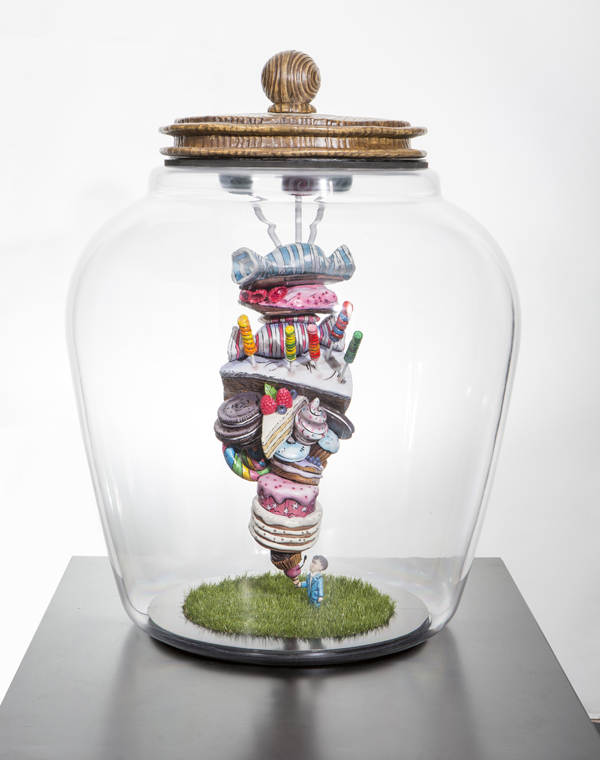
Steven-SpielbergDirector Steven Spielberg, actor and playwright Mark Rylance, physicist Professor Stephen Hawking, TV personality Simon Cowell, and The Duchess of Cornwall are among 50 high profile personalities who have put their childhood dreams and aspirations on show around the country – including in London – to mark not only the release of the film The BFG but also the 100th anniversary of Roald Dahl’s birth. Launched last weekend, the ‘BFG Dream Jar Trail’ features a series of up-to-six-foot-tall ‘Dream Jars’, each of which contains a sculpture representing the childhood dreams of a different personality. The free trail – which takes in London sites such as Trafalgar Square, the Tower of London, Leicester Square, Harrods, Emirates Stadium and The Shard – has been created in support of the work of Save the Children and a specialist nursing programme supported by Roald Dahl’s Marvellous Children’s Charity with the jars to be auctioned in collaboration with Paddle8 later this year to raise money for both causes (the auction will be launched on the film’s premiere on 17th July). At least 34 jars have already gone on display with more to be unveiled in coming days. The joint creation of  Save the Children, the Roald Dahl Literary Estate, Entertainment One and VisitLondon.com with support from Unilever, the trail can be seen until 31st August. To see the art trail map and discover the stories behind each jar and its location, head to www.visitlondon.com/bfg. For more on the 100th anniversary of Roald Dahl’s birth, head to www.roalddahl.com/roalddahl100. PICTURED: Above – director Steven Spielberg’s self-designed jar, on display in Leicester Square, illustrating his childhood fantasy of having all the sweets in the world but none of the ill effects from overindulgence.

Treasures of London – Great Parchment Book…

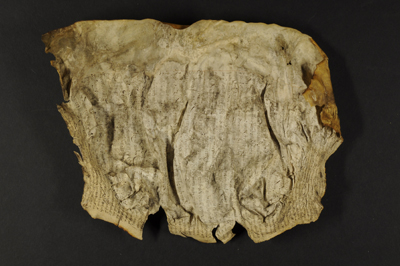
Great-Parchment-BookHeld in the collections of the London Metropolitan Archives, the Great Parchment Book of The Honourable the Irish Society was recently inscribed upon the UK register of the UNESCO Memory of the World.

Described as a “hugely significant record of the Ulster Plantation of the early 17th century”, the book was compiled in 1639 by a commission instituted under the Great Seal of King Charles I and is a survey of all the estates in Derry managed by the City of London Corporation through the Irish Society and City of London livery companies.

As such, manuscript and provides a unique insight into this important period in the history of Northern Ireland, containing key data about landholdings and the population in Ulster at the time of its creation including for both English and Scottish settlers and the native Irish population (as well as, exceptionally, for many women at all levels of society).

The Great Parchment Book was badly damaged in a fire in 1786 and as a result was unavailable to researchers for more than 200 years until its successful reconstruction using cutting edge digital imaging technology.

It is the fourth item in the care of the London Metropolitan Archives to be inscribed to the UK register of the UNESCO Memory of the World, a programme which aims to facilitate preservation of the world’s documentary and audio-visual heritage, to assist universal access and to increase awareness worldwide of the existence and significance of this documentary heritage.

The three other objects inscribed on the list which are in the LMA’s care include the Charter of William I to the City of London, London County Council Bomb Damage Maps and Robert Hooke’s Diary 1672-83.

~ www.greatparchmentbook.org

WHERE: London Metropolitan Archives, 40 Northampton Road, Clerkenwell (nearest Tube stations are Farringdon and Angel); WHEN: Open Monday to Thursday and selected Saturdays (check website for times); COST: Free; WEBSITE: www.cityoflondon.gov.uk/things-to-do/london-metropolitan-archives/Pages/default.aspx.

PICTURE: Courtesy London Metropolitan Archives.


This Week in London – I am London; Gerrit Dou’s women reunited; and, Georgia O’Keeffe…

A new free exhibition featuring 60 Londoners photographed in front of an historic building or special place to them opens in Kings Cross on Monday. The Historic England exhibition I am London features well-known Londoners, such as reproductive health expert Professor Lord Robert Winston, philosopher AC Grayling, feminist activist and journalist Caroline Criado Perez, artist Bob and Roberta Smith, designer Morag Myerscough and performer Amy Lamé as well as “unsung Londoners” – everyone from a Yeoman Warder at the Tower of London and the park manager at Kensington Gardens to a 7/7 paramedic, an apprentice at a Savile Row tailors and a student at the Royal School of Needlework – in telling stories which illustrate how the city’s heritage can be “inspirational, provocative, frustrating, fun, familiar, humbling and home”. Taken by Historic England photographer Chris Redgrave, the photographs will be displayed in the UAL Window Galleries at Central Saint Martins along with a selection of objects the sitters chose to be photographed with, including the Pearly King of Finsbury’s jacket, Bob and Roberta Smith’s ‘Vote Bob Smith’ badge and a submarine once owned by Morag Myerscough’s father. Can be seen until 4th September. For more, see https://historicengland.org.uk/get-involved/visit/exhibitions/i-am-london/.

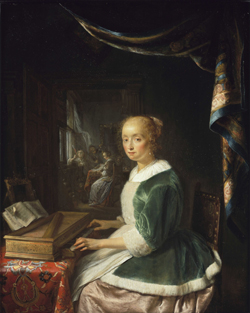
Gerrit-Dou Two of 17th century Dutch painter Gerrit Dou’s finest works – Woman playing a Clavichord and Lady Playing a Virginal (pictured), both dating from about 1665 – have been reunited for the first time in 350 years at the Dulwich Picture Gallery in south London. Opening this week, Dou in Harmony examines how Dou created two distinctly different takes on a similar subject and will be accompanied by a contemporary sound installation in the Mausoleum. Composed and played on the viola da gamba by Liam Byrne, the modern piece takes its cue from 17th century music and aims to evoke the mood of Dou’s paintings. The display is the latest in the Making Discoveries: Dutch and Flemish Masterpieces series which showcases four artists from the gallery’s collection: Van Dyck, Rubens, Dou and Rembrandt (whose work will be featured in an upcoming display in November). Runs until 6th November. Admission charge applies. For more, see www.dulwichpicturegallery.org.uk.

Georgia O’Keeffe’s celebrated work, Jimsyn Weed, White Flower No 1 (1932), is among highlights at the major retrospective of the US artist’s work which opened at the Tate Modern this week. The display marks a century since O’Keeffe’s debut in New York in 1916 and, with none of her works in public collections in the UK, provides a “once-in-a-generation opportunity” for audiences outside the US to view her portfolio of works in such depth. The display features more than 100 major works and charts the progression of O’Keeffe as an artist over a span of six decades. Runs until 30th October. For more, see www.tate.org.uk.

Send all items for inclusion to exploringlondon@gmail.com.
10 notable blue plaques of London – 8. A notorious ‘tree’ recalled…

To look at it, you wouldn’t necessarily imagine the memorial marking the former site of the ‘Tyburn Tree’ near Marble Arch was part of the English Heritage Blue Plaques scheme. 

Tyburn-Tree2But, located on the ground on a traffic island at the junction of Edgware and Bayswater Roads, this memorial commemorating the site of the former gallows at what was once London’s execution grounds (and those who died upon it) is just that.

It’s estimated by some that as many as 60,000 people may have been executed here over the 600 years until the late 1700s

While the plaque only mentions one of the names by which the various gallows erected here were known – Tyburn being the name of the village originally here, others included ‘The Elms’, the ‘The Deadly Never Green Tree’ and the ‘Triple Tree’, the latter presumably a reference to the famous three-sided gallows set up here during the reign of Queen Elizabeth I.

The last gallows was removed in 1759 when executions were moved into Newgate Prison (for more on the Tyburn Tree, see our earlier post here).

The plaque was erected on the site in 1964 by the London County Council; it replaced an earlier triangular plaque the council had erected here in 1909.

The memorial was restored and rededicated in a ceremony in 2014 with the placement of three oak trees around it (this picture was taken before the restoration).

There is a green City of Westminster plaque nearby which commemorates 105 Roman Catholic martyrs who lost their lives on the gallows between 1535 and 1681 while the deaths of the more than 350 Roman Catholics who died across England and Wales during the Reformation, including those on the Tyburn Tree, are also recalled in a shrine at the nearby Tyburn Convent.

LondonLife – Digging up Greenwich Park’s past…

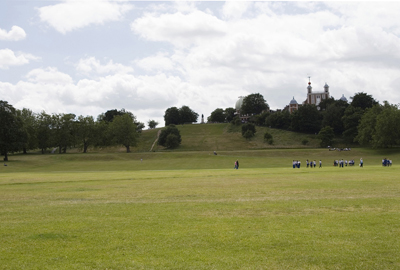
Greenwich-Park-in-summerThe remains of the 17th century Old Keeper’s Cottage in Greenwich Park are being brought to light in an archaeological dig underway in the park this week. The lodge stood close to Queen Elizabeth’s Oak near the centre of the park and was demolished in 1853. This year’s dig is the final of a three year project to unearth the lodge’s remains, sparked after tiles were discovered near the site of the cottage in 2010. Finds so far include a second century Roman brooch, post-medieval pottery and a Victorian watch-winder. The digs have also revealed remains associated with the lodge including two buildings and part of the boundary of the complex. Toni Assirati, head of education and community engagement at Royal Parks, says while much is already known about the history of Greenwich Park – which dates back to 1427 – much remains to be yet discovered about its social history. “This project will hopefully help us find out more about the lives of the people who worked and lived in the park.” Members of the public are invited to attend from 3pm to 6pm on 13th July to hear more about the project from the archaeologists involved as well as see some of the unearthed artefacts. For more about Greenwich Park, see our earlier post here or head to www.royalparks.org.uk/parks/greenwich-park. PICTURE: Greenwich Park, looking toward Observatory Hill (the site of the dig is to the left of the hill). © Anne Marie Briscombe/Royal Parks.

London Pub Signs – St Stephen’s Tavern, Westminster…

The origins of the name of this pub apparently lie in something of a mistake (well, sort of).

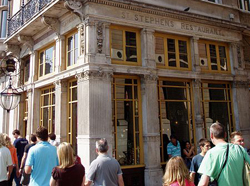
St-Stephens-TavernLocated at 10 Bridge Street on the corner of Canon Row – just across the road from the clock tower at the north end of the Houses of Parliament, its name apparently lies in mistaken belief that the tower was named St Stephen’s Tower.

It never was, at least not officially. Prior to recently being renamed the Elizabeth Tower – in honour of Queen Elizabeth II’s 60 years on the throne, the tower, which contains the bell known as Big Ben, was simply known as the Clock Tower (another common error has been to call the tower itself Big Ben).

The name St Stephen’s Tower apparently was the fault of Victorian journalists. They had the habit of referring to stories relating to the goings-on in the House of Commons as “news from St Stephen’s” because MPs, prior to the destructive fire of 1834, used to sit in St Stephen’s Hall (the entrance to the hall can be found down the road opposite Westminster Abbey).

Hence we have St Stephen’s Tavern, a favoured watering hole of many politicians – including apparently PMs Stanley Baldwin, Winston Churchill and Harold MacMillan.

The pub has been around since at least Victorian times – it was demolished in 1868 when Westminster tube station being built and rebuilt a few years later. In 1924, the pub was expanded to take over the Queen’s Head next door.

It closed in the late 1980s but was reopened in 2003 with many of the original fittings restored. These include one of only 200 parliamentary division bells, located above the bar, which calls MPs back to parliament when it’s time for them to vote (tourists apparently often think it’s a fire alarm and flee when it goes off).

For more, see www.ststephenstavern.co.uk.

PICTURE: Ewan Munro/Flickr/CC BY-SA 2.0 (image cropped)

This Week in London – Commemorating the Battle of the Somme; Transported by Design; and, Winifred Knights at Dulwich…

Battle-of-the-SommeThe Imperial War Museum in Lambeth is holding a free late night opening tonight featuring live music, film screenings, immersive theatre and poetry to mark the 100th anniversary of the Battle of the Somme. Highlights of Night Before the Somme, which runs from 8pm to midnight tonight, include slam poet Kat Francois’ critically acclaimed play Raising Lazarus, poet and broadcaster Ian McMillan’s show Magic Lantern Tales, and extracts from the immersive production Dr Blighty – which tells the story of the million Indians who travelled to fight in the war. Visitors will also have the chance to watch the film, The Battle of the Somme (filmed and screened in 1916, it was the first feature-length documentary about war), listen in to a series of Q&A’s with experts on the battle, and preview the major exhibition, Real to Reel: A Century of War Movies. Real to Reel, which officially opens on Friday, explores how film-makers have found inspiration in compelling personal stories and the real events of wars from the past century. As well as audio-visual installations, the display features film clips, costumes, props, scripts, sketches and designs from films such as The Dam Busters, Where Eagles Dare, Apocalypse Now, Battle of Britain, Das Boot, Casablanca, Jarhead, Atonement and War Horse along with original archival material and artefacts from the IWM collections. The exhibition, which is divided into five sections, runs until 8th January. Admission charges apply. See www.iwm.org.uk for more. PICTURE: © IWM (Q 70164. Staged scene from The Battle of the Somme film, 1916 British troops go ‘over the top’ into ‘No Man’s Land’. This scene was staged for the camera at a training school behind the lines.

• Don’t forget tonight’s vigil at Westminster Abbey to mark the 100th anniversary (as mentioned in last week’s entry here).

Still on the centenary of the Battle of the Somme and a new exhibition opened at the Science Museum in South Kensington this week focusing on the innovations in medical practice and technologies developed as a result of the new kind of industrialised warfare seen in the battle. Wounded: Conflict, Casualties and Care has at its centre a collection of historic objects from the museum’s World War I medical collections including stretchers adapted for use in narrow trenches and made-to-measure artificial arms fitted to the wounded in British hospitals as well as lucky charms and personal protective items carried by frontline soldiers. There are also artworks from the period including Henry Tonk’s famous pastel drawings of facial injuries and a 1914 painting by John Lavery that depicts the arrival of the first British wounded soldiers at the London hospital. Admission is free and the exhibition can be seen until early 2018. For more, see www.sciencemuseum.org.uk.

Regent Street will be transformed on Sunday, 3rd July, with the Transported by Design Festival featuring transport designs which have shaped and will shape London. The festival, which will stretch from Piccadilly Circus to Oxford Circus Tube stations, will see the street divided into three zones – past, present and future. Among the objects on show in ‘past’ section will be a horse-drawn bus and other heritage buses, a 1927 train carriage and an exhibition of classic advertising posters and signage while the ‘present’ section will feature ‘Cycle Spin Fun’ by Santander Cycles, Moquette Land – a showcase of fabric used across the transport network, and, a ‘design a bus’ competition, and the ‘future’ section will feature a range of technologies, including virtual reality headsets, exploring what transport could look like in 2040. The free festival, part of the ‘Summer Streets’ program which sees Regent Street closed to traffic on Sundays over summer, runs from noon to 6pm. For more, see www.tfl.gov.uk/campaign/transported-by-design/event-calendar?intcmp=40582.

• The work of artist Winifred Knights, the first British woman to win the Prix de Rome scholarship, is the subject of a recently-opened exhibition at the Dulwich Picture Gallery. The display, the first major retrospective of the work of Knights (1899-1947), brings together more than 70 preparatory studies and her most ambitious works including The Deluge (1920), The Potato Harvest (1918) and Leaving the Munitions Works (1919). Winifred Knights (1899-1947) runs until 18th September. Admission charge applies. For more, see www.dulwichpicturegallery.org.

Send all items for inclusion to exploringlondon@gmail.com.

10 notable blue plaques of London – 7. A blue plaque for a ship…

As mentioned last week, there are a number of official English Heritage blue plaques in London which commemorate events rather than people.

Alongside the blue plaque commemorating the first V1 flying bomb to hit London (the subject of last week’s entry) is a blue plaque commemorating the site where one of world’s most famous ships – the SS Great Eastern – was built.

THE_GREAT_EASTERN_(_launched_1858_)_largest_steamship_of_the_century_was_built_here_by_I.K._Brunel_and_J.Scott_RussellThe plaque is located at Burrells Wharf, 262 Westferry Road, on the Isle of Dogs in the Docklands, and it was there that the design of Isambard Kingdom Brunel, who had previously designed the SS Great Western and the SS Great Britain, was realised under the direction of naval architect and ship builder John Scott Russell, of J Scott Russell & Co.

The ship, which had a double hull and immense paddle wheels, took some five years to build at a site in Millwall on the Isle of Dogs (if you’re interested in the etymology of the latter, see our earlier post here).

It was supposed to be launched before a crowd of thousands on 3rd November, 1857, (the Great Eastern Ship Company had sold tickets). But the launch was unsuccessful as the equipment supposed to haul the ship to the water failed (and it was during this unsuccessful attempt that the ship was apparently initially christened SS Leviathan;  her name was changed to the SS Great Eastern soon after).

A couple of further unsuccessful attempts were made before, on 31st January, 1858, the 211 metre long ship – aided by an unusually high tide – was finally sent into the Thames (unusually, it was launched sideways).

The outfitting of the ship, which started in January, 1859, took six months and on 6th September, the ship made its maiden voyage from London to Weymouth, a voyage which was marred by the tragic death of a number of stokers in a boiler explosion. Sadly, Brunel himself died soon after the maiden voyage, not in the sort of triumphant circumstances he might have hoped for.

While it was originally designed to sail to India and the Far East, it was in the Atlantic where the ship took up the passenger trade. Her first voyage to North America took place in June the following year and the SS Great Eastern continued to cross the Atlantic over the next few years (including during the American Civil War when she took British troops to Canada) but, blighted by back luck (including, in 1862, running into an uncharted rock in New York harbour) and facing the competition of faster, smaller ships, she was never really a commercial success.

Sold off, the SS Great Eastern was reinvented in the mid 1860s as a cable-laying ship and did so in various parts of the world until, after being laid-up in 1874, sailing to Liverpool where she became something of a tourist attraction and a floating billboard before eventually being scrapped in 1889.

There was legend that two skeletons were found between the two hulls when the ship was broken up – that of a riveter and his ‘bash boy’ (a young lad charged with heating and putting the rivets in the hole) – and it was believed by some that it was their deaths which had brought the ship such bad luck.

The plaque was erected in 1992.

PICTURE: Spudgun67/CC BY-SA 4.0/Wikipedia