This Week in London – Totally Thames; RAF Kenley Airfield celebration; win a Quentin Blake poster; and ‘Nature Morte’ at Guildhall…

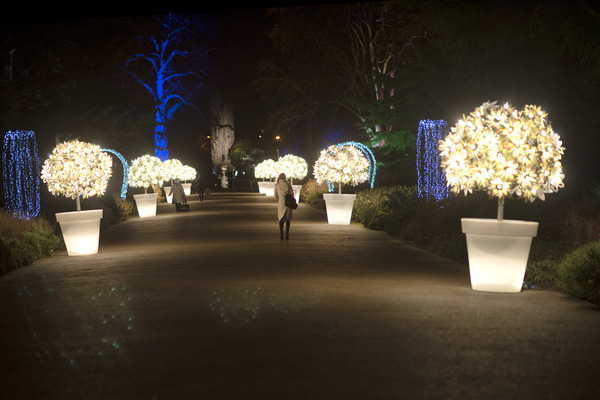
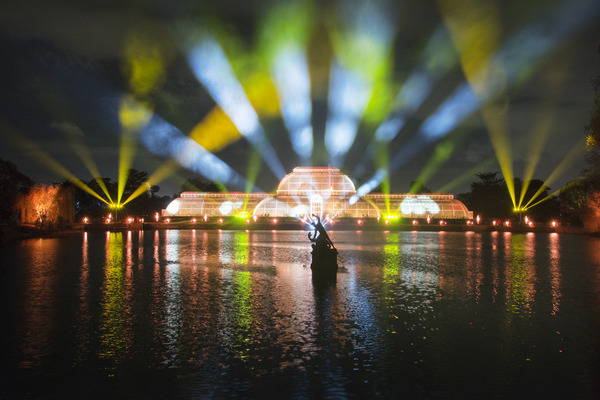
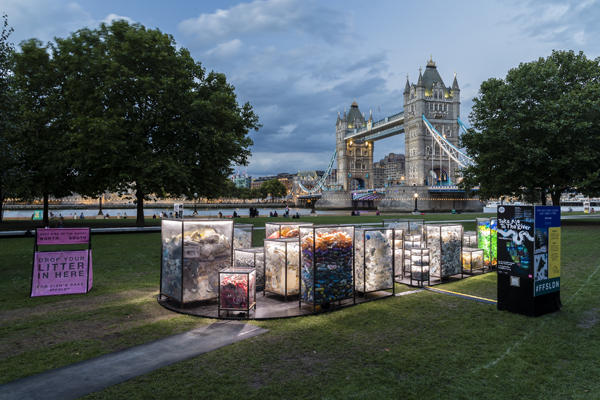
Totally Thames, the annual month long celebration of London’s river, is once again in swing with a host of events to join in on. The packed programme includes walks and talks such as Friday’s walk exploring the maritime heritage of Deptford, visual arts installations including Maria Arceo’s Future Dust (pictured), and on-river events such as this weekend’s Classic Boat Festival at St Katharine Docks and the marathon Great River Race involving traditional boats as well as a host of musical performances, film screenings, exhibitions and pop-up festivals. Events run over September. For more information on the programme, visit totallythames.org. PICTURE: Courtesy of Thames Festival Trust. © Hydar Dewachi.

The role RAF Kenley Airfield played in the Battle of Britain will be highlighted in a “Sky Heroes” event at the site this Sunday. RAF Kenley Airfield, which is where Winston Churchill learned to fly, is the most intact fighter airfield from World War II and played a unique role in defending Britain from the German Luftwaffe. Celebrating its centenary, it was one of three main fighter stations, along with Croydon and Biggin Hill, charged with the air defence of London. The day, which is free to attend, will feature guided tours, museum and archaeology stands and replica Spitfire and Hurricane planes in which visitors can sit and have their photos taken. A free shuttle bus service will be operating from nearby stations. The day is being held under the auspices of the Heritage Lottery funded Kenley Revival Project, a partnership between the City of London Corporation, Kenley Airfield Friends Group and Historic England. For more, see www.kenleyrevival.org.

Win one of 20 London is Open for Summer posters signed by the artist Quentin Blake. The limited edition posters went on sale this week for £10 with all proceeds going to the Red Cross UK Solidarity Fund and to mark that event, the Mayor of London, Sadiq Khan, has launched a social media competition, giving away 20 of them. For details of how to take part, head to www.london.gov.uk/londonisopen. The winners will be announced next week. To purchase one of the posters, head to www.ltmuseumshop.co.uk/new-in.

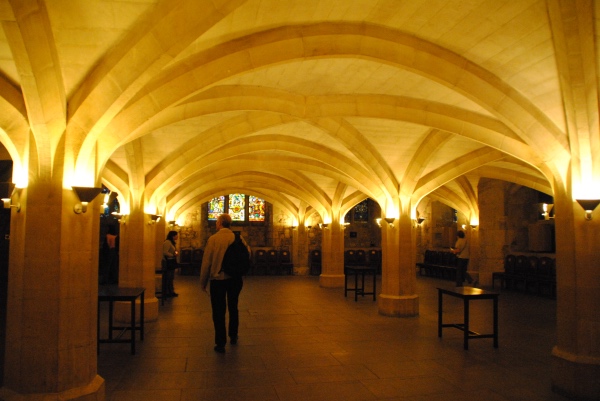
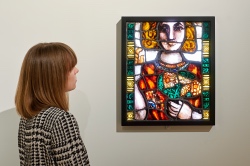
The 16th tradition of still life meets modern art at the Guildhall Art Gallery’s latest exhibition, Nature Morte. Featuring 100 words of art covering themes ranging from flora and fauna to domestic objects and food, the display features works by major international contemporary artists like Michael Craig-Martin and Gabriel Orozco as well as works by London-based artists and from the City of London’s own historic collection. The exhibition, which is being put on by MOCA London in partnership with the gallery, runs until 2nd April. Admission charge applies and there’s a series of talks to accompany the display. For more, follow this link.

Send all items for inclusion to exploringlondon@gmail.com.

This Week in London – Carnival time in Notting Hill!; free tickets at the Tate Modern; and, The City is Ours…

The world famous Notting Hill Carnival takes places in London’s west this weekend. The biggest event of its kind in Europe, the programme kicks off Saturday evening (from 6pm to 10pm) with a steel band music competition and more Caribbean-themed outdoor entertainment in Emslie Horniman Pleasance Park. Sunday features the Children’s Parade, performances at the World Music Stage in Powis Square and static sound systems and food stalls at Emslie Horniman Pleasance Park (from 9am to 8.30pm). The Grand Finale parade on Monday features dancers, performers, 60 steel bands and mobile sound systems with more music and food stalls in the parade area as well as on the World Music Stage in Powis Square. This year’s event will also feature a minute’s silence at 3pm on both Sunday and Monday to remember the victims of the Grenfell Tower fire disaster. For more, see www.thelondonnottinghillcarnival.com or Visit London’s special guide. PICTURE: Eddie Starck/Flickr/CC-BY-2.0

Tate Modern is offering a limited number of free tickets to Soul of a Nation: Art in an Age of Black Power exhibition this Friday night (August’s Uniqlo Tate Late event) to coincide with the Notting Hill Carnival weekend. The tickets will be offered a first come, first serve basis from 6pm. The exhibition, which explores what is meant to be an African American artist during the civil rights movement and at the birth of the Black Power movement, runs until 22nd October. For more, see www.tate.org.uk.

On Now: The City is Ours. This major interactive exhibition at the Museum of London explores some of the key issues that affect Londoners and city dwellers elsewhere the world – from housing affordability and urban planning to transport, green spaces and air quality. Spread across three of the museum’s temporary exhibition spaces, key exhibits include a nine metre wide film, Urban Earth, which visualises and compares data from major cities around the world, an Oculus Rift headset which delivers a virtual view from the top of a Hong Kong skyscraper illustrating the impact of building upwards instead of outwards, and an exhibit which allows visitors to control and monitor CCTV cameras as they reflect on the impacts of increased surveillance. The free exhibition – at the heart of the museum’s year long focus on City Now City Future – can be seen until 2nd January. For more, see www.museumoflondon.org.uk/thecityisours.

Send all items for inclusion to exploringlondon@gmail.

A Moment in London’s History – The premiere of Handel’s ‘Water Music’…

This month marks 300 years since composer George Frideric Handel premiered his composition (and one of the most famous pieces of classical music in the world) Water Music – and it was in a rather fitting setting.

The first performance of the composition – which was deliberately created for
playing outdoors (and carrying across water) – took place at about 8pm on 17th July, 1717, aboard a City of London barge in the River Thames.

Some 50 musicians played the piece – using everything from flutes and recorders to trumpets, horns, violins and basses – with Handel himself fulfilling the role of conductor.

The barge was part of a rather grand flotilla which made its way up the river from the Palace of Whitehall to Chelsea, at the centre of which was a royal barge upon which King George I and members of the nobility, including various duchesses, rode.

Numerous other Londoners also turned out to hear the performance aboard all manner of watercraft and the king was apparently so impressed with what he heard that he requested several encores both on the trip to Chelsea and on the return journey.

The story goes that the somewhat unpopular king had apparently requested the concert on the river to upstage his son, the Prince of Wales (and future King George II), who was stealing the limelight by throwing lavish parties (the king and his son were famously at odds and it was therefore no shock when the prince didn’t attend the performance).

There’s another story, meanwhile, that suggested Handel composed the piece to regain the favour of the King which he had apparently lost when, seeking to capitalise on his growing fame, he left his employment as conductor at the court of the then Elector of Hanover (a position George held before he was king) and moved from Germany to London during the reign of Queen Anne (although some claim the future king knew he would one day follow Handel to London and actually approved of his decision to move there).

Water Music, meanwhile, has since become part of popular culture – it’s generally said that most people will recognise at least one part of it – but interestingly, no-one is said to be exactly sure how the music, which is generally broken into three separate suites, should be performed, given that the original score has been lost.

PICTURE: Edouard Hamman’s painting showing Handel (on the left) with King George I aboard a barge on 17th July, 1717. Via Wikipedia


This Week in London – The Natural History Museum transformed; mysteries of the Franklin expedition; and, portraits by Great Masters…

The 25.2 metre long skeleton of a blue whale named Hope along with that of an American mastodon, a meteorite which is one of the oldest specimens in Earth, a taxidermal display of a giraffe and giant coral are among items on display in the Natural History Museum’s newly transformed Hintze Hall from tomorrow. Selected from the museum’s more than 80 million specimens, the sometimes historic items are at the heart of 10 new displays which go on show in the ground floor alcoves known as ‘wonder bays’ as part of what is being described as a “once-in-a-generation” transformation of the 136-year-old museum. The 10 ‘wonder bays’ include five on the eastern side of the building focused on the origins and evolution of life on earth while those on the western side show the diversity of life on earth today. Elsewhere in the museum, hundreds of new specimens have been introduced including those in two new displays on the first floor balconies: the ‘Rocks and Minerals Balcony’ on the east side which features almost 300 rocks, ores and minerals and the ‘Birds Balcony’ on the west side which features more than 70 birds from as far afield as New Zealand and the Falkland Islands. To coincide with the new displays is the launch of a new summer exhibition – Whales – which features more than 100 specimens showing the diversity of whales, dolphins and porpoises. Featuring species ranging from the double-decker bus sized sperm whale – the largest toothed predator on Earth – to the 1.5 metre long harbour porpoise – one of the smallest cetaceans, the exhibition’s highlights include skulls revealing how whales sense and their eating habits, organs showing how they breathe and digest food and flippers which reveal swimming styles. For more on the exhibition and the transformation of the South Kensington museum, see www.nhm.ac.uk. PICTURE: Blue whale in Hintze Hall © The Trustees of the Natural History Museum, London.

The mysterious fate of Sir John Franklin and his 128 man crew – last seen in Baffin Bay in July, 1845, as they sailed in search of the North-West Passage – is the subject of a new landmark exhibition opening at the National Maritime Museum in Greenwich tomorrow. Death In The Ice: The Shocking Story of Franklin’s Final Expedition tells the story of the disappearance of the HMS Erebus and HMS Terror and the largely unsuccessful expeditions which were launched in the following 30 years to find them as well as the more recent work of forensic anthropologist, Dr Owen Beattie, and the 1845–48 Franklin Expedition Forensic Anthropology Project (FEFAP), and the eventual discovery of the remains of the HMS Erebus in 2014 and the HMS Terror in 2016. At the heart of the exhibition are objects found by Parks Canada’s archaeological teams including personal items, clothing and ship components with those from the Erebus, including the ship’s bell, being shown for the very first time since their discovery and some items found in earlier searches. Along with an examination of the Victorians fascination with the fate of the men, the exhibition will also show the significant role the Inuit played in learning their fate as well as in relation to recording the European exploration of the Arctic more generally and includes numerous Inuit objects, some of which incorporate materials of European origins traded from explorers or retrieved from abandoned ships. Developed by the Canadian Museum of History in partnership with Parks Canada and the National Maritime Museum and in collaboration with the Government of Nunavut and the Inuit Heritage Trust, the exhibition runs until 7th January. Admission charge applies. For more see www.rmg.co.uk/franklin.

Fifty drawings from Britain’s finest collections by artists including Leonardo da Vinci, Albrecht Durer, Peter Paul Rubens and Rembrandt van Rijn and eight portraits by Hans Holbein the Younger from the Royal Collection have gone on show at the National Portrait Gallery. The Encounter: Drawings from Leonardo to Rembrandt includes many rarely seen works with all those on show chosen because they captured an apparent moment of connection between the artist and a sitter. While some of those pictured in the portraits can be identified – such as the emperor’s chaplain or the king’s clerk, many are simply faces seen in the street, such as those of a nurse or a shoemaker or an artist’s friend or student. The display also includes the types of tools and media used to create the artworks and shows how the artists moved away from using medieval pattern books to studying figures and faces from life. Runs until 22nd October. Admission charge applies. For more, see www.npg.org.uk/encounter.

Send all items for inclusion to exploringlondon@gmail.com.

This Week in London – Wrens at the Old Royal Naval College; Stella Reading commemorated; Korean culture celebration; and, Hetty Feather at the Foundling…

• An new exhibition marking the 100th anniversary of the Women’s Royal Naval Service opens at the Old Royal Naval College in Greenwich on Saturday. The free display explores the lives and experiences of the women who served and trained at Greenwich, spanning the period from World War I to the late 1970s. As well as covering the role of the WRNS during the first and second World Wars, the exhibition also looks at the post war experiences of the Wrens and features 16 new interviews and rarely seen photographs which bring to life this chapter in the history of the Old Royal Naval College. The exhibition can be seen until 3rd December. Entry is free. For more, www.ornc.org/wrns. PICTURE: Newly commissioned WRNS officers at Greenwich, 1969. Courtesy Old Royal Naval College.

An English Heritage blue plaque commemorating Stella Reading, founder of the Women’s Voluntary Services, was unveiled at the organisation’s former London headquarters this week. Lady Reading (1894-1971) founded the “army that Hitler forgot” from a single room in the building in 1938 with the so-called ‘ladies in green’ going on to serve in a range of roles – from looking after child evacuees and collecting aluminium for aircraft to serving thousands of cups of tea from static and mobile canteens. The plaque at 41 Tothill Street in Westminster was unveiled by actress and Royal Voluntary Service ambassador Dame Patricia Routledge. For more on blue plaques, see www.english-heritage.org.uk/visit/blue-plaques/.

A year-long season of Korean art in the UK is being launched with a free festival at Olympia London this Saturday. The family-friendly London Korean Festival features food tastings, Korean drumming, martial arts exhibitions, traditional craft workshops and a sneak peak at the Olympic Winter Games in PyeongChang using the latest VR technology. There’s also a chance for budding K-Pop stars to audition for the K-Pop World Festival and a ticketed evening concert at 7pm featuring four K-pop sensations. The free daytime festival runs from 11am to 5.30pm. For more information, visit www.kccuk.org.uk. Tickets for the K-Pop concert can be obtained at londonkoreanfestival.co.uk.

On Now: Picturing Hetty Feather. This exhibition at The Foundling Museum in Bloomsbury explores the depiction of the Foundling Hospital through the life of the fictitious Victorian foundling Hetty Feather. Feather first came to life in 2008 and Dame Jacqueline Wilson has since gone on to write four more books about the spirited character, the first two of which feature the Foundling Hospital. The popularity of the books, which have sold millions of copies, has resulted in a stage show and TV series. This exhibition, the first devoted to Hetty Feather and the Foundling Hospital, explores the ways in which curators, writers, directors and designers have used historical evidence (and gaps in it) to bring the 19th century hospital to life. Objects on show include props and original costumes from the CBBC TV series as well as treasures from the Foundling Hospital Collection and the exhibition also includes immersive experiences such as the chance for visitors to try on costumes, try their hand at script writing and discover their own ‘picturing’ abilities (a reference to the imaginative story-telling Hetty employs to help her cope with life’s challenges). Runs until 3rd September. Admission charge applies. For more (including information on associated events), see foundlingmuseum.org.uk.

Send all items for inclusion to exploringlondon@gmail.com.

This Week in London – V&A celebrates new Exhibition Road Quarter; London’s Eid Festival; and, Colour and light at the Design Museum…

The Victoria and Albert Museum is celebrating the opening of its ‘Exhibition Road Quarter’ with a week long public festival featuring art, performances, fashion and family activities. Kicking off tomorrow (Friday), the REVEAL festival also coincides with the museum’s 165th anniversary. It opens with a music and digital-themed Friday Late, hosted in the Boiler Room, and culminates on 7th July with Fashion in Motion, four special catwalk shows in the new Sainsbury Gallery featuring Molly Goddard, British emerging talent winner at the 2016 Fashion Awards. Other events during the week include an immersive light experience by Simon Heijdens, a special performance by Julie Cunningham & Company responding to Yoko Ono’s ‘Dance Pieces’, a new hybrid opera by Anat Ben-David, and musical performances with the Royal College of Music and Albert’s Band from the Royal Albert Hall. The week also includes collaborations with partners from across Exhibition Road, including Discover South Kensington, Imperial College London, the Natural History Museum, Royal Albert Hall, the Royal College of Music and the Science Museum. The V&A’s Exhibition Road Quarter has been designed by Stirling Prize-winning architect Amanda Levete and her practice AL_A and, the museum’s largest architectural intervention in the past 100 years, it comes with new public areas and gallery spaces as well as revealing the historic facades of the existing Grade I buildings. The new spaces include the 1,100 square metre Sainsbury Gallery, the all-porcelain Sackler Courtyard and a new entrance from Exhibition Road, The Blavatnik Hall. A 1909 feature – the Astor Webb screen – has also been restored and incorporated into the design. Entry to the festival is free. For more, see vam.ac.uk/reveal. PICTURE: The Sackler Courtyard and Cafe, V&A Exhibition Road Quarter, designed by AL_A.

The Mayor of London, Sadiq Khan, has called on Londoners from all communities to join in this year’s Eid Festival celebrations in Trafalgar Square as a gesture of solidarity with those affected by the Finsbury Park attack and the Grenfell Tower fire, which, like Finsbury Park, affected many Muslim families. The event, held to mark the end of Ramadan, will feature live music and performances, arts and crafts, exhibitions, calligraphy, henna, face painting and food from across the world. Highlights include Rai musician Cheb Nacim, British Sudanese artist Rasha from the Shubbak festival, children’s writer Hajera Memon – who will be promoting her childrens’ book Hats of Faith, beat-boxer Omar Sammur, breakdancer Hakim, and a bazaar-style market area. The free event runs between noon and 6pm. For more, see www.london.gov.uk/eid.

A series of newly commissioned installations exploring perceptions and connections to colour have gone on show at the Design Museum. Breathing Colour, by designer Hella Jongerius is an installation-based exhibition that blurs the boundaries between art and design. The display is divided into separate spaces that simulate light conditions at morning, noon and evening and explore the impact of changing light on our perception of colour. Each of the three spaces includes a series of three dimensional objects as well as textiles, some of which have been hand-woven. Runs until 24th September at the Kensington High Street premises. Admission charge applies. For more, see www.designmuseum.org.

Send all items for inclusion to exploringlondon@gmail.com.

This Week in London – Remarkable Georgian princesses; John Singer Sargent’s watercolours; and the RA’s 249th Summer Exhibition…

The lives of three German princesses whose marriages into the British royal family during the Georgian era placed them right at the heart of progressive thinking in 18th century Britain are the subject of a new exhibition which opens at Kensington Palace today. Enlightened Princesses: Caroline, Augusta, Charlotte and the Shaping of the Modern World looks at how these three women – committed patrons of the arts and sciences – “broke the mould” in terms of their contributions to society, through everything from advocating for the latest scientific and medical advances to supporting the work of charities, changing forever the role women played in the British royal family. Caroline and Charlotte became queens consort to King George I and King George III respectively while Princess Augusta was at various times Princess of Wales, Regent and Princess Dowager (as mother to King George III) and between them, they had more than 30 children. But alongside their busy family lives, they also were at the centre of glittering courts where the likes of writers Alexander Pope and Jonathan Swift, scientist Isaac Newton and composer George Frideric Handel as well as successive Prime Ministers and international statesmen were welcomed. The display features almost 200 objects owned by the princesses, such as Charlotte’s hand-embroidered needlework pocketbook, pastels painted by their children and artworks and fine ceramics commissioned by some of the greatest artists and craftsmen of their day. The exhibition, which has previously been at the Yale Center for British Art, runs until 12th November. Admission charge applies. For more, see www.hrp.org.uk/kensington-palace/.

The UK’s first major exhibition featuring the watercolours of Anglo-American artist John Singer Sargent in almost 100 years has opened at the Dulwich Picture Gallery in south London. Sargent: The Watercolours features almost 80 works produced between 1900 and 1918, what was arguably his greatest period of watercolour production. Sargent mastered the art during expeditions in southern Europe and the Middle East and the show features landscapes, architecture and figurative scenes, drawing attention to the most radical aspects of his work – his use of close-up, his unusual use of perspective and the dynamic poses of his figures. The works include The Church of Santa Maria della Salute in Venice (c1904-1909), the mountain landscape Bed of a Torrent (1904), and figure study The lady with the umbrella (1911). The exhibition runs until 8th October. Admission charge applies. For more, see www.dulwichpicturegallery.org.uk. PICTURE: John Singer Sargent – Pool in the Garden of La Granja, c. 1903, Private Collection

The 249th Summer Exhibition has opened at the Royal Academy with Mark Wallinger, Yinka Shonibare and Antony Gormley among those with works on show. About 1,200 works are featured in the display with highlights including Shonibare’s Wind Sculpture VI, a new large scale work from Gilbert & George’s ‘Beard Speak’ series and, for the first time, a focus on construction coordination drawings, showing the full complexity of a building, in the Architecture Gallery. Runs until 20th August. Admission charge applies. For more, see www.royalacademy.org.uk.

Send all items for inclusion to exploringlondon@gmail.com.

10 of the most memorable (and historic) views of London – 8. View from Point Hill, Greenwich…

Another of London’s protected views, though perhaps lesser known, is the panoramic vista from the top of Point Hill in Blackheath towards the City.

The view from a small park known as The Point (reached via Point Hill, just to the west of Blackheath) takes in modern City skyscrapers as well as Tower Bridge, St Paul’s Cathedral and even the dome of the Old Bailey.

While there is a danger the growth of plants along the brow of the hill can partially block the view (which stretches as far as Essex), it remains a splendid site from which to view the city and no doubt was a vantage point for those, such as the leaders of the Peasant’s Revolt of 1381, who historically gathered on Blackheath before marching to London.

The park, meanwhile, is host to a memorial stone erected to mark the site where an Australian-born RAF pilot, Flight Lieutenant Richard Carew Reynell, fell to his death on 7th September, 1940, after his Hurricane fighter was shot down over Blackheath on the first day of the Blitz.

PICTURE: © Mike Mojopin/Flickr

Treasures of London – Richard Coeur de Lion…


Located in Old Palace Yard outside the Palace of Westminster, this Grade II-listed equestrian statue of 12th century crusader-monarch King Richard I, known as the “Lionheart” or Coeur de Lion, is the work of 19th century sculptor Baron Carlo Marochetti. 

The nine metre high statue was originally exhibited as a clay work at the Great Exhibition of 1851 – it was located outside the west entrance of the Crystal Palace – and, despite the tail falling off soon after it was display, it was well enough received by the crowds attending the exhibition (as well as the critics) that a public subscription was raised to cast the statue in bronze. Queen Victoria and Prince Albert were among those who subscribed.

It was initially proposed that the statue be placed on the site of the Crystal Palace as a memorial to the exhibition (along with a statue of Prince Albert), but this plan was put aside and, after numerous other sites were considered, the current location was settled on.

The statue was erected on the site, facing south, in 1860, although it wasn’t completed with the addition of two bronze bas relief panels until 1867. These depict Richard on his death bed pardoning Bertran de Born, the archer whose arrow caused his death, and Richard fighting Saracens at Ascalon during his crusade in the Holy Land. Two other proposed panels were never made.

The statue was peppered with shrapnel when a bomb landed only a few metres away in 1940 during the Blitz, leaving Richard’s sword bent and damaging the tail and granite pedestal. The sword was fixed soon after. Further conservation works were carried out in 2009.

Italian-born Marochetti had worked in Paris as a sculptor before following King Louis-Philippe to London after the revolution of 1848 and largely remained in the city until his death in 1867. He was created a baron by the King of Sardinia.

His statue of Richard is one of few artworks created by non-British artists in the Parliamentary estate and while Marochetti had plans to create another equestrian statue, this one of Edward, the Black Prince, to face his statue of Richard across the entrance to the House of Lords, it never eventuated. Plans to install the second statue are, however, once more being talked about.

PICTURES: Above – The statue in Old Palace Yard (David Adams); Below – Detail of the panel depicting the death of the king (Prioryman/CC BY-SA 4.0)

10 of the most memorable (and historic) views of London – 6. View from Parliament Hill…

Once apparently known as Traitor’s Hill, Parliament Hill in Hampstead Heath offers stunning views of the City of London and surrounds.

The summit of the hill, the view from which is protected, features a plaque, donated by the Heath and Hampstead Society and installed in 2016, which identifies various London landmarks visible from the site (it updated a similar plaque installed in 1984). Among the landmarks visible from the hill, which lies some six miles from the City in the south-east of the heath, are The Gherkin (St Mary Axe), St Paul’s Cathedral, The London Eye and the Houses of Parliament.

The hill’s name is somewhat shrouded in mystery. According to one story, it relates to the fact it was defended during the English Civil War by troops loyal to Parliament (hence first Traitor’s, then Parliament, Hill). Another named-related story, generally deemed to be somewhat dubious, has it as the site where Guy Fawkes and co-conspirator Robert Catesby planned to watch the destruction of Parliament in the Gunpowder Plot of 1605.

Once part of a manor granted by King Henry I to a local baron, the hill was added to the public open space of Hampstead Heath in the late 1880s although manorial rights to the land persisted until the mid-20th century. The City of London Corporation has managed the hill since 1989.

Parliament Hill, these days a popular place for kite flying, is also the site of a short white pillar known as the ‘Stone of Free Speech’, once believed to have been a focal point for religious and political meetings (although its origins, like the hill’s name, are somewhat sketchy).

WHERE: Parliament Hill, Hampstead Heath (nearest Tube station is Hampstead/nearest Overground stations are Gospel Oak and Hampstead Heath); WHEN: Always; COST: Free; WEBSITE: www.cityoflondon.gov.uk/things-to-do/green-spaces/hampstead-heath/visitor-information/Pages/Parliament-Hill-Viewpoint.aspx.

LondonLife – Creativity and beauty celebrated at Chelsea…


The RHS Chelsea Flower Show was held in London last week at the Royal Hospital in Chelsea and was once again a celebration of horticultural creativity and beauty. Here’s just a sample of what was on show…

Above, animal sculptures are displayed on the Easigrass exhibit while, below, a visitor listens to an audio recording whilst viewing a floral installation on the Interflora exhibit.

ALL PICTURES: RHS/Luke MacGregor.

Above, a visitor views “Neoteric” a floral installation by Robert Hornsby.

Above, lilies are displayed on the Harts Nursery exhibit.

Above, stilt walker “Mrs Flora” poses on the Big Hedge Co. garden.


10 of the most memorable (and historic) views of London – 5. View from the top of The Monument…

Another historic City of London view, this one dates from 1677 when construction of this memorial to the Great Fire of London was completed.

Located just a stone’s throw from the site where the fire of 1666 apparently started (more on that in our earlier post), the 61 metre high Monument was designed by Sir Christopher Wren and Dr Robert Hooke with a platform viewing platform set just below a stone drum and gilt copper urn from which flames emerge in a symbolic representation of the fire.

The viewing platform was intended as a place where Wren and Hooke could conduct experiments for the Royal Society (to this end, the Monument also features a laboratory in the cellar while its hollow shaft was designed to accommodate experiments with pendulums, its staircase steps measure exactly six inches high so they could be used in experiments on pressure and there is a trapdoor in the top of the orb to facilitate use of a telescope).

Vibrations caused by the traffic on Fish Street Hill, however, caused problems and so the idea was abandoned and the platform, located at a height of about 48.5 metres, was left to the public.

A mesh cage was added to the top in the mid 19th century, apparently as a preventative measure after a number of people had leapt from the top. The cage was replaced in 2008 as part of a major, £4.5 million, 18 month-long restoration of the Grade I-listed structure.

While people are welcome to climb the 311 steps to the top on a circular staircase that winds its way up the inside of the pillar to take in the views over the City and Thames (and about 100,000 d0 so each year, gaining themselves a special certificate for their efforts), for those who can’t make the climb, equipment enabling the streaming of live video images, taking in a 360 degree panorama from the top of the Monument, was installed as part of the restoration. These images can be accessed via the Monument’s website. The images, which take in the city, are updated every minute.

WHERE: The Monument, junction of Fish Street Hill and Monument Street (nearest Tube station is Monument); WHEN: 9.30am to 6pm daily (until October); COST: £4.50 adults/£2.30 children (aged five to 15)/£3 seniors (joint tickets with Tower Bridge available); WEBSITE: www.themonument.info

Top – Panoramic view from the top of The Monument taken in 2006; Below – The Monument. PICTURES: Top – Piotr Zarobkiewicz/Wikimedia Commons/CC BY-SA 3.0/Below – David Adams

Where’s London’s oldest…one-way street?

Albemarle Street in Mayfair is generally believed to be the first street in London made into a one-way street.

The decision to make the street one-way apparently stems from the popularity of a series of science-oriented lectures at The Royal Institution of Great Britain given in the early 19th century by Sir Humphry Davy, inventor of the miner’s lamp and the first lecturer appointed at the RI following its inception in 1799.

Such was the crush of carriages in Piccadilly to attend Davy’s lectures that in response, the powers that be at The Royal Institution gave instructions to coach drivers about the direction of travel in the street and paid for constables to enforce their ruling.

The concept of the one-way street, however, does apparently go back much further. The Spectator reports that in 1617, Pudding Lane – the site of the start of the famous Great Fire of London in 1666, was among numerous laneways around Thames Street which were designated as one-way only for carts to ease congestion.

Above: The Royal Institution as it is today, where Friday night lectures caused the introduction of one-way traffic in the street. PICTURE: Gryffindor /CC BY-SA 3.0


This Week in London – V&A’s ‘Performance Festival’; Underground secrets revealed; and, Gillian Wearing to create Millicent Fawcett statue…

The fourth annual ‘Performance Festival’ opens at the V&A in South Kensington tomorrow. Highlights include a preview of the V&A’s exclusive virtual reality recording of David Bowie’s musical Lazarus, the museum’s first ever stand-up comedy night and a premiere screening of the film Lady Macbeth followed by a Q&A with director William Oldroyd, actress Florence Pugh and costume designer Holly Waddington. The festival, which runs until Sunday, 30th April, is being run in conjunction with the display The History of Europe – Told by its Theatres currently in the museum’s Theatre and Performance Gallery. Admission free to most events/selected events are ticketed in advance. For more, see vam.ac.uk/exhibitions/performance-festival.

The secrets and hidden spaces of the London Underground will be laid bare in an open day at the London Transport Museum’s Acton Depot this weekend. Activities include art and poster tours, a program of talks including discussions of the finds made during the Crossrail excavations, London’s mail rail and the Thames Tunnel, miniature railway rides and the chance to see heritage vehicles including the restored 1892 ‘Carriage 353’ . There’s also plenty of options for eating and shopping. Runs Saturday and Sunday (22nd and 23rd April). Admission charge applies but kids are free. For more, see www.ltmuseum.co.uk/whats-on/museum-depot/open-weekends

Turner Prize-winning artist Gillian Wearing has been commissioned to create a statue of suffragist leader Millicent Fawcett for Parliament Square, it was announced last week. The statue will be the first female statue to stand in the square when it’s unveiled next year as well as the first to do so which was created by a woman.

Send all items for inclusion to exploringlondon@gmail.com

Lost London – Canterbury Music Hall, Lambeth

Described by the Theatres Trust as a “key building” in music hall history, the Canterbury Music Hall was first erected in Westminster Bridge Road in 1852 on the site of an old skittles alley which had been attached to the Canterbury Tavern.

It was the tavern owner, Charles Morton, who erected the building which he apparently paid for out of the profits he made on selling drink while offering the entertainment for free.

Morton built upon the “song and supper room” tradition by employing a resident group of singers and such was its popularity that only a couple of years after the doors to the first hall opened, Morton was able to build a second, much larger music hall on the same site complete with a grand staircase, supper room and art gallery as well as seating for some 1,500 people.

Among stars to perform there was French acrobat Charles Blondin, who apparently made his way across the hall on a tightrope tied between the balconies.

In 1867 William Holland took a lease from Morton and the programmes then began to move away from the light music and ballads it was known for toward a more varied program with comedy prevailing. The art gallery was converted into a bar and a proscenium stage may have been added at this time.

RE Villiers took over management in 1876 and the building was again largely rebuilt – this time as a three tier theatre with a sliding roof. The venue hosted regular ballet performances and these proved popular with royalty – the Prince of Wales (later King Edward VII) was said to be a regular patron. The interior was again remodelled, this time with an Indian theme, in 1890.

The decline of the popularity of music halls saw it start to show films from 1914 and eventually to become a dedicated cinema. It survived until it was destroyed during a World War II bombing raid in 1942.

PICTURE: A print showing the hall after its 1856 rebuild (via Wikipedia)


This Week in London – Anti-war movement history at IWM; National Gallery’s new space; and a VR spaceflight at the Science Museum…

We pause briefly at the start of this week’s coverage to remember those killed and injured in yesterday’s terror attack outside the Houses of Parliament in Westminster as well as pay tribute to the emergency services and passersby who responded to aid the wounded.

The UK’s first major exhibition dedicated to the evolution of the anti-war movement has opened at the Imperial War Museum this week. People Power: Fighting for Peace features such rare items as a hand-written poem by Siegfried Sassoon, artist Gerald Holtom’s original sketches for the iconic ‘peace symbol’, artworks depicting the destructive nature of World War I like Paul Nash’s Wire (1918) and CRW Nevinson’s Paths of Glory (1917), a handwritten letter by Winnie the Pooh author AA Milne outlining his struggle to reconcile pacifism with the rise of Hitler, and Peter Kennard and Cat Philip’s iconic photomontage Photo Op (2007) which depicts former PM Tony Blair taking a selfie against the backdrop of an explosion. More than 300 items are displayed in the exhibition including paintings, literature, posters, banners, badges and music, dating from World War I to the present. Admission charge applies. Runs until 28th August. For more, see www.iwm.org.uk/exhibitions/iwm-london/fighting-for-peace. PICTURE: David Gentleman, Stop the War – No More Lies/© David Gentleman, reproduced with the kind permission of the Stop the War Coalition.

• The first new gallery space to open at The National Gallery in 26 years was launched this week. Gallery B, designed by architects Purcell, features some 200 square metres of display space and features nine works by Rubens and 11 by Rembrandt. There are also drawings by contemporary painter Frank Auerbach, inspired by Rembrandt and Rubens works, in the Gallery B lobby and espresso bar. The launch also marks the daily opening of Gallery A which has hitherto only be opened on selected days. Entry is free. For more, see www.nationalgallery.org.uk.

A virtual reality experience which enables people to experience what it feels like to sit inside the Russian Soyuz TMA-19M spacecraft used by Tim Peake – the UK’s first European Space Agency astronaut – in a mission to and from the International Space Station opens at the Science Museum tomorrow. The South Kensington museum acquired the spacecraft in December last year and, from Friday, visitors will be able to take part in Space Descent VR with Tim Peake – a 360 degree state-of-the-art virtual reality experience which allows visitors to experience what it is like in the Soyuz’s 1.5 tonne descent module during its dangerous 400 kilometre high speed journey back to Earth during which it has to slow from a speed in orbit of 25,000 kph. The experience was created by Alchemy VR and made possible with the support of Samsung, Tim Peake and the ESA. For more information and tickets, see sciencemuseum.org.uk/VR.

Send all items for inclusion to exploringlondon@gmail.com.

LondonLife – Irish elk roaming Crystal Palace Park…

A group of extinct Irish elk from the Ice Age – part of a series of models of extinct animals created by sculptor and fossil expert Benjamin Waterhouse Hawkins and Professor Richard Owen, founder of the Natural History Museum, in the 1850s for the park surrounding the reconstructed Crystal Palace, known as Crystal Palace Park. Built for the Great Exhibition of 1851 by Joseph Paxton, the palace had been relocated from Hyde Park to Sydenham, in what was Kent (and is now south London), following the exhibition’s closure. The series of life-sized extinct animals, initially just mammals but later expanded to include dinosaurs, underwent extensive restoration in 2002 and were given Grade I listed status in 2007. There’s a free audio guide you can download while visiting the dinosaurs. PICTURE: Neil Cummings/Flickr/CC BY-SA 2.0.

This Week in London – Michelangelo & Sebastiano; St Patrick’s Day festivities; the first woman in space; and, Moscow’s unrealised past…

The collaborative partnership between Renaissance Italian artists Michelangelo and Sebastiano del Piombo is the subject of a new exhibition which opened at The National Gallery this week. The Credit Suisse Exhibition: Michelangelo & Sebastiano features about 70 works – paintings, drawings, sculptures and letters – produced by the pair before, during, and after their collaboration. The two met when Michelangelo was working on the ceiling of the Sistine Chapel and spent 25 years in a friendship partly defined by their opposition prodigious artist Raphael. Key works on show include their first collaborative work, Lamentation over the Dead Christ (also known as Viterbo ‘Pietà’ it was painted in about 1512-16), The Raising of Lazarus (completed by Sebastiano in 1517-19 with Michelangelo’s input and one of the foundational paintings of the National Gallery’s collection – it bears the first inventory number, NG1 ), The Risen Christ (a larger-than-life-size marble statue carved by Michelangelo in 1514–15 which is shown juxtaposed, for the first time, with a 19th-century plaster cast after Michelangelo’s second version of the same subject (1519–21)), and, Michelangelo’s The Virgin and Child with the Infant Saint John the Baptist (also known as the ‘Taddei Tondo’, it was commissioned in 1504-05 and is on loan from the Royal Academy of Arts). The display features a 3D reproduction of the Borgherini Chapel in Rome to evoke the sense of seeing the works in situ. Runs until 25th June. Admission charge applies. For more, see www.nationalgallery.org.uk. PICTURE: Sebastiano del Piombo, Lamentation over the Dead Christ (1516), The State Hermitage Museum, St Petersburg/© The State Hermitage Museum /Vladimir Terebenin

St Patrick’s Day is tomorrow and to celebrate London is hosting three days of events showcasing Irish culture, food and music. Cinemas in the West End will be showing short Irish films, there will be comedy, drama and family workshops, an Irish Cultural Trail in the Camden Market and a world-renowned parade on Sunday ahead of a closing concert in Trafalgar Square. For the full programme, see www.london.gov.uk/stpatricks.

An exhibition dedicated to the life and career of Valentina Tereshkova, the first woman in space, has opened at the Science Museum. Attended by the woman herself in honour of her 80th birthday this week, Valentina Tereshkova: First Woman in Space tells how Tereshkova came to be the first woman in space when, on 16th June, 1963, at the age of just 26 she climbed aboard the USSR spacecraft Vostok 6. She orbited the Earth 48 times over the three days, logging more flight time than all the US astronauts combined as of that date. She never flew again but remains the only female cosmonaut to have flown a solo mission. Tereshkova, who had been a factory worker, went on to become a prominent politician and international women’s rights advocate. The exhibition, which is free, is part of the 2017 UK-Russia Year of Science and Education. Runs until 16th September. For more, see www.sciencemuseum.org.uk/valentina-tereshkova.

Six unbuilt architectural landmarks – proposed for Moscow during the 1920s and 1930s but never realised – are at the heart of a new exhibition which has opened at the new Design Museum in Kensington. Imagine Moscow: Architecture, Propaganda, Revolution looks at how the proposed schemes – including the Palace of the Soviets, planned to be the world’s tallest building, and Cloud Iron, a network of horizontal ‘skyscrapers’ – reflected the changes taking place in the USSR after the Russian Revolution. As well as the six case studies, the exhibition features a dedicated room to the “geographical and ideological centre” of this new Moscow – the Lenin Mausoleum. Runs until 4th June. Admission charge applies. For more, see www.designmuseum.org.

Send all items for consideration to exploringlondon@gmail.com

A Moment in London’s History…The ‘Blanketeers’ March…

The ‘blanketeers’ were a group of weavers, mainly from Lancashire, who in March, 1817, controversially intended to march from Manchester to London to petition the Prince Regent (later King George IV). 

One of a series of protests which came amid the economic hardship facing England in the aftermath of the Napoleonic Wars (they would eventually culminate in the infamous Peterloo Massacre of 1819 in which 11 people died in Manchester), participants in the so-called ‘blanket march’ hoped to bring to the attention of the Prince Regent the poor state of the textile industry in Lancashire,

They were also protesting against the recent suspension of the Habeas Corpus Act (this was done in the wake of the Spa Fields Riots in late 1816 and an attack on the Prince Regent’s coach a couple of months earlier).

About 5,000 weavers gathered at St Peter’s Field in Manchester – each carrying a blanket on their back, both for sleeping under during the journey (they apparently hoped people would provide shelter along the way) and to identify their association with the textile industry (hence the name ‘blanketeers’).

Thousands more spectators came to see off the men who intended to march in small groups of 10 to avoid accusations of an illegal mass gathering (meetings of more than 50 had been banned). Each group leader would carry a petition tied around his arm.

They didn’t get far. The Riot Act was read and troops sent in – the King’s Dragoon Guards – who initially arrested more than a score of people including key reform movement leaders Samuel Drummond and John Bagguley.

Several hundred men did manage to set off but the cavalry set off in pursuit. Some were taken into custody by police, and most were turned back including some 300 who reached Stockport. But there is a story,  albeit apparently rather a dubious one, that one marcher – some report his name as ‘Abel Couldwell’ – did reach London and handed in his petition.


This Week in London – Diana’s fashion-sense explored; America after the crash; and, British landscapes…

diana-her-fashion-storyThe fashions of Diana, Princess of Wales, go on show at Kensington Palace tomorrow in a new exhibition, 20 years after her death. Diana: Her Fashion Story traces the evolution of her sense of style from the demure outfits of her first public appearances to the “glamour, elegance and confidence” of her later life and explores how she used her image to engage and inspire people as well as champion the causes she cared out. The display features everything from glamorous 1980s evening gowns to her “working wardrobe” of the 1990s and original fashion sketches created for her by her favourite designers. Highlights include a pale pink Emanuel blouse worn for Lord Snowdon’s 1981 engagement portrait, a ink blue velvet gown designed by Victor Edelstein and famously worn during a visit to the White House when the princess danced with John Travolta, and a blue tartan Emanuel suit worn for an official visit to Venice in the 1980s. The latter goes on public display for the first time, having recently been acquired at auction by Historic Royal Palaces. Complementing the exhibition, gardeners have created a temporary ‘White Garden’ in the palace’s Sunken Garden with flowers and foliage inspired by the princess’s life, style and image. Admission charge applies. For more, see www.hrp.org.uk/kensington-palace/. PICTURE: Courtesy Historic Royal Palaces.

Works chronicling life in the United States of America during the decade after the Wall Street crash of 1929 go on show at the Royal Academy of Arts on Saturday. America after the Fall: Painting in the 1930s features 45 works by some of the foremost artists of the era which have been sourced from collections across the US. They include Grant Wood’s American Gothic (1930) – the first time it’s being exhibited outside of the US, Georgia O’Keeffe’s Cow’s Skull with Calico Roses (1931), Edward Hopper’s Gas (1940) and works by Jackson Pollock, Philip Guston, Alice Nee and Thomas Hart Benton. Organised by the Art Institute of Chicago, in collaboration with the Royal Academy and Etablissement public du musée d’Orsay et du musée de l’Orangerie in Paris, the exhibition in The Sackler Wing of Galleries can be seen until 4th June. Admission charge applies. For more, see www.royalacademy.org.uk.

Landscape drawings created over the century spanning 1850 to 1950 are the subject of a new free exhibition which opens at the British Museum today. Places of the Mind: British watercolour landscapes 1850-1950 features more than 125 works from the museum’s department of prints and drawings, over half of which have never been published or exhibited before. Artists represented include George Price Boyce, Alfred William Hunt, John Ruskin, James McNeill Whistler, Philip Wilson Steer. Graham Sutherland and Henry Moore. The display can be seen in Room 90 until 27th August. For more, see www.britishmuseum.org.

Send all items for inclusion to exploringlondon@gmail.com.