10 sites commemorating the Great Fire of London – 3. The Templar’s column…

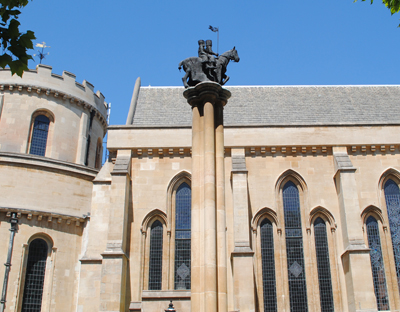
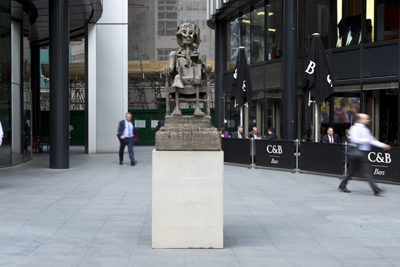
Knights-atop-the-columnStanding outside the Temple Church, in the west of the City of London (between Fleet Street and the River Thames), stands a pillar topped with a pair of Templar knights riding a horse in an obvious commemoration of the military order that once had its preceptory here.

But what many people don’t realise is that the column was also erected, apparently like the Golden Boy of Pye Corner, to commemorate another point where the all-consuming Great Fire of London was finally stopped.

The 10 metre high column was erected in 2000 (another of its purposes was to mark the millennium) in what was once the cloister courtyard of the headquarters of the Templars, which had originally founded to protect pilgrims to the Holy Land in 1119.

The bronze figures of the two men atop a single horse which caps the column was a representation of the image found on the order’s official. It represents the poverty of those who initially joined it – so poor they could only afford one horse for every two men, a situation which was to change dramatically in coming centuries as the order accumulated wealth, a situation which, eventually, in France, led to its downfall.

London Remembers reports that the column was designed in the gothic style, similar to the Purbeck marble columns in the church (which, incidentally, are said to be the oldest surviving free-standing examples of their kind) and deliberately made to contrast with the more florid column of Sir Christopher Wren’s Monument, which marks where the fire started and, also, according to a signboard, “the arrival of the new classical order”.

The column, designed by Ptolemy Dean, and the sculpture, designed by Nicola Hicks, were the gift of Lord Lloyd of Berwick, Treasurer of the Inner Temple in 1999. A Latin inscription around the base of the column reads: “Lest the Temple should be without a memorial of the start of the third millennium the Inner Temple caused this monument to be erected for the greater glory of God.”

For more on Temple and the Temple Church, see our earlier posts here and here and here.

This Week in London – A Queen’s garden party; the Great Fire 350 Festival; and, getting behind the scenes at the Museum of London…

Kensington-Palace-garden-partyJoin Queen Caroline, wife of King George II, for a garden party in the grounds of Kensington Palace this weekend. The celebrations include music, military drills and live performances in a bid to bring the era of the Georgians to life. Visitors can listen to court gossip, learn how to play popular music and devise ways to amuse the queen as they pop in and out of a range of tents set up in the gardens, each of which contains a different activity, from uncovering dress secrets to designing a mini-garden fit for a king or queen. There’s even the chance to sample some Georgian ice-cream in the ice-house. The days will be held from today until 21st August. Admission charges apply. For more, see www.hrp.org.uk/kensington-palace/. PICTURE: Via HRP

The Great Fire 350 Festival – marking the 350th anniversary of the Great Fire of London – is underway and there’s a range of events being held in London over this month and next. While we’ll be mentioning some of these a little closer to actual anniversary date, meantime there are bi-weekly walks, a ‘Fire Trail’ treasure hunt and a new Monument app to keep you busy. The latter allows visitors to conduct a self-guided ‘Great Fire journey’ focusing on the fire itself, the commemoration of the blaze and London as we know it now as well as taking users into the minds of Sir Christopher Wren and Robert Hooke – designers of The Monument. Available for download from Android Market and Apple App Store. For more on the events running as part of the anniversary, see www.visitlondon.com/greatfire350/events.

 Take a behind the scenes look at the Museum of London – and see some rarely exhibited objects – in an exhibition which opened late last month. The free display allows visitors to catch a glimpse of some of the work that goes on behind the scenes and see objects usually housed in the museum’s extensive stores including a detailed model of the process engraving department at the Evening Standard newspaper in 1977, an ice-cream maker and moulds from around 1910, and a confectioner’s icing stand from about 1900. The exhibition can be seen until 15th September. For more, see www.museumoflondon.org.uk.

Send all items for inclusion to exploringlondon@gmail.com.

10 sites commemorating the Great Fire of London – 2. The Golden Boy of Pye Corner…

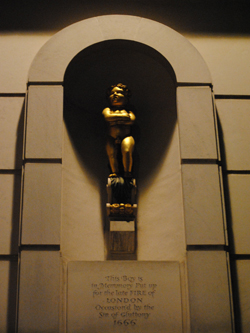
Golden-Boy-of-Pye-CornerWe’ve mentioned this memorial before but it’s worth a revisit. While last week’s entry looked at a plaque marking the site of the start of the Great Fire of London in September, 1666, this week we’re taking a (second) look at one of the sites where it was stopped.

Positioned high on a building on the corner of Giltspur Street and Cock Lane in Smithfield, this small wooden gilt 17th century statue, by an unknown maker, was once located on front of the pub, The Fortune of War, which stood on the site until it was demolished in 1910 (it was apparently used by body-snatchers as a place to display stolen corpses for surgeons from the nearby St Bartholomew’s Hospital to take their pick from).

The statue marks one of the locations on the city fringes where the fire was ‘stayed’ through the demolition of buildings. It bears an inscription which reads “This Boy is in Memmory put up for the late Fire of London Occasion’d by the Sin of Gluttony 1666”.

Well below it is an explanatory note below explains that the boy was made deliberately fat (the statue was apparently originally known as ‘The Fat Boy’ although to the modern eye it doesn’t look particularly so) in reference to the rather odd claim the fire was started in Pudding Lane as a result of the sin of gluttony and not by Papists as had been originally claimed on The Monument.

It has been said that the statue – which is believed to have once had wings and which is the reason why the building it is upon carries a Grade II heritage listing – was merely a shop sign and originally had nothing to do with the Great Fire, which may well be the case, but that said it is known that the fire stopped here (sparing St Bart’s further up Giltspur Street).

PICTURE: David Adams

A Moment in London’s History – The rebuilding of London in the aftermath of the Great Fire…

It’s the 350th anniversary of the Great Fire of London ands we thought we’d take a quick look at what happened in the aftermath.

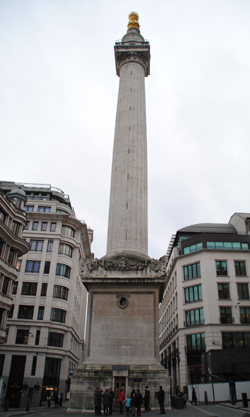
The-MonumentWith much of the city razed in the four day fire of early September, 1666, attention quickly turned to the rebuilding of the City and within just a few days, proposals began coming in for the recreation – and transformation – of London.

Christopher Wren, John Evelyn and Robert Hooke were among those who put forward new designs for the city along with the likes of one Richard Newcourt, whose proposed rigid grid featuring churches set in squares wasn’t adopted for London but was eventually for the streets of Philadelphia in what is now the United States of America.

None of these plans – Wren’s vision had apparently been inspired by the Gardens of Versailles while Evelyn’s was an Italianate city with wide piazzas – were eventually adopted, however, thanks largely to the difficulty in working out who owned which properties in the city (people had more on their mind, such as survival perhaps).

In October, 1666, King Charles II – who had encouraged many of those left homeless to move out of the City out of fears that a rebellion was in the offing – joined with the City authorities in appointing six commissioners to regulate the rebuilding (a key factor in which was the mandatory use of brick in place of wood).

Their actions were supported by a couple of parliamentary acts – drawn up to regulate the rebuilding and allow for the opening and widening of roads, among other things – and the establishment of specially convened Fire Courts to deal with property disputes (owners had to clear roadways of debris and establish their rights of ownership before they could start reconstruction).

Rebuilding was, not surprisingly, to take years – after all, almost 400 acres had been burned within the City walls and 63 acres outside them with more than 80 churches, 44 livery halls and more than 13,000 houses among the casualties. And it was patchy with new buildings standing alongside empty blocks awaiting reconstruction.

Construction of the many grand public buildings destroyed in the fire, such as St Paul’s Cathedral, would also take years (the cathedral, Wren’s Baroque masterpiece, wasn’t completed until 1711).

PICTURE: The Monument, which commemorates the Great Fire of London, is among the works of Sir Christopher Wren (for more on the Monument, see our earlier post here).

This Week in London – Turner back at the Tate; another Great Fire exhibition; and, Heroes and Villains…

Some of painter JMW Turner’s greatest works have returned to the Tate Britain – home of the largest collection of the artist’s works – where they have been put into a new free display. The works, which include Norham castle – Sunrise (c1845), Peace – Burial at Sea (exhibit 1842) and The Dogani, San Giorgio (exhibit 1842), have travelled more than 12,000 miles and been seen by more than 750,000 people in the UK, US and Canada as part of The EY Exhibition: Late Turner – Painting Set Free. They now form part of a new display of more than 100 works spread over eight rooms of the Tate Britain’s Clore Gallery. The three central spaces of the gallery present an overview of the major paintings Turner exhibited during his lifetime – his Self-Portrait (c1799), which will feature on the Bank of England’s new £20 note, is among works shown here – while four smaller galleries located to the sides will show themed groups of work. One brings together scenes from the artist’s British travels and another those from his European jaunts while the final two show the artist’s works on paper and a group of “radical late works” found in his studio after his death. For more, see www.tate.org.uk/visit/tate-britain

A new exhibition exploring the Great Fire of London to mark its 350th anniversary opens at the Guildhall Library in the City of London on Monday. That Dreadful Fire: The Hand of God, a Great Wind and a Very Dry Season explores the story through the collections of the Guildhall Library, including English and foreign accounts, sermons and public records. Runs until 30th November. For more and walks and talks, see www.cityoflondon.gov.uk/things-to-do/guildhall-library/events-exhibitions/Pages/the-dreadful-fire.aspx.

On Now: Heroes and Villains. This exhibition at the Cartoon Museum in Bloomsbury features art “depicting real life, the cartoon and comic world that highlights those we love and those we love to hate”. Featuring political cartoons, cartoon and comic strips, and caricatures, including some selected by celebrities and members of the public, it runs until 30th October. Admission charge applies. For more, see www.cartoonmuseum.org.

Send all items for inclusion to exploringlondon@gmail.com.

10 sites commemorating the Great Fire of London – 1. Thomas Farriner’s plaque

This year marks 350 years since the Great Fire of London destroyed much of the City of London and to mark the anniversary, we’re today launching a new special series looking at some of the lesser known – and, in some cases, more unusual – memorials and plaques commemorating the event.

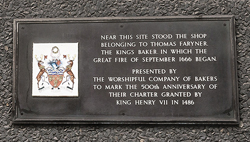
Thomas-Farriner-plaqueSure, everyone knows about The Monument near London Bridge erected to commemorate the event (see our earlier post on it here). But often overlooked is the plaque located in nearby Pudding Lane commemorating the site where the fire began in the early hours of 2nd September, 1666 – the bakery of Thomas Farriner (also variously spelt Faryner or Farynor).

The plaque, located close to the corner of Pudding Lane and Monument Street, was erected in 1986 by the Worshipful Company of Bakers to mark the anniversary of their Royal Charter being granted by King Henry VII some 500 years earlier. It reads (in part): “Near this site stood the shop belonging to Thomas Faryner, the King’s baker, in which the Great Fire of September 1666 began.”

While that fits with the long-held idea that the location of the bakery was 202 feet (61 metres) from the where the Monument stands, the same height of the memorial column itself, new research claims that the site of the bakery was not actually where Pudding Lane now stands but in nearby Monument Street instead.

Drawing on a planning document dating from 1679 and found within the London Metropolitan Archives, academic Dorian Gerhold reportedly cross-referenced the document with later maps and concluded that the baker’s oven was actually located on what is now Monument Street, 60 feet to the east of the intersection with Pudding Lane.

Farriner, meanwhile, was, as a king’s baker, a supplier to the Royal Navy. During the fire, the widower managed to escape the flames along with his three children (although their housemaid, unable or unwilling to escape out a window, perished). He was later able to rebuild the bakery and his home and when he died only a few years after the fire, left considerable sums to his children.

Incidentally, Farriner, his daughter Hanna and his son Thomas were all in the jury which convicted Frenchman Robert Hubert of starting the fire in their bakery by tossing a grenade in through the window (Hubert had confessed and, despite the fact that it’s believed few thought him actually guilty, he was convicted and hanged at Tyburn on 27th October, 1666, for the crime of arson.)

PICTURE: Steve James/Flickr/CC BY_NC-ND 2.0 (cropped and straightened)

Treasures of London – Restored 17th century fire engine…

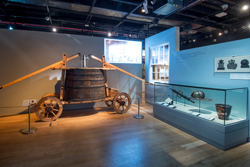
Fire-Engine-Restoration

Originally built in the late 1670s by John Keeling in the aftermath of the Great Fire of London, the engine was acquired by the Museum of London in 1928.

Late-19th-century-photographThen only consisting of the central barrel and pump, it has been restored for the current exhibition, Fire! Fire!, being held to mark the 350th anniversary of the fire which wiped out much of the City of London.

Based on a 19th century photograph (pictured) which showed it still intact with undercarriage, wheels, tow bar and pumping arm, the restoration was carried out by the museum in partnership with Kent-based Croford Coachbuilders using traditional techniques and materials over a three month period.

Meriel Jeater, curator of the Fire! Fire! exhibition, said the reconstruction had revealed new insights into how the fire engine worked and shows that, weighing more than 500 kilograms without water, it would have been extremely difficult to manoeuvre along London’s narrow streets.

“Also, the relatively crude pump mechanism was only able to squirt out about six pints of water over a rather short distance, so it would have been perilously close to the flames to have had any chance of putting them out.”

Fire! Fire! can be seen at the Museum of London until 17th April. Admission charge applies. For more, see www.museumoflondon.org.uk/fire-fire.

PICTURES: © Museum of London.

This Week in London – Family festival celebrates Queen’s 90th at Buckingham Palace; Kew Garden’s first Science Festival; and big data examined…

Buckingham-PalaceBuckingham Palace will host a family festival in celebration of the 90th birthday of Queen Elizabeth II this Saturday. The festival, which will be held in the Family Pavilion on the West Terrace, at the Royal Mews and in The Queen’s Gallery, will feature a 24 foot high, life-sized drawing of the Roald Dahl’s Big Friendly Giant (BFG) by Sir Quentin Blake, story-telling sessions, arts and crafts activities including the chance to make hats inspired by the Queen’s outfits and a BFG ‘dream jar’, and a toy kitchen where under fives can decorate a birthday cake. There will also be dressing-up activities in the Royal Mews and a special family tour of current exhibitions at The Queen’s Gallery while a selection of refreshments will be available. Admission charge applies. For more information, check out www.royalcollection.org.uk.

Kew Gardens holds it first Science Festival this weekend with a range if interactive activities for visitors to get hands-on with. The family friendly festival will celebrate the ground-breaking discoveries made by Kew scientists and allow visitors to explore how to use a DNA sequencer, clone a cabbage or pollinate orchids with tuning forks. The festival will also features a special display and talks about carnivorous plants and there’s special activities for younger “budding scientists” such as making their own mushroom spore print. The festival kicks off tomorrow and runs until Sunday. For more, see www.kew.org.

On Now: Our Lives in Data. This free exhibition at the Science Museum in South Kensington explores some of the many ways in which our data is collected, analysed and used for a variety of purposes – from a toy that learns from a child’s personality to become a better playmate to new virtual reality tools created by game designers to help researchers understand vast collections of data. There is also the chance to test facial recognition software through an “intelligent mirror” and an exploration of some of the latest products developed to help people protect their data, including a Cryptophone and wi-fi blocking paint. Runs until September, 2017. For more, visit www.sciencemuseum.org.uk/data.

Send all items for inclusion to exploringlondon@gmail.com.

Famous Londoners – Scipio Africanus ‘Sam’ Mussabini…

The Olympics kick off in Rio de Janeiro this week, so we thought it a good occasion to recall a Londoner intimately associated with the Olympics, though not as an athlete but as a coach.

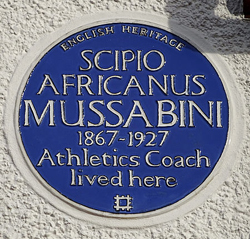
MussabiniBorn in Blackheath, Scipio Africanus – ‘Sam’ – Mussabini was a pioneering athletics coach who, in early 20th century, coached 11 athletes to win medals, including five gold, over five different Olympic Games.

Mussabini, the son of a Syrian-Italian father and French mother, was educated in France and worked, like his father, in journalism, writing for sports magazines and specialising in billiards (which he also played to a high standard).

From the 1890s, he started working, first as a cycling coach and later as an athletics coach in south London, based at Herne Hill Stadium.

His first major success as the latter came when young South African sprinter, Reggie Walker, won gold in the 100 metres at the 1908 London Olympics. In 1913, he was appointed coach of the Polytechnic Harriers at the Herne Hill athletics track.

He would go on to train the likes of Albert Hill – he won gold in the 800 and 1,500 metres at the 1920 Olympics in Antwerp – and his most famous student Harold Abrahams who won gold in the 100 metres and silver in the 4 x 100 metre relay at the 1924 Paris Olympics – a role which is depicted in the 1981 film Chariots of Fire (the coach is played by Ian Holm).

Mussabini is famous for the comprehensive and systematic approach he took to training his athletes, an approach which covered the athletes’ lifestyle and diet as well as a rigorous training regime, and which saw him use techniques such as using a cine-camera t0 film his athletes in action and then analysing the footage. He is also noted for having ensured female athletes, like world record sprinter Vera Palmer-Searle, received high quality coaching.

As a paid coach in an age when most were amateurs, he was ostracised by the establishment and apparently only started to receive the recognition he deserved well after his death, particularly following his depiction in Chariots of Fire.

Mussabini, who suffered from diabetes, died in March, 1927, at the age of 60. He was buried in Hampstead Cemetery. There is an English Heritage blue plaque on the house he lived in at 84 Burbage Road (it backs onto the Herne Hill Stadium) between 1911 and 1916.

Mussabini was inducted into the English Athletics Hall of Fame in 2011 while the Mussabini Medal was awarded every year between 1998 and 2007 by Sports Coach UK to honour outstanding coaches.

PICTURE: Spudgun67/Wikimedia/CC BY-SA 4.0

Lost London – Christ’s Hospital…

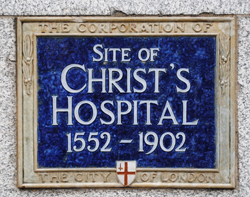
One of the achievements of the short-lived reign of King Edward VI, son of King Henry VIII, was the establishment of this hospital for orphans in 1552 in what were once buildings used by the Greyfriars Monastery (for more on the history of Greyfriars, see our earlier post here).

Christs-HospitalLocated in Newgate Street, the hospital soon had a school attached which became known as the Blue Coat School thanks to the distinctive long blue coats the students wore (and still do, the school is now located near Horsham in West Sussex).

Many of the hospital buildings were destroyed in the Great Fire of London of 1666 but most were later rebuilt under the supervision of Sir Christopher Wren, although the actual work was apparently carried out by others.

Students at the school have included antiquarian William Camden, Romantic poet Samuel Taylor Coleridge and writer Charles Lamb.

New buildings for girls were opened in Hertford in 1704 and the school moved out to Sussex in 1902 with the General Post Office built over the top of the demolished buildings.

What’s in a name?…Putney…

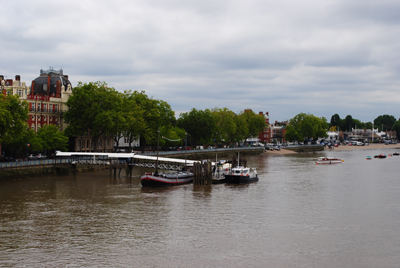
PutneyThis south-west London Thames-side district (and the bridge named after it), traces the origin of its name back to Saxon times.

Putney2Recorded in the Domesday Book as Putelei and known in the Middle Ages as Puttenhuthe, it apparently goes back to a Saxon named Puttan who lived in the area and the Old English word ‘hyp’, which means ‘landing place’. Hence, “Puttan’s landing place” (or Puttan’s wharf).

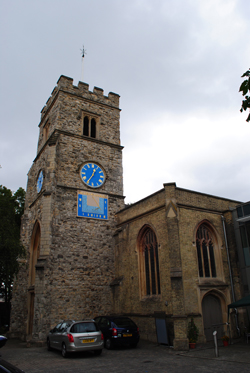
Putney has something of a storied history – it was the birthplace of Tudor heavyweight Thomas Cromwell, Georgian-era author Edward Gibbon and it was here, in the still-standing parish church of St Mary the Virgin (pictured), that the Putney Debates were held in 1647 among members of the New Model Army.

The first bridge was apparently built here in the first half of the 18th century and the present stone bridge in the 1880s.

Today a sought-after riverside residential district, Putney boasts a sizeable high street, great riverside pubs and eateries and is particularly popular every April when The Boat Race is held between Oxford and Cambridge universities thanks to the starting point being just upstream of Putney Bridge.

The area also is home to the 400 acre Putney Heath (which adjoins Wimbledon Common), a popular site for duels in the 18th century, and also home to a stone and brick obelisk, erected in 1770 to mark the 110th anniversary of the Great Fire of London (more on that in an upcoming post).

LondonLife – Sculpture returns to the City…

Sculpture1
Sculpture in the City has returned to the Square Mile for summer with 17 contemporary artworks by internationally renowned artists located in public spaces across the City of London.
 With the event now in its sixth year, this year’s sculptures include Jaume Plensa’s seven metre high cast iron work Laura (located at 30 St Mary Axe (aka The Gherkin), it’s pictured above), Matt Collishaw’s work, Magic Lantern Small – a grand scale “zoetrope”, one of the earliest moving image machines (located in Bury Court, it’s pictured below), and Huma Bhabha’s work, The Orientalist (located in Fenchurch Avenue, it’s pictured far below). Other works can be found in locations including St Botolph-without-Bishopsgate Gardens, The Leadenhall Building and St Helen’s Bishopsgate Churchyard. A map of the SITC trail and extra commentary on the individual artworks can be accessed by downloading the SMARTIFY app for Apple and Android devices and then scanning any of the sculptures. There’s also a map and information available at www.cityoflondon.gov.uk/sculptureinthecity. PICTURES: Nick Turpin

Sculpture2

Sculpture3

This Week in London – Remembering the Great Fire of 1666; rediscovering the Palace of Whitehall; and, the Queen’s dresses go on show…

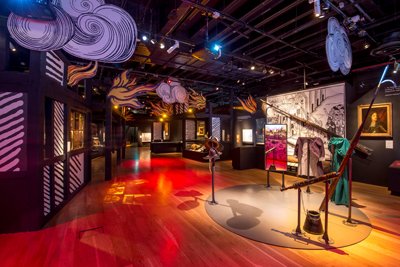
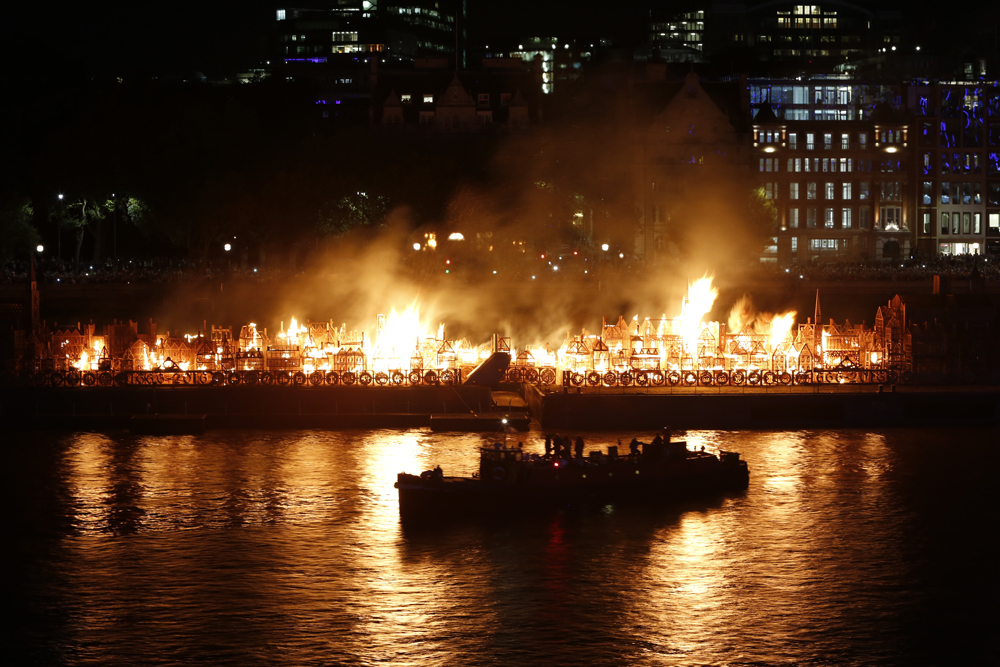
Fire2• A new “theatrical” exhibition marking the 350th anniversary of the Great Fire of London is opening at the Museum of London on Saturday. Fire! Fire! takes visitors on an interactive journey from before, during and after the great fire, looking at how the fire started and spread and the personal stories of Fire1Londoners present at the time. Visitors will be able to step in Pudding Lane and see what life was like for 17th century Londoners, walk into the bakery where the fire started, and identify objects melted by the flames. Exhibits on show include a restored 17th century fire engine, originally built in London in the last 1670s, other firefighting equipment including a squirt, a leather bucket and fire hook, a pair of bed hangings, a burnt Geneva Bible, and letters written in the fire’s aftermath. Admission charges apply. Can be seen until 17th April next year. A series of events, including walks, tours, lectures, workshop and family activities, accompanies the exhibition. For more, see www.museumoflondon.org.uk/fire-fire.  The museum has also commissioned a Minecraft building group recreate London as it was in 1666 with the first of three interactive maps to be released next week (available for free download from www.museumoflondon.org.uk) and further maps to follow in September and February. For more information on other events surrounding the anniversary, see www.visitlondon.com/greatfire350.
The long lost Palace of Whitehall is the subject of a new visitor experience which kicks off at the last surviving part of the palace – the Banqueting House – today. Handheld devices, binaural 3D sound and haptic technology is being made available to guests as they stroll around the streets of modern Whitehall, allowing them to immerse themselves in the former palace during the time of the Tudors and the Stuarts. The Lost Palace experience, created in a collaboration between Historic Royal Palaces and Chomko & Rosier and Uninvited Guests, includes a chance to see the jousts which so delighted Queen Elizabeth I at Horse Guards Parade, accompany King Charles I as he walks through St James’s Park to his execution at the Banqueting House, meet Guy Fawkes following his arrest in the Gunpowder Plot, take part in a performance of King Lear and eavesdrop on an encounter between King Henry VIII and Anne Boleyn before their doomed love affair began. The Palace of Whitehall was once the largest palace in Europe with 1,500 rooms spread across 23 acres. Tickets can be purchased at the Banqueting House. Runs until 4th September. For more details, see www.hrp.org.uk/thelostpalace.
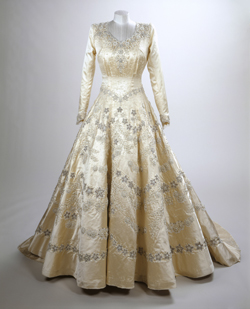
DressDresses worn by Queen Elizabeth II during two of the most significant events in Her Majesty’s life – her wedding and her coronation – can be seen as part of the Summer Opening of the State Rooms at Buckingham Palace from Saturday. The two dresses will form part of a special exhibition – Fashioning a Reign: 90 Years of Style from The Queen’s Wardrobe, the largest display of the Queen’s dress ever held. Alongside the two feature dresses, both designed by British couturier Sir Norman Hartnell, are around 150 outfits created by designers including Hartnell, Hardy Amies and Ian Thomas. The then Princess Elizabeth’s wedding dress (pictured), made for her marriage to the Duke of Edinburgh on 20th November, 1947, was made in ivory silk, decorated with crystals and 10,000 seed pearls and attached to a 15 foot long train, while the Queen’s Coronation dress – created for the event on 2nd June, 1953, is made of white duchesse satin and encrusted with seed pearls, sequins and crystals (along with an extra four-leaf shamrock on the left side of the skirt, added secretly by Sir Norman, to bring her good luck). The exhibition, open to 2nd October, is being accompanied by special displays at both Windsor Castle and Holyroodhouse in Edinburgh. Admission charges apply. For more, see www.royalcollection.org.uk. PICTURE: Royal Collection Trust/© Her Majesty Queen Elizabeth II 2016. 

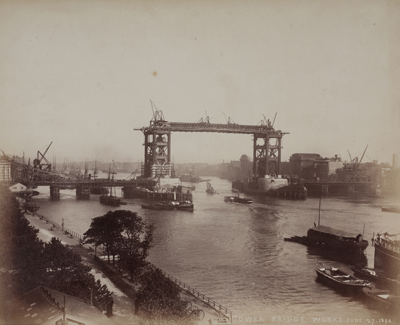
The world’s largest collection of London images – more than 250,000, dating from 1450 to now – are being made available on a free-to-access website hosted by the London Metropolitan Archives from today. Collage – The London Picture Archive features more than 8,000 historical photographs of capital’s streets as well as images of the Great Fire of London in 1666 and photographs of the construction of Tower Bridge along with maps, prints, paintings and films, all drawn from the collections at the City of London Corporation’s Guildhall Art Gallery and the Clerkenwell-based London Metropolitan Archives. The collection can be accessed at www.collage.cityoflondon.gov.uk.

It’s hands-on gaming at the Science Museum for two weeks from Friday with more than 160 systems and hundreds of games available to play on. Power UP spans 40 years of gaming with games ranging from classics like Pong and Pac-Man to modern games like Halo and systems from Atari and SEGA to PS4 and Xbox One. Ninety minute sessions are being held four times daily from 11am tomorrow until 7th August. Ticket charges apply. For more , see www.sciencemuseum.org.uk/powerup.

Send all items for inclusion to exploringlondon@gmail.com.

This Week in London – Festival of Archaeology; exploring colour and vision at the NHM; and the City’s Summer Community Fair…

The 25th annual Festival of Archaeology has kicked off across the UK this week and, of course, there’s events taking place across London. They include a walk exploring the moat at Fulham Palace this Sunday, the opportunity to join Inspector of Ancient Monuments Jane Siddell on a walk along the route of the former London wall in the City of London next Thursday, a tour of the remains of London’s Roman amphitheatre beneath Guildhall Yard on 28th July, and the chance to investigate ancient poo at the Museum of London Docklands over the week from 25th to 29th July. Some of the events are free to attend and require no booking; others charge an admission price and require advance booking. For all details, head to www.archaeologyfestival.org.uk.

Giant-Jewel-Beetle Explore how colour and vision have shaped the natural world in a new exhibition which opens at the Natural History Museum in South Kensington tomorrow. Colour and Vision features more than 350 rarely seen specimens and uses immersive arts and digital imaging to highlight how colour and vision influence life on the planet, providing insights into how humans and animals perceive the world and how colour-shifters, stealth experts and mimics use colour to survive. They include specimens from the rarely-displayed national eye collection, some of nature’s finest examples of structural colour – including Jewel beetles and hummingbirds, cochineal insects which show how nature can be used to create pigments for dyes and paints, and some rose-ringed parrots, whose different colours reveal the visible impact of a mutation in their pigment genes. The exhibition also features a newly commissioned light installation – Our Spectral Vision – by artist Liz West which has been inspired by Sir Isaac Newton’s investigation of the colour spectrum and blue morphs butterflies. Runs to 6th November. Admission charges apply. For more, see www.nhm.ac.uk. PICTURE: Giant jewel beetles/© Trustees of NHM.
The City of London Corporation’s Community Fair will be held on Sunday in Guildhall Yard, featuring entertainment, food stalls and activities for all ages. The free event will see the yard lined with market stalls run by local clubs, faith groups, learning providers and cultural partners who will be offering games and activities as well as information and handmade items for sale. Special guest broadcaster and author Charlie Dimmick will be giving planting workshops throughout the afternoon and will take part in a special Q&A session. Runs from noon to 4pm. For more details, see www.cityoflondon.gov.uk/communityfair.
Send all items for inclusion to exploringlondon@gmail.com.
This Week in London – Commemorating the Battle of the Somme; Transported by Design; and, Winifred Knights at Dulwich…

Battle-of-the-SommeThe Imperial War Museum in Lambeth is holding a free late night opening tonight featuring live music, film screenings, immersive theatre and poetry to mark the 100th anniversary of the Battle of the Somme. Highlights of Night Before the Somme, which runs from 8pm to midnight tonight, include slam poet Kat Francois’ critically acclaimed play Raising Lazarus, poet and broadcaster Ian McMillan’s show Magic Lantern Tales, and extracts from the immersive production Dr Blighty – which tells the story of the million Indians who travelled to fight in the war. Visitors will also have the chance to watch the film, The Battle of the Somme (filmed and screened in 1916, it was the first feature-length documentary about war), listen in to a series of Q&A’s with experts on the battle, and preview the major exhibition, Real to Reel: A Century of War Movies. Real to Reel, which officially opens on Friday, explores how film-makers have found inspiration in compelling personal stories and the real events of wars from the past century. As well as audio-visual installations, the display features film clips, costumes, props, scripts, sketches and designs from films such as The Dam Busters, Where Eagles Dare, Apocalypse Now, Battle of Britain, Das Boot, Casablanca, Jarhead, Atonement and War Horse along with original archival material and artefacts from the IWM collections. The exhibition, which is divided into five sections, runs until 8th January. Admission charges apply. See www.iwm.org.uk for more. PICTURE: © IWM (Q 70164. Staged scene from The Battle of the Somme film, 1916 British troops go ‘over the top’ into ‘No Man’s Land’. This scene was staged for the camera at a training school behind the lines.

• Don’t forget tonight’s vigil at Westminster Abbey to mark the 100th anniversary (as mentioned in last week’s entry here).

Still on the centenary of the Battle of the Somme and a new exhibition opened at the Science Museum in South Kensington this week focusing on the innovations in medical practice and technologies developed as a result of the new kind of industrialised warfare seen in the battle. Wounded: Conflict, Casualties and Care has at its centre a collection of historic objects from the museum’s World War I medical collections including stretchers adapted for use in narrow trenches and made-to-measure artificial arms fitted to the wounded in British hospitals as well as lucky charms and personal protective items carried by frontline soldiers. There are also artworks from the period including Henry Tonk’s famous pastel drawings of facial injuries and a 1914 painting by John Lavery that depicts the arrival of the first British wounded soldiers at the London hospital. Admission is free and the exhibition can be seen until early 2018. For more, see www.sciencemuseum.org.uk.

Regent Street will be transformed on Sunday, 3rd July, with the Transported by Design Festival featuring transport designs which have shaped and will shape London. The festival, which will stretch from Piccadilly Circus to Oxford Circus Tube stations, will see the street divided into three zones – past, present and future. Among the objects on show in ‘past’ section will be a horse-drawn bus and other heritage buses, a 1927 train carriage and an exhibition of classic advertising posters and signage while the ‘present’ section will feature ‘Cycle Spin Fun’ by Santander Cycles, Moquette Land – a showcase of fabric used across the transport network, and, a ‘design a bus’ competition, and the ‘future’ section will feature a range of technologies, including virtual reality headsets, exploring what transport could look like in 2040. The free festival, part of the ‘Summer Streets’ program which sees Regent Street closed to traffic on Sundays over summer, runs from noon to 6pm. For more, see www.tfl.gov.uk/campaign/transported-by-design/event-calendar?intcmp=40582.

• The work of artist Winifred Knights, the first British woman to win the Prix de Rome scholarship, is the subject of a recently-opened exhibition at the Dulwich Picture Gallery. The display, the first major retrospective of the work of Knights (1899-1947), brings together more than 70 preparatory studies and her most ambitious works including The Deluge (1920), The Potato Harvest (1918) and Leaving the Munitions Works (1919). Winifred Knights (1899-1947) runs until 18th September. Admission charge applies. For more, see www.dulwichpicturegallery.org.

Send all items for inclusion to exploringlondon@gmail.com.
Famous Londoners – Sir Joseph Paxton…

Sir Joseph Paxton was one of the pre-eminent landscape gardeners and architects of the Victorian age, although his name is remembered today in great part because of his role in creating one of the most famous buildings of the era – London’s Crystal Palace.

Joseph Paxton ILNThe palace opened 165 years ago this year – it was built for the 1851 Great Exhibition in Hyde Park. But before we get to that, we have to go back a few years to the origins of its designer.

Paxton was born to a large Bedfordshire farming family on 3rd August, 1803 (although the year has been a matter of dispute at times, apparently because, wanting to appear older than he was, early on in his career he claimed that he had been born in 1801).

He attended school locally before venturing into the gardening profession (a number of other family members were already involved in gardening), taking on a number of gardening-related jobs before his first break came in 1823 when he was admitted by the Horticultural Society of London to work as a student gardener in the experimental gardens of Chiswick House in London’s west – then leased by the society from the Duke of Devonshire.

His work was soon noticed and, in 1826, the duke, with whom Paxton would come to have a close friendship, was apparently so enamoured that he appointed him to the position of head gardener at Chatsworth House, his family pile in Derbyshire.

It was something of a dream job for the then still young Paxton, who, over the ensuing years would be responsible for designing gardens as well as fountains (including the Emperor Fountain, named after Emperor Nicholas I of Russia), an arboretum, a model village, a conservatory of unprecedented size – known as the Great Conservatory, and a lily house, the latter featuring a design based on the leaves of the giant Victoria amazonica water lily.

Paxton’s ties to Chatsworth were strengthened further when he married the niece of Chatsworth’s housekeeper, Sarah Bown, in 1827. They would have eight children, six of whom survived.

Chatsworth became the most famous garden in England under Paxton’s watch but for many, it is his instrumental role in the Great Exhibition pavilion which stands out as his greatest achievement.

His involvement was really that of an opportunist – all of the original 245 plans for the main exhibition hall had been rejected when Paxton, on hearing of this while in London on business with regard for his role as a director of the Midland Railway, delivered his own design.

Inspired very much by the lily house he had designed (and which had yet to be completed) at Chatsworth, the design was innovative for a number of reasons, including its modular and prefabricated nature and the copious amounts of glass it used (only possible due to recent technological developments concerning the use of iron and glass).

Following its acceptance (this despite the fact it apparently breached the design competition’s rules), it took some 2,000 men eight months to build the 500 metre long building which, despite some criticism, was such a success at the Great Exhibition that in October of 1851 – some five months after its opening – Paxton was knighted by Queen Victoria. (For more on the Crystal Palace, see our earlier entry here).

Following the Great Exhibition, the building, with Paxton’s aid, was relocated to Sydenham in south London after the exhibition where it remained until it burned down in 1936.

Paxton, meanwhile, returned to his post as head gardener at Chatsworth (a role he fulfilled until 1858), but he is also credited with numerous other projects including the design of public parks in places as far afield as Liverpool and Glasgow, and the design of the London Road Cemetery in Coventry.

He was also involved in the commission charged with improving the Royal Botanic Gardens at Kew and designed numerous residences, the most famous being Mentmore Towers which he designed for Baron Mayer de Rothschild (among his other contributions to the world of design was a plan for an ‘atmospheric railway in London’ which was never built – for more on that, see our previous post here).

Paxton, who also acted as a Liberal MP for Coventry for the last 11 years of his life and was for many years involving in publishing various gardening-related magazines, general newspapers and writing a couple of books, became wealthy by speculating on the growing railway industry.

He died on 8th June, 1865, at his home, Rockhills, in Sydenham and was buried in St Peter’s Churchyard at Edensor on the Chatsworth Estate. His wife Sarah continued to live at Chatsworth until her death in 1871.

PICTURE: Via Wikimedia Commons.

This Week in London – Westminster Abbey open overnight for Somme vigil; ‘Painters’ Paintings’; and, the East End Canal Festival…

Westminster Abbey is to remain open all night next Thursday (30th June) for a vigil in commemoration of the 100th anniversary of the Battle of the Somme. It’s the first time the abbey has been open for an all-night vigil since the Cuban missile crisis more than 50 years ago. The vigil around the Grave of the Unknown Warrior will be mounted from 8.45pm next Thursday, 30th June, through to 7.30am on Friday, 1st July (last entry to the abbey is at 7.15am). The public are invited to attend the vigil following an evening service at 8pm on Thursday which will be attended by Queen Elizabeth II and broadcast live on BBC Two. The vigil, which will end with the firing of World War I guns in Parliament Square by The King’s Troop Royal Horse Artillery, will see a series of 15 minute watches kept by service personnel and community groups representing those involved in the battle and there will also be readings from contemporary accounts. No tickets are required and entry, which is free, is via the abbey’s visitor entrance at the North Door. For more, see www.westminster-abbey.org.

CorotEver wondered what attracts artists to collect particular paintings? Answers abound at a new summer exhibition opening at The National Gallery today. Painters’ Paintings’: From Freud to Van Dyck features a series of ‘case studies’, each of which is devoted to works gathered by a particular ‘painter-collector’ including Lucien Freud, Henri Matisse, Hillaire-Germain-Edgar Degas, Frederic, Lord Leighton, Sir Thomas Lawrence, Sir Joshua Reynolds and Sir Anthony van Dyck. The display was inspired by Jean-Baptiste-Camille Corot’s work Italian Woman which was left to the nation by Lucien Freud following his death in 2011. “It made us start considering questions such as which paintings do artists choose to hang on their own walls,” explains Anne Robbins, curator of the exhibition. “How do the works of art they have in their homes and studios influence their personal creative journeys? What can we learn about painters from their collection of paintings? Painters’ Paintings’: From Freud to Van Dyck is the result.” The exhibition features works from the gallery’s own collection as well as loans from public and private collections. Admission charges apply. Runs until 4th September. For more, see www.nationalgallery.org.uk. PICTURE: Jean-Baptiste-Camille Corot’s Italian Woman, or Woman with Yellow Sleeve (L’Italienne) about 1870/© The National Gallery, London.

The East End Canal Festival takes place at the Art Pavilion, Mile End Park this Sunday. The programme, being run by the Friends of Regent’s Canal, includes boat trips as well as guided canal history walks and a range of performances, films, stalls, exhibitions featuring historic photos and locally made artworks, children’s activities and food. The festivities at the Clinton Road site are free. For more, see http://friendsofregentscanal.org/events/eecf.html.

Send all items for inclusion to exploringlondon@gmail.com.
10 notable blue plaques of London – 6. A blue plaque for a deadly bomb…

V1-flying-bombNot all of the plaques in the English Heritage blue plaques scheme commemorate people, some also commemorate places and events – the saddest of which is no doubt the landing of the first deadly V1 flying bomb on London during World War II.

Located in Bow in the East End is a plaque commemorating the site where the first flying bomb fell on London on 13th June, 1944, a week after D-Day and several months since the last bombs had fallen on London in what was known as the “mini-blitz”.

Carrying some 850 kilograms of high explosive, the unmanned, fast-moving bomb dived to the ground at about 4.25am on the morning of the 13th, badly damaging the railway bridge and track, destroying houses and, sadly, killing six people.

It was to be the start of a new bombing offensive which would eventually see around 2,500 of the V1 flying bombs reach London between June, 1944, and March, 1945.

They were responsible for killing more than 6,000 people and injuring almost 18,000 and were followed by the even more advanced V2 long range rockets – the world’s first ballistic missiles – in September, 1944. These were responsible for another 2,754 deaths in London before the war’s end.

The current plaque on the railway bridge in Grove Road was erected in 1998 by English Heritage and replaced one which was erected by the Greater London Council in 1985 and subsequently stolen.

PICTURE: Spudgun67/CC BY-SA 4.0

This Week in London – Engineering feats explained; Tate Modern reopens; app for blue plaques; and, the RA’s summer exhibition…

Sydney_Opera_House_under_construction_6_April_1966__Robert_Baudin_for_Hornibrook_Ltd._Courtesy_Australian_Air_PhotosThe stories behind some of the world’s most iconic buildings – from the Sydney Opera House to the Centre Pompidou in Paris – and engineering projects like London’s Crossrail will be exposed in a new exhibition at the V&A on the work of Ove Arup – arguably the most influential engineer of the 20th century. Engineering the World: Ove Arup and the Philosophy of Total Design, which is being staged on conjunction with the global engineering and design company he founded – Arup, surveys the life, work and legacy of Arup (1895-1988) and features more than 150 previously unseen prototypes, models, films, drawings and photographs as well as new immersive digital displays featuring animations, simulations and virtual reality. As well as presenting information relating to a selection of Arup’s most ground-breaking projects – including collaborations with architects such as Richard Rogers and Norman Foster, the display, which is divided into several distinct sections arranged chronologically, also explores the pioneering work of Arup today on projects like Crossrail, technologies for acoustics studies like SoundLab and SolarLeaf – an experimental bio-reactive facade system that uses micro algae to generate renewable energy. The first major exhibition led by the V&A’s new Design, Architecture and Digital Department, Engineering the World runs at the South Kensington museum until 6th November. Admission charges apply. For more, see www.vam.ac.uk/EngineeringSeason. PICTURE (above): Sydney Opera House under construction, 1966; © Robert Baudin for Hornibrook Ltd. Courtesy Australian Air Photos.

New-Tate-ModernThe new Tate Modern opens its doors to the public tomorrow following a £260 million renovation and expansion. Designed by architects Herzog & de Meuron (who also designed the original conversion of the Battersea Power Station which opened in 2000), the new Switch House building increases the size of the Tate Modern by 60 per cent. As well as redisplaying the 800 works previously on show, the revamped Tate Modern – which still features the Turbine Hall at its centre – also offers a range of new experiences for visitors, from the  subterranean concrete ‘Tanks’ – the first permanent museum spaces dedicated to live art, and a panoramic public viewing terrace on level 10. The museum’s reopening will be celebrated by a free programme of live performances, new commissions and other special events and the museum will stay open until 10pm each evening this weekend when events will include a specially commissioned choral work being performed by more than 500 singers from community choirs around London at 5pm on Saturday. Entry to the Tate Modern on Bankside is free. For more, see www.tate.org.uk/visit/tate-modern. PICTURE: © Hayes Davidson and Herzog & de Meuron/Tate 

English Heritage blue plaques were unveiled to ballet dancer Dame Margot Fonteyn and choreographer Sir Frederick Ashton earlier this month. Dame Margot’s plaque was unveiled at her former flat at 118 Long Acre in Covent Garden (conveniently close to the nearby Royal Opera House where she performed) while Sir Frederick’s plaque was unveiled at his former property at 8 Marlborough Street in Chelsea. The pair’s 25 year relationship produced many of her most celebrated performances and his greatest ballets, including Daphnis and Chloe (1951), Sylvia (1952) and Ondine (1958). The unveiling coincided with the release of a new free Blue Plaques app which, as well as helping users to find blue plaques and uncover the stories of those they commemorate, is also intended to provide an expanding series of walking tours. The first, ‘Soho’s Creatives and Visionaries’, follows a route from Oxford Circus to Tottenham Court Road Station, taking in the property where Karl Marx began writing Das Kapital, the house where Canaletto lived and the attic rooms where John Logie Baird first demonstrated television in 1926. For more, see www.english-heritage.org.uk/visit/blue-plaques/.

The 248th ‘summer exhibition’ – featuring the work of 15 international artistic duos in a display curated by leading British sculptor Richard Wilson – opened at the Royal Academy of Arts this week. On display in the Piccadilly institution’s main galleries, the exhibition’s highlights include a new large scale, suspended kite sculpture by Heather and Ivan Morison, two hand-coloured prints from Jake and Dinos Chapman’s Human Rainbow II series, and, an atmospheric photographic installation from Jane and Louise Wilson’s seminal Chernobyl series. Turkish film-maker and artist Kutlug Ataman’s monumental multi-image video installation, THE PORTRAIT OF SAKIP SABANCI, featuring 10,000 LCD panels will also be displayed. Can be seen until 21st August. Admission charges apply. For more, see www.royalacademy.org.uk.

Send all items for inclusion to exploringlondon@gmail.com.
LondonLife – The Queen’s 90th birthday marked at Trooping the Colour…

Queen-in-The-Mall

Photographer John Pannell was among the crowds who gathered in The Mall to witness Trooping the Colour on Saturday. Traditionally held to mark the Queen’s birthday, this year’s event – in honour of the fact that the Queen has turned 90 (her actual birthday being 21st April) – was followed on Sunday by a lunch for 10,000, known as the Patron’s Lunch, in The Mall. Trooping the Colour has marked the official birthday of the sovereign since the reign of King George II. Above are the Queen and Prince Philip while below are part of the Massed Bands of the Household Division, among those who marched, and, RAF planes fly-past Buckingham Palace while watched from the palace’s famed balcony by the Queen and the royal family.

Trooping-the-Colour
PlanesPICTURES: John Pannell/Flickr