This Week in London – 70 years of British history in the spotlight at the Hayward; Napoleonic propaganda at the British Museum; pick the copy at the Dulwich Picture Gallery; and, Fulham Palace during World War I…

The last 70 years of British history is under the spotlight at the Hayward Gallery, South Bank, in a new exhibition, History is Now:7 Artists Take on Britain. As the title suggests, seven UK-based artists – John Akomfrah, Simon Fujiwara, Roger Horns, Hannah Starkey, Richard Wentworth and Jane and Louise Wilson – are each looking at a particular period of cultural history spanning the years from 1945 to today. The artists have selected more than 250 objects from public and private collections and have displayed these along with photographs, newspapers, films, domestic items and artefacts. The exhibition, which runs until 26th April, is part of the Southbank Centre’s Changing Britain 1945-2015 Festival which runs until 9th May. For more, see www.southbankcentre.co.uk.

The use of Napoleon’s image in propaganda during the Napoleonic Wars is the subject of an exhibition which opened last week at the British Museum in Bloomsbury. Bonaparte and the British: prints and propaganda in the age of Napoleon looks at how propaganda was used on both sides of the channel and includes works by both British and French satirists. Among British artists whose work is featured is that of James Gillray, Thomas Rowlandson, Richard Newton and George Cruikshank and the exhibition also features a range of objects – mugs, banners and even Napoleon’s death mask – drawn from the museum’s collection. The exhibition, which runs until 16th August, is free and can be found in Room 91. For more, see www.britishmuseum.org.

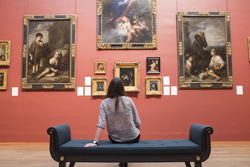
DulwichCan you pick a copy? Visitors to the Dulwich Picture Gallery in the city’s south have the opportunity to test their skills with a new initiative which has seen a Chinese replica placed somewhere among the 270 Old Master paintings on display. Made in China: A Doug Fishbone Project explores the nature and importance of the concept of the original versus that of the copy and the role of art as commodity. People have three months – until 26th April – to visit the gallery and find the replica painting before submitting their answers via an iPad in the gallery (those who correctly identify it will be entered into a competition to win a custom print from the gallery’s collection signed by the American artist Doug Fishbone). The replica will be revealed on 28th April when it will hang side-by-side with the original. Admission charge applies. For more, see www.dulwichpicturegallery.org.uk. PICTURE: © Stuart Leech/Dulwich Picture Gallery.

• The Talk: Isambard Kingdom Brunel – The man who built the world. Robert Pulse, director of The Brunel Museum, will give a free talk about the life and achievements of the great Victorian engineer Brunel at the John Harvard Library 211 Borough High Street on 17th February at 6.30pm. For more information, follow this link.

On Now: Fulham Palace through the Great War. This exhibition at the former home of the Bishop of London on the Thames River in west London tells the story of the palace during World War I and examines the lives of those connected with the palace who died in the conflict, such as William Burley, son of Bishop Winnington-Ingram’s chauffeur. It tells how the bishop – described as an “enthusiastic” recruiter – visited the frontline in 1915 and how, in 1918, the palace was occupied by a Red Cross hospital. Runs until 16th April. Entry is free. For more, see www.fulhampalace.org/visiting-whats-on/exhibitions/.

Send all items for inclusion to exploringlondon@gmail.com.

LondonLife – Astrologer, former Lord Mayor and Leveller among those buried in Bedlam, new research finds…

Bedlam2

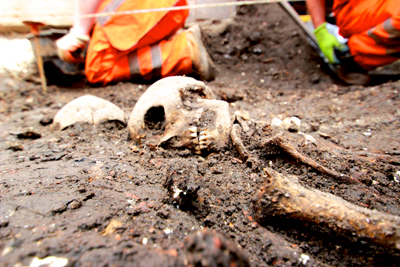
The remains of an astrologer believed to have been stoned to death by an angry mob, a former Lord Mayor of London and a member of Civil War era dissenting group, the Levellers, who was executed by firing squad may be among those exhumed from the former Bedlam burial ground in Liverpool Street in the City of London in a new archaeological excavation.

A research project carried out ahead of the planned excavation of the new eastern entrance of the Liverpool Street Crossrail Station has unearthed the names and backgrounds of more than 5,000 of the 20,000 Londoners who were buried on the site in the 16th and 17th centuries.

They include Dr John Lamb, an astrologer and advisor to the Duke of Buckingham, who a mob apparently stoned to death outside a theatre in 1628 after allegations against him of rape and black magic, Sir Ambrose Nicholas, Lord Mayor of London in 1575, as well as victims of riots by ‘Fanatiques’ (as noted in the diaries of Samuel Pepys in January, 1661) and, according to a report in The Independent, Robert Lockyer, a member of the Leveller movement who was executed by firing squad in 1649 during the English Civil War.

Some 3,000 skeletons will be disinterred in the excavation along with, it is expected, Roman and medieval artefacts. The dig will start next month and will be carried out by MOLA (Museum of London Archaeology). The skeletons will be analysed before they are reburied in consecrated ground.

The research into the backgrounds of more than 5,000 of those buried on the site – which was established in 1569 to help alleviate overcrowding caused by outbreaks of plague and other epidemics – has been carried out by 16 volunteers with the results compiled into a new online database – the Bedlam Burial Ground Register. Plague was the most common form of death followed by infant mortality and consumption.

“This research is a window into one of the most turbulent periods of London’s past,” said lead archaeologist Jay Carver. “These people lived through civil wars, the Restoration, Shakespeare’s plays, the birth of modern industry, plague and the Great Fire.”

Crossrail workers recently discovered the gravestone of Mary Godfree who died in September, 1665, as a result of the ‘Great Plague’ which reached its peak that year.

PICTURES: Courtesy of Crossrail.

We’re running a bit behind this week, so the next instalment in our Churchill series won’t appear until later this week.

This Week in London – Churchill’s Scientists; Waterloo online; a Chelsea murder case reopened; exploring Crossrail; and, astronomical photography…

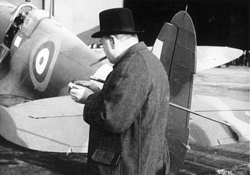
Churchill-with-a-Spitfire-from-Castle-Bromwich,-credit-Philip-Insley,-CBAF-Archive-Vickers-ArchiveSyndics Marking the 50th anniversary of the death of Winston Churchill, a new exhibition at the Science Museum in South Kensington looks at his passion for science and the influence that had on bringing World War II to an end. Churchill’s Scientists celebrates the individuals who flourished under Churchill’s patronage (and , as well as helping to bring about the end of World War II, also launched a post-war “science renaissance”) – from Robert Watson-Watt (inventor of radar) through to Bernard Lovell (creator of the world’s largest telescope) – and also delves into more personal stories of Churchill’s own fascination with science and tech. The display include objects from the museum’s collection as well as original archive film footage, letters and photographs. Highlights include the high speed camera built at Aldermaston to film the first microseconds of the detonation of the UK’s first home grown atomic bomb, the cigar Churchill was smoking when he heard news of his re-election as PM in 1951, and a one-piece green velvet “siren suit” designed by Churchill to wear during air raids (only one of three originals known to exist, it’s never been on public display outside of the tailors who created it). The free exhibition runs until 1st March and is part of the Churchill 2015 programme of events. Visit www.sciencemuseum.org.uk/churchill for more. PICTURE: Churchill with a Spitfire from Castle Bromwich (Philip Insley, CBAF Archive Vickers ArchiveSyndics).

The National Army Museum and Waterloo2oo have launched an online gallery which will eventually comprise images and information on more than 200 artefacts associated with the Battle of Waterloo ahead of the 200th anniversary in June. Among the objects featured on Waterloo200.org are the Duke of Wellington’s boots, a French eagle standard captured in battle and the saw used to amputate the Earl of Uxbridge’s leg. One hundred items – drawn from the Army Museum’s collection as well as from European museums and private collections – can already be seen on the site with a further 100 to be added before the bicentenary on 18th June.

The Talk: Death in Disguise: The Amazing True Story of the Chelsea Murders. On 12th February, the Guildhall Library in the City of London will host Gary Powell as he examines the facts of this double murder which took place in Chelsea in May, 1870, and left Victorian society reeling. For more events at the library, follow this link.

On Now: Breakthrough: Crossrail’s tunnelling story. This exhibition at the London Transport Museum in Covent Garden brings a new perspective on the massive Crossrail project currently underway in the city. Visitors will experience the tunnel environment through a five metre high walk-through installation featuring a computer simulation of a giant boring machine as well as learn about how the project is shaping up, play interactive tunnelling games and hear firsthand from those who work underground. Admission charge for adults applies. Runs until August. For more, see www.ltmuseum.co.uk.

Extended: Astronomy Photographer of the Year Exhibition. This exhibition at the Royal Observatory Greenwich features the winning images from last year’s competition. They include the Briton James Woodend’s image of a vivid green aurora in the Icelandic night sky; American Patrick Cullis’ view of earth taken from 87,000 feet above ground; and, New Zealander Chris Murphy’s image of dusty clouds dancing across the Milky Way. The exhibition can be seen for free in the Observatory’s Astronomy Centre until 19th July. For more, see www.rmg.co.uk/astrophoto.

• Send all items for inclusion to exploringlondon@gmail.com. 

This Week in London – The Clowns’ Service has a new venue; Sir Jacob Epstein at the Foundling Museum; Mark Boxer’s caricatures at the Cartoon Museum…

The 69th annual Clowns’ Service will be held this Sunday – but the venue has changed. An annual tradition since 1946, the service is held in memory of Regency performer (and man hailed as the “inventor” of the modern clown), Joseph Grimaldi (1778-1837). It has been held at Holy Trinity Church in Dalston since 1959 after the previous building where it was held – St James’ Chapel in Pentonville Road; site of Grimaldi’s grave – was gutted in a fire (permission was given for clowns to attend in costume in 1967) but this year, due to repairs at Holy Trinity, the service is being held at sister church All Saints, Livermore Road, in Haggerston (E8 4EZ) (www.trinitysaintsunited.com). Kicks off at 3pm but you’ll have to be early to find a space. About 60 clowns usually attend and a clown show for children follows.

Bronze sculptures and drawings of babies and children by Sir Jacob Epstein (1880-1959) form the basis of a new exhibition opening tomorrow at the Foundling Museum in Bloomsbury. Sir Jacob Epstein: Babies and Bloomsbury features portraits of Epstein’s own children and grandchildren and those of friends and contemporaries. The artist lived in Bloomsbury himself between 1914 and 1927 during which time he had five children from a series of extramarital affairs (interesting his long-suffering wife Margaret, herself unable to have children, brought up the youngest and oldest of these and put up with his affairs until her death in 1947 – although she is believed to have shot his long-term lover Kathleen Garman, later his wife and Lady Epstein, in the shoulder with a pearl-handled pistol. Also opening at the Foundling Museum tomorrow is a display of four rarely-exhibited portraits of Georg Frideric Handel and contemporaries Corelli, Geminiani and Daniel Purcell which are on-loan from the Royal Society of Musicians and which once hung in the royal box of King George III. Both exhibitions run until 10th May. Admission charges apply. For more, see www.foundlingmuseum.org.uk.

On Now: The Caricatures and Cartoons of Mark Boxer. This exhibition at the Cartoon Museum in Bloomsbury features more than 100 of Boxer’s caricatures and cartoons from The Times, The Guardian, The Daily Telegraph, The New Statesman, The London Review of Books and The Observer. Among the more than 80 caricatures on display – works for which he is particularly noted – are those of Prince Charles and Queen Elizabeth II, Antonia Fraser, Seamus Heaney, Tony Benn, Clive James, Barry Humphries and David Frost. Runs until 22nd March. Admission charge applies. For more, see www.cartoonmuseum.org.

Send all items for inclusion to exploringlondon@gmail.com.

LondonLife – Mary and infant Jesus back on display in St Paul’s…

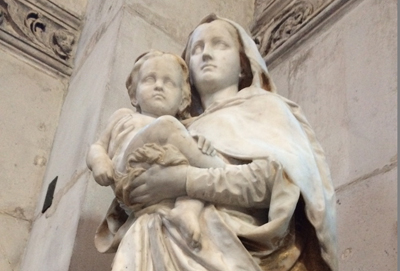
The-Madonna-and-ChildThis Victorian-era marble statue of the Virgin and Child has gone back on show in St Paul’s Cathedral more than 70 years after it taken down following bombing during World War II. Part of an ornate high altar and reredos installed at the cathedral’s east end in 1888, the statue – the work of Thomas Garner – was put into storage after that part of the cathedral took a direct hit during the Blitz of 1940 and what remained of the altar was dismantled (the statue and a crucifix were the only parts retained by the cathedral). It can now be seen in the Chapel of St Erkenwald and St Ethelburga (also known as the Middlesex Chapel) in the north transept. For more, see www.stpauls.co.uk. PICTURE: The Chapter of St Paul’s Cathedral.


Treasures of London – Winston Churchill statue, Parliament Square…

Winston-ChurchillFormer British PM, Sir Winston Churchill, died 50 years ago tomorrow, so we thought it was a good time to take a look at one of London’s most iconic statues.

Standing tall among some of the towering figures of British politics (and others), the over life-sized bronze statue of Sir Winston Churchill on Parliament Square in Whitehall was designed by Welsh sculptor Ivor Roberts-Jones and is located on a site on the square’s north-east corner chosen by the great man himself.

Standing 12 feet (3.6 metres) high on an eight foot (2.4 metre) high pedestal opposite the Houses of Parliament (which he faces), Churchill, who was 90 when he died, is portrayed during the years of World War II wearing a navy greatcoat but wears no hat and leans on a cane.

The full length, Grade II-listed statue, which Roberts-Jones was commissioned to create in 1970, was unveiled by Lady Churchill with the aid of Queen Elizabeth II in 1973.

Interestingly, it’s said that there’s a mild electric current which runs through the statue to ensure pigeons don’t perch and snow doesn’t gather on his head. Another quirky fact – Roberts-Jones was subsequently commissioned to make another Churchill statue in 1977 – this one for New Orleans.

PICTURE: Adam Carr

Happy New Year!

Wishing you a very happy start to 2015! Keep an eye out over the next couple of days for our Top Posts of 2014 feature…

This Week in London – New Year’s Eve sold out; New Year’s Day Parade; and, National Gallery buys Corot work…

All 100,000 tickets for London’s New Year’s Eve fireworks are now booked, the Greater London Authority announced this week. They’ve advised those without a ticket to avoid the area around Embankment and South Bank on the night, saying that the best alternative view of the fireworks will be live on BBC One. Meanwhile, don’t forget the New Year’s Day Parade which will kick off in Piccadilly (near junction with Berkeley Street) from noon on New Year’s Day. The parade – which takes in Lower Regent Street, Pall Mall, Trafalgar Square and Whitehall before finishing at 3.30pm at Parliament Square in Westminster – will feature thousands of performers. Grandstand tickets are available. For more, see www.londonparade.co.uk.

The National Gallery has acquired French artist Jean-Baptiste-Camille Corot’s work, The Four Times of Day, it was announced this month. The 1858 work, acquired with the aid of the Art Fund, has something of a star-studded pedigree – it was bought by Frederic, Lord Leighton, in 1865, and the four large panels were displayed at his London home until his death. In the same family collection for more than a century after that, they have been on loan to the National Gallery since 1997. They complement 21 other paintings by Corot in the gallery’s collection. The Four Times of Day can be seen in Room 41. Entry is free. For more, see www.nationalgallery.org.uk.

Exploring London is taking a break over Christmas, so this will be the last This Week in London update until mid-January. But we’ll still be posting some of our other usual updates including our most popular posts for 2014 round-up!

This Week in London – Hampton Court Palace lights up; doll house histories; more on Christmas; and, memories of a royal progress at The Queen’s Gallery…

Hampton Court Palace’s world famous gardens have been transformed into an “illuminated wonderland” which can be explored using a specially created trail. From tomorrow, visitors can use a glow-in-the-dark map to follow the trail which starts at the palace’s hedge maze – the UK’s oldest – and meanders through various locations around the grounds – including the formal gardens – before ending up at the palace’s East Front where, through the use of interactive technology, visitors can ‘paint’ the building’s facade just by moving around. Allow about an hour. Entry is timed between 5pm and 8pm. Runs until 23rd December. Admission charge applies. For more, see www.hrp.org.uk/HamptonCourtPalace/.

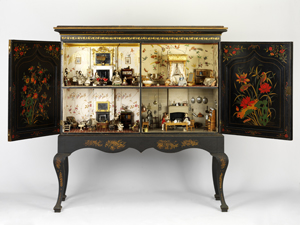
Killer_Cabinet_1840sThe stories behind some of the UK’s best-known dolls’ houses are the focus of a new exhibition which opens at the V&A Museum of Childhood in Bethnal Green on Saturday. Small Stories: At home in a dolls’ house tells the story of 12 dolls’ houses dating as far back as 300 years. Each of the houses – which are displayed chronologically – has been set up to represent a particular time of day and, using interactive technology, tells the story of those who live and work in the building in a series of stories featuring marriages, parties, politics and even crimes. Highlights include: the Tate Baby House – dating from 1760, it features original wallpapers and painted panelling in the style of Robert Adam; the Killer House (pictured) – a gift from surgeon John Egerton Killer to his wife and daughters in the 1830s, this Chinese-style cabinet has gilded wallpapers, a four poster bed and liveried servants; Whiteladies House – a Modernist country villa designed by artist Moray Thomas and built in the 1930s; the Hopkinson House – based on the homes built in the 1930s in the London County Council suburb, the St Helier Estate; and, the Kaleidoscope House – designed by Laurie Simmons to suit a “design conscious step-family living in the new millennium”. There’s a further 20 dolls’ houses, dating from 1673 to 2014, on display in the museum’s permanent galleries (just some of the more than 100 in the museum’s collection). Admission is free. Runs until 6th September, 2015. For more, see www.museumofchildhood.org.uk. PICTURE: Victoria and Albert Museum, London.

The V&A has unveiled its 2014 Christmas Tree at the grand entrance to its South Kensington building. Designed by Gareth Pugh, Ceremony stands at more than four metres in height and, along with a shape not unlike a traditional Christmas tree, features nine tiered gold pyramids located around a central beacon of light to represent the nativity. For more, see www.vam.ac.uk/content/articles/c/christmas-tree-installation-by-gareth-pugh/Meanwhile Winter Wonderland continues to entertain in Hyde Park with rides, markets, ice-skating and all the usual attractions. Open 10am to 10pm every day until 4th January (closed on Christmas Day). For more, see www.hydeparkwinterwonderland.com.

On Now: Cairo to Constantinople: Early Photographs of the Middle East. This exhibition at The Queen’s Gallery, Buckingham Palace, features objects collected by the 20-year-old Prince of Wales, Albert Edward (later King Edward VII), during an educational tour of the Middle East in 1862. The display, which also features photographs taken by Francis Bedford – the first photographer to join a royal tour, follows the prince as he progresses through Egypt, Palestine and the Holy Land, Syria, Lebanon, Turkey and Greece. The exhibition is being show alongside Gold, a display of 50 gold items drawn from the Royal Collection. They include the Rillaton Cup, found in a Bronze Age burial dating from between 1700 and 1500 BC, a gold crown from Ecuador that predates the Incas, and an 18th century tiger’s head made from gold and rock crystal and taken from the throne of the Tipu Sultan of Mysore in India. Both run until 22nd February. Admission charge applies. For more, see www.royalcollection.org.uk.

Send all items for inclusion to exploringlondon@gmail.com.

LondonLife – Oliver Cromwell’s coffin plate goes to auction…

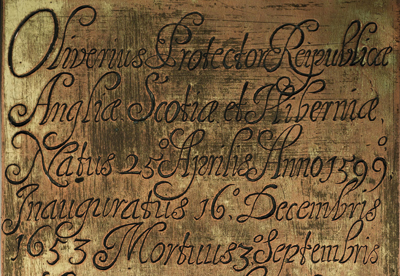
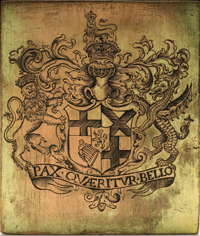
Coffin-Plate-(i)The copper gilt plate found on former Lord Protector Oliver Cromwell’s breast when his body was exhumed will be put up to auction in London later today. Sotheby’s says that according to contemporary reports, the plate was found in a leaden canister lying on Cromwell’s chest when the coffin – interred in Coffin-Plate-(ii)the Henry VII Chapel in Westminster Abbey – was opened by James Norfolke, Serjeant of the House of Commons, on the orders of parliament on 26th January, 1661 – just two years from Cromwell was buried. Norfolke apparently took the plate which was subsequently handed down through his family. It was not the only relic associated with Cromwell to survive – while Cromwell’s body, along with that of regicides Henry Ireton and John Bradshaw, was hanged at Tyburn and then apparently buried in an unmarked grave pit, his head was placed on a spike above Westminster Hall and remained there for more than 20 years until it blew down in a gale and was taken by a guard. It apparently subsequently passed through numerous private hands before, in 1960, it was interred in a secret location in the chapel of Sidney Sussex College in Cambridge. Meanwhile, the plate – which bears the arms of the Protectorate on one side and an inscription in Latin with the dates of Cromwell’s birth, inauguration as Lord Protector and death on the other – is listed with an estimated price of between £8,000 and £12,000. For more on the item, see www.sothebys.com/en/auctions/ecatalogue/2014/english-literature-history-childrens-books-illustrations-l14408/lot.3.html.

This Week in London – Christmas celebrations; photographic history on show; and, architects as artists…

Events celebrating Christmas continue to make our post this week. Sunday will see the annual ‘Blessing of the Crib’ – featuring a torch-lit procession on the steps of St Martin-in-the-Fields before the crib is blessed in Trafalgar Square – while on Monday carol singers will kick off their annual program of carolling in the square. More than 50 carol groups are taking part in the singing this year, which takes place from 4pm to 8pm on weeknights and 2pm to 6pm on weekends and runs until 23rd December.  For more on the blessing, see www.stmartin-in-the-fields.org and for more on the carolling in Trafalgar Square and other Christmas events in the city, see www.london.gov.uk/events.

A showcase of works from the Royal Photographic Society Collection has gone on show at the Science Museum’s Media Space. The images include some of the earliest known photographic pictures – dating from the 1820s, they are the work of pioneers like Roger Fenton, William Henry Fox Talbot and Julia Margaret Cameron – alongside contemporary works by the likes of influential modern figures such as Don McMullin, Terry O’Neill and Martin Parr. The exhibition also features artefacts from the history of the craft, such as Niepce’s heliographs, Fox Talbot’s experimental cameras and The Pencil of Nature – the first commercially published book to be illustrated by photographs. Masters of Light: Treasures from the Royal Photographic Society Collection, presented in collaboration with the Reiss-Engelhorn Museen in Mannheim, Germany, runs at the South Kensington institution until 1st March. Admission charge applies. For more, see www.sciencemuseum.org.uk/mastersoflight.

On Now: Architects as Artists. This exhibition, marking the 10th anniversary of the partnership between the V&A and RIBA, examines the relationship between architecture and art and features about 50 works from the collections of the V&A and RIBA. They include everything from a drawing by Raphael of the Pantheon in Rome to a lithograph by Cyril Power depicting staircase in Russell Square tube station and a volume of architectural fantasies by the Russian architect Iakov Chernikhov. Held in the V&A + RIBA Architecture Gallery Room at the V&A in South Kensington, it runs until 15th March. Admission is free. For more, see www.vam.ac.uk/architecture.

Send items to inclusion to exploringlondon@gmail.com.

8 structures from the London that never was – 5. Sir Joseph Paxton’s Great Victorian Way…

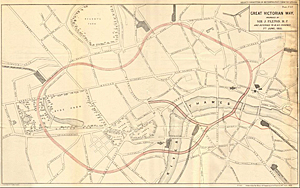
Fresh from the success of designing The Crystal Palace for the Great Exhibition of 1851 (see our earlier post here), in 1855 Sir Joseph Paxton came up with the idea of building a covered elevated railway “girdle” which would circle parts of central and west London and alleviate traffic congestion.

Great-Victorian-WayThe proposed 10 mile long, eight track railway – which would feature trains propelled by air pressure (an “atmospheric” system) rather than conventional steam engines and included  “express” trains which would only stop at select stations – was to be constructed inside a vast, 108 foot high glass covered arcade which would also contain a road, shopping and even housing.

The trains would travel at such a speed that to get from any one point on the “girdle” to its opposite point would only take 15 minutes.

Paxton presented his proposal to a Parliamentary Select Committee in June 1855 – he had already shown it to Prince Albert whom, he said, “gives it his approval”.

He estimated the cost of his proposal – which he thought would carry some 105,000 passengers every day – at some £34 million – a figure which parliament, which had initially been supportive of the idea, found a little hard to stomach.

This was especially thanks to the fact they were already dealing with the costs of Sir Joseph Bazalgette’s vast sewer system (see our earlier post here), created as a result of the ‘Great Stink’ in 1858 when the smell of untreated human excrement and other waste in the Thames became so strong, parliament had to act.

As a result, the project – which would have crossed the Thames three times, once with a spur line that ended near Piccadilly Circus – never eventuated but the Underground’s Circle Line today follows roughly the same route Paxton’s railway would have.

What’s in a name?…Holborn…

Prudential-Assurance-Building

The origins of the name of this part of central London, to the west of the City, lie in the fact that the Fleet River runs through the area (albeit, since the 18th century, underground).

Mentioned as far back as the 950s, the name Holborn comes from the Old English “hol” or “holh” (“hollow”) and “burne” or “bourne” (“stream”) and means the “stream in the hollow” with the hollow in this case being the valley over which the Holborn Viaduct was built in the 1860s.

The term ‘Holburne’ was either used to refer to a tributary of the Fleet or part of the river itself. There was a bridge which apparently bore the same name and spanned either the Fleet or its tributary up until the river was covered.

The street now known as High Holborn – the main street in the area – was originally a Roman road and by the 19th century had become a centre for the entertainment industry featuring theatres, restaurants and pubs (including one of our favorites, the Cittee of Yorke).

The street is also home to the Holborn Bar, which marked the boundary of the City of London and was once site of a toll gate – it’s now the site of the Royal Fusilier’s War Memorial.

Other famous monuments in the area include an equestrian statue of Prince Albert – the City of London’s official statue of him – which was removed from its position in the centre of Holborn Circus in the east of the area to a new position on the western side of the intersection during a renovation last year.

Now dominated by offices and some shopping precincts (these include a street market in Leather Lane), among other notable buildings are pre-Great Fire of London survivor Staple Inn (see our earlier post here), churches including St Andrew Holborn, and St Alban the Martyr, Holborn, and, to the east, St Etheldreda’s Church (see our earlier post here) and Ye Olde Mitre pub (see our earlier post here).

The area is also home to the Inns of Court Lincoln’s Inn and Gray’s Inn and the Grade II*-listed Prudential Assurance Building (pictured above), constructed on the former site of Furnival’s Inn in the late 19th century/early 20th century, as well as Hatton Garden, famous for being the centre of London’s jewellery trade.

Lost London – Alsatia…

A Thames-side slum area located between Temple and Whitefriars Street (and south of Fleet Street), an area previously occupied by the Whitefriars Monastery, Alsatia was known as something of a lawless district where residents resisted any intervention by City officials.

The district came into existence following the dissolution of the monastery by King Henry VIII (he apparently gave the buildings and land to his physician Dr William Butts) and the area, despite some initial efforts to build substantial houses there, eventually degenerated into an overcrowded slum (apparently even when the priory was still existent, some of the surrounding areas had been somewhat disreputable).

The right of sanctuary apparently existed in the area which meant that debtors and criminals who entered gained immunity from arrest while they remained here.

Authorities were certainly loathe to enter the district given the strength which residents showed in resisting any attempts to grab hold of wanted persons and the maze-like narrow thoroughfares of the area and it became mockingly referred to as Alsatia in a reference to Alsace, a much disputed region on the French-German border which was historically outside normal legal jurisdiction.

Among those who took refuge here was Daniel Defoe – he is said to escaped here in 1692 after he was wanted by authorities for writing seditious material.

There were several attempts to clean up the slum but these had little effect (although the Great Fire of London did burn through here in 1666) and in 1608, King James I confirmed the area’s liberties in a formal charter. The rights remained in place until 1697 when they were abolished by an Act of Parliament (along with those of other liberties), although the area maintained its disreputable character for some time after.

Alsatia was mentioned in several books including in Thomas Shadwell’s 1688 play The Square of Alsatia and Sir Walter Scott’s 1822 novel, The Fortunes of Nigel, and the term continued to be used to refer to run-down neighbourhoods until late in the 19th century.

This Week in London – Italian Cast Court reopens at V&A; Christmas Past at the Geffrye; and, last call for NYE celebrations…

Weston-Cast-CourtThe V&A’s spectacular Italian Cast Court will reopen on Saturday after the completion of the first phase in the museum’s programme of renovating its day-lit courts. The Italian court, which has been renamed the Weston Cast Court, features more than 60  19th century reproductions of Italian Renaissance monuments including a five metre high cast of Michelangelo’s David, a cast of the massive Gates of Paradise from Florence Cathedral, a plaster cast of a pulpit from Pisa Cathedral and a monumental cast of Jacopo della Quercia’s great arch from the Basilica of San Petronio in Bologna. The displays have been reconfigured with a new interpretation following extensive examination and preservation of the collection during the gallery’s renovation. The two cast courts at the South Kensington-based museum first opened in 1873. Entry is free. For more, see www.vam.ac.uk. PICTURE: © Victoria and Albert Museum.

The annual ‘Christmas Past’ exhibition – in which 11 period rooms have been decorated in period style for the Christmas season – opened at the Geffrye Museum in Shoreditch this week. Along with the chance to see how Christmas looked in bygone years, there’s a series of Christmas-themed events including “A Georgian Christmas” on 4th December, “festive food” in the cafe and Christmas gifts to stuff your stocking with.  Entry to the museum is free. Christmas Past runs until 4th January. For more, see www.geffrye-museum.org.uk.

We’ve mentioned it already but London’s public New Year’s Eve celebration – featuring its spectacular fireworks and lighting display – will this year be a ticketed event and the final tickets will be released during the first couple of weeks in December. A batch of new tickets will be released at noon each day from the 1st to 15th December. Those wishing to snag a ticket – and you can book up to four with a £10 administration fee payable for each – need to head to www.london.gov.uk/nye. Meanwhile the city is gearing up for Christmas and, in the wake of the Christmas lights getting turned on all across the metropolis, comes the annual lighting of the Christmas Tree in Trafalgar Square. The tree – a gift from the citizens of Oslo as a token of London’s support for them during World War II – takes place next Thursday (4th December) at 6pm (more on further Christmas events next week).

Send all items for inclusion to exploringlondon@gmail.com.

Apologies that the headline originally had a mis-spelling of the Geffrye Museum (auto-correct run amok!)

8 structures from the London that never was – 4. Whitehall Palace (remodelled)…

Banqueting-House

Still on designs for royal palaces and today we’re looking at two designs for the same palace. Both Inigo Jones (1573-1652) and Sir Christopher Wren (1632-1723) drew up designs for the remodelling and expansion of Whitehall Palace.

Inigo-Jones-proposalFirst up was the neo-classical architect Jones who drew up plans for a vast complex of buildings (pictured left) which would replace the Tudor palace King Henry VIII had created when he transformed the grand house formerly known as York Place into a residence suitable for a king (York Place had previously been a residence of Cardinal Thomas Wolsey and prior to that, the London residence of the Archbishops of York).

Jones’ complex – which apparently featured seven internal courts – covered much of what is now known as Whitehall as well as neighbouring St James’s Park with a magnificent River Thames frontage.

The first part of Jones’ grand scheme – the Banqueting House (see our earlier post here) – opened in 1622. It still survives today – pictured above – and gives a taste of the grandeur of his overall scheme.

Yet, despite the eagerness of King James I for the project, it failed to materialise. English Heritage chief executive Simon Thurley told the BBC in 2012 that the hall represented only five per cent of what Jones had planned.

King James I died in 1625 and his son King Charles I was apparently keen to continue the project – so much so that Jones submitted new plans in 1638 – but he didn’t find the funds the project needed (and, of course, as we know, then became consumed by the events of the Civil War before being beheaded outside the Banqueting House in 1649).

Following the Restoration, in the 1660s King Charles II apparently had Sir Christopher Wren quietly draw up plans to redevelop the palace but these weren’t follow through on although during the reign of King James II he did work on several projects at the palace including a new range of royal riverside apartments, terrace (remains of which can still be seen) and a chapel.

In 1698, much of the bloated Whitehall Palace – then the largest palace in Europe with more than 1,500 rooms – burnt down although the Banqueting House, though damaged, survived basically intact (in fact there’s an interesting anecdote, its veracity questionable, which has it that on hearing of the fire Wren rushed to the site and had an adjacent building blown up to create a firebreak and ensure the Banqueting House was saved).

The then king, King William III, approached Wren and he again submitted plans for its rebuilding (prior to the fire, he had already worked on several aspects of the palace including a new range of royal apartments and a chapel for King James II).

But Wren’s plans – images show a grand domed building – were largely never realised (although he did convert the Banqueting House into a chapel) and the destroyed palace never rebuilt (no doubt in large part due to the fact that King William III preferred a more rural and less damp location – such as that of Kensington Palace – thanks to his asthma).

For more on the history of the Palace of Whitehall, see Simon Thurley’s Whitehall Palace: The Official Illustrated History.

This Week in London – New gallery at Hampton Court; Northwest Passage explorers remembered; and, celebrating Churchill’s birthday…

A new gallery opens today in the restored Cumberland Suite at Hampton Court Palace. The Gothic Revival suite of rooms, designed by William Kent for William Augustus, Duke of Cumberland and the youngest son of King George II, were the last major royal commission ever undertaken at the palace. They will now house a selection of the Royal Collection’s finest paintings including masterpieces by Holbein, Van Dyck, Rembrandt, Caravaggio, Bassano and Gainsborough. The restoration followed two years of research aimed at returning the rooms to a state which as closely as possible represents Kent’s original decorative scheme. One of the rooms – the duke’s large light closet – is being opened to the public for the first time in 25 years and will house 12 of Canaletto’s smaller Grand Canal views of Venice. Admission charge applies. For more, see www.hrp.org.uk/HamptonCourtPalace/.

Map• The exploration of the Northwest Passage is the subject of a new exhibition which has opened at the British Library in King’s Cross. Lines in the Ice: Seeking the Northwest Passage looks back over 400 years with exhibits including King Charles II’s personal atlas, 19th century woodcut illustrations and wooden maps made by Inuit communities, and artefacts related to three of the most eminent explorer to seek out the Northwest Passage – Martin Frobisher, Sir John Franklin and Roald Amundsen, the first man to reach the South Pole. The exhibition has opened just weeks after the discovery of the HMS Erebus, one of Sir John Franklin’s lost ships. There’s a full programme of events to accompany the exhibition. Runs until 29th March. Admission is free. For more, see www.bl.uk. PICTURE: The world we live in, c. 1958, on display in Lines in the Ice. Courtesy of British Library.

Celebrate Winston Churchill’s birthday at a special after-hours event in the Churchill War Rooms in Whitehall next week. Advance booking is required to buy tickets for the event which will include a silent disco, drink tasting workshops and the chance to strike your best Churchill pose in a special photo booth. The event runs on the evening of 27th November. To book, head to www.iwm.org.uk/events/churchill-war-rooms/lates-at-churchill-war-rooms-churchill-s-birthday.

 Send all items for inclusion to exploringlondon@gmail.com.

LondonLife – Farewell to the poppies…

Poppies4The Tower of London is bidding farewell to the sea of poppies that has filled its dry moat while two major features of the instalment – created to mark the centenary of World War I – prepare to head off on tour. Known as Weeping Window (shown above) and Wave (shown immediately below) – the two features of the Blood Swept Lands and Seas of Red installation will both tour various locations across the UK for the next few years before going on permanent display at the Imperial War Museum in London and Manchester. So, we thought we’d take a look back at what has proved to be one of the most popular and moving memorials to appear in the capital in recent years. Created by ceramic artist Paul Cummins (with setting by stage designer Tom Piper), the project saw as many as 888,246 ceramic poppies –  representing all British and Colonial fatalities during the war – planted by volunteers in the moat. The last one was planted on Armistice Day  – 11th November – last week before the process of removal began. PICTURES: ©Richard Lea-Hair and Historic Royal Palaces. 

Poppies5

Poppies2

Poppies1

Poppies6

A Moment in London’s History – Peace Day Parade, 1919…

With Remembrance Sunday having been observed earlier this month, we thought it was an appropriate time to take a quick look at the Peace Day Parade of 19th July, 1919, at which the Cenotaph – the National War Memorial – was first unveiled.

London-Victory-ParadeThe parade, organised by a Peace Celebrations Committee appointed by the War Cabinet, was seen as the high point of a series of celebrations to mark the end of the war which had only officially ended on 28th June with the signing of the Treaty of Versailles.

Prime Minister David Lloyd George, on hearing French troops were to salute a ‘great catafalque’ (a raised structure upon which sits a coffin) built beside the Arc de Triomphe in honour of their war dead as part of their victory march, commissioned architect Edwin Lutyens to create a similar monument for the occasion.

Lutyens had apparently already started sketching, having been sounded out earlier about the possibility of such a structure, and eventually opted for a cenotaph, an empty tomb erected in honour of people buried elsewhere, in place of the catafalque.

The Cenotaph, one of a number of temporary structures built for the day, was unveiled in Whitehall early on the morning of Saturday, 19th July. Made of plaster and wood, it had been constructed in just two weeks (and, of course, it was replaced the following year with the stone Cenotaph which now stands there). Wreaths were soon piled high around its base.

As many as five million people reportedly turned out for the parade along a seven mile route from Knightsbridge (depicted above) through to Westminster and onto Buckingham Palace on Saturday – many of them had arrived from other parts of the country the previous night – and, eager not to miss out, had secured their space by sleeping in parks or streets overnight.

Also known as the London Victory Parade, the procession included some 15,000 Allied forces representing 12 victorious nations including, of course, Britain as well as France, the US, various European and Asian nations and small contingents from Australia, New Zealand and South Africa.

Also marching were military commanders such as Field Marshall Sir Douglas Haig – the British Commander-in-Chief, French Marshal Ferdinand Foch – Supreme Allied Commander during the last year of the war, and General John J Pershing, head of the American Expeditionary Force.

Some veterans apparently refused to take part, seeing the parade as “militaristic celebrations”.

After splitting into two columns and filing past the Cenotaph – inscribed with the words ‘The Glorious Dead”, those in the parade then marched down the Mall, which was lined with stands set aside for widows and orphans before King George V took their salute standing beneath a golden cupola erected at the base of the Victoria Memorial outside Buckingham Palace.

This Week in London – Paddington comes to town; it’s Christmas decorations time; Guards Memorial upgraded; and Grayson Perry…

The Paddington Trail, London, 2014Paddington comes to the Museum of London in a new exhibition opening tomorrow to coincide with the bear’s big-screen debut. A Bear called Paddington charts the story of the character from his genesis on Christmas Eve, 1956, when creator Michael Bond bought his wife a small toy bear and named him after the railway station near where they loved across the next almost 60 years to today. Objects on display include: a first edition A Bear Called Paddington – dating from 1958, it belonged to Bond’s daughter Karen Jankel; an original illustration of Paddington by Paddy Fortnum; the typewriter Bond used to write Paddington at Work and Paddington Goes To Town; the original Paddington puppet from the 1970s TV animations; and, props from the upcoming film Paddington (released on 28th November). The free exhibition runs until 4th January. See www.museumoflondon.org.uk for more. The museum, meanwhile, is also playing host to a new life-sized statue of the famous bear designed by Benedict Cumberbatch (and known as Sherlock Bear for obvious reasons given Cumberbatch’s penchant for playing a certain detective – pictured). It forms just one stop on the Paddington Trail which, as the work of VisitLondon.com, NSPCC and film-makers StudioCanal, links 50 sites – each with their own statue of the bear – across the capital. Designed by everyone from Mayor Boris Johnson to football star David Beckham and actors Sandra Bullock and Hugh Bonneville, the bears can be found around town until 30th December. For more on the trail, including a map of locations, check out www.visitlondon.com/paddington/.

While the Oxford Street lights are already switched on (as are those in Covent Garden), Carnaby Street’s Christmas decorations are to be officially launched at 6.30pm tonight. The launch coincides with a shopping party (including 20 per cent discount), live music, free drinks, good bags and “trend masterclasses” with Grazia Magazine’s editor-at-large Angela Buttolph. Oh, and the decorations consist of eight red and white oversized sets of headphones and sunglasses. Meanwhile the Regent Street lights get turned on this Sunday with an event featuring a star-studded cast including Take That’s Mark Owen, Gary Barlow and Howard Donald (who are switching on the lights but not playing). While there’s entertainment along the street from noon, the music kicks off at 4pm and the lights, designed around the theme of the film Night at the Museum: Secret of the Tomb, get switched-on at 5pm and will be followed by a fireworks display. For more, see www.regentstreetonline.com.

The Guards Memorial in Horseguards Parade, Westminister, has been upgrade to a Grade 1-listed structure on the advice of English Heritage. Unveiled in 1926 by the Duke of Connaught, Senior Colonel of the Guards, and General George Higginson, a Crimean veteran, the memorial commemorates the 14,000 Guardsmen who died in the First World War. Designed by architect Harold Chalton Bradshaw and sculpted by Gilbert Ledward, it features five bronze soldiers, each representing a typical soldier from each of the divisions – Grenadiers, Coldstreams, Scots, Welsh and Irish Guards.

On Now: Grayson Perry: Who Are You? This exhibition at the National Portrait Gallery near Trafalgar Square features a series of new works created by Perry during the making of his Channel 4 TV series of the same name. Interspersed with 19th and 20th century collections of the gallery, the portraits – which include a tapestry, sculptures and pots – are of families, groups and individuals and include everyone from a young Muslim convert and Celebrity Big Brother contestant Rylan Clark. Runs until 15th March. Entry is free. For more, see www.npg.org.uk.

Send all items for inclusion to exploringlondon@gmail.com.