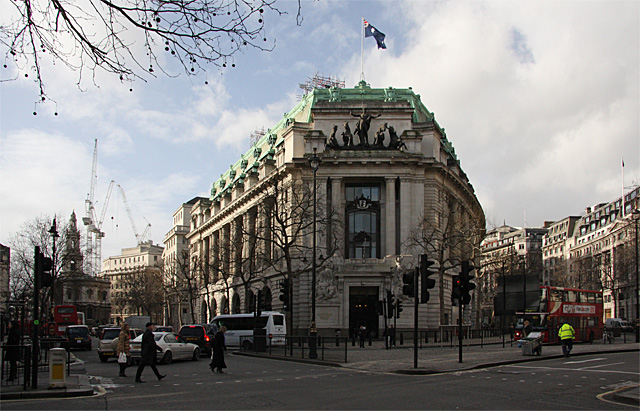
 News this week that scientists have confirmed an ancient sacred well beneath Australia House in the Strand (on the corner of Aldwych) contains water fit to drink. The well, believed to be one of 20 covered wells in London, is thought to be at least 900 years old and contains water which is said to come from the now-subterranean Fleet River. Australia’s ABC news was recently granted special access to the well hidden beneath a manhole cover in the building’s basement and obtained some water which was tested and found to be fit for drinking. It’s been suggested that the first known mention of the well – known simply as Holywell (it gave its name to a nearby street now lost) – may date back to the late 12th century when a monk, William FitzStephen, commented about the well’s “particular reputation” and the crowds that visited it (although is possible his comments apply to another London well). Australia House itself, home to the Australian High Commission, was officially opened in 1918 by King George V, five years after he laid the foundation stone. The Prime Minister of Australia, WM “Billy” Hughes, was among those present at the ceremony. The interior of the building has featured in the Harry Potter movies as Gringott’s Bank. PICTURE: © Martin Addison/Geograph.
Kings of England
A Moment in London’s History – Westminster Abbey is consecrated – and a king dies…
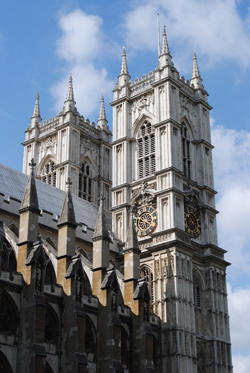 It was 950 years ago as of 28th December – Holy Innocents Day – that Westminster Abbey was consecrated following its construction on the orders of King Edward the Confessor.
The minster – popularly named ‘west’ minster to distinguish it from St Paul’s Cathedral (the ‘east’ minster) – was rebuilt when King Edward refounded the abbey between 1042-52, ostensibly to provide himself with a royal church in which he could be buried.
An abbey had apparently originally been founded on the site in the 7th century during the time of Bishop Mellitus, first Bishop of London (see our earlier post here).
The abbey church isn’t believed to have been completed when it was consecrated – this it’s suggested didn’t take place until 1090, well after the Norman Conquest. Unfortunately Edward was too ill to attend the consecration – he died on the 5th January and was buried a week later in the church (his wife Edith followed nine years later).
King Harold Godwinson – King Harold II – was apparently crowned in the church the day after Edward’s death but the first recorded coronation is that of King William the Conqueror on Christmas Day, 1066.
Very little survives of Edward’s church – most of what was see now is the Gothic masterpiece constructed in the mid 13th century by King Henry III with later additions such as King Henry VII’s Lady Chapel.
Top posts of 2015 – The ‘lost’ chapel of St Thomas; and, inside King Henry V’s chantry chapel…
2016 is fast approaching and to celebrate, we’re looking back at the 10 most popular posts we published in 2015. Today, we present our most popular and second most popular articles posted this year…
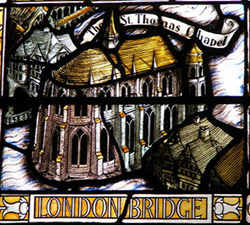 2. Our second most popular article, posted in August, was another in our Lost London series and this time looked at a long-lost feature of Old London Bridge – Lost London – Chapel of St Thomas á Becket.
1. And we are finally there – the most popular of our posts published this year was run in conjunction with the 600th anniversary of the Battle of Agincourt. Part of our LondonLife series, it took a look inside King Henry V’s rarely opened chantry chapel in Westminster Abbey – LondonLife – A rare glimpse inside King Henry V’s chantry chapel.
Top posts of 2015 – A lost ‘castle’; Jack Cade and London; and, a garden in Seething Lane…
2016 is fast approaching and to celebrate, we’re looking back at the 10 most popular posts we published in 2015. Today, we look at numbers seven, six and five…
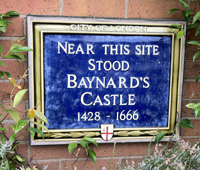 7. At number seven is a post we published in February as part of our ongoing Lost London series. In it we looked at the later history of the fortification known as Baynard’s Castle – Lost London – Baynard’s Castle (part 2)…
6. Another in our series on London’s ‘battlefields’ – this one, published in November looks at the role the city played in Jack Cade’s rebellion during King Henry VI’s reign – 10 London ‘battlefields’ – 4. Jack Cade’s rebellion…
5. Our fifth most popular post of 2015 was another in our series on gardens – 10 small, ‘secret’ and historic gardens in central London…5. Seething Lane Garden…
We’ll look at numbers four and three tomorrow…
LondonLife – King Henry VIII’s lost tiltyard tower rediscovered…
 Archaeologists have uncovered the remains of one of five highly ornate towers, luxurious banqueting houses from which the court would view tournaments in King Henry VIII’s walled tiltyard at Hampton Court Palace.
Built in the 1530s, the multi-storey towers were largely demolished by the 1680s and, with the exception of one of the towers which still stands at the palace (and is now a Grade I listed building), their precise location eventually lost.
Until now, that is. The green-glazed tiled floor of one of the ‘lost’ towers were unearthed earlier this month during works taking place as the tiltyard undergoes a family-oriented makeover by award-winning landscape architect, Robert Myers (to be known as ‘The Magic Garden’, it will be unveiled next Easter).
The richly decorated towers – where the king entertained dignitaries and ambassadors – are thought to slightly predate the tiltyard which was apparently laid out in 1537 – perhaps, it’s been suggested, to mark the birth of King Henry VIII’s son, the future King Edward VI.
The first recorded tournament at Hampton Court took place in 1557 when Queen Mary I held one to celebrate Christmas. Her sister Queen Elizabeth I continued the tradition by occasionally holding tournaments there but most days the tiltyard was used to train the young men of the court in warfare.
When tournaments gradually fell out of fashion, the towers were used as multi-purpose storage facilities housing, according to Historic Royal Palaces, everything from pigeons to two Catholic priests in service to King Charles I’s queen, Henrietta Maria, who were spent time ‘quarantined’ there after an outbreak of plague.
For more on Hampton Court Palace, see www.hrp.org.uk/hampton-court-palace/.
10 London ‘battlefields’ – 8. The Gordon Riots…
Well, not so much a battle as a widespread civil insurrection, the Gordon Riots, often described as the worst riots London has ever seen, resulted in considerable property destruction and numerous deaths.
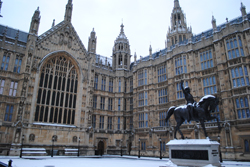 The riots, which took place against a backdrop of high taxation, widespread poverty, and unjust laws, had its origin in the passing of the Catholic Relief Act of 1778 which intended to reduce entrenched discrimination against Roman Catholics in Britain and redress some of anti-Catholic laws which had been introduced 80 years earlier, partly in an attempt to get more Catholics to join the British Army to fight against the United States of America in what’s now known as the War of Independence.
While it initially passed without any real hostility, an attempt to extend the Act’s provisions to Scotland in 1779 provoked such a serious response there that the action was withdrawn. Following the Scottish success in having the provisions withdrawn, the Protestant Association of London was founded with the aim of spear-heading opposition to the act’s provisions. Lord George Gordon was elected president of the newly formed Protestant Association of London in November of that year.
Following failed attempts to have King George III repeal the Act (Lord Gordon had several audiences with the King but failed to convince him of his case and was eventually banned from His Majesty’s presence), on 2nd June, 1780, Gordon and the members of the association marched on the Houses of Parliament (pictured above although the current buildings date from much later than these events) to deliver a petition demanding the Act be repealed.
They crowd, estimated to have been as big as 60,000 strong although a figure in the mid-40,000s is generally accepted, attempted unsuccessfully to force their way into the House of Commons before Lord Gordon, wearing a blue cockade (the symbol of the Protestant Association in his hat) was granted access to deliver the document.
Outside, meanwhile, things went from bad to worse and the crowd erupted into rioting, attacking members of the House of Lords, including bishops, as they attempted to enter and damaging carriages (including that of Lord Chief Justice William Murray, 1st Earl of Mansfield). Soldiers were eventually summoned to quell the riot which they did without violence. Inside, the members of the House of Commons voted down the petition by an overwhelming majority.
That night violence flared up again with the Roman Catholic Sardinian Embassy Chapel in Lincoln’s Inn Fields set alight while the chapel of the Bavarian Embassy in Golden Square, Soho, was destroyed and random violence carried out in streets known to be the residence of wealthy Catholics.
The next day, a crowd gathered in Moorfields – known to be home to many poor Irish Catholic immigrants – and that night attacked many homes.
The violence spread over the following days and among the buildings attacked was Newgate Prison (which was set on fire), the Fleet Prison, and the Clink in Southwark – hundreds of prisoners escaped – as well as Catholic churches, more embassy chapels, homes of known Catholics and politicians who had been associated with the passing of the act (including that of Lord Mansfield and Sir George Savile, who had proposed the Catholic Relief Act) and the Bank of England (the attack on the bank led to the long-standing tradition of soldiers guarding the bank).
Without a standing police force to tackle the mobs, on 7th June the army was called out with orders to fire on groups of four or larger who refused to disperse. In the next few days, well over 200 people (possibly more than 300) were shot dead and hundreds more wounded. Hundreds of the rioters were arrested and, of those, about 25 eventually executed. Gordon himself was arrested and charged with high treason but found not guilty.
Treasures of London – Royal Charter for the Society of Artists in Great Britain……

The Charter for the Society of Artists of Great Britain and its associated Roll of Obligation have been rediscovered at the Royal Academy of Arts, 250 years after was society was founded. The documents, long thought to have been missing, date from 1765 and signify the formation of artists as a professional group in Britain. They form a crucial piece in history of the development of the Royal Academy of Arts, which formed in 1768 when a group of artists broke away from the society. The Charter, which consists of three pages of vellum with a portrait of a young King George III, hadn’t been seen since 1918. It and the Roll of Obligation – which features the crossed-out names of artists ‘expelled’ from the society, including the RA’s first president, artist Joshua Reynolds and German-born Johann Zoffany – were rediscovered earlier this year during an audit of the RA collections. The finding coincides with the 250th anniversary of the formal foundation of the society when it was granted a Royal Charter by King George III. Both documents will go on show from 2018 – the 250th anniversary of the founding of the RA – in new exhibition areas being created as part of the transformation taking place at the RA. For more on the Royal Academy, see www.royalacademy.org.uk.
10 London ‘battlefields’ – 7. Battle of Brentford…
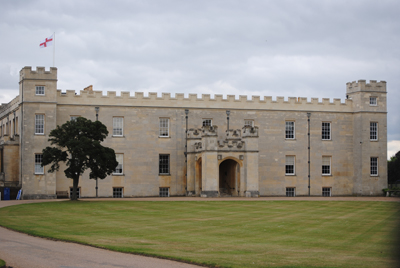
Yes, we’re a bit out of order here given we looked at the subsequent Battle of Turnham Green last week, but today we’re taking a look at the Civil War fight known as the Battle of Brentford.
As recounted last week, having taken Banbury and Oxford in the aftermath of the Battle of Edgehill, the Royalist army marched along the Thames Valley toward London where a Parliamentarian army under the Earl of Essex waited.
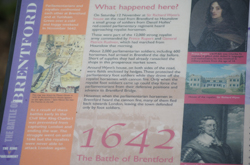 Having arrived at Reading to the west of London, King Charles I, apparently unconvinced peace talks were heading in the right direction, ordered Prince Rupert to take Brentford in order to put pressure on the Parliamentarians in London.
On 12th November, 1642, up to 4,600 Royalists under the command of the prince engaged with two Parliamentarian infantry regiments at Brentford, one of the key approaches the City of London. The Parliamentarians were under the command of Denzil Hollis (who wasn’t present) and Lord Brooke – various estimates put their number at between 1,300 and 2,000 men.
Prince Rupert’s men – consisting of cavalry and dragoons – attacked at dawn under the cover of a mist. An initial venture to take a Parliamentarian outpost at the house of Royalist Sir Richard Wynne was repulsed by cannon fire but Sir Rupert ordered a Welsh foot regiment to join the fight and the outpost was quickly taken.
The Cavaliers then pushed forward across the bridge over the River Brent (which divided the town) and eventually drove the Parliamentarians from the town and into the surrounding fields (part of the battle was apparently fought on the grounds of Syon House – pictured at top).
Fighting continued into the late afternoon before the arrival of a Parliamentarian infantry brigade under the command of John Hampden allowed the Roundheads to withdraw.
About 170 are believed to have died in the battle (including a number who drowned fleeing the fighting). Followed by the sack of the town, the battle was a success for the Royalists who apparently captured some 15 guns and about 400 prisoners. The captured apparently included Leveller John Lilburne, a captain in Brooke’s regiment.
The Royalists and Parliamentarians met again only a few days later – this time at Turnham Green (for more on that, see last week’s post).
Incidentally, this wasn’t the first battle to be fought at Brentford. Some time over the summer of 1016, English led by Edmund Ironside clashed with the Danes under the soon-to-be-English king Canute. Edmund was victorious on the day, one of a series of battles he fought with Canute.
Meanwhile, more than 1000 years earlier, it was apparently at Brentford that the British under the King Cassivellaunus fought with Julius Caesar’s men in 54 BC on their approach to St Albans (Verulamium).
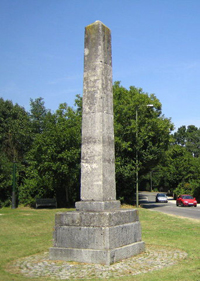
A pillar stands High Street in Brentford commemorating all three battles while there is an explanatory plaque about the battle in the grounds of Syon Park.
For more the Battles of Brentford and Turnham Green, see www.battlefieldstrust.com/brentfordandturnhamgreen.
10 London ‘battlefields’ – 6. Battle of Turnham Green…
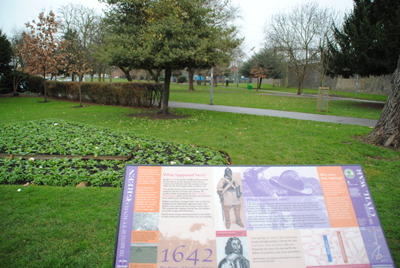
Part of the English Civil War, this battle – really no more than a skirmish – between the Royalists and the Parliamentarians which prevented the Royalists from attacking London which ultimately forced the Royalists to spend winter in Oxford.
Having taken Banbury and Oxford in the aftermath of the inconclusive Battle of Edgehill, a Royalist army had marched along the Thames Valley toward London.
On the 12th November, 1642, the Royalists had defeated two Parliamentarian regiments at Brentford to the west of the City of London. Under the command of Patrick Ruthven, Earl of Forth, but with King Charles I among them, the Royalists, who numbered some 12,000 men, then camped overnight at a site believed to be at or near the village of Turnham Green, now in west London.
Meanwhile, a Parliamentarian army under command of Robert Devereux, Earl of Essex, joined up with London militia under the command of Major General Philip Skippon at Chelsea Field. Numbering some 24,000, they advanced upon Turnham Green where the Royalists awaited them.
By 8am on the 13th, the two armies had formed lines running roughly north to south across Turnham Green, Chiswick Common Field and Acton Green with the Parliamentarian line stretching from the site of what is now Turnham Green Tube station to the grounds of Chiswick House and the Royalist lines stretching from south of Chiswick Park Tube station to the Great West Road.
Both lines apparently had infantry at the centre with cavalry on the flanks. Essex, attempting to outflank the Royalists, sent troops to high ground at Action but, concerned about splitting his army, soon withdrew them.
The battle them became something of a stalemate – Essex, not seeking to do any more than block the Royalist advance, was happy to wait while the Royalists, outnumbered, short of ammunition and said to have been unwilling to put the Londoners offside, did likewise.
Eventually, late in the afternoon, the Royalists withdrew westward and Essex, who was much criticised for it afterward, gave a half-hearted pursuit. King Charles I then ordered his army back up the Thames Valley to Oxford where they ended up passing the winter.
Less than 50 men in total are said to have died in the indecisive clash which, it can be argued, helped to ensure that the Civil War would go on for another four long years.
While much of the site of the skirmish has been built upon, glimpses of the open ground which once stood here can still be seen. There is an information panel about the battle opposite Turnham Green Tube station.
For more on the English Civil War, see Blair Worden’s The English Civil Wars: 1640-1660
10 London ‘battlefields’ – 5. Battle of Barnet…
 An important battle during the late medieval Wars of the Roses, the Battle of Barnet was fought on 14th April, 1471, between the Yorkists, led by the deposed King Edward IV and Lancastrian forces loyal to the King Henry VI.
While we have looked briefly at the battle before as part of our A Moment in London’s History series (see here), we thought we’d take a more in-depth look.
Edward had been driven from the throne in October, 1470, after his alliance with the powerful Richard Neville, Earl of Warwick, the “Kingmaker”, fell apart. With King Henry VI restored to the throne, Edward was exiled over the Channel.
By early 1471, Edward was ready to make his push for the throne again and in March he landed in Yorkshire in England’s north along with his brother-in-law, the Duke of Burgundy.
Heading south, Edward gathered more troops as he went, briefly pausing at Coventry where the Earl of Warwick refused to offer battle before pressing on to London, arriving unopposed on 12th April. There he was reunited with his wife Elizabeth Woodville and young son Edward (later Edward V) and the hapless King Henry VI was once again taken into Yorkist custody.
The Earl of Warwick, who had been raising troops in the Midlands, moved with a 15,000-strong force to confront him and took up a position about a mile north of the village of Barnet, just north of the City, on 13th April.
Edward – who brought 10,000 to 12,000 troops to the fight and had his brothers, the erstwhile traitor George, Duke of Clarence, and the young Richard, Duke of Gloucester, by his side – arrived that same evening and took up a position just to the south of the Lancastrians. Unaware of the close proximity of the Yorkists (it’s not known whether this was by accident of design but Edward had instructed his men not to light fires and to keep silent), the Lancastrian artillery flew over their heads.
The battle was joined in earnest the following day – Easter Sunday – at around dawn. The Lancastrians were initially successful in driving back Edward’s forces on the right flank under the command of John de Vere, the Earl of Oxford, but thick fog is said to have been responsible for sowing confusion in the Lancastrian ranks, leading to allies attacking each other and the Lancastrian army eventually fell apart amid cries of treachery.
Warwick was killed in the battle as he attempted to reach his horse. His body was allowed to be displayed at St Paul’s before being buried in the family vault.
The exact site of the battle remains something of an unknown although it is thought to be located in Monken Hadley just to the north of Barnet itself (that is the area marked on the official English Heritage Register of Historic Battlefields).
A stone monument to the battle, the Hadley Highstone, was erected in the 18th century and in the 1800s was moved to its current location at the junction of Kitts End Road with the Great North Road in Monken Hadley and was originally thought to have marked the spot on which Warwick died. The Battlefields Trust is currently developing a project to pin down the location further.
The battle was a resounding victory of King Edward IV for while some suggest the numbers killed were said to be about the same on both sides – somewhere between 1,000 and 4,000, Warwick was removed, depriving the Lancastrians of a key ally and giving the Yorkists a significant edge in the ongoing conflict which saw Edward IV back on the throne for the next 14 years.
PICTURE: Nigel Cox/Wikipedia
For more on the Wars of the Roses, see Alison’s Weir’s book Lancaster And York: The Wars of the Roses
Famous Londoners – William Hewer…
The National Maritime Museum is hosting a new exhibition on the life of Samuel Pepys and, while we’ve looked at the life of the famous diarist before (see our earlier post here), we thought we’d take a look at his not-so-famous manservant and clerk William Hewer.
“Will” Hewer, who is mentioned several times in Pepys’ diary and, as well as being a business partner also became a fast friend of Pepys, is thought to have been born in about 1642.
He was first introduced to Pepys when still a young man – about 17 – by his uncle Robert Blackborne in 1660. They obviously hit it off because Hewer, who was the son of a stationer, was soon working as a manservant and clerk for Pepys in his role as Clerk of the Acts to the Navy Board.
Hewer, who was subjected to some bullying by Pepys who apparently could reduce him to tears (but at the same time Pepys also defended him at work from attacks from others), at first lived with Pepys at his Seething Lane home. However, by late 1663 – apparently thanks to his misbehaviour which included staying out late, drunkenness and corrupting maids – he was told to leave Pepys’ house and moved into his own lodgings.
Pepys moved to the Admiralty in 1673 and Hewer went with him, appointed Chief Clerk the following year. In 1677, he was appointed as Judge Advocate-General.
Hewer’s star continued to climb and in 1685, he was appointed MP for Yarmouth, on the Isle of Wight. The following year he was appointed to the Special Commission which replaced the Navy Board and had a special responsibility for accounts.
After King James II fled the country in 1688, Hewer, along with Pepys, lost their patronage from the Crown; both were briefly imprisoned, but were released without trial.
Thanks largely to his involvement in trading with his uncle Blackborne – who served as both Secretary to the Admiralty and Secretary to the British East India Company and to an inheritance he received from his father, Hewer became a wealthy man (as was the case with Pepys, there have been suggestions he may have made considerable illicit sums from people doing trade with the Navy thanks to his position, but these claims have not been substantiated).
Hewer, who never married (but he did apparently have a special attachment to Pepys wife Elizabeth who was of a similar age), owned a house near The Strand which became the Admiralty Office when he followed Pepys from the Navy Board. Pepys lived with him in the house when he was at the Admiralty.
He also owned other properties, including a country retreat on Clapham Common which he bought in 1688. It was here that Pepys lived in during his latter years (and where he died in 1703).
Hewer was the executor of Pepys’ will and kept his library – including, of course, his famous diary until his own death on 3rd December, 1715. He was buried in St Paul’s Church, Clapham. In an odd twist, his estate was left to his godson Hewer Edgeley but only on the condition that he change his surname to Hewer, becoming Hewer Edgeley-Hewer.
Hewer is depicted in a painting by Godfrey Kneller (1689) now in the National Maritime Museum’s collection. It was a pair with another painting by Kneller of Pepys.
WHERE: Samuel Pepys: Plague, Fire, Revolution is at the National Maritime Museum, Greenwich (nearest DLR station is Cutty Sark; nearest railway stations are Greenwich and Maze Hill; and nearest river pier is Greenwich); WHEN: 10am to 5pm daily; COST: £12 adults/£6 children WEBSITE: www.rmg.co.uk/see-do/exhibitions-events/samuel-pepys-plague-fire-revolution-exhibition.
For more on Pepys, see Margarette Lincoln’s book Samuel Pepys: Plague, Fire, Revolution
10 London ‘battlefields’ – 4. Jack Cade’s rebellion…
 Little is known of Jack Cade until the former soldier from Kent led an uprising against the rule of King Henry VI during the Hundred Years War with France. And London was a key site of fighting during the uprising.
Cade, who adopted the name John Mortimer and who some claimed to have been a relative of Richard, Duke of York, was said to have been a veteran of the war who led rebels protesting against the king’s rule amid the general state of disorder affecting England at the time which saw such abuses as lands being illegally seized and a lack of confidence in courts to rule fairly. There was also some discontent over the loss of lands of Normandy.
While many of the rebels were peasants, the rebellion – which rose in late May or early June, 1450 – was also supported by nobles and churchmen who were protesting what they saw as poor governance.
Led by Cade, who also attracted the title ‘Captain of Kent’, were camped on Blackheath in what is now the city’s south-east by mid-June and there apparently presented an embassy from the king with a list of grievances.
Thomas, Lord Scales – authorised by the king to raise troops, subsequently marched out to Blackheath but Cade and his rebels retreated into the forests of Kent and managed to lure the royal troops into an ambush.
Cade and the rebels returned to Blackheath while back in London the Royal soldiers turned mutinous, angered over the defeat. They were disbanded to protect the City and the king retired to Kenilworth Castle, effectively abandoning London to the rebels (despite the offer of the Lord Mayor and aldermen to resist the rebels).
Cade then marched on London itself, reaching Southwark on 2nd July (apparently using the now vanished White Hart Inn as his HQ). He forced his way over London Bridge the next day, cutting the drawbridge ropes personally with his sword to ensure it couldn’t be raised again
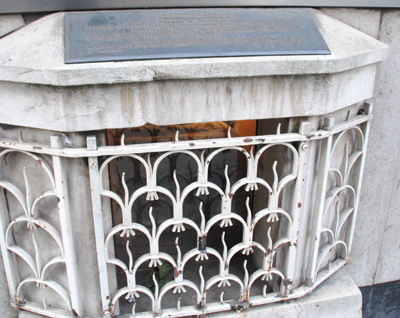
Such was the support the rebels had in London, that resistance was initially minimal. Following his entry to London, Cade struck the famous London Stone (pictured above – for more on it, see our earlier post here) with his sword, declaring “Mortimer” was now lord of the city.
While initially under tight control, Cade gradually lost control of many of his followers who turned to looting. Meanwhile, to head off an attack on the Tower of London – where Lord Scales had retreated – he handed over the hated Lord Treasurer, James Fiennes, Lord Saye, and his son-in-law William Crowmer, Under Sheriff of Kent (they had apparently been imprisoned in the Tower by the King for their own protection such as their unpopularity). Both were beheaded – Fiennes at Cheapside, Crowmer at Mile End – and their heads placed on poles on London Bridge.
The king’s supporters in the Tower had regrouped by early July and, with the rebels, while initially welcomed by many, now clearly having outstayed their welcome, they and city militias drove the rebels from the streets and had taken back the northern half of London Bridge (another bloody battle over the bridge) when William of Waynflete, Bishop of Winchester, arrived with promises of pardon for the rebels on behalf of the Lord Chancellor and Archbishop of Canterbury, John Kemp.
His forced much reduced, Cade – a pardon in his pocket under Mortimer’s name only – moved back into Kent and continued to cause trouble. He was, however, captured by the new Sheriff of Kent, Alexander Iden, on 12th July, – one version says this took place near Heathfield in Sussex at a hamlet now known as Cade Street. In any event, Cade was mortally wounded during the struggle and died en route to London.
His corpse, however, completed the journey and Cade was hanged, drawn and quartered and his head placed atop a pole on London Bridge.
While the rebel ringleaders were later captured and killed, in the most part King Henry VI honoured the pardons he had granted.
The story of Cade’s rebellion features in William Shakespeare’s play, King Henry the Sixth.
This Week in London – Lord Mayor’s Show marks 800 years; Dutch masters and Thomas Rowlandson at Queen’s Gallery; and, Alexander Calder on show at Tate…
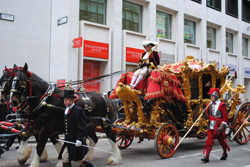 • The Lord Mayor’s Show will mark its 800th anniversary on Saturday as the newly elected Jeffrey Mountevans – the 688th Lord Mayor of the City of London – makes his way through the City to Westminster to swear loyalty to the Crown. The procession of 7,000 people, some 180 horses and 140 vehicles will set off on its way along a three-and-a-half mile route at 11am, starting at Mansion House and traveling down Cheapside to pause at St Paul’s Cathedral (which is open for free all day) before heading on via Ludgate Hill and Fleet Street to the Royal Courts of Justice before returning the City via Queen Victoria Street from 1.10pm. In a special nod to the 800th anniversary, the famous bells of St Mary-le-Bow will ring out a special 800-change at noon. The day will conclude with fireworks over the River Thames kicking off at 5.15pm (for the best view head down to the riverside between Waterloo and Blackfriars Bridges, either on Victoria Embankment or on the South Bank). The show’s origins go back to 1215 when, in exchange for a Royal Charter granting the City of London the right to elect its own mayor, King John insisted the newly elected mayor travelled to Westminster each year to swear loyalty to the Crown. For more (including a map to print out), see https://lordmayorsshow.london. PICTURE: From a previous show.
• Vermeer’s The Music Lesson is among 27 of the finest 17th and 18th century Dutch paintings in the Royal Collection which will go on display in a new exhibition at the Queen’s Gallery at Buckingham Palace from tomorrow. Masters of the Everyday: Dutch Artists in the Age of Vermeer also features works by the likes of Gerrit Dou, Pieter de Hooch and Jan Steen, all produced during what is known as the Dutch ‘Golden Age’. The exhibition is being shown alongside another display – High Spirits: The Comic Art of Thomas Rowlandson – which will focus on the work of 18th and early 19th century caricaturist Thomas Rowlandson. Around 100 of Rowlandson’s works feature in the display with highlights including The Two Kings of Terror featuring Napoleon and Death sitting face-to-face after Napoleon’s defeat at Leipzig in 1813, The Devonshire, or Most Approved Method of Securing Votes depicting Georgiana, Duchess of Devonshire, kissing a butcher (it was claimed she had claimed kisses for votes in the Westminster election of 1784), and A York Address to the Whale. Caught lately off Gravesend in which the Duke of York thanks a whale for distracting attention from accusations that his mistress was paid by army officers to secure promotions from the Duke. Admission charge applies. Both exhibitions run until 14th February, 2015. For more, see www.royalcollection.org.uk.
• The first major UK exhibition of the works of kinetic sculpture pioneer Alexander Calder opened at the Tate Modern this week. Alexander Calder: Performing Sculpture features more than 100 of the ground-breaking 20th century artist’s works which trace how Calder turned sculpture from the idea of a static object to a continually changing work to be experienced in real time. Works on show include figurative wire portraits of artists – Joan Miró and Fernand Léger (both 1930), works exploring the idea of forms in space – Red Panel, White Panel and Snake and the Cross (1936), motorised mobiles such as Black Frame and A Universe (1934), and chiming mobiles such as Red Gongs (1950) and Streetcar (1951). It closes with the large scale Black Widow (c.1948), shown for the first time ever outside Brazil. Runs until 3rd April. Admission charge applies. For more, see www.tate.org.uk.
Send all items for inclusion to exploringlondon@gmail.com.
LondonLife – A rare 17th century survivor in Pall Mall…
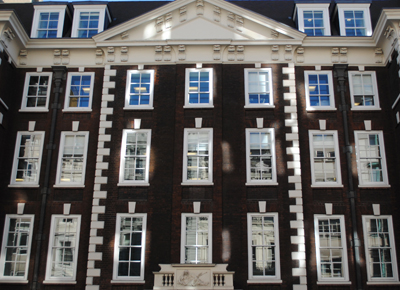
Facade of New Schomberg House at number 80-82 on the south side of Pall Mall. While the rest of the building dates from the 1950s, much of the facade from what is now known as Old Schomberg House (among numerous buildings in Pall Mall once occupied by the War Office) was retained and the eastern end restored. The house was originally built in the late 17th century for the Duke of Schomberg, a general in the service of King William III (hence the name), and replaced Portland House on the site. Later residents here included the painter Thomas Gainsborough, who lived here between 1774 until his death in 1788.
London Pub Signs – The Prince of Wales…
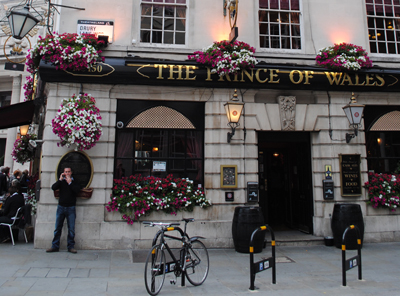 Another Drury Lane pub, the origins of this one go back to 1852 when it was established by Henry Wells on the site of what was once a potato warehouse.
The name, in this case, comes from Queen Victoria and Prince Albert’s eldest son, Albert Edward.
Only about 11-years-old when this West End pub was first built, he remained Prince of Wales until succeeding his mother as King Edward VII (nonetheless, the location proved somewhat prescient – Albert Edward was to become known for his bon vivant lifestyle including his love of the theatre (along with, of course, his love of philandering.))
Located close to theatres and the Royal Opera House, the pub at 150-151 Drury Lane (on the corner of Long Acre) was rebuilt in Portland stone in the early 20th century when the street was widened.
Now part of the Taylor Walker group, it remains a popular pub for theatre goers (and even hosts its own events). For more, see www.taylor-walker.co.uk/pub/prince-of-wales-covent-garden/c0659/.
10 London ‘battlefields’ – 3. London sacked in the Peasant’s Revolt…
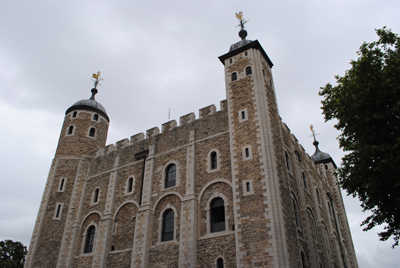 OK, so not really a battle although it must have felt something like that to those involved (and the ‘battlefield’ turned out to be much of the City itself), the uprising known as Peasant’s Revolt of 1381 saw two great armies march upon London – one from Kent led by Wat Tyler and another from Essex which is said to have been under the command of Jack Straw.
The armies had risen in response to a series of events which they saw as unjust and which trace their origins back to the Black Death. Killing about a third of the population when it struck some 30 years earlier, this had resulted in a growing demand for labourers to work the fields raising, as one might expect, hopes of increased wages and greater freedom of movement among the peasant class.
But to ensure the social order was maintained, authorities had not only put limits on how much farm workers could be paid but ensured long-standing but increasingly unpopular practices – such as serfs being forced to work some time for free for their landlords – were maintained. On top of this came the imposition and enforcement of a series of poll taxes to fund England’s wars with France.
The poll taxes – and the harsh way in which they were enforced – were a step too far and when a tax collector visited the village of Fobbing in Essex in May, 1381, he was shown short shrift and thrown out. The unrest soon spread and by June, the rebels, having rampaged through the countryside were marching on London.
By 12th June, the men from Essex were camped at Mile End while Tyler and his army from Kent were at Blackheath. The next day, after being denied a meeting with the king, the rebels headed into the City where sympathetic Londoners opened the gates. Once inside, they targeted the property of those they deemed responsible for their misfortune, opening prisons and destroying any legal records they could find.
Foremost among the sites attacked and looted was the Palace of Savoy (see our earlier post here), home of the King’s uncle John of Gaunt, Duke of Lancaster, and, as the power behind the throne, the man many deemed as the ultimate source of the ills besetting them (John himself had a lucky escape – he was away from the city when the palace was attacked.).
King Richard met with the leaders of the men from Essex on 14th June at their camp at Mile End and, after they pledged their allegiance, agreed to their petitions to abolish serfdom and allow them to sell their labour. But the attacks, meanwhile, were continuing in the City with a group of rebels led by Tyler storming the Tower of London (pictured above) the same day and seizing and beheading the Simon of Sudbury, the Archbishop of Canterbury and Chancellor, along with the Robert Hales, Lord High Treasurer and Prior of St John’s in Clerkenwell – both key figures in the government of the king (you can read more about Simon of Sudbury here).
The following day – 15th June – King Richard again met with the rebel leaders – this time with Wat Tyler, leader of the Kentish band, at Smithfield. It was then that things went awry for the rebels. Apparently enraged by Tyler’s insolence (already stories differ as to exactly why he did so), the Lord Mayor of London, Sir William Walworth (see our earlier post here), stabbed Tyler in the neck. King Richard managed to keep the situation under control until armed troops arrived and after the king declared a general pardon, the rebels dispersed.
Tyler, meanwhile, was taken to St Bartholomew’s Hospital but on the orders of the Lord Mayor was dragged from his bed and beheaded (his head was displayed atop a pole positioned in a field). He was among dozens of the rebels who were subsequently executed for their role in the uprising (leaders Jack Straw and another, John Ball, were among them).
LondonLife – 600 years on, Westminster Abbey commemorates the Battle of Agincourt…
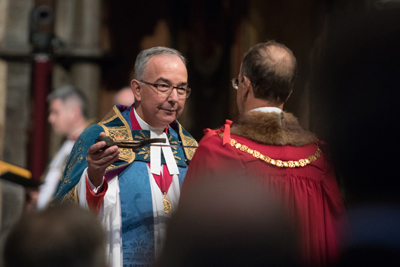
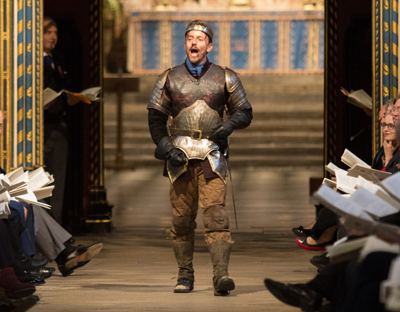 Hundreds gathered at Westminster Abbey last Thursday for a service to commemorate the 600th anniversary of the Battle of Agincourt – 600 years to the day when word of the battle’s victory arrived in London. During the service, the sword of King Henry V – who was buried in the abbey and whose chantry chapel is located above his tomb (see our earlier post here) – was carried through the abbey and presented to the Dean of Westminster, the Very Reverend Dr John Hall, at the High Altar (pictured below). “A hundred years ago, as our countrymen fought alongside the French, the old enmities had been put away,” Rev Dr Hall told those at the service who included the Duke of Kent and Princess Michael of Kent. “In the dark days before the Second World War, the story of Agincourt encouraged men and women alike to strive their utmost for freedom from tyranny. Today we give hearty thanks for our freedoms, and we pray for an end to tyranny wherever it is found, and for enduring peace and prosperity.” Royal Shakespeare Company actor Sam Marks read the St Crispin’s Day speech from the Bard’s Henry the Fifth (pictured above) while veteran of the stage and screen, Robert Hardy, read the prologue from Act IV of the same play. For more on abbey, visit www.westminster-abbey.org. PICTURES: Ian Stratton/Westminster Abbey.
A Moment in London’s History – News of the victory at Agincourt reaches the city…
It wasn’t until four days after the battle which had taken place on 25th October, 1415, that news of King Henry V’s stunning victory over the French reached the English capital.
 The news apparently reached London very early in the morning and church bells were rung in celebration and a Te Deum sang in thanksgiving in many.
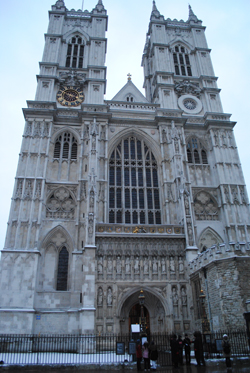
At 9am, a solemn procession of clergy made their way from St Paul’s Cathedral in the City to the shrine of St Edward the Confessor in Westminster Abbey (pictured) to give thanks.
Other attendees at the abbey included the Mayor-elect, Nicholas Wotton (this was the first of two occasions on which he was elected Lord Mayor), and the alderman of London, as well as the Queen Dowager, Joan of Navarre.
A few days later, on the 4th November, King Henry V’s brother – John of Lancaster, the Duke of Bedford, announced the news to Parliament.
King Henry V, meanwhile, arrived back in Dover on 16th November (apparently as a great snowstorm was making its presence felt) and headed for London. After pausing in Canterbury to give thanks in the cathedral and St Augustine’s Abbey, he reached the manor of Eltham (now in south-east London) on 22nd November.
He was met the next day on Blackheath by Wotton and City dignitaries who then, along with what were recorded as a crowd of 20,000 citizens, accompanied him and his small retinue, which included some of his most high profile prisoners such as Charles d’Orléans, Duke of Orléans (who spent 25 years as a prisoner in England), and Marshal Boucicaut (he would die six years later in Yorkshire), towards London.
There, welcomed as Henry V, “King of England and France”, he processed through the City which had been elaborately decorated – the decorations included the hanging of various coats of arms from various prominent sites as well as the positioning of statues of the likes of St George – ahead of his arrival.
Travelling down Cheapside, the king – who was modestly dressed in a purple gown and had eschewed wearing a crown for the event – stopped at St Paul’s where he performed his devotions, before proceeding to Westminster where he did the same before taking up residence for the night in the nearby Palace of Westminster.
On the king’s orders, a solemn mass was held in St Paul’s the next day for the fallen of both sides. The victorious king had returned!
10 London ‘battlefields’ – 2. ‘London Bridge is falling down’…
 We’ve touched on this story before but it’s worth a revisit as part of this series. London changed hands several times during the later half of the first millennium as the Anglo-Saxons fought Vikings for control of the city, meaning the city was the site of several battles during the period.
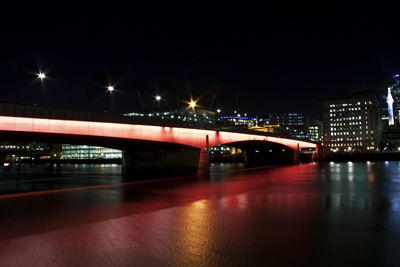
One of the most memorable (or so legend has it, there are some archaeologists who believe the incident never took place) was the battle in 1014 in which London Bridge – then a timber structure (today’s concrete bridge is pictured above) – was pulled down. A story attributed to the Viking skald or poet Ottarr the Black but not found in Anglo-Saxon sources, the event, if it did take place, did so against the backdrop of an ongoing conflict between the Danes and Anglo-Saxons.
Anglo-Saxon London had resisted several attempts at being taken by the Vikings – a fire was recorded in the city in 982, possibly caused by a Viking attack – and in 994, the Anglo-Saxon Chronicle reports that a fleet of 94 Danish and Norwegian ships were repelled with prejudice. Further attacks was driven back in 1009 and it wasn’t until 1013 that the city finally submitted to Danish rule after Sweyn Forkbeard had already claimed Oxford and Winchester.
But Sweyn, the father of the famous King Canute (Cnut), didn’t hold it long – he died on 3rd February the following year.
The deposed Anglo-Saxon King Æthelred II (also spent Ethelred, he was known as ‘the Unready’) – who had been forced to flee from London, which he used as his capital, to what is now Normandy thanks to Sweyn’s depredations – is said to have seized his chance and along with the forces of his ally, the Norwegian King Olaf II, he sailed up the Thames to London in a large flotilla.
The Danish had taken the city, occupying both the city proper and Southwark, and were determined to resist. According to the Viking account, they lined the timber bridge crossing the river and rained spears down on the would-be invaders. (The bridge, incidentally, had apparently been built following the attack in 993, ostensibly to block the river and prevent further incursions further upstream – there is certainly archaeological evidence that a bridge existed in about the year 1000).
Not to be beaten, Æthelred’s forces, using thatching stripped from the rooves of nearby houses to shield themselves, managed to get close enough to attach some cables to the bridge’s piers, pulling the bridge down and winning the battle, retaking the city.
There’s much speculation that the song London Bridge is Falling Down was inspired by the incident but it, like much of this story itself, remains just that – conjecture (although Ottarr’s skald does sound rather familiar).
The bridge was subsequently rebuilt and King Æthelred died only two years later, on 23rd April, 2016. The crown subsequently passed to his son Edmund Ironside but he too died after ruling for less than a year leaving Viking Canute to be crowned king.
PICTURE: http://www.freeimages.com
LondonLife – A rare glimpse inside King Henry V’s chantry chapel…
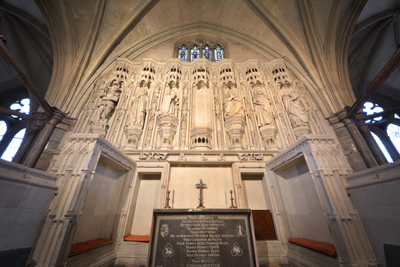 A fortunate few last weekend had the chance to have a look inside King Henry V’s elaborately carved chantry chapel in Westminster Abbey as part of commemorations marking the 600th anniversary of the Battle of Agincourt.
The chapel, which is located on a sort of mezzanine level above the king’s tomb at the east end of the Shrine of Edward the Confessor, is one of the smallest of the abbey’s chapels. It was constructed on the orders of the king – who died Vincennes in August, 1422, and was buried in the abbey on 7th November that year – so prayers could be said in perpetuity for his soul.
The tomb was completed in 1431 and the chantry chapel was built above between 1437 and 1450. The latter is entered via narrow stairways of worn steps hidden inside a pair of stone turrets which flank the tomb.
For centuries the Henry V’s funeral ‘achievements’ – the king’s saddle, helm and shield – were displayed on a wooden beam above the chantry chapel but these were restored and moved to the abbey museum in 1972.
Henry V’s wife, Catherine de Valois, who survived her husband by 15 years was eventually – in the Victorian age – buried under the chantry chapel altar (originally buried in the old Lady Chapel, King Henry VII had her removed and placed in an open coffin in the open air next to the tomb of King Henry V, when building his new chapel – among visitors to her mummified body was diarist Samuel Pepys who even kissed her. In 1778 she was buried in a vault before being relocated to her current position in 1878).
An inscription on the altar in the chantry chapel reads: “Under this slab (once the altar of this chapel) for long cast down and broken up by fire, rest at last, after various vicissitudes, finally deposited here by command of Queen Victoria, the bones of Catherine de Valois, daughter of Charles VI, King of France, wife of Henry V, mother of Henry VI, grandmother of Henry VII, born 1400, crowned 1421, died 1438”.
The chantry chapel is still occasionally used for services but, measuring just seven by three metres, is not usually open to the public because of size and access issues.
Westminster Abbey will hold a special service of commemoration on 29th October in partnership with charity Agincourt600. The day before, 28th October, it will host a one day conference for Henry V enthusiasts entitled ‘Beyond Agincourt: The Funerary Achievements of Henry V’. For more, see www.westminster-abbey.org/events/agincourt.
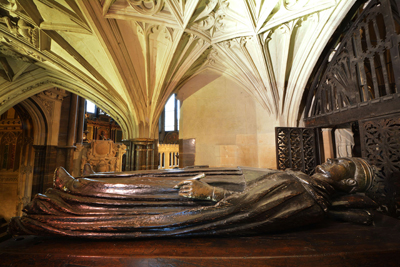
Above – King Henry V’s chantry chapel; Below – King Henry V’s tomb which sits below the chantry chapel. PICTURE: Jim Dyson/Dean & Chapter of Westminster
 Exploring London