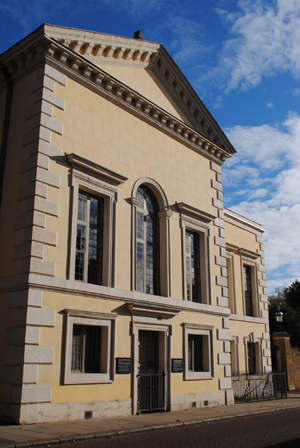
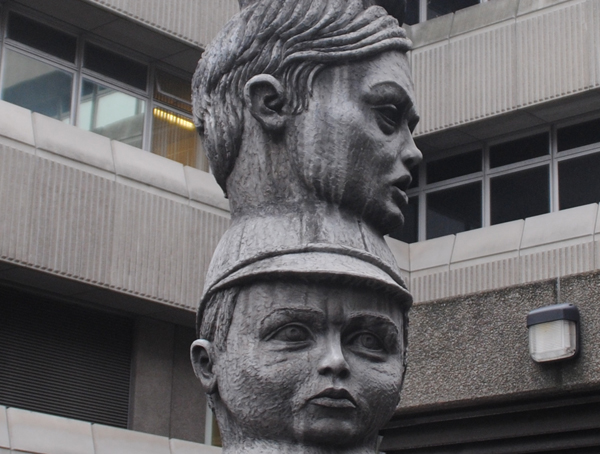
Treasures of London – The Royal Kitchens, Kew…

Given this week’s release of English Heritage’s The London List 2011 – which lists all properties given a new or upgraded heritage listing last year, we thought it was only appropriate to look at one of the properties listed, in this case the Royal Kitchens in Kew Gardens.

Upgraded to a Grade I listing in 2011, the kitchens were opened to the public for the first time in May this year following a £1 million restoration. The origins of the kitchens go back to the 1730s when they were built to the designs of William Kent to serve the White House, the grand mansion of Frederick, Prince of Wales (eldest son and heir of King George II).

While the White House was demolished in 1802, the Georgian kitchens – built in a separate building to mitigate the risk of fire – were kept to serve the nearby premises of Kew Palace (formerly known as the “Dutch House”, it had been originally built in 1631 for a Flemish merchant).

But after the death of Queen Charlotte (wife of King George III) in 1818, members of the Royal family only stayed occasionally and so the kitchen fell into disuse. While the upper floors were given over to accommodation, the lower floor remained untouched, allowing it to survive in a considerable degree of intactness.

The kitchens centre on the double storey ‘Great Kitchen’ featuring three charcoal stoves as well as a rare cooking range with “smoke jack” and fan. Other rooms include a scullery, a bakery, larders and stores for silver and spices while among the surviving furnishings is a preparation table or dresser, cupboards, shelves and baking ovens. Upstairs, the office of the clerk who oversaw the feeding of the Royal Household has been restored.

Historic Royal Palaces, who look after the kitchens, have installed a new permanent exhibition at the site which focuses life on the 6th February, 1789, the date when King George III, having suffered his first bout of ‘madness’ (believed to be porphyria), was given back his knife and fork. William Wybrow was the Master Cook at this time and William Gorton the Clerk of the Kitchen.

WHERE: The Royal Kitchens, Kew Gardens, Kew (nearest Tube Station is Kew Gardens); WHEN: 11am to 5pm daily until 30th September, then Thursday to Sunday until 28th October, then daily again until 4th November; COST: Kew Gardens tickets must be purchased – £16 adults/£14 concessions/children under 16 free – and then tickets to Kew Palace – £6 adults/£4.50 concessions/children under 16 free (or free with annual Historic Royal Palaces membership); WEBSITE: www.hrp.org.uk/kewpalace/stories/palacehighlights/royalkewkitchens.

PICTURE: Forster/HRP

For more on Kew Palace, check out Kew Palace: The Official Illustrated History.

Lost London – Queenhithe…

Not, strictly speaking, lost, Queenhithe – a dock on the north bank of the Thames – is nonetheless these days merely a shadow of its former self.

There has been a dock here since Saxon times when it is recorded that King Alfred (he of ‘The Great’ fame), established a harbour here in 883. It was then known as Ethelred’s Hythe (the Ethelred being that of his brother-in-law and ‘hythe’ being a Saxon word for a trading shore where goods could be traded directly out of boats).

Queenhithe took its name from Queen Matilda, the wife of King Henry I, who was granted dues from goods being traded at the dock in the early 1100’s – a right which was later inherited by future English queens.

The dock reached the peak of its popularity in the 13th century when it became the principal site for the landing of grain and other food supplies to feed London but in the 15th century, the dock’s importance waned as other docks downstream, better suited to larger watercraft, took over much of its trade.

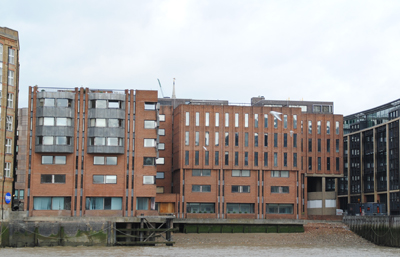
Remains of the wooden timbers which in medieval times lined the Thames waterfront have been found here. The inlet for Queenhithe’s harbour (pictured above) is one of few left on The Thames.

The name these days gives itself to Queenhithe street (which leads to the inlet) and the Queenhithe Ward, one of 25 wards in the City of London. There was also a former church known as St Michael Queenhithe – it was destroyed in the Great Fire of 1666, rebuilt to the designs of Sir Christopher Wren and then demolished in the late 19th century.

Daytripper – Rye

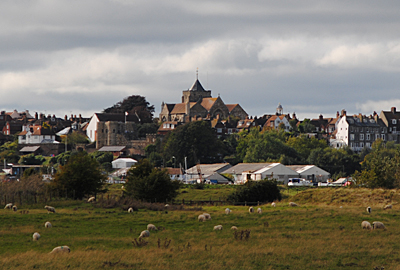
This beautifully preserved medieval town on the East Sussex coast is really worth more than a daytrip – it’s a terrific place to spend a weekend! 

The history of this fortified township – which was once on the coast but now sits some two miles back from open water thanks to the silting up of the harbour – stretches back to at least Saxon times.

But it was in the Middle Ages that, thanks to its position relative to France, it flourished as a port and was eventually given the distinction of being a member of the Cinque Ports Federation (the federation originally included the ports of Hastings, New Romney, Hythe, Dover and Sandwich and was later expanded to include Rye and Winchelsea).

However, the proximity to France also meant the town had an interesting relationship with the French who conducted repeated raids including in 1339 when 52 houses and a mill were burned, and in 1377 when the town was almost completely burnt to the ground and the invaders made off with the bells of St Mary’s Church (dating from 1150, the church is certainly well worth a visit, particularly for the stunning views from the bell tower roof).

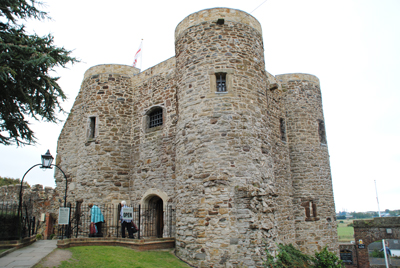
Key surviving fortifications including the 14th century The Ypres Tower (originally called Baddings Tower, this 40 foot high structure – pictured right – with three round towers is now home to half the Rye Castle Museum – the other half being in East Street) and Landgate (this was built as part of a series of walls and gates constructed after the devastating 1377 raid) were built to counter this threat and when the French raided again in 1449, they were successfully resisted.

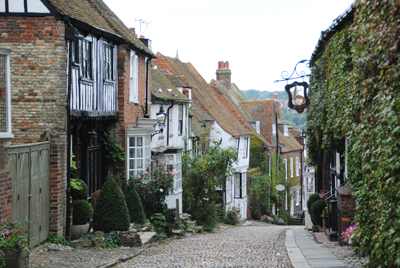
Rye’s location – it now sits at the confluence of the Rother, Tillingham and Brede Rivers – also meant that since its earliest days, it was popular with smugglers despite government efforts to stop them (they did eventually succeed in the early 19th century thanks to customs law reforms and the establishment of a national coastguard service). Among the most famous to frequent the town was the Hawkhurst Gang, who used the Mermaid Inn in the beautiful cobbled Mermaid Street (pictured, below) as one of their bases in the area in the early 18th century (the gang was eventually captured and executed in 1749). The inn apparently may date back as far as the 12th century and has a fascinating history.

Aside from the many Tudor and Georgian homes, notable buildings include the Old Grammar School in High Street (founded in 1636), the Town Hall in Lion Street (1742) and the red brick fronted Lamb House in West Street – once home to authors Henry James and EF Benson and now owned by the National Trust. There’s also a model of the town (complete with sound and light show which gives a great overview of the town’s history) at the Rye Heritage Centre located in an old sail loft on Rye Strand Quay – a good place to visit for information and details of walks and tour options.

Not far from Rye can be seen Camber Castle, a round artillery fort (essentially a glorified gun platform) built by King Henry VIII. It’s now managed by English Heritage and can be visited on tours.

Rye is located about an hour’s journey by car from the M25 and can be reached by train from Charing Cross, London Bridge or Waterloo East or from St Pancras (via Ashford International).

What’s in a Name?…Trafalgar Square

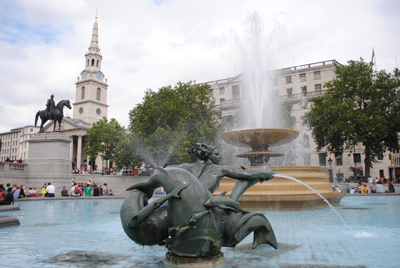
It wasn’t until some time after Admiral Lord Nelson’s victory over the French fleet in the Battle of Trafalgar off the coast of Spain on 21st October, 1805, that the large public space in Westminster we now know as Trafalgar Square took its name.

Prior to the development of the square, much of the area it covers was occupied the King’s Mews – stables linked to the Palace of Whitehall – and was simply seen as part of the district known as Charing Cross (named for the memorial cross which stood close to where the equestrian statue of King Charles I now stands – for more on this, see our earlier post and follow the links).

Following the relocation of the Mews in the early 19th century, plans were drawn up by architect-of-the-age John Nash to redevelop the area while the square itself, completed in 1845, was designed by Sir Charles Barry (best known for his work on the Houses of Parliament).

The final design incorporated a statue of Admiral Lord Nelson atop a column, known as ‘Nelson’s Column’, in the centre – apparently against Barry’s wishes (see our earlier post for more on Nelson’s Column).

Originally designed with an upper terrace and a lower piazza linked by stairs at the eastern and western end of the terrace, the square contains two fountains on either side of the column – the current fountains were designed by Sir Edwin Lutyens in 1937-9 and replaced earlier ones.

It was originally suggested that the square be named King William IV Square but it was apparently architect George Ledwell Taylor who provided the alternative of Trafalgar Square in honor of Nelson’s great battle.

Bordered by significant landmarks including the National Gallery to the north, the church of St Martin’s-in-the-Fields to the north-east, South Africa House to the east and Canada House to the west, the square stands at the confluence of a number of major roadways including Whitehall, Strand, Charing Cross Road and The Mall.

Aside from the aforementioned statue of King Charles I, monuments within the square include Nelson’s Column along with plinths set in the four corners of the square. These bear statues of King George IV, Victorian military figures General Sir Charles James Napier and Major-General Sir Henry Havelock while the fourth plinth, located in the north-west corner, was originally intended to bear an equestrian statue of King William IV.

Instead, it was left empty for many years before the advent of the Fourth Plinth project under which a variety of contemporary artworks – most recently a massive sculpture of a boy astride a rocking horse – have occupied the space (you can see a picture of the current work in our earlier post here).

The square, once known as the home of thousands of pigeons before these were banished midway through last decade to allow greater public use of the space, also features the busts of three admirals – John Jellicoe, David Beatty and Andrew Cunningham, located against the north wall under the terrace.

There are also two statues on a lawn in front of the National Gallery – these are of US President George Washington and King James II. Curiously, the square also features a small pillar box in the south-east corner, referred to by some as the smallest police station in London.

A renovation project in 2003 pedestrianised the roadway along the north side of the square and installed a central stairway between the the upper and lower levels along with lifts, public toilets and a cafe.

For some more on the history of Trafalgar Square, see Jean Hood’s Trafalgar Square: A Visual History of London’s Landmark Through Time.

London Pub Signs – Tom Cribb…

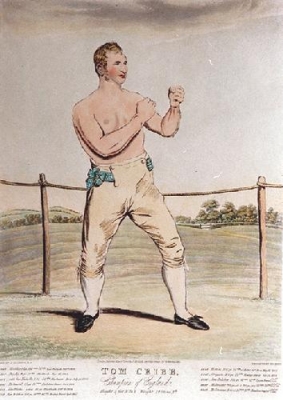
In keeping with the sporting theme, we decided to take a look at a pub that bears that name of a sportsman – in this case Tom Cribb, a celebrated early nineteenth century boxer.

Born in 1781, Cribb moved to London from his home in Gloucestershire at just the tender age of 13 and worked in various jobs including as a bellhanger and a porter on the wharves before in taking up the sport of bare knuckle boxing with his first public bout in 1805 (he was known as the ‘Black Diamond’ thanks to his previous work as a coal porter).

Further fights followed and Cribb’s skill was such that in 1809 he won the British title and the following year he fought American and former slave Tom Molineaux to become world champion, a feat he repeated the in 1811 by beating Molineaux again.

Cribb retired from boxing in 1812 and later became a publican, running a couple of different pubs before taking up the job the Union Arms, located at 26 Panton Street, in the West End. He did apparently marry and in 1821 was among the prize fighters who guarded the entrance to Westminster Hall on the day of King George IV’s coronation.

Forced to give up his pub to creditors to pay off gambling debts, he retired to Woolwich in 1839 and died there in 1848 – he was buried in St Mary’s Churchyard where there is a memorial to him.

The pub which now bears his name is located on the same site as the Union Arms, although it is numbered 36 due to a numbering change. Inside it features a boxing theme with photos of some of Britain’s greatest boxers adorning the wall.

For more, see www.shepherdneame.co.uk/pubs/london/tom-cribb.

For a book on Tom Cribb, try Tom Cribb: The Life of the Black Diamond.

PICTURE: Tom Cribb in an engraving published in 1842. Source – Wikipedia.

Around London – Celebrating the Olympics; Camden Lock’s night market; and, images of London at the Tate…

We’ll kick off this week with just a few more of the plethora of Olympic-related events which are happening around town:

• Tower Bridge, site of some spectacular fireworks last Friday night, is currently hosting an exhibition celebrating the 26 cities which have hosted the modern Olympics. Cities of the Modern Games, located on the bridge’s walkways, runs alongside an interactive exhibition looking at the bridge’s construction. Follow the link for details.

• The Guildhall Art Gallery is showcasing sculpture and art inspired by sport and the “Olympic values”. The art works are all winning entries from a contest organised by the International Olympic Committee. The chosen works were selected from among 68 submissions made by an international jury. Follow the link for details.

• The Design Museum is hosting a new exhibition celebrating the nexus between sport and design. Designed to Win looks at everything from the design of F1 cars to running shoes, bats and bicycles and explores the way in which design has shaped the sporting world. Runs until 9th September. Admission charge applies. See www.designmuseum.org.

• The London Metropolitan Archives is holding an exhibition of playing cards featuring an Olympic theme. Sporting Aces – Playing Cards and the Olympic Games features cards drawn from the collection of the Worshipful Company of Makers of Playing Cards which have an Olympic theme. Admission is free. Runs until 13th September. See www.cityoflondon.gov.uk/lma.

And in other news…

• A night market has been launched at Camden Lock over the summer period. Street food stalls and vintage fashion, arts and crafts and book shops will be open until 10pm every Thursday with extras including live music and film screenings. For more, see www.camdenlockmarket.com.

• On Now: Another London: International Photographers and City Life 1930-1980. This exhibition at Tate Britain in Millbank features more than 150 classic photographs of the city and its communities by foreign photographers including such luminaries as Henri Cartier-Bresson. The exhibition features iconic works such as Robert Frank’s London (Stock Exchange) 1951, Cartier-Bresson’s images of King George VI’s coronation, Elliot Erwitt’s depiction of a rain-washed London bus stop, and Bruce Davidson’s image of a child with pigeons in Trafalgar Square alongside works such as Wolfgang Suschitzky’s images of working class families in the East End, from the 1940s, and Karen Knorr’s images of punks in the 1970s. The photographs all come from the Eric and Louise Franck London Collection, which includes more than 1,200 images of London and has been promised as a gift to the Tate. Runs until 16th September. Admission charge applies. See www.tate.org.uk. 

Have we missed something we should be telling others about? Send details in an email to exploringlondon@gmail.com.

Famous Londoners – Mr Punch…

Infamous, perhaps, rather than famous, Mr Punch (one half of Punch & Judy) this year celebrated the 350th anniversary of his first public appearance in London (which, in our view, makes him an honorary Londoner!).

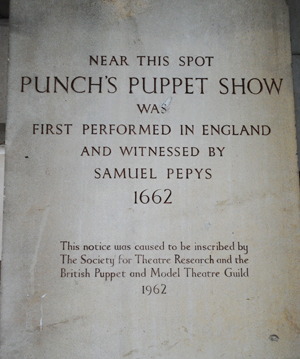
The first documented appearance of the hook-nosed Mr Punch – known for his acrimonious relationship with his wife Judy –  dates back to 9th May, 1662, when diarist Samuel Pepys recorded seeing a Mr Punch puppet performing as part of an Italian marionette show at Covent Garden (officially awarded a Guinness World Record title earlier this year for being the first recorded Mr Punch puppet show).

Mr Punch’s origins go back to Italy (Punchinello is thought to be an anglicised version of the character name of Pulcinella), typically wears a jester’s motley and tall, ‘sugarloaf’, hat with a tassel. Now generally a hand-puppet rather than a marionette, these days he usually performs in a mobile puppet booth with a cast of characters who as well as Judy can include a baby, a police constable and a crocodile.

Storylines – which were initially aimed at adults but are now generally aimed at children – vary but usually include references to current events (and perhaps also some mocking of public figures) and inevitably involve the unruly and often bawdy trickster, Mr Punch, doing away with his foes before uttering the line: “That’s the way to do it!”

Interestingly, Punch & Judy performers refer to themselves as “professors”  – there’s a story, apparently apocryphal, that this title was granted to the performers by King Charles II thanks to his enjoyment of the show. Collecting money from an audience watching the show is known as ‘bottling’ and those who assist the professor by doing so as ‘bottlers’, thanks to the tradition of using a bottle for the task.

Mr Punch reached the height of his popularity in the Victorian and Edwardian ages and could typically be seen carrying on in seaside resorts across the country. The dramatic decline in his popularity since means it can be harder to find a Punch & Judy show today (and even when you do, much of his more brutal antics have been excised from plays so as not to offend modern sensibilities), but it’s still possible to see Punch and Judy performances in many places across the UK including, on occasion, at Covent Garden where there is a plaque (shown above) commemorating the performance seen by Mr Pepys.

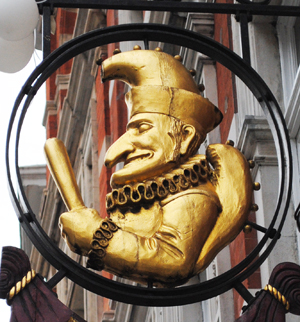
Mr Punch is still celebrated every year at Covent Garden’s May Fayre and Puppet Festival (held close to 9th May – not only the day Mr Pepys saw the puppet but now regarded as Mr Punch’s ‘birthday’) and there is a fellowship of Punch and Judy performers – The Punch & Judy Fellowship – who aim to “preserve, promote and protect” the traditions of the puppet show. Punch can also be seen on the facade of the Punch Tavern in Fleet Street – the sign is pictured above (keep on eye out for our upcoming Pub Signs look at the pub’s history).

Where is it?…#38


The latest in the series in which we ask you to identify where in London this picture was taken and what it’s of. If you think you can identify this picture, leave a comment below. We’ll reveal the answer early next week. Good luck!

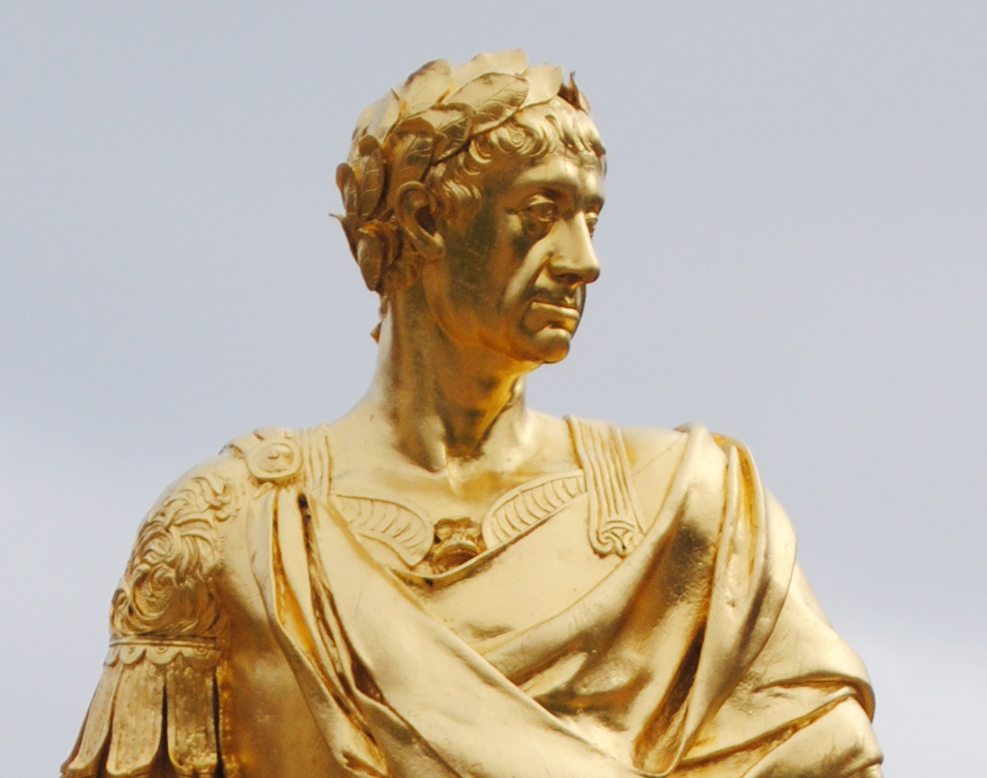
No-one managed it this time. This gilded bronze statue depicts King Charles II dressed as a Roman general and is located in the Figure Court of the Royal Hospital in Chelsea. The king founded the hospital in 1682 to provide a home for retired soldiers (the grand buildings you see are the work of Sir Christopher Wren – see our earlier entry here for more). The 7’6” tall statue, which was re-gilded to celebrate Queen Elizabeth II’s Golden Jubilee in 2002, was presented to the king in 1682 and moved to the hospital after his death in 1685. Although generally attributed to Grinling Gibbons, according to Walking London’s Statues and Monuments, it’s probably actually the work of Arnold Quellin, who worked in Gibbons’ studio. The statue is covered in oak branches on a date around 29th May each year – on a day known as Founders Day or Oak Apple Day – in commemoration of the legendary escape of the future king (by concealing himself in an oak tree) after the Battle of Worcester in 1651, the last battle of the English Civil War. For more on the hospital see www.chelsea-pensioners.co.uk.
Around London: Olympic Torch Relay hits London; mascots pop-up all over the city; and Shakespeare at the British Museum…

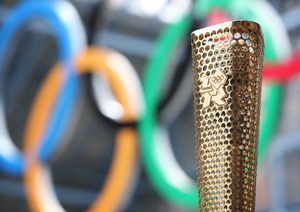
• The Olympic Torch Relay arrives in London tomorrow night before working its way around all of the city’s 33 boroughs and reaching the Olympic Stadium for the Opening Ceremony next Friday.  The torch will arrive in the city by helicopter from Guildford tomorrow night and then be abseiled into the Tower of London where it will spend the night ensconced with the Olympic medals. The relay will travel 200 miles over the next week, carried by more than 980 torchbearers. The route is as follows:

  • Saturday, 21st July – Greenwich via Newham, Tower Hamlets and Hackney to Waltham Forest (highlights include a visit to the Cutty Sark);
  • Sunday, 22nd July – Redbridge via Barking & Dagenham and Havering to Bexley (highlights include a ride on the London Eye and a crossing of the Thames);
  • Monday, 23rd July – Lewisham via Bromley, Croydon, Sutton and Merton to Wandsworth (highlights include a visit to a live filming of Eastenders);
  • Tuesday, 24th July – Kingston via Richmond, Hounslow, Hillingdon and Denham to Ealing (highlights include a visit to Kew Gardens);
  • Wednesday, 25th July – Harrow via Brent, Barnet and Enfield to Haringey (highlights include a visit to Wembley Arena);
  • Thursday, 26th July – Camden via Islington, the City of London, Southwark, Lambeth, Wandsworth, Kensington & Chelsea and Hammersmith & Fulham  to Westminster (the many landmarks to be visited include St Paul’s Cathedral, Shakespeare’s Globe, Trafalgar Square, Buckingham Palace and Hyde Park);
  • Friday, 27th July – From Hampton Court Palace (where it will be taken into the maze) on board Gloriana via the Thames to Olympic Park for the Opening Ceremony.

The 70 day torch relay, which kicked off on 19th May, will have travelled a total distance of about 8,000 miles and have involved 8,000 torchbearers by the time it reaches its end. LOCOG and Transport for London have advised people to see the relay at a location closest to their home given the expected crowds. For more detailed route information, see www.london2012.com/torch-relay/route/. PICTURE: LOCOG

• Still talking all things Olympics and London’s largest ever ‘pop up’ shop – where you can buy Olympic merchandise – was officially opened by multiple gold medalist Sir Steve Redgrave in Hyde Park last week. The shop, located on Rotten Row, will be the site of special athlete visits during the Games and visitors can have their photo taken with the Olympic Torch.

• Meanwhile, life-sized versions of the Olympic mascot Wenlock and Paralympic mascot Mandeville are popping up at some of London’s key tourist locations. The 83 two metre tall sculptures capture various elements of life in London with incarnations including a Beefeater, a giant red phone box and a replica of Big Ben. The figures can be found on the routes of Stroll, six new discovery trails designed to help both tourists and Londoners get more out of the city. A QR code on the bottom of each of the sculptures directs smartphone users to further information about the discovery trails. The discovery trails are part of the Mayor of London Presents, a city-wide programme featuring free events, shows and activities. For more on what’s happening in your area, see www.molpresents.com. Some of these events are also being run as part of the Festival of London 2012. For more on this, see http://festival.london2012.com.

• On Now: Shakespeare: staging the world. Part of the World Shakespeare Festival taking place in London, this exhibition at the British Museum looks at the then emerging role of London as a “world city” as interpreted through Shakespeare’s plays and examines the role the playhouse performed in this. The museum has collaborated with the Royal Shakespeare Company to produce the exhibition which features more than 190 objects including paintings, jewels and rare manuscripts. These include the Ides of March coin, a Roman gold aureus commemorating the assassination of Julius Caesar (Julius Caesar), the Lyte Jewel, presented to Thomas Lyte in 1610 in thanks for his work in tracing King James I’s lineage back through Banquo (Macbeth), and a 1610 bird’s-eye view of Venice (Othello and The Merchant of Venice). Runs until 25th November. Admission charge applies. For more, see www.britishmuseum.org.

Around London – Richmond’s upsized Olympic rings; cart marking; ‘Sam’ Mussabini honored; and, Tudor twins at the NPG…

• The largest official Olympic Rings were unveiled at Richmond Park National Nature Reserve in London’s south-west this week, having been mown into the grass by the Royal Parks’ shire horses. The rings, which lie on Heathrow’s flight path and are 300 metres wide and more than 135 metres tall, will welcome athletes as they fly in to compete in the Games which kick off later this month. It took six shire horses to create the giant rings – which represent five continents – but they’ll be maintained by just two – Jim and Murdoch. Horses have worked in Richmond Park since as far back 1637 when King Charles I had the park enclosed as a royal hunting ground. Eleven Olympic events will be held on Royal Parks during the Games including road race cycling in Richmond Park. For more on Richmond Park, see www.royalparks.org.uk/parks/richmond-park. PICTURE: LOCOG.

• Almost 50 vehicles, ranging from handcarts to horse drawn carriages, steam powered vehicles to a new London bus, took part in the Worshipful Company of Carmen’s traditional ‘Cart Marking’ procession through the City of London yesterday. The ‘trade’ of carmen dates back to the 13th century when City authorities passed a bye-law controlling carters. At the ceremony, the carmen bring a variety of vehicles which are branded by placing a red hot iron on a wooden plate, with the year letter and the car number, in the continuation of an ancient tradition. The Worshipful Company of Carmen is said to be the oldest transportation organisation in the world. For more on the livery company, see www.thecarmen.co.uk.

• The late athletics coach Scipio Africanus “Sam” Mussabini (1867-1927) was honored this week with the unveiling of an English Heritage Blue Plaque at his former home in Herne Hill in London’s south. Mussabini, whose role in helping 100 metre sprinter Harold Abrahams win gold at the 1924 Olympics was depicted in the film Chariots of Fire (he was played by Ian Holm),  lived at the house at 84 Burbage Road from 1911 to about 1916. It backs onto the Herne Hill Stadium where he worked as a cycling and athletics coach from the 1890s, a period during which he trained several medal-winning Olympic athletes. All up, Mussabini’s runners won a total of 11 Olympic medals including five golds, between 1908 and 1928. For more, see www.english-heritage.org.uk.

On Now: Double Take: Versions and Copies of Tudor Portraits. This display at the National Portrait Gallery features five pairs of nearly identical Tudor portraits and explores how and why they were made. Among the portraits from the gallery’s collection on display are those of King Henry VIII, his wife Anne Boleyn, Archbishop William Warham, the merchant Thomas Gresham and Lord Treasurer Thomas Sackville – all of which are paired with paintings on loan from other collections. Admission is free. Runs until 9th September. For more information on the Making Art in Tudor Britain research project – of which this is a part – see www.npg.org.uk/research/programmes/making-art-in-tudor-britain.

10 Historic Sporting Events in London – 2. The 1948 Olympic Games…

We took a break from our Wednesday special looking at 10 historic sporting events in London but today we resume with a look at the 1948 Olympics.

The first Games held in 12 years due to outbreak of World War II, the XIV Olympiad were known as the “Austerity Games” due to the post-war rationing and economic climate. Britain had been named as host of the 1944 Games in June 1939 but following its cancellation, it was suggested as a venue for the 1948 and in 1946 was duly awarded them over other cities including a Lausanne in Switzerland and a number of US cities such as Los Angeles.

In so doing, London became the second city to host the Games twice (Paris had already done so in 1900 and 1924). Interestingly, when it hosts this year’s Games, London will become the first city to do so.

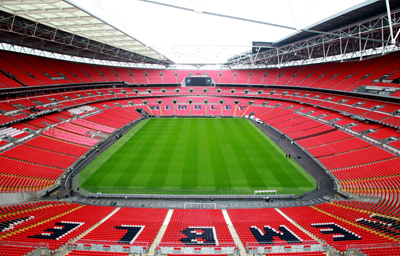
Due to the economic climate, no new venues were constructed for the Games and the athletes were accommodated in existing properties – RAF camps and London colleges – rather than a purpose-built Olympic village. The key venue was the Wembley Empire Exhibition Grounds – the opening ceremony (King George VI officially opened the Games), closing ceremony, athletics and football and hockey finals were all held in Wembley Stadium (pictured above as it is today – we’ll be looking at the “home of British football” in more detail in a later post) while fencing was held in the Palace of Engineering and swimming, diving and water polo at the Empire Pool.

Other London venues included Empress Hall at Earls Court for boxing, weightlifting and gymnastics, the Harringay Arena in north London for basketball and wrestling, the Herne Hill Velodrome for cycling and numerous football and hockey grounds including Arsenal Stadium in Highbury.

More than 4,000 athletes including 390 women took part in 136 events (Japan, Germany and the USSR were not represented while other countries such as Burma, Syria and Venezuela, were among the record-making 59 nations for the first time).

Memorable moments at the Games, which ran from late July into August, included 17-year-old Bob Mathias’ win in the decathlon only four months after taking up the sport (he remains the youngest man to win a men’s athletics event) and that of Dutch woman Fanny Blankers-Koen, the ‘flying housewife’, who won four gold medals in running events.

The Games were also notable for being the first to be shown on household televisions (although few people would have watched the Games this way), for introducing starting blocks for sprinters and for the use of the first covered pool – the Empire Pool at Wembley.

In a sign of things to come, the US won the most medals (84) followed by Sweden (44), and France (29). Great Britain came 12th with 23.

For more, check out the official Olympic website – www.olympic.org/london-1948-summer-olympics.

For more on Olympics history, check out London Olympics, 1908 and 1948.

PICTURE:  Courtesy of Wembley Stadium

London Pub Signs – The Devereux

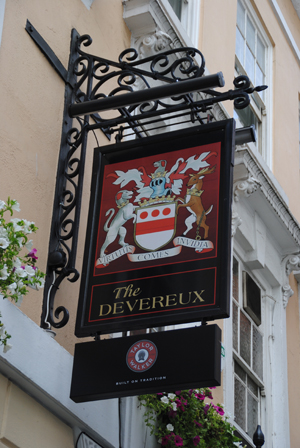
Located at 20 Devereux Court, just off the Strand in the area of London known as Temple, The Devereux takes its name from Elizabethan Robert Devereux, the 2nd Earl of Essex, whose mansion, Essex House, once occupied the site on which it stands.

Devereux, a favorite of Queen Elizabeth I, inherited the mansion from his step-father, Robert Dudley, the Earl of Leicester, in 1588 (the house was originally called Leicester House). A spectacular fall from favor which culminated in an abortive coup, however, led to Devereux’s beheading in 1601 (interestingly, he was the last person to be executed inside the Tower of London – the tower where he is held was named after him).

Used by other members of Devereux’s family following his death, a plaque outside the pub explains that the property was sold to property developer, Nicholas Barbon (also noted as the founder of fire insurance), in 1674, and that he had it demolished soon after.

The present building is said to date from 1676 and was originally two houses. Soon after its construction, it became the premises of the famous Grecian Coffee House which had moved from Wapping Old Stairs.

Noted as a meeting place for prominent Whigs, it was also frequented by members of the Royal Society such as Sir Isaac Newton, Sir Hans Sloane and Dr Edmund Halley as well as writer, poet and politician Joseph Addison and Richard Steele, editor of The Tatler (who gave the coffee house as the magazine’s postal address).

The early 1840s, the premises was into lawyers’ chambers and then later into the public house which now occupies it.

There’s a bust of Essex on the facade beneath which is written the inscription, “Devereux Court, 1676”. The pub is these days part of the Taylor-Walker group. For more, see www.taylor-walker.co.uk/pub-food/devereux-temple/pid-C7177.

For a great book on London’s pubs, take a look at London’s Best Pubs: A Guide to London’s Most Interesting & Unusual Pubs.

Lost London – The Savoy Palace…

At one time the grandest of medieval townhouses in London, the history of the Savoy Palace, also known as the Palace of the Savoy, goes back to at least the 13th century.

A mansion was built here by Simon de Montfort, the ill-fated Earl of Leicester, in 1245. Following his death, it and the land between the Strand and the Thames were gifted by King Henry III to Peter, Count of Savoy, and it was renamed the Savoy Palace (apparently originally spelt Savoie).

The uncle of the king’s young wife Eleanor of Provence, Peter had accompanied his niece to London for her wedding to the king at Canterbury Cathedral on 14th January, 1236, and decided to stay. In 1241, the king named him the Earl of Richmond and in 1246 granted him the land upon which the property was built.

After being briefly given to a religious order, Queen Eleanor gifted the property to Prince Edmund (“Edmund Crouchback” – a term referring to his entitlement to wear a crusader’s cross, not a hunchback), the 1st Earl of Lancaster and younger brother to King Edward I.

It was subsequently occupied by Edmund’s successor earls and, later, dukes. Among the ‘guests’ to visit the palace during the 14th century were the French King Jean (John) II, held there for three years following his capture by the Black Prince at the Battle of Poitiers during the Hundred Years War in 1356.

Interestingly, as the property of the Dukes of Lancaster, the precinct around the palace was considered part of County Palatine of Lancaster (created in 1351), meaning that the rule of the dukes was applied here instead of that of the king – a situation which remained in place until the 1800s.

The palace eventually became the property of John of Gaunt, the 2nd Duke of Lancaster and third son of King Edward III. The richest and most powerful man in the kingdom (he was all but king in name during the younger years of King Richard II in whose name he ruled), Gaunt’s home was said to be sumptuous.

It’s perhaps not surprising then that it become a focus of the rebels during the Peasant’s Revolt in 1381 (it had been attacked unsuccessfully a few years earlier). They attacked and destroyed the property, razing it to the ground. (The story includes the tale that 32 men drank themselves to death after becoming trapped in the cellar while the palace burned).

The site, however, continued to be referred to as that of the Savoy and in the early sixteenth century King Henry VII, by order of his will, financed the founding of the Savoy Hospital on the site for the poor people (the Queen’s Chapel of the Savoy is a relic of this building – see our earlier post here). The hospital closed in 1702 and was later demolished (we’ll deal with this in more detail in a later Lost London post).

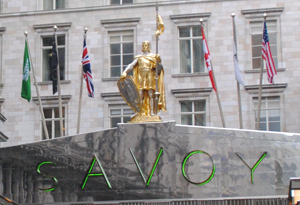
The site, which stands on the north side of the Thames just west of Waterloo Bridge,  is now occupied by the salubrious Savoy Hotel (the entrance of which is pictured above) and the Savoy Theatre, which, like the hotel, was founded by impressario Richard d’Oyly in the 1880s (the theatre was the first building in the country to be entirely lit by electric lighting).

The name of the Savoy Palace is also remembered in street names around the site including Savoy Street, Savoy Hill, Savoy Steps, Savoy Way and Savoy Place.

Treasures of London – The Clock Tower…

The tower at the northern end of the Houses of Parliament is known to many simply as Big Ben – what isn’t often realised is that (as was pointed out in this earlier article) Big Ben actually refers to a bell inside the tower and not the tower itself. The tower, rather, has the rather plain moniker of The Clock Tower. But in honor of the Queen’s Diamond Jubilee, that’s all about to change.

News broke this week that politicians have decided to rename the tower the Elizabeth Tower in honor of Queen Elizabeth II. The move does have precedent – the great southern tower which stands over the Sovereign’s Entrance to the House of Lords was once known as the King’s Tower but was renamed the Victoria Tower in honor of Queen Victoria’s Diamond Jubilee in 1897 (Queen Victoria is the only other British monarch to have celebrated a Diamond Jubilee).

The 96 metre high tower, part of the Houses of Parliament (officially known as the Palace of Westminster), is not the first clock tower to stand on the site of the palace. The first, located on the north side of New Palace Yard, was built in 1288-90 in the reign of King Edward I and contained a bell and clock.

It was replaced in 1367 with a tower that featured the first public chiming clock in England. This second tower was demolished in 1707 after falling into disrepair and replaced with a sundial.

Following a fire which destroyed much of the Palace of Westminster in 1834, architect Sir Charles Barry was selected to design new buildings to house Parliament but interestingly his initial designs didn’t include a clock tower – this was added to the plans in 1836.

Construction of the new Clock Tower, which was built from the inside out and clad in Yorkshire Anston stone and Cornish granite, began in September 1843 but wasn’t completed until 1859 following considerable delays. The ‘lantern’ at the top is known as the ‘Ayrton Light’, named for Acton Smee Ayrton, an MP and the First Commissioner of Works in the 1870s. Not installed until 1885, it is lit up when either House is sitting at night.

The clock was constructed by Edward John Dent and his stepson Frederick to the designs of Edmund Beckett Denison. It included a “revolutionary mechanism” known as the ‘Grimthorpe Escapement’ (Denison was later created Baron Grimthorpe), which helped ensure the clock’s accuracy despite external factors like wind pressure on the clock’s hands and which was adopted in many subsequent clocks. The design of the dials were a collaboration between Barry and Augustus Welby Pugin.

The clock was installed in April 1859 but the cast-iron hands were too heavy and had to be replaced with copper ones. It began keeping time on 31st May, 1859.

It’s worth noting that the tower tilts at 0.26 degrees to the north-west but experts say this is apparently not going to be a major structural problem for 10,000 years.

For more on the Clock Tower including a terrific virtual tour, see www.parliament.uk/bigben. It is possible to tour the Houses of Parliament – including climbing the 334 steps to the top of the Clock Tower – but this is only open to UK residents (and they book up months in advance). For more on the tours, see www.parliament.uk/visiting/visiting-and-tours/ukvisitors/bigben/.

10 Historic Sporting Events in London – 1. The 1908 Olympic Games…

The London Olympics are almost upon us and having completed our series on the Queen to mark her Diamond Jubilee, we’re launching a new special looking at historic sporting events which took place in London and where they were carried out.

To kick it off, however, we thought we’d take a look at Olympics past. London has previously hosted the Games twice – 1908 and 1948. So this week we’re taking a look at the 1908 Games.

The 1908 Summer Olympics – officially recognised as the fourth “modern” Games – were initially to be held in Rome. But the eruption of Mt Vesuvius in 1906 devastated the city of Naples and so the funds which were to be used for the Games had to be diverted to help the stricken community.

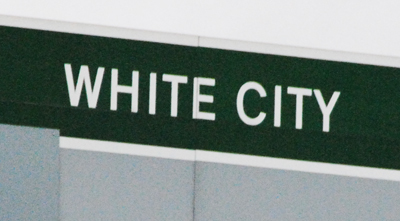
A number of candidates, including Milan and Berlin, were apparently considered before it was decided to hold the Games in White City in London’s west alongside the Franco-British Exhibition already being held in the area (the white marble clad buildings constructed for the exhibition buildings are what gave the area its name).

A new stadium – the White City Stadium – was constructed in just 10 months for the Games and was designed to accommodate 66,000 people. As well as the running track around the perimeter with which we are familiar today, there was also a cycle track located outside the running track while the infield hosted swimming and diving pools and a pitch where football, hockey, rugby and lacrosse could be played. Wrestling and gymnastics was also conducted in the middle of the stadium.

While many of the 110 events in 22 different sports – including athletics, archery, lacrosse, rugby union, swimming, water polo and  tug of war (the only time run at an Olympics, it was won by a City of London police team) – and were held at the stadium, a number were held elsewhere.

These included tennis (at the All England Lawn Tennis and Croquet Club in Wimbledon – see yesterday’s post), rowing (at Henley), fencing (at the neighbouring British-Franco Exhibition) and jeu de paume or ‘real tennis’ (at the Queen’s Club in West Kensington).

The Games, which ran for six months from April to October, were noted for being the first in which Winter events were included (four figure skating events were held at the Prince’s Skating Club in Knightsbridge), for being the first at which the Olympic creed – “The important thing in life is not the triumph, but the fight; the essential thing is not to have won, but to have fought well” – was publicly proclaimed.

They were also the Olympics at which length of the marathon was set at 26 miles, 385 yards (the distance from a window outside the nursery at Windsor Castle, where the event was started to give the Royal Family a good view, to the stadium) and were the first Games in which spectators marching into the arena behind their country’s flag during the opening ceremony.

The marathon, incidentally, was particularly controversial with Italian Dorando Pietri finishing first after being assisted across the finish line by officials when he collapsed (he was disqualified but awarded a special cup for his efforts by Queen Alexandra). There was also controversy when the US team refused to dip their flag before King Edward VII in the opening ceremony. Judging disputes also led to the creation of standard rules and the introduction of neutral judges in subsequent Games.

White City Stadium initially fell into disuse but was subsequently used for greyhound racing and athletics. The site is now occupied by the BBC. There is a ‘Roll of Honour’, unveiled on the site in 2005, which commemorates the 1908 Games.

Oh, and the most medals were won by Great Britain who won 56 gold, 51 silver and 38 bronze while the US came next with 23 gold, 12 silver and 12 bronze.

You can check out the Olympic website for more including images – www.olympic.org/london-1908-summer-olympics.

Daytripper Special – Royal Ascot…

We venture just to the west of London this week for a quick look at the five day horseracing event known as Royal Ascot which concludes tomorrow with the Diamond Jubilee Stakes, renamed to mark Queen Elizabeth II’s Diamond Jubilee.

While Royal Ascot is now a highlight of the horse-racing calendar around the world (and all eyes this year on Frankel and Black Caviar), the origins of horse-racing at the 179 acre Ascot Racecourse, located at Ascot, adjacent to Windsor Great Park, go back some 300 years.

The first race meeting was held here on 11th August, 1711 – it was apparently Queen Anne who first spotted the potential of the site, then known as East Cote, as a suitable location for a racecourse when out riding from Windsor Castle earlier that year, hence she is celebrated as the founder of the event (today, the Queen Anne Stakes is run in memory of Queen Anne’s vital contribution).

The inaugural event was Her Majesty’s Plate, which carried a prize packet of 100 guineas. Seven horses, each carrying 12 stone of weight, took part in what were three separate heats, each four miles long, but there is apparently no record of who won.

While the racecourse was laid out by William Lowen and his team on the orders of Queen Anne, the first permanent building, constructed by a Windsor builder, wasn’t erected until 1794 – capable of holding 1,650 people, it remained in use until 1838. Meanwhile, the future of the course, which stands on Crown property, was pretty much guaranteed in 1813 when an Act of Parliament ensured the area on which the course stands would remain in use as a public racecourse.

It was the introduction of the Gold Cup in 1807 which is believed to have ushered in the race meet we now know. It remains the feature race of the third day of Royal Ascot which, known as Ladies Day, became the dominant day of the race meeting.

In 1825, King George IV established the first Royal Procession, which still occurs on each day of the meeting and makes its way from the Golden Gates and along the racecourse and into the Parade Ring.

Up until 1901, the racecourse was run on behalf of the Sovereign by the Master of the Royal Buckhounds – an officer in the Royal Household. In that year the situation changed when Lord Churchill was appointed as His Majesty’s Representative and made responsible for running the course and entrance to the Royal Enclosure.

In 1913, the Ascot Authority was established to handle the running of the racecourse and His Majesty’s Representative become the chairman of the new organisation. The chairman, who is currently Johnny Weatherby, remains at the head of Ascot Authority (Holdings) Limited today and is still referred to by the title Her Majesty’s Representative.

In 2002, Ascot Racecourse Ltd was incorporated and is now the organisation responsible for running the racecourse – this underwent a £200 million redevelopment in the mid 2000s which included construction of the spectator stand, reopening in 2006 (pictured in the last picture is the Queen arriving at the reopening).

Among the traditions associated with Royal Ascot is that the jockeys who ride the Queen’s horses wear purple with gold braid, scarlet sleeves and a black velvet cap with gold fringe – the same colors used by King Edward VII and King George IV when Prince Regent. It’s also the role of the Queen, who first attended Royal Ascot in 1945 and who, prior to this year’s race meeting has owned some 63 Ascot winners including 20 at Royal Ascot, to make a number of presentations to race winners, including the Gold Cup, the Royal Hunt Cup and The Queen’s Vase.

Royal Ascot today is Britain’s most popular race meeting attracting 300,000 spectators and holding the position of the most valuable horserace meeting in Europe with £4.5 million in prize money on offer over 30 races.

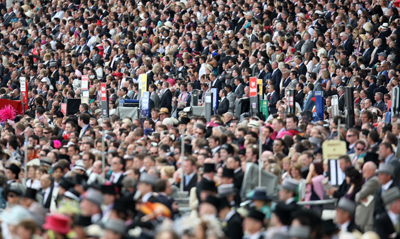
A key event on Britain’s social calendar, for many Royal Ascot has also become as much about fashion and people-watching as it has the horseracing. For those who can gain entry – including meeting strict dress code requirements – the Royal Enclosure, which traces its history back to King George IV who first commissioned a two-storey building to be constructed with surrounding lawn for the pleasure of his invited guests, remains the most exclusive of the spectator enclosures at the race meeting.

As well as the running of the Diamond Jubilee Stakes (previously known as the Golden Jubilee Stakes), Royal Ascot is also marking the Queen’s Diamond Jubilee with a photographic exhibition, 60 years of Royal Ascot during the reign of Her Majesty The Queen, located beside the pre-Parade Ring.

For more, see www.ascot.co.uk.

PICTURES: Courtesy of Ascot Racecourse – top and middle: (c) RPM; bottom: (c) Action Images/Scott Heavey.

Celebrating the Diamond Jubilee with 10 royal London locations – 10. Royal relatives…

In this, the final in our series looking at the Queen’s relationship to London we take a look at some of the key monuments to her family in the city.

• King George V (1865-1936). Queen Elizabeth II’s paternal grandfather, King George V, can be seen in a statue in Old Palace Yard, overlooked by Westminster Abbey (pictured here complete with pigeon). The work of Sir William Reid Dick, it was erected in 1947 and depicts the king wearing the robes of the Order of the Garter.

• Queen Mary (1867-1953). Paternal grandmother to the current Queen, Queen Mary the consort of King George V is commemorated with a small profile relief in The Mall, close to the corner of Marlborough Road. Also the work of Sir William Reid Dick, it was unveiled in 1967.

• King Edward VIII (1894-1972). The older brother of King George VI who infamously abdicated his crown thanks to his love for American divorcee Wallis Simpson, it’s perhaps not surprising that there are no public statues to King Edward VIII in London (at least, none we’re aware of – if you know differently, please let us know).

• King George VI (1895-1952). The father of Queen Elizabeth II is commemorated in a statue in Carlton Gardens, just off The Mall. Erected in 1956, it was the work of William McMillan and as with that of King George V, depicts the king wearing Garter robes. It was moved in 2008 from nearby to its current site to form part of the joint memorial to the Queen’s  parents.

• Elizabeth, The Queen Mother (1900-2002). The long-lived Elizabeth Bowes-Lyon, who died in 2002 at the age of 101, is commemorated in the other half of the joint monument which stands just off The Mall. Unveiled in 2009, the statue of the Queen is the work of sculptor Philip Jackson and shows the Queen in her younger days wearing the robes of the Order of the Garter.

Next week we start a new Wednesday series looking at the history of some of London’s Olympic sites…

What’s in a name?…Lancaster Gate…

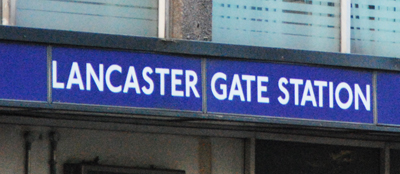
Now perhaps best known as a Tube station and a street and square in Bayswater, just west of the City, the name Lancaster Gate was actually first applied to a gateway located on the northern side of Kensington Gardens, close to where the ornamental water gardens known as the Italian Gardens now stand.

The gate is believed to have been named after Queen Victoria, in her capacity as the head of the Duchy of Lancaster (since the days of King Henry IV, the duchy has been the personal property of the monarch).

The nearby housing development of Lancaster Gate, centred on Christ Church followed in the mid 1800s (designed by Sancton Wood). The church closed in 1977 and was turned into housing in 1983; all that now remains architecturally are the church’s tower and spire.

Among people associated with the street is the Ethiopian Emperor Haile Selassie who resided in a hotel here at the start of World War II.

The Tube station where bears the name Lancaster Gate opened in 1900.

For more on Tube station names, try Cyril M Harris’ What’s in a Name?: Origins of Station Names on the London Underground.

Treasures of London – Duke of York’s Column…

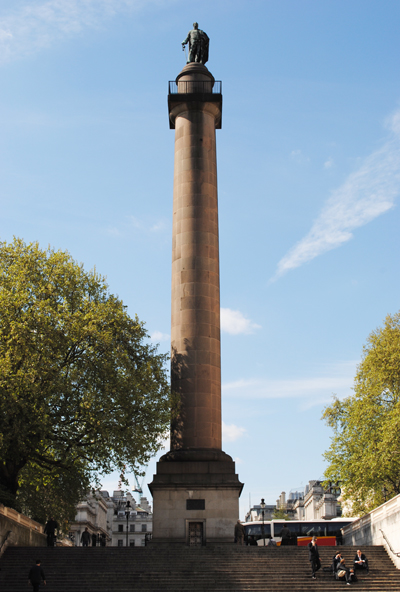
With Nelson’s Column in Trafalgar Square stealing much of the limelight, the Duke of York’s Column in Waterloo Place tends to get overlooked. So we thought it was time we took a more in-depth look at its history.

The monument is dedicated to Prince Frederick (1763-1827), the second son of King George III and commander-in-chief of the British Army during wars which were fought between France and European powers including Britain between 1792 and 1802.

The Duke was not a successful military commander on the field – his one outing in Flanders was a disaster and is said to have resulted in him being immortalised in the song, The Grand Old Duke of York – but he is celebrated for reforming the army after his return to England.

The almost 42-metre high monument  features a larger-than-life bronze statue of the Duke dressed in the robes of the Knights of the Garter – the work of Sir Richard Westmacott – standing on the top of a granite column and gazing down a series of steps and over The Mall towards St James’s Park.

The overall monument was designed by Benjamin Dean Wyatt. His design was selected by a committee from among other submissions and erected between 1830-33. While the Duke was an inveterate gambler and died deeply in debt, the British Army is said to have voted to forgo a day’s pay to fork out the £25,000 required to build the commemorative monument. It was said in jest that the height of the monument allowed the Duke to escape his creditors.

Interestingly, the hollow column contains a spiral staircase which originally gave access to a viewing platform at the top. Access was apparently prohibited after a spate of suicides.

Looking for more on statues and monuments around London – why not check out Peter Matthews’ London’s Statues and Monuments?

Celebrating the Diamond Jubilee with 10 royal London locations – 9. Royal chapels…

Palaces aside, the Queen also owns a series of chapels – the Chapels Royal – in London which, although not as grand as Westminster Abbey, have each played an important role in the history of the monarchy. 

The term Chapel Royal originally referred to a group of priests and singers dedicated to serving the Sovereign’s personal spiritual needs and as such would follow the monarch around the country. It was in Stuart times that they became more settled establishments with the two main Chapels Royal – the Chapel Royal and the Queen’s Chapel – located in St James’s Palace.

• The Chapel Royal, St James’s Palace. Constructed by King Henry VIII, the chapel was decorated by Hans Holbein the Younger in honor of the king’s (short) marriage to Anne of Cleves. Queen Mary I’s heart is said to be buried beneath the choir stalls and it was here that Queen Elizabeth I apparently prayed waiting for news of the progress of the Spanish Armada. King Charles I took the Sacrament of Holy Communion here before his execution in 1649 and the chapel was where Queen Victoria married Prince Albert (her marriage certificate still hangs on the wall). In more recent times, the coffin of Diana, Princess of Wales, was placed before the altar so family and friends could pay their respects before her 1997 funeral. Among the composers and organists associated with the chapel are Thomas Tallis, William Byrd, Henry Purcell and George Frideric Handel. The chapel is not open to the public except for services.

• The Queen’s Chapel, St James’ Palace (pictured right). Now located outside the palace walls, this chapel was built by King James I for the Catholic Henrietta Maria, the bride of his son, then Prince Charles (later King Charles I). Designed by Inigo Jones, Grinling Gibbons and Sir Christopher Wren were also involved in its creation. The chapel was used by Henrietta Maria until the Civil War and later became the home of the Danish Church in London. The chapel is not open to the public except for services.For more on this chapel or the Chapel Royal at St James’s Palace, follow this link.

• The Queen’s Chapel of the Savoy. Built in the Middle Ages to serve the now long gone Savoy Palace, London home of Count Peter of Savoy (uncle to King Henry III’s wife, Eleanor of Provence, the original building was destroyed in the Peasant’s Revolt of 1381. The current building, located in Savoy Hill, off the Strand, was built on the orders of King Henry VII in the late 15th and early 16th century to serve the hospital he founded on the site of the palace. The chapel since served many other congregations – including a German Lutheran congregation – but remains royal property via the Duchy of Lancaster, which is held in trust for the Sovereign and used to provide an income for the British monarch. It is officially the Chapel of the Royal Victorian Order. For more, see www.duchyoflancaster.co.uk/duties-of-the-duchy/the-queens-chapel-of-the-savoy/.

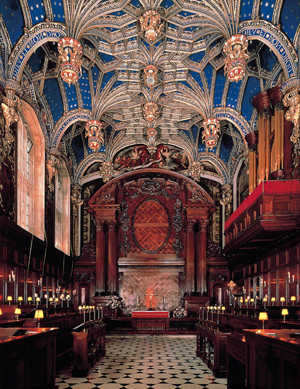
• Chapel Royal, Hampton Court Palace (pictured right). There has been a chapel here since the Knights Hospitallers occupied the site in the 13th century but it was Cardinal Wolsey who built the chapel to its present dimensions after acquiring the property in 1518. The current building, however, dates from the later ownership of King Henry VIII – Wolsey surrendered the property to him when he fell from favour – and further works in the eighteenth and nineteenth centuries. Many subsequent monarchs have worshipped here. The chapel, with its stunning ceiling, is open to the public when visiting Hampton Court Palace. For more, see www.chapelroyal.org. PICTURE: Historic Royal Palaces/newsteam.co.uk

• The Chapel Royal of St Peter ad Vincula, Tower of London. Originally a parish church, this was incorporated into the walls of the Tower in the reign of King Henry III. It was subsequently rebuilt at least twice – in the reign of King Edward I and King Henry VIII – and is home to the graves of important personages executed at the Tower including Henry VIII’s one-time wives, Anne Boleyn and Catherine Howard as well as Jane Grey, the nine day queen, and Sir Thomas More and Bishop John Fisher. The chapel can be accessed during a Yeoman Warder’s tour of the Tower of London. For more, including details of an appeal for its restoration, see www.hrp.org.uk/TowerOfLondon/stories/thechapelproject.

• Chapel Royal of St John the Evangelist, Tower of London. Located within the White Tower, this beautiful chapel – arguably the oldest church in London – dates back to the construction of the tower by King William the Conqueror the late 11th century and remains one of the best preserved examples of Anglo-Norman architecture in England. King Henry III added stained glass windows but for much of its later history the chapel was used for records storage. Tradition records that King Henry VII’s wife, Elizabeth of York, was laid in state here following her death in childbirth and that it was here Queen Mary was betrothed by proxy to Philip of Spain. This can be visited as part of a visit to the Tower of London. For more, see www.hrp.org.uk/TowerOfLondon/Sightsandstories/Prisoners/Towers/ChapelofStJohns

For more on churches in London, check out Stephen Millar’s London’s City Churches
and Stephen Humphrey’s London’s Churches and Cathedrals: A Guide to London’s Most Historic Churches and Cathedrals, Leigh Hatt’s London’s 100 Best Churches: An Illustrated Guide or the Pevsner Architectural Guide London: City Churches.