LondonLife – Poet Ted Hughes commemorated in Poets’ Corner


The late Poet-Laureate Ted Hughes was honored in a ceremony in Westminster Abbey’s Poets’ Corner last week with the dedication of a hand-carved memorial slab. 
The memorial includes a quotation from his work That Morning: “So we found the end of our journey, So we stood alive in the river of light, Among the creatures of light, creatures of light…”. The memorial to Hughes, who died in 1998 at the age of 68, was placed at the foot of that of TS Eliot, who was a mentor to Hughes. Among those who attended the commemoration were Hughes’ widow Carol and his daughter Frieda as well as literary figures including Nobel Laureate Seamus Heaney, Sir Andrew Motion, Michael Morpurgo and Graham Swift. Other literary luminaries commemorated in Poets’ Corner (only some of whom are buried here) include Geoffrey Chaucer, Edmund Spenser, John Milton, Lord Byron and John Keats as well as Charles Dickens, William Shakespeare and Rudyard Kipling. For more on Poets’ Corner, see www.westminster-abbey.org.

PICTURE: Carol Hughes lays a bouquet of flowers and herbs from the garden of the Hughes’ Devon home at the memorial. (Copyright Dean and Chapter of Westminster).

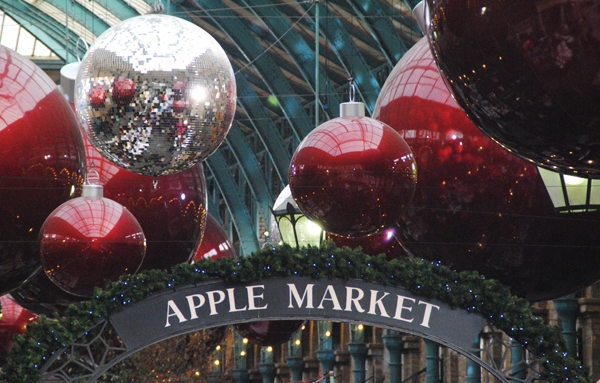
LondonLife – Giant baubles at Covent Garden…

Covent Garden is all decked out for Christmas, including the hanging of giant baubles above each of its two halls and a giant green hedge-like reindeer at the market’s eastern end. For more on Covent Garden, see our earlier ‘What’s in a name?’ entry

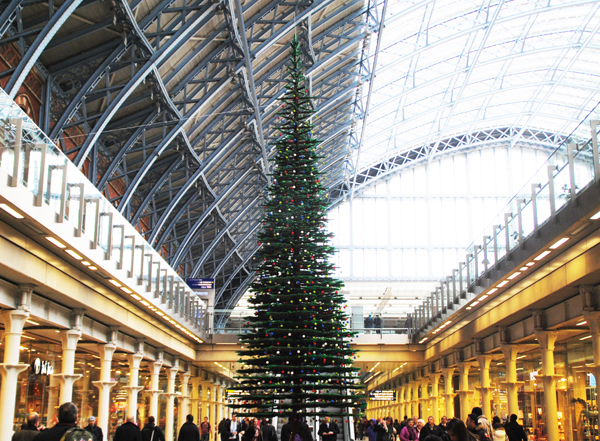
LondonLife – St Pancras’ Lego Christmas Tree…

The world’s tallest Lego Christmas Tree, this decorative addition to St Pancras International’s main concourse contains 600,000 pieces and took two months to build. The 12.2 metre high tree has 172 branches and is decorated with 1,000 baubles – and, yes, they’re made of Lego too! Having had its lights switched on last week, it will remain in the concourse until 3rd January.

LondonLife – A blaze of autumnal colour in Green Park…

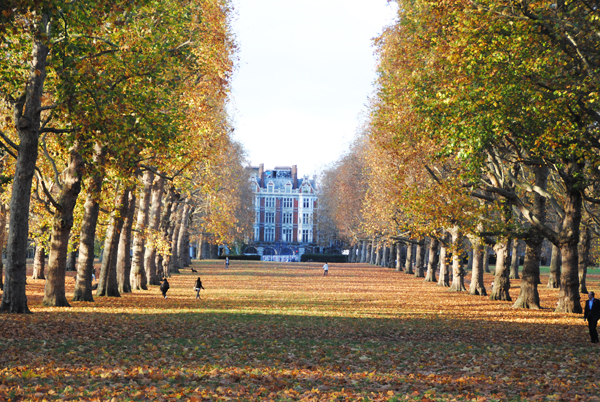
Taken from Canada Gate on the south side of The Green Park, the leaf-strewn Broad Walk runs down to Piccadilly and makes a pretty sight in the autumn sunlight. For more on The Green Park, see our previous entry here

LondonLife Special – The Lord Mayor’s Show…

Last Saturday was the Lord Mayor’s Show, the annual three mile long procession through the streets of the City of London celebrating the arrival of the new Lord Mayor – in this case David Wootton, the City’s 684th Lord Mayor…

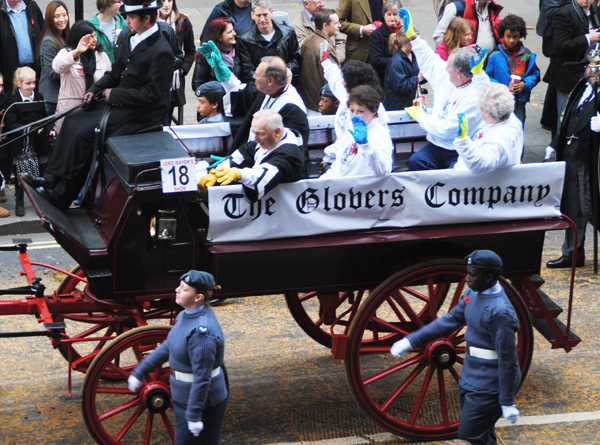
The Show always features entries by livery companies, some of which have ancient roots such as the Worshipful Company of Glovers (pictured above), first formed in 1349…

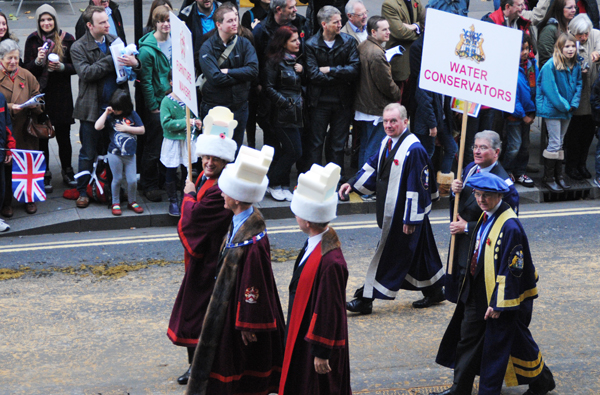
…and some which don’t, such as the Worshipful Company of Furniture Makers and the Worshipful Company of Water Conservators (representatives of which are pictured above), two of the so-called “modern livery companies”.

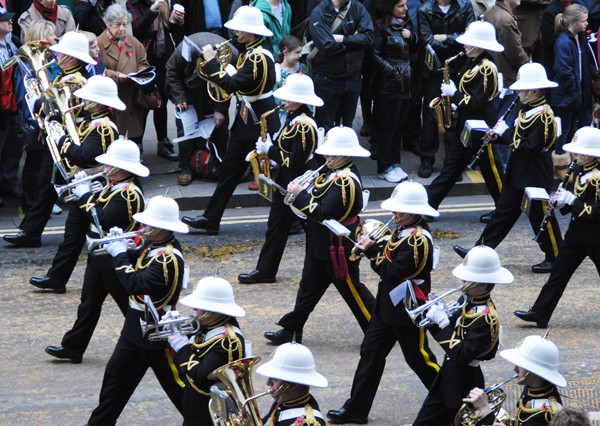
From our vantage point above Cheapside, we saw massed bands aplenty (seen above is the Royal British Legion Band & Corps of Drums from Romford)…

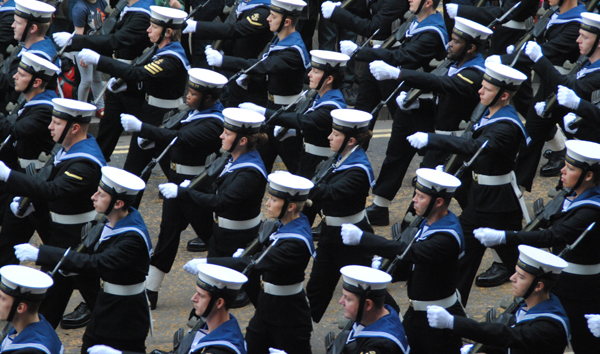
          …marching naval, army and airforce personnel…

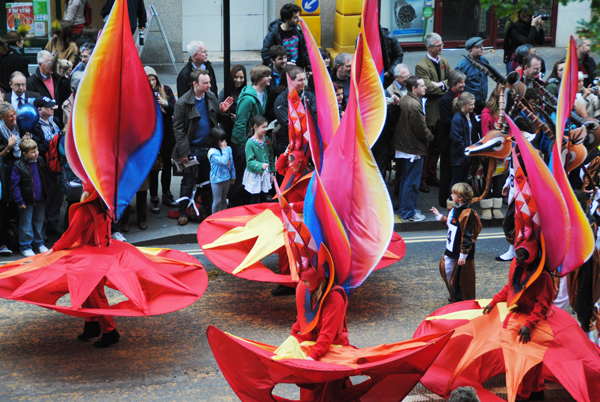
         …as well as lots of color…

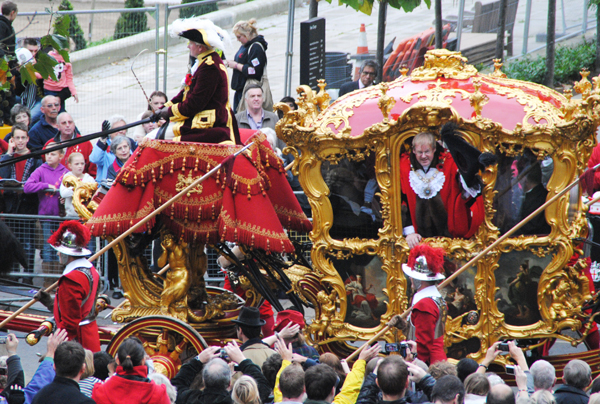
…before the arrival of Lord Mayor David Wootton in the 18th century State Coach drawn by six shire horses. The Lord Mayor proceded onto St Paul’s Cathedral where he was blessed before moving onto the Royal Courts of Justice where he swore allegiance to the Sovereign (and then returning to Mansion House via Queen Victoria Street). Late in the afternoon, he presided over a stunning fireworks display on the Thames. For more information about this annual event, see www.lordmayorshow.org.

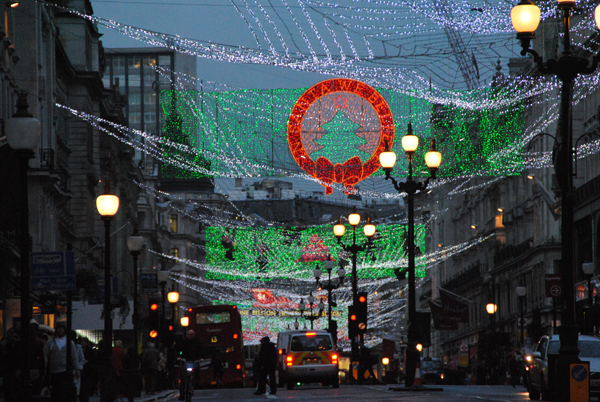
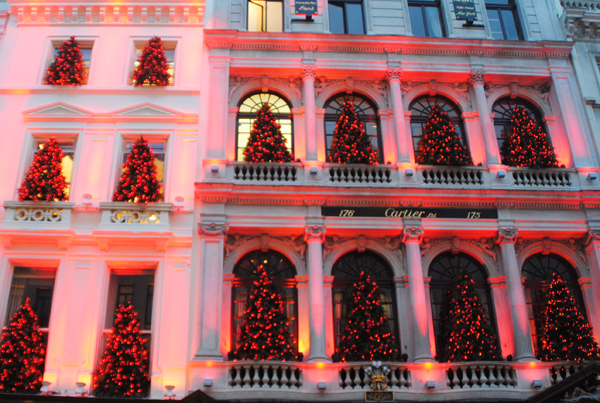
LondonLife – Those Christmas lights…

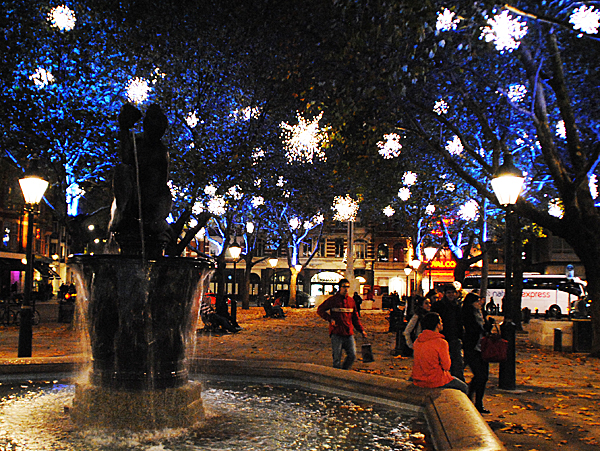
And so Christmas is on our doorstep. The Christmas lights in the West End were officially turned on last week and lights have started appearing all over the city, including in Sloane Square (pictured) in the city’s west, where the treetops are all a glitter. The square was named for Sir Hans Sloane (see our earlier post on him here). We’re looking for your pictures of London’s Christmas lights to post here over the coming weeks. Simply send in pictures to exploringlondon@virginmedia.com and we’ll post the best of them!

LondonLife – Clive of India in silhouette…


Located on the steps at the end of King Charles Street in Whitehall, this somewhat controversial statue of Robert Clive, known to many as Clive of India, stands outside what was the India Office (and is now the Foreign and Commonwealth Office). The statue was erected in 1912, apparently it was suggested by Lord Curzon, a former viceroy to India.

LondonLife – The Thames Barrier

Laid like an iron necklace across the Thames, as of May this year, the Thames Barrier has protected central London from flooding 119 times since it went operational in 1982. The barrier spans 520 metres of the river near Woolwich, east of the City, and is one of the largest moveable flood barriers in the world. It features 10 steel gates, each of which weighs 3,000 tonnes, which can be raised or lowered. They stand as high as a five-storey building when up and, while you may not think they look it, the piers, which are covered with a protective ‘skin’ of stainless steel, are wide enough apart to accommodate the largest of ships. There are regular boat trips to the barrier from central London and there is an information centre about the barriers which includes a cafe (boats don’t stop at the Thames Barrier Pier, so this can’t be accessed from the river itself). For more on the barrier and the information centre, see www.environment-agency.gov.uk/homeandleisure/floods/38353.aspx.


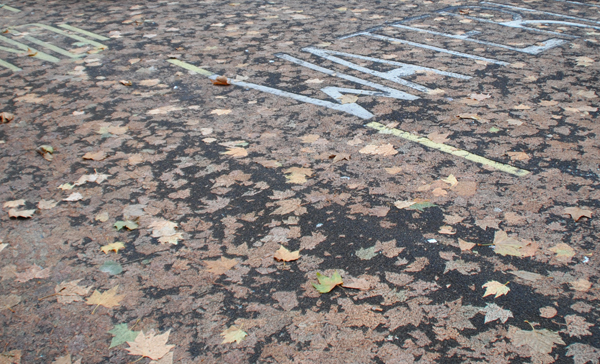
LondonLife – Leaves make for strange designs in the Strand…


The recent spell of hot weather apparently left its mark on the Strand with early autumnal leaves sticking to the ground and forming an intriguing gold and brown pattern.


LondonLife – New Sheriffs in the City…

The two new sheriffs of the City of London – Alderman Alan Yarrow and Wendy Mead CC (pictured here second and fourth from left with Lord Mayor Michael Bear between them) – were admitted into office in a ceremony at Guildhall last week following their election in June by the City livery companies. The office of sheriff dates back to the Middle Ages and, until the institution of the mayoralty in 1189, sheriffs or ‘shire reeves’ were charged with governing the city as the king’s representatives, collecting royal revenues and enforcing royal justice. The role now includes ensuring the smooth running of the Central Criminal Court (housed at the Old Bailey), attending the Lord Mayor as he carries out his official duties and presenting petitions from the City to Parliament at the Bar at the House of Commons. Meanwhile, the City of London announced on Monday that Alderman David Wootton, himself a former sheriff (as all Lord Mayors must be) as well as a past master of of the Worshipful Company of Fletchers and of the Worshipful Company of Solicitors, has been elected the 684th Lord Mayor of the City of London. He takes office on Friday, 11th November (the Lord Mayor’s Show takes place the following day). For more, see www.cityoflondon.gov.uk.

PICTURE: Courtesy of City of London Corporation.

LondonLife – A last chance to experience Australia at the British Museum…

An Australian landscape constructed in the forecourt of the British Museum as part of the museum’s Australian Season. The landscape takes the intrepid on a journey across the vast Australian continent through the arid red desert of the red centre to the granite outcrops of the country’s west coast. The plants include iconic Australian flora such as the kangaroo paw, wattle, coast banksia, gums and ferns as well as a Wollemi pine. The landscape is the fourth created in the museum’s forecourt under a partnership with the Royal Botanic Gardens, Kew. But time is running out to see it – the garden will disappear on 16th October. Other events held at the museum as part of Australian Season have included an exhibition of Australian artworks and handcrafted baskets. Admission to the garden is free. For more, visit www.britishmuseum.org.

LondonLife – Open House London, The Middle Temple Hall

Last weekend saw thousands of people make their way to rarely opened properties across London as part of Open House London. Among the properties we visited was the Middle Temple Hall, one the finest example of a 15th century hall in London (if not the UK). The hall was built in the 1560s and early 1570s – by which time the Middle Temple, one of the medieval Inns of Court (more of which we’ll be talking about in an upcoming series), had already existed for about 200 years – and the hall which the Temple currently used, that of the former Templar Knights, was starting to fall apart. The new hall was constructed under the direction of law reporter Edmund Plowden, then Treasurer of the Inn, and funded by members of the Middle Temple. In use by about 1570, Queen Elizabeth I is, according to some stories, said to have dined there many times and it was in the hall that the first performance of Shakespeare’s Twelfth Night took place. While it suffered some damage in World War II bombings, the hall still looks much as it did in the late 1500s. It remains at the centre of the Middle Temple’s collegiate and social life and it is here that members are called to the Bar. Among the notable objects inside are numerous paintings and stained glass memorials of people associated with the Inn (including Sir Walter Raleigh and numerous monarchs – from King Charles I to King Edward VII) as well as the High Table – a table made of three 29 foot long planks from a single oak, it is said to be a gift from Queen Elizabeth I – and the ‘cupboard’, a smaller table which was apparently made from the hatch cover of Sir Francis Drake’s ship, the Golden Hind. Late note: I should add that the Middle Temple Hall is not normally open to the public.

LondonLife – The BBC Proms

Last weekend the Last Night of the Proms was held at Royal Albert Hall, the culmination of the summer music season’s 117th year.

The origins of the Proms go back to 10th August, 1895, when Robert Newman, manager of the concert venue Queen’s Hall in Langham Place, London, decided to offer a popular program of music in a less formal “promenade arrangement” which would be accessible to the masses and would ultimately lead them to a greater appreciation of classical music.

He offered conductor Henry Wood the opportunity to conduct the first Proms season, known as ‘Mr Robert Newman’s Promenade Concerts’. Early on, Wood and Newman established the tradition of having a Wagner Night on Mondays and a Beethoven Night on Fridays and Wood used the platform of the Proms to promote up-and-coming performers.

In 1927 the BBC took over the management of the Proms, now formally known as the BBC Proms, and has continued in that role ever since bar an interruption during World War II. It was during World War II, incidentally, that the event moved to the magnificent Royal Albert Hall in South Kensington (the magnificent interior of which can be seen above), after Queen’s Hall was gutted following a bombing raid on 10th May, 1941.

The eight-week Proms program has since continued to widen with the introduction of complete opera performances in the 1960s, concerts by foreign ensembles and other music styles including jazz, Gospel and that specifically targeted at children.

Now including more than 70 main concerts, the music festival – for which standing tickets can still be bought continuing the tradition of ‘promenading’ – also continues to also be a showcase for new works. For more on the Proms, see www.bbc.co.uk/proms, and for more on the venue, see www.royalalberthall.com.

PICTURE: Courtesy of BBC, Chris Christodoulou

LondonLife – Remembering September 11

London, along with the rest of the world, will this week pause to remember 11th September, 2001, when nearly 3,000 people died after planes were flown into New York’s World Trade Center towers and the Pentagon (a fourth plane crashed in Pennsylvania). In preparation for the 10th anniversary, London’s Mayor Boris Johnson unveiled a 10 metre high sculptural memorial, After 9/11, in Battersea Park which controversially uses steel girders from the towers in its design. But London already has a memorial to the events of 11th September. This is located in Grosvenor Square Garden, opposite the US Embassy. Opened on 11th September, 2003, the memorial features a pavilion which has three bronze plaques listing the name of UK citizens, UK Overseas Territories and people of dual nationality who lost their lives. The site was chosen partly on the basis that it was at the foot of the nearby Roosevelt Memorial that people laid flowers and lit candles in the immediate aftermath of the attacks. Plants at the memorial include white Bianca Roses which were among the flowers in the Queen’s bouquet laid at Westminster Abbey in a service held on 29th November, 2001, and were the roses that family members laid on the innocent victims memorial outside the abbey . In addition, more than 3,000 of the rose petals cascaded from the Whispering Gallery to the altar of St Paul’s Cathedral on the  first anniversary service.

LondonLife – London’s celebrates one year to the Olympic Games…

Late last month, London celebrated one year to go until the Opening Ceremony of the 2012 Olympic Games. The milestone was marked with a series of events in Trafalgar Square and at Olympic venues, including here at the Olympic Stadium in London’s east where the number one was mown into the grass. In Trafalgar Square, meanwhile, International Olympic Committee president Jacques Rogge formally invited the world’s athletes to attend the games and unveiled the medals while at the newly completed Aquatic Centre, British diver Tom Daley became the first athlete to break the waters. For more see www.london2012.com.

PICTURE: LOCOG

LondonLife – SS Robin returns to East London…

The SS Robin being towed to its new mooring in East London on a floating pontoon. PICTURE: James Spellane/SS Robin Trust.

The world’s oldest complete steamship, the SS Robin, made a dramatic return to the Royal Docks in East London earlier this month. Built in 1890 at the Thames Ironworks shipyard on the River Lea, the coastal cargo steamer was operational for more than 80 years, initially around the coast of Britain and the English Channel and later in Spain where it bore the name Maria. The 300 tonne vessel has just been through a three year restoration project spearheaded by the SS Robin Trust. It has now taken up a temporary mooring on a new floating pontoon while final conservation work is completed. It is anticipated that the steamship – which is listed on the ‘Core Collection’ of the UK National Historic Ships Register meaning it’s seen as historically significant as London’s two other maritime landmarks, the Cutty Sark and HMS Belfast – will be opened to the public. For more information, see www.ssrobin.com.

LondonLife – Remembering the 2004 Indian Ocean tsunami…

Prince Charles and the Duchess of Cornwall were among those to pay their respects at a new memorial remembering those 155 Britons who were among the 225,000 people died in the 2004 Indian Ocean tsunami last week. The 115 tonne memorial, located in gardens at the Natural History Museum in South Kensington, was designed by architecture studio Carmody Groarke. It is sculpted from granite quarried from France and was funded by a £550,000 grant from the Department for Culture, Media and Sport. Carmody Groarke was also involved in the design of the 7 July Memorial which, located in Hyde Park, commemorates the 52 people killed in the suicide bombings which took place in London in 2005. It was unveiled by Prince Charles in 2009.

LondonLife – The Championships, Wimbledon

With Wimbledon now in its second week, we thought it would be a good time to take a look at the origins of what is the world’s most famous tennis championship.

This year’s Wimbledon marks the 125th time that the All England Lawn Tennis Club has hosted The Championships. The first championships (Gentlemen’s Singles only with a field of 22) were held in 1877, just nine years after the founding of what was then the All England Croquet Club (lawn tennis was added at the club in 1875 and the name changed to the All England Lawn Tennis and Croquet Club the same year the first tennis championships were held).

It’s important to note that the first championships were not held at the current site opposite Wimbledon Park but at the club’s former site off Worple Road (it’s from this site that the term Centre Court was adopted for the main arena – at the Worple Road site, Centre Court was indeed in the middle of the grounds). It moved to its present site in Church Road in 1922.

Such was the success of the game that in 1882, the name croquet was dropped from the club’s title but it was returned in 1899 for “sentimental reasons”.

In 1884, the first Ladies Singles tournament was held as was the first Gentlemen’s Doubles. Other milestone years include:

• 1905 – US citizen May Sutton become the first foreigner to win at the tournament when she won the Ladies’ Singles;

• 1907 – Australian Norman Brookes became the first foreign man to win;

• 1940 – 1,200 seats in Centre Court were destroyed when a bomb hit the arena;

• 1968 – Australia’s Rod Laver and America’s Bille Jean King become the first winners of the Open Championships era;

• 1985 – Boris Becker, at age 17, becomes the youngest Wimbledon champion (as well as the first German and the first unseeded player);

• 1987 – Martina Navratilova of the US becomes the first to win the Ladies’ Singles six times in succession;

• 2010 – John Isner and Nicolas Mahut played the longest tennis match in history with Isner eventually winning 70 games to 68 in the fifth set, having played a total of 138 games, and spent 11 hours and five minutes on court over three days.

There is a museum based at Wimbledon which details more of the history of the place (only open to ticket-holders during the Championships). Exhibits include the Championship trophies, tennis memorabilia dating back to 1555 and the ‘ghost’ of John McEnroe talking about the games and his opponents in his old dressing room.

There are also a range of events being held this year marking the 125th year of The Championships – these include a new museum exhibition called The Queue.

WHERE: All England Lawn Tennis Club, Church Road, Wimbledon – between gates 3 and 4 (nearest tube Southfields); WHEN: 10am to 5pm (last admission 4.30pm) daily (not during the championships); COST: Museum only £11 an adult/£9.50 concessions/£6.75 child, or Museum plus tour £20 an adult/£17 concessions/£12.50 child; WEBSITE: www.wimbledon.com

LondonLife – St Paul’s celebrates 300 years since its completion…

Queen Elizabeth II attends the tercentenary service at St Paul’s. PICTURE: Graham
Lacdao/St Paul’s Cathedral

A service was held at St Paul’s today in celebration of the 300 year anniversary of the cathedral’s completion.

The tercentenary service also marks the end of a massive 15 year, £40 million repair and cleaning project, meaning the cathedral is now clear of scaffolding for the first time in 15 years.

Designed by the indomitable Sir Christopher Wren, work on St Paul’s Cathedral began in 1677 and was formally completed in 1710 (although it had been holding services since 1697). (For more on the history of St Paul’s, see our earlier post, part of our series on Wren’s London, here).

Said to have the largest dome after St Peter’s in Vatican City, St Paul’s has been at the centre of London’s (and the United Kingdom’s) religious and political life for centuries, hosting state funerals (Lord Nelson, the Duke of Wellington and Winston Churchill’s were all held here) as well as the royal wedding of Prince Charles and Lady Diana and many celebration services.

Sights include the crypt – containing the tombs of both Nelson and Wellington – and the Whispering Gallery (see our earlier post on the Whispering Gallery here) as well as the exterior viewing galleries.

To celebrate the cathedral’s liberation from scaffolding, St Paul’s is holding a 300th Anniversary Photography Competition in which photographers are invited to submit their best exterior shots of the building. The 10 winning images will then be displayed in the cathedral crypt. The competition runs until 16th July.

To enter, upload pictures to St Paul’s 300th anniversary competition group at Flickr – www.flickr.com/groups/stpaulslondon/. For more information, see www.stpauls.co.uk/photocomp.

LondonLife – Knollys Rose Ceremony

A London tradition which has its origins in the fourteenth century, the Knollys Rose Ceremony surrounds the presentation of a single red rose to the Lord Mayor of London at Mansion House.

The ceremony, which was held in the City yesterday, relates to a judgement of 1381 in which the fine was the annual payment of a single red rose.

The fine was levied after Lady Constance Knollys, the wife of prominent citizen Sir Robert Knollys, bought a property opposite her own in Seething Lane and then added a footbridge linking the two without first gaining planning permission (it’s suggested that she bought the property which had previously been used as a threshing ground because she was annoyed with the constant chaff in the air).

Following discovery of her breach, it was agreed that she would pay the annual ‘peppercorn rent’ of a single red rose from the new property’s garden to the Lord Mayor.

Lady Constance’s footbridge is long gone but the tradition of paying the annual rent was revived last century and is now presided over by the Company of Watermen and Lightermen of the River Thames.

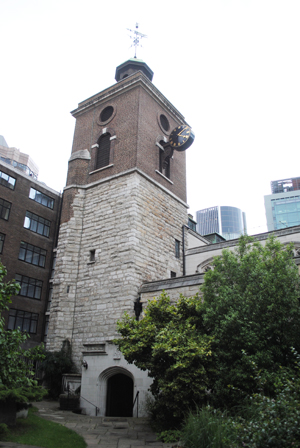
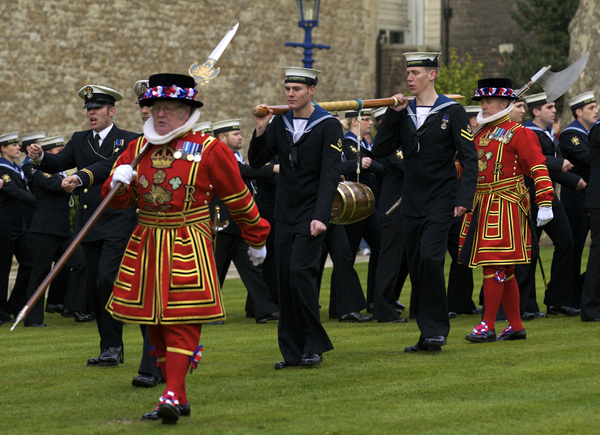
The ceremony starts at the church of All Hallows by the Tower and then involves a procession to Seething Lane Gardens (a modern garden close to where the original may have been; the gardens were once the site of the Navy Office) where the Master of the Company of Watermen and Lightermen snips off a rose before heading on to Mansion House where it is presented to the Lord Mayor on a velvet altar cushion from All Hallows.

The ceremony usually takes place on the second Monday in June.