This Week in London – Fashion and raw materials; music and museum; and, lates at Tate…

• The relationship between the glitzy world of fashion and the raw materials used to make it is the subject of a new exhibition opening at the V&A on Saturday. Fashioned from Nature features more than 300 “beautiful, intriguing and unsettling objects” spanning the period since 1600 and including everything from a a pineapple fibre clutch bag, a Calvin Klein dress made from recycled bottles worn by actor Emma Watson (pictured) and a cape of cockerel feathers. One focus of the exhibition is the damage done to the environment due to the demands of fashion and the display highlights some of the campaigners and groups which have been vocal in protesting about the issue. The display also looks at the role design has played in creating a more sustainable fashion industry. Runs until 27th January, 2019. Admission charge applies. For more, see vam.ac.uk/fashionedfromnature. PICTURE: Emma Watson wearing Calvin Klein at The Metropolitan Museum of Art’s Costume Institute Benefit Celebrating the Opening of Manus x Machina: Fashion in an Age of Technology, Arrivals, The Metropolitan Museum of Art, NYC, New York, America, 2nd May 2016 (Matt Baron/REX/Shutterstock).

The British Museum has kicked off a first-of-its-kind two week festival of musical performances exploring the idea of museums as “diplomats of the 21st century”. Running until 29th April, Europe and the world: a symphony of cultures explores Europe’s interactions with the world and looks to create a dialogue between works of classical and contemporary music and objects in the museum which have come from around the world. There’s 17 performances taking place over the two weeks which started last Monday as well as some panel discussions. The works include those of Ligeti, Berio, Stockhausen, Liszt, Messiaen, Strauss, Bartók, and Nono and are being performed along with pieces from historical musical traditions such as medieval temple music from China, classical music from India, Spanish colonial and flamenco music, Spiritual Japanese music from the 7th century and Byzantine choral music. Among those performing are London Sinfonietta, Ensemble für Intuitive Musik Weimar, Accademia del Piacere, Zhang Jun and his Kunqu Ensemble, Kaushikiji Charkraborty and Ensemble, and Reigakusha Ensemble Tokyo. Supported by the German Foreign Office, more details on the festival can be found at www.britishmuseum.org/whats_on/europe_and_the_world.aspx.

Tate Britain has launched a series of new night events curated by young people aged 15 to 25. The gallery, which already held the first event in early April, will open late on the first Friday evenings of June, August, October and December for a series of special events featuring music, live performances and workshops and inspired by displays, exhibitions and artworks in Tate’s collections including the current Art Now installation by Marguerite Humeau, John Constable’s Salisbury Cathedral from the Meadows, the upcoming Duveens Commission by Anthea Hamilton​ and the Turner Prize. Lates at Tate Britain are free, drop-in events with spaces available on a first come, first served basis. For more, head to www.tate.org.uk.

Send all items for inclusion to exploringlondon@gmail.com.
This Week in London – Monet and architecture; Abbey Road Studios on show; and, Maqdala recalled…

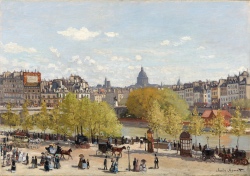
An exhibition showcasing the works of Impressionist artist Claude Monet with a focus on his depictions of architecture opens at the National Gallery on Monday. The Credit Suisse Exhibition: Monet & Architecture is the first exhibition concentrating solely on Monet’s works in London in more than 20 years. It spans his entire career from the mid-1860s to early 20th century and features more than 75 paintings depicting everything from villages to cities like Venice and London as well as individual structures and monuments. The display includes a rare gathering of some of Monet’s great ‘series’ paintings including five pictures from trips to Holland made in the early 1870s, 10 paintings of Argenteuil and the Parisian suburbs from the mid-1870s, seven pictures depicting the cathedral at Rouen from 1892–5, eight paintings of London from 1899–1904, and nine canvases showing Venice from 1908. Highlights include the Quai du Louvre (1867) (pictured), the Boulevard des Capucines (1873), and the flag-filled Rue Montorgeuil, 30 June 1878. Can be seen in the Sainsbury Wing until 29th July. Admission charge applies. For more, see www.nationalgallery.org.uk. PICTURE: The Quai du Louvre (Le Quai du Louvre), 1867, Claude Monet, Oil on canvas © Collection Gemeentemuseum Den Haag.

London’s Abbey Road Studios are celebrated in an exhibition of the work of rock photographer Jill Furmanovsky which opens at the Barbican Music Library on Monday. Inside Abbey Road Studios – Through the lens of Jill Furmanovsky is a showcase of her work since 1976 when she photographed Pink Floyd during the Wish You Were Here recording sessions and, as well as those images, includes more recent images of the likes of Nile Rodgers, Royal Blood, Novelist, and Mura Masa, as well as emerging musical talent. The display is a collaboration between Abbey Road Studios, Furmanovsky – who became artist-in-residence at the studios last year – and the Barbican Music Library. The exhibition, which is free to enter, can be seen until 27th June. For more, see www.barbican.org.uk/whats-on/2018/event/inside-abbey-road-studios.

Some 20 objects from Ethiopia are featured in new exhibition at the V&A marking the 150th anniversary of the siege and battle at Maqdala, culmination of the British Expedition to Abyssinia. Maqdala 1868, which focuses on the battle and its aftermath, features some of the earliest examples of military photography in Britain as well as a portrait of Emperor Tewodros II’s son Prince Alemayehu taken by Julia Margaret Cameron soon after the prince was brought to England by the British military. There’s also examples of metalwork and textiles including a gold crown with filigree designs and embossed images of the Evangelists and Apostles, a solid gold chalice, jewellery and a wedding dress believed to have belonged to the Emperor’s wife, Queen Terunesh. All of the objects were taken during Sir Robert Napier’s military expedition of 1867-68 which was aimed at securing the release of British hostages held by the Emperor and which culminated in the Emperor’s suicide and the destruction of his fortress. The exhibition, which is free to see, has been organised in consultation with the Ethiopian Embassy in London and an advisory group including members of the Orthodox Tewahedo Church, members of the Anglo-Ethiopian society and representatives from the Rastafarian community. Runs until July, 2019, in Room 66 of the Silver Galleries. There is a program of related events. For more, see www.vam.ac.uk.

Send all items for inclusion to exploringlondon@gmail.com.
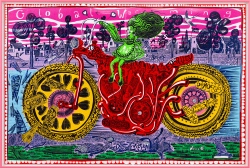
This Week in London – Happy Easter!; Egg hunting at English Heritage properties; Peter Rabbit at Kew; and The Science Museum’s Frankenstein Festival…

Wishing all of our readers a very Happy Easter!

Six special eggs designed by six top children’s book illustrators have been hidden at English Heritage sites across the country for Easter. The illustrators – including Ian Beck, Polly Dunbar, Olivia Lomenech Gill, Trisha Kraus, Lydia Monks and Grahame Baker Smith – have all designed eggs inspired by English Heritage properties. Young visitors taking part in the Easter Adventure Quests – which will be held at 20 English Heritage properties including London’s Eltham Palace and Gardens and Down House – will need to hunt for a special “chicken token” hidden in the undergrowth with those who find one presented one of the six “eggsclusive” eggs. The tradition of decorating Easter eggs has been recorded as far back as 1290 in England when King Edward I purchased 450 of them to be decorated and covered in golf leaf for his courtiers. In the early 16th century, King Henry VIII received a silver-mounted egg as an Easter gift from the Pope. The Easter Egg Adventure Quest will be held from 30th March (Good Friday) through to 2nd April (Easter Monday). For more on what’s happening at Easter, see www.english-heritage.org.uk/easter/.

Peter Rabbit and his furry friends are visiting Kew Gardens this Easter. From tomorrow until 15th April, the Peter Rabbit themed festival – A big day out with Peter Rabbit – will see visitors presented with a copy of Mr McGregor’s garden notebook so they can follow a Peter Rabbit-themed trail to the Secluded Garden where they can find life-sized selfie boards of Peter and other characters and take part in a range of activities including games, craft activities and workshops (including how to build their own rabbit warren). The nearby Kitchen Garden will also be on display with mini-tours for families to show off the growing produce. Admission charge applies. For more, see www.kew.org.

An Easter Egg Hunt will take place at The Royal Mews, Buckingham Palace, on Saturday. Between 11am and 3pm, children are invited to hunt for pictures of Rex the corgi and the royal horses Majesty and Scout among the carriages as well as dress up as a footman, learn how to harness a horse, take part in art activities and find out what it’s like to ride in a royal carriage. Each child will be able to claim an Easter egg to take home. For more, see www.royalcollection.org.uk.

The Science Museum’s free Frankenstein Festival – celebrating the 200th anniversary of the publication of Mary Shelley’s Frankenstein or the Modern Prometheus – kicks off on 3rd April. Featuring immersive theatre, experiential story-telling and hands-on activities, the festival will encourage visitors to examine the ethical scientific questions surrounding the artificial creation of life and allow them to step into Dr Frankenstein’s shoes and create a creature which they can bring to life using stop-motion animation. There’s puzzles and experiments to do, a Frankenstein-themed audio tour of the museum called It’s Alive, a choose-you-own-adventure experience – Pandemic – in which visitors decide how far Dr Frankenstein should go to tackle a virus sweeping across the world, and, Humanity 2.0, a play performed by Emily Carding which examines what could happen if a benevolent AI recreated humanity in an apocalyptic future world. There’s also the opportunity to meet researchers at the cutting edge of science including bio chemists who manipulate DNA and engineers creating artificial intelligence. The festival runs daily between 3rd and 8th April (some activities have limited availability so tickets can be found at sciencemuseum.org.uk/Frankenstein). A Promethean Tales Weekend will be held on 27th to 28th April, featuring panel discussions and special screenings of Terminator 2: Judgement Day and The Curse of Frankenstein in the IMAX cinema. For more, head to sciencemuseum.org.uk/Frankenstein.

Send all items for inclusion to exploringlondon@gmail.com.

This Week in London – #LondonUnited; Westminster Abbey watercolours; and, celebrating ‘numismatics’…

The anniversaries of the four terrorist attacks which took place in London last year – in Westminster, at London Bridge, Finsbury Park and Parsons Green – are being marked from today with a 3D installation on the map area at City Hall. The public are able to pay their respects by signing a digital “book of hope” and interacting with the installation by sending messages of strength, hope and resilience using #LondonUnited on social media, with the messages then projected onto a map of London that #LondonUnited will stand on. The installation, which opens today on the anniversary of the Westminster attack, will remain open until 19th June, the anniversary of the attack in Finsbury Park. Further ‘London United’ exhibitions are also planned for later in the year. “These were not only attacks on our city and our country, but on the very heart of our democracy and the values we cherish most – freedom, justice and tolerance…” said Mayor of London Sadiq Khan. “I hope these arrangements will help people to come together and remember those who were killed and injured, to show solidarity and support for their families and friends and the people whose lives have been affected by these tragic attacks. As we enter this period of remembrance and reflection, we stand together as Londoners, united against terrorism and in hope for the future.” The installation will be open from 8.30am to 6pm Monday to Friday, except Bank Holidays. The Westminster attack anniversary is also being marked today with the projection of the phrase #LondonUnited on the Houses of Parliament from dusk until midnight. Further projections will take place on the anniversaries of the other attacks at the sites where they took place. Londoners who may need support, can visit victimsofterrorism.campaign.gov.uk or call 0808 168 9111.

A series of watercolour paintings depicting the interior and precincts of Westminster Abbey have gone on display in the abbey’s chapter house. The paintings, by internationally acclaimed British artist Alexander Creswell, represent, in the words of the Dean of Westminster, the Very Reverend Dr John Hall, “the first time ever a large suite of paintings has been commissioned to capture the stunning architecture and amazing light of the Abbey”. They can seen until 16th May. Entrance to the chapter house in the Abbey’s east cloister is free. For more, see www.westminster-abbey.org/events/events/glimpses-of-eternity. Meanwhile the abbey announced last week that there will be a special service of thanksgiving later in the year for the late theoretical physicist Professor Stephen Hawking, who died on 14th March at the age of 76, during which his ashes will be interred near the grave of Sir Isaac Newton.

Numismatics – the study of coins, medals, banknotes and associated objects – is the focus of a new exhibition opening at the British Museum today. Money and Medals: mapping the UK’s numismatic collections celebrates the work of the Money and Medals Network, which provides advice to British museums, and features objects from six participating institutions. They include a framed set of replica Greek coins dating from the late 19th century, a ‘Magic Money Machine’ which can seemingly transform a roll of blank paper into banknotes, a set of medal miniatures from Henry Hook, who won the Victoria Cross for gallantry at the Battle of Rorke’s Drift, and a selection of Roman coins and replica medals of Louis XIV from the collection of the Armagh Robinson Library, founded by Archbishop Richard Robinson in 1771. The exhibition, which is free, can be found in Room 69a and runs until 30th September. For more, see www.britishmuseum.org.

Send all items for inclusion to exploringlondon@gmail.com.
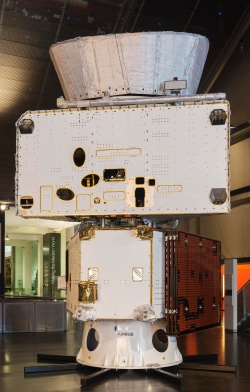
This Week in London – Celebrating St Patrick’s Day; Special Forces at the National Army Museum; and, three times Tacita Dean…

Londoners are celebrating St Patrick’s Day with events taking place across the city over this weekend. They include a series of specially commissioned walking tours focusing on London’s Irish history, Irish poets and musicians busking at Underground stations, and a series of open air gigs featuring Irish women artists at Camden Market on Saturday. Cinemas in the West End, meanwhile, are showing Irish films in connection with the weekend while exhibitions to mark the event include #IamIrish, a celebration of mixed race Irish people by artist Lorraine Maher featuring the work of photographer Tracey Anderson, which runs at London City Hall until 13th April. On Sunday, the culmination of the festive weekend, a procession featuring Irish marching bands and dance troupes kicks off at noon from Green Park while in Trafalgar Square there will be a series of stage performances – including a tribute to Dolores O’Riordan, the Cranberries frontwoman who died in London earlier this year – as well as a special zone for families and an Irish street for market. For the full programme of events, head to www.london.gov.uk/stpatricks. PICTURE: A St Patrick’s Day celebration in years past. (Garry Knight (licensed under CC BY 2.o))

The work of the UK’s Special Forces are the subject of the first major exhibition at the National Army Museum in Chelsea since it reopened in March last year. Special Forces: In the Shadows examines of the history of the Special Forces from its creation during World War II up until today and looks at the unique role each of the six units – the Special Air Service (SAS), Special Boat Service (SBS), Special Forces Support Group (SFSG), Special Reconnaissance Regiment (SRR), 18 (UKSF) Signals Regiment – play in security and military operations. Among objects on show in the exhibition’s seven distinct areas are a compass that Paddy Mayne wrenched from an enemy plane cockpit and a complete SAS Counter Terrorist Kit from 2007 as well as personal testimonies, video and photography. There’s also interactive exhibits to help visitors understand the challenges soldiers in the field face. Admission charge applies. Runs until 18th November. For more, see www.nam.ac.uk.

Two exhibitions celebrating the work of British-European artist Tacita Dean have opened this week. Tacita Dean: PORTRAIT at the National Portrait Gallery focuses on portraiture primarily through the medium of 16mm film and, the first in the gallery’s history to be devoted to the medium of film, features works including the six screen installation from 2008, Merce Cunningham performs STILLNESS…, as well as Dean’s film of Claes Oldenburg, Manhattan Mouse Museum and a film diptych of Julie Mehretu, GDGDA – all seen in the UK for the first time. Meanwhile Tacita Dean: STILL LIFE has opened at the neighbouring National Gallery and features a selection of the gallery’s works curated by Dean as well as some by the artist herself and her contemporaries. There’s also a new film, Ideas for Sculpture in a Setting, made especially for the exhibition. A third exhibition on Dean will be held at the Royal Academy of Arts. For more, see www.npg.org.ukwww.nationalgallery.org.uk and www.royalacademy.org.uk.

Send all items for inclusion to exploringlondon@gmail.com.
This Week in London – Picasso’s 1932; Bobby Moore’s family photos; and, Ghika, Craxton and Leigh Fermor celebrated…

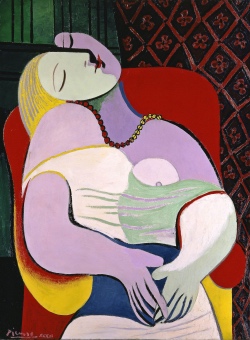
Tate Modern is staging its first ever solo exhibition of Pablo Picasso’s work with a focus on the pivotal year of 1932, described as the artist’s ‘year of wonders’. The EY Exhibition: Picasso 1932 – Love, Fame, Tragedy takes visitors on a month-by-month journey through the year with more than 100 paintings, sculptures and works on paper. Highlights include Nude Woman in a Red Armchair, a key painting in the Tate’s collection, 13 seminal ink drawings of the Crucifixion, Girl before a Mirror and The Dream (pictured) as well as Nude, Green Leaves and Bust, Nude in a Black Armchair and The Mirror. During organised in collaboration with the Musée National-Picasso, Paris, the exhibition runs until 9th September in the Eyal Ofer Galleries. For more, see www.tate.org.uk. PICTURE: Le Reve (The Dream), 1932, Private Collection, © Succession Picasso/DACS London 2018.

Family photographs of footballer Bobby Moore – who in 1966 famously captained the only English team to win the World Cup – can be seen in a new display which has opened at the National Portrait Gallery to mark this summer’s FIFA World Cup tournament. Bobby Moore: First Gentleman of English Football features a series of portraits, with the earliest dating from 1962, and including a striking image of Moore (1941-93) winning the ball from George Best during a match against Northern Ireland in 1964 as well as images of Moore relaxing off the pitch, and with his children Roberta and Dean. The free display can be seen in Room 32 until next January. For more, see www.npg.org.uk.

The influence of modern Greece upon and the enduring friendships between Greek painter Niko Ghika, British painter John Craxton and British writer, Sir Patrick Leigh Fermor are the subject of a new exhibition at the British Museum. Charmed lives in Greece: Ghika, Craxton, Leigh Fermor brings together their artworks, photographs, letters and personal possessions as it explores how their close friendship – which commenced at the end of World War II after which all three spent much of their subsequent lives in Greece – influenced their artistic output. Highlights include Ghika’s Black Sun and Craxton’s Still Life with Three Sailors as well as Craxton’s original artwork for the book covers of Leigh Fermor’s travel classics, A Time of Gifts and Between the Woods and the Water. Many of the artworks and objects on show are on loan from the Benaki Museum in Greece, to which Ghika bequeathed his house and works. Runs in Room 5 until 15th July. Admission is free. For more, see www.britishmuseum.org.

Send all items for inclusion to exploringlondon@gmail.com.
This Week in London – Victorian portraits; celebrating life at the Tate; Haiti’s slave revolution; and, saving paintings during wartime…

Portraits by four of the most celebrated figures in early art photography – Lewis Carroll, Julia Margaret Cameron, Oscar Rejlander and Clementine Hawarden – have gone on show in a new exhibition which opened at the National Portrait Gallery today. Victorian Giants: The Birth of Art Photography is the first exhibition in London to feature the work of Swede Rejlander since his death and includes the finest surviving print of his famous work Two Ways of Life (1856-57) which used his pioneering technique to combine several different negatives in creating a single final image. Also on show is an album of Rejlander’s photographs purchased by the gallery after it was prohibited from being sold outside of the UK in 2015 and works by Lewis Carroll depicting his famous muse Alice Liddell including lesser known photographs taken when she was a woman. Alfred, Lord Tennyson, Charles Darwin and actress Ellen Terry are among the subjects shown in the exhibition which runs until 20th May. Admission charge applies. For more, see www.npg.ork.uk/victoriangiants. PICTURE: Mountain Nymph, Sweet Liberty by Julia Margaret Cameron, 1866. © Wilson Centre for Photography 

A Francis Bacon portrait of Lucian Freud is being shown for the first time since 1965 in a new exhibition at Tate Britain celebrating human life in painted works. All Too Human: Bacon, Freud and a Century of Painting Life features around 100 works by artists including Walter Sickert, Stanley Spencer, Michael Andrews, Frank Auerbach, RB Kitaj, Leon Kossoff, Paula Rego, Jenny Saville, Lynette Yiadom-Boakye and others, as well as groups of major and rarely seen works by Freud and Bacon. Among the works by the latter are Freud’s Frank Auerbach (1975-76) and Sleeping by the Lion Carpet (1996) and Bacon’s Portrait of Isabel Rawsthorne (1966) and Study After Velazquez (1950). Runs until 27th August. Admission charge applies. For more, see www.tate.org.uk.

The legacy of the world’s first slave revolution – the Haitian Revolution – is explored in an exhibition at The British Museum. A revolutionary legacy: Haiti and Toussaint Louverture charts how the revolution led to the abolition of slavery and the formation of Haiti as an independent republic in 1804 and features a selection of objects commemorating the man who emerged as the revolution’s foremost leader, Toussaint Louverture. Among them is a screenprint, specially acquired for this exhibition, showing Louverture in military uniform by the African American artist Jacob Lawrence. There’s also a Haitian Vodou boula drum dating from the early 1900s, a Haitian banknote commemorating the nation’s bicentenary in 2004, a Senegalese coin commemorating the abolition of slavery and the cover of CLR James’ account of the revolution, Black Jacobins, written in 1938 and reissued during the civil rights movement in 1963. Haitian-born poet Gina Ulysee will perform a specially commissioned work which responds to the display on 16th March. Part of The Asahi Shimbun Displays, it runs until 22nd April in Room 3. Free entry. For more, including associated events, see www.britishmuseum.org.

A series of photographs recalling the removal of The National Gallery’s paintings to a disused slate mine in Snowdonia during World War II will go on show at the gallery on Monday. The 24 images document the dispersal of the paintings to Manod with five additional images by photographer Robin Friend showing the quarry as it looks today. There’s also a 30 minute film directed by Friend, Winged Bull in the Elephant Case, which follows the journey of a National Gallery painting that has taken human form as it tries to save its friends and get back to London (it can be seen on Saturday on BBC2 at 10pm). The free display – Manod: The Nation’s Treasure Caves – can be found in the Annenberg Court until 8th April. For more, see www.nationalgallery.org.uk.

Send all items for inclusion to exploringlondon@gmail.com.
 

This Week in London – ‘Old Flo’ on show; Peter Pan in the Docklands; and hurry to see Winnie-the-Pooh…

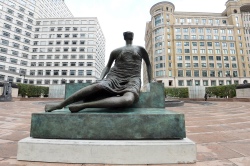
A new exhibition charting the history of Henry Moore’s sculpture, Draped Seated Woman (known affectionately as Old Flo), has opened at Canary Wharf. Indomitable Spirit features traces the creation of the 2.5 metre high bronze sculpture in 1957-58, its placement in 1962 on the Stafford Estate in Stepney, and, in 1997, its removal to the Yorkshire Sculpture Park where it has spent the last 20 years before returning to the East End – this time Cabot Square – last year.  It also explores the artist’s life, career and legacy and the reasons as to why Old Flo – part of an edition of six sculptures – became such an important feature in the East End. The exhibition can be seen in the lobby of One Canada Square until 6th April. Admission is free. For more, see www.canarywharf.com. PICTURE: Henry Moore’s ‘Draped Seated Woman’, Canary Wharf.

The first of two Peter Pan-themed weekends kicks off at the Museum of London Docklands this Saturday. Adventures in Peter Pan’s Neverland features a series of interactive events film screenings and performances across the weekend with professional character actors leading workshops and re-enacting short scenes from the story. There will also be “sightings” of Captain Hook’s pirates and other characters and two screenings of the classic animated film Peter Pan each day. Money will be raised for Great Ormond Street Hospital Children’s Charity through donations on ticket sales and other fundraising activities during the event. Runs from 10.45am to 4pm this Saturday and Sunday and again on 3rd and 4th March. Tickets start at £4. For more, see www.museumoflondon.org.uk.

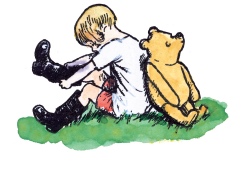
On Now: Winner-the-Pooh: Exploring a Classic. This exhibition at the V&A, which is closing on 8th April, features original drawings by EH Shepard – on show in the UK for the first time – created to illustrate AA Milne’s classic tale and, as well as examining Milne’s story-telling techniques and Shepard’s illustrative style, takes a look at the real people, relationships and inspirations behind the bear’s creation. Around 230 objects are featured in the display and as well as original manuscripts, illustrations, proofs and early editions, they include letters, photographs, cartoons, ceramics, fashion and video and audio clips, with the latter including a 1929 recording of Milne reading Winnie-the-Pooh). Other highlights include Milne’s Winnie-the-Pooh manuscript and pages from the manuscript of House at Pooh Corner as well as Shepard’s first character portraits of Winnie and Christopher Robin nursery tea set which was presented to then-Princess Elizabeth in 1928. Admission charge applies. For more see, www.vam.ac.uk/winniethepooh. PICTURE: Line block print, hand coloured by E.H. Shepard, 1970, © Egmont, reproduced with permission from the Shepard Trust

Send all items for inclusion to exploringlondon@gmail.com.
This Week in London – Chinese New Year, and, David Milne at Dulwich

• London’s Chinatown will come alive this Sunday to mark the Year of the Dog. The biggest Chinese New Year celebrations outside of Asia feature a parade – which kicks off at 10am with a dragon and lion dance in Charing Cross Road before making its way through Chinatown where between noon and 6pm people get up close to lion dances,  take selfies with Chinese zodiac animals and enjoy traditional Chinese food. Festivities in Trafalgar Square, meanwhile, kick off at 11am with the Lions’ Eye-Dotting Ceremony at noon while there’s entertainment including live performances, family-friendly entertainments and martial arts displays at a series of West End locations including Charing Cross Road, Leicester Square, Shaftesbury Avenue between noon and 5pm. For more, check out the Visit London guide. Meanwhile the Museum of London Docklands is also celebrating the Year of the Dog with a range of free cultural events on Friday (the actual date of the New Year) including everything from ribbon dancing classes to taekwondo taster lessons, calligraphy and a spectacular dragon dance. For more, see www.museumoflondon.org.uk/museum-london-docklands. PICTURE: Paul (licensed under CC BY 2.0)

The works of one of Canada’s greatest modernist painters, David Milne (1882-1953), have gone on show at the Dulwich Picture Gallery. David Milne: Modern Painting follows Milne’s career chronologically, charting his development as an artist as he moves from New York to the war ravaged landscapes of Europe and back to the fields and open skies of North America. Highlights include Fifth Avenue, Easter Sunday (1912), the watercolour Bishop’s Pond (1916), Montreal Crater, Vimy Ridge (1919) – one of his most famous war paintings, White, the Waterfall (1921) and Summer Colours (1936). Runs until 7th May. Admission charges apply. For more, see www.dulwichpicturegallery.org.uk.

Send all inclusions to exploringlondon@gmail.com.

This Week in London – Votes for Women! and, Thai orchids…

A portrait slashed with a butcher’s cleaver by a suffragette in the National Portrait Gallery has gone back on display for the first time in more than 20 years. The portrait of gallery founder Thomas Carlyle, painted by Sir John Everett Millais, was attacked by Anne Hunt in July, 1914, after Suffragette leader Emmeline Pankhurst was rearrested. Hunt later said that the painting would be “of added value and of great historical importance because it has been honoured by the attention of a Militant”. The portrait has gone on display to coincide with the opening of the Votes for Women! exhibition which features objects including a document issued by Scotland Yard to the gallery following another attack by suffragette – this time by Mary Richardson on a Velázquez painting, The Rokeby Venus (The Toilet of Venus) – in March, 1914, along with a sheet of identity photographs police gave to the gallery featuring images of women serving sentences in Holloway and Manchester prisons, a selection of the gallery’s collection of postcards produced by women’s suffrage organisations, portraits of the Pankhurst sisters and a rarely seen painting of women’s suffrage movement figures Millicent Garrett Fawcett and her husband Henry Fawcett by Ford Madox Ford (Millicent this year becomes the first woman to have a statue in Parliament Square). Votes for Women! – part of the gallery’s year-long Rebel Women season – can be seen in Room 33, Floor 1, until 13th May. Admission is free. There’s also a complementary showcase display highlighting Victorian pioneers of the women’s suffrage movement – Votes for Women: Pioneers – in Room 25. For more on the Rebel Women season, see  www.npg.org.uk/rebelwomen. PICTURE: Emery Walker’s photograph of damage to the portrait of Thomas Carlyle by Sir John Everett Millais (1877) © National Portrait Gallery, London.

Kew Gardens’ 23rd Orchids Festival  – the first to be inspired by Thailand, home to 1,100 species of the plant – kicks off on Saturday. Held inside the Princess of Wales Conservatory, the festival features an orchid ‘palace’, a traditional Thai market boat and rice paddy and a special Thai cart on loan from the Royal Thai Embassy in London. The festival – which runs until 11th March – centres on a series of weekends featuring special food, live Thai music and talks and walks, the latter including drop-in guided walks of the floral displays. There’s also special activities at half term and a number of ‘after hours’ events which feature traditional dance performances, cooking tips, Thai-inspired cocktails and massage treatments. For more, see www.kew.org.

Send all items for inclusion to exploringlondon@gmail.com.
This Week in London – Suffragette stories, and, recalling the “golden age” of ocean liners…

Untold stories of suffragettes are uncovered in a new display at the Museum of London marking the centenary of women’s suffrage. Votes for Women tells the story of the likes of Emily ‘Kitty’ Willoughby Marshall – arrested six times and imprisoned three times in Holloway including once for throwing a potato at the resident of then-Home Secretary Winston Churchill, Winefride Mary Rix – sentenced to two months hard labour for smashing a window at the War Office, and Janie Terrero – a suffragist since the age of 18 who was imprisoned in Holloway for four months for window smashing during which time she twice went on a hunger strike and was force-fed. The objects on display include Emmeline Pankhurst’s iconic hunger strike medal, a pendant presented to suffragette Louise Eates on her release from prison, and a silver necklace commemorating Willoughby Marshall’s three prison terms. There’s also a newly commissioned film installation highlighting the individual commitment and courage of the lesser known suffragette women. The exhibition opens tomorrow and there’s a special family-friendly festival this weekend featuring interactive performances, workshops and special events. The exhibition Votes for Women runs until 6th January next year. For more, including the full programme of events, see www.museumoflondon.org.uk.

The golden age of ocean liners is recreated in a new exhibition opening at the V&A this Saturday. Ocean Liners: Speed & Style showcases more than 250 objects with highlights including a Cartier tiara recovered from the doomed Lusitania in 1915, a panel fragment from the Titanic‘s first class lounge, Goyard luggage owned by the Duke of Windsor dating from the 1940s, and Stanley Spencer’s painting The Riveters from his 1941 series Shipbuilding on the Clyde. Other artists, architects and designers whose work is featured in the display include Le Corbusier, Albert Gleizes, Charles Demuth and Eileen Gary. Among the “design stories” explored in the exhibition is that of Brunel’s Great Eastern along with Kronprinz Wilhelm, Titanic and its sister ship Olympic (all known for their Beaux-Arts interiors), the Art Deco Queen MaryNormandie and the Modernist SS United States and QE2. The display also features objects related to some of the ocean liner’s most famous passengers as well as the couturiers who saw ocean travel as a means of promoting their designs. These include a Christian Dior suit worn by Marlene Dietrich as she arrived in new York aboard the Queen Mary in 1950, a Lucien Lelong gown worn for the maiden voyage of the Normandie in 1935, and Jeanne Lanvin’s Salambo dress, which, as one of the most important flapper dresses in the V&A collection, once belonged to wealthy American Emilie Grigsby who regularly travelled between the UK and New York aboard the Aquitania, Olympic and Lusitania in the 1910s and 1920s. Runs until 10th June. Admission charge applies. For more, see www.vam.ac.uk/oceanliners.

PICTURE: Titanic in dry dock, c1911, Getty_Images (Courtesy Victoria & Albert Museum).

Send all items for inclusion to exploringlondon@gmail.com.
This Week in London – Lumiere London, and London’s future imagined…

The annual festival of illumination known as Lumiere London returns to the capital for a second time from tonight with more than 50 installations lighting up streets, buildings and public spaces. London’s largest night-time festival, installations in this year’s free event – commissioned by the Mayor of London and produced by arts charity Artichoke – are clustered around six areas: King’s Cross, Fitzrovia, the West End, Mayfair, Westminster and Victoria, and South Bank and Waterloo. The installations include Lampounette – located in King’s Cross, it features giant office desk lamps, Entre les rangs – a field of thousands of flower-like reflectors in Lewis Cubitt Park, Nightlife – a luminous secret garden in Leicester Square which plays with the relationship between wild spaces and urban city life and spills out to include illuminated flamingoes flying over Chinatown, and Northern Lights – a recreation of the aurora borealis in Grosvenor Square, Mayfair. The facade of Westminster Abbey is also among the buildings to be lit up with artist Patrice Warrener commissioned to illuminate the Abbey’s West Towers and Great North Door with his work, The Light of the Spirit. There’s a free app to download and a map can be purchased online for download. For more, include a complete programme, head to www.visitlondon.com/lumiere. PICTURE: Westminster Abbey during Lumiere London last year (Paula Funnell/licensed under CC BY-NC-ND 2.0).

London’s future built form is up for discussion at a new exhibition opening at the Museum of London tomorrow. London Visions: Hypothetical scenarios of a future presents hypothetical concepts created by leading artists, architects and designers using video installations, architectural narratives and video games. Among the key works on display are: Flooded London – a series of images created by Squint/Opera depicting imaginary scenes of London in 2090 when rising seas have flooded the city; In the Robot Skies: A Drone Love Story – the world’s first narrative shot entirely by autonomous drones operating on autopilot, the film – directed by speculative architect Liam Young and written by Tim Maughan – looks at the possible future use of drones within London council estates; and, Endless Vertical City – a competition-winning design by SURE Architecture which envisions a skyscraper that could house the whole of London. The free display is on show until 15th April as part of City Now City Future, the year-long season of events exploring urban evolution in London and around the world. For more, see www.museumoflondon.org.uk/citynowcityfuture.

Send all items for inclusion to exploringlondon@gmail.com.
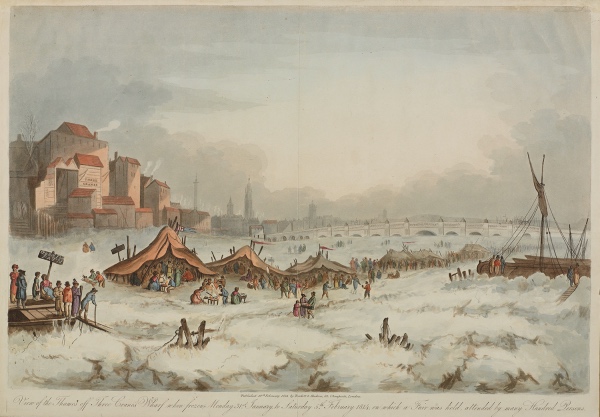
This Week in London – China and South Asia gallery reopens at British Museum; Historic US letters on show at Heritage Gallery; and, two new works for Tate’s Tanks…

The renovated Sir Joseph Hotung Gallery of China and South Asia has reopened at the British Museum, bringing the displays for China and South Asia up-to-date. The gallery presents the histories of China from 5000BC to the present with objects on show including Ming dynasty dragon tiles and the earliest scroll to reach Britain (it arrived at the end of the 18th century). The South Asia exhibition, meanwhile, includes a new display covering the Mughal period, the Rajput rulers, India under British rule and the region since independence in 1947. Featured objects include the stone sculptures from the Buddhist shrine at Amaravati and newly acquired works of art including a 6th century sculpture of Lakshmi from Kashmir. Entry to the gallery in Room 33 is free. For more, see www.britishmuseum.org. PICTURE: Courtesy of British Museum.

Historic letters sent between the City of London and the United States of America during the American War of Independence have gone on show at the City of London’s Heritage Gallery within the Guildhall Art Gallery. The letters include some authored by notable Americans John Hancock and Isaac Roosevelt, written at a time when, in defiance of the British Government, the City championed the cause of the colonists. Also on show are documents relating to the life and work of Elizabeth Garrett Anderson – the first women to qualify as a surgeon and physician in Britain and to serve as a magistrate and mayor – and, in a nod to the approaching centenary of the Royal Air Force, a display on the career of World War II pilot Cy Grant. The documents, which are all drawn from the collection of the London Metropolitan Archives, can be seen until 18th April. For more, follow this link.

Two major new works have been opened in the Tanks at the Tate Modern. Emeka Ogboh’s, The Way Earthly Things Are Going 2017 – on display for the first time in the UK after debuting in Athens – fills the subterranean East Tank in the Blavatnik Building while Indian artist Amar Kanwar’s The Lightning Testimonies 2007 can be seen in the South Tank. Both works are on display until 4th February. For more, see www.tate.org.uk.

Send all items for inclusion to exploringlondon@gmail.com.
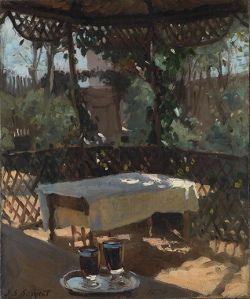
This Week in London – Dulwich’s ‘Moomin’ weekend; new Dutch and Fleming paintings at The National Gallery; and ‘Christmas Past’ at the Geffrye…

Dulwich Picture Gallery is hosting a ‘Moomin Winter Weekend’ in a celebration of its current exhibition featuring the works of Tove Jansson. The programme, which kicks of Friday night with a late opening, features storytellers and performers reading the Moomin stories, puppets from the Polka Theatre’s 2014 production Moominsummer Madness, a live performance by the Freshwater Theatre Company exploring the life and work of Jansson, and Moomin-inspired food and drink. Admission charges apply. For more information, see www.dulwichpicturegallery.org.uk.

Four 17th and early 18th century Dutch and Flemish paintings have gone on show at The National Gallery, thanks to a bequest from the late Dutch-born collector Willem Baron van Dedem. The works include David Teniers the Younger’s Christ crowned with Thorns  (1641), Jan van Kessel the Elder’s Butterflies, Moths and Insects with Sprays of Common Hawthorn and Forget-Me-Not, and Butterflies and Moths and Insects with Sprays of Creeping Thistle and Borage (both 1654, they represent the first of van Kessel the Elder’s works in the gallery’s collection), along with Still Life with a Bowl of Strawberries, a Spray of Gooseberries, Asparagus and a Plum by Adriaen Coorte (1703). They have gone on show in Room 26. For more on the gallery, see www.nationalgallery.org.uk.

On Now – Christmas Past at the Geffrye Museum. The Shoreditch-based ‘Museum of the Home’ is once again running its annual look at how Christmas has been celebrated in English homes over the past 400 years. There’s also a range of accompanying events including fairs, late nights, carol concerts, and decoration and greenery workshops as well as seasonal food and drink. Runs until 7th January. Meanwhile, on 6th and 7th January, the museum will host a special weekend closing party as the doors shut for two years while it undergoes a transformational redevelopment. For more, see www.geffrye-museum.org.uk.

Send all items for inclusion to exploringlondon@gmail.com.
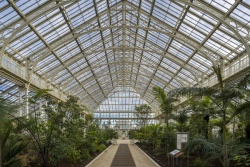
10 subterranean sites in London – 8. Priory of St John of Jerusalem church crypt…


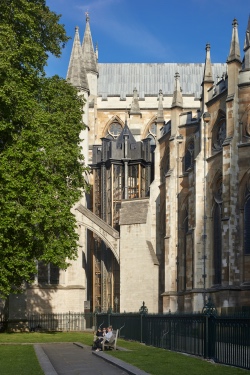
More correctly known as the crypt of the Priory of the Order of St John of Jerusalem, this subterranean chamber dates from the 12th century and is the oldest surviving part of what remains of the priory.

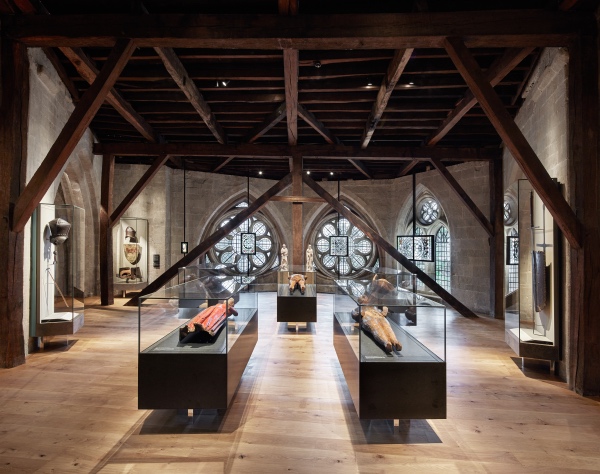
Based close to St John’s Gate in Clerkenwell – another surviving section of the monastery, the partly Romanesque crypt features some magnificent 16th century monuments including the rather skeletal-looking funeral effigy of the last prior, Sir William Weston, who apparently died on the very day the priory was dissolved in May, 1540 (he apparently collapsed on hearing the news).

The crypt also contains a 16th century tomb effigy (pictured below) believed to be that of Don Juan Ruiz de Vergara, a Castilian Knight Hospitaller who died fighting the Turks at sea off the coast of Marseilles (it had apparently formerly been located in Valladolid Cathedral in Spain and was donated by a member of the order (and first Keeper of the London Museum, now known as the Museum of London), Sir Guy Francis Laking, in 1915). Understood to have been the work of Esteban Jordan, sculptor to King Philip II of Spain, the knight bears the eight pointed star of the order on his breastplate.

Meanwhile, the stained glass in the crypt chapel’s east lights depict the entombment of Christ as well as Raymond du Puy (Grand Master of the Order of St John from 1118–60), St John the Baptist and St Ubaldesca. Other stained glass windows in the chapel depict saints like St George, Andrew, Patrick and David and some of the English branch’s priors and knights.

Other items of interest in the crypt include a 13th century font, originally from a church in Buckinghamshire, and a stone fragment from the pavement of the Grotto of the Nativity at Bethlehem.

The priory once served as the English headquarters for Order of St John of Jerusalem, also known as the Knights Hospitaller. The order was founded in Jerusalem in 1080 to care for the sick and poor, and spread across Europe. The English ‘branch’ established on 10 acres just outside the City walls apparently by a knight, Jorden de Briset. It was dissolved, as we’ve already heard, in 1540.

WHERE: Crypt, St John’s Church, St John’s Lane, Clerkenwell (nearest Tube stations is Farringdon); WHEN: The crypt can only be visited on tours – public tours are held at 11am and 2.30pm on Tuesday, Friday and Saturday; COST: Free (a suggested £5 donation); WEBSITE: www.museumstjohn.org.uk.

This Week in London – The Royal Collection and Charles II; convicts lives explored; and, ‘Gold’ at the National Gallery…

A new exhibition celebrating the role of the court of King Charles II in promoting the arts in England has opened at The Queen’s Gallery in Buckingham Palace. Charles II: Art and Power highlights the key role Charles II played in developing the Royal Collection following the Restoration in 1660 as a means of decorating royal apartments and, perhaps more importantly, of glorifying the restored monarchy and helping it to take its place back on the European stage. The display features works ranging from John Michael Wright’s monumental portrait of the king in coronation robes (pictured) to Henry Greenway’s silver-gilt dish that adorned the high altar of Westminster Abbey and Wenceslaus Hollar’s The Coronation of King Charles the II in Westminster Abby the 23 of April 1661. Other paintings on show include Titian’s Madonna and Child in a Landscape with Tobias and the Angel (c1535-40), Antonio Verrio’s The Sea Triumph of Charles II (c1674), Pieter Brugel the Elder’s The Massacre of the Innocents (c1565-67), and Sir Peter Lely’s Barbara Villiers, Duchess of Cleveland (c 1665) as well as tapestries and silver-gilt furnishings. The exhibition, which will be accompanied by a major exhibition in the Royal Academy of Arts in January and a series of documentaries on various BBC channels under the banner of a BBC Royal Collection Season, runs until 13th May. Admission charge applies. For more, see www.royalcollection.org.uk. PICTURE: John Michael Wright, Charles II, c.1676 Royal Collection Trust/© Her Majesty Queen Elizabeth II 2017.

The lives of convicts in 18th and 19th century London are the subject of a new exhibition opening at the London Metropolitan Archives. Criminal Lives, 1780-1925: Punishing Old Bailey Convicts includes original documents from the Old Bailey archives and items such as a policeman’s truncheon, a reproduction Millbank Prison uniform and convicts’ photographs drawn from collections in Britain and Australia to provide insights into the lives of offenders, from the time of the Gordan Riots in 1760 to the early 20th century. Among those whose lives are featured are prostitute and pickpocket Charlotte Walker, notorious receiver of stolen goods Ikey Solomons and serial thief Thomas Limpus. The exhibition, created in collaboration with the Arts and Humanities Research Council Digital Panopticon Project, opens on Monday and runs until 16th May. Admission is free. There is an accompanying programme of events. For more, see www.cityoflondon.gov.uk/lma.

The National Gallery is running a season of events aimed at exploring the theme of ‘gold’ in its collection in the run-up to Christmas. Running until 1st January, the programme includes free lunchtime talks, a life drawing session this Friday, a workshop on the traditional intaglio printmaking technique of drypoint, drawing sessions and a series of films. For the full season of events, check out www.nationalgallery.org.uk/whats-on/christmas-at-the-gallery/christmas-events.

Send all items for inclusion to exploringlondon@gmail.com.
This Week in London – ‘It’s beginning to look a lot like Christmas’…

Christmas is looming and that means Christmas themed events are kicking off all over the city. Here’s a sample of what’s happening:

The world famous Trafalgar Square Christmas Tree will be lit next Thursday – 7th December – in an event that kicks off at 6pm. The 25 metre high tree is an annual gift from the people of Norway as a thank you for Britain’s support during World War II. Christmas carols will kick off in the square on 11th December while the Mayor’s Christmas Carol Service will be held in Southwark Cathedral on 18th December. For more, see www.london.gov.uk/events.

Sounds Like Christmas at the V&A. A month long musical celebration across the museum’s South Kensington and Museum of Childhood sites, it features choirs, candlelit concerts, pop-up performances, film screenings, decoration-making workshops, and special installations of objects relating to the music of Christmas, as well as, at the grand entrance to the South Kensington site, ‘The Singing Tree’ (pictured). A project conceived by leading stage designer Es Devlin, the tree features digital word projections that create a poem and comes with a layered polyphonic soundscape of human and machine-generated voices. The season runs until 6th January. For the full programme, see www.vam.ac.uk/Christmas. PICTURE: © Victoria and Albert Museum, London.

Greenwich Winter Time Festival. The inaugural festival, set in the grounds of the World Heritage-listed Old Royal Naval College, kicks off in December and features an alternative to the traditional seasonal market as well as a covered ice rink, entertainment including live music, theatre and children’s shows, and an “authentic” Father Christmas experience. Admission charge applies. Runs until 31st December. For more, see www.ornc.org.

Christmas at the Historic Royal Palaces. As well as its ice rink, Hampton Court Palace is hosting the BBC Good Food’s Festive Feast and a Christmas Music Weekend while at the Tower of London, visitors can once again skate in the dry moat, join in medieval Christmas festivities and enjoy a treat for their ears with the Noel Noel concert in the Chapel of St Peter ad Vincula. Kensington Palace, meanwhile, is hosting Christmas festivities under a Victorian theme with a 25 foot tall Christmas tree, a display of illuminated Victorian scenes, live music performances and family friendly events including ‘Under the Christmas Tree’, ‘Funtastic Sunday’, and ‘Tasty Talks’. Check website for dates – admission prices apply. See www.hrp.org.uk for more.

Meanwhile, the final release of New Year’s Eve tickets goes on sale tomorrow (Friday) from noon. People can buy up to four tickets, priced at £10 each to be among the 100,000 spectators lining the banks of the River Thames. Those without a ticket can still watch it live on BBC One. Head to www.london.gov.uk/nye for tickets.

Send all items for inclusion to exploringlondon@gmail.com.

This Week in London – Uncovering the history of the West India Regiments; Blue Plaques for Francis Bacon and Sister Nivedita; and, Finnish artist Akseli Gallen-Kallela…

Soldiers of African and Caribbean descent who fought for the British Empire in the 19th century as part of the West India Regiments are the subject of a new display at the Museum of London Docklands. Fighting for Empire: From Slavery to Military Service in the West India Regiments focuses particularly on the story of Private Samuel Hodge, the first soldier of African-Caribbean descent to receive the Victoria Cross, Britain’s highest military honour. Central to the display in the museum’s ‘London, Sugar & Slavery’ gallery, is Louis William Desanges’ painting, The Capture of the Tubabakolong, Gambia 1866 (pictured above), which gives greater prevalence to the British commanding officer Colonel George D’Arcy than to Hodge and which was never displayed with Desanges’ other military paintings in the Victoria Cross Gallery at the Crystal Palace in the 1870s. The exhibition also includes prints, ephemera and maps. Runs until 9th September next year. Admission is free. Meanwhile, this weekend the museum is hosting a Maritime Music Festival celebrating the Docklands’ proud maritime heritage. The festival offers the opportunity to try your hand at a poetry rhyming session, learn knot tying skills and listen to sea shanty crews performing. The festival runs from noon to 4pm on Saturday and Sunday. Entry is free. For more, see www.museumoflondon.org.uk/docklands.

An English Heritage Blue Plaque has been unveiled at the former South Kensington home of artist Francis Bacon. Bacon moved to the converted Victorian coach house at 7 Reece Mews in 1961. He kept a studio on the first floor and lived at the property, described as “insanely eccentric”, until his death in 1992. Among significant works he completed there was his first large-scale triptych, Three Studies for a Crucifixion, in 1962 as well as portraits including his 1966 work Portrait of George Dyer Talking. Six years after Bacon’s death in 1992, his studio and its entire contents – including the walls, doors, floor and ceiling – were removed and recreated in The Hugh Lane Gallery in the city of his birth, Dublin. The property is today in the care of  The Estate of Francis Bacon. Meanwhile, another Blue Plaque was unveiled this week, this time commemorating Sister Nivedita. She was one of the most influential female figures in India, an Indian independence campaigner and someone who helped introduce Hindu philosophies to a western audience. The plaque can be found at 21A High Street in Wimbledon, where Nivedita stayed with Swami Vivekananda in 1899. For more on Blue Plaques, see www.english-heritage.org.uk/visit/blue-plaques/.

The first UK exhibition dedicated to the works Finnish artist Akseli Gallen-Kallela has opened at The National Gallery. Lake Keitele: A Vision of Finland centres on the work titled Lake Keitele which, acquired by the gallery in 1999, is one of four versions, all of which have been reunited for the first time in the UK in this display. They are some of the dozen or so works in the exhibition which spans 30 years of Gallen-Kallela’s career. The free show, which can be seen in Room 1 until 4th February, marks the centenary of Finland’s independence. For more, see www.nationalgallery.org.uk.

Send all items for inclusion to exploringlondon@gmail.com

This Week in London – The Lord Mayor’s Show; Cézanne’s portraits; venom and its uses; and, Russia’s visual revolution…

The Lord Mayor’s Show takes place this Saturday as the new Lord Mayor of London, Charles Bowman, takes office with the event once again culminating in a spectacular fireworks display over the Thames. The Lord Mayor will arrive in the City at 9am via a flotilla which includes the QRB Gloriana and other traditional Thames barges. Riding in the splendid State Coach, the Lord Mayor then joins in the world famous procession which sets off from Mansion House at 11am, pausing at the Royal Courts where he swears allegiance to the monarch before returning via Victoria Embankment at 1pm. The fireworks display will start at 5.15pm from a barge moored between Blackfriars and Waterloo Bridges. For more details, head to https://lordmayorsshow.london. Meanwhile, on Sunday, annual Remembrance Sunday services will be held around the country centred on the Cenotaph in Whitehall where, in a break with tradition, Prince Charles is expected to lay a wreath on behalf of the Queen who, along with Prince Philip, will be watching from the balcony of the Foreign and Commonwealth Office building.

More than 50 portraits by Paul Cézanne have gone on show in a landmark exhibition at the National Portrait Gallery. Cézanne Portraits features works previously unseen in the UK including three self-portraits – one of which is Self Portrait in a Bowler Hat (1885-86) –  and two portraits of his wife –  Madame Cézanne Sewing (1877) and Madame Cézanne (1886–7) – as well as Boy in a Red Waistcoat (1888-90) and Madame Cézanne in a Yellow Chair, both of which haven’t been seen in London since the 1930s. The exhibition, which includes paintings spanning the period from the 1860s until shortly before Cézanne’s death in 1906, explores the special pictorial and thematic characteristics of the artist’s portraiture work such as his use of complementary pairs and his creation of multiple versions of works featuring the same subject. The exhibition, which has already been on show at the Musée d’Orsay and will be at the National Gallery of Art in Washington DC from late March next year, runs until 11th February. Admission charge applies. For more, see www.npg.org.uk. PICTURE: Self-Portrait with Bowler Hat by Paul Cézanne, 1885-6, © Private Collection 

The use of venom as the ultimate natural weapon is the subject of a new exhibition opening at the Natural History Museum on Friday. Venom: Killer and Cure explores how the use and effects of venom, the different biological roles it plays and how humans have attempted to harness and neutralise its power, with the former including some remarkable medical innovations. Specimens on show include everything from snakes to spiders, wasps, scorpions and the duck-billed platypus as well as live example of a venomous creature. Highlights include a gaboon viper head – a snake species with the largest known venom fangs, an emperor scorpion which engages in unusual mating behaviour known as “sexual stingings”, a flower urchin which can inject venom that causes muscular paralysis in humans for up to six hours, a tarantula hawk wasp which has one of the most painful venomous stings, and a box jellyfish, larger specimens of which can cause death in humans in two to five minutes. Admission charge applies. For more, see www.nhm.ac.uk.

Coinciding with the centenary of the Russian Revolution comes a new exhibition at the Tate Modern which offers a visual history of Russia and the Soviet Union. Red Star Over Russia: A Revolution in Visual Culture 1905-55 is based around the collection of late graphic designer David King (1943-2016) and charts how seismic events such as the overthrow of the last Tsar, the revolutionary risings of 1917 and Stalin’s campaign of terror inspired a wave of art and graphic design across the country. The display includes more than 250 posters, paintings, photographs, books and other ephemera by artists such as El Lissitzky, Aleksandr Rodchenko and Nina Vatolina. Runs until 18th February. Admission charge applies. For more, see www.tate.org.uk.

Send all items for inclusion to exploringlondon@gmail.com.
This Week in London – Art since 9/11; Tove Jansson, Moomin creator; and, celebrating black and white…

The first major exhibition in the UK to consider artists’ responses to war and conflict since 9/11 opens at the Imperial War Museum in Lambeth today. Age of Terror: Art since 9/11 features 50 works of art including film, sculpture, painting, installations, photography and prints from more than 40 British and international contemporary artists including Ai Weiwei, Grayson Perry, Gerhard Richter, Jenny Holzer, Mona Hatoum, Alfredo Jaar, Coco Fusco and Jake & Dinos Chapman. The exhibition is presented around four key themes – artists’ direct or immediate responses to 9/11, issues of state surveillance and security, our relationship with firearms, bombs and drones, and the destruction caused by conflict on landscape, architecture and people. Highlights include Iván Navarro’s The Twin Towers (2011), Ai Weiwei’s Surveillance Camera with Marble Stand (2015), and James Bridle’s site-specific installation, Drone Shadow Predator, as well as Grayson Perry’s Dolls at Dungeness September 11th 2001 (2001) and, Jamal Penjweny’s photographic series, Saddam is Here (2009-2010). Runs until 28th May. Admission charge applies. For more, see www.iwm.org.uk/ageofterror.

The first UK retrospective of the work of famed 20th century Finnish illustrator Tove Jansson opened at the Dulwich Picture Gallery yesterday. Tove Jansson (1914-2001) celebrates the work of the artist known as the creator of the Moomin characters and books but also includes a wider looks at her graphic illustration work and paintings. It features 150 works including self-portraits, landscapes and still-lives never seen before in the UK and a series of Moomin drawings only discovered at the British Cartoon Archive this year. Organised in collaboration with the Ateneum Art Museum, the exhibition can be seen until 28th January. Admission charge applies. For more, see www.dulwichpicturegallery.org.uk. PICTURE: Tove Jansson, Sleeping in the Roots, 1930s, Moomin Museum, Tampere Art Museum Moominvalley Collection (Finnish National Gallery/Yehia Eweis).

Featuring 50 painted objects created over 700 years, a new exhibition at The National Gallery takes a “radical” look at what happens when artists cast aside the colour spectrum and focus on the power of black and white. Monochrome: Painting in Black and White features paintings and drawings by Old Masters like Jan van Eyck, Albrecht Durer and Rembrandt van Reign alongside works by contemporary artists such as Gerhard Richter, Chuck Close and Bridget Riley. Exhibition opens on Monday and runs until 18th February. Admission charge applies. For more, see www.nationalgallery.org.uk.

Send all items for inclusion to exploringlondon@gmail.com.