This Week in London – New gallery at Hampton Court; Northwest Passage explorers remembered; and, celebrating Churchill’s birthday…

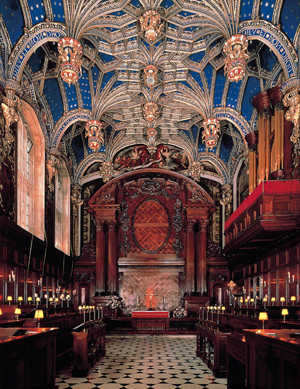
A new gallery opens today in the restored Cumberland Suite at Hampton Court Palace. The Gothic Revival suite of rooms, designed by William Kent for William Augustus, Duke of Cumberland and the youngest son of King George II, were the last major royal commission ever undertaken at the palace. They will now house a selection of the Royal Collection’s finest paintings including masterpieces by Holbein, Van Dyck, Rembrandt, Caravaggio, Bassano and Gainsborough. The restoration followed two years of research aimed at returning the rooms to a state which as closely as possible represents Kent’s original decorative scheme. One of the rooms – the duke’s large light closet – is being opened to the public for the first time in 25 years and will house 12 of Canaletto’s smaller Grand Canal views of Venice. Admission charge applies. For more, see www.hrp.org.uk/HamptonCourtPalace/.
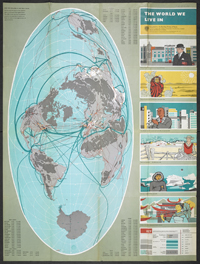
Map• The exploration of the Northwest Passage is the subject of a new exhibition which has opened at the British Library in King’s Cross. Lines in the Ice: Seeking the Northwest Passage looks back over 400 years with exhibits including King Charles II’s personal atlas, 19th century woodcut illustrations and wooden maps made by Inuit communities, and artefacts related to three of the most eminent explorer to seek out the Northwest Passage – Martin Frobisher, Sir John Franklin and Roald Amundsen, the first man to reach the South Pole. The exhibition has opened just weeks after the discovery of the HMS Erebus, one of Sir John Franklin’s lost ships. There’s a full programme of events to accompany the exhibition. Runs until 29th March. Admission is free. For more, see www.bl.uk. PICTURE: The world we live in, c. 1958, on display in Lines in the Ice. Courtesy of British Library.

Celebrate Winston Churchill’s birthday at a special after-hours event in the Churchill War Rooms in Whitehall next week. Advance booking is required to buy tickets for the event which will include a silent disco, drink tasting workshops and the chance to strike your best Churchill pose in a special photo booth. The event runs on the evening of 27th November. To book, head to www.iwm.org.uk/events/churchill-war-rooms/lates-at-churchill-war-rooms-churchill-s-birthday.

 Send all items for inclusion to exploringlondon@gmail.com.
10 of London’s World War I memorials – 10. Grave of the Unknown Warrior, Westminster Abbey…

In this, the final in our series looking at London’s World War I memorials, we’re taking a look at one of the city’s most visited monuments – the grave of the Unknown Warrior in Westminster Abbey.

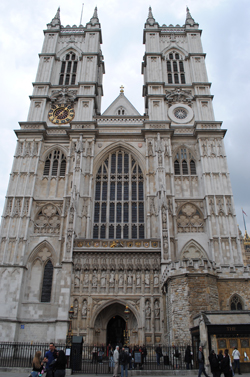
Located at the west end of the minster nave (pictured is the west front of the abbey inside of which lies the grave), the grave is that of a British soldier whose body was brought back from France and buried on the site on 11th November, 1920. The grave, which also contains soil brought from France, is covered by a slab of black marble from Belgium.

Westminster-Abbey2The slab bears an inscription written by Herbert Ryle, then dean of the abbey, which commemorates the “many multitudes” who died during World War I. “They buried him among the kings because he had done good toward God and toward his house”.

It is believed the idea for the memorial was that of a chaplain at the front during the war – Rev David Railton – who in 1916 saw a grave in northern France which featured a cross upon which was written, “An Unknown British Soldier”. He wrote to Ryle about what he’d seen and the idea for the new memorial slowly took shape – albeit with the initial misgivings of some including King George V.

Representing servicemen from the army, navy or air force from anywhere within Britain and its dominions who died in the war and have no other memorial or known grave, the unidentified body which lies in the grave is believed to have been selected at random from among a number bodies of soldiers who died early in the war – accounts suggest they numbered either four or six – and which were exhumed from battle areas at the Aisne, the Somme, Arras and Ypres.

Covered with Union flags, the bodies were taken to a chapel at St Pol on 7th November, 1920, and one selected by Brigadier General LJ Wyatt, commander of troops in France and Flanders. 

The three remaining bodies were reburied while the selected remains were placed in two coffins, the outer one made of oak harvested from a tree which had grown at Hampton Court Palace. A 16th century crusader’s sword taken from the Tower of London’s collection was placed in the wrought iron bands of the coffin and it was then covered with a flag which Rev Railton had used as an altar cloth during the war (known as the Ypres or Padre’s Flag, it now hangs nearby in St George’s Chapel at the abbey).

The coffin was then transported on the destroyer HMS Verdun to Dover and then taken by train to Victoria Station before, on the morning of 11th November, it was placed on a gun carriage drawn by six black horses and transported through massive but silent crowds which lined the streets.

Pausing at the Cenotaph in Whitehall, King George V unveiled the monument which represent an empty tomb (see our earlier post here) and placed a wreath on the coffin and then, followed by the king, other royal family members and dignitaries, it was taken to the abbey minster and lowered into the grave at a special service attended by the king, Queen Alexandra, the queens of Spain and Norway, and Prime Minister David Lloyd George and former Prime Minister HH (later Lord) Asquith (a recording made of some of the service – apparently conducted simultaneously with one at the Arc de Triomphe in Paris – became the first ever electrical recording to be sold to the public).

Thousands of mourners paid their respects at the open grave before the grave was filled in and covered with temporary stone on 18th November. The marble stone which now stands there was unveiled at a special service on 11th November the following year. A framed US Congressional Medal of Honor, conferred by General John J Pershing on the unknown warrior on 17th October, 1921, hangs from a pillar nearby.

WHERE: Westminster Abbey, Westminster (nearest Tube station is Westminster or St James’s Park); WHEN: Generally open to tourists everyday except Sunday  (times vary so check the website); COST: £18 an adult/£15 concessions/£8 schoolchildren (11-18 years), free for children aged under 11/£44 for a family (two adults, two children); WEBSITE: www.westminster-abbey.org.

This Week in London – Prepare to celebrate the Thames; Auerback on show at the Tate; and, Jan van Huysum at Dulwich…

London’s month long celebration of the River Thames kicks off on Monday with a 30 day programme of events ranging from regattas and river races to foreshore archaeology, arts, music and community festivals and environmental and educational activities. Highlights of Totally Thames include the Mayor’s Thames Festival, which runs all month and includes new art, films and performances on the riverside as well as beach combing, bonfires, walks, talks and cruises, the Royal Greenwich Tall Ships Festival, which runs from 5th to 9th September and features the largest fleet of tall ships to visit London in 25 years, the Great River Race on 27th September which has attracted more than 300 crews from across the globe, Handel’s Fireworks Music and Illuminations taking place at Hampton Court Palace on 14th September and, taking place this weekend, The Big Thames Tidy, which sees water charity Thames21 hosting one of the biggest clean-ups the river has ever seen. We’ll be mentioning events in more details as the month unfolds. To see the full programme of events, head to www.totallythames.org.

The most significant private collection of the paintings and drawings of Frank Auerbach – described as one of Britain’s “greatest living artists” – has gone on show at Tate Britain on Millbank. The works, which span the period from Auerbach’s student days in the late 1940s until 2007, were collected by the late artist Lucian Freud and hung in his London house until his death in 2011. They include portraits of Auerbach’s friends and relatives and landscapes of London. BP Spotlight – Frank Auerbach: Painting and Drawings from the Lucian Freud Estate is on display until 9th November. For more, see www.tate.org.uk.

• Now On: An Impossible Bouquet, Four Masterpieces by Jan van Huysum. This exhibition at the Dulwich Picture Gallery features works by the 18th century Dutch artist taken from private collections as well as the Dulwich’s own painting and is aimed at showcasing the “artist’s ingenuity and astonishing ability to paint flowers, fruit and insects with minute attention to detail”. The exhibition only has a month to go – it closes on 28th September. Admission charge applies. For more, see www.dulwichpicturegallery.org.uk.

Send all items for inclusion to exploringlondon@gmail.com.

LondonLife – Hampton Court Palace’s royal ‘edible’ gardens…

Gardens1

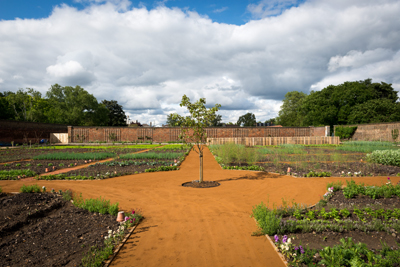
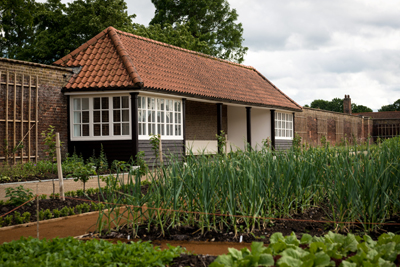
Historic Royal Palaces has reopened Hampton Court Palace’s royal kitchen garden, having recreated it according to a plan dating from 1736. The  six acre garden – constructed on the site of King Henry VIII’s tiltyard on the orders of Queen Anne in 1702 – was used to supply the table of monarchs from the early 1700s through to the 1840s. The recreated version showcases rare and heritage varieties of fruit and vegetables including Italian celery, borrage, skirret and swelling parsnips as well as apricots, nectarine and peaches while on site displays showcase some of the techniques used by the royal gardeners. The gardens are open to the public free-of-charge and it’s hoped that as they mature, vegetable growing classes will be held there. The gardens have been opened as part of celebrations marking the 300th anniversary of the Hanoverian accession. For more on Hampton Court Palace, see www.hrp.org.uk/HamptonCourtPalace/. PICTURES: Courtesy Historic Royal Palaces.

Gardens2

Gardens3

LondonLife – The Tudor Pull…

Tudor-Pull

Crowds lined the banks of The Thames last weekend as Her Majesty’s Watermen rowed from Hampton Court Palace to the Tower of London in the annual “Tudor Pull”.  The palace-to-palace rowing event on Sunday kicked off around 10am with a ceremony at Hampton Court during which the ‘Stela’ – an ancient piece of medieval water pipe made from a hollowed-out tree trunk which symbolises the power of The Thames – is passed to the watermen who then took it up river to the Tower in the royal barge Gloriana. The barge, which was accompanied by a fleet of other traditional rowing craft, stopped at several locations along the journey, before it arrived at the Tower in Sunday afternoon where the ‘Stela’ was presented to the Governor. The event is also said to commemorate the sinking in 1256 of Queen Eleanor’s royal barge under old London Bridge. For more on the Historic Royal Palaces in London, head to www.hrp.org.uk.

PICTURE: Courtesy of Historic Royal Palaces.

Our new special series will kick off next week!

This Week in London – Meet King George I this Easter; celebrating Shakespeare’s 450th; and feasting with St George in Trafalgar Square…

Historic Royal Palaces are offering you the chance to meet King George I and explore the world in which he lived at his former real-life home of  Hampton Court Palace this Easter weekend. A re-enactment marking the 300th anniversary of his accession will have the new Hanoverian king arrive by royal barge on the River Thames and will also include courtiers taking part in a “stately dance”, the King’s troupe of Hanoverian horses performing a “horse ballet” and a Georgian Army encampment with soldiers involved in firing displays. Visitors to the palace will also be able to see a new re-presentation of the Queen’s State Apartments which explores who the Hanoverians were, how they came to rule and their many and bitter family feuds. Runs from tomorrow (18th April) to 21st April. Admission charge applies. For more, see www.hrp.org.uk/HamptonCourtPalace/.

The 450th anniversary of Shakespeare’s birth is being celebrated with a week of events at the Guildhall Library next week. Kicking off on Tuesday, 22nd April, and running until Friday, 25th April, events include talks – with subjects including ‘Shakespeare’s London Theatreland’ and ‘Imaging Shakespeare’s Indoor Theatre’, and a six hour complete reading of Shakespeare’s sonnets with readers including actor Damian Lewis, author Alan Hollinghurst and Lord Mayor of City of London Fiona Woolf as well as Shakespeare-themed walks around the City and Southwark, and the free Shakespeare in Print exhibition at the Library. For more, see www.cityoflondon.gov.uk/things-to-do/visiting-the-city/archives-and-city-history/guildhall-library/Pages/default.aspx. Meanwhile, the V&A is also holding a Shakespeare Festival, kicking off next Monday and running until 4th May. Highlights of the festival include screenings of some of the best theatre productions of Shakespeare in the last 20 years, live performances by actors and musicians and a series of debates and talks including the “interactive lecture” Marchpane to Mutton – A Taste of Shakespeare’s Time by food historian and artists Tasha Marks. There’s also a competition – Cakespeare – in which the public are invited to design, bake and decorate a Shakespeare-themed cake and share an image of it on social media (#Cakespeare) by 4th May with the winner to receive a weekend for two to Stratford-upon-Avon and tickets to the Royal Shakespeare Company. The festival is being complemented by a display in the Theatre and Performance Galleries, Shakespeare: Greatest Living Playwright which features the First Folio as its centrepiece. Admission is free. See www.vam.ac.uk for more.

It might be two days ahead of the official saint’s day, but the Feast of St George will be celebrated in Trafalgar Square this Bank Holiday Monday with a banquet and guests including a five metre high interactive dragon. The festivities, hosted by Mayor of London Boris Johnson, will also include an English Farmers’ Market featuring 20 stalls, a kid’s marquee and traditional wooden garden games, harlequins on stilts, swing boats and circus lessons for children, a bandstand located in front of Nelson’s Column and a 12 foot tall Maypole. Runs from noon to 6pm. For more, see www.london.gov.uk/feast.

Send all items of interest for inclusion to exploringlondon@gmail.com. 
LondonLife – The “Glorious Georges” at the Historic Royal Palaces…

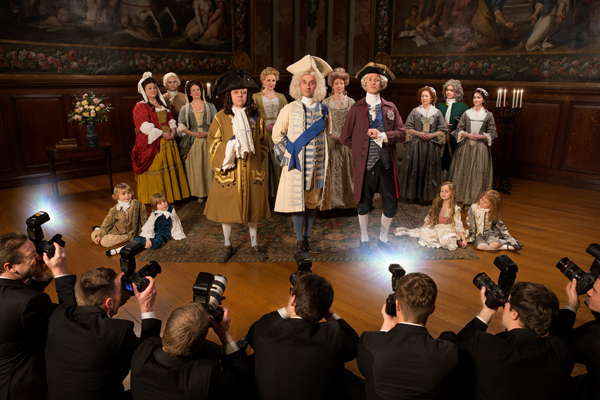
GeorgesThis year marks the 300th anniversary of the Hanoverian accession and to celebrate, Historic Royal Palaces are running a range of events at Hampton Court, Kensington and Kew Palaces. The ‘Glorious Georges’ season opens on Easter weekend – we’ll be bringing more details closer to the time.In the meantime, see which of the Georges and associated figures you can identify in this image. For more, check out www.hrp.org.uk.


LondonLife – Chocolate kitchens rediscovered at Hampton Court Palace…

Chocolate-kitchen

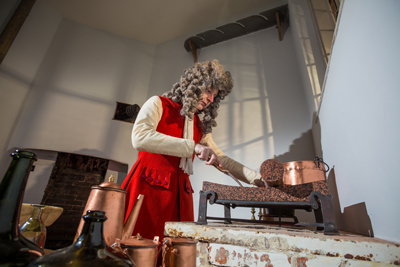
Once making chocolate for kings including William III, George I and George II, a special royal chocolate-making kitchen has opened at Hampton Court Palace – the only surviving example of its kind in the country. The opening – which is part of Historic Royal Palaces’ celebration of the 300th anniversary of the Hanoverian accession – comes after research identified the exact location of the kitchen which, having been used as a storeroom, was found in a “remarkably well preserved” state with original fittings such as the stove and furniture intact. Among those known to have worked in the kitchen is Thomas Tosier (pictured above), personal chocolatier to King George I, and it was in here he prepared special chocolate drinks. (Interestingly, Tosier’s wife Grace apparently traded on her husband’s royal association to promote her own chocolate house in Greenwich). A new display in the kitchen explores how the chocolate was made for the king and features copper cooking equipment and bespoke chocolate serving silverware, glassware and linens from the 18th century. The Royal Chocolate Kitchen will also play host to live Georgian chocolate making sessions. PICTURE: © Historic Royal Palaces/Richard Lea Hair.

WHERE: Hampton Court Palace, East Molesey, Surrey (nearest station is Hampton Court from Waterloo); WHEN: 10am to 4.30pm until 29th March after which it’s open to 6pm); COST: Adult £18.20, Concession £15.40, Child under 16 £9.10 (under fives free), family tickets, garden only tickets and online booking discounts available; WEBSITE:www.hrp.org.uk/HamptonCourtPalace/.

Special – 10 facts about royal births of years past…

Buckingham-Palace

As we all know by now, Prince William and Kate, Duchess of Cambridge, are proud parents of a new born son with news of the new arrival provoking celebrations across Britain and, indeed, the world.

To celebrate the royal birth, here are 10 interesting facts about some previous royal births in London…

• The last time a Home Secretary attended a royal birth was in 1936 for the birth of Princess Alexandria, cousin of the Queen. The practice was officially stopped before the birth of Prince Charles in 1948.

• Such was the doubt over whether Mary of Modena, wife of King James II, was really pregnant that more than 40 eminent people were invited to witness the birth of their son Prince James in 1688 (and even then the rumours of that the stillborn baby had been swapped for another were rife).

• Queen Anne, who ruled from 1702-1714, went through 17 pregnancies but, tragically, outlived all of her children, her last surviving child – the Duke of Gloucester – dying in 1700.

• The tradition of firing a 41 gun salute on the news of the birth of a future monarch dates from the birth of the future King Edward VII. Twenty-one shots are fired in honour of the birth with an additional 21 fired because the guns are located in Green Park, a Royal Park.

• Queen Elizabeth II was born by caesarean section at 2.40am on April 21, 1926, at the home of her mother’s parents – 17 Bruton Street in Mayfair. (See our previous post on this here).

• Such was the animosity between Frederick, Prince of Wales, and his father, King George II, that when Frederick’s wife Augusta went into labour at the king’s home of Hampton Court Palace, he bundled her into a coach and had her taken to his home of St James’s Palace. With no preparations made there, his newly born daughter had to be wrapped in a tablecloth (the story is retold in detail in Lucy Worsley’s terrific book, Courtiers: The Secret History of the Georgian Court)

• Queen Victoria, who had nine children, used chloroform for pain relief during later births, despite the concept being frowned upon by some officials.

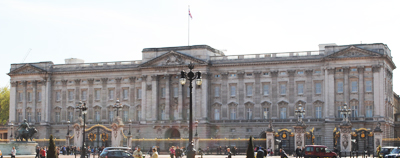
• Buckingham Palace (pictured above) has been the birthplace of numerous Royal Family members. Of course, Prince Charles was born here in 1948 as was his brother Prince Andrew (1960) and Prince Edward (1964) but so too – somewhat earlier – were 14 of King George III and Queen Charlotte’s 15 children when the property was known as Buckingham House and, later, the Queen’s House. King Edward VII was the only monarch who both was born and died in the building.

• Such was the desperation of King Henry VIII for a son, that a document announcing the birth were drawn up to that effect prior to Anne Boleyn giving birth to a daughter, the future Queen Elizabeth I. The document was still issued – the only concession being an ‘s’ added to the end of the word prince.

• The oldest English king to father a child was King Edward I – he was 66-years-old when his last child, Princess Eleanor, was born in 1306. Queen Eleanor of Aquitaine, wife of King Henry II, was the oldest queen to father a child when she gave birth to the future King John at 44-years-of-age in 1166.

Around London – Museums at night; Propaganda at the BL; MoL Docklands celebrates 10 years; and, Steadman at the Cartoon Museum…

Expect people to be out and about around London at all hours this weekend with the kick-off tonight of Museums At Night, Culture24’s annual festival of after hours visits. This year’s packed program features everything from ‘Arts on Ice’ – a look at the Victorian ice trade – at the London Canal Museum to art nights at the Government Art Collection building, nocturnal tours of Greenwich’s Old Royal Naval College, and, for the first time, the chance for adults to sleep over at Hampton Court Palace and kids at Kensington Palace. Other London organisations taking part include the Handel House Museum, the Kew Bridge Steam Museum, Benjamin Franklin House, the National Gallery and Somerset House (and that’s just a few off the list!). For more information on the night – including a full program of events – check out the Culture24 Museums at Night website.

Propaganda-v9-cmyk Government spin comes under the spotlight in a major new exhibition which opens tomorrow at the British Library in King’s Cross. Propaganda: Power and Persuasion examines how state have used propaganda in the 20th and 21st centuries and features more than 200 exhibits including Nazi propaganda and everyday objects such as banknotes and badges. Admission charge applies. There’s a series of events running to coincide with the exhibition which runs until 17th September. For more, see www.bl.uk/whatson/exhibitions/propaganda/index.html.

It’s 10 years since the Museum of London Docklands opened in a converted Georgian warehouse on West India Quay and to celebrate they’re holding an exhibition celebrating the Thames estuary. Titled (appropriately enough), Estuary, the exhibition features the work of 12 artists in a variety of mediums – from film and photography to painting. Entry is free. The exhibition, which opens tomorrow, runs until 27 October. The museum is also holding a special day of family activities to celebrate its creation this Saturday. For more, see www.museumoflondon.org.uk/Docklands/.

On Now: STEADman@77. This exhibition at The Cartoon Museum in Bloomsbury looks at the work of graphic artist Ralph Steadman (who is celebrating his 77th birthday) and features more than 100 original works published in magazines ranging from Private Eye to Rolling Stone, Punch and the New Statesmen as well as his illustrated books (these include Sigmund Freud, Alice in Wonderland Through the Looking-Glass, I, Leonardo, The Bid I Am, and Animal Farm). Runs until 8th September. Admission charge applies. For more, see www.cartoonmuseum.org.

Around London – Bedchamber secrets at Hampton Court; Roman remains at the British Museum; Easter chocolate at Kew Gardens; Harry Beck’s blue plaque; and, Underground art…

Happy Easter! We’re taking a break over the Easter weekend…Our next update will be on Tuesday, 2nd April.

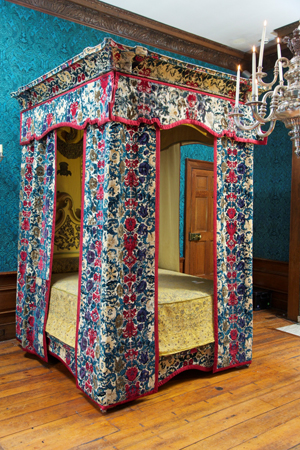
Mary-of-Modena's-bedA new exhibition exploring the secrets of the bedchambers of the Stuart and Hanoverian courts of the 17th and 18th centuries opened at Hampton Court Palace this week. At the heart of Secrets of the Royal Bedchamber are six royal beds which tell the story of why the bedchamber became the most important part of the palace and detail some of the events that took place there before an audience of courtiers, politicians and family members – from births and deaths to the consummation of marriages and the discussion of important affairs of state. It tells of why courtiers would fight for positions such as the ‘groom of the stool’ or ‘necessary woman’ and how beds which could cost the same as a London townhouse were sometimes never slept in. Among the beds on display is the ‘Warming Pan Bed’ (pictured), the State Bed of King James II’s queen, Mary of Modena, and scene of the royal birth that ultimately led to the end of the Stuart line, and the ‘Travelling Bed’ of King George II which travelled as far afield as Hanover and the battlefields of Europe. The exhibition also gives rare access into the Prince of Wales’ Apartments, designed by 17th and 18th architect Sir John Vanbrugh, and now open for the first time in 20 years.  Admission charge applies. Runs until 3rd November. For more, see www.hrp.org.uk. PICTURE: HRP

The Roman cities of Pompeii and Herculaneum are the subject of a major exhibition opening at the British Museum today. Life and death in Pompeii and Herculaneum brings together more than 250 objects from the two cities which were buried in just 24 hours during the eruption of Mount Vesuvius in 79 AD. The objects include celebrated finds and recent discoveries, many of which have never before been seen outside Italy, and help explore what daily life was like for the inhabitants. Artefacts include a beautiful wall painting from Pompeii showing baker Terentius Neo and his wife, wooden furnishings including a linen chest, inlaid stool, and even a baby’s crib from Herculaneum, and casts of victims including a family of four and a dog who died at Pompeii. Runs until 29th September. Admission charge applies. For more, see www.britishmuseum.org.

Find out more about the history of chocolate at Kew Gardens this Easter, from the ritualistic use of cacao in ancient Mayan and Aztec cultures to the arrival of chocolate in 17th century London, where it was a luxury item for high society to indulge in at newly fashionable chocolate houses. Running from tomorrow until 14th April, there will be a range of workshops taking place at the gardens around the chocolate theme along with a traditional Easter Egg Hunt on Easter Sunday (31st March). The garden’s cocoa tree can be found in the Princess of Wales Conservatory. Admission charge applies. See www.kew.org.

Harry Beck, designer of the innovative first diagrammatic Tube map, has been honoured by an English Heritage blue plaque – inscribed in the Underground’s new Johnston typeface – at his birthplace in Leyton in London’s east. Beck, who was born in a small terraced house at 14 Wesley Road in 1902, was working with London Transport as a draughtsman in the London Underground Serial Engineer’s Office, when, in 1931, he produced his first design for a diagrammatic map. He continued to update the map with new stations and lines even after leaving London Transport with the last version of his map published in 1960. Beck died in 1974. Meanwhile, a blue plaque commemorating railway engineer Sir Nigel Gresley (1876-1941) has been returned to King’s Cross station following the completion of building work. It can be found on platform 8. For more, see www.english-heritage.org.uk/discover/blue-plaques/.

On Now: The Underground. A commission from Art on the Underground, this exhibition of artist Mark Wallinger’s work at the Anthony Reynolds Gallery (60 Great Marlborough Street) features some examples of 270 labyrinth designs – one representing each of the Underground stations – which are being installed at the Tube stations themselves. Among those stations represented at this showing are Westminster, St James’s Park, Oxford Circus, Victoria, Embankment, Green Park, King’s Cross St Pancras, Baker Street and Tottenham Court Road. While labyrinths are already in place at these locations, the remainder of Wallinger’s labyrinth designs will be appearing at Tube stations over the coming months. Runs until 27th April. For more, see www.anthonyreynolds.com.

Around London – Christmas at the Geffrye; a Kensington Palace advent calendar; new furniture gallery at the V&A; and, last chance to see Bronze…

Christmas is looming and at the Geffrye Museum in Hoxton that means the museum’s many period rooms have been transformed for the Christmas festivities. The rooms span 400 years of history, from 1600 until today, and show how the middle class have lived over that time. The Christmas display will also provide insights into such Christmas traditions as kissing under the mistletoe, hanging up stockings, sending Christmas cards and decorating trees. The Christmas theme carries through to the restaurant and gift shop. Entry to the exhibition is free. Runs until 6th January. For an online gallery showing some of the rooms, click here. For more on the museum, see www.geffrye-museum.org.uk.

• Meanwhile Kensington Palace is to be transformed into giant advent calendar in the lead-up to Christmas with a daily ‘reveal’ inspired by Princess Victoria’s Christmas diary entries and letters. The halls of the palace will be decorated with 24 specially designed mirrored baubles, Christmas music will be played throughout and a sparkling 25 foot high Christmas tree will be placed in the gardens. As part of the Christmas festivities, an evening of carol singing will be held on 5th December in the King’s Gallery with carols sung by the Hampton Court Palace Royal Chapel Choir. Other events include a Midwinter Masquerade Ball on 13th December and an Eerie Evening Tour on 20th December. For more, see www.hrp.org.uk/KensingtonPalace/.

• A new permanent furniture gallery opens at the V&A this Saturday. The Dr Susan Weber Gallery – the first at the museum dedicated to furniture – will display more than 200 pieces of British and European furniture, spanning a period stretching from the Middle Ages through to present day, as well as examples of American and Asian furniture. Each piece is examined in detail with information provided about the materials and techniques used in creating it. Among the designers represented will be Thomas Chippendale, Grinling Gibbons, Robert Adam, Ron Arad and Tom Dixon. Highlights include a 20th century Frank Lloyd Wright-designed dining chair, a gilded cassone made for the Duke of Urbino in about 1509, and a scagliola decorated table which was formerly at Warwick Castle and dates from 1675. Twenty-five ‘key’ pieces have been selected for a central chronological display including a storage unit by Charles and Ray Eames dating from 1949-50, a Gothic revival cradle dating from 1861 and designed by Richard Norman Shaw and one of the museum’s newest acquisitions, the 2011 ‘Branca’ chair, designed by Industrial Facility. The display includes the use of touch screen interfaces, films and audio recordings. Entry is free. For more, see www.vam.ac.uk.

• On Now: Bronze. Last chance to see this exhibition at the Royal Academy of Arts which closes on 9th December. The exhibition brings together more than 150 of the finest bronzes in the world, spanning 5000 years of history, with many of the pieces on display never seen before in the UK. Among the earliest works are the 14th century BC bronze and gold Chariot of the Sun from Denmark, ancient Chinese ritual vessels including an elephant-shaped vessel dating from the Shang Dynasty (1100-1050 BC) and an Etruscan masterpiece – Chimera of Arezzo, dating from about 400 BC. Other highlights include a Roman cavalry helmet found in Cumbria in 2010 and the Portrait of King Seuthes III, dating from the early Hellenistic period, and found in Bulgaria in 2004 as well as a series of Renaissance bronzes and more recent works like Rodin’s The Age of Bronze (c 1876). Admission charge applies. For more, see www.royalacademy.org.uk.

LondonLife – A new crown for King Henry VIII…

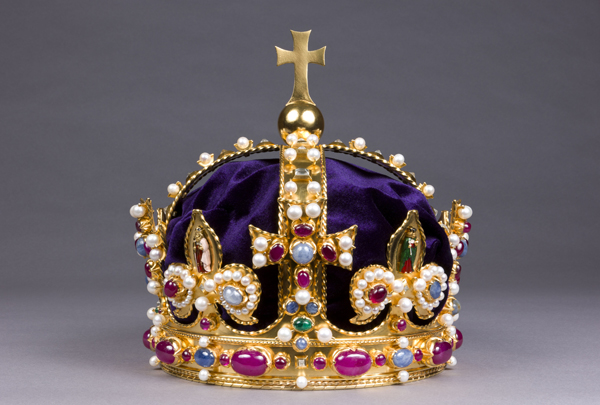
A recreation of King Henry VIII’s imperial crown, destroyed after the English Civil War, has gone on show in the Chapel Royal at Hampton Court Palace. Originally created for either King Henry VIII or his father, King Henry VII, the crown was worn at the coronations of Henry VIII’s children and possibly the king’s own as well as at Hampton Court Palace during major liturgical and court ceremonies. It was subsequently used by his successors down to King Charles I before being melted down by the Commonwealth Government in 1649 at the Tower of London. The replica crown, which is being displayed in the Royal Pew – allowing visitors access to the balcony in the chapel for the first time in seven years, is the result of detailed historical research by Dr Kent Rawlinson, curator at Hampton Court Palace, and was made by Crown Jeweller Harry Collins and his master craftsmen. Hand-crafted in silver gilt, it features 344 jewels including pearls and precious and semi-precious stones. Five enameled figures are set within five fleur-de-lis – the figures represent the Virgin and Child, St George and English kings believed to be St Edmund, St Edward the Confessor and King Henry VI (King Henry VIII had the latter three figures added to the crown to underline the political and religious authority of the Crown). For more on Hampton Court Palace, see www.hrp.org.uk/HamptonCourtPalace/PICTURE: HRP/Newsteam

Famous Londoners – Sir Peter Lely…

One of the most famous painters of his age, Dutchman Sir Peter Lely – currently the subject of an exhibition at London’s Courtauld Gallery – rose to become the foremost portrait painter at the English Court during the latter half of the 17th century.

Born to Dutch parents on 14th September, 1618, in Westphalia (now part of Germany) where his father was serving as an infantry captain, Peter – originally named Pieter van der Faes – studied art as an apprentice in Haarlem in what is now The Netherlands. While there he is believed to have changed his name to Lely based on a heraldic lily which appeared on the gable of the house where his father was born in The Hague.

Lely appeared in London in the early 1640s and, while he initially devoted himself to the sort of narrative-style paintings inspired by classical mythology, the Bible and literature he had been working on in Haarlem but having found no great success there, soon turned his hand to portraiture.

The death of court portraitist Anthony van Dyck in 1641 had left a vacuum he stepped into the gap, soon becoming the most in-demand portrait painter at the Royal Court, his sitters including none other than King Charles I himself.

However, Lely, who was made a freeman of the Painter-Stainers Company in London in 1647, managed to straddle the political divide and after the beheading of King Charles I and the end of the English Civil War in 1651, was able to continue painting portraits of the most powerful people in the land including Oliver Cromwell – whom he painted “warts and all” as per the Lord Protector’s request – and his Cromwell’s brother Richard.

Already renowned as the best artist in the country, following the Restoration in 1660, Lely became Principal Painter of King Charles II, placed on an annual stipend as van Dyck had been before him during the reign of King Charles I.

Lely’s workshop was large and its output prolific, with his students and employees – who at one stage apparently included scientist and architect Robert Hooke – often completing his paintings after he sketched out some details, only painting the sitter’s face in any great detail.

Among his most famous works are a series of 10 portraits known as the Windsor Beauties (currently at Hampton Court Palace), a series of portraits of senior naval officers who served in the Second Anglo-Dutch War, known as the Flagmen of Lowestoft (most of the works at are the National Maritime Museum in Greenwich) and Susannah and the Elders (currently at Burghley House in Cambridgeshire) as well as some of the paintings in the current Courtauld exhibition including Nymphs by a Fountain (usually found at the Dulwich Picture Gallery) and Boy as a Shepherd (also the Dulwich Picture Gallery).

Lely was also known as an avid collector of art and is credited as being the first artist in England to do so in any serious manner – among his purchases were works which formerly formed part of King Charles I’s collection. At the time of his death, he is said to have owned more than 500 paintings, although more than half of these were works of his or his studio.

Sir Peter, who never married but had two children who survived him with a common-law wife Ursula, lived at a house in the north-east corner of Covent Garden from about 1650 until his death in 1680 (some sources have him knighted in this year, others in 1679) but also had a house at Kew and owned property outside of London including in Lincolnshire and The Hague.

He was apparently working at his easel in the studio of his Covent Garden house when he died on 30th November, 1680. He was buried at St Paul’s Church, Covent Garden. The monument to him, the work of Grinling Gibbons, was destroyed by fire in 1795.

Peter Lely: A Lyrical Vision – which focuses on some of his early non-portrait works – runs at The Courtauld Gallery until 13th January. For more on the exhibition, visit www.courtauld.ac.uk/gallery/exhibitions/2012/peter-lely/index.shtml. Running alongside the exhibition is a display of some of the drawings from Sir Peter’s own collection, Peter Lely: The Draughtsman and His Collection.

Famous Londoners – Grinling Gibbons…

A late 17th and early 18th century wood carver and sculptor, the curiously named Grinling Gibbons is remembered for his magnificent carvings in numerous English buildings including such London icons as St Paul’s Cathedral and Hampton Court Palace.

Not much is known about Gibbons’ early life. The son of English parents (his father was apparently a draper), he was born in Rotterdam in The Netherlands on 4th April, 1648, and, as a young man, is believed to have undertaken an apprenticeship as a sculptor in that country.

Around the age of 19, he moved to England – first to York and to Deptford in the south. It was the quality of his work which led diarist John Evelyn, having discovered Gibbons working on a limewood relief of Tintoretto’s Crucifixion in a small cottage near Deptford in early 1671, that led him to introduce him to Christopher Wren, the architect of the age, and fellow diarist Samuel Pepys and to eventually present him (and his relief) to King Charles II at Whitehall Palace on 1st March the same year.

But Gibbons’ work apparently failed to initially impress at court and it was only following his ‘discovery’ later that year by the court artist Sir Peter Lely that he began to receive major commissions.

It’s apparently not known when Gibbons married his wife Elizabeth and moved to London they were living there by 1672 and were having the first of their at least 12 children (while at least five of their daughters survived into adulthood, none of their sons did).

In 1672, they were living in an inn, called La Belle Sauvage or The Bell Savage, located on Ludgate Hill near St Paul’s, and, while Gibbons continued to maintain a workshop here into the 1680s, the family moved to Bow Street in Covent Garden around the end of the 1670s (the house here apparently collapsed in 1702 and was subsequently rebuilt in brick).

Gibbons, who was admitted to the Draper’s Company in 1672 and held various posts within it over ensuing years, reached the pinnacle of his success when he was made master sculptor and carver in wood to King William III in 1693, and was later made master carpenter to the king, then King George I, in 1719.

Having worked mostly in limewood, Gibbons, recently called the “British Bernini”, is known for his distinct and exuberant style which features cascading foliage, fruit, animals and cherubs. While he worked on numerous important buildings outside of London – including carvings in the Chapel Royal and king’s dining room at Windsor Castle, in a chapel at Trinity College in Oxford, at Blenheim Palace in Oxfordshire and a famous ‘carved room’ at Petworth House in Sussex – and beyond (he also created two presentation panels – known as the ‘Cosimo’ and ‘Modena’ panels which were sent to Italy as royal gifts), Gibbons is also noted for his work on a number of prominent buildings in London.

Among the buildings he worked on or in around London are the churches of St James’s in Piccadilly, St Mary Abchurch, St Michael Paternoster Royal and, famously, St Paul’s Cathedral (where he carved choir stalls, the bishop’s thrones and choir screen) as well as Hampton Court and Kensington Palaces.

While he is primarily remembered for his limewood carvings, Gibbons’ workshop was also responsible for sculpting statues, memorials and decorative stonework. A couple of the workshop’s statues can still be seen in London – one of King Charles II in Roman dress at the Royal Hospital in Chelsea and another of King James II outside the National Gallery in Trafalgar Square – while the magnificent Westminster Abbey memorial to Admiral Sir Clowdisley Shovell is also attributed to him.

Gibbons died at his Bow Street home on 3rd August, 1721, and was buried in St Paul’s Church in Covent Garden (his wife had been buried there several years before).

For more on Grinling Gibbons, check out David Esterly’s Grinling Gibbons and the Art of Carving.

Around London: Olympic Torch Relay hits London; mascots pop-up all over the city; and Shakespeare at the British Museum…

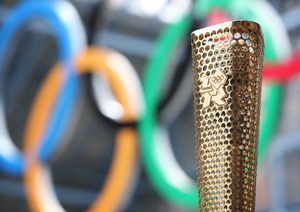
• The Olympic Torch Relay arrives in London tomorrow night before working its way around all of the city’s 33 boroughs and reaching the Olympic Stadium for the Opening Ceremony next Friday.  The torch will arrive in the city by helicopter from Guildford tomorrow night and then be abseiled into the Tower of London where it will spend the night ensconced with the Olympic medals. The relay will travel 200 miles over the next week, carried by more than 980 torchbearers. The route is as follows:

  • Saturday, 21st July – Greenwich via Newham, Tower Hamlets and Hackney to Waltham Forest (highlights include a visit to the Cutty Sark);
  • Sunday, 22nd July – Redbridge via Barking & Dagenham and Havering to Bexley (highlights include a ride on the London Eye and a crossing of the Thames);
  • Monday, 23rd July – Lewisham via Bromley, Croydon, Sutton and Merton to Wandsworth (highlights include a visit to a live filming of Eastenders);
  • Tuesday, 24th July – Kingston via Richmond, Hounslow, Hillingdon and Denham to Ealing (highlights include a visit to Kew Gardens);
  • Wednesday, 25th July – Harrow via Brent, Barnet and Enfield to Haringey (highlights include a visit to Wembley Arena);
  • Thursday, 26th July – Camden via Islington, the City of London, Southwark, Lambeth, Wandsworth, Kensington & Chelsea and Hammersmith & Fulham  to Westminster (the many landmarks to be visited include St Paul’s Cathedral, Shakespeare’s Globe, Trafalgar Square, Buckingham Palace and Hyde Park);
  • Friday, 27th July – From Hampton Court Palace (where it will be taken into the maze) on board Gloriana via the Thames to Olympic Park for the Opening Ceremony.

The 70 day torch relay, which kicked off on 19th May, will have travelled a total distance of about 8,000 miles and have involved 8,000 torchbearers by the time it reaches its end. LOCOG and Transport for London have advised people to see the relay at a location closest to their home given the expected crowds. For more detailed route information, see www.london2012.com/torch-relay/route/. PICTURE: LOCOG

Still talking all things Olympics and London’s largest ever ‘pop up’ shop – where you can buy Olympic merchandise – was officially opened by multiple gold medalist Sir Steve Redgrave in Hyde Park last week. The shop, located on Rotten Row, will be the site of special athlete visits during the Games and visitors can have their photo taken with the Olympic Torch.

• Meanwhile, life-sized versions of the Olympic mascot Wenlock and Paralympic mascot Mandeville are popping up at some of London’s key tourist locations. The 83 two metre tall sculptures capture various elements of life in London with incarnations including a Beefeater, a giant red phone box and a replica of Big Ben. The figures can be found on the routes of Stroll, six new discovery trails designed to help both tourists and Londoners get more out of the city. A QR code on the bottom of each of the sculptures directs smartphone users to further information about the discovery trails. The discovery trails are part of the Mayor of London Presents, a city-wide programme featuring free events, shows and activities. For more on what’s happening in your area, see www.molpresents.com. Some of these events are also being run as part of the Festival of London 2012. For more on this, see http://festival.london2012.com.

• On Now: Shakespeare: staging the world. Part of the World Shakespeare Festival taking place in London, this exhibition at the British Museum looks at the then emerging role of London as a “world city” as interpreted through Shakespeare’s plays and examines the role the playhouse performed in this. The museum has collaborated with the Royal Shakespeare Company to produce the exhibition which features more than 190 objects including paintings, jewels and rare manuscripts. These include the Ides of March coin, a Roman gold aureus commemorating the assassination of Julius Caesar (Julius Caesar), the Lyte Jewel, presented to Thomas Lyte in 1610 in thanks for his work in tracing King James I’s lineage back through Banquo (Macbeth), and a 1610 bird’s-eye view of Venice (Othello and The Merchant of Venice). Runs until 25th November. Admission charge applies. For more, see www.britishmuseum.org.

Around London – Trooping the Colour and Hampton Court celebrations; Park Lane sculptures; pathologist honored; Londoners at play; and, an exploration of gold…

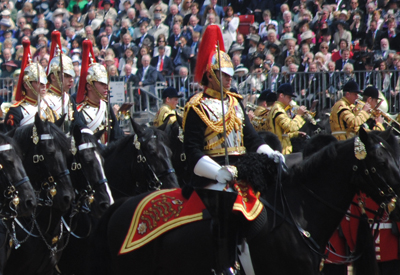
• It’s another weekend of celebration in London with events including Trooping the Colour and the Hampton Court Palace Festival taking place. With Diamond Jubilee fever in the air, expect crowds for this year’s Trooping the Color – the annual celebration of the Queen’s birthday – held at Horse Guards Parade on Saturday. The procession down The Mall kicks off at 10am  with the flypast back at Buckingham Palace at 1pm (organisers advice getting your place by 9am – for more, follow this link). The Hampton Court Palace Festival, meanwhile, kicks off today with a performance by Liza Minnelli and runs through next week until John Barrowman performs at the festival’s closing next Saturday (24th June). The festival, set against the backdrop of Hampton Court Palace, this year celebrates its 20th year – among other performers are Van Morrison, James Morrison, Frankie Valli & The Four Seasons and this Saturday (16th June) sees the holding of the 20th Anniversary Classical Gala and fireworks. For more, see http://hamptoncourtpalacefestival.com/. PICTURE: Trooping the Colour 2011.

• Park Lane’s central reservation is now hosting three new large scale sculptures by artist William Turnbull, considered a pioneer of modernism. The three works – 3×1 (1966), Large Horse (1990) and Large Blade Venus (1990) – have been installed as part of Westminster City Council’s ‘City of Sculpture’ festival. The works are on loan from the artist as well as the Yorkshire Sculpture Park and Chatsworth House, where they have been recently displayed.

• Professor Keith Simpson, a pathologist who has conducted post-mortems as part of the investigation into some of the country’s most infamous murders, has been honored with a green plaque at his former residence at 1 Weymouth Street by Wesminster City Council. The cases he worked on include the 1949 Acid Bath Murders (John George Haigh was hanged for the murder of six people in August that year) and the murder of gangster George Cornell, shot dead by Ronnie Kray in Whitechapel’s Blind Beggar Pub in 1966. Professor Simpson, who died in 1985, worked in the field of pathology for more than 30 years, taught at Guy’s Hospital in London and was renowned as having performed more autopsies than anyone else in the world.

• Now On: Londoners at Play. This exhibition at the Getty Images Gallery in Eastcastle Street explores through images how Londoners spent their leisure time – from the 19th century through to today. The display features 57 images including an image of ‘Last Night of the Proms’ from 1956 featuring conductor Sir Malcolm Sergeant, a print taken from a glass plate negative showing Londoners cycling in Royal Parks in 1895 and a crowd watching a Punch and Judy show in Covent Garden in 1900. Admission is free. Runs until 25th August. For more, see www.gettyimagesgallery.com/Exhibitions/Default.aspx.

• Now On: Gold: Power and Allure – 4,500 Years of Gold Treasures from across Britain. This exhibition at the Goldsmith’s Hall showcases more than 400 gold items, dating from 2,500 BC through to today. Admission is free. Runs until 28th July. For more information, see www.thegoldsmiths.co.uk.

Celebrating the Diamond Jubilee with 10 royal London locations – 9. Royal chapels…

Palaces aside, the Queen also owns a series of chapels – the Chapels Royal – in London which, although not as grand as Westminster Abbey, have each played an important role in the history of the monarchy. 

The term Chapel Royal originally referred to a group of priests and singers dedicated to serving the Sovereign’s personal spiritual needs and as such would follow the monarch around the country. It was in Stuart times that they became more settled establishments with the two main Chapels Royal – the Chapel Royal and the Queen’s Chapel – located in St James’s Palace.

• The Chapel Royal, St James’s Palace. Constructed by King Henry VIII, the chapel was decorated by Hans Holbein the Younger in honor of the king’s (short) marriage to Anne of Cleves. Queen Mary I’s heart is said to be buried beneath the choir stalls and it was here that Queen Elizabeth I apparently prayed waiting for news of the progress of the Spanish Armada. King Charles I took the Sacrament of Holy Communion here before his execution in 1649 and the chapel was where Queen Victoria married Prince Albert (her marriage certificate still hangs on the wall). In more recent times, the coffin of Diana, Princess of Wales, was placed before the altar so family and friends could pay their respects before her 1997 funeral. Among the composers and organists associated with the chapel are Thomas Tallis, William Byrd, Henry Purcell and George Frideric Handel. The chapel is not open to the public except for services.

• The Queen’s Chapel, St James’ Palace (pictured right). Now located outside the palace walls, this chapel was built by King James I for the Catholic Henrietta Maria, the bride of his son, then Prince Charles (later King Charles I). Designed by Inigo Jones, Grinling Gibbons and Sir Christopher Wren were also involved in its creation. The chapel was used by Henrietta Maria until the Civil War and later became the home of the Danish Church in London. The chapel is not open to the public except for services.For more on this chapel or the Chapel Royal at St James’s Palace, follow this link.

• The Queen’s Chapel of the Savoy. Built in the Middle Ages to serve the now long gone Savoy Palace, London home of Count Peter of Savoy (uncle to King Henry III’s wife, Eleanor of Provence, the original building was destroyed in the Peasant’s Revolt of 1381. The current building, located in Savoy Hill, off the Strand, was built on the orders of King Henry VII in the late 15th and early 16th century to serve the hospital he founded on the site of the palace. The chapel since served many other congregations – including a German Lutheran congregation – but remains royal property via the Duchy of Lancaster, which is held in trust for the Sovereign and used to provide an income for the British monarch. It is officially the Chapel of the Royal Victorian Order. For more, see www.duchyoflancaster.co.uk/duties-of-the-duchy/the-queens-chapel-of-the-savoy/.

• Chapel Royal, Hampton Court Palace (pictured right). There has been a chapel here since the Knights Hospitallers occupied the site in the 13th century but it was Cardinal Wolsey who built the chapel to its present dimensions after acquiring the property in 1518. The current building, however, dates from the later ownership of King Henry VIII – Wolsey surrendered the property to him when he fell from favour – and further works in the eighteenth and nineteenth centuries. Many subsequent monarchs have worshipped here. The chapel, with its stunning ceiling, is open to the public when visiting Hampton Court Palace. For more, see www.chapelroyal.org. PICTURE: Historic Royal Palaces/newsteam.co.uk

• The Chapel Royal of St Peter ad Vincula, Tower of London. Originally a parish church, this was incorporated into the walls of the Tower in the reign of King Henry III. It was subsequently rebuilt at least twice – in the reign of King Edward I and King Henry VIII – and is home to the graves of important personages executed at the Tower including Henry VIII’s one-time wives, Anne Boleyn and Catherine Howard as well as Jane Grey, the nine day queen, and Sir Thomas More and Bishop John Fisher. The chapel can be accessed during a Yeoman Warder’s tour of the Tower of London. For more, including details of an appeal for its restoration, see www.hrp.org.uk/TowerOfLondon/stories/thechapelproject.

• Chapel Royal of St John the Evangelist, Tower of London. Located within the White Tower, this beautiful chapel – arguably the oldest church in London – dates back to the construction of the tower by King William the Conqueror the late 11th century and remains one of the best preserved examples of Anglo-Norman architecture in England. King Henry III added stained glass windows but for much of its later history the chapel was used for records storage. Tradition records that King Henry VII’s wife, Elizabeth of York, was laid in state here following her death in childbirth and that it was here Queen Mary was betrothed by proxy to Philip of Spain. This can be visited as part of a visit to the Tower of London. For more, see www.hrp.org.uk/TowerOfLondon/Sightsandstories/Prisoners/Towers/ChapelofStJohns

For more on churches in London, check out Stephen Millar’s London’s City Churches
and Stephen Humphrey’s London’s Churches and Cathedrals: A Guide to London’s Most Historic Churches and Cathedrals, Leigh Hatt’s London’s 100 Best Churches: An Illustrated Guide or the Pevsner Architectural Guide London: City Churches.
LondonLife – All is revealed at Hampton Court Palace

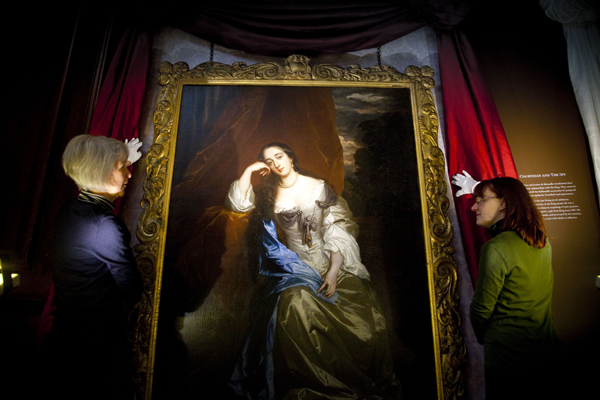
A portrait of King Charles II’s mistress, Barbara Villiers, is put into place ahead of The Wild, The Beautiful and the Damned exhibition which opened at Hampton Court Palace earlier this month. The portrait, which dates from about 1662, was painted by Sir Peter Lely – he also painted a picture King Charles II’s other principal mistress, Nell Gwyn, which is being shown together with the Villiers portrait for the first time. The exhibition, which focuses on the beauty, mistresses and debauchery of the Stuart Court, spans the reigns of the Stuarts from Charles II to Queen Anne and looks at how kings, queens and courtesans “swept away the Puritanical solemnity of the mid-17th century, and attempted to rewrite the moral code of social behaviour”. Runs until 30th September (admission is included in entry ticket; free to Historic Royal Palaces members). There are late openings on the first Monday of each month and note that the exhibition includes adult content. For more, see http://bit.ly/HvyiOE.

PICTURE: Richard Lea-Hair/newsteam.

Around London – Illuminating manuscripts at the BL; Capability Brown and Richard Burton blue plaqued; and, Grayson Perry at the British Museum…

Opened to the public last week, Royal Manuscripts: The Genius of Illumination – a landmark exhibition at the British Library – features a “treasure trove” of illuminated manuscripts collected by the kings and queens of England between the 9th and 16th century. Highlights include 16 illuminated manuscripts of King Edward IV, what the library calls the first “coherent collection” of royal books; the Psalter of King Henry VIII, A History of England by Matthew Paris, a 13th century monk, scholar and advisor to King Henry III; Thomas Hoccleve’s Regement of Princes – a early 15th century instruction book on how to be an effective ruler; a 14th century Genealogical Chronicle of the English Kings; and, The Shrewsbury Book, created in Rouen in 1445 and presented to Margaret of Anjou on her marriage to King Henry VI by the renowned military commander John Talbot, 1st Earl of Shrewsbury. An impressive series of public events featuring well known writers and historians – including Eamon Duffy, Michael Wood, and Andrew Marr –  is taking place alongside the exhibition. Runs until 13th March. An admission charge applies. For more, see www.bl.uk.

PICTURE: The Coronation of Henry III, Images of English Kings, from Edward the Confessor to Edward I, England, c. 1280-1300, Cotton Vitellius, A. xiii, f. 6 © British Library Board

• Leading 18th century landscape gardener Lancelot ‘Capability’ Brown has been honored with a blue plaque at his former home in Hampton Court Palace. Brown, who designed more than 120 landscapes during his lifetime, lived at Wilderness House after King George III appointed him Chief Gardener at the palace – he lived there from 1764 until his death in 1783. Brown’s legacy can still be seen at country houses around England – including at Petworth House in West Sussex, Alnwick Castle in Northumberland, Chatsworth House in Derbyshire and Blenheim Palace in Oxfordshire. He had earned the name ‘Capability’ by the 1760s – apparently he often spoke of a property’s capabilities when speaking of it. English Heritage unveiled the plaque last week. For more, see www.english-heritage.org.uk.

A second blue plaque worth mentioning this week is that marking the former home of actor Richard Burton. Michael Sheen – currently playing Hamlet at the Young Vic – was among those who last week attended the unveiling on the plaque at the home Burton and his wife actress Sybil Williams lived in from 1949 to 1956, the period during which he rose to international fame. While living at the house 6 Lyndhurst Road in Hampstead, Burton was a member of the Old Vic theatre company – performing, to the acclaim of critics, roles including that of Hamlet, Othello, Coriolanus and Henry V – and in 1952 made his Hollywood debut with My Cousin Rachel. Other films he appeared in during the period include The Robe (1953), The Desert Rats (1953), and Alexander the Great (1956). Following the close of the Old Vic season in 1956, Burton moved to Switzerland and went on to even greater public fame following his role in the 1963 film Cleopatra alongside his then lover (and later wife) Elizabeth Taylor. For more, see www.english-heritage.org.uk.

• On Now: Grayson Perry – The Tomb of the Unknown Craftsman. This exhibition at the British Museum explores a range of themes connected with the ideas of craftsmanship and sacred journeys and includes 190 objects from the museum’s collection selected by the artist along with a works by Grayson himself, many of which will be on public view for the first time. They include everything from Polynesian fetishes to Buddhist votive offerings, a prehistoric hand axe to 20th century badges and a re-engraved coin from 1882 featuring a bust of Queen Victoria with a beard and boating hat. At the heart of the exhibition sits Grayson’s own work, The Tomb of the Unknown Craftsman, a richly decorated cast-iron “coffin-ship”. Runs until 19th February. An admission charge applies. For more, visit www.britishmuseum.org.