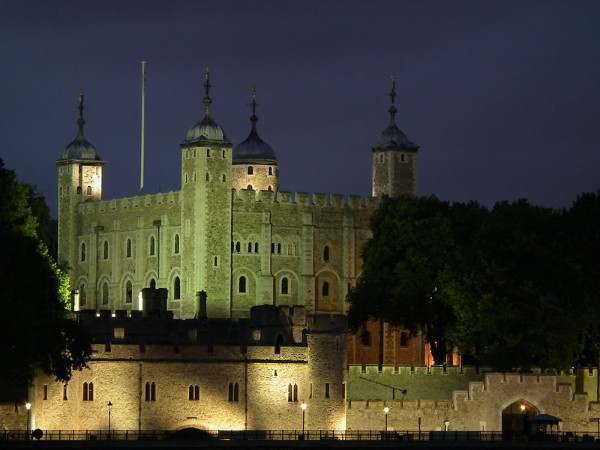
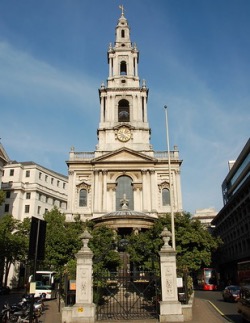
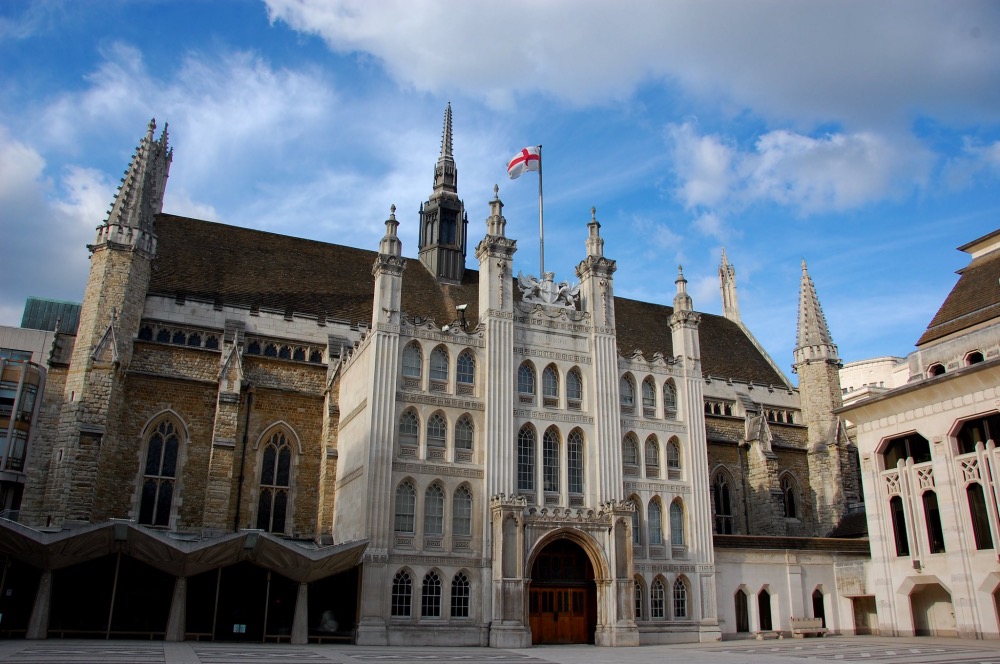
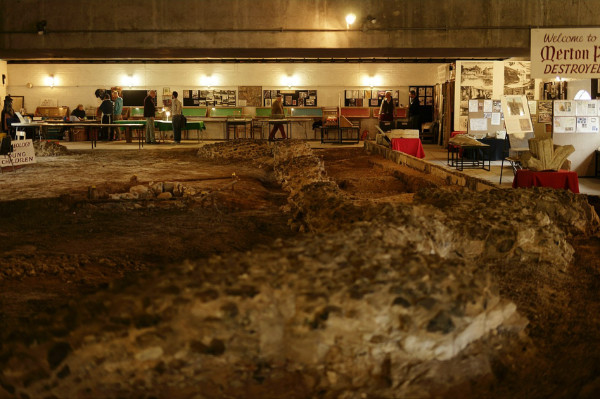
Exploring London’s 100 most popular posts of all time! – Numbers 6, 5, 4 and 3…

The next four in our countdown as we head to the final couple of entries…

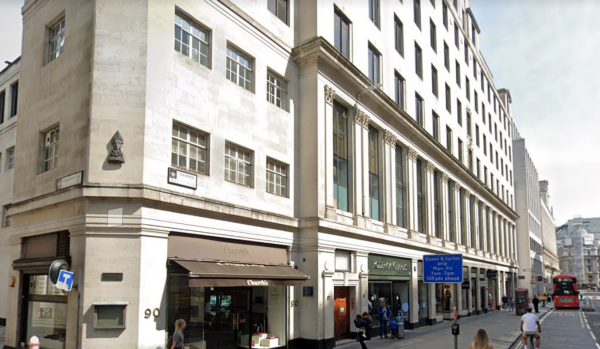
6. 10 fictional character addresses in London – 4. 186 Fleet Street…

5. 10 fictional character addresses in London – 2. ‘Whitehaven Mansions’…

4. A look back at 10 fictional character addresses in London…

3. 10 fictional character addresses in London – 8. The Darling’s House…

Exploring London’s 100 most popular posts of all time! – Numbers 10, 9, 8 and 7…

We’re into the top 10! Here’s the next four in our countdown…

10. 10 London sites associated with Sir Winston Churchill – 5. London residences…

9. 10 fictional character addresses in London – 3. 32 Windsor Gardens…

8. 10 fictional character addresses in London – 9. 7 Savile Row, Burlington Gardens…

7. 10 fictional character addresses in London – 7. Saffron Hill…

Exploring London’s 100 most popular posts of all time! – Numbers 14, 13, 12 and 11…

And, just before we get to the top 10, here’s the next four in our countdown…

14. Treasures of London – The Cheapside Hoard

13. Lost London – The Devil Tavern…

12. 10 fictional character addresses in London – 1. 221b Baker Street…

11. London Pub Signs – The Hung, Drawn and Quartered…

Exploring London’s 100 most popular posts of all time! – Numbers 18, 17, 16 and 15…

The next four in our countdown…

18. LondonLife – New Underground line named in honour of Queen Elizabeth II…

17. Treasures of London – The Pearl Sword…

16. 10 (more) fictional character addresses in London – 8. A square in Soho?…

15. 10 fictional character addresses in London – 10. 165 Eaton Place

Merry Christmas (and the next four in our countdown!)…

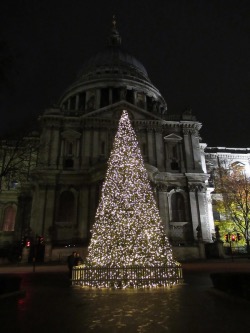
Christmas tree outside St Paul’s Cathedral. PICTURE: Alex Liivet
(licensed under CC BY 2.0)

In what has been, and continues to be, such a hard year for so many, we at Exploring London hope you’re still able to celebrate Christmas in some form this year…

Meantime, here’s the next four in our countdown of the 100 most popular posts of all time…

22. Lost London – The Savoy Palace…

21. What’s in a name?…St Mary Overie…

20. Treasures of London – The Whispering Gallery, St Paul’s Cathedral

19. Treasures of London – Admiral Lord Nelson’s coat

Four unusual London Christmas traditions…3. The Peter Pan Cup…

Postponed due to the coronavirus pandemic this year, the Peter Pan Cup is a swimming event that usually takes place on Christmas Day in Hyde Park’s Serpentine.

The bracing 9am event, which is only open to members of the Serpentine Swimming Club, is a handicapped race across a 100 yard course.

While the tradition of a Christmas Day swimming event goes back to 1864, it became the ‘Peter Pan Cup’ in 1904 when JM Barrie, creator of Peter Pan and a member of the club, presented the first cup to the winner. It was the same year Peter Pan debuted on the London stage (and Barrie would continue to present the cup to the winner until 1932).

Club members have to complete a certain number of winter races to be eligible to swim on Christmas Day. These days the race, which usually starts and ends on the southern bank of the Serpentine, is usually quite a spectacle with hundreds turning out to cheer the swimmers on.

Exploring London’s 100 most popular posts of all time! – Numbers 26, 25, 24 and 23…

The next four in our countdown…

26. 10 iconic London film locations…5. Belle at Kenwood House (but not as you know it)…

25. 10 fictional character addresses in London – 6. Wimbledon Common…

24. Where’s London’s oldest…department store?

23. LondonLife – A rare glimpse inside King Henry V’s chantry chapel…

Exploring London’s 100 most popular posts of all time! – Numbers 28 and 27…

The next two in our countdown…

28. 10 (more) fictional character addresses in London – 4. 138 Piccadilly…

27. Lost London – The ‘Tyburn Tree’

Exploring London’s 100 most popular posts of all time! – Numbers 30 and 29…

London’s back under restrictions meaning doors to many of the city’s institutions are once again closed. So, for the moment, here’s the next two in our countdown…

30. 10 small, ‘secret’ and historic gardens in central London…5. Seething Lane Garden…

29. Lost London – Jacob’s Island…

Four unusual London Christmas traditions…2. The Smithfield Meat Auction…

Reportedly cancelled for this year, the boisterous Christmas Eve meat auction at Smithfield usually draws a considerable crowd eager to snag a bargain.

The origins of the tradition, which apparently started at least 30 years ago, stems from the fact that most of the market butchers take at least a week off over Christmas, generally not returning to their stalls until the new year.

As a result, they would auction off their remaining stock on Christmas Eve to those keen enough to brave the cold and come out.

There has been a market at Smithfield since the 12th century – the premises was rebuilt in the mid-19th century after being formally established by the 1860 Metropolitan Meat and Poultry Market Act.

Exploring London’s 100 most popular posts of all time! – Numbers 32 and 31…

The next two in our countdown…

32. 10 London sites to celebrate Charles Dickens – 5. Seven pubs associated with Dickens (including one he never visited)…

31. The Royal Wedding – Eight curious facts about Royal Weddings past and present…

Exploring London’s 100 most popular posts of all time! – Numbers 34 and 33…

The next two in our countdown…

34. Treasures of London – The lions of Trafalgar Square…

33. Lost London – Mrs Salmon’s Waxworks…

Exploring London’s 100 most popular posts of all time! – Numbers 36 and 35…

We’re picking up the pace in our countdown as the end of the year approaches, so stay tuned. Here’s the next two…

36. Curious London Memorials – 4. The Suffragette Memorial

35. Where’s London’s oldest…church?

10 London buildings that were relocated…A recap…

We recap our recent series ahead of a new series next week…

1. Marble Arch…

2. Crosby Hall, Chelsea…

3. St Mary Aldermanbury…

4. The tower of All Hallows Lombard Street…

5. The Wellington Clock Tower…

6. The spire of St Antholin…

7. St Luke’s, Euston Road…

8. Temple Bar…

9. St Andrew’s Church…

10. Sir Paul Pindar’s house…

Exploring London’s 100 most popular posts of all time! – Numbers 38 and 37…

The next two in our countdown…

38. Treasures of London – Winston Churchill statue, Parliament Square…

37. Lost London – The Egyptian Hall…

10 London buildings that were relocated…10. Sir Paul Pindar’s house…

OK, so our last entry in this series isn’t a house, just a facade. But it is a significant and rare example of part of a pre-Great Fire timber-framed house in London which has been relocated.

This image has an empty alt attribute; its file name is paul-pindars-house-.jpg
PICTURE: tx K.B. Thommpson
(licensed under CC BY 3.0)

The intricately detailed wooden facade, which can now be found in the V&A in South Kensington, was originally part of a three-and-half storey mansion which stood on the west side of Bishopsgate Without (that is, just outside the City of London’s walls).

It was built by Sir Paul Pindar, a wealthy merchant and diplomat who was knighted by King James I in 1620 (we’ll be featuring more of his story in an upcoming ‘Famous Londoners’ article).

He had purchased several properties in the street in 1597 and then incorporated these properties into a single mansion which also included a new section (of which the striking facade survives).

The house, which Shakespeare himself may well have walked past, was unusually large and sufficiently opulent that it served as the residence of Pietro Contarini, the Venetian ambassador, in 1617–18.

By 1660, it had been divided into smaller dwellings and, having survived the Great Fire of London, subsequently became a residence for the indigent. The front rooms on the ground floor, meanwhile, were turned into a tavern named the Sir Paul Pindar’s Head.

By the late 19th century, however, the nearby Liverpool Street Railway Station needed more room for expansion and, as a result, in 1890 the property was demolished to make space.

Part of the facade, however, was carefully dismantled (albeit some large sections, like the projecting carved window frames, were kept intact) and subsequently moved to the V&A where it was reassembled using carpenters’ marks on the wood.

The restored frontage (without the original glass and leading which was replaced in 1890) initially stood near the front of the museum but in the Noughties was delicately moved to where it now stands in the Medieval and Renaissance Galleries.

While the museum is currently closed as a result of coronavirus restrictions, we publish these details for when you can visit. Timed tickets can be booked for future dates here.

WHERE: Victoria and Albert Museum, Cromwell Road (nearest Tube stations are South Kensington and Gloucester Road); WHEN: Special – see above; COST: Free; WEBSITE: www.vam.ac.uk

10 London buildings that were relocated…9. St Andrew’s Church…

Formerly a noted church in London’s West End, St Andrew’s Church now has a new life in Kingsbury.

A drawing of St Andrew’s in Wells Street.

The church’s origins go back to its construction in Wells Street, Marylebone, in the mid-19th century. Designed by Samuel Daukes, the church, the construction of which began in 1845, was completed in February, 1847.

St Andrew’s soon become one of the city’s most fashionable churches (Prime Minister, William Gladstone, was an occasional worshipper).

Rev Benjamin Webb was vicar between 1862-85 – a time when the church was known for its High Anglican services, and it was during his tenure that the church’s rather splendid interior fittings were added.

These included a reredos (featuring five sculptures by James Redfern) designed by GE Street, a high altar by Augustus Pugin, a brass reading desk by William Butterfield and a litany desk by William Burges (now in the V&A).

By the start of the 20th century, the area around the church was being transformed as residences gave way to commercial property and warehouses. The congregation dwindled and eventually the church was declared redundant, its doors closing on Easter Sunday, 1931.

The church in Kingsbury
PICTURE: Google Maps

The church was set to be demolished but there was an outcry and eventually a proposal to relocate it to Kingsbury, in London’s north-west, where there was a congregation urgently needing a new building.

The church was carefully dismantled – each stone labelled and numbered – and then transported 10 miles to Kingsbury where it reconstructed in Old Church Lane.

The rebuild – described at the time as putting together “the biggest jigsaw in the world” (yes, it’s a somewhat overused phrase when it comes to building relocations) – took three years and involved making as few changes to the former structure as possible.

The building was finally reconsecrated on 13th October, 1934, by Arthur Foley Winnington Ingram, the Bishop of London. St Andrew’s Kingsbury remains in use as a church today.

Exploring London’s 100 most popular posts of all time! – Numbers 42 and 41…

The next two in our 10th bithday countdown…

42. Lost London – East India House…

41. Lost London – The Cockpit at Whitehall…

10 London buildings that were relocated…8. Temple Bar…

This ornate Baroque archway only stands with walking distance from where it originally stood marking the entrance to the City of London. But it came to this position by a somewhat roundabout route.

Temple Bar – with statues of Queen Anne and King James I (looking towards St Paul’s Cathedral) PICTURE: David Adams.

The gate was originally constructed at the junction where Fleet Street becomes the Strand, it marked the boundary between the City of London and Westminster.

While the first gate on the site dates back to the 14th century (prior to that the boundary was apparently marked with a chain two posts), the gate we see today dates from 1672 when, despite having survived the Great Fire of London, the previous gate – a crumbing wooden structure – was demolished and this upmarket replacement built to the design of none other than Sir Christopher Wren (earlier designs for the gate created by Inigo Jones were never acted upon).

An artist’s impression of the Temple Bar in 1870 from Illustrated London News.

Made of Portland stone, the new structure featured figures of King Charles I and King Charles II on the west side and King James I and Queen Anne of Denmark on the east (it’s said that a third of the total £1,500 cost was spent on the statuary alone).

Shortly after its construction, it became a location for the display of the remains of traitors (usually heads), the first of which were the body parts of Rye House plotter Sir Thomas Armstrong and the last of which was the head of Jacobite Francis Towneley in 1746 (there’s also a story that such was the interest when the heads of the Rye House plotters – who had planned to assassinate King Charles II and crown his brother, the future King James II, in his place – were displayed, telescopes were rented out so people could get a closer look).

Temple Bar with statues of King Charles I and King Charles II (looking into Paternoster Square). PICTURE: Eric Heupel (licensed under CC BY-NC-ND 2.0)

Among the luminaries who passed under the central arch were Anne Boleyn (the day before her coronation) and Queen Elizabeth I. The Queen did so most famously on her way to give thanks in St Paul’s Cathedral for the English victory over the Spanish Armada and since then, whenever a Sovereign has wanted to enter the City past Temple Bar, there’s been a short ceremony in which the Sovereign asks permission of the Lord Mayor of London to enter. Granting this, the Mayor then offers the Sword of State as a demonstration of loyalty and this is subsequently carried before the Sovereign as they proceed through the City as a sign of the Lord Mayor’s protection.

The Temple Bar stood in its original location until 1878 when, to help traffic flow, it was carefully removed brick-by-brick over a period of 11 days (the City of London Corporation well aware of its historical significance) . It was initially intended that the gateway would be rebuilt somewhere else in the city, but time passed and no suitable site was found.

Instead, the gate lay in pieces in a yard in Farringdon Road before, in the mid 1880s, Sir Henry Bruce Meux had all 2,500 stones transported via trolleys pulled by horses to his estate at Theobalds Park in Hertfordshire and re-erected there as a gateway (the Lady Meux apparently used the small upper room for entertaining – among those said to have dined here was King Edward VII and Winston Churchill).

Temple Bar at Theobolds Park. PICTURE: Christine Matthews (licensed under CC BY-SA 2.0)

In 1976, the Temple Bar Trust was formed to have the archway returned to London – they eventually succeeded 30 years later in 2004 when it was re-erected on its current site between St Paul’s and Paternoster Square at a cost of some £3 million.

The original site of the Temple Bar is now marked with a Victorian era memorial – erected in 1888 – which features statues of Queen Victoria and Edward, the Prince of Wales.

Exploring London’s 100 most popular posts of all time! – Numbers 44 and 43…

The next two in our countdown…

44. 10 (more) curious London memorials…8. The SOE Memorial…

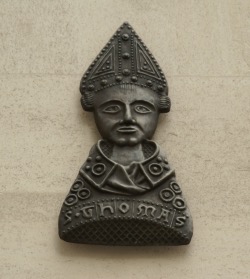
43. Lost London – Chapel of St Thomas á Becket…