LondonLife – Hats…err, on to London’s statues…

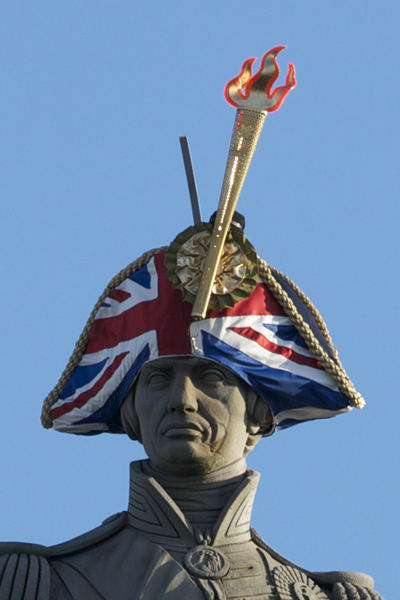
One of the stranger sights in London during this week of Olympic celebration are the many statues around the city adorned with hats – including Trafalgar Square’s iconic statue of Admiral Lord Nelson which now wears a Union Jack hat featuring a replica of the Olympic flame. Designed by Sylvia Fletcher and made by London’s oldest hatters Lock & Co, makers of Nelson’s original bicorn hat, the hat is one of 20 which has been placed upon London statues. It’s all part of Hatwalk, an initiative which aims to take visitors on a tour of the city by bringing some of its most well-known statues to life. Other statues wearing hats include those of former US President Franklin D Roosevelt and former British PM Winston Churchill in Bond Street, the Duke of Wellington near Wellington Arch, and William Shakespeare in Leicester Square. Hatwalk, which features hats designed by some of the UK’s top milliners, was commissioned by the Mayor of London, in partnership with BT, Grazia magazine, the British Fashion Council and the London 2012 Festival. The hats, which appeared on the statues yesterday, will remain on the statues for only four days before they are auctioned for charity. For more on Hatwalk and a map of where the hats are, see www.molpresents.com/hatwalk


Where’s London’s oldest…sports museum?

In honor of the Olympics, we’re staying with a sporting theme over the next couple of weeks and so this week thought we’d take a look at the oldest sports museum in London – and, it is claimed, the world.

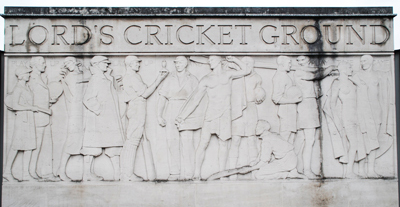
The Marylebone Cricket Club (MCC) Museum is located at Lord’s Cricket Ground in St John’s Wood, just north-west of the City (keep an eye out for our post on Lord’s later this week), and is said to have been collecting cricket-related artefacts since as far back as 1864.

The star sight on display is that tiny urn, known simply as The Ashes, which was given to English captain Ivo Bligh during the English cricket team’s visit to Australia following a game on an estate outside Melbourne on Christmas Eve 1882 (the term was actually first used in August that year when, following an English loss to Australia, at The Oval, The Sporting Times ran an obituary for English cricket and said its ashes would be taken to Australia).

The museum also contains cricket equipment used by some of the game’s greats along with memorabilia celebrating the likes of WG Grace, Victor Trumper, Jack Hobbs, and Donald Bradman as well as more recent players Shane Warne, Rahul Dravid and Paul Collingwood. Other exhibits include the Wisden Trophy, a stuffed sparrow bowled out by Jehangir Khan in 1936 and the battered copy of Wisden’s which EW Swanton used to help him survive a World War II Japanese internment camp.

There is also an extensive collection of cricket-related paintings and photography and a theatre – the Brian Johnson Memorial Theatre – which screens archival cricket footage.

It should be noted that the museum is closed during the Olympics (until 15th August) when Lord’s is playing host to the archery competition (people attending the archery, however, will have free entry). In celebration of the archery, the museum is hosting an exhibition of trophies and pictures related to archery, the centrepiece of which is an arrangement featuring the Musselburgh Arrow and Medals, prizes which have been competed for since 1603.

WHERE: MCC Museum, Lord’s Cricket Ground, St John’s Wood Road, St John’s Wood (nearest Tube Stations are Warwick Avenue, St John’s Wood, Marylebone and Maida Vale); WHEN: Weekdays (with exceptions – check website for details and times); COST: £7.50 an adult/£5 for concessions (or included with tours); WEBSITE: www.lords.org.

Olympics Special – The Olympic Torch Relay, part II…

We take a break from our regular series this week to bring you some images from the second half of the Olympic Torch Relay as it made it’s way around London toward tonight’s Opening Ceremony…


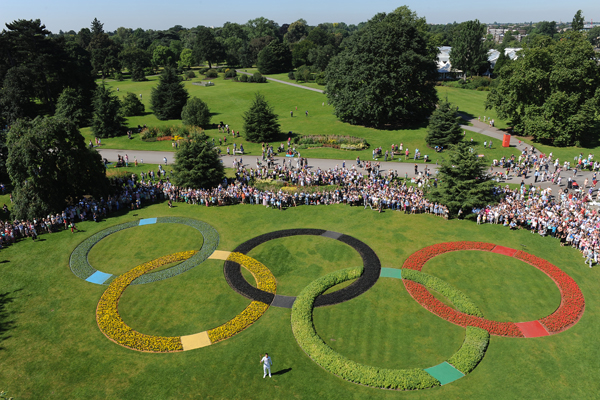
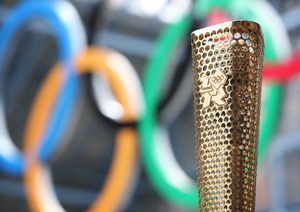
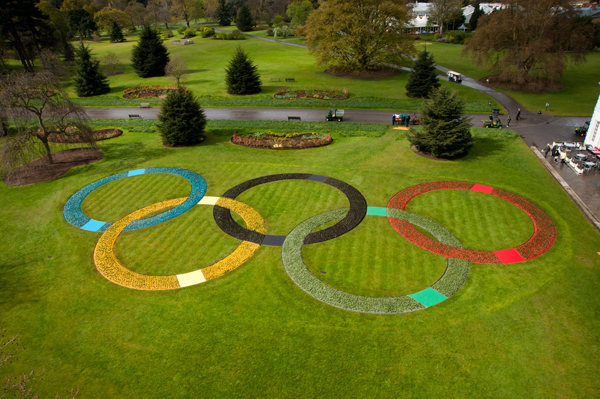
Day 67 (24th July): Tennis player Oliver Golding holds the Olympic Flame in between the Olympic Rings at Kew Gardens, London.

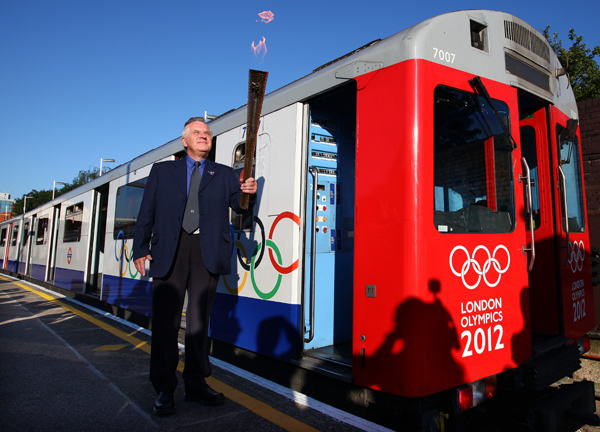
London Underground employee John Light carries the Olympic Flame onto an underground train at Wimbledon Station.

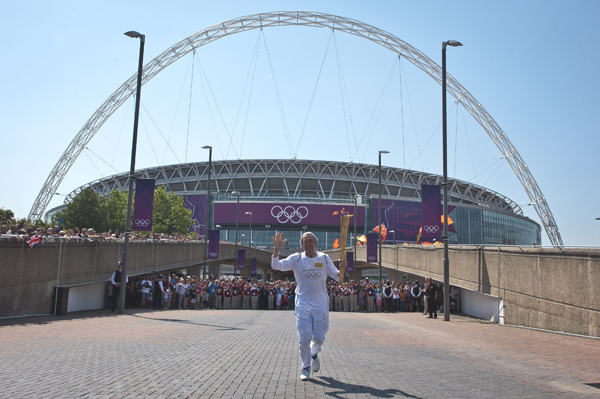
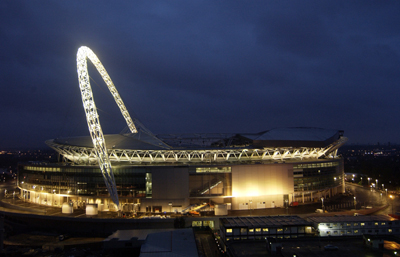
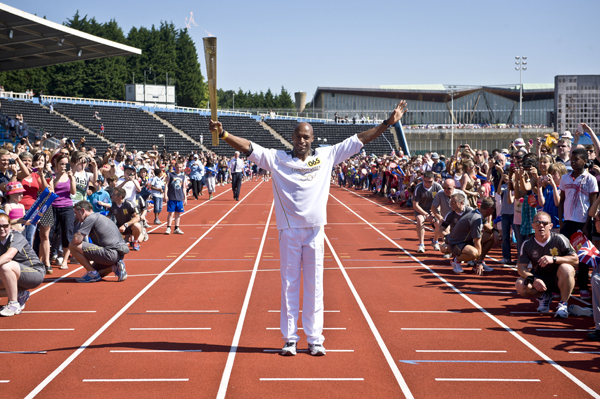
Day 68 (25th July): Former World Cup winning footballer Gordon Banks carries the Olympic Flame down Wembley Way, at Wembley Stadium.


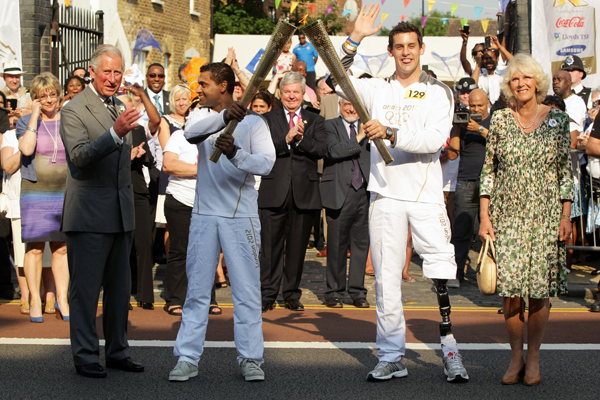
Prince Charles, Duke of Cornwall, and Camilla, Duchess of Cornwall, pose with  young entrepreneur Jay Kamiraz and Paralympian Scott Moorhouse as they kiss together Olympic torches in Tottenham.

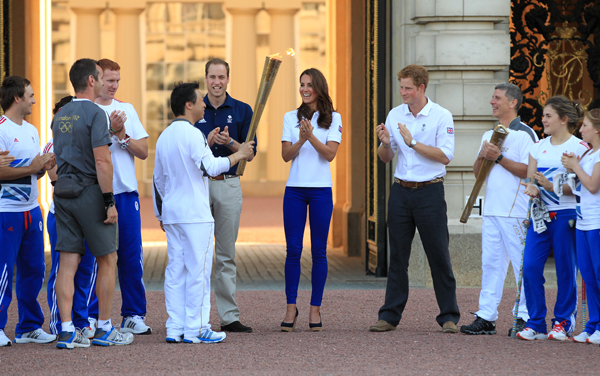
Day 69 (26th July): Disaster mapping charity volunteer Wai-Ming Lee passes the Olympic Flame to mountain rescue team leader John Hulse in front of Buckingham Palace in the presence of Prince William, Kate, Duchess of Cambridge and Prince Harry.

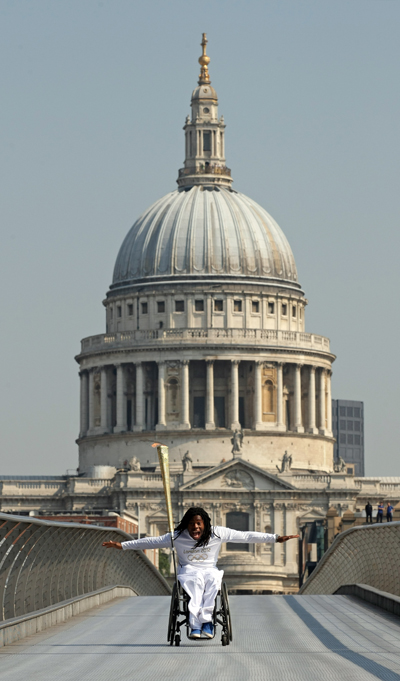
Wheelchair basketballer Ade Adepitan carries the Olympic Flame on Millennium Bridge.

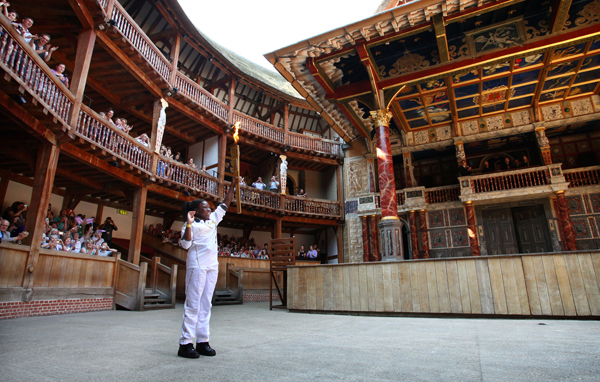
Student Ifeyinwa Egesi holds the Olympic Flame inside the Globe Theatre.

For more on the Torch Relay, see www.london2012.com/torch-relay/

ALL PICTURES: LOCOG.

Around London – Bells…and more bells; Olympic memorabilia; free wifi in the West End; The Arch returns to Kensington Gardens; and, Impressionists at the RA…

• It’s all about the Olympics in London this week and many of the events – like the Opening Ceremony and Torch Relay (see last week’s post) – are well covered elsewhere, but we thought we’d mention a couple of things in relation to the Games: 

The first is the ‘All the Bells’ project which will see bells across London being rung at 8:12am on Friday to “ring in” the first day of the Olympic and Paralympic Games. Work No. 1197: All the bells in a country rung as quickly and as loudly as possible for three minutes, commissioned as part of the London 2012 Festival, is the brainchild of Turner Prize-winning artist and musician Martin Creed and will involve thousands of bells across the nation. Speaking of bells, the City of London has announced that some of the City’s churches will be ringing continuously during the three Olympic marathon events – the men’s, women’s, and Paralympic events. As many as 57 of the country’s most experienced bell ringers, co-ordinated by the Ancient Society of College Youths (a ringing society created in London in 1637) will be working for three to four hours continuously at churches including St Paul’s Cathedral, St Mary le Bow, St Lawrence Jewry, St Magnus the Martyr, St Vedast and St Katharine Cree. During the women’s marathon, an all-female band will be attempting a peal at St Paul’s, the first all-woman attempt on the bells. (Apologies, this article had originally had the time for the bell ringing at 8.12pm – it is in the morning, not the evening!)

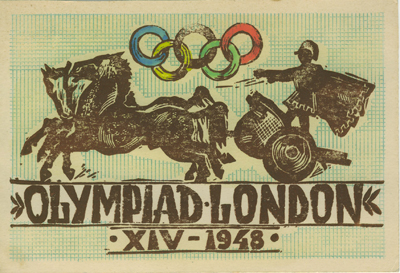
A new exhibition exploring London’s Olympic history has opened at the British Library. Olympex 2012: Collecting the Olympic Games features a range of memorabilia including a swimming costume and the finishing tape broken by – later disqualified – marathon runner Dorando Pietri  from the 1908 London Games (see our earlier post for more on him) as well as posters and artworks, stamps, letters and postcards. The exhibition also features audio interviews with Olympians including William (Bill) Roberts, a relay runner in the 1936 Berlin Olympics, and Dorothy Tyler, a medal-winning high jumper who competed in the 1936 and 1948 Olympics. Presented by the British Library and International Olympic Committee, the exhibition runs until 9th September at the library in St Pancras. Entry is free. For more, see www.bl.uk. PICTURE: Rare 1948 postcard by an unknown artist (c) Private collection/IOC

• A new free wifi network has been launched in London’s West End. Westminster City Council and telco O2 launched the network this week. It will initially cover Oxford and Regent Streets, Trafalgar Square, Leicester Square, Piccadilly Circus and Parliament Square with further areas in Westminster and Covent Garden the next to be included in the network. A once-only registration process is required to join.

• Henry Moore’s famous sculpture, The Arch, has been returned to its original home in Kensington Gardens. The six metre high work was presented to the nation by Moore in 1980 and was positioned on the north bank of the Long Water until 1996 when the structure became unstable and was placed in storage. In late 2010, the Royal Parks began a project with The Henry Moore Foundation to see if the work could be returned to the gardens. Work began to restore the piece – which consists of seven stones weighing 37 tonnes – to its original location earlier this year. For more on Kensington Gardens, see www.royalparks.org.uk/parks/kensington-gardens.

• On Now: From Paris: A Taste for Impressionism. This Royal Academy of Arts exhibition at Burlington House features 70 works from the Sterling and Francine Clark Art Institute in Williamstown, Massachusetts, and includes works by Manet, Monet, Pissarro, Degas, Sisley, Morisot and Renoir as well as those of post-Impressionist artists Corot, Théodore Rousseau and J-F. Millet, and ‘academic’ paintings by Gérôme, Alma-Tadema and Bouguereau. Runs until 23rd September. Admission charge applies. See www.royalacademy.org.uk for more.

10 Historic Sporting Events in London – 4. The 1966 FIFA World Cup at Wembley…

The home of English football, in 1966 Wembley Stadium in north-west London played host to the FIFA World Cup and witnessed England win the coveted cup.

Led out onto the ground by Bobby Moore, the English team, under manager Alf Ramsey, were locked in a 2-2 draw with West Germany when the game went into extra time. English player Geoff Hurst, who had already scored a goal, went on to score two more goals (one of which was particularly controversial with some still believing it didn’t cross the goal-line), giving him a hat-trick of goals and handing England the cup in a 4-2 win.

The team received the Jules Rimet trophy (named for former FIFA president Jules Rimet and replaced with the current FIFA World Cup Trophy in the 1970s) from Queen Elizabeth II.

While the history of Wembley goes back to 1923 when the Empire Stadium, referred to as the “Twin Towers” thanks to its distinctive two domed towers, was built on the site, the current stadium was only officially opened in 2007. Capable of seating 90,000, it is the second largest stadium in Europe.

As the Empire Stadium, the ground – originally built for a British Empire Exhibition – had played host to events including the 1934 Empire Games, the 1948 Olympics, and numerous football finals including the so-called “White Horse final” when a mounted policeman went on the pitch to contain the estimated 200,000 fans who watched the Bolton Wanderers FC defeat West Ham United FC 2-0 in the 1923 FA Cup final.

The current stadium with its iconic arch now plays host to the FA Cup as well as other high-profile matches like the FA Community Shield and large events including rock concerts (a recent vote on the Wembley website found that the greatest event ever held there was a 2007 concert by Muse).

This Olympics, Wembley is hosting numerous football matches including the gold medal match for both men and women, on the 11th and 9th August respectively (the last time the men’s final was played here during an Olympics was in 1948 when England won the bronze). It’s hoped a new record will be set for the number of people attending a women’s Olympic football match (the current record of 76,489 was recorded at the 1996 Olympics in Georgia at the Stanford Stadium) during the Games.

With a one kilometre circumference, the stadium encloses some four million square metres (equivalent apparently to the space taken up by 25,000 London double-decker buses) and features a Royal Box in the middle of the north stand from where all trophies are presented. The roof is partly closable.

There are tours of the stadium (although it’s closed during the Olympics), details of which are below.

WHERE: Wembley National Stadium, Wembley (nearest Tube stations are Wembley Park and Wembley Central or the Wembley Stadium British Rail station); WHEN: Selected dates – see website for details; advance booking strongly recommended (the stadium is closed for events, including the Olympics and before and after); COST: £16 an adult/£9 a child (under 16, under five’s free)/£9 seniors/£41 family ticket (zip wire ride extra); WEBSITE: www.wembleystadium.com/Wembley-Tours.aspx.

PICTURE: Action Images/Paul Harding (courtesy of Wembley National Stadium).

LondonLife – The Olympic Torch Relay (so far)…

The Olympic Torch Relay arrived in London last Friday night and has been moving around the capital ever since. Here are some of the highlights so far (all images are courtesy of LOCOG)…

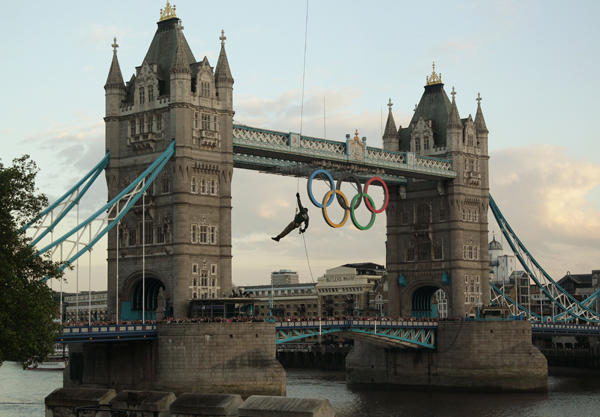
Day 63 (20th July): A Royal Marine, believed to be Martin Williams, is carrying the Olympic Flame as he abseils from a helicopter into the grounds of the Tower of London.

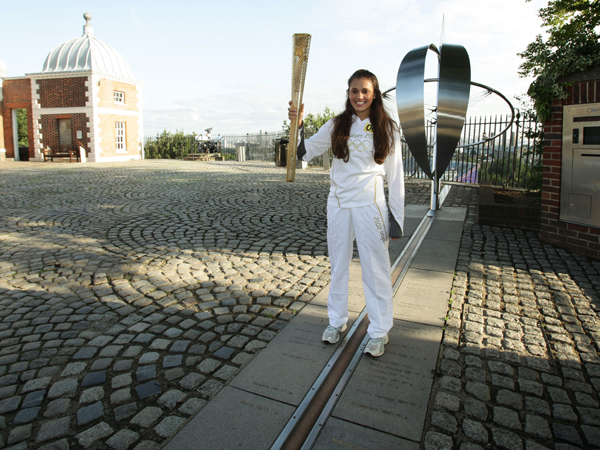
Day 64 (21st July): Swimmer Natasha Sinha holds the Olympic Flame on the Meridian Time Line outside the Royal Observatory in Greenwich.

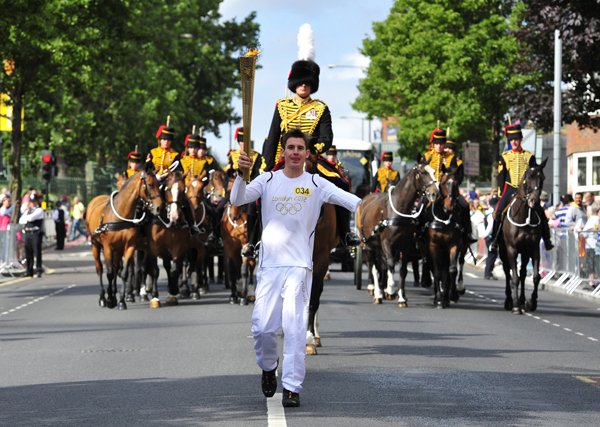
Jaco-Albert Van Gass carries the Olympic Flame through Greenwich.

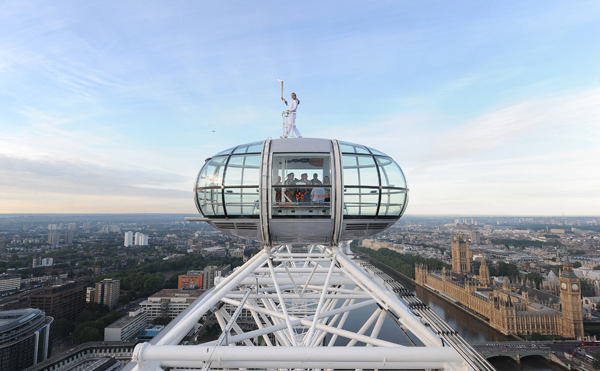
Day 65 (22nd July): Student explorer Amelia Hempleman-Adams poses with the Olympic Flame on top of a London Eye pod.

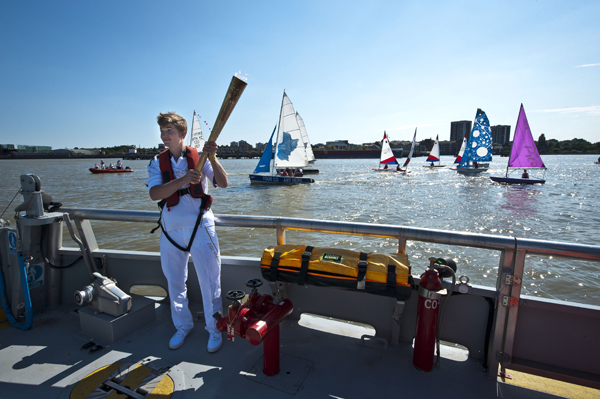
Sailor Aaron Reynolds carries the Olympic Flame on a London Fire Brigade Boat.

Day 66 (23rd July): Sprinter Marlon Devonish carries the Olympic Flame at Crystal Palace stadium in south London.

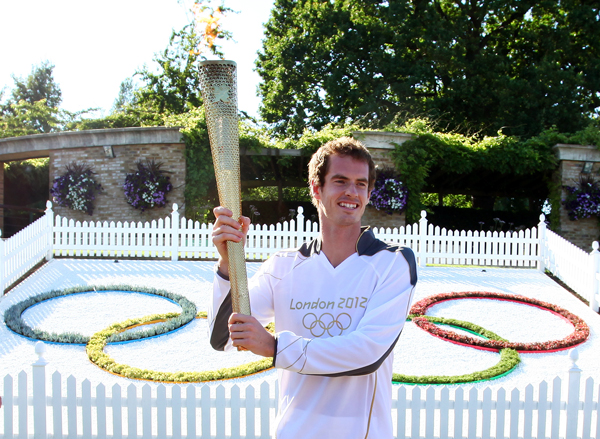
Tennis player Andy Murray carries the Olympic Flame at Wimbledon.

For more on the Torch Relay, see www.london2012.com/torch-relay/

ALL PICTURES: LOCOG.

Famous Londoners – Mr Punch…

Infamous, perhaps, rather than famous, Mr Punch (one half of Punch & Judy) this year celebrated the 350th anniversary of his first public appearance in London (which, in our view, makes him an honorary Londoner!).

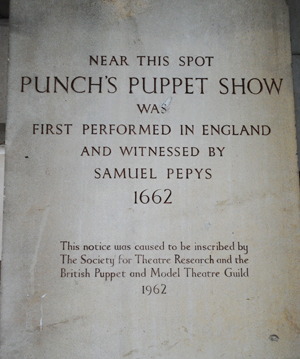
The first documented appearance of the hook-nosed Mr Punch – known for his acrimonious relationship with his wife Judy –  dates back to 9th May, 1662, when diarist Samuel Pepys recorded seeing a Mr Punch puppet performing as part of an Italian marionette show at Covent Garden (officially awarded a Guinness World Record title earlier this year for being the first recorded Mr Punch puppet show).

Mr Punch’s origins go back to Italy (Punchinello is thought to be an anglicised version of the character name of Pulcinella), typically wears a jester’s motley and tall, ‘sugarloaf’, hat with a tassel. Now generally a hand-puppet rather than a marionette, these days he usually performs in a mobile puppet booth with a cast of characters who as well as Judy can include a baby, a police constable and a crocodile.

Storylines – which were initially aimed at adults but are now generally aimed at children – vary but usually include references to current events (and perhaps also some mocking of public figures) and inevitably involve the unruly and often bawdy trickster, Mr Punch, doing away with his foes before uttering the line: “That’s the way to do it!”

Interestingly, Punch & Judy performers refer to themselves as “professors”  – there’s a story, apparently apocryphal, that this title was granted to the performers by King Charles II thanks to his enjoyment of the show. Collecting money from an audience watching the show is known as ‘bottling’ and those who assist the professor by doing so as ‘bottlers’, thanks to the tradition of using a bottle for the task.

Mr Punch reached the height of his popularity in the Victorian and Edwardian ages and could typically be seen carrying on in seaside resorts across the country. The dramatic decline in his popularity since means it can be harder to find a Punch & Judy show today (and even when you do, much of his more brutal antics have been excised from plays so as not to offend modern sensibilities), but it’s still possible to see Punch and Judy performances in many places across the UK including, on occasion, at Covent Garden where there is a plaque (shown above) commemorating the performance seen by Mr Pepys.

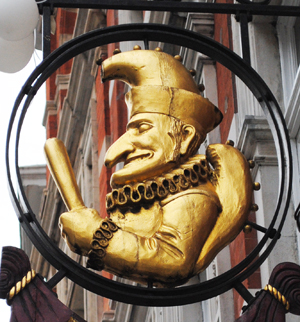
Mr Punch is still celebrated every year at Covent Garden’s May Fayre and Puppet Festival (held close to 9th May – not only the day Mr Pepys saw the puppet but now regarded as Mr Punch’s ‘birthday’) and there is a fellowship of Punch and Judy performers – The Punch & Judy Fellowship – who aim to “preserve, promote and protect” the traditions of the puppet show. Punch can also be seen on the facade of the Punch Tavern in Fleet Street – the sign is pictured above (keep on eye out for our upcoming Pub Signs look at the pub’s history).

Where is it?…#38


The latest in the series in which we ask you to identify where in London this picture was taken and what it’s of. If you think you can identify this picture, leave a comment below. We’ll reveal the answer early next week. Good luck!

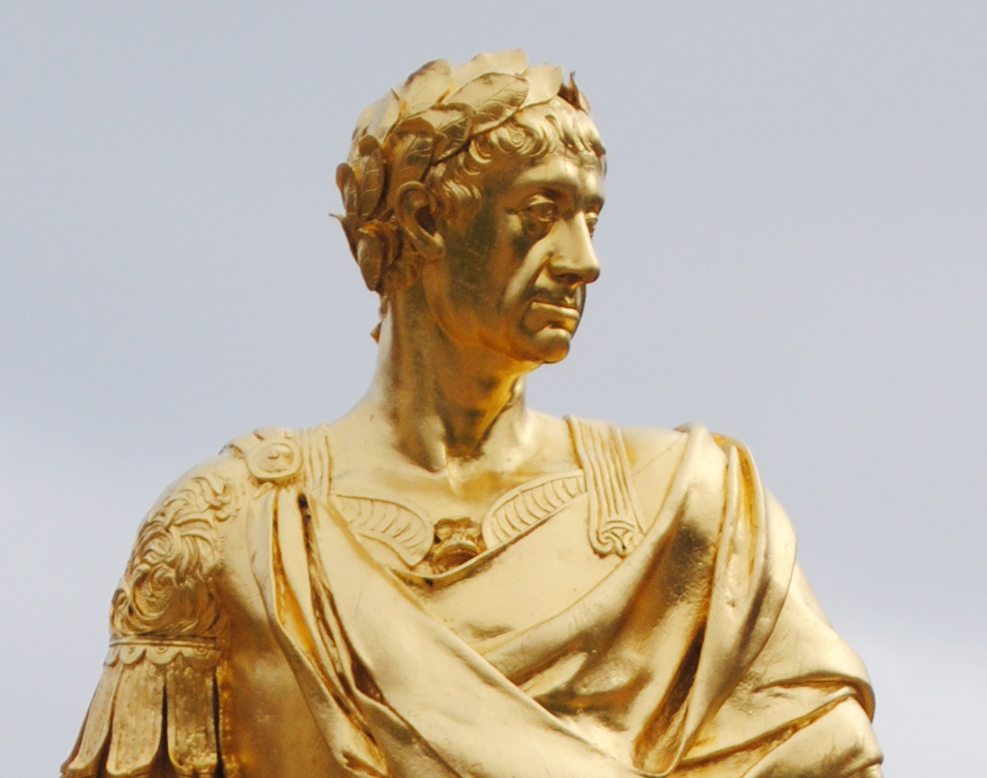
No-one managed it this time. This gilded bronze statue depicts King Charles II dressed as a Roman general and is located in the Figure Court of the Royal Hospital in Chelsea. The king founded the hospital in 1682 to provide a home for retired soldiers (the grand buildings you see are the work of Sir Christopher Wren – see our earlier entry here for more). The 7’6” tall statue, which was re-gilded to celebrate Queen Elizabeth II’s Golden Jubilee in 2002, was presented to the king in 1682 and moved to the hospital after his death in 1685. Although generally attributed to Grinling Gibbons, according to Walking London’s Statues and Monuments, it’s probably actually the work of Arnold Quellin, who worked in Gibbons’ studio. The statue is covered in oak branches on a date around 29th May each year – on a day known as Founders Day or Oak Apple Day – in commemoration of the legendary escape of the future king (by concealing himself in an oak tree) after the Battle of Worcester in 1651, the last battle of the English Civil War. For more on the hospital see www.chelsea-pensioners.co.uk.

Around London: Olympic Torch Relay hits London; mascots pop-up all over the city; and Shakespeare at the British Museum…

• The Olympic Torch Relay arrives in London tomorrow night before working its way around all of the city’s 33 boroughs and reaching the Olympic Stadium for the Opening Ceremony next Friday.  The torch will arrive in the city by helicopter from Guildford tomorrow night and then be abseiled into the Tower of London where it will spend the night ensconced with the Olympic medals. The relay will travel 200 miles over the next week, carried by more than 980 torchbearers. The route is as follows:

  • Saturday, 21st July – Greenwich via Newham, Tower Hamlets and Hackney to Waltham Forest (highlights include a visit to the Cutty Sark);
  • Sunday, 22nd July – Redbridge via Barking & Dagenham and Havering to Bexley (highlights include a ride on the London Eye and a crossing of the Thames);
  • Monday, 23rd July – Lewisham via Bromley, Croydon, Sutton and Merton to Wandsworth (highlights include a visit to a live filming of Eastenders);
  • Tuesday, 24th July – Kingston via Richmond, Hounslow, Hillingdon and Denham to Ealing (highlights include a visit to Kew Gardens);
  • Wednesday, 25th July – Harrow via Brent, Barnet and Enfield to Haringey (highlights include a visit to Wembley Arena);
  • Thursday, 26th July – Camden via Islington, the City of London, Southwark, Lambeth, Wandsworth, Kensington & Chelsea and Hammersmith & Fulham  to Westminster (the many landmarks to be visited include St Paul’s Cathedral, Shakespeare’s Globe, Trafalgar Square, Buckingham Palace and Hyde Park);
  • Friday, 27th July – From Hampton Court Palace (where it will be taken into the maze) on board Gloriana via the Thames to Olympic Park for the Opening Ceremony.

The 70 day torch relay, which kicked off on 19th May, will have travelled a total distance of about 8,000 miles and have involved 8,000 torchbearers by the time it reaches its end. LOCOG and Transport for London have advised people to see the relay at a location closest to their home given the expected crowds. For more detailed route information, see www.london2012.com/torch-relay/route/. PICTURE: LOCOG

Still talking all things Olympics and London’s largest ever ‘pop up’ shop – where you can buy Olympic merchandise – was officially opened by multiple gold medalist Sir Steve Redgrave in Hyde Park last week. The shop, located on Rotten Row, will be the site of special athlete visits during the Games and visitors can have their photo taken with the Olympic Torch.

• Meanwhile, life-sized versions of the Olympic mascot Wenlock and Paralympic mascot Mandeville are popping up at some of London’s key tourist locations. The 83 two metre tall sculptures capture various elements of life in London with incarnations including a Beefeater, a giant red phone box and a replica of Big Ben. The figures can be found on the routes of Stroll, six new discovery trails designed to help both tourists and Londoners get more out of the city. A QR code on the bottom of each of the sculptures directs smartphone users to further information about the discovery trails. The discovery trails are part of the Mayor of London Presents, a city-wide programme featuring free events, shows and activities. For more on what’s happening in your area, see www.molpresents.com. Some of these events are also being run as part of the Festival of London 2012. For more on this, see http://festival.london2012.com.

• On Now: Shakespeare: staging the world. Part of the World Shakespeare Festival taking place in London, this exhibition at the British Museum looks at the then emerging role of London as a “world city” as interpreted through Shakespeare’s plays and examines the role the playhouse performed in this. The museum has collaborated with the Royal Shakespeare Company to produce the exhibition which features more than 190 objects including paintings, jewels and rare manuscripts. These include the Ides of March coin, a Roman gold aureus commemorating the assassination of Julius Caesar (Julius Caesar), the Lyte Jewel, presented to Thomas Lyte in 1610 in thanks for his work in tracing King James I’s lineage back through Banquo (Macbeth), and a 1610 bird’s-eye view of Venice (Othello and The Merchant of Venice). Runs until 25th November. Admission charge applies. For more, see www.britishmuseum.org.

10 Historic Sporting Events in London – 3. The 1934 Empire Games…

Come the end of this year, London will have become the first city in the world to host three Olympic Games. But it’s only hosted the Commonwealth Games – then known as the Empire Games (one of several names changes the Games have been through) – once, in 1934.

Only the second time the Games were held (following the holding of the first British Empire Games in Hamilton, Canada, in 1934), London was selected after the Games were initially awarded to Johannesburg in South Africa but concerns were raised, notably by Canada, about the impact South Africa’s Apartheid policy would have on visiting athletes and officials.

The Games were held in early August and involved 500 competitors from 16 different nations (as a comparison, almost 7,000 competitors attended the 2010 Commonwealth Games held in Delhi, India). Among those countries sending competitors for the first time were Hong Kong and India, Caribbean nations Jamaica and Trinidad, and Rhodesia (now Zimbabwe) in Africa as well as Newfoundland, representatives of which took part independent of the Canadian team, and the Irish Free State (the only Games in which they participated).

Six sports were featured in the Games and, following its use in the 1908 Olympic Games, organisers again turned to White City to host most of the events which included athletics, boxing, lawn bowls and wrestling (although cycling was held in Manchester and swimming and diving (seen as one sport) at the Empire Pool in Wembley). In what was seen as a breakthrough for women everywhere, selected athletic events were included for females (those not deemed “too exhaustive” apparently).

England topped the medal tally with 72 medals (29 gold) followed by Canada, Scotland, South Africa and Australia. Numerous new records were set in the pool.

LondonLife – BBC World Service bids adieu to Bush House…

Seventy-one years of broadcasting from Bush House in Aldwych came to an end last week when the BBC World Service formally left the building. The building has been used by the BBC for foreign language broadcasting since 1941 (the service’s previous home, Broadcasting House in Portland Place having been bombed out), initially for the European Service and, since 1958, for the rest of what was then called the Overseas Service. Designed by American architect Harvey Corbett, the building at the end of Kingsway in west London was constructed in 1923 and opened in 1925 (additions were made in 1928 and 1935). Built for an Anglo-American trading company at the enormous cost of around £2 million (a price tag which led to it being declared the most expensive building in the world), it was named for American businessman, Irving T. Bush. Noted for its distinctive portico featuring two male statues depicting Anglo-American friendship, the premises has been the site of important events including General Charles De Gaulle’s wartime broadcasts to the Free French while among those who worked in the building were George Orwell, who worked for the Eastern Service during World War II. The BBC, who have returned the World Service to Broadcasting House following a major extension, have never actually owned the building – owners during its residency there have included the Church of Wales and its current Japanese owners. For more on Bush House and its BBC connections, see www.bbc.co.uk/historyofthebbc/collections/buildings/bush_house.shtml. For the final broadcast, see www.bbc.co.uk/news/entertainment-arts-18805063. PICTURE: Bush House, 1951 – Courtesy BBC.

What’s in a name?…Victoria Embankment

This Thames-side stretch of land, part of the massive Thames Embankment, was completed in 1870 after several years work and named for the then-reigning monarch, Queen Victoria.

The Victoria Embankment, which runs from Westminster Bridge to Blackfriars Bridge, pushed back the waters of the Thames and reclaimed land which was used for a roadway (built over over the District Tube line) and several public gardens, collectively known as Victoria Embankment Gardens. To see the level of the original river bank, go to the lower entrance of Somerset House on Victoria Embankment and look through the glass floor just outside the doors.

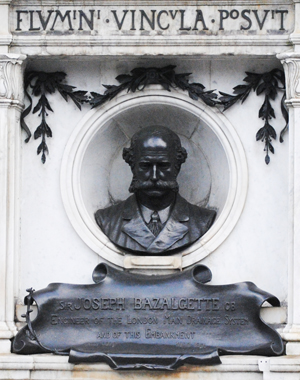
The project was carried out under the direction of engineer of the age, Sir Joseph Bazelgette, as part of his monumental effort to build a modern sewage system for London and to help relieve traffic congestion.

The stretch of roadway and the series of gardens which now occupy part of Victoria Embankment feature numerous statues (including one of Bazelgette himself – pictured) and other landmarks such as the York Watergate (see our previous post), Cleopatra’s Needle (see our previous post) and the RAF Memorial.

There are also several piers positioned along the Victoria Embankment including Embankment, Westminster and Blackfriars Millennium Piers which vessels moored along this section of the riverbank include the HQS Wellington (home of the Honourable Company of Master Mariners) and the HMS President (now a function centre, it is formerly a naval ship named HMS Saxifrage.)

Treasures of London – The Rosetta Stone…

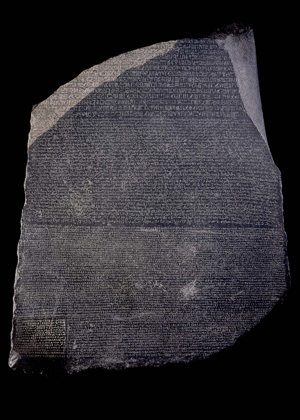
Now housed in the British Museum, the Rosetta Stone, discovered in Egypt in 1799, provided the key to understanding hieroglyphics.

Created in 196 BC, the stone, which measures 112.3 by 75.7 centimetres, has inscribed upon it a priestly decree passed in support of the 13-year-old pharoah, Ptolemy V, and was issued on the first anniversary of his coronation.

Its discovery was a breakthrough in understanding hieroglyphics, which had fallen out of use around the 4th century, due to the fact that the decree was written upon it in three languages – hieroglyphic as well as the everyday Egyptian language of demotic and, importantly, Greek.

Scholars studying the stone were able to use the Greek to decipher the other two languages. Among them were  Jean-François Champollion who announced the translation had been completed in Paris in 1822.

The stone was unearthed near the town of el-Rashid or ‘Rosetta’ by French soldiers in 1799 as they were digging out the foundations of an extension to a fort and following Napoleon’s defeat became the property of the British along with other antiquities under the 1801 Treaty of Alexandria. It has been on display since at the British Museum since 1802 (only briefly removed toward the end of the First World War when it was stored in a subterranean postal railway underneath Holborn).

The stone, said to be the most visited item in the British Museum, underwent a significant restoration and conservation process in 1999 which involved removing grease left by people touching the stone and materials used to create copies of it following its rediscovery – including printers ink from 1799.

WHERE: Room 4, Egyptian Sculpture, British Museum, Great Russell Street (nearest Tube stations are Russell Square, Tottenham Court Road, Goodge Street and Holborn); WHEN: 10am to 5.30pm daily; COST: Free; WEBSITE: www.britishmuseum.org.

PICTURE: The Rosetta Stone © The Trustees of the British Museum

Where is it? #37…

The latest in the series in which we ask you to identify where in London this picture was taken and what it’s of. If you think you can identify this picture, leave a comment below. We’ll reveal the answer early next week. Good luck!

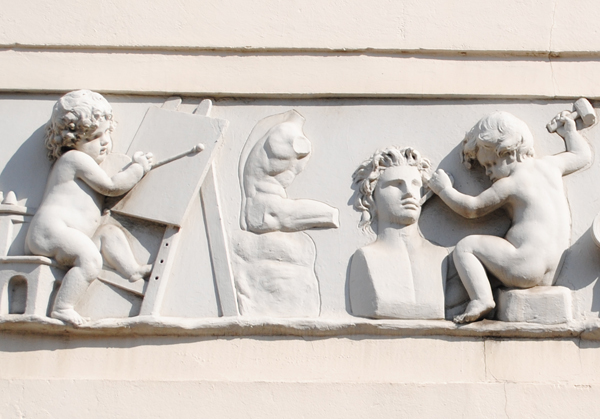
Bit of a harder one this week but well done to Parktown for punting for an embassy in Belgravia. This is indeed in Belgravia – in fact it’s just off Belgrave Square. The panel is part of one of two which adorn the walls of the Norwegian Embassy in Belgrave Place. Dating from 1796, the two panels depicting cherubs in various activities – one of which represents ‘agriculture’ and the other, the one pictured above, ‘arts’ – are made of Coade Stone (a reconstituted material made in the late 1700s/early 1800s, also used to create the South Bank Lion) which originally adorned the Danish-Norwegian Consulate in Stepney and were moved to this listed Georgian terrace, in 1968.

Around London – Richmond’s upsized Olympic rings; cart marking; ‘Sam’ Mussabini honored; and, Tudor twins at the NPG…

• The largest official Olympic Rings were unveiled at Richmond Park National Nature Reserve in London’s south-west this week, having been mown into the grass by the Royal Parks’ shire horses. The rings, which lie on Heathrow’s flight path and are 300 metres wide and more than 135 metres tall, will welcome athletes as they fly in to compete in the Games which kick off later this month. It took six shire horses to create the giant rings – which represent five continents – but they’ll be maintained by just two – Jim and Murdoch. Horses have worked in Richmond Park since as far back 1637 when King Charles I had the park enclosed as a royal hunting ground. Eleven Olympic events will be held on Royal Parks during the Games including road race cycling in Richmond Park. For more on Richmond Park, see www.royalparks.org.uk/parks/richmond-park. PICTURE: LOCOG.

• Almost 50 vehicles, ranging from handcarts to horse drawn carriages, steam powered vehicles to a new London bus, took part in the Worshipful Company of Carmen’s traditional ‘Cart Marking’ procession through the City of London yesterday. The ‘trade’ of carmen dates back to the 13th century when City authorities passed a bye-law controlling carters. At the ceremony, the carmen bring a variety of vehicles which are branded by placing a red hot iron on a wooden plate, with the year letter and the car number, in the continuation of an ancient tradition. The Worshipful Company of Carmen is said to be the oldest transportation organisation in the world. For more on the livery company, see www.thecarmen.co.uk.

• The late athletics coach Scipio Africanus “Sam” Mussabini (1867-1927) was honored this week with the unveiling of an English Heritage Blue Plaque at his former home in Herne Hill in London’s south. Mussabini, whose role in helping 100 metre sprinter Harold Abrahams win gold at the 1924 Olympics was depicted in the film Chariots of Fire (he was played by Ian Holm),  lived at the house at 84 Burbage Road from 1911 to about 1916. It backs onto the Herne Hill Stadium where he worked as a cycling and athletics coach from the 1890s, a period during which he trained several medal-winning Olympic athletes. All up, Mussabini’s runners won a total of 11 Olympic medals including five golds, between 1908 and 1928. For more, see www.english-heritage.org.uk.

On Now: Double Take: Versions and Copies of Tudor Portraits. This display at the National Portrait Gallery features five pairs of nearly identical Tudor portraits and explores how and why they were made. Among the portraits from the gallery’s collection on display are those of King Henry VIII, his wife Anne Boleyn, Archbishop William Warham, the merchant Thomas Gresham and Lord Treasurer Thomas Sackville – all of which are paired with paintings on loan from other collections. Admission is free. Runs until 9th September. For more information on the Making Art in Tudor Britain research project – of which this is a part – see www.npg.org.uk/research/programmes/making-art-in-tudor-britain.

10 Historic Sporting Events in London – 2. The 1948 Olympic Games…

We took a break from our Wednesday special looking at 10 historic sporting events in London but today we resume with a look at the 1948 Olympics.

The first Games held in 12 years due to outbreak of World War II, the XIV Olympiad were known as the “Austerity Games” due to the post-war rationing and economic climate. Britain had been named as host of the 1944 Games in June 1939 but following its cancellation, it was suggested as a venue for the 1948 and in 1946 was duly awarded them over other cities including a Lausanne in Switzerland and a number of US cities such as Los Angeles.

In so doing, London became the second city to host the Games twice (Paris had already done so in 1900 and 1924). Interestingly, when it hosts this year’s Games, London will become the first city to do so.

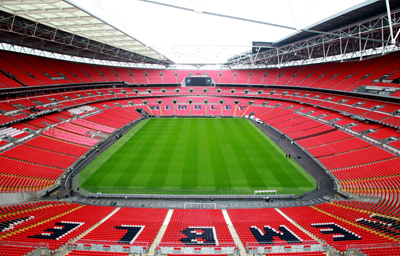
Due to the economic climate, no new venues were constructed for the Games and the athletes were accommodated in existing properties – RAF camps and London colleges – rather than a purpose-built Olympic village. The key venue was the Wembley Empire Exhibition Grounds – the opening ceremony (King George VI officially opened the Games), closing ceremony, athletics and football and hockey finals were all held in Wembley Stadium (pictured above as it is today – we’ll be looking at the “home of British football” in more detail in a later post) while fencing was held in the Palace of Engineering and swimming, diving and water polo at the Empire Pool.

Other London venues included Empress Hall at Earls Court for boxing, weightlifting and gymnastics, the Harringay Arena in north London for basketball and wrestling, the Herne Hill Velodrome for cycling and numerous football and hockey grounds including Arsenal Stadium in Highbury.

More than 4,000 athletes including 390 women took part in 136 events (Japan, Germany and the USSR were not represented while other countries such as Burma, Syria and Venezuela, were among the record-making 59 nations for the first time).

Memorable moments at the Games, which ran from late July into August, included 17-year-old Bob Mathias’ win in the decathlon only four months after taking up the sport (he remains the youngest man to win a men’s athletics event) and that of Dutch woman Fanny Blankers-Koen, the ‘flying housewife’, who won four gold medals in running events.

The Games were also notable for being the first to be shown on household televisions (although few people would have watched the Games this way), for introducing starting blocks for sprinters and for the use of the first covered pool – the Empire Pool at Wembley.

In a sign of things to come, the US won the most medals (84) followed by Sweden (44), and France (29). Great Britain came 12th with 23.

For more, check out the official Olympic website – www.olympic.org/london-1948-summer-olympics.

For more on Olympics history, check out London Olympics, 1908 and 1948.

PICTURE:  Courtesy of Wembley Stadium

LondonLife – Olympic flower power at Kew Gardens…

There’s less than a month to go to the Opening Ceremony of the Olympic Games so we thought it only appropriate to take a look at Kew Gardens’ floral Olympic Rings. Located next to The Orangery, the rings are 50 metres long and made of 20,000 plants including Viola ‘Light Blue’, Viola ‘Clear Yellow’, Viola ‘Black Delight’, apple mint (Mentha suaveolens) and Viola ‘Red Blotch’ plants. Able to be seen from planes on the Heathrow flight path, they were unveiled in April and will be at the gardens until September. For more information on visiting Kew Gardens, see www.kew.org. PICTURE: Courtesy Kew Gardens

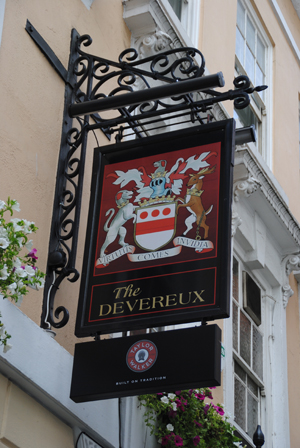
London Pub Signs – The Devereux

Located at 20 Devereux Court, just off the Strand in the area of London known as Temple, The Devereux takes its name from Elizabethan Robert Devereux, the 2nd Earl of Essex, whose mansion, Essex House, once occupied the site on which it stands.

Devereux, a favorite of Queen Elizabeth I, inherited the mansion from his step-father, Robert Dudley, the Earl of Leicester, in 1588 (the house was originally called Leicester House). A spectacular fall from favor which culminated in an abortive coup, however, led to Devereux’s beheading in 1601 (interestingly, he was the last person to be executed inside the Tower of London – the tower where he is held was named after him).

Used by other members of Devereux’s family following his death, a plaque outside the pub explains that the property was sold to property developer, Nicholas Barbon (also noted as the founder of fire insurance), in 1674, and that he had it demolished soon after.

The present building is said to date from 1676 and was originally two houses. Soon after its construction, it became the premises of the famous Grecian Coffee House which had moved from Wapping Old Stairs.

Noted as a meeting place for prominent Whigs, it was also frequented by members of the Royal Society such as Sir Isaac Newton, Sir Hans Sloane and Dr Edmund Halley as well as writer, poet and politician Joseph Addison and Richard Steele, editor of The Tatler (who gave the coffee house as the magazine’s postal address).

The early 1840s, the premises was into lawyers’ chambers and then later into the public house which now occupies it.

There’s a bust of Essex on the facade beneath which is written the inscription, “Devereux Court, 1676”. The pub is these days part of the Taylor-Walker group. For more, see www.taylor-walker.co.uk/pub-food/devereux-temple/pid-C7177.

For a great book on London’s pubs, take a look at London’s Best Pubs: A Guide to London’s Most Interesting & Unusual Pubs.

Where is it? #36…

The latest in the series in which we ask you to identify where in London this picture was taken and what it’s of. If you think you can identify this picture, leave a comment below. We’ll reveal the answer early next week. Good luck!

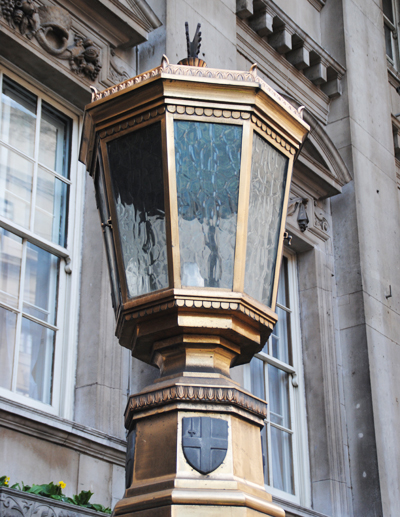
Of course, as Parktown, Carol Stanley and Alma Lewis all pointed out, this is one of the lanterns outside of Mansion House, home of the Lord Mayor of London (the giveaway was the coat-of-arms of the City of London on the lamp stand).

The Mansion House, designed in the Palladian style by George Dance the Elder, was specifically built for the Lord Mayor of London in the mid 1700s and features accommodation for the Lord Mayor and Lady Mayoress as well as grand state rooms for entertaining including the Old Ballroom and the Great Egyptian Hall.

We’ll be looking in more detail at the history of the Mansion House in a future post.

For more on touring the house, see www.cityoflondon.gov.uk/Corporation/LGNL_Services/Leisure_and_culture/Local_history_and_heritage/Buildings_within_the_City/Mansion_house/Tours_of_Mansion_House.htm.

Lost London – The Savoy Palace…

At one time the grandest of medieval townhouses in London, the history of the Savoy Palace, also known as the Palace of the Savoy, goes back to at least the 13th century.

A mansion was built here by Simon de Montfort, the ill-fated Earl of Leicester, in 1245. Following his death, it and the land between the Strand and the Thames were gifted by King Henry III to Peter, Count of Savoy, and it was renamed the Savoy Palace (apparently originally spelt Savoie).

The uncle of the king’s young wife Eleanor of Provence, Peter had accompanied his niece to London for her wedding to the king at Canterbury Cathedral on 14th January, 1236, and decided to stay. In 1241, the king named him the Earl of Richmond and in 1246 granted him the land upon which the property was built.

After being briefly given to a religious order, Queen Eleanor gifted the property to Prince Edmund (“Edmund Crouchback” – a term referring to his entitlement to wear a crusader’s cross, not a hunchback), the 1st Earl of Lancaster and younger brother to King Edward I.

It was subsequently occupied by Edmund’s successor earls and, later, dukes. Among the ‘guests’ to visit the palace during the 14th century were the French King Jean (John) II, held there for three years following his capture by the Black Prince at the Battle of Poitiers during the Hundred Years War in 1356.

Interestingly, as the property of the Dukes of Lancaster, the precinct around the palace was considered part of County Palatine of Lancaster (created in 1351), meaning that the rule of the dukes was applied here instead of that of the king – a situation which remained in place until the 1800s.

The palace eventually became the property of John of Gaunt, the 2nd Duke of Lancaster and third son of King Edward III. The richest and most powerful man in the kingdom (he was all but king in name during the younger years of King Richard II in whose name he ruled), Gaunt’s home was said to be sumptuous.

It’s perhaps not surprising then that it become a focus of the rebels during the Peasant’s Revolt in 1381 (it had been attacked unsuccessfully a few years earlier). They attacked and destroyed the property, razing it to the ground. (The story includes the tale that 32 men drank themselves to death after becoming trapped in the cellar while the palace burned).

The site, however, continued to be referred to as that of the Savoy and in the early sixteenth century King Henry VII, by order of his will, financed the founding of the Savoy Hospital on the site for the poor people (the Queen’s Chapel of the Savoy is a relic of this building – see our earlier post here). The hospital closed in 1702 and was later demolished (we’ll deal with this in more detail in a later Lost London post).

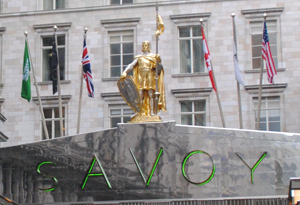
The site, which stands on the north side of the Thames just west of Waterloo Bridge,  is now occupied by the salubrious Savoy Hotel (the entrance of which is pictured above) and the Savoy Theatre, which, like the hotel, was founded by impressario Richard d’Oyly in the 1880s (the theatre was the first building in the country to be entirely lit by electric lighting).

The name of the Savoy Palace is also remembered in street names around the site including Savoy Street, Savoy Hill, Savoy Steps, Savoy Way and Savoy Place.