This Week in London – Young V&A opens its doors; contemporary African photography; and, Yehudi Menuhin honoured…

The Young V&A’s Town Square PICTURE: © Luke Hayes courtesy of Victoria and Albert Museum, London.

The new Young V&A in Bethnal Green has opened its doors and a free summer festival takes place this weekend. Designed with and for children aged up to 14-year-olds, the Young V&A features more than 2,000 objects, dating from 2,300 BC to today, found across three galleries – ‘Play’, ‘Imagine’ and ‘Design’. The ‘Play’ gallery includes a ‘Mini Museum’ as well as a construction zone called Imagination Playground in which children can build dens, The Arcade in which they can explore Minecraft worlds and Adventure in which they can create stories inspired by objects on show. The ‘Imagine’ gallery features a new performance space, portraits of local children and luminaries such as Quentin Blake, Kenneth Branagh and Linda McCartney, while ‘Design’ showcases innovative objects and case studies that explore how things are designed, made and used, and the ways in which design can change the world. Among the objects on show at the museum is everything from a life-size Joey the War Horse puppet to a Microline car suspended from the ceiling, Harry Potter’s Nimbus 2000 broomstick, Christopher Reeve’s original Superman costume and a large-scale installation of doll’s houses – Place (Village) – by Rachel Whiteread. Meanwhile, the free Summer Festival, which takes place on Saturday and Sunday, invites visitors to explore the museum as well as join in free and creative activities and see performances from young talent including Britain’s Got Talent finalists IMD Legion, the east London-based Grand Union Orchestra, and hula-hoop performance group Marawa’s Majorettes. There’s also the chance help create a large-scale art installation with Leap then Look. For more see vam.ac.uk/young.
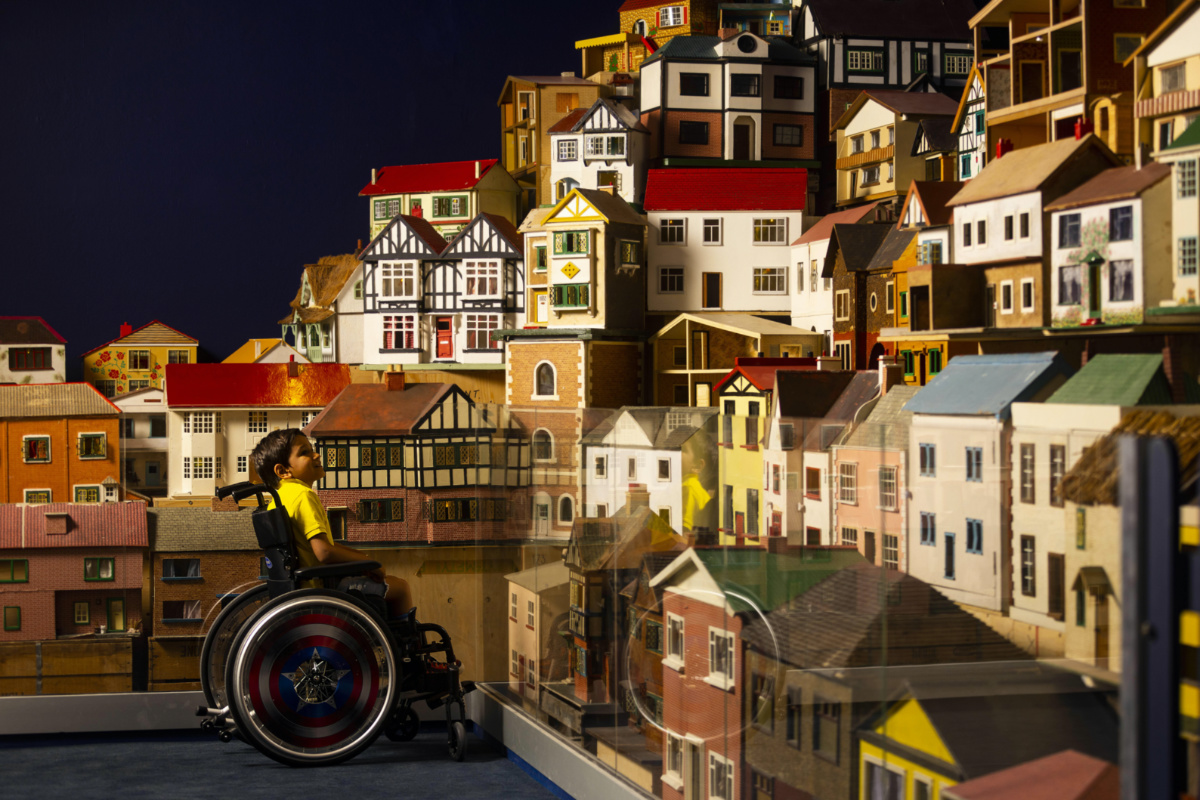
‘The Place (Village)’ installation in Imagine Gallery at the Young V&A PICTURE: © David Parry, courtesy of Victoria and Albert Museum, London
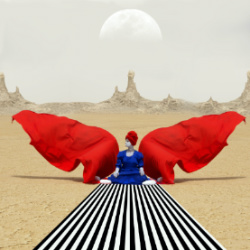
Aïda Muluneh, ‘Star Shine Moon Glow, Water Life’, 2018 Photograph, inkjet print on paper; 800 x 800mm Commissioned by WaterAid. ©  Aïda Mulune

A major new exhibition celebrating contemporary African photography has opened at the Tate Modern. Featuring works by 36 artists, A World in Common: Contemporary African Photography is spread across seven thematic sections and highlights contemporary perspectives on cultural heritage, spirituality, urbanisation and climate change. As well as illuminating alternative visions of Africa’s many histories, cultures and identities, the display also explores the rise of studio photography across the continent during the 1950s and 1960s – a time when many African nations gained independence – before moving on to document the expansion and transformation of cities today as well as exploring themes of migration and climate activism. Runs until 14th January, 2024. Admission charge applies. For more, see tate.org.uk.

Celebrated 20th century violinist and conductor Yehudi Menuhin has been honoured with an English Heritage Blue Plaque at his former home in Belgravia. The six-storey house at 65 Chester Square, built by Thomas Cubitt in 1838, was where Menuhin lived and worked for the last 16 years of his life. The lower-ground floor vaults provided space for his collection of violins while an open space on the fourth floor served as his studio, a place which hosted much of his teaching and mentoring and where he also practiced yoga – including his famous headstand.

Send all items to exploringlondon@gmail.com.
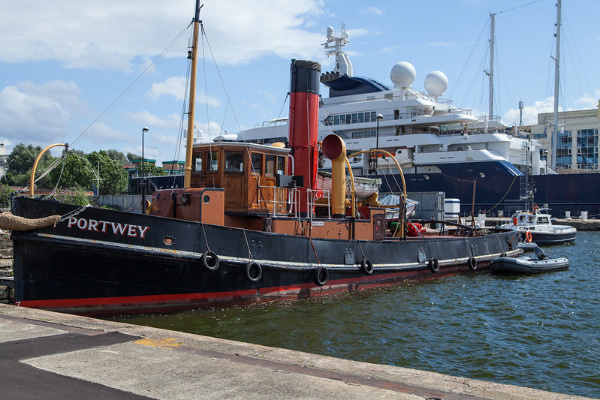
10 historic vessels in London’s Thames…6. ‘Portwey’…

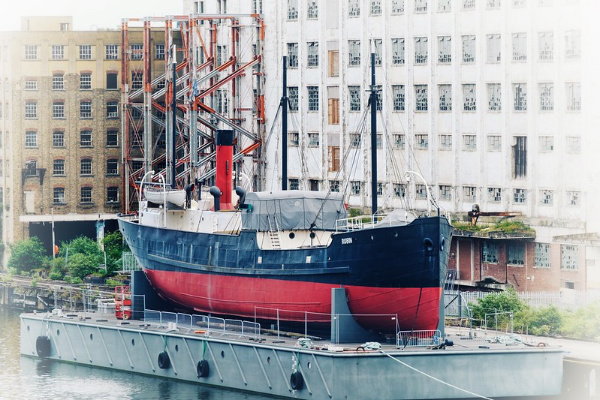
One of only two twin screw, coal fired steam tugs still active in the UK, the steam tug Portwey can these days be found in London’s Docklands.

PICTURE: Paul Gravestock (licensed under CC-BY-NC-ND 2.0)

Ordered by the Portland & Weymouth Coaling Co Ltd, Portwey (the name comes from the company’s) was built by Harland & Wolff at Govan yard in Glasgow and launched on 10th August, 1927.

The 80 foot long vessel was based in Weymouth, Dorset, performed a range of tasks including carrying coal to steamers and being on call for any ship in distress requiring assistance or salvage. This included extinguishing a fire aboard the Danish timber-carrier Bodil in 1928, assisting ships like the cargo steamer Winslow (which had developed a list in heavy seas in 1932), and the Winchester Castle which had run aground in 1936, and even being involved in the search for a sunken submarine in 1932.

The Portwey was seconded by the Admiralty and moved to Dartmouth in Devon during World War II. Narrowly avoiding German bombs while in the harbour, during this time the tug was went to the assistance of ships attacked by the enemy. In 1944, she was assigned to US forces as they prepared for D-Day and her duties including clearing obstructions from the channel and supplying fresh water to naval vessels as well as, when a rehearsal for the landings went wrong at Slapton Sands, rescuing personnel and landing craft.

After the war, the Portwey resumed duties as a harbour tug including ferrying pilots and customs officers out into the Channel. In 1947, she helped put out a fire at the Queen’s Hotel in Dartmouth.

The Portwey was sold to the Falmouth Dock and Engineering Company in Cornwall in 1952. As well as rescuing the captain and first officer of the cargo ship Flying Enterprise, during this period she was involved in the construction of the Lizard Lifeboat Station in Cornwall, and a car ferry slipway at Holyhead in north Wales.

In 1967, with coal-fired steam tugs being replaced by diesel-engined ships, she was laid up to be scrapped. But it wasn’t the end for the Portwey, which was bought by Richard Dobson, the assistant harbour master at Dartmouth. Along with a group of friends, he returned her to working condition and during the 1960s and 1970s, she took part in many events on the River Dart and around Torbay.

In 1982, the Portwey joined the Maritime Trust’s Historic Ship Collection at St Katharine’s Dock where the newly formed Friends of Portwey continued with restoration and operation of the tug.

The Friends of Portwey became the Steam Tug Portwey Trust in 2000 and purchased the tug from the Maritime Trust, moving the vessel to West India Dock.

WHERE: Steam Tug Portwey, West India Dock (South Quay) (nearest DLR station is South Quay); WHEN: 2pm to 9pm Wednesdays; WEBSITE: www.stportwey.co.uk.

LondonLife – By the canal…

Looking down Regent’s Canal from Pritchard’s Road bridge in Haggerston. PICTURE: Samuel Regan-Asante/Unsplash

This Week in London – McCartney’s photographic portraits; Georgian-era ice-cream; and, the UK’s rocky past…

In the wake of last week’s reopening of the National Portrait Gallery, another new exhibition – this time focused on the photography of Paul McCartney – opened yesterday. Paul McCartney Photographs 1963-64: Eyes of the Storm reveals, for the first time, portraits captured by McCartney using his own camera between December, 1963, and February, 1964, – a period during which John, Paul, George and Ringo went from being Britain’s most popular band to international stardom. The images reveal McCartney’s personal perspective on what it was like to be a Beatle at the start of what became known as ‘Beatlemania’ through images captured everywhere from gigs in Liverpool and London to performing on The Ed Sullivan Show in New York. Runs until 1st October. Admission charge applies. For more, see www.npg.org.uk/whatson/exhibitions/2023/paul-mccartney-photographs-1963–64-eyes-of-the-storm/.

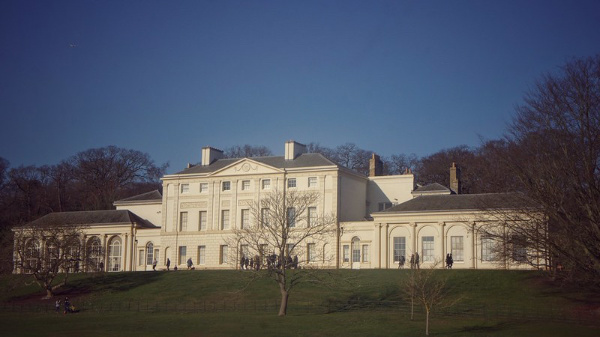
Kenwood House. PICTURE: Marc Barrot (licensed under CC BY-NC-ND 2.0)

Kenwood House in London is among 13 English Heritage sites across the country where you can try out Georgian-era “brown bread ice-cream” this summer. Created in partnership with family ice cream maker Marshfield Farm, the flavour is inspired by some of the more bizarre flavours of ice-cream popular among the Georgians including cucumber, black tea and parmesan. For the full list of places where it will be available, head to www.english-heritage.org.uk/about-us/search-news/the-best-thing-since-sliced-bread–english-heritage-re-creates-georgian-brown-bread-ice-cream-this-summer/.

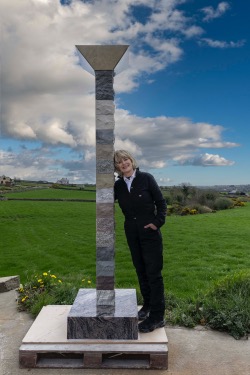
Angela Palmer with ‘Tower of Time’. PICTURE: Ewa McBride Photography.

A unique sculptural portrait of the UK formed with interlocking blocks of stones from all four countries is on show in an exhibition at the Pangolin London Sculpture Gallery in King’s Cross. Four Nations is just one of the works by Highbury-based artist Angela Palmer in the display, Deep Time: Uncovering Our Hidden. Among others is the 2.5 metre high Tower of Time, which features 16 rocks from the four countries including a 2.5-billion-year-old White Anorthosite rock, the same type of rock brought back from the Moon by Apollo 15 in 1971, and Torus of Time, a one-metre diameter ring representing the country’s three billion year history as a circle of time. Runs until 16th September. For more, see www.pangolinlondon.com.

Send all items to exploringlondon@gmail.com.
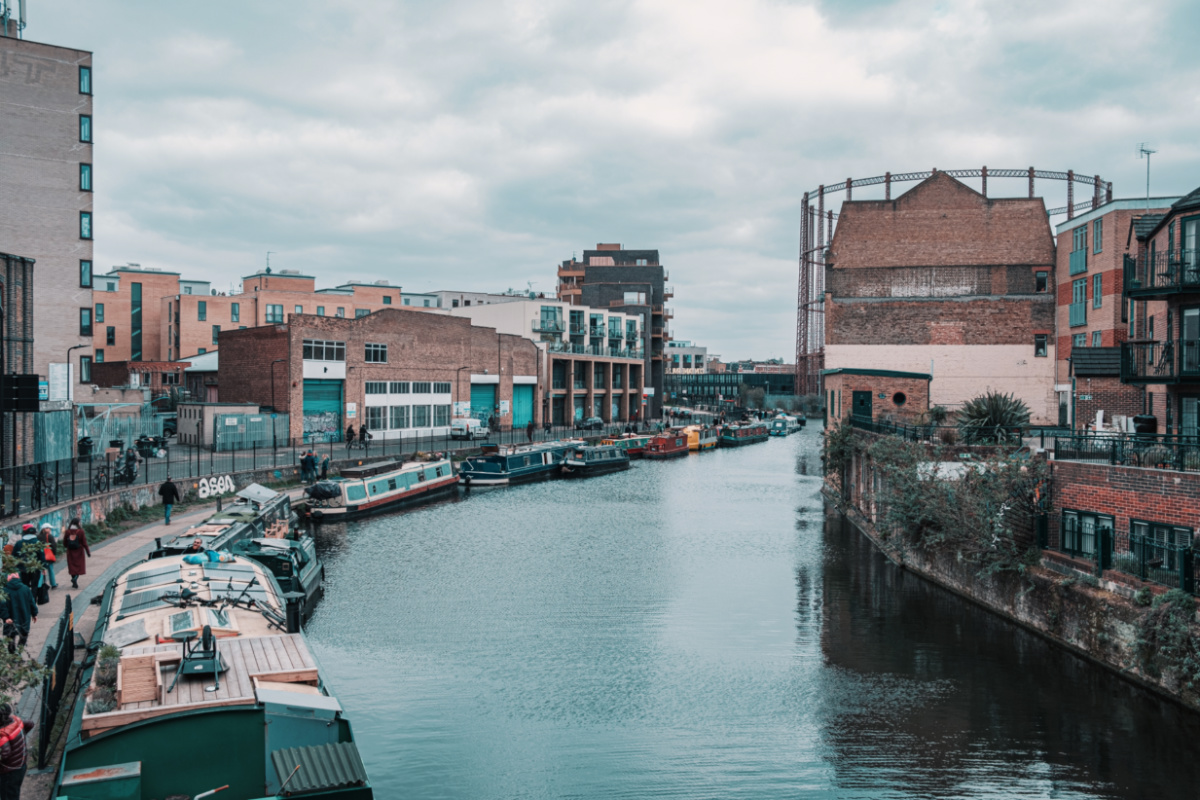
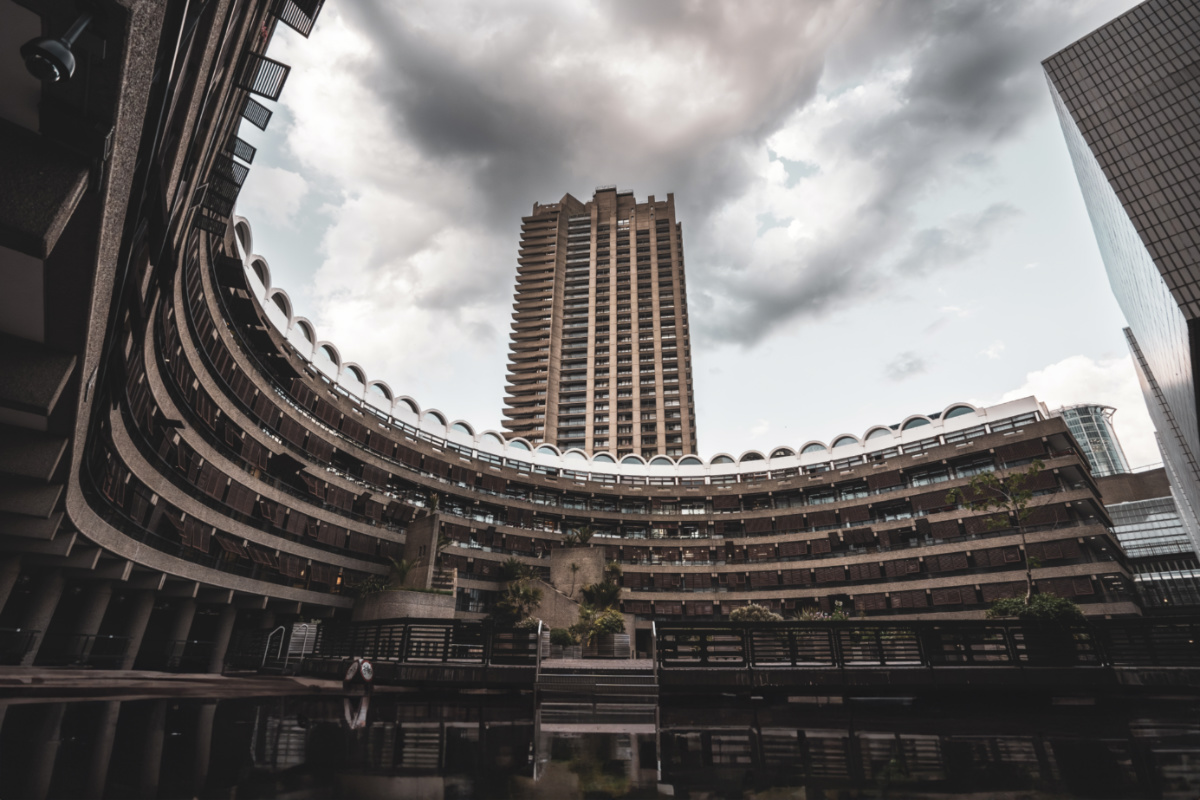
LondonLife – Barbican curvature…

PICTURE: Artem Zhukov/Unsplash

A Moment in London’s History…The opening (and subsequent burning) of Alexandra Palace…

This month marks the 150th anniversary of the fire which destroyed the first Alexandra Palace in the north of London, only two weeks after it was opened.

Conceived by British architect Owen Jones as a “palace of the people”, the palace at Muswell Hill was created to serve as a public centre of recreation, entertainment and education for the people of north London as something of a counterpart to the Crystal Palace in the city’s south.

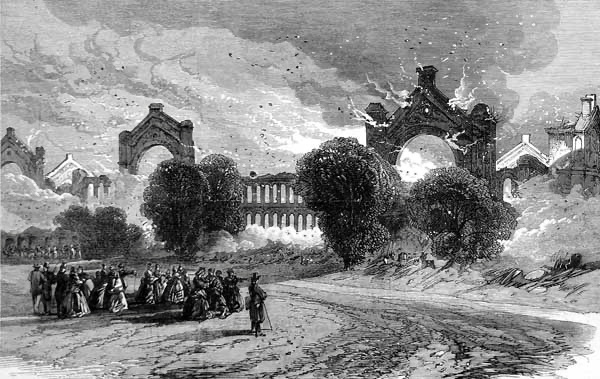
The 1873 fire as depicted in the Illustrated London News.

Designed by Alfred Meeson and John Johnson, the massive glass, iron and brick building covered some 250,000 square feet. It was constructed using recycled materials from the vast temporary building built for the 1862 International Exhibition in South Kensington. Building works commenced in September, 1865, and it was completed in early 1873.

Officially named Alexandra Palace after the popular Princess of Wales, Alexandra of Denmark (although the name Palace of the People – which had originally been given to the project – remained an alternative as did, later, the shortened “Ally Pally”), it featured a vast 900 foot long central nave capped with a 220 foot high dome as well as first floor galleries and terraces.

The palace and surrounding park were officially opened on 24th May, 1873, the 54th birthday of Queen Victoria. The grand celebration, which was attended by tens of thousands of people, featured concerts, recitals and ended with fireworks.

It was only 16 days after the opening, at lunchtime on 9th June, that the palace was destroyed by a fire believed to have started when a burning ember from a brazier being used by plumbers working on the roof set fire to the building’s timber. Numerous horse drawn and manual fire engines were dispatched to the scene along with some 120 firefighters but to no avail.

Tragically three staff members died as a result of the blaze which left only the outer walls of the palace standing. Among the items destroyed was a collection of English pottery and porcelain which, comprising some 4,700 items, had been on loan.

Plans to rebuild the palace were quickly acted upon and a new and improved palace opened on 1st May, 1875. This building survived a fire in 1980 but about a third of the building was destroyed.

The now Grade II-listed building has since been rebuilt(but that’s a story for a another time).

This Week in London – National Portrait Gallery reopens with Yevonde; Engineers gallery at the Science Museum; and, Victoria Embankment stones reused…

The Creativity, Conflict and Crown display at the National Portrait Gallery, London. PICTURE: © Gareth Gardner for Nissen Richards Studio
John Gielgud as Richard II in Richard of Bordeaux by Yvonne (1933), given by the photographer, 1971 © National Portrait Gallery, London.

• The National Portrait Gallery reopens today following a complete refurbishment of the building and construction of a new learning centre – the largest redevelopment of its history. And the first major exhibition to be seen focuses on the ground-breaking work of 20th century British photographer Yevonde (1893-1975). The exhibition – Yevonde: Life and Colour – is the largest of the artist’s work and will feature more than 25 newly discovered photographs among the more than 150 works on display. As well as commercial commissioned works and still lives, the display will also include portraits of some of the most famous faces of the time including George Bernard Shaw, Vivien Leigh, John Gielgud, Princess Alexandra and Margaret Sweeney, Duchess of Argyll as well as Surrealist patron and poet Edward James. It will also celebrate Yevonde’s role as an innovator, show-casing her experimentations with solarisation and the Vivex colour process. The National Portrait Gallery acquired Yevonde’s tri-colour separation archive with funding from The Portrait Fund and went through an extensive research, cataloguing and digitisation process funded by CHANEL Culture Fund. Admission charge applies. Runs until 15th October. For more, see www.npg.org.uk.

A new gallery dedicated to world-changing engineering innovations and the people behind them opens at the Science Museum tomorrow. ‘Engineers’ celebrates the UK’s engineering heritage and showcase innovations through the global lens of the Queen Elizabeth Prize for Engineering and its winners (its opening marks a decade of the prize). The gallery will spotlight the stories of more than 60 engineers working in a range of fields sitting in four sections – ‘Bodies’, ‘Lives’, ‘Connections’ and ‘Creating’. Items on show in the gallery – which adjoins the Technicians: The David Sainsbury Gallery which opened in November last year – include the first digital camera, the cutting-edge CMR ‘Versius’ surgical robot arm and a miniature atomic clock which the entire GPS system depended upon. Entry to the level one gallery is free. For more, see https://sciencemuseum.org.uk/engineers.

• Granite stones that once formed part of Victoria Embankment have been installed around the City in a project celebrating the role of stone in the City’s creation. Called From the Thames to Eternity, the project – designed by Matthew Barnett Howland and Oliver Wilton from University College London and CSK Architects – features stones which have been removed from the embankment to enable the new Thames Tideway Tunnel. Originally quarried in the 19th century, mainly in Cornwall and Scotland, for use in Joseph Bazalgette’s Thames River wall at Victoria Embankment, they are being installed temporarily and will later be reused in another project.

Send all items to exploringlondon@gmail.com

10 historic vessels in London’s Thames…5. ‘Cutty Sark’…

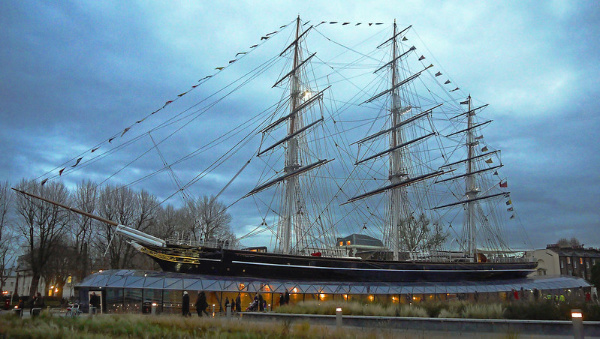
Almost destroyed in a May, 2007, fire, the Cutty Sark, the world’s last surviving 19th century tea clipper, is now a major international tourist attraction (although no longer in the Thames but on a dry dock beside the river).

The Cutty Sark in Greenwich. PICTURE: It’s No Game (licensed under CC BY 2.0)

The Cutty Sark was built in Dumbarton, Scotland, in 1869, for shipping company Willis & Sons.

Designed by Hercules Linton specifically for the China tea trade (meaning with speed in mind), she cost some £16,150 and featured some 32,000 square feet of sails, a staggering 11 miles of rigging with a main mast standing 153 feet high and a hull sheathed in a copper and zinc alloy to prevent damage.

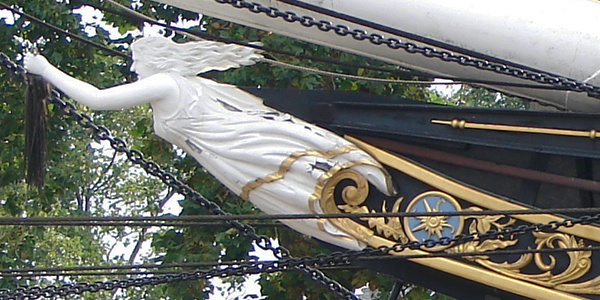
Her name was taken from a Robert Burns poem, Tam o’ Shanter, in which a witch is given the nick-name Cutty-sark because of the short undergarment – in 18th century Scots, a “cutty-sark” or “little shirt” – that she wore (the vessel’s figurehead is a representation of the witch).

On her maiden voyage, the Cutty Sark departed from London on 15th February, 1870, bound for Shanghai and carrying a general cargo including wine, spirits and beer and manufactured goods. Reaching its destination on 31st May, it then returned to London, arriving on 13th October laden with 1,305,812 lbs of tea.

It subsequently made another seven trips to China, collecting its last tea cargo in 1877. Unable to source further tea cargoes, the ship was then used to transport different cargoes to various destinations around the world including everything from coal and gunpowder, to jute, whiskey and buffalo horns.

PICTURE: Pat Scullion (licensed under CC BY-NC-ND 2.0)

There was a tragic episode aboard the ship in 1880 when the First Mate Sidney Smith killed seaman John Francis. Smith was confined by Captain James Wallace then helped him escape at Anger in Indonesia. The crew refused to work as a result and Wallace decided to continue the voyage with just six apprentices and four tradesmen but when the ship was becalmed in the Java Sea for three days, he committed suicide by jumping overboard. Wallaces was replaced by William Bruce but a later inquiry suspended him from service because of his incompetence.

While it was never the fastest ship on the tea trade (although it came close on return journey from Shanghai before a rudder mishap in 1872), it did establish itself between the mid-1880s and early 1890s as the fastest ship in the wool trade.

But with steamships starting to dominate the wool trade, in 1895, the Cutty Sark was sold to Portuguese firm J Ferreira & Co and, renamed the Ferreira, spent the next 20 years transporting cargoes between ports including Oporto, Rio, New Orleans and Lisbon.

Damaged during a storm in 1916, the clipper was subsequently converted into a barquentine in Cape Town, South Africa, and then sold in 1920 to Wilfred Dowman, a retired windjammer skipper and owner of the training ship Lady of Avenel.

The Cutty Sark’s figurehead. PICTURE: Sanba38 (licensed under CC BY-SA 3.0)

Her former name now restored, Dowman set about restoring the ship – now docked at Falmouth in Cornwell – back to being a tea clipper and using her as a cadet training ship.

Following Dowman’s death in 1936, the Cutty Sark was given to the Incorporated Thames Nautical Training College, Greenhithe, Kent, where she was used as an auxiliary vessel for the cadet training ship HMS Worcester.

The Cutty Sark was sent to London and moored in the Thames for the 1951 Festival of Britain before returning to Greenhithe.

The deteriorating state of the ship led to the formation of The Cutty Sark Society and in a ceremony held just before the coronation of Queen Elizabeth II, Prince Philip, patron of the society, took possession of the ship on its behalf.

In December, 1954, the ship was towed to a specially constructed dry dock at Greenwich and after three years of restoration work was opened to the public by Queen Elizabeth II in 1957.

The ship has remained there ever since. In November 2006, the ship’s rig was dismantled in preparation for a restoration project but a fire broke out aboard the ship on 21st May, 2007, and almost destroyed it.

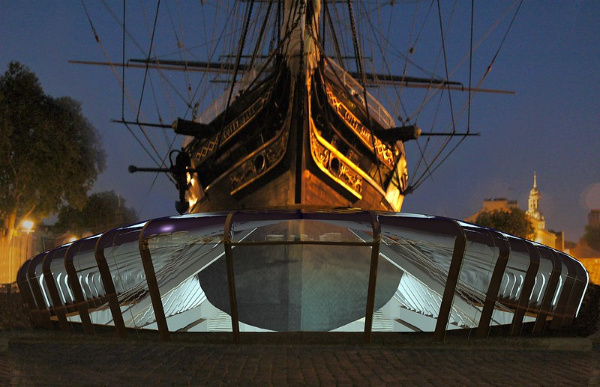
The Cutty Sark’s bow. PICTURE: Visit Greenwich (licensed under CC BY 2.0)

Following a major restoration and development project which saw the lower part of the ship, from the waterline down, encased in glass, it was officially reopened by Queen Elizabeth II and Prince Philip on 25th April, 2012. It is now under the operational management of Royal Museums Greenwich.

WHERE: The Cutty Sark, King William Walk, Greenwich (nearest DLR is Cutty Sark; nearest overground stations are Greenwich and Maze Hill); WHEN: Daily 10am to 5pm; COST: £18 adults; £9 children; WEBSITE: www.rmg.co.uk/cuttysark.

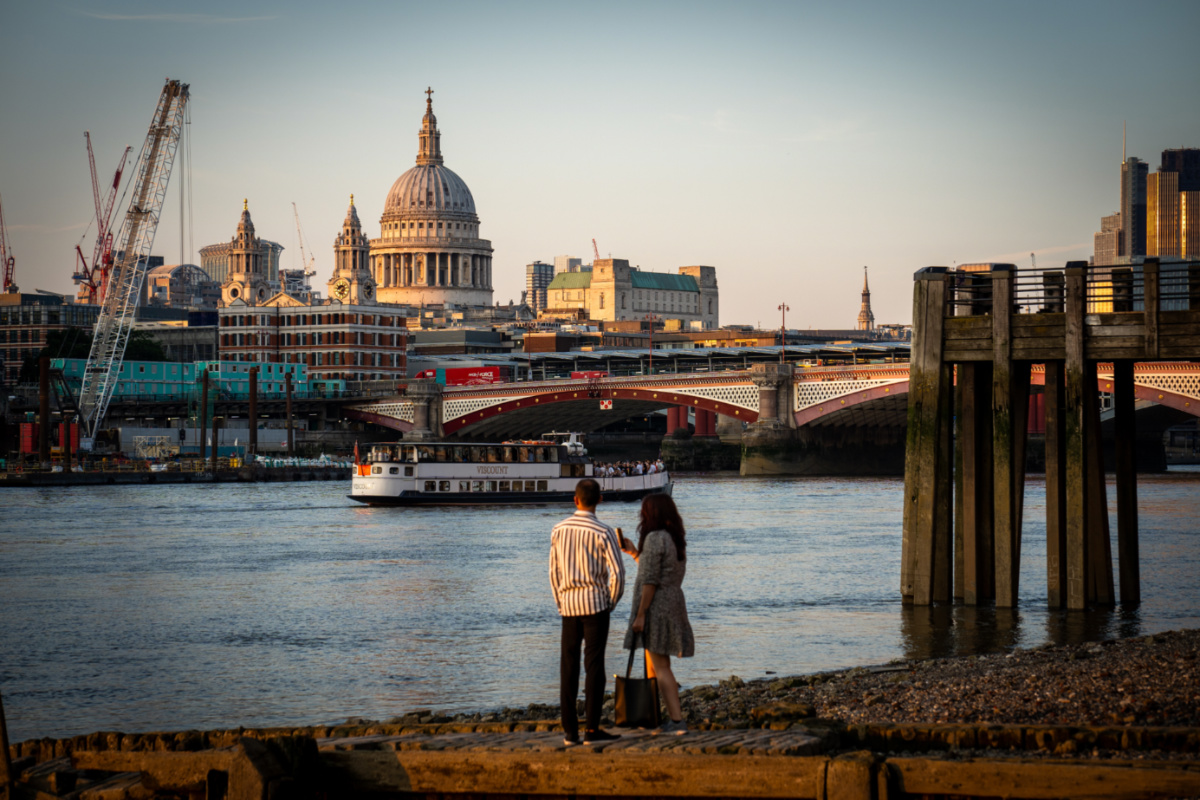
LondonLife – On the Thames shore…

PICTURE: Artem Zhukov/Unsplash

LondonLife Special – A new king honoured at Trooping the Colour…

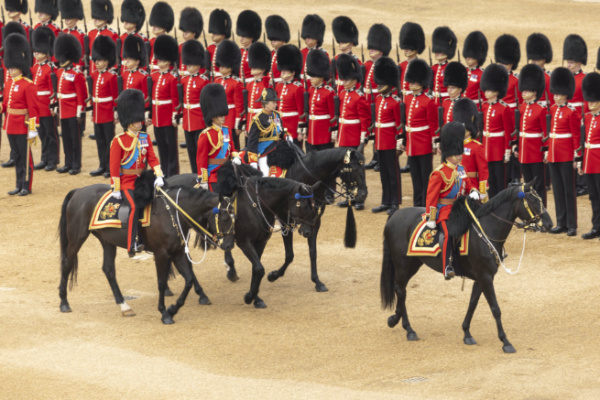
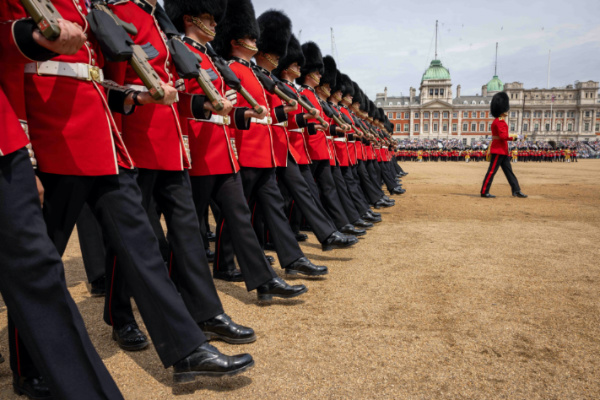
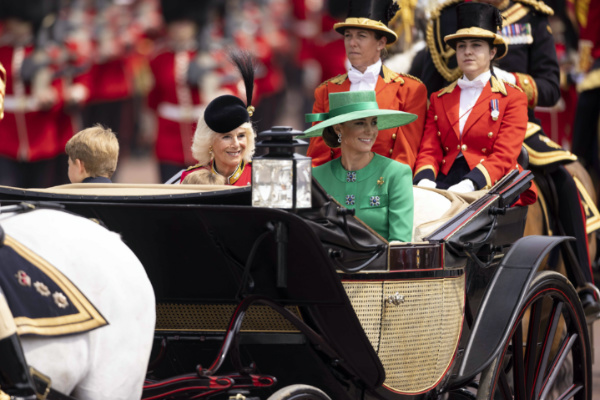
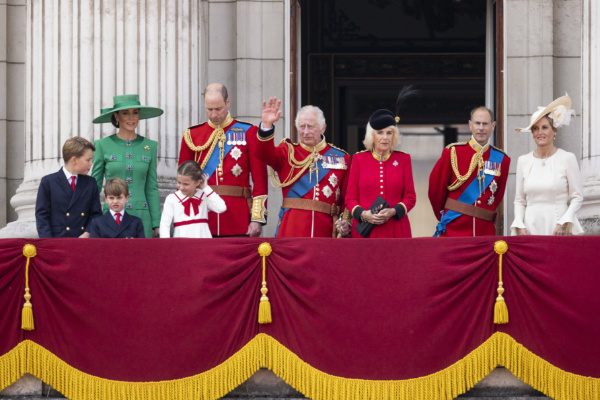
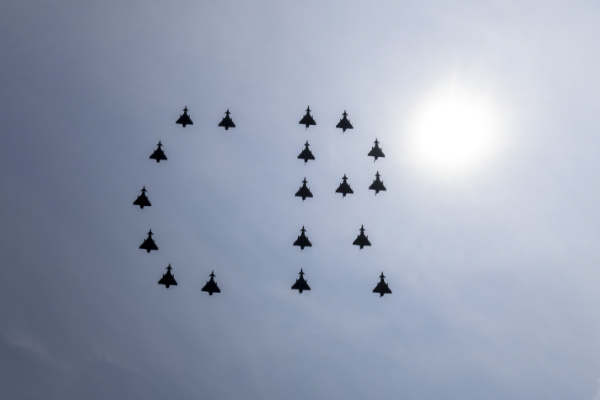
King Charles III attended his first Trooping the Colour as monarch on Saturday. The King rode on horseback for the ceremony in keeping with the tradition his mother, Queen Elizabeth II, had kept until 1986 when she was 60. More than 1,400 soldiers, 200 horses and 400 musicians took part in the event which also featured a flypast and Buckingham Palace balcony appearance. The Trooping of the Colour has marked the official birthday of the British sovereign for more than 260 years. This year it was the Welsh Guards who held the honour of trooping their colour for the King’s Birthday Parade.

King Charles III, William, Prince of Wales, The Duke of Edinburgh, and Princess Anne arriving on horseback at Horseguards where the Trooping the Colour ceremony is held. PICTURE: Cpl Danny Houghton RLC/ UK MOD © Crown copyright 2023
The Household Division march onto Horseguards Parade Ground. PICTURE: Cpl Nathan Tanuku RLC/UK MOD © Crown copyright 2023
Catherine, Princess of Wales (right) and Queen Camilla (centre) return by carriage to Buckingham Palace from Horse Guard’s Parade. PICTURE: Sgt Donald C Todd/UK MOD © Crown copyright 2023
The Household Cavalry Mounted Regiment making up of The Life Guards and The Blues and Royals, together provide the Sovereign’s Escort back to the Palace after the parade. PICTURE: AS1 Sam Holden RAF/UK MOD © Crown copyright 2023
The Household Division form up near Buckingham Palace. PICTURE: AS1 Tom Cann RAF/UK MOD © Crown copyright 2023
King Charles III and senior members of the royal family gather on the balcony of Buckingham Palace to watch the flypast after Trooping the Colour. PICTURE: Sgt Donald C Todd/UK MOD © Crown copyright 2023
The Typhoon Display Team form the Royal Cypher of The King. PICTURE: AS1 Tom Cann RAF/UK MOD © Crown copyright 2023

This Week in London – Wren at Work; music moments captured in photographs; and, the RA’s 255th Summer Exhibition…

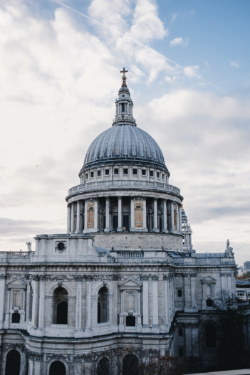
Wren’s monument – St Paul’s Cathedral. PICTURE:
Aaron Gilmore/Unsplash

A recreation of Sir Christopher Wren’s office while he was working on St Paul’s Cathedral can be seen at the Guildhall Art Gallery from today. The faux 17th century environment, created by Chelsea Construction, will allow visitors to explore the building methods and tools of the age, as well as the daily lives of 17th century diarists including Robert Hooke, John Evelyn and Margaret Cavendish, and a case study of how citizens lost and regained their properties during and after the Great Fire of 1666. A specially commissioned map by artist/cartographer Adam Dant will provide insight’s into Wren’s life and times and will be displayed alongside illustrations by architect George Saumerez-Smith and members of the Worshipful Company of Chartered Architects, a scale model of St Paul’s Dome by students at Kingston University, and stone models from master mason Pierre Bidaud. The Wren at Work exhibition is part of Wren300. Admission is free but booking are recommended. For more, see www.cityoflondon.gov.uk/events/wren-at-work-wren300-exhibition.

Photographs capturing Pete Townshend’s guitar flying through the air at Madison Square Garden and Noel Gallagher during the making of the video for Wonderwall are just two of the images on show in a new exhibition at the Barbican Music Library. Celebrating the 25th anniversary of music photography collection Rockarchive.com, In The Moment: The Art of Music Photography also features images of everyone from David Bowie to Debbie Harry, Queen, Biggie Smalls, led Zeppelin, Lady Gaga and Amy Winehouse, capturing them in recording sessions at live gigs and at photo shoots. The free exhibition, which opens on Friday, can be seen until 25th September. For more, see www.cityoflondon.gov.au/services/libraries/barbican-music-library. Meanwhile, a bust of Sir Simon Rattle is being unveiled today at the library in tribute to his five decades in classical music. Sir Simon, who has made over 100 recordings. became music director of the Barbican’s resident orchestra, the London Symphony Orchestra, in 2017 and will conclude his tenure this year.

The Royal Academy’s 255th annual Summer Exhibition opened this week under the theme of ‘Only Connect’ (inspired by a quote from the novel Howards End by EM Forster). Exhibiting artists include British sculptor Lindsey Mendick, Barbados-born painter Paul Dash, American multi-media artist Ida Applebroog, St Lucia born painter Winston Branch, Colombian sculptor Carlos Zapata and British painters Caragh Thuring and Caroline Walker, and Irish fashion designer Richard Malone, who has created a dramatic mobile installation which hangs in the Central Hall. There are also works by Royal Academicians including Frank Bowling, Michael Craig-Martin, Tracey Emin, Gillian Wearing and the late Paula Rego. Runs until 20th August. Admission charge applies. For more, see royalacademy.org.uk.

Send all items to exploringlondon@gmail.com

10 historic vessels in London’s Thames…4. ‘Massey Shaw’…

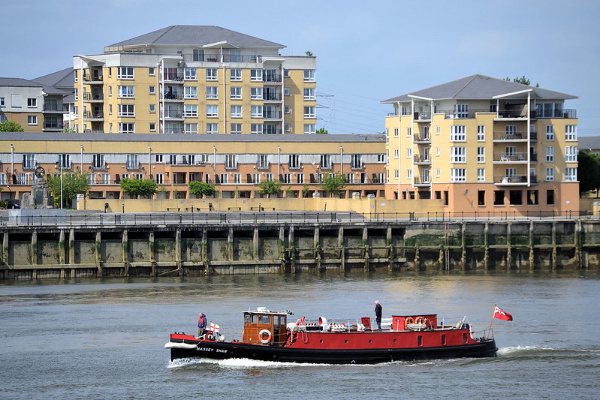
The Massey Shaw in The Thames in 2015. PICTURE: R~P~M (licensed under CC BY-NC-ND 2.0)

Moored at West India Dock, the Massey Shaw is a former London Fire Brigade fireboat.

The fireboat was constructed in 1935 for a cost of £18,000 by the J Samuel White company in Cowes on the Isle of Wight. Named for Sir Eyre Massey Shaw – the first Chief Officer of what was then named the Metropolitan Fire Brigade, the vessel was designed to London County Council specifications with a deliberately low profile so it could fit under the Thames bridges in all tides.

The vessel, which was was powered by two eight cylinder diesel engines and featured a main deck monitor as well as eight deck outlets (and a wheelhouse which was added later), soon proved its worth, playing an important role in saving what the press said was a million pounds worth of stock at a large warehouse fire on Colonial Wharf.

During World War II, the Massey Shaw took part in Operation Dynamo, forming part of the small boat flotilla which evacuated British troops from the beach at Dunkirk. She ferried more than 500 troops to a larger ship offshore and transported almost 100 back to England and it’s believed she was the last of the small boats to leave Dunkirk harbour (rescuing survivors from a French vessel which struck a mine along the way).

Back in London, Massey Shaw performed a critical role during the Blitz, pumping large quantities of Thames water to douse fires along the city’s waterfront.

It remained in service until the early 1970s, although it had operated as a reserve boat since 1960 with newer models taking over frontline duties.

Decommissioned in 1971, the Massey Shaw was found abandoned 10 years later at St Katharine Dock by a group who went on to found The Massey Shaw Fireboat Society with a view to preserving the vessel. They were granted a 50 year lease on the vessel.

In 1985, the Massey Shaw joined the Association of Dunkirk Little Ships on their return to Dunkirk for the first time since 1965 and two years later, she attended the centenary of Sir Eyre Massey Shaw’s review of 1000 firemen at Oxford.

In 1990 the Massey Shaw was sunk close to the London Fire Brigade headquarters at Lambeth but was subsequently salvaged and the following year, after restoration work, joined the 50th anniversary return trip to Dunkirk.

The society gained full ownership of Massey Shaw in 2002 and restoration work was carried out by the TV programme Salvage Squad (a second appearance on the show and more work followed two years later).

In 2008, a £500,000 Heritage Lottery Grant was used to fund the restoration of the vessel at Gloucester docks. She returned to London by road in 2013 where the restoration was completed and in 2015 was officially launched back on the River Thames with an event at the Westminster Boating Base.

Later that year she participated in another “little ships” armada to Dunkirk, this time commemorating the 75th anniversary of the evacuation. Massey Shaw has since taken part in other events including celebrations marking Queen Elizabeth II’s record as longest reigning monarch in 2015.

The vessel is now moored at the eastern end of West India Docks on the Isle of Dogs.

While Massey Shaw did appear in the 1958 film, Dunkirk, recapturing its role as one of the “little ships”, it did not appear in the 2017 film of the same name.

WHERE: Massey Shaw, West India Dock, Poplar (nearest DLR station is South Quay; nearest Tube station is Canary Wharf); WHEN: Between March and November, from 11am to 3pm daily (check website for details); WEBSITE: https://masseyshaw.org.

LondonLife – Millennium Bridge silhouettes…

PICTURE: Hanlin Sun/Unsplash

What’s in a name?…Carmelite Street (and Whitefriars Street)…

The view looking north from the southern end of Carmelite Street. PICTURE: Google Maps

These two City of London thoroughfares – which run from Fleet Street down to Victoria Embankment (connected at Tudor Street) – both owe their name to the same institution.

A friary run by the Carmelites – also known as the “White Friars” because of the white mantle they wore over their brown habits – was established here in 1253 and enlarged until eventually it stretched all the way from Fleet Street down to the Thames.

The monastery was dissolved in the Dissolution and the buildings repurposed with the great hall becoming a playhouse.

The street marks the eastern boundary of the friary (then known as Water Lane).

A remnant of the monastery can be seen down Magpie Alley (see the post for more on the history of the priory).

This Week in London – Museum of London Docklands marks 20 years; story-telling and technology; and, marking Windrush at the V&A…

The 20th anniversary of the Museum of London Docklands will be marked on Saturday night with the Big Docklands Street Party celebrating the history, cultures and communities of the East End. . Two decades after Queen Elizabeth II opened the museum, the street party and museum late includes live performances headlined by Vanity Milan, star of Ru Paul’s Drag Race, street food, pop-up bars, talks and tours, workshops, film screenings, a makers market, pub quiz and after hours gallery access. The museum’s big day will also be marked with the ringing of the Bow Bells – tradition holds that to be a true Cockney one must be born within earshot of the Bow Bells. For tickets and further information, head to www.museumoflondon.org.uk/museum-london-docklands/whats-on/mold20

Digital Storytelling at the British Library. PICTURE © British Library

• A new exhibition showcasing how technology is transforming story-telling has opened at the British Library. Digital Storytelling features a range of digital stories including 80 Days, a four-time BAFTA nominated interactive adaptation of Jules Verne’s Around the World in Eighty Days, and the exclusive public preview of Windrush Tales, the world’s first interactive narrative game based on the experiences of Caribbean immigrants in post-war Britain as well as the popular auto fiction fitness app Zombies, Run! and Breathe, a ghost story that “follows the reader around”, reacting to users’ real-time location data. The display will also explore how writers and artists look into the lived realities behind the news with the inclusion of the likes of A Dictionary of the Revolution, which charts the evolution of political language in Egypt during the uprising in 2011, and c ya laterrrr, an intimate autobiographical hypertext account of the loss of author Dan Hett’s brother in the 2017 Manchester Arena terrorist attack. The exhibition, which runs until 15th October, is accompanied by a series of events. Admission charge applies. For more, see www.bl.uk/events/digital-storytelling.

Two portraits created three centuries apart and depicting two Jamaican gentlemen scholars – Vanley Burke and Francis Williams – are at the heart of a display at the V&A marking the 75th anniversary of the arrival of HMT Empire Windrush. The display features documentary photographs by Burke, the ‘Godfather of Black British photography’, and everyday things collected by him as well as historical artefacts and scientific images that shed new light on the museum’s enigmatic portrait of 18th-century Jamaican writer Francis William. The free display, which opens Monday, can be seen in Galleries 88a and 90. The occasion is also being marked by a series of events – for more, see vam.ac.uk/season/2023/windrush-75.

Send all items to exploringlondon@gmail.com

10 historic vessels in London’s Thames…3. SS Robin…

The world’s only complete surviving Victorian steamship, the SS Robin is moored in east London, close to where it was built.

One of a pair of steam coasters (the other being Rook) built initially by Mackenzie, MacAlpine & Co at Orchard House Yard on Bow Creek (and then completed by London shipowner Robert Thomson) in 1890, the SS Robin was fitted out at East India Dock before being towed to Dundee to be fitted with her engine, boiler and auxiliary machinery at Gourlay Brothers & Co.

The SS Robin in 2021 at the Royal Victoria Dock with the Millennium Mills building in the background. PICTURE: Marc Barrot (licensed under CC BY-NC-ND 2.0)

The SS Robin commenced her sailing career at Liverpool on 20th December, 1890, and spent the next decade carrying cargos – including grain, coal, and iron ore – between British ports as well as some in northern France. Early on – in 1892 – she was sold to Alexander Forrester Blackater of Glasgow and re-registered there.

In 1900, the Robin was sold to what would be the first of three Spanish owners and renamed the Maria. The ship would then spend the next 74 years working along the Spanish coast, carrying a range of cargos including iron and coal.

In 1974, only days after discharging her final cargo and about to be sold to Spanish ship breakers, the Maritime Trust purchased the ship.

Following a two restoration project at the Doust & Co shipyard in Rochester, Kent, and, once again named the Robin, she was subsequently moored in St Katharine Docks. The ship was moved to a new mooring at West India Quay in 1991 but fell into disrepair.

In 2000, David and Nishani Kampfner bought Robin for £1 with the idea of creating an educational centre and gallery. Two years later, in 2002, SS Robin Trust was created and volunteers subsequently began the work of restoring the coastal steamer.

From 2004 until 2007, the vessel was home to a gallery and workshops run by Kampfner to encourage creative thinking in children.

But the need for further refurbishment saw this come to an end and, financed by a £1.9 million loan from Crossrail and a £1 million grant from The Heritage Lottery Fund, in June, 2008, the Robin undertook her first sea journey in 35 years, travelling to Lowestoft for the much needed restoration works.

Once at Lowestoft, however, it was discovered the ship was too fragile to go to sea again and so a pontoon was created onto which the ship was lifted in 2010. Towed to Tilbury, the Robin underwent further refurbishment there until, in July, 2011, she returned to London.

Moored initially at the Royal Albert Dock, she is now located at Royal Victoria Dock (and can be seen from nearby viewing points). There are now plans to relocate her to Trinity Buoy Wharf and for further development as a museum ship.

For more information, head to http://ssrobin.com.

This Week in London – London Design Biennale; canal wildlife; a suffragette princess honoured; and, the ‘Polar Silk Road’ explored…

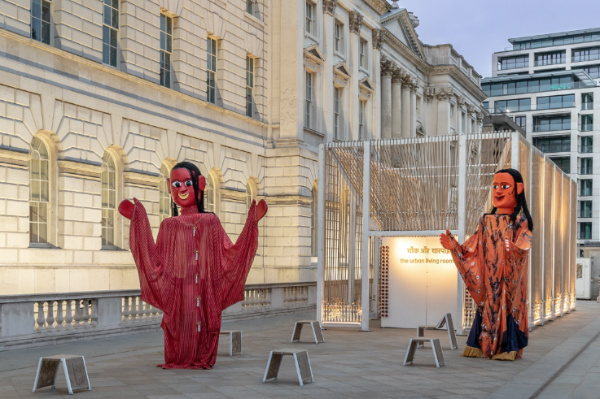
The Indian Pavilion at the London Design Biennale. PICTURE: Courtesy of London Design Biennale.

• The almost month-long London Design Biennale kicks off at Somerset House today under the theme of ‘The Global Game: Remapping Collaborations’. The fourth edition of the biennale is artistically directed by the Nieuwe Instituut – the Dutch national museum and institute for architecture, design and digital culture – and takes over the entirety of Somerset House. Among the exhibits is the India pavilion (pictured above) featuring a multi-sensory evocation of the essence of a contemporary Indian city chowk – an open market at the junction of streets – through the visual metaphor of a charpai – a traditional woven daybed, Malta’s large-scale ‘village-square’ installation that merges traditional city planning with the Phoenician-Maltese tradition of fabric production and dyeing of the multiple colours of Phoenician purple, the Ukrainian Pavilion which features am interior construction symbolising the country’s industrial, natural resource, and creative richness and a series of external projects which tell stories about new design collaborations in times of crisis for Ukraine and the vital role of design in creating new progressive connections. There’s also the chance to see the Ai-Da Robot, the world’s first humanoid robot artist, which will make history by showing her unique ability to design objects. Running alongside is the EUREKA exhibition which will share design-led innovation from leading research centres. Runs until 25th June. Admission charge applies. For more, see www.somersethouse.org.uk/whats-on/london-design-biennale-eureka-2023.

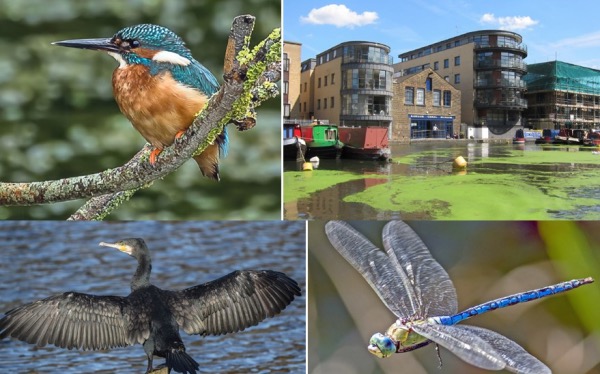
London canal wildlife. PICTURES: Courtesy of the London Canal Museum

A new exhibition highlighting the flora and fauna of London’s canals has opened at the London Canal Museum in King’s Cross. Many of the canals were derelict by the end of the 20th century but have received a new lease of life in recent times as leisure destinations. These days, they provide a “highway” for fauna including birds, fish and mammals to move in and out of the capital, some of which is showcased in this new display. Entry with general admission and for an extra fee, guided narrowboat trips along The Regent’s Canal are available on selected days. For more, see www.canalmuseum.org.uk.

Princess Sophia Duleep Singh, a suffragette, daughter of the last Maharajah of the Punjab, and god-daughter to Queen Victoria, has been commemorated with an English Heritage Blue Plaque. The plaque marks Faraday House in Hampton Court, granted to the princess and her sisters as a grace and favour apartment by Queen Victoria. Also known as ‘Apartment 41’, the property – which was named after scientist Michael Faraday – was home to Princess Sophia for more than 40 years and her base when she was campaigning for women’s suffrage. For more, see www.english-heritage.org.uk/visit/blue-plaques/.

North Warning System III, Tuktoyaktuk, Northwest Territories, Canada, 2020. PICTURE: © Gregor Sailer

• The ‘Polar Silk Road’ – a channel opened up thanks to melting Arctic Sea ice – is the subject of a new exhibition at the Natural History Museum. Gregor Sailer: The Polar Silk Road features 67 photographs taken by acclaimed Austrian artist and photographer Gregor Sailer showcasing manmade structures – from isolated research centres to Icelandic geothermal power stations – captured across four countries in the Arctic circle. There’s also a short film discussing the impacts of the climate crisis. The exhibition is free to visit. For more, see www.nhm.ac.uk/visit/exhibitions/the-polar-silk-road.html.

Send all items for inclusion to exploringlondon@gmail.com.
10 historic vessels in London’s Thames…2. HQS Wellington…

A former World War II convoy escort ship, the HQS Wellington, which is moored alongside Victoria Embankment in the River Thomas, is unusual in that for the past 75 years it has served as the headquarters of the Honourable Company of Master Mariners.

The HQS Wellington seen in 2007. PICTURE: JPLon (licensed under CC BY-SA 3.0)

Constructed in the Devonport Dockyard, Plymouth, in 1934 for the Royal Navy as a two-masted Grimsby-class sloop, the HMS Wellington served in the Pacific in the lead-up to World War II, based mainly in New Zealand (she was named for the capital of New Zealand) and patrolling the South Pacific.

Following the outbreak of war, the HMS Wellington – which featured two 4.7-inch guns and one 3-inch gun as well as carrying other anti-aircraft guns and depth charges – served mainly as a convoy escort in the North Atlantic.

During this time, the vessel was involved in the sinking of an enemy U-boat, the evacuation of Allied forces from St Valery-en-Caux, north of Le Havre, and the Allied landings in North Africa in late 1942. In 1943, the HMS Wellington was one of the first escort ships to be fitted with Hedgehog, an anti-submarine weapon, which replaced the three inch gun.

The ship ended the war having travelled almost 250,000 miles and escorting 103 convoys.

Following the war, the 265 foot long ship was initially transferred to the Reserve Fleet in Milford Haven before, in 1947, the Admiralty made the ship available to the Honourable Company of Master Mariners to serve as a floating livery hall. She was converted for that purpose – and renamed the HQS Wellington – at Chatham Dockyard using funds raised through a public appeal.

The interior features a grand wooden staircase taken from the 1906 Isle of Man ferry SS Viper which was being broken up at the time.

The HQS Wellington arrived at Victoria Embankment in 1948 for service as the livery company HQ.

The ship had a major refit in 1991, during which it was fitted out with carpet and new displays showing off the Company’s collections, and in 2005, ownership of the ship was transferred to The Wellington Trust.

In April this year it was announced that due to safety concerns the Honourable Company of Master Mariners would have to leave the vessel. The company, which has relocated to a temporary on-shore headquarters in Greenwich, are now developing plans for a new floating headquarters.

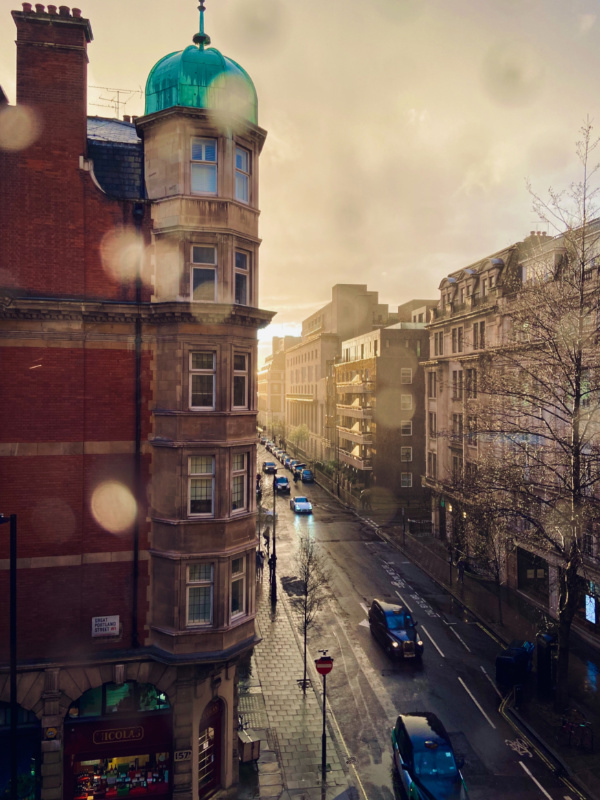
LondonLife – Rainy evening…

This Week in London – The Crown Jewels (redisplayed); The Troubles at IWM; and, Tate Britain, rehung…

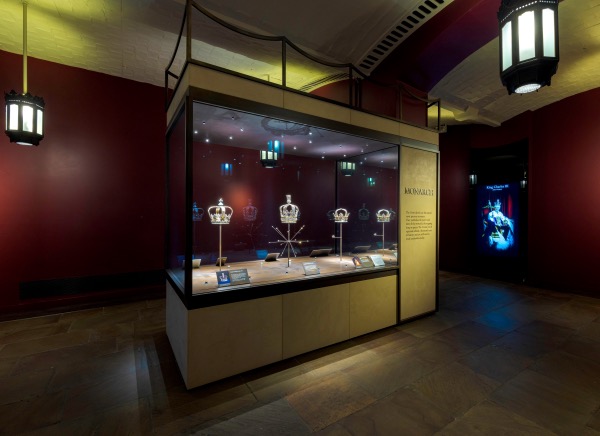
Part of the new Jewel House display of the Crown Jewels at The Tower of London. PICTURE: ©Historic Royal Palaces

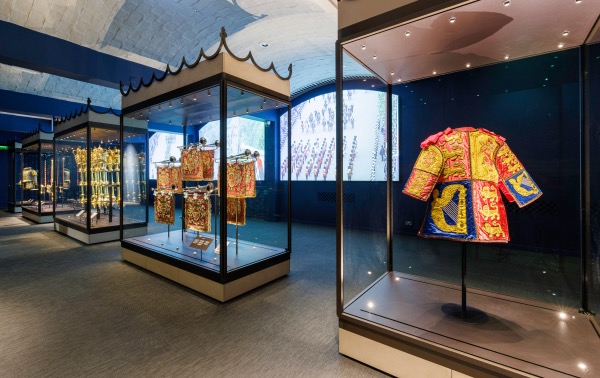
A new display of the Crown Jewels opens in the Tower of London’s Jewel House tomorrow – the first major change to the display in more than a decade. Opening just weeks after the coronation regalia was used in the coronation of King Charles III and Queen Camilla at Westminster Abbey, the re-presentation of the jewels comes about thanks to a partnership between Historic Royal Palaces and royal jewellers Garrard and is the culmination of a four year project aimed at delving deeper into the history of the collection and coronations. The display, which features images from the recent coronation, starts with a celebration of the timelessness of monarchy featuring the State Crown frames worn by King George I, King George IV and Queen Victoria. It explains how historic jewels including the Black Prince’s Ruby have passed from crown to crown and explores the origins of the current jewels, starting with the destruction of the medieval coronation regalia in 1649. The story of gems including the Koh-i-Noor and Cullinan Diamond will also be explored while at the heart of the display is a room dedicated to the spectacle of the Coronation Procession. It ends with the Treasury containing more than 100 objects including the St Edward’s Crown of 1661, the Sovereign’s Sceptre with Cross and the Sovereign’s Orb. As an added spectacle, for nine nights in November, the Tower will also host a touring light and sound show, Crown and Coronation, which, created in partnership with Luxmuralis Artist Collaboration, will feature imagery and footage of monarchs and coronations past, along with images of the regalia. Images will be projected on buildings of the Inner Ward including the White Tower. The light and sound show, which will run at the Tower from 17th to 25th November, will tour the UK in 2024. Entry is included in general admission. For more, see www.hrp.org.uk/tower-of-london/whats-on/the-crown-jewels/.

More of the new display in the Jewel House of the Crown Jewels at The Tower of London. PICTURE: ©Historic Royal Palaces

The almost 30-year conflict in Northern Ireland known as The Troubles is the subject of a new exhibition at the Imperial War Museum. Northern Ireland: Living with the Troubles, which opens tomorrow, features familiar objects including rubber bullets, propaganda posters and a Good Friday Agreement booklet as well as rarer items such as a screen-printed handkerchief made by UVF paramilitaries in the Long Kesh internment camp. There will also be the chance to hear first-hand testimonies including from republican and loyalist paramilitaries as well as British soldiers, local police and ordinary civilians, and the opportunity to see archival photography depicting hunger strike riots, army checkpoints and bomb wreckage. Admission is free. Runs until 7th January. For more, see www.iwm.org.uk/visits/iwm-london.

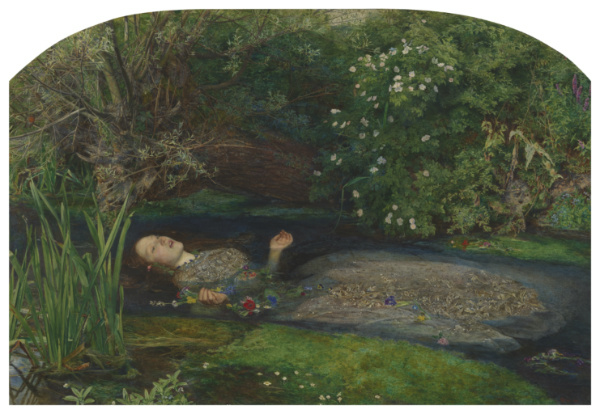
Sir John Everett Millais, Ophelia, 1851-2, Oil paint on canvas; Support: 762 × 1118 mm, frame: 1105 × 1458 × 145 mm
PICTURE: Tate (Seraphina Neville)

Tate Britain has completed a complete rehang of its free collection displays – the first for 10 years. Visitors can see more than 800 works by 350 artists including iconic treasures such as John Everett Millais’ Ophelia (pictured above), William Hogarth’s The Painter and his Pug, David Hockney’s A Bigger Splash, Barbara Hepworth’s Pelago and Chris Ofili’s No Woman, No Cry. The collection also includes more than 100 works by JMW Turner, rooms devoted to such luminaries as William Blake, John Constable, the Pre-Raphaelites and Henry Moore, and a series of changing solo displays exploring other ground-breaking artists such as Annie Swynnerton, Richard Hamilton, Aubrey Williams and Zineb Sedira. Some 70 of the works in the collection – ranging from Tudor portraits to contemporary installations – which have been acquired in the last five years alone. For more, see www.tate.org.uk.

Send all items to exploringlondon@gmail.com.