10 (lesser known) National Trust properties in London…10. Petts Wood and Hawkwood…


Located just 13 miles south-east of London’s centre, this 338 acre woodland is a haven of tranquility.

Petts Wood (the name is also that of a suburb) is believed to take its name from 16th century master shipbuilder William Pett – its first known mention was in 1577 when the wood appeared in his will. Pett had used oaks from Petts Wood in his ship-building yards located at Deptford and Woolwich on the River Thames.

The eastern part of Petts Wood – known as the Willett Memorial Wood – was given to the National Trust in 1927 in a bid to protect it from development while the remainder of the woodland, which had subsequently been purchased by Colonel Francis Edlmann and added to his neighbouring estate, Hawkwood, was donated 30 years later by Robert and Francesca Hall.

The Willett Memorial Wood is named for William Willett, leader of the movement which campaigned for recognition of British Summer Time (there’s a stone sundial memorial to him there). Willett lived nearby.

The western part of Pett’s Wood is known as the Edlmann Memorial Wood. It contains a stone memorial to the Halls and Colonel Edlmann which was unveiled in 1958.

The main house on the Hawkwood Estate and gardens, were acquired from Francesca Hall in 1975 with the proviso that farming would continue to preserve the area’s rural character.

There are a couple of marked walks around the woodlands. Among the activities which take part in the woodlands is the age-old practice of charcoal making. Made for barbecues, it’s sold in National Trust shops.

WHERE: Chislehurst (nearest train stations are Petts Wood, Chislehurst, and St Mary Cray); WHEN: Dawn to dusk; COST: Free; WEBSITE: www.nationaltrust.org.uk/petts-wood-and-hawkwood

PICTURES: Top and Right – Maureen Barlin (licensed under CC BY-NC-ND 2.0)

LondonLife – Oxford Street…

Looking east down Oxford Street from Oxford Circus. PICTURE: Joe Stubbs/Unsplash

Exploring London’s 100 most popular posts of all time! – Numbers 78 and 77…

The next two entries in our countdown are:

78. Lost London – The King’s Mews at Charing Cross…

77. LondonLife – A look back at Queen Elizabeth II’s reign…

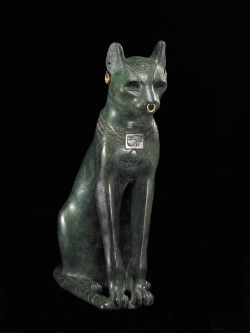
Treasures of London – The Gayer-Anderson Cat…

This stunning hollow bronze figure from ancient Egypt depicts the goddess Bastet in the form of a seated (domestic-sized) cat and dates from around 600 BC.

Its name comes from Irish-born military man Major Robert Grenville Gayer-Anderson, who was a keen collector of Egyptian sculpture, jewellery and pottery which he showcased as his Cairo home, now known as the Gayer-Anderson Museum. Gayer-Anderson donated the cat to the British Museum in 1939 (there’s a copy in the Gayer-Anderson Museum).

The 14 centimetre tall figure, which wears a silver protective pectoral and golden earrings and nose ring, was probably housed in a temple. The scarab beetle on the cat’s head and chest symbolises rebirth and the silver wedjat-eye on the pectoral was supposed to invoke protection and healing.

The cat, which a particularly fine example of a cat sculpture from the period, can usually be seen in the Egyptian sculpture gallery in Room 4 of the British Museum but given its closure because of the coronavirus pandemic, you may like to take a look at a 3D model of the cat which is on the museum’s website here.

PICTURE:  © the Trustees of the British Museum

This Week in London – Mushrooms online; call for homemade signs; and, write a lockdown letter to the National Trust…

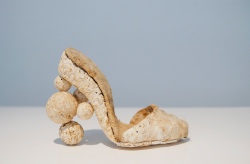
Somerset House is releasing a new virtual tour of its exhibition Mushrooms: The Art, Design and Future of Fungi so people can explore the world of the mushroom and its role in the world’s survival from home. The exhibition, which will go live online on Monday to mark International Museum Day, features highlights including Beatrix Potter’s watercolours of mushrooms, conceptual artist Carsten Höller’s spinning, solar-powered mushrooms, a psychedelic film by Adham Faramawy, Seana Gavin’s hand-cut collages of mushroom-human hybrids and, shoes and shades made from mycelium, the fungal mass which lies beneath the earth under mushrooms. The exhibition will be released online on 18th May at www.somersethouse.org.uk. PICTURED: Kristen Peters, Mycoshoen, courtesy of the artist.

The V&A are seeking homemade signs created during the coronavirus lockdown – everything from children’s rainbow signs to handwritten notes placed in public spaces – to add to its permanent collection. Noting the commonplace nature of such signs during the emergency, the V&A have said that “[w]hether they state temporary closure of a business, express messages of hope or critique, or raise awareness for a good cause, these signs have become a prominent way for us to communicate with the outside world during lockdown”. Through collecting the signs, the museum is aiming to “create and preserve a rich portrait of life under lockdown expressed through visual imagery.” Selected signs will be chosen to join the museum’s collections. Signs can be submitted to homemadesigns@vam.ac.uk while people are also encouraged to share signs they’ve come across on social media using #homemadesigns.

The National Trust is asking people to write letters to its Director General Hilary McGrady, about their lockdown experiences in order to add a selection of them to its collection of historic letters. People are asked to write about what they have most missed since lockdown began and about what solace they may have drawn from nature, art, creativity and any forms of social contact. The National Trust is asking writers to scan or photograph their letter and email it to lettersfromlockdown@nationaltrust.org.uk or share it via the National Trust’s social media channels using @nationaltrust to ease pressure on the postal service. The Trust says it will request postal hard copies from selected authors at a later date.

Send all items for inclusion to exploringlondon@gmail.com

10 (lesser known) National Trust properties in London…9. Red House…

This iconic and unique Arts and Crafts home in Bexleyheath in London’s east was at the centre of the Pre-Raphaelite movement.

Commissioned by poet, designer and artist William Morris in 1859 – and built by his friend, architect Philip Webb (with whom Morris would co-found the The Society for the Protection of Ancient Buildings in 1877) – the L-shaped house was designed to be a home for Morris and his new wife Jane as well as a hub for the so-called “second wave” of Pre-Raphaelites.

Described by Dante Gabriel Rossetti as “more a poem than a house”, the two storey red brick property (hence the name ‘Red House’) is characterised by elements of romanticised Gothic medieval design – including a steep gable roof, tall chimney stacks, oriel windows and stained glass – but also contains a very practical layout.

The Morrises moved in during June, 1860, and, inspired by medieval art and literature, commenced elaborately decorating the property in bold colours. The couple hung the walls with embroideries and pictures and commissioned Webb to design furnishing while others who helped with the interior decoration included Rossetti, Elizabeth Siddal and Edward Burne-Jones.

It was this communal response to the home’s design that is credited as leading to the founding of the decorative arts company Morris, Marshall, Faulkner & Co – often referred to as ‘The Firm’ – in 1861.

A plan to extend the property in the mid-1860s to add workshops as well as allow Burne-Jones and his family to live there was aborted after the then pregnant Georgiana Burne-Jones contracted scarlet fever, losing the child as a result.

Meanwhile, Morris – whose two daughters Jenny and May were born in the property – was apparently discovering the home’s short-comings – including its orientation away from the sun and its distance from London. He subsequently decided to move his family back to London and in 1866 sold the property, never returning to it again.

The house remained in private hands until it was acquired by the National Trust in 2003. Morris, meanwhile, went on to lease Kelmscott Manor in Oxfordshire with Rossetti and is buried in the nearby churchyard of St George’s Church.

The now Grade I-listed house, which still contains original features and furnishings, is surrounded by a garden which was designed to “clothe” the property and which, as well as being informed by Arts and Crafts principles, features a beautiful conical-roofed well-house. When open, there’s a cafe and second-hand bookshop on site.

The house has an English Heritage Blue Plaque commemorating Morris and Webb.

For more, visit www.nationaltrust.org.uk/red-house.

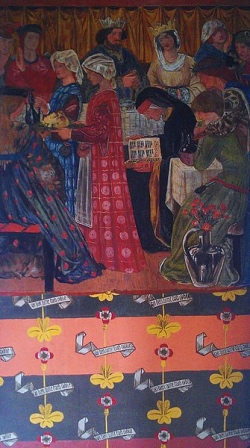
PICTURE: Top – The property with well house in the foreground (Steve Parkinson/ licensed under CC BY-NC-ND 2.0); Right – A mural in the drawing room designed by Edward Burne-Jones depicting the marriage feast of Sir Degrevant (Ethan Doyle White at English Wikipedia (licensed under CC BY-SA 3.0)

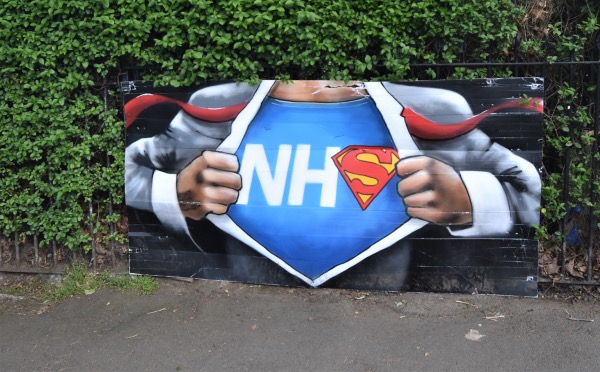
LondonLife – Heroes, all…

Seen in Brockley, south London. PICTURE: Loco Steve (licensed under CC BY-SA 2.0)

Special – On the VE Day’s 75th, remembering the ‘Docklands at War’…

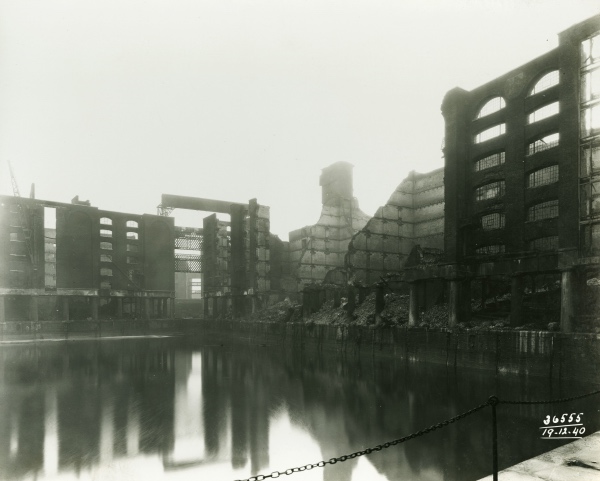
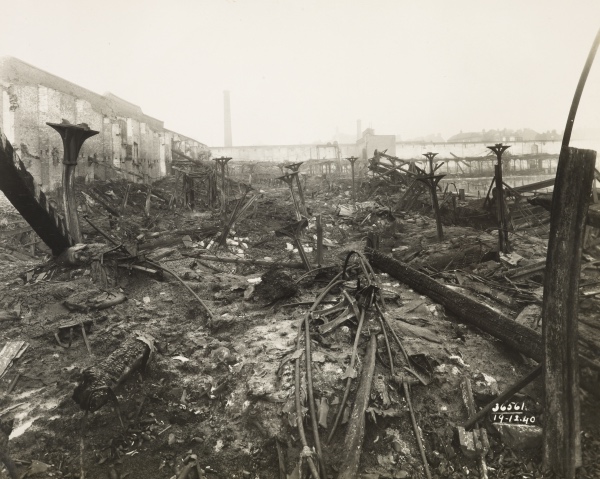
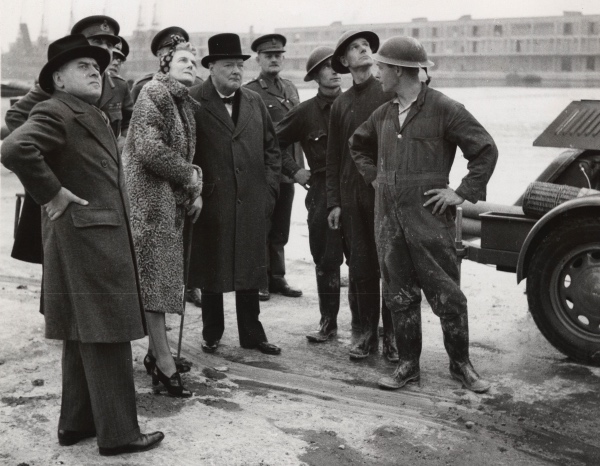
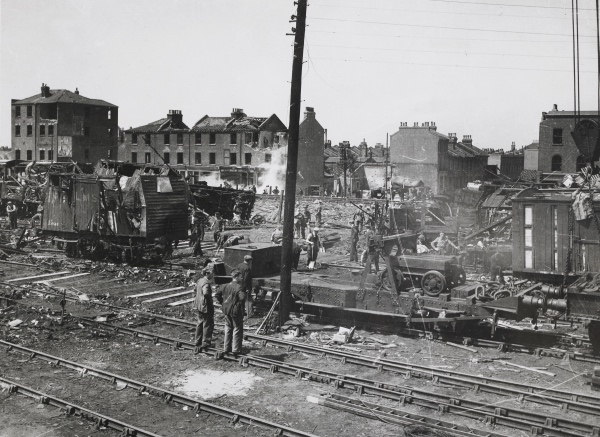
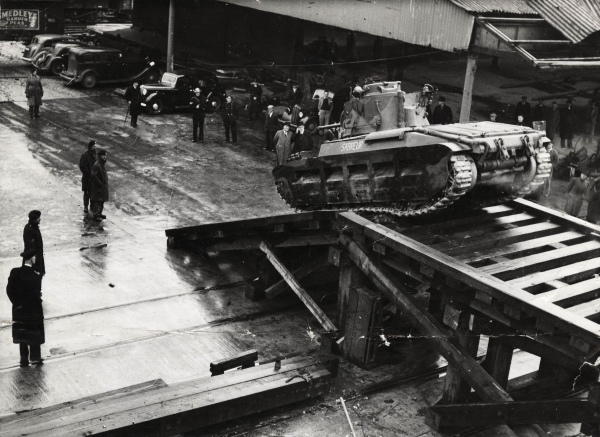
The Museum of London Docklands has released a number of images from its ‘Docklands at War’ collection – including some rarely on display – to mark the 75th anniversary of Victory in Europe. These images of the East End show the scale of the damage and destruction caused to London’s docks during World War II when more than 25,000 German bombs were dropped on it in an attempt to impact the national economy and war production, making tens of thousands of home uninhabitable, damaging businesses and destroying docks with the West India Docks and St Katherine Docks suffering the most damage. The pictures also reveal the remarkable contribution to the war effort by the people who lived and worked in the densely populated area. For more on how the museum is marking the day online, head to www.museumoflondon.org.uk/museum-london-docklands/ve-day.

St Katharine Dock after an air raid on 7th September, 1940, the first attack on Docklands.  PICTURE: John H Avery & Co (© PLA Collection / Museum of London)

Bomb damage to a shed, formerly Guiness’s on west side of eastern dock, looking north from the southend taken on 19th December, 1940, following an air raid on 8th December that year. PICTURE: John H Avery & Co (© PLA Collection / Museum of London)


Prime Minister Winston Churchill and Clementine Churchill, with the Flag Officer, London, and J Douglas Ritchie (on left), touring London’s dock in September, 1940, seen with a group of auxiliary firemen. PICTURE: © PLA Collection / Museum of London

Damage caused by a V1 rocket which hit Royal Victoria Dock in 1944. PICTURE: © PLA Collection / Museum of London

The Docklands ablaze during the Blitz on 7th September, 1940. The rising palls of smoke mark out the London Docks beyond the Tower of London, the Surrey Docks to the right of the bridge and the West India Docks on the Isle of Dogs in the distance. PICTURE: © PLA Collection / Museum of London


Tanks arriving in the London Docks prior to embarkation for the D Day beaches in 1944. PICTURE: © PLA Collection / Museum of London

This Week in London – Take a virtual tour of The Crystal Palace (as it was); the ‘Virtual VE Day 75 Festival’; and, capturing life in lockdown…

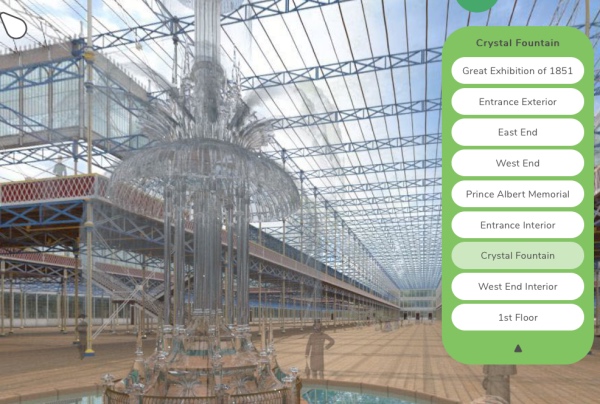
It’s 169 years since the Crystal Palace served as the centrepiece of the ‘Great Exhibition of the Works of Industry of All Nations’ in Hyde Park but for the first time you now have a chance to tour the building virtually. The Royal Parks, working in partnership with educational virtual reality company, Seymour & Lerhn, have recreated the grand glass and iron structure which hosted thousands of exhibits from across the globe at the 1851 exhibition which was spear-headed by Prince Albert. The building has been regenerated digitally using The Royal Commission for the Exhibition’s archive of plans and images, as well as The Royal Parks’ historical documents including old maps. The tour overlays this historic footage over the site as it is now and visitors can switch between the two as well as learn about some of the fascinating stories connected to the Great Exhibition including that of the construction of the first ever public toilets and that of the lady who walked from Cornwall to attend the display. The virtual tour is free to access at www.royalparks.org.uk/parks/hyde-park/things-to-see-and-do/the-great-exhibition-virtual-tour.

The National Museum of the Royal Navy, National Army Museum and Royal Air Force Museum are hosting their first tri-service celebration with a ‘Virtual VE Day 75 Festival’ to mark the 75th anniversary of the end of the war in Europe. The festival runs from today until 9th May and kicks off with ‘Vying for Victory: Britain’s Navy, Army and Air Force in Myth and Memory’ featuring representatives from the museums discussing the service’s respective roles during the closing stages of World War II. Other events include a live webinar featuring historian and broadcaster James Holland speaking to the National Army Museum’s Dr Peter Johnston about ‘Why the Allies Won’, re-enactors sharing stories from real service personnel during the World War II, and an immersive walk-through of HMS Alliance which will provide insights into the isolation experience of submariners on VE Day.  For the full programme of events, head to Virtual VE Day 75 Festival.

The National Portrait Gallery is launching a new community photography project to capture a snapshot of the nation during the coronavirus lockdown. People are being encouraged to submit pictures responding to three themes – ‘Helpers and Heroes’, ‘Your New Normal’ and ‘Acts of Kindness’ – to the project which is called Hold Still. Launched by the Duchess of Cambridge, patron of the gallery, this week, the project is open to Britons of all ages and will see 100 short-listed pictures featured in a digital exhibition. The closing date for submissions is 18th June. Head to www.npg.org.uk/hold-still/ for more.

Send all items for inclusion to exploringlondon@gmail.com.

10 (lesser known) National Trust properties in London…8. Carlyle’s House…

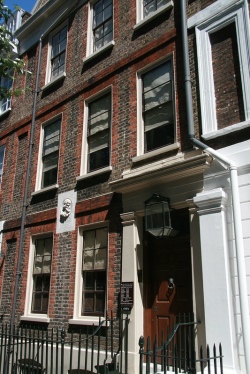
This Chelsea home, at 24  Cheyne Row, was that of Victorian philosopher, historian and writer Thomas Carlyle and his wife Jane.

The couple moved to the red and brown brick Queen Anne terraced house, then known as number 5 Cheyne Row, from Scotland in 1834 – it was at the time a rather unfashionable location.

They continued to rent the property until their deaths – Janes in 1866 and Thomas, the “Chelsea Sage” in 1881 – and during their time in the home, it became a hub for writers and thinkers with Charles Dickens, Alfred, Lord Tennyson, George Eliot, and William Makepeace Thackeray all among those who visited.

The property was where Carlyle wrote his most famous book, The French Revolution, A History, which almost never made it into print – he lent the only copy to John Stuart Mill and while in his possession, one of his servants accidentally threw it on the fire meaning Carlyle had to start writing the entire book again from scratch.

The four level property’s interiors are typical of those of a 19th century townhouse and include a parlour (captured as it was in 1857 in a painting by Robert Tait which hangs on the wall), drawing room, basement kitchen (where Carlyle smoked with Tennyson) and a specially designed “sound proof” attic study (it isn’t).

Inside can be found Carlyle’s original manuscripts and possessions as well as part of his original library (his hat still hangs on a peg in the entrance hall). Outside there’s a small walled garden which featured flowers and vegetables as well as plants to remind Jane of Scotland.

The Grade II*-listed property, which dates from 1708, was first opened to the public in 1895. It was taken over the by the National Trust in 1936.

For more, see www.nationaltrust.org.uk/carlyles-house/

PICTURE: Peter Reed (licensed under CC BY-NC 2.0)

LondonLife – New life at the Tower during lockdown…

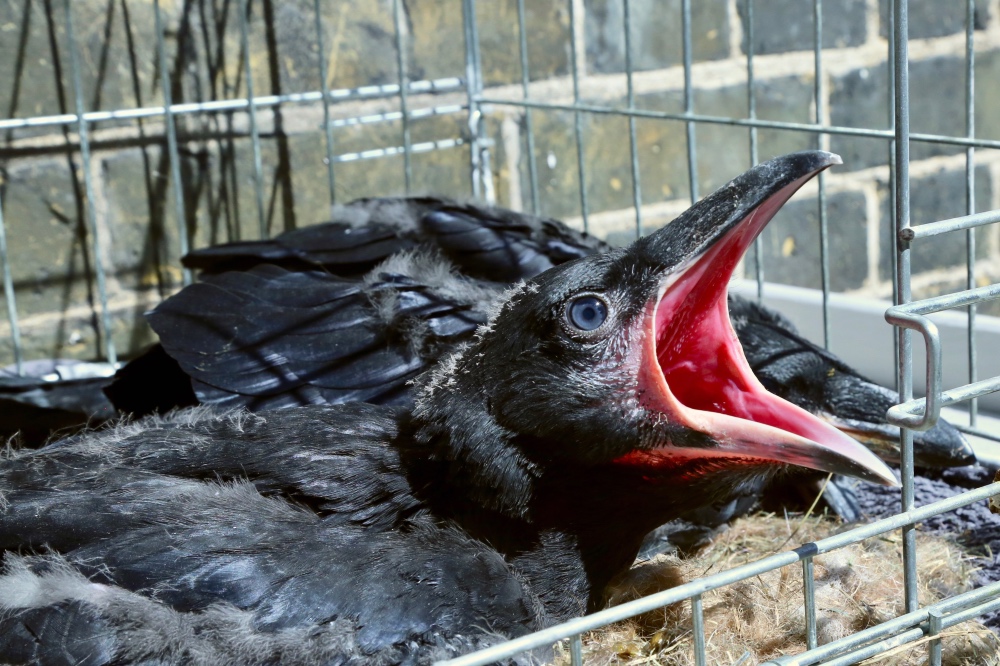
The future of the Kingdom – which legend says will fall should the resident ravens leave the Tower of London – seems secure for now. Three new raven chicks have been born since the country went into lockdown, securing their presence at the Tower for years to come.

The offspring of Huginn and Muninn, who were named after the ravens of the Norse God Odin, the chicks have yet to be named. Born in secrecy, they spent the first couple of weeks with their parents but are now under the care of the Tower’s Ravenmaster, Yeoman Warder Chris Skaife.

The Tower is usually home to six ravens but with eight ravens already in residence, the new chicks will apparently be moving on from the Tower to live with raven breeders in the country, ensuring the future of the Tower ravens bloodline.

They’re not the first chicks to be hatched by Huginn and Muninn – they’re already the parents of Poppy, named for the Tower’s famous 2014 display commemorating the centenary of World War I, and George, who was born on St George’s day at the Tower last year.

The tradition surrounding the special place of the ravens at the Tower is generally attributed to King Charles II following a warning he received that the Kingdom and Crown would fall should they leave.

PICTURES: Top – One of the new chicks; Below – Ravenmaster Chris Skate attends to the birds (© Historic Royal Palaces)

A Moment in London’s History – London celebrates VE Day…

It was 75 years ago this month – 8th May, 1945 – that Londoners poured out onto the city’s streets in celebration of the end of World War II.

Some celebrations had already started in London on 7th May as news of the unconditional surrender of all German troops to the Supreme Allied Commander Dwight Eisenhower in the French city of Reims on 7th May became known.

But Prime Minister Winston Churchill declared 8th May a national holiday and, in response, vast crowds turned out on the streets to celebrate with bunting, flags and fireworks. Church bells were rung and services of thanksgiving held including at St Paul’s Cathedral where 10 consecutive services, each attended by thousands, took place.
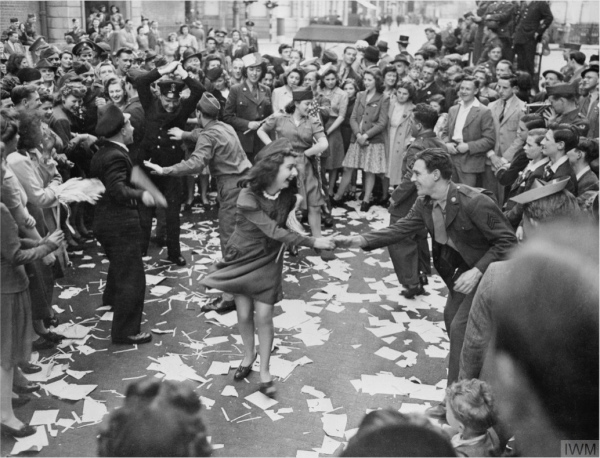
British girls, of the Picture Division of the London Office of War Information dance in the street with American soldiers during the “VE Day” celebration in London. This scene took place outside the building of the US Army Pictorial Division has its offices. PICTURE: © IWM EA 65796

At 3pm, Churchill made a national radio broadcast from 10 Downing Street. He told listeners that while “We may allow ourselves a brief period of rejoicing”, they should “not forget for a moment the toil and efforts that lie ahead” a reference to the ongoing war with Japan (the radio broadcast, incidentally, is being re-run on the BBC on 8th May this year to mark the anniversary).

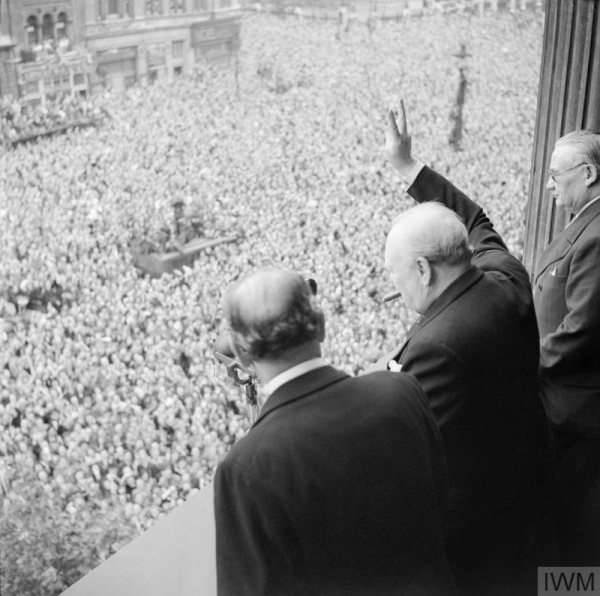
Churchill then proceeded to Parliament where he formally reported the end of the war in Europe to Parliament before leading a procession of members to St Margaret’s Church for a service of thanksgiving. He later appeared on the balcony of the Ministry of Health building in Whitehall to address the teeming crowds below, telling them “This is your victory” to which they roared back that it was his.

Churchill waves to crowds in Whitehall on the day he broadcast to the nation that the war with Germany had been won, 8 May 1945. PICTURE: Horton W G (Major) (Photographer),
War Office official photographer/© IWM H 41849

Meanwhile, King George VI, Queen Elizabeth, initially accompanied by their two daughters, Princesses Elizabeth and Margaret, appeared on the balcony of Buckingham Palace several times to wave to the cheering crowds. The King and Queen, who were at one point joined by Churchill, were still waving when their daughters secretly – and now rather famously – left the palace and joined the crowds outside in what Elizabeth, later Queen Elizabeth II, described as “one of the most memorable moments” of her life. The King also gave a radio address from the palace during which he paid tribute to all those who had died in the conflict.

King George VI and Queen Elizabeth with Princess Elizabeth and Princess Margaret joined by the Prime Minister, Winston Churchill on the balcony of Buckingham Palace, London on VE Day. PICTURE: © IWM MH 21835

While celebrations took place across London, hotspots included Whitehall, outside Buckingham Palace, Trafalgar Square, Parliament Square and Piccadilly Circus, where by midnight there were an estimated 50,000 people singing and dancing. Licensing hours were extended in pubs and dance halls staying open to midnight.
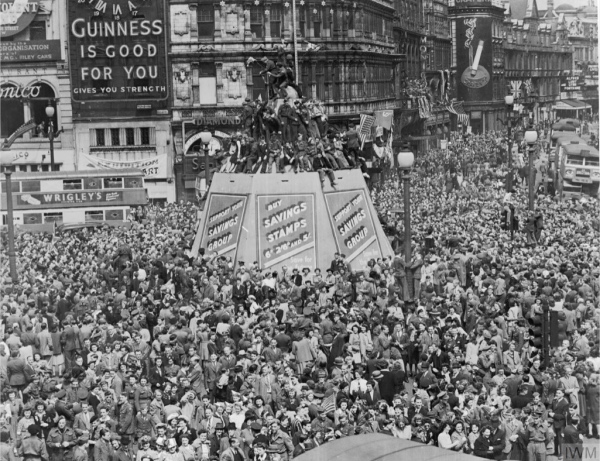
A mass of civilians and servicemen crowding around Piccadilly Circus, London. PICTURE: Poznak Murray, United States Army Signal Corps official photographerIWM EA 65879

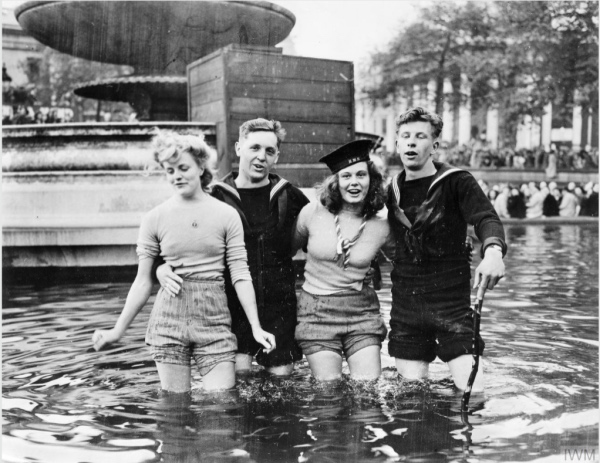
One of the most iconic images of the day was a photograph of two sailors standing in one of the fountains at Trafalgar Square with two women, revealed, thanks to research by the Imperial War Museum to be Cynthia Covello and Joyce Digney who had travelled to join the celebrations from Surrey.

Two British sailors and their girlfriends wading in the fountains in Trafalgar Square on VE Day. PICTURE: Massecar T G, United States Army Signal Corps photographer/© IWM EA 65799

With thanks to the Imperial War Museum, London.


Lost London – Jenny’s Whim…

This Pimlico establishment consisted of a tavern and attached tea garden which were famous for their interactive wonders.

These included mechanical devices which, when triggered, would cause harlequins or monsters to pop-up in order to give patrons a thrill.

There were also floating models on an adjacent reservoir designed to give the impression of mermaids or great fish rising up out of the water. Other attractions in the garden included its many arbors, a grotto, bowling green and the chance to take part in skittles or duck hunting.

The red brick property, which was located at the end of Ebury Bridge (apparently also referred to as “Jenny’s Whim Bridge”), is said to have been named for an early proprietor or, among other alternative stories, after a famous pyrotechnician from the era of King George I.

While the gardens were popular with the middle classes during the 1700s, this popularity had waned by the turn of the 19th century and by 1804 only the tavern remained. It was demolished in 1865 to make way for an extension of Victoria Station.

PICTURE: Guy Bianco IV/Unsplash

This Week in London – Documenting lockdown lives; home baking on the rise; and, Captain Tom makes more history…

The Museum of the Home has launched a new national collecting project aimed at documenting people’s lives during the coronavirus lockdown. Called Stay Home, the project involves answering seven questions about you and your home and sharing up to five images of your home as well as some personal demographic information. Contributions will become part of the museum’s Documenting Homes collection, an archive of almost 8,000 items which represents homes from the 1900s up to the present day. To take part – or to read the stories of those who have, head to www.museumofthehome.org.uk/explore/stay-home-collecting-project/. The museum is planning to reopen in September following a major redevelopment which includes the renovation of the Grade I-listed Geffrye Almshouses and the development of new spaces which will create 80 per cent more space for exhibitions, events and collections. The reopening will, of course, depend on the situation with regard to the COVID-19 outbreak.

Visits to the National Trust’s home baking pages have increased by almost 900 per cent since the country was locked down in mid-March. Cheese scones have proved the most popular nationally with more than 54,000 people visiting the page in the first four weeks of lockdown – an increase of 3,009 per cent on last year. Second place is apple and rhubarb crumble with almost 15,000 visits (an increase of 581 per cent) and the fruit scone is in third place at almost 10,000 visits (an increase of 737 per cent). Meanwhile in London, favourites include potato and onion soup in Barnet, Westminster and Redbridge, apple cinnamon bun in Islington, chocolate nests in Enfield, and vegetable and coconut curry in Sutton. To visit the recipe pages, head to www.nationaltrust.org.uk/recipes.

Captain Tom Moore – the World War II veteran who has raised more than £29 million for the NHS – will be the first person to be virtually invested with the Freedom of the City of London. Moore, who celebrates his 100th birthday today, made headlines internationally when he completed 100 laps of his garden in the hope of raising £1,000 to support NHS Charities Together. The investiture ceremony will be conducted next week and is believed to be the first time it’s been conducted virtually since the Freedom was first awarded in 1237.

Send all items for inclusion to exploringlondon@gmail.com.

10 (lesser known) National Trust properties in London…7. Fenton House and Garden…


Like other National Trust properties, Fenton House is now closed – please do not travel there. But we run this article in the hope you’ll be able to visit in the future…

This Hampstead property dates from the 17th century but its current name comes instead from Philip Fenton, a merchant who bought it in 1793, some 100 years after it was constructed.

The two storey brown brick property, which had previously been known as Ostend House (perhaps a reference to its unknown first owner’s Flemish links), was considerably altered by Fenton, a merchant from Yorkshire who had based himself in Riga. But despite that – and subsequent alterations, many original features remain.

The Grade I-listed property was acquired by Katherine, Lady Binning, in 1936. In 1952 she bequeathed it to the National Trust complete with her rather large collections of porcelain, needlework, furniture and artworks.

The Trust also moved in a large collection of early musical instruments. Assembled by Major George Benton Fletcher, these had been given them to the Trust in 1937 and include a harpsichord dating from 1612 which was probably used by Handel.

Located on an acre, the house features a notable walled garden featuring formal topiary and lawn, a sunken rose garden, a 300-year-old apple and pear orchard and kitchen garden.

Fenton House is now closed – but for more information on when it might reopen, keep an eye on www.nationaltrust.org.uk/fenton-house.

PICTURE: Top – A view of Fenton House (It’s No Game/licensed under CC BY 2.0); Below – Inside the property (Kotomi_/licensed under CC BY-NC 2.0)

LondonLife – Boris Johnson returns to Number 10 Downing Street…

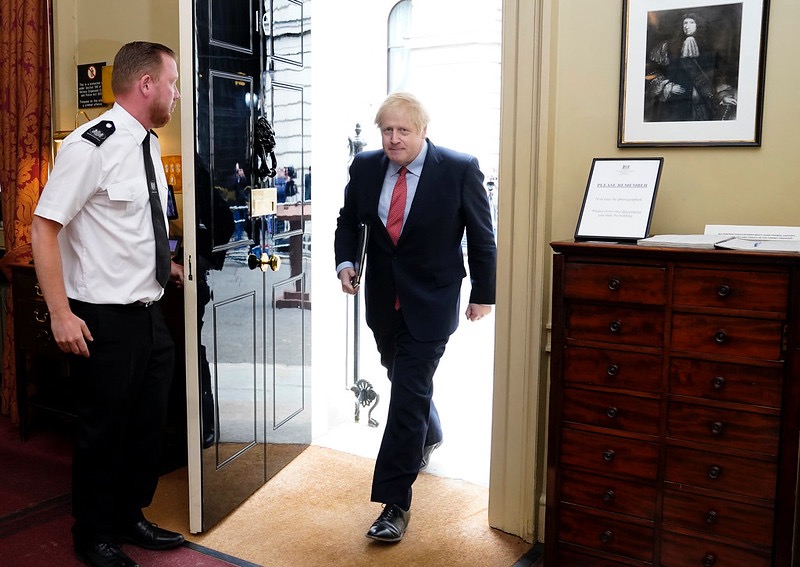
Boris Johnson returns to 10 Downing Street, home of the Prime Minister, on Monday, having recovered from COVID-19. PICTURE: Andrew Parsons/No 10 Downing Street (licensed under CC BY-NC-ND 2.0)

What’s in a name?…Mile End


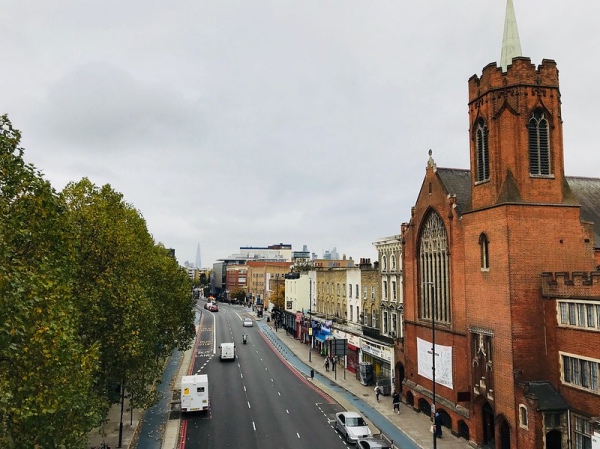
This east London district was recorded as far back as the 13th century when it was a rural area. The name comes from the obvious – it was located on the old London to Colchester Road about a mile east of Aldgate.

Its location so close to London – and the fact it was common land – meant Mile End was favoured as a recreational space by Londoners eager to escape the confines of the city.

It was here in 1381 that Jack Straw camped with the men from Essex during the Peasant’s Revolt and it was here that, even as Was Tyler and his men murdered Simon of Sudbury in the Tower of London, King Richard II famously met with the leaders of the revolt.

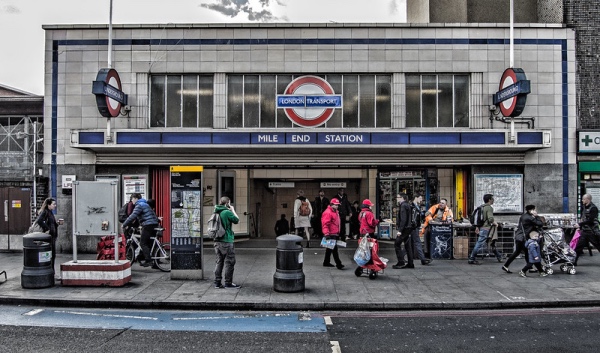
The area, which became known as Mile End Old Town (an unconnected area to the west was known as Mile End New Town), was gradually developed from the 16th century and attracted working class housing and, thanks to its affordability, a relatively high number of immigrants. The Mile End Tube station opened in 1902.

The area suffered in the Blitz during World War II and the first V-1 flying bomb to hit the city landed next to the Grove Road railway bridge on 13th June, 1944, killing eight civilians and injuring 30.

Famous figures connected to Mile End include explorer Captain James Cook, who lived in a now demolished house on Mile End Road between 1764-76.

Landmarks include the Trinity Almshouses (built in 1695, they’re the last survivors of several almshouses built in the area) and the Frederick Arthur Walters-designed Guardian Angels Roman Catholic Church which was built 1903 by Henry Fitzalan-Howard, 15th Duke of Norfolk, as a memorial to his youngest sister, Lady Margaret Howard.

The People’s Palace – a five acre entertainment and educational facility which included a library, swimming pool, gym and winter garden – was completed in 1892 on Mile End Road. Destroyed by fire in 1931, it was rebuilt but finally closed in 1954.

The two halves of the 79 acre linear Mile End Park, which bisected by Mile End Road, is joined by The Green Bridge over the road.

PICTURES: Top – Mile End Road featuring The Guardian Angels Catholic Church on the right and Mile End Park on the left (Matt Brown /licensed under CC BY 2.0); Below – Mile End Tube Station (Chris Jones/licensed under CC BY-NC 2.0)

This Week in London – Collecting COVID…

Have an item that shows how your life has changed since the arrival of the novel coronavirus in London in January? 

The Museum of London is seeking to build a collection of objects and first-hand experiences related to the coronavirus pandemic in a bid to ensure future generations of Londoners will be able to learn about and understand this extraordinary period in the city’s history.

The museum, which already holds collections related to disease outbreaks such as the 1889 -1893 and 1918 flu pandemics, is looking for both physical and digital objects related to three main themes – how the physical spaces in the city have been transformed, the effects on key and home workers, and how children and young people are reacting to and coping with the changes now that many schools are closed.

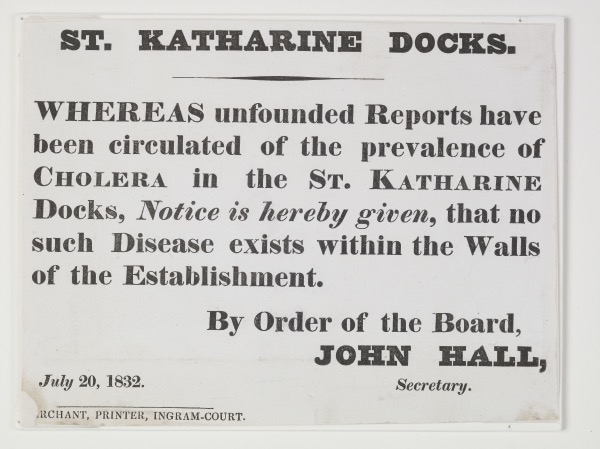
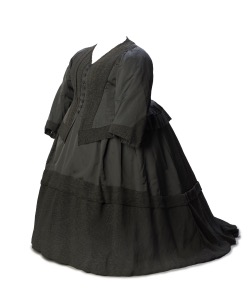
Like those in existing pandemic-related collections – such as the dress Queen Victoria wore to mourn the loss of her grandson to influenza in 1892 (pictured – right) or an 1832 cholera notice issued for St Katharine Docks (pictured – top), the COVID-19-related objects will serve as a reminder of the suffering people are experiencing but also tell the story of the pandemic’s effect on society and culture.

“Londoners, like millions of people around the world, have to find ways of coping with the new life the epidemic has imposed,” says Beatrice Behlen, senior curator at the Museum of London.

“This is a major moment in the capital’s history and we want to collect a range of objects, from clothing to hairclippers, from diaries to memes that reflect the physical and emotional response of Londoners to COVID-19. The Museum of London always strives to tell the story of London and its people. We feel it is imperative to capture this time for future generations, to help us understand how this city dealt with an extraordinary situation.“

Individuals and organisations who would like to donate objects should get in touch via social media @MuseumofLondon or email enquiry@museumoflondon.org.uk.

PICTURES: Top – Printed cholera notice issued by the Secretary of St Katharine Dock Company; Right – Dress ensemble, 1892. Worn by Queen Victoria when in mourning for her grandson, the Duke of Clarence, who died in the flu pandemic in 1893. (© Museum of London)

Send all items for inclusion to exploringlondon@gmail.com

10 (lesser known) National Trust properties in London…6. 575 Wandsworth Road…


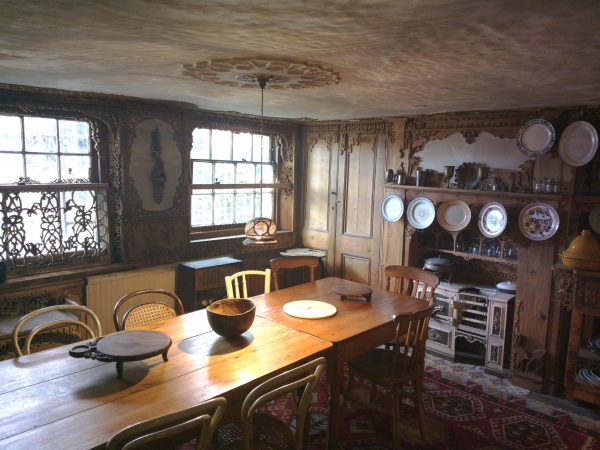
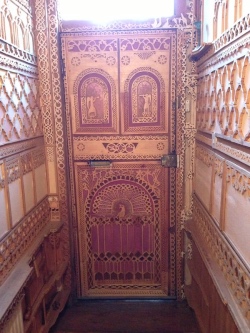
Only acquired by the National Trust in 2010, this property features a series of uniquely fashioned interiors created by Kenyan-born poet, novelist, artist and British civil servant Khadambi Asalache.

Asalache (1935-2006), who had trained as an architect, purchased the then dilapidated 1819 terraced house while working at the Treasury in 1981 (he apparently spotted it from a passing bus and ended up buying it for less than the asking price).

Confronted with a damp patch in the basement that resisted treatment, he initially covered it with wood and then, deciding that was bit drab, created fretwork to put over the top.

It was the beginning of a massive undertaking which saw the property transformed. Over the next 20 years, Asalache used a fretsaw to turn the home into an extraordinary work of art, eventually embellishing almost every wall, ceiling and door in the house with Moorish inspired fretwork patterns and motifs, hand-carved from reclaimed pine doors and floorboards which he’d found in skips.

The rooms, which are also influenced by African, Ottoman, and British design, are filled with Asalache’s handmade fretwork furniture and his eclectic collections of objects such as pressed-glass inkwells, pink and copper lustreware, postcards and his typewriter.

The Clapham property, which appears unassuming from the front, was left to the National Trust in Asalache’s will.

Only a select number of visitors can visit the property each year on pre-booked tours (although it’s currently closed due to the coronavirus outbreak). For updates on its opening status, head to www.nationaltrust.org.uk/575-wandsworth-road.

PICTURES: Interiors of the property (Shakespearesmonkey (licensed under CC BY-NC 2.0))

LondonLife – A scaled down birthday celebration…

There will be no gun salutes to mark Queen Elizabeth II’s birthday today thanks to the coronavirus outbreak. So here’s a gun salute from 2012 as we wish her Majesty a happy 94th birthday…

The Royal Gibraltar Regiment perform a 62 Gun Salute at The Tower of London on the 21st April, 2012, to celebrate the Queen’s 86th birthday. PICTURE: SAC Neil Chapman/Defence Images (licensed under CC BY-NC 2.0).