What’s in a name?…Garlick Hill…

The name of this City of London street – which leads from Upper Thames Street to the intersection of Queen Victoria and Cannon Streets – speaks to the City’s past when it originated at the now-lost dock or jetty known as Garlickhithe. 

Garlickhithe was, not surprisingly, where garlic was landed and sold in a tradition dating back to at least the 13th century. It’s one of numerous thoroughfares in the City named for what was traded there.

The name is also remembered in the church which still stands at the bottom of the hill, St James, Garlickhythe, and which once stood right on the back of the Thames. The church was founded in the 12th century, rebuilt several times – the last time after the Great Fire of London under the direction of Sir Christopher Wren.


Treasures of London – Queen Elizabeth’s Oak, Greenwich Park…

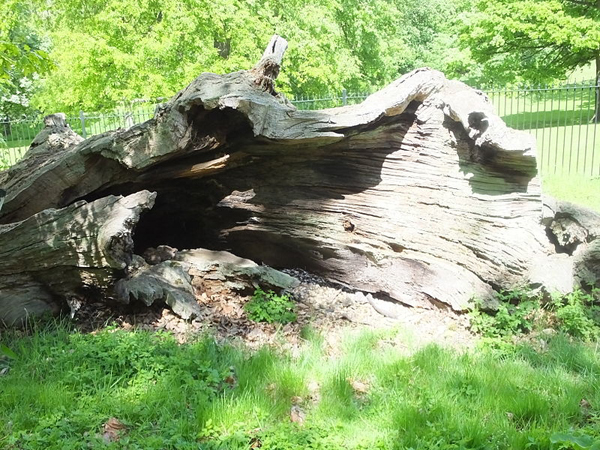
Only the remains of this once mighty tree can now be seen in Greenwich Park. Thought to have been planted in the 12th century, the tree died in the late 1800s but, thanks to the support of the ivy that clung to it, remained standing until it finally collapsed in June, 1991. 

The tree, located to the east of the Royal Observatory, has several links to the Tudors – tradition says King Henry VIII danced around it with Anne Boleyn while their daughter, Queen Elizabeth I, is said to have picnicked beneath its leafy canopy. The proximity of Greenwich Palace may explain the connection.

There was apparently in Victorian times, a large seat placed around the tree and there has been a suggestion that the hollow truck was big enough to make a small prison where people who misbehaved in the park were locked up.

Planted alongside is another English Oak – it was officially dug into the soil on 3rd December, 1992, by Prince Philip, the Duke of Edinburgh, to mark 40 years of the reign of Queen Elizabeth II.

WHERE: Queen Elizabeth’s Oak, Greenwich Park (nearest DLR is Cutty Sark Station and Greenwich Station); WHEN: 6am to 7pm (6pm from end of British Summer Time) daily; COST: free; WEBSITE: www.royalparks.org.uk/parks/greenwich-park

PICTURE: Clem Rutter, Rochester, Kent/www.clemrutter.net/CC BY-SA 3.0


This Week in London – Celebrating India at the Science Museum; Opie and Van Dyck/Dali and Duchamp; and, first NYE tickets on sale…

The Science Museum is commemorating 70 years of India’s independence with Illuminating India, a season of exhibitions, specially commissioned artworks and events telling the stories of Indian innovators and thinkers who have often been overlooked or written out of Western versions of history. The exhibition Illuminating India: 5000 Years of Science and Innovation celebrates India’s central role in the history of science and tech by surveying its contributions to subjects ranging from space exploration to mathematics, communication and engineering while Photography 1857-2017 is the first exhibition to provide a survey of photography from its beginnings in India in the mid-19th century through to the present day and pivots around two key dates in India’s history – 1857 and 1947. Alongside the exhibitions, artist Chila Kumari Burman has been commissioned to create a special series of artworks and there is a comprehensive program of related public events, some of which are free. The Illuminating India season runs until 31st March. For the full programme of events, head to www.sciencemuseum.org.uk/indiaseason.

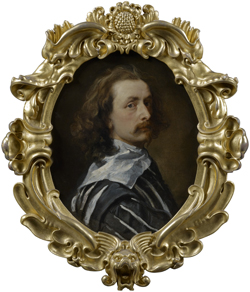
To mark the return of Sir Anthony van Dyck’s self-portrait (pictured) to the National Portrait Gallery after a three year nationwide tour, contemporary artist Julian Opie has been invited to present his works in dialogue with the painting. Julian Opie After Van Dyck features new and recent works including Faime (2016), Lucia, back 3 (2017) and Beach head, 6 (2017). The free display in the seventeenth century galleries opens tomorrow and runs until 7th January. It’s the final of three displays held in the gallery as part of the three year tour following the purchase of the Van Dyck self-portrait, painted in about 1640, in 2014. For more, see www.npg.org.uk. PICTURE: National Portrait Gallery.

The friendship and works of Salvador Dali and Marcel Duchamp are explored in a new exhibition opening at the Royal Academy tomorrow. Dali/Duchamp features more than 80 paintings, sculptures, “readymades”, photographs, drawings, films and archival material and is organised into three thematic sections – ‘Identities’, ‘The Body and the Object’ and, ‘Experimenting with Reality’. Among the highlights is Duchamp’s The King and Queen Surrounded by Swift Nudes (1912), Fountain (1917/1964), and The Bride Stripped Bare by her Bachelors, Even (The Large Glass) (1915), as well as Dali’s The First Days of Spring (1929), Lobster Telephone (1938) and Christ of Saint John of the Cross (c1951). Runs until 3rd January and then moves to The Dali Museum in St Petersburg, Florida. Admission charge applies. For more, see www.royalacademy.org.uk.

The first tranche of tickets to see this year’s New Years Eve fireworks event over the River Thames in central London were released late last week. The display will feature more than 12,000 fireworks, and involve 2,000 lighting cues and 30 tonnes of equipment on three barges (and, despite the renovation work, the New Year will still be rung in by the bongs of Big Ben!). The tickets, which are available for £10 each, provide access to a range of specific areas – some of these are already sold out. The full cost of the tickets goes towards costs associated with the ticketing system. People can book up to four tickets at www.london.gov.uk/nye.

Send all items for inclusion to exploringlondon@gmail.com.

10 sites of significance in Jane Austen’s London – Redux…

We hope you’ve enjoyed our special series looking at 10 sites of significance in Jane Austen’s London. Before we move on to our next special series, we thought we’d take the time to recap the 10 entries…

10 sites of significance in Jane Austen’s London…10. A final memorial…

10 sites of significance in Jane Austen’s London…9. Literary locations…

10 sites of significance in Jane Austen’s London…8. A face-to-face encounter with the author…

10 sites of significance in Jane Austen’s London…7. Dartford stopovers…

10 sites of significance in Jane Austen’s London…6. Carlton House…

10 sites of significance in Jane Austen’s London…5. Theatrical past-times…

10 sites of significance in Jane Austen’s London…4. Favoured merchants…

10 sites of significance in Jane Austen’s London…3. 50 Albemarle Street, St James…

10 sites of significance in Jane Austen’s London…2. 23 Hans Place (and 64 Sloane Street), Belgravia…

10 sites of significance in Jane Austen’s London…1. 10 Henrietta Street, Covent Garden…

Our next series looking at 10 subterranean London sites kicks off next Wednesday…

LondonLife – Looking toward The Orangery, Kensington Palace…

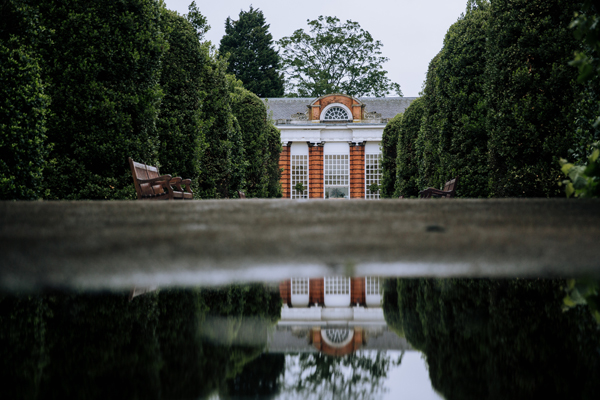
Now an elegant place to have lunch or afternoon tea, The Orangery was originally built in 1704-05. Its construction came at the behest of Queen Anne – the younger sister of Queen Mary II, she had ascended to the throne after the death of Mary’s husband King William III in 1702 following a fall from a horse (Mary had died of smallpox at Kensington Palace in 1694). Queen Anne used the building for parties in summer and in winter, thanks to underfloor heating, as a conservatory for plants (two engines were later fitted to the building to lift the orange trees kept there in colder months). The building’s architect is thought to have been the renowned Nicholas Hawksmoor, clerk of works for Kensington Palace, but it was extensively modified by Sir John Vanbrugh. The building also contains carvings by Grinling Gibbons. For more, see www.orangerykensingtonpalace.co.ukPICTURE: Vapor Kopeny/Unsplash

This Week in London – ‘The Arnolfini Portrait’ and its influence; opera explored; and, fancy yourself a potter?…

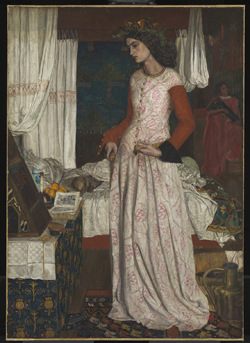
One of the National Gallery’s most celebrated paintings – Jan van Eyck’s The Arnolfini Portrait – is being exhibited for the first time alongside works by the Pre-Raphaelite Brotherhood and its successors in a new exhibition exploring the influence of the 15th century masterpiece on 19th century artists. As well as van Eyck’s work, Reflections: Van Eyck and the Pre-Raphaelites features Sir John Everett Millais’ Mariana (1851), Dante Gabriel Rossetti’s The Girlhood of Mary Virgin (1848-49), William Holman Hunt’s The Awakening Conscience (1853) and William Morris’s La Belle Iseult (1858 – pictured) along with a host of other works. The exhibition provides a particular focus on one of the most distinctive features of The Arnolfini Portrait – the convex mirror in which van Eyck himself is famously reflected – and, to that end, includes a convex mirror owned by Rossetti and another used by William Orpen. Other objects featured in the exhibition include early photographs, drawings and archival material surrounding the 1842 purchase of The Arnolfini Portrait by the National Gallery as well as a Victorian reproduction of van Eyck’s masterwork, The Ghent Altarpiece. The exhibition in the Sunley Room opens Monday and can be seen until 2nd April. Admission charge applies. For more, see www.nationalgallery.co.uk/reflections. PICTURE: © Tate, London (N04999)

The history of opera from its roots in Renaissance Italy to the present day is being explored in a new exhibition opening at the Victoria and Albert Museum in South Kensington on Saturday. Opera: Passion, Power and Politics, a collaboration between the museum and the Royal Opera House, focuses on seven operatic premieres in seven cities – Montverdi’s L’incoronazione de Poppea (the first public opera), which premiered in Venice in 1642, Handel’s Rinaldo, which premiered in London in 1711, Mozart’s Le nozze de Figaro, which premiered in Vienna in 1786, Verdi’s Nabucco, which premiered in Milan in 1842, Wagner’s Tannhauser, which premiered in Paris in 1861, Strauss’ Salome, which premiered in Dresden in 1905, and Shostakovich’s Lady Macbeth of Mtsensk, which premiered in St Petersburg in 1934.  It features more than 300 objects including Salvador Dali’s costume design for Peter Brook’s 1949 production of Salome, Edouard Monet’s painting Music in the Tuileries Gardens, the original score of Nabucco, and one of only two surviving copies of L’incoronazione de Poppea. There will also be original material from the St Petersburg premier of Lady Macbeth of Mtsensk which, including the composer’s original score, stage directions, libretto, set models and costume designs, is being reunited and displayed outside Russia for the first time. World leading performances can be heard over headphones, creating what the museum says is a “fully immersive sound experience”. The exhibition is the first to be displayed in the V&A’s purpose built Sainsbury Gallery and will be accompanied by a programme of live events. Runs until 25th February. For more see www.vam.ac.uk/opera.

Fancy yourself a potter? A ceramics factory where the public can mould or cast jugs, teapots and flowers opens at the Tate Modern today in an art installation by artist Clare Twomey. Located on level five of the gallery’s Blavatnik Building, FACTORY: the seen and the unseen will launch the second year of Tate Exchange and will comprise a 30 metre work space, eight tonnes of clay, a wall of drying racks and more than 2,000 fired objects. In the first week, visitors are invited to ‘clock in’ and learn the skills of working with clay and then exchange what they have made with other objects made in a factory setting. The production line will stop in the second week and visitors invited to enter a factory soundscape and join a factory tour to discuss how communities are built by collective labour. From now until January next year, Tate Exchange: Production will feature a range of artist’s projects at both the Tate Modern and Tate Liverpool exploring the role of the museum in production from a range of viewpoints. For the full programme of events, see www.tate.org.uk/tateexchange.

Send all items for inclusion to exploringlondon@gmail.com.

10 sites of significance in Jane Austen’s London…10. A final memorial…

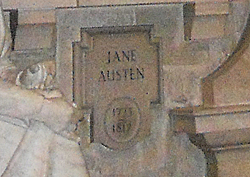
Jane Austen died in Winchester, Hampshire, on 18th July, 1817, at the age of just 41. She was buried in the city’s cathedral but a small tablet was unveiled in Westminster Abbey to mark her death 150 years later.

Located in Poets’ Corner in the abbey’s south transept, the small tablet was erected on 17th December, 1967, by the Jane Austen Society. Made of polished Roman stone, it simply bears her name and year of birth – 1775 – and year of death.

The tablet was placed on the lefthand side of the (much larger) memorial to William Shakespeare and below that of lexicographer Samuel Johnson.

This is the final in our series on Jane Austen’s London – we’ll be starting a new series shortly.

WHERE: Westminster Abbey (nearest Tube station is Westminster and St James’s Park); WHEN: Various  – check website; COST: £22 adults/£17 concessions/£9 chirldren (6-16)/five and under free (check website for more options); WEBSITE: www.westminster-abbey.org

PICTURE: Carcharoth (Commons)/CC BY-SA 3.0 (image cropped)

LondonLife – Across the Thames…

Across-the-Thames

Near London Bridge, looking over the Thames at The Shard. PICTURE: JJ Jordan/Unsplash

A Moment in London’s History – ‘The Hobbit’ is published…

Literary history was made in London 80 years ago this month – on 21st September, 1937 – when George Allen & Unwin Ltd published JRR Tolkien’s book, The Hobbit.

The initial print run of 1,500, which featured black and white illustrations and a dust jacket designed by Tolkien himself, had sold out by December. It was released in the US the following year and was subsequently republished in the UK was published in numerous new editions.

George Allen & Unwin, which was founded by George Allen in 1871 and became George Allen & Unwin when Stanley Unwin purchased a controlling interest in 1914, went on to publish Tolkien’s follow-up epic, The Lord of the Rings, in the 1950s after Unwin suggested a sequel based on the popularity of the first.

The publishing company, which also published the likes of everyone from Bertrand Russell to Roald Dahl, was based at Ruskin House in Museum Street in Bloomsbury at the time of the publication.

The company now lives on as an Australian company, Allen & Unwin Australia Pty Ltd.

This Week in London – Sir Simon Rattle; Rachel Whiteread at the Tate; and, trading prints…

Sir Simon Rattle, in his first season as the music director of the London Symphony Orchestra, is the subject of a recently opened exhibition at the Barbican Music Library. Rattle follows the life of a man now considered one of the world’s foremost conductors, from his birth in 1955 to the present day. Featuring photos, awards, video, letters, programmes and unseen items from family collections, it’s curated by his first manager, Martin Campbell-White, and Edward Smith, former CEO of the City of Birmingham Symphony Orchestra and has been organised by the LSO in partnership with arts management company Askonas Holt. The free exhibition runs until 22nd December. For more, follow this link.

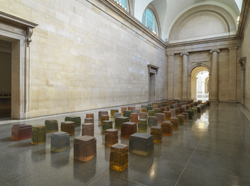
The works of Rachel Whiteread, one of the leading artists of her generation, have gone on show at Tate Britain. Spanning the three decades of her career, the show has everything from four early sculptures displayed in her first solo show in 1988 to works made this year especially for Tate Britain with scales ranging from the monumental to the intimate. Whiteread came to public notice in 1993 with the East End unveiling of her first public commission, House, a concrete cast of the interior of an entire terraced house. She won the Turner Prize the same year and represented the UK at the Venice Biennale in 1997 and has had solo exhibitions of her work in museums and galleries including The Solomon R Guggenheim Museum in New York City, the Serpentine Gallery in London and the Museums of Modern Art in Rio de Janeiro and Sao Paolo. Highlights of the show include Untitled (Room 101) 2003, a cast of the room at the BBC’s Broadcasting House which was thought to be the model for Room 101 in George Orwell’s Nineteen Eighty-Four, a selection of Torsos – casts of hot water bottles, and Untitled (One Hundred Spaces) 1995, an installation of 100 resin casts of the underside of chairs (pictured). Runs until 21st January. Admission charge applies. For more, see www.tate.org.uk/visit/tate-britain. PICTURE: Courtesy of Tate Britain.

An exhibition which focuses on the use of prints as an “object of trade” opens at the British Museum today. The business of prints, based in part on Antony Griffiths’ prize-winning book The Print Before Photography: An Introduction to European Printmaking 1550-1820, focuses on four major areas – the production of prints, the lettering on prints, the usage of prints and the collecting of prints and the concern for quality. Delving into the museum’s collection of more than two million prints, it features works by the likes of Durer, Rembrandt and Goya alongside those of far less famous artists. The display can be seen until 28th January in Room 90, the Prints and Drawings Gallery. Entry is free. For more, see www.britishmuseum.org.

Send all items for inclusion to exploringlondon@gmail.


10 sites of significance in Jane Austen’s London…9. Literary locations…

Jane Austen featured numerous London locations in her novels. Here’s five…

Brunswick Square, Bloomsbury. In Emma, the main protagonist’s married sister, Isabella, lives here with her lawyer husband John Knightley and children. Isabella is well pleased with her home, noting “We are so very airy”.

Hill Street, Mayfair. Admiral Crawford, uncle of Henry and Mary Crawford, lives in this street in Mansfield Park.

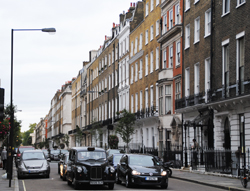
Harley Street, Marylebone (pictured). John and Fanny Dashwood took a house in this street for the “season” in Sense and Sensibility.

Bond Street. Well known to Austen, she has Marianne, then upset over Willoughby (who has lodgings here), visit here on a shopping trip in Sense and Sensibility.

Grosvenor Street, Mayfair. The Hursts have a house in this fashionable West End street in Pride and Prejudice and here Jane Bennet visits Caroline Bingley hoping to see her brother Charles. Continue reading “10 sites of significance in Jane Austen’s London…9. Literary locations…”

LondonLife – Snoozing…

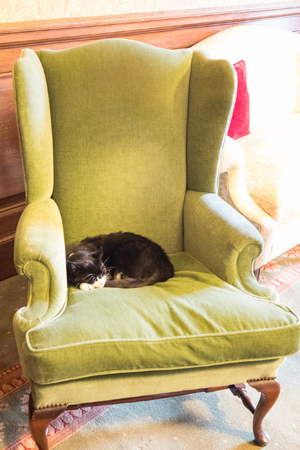
Palmerston, the ‘chief mouser’ to the Foreign and Commonwealth Office in Whitehall, captured by photographer Steve Way during the Open House London weekend, apparently oblivious to the crowds. Palmerston was recently the subject of a Freedom of Information release which stated that since his arrival at the FCO in April, 2016, he had been seen capturing 27 mice (although the Office of the Permanent Under-Secretary at the FCO reports the actual figure is “likely to be much higher as these are only reported sightings”). The FOI document also revealed Palmerston eats a variety of food brands, usually ‘Whiskas’ and is cared for by a number of volunteers from across the FCO.

PICTURE: Steve Way/Flickr/CC BY-NC-ND 2.0

London Pub Signs – The Argyll Arms…

This Grade II*-listed pub originally dates from the early 18th century but the current building was constructed in the 1860s and still retains many features dating from that period.

The name for this pub, located at 18 Argyll Street just south-west of Oxford Circus, comes from John Campbell, 2nd Duke of Argyll, one of the Duke of Marlborough’s leading generals and the owner of the land on which the street (and pub) now stands.

The London mansion of the dukes was located where the London Palladium now stands and there is a legend that there was a tunnel between the house, which was eventually demolished in 1864, and the pub.

While the pub has undergone some alterations since it was built, mid-19th century features inside include etched glass separating the booths and an ornate plaster ceiling.

The pub is now part of the Nicholson chain. For more, head here.

PICTURES: Top – Russell Davies/Flickr/; Right – Michael Flynn/Flickr/(CC BY-NC 2.0)

Lost London – Clerkenwell (Middlesex) House of Detention…

The first prison on the site to the north of Clerkenwell Green, initially known as the Clerkenwell Bridewell or New Prison, was built in 1616 and was used as an overflow for City prisons.

Later that century, a second prison was built next door, this time as an as a remand prison for those awaiting trial to relieve the crowded Newgate. Among those imprisoned here was the notorious Jack Sheppard and his mistress Bess Lyon (they both escaped from it in 1724).

The prison, which wasn’t located far from the Middlesex Sessions House, was significantly enlarged in 1774 and, in 1818, when the original Clerkenwell Bridewell was demolished, the New Prison was rebuilt almost entirely across both sites, providing accommodation for a couple of hundred.

Less than 30 years later, however, in the mid-1840s the still relatively new building was demolished and a new House of Detention, also known as the Middlesex House of Detention, was built in its stead. Its design was cruciform and influenced strongly by the recently completed Pentonville Prison. It had several wings for males and one for females.

The prison was eventually closed in 1877 and demolished in 1890. The Hugh Myddelton School was subsequently built on the site (the building still stands, albeit it is used as flats).

One of the most famous incidents at the prison took place on 13th December, 1867, when during an unsuccessful escape attempt, members of the Fenian Society detonated a barrel of gunpowder, causing an explosion which blew open the prison wall as well as damaging the houses which lay opposite across Corporation Row. In what became known as the “Clerkenwell Outrage”, 12 bystanders were killed and scores injured. The ringleader, Michael Barrett, was the last person to be publicly hanged at Newgate on 24th May, 1868.

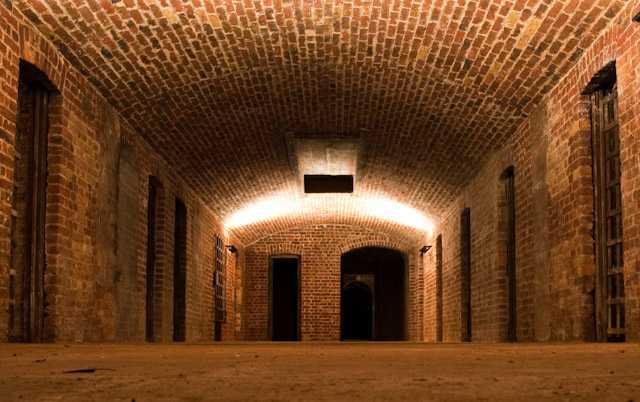
The prison’s Victorian-era vaults still lie beneath the streets of Clerkenwell and a number of films including Sherlock Holmes and TV shows including Secret Diary of a Call Girl have been shot here. They can be accessed via special tours from time-to-time.

PICTURE: Above – Visiting time at Clerkenwell House of Detention from an 1862 publication (via Wikipedia); Below – All that remains of the House of Detention – the vaults (Daejn/Wikipedia)

This Week in London – Open House London’s 25th; the London Design Festival; the ‘discovery’ of Roman London; and, the story of the Scythians retold…

Open House London marks its 25th anniversary this weekend, with free entry into more than 800 of the city’s buildings. For the first time, every London borough is participating in the event which sees the doors flung wide on buildings including the recently revamped New Scotland Yard (right), the skyscraper One Blackfriars nick-named ‘The Vase’ (above), an urban farm in Waterloo and the Francis Crick Institute at King’s Cross as well as traditional crowd-pleasers like BT Tower, William Morris’s Red House and the office towers known as the Cheesegrater and the Gherkin.  The weekend also features some 66 walks and talks. Open House have this year  launched a free app which, available for both Android and Apple, allows users to plan their weekend, view nearby buildings, and filter results by day, architectural type and period. To download the app and to see the full programme of events, head to www.openhouselondon.org.uk. PICTURES: Top – CGI/Right – Tim Soar (Open House London).

The London Design Festival, now in its 15th year, also kicks off this weekend with a programme of 450 projects and events across the coming week. The V&A will once again form the festival hub with iconic spaces within the museum transformed by a series of special commissions and displays including an immersive coloured light experienced known as Reflection Room and a 21.3-metre-long uid and free-standing three dimensional tapestry called Transmission. Somerset House will host a new group exhibition called Design Frontiers featuring 30 leading international designers while the Oxo Tower Wharf Courtyard will host a specially created micro house, called URBAN CABIN – one of many ‘landmark projects’ to be seen during the week. The festival runs until 24th September. For more – including the full programme of events, see www.londondesignfestival.com.

The rediscovery of Roman London under the modern city is the subject of a new exhibition which opened at the Guildhall Library in the City this week. The Discovery of Roman London, with a display of objects, archives and 19th century illustrations, looks at the early pioneers of Roman London archaeology over the past three centuries and the establishment of the Guildhall Museum – the precursor to the Museum of London – in 1826 to provide a suitable place for the found artefacts. Runs until 30th November. Entry is free. For more, follow this link.

The story of ancient nomadic tribes known as the Scythians is told in a new exhibition at the British Museum. Scythians: warriors of ancient Siberia features more than 200 objects, many of which have been preserved under permafrost, providing fascinating insights into the lives of the Scythian tribes who lived between 900 and 200 BC. The objects include fur-lined clothes, headgear for horses, gold jewellery, weapons, wooden drinking bowls and even tattooed human remains. There are also a series of painted clay death masks decorated to resemble the faces of the dead which are being shown alongside a reconstructed log-cabin tomb in which they were found. Runs until 14th January in the Sainsbury Exhibition Gallery. Supported by BP, the exhibition has been organised in partnership with the State Hermitage Museum in St Petersburg. Admission charge applies. For more, see www.britishmuseum.org.

Send all items for inclusion to exploringlondon@gmail.

10 sites of significance in Jane Austen’s London…8. A face-to-face encounter with the author…

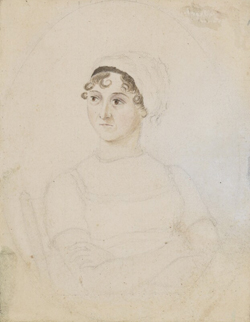
It’s said to be the “only reasonably certain portrait from life” – a sketch by Jane’s older sister Cassandra which purportedly depicts the artist.

Found on display in Room 18 of the National Portrait Gallery, the pencil and watercolour sketch dates from about 1810 and was purchased by the gallery in 1948 for £135.

The image was the basis for a late 19th century water-colour image of Jane which was created by Maidenhead artist James Andrews who traced Cassandra’s sketch.

Andrew’s image had been commissioned by Jane’s nephew, James Edward Austen-Leigh, and he used an engraving of it – made by William Home Lizars – as a frontispiece to his biography, A Memoir of Jane Austen.

It is an image of that engraving which features on the new £10 polymer banknote going into circulation tomorrow.

The decision to use the later image rather than the original has attracted some criticism – not for the subject but for the fact that, as historian Lucy Worsley told The Sunday Times, it represents “an author publicity portrait after she died in which she’s been given the Georgian equivalent of an airbrushing”.

There has, we should also note, been some criticism of the choice of quote on the note – “I declare after all there is no enjoyment like reading” comes from Pride and Prejudice and was uttered by the deceitful Caroline Bingley who really has no interest in reading at all!

WHERE: Room 18, National Portrait Gallery, St Martin’s Place (nearest Tube station is Charing Cross or Leicester Square); WHEN: 10am to 6pm daily; COST: Free (donations welcome); WEBSITE: www.npg.org.uk

PICTURE: Jane Austen by Cassandra Austen (pencil and watercolour, circa 1810 – NPG 3630) © National Portrait Gallery, London

LondonLife – Buckingham Palace…

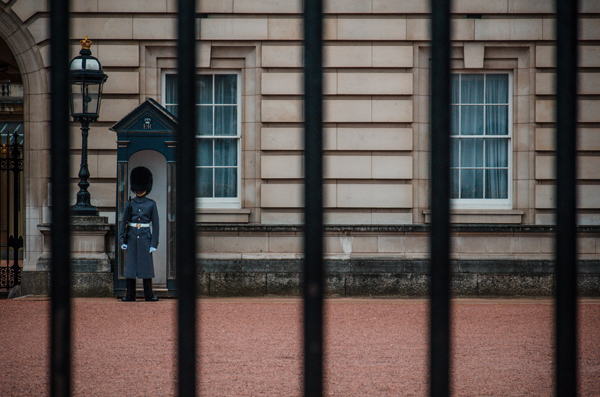
PICTURE: Shane Rounce/Unsplash

Famous Londoners – Guy the Gorilla..

It’s 70 years ago this November that a gorilla named Guy arrived at London Zoo and went on to become one of its most famous residents. 

A Western lowland gorilla, Guy was captured as a baby in French Cameroon on behalf of the Paris Zoo which then exchanged him for a tiger from London Zoo. He arrived in London while still a baby, clutching a tin hot water bottle, on Bonfire Night – 5th November, 1947, hence his name ‘Guy’ (after Guy Fawkes).

Guy went on to become one of the zoo’s biggest stars (on a par with a contemporary, Chi-Chi the Giant Panda, another of the zoo’s most famous residents).

The giant ape, who lived for the latter part of his life in the zoo’s Michael Sobell Pavilion ( it opened in 1971), weighed some 240 kilograms and had a nine foot armspan but was known, despite his size and occasional outbreaks of bad temper, for having been a ‘gentle giant’ – there are stories that he used to hold out his hands and carefully examine small songbirds that flew into his cage before letting them go.

He was introduced to a mate, Lomie, after 25 years in solitude but they never produced any offspring.

Guy died in 1978 of a heart attack during a tooth extraction. He continues to attract sightseers, however – Guy was stuffed and put on display at the Natural History Museum in 1982. He was later moved into storage but went back on permanent display in 2012.

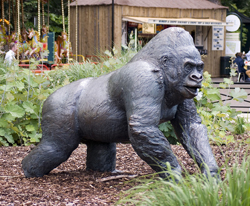
A bronze statue of Guy, by William Timym, can be seen near the zoo’s main entrance (pictured).

PICTURE: Chris huh/Wikimedia Commons


This Week in London – Totally Thames; RAF Kenley Airfield celebration; win a Quentin Blake poster; and ‘Nature Morte’ at Guildhall…

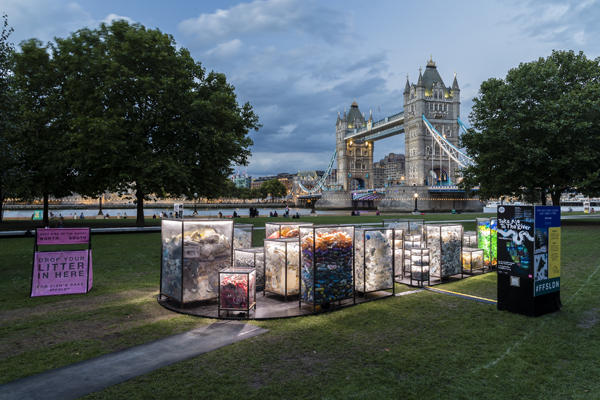
Totally Thames, the annual month long celebration of London’s river, is once again in swing with a host of events to join in on. The packed programme includes walks and talks such as Friday’s walk exploring the maritime heritage of Deptford, visual arts installations including Maria Arceo’s Future Dust (pictured), and on-river events such as this weekend’s Classic Boat Festival at St Katharine Docks and the marathon Great River Race involving traditional boats as well as a host of musical performances, film screenings, exhibitions and pop-up festivals. Events run over September. For more information on the programme, visit totallythames.org. PICTURE: Courtesy of Thames Festival Trust. © Hydar Dewachi.

The role RAF Kenley Airfield played in the Battle of Britain will be highlighted in a “Sky Heroes” event at the site this Sunday. RAF Kenley Airfield, which is where Winston Churchill learned to fly, is the most intact fighter airfield from World War II and played a unique role in defending Britain from the German Luftwaffe. Celebrating its centenary, it was one of three main fighter stations, along with Croydon and Biggin Hill, charged with the air defence of London. The day, which is free to attend, will feature guided tours, museum and archaeology stands and replica Spitfire and Hurricane planes in which visitors can sit and have their photos taken. A free shuttle bus service will be operating from nearby stations. The day is being held under the auspices of the Heritage Lottery funded Kenley Revival Project, a partnership between the City of London Corporation, Kenley Airfield Friends Group and Historic England. For more, see www.kenleyrevival.org.

Win one of 20 London is Open for Summer posters signed by the artist Quentin Blake. The limited edition posters went on sale this week for £10 with all proceeds going to the Red Cross UK Solidarity Fund and to mark that event, the Mayor of London, Sadiq Khan, has launched a social media competition, giving away 20 of them. For details of how to take part, head to www.london.gov.uk/londonisopen. The winners will be announced next week. To purchase one of the posters, head to www.ltmuseumshop.co.uk/new-in.

The 16th tradition of still life meets modern art at the Guildhall Art Gallery’s latest exhibition, Nature Morte. Featuring 100 words of art covering themes ranging from flora and fauna to domestic objects and food, the display features works by major international contemporary artists like Michael Craig-Martin and Gabriel Orozco as well as works by London-based artists and from the City of London’s own historic collection. The exhibition, which is being put on by MOCA London in partnership with the gallery, runs until 2nd April. Admission charge applies and there’s a series of talks to accompany the display. For more, follow this link.

Send all items for inclusion to exploringlondon@gmail.com.

10 sites of significance in Jane Austen’s London…7. Dartford stopovers…

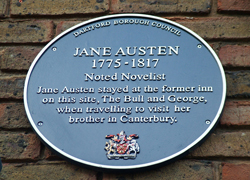
OK, it’s not in London per se but given its proximity, we thought this plaque commemorating Jane Austen’s visits to an inn which once stood in the town of Dartford in Kent worth mentioning.

The plaque, which was erected by the Dartford Borough Council in High Street in 2006, commemorates the times Austen stayed at The Bull and George Inn while travelling from the family home in Hampshire to meet her brother Edward Knight in Kent.

Edward has been adopted as a boy by a relative, Thomas Knight, who owned Godmersham Park which stands between Canterbury and Ashford. Edward, who married Elizabeth Bridges, later inherited the house and Jane and her sister Cassandra were apparently frequent visitors (at different times) during which time they helped look after their nieces and nephews and visit nearby towns such as Canterbury.

Austen is known to have often rested at the inn overnight on her way to and from Kent and at other times simply stopped for a meal.

PICTURE: Ken/Flickr/CC BY-NC 2.0